The Design and
Analysis of Algorithms
by Anany Levitin
Lecture notes prepared by Lydia Sinapova,
Simpson College
2
CHAPTER 1: INTRODUCTION
 What is an Algorithm
 Steps in Designing and Implementing
an Algorithm
 Important Problem Types
 Fundamental Data Structures
3
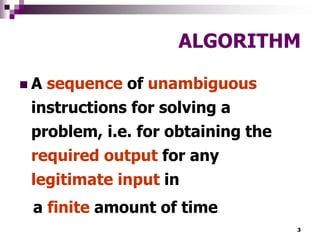
ALGORITHM
 A sequence of unambiguous
instructions for solving a
problem, i.e. for obtaining the
required output for any
legitimate input in
a finite amount of time
4
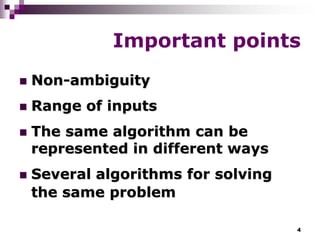
Important points
 Non-ambiguity
 Range of inputs
 The same algorithm can be
represented in different ways
 Several algorithms for solving
the same problem
5
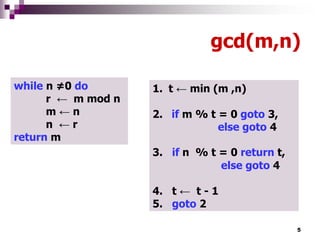
gcd(m,n)
while n ≠0 do
r ← m mod n
m ← n
n ← r
return m
1. t ← min (m ,n)
2. if m % t = 0 goto 3,
else goto 4
3. if n % t = 0 return t,
else goto 4
4. t ← t - 1
5. goto 2
6
Understand the problem
Decide on computational means
Exact vs approximate solution
Data structures
Algorithm design technique
Design an algorithm
Prove correctness
Analyze the algorithm
Code the algorithm
7
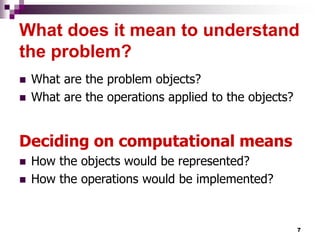
What does it mean to understand
the problem?
 What are the problem objects?
 What are the operations applied to the objects?
Deciding on computational means
 How the objects would be represented?
 How the operations would be implemented?
8
Design an algorithm
• Build a computational model of the
solving process
Prove correctness
• Correct output for every legitimate
input in finite time
• Based on correct math formula
• By induction
9
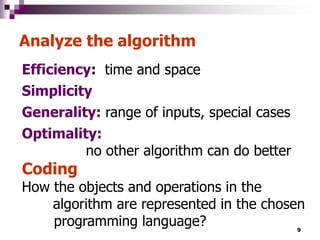
Analyze the algorithm
Efficiency: time and space
Simplicity
Generality: range of inputs, special cases
Optimality:
no other algorithm can do better
Coding
How the objects and operations in the
algorithm are represented in the chosen
programming language?
10
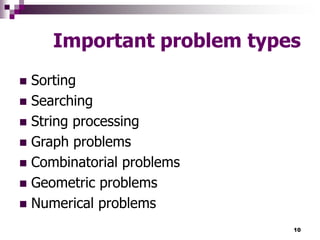
Important problem types
 Sorting
 Searching
 String processing
 Graph problems
 Combinatorial problems
 Geometric problems
 Numerical problems
11
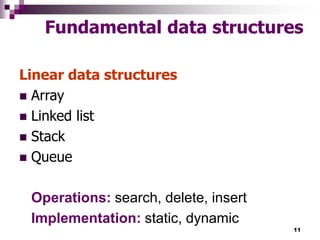
Fundamental data structures
Linear data structures
 Array
 Linked list
 Stack
 Queue
Operations: search, delete, insert
Implementation: static, dynamic
12
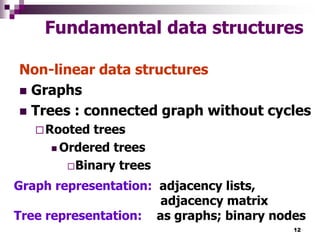
Non-linear data structures
 Graphs
 Trees : connected graph without cycles
Rooted trees
 Ordered trees
Binary trees
Graph representation: adjacency lists,
adjacency matrix
Tree representation: as graphs; binary nodes
Fundamental data structures
13
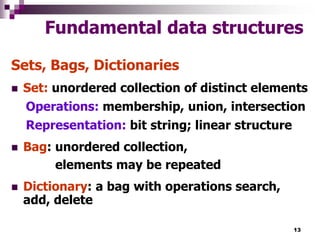
Fundamental data structures
Sets, Bags, Dictionaries
 Set: unordered collection of distinct elements
Operations: membership, union, intersection
Representation: bit string; linear structure
 Bag: unordered collection,
elements may be repeated
 Dictionary: a bag with operations search,
add, delete
14
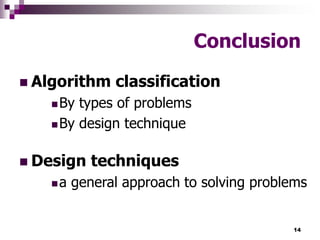
Conclusion
 Algorithm classification
By types of problems
By design technique
 Design techniques
a general approach to solving problems

l01-intro (3).ppt

  • 1.
    The Design and Analysisof Algorithms by Anany Levitin Lecture notes prepared by Lydia Sinapova, Simpson College
  • 2.
    2 CHAPTER 1: INTRODUCTION What is an Algorithm  Steps in Designing and Implementing an Algorithm  Important Problem Types  Fundamental Data Structures
  • 3.
    3 ALGORITHM  A sequenceof unambiguous instructions for solving a problem, i.e. for obtaining the required output for any legitimate input in a finite amount of time
  • 4.
    4 Important points  Non-ambiguity Range of inputs  The same algorithm can be represented in different ways  Several algorithms for solving the same problem
  • 5.
    5 gcd(m,n) while n ≠0do r ← m mod n m ← n n ← r return m 1. t ← min (m ,n) 2. if m % t = 0 goto 3, else goto 4 3. if n % t = 0 return t, else goto 4 4. t ← t - 1 5. goto 2
  • 6.
    6 Understand the problem Decideon computational means Exact vs approximate solution Data structures Algorithm design technique Design an algorithm Prove correctness Analyze the algorithm Code the algorithm
  • 7.
    7 What does itmean to understand the problem?  What are the problem objects?  What are the operations applied to the objects? Deciding on computational means  How the objects would be represented?  How the operations would be implemented?
  • 8.
    8 Design an algorithm •Build a computational model of the solving process Prove correctness • Correct output for every legitimate input in finite time • Based on correct math formula • By induction
  • 9.
    9 Analyze the algorithm Efficiency:time and space Simplicity Generality: range of inputs, special cases Optimality: no other algorithm can do better Coding How the objects and operations in the algorithm are represented in the chosen programming language?
  • 10.
    10 Important problem types Sorting  Searching  String processing  Graph problems  Combinatorial problems  Geometric problems  Numerical problems
  • 11.
    11 Fundamental data structures Lineardata structures  Array  Linked list  Stack  Queue Operations: search, delete, insert Implementation: static, dynamic
  • 12.
    12 Non-linear data structures Graphs  Trees : connected graph without cycles Rooted trees  Ordered trees Binary trees Graph representation: adjacency lists, adjacency matrix Tree representation: as graphs; binary nodes Fundamental data structures
  • 13.
    13 Fundamental data structures Sets,Bags, Dictionaries  Set: unordered collection of distinct elements Operations: membership, union, intersection Representation: bit string; linear structure  Bag: unordered collection, elements may be repeated  Dictionary: a bag with operations search, add, delete
  • 14.
    14 Conclusion  Algorithm classification Bytypes of problems By design technique  Design techniques a general approach to solving problems