Knowledge Services: Mobilizing Scientific Knowledge to Serve Canadians   Albert Simard
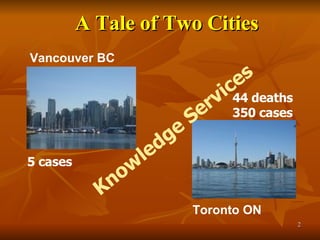
A Tale of Two Cities 5 cases 44 deaths 350 cases Vancouver BC Toronto ON Knowledge Services
Outline Three important ideas Knowledge services framework Three strategic questions Purpose:   Endorsement of a service framework for managing organizational knowledge   Outline :
Three Important Ideas Knowledge Management:  (How) Preserve, share, and integrate knowledge Knowledge Organization  (What)  Create, manage, and use knowledge to achieve goals, learn, and adapt Knowledge Services  (Why) Use and transfer knowledge to achieve sector outcomes and results for Canadians  Ideas
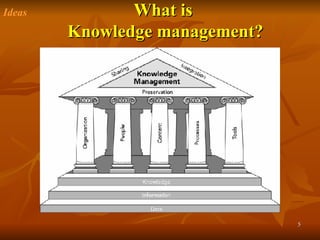
What is  Knowledge management? Ideas
Why manage knowledge? Creating and using knowledge are key to S&T organization’s core business. Majority of S&T organization budget is used to create knowledge.  Knowledge and expertise are S&T organization’s most valuable core assets. Balancing productivity and sustainability is complex; integrated solutions are essential.   Ideas
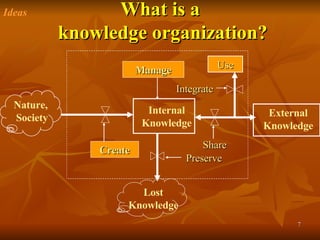
What is a  knowledge organization? Ideas External Knowledge Share Internal Knowledge Manage Create Nature,  Society Use Integrate Preserve Lost Knowledge
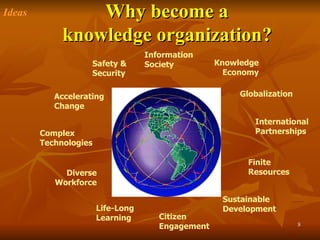
Why become a  knowledge organization?   Knowledge Economy Diverse Workforce Information Society Sustainable Development Finite Resources International Partnerships Globalization Accelerating Change Life- Long Learning Complex Technologies Citizen Engagement Safety & Security Ideas
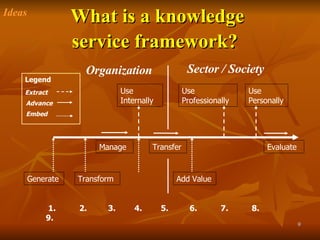
What is a knowledge service framework?   Ideas 1.  2.  3.  4.  5.  6.  7.  8.  9. Use Internally Use Professionally Use Personally Generate Transform Add Value Transfer Evaluate Manage Extract Advance Embed Legend Organization Sector / Society
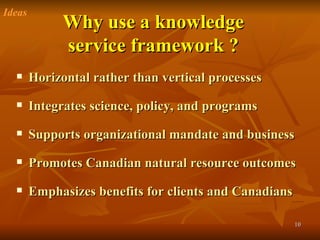
Why use a knowledge service framework ? Horizontal rather than vertical processes Integrates science, policy, and programs Supports organizational mandate and business  Promotes Canadian natural resource outcomes Emphasizes benefits for clients and Canadians Ideas
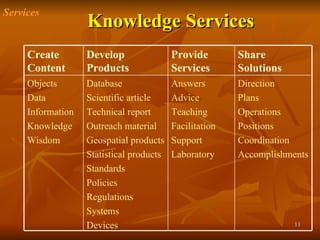
Knowledge Services Services Direction Plans Operations Positions Coordination Accomplishments Answers Advice Teaching Facilitation Support Laboratory Database Scientific article Technical report Outreach material Geospatial products Statistical products Standards Policies Regulations Systems Devices Objects Data Information Knowledge  Wisdom Share  Solutions Provide Services Develop  Products Create  Content
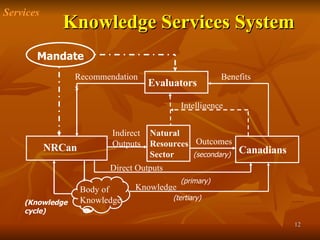
Knowledge Services System Services Indirect Outputs Natural Resources Sector Outcomes Canadians Intelligence NRCan Mandate Body of Knowledge (Knowledge cycle) Direct Outputs Evaluators Recommendations Benefits (tertiary) (secondary) (primary) Knowledge
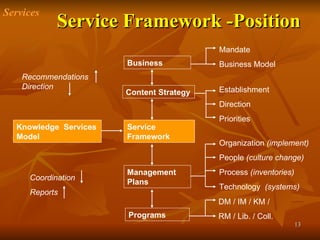
Service Framework -Position Services Knowledge  Services Model Service Framework Management Plans Programs Content Strategy Business Mandate Business Model Establishment Direction Priorities Organization  (implement) People  (culture change) Process  (inventories) Technology  (systems) DM / IM / KM /  RM / Lib. / Coll. Recommendations Direction Coordination Reports
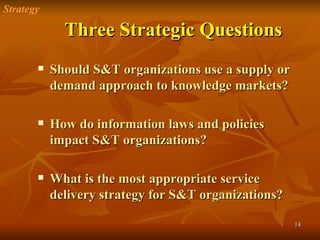
Three Strategic Questions Should S&T organizations use a supply or demand approach to knowledge markets? How do information laws and policies impact S&T organizations? What is the most appropriate service delivery strategy for S&T organizations? Strategy
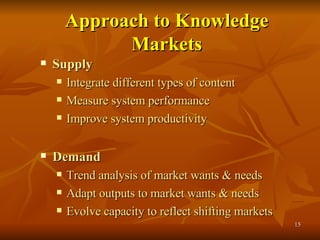
Approach to Knowledge Markets Supply Integrate different types of content Measure system performance Improve system productivity Demand Trend analysis of market wants & needs Adapt outputs to market wants & needs Evolve capacity to reflect shifting markets
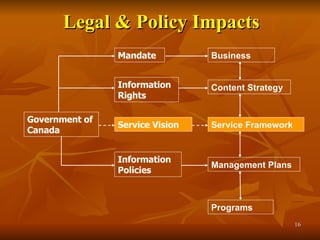
Legal & Policy Impacts Government of Canada Mandate Information Rights Information Policies Content Strategy Business Management Plans Programs Service Framework Service Vision
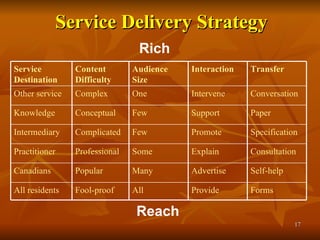
Service Delivery Strategy Rich Reach Provide Advertise Explain Promote Support Intervene Interaction All Many Some Few Few One Audience Size Forms Self-help  Consultation Specification Paper  Conversation Transfer All residents Canadians Practitioner Intermediary Knowledge Other service Service Destination Fool-proof Popular Professional Complicated Conceptual Complex Content Difficulty
Recommendations   Implementing a knowledge-service framework will help S&T organizations participate in the knowledge economy S&T organizations should address the strategic questions identified by the knowledge-service framework S&T organizations should develop a business case for implementing a knowledge-service framework

Knowledge Services: Mobilizing Scientific Knowledge to Serve Canadians

  • 1.
    Knowledge Services: MobilizingScientific Knowledge to Serve Canadians Albert Simard
  • 2.
    A Tale ofTwo Cities 5 cases 44 deaths 350 cases Vancouver BC Toronto ON Knowledge Services
  • 3.
    Outline Three importantideas Knowledge services framework Three strategic questions Purpose: Endorsement of a service framework for managing organizational knowledge Outline :
  • 4.
    Three Important IdeasKnowledge Management: (How) Preserve, share, and integrate knowledge Knowledge Organization (What) Create, manage, and use knowledge to achieve goals, learn, and adapt Knowledge Services (Why) Use and transfer knowledge to achieve sector outcomes and results for Canadians Ideas
  • 5.
    What is Knowledge management? Ideas
  • 6.
    Why manage knowledge?Creating and using knowledge are key to S&T organization’s core business. Majority of S&T organization budget is used to create knowledge. Knowledge and expertise are S&T organization’s most valuable core assets. Balancing productivity and sustainability is complex; integrated solutions are essential. Ideas
  • 7.
    What is a knowledge organization? Ideas External Knowledge Share Internal Knowledge Manage Create Nature, Society Use Integrate Preserve Lost Knowledge
  • 8.
    Why become a knowledge organization? Knowledge Economy Diverse Workforce Information Society Sustainable Development Finite Resources International Partnerships Globalization Accelerating Change Life- Long Learning Complex Technologies Citizen Engagement Safety & Security Ideas
  • 9.
    What is aknowledge service framework? Ideas 1. 2. 3. 4. 5. 6. 7. 8. 9. Use Internally Use Professionally Use Personally Generate Transform Add Value Transfer Evaluate Manage Extract Advance Embed Legend Organization Sector / Society
  • 10.
    Why use aknowledge service framework ? Horizontal rather than vertical processes Integrates science, policy, and programs Supports organizational mandate and business Promotes Canadian natural resource outcomes Emphasizes benefits for clients and Canadians Ideas
  • 11.
    Knowledge Services ServicesDirection Plans Operations Positions Coordination Accomplishments Answers Advice Teaching Facilitation Support Laboratory Database Scientific article Technical report Outreach material Geospatial products Statistical products Standards Policies Regulations Systems Devices Objects Data Information Knowledge Wisdom Share Solutions Provide Services Develop Products Create Content
  • 12.
    Knowledge Services SystemServices Indirect Outputs Natural Resources Sector Outcomes Canadians Intelligence NRCan Mandate Body of Knowledge (Knowledge cycle) Direct Outputs Evaluators Recommendations Benefits (tertiary) (secondary) (primary) Knowledge
  • 13.
    Service Framework -PositionServices Knowledge Services Model Service Framework Management Plans Programs Content Strategy Business Mandate Business Model Establishment Direction Priorities Organization (implement) People (culture change) Process (inventories) Technology (systems) DM / IM / KM / RM / Lib. / Coll. Recommendations Direction Coordination Reports
  • 14.
    Three Strategic QuestionsShould S&T organizations use a supply or demand approach to knowledge markets? How do information laws and policies impact S&T organizations? What is the most appropriate service delivery strategy for S&T organizations? Strategy
  • 15.
    Approach to KnowledgeMarkets Supply Integrate different types of content Measure system performance Improve system productivity Demand Trend analysis of market wants & needs Adapt outputs to market wants & needs Evolve capacity to reflect shifting markets
  • 16.
    Legal & PolicyImpacts Government of Canada Mandate Information Rights Information Policies Content Strategy Business Management Plans Programs Service Framework Service Vision
  • 17.
    Service Delivery StrategyRich Reach Provide Advertise Explain Promote Support Intervene Interaction All Many Some Few Few One Audience Size Forms Self-help Consultation Specification Paper Conversation Transfer All residents Canadians Practitioner Intermediary Knowledge Other service Service Destination Fool-proof Popular Professional Complicated Conceptual Complex Content Difficulty
  • 18.
    Recommendations Implementing a knowledge-service framework will help S&T organizations participate in the knowledge economy S&T organizations should address the strategic questions identified by the knowledge-service framework S&T organizations should develop a business case for implementing a knowledge-service framework