KNOW
YOUR
BEHAVIOR
Applied Behavior Analysis
BEHAVIORAL
MOMENTUM
• AKA: Interspersed Requests
• AKA: Pre- Task Requests;
• AKA: High- Probability
Request Sequence (High- P).
ANTECEDENT
INTERVENTION
• designed to manipulate the environment
before the unwanted target behavior occurs.
• AKA: Antecedent Strategies
• AKA: Antecedent Manipulation
SIMPLE ABA
DEFINITIONS
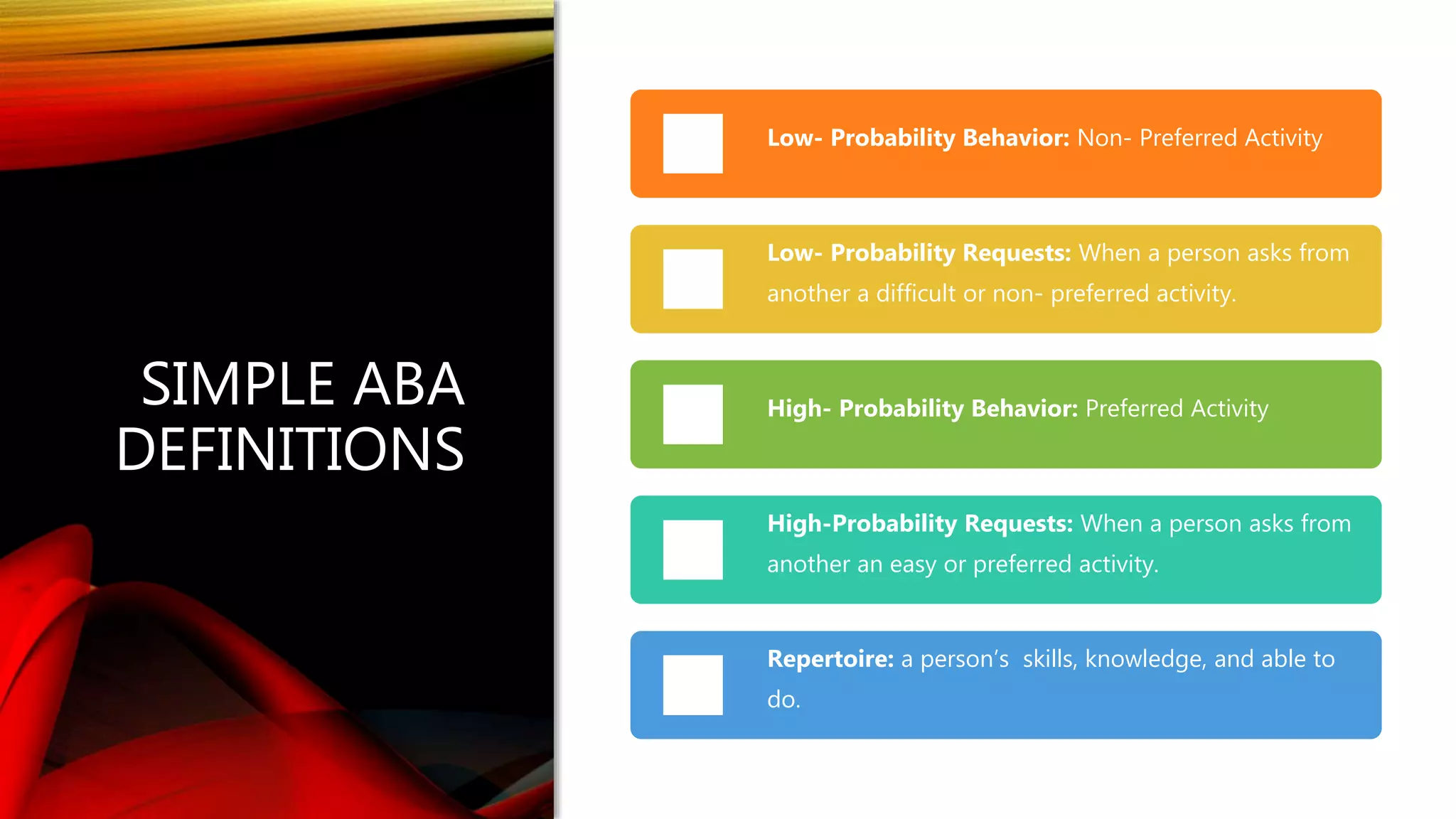
Low- Probability Behavior: Non- Preferred Activity
Low- Probability Requests: When a person asks from
another a difficult or non- preferred activity.
High- Probability Behavior: Preferred Activity
High-Probability Requests: When a person asks from
another an easy or preferred activity.
Repertoire: a person’s skills, knowledge, and able to
do.
BEHAVIORAL MOMENTUM
• Antecedent Intervention
• All behavior you select to use in this procedure have to be in the individual’s
repertoire.
• Must be very high- probability behaviors must be simple & fast to do.
1.High- Probability Behavior
2.(3- 5 Behaviors)
1.Low - Probability Behavior
2.(1 Behavior)
WHAT POPULATION THAT WORKS
WITH
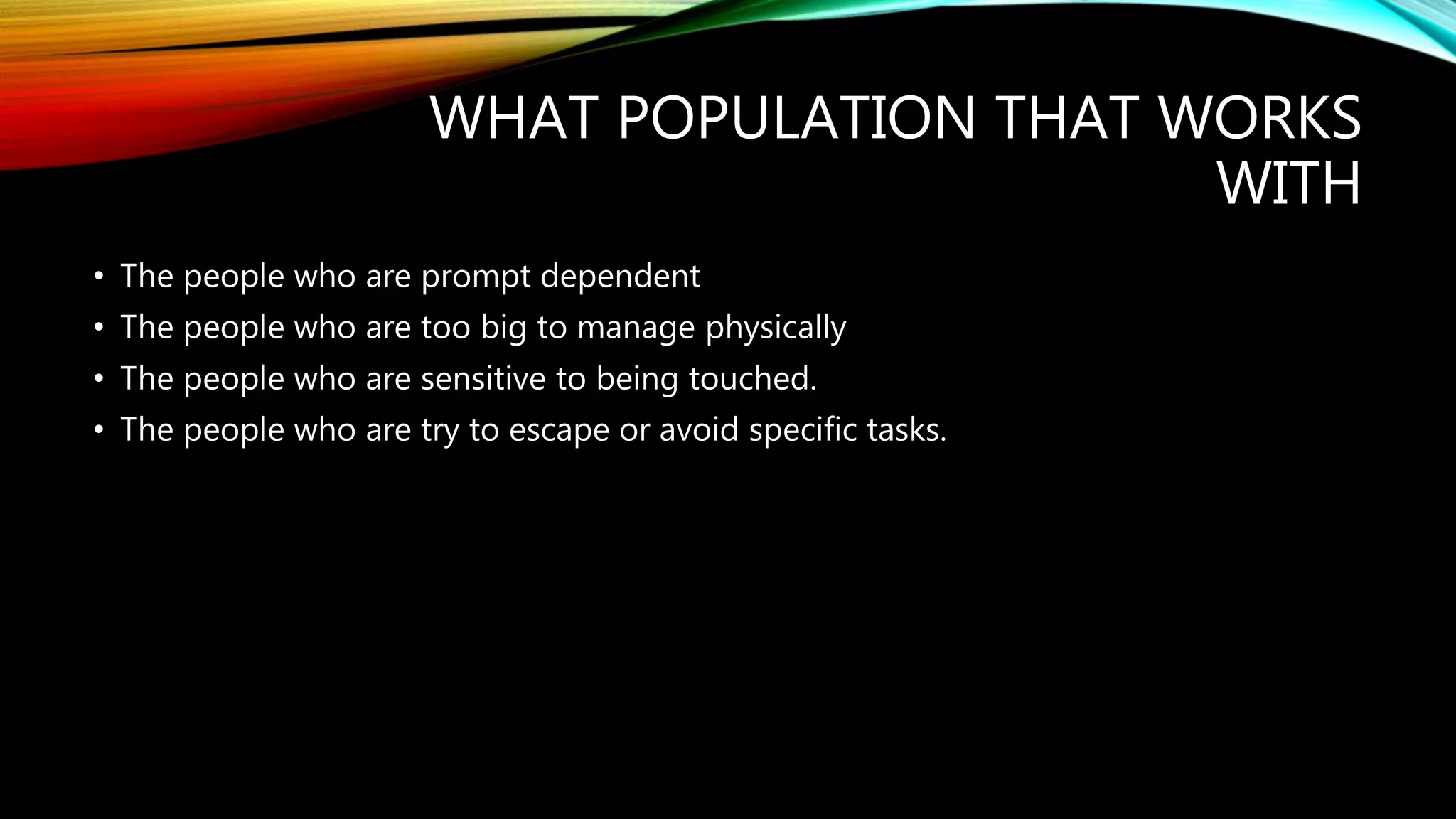
• The people who are prompt dependent
• The people who are too big to manage physically
• The people who are sensitive to being touched.
• The people who are try to escape or avoid specific tasks.
EXAMPLE
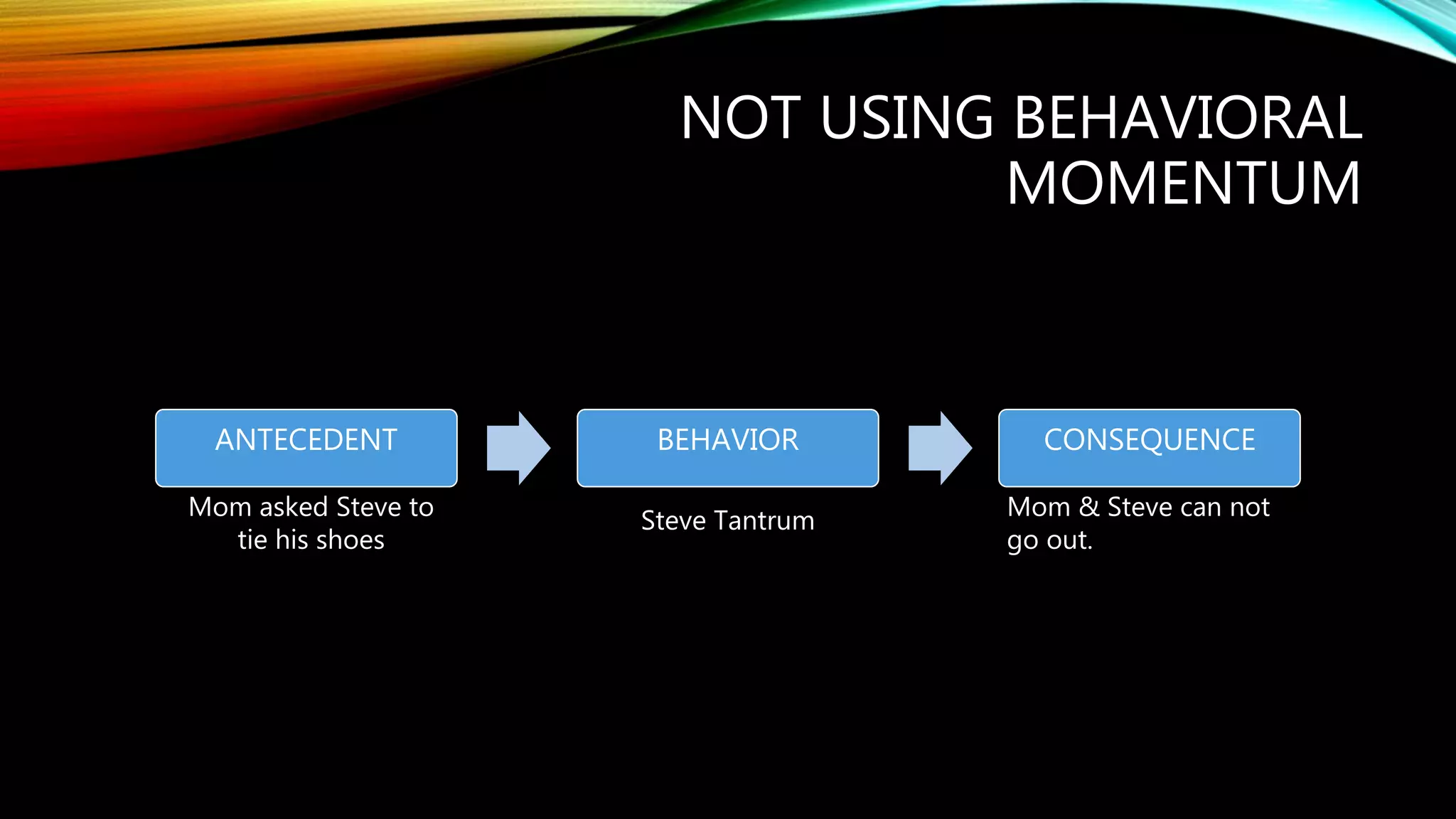
ANTECEDENT BEHAVIOR CONSEQUENCE
Steve TantrumMom asked Steve to
tie his shoes
Mom & Steve can not
go out.
NOT USING BEHAVIORAL
MOMENTUM
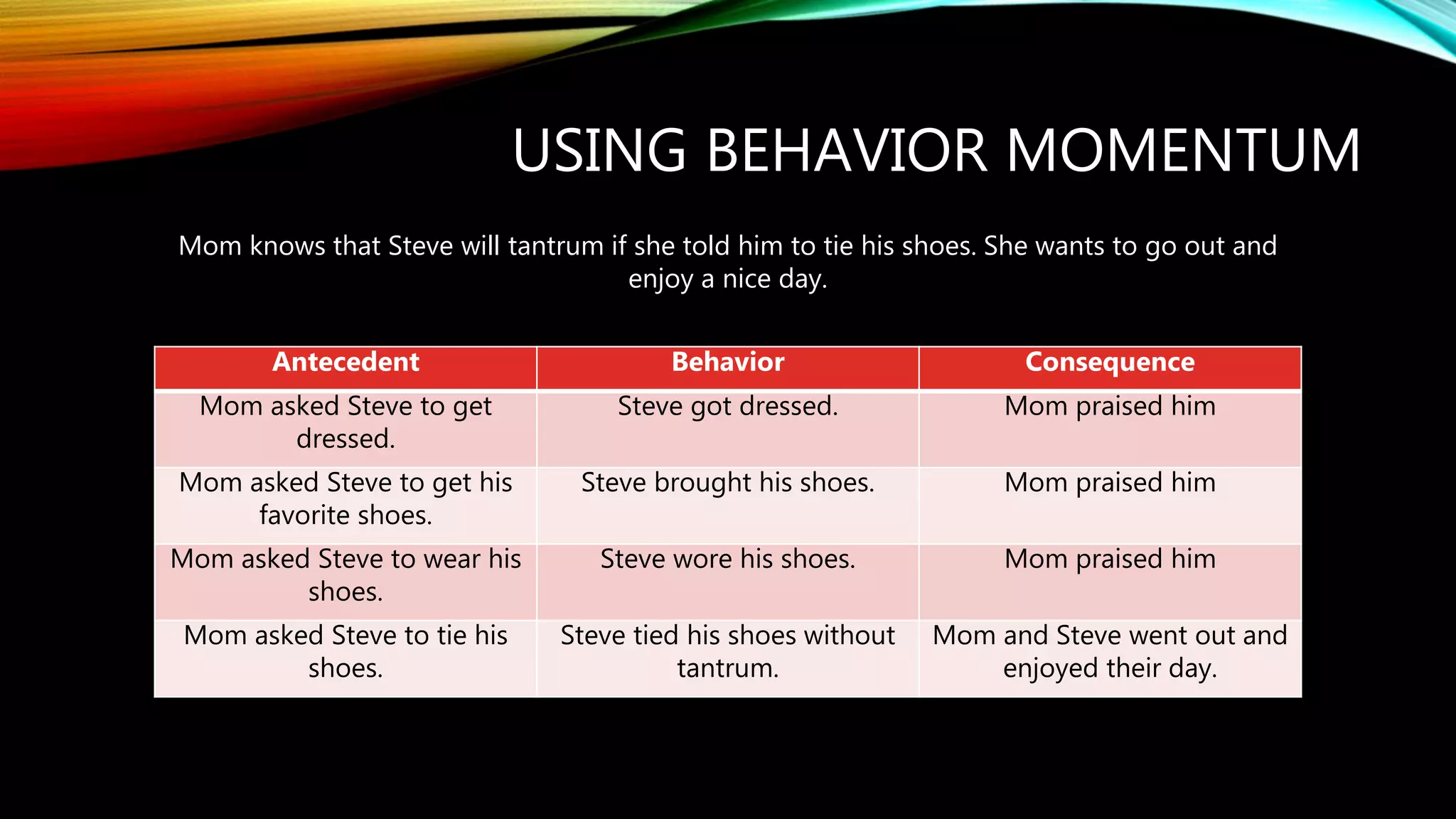
USING BEHAVIOR MOMENTUM
Mom knows that Steve will tantrum if she told him to tie his shoes. She wants to go out and
enjoy a nice day.
Antecedent Behavior Consequence
Mom asked Steve to get
dressed.
Steve got dressed. Mom praised him
Mom asked Steve to get his
favorite shoes.
Steve brought his shoes. Mom praised him
Mom asked Steve to wear his
shoes.
Steve wore his shoes. Mom praised him
Mom asked Steve to tie his
shoes.
Steve tied his shoes without
tantrum.
Mom and Steve went out and
enjoyed their day.
CONCLUSION
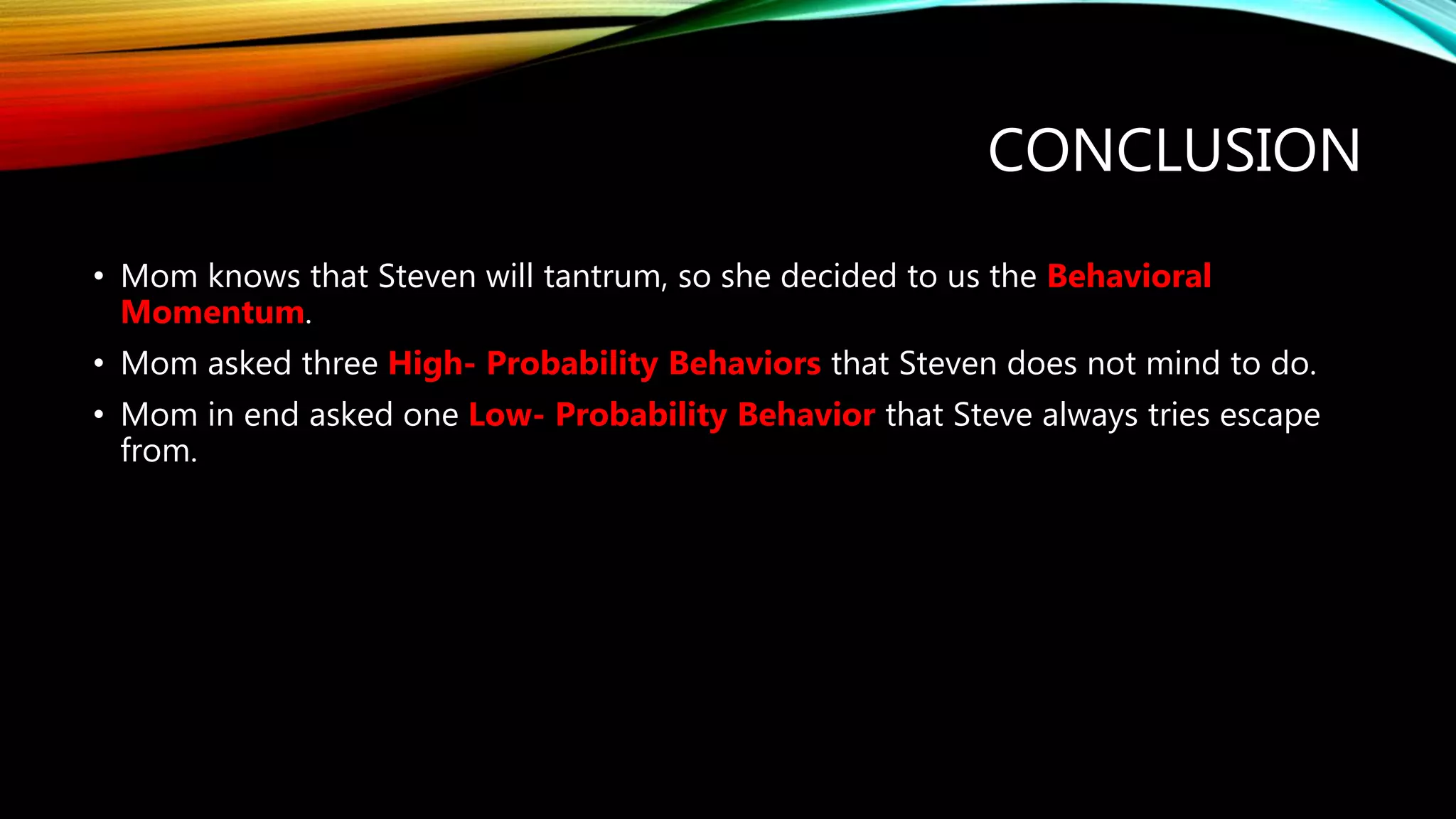
• Mom knows that Steven will tantrum, so she decided to us the Behavioral
Momentum.
• Mom asked three High- Probability Behaviors that Steven does not mind to do.
• Mom in end asked one Low- Probability Behavior that Steve always tries escape
from.
REFERENCE
• Cooper J.O, Heron T.E, Heward W.L. Applied behavior analysis (2nd ed.) Upper
Saddle River, NJ: Pearson; 2007.
KNOW YOUR BEHAVIOR
Thank You

Know Your Behavior: Behavioral Momentum

  • 1.
  • 2.
    BEHAVIORAL MOMENTUM • AKA: InterspersedRequests • AKA: Pre- Task Requests; • AKA: High- Probability Request Sequence (High- P).
  • 3.
    ANTECEDENT INTERVENTION • designed tomanipulate the environment before the unwanted target behavior occurs. • AKA: Antecedent Strategies • AKA: Antecedent Manipulation
  • 4.
    SIMPLE ABA DEFINITIONS Low- ProbabilityBehavior: Non- Preferred Activity Low- Probability Requests: When a person asks from another a difficult or non- preferred activity. High- Probability Behavior: Preferred Activity High-Probability Requests: When a person asks from another an easy or preferred activity. Repertoire: a person’s skills, knowledge, and able to do.
  • 5.
    BEHAVIORAL MOMENTUM • AntecedentIntervention • All behavior you select to use in this procedure have to be in the individual’s repertoire. • Must be very high- probability behaviors must be simple & fast to do. 1.High- Probability Behavior 2.(3- 5 Behaviors) 1.Low - Probability Behavior 2.(1 Behavior)
  • 6.
    WHAT POPULATION THATWORKS WITH • The people who are prompt dependent • The people who are too big to manage physically • The people who are sensitive to being touched. • The people who are try to escape or avoid specific tasks.
  • 7.
  • 8.
    ANTECEDENT BEHAVIOR CONSEQUENCE SteveTantrumMom asked Steve to tie his shoes Mom & Steve can not go out. NOT USING BEHAVIORAL MOMENTUM
  • 9.
    USING BEHAVIOR MOMENTUM Momknows that Steve will tantrum if she told him to tie his shoes. She wants to go out and enjoy a nice day. Antecedent Behavior Consequence Mom asked Steve to get dressed. Steve got dressed. Mom praised him Mom asked Steve to get his favorite shoes. Steve brought his shoes. Mom praised him Mom asked Steve to wear his shoes. Steve wore his shoes. Mom praised him Mom asked Steve to tie his shoes. Steve tied his shoes without tantrum. Mom and Steve went out and enjoyed their day.
  • 10.
    CONCLUSION • Mom knowsthat Steven will tantrum, so she decided to us the Behavioral Momentum. • Mom asked three High- Probability Behaviors that Steven does not mind to do. • Mom in end asked one Low- Probability Behavior that Steve always tries escape from.
  • 11.
    REFERENCE • Cooper J.O,Heron T.E, Heward W.L. Applied behavior analysis (2nd ed.) Upper Saddle River, NJ: Pearson; 2007.
  • 12.