Downloaded 48 times
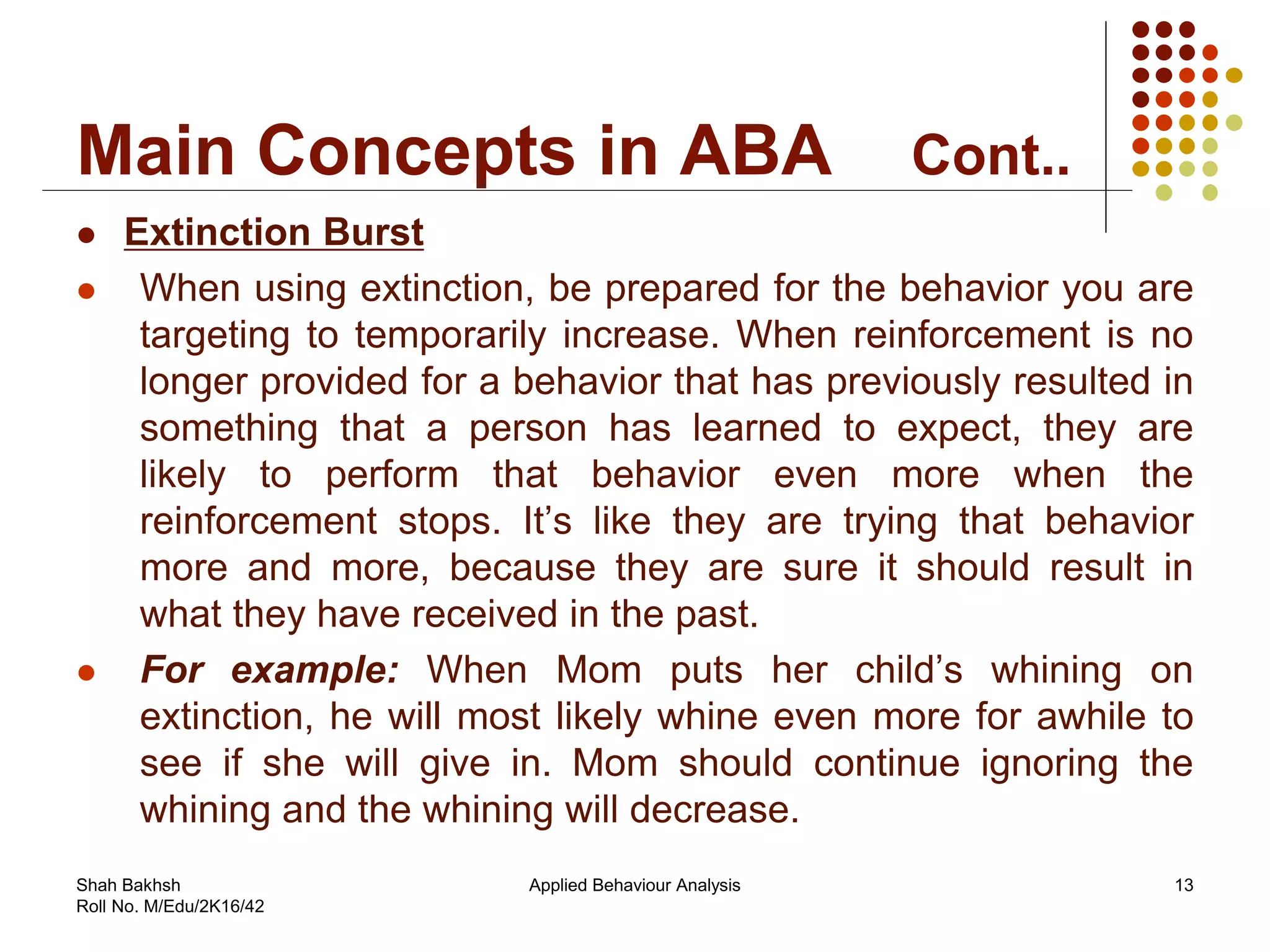
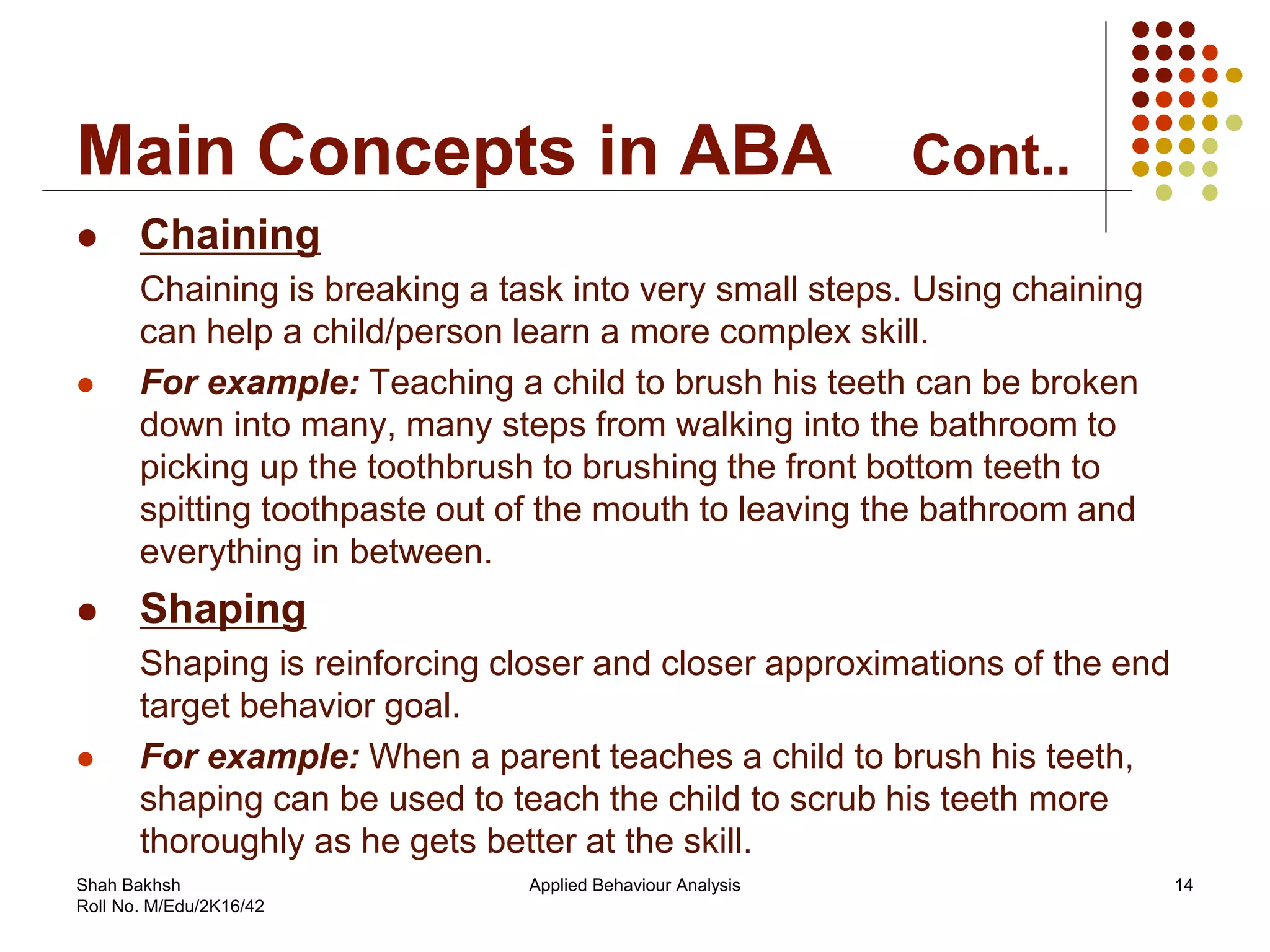
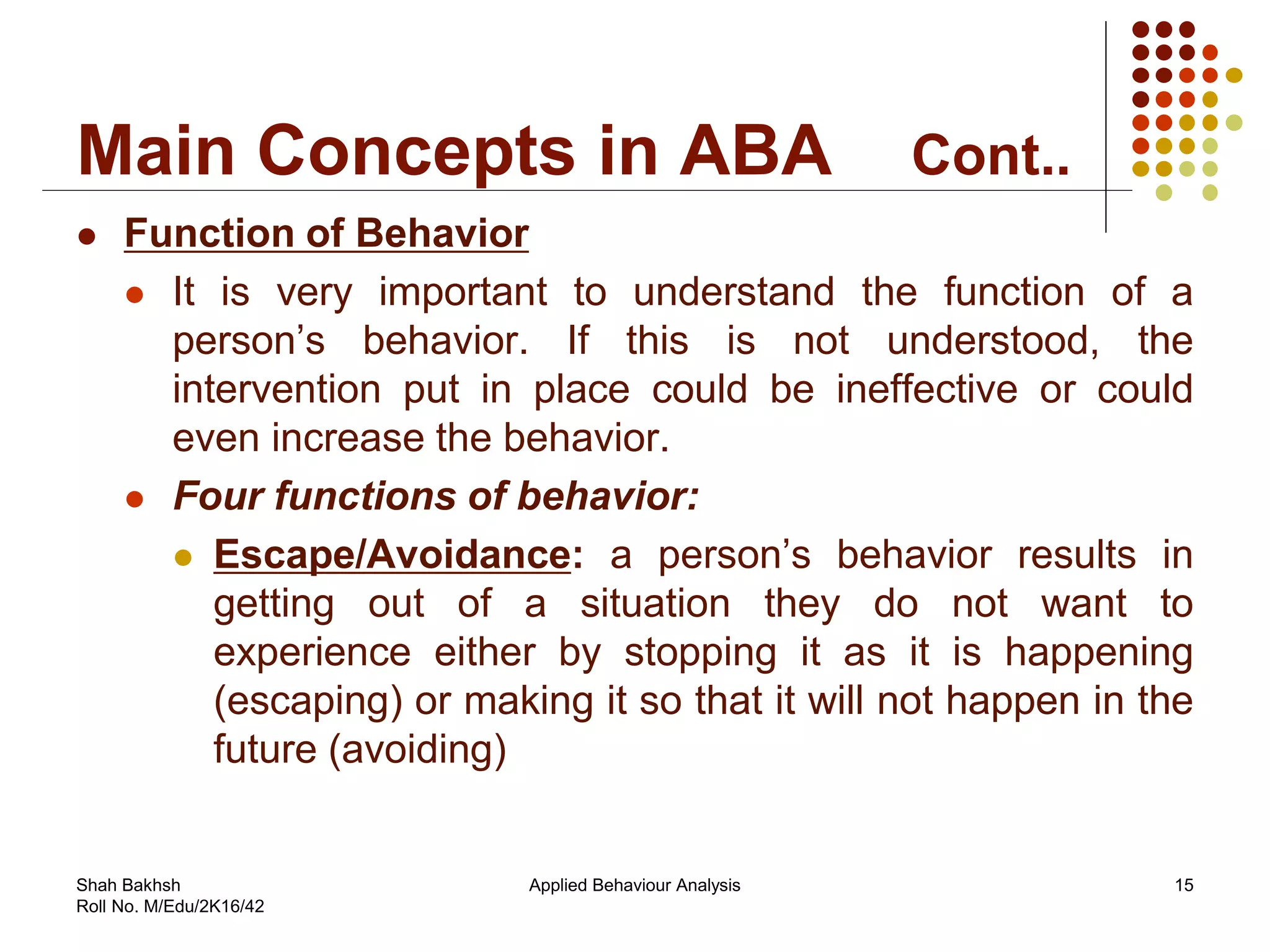
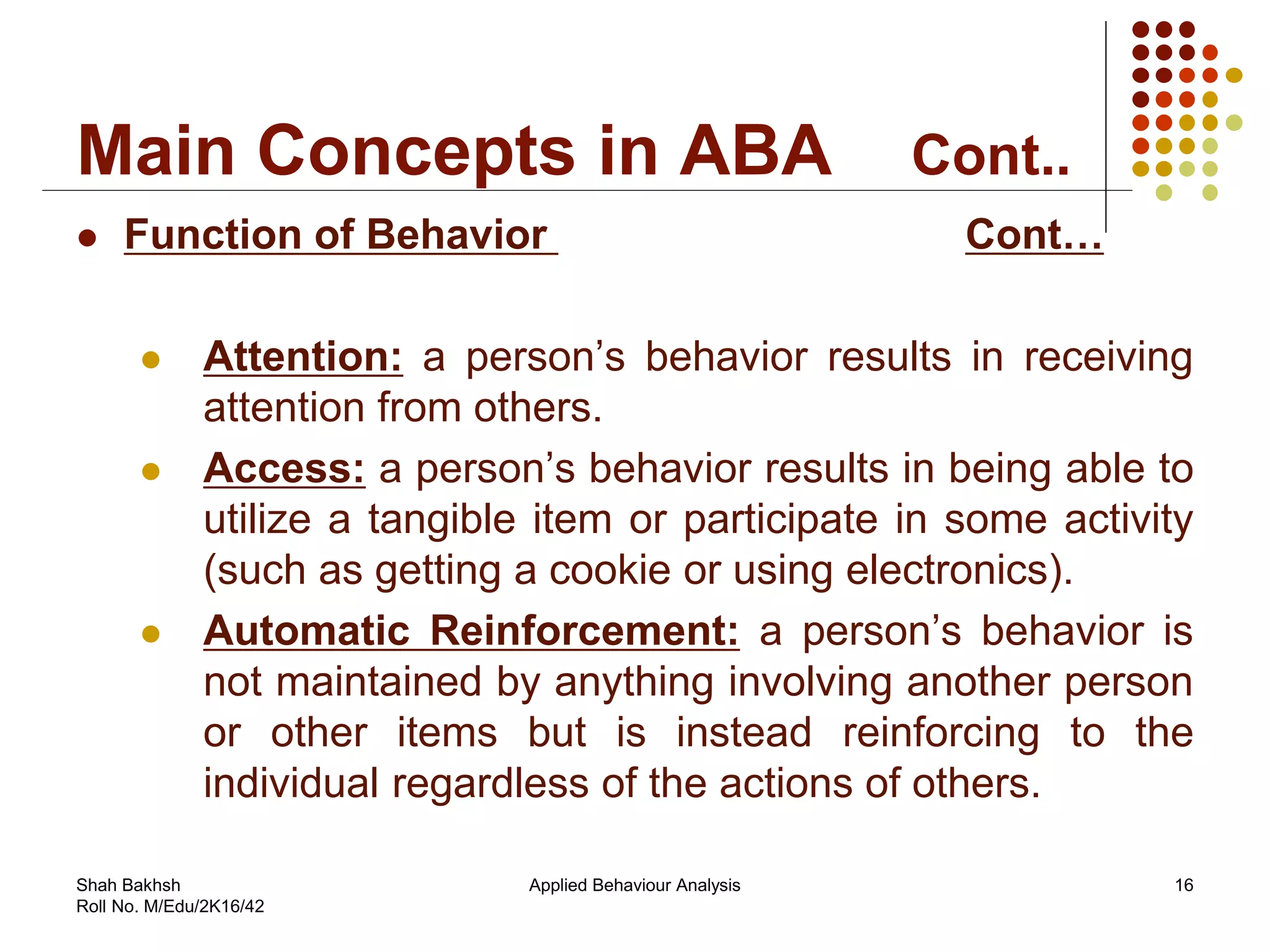
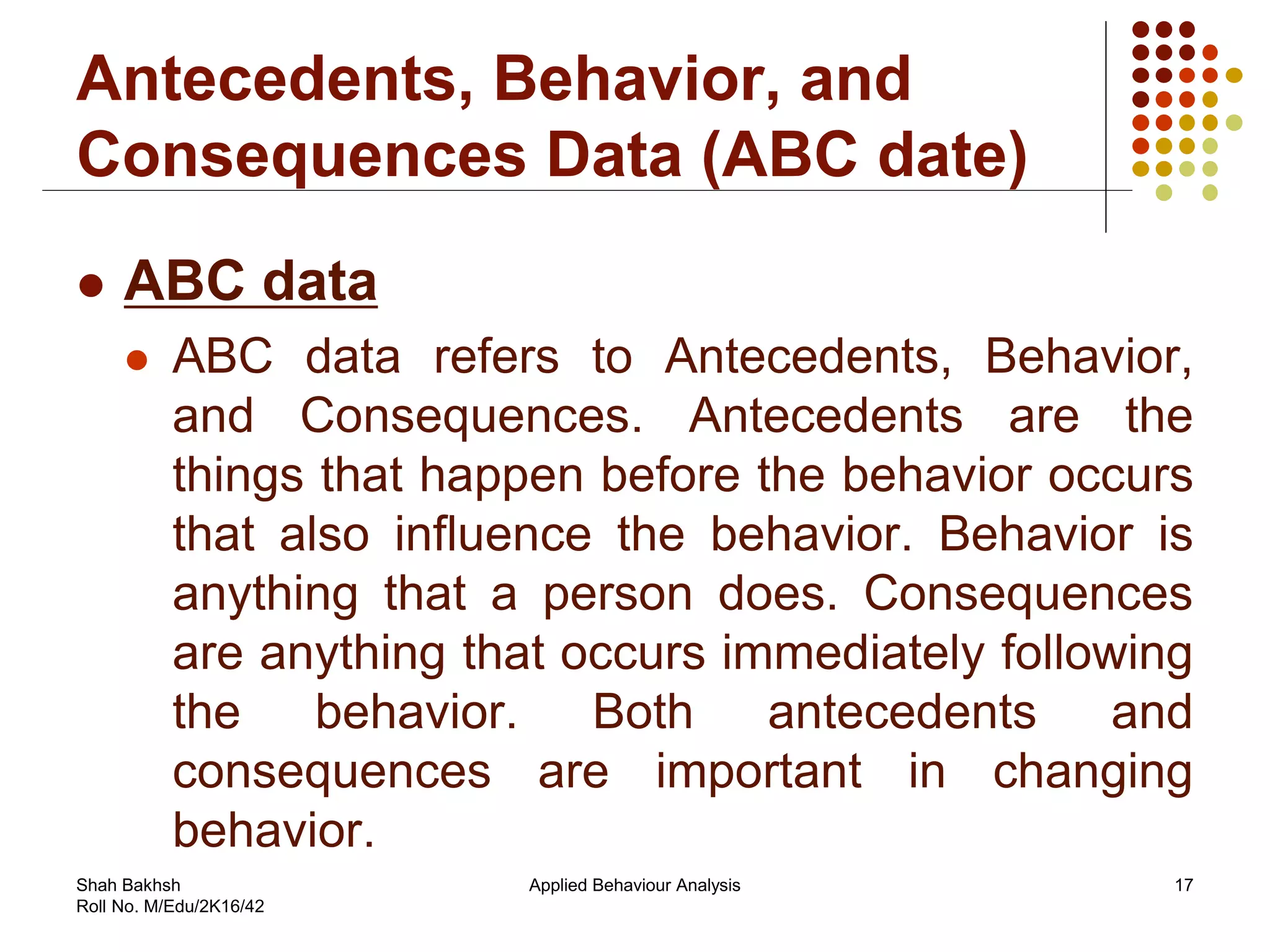

Applied Behavior Analysis (ABA) is a scientific approach for improving behaviors. It originated in the 1960s from researchers at the University of Kansas who applied principles of learning theory to address social problems. Key figures in early ABA research include Ivar Lovaas, who pioneered ABA methods for autism. Core ABA concepts include positive and negative reinforcement, differential reinforcement of alternative behaviors to reduce undesired behaviors, and understanding the function of behaviors. ABA uses techniques like shaping, chaining, and collecting ABC (antecedent-behavior-consequence) data to develop effective behavior change programs.


