Presented By:
Mithilesh Singh
SDLC Standard
Practices
Lack of etiquette and manners is a huge turn off.
KnolX Etiquettes
Punctuality
Respect Knolx session timings, you
are requested not to join sessions
after a 5 minutes threshold post
the session start time.
Feedback
Make sure to submit a constructive
feedback for all sessions as it is
very helpful for the presenter.
Mute
Please keep your window on mute
Avoid Disturbance
Avoid leaving your window
unmuted after asking a question
Agenda
- SDLC Overview
- Phases
- Common Methodologies
- Q&A
Overview
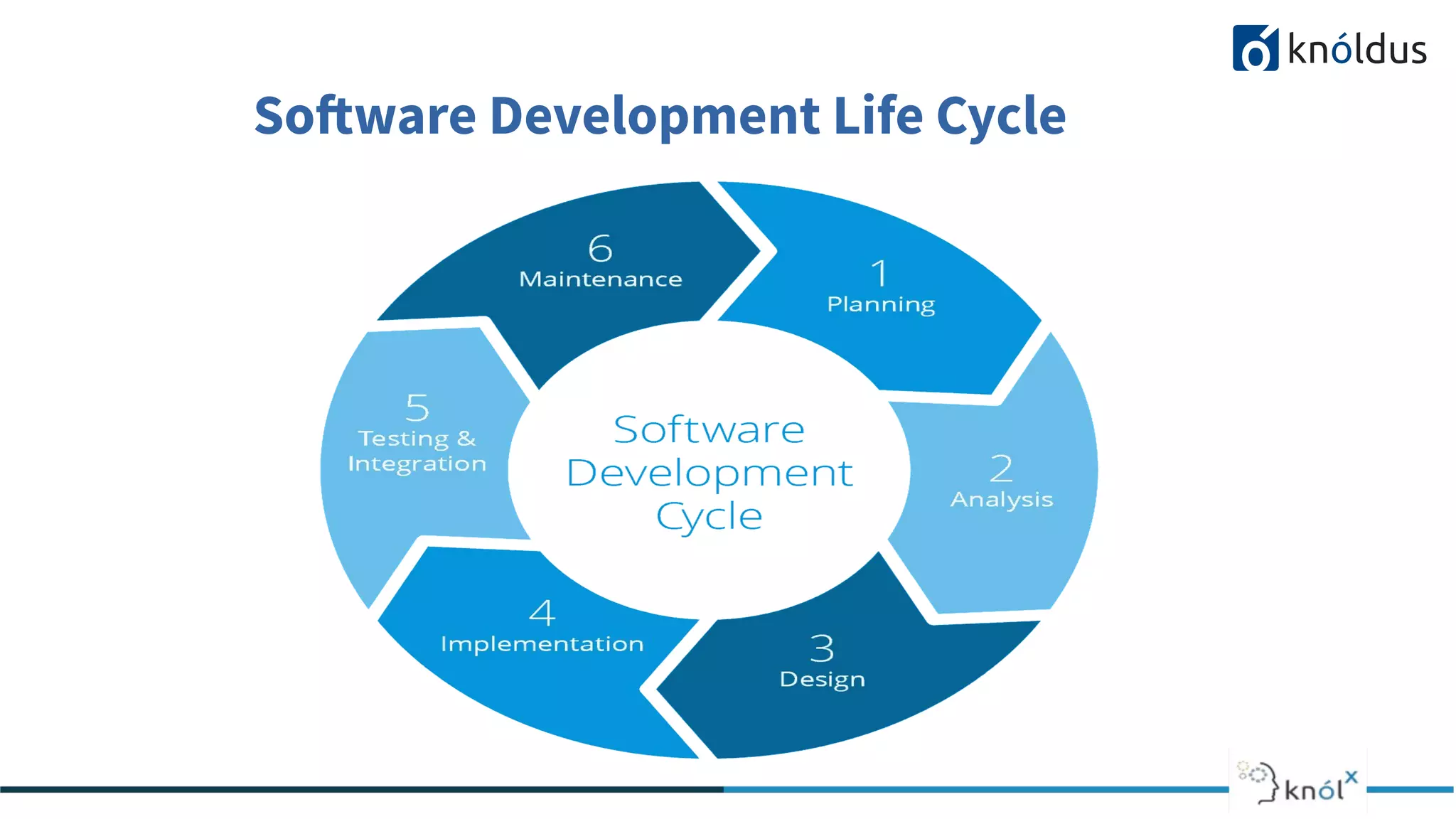
Software Development Life Cycle
Software Development Life Cycle (SDLC) is a process used by the software
industry to design, develop and test high quality software that meets or
exceeds customer expectations, reaches completion within times and cost
estimates.
SDLC PHASES
Software Development Life Cycle
Planning/Initiation Phase
Identify
■ Key Stack-holders
■ User Interface
■ User Experience ( Previous if any)
■ Technical Information
■ Non-Functional Specifics
■ Development Environment
■ Software Architecture
Constant Development Phase
Can fall down into 2 broader categories :
■ Projects with known Design/Infrastructure
For competitors in market or pre development experience
■ Unique Projects
Need out of box thinking
Need to develop brand new technological/Infrastructural
concept
Gateway Phase
After a month working on constant development phase , the development
cycle can be broken down into few sub-phases like
■ Prototype
■ Feasibility Phase
■ Actual Concept Development
In this phase , a decision is taken whether to proceed for further development
with any selected approach or scrap it.
-80-85% Projects dies at this stage.
SDLC Challenges
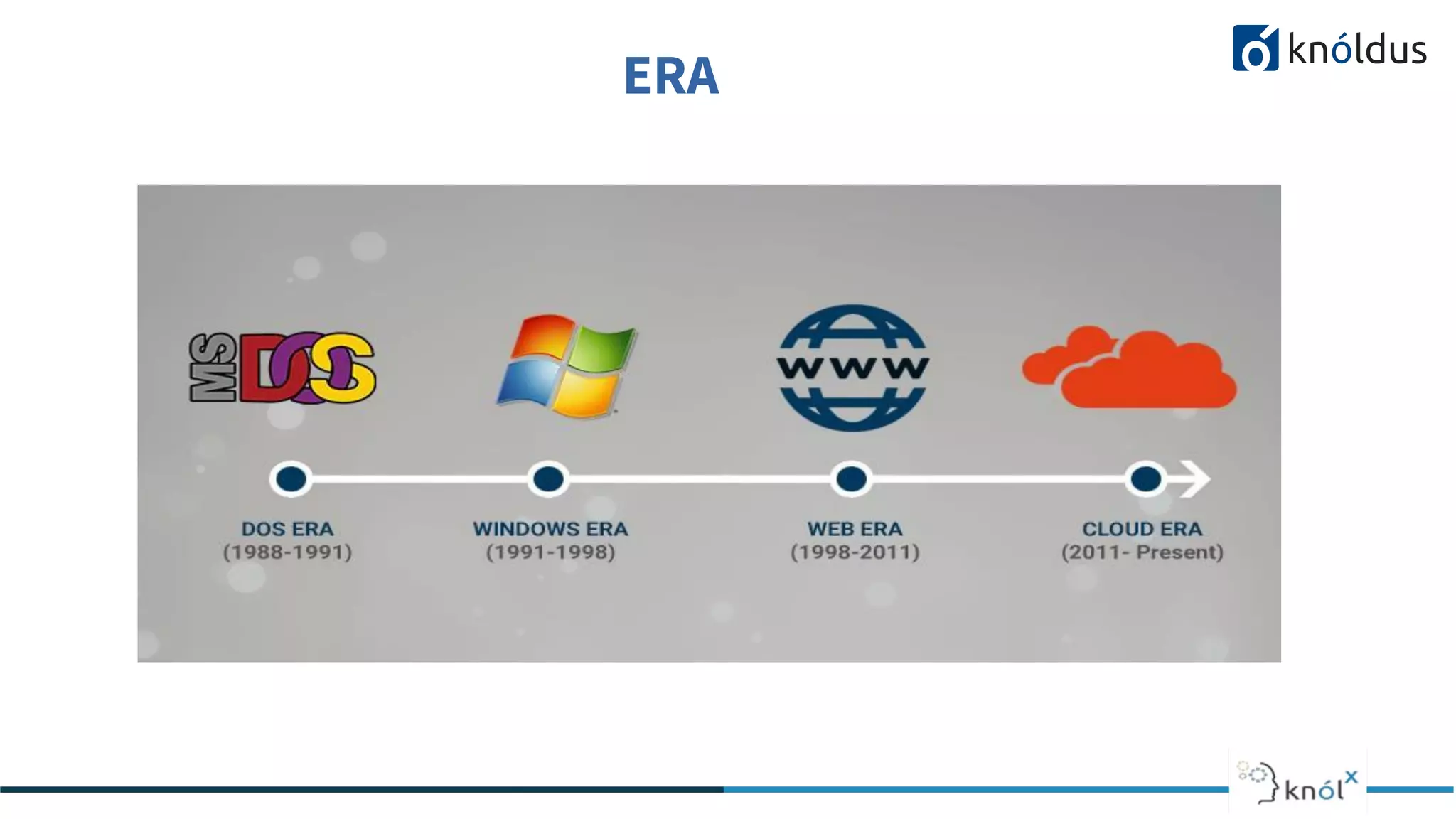
ERA
ERA
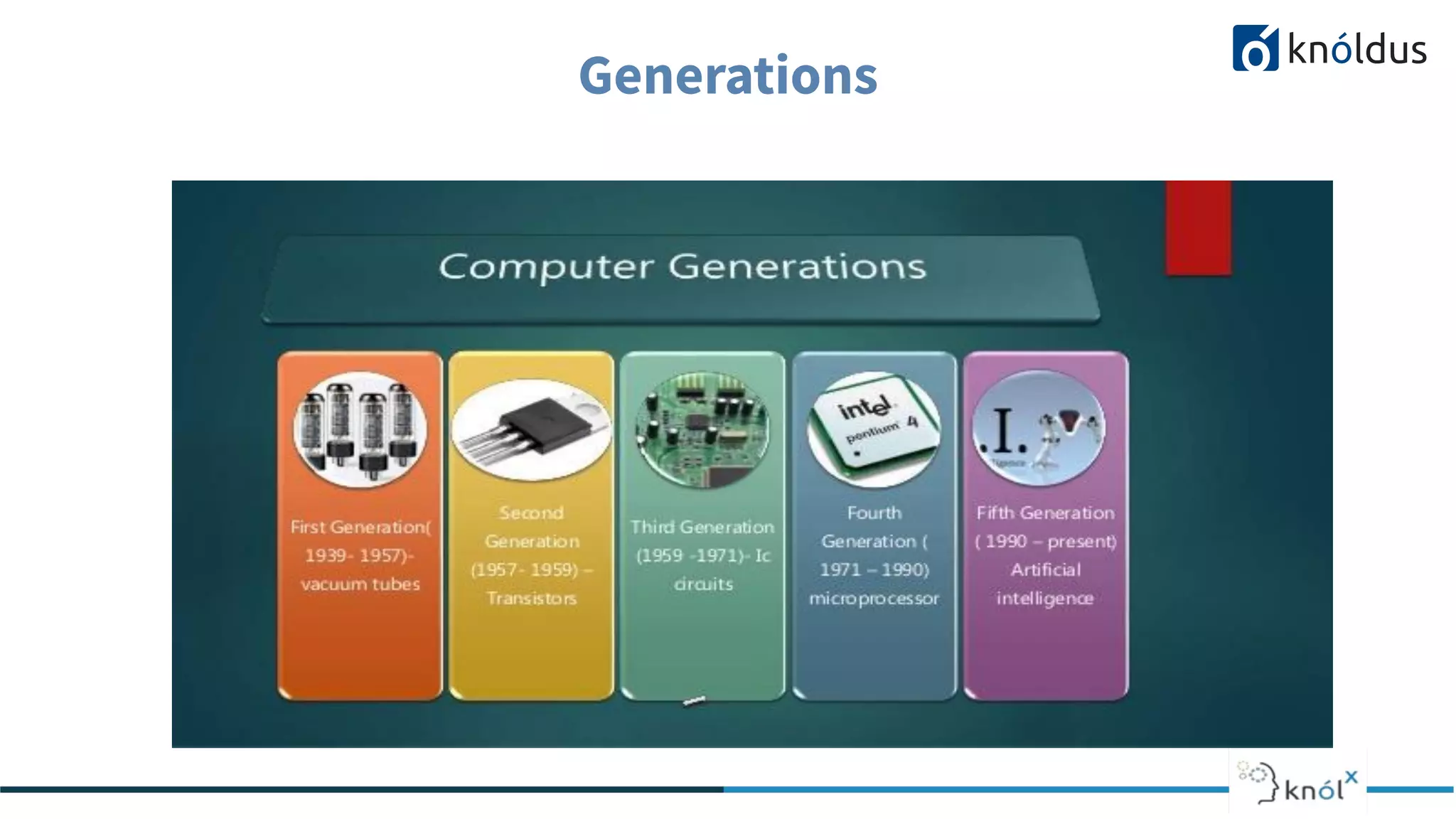
Generations
ERA
Common Methodologies
■ -Waterfall
■ -Iterative
■ -Agile
■ -DevOps
Waterfall
Adapted from manufacturing and
construction industries, the waterfall
model’s main distinction is a sequential
list of development tasks. Engineers
accomplish these tasks in a specific
order because each task depends
on deliverable from previous tasks.
This specific order of tasks makes the
waterfall model more rigid.
Iterative
Iterative model is the development
of a software system through repeated
cycles (iterations), in smaller portions
at a time (increments).
It allows developers to learn from previous
iterations and make changes to future
iterations.
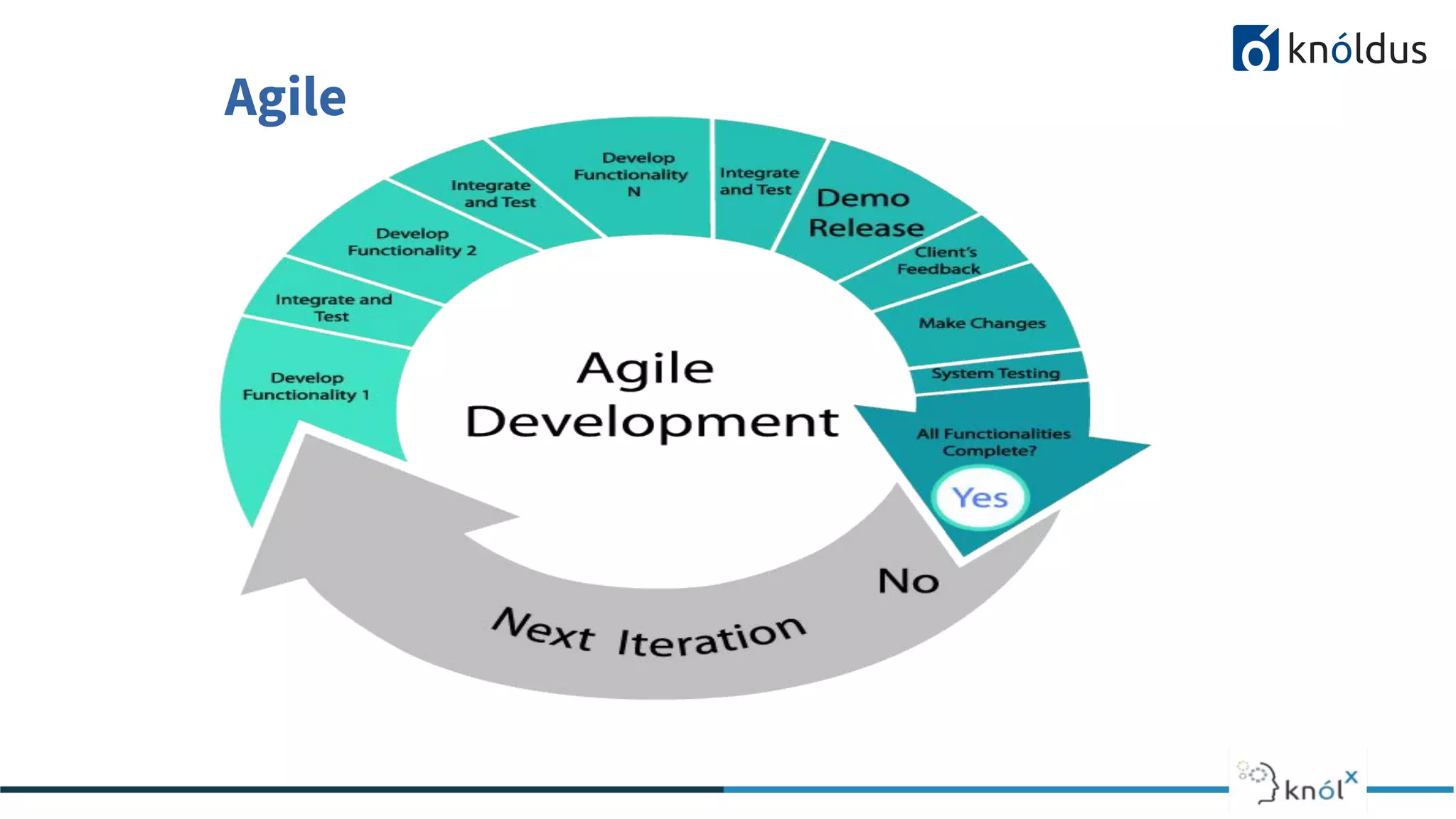
Agile
Agile software development is various approaches to software
development under which requirements and solutions evolve through
the collaborative effort of
self-organizing and cross-functional teams and their customer(s)/end
user(s). It advocates adaptive planning, evolutionary development,
early delivery, and continual improvement, and it encourages rapid and
flexible response to change.
Agile
DevOps
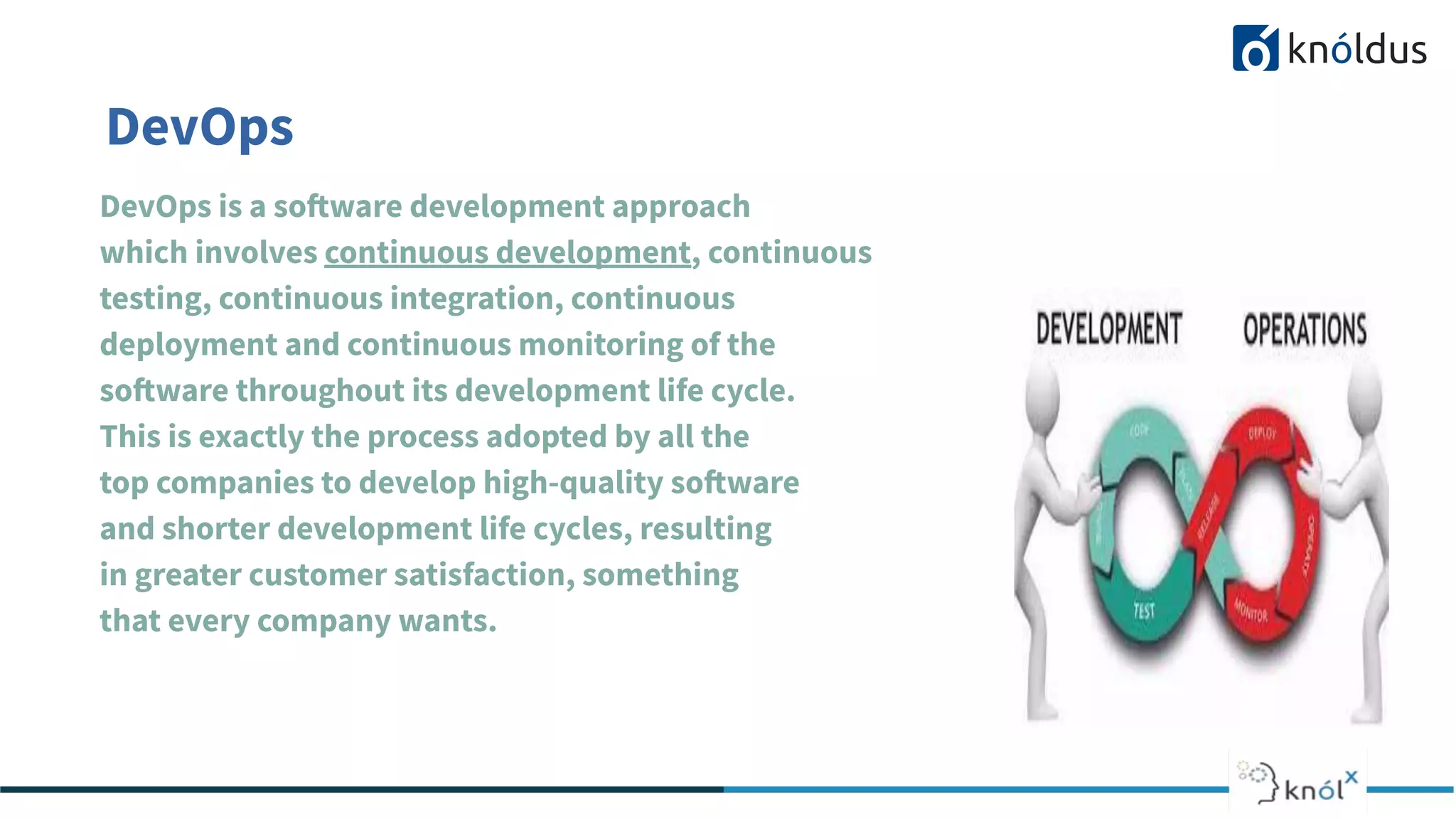
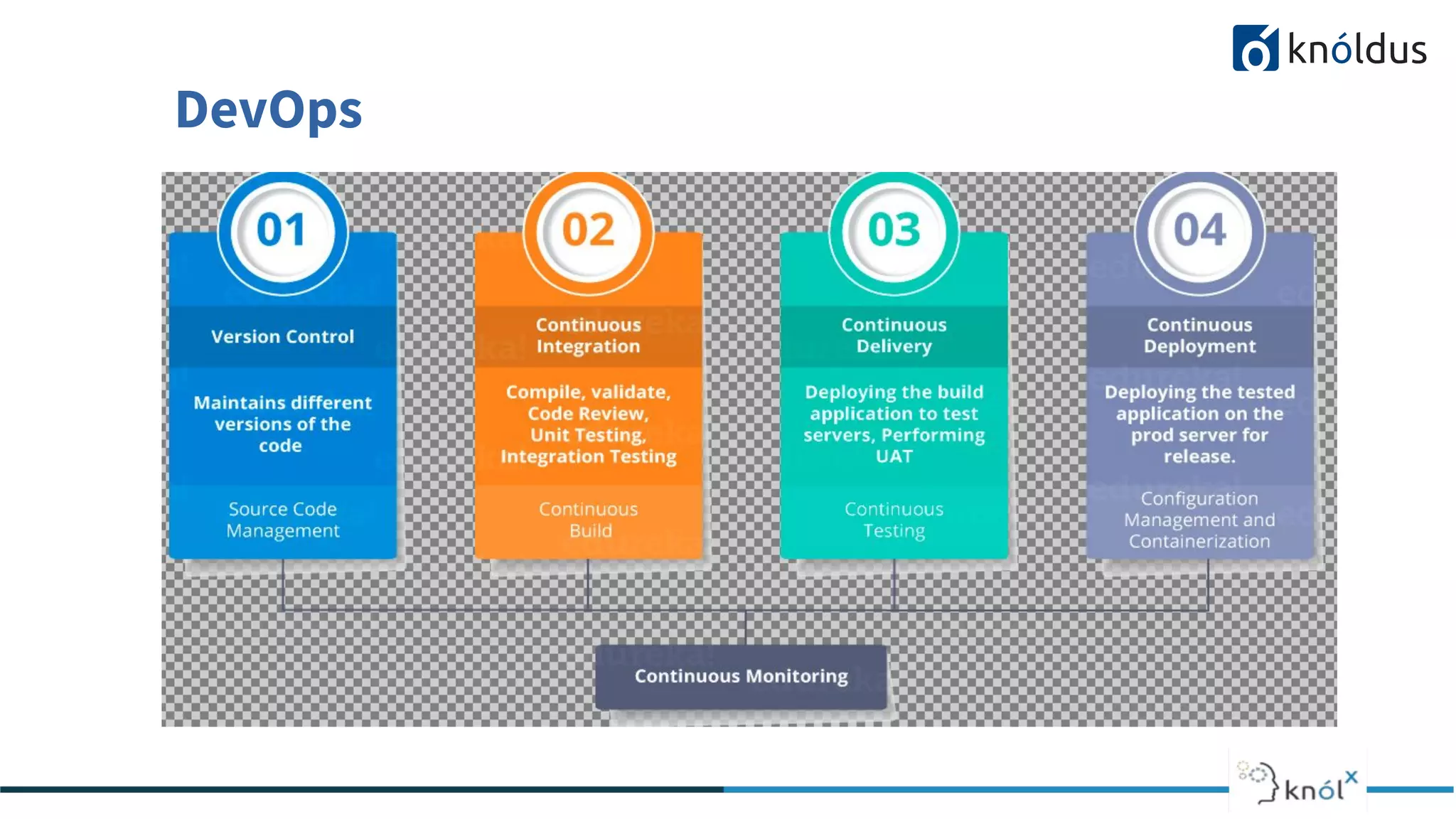
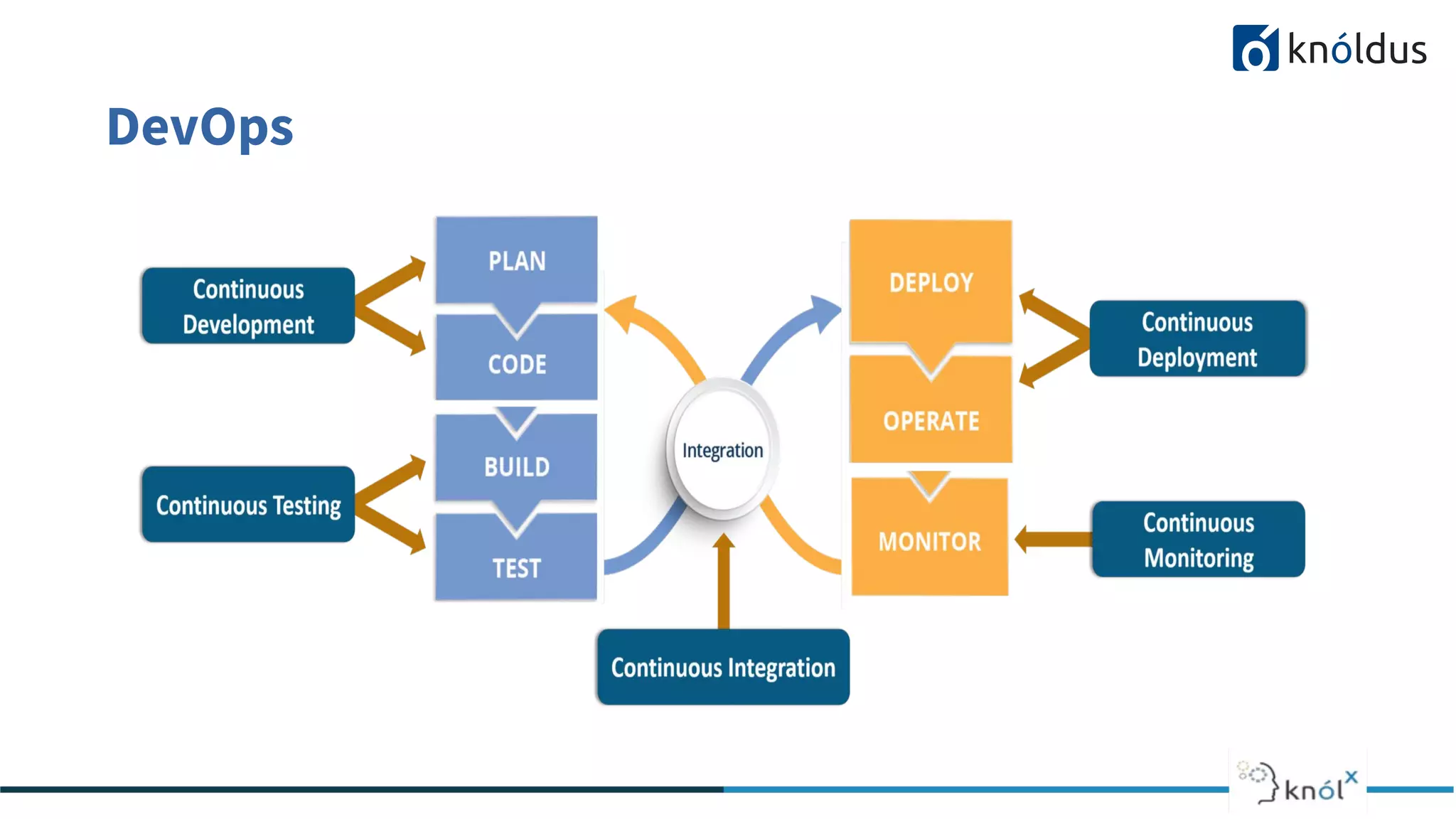
DevOps is a software development approach
which involves continuous development, continuous
testing, continuous integration, continuous
deployment and continuous monitoring of the
software throughout its development life cycle.
This is exactly the process adopted by all the
top companies to develop high-quality software
and shorter development life cycles, resulting
in greater customer satisfaction, something
that every company wants.
DevOps
DevOps
DevOps Benefits
-Improved collaboration, operational support, & faster fixes
-Increased flexibility, agility and reliability
-Infrastructure security and data protection
-Faster maintenance and upgrades
-Transformation of projects with digitization strategies
-Increase speed, the productivity of a business and IT team
DevOps Tools
Continuous Development
Tools : Git, SVN, CVS, Mercurial
CI [ Continuous Integration ]
Tools : Jenkins, TeamCity, Travis
Continuous Testing
Tools : Jenkins , Selenium , TestNG , JUnit
CD [Continuous Deployment]
Tools: Configuration Management Tools – Chef, Puppet, Ansible and
Containerization – Docker, Vagrant
Continuous Montiroing
Tools: Splunk, ELK Stack, Nagios, New Relic
Q & A

Knoldus SDLC Standard Practices

  • 1.
  • 2.
    Lack of etiquetteand manners is a huge turn off. KnolX Etiquettes Punctuality Respect Knolx session timings, you are requested not to join sessions after a 5 minutes threshold post the session start time. Feedback Make sure to submit a constructive feedback for all sessions as it is very helpful for the presenter. Mute Please keep your window on mute Avoid Disturbance Avoid leaving your window unmuted after asking a question
  • 3.
    Agenda - SDLC Overview -Phases - Common Methodologies - Q&A
  • 4.
  • 5.
    Software Development LifeCycle Software Development Life Cycle (SDLC) is a process used by the software industry to design, develop and test high quality software that meets or exceeds customer expectations, reaches completion within times and cost estimates.
  • 6.
  • 7.
  • 8.
    Planning/Initiation Phase Identify ■ KeyStack-holders ■ User Interface ■ User Experience ( Previous if any) ■ Technical Information ■ Non-Functional Specifics ■ Development Environment ■ Software Architecture
  • 9.
    Constant Development Phase Canfall down into 2 broader categories : ■ Projects with known Design/Infrastructure For competitors in market or pre development experience ■ Unique Projects Need out of box thinking Need to develop brand new technological/Infrastructural concept
  • 10.
    Gateway Phase After amonth working on constant development phase , the development cycle can be broken down into few sub-phases like ■ Prototype ■ Feasibility Phase ■ Actual Concept Development In this phase , a decision is taken whether to proceed for further development with any selected approach or scrap it. -80-85% Projects dies at this stage.
  • 11.
  • 12.
  • 13.
  • 14.
  • 15.
  • 17.
    Common Methodologies ■ -Waterfall ■-Iterative ■ -Agile ■ -DevOps
  • 18.
    Waterfall Adapted from manufacturingand construction industries, the waterfall model’s main distinction is a sequential list of development tasks. Engineers accomplish these tasks in a specific order because each task depends on deliverable from previous tasks. This specific order of tasks makes the waterfall model more rigid.
  • 19.
    Iterative Iterative model isthe development of a software system through repeated cycles (iterations), in smaller portions at a time (increments). It allows developers to learn from previous iterations and make changes to future iterations.
  • 20.
    Agile Agile software developmentis various approaches to software development under which requirements and solutions evolve through the collaborative effort of self-organizing and cross-functional teams and their customer(s)/end user(s). It advocates adaptive planning, evolutionary development, early delivery, and continual improvement, and it encourages rapid and flexible response to change.
  • 21.
  • 22.
    DevOps DevOps is asoftware development approach which involves continuous development, continuous testing, continuous integration, continuous deployment and continuous monitoring of the software throughout its development life cycle. This is exactly the process adopted by all the top companies to develop high-quality software and shorter development life cycles, resulting in greater customer satisfaction, something that every company wants.
  • 23.
  • 24.
  • 25.
    DevOps Benefits -Improved collaboration,operational support, & faster fixes -Increased flexibility, agility and reliability -Infrastructure security and data protection -Faster maintenance and upgrades -Transformation of projects with digitization strategies -Increase speed, the productivity of a business and IT team
  • 26.
    DevOps Tools Continuous Development Tools: Git, SVN, CVS, Mercurial CI [ Continuous Integration ] Tools : Jenkins, TeamCity, Travis Continuous Testing Tools : Jenkins , Selenium , TestNG , JUnit CD [Continuous Deployment] Tools: Configuration Management Tools – Chef, Puppet, Ansible and Containerization – Docker, Vagrant Continuous Montiroing Tools: Splunk, ELK Stack, Nagios, New Relic
  • 27.