Kinds of
Ecosystem


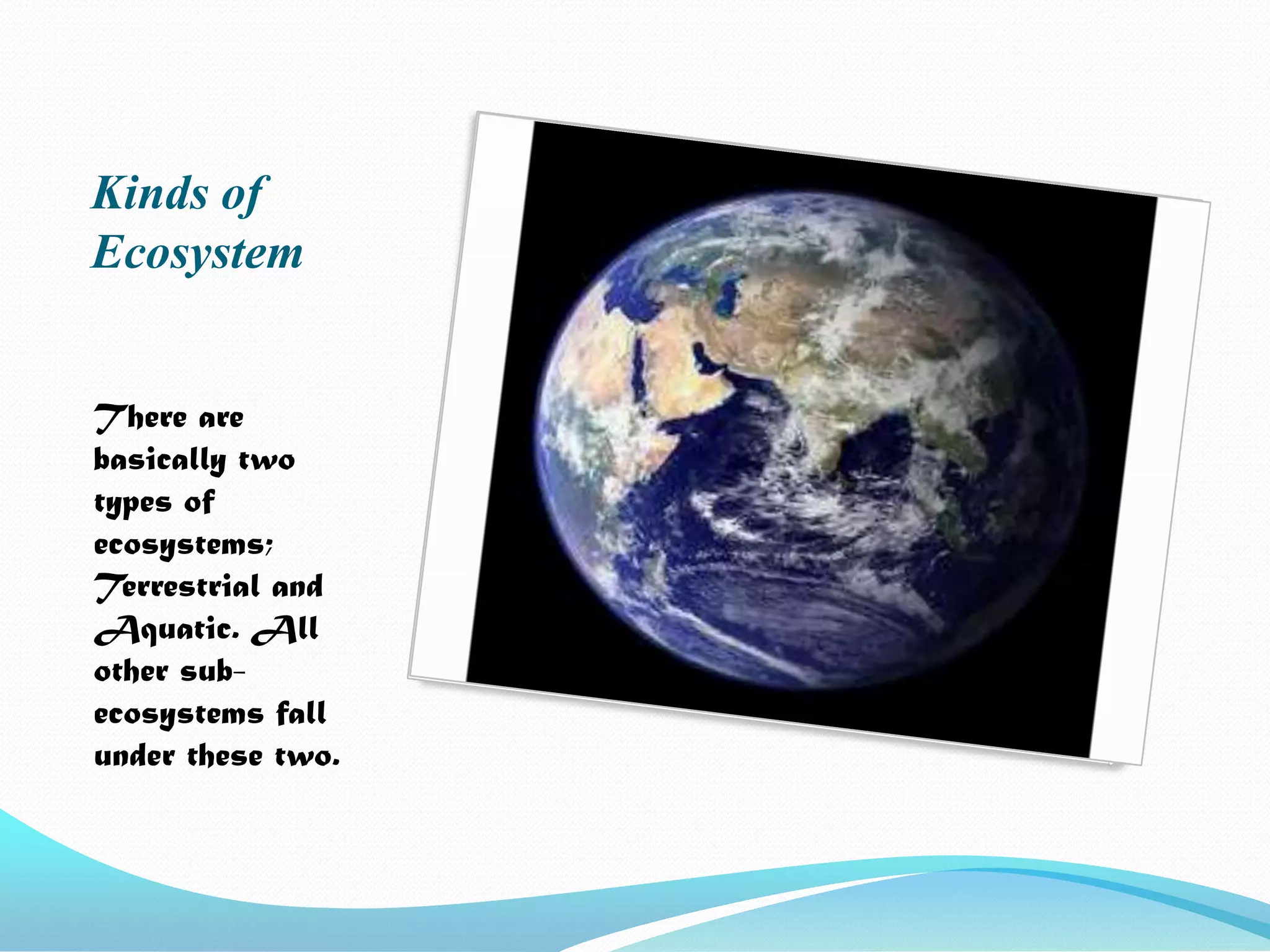
There are
basically two
types of
ecosystems;
Terrestrial and
Aquatic. All
other sub-
ecosystems fall
under these two.
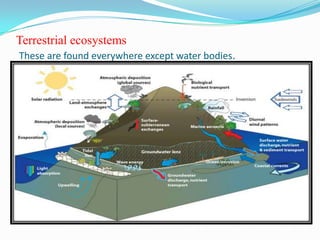
Terrestrial ecosystems
These are found everywhere except water bodies.
The Forest Ecosystem
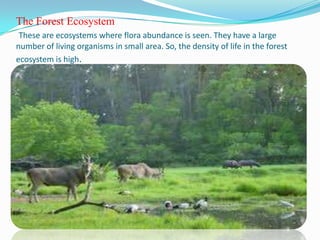
 These are ecosystems where flora abundance is seen. They have a large
number of living organisms in small area. So, the density of life in the forest
ecosystem is high.
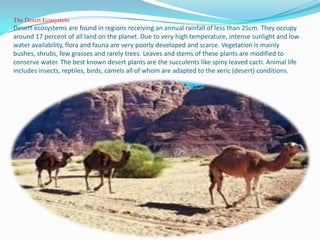
The Desert Ecosystem
Desert ecosystems are found in regions receiving an annual rainfall of less than 25cm. They occupy
around 17 percent of all land on the planet. Due to very high temperature, intense sunlight and low
water availability, flora and fauna are very poorly developed and scarce. Vegetation is mainly
bushes, shrubs, few grasses and rarely trees. Leaves and stems of these plants are modified to
conserve water. The best known desert plants are the succulents like spiny leaved cacti. Animal life
includes insects, reptiles, birds, camels all of whom are adapted to the xeric (desert) conditions.
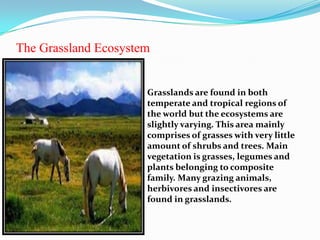
The Grassland Ecosystem


                      Grasslands are found in both
                      temperate and tropical regions of
                      the world but the ecosystems are
                      slightly varying. This area mainly
                      comprises of grasses with very little
                      amount of shrubs and trees. Main
                      vegetation is grasses, legumes and
                      plants belonging to composite
                      family. Many grazing animals,
                      herbivores and insectivores are
                      found in grasslands.
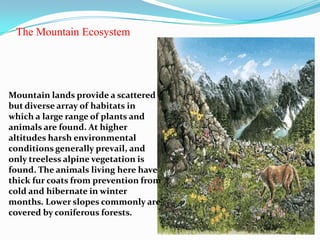
The Mountain Ecosystem


Mountain lands provide a scattered
but diverse array of habitats in
which a large range of plants and
animals are found. At higher
altitudes harsh environmental
conditions generally prevail, and
only treeless alpine vegetation is
found. The animals living here have
thick fur coats from prevention from
cold and hibernate in winter
months. Lower slopes commonly are
covered by coniferous forests.
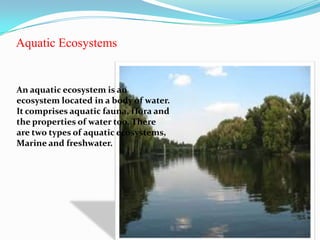
Aquatic Ecosystems


An aquatic ecosystem is an
ecosystem located in a body of water.
It comprises aquatic fauna, flora and
the properties of water too. There
are two types of aquatic ecosystems,
Marine and freshwater.
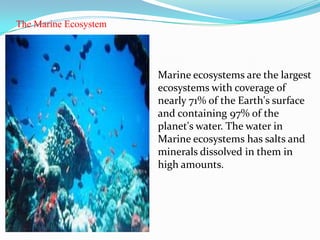
The Marine Ecosystem


                       Marine ecosystems are the largest
                       ecosystems with coverage of
                       nearly 71% of the Earth's surface
                       and containing 97% of the
                       planet's water. The water in
                       Marine ecosystems has salts and
                       minerals dissolved in them in
                       high amounts.
Different
divisions of
marine
ecosystems are:
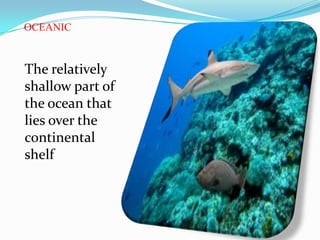
OCEANIC


The relatively
shallow part of
the ocean that
lies over the
continental
shelf
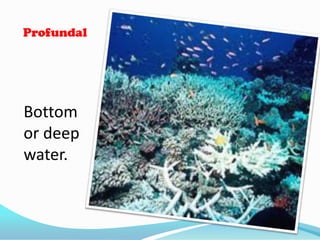
Profundal


Bottom
or deep
water.
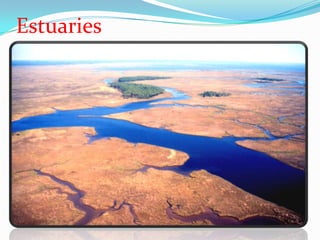
Estuaries
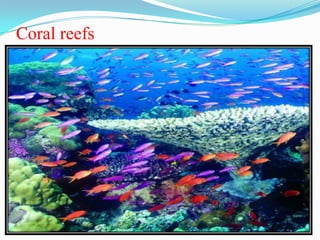
Coral reefs
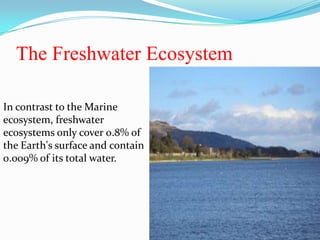
The Freshwater Ecosystem

In contrast to the Marine
ecosystem, freshwater
ecosystems only cover 0.8% of
the Earth's surface and contain
0.009% of its total water.
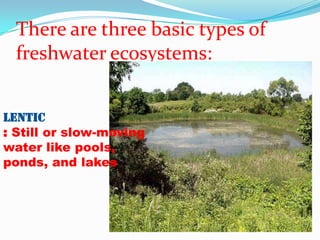
There are three basic types of
 freshwater ecosystems:


Lentic
: Still or slow-moving
water like pools,
ponds, and lakes
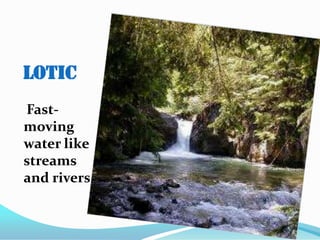
Lotic
Fast-
moving
water like
streams
and rivers
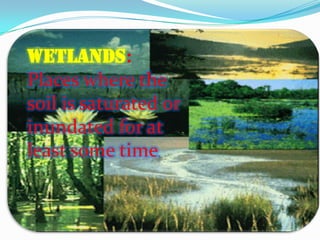
Wetlands:
Places where the
soil is saturated or
inundated for at
least some time.
CARLA MAYOL
 CARLA MAYOL


     AND
       AND
 JESSA MAYOL
 BSHM-II


JESSA MAYOL
BSHM-II

Kinds of ecosystem

  • 1.
    Kinds of Ecosystem There are basicallytwo types of ecosystems; Terrestrial and Aquatic. All other sub- ecosystems fall under these two.
  • 2.
    Terrestrial ecosystems These arefound everywhere except water bodies.
  • 3.
    The Forest Ecosystem These are ecosystems where flora abundance is seen. They have a large number of living organisms in small area. So, the density of life in the forest ecosystem is high.
  • 4.
    The Desert Ecosystem Desertecosystems are found in regions receiving an annual rainfall of less than 25cm. They occupy around 17 percent of all land on the planet. Due to very high temperature, intense sunlight and low water availability, flora and fauna are very poorly developed and scarce. Vegetation is mainly bushes, shrubs, few grasses and rarely trees. Leaves and stems of these plants are modified to conserve water. The best known desert plants are the succulents like spiny leaved cacti. Animal life includes insects, reptiles, birds, camels all of whom are adapted to the xeric (desert) conditions.
  • 5.
    The Grassland Ecosystem Grasslands are found in both temperate and tropical regions of the world but the ecosystems are slightly varying. This area mainly comprises of grasses with very little amount of shrubs and trees. Main vegetation is grasses, legumes and plants belonging to composite family. Many grazing animals, herbivores and insectivores are found in grasslands.
  • 6.
    The Mountain Ecosystem Mountainlands provide a scattered but diverse array of habitats in which a large range of plants and animals are found. At higher altitudes harsh environmental conditions generally prevail, and only treeless alpine vegetation is found. The animals living here have thick fur coats from prevention from cold and hibernate in winter months. Lower slopes commonly are covered by coniferous forests.
  • 7.
    Aquatic Ecosystems An aquaticecosystem is an ecosystem located in a body of water. It comprises aquatic fauna, flora and the properties of water too. There are two types of aquatic ecosystems, Marine and freshwater.
  • 8.
    The Marine Ecosystem Marine ecosystems are the largest ecosystems with coverage of nearly 71% of the Earth's surface and containing 97% of the planet's water. The water in Marine ecosystems has salts and minerals dissolved in them in high amounts.
  • 9.
  • 10.
    OCEANIC The relatively shallow partof the ocean that lies over the continental shelf
  • 11.
  • 12.
  • 13.
  • 14.
    The Freshwater Ecosystem Incontrast to the Marine ecosystem, freshwater ecosystems only cover 0.8% of the Earth's surface and contain 0.009% of its total water.
  • 15.
    There are threebasic types of freshwater ecosystems: Lentic : Still or slow-moving water like pools, ponds, and lakes
  • 16.
  • 17.
    Wetlands: Places where the soilis saturated or inundated for at least some time.
  • 18.
    CARLA MAYOL CARLAMAYOL AND AND JESSA MAYOL BSHM-II JESSA MAYOL BSHM-II