Mr. Kiran Kumar Naikoti
Introduction
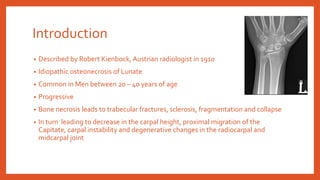
• Described by Robert Kienbock, Austrian radiologist in 1910
• Idiopathic osteonecrosis of Lunate
• Common in Men between 20 – 40 years of age
• Progressive
• Bone necrosis leads to trabecular fractures, sclerosis, fragmentation and collapse
• In turn leading to decrease in the carpal height, proximal migration of the
Capitate, carpal instability and degenerative changes in the radiocarpal and
midcarpal joint
Etiology
• Multifactorial
• Trauma
• Anatomical factors
• Vascular causes
• Arterial
• Venous stasis
• Lunate morphology
• Biomechanical factors
• Negative ulnar variance
• Decreased Radial inclination
• Systemic causes – SLE, septic emboli, Raynaud’s, vasculitis, scleroderma
Vascular supply
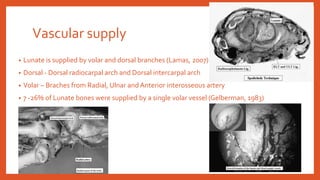
• Lunate is supplied by volar and dorsal branches (Lamas, 2007)
• Dorsal - Dorsal radiocarpal arch and Dorsal intercarpal arch
• Volar – Braches from Radial, Ulnar and Anterior interosseous artery
• 7 -26% of Lunate bones were supplied by a single volar vessel (Gelberman, 1983)
Vascular supply
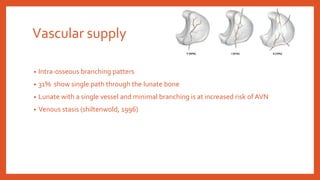
• Intra-osseous branching patters
• 31% show single path through the lunate bone
• Lunate with a single vessel and minimal branching is at increased risk of AVN
• Venous stasis (shiltenwold, 1996)
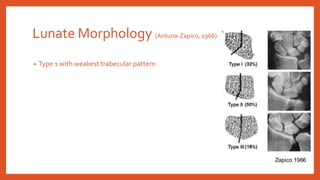
Lunate Morphology (Antuna-Zapico, 1966)
• Type 1 with weakest trabecular pattern
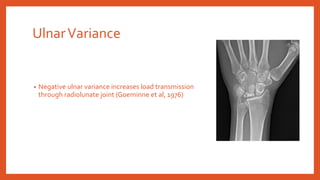
UlnarVariance
• Negative ulnar variance increases load transmission
through radiolunate joint (Goeminne et al, 1976)
Clinical Features
• Dorsal wrist pain
• Wrist swelling
• Weakness
• Reduced wrist movements
Investigations
• X ray
• MRI (Differential diagnosis – Ulnocarpal abutment, fracture, Benign cyst)
• CT scan
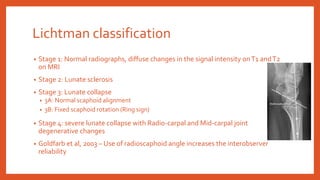
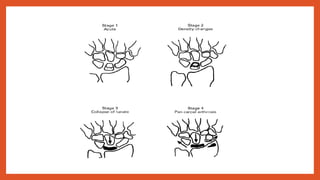
Lichtman classification
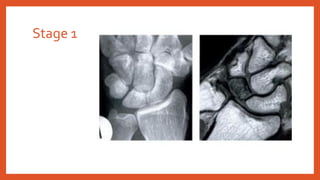
• Stage 1: Normal radiographs, diffuse changes in the signal intensity onT1 andT2
on MRI
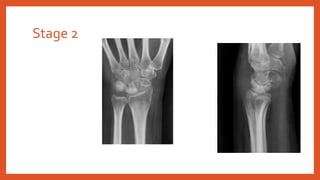
• Stage 2: Lunate sclerosis
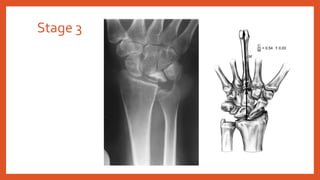
• Stage 3: Lunate collapse
• 3A: Normal scaphoid alignment
• 3B: Fixed scaphoid rotation (Ring sign)
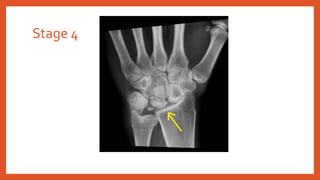
• Stage 4: severe lunate collapse with Radio-carpal and Mid-carpal joint
degenerative changes
• Goldfarb et al, 2003 – Use of radioscaphoid angle increases the interobserver
reliability
Stage 1
Stage 2
Stage 3
Stage 4
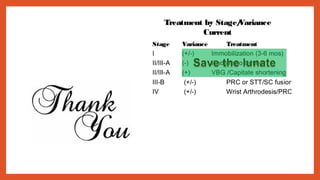
Conservative Rx
• Limited success
• Immobilisation for 3 months in cast/ splint
• Improvement in outcomes – conservative vs operative – 63% vs 72-90% (innes,
2010)
We recommend a radial shortening procedure for
patients with severe pain and radiological signs of
progressive carpal collapse.
In this study collapse of the carpal bones developed
in elderly patients who had received nonsurgical
treatment. Their clinical results were good or
excellent, however, and there were no problems in
occupation or quality of life, regardless of deterioration
in radiographic findings. Therefore we consider
that nonsurgical treatment can be chosen first for
treatment of Kienbo¨ck’s disease in elderly patients
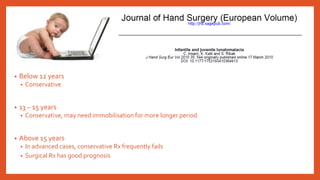
• Below 12 years
• Conservative
• 13 – 15 years
• Conservative, may need immobilisation for more longer period
• Above 15 years
• In advanced cases, conservative Rx frequently fails
• Surgical Rx has good prognosis
References
Gelberman RH, BaumanTD, Menon J, AkesonWH.The vascularity of the lunate bone and
Kienbock’s disease. J Hand Surg. 1980;5:272e278
Schiltenwold M, Martini AK, Eversheim S, Mau H. Significance of intraosseous pressure for
pathogenesis of Kienböck’s disease. Handchir Mikrochir Plast Chir 1996;28:215-19 (in German).
Innes L, Strauch RJ. Systematic review of the treatment of Kienbock’s disease in its early and
late stages. J Hand Surg 2010;35A: 713–717, e711–e714.
Antuña-Zapico JM. Malacia del semilunar. Doctoral thesis. University ofValladolid, 1966.
Tsuge S, Nakamura R. Anatomical risk factors for Kienböck’s disease. J Hand Surg 1993;18:70–5.
Goeminne S, Degreef I, De Smet L. Negative ulnar variance has prognostic value in progression
of Kienbock’s disease. Acta Orthop Belg 76:38–41.
Salmon J, Stanley JK,Trail IA. Kienbock’s disease: conservative management versus radial
shortening. J Bone Joint Surg 2000;82B: 820–823.

Kienbocks disease kiran kumar naikoti

  • 1.
  • 2.
    Introduction • Described byRobert Kienbock, Austrian radiologist in 1910 • Idiopathic osteonecrosis of Lunate • Common in Men between 20 – 40 years of age • Progressive • Bone necrosis leads to trabecular fractures, sclerosis, fragmentation and collapse • In turn leading to decrease in the carpal height, proximal migration of the Capitate, carpal instability and degenerative changes in the radiocarpal and midcarpal joint
  • 3.
    Etiology • Multifactorial • Trauma •Anatomical factors • Vascular causes • Arterial • Venous stasis • Lunate morphology • Biomechanical factors • Negative ulnar variance • Decreased Radial inclination • Systemic causes – SLE, septic emboli, Raynaud’s, vasculitis, scleroderma
  • 4.
    Vascular supply • Lunateis supplied by volar and dorsal branches (Lamas, 2007) • Dorsal - Dorsal radiocarpal arch and Dorsal intercarpal arch • Volar – Braches from Radial, Ulnar and Anterior interosseous artery • 7 -26% of Lunate bones were supplied by a single volar vessel (Gelberman, 1983)
  • 5.
    Vascular supply • Intra-osseousbranching patters • 31% show single path through the lunate bone • Lunate with a single vessel and minimal branching is at increased risk of AVN • Venous stasis (shiltenwold, 1996)
  • 6.
    Lunate Morphology (Antuna-Zapico,1966) • Type 1 with weakest trabecular pattern
  • 7.
    UlnarVariance • Negative ulnarvariance increases load transmission through radiolunate joint (Goeminne et al, 1976)
  • 8.
    Clinical Features • Dorsalwrist pain • Wrist swelling • Weakness • Reduced wrist movements Investigations • X ray • MRI (Differential diagnosis – Ulnocarpal abutment, fracture, Benign cyst) • CT scan
  • 9.
    Lichtman classification • Stage1: Normal radiographs, diffuse changes in the signal intensity onT1 andT2 on MRI • Stage 2: Lunate sclerosis • Stage 3: Lunate collapse • 3A: Normal scaphoid alignment • 3B: Fixed scaphoid rotation (Ring sign) • Stage 4: severe lunate collapse with Radio-carpal and Mid-carpal joint degenerative changes • Goldfarb et al, 2003 – Use of radioscaphoid angle increases the interobserver reliability
  • 11.
  • 12.
  • 13.
  • 14.
  • 15.
    Conservative Rx • Limitedsuccess • Immobilisation for 3 months in cast/ splint • Improvement in outcomes – conservative vs operative – 63% vs 72-90% (innes, 2010)
  • 16.
    We recommend aradial shortening procedure for patients with severe pain and radiological signs of progressive carpal collapse.
  • 17.
    In this studycollapse of the carpal bones developed in elderly patients who had received nonsurgical treatment. Their clinical results were good or excellent, however, and there were no problems in occupation or quality of life, regardless of deterioration in radiographic findings. Therefore we consider that nonsurgical treatment can be chosen first for treatment of Kienbo¨ck’s disease in elderly patients
  • 18.
    • Below 12years • Conservative • 13 – 15 years • Conservative, may need immobilisation for more longer period • Above 15 years • In advanced cases, conservative Rx frequently fails • Surgical Rx has good prognosis
  • 21.
    References Gelberman RH, BaumanTD,Menon J, AkesonWH.The vascularity of the lunate bone and Kienbock’s disease. J Hand Surg. 1980;5:272e278 Schiltenwold M, Martini AK, Eversheim S, Mau H. Significance of intraosseous pressure for pathogenesis of Kienböck’s disease. Handchir Mikrochir Plast Chir 1996;28:215-19 (in German). Innes L, Strauch RJ. Systematic review of the treatment of Kienbock’s disease in its early and late stages. J Hand Surg 2010;35A: 713–717, e711–e714. Antuña-Zapico JM. Malacia del semilunar. Doctoral thesis. University ofValladolid, 1966. Tsuge S, Nakamura R. Anatomical risk factors for Kienböck’s disease. J Hand Surg 1993;18:70–5. Goeminne S, Degreef I, De Smet L. Negative ulnar variance has prognostic value in progression of Kienbock’s disease. Acta Orthop Belg 76:38–41. Salmon J, Stanley JK,Trail IA. Kienbock’s disease: conservative management versus radial shortening. J Bone Joint Surg 2000;82B: 820–823.