Team Members Ali  Harry Imam Husen Ibrahim   A Direction for Future Presented by: Echo Consulting Group
Company Background General Environment Industry Environment Internal Analysis SWOT Analysis Recommendation
Back in 1961, Cheng King Fa started a modest business in Sekinchan trading electrical goods. In 1992 Khind's manufacturing expanded 2000,  distributing AV &  white goods KHIND’s Philosophy To Share. To Care
 
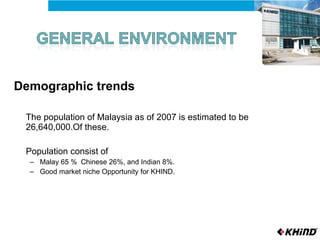
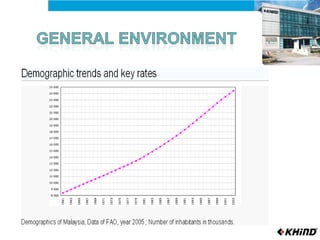
Demographic trends The population of Malaysia as of 2007 is estimated to be 26,640,000.Of these. Population consist of  Malay 65 %  Chinese 26%, and Indian 8%. Good market niche Opportunity for KHIND.
 
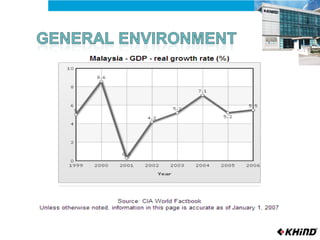
Economical factors  The manufacturing sector saw a pick up of 3.4% in the third quarter 2007 from 1.5% in the second. Malaysia centered on a new development philosophy (national unity ). Unemployment in Malaysia is low .
 
Socio-cultural Factors  All Malays are required to be Muslim as defined by the Constitution of Malaysia. 60% Muslims, 19% Buddhism, 9% Christianity, 6% Hinduism. Different Language s in Malaysia Political/Legal Factors Malaysians have enjoyed regular elections and political stability.  A growing number of detentions under the Internal Security Act (ISA).
Technological Factors  Business problems that CEOs and senior Managers are concerned with include: Speed to market Market share Product innovation Cost and quality Competitive position and industry leadership Internet influences on current business model New and emerging competitors
Global factors Overseas export opportunities continue to expand and more businesses are establishing regional centers in Malaysia  Malaysia is an important trading partner for the United States. Malaysia totaled U.S. $ 30.5 billion, with U.S. exports to Malaysia totaling U.S.$ 9.1 billion.
Industry Definition E&E Industry    Consumer Electronics & Electrical Products Home Appliances Dominant Economic Characteristics Sales Value : USD 50.8 billion Export Value : USD 77.436 billion Industry Expansion : USD 4.392 billion GDP Contribution : 30.29%
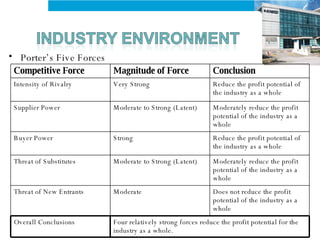
Porter’s Five Forces Competitive Force Magnitude of Force Conclusion Intensity of Rivalry Very Strong Reduce the profit potential of the industry as a whole Supplier Power Moderate to Strong (Latent) Moderately reduce the profit potential of the industry as a whole Buyer Power Strong Reduce the profit potential of the industry as a whole Threat of Substitutes Moderate to Strong (Latent) Moderately reduce the profit potential of the industry as a whole Threat of New Entrants Moderate Does not reduce the profit potential of the industry as a whole Overall Conclusions Four relatively strong forces reduce the profit potential for the industry as a whole.
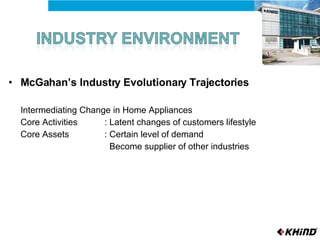
McGahan’s Industry Evolutionary Trajectories Intermediating Change in Home Appliances Core Activities : Latent changes of customers lifestyle Core Assets : Certain level of demand   Become supplier of other industries
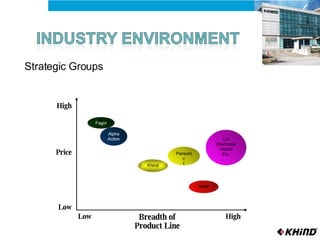
Strategic Groups Alpha Action Khind Fagor LG Electrolux Hitachi Etc. Breadth of Product Line Low Low High High Price Haier Pensonic I
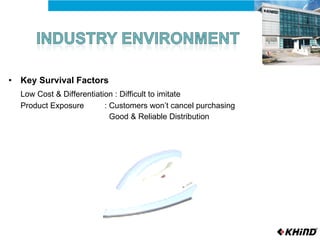
Key Survival Factors Low Cost & Differentiation : Difficult to imitate Product Exposure : Customers won’t cancel purchasing   Good & Reliable Distribution
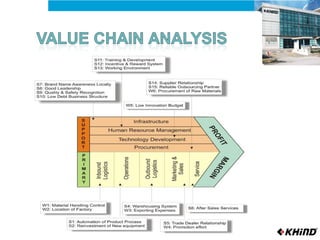
Resource-based View: Tangible Resources Intangible Resources Organizational Capabilities Financial Performance Value Chain Analysis: Primary Activities Supporting Activities
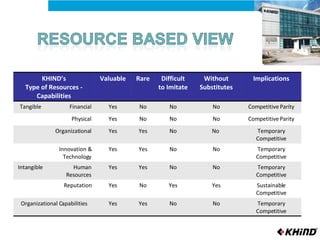
KHIND’s Type of Resources - Capabilities Valuable Rare Difficult to Imitate Without Substitutes Implications Tangible Financial Yes No No No Competitive Parity Physical Yes No No No Competitive Parity Organizational Yes Yes No No  Temporary Competitive Innovation & Technology Yes Yes No No Temporary Competitive Intangible Human Resources Yes Yes No No Temporary Competitive Reputation Yes No Yes Yes Sustainable Competitive Organizational Capabilities Yes Yes No No Temporary Competitive


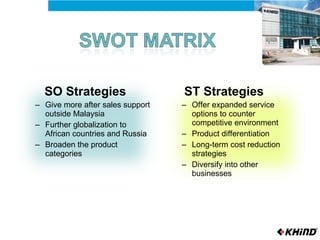
SO Strategies Give more after sales support outside Malaysia Further globalization to African countries and Russia Broaden the product categories  ST Strategies Offer expanded service options to counter competitive environment Product differentiation Long-term cost reduction strategies Diversify into other businesses
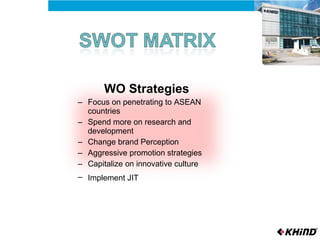
WO Strategies Focus on penetrating to ASEAN countries Spend more on research and development Change brand Perception Aggressive promotion strategies Capitalize on innovative culture Implement JIT
Market Penetration Establish Regional Offices Strategic Partnership with Local Distributors Market Development Expand into New Markets Explore African Countries
Product Development Produce New products Build Manufacturing Company In China or Vietnam Go for Related Diversification
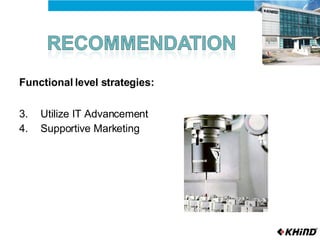
Functional level strategies: Utilize IT Advancement Supportive Marketing
 

Khind Presentation

  • 1.
    Team Members Ali Harry Imam Husen Ibrahim A Direction for Future Presented by: Echo Consulting Group
  • 2.
    Company Background GeneralEnvironment Industry Environment Internal Analysis SWOT Analysis Recommendation
  • 3.
    Back in 1961,Cheng King Fa started a modest business in Sekinchan trading electrical goods. In 1992 Khind's manufacturing expanded 2000,  distributing AV &  white goods KHIND’s Philosophy To Share. To Care
  • 4.
  • 5.
    Demographic trends Thepopulation of Malaysia as of 2007 is estimated to be 26,640,000.Of these. Population consist of Malay 65 % Chinese 26%, and Indian 8%. Good market niche Opportunity for KHIND.
  • 6.
  • 7.
    Economical factors The manufacturing sector saw a pick up of 3.4% in the third quarter 2007 from 1.5% in the second. Malaysia centered on a new development philosophy (national unity ). Unemployment in Malaysia is low .
  • 8.
  • 9.
    Socio-cultural Factors All Malays are required to be Muslim as defined by the Constitution of Malaysia. 60% Muslims, 19% Buddhism, 9% Christianity, 6% Hinduism. Different Language s in Malaysia Political/Legal Factors Malaysians have enjoyed regular elections and political stability. A growing number of detentions under the Internal Security Act (ISA).
  • 10.
    Technological Factors Business problems that CEOs and senior Managers are concerned with include: Speed to market Market share Product innovation Cost and quality Competitive position and industry leadership Internet influences on current business model New and emerging competitors
  • 11.
    Global factors Overseasexport opportunities continue to expand and more businesses are establishing regional centers in Malaysia Malaysia is an important trading partner for the United States. Malaysia totaled U.S. $ 30.5 billion, with U.S. exports to Malaysia totaling U.S.$ 9.1 billion.
  • 12.
    Industry Definition E&EIndustry  Consumer Electronics & Electrical Products Home Appliances Dominant Economic Characteristics Sales Value : USD 50.8 billion Export Value : USD 77.436 billion Industry Expansion : USD 4.392 billion GDP Contribution : 30.29%
  • 13.
    Porter’s Five ForcesCompetitive Force Magnitude of Force Conclusion Intensity of Rivalry Very Strong Reduce the profit potential of the industry as a whole Supplier Power Moderate to Strong (Latent) Moderately reduce the profit potential of the industry as a whole Buyer Power Strong Reduce the profit potential of the industry as a whole Threat of Substitutes Moderate to Strong (Latent) Moderately reduce the profit potential of the industry as a whole Threat of New Entrants Moderate Does not reduce the profit potential of the industry as a whole Overall Conclusions Four relatively strong forces reduce the profit potential for the industry as a whole.
  • 14.
    McGahan’s Industry EvolutionaryTrajectories Intermediating Change in Home Appliances Core Activities : Latent changes of customers lifestyle Core Assets : Certain level of demand Become supplier of other industries
  • 15.
    Strategic Groups AlphaAction Khind Fagor LG Electrolux Hitachi Etc. Breadth of Product Line Low Low High High Price Haier Pensonic I
  • 16.
    Key Survival FactorsLow Cost & Differentiation : Difficult to imitate Product Exposure : Customers won’t cancel purchasing Good & Reliable Distribution
  • 17.
    Resource-based View: TangibleResources Intangible Resources Organizational Capabilities Financial Performance Value Chain Analysis: Primary Activities Supporting Activities
  • 18.
    KHIND’s Type ofResources - Capabilities Valuable Rare Difficult to Imitate Without Substitutes Implications Tangible Financial Yes No No No Competitive Parity Physical Yes No No No Competitive Parity Organizational Yes Yes No No Temporary Competitive Innovation & Technology Yes Yes No No Temporary Competitive Intangible Human Resources Yes Yes No No Temporary Competitive Reputation Yes No Yes Yes Sustainable Competitive Organizational Capabilities Yes Yes No No Temporary Competitive
  • 19.
  • 20.
  • 21.
  • 22.
  • 23.
    SO Strategies Givemore after sales support outside Malaysia Further globalization to African countries and Russia Broaden the product categories ST Strategies Offer expanded service options to counter competitive environment Product differentiation Long-term cost reduction strategies Diversify into other businesses
  • 24.
    WO Strategies Focuson penetrating to ASEAN countries Spend more on research and development Change brand Perception Aggressive promotion strategies Capitalize on innovative culture Implement JIT
  • 25.
    Market Penetration EstablishRegional Offices Strategic Partnership with Local Distributors Market Development Expand into New Markets Explore African Countries
  • 26.
    Product Development ProduceNew products Build Manufacturing Company In China or Vietnam Go for Related Diversification
  • 27.
    Functional level strategies:Utilize IT Advancement Supportive Marketing
  • 28.