By: Saif Khalid khan Kakar
Lecturer (Civics/Pol. Sci)
Pakistan Education Center
INTRODUCTION
• The Khilafat movement was a religio-
political movement launched by the
Muslims of British India for the retention
of the Ottoman Caliphate and for retaining
control of Muslim Holy places.
BACKGROUND
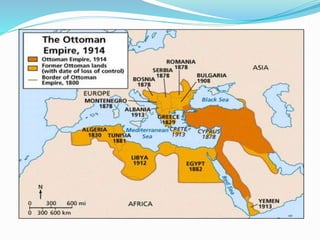
 Turkey sided with Germany in World War 1. As it began to
lose the war, concerns were expressed in India about the future
of Turkey.
 this movement was at its peak from 1919 to 1922, casting
demonstrations, boycott, and other pressure tactics.
 Muslims and Hindus collaborated with each other during this
period.
 Being brothers, the Indian Muslims realized their religious
duty to help the Muslim country (Turkey).
 It was also the extra territorial attachment based on Islam.
GOALS
 Ottoman Khilafat (Turkey) should be kept intact.
 To preserve its Territorial solidarity.
 Control of Holy places should not be given to
non-Muslims.
DIMENSIONS
 The writings of the Muslim intellectuals provoked the sentiments
for the preservation of Khilafat and retention of the Muslims control
of the Holy places.
 The Muslims journalism played a vital role to steer the direction of
the struggle.
 Zamindar of Zafar Ali Khan, Comrade and Hamdard of Maulana
Muhammad Ali Jauhar, and Al - Hilal of Maulana Abul Kalam
Azad etc. were the prominent newspapers and magazines which
performed their duties to express their resentment towards British
policy over Ottoman Khalifat (Turkey).
 The Allies imposed humiliating terms on vanquished Turkey.
 Khilafat movement started by observing the Khilafat day on 27th
October 1919.
 both Hindus and Muslims formed the Khilafat conference on 23
November 1919.
 1st meeting was held in Amritsar under the leadership of Maulana
Shaukat Ali.
 Khilafat Conference decided to send a delegation to England
under the leadership of M. Ali Johar, Syed Suliman Nadvi, Syed
Hussain in March 1920.
 British P.M Llyod George refused to meet the demands on 1th
March 1920.
 during this period the British government passed the Rowlatt act in March 1919.
 on 13 April 1919 people gathered to protest against the act and against the
detention of Dr. Satyapal & Maulana Saif ud din in Amritsar near Jallianwala Bagh
when General MacDowell o Dyer ordered the troops to open fire at the Mob which
resulted in 379 deaths and 1200 injuries.
Khilafat committee passed a resolution on 8th July 1920 during a meeting in
Karachi in favor of Turkey.
The Indian National congress joined the Khilafat Movement and in September
1920 launched the non-cooperation movement.
The delegation returned to India in October 1920.
 British government in India took stern action and from Dec 1921 till January 1922
almost 30000 demonstrators were arrested from both communities.
 during the period from 1921 till 1922 two major incidents took place that had
negative impact on the Khilafat movement:
I. Mopla Uprising in Bombay.
II. Chauri Chaura incident.
 after these two incidents Mr. Gandhi called of the non-cooperation movement
and thus the movement lost its momentum.
 On 23rd of March 1923 Mustafa Kemal declared Turkey a republic and the Treaty
of Lausanne was signed between the new Turkish Government and Britain.
Causes of failure
1. Major reason for disintegration of Khilafat was its alliance with Germany in
World War 1 and had to fight against Great Britain.
2. Gandhi called off the movement when it had reached its peak.
3. Mustafa Kemal defeated the Greeks in the Battle of Smyrna and British were
forced to sign a treaty with Turkey. Mustafa Kemal abolished the Khilafat and
declared Turkey a Republic.
Importance/ conclusion
1. It generated political conscious among the Muslim
community.
2. Muslim leadership had emerged in the form of
different leaders.
3. This movement exposed the anti-Muslim design of
congress and Hindu community.
4. Muslims emerged as an effective force in the
national politics of united India.

Khilafat movement

  • 1.
    By: Saif Khalidkhan Kakar Lecturer (Civics/Pol. Sci) Pakistan Education Center
  • 2.
    INTRODUCTION • The Khilafatmovement was a religio- political movement launched by the Muslims of British India for the retention of the Ottoman Caliphate and for retaining control of Muslim Holy places.
  • 3.
    BACKGROUND  Turkey sidedwith Germany in World War 1. As it began to lose the war, concerns were expressed in India about the future of Turkey.  this movement was at its peak from 1919 to 1922, casting demonstrations, boycott, and other pressure tactics.  Muslims and Hindus collaborated with each other during this period.  Being brothers, the Indian Muslims realized their religious duty to help the Muslim country (Turkey).  It was also the extra territorial attachment based on Islam.
  • 5.
    GOALS  Ottoman Khilafat(Turkey) should be kept intact.  To preserve its Territorial solidarity.  Control of Holy places should not be given to non-Muslims.
  • 6.
    DIMENSIONS  The writingsof the Muslim intellectuals provoked the sentiments for the preservation of Khilafat and retention of the Muslims control of the Holy places.  The Muslims journalism played a vital role to steer the direction of the struggle.  Zamindar of Zafar Ali Khan, Comrade and Hamdard of Maulana Muhammad Ali Jauhar, and Al - Hilal of Maulana Abul Kalam Azad etc. were the prominent newspapers and magazines which performed their duties to express their resentment towards British policy over Ottoman Khalifat (Turkey).  The Allies imposed humiliating terms on vanquished Turkey.
  • 7.
     Khilafat movementstarted by observing the Khilafat day on 27th October 1919.  both Hindus and Muslims formed the Khilafat conference on 23 November 1919.  1st meeting was held in Amritsar under the leadership of Maulana Shaukat Ali.  Khilafat Conference decided to send a delegation to England under the leadership of M. Ali Johar, Syed Suliman Nadvi, Syed Hussain in March 1920.  British P.M Llyod George refused to meet the demands on 1th March 1920.
  • 8.
     during thisperiod the British government passed the Rowlatt act in March 1919.  on 13 April 1919 people gathered to protest against the act and against the detention of Dr. Satyapal & Maulana Saif ud din in Amritsar near Jallianwala Bagh when General MacDowell o Dyer ordered the troops to open fire at the Mob which resulted in 379 deaths and 1200 injuries. Khilafat committee passed a resolution on 8th July 1920 during a meeting in Karachi in favor of Turkey. The Indian National congress joined the Khilafat Movement and in September 1920 launched the non-cooperation movement. The delegation returned to India in October 1920.  British government in India took stern action and from Dec 1921 till January 1922 almost 30000 demonstrators were arrested from both communities.  during the period from 1921 till 1922 two major incidents took place that had negative impact on the Khilafat movement: I. Mopla Uprising in Bombay. II. Chauri Chaura incident.  after these two incidents Mr. Gandhi called of the non-cooperation movement and thus the movement lost its momentum.  On 23rd of March 1923 Mustafa Kemal declared Turkey a republic and the Treaty of Lausanne was signed between the new Turkish Government and Britain.
  • 9.
    Causes of failure 1.Major reason for disintegration of Khilafat was its alliance with Germany in World War 1 and had to fight against Great Britain. 2. Gandhi called off the movement when it had reached its peak. 3. Mustafa Kemal defeated the Greeks in the Battle of Smyrna and British were forced to sign a treaty with Turkey. Mustafa Kemal abolished the Khilafat and declared Turkey a Republic.
  • 10.
    Importance/ conclusion 1. Itgenerated political conscious among the Muslim community. 2. Muslim leadership had emerged in the form of different leaders. 3. This movement exposed the anti-Muslim design of congress and Hindu community. 4. Muslims emerged as an effective force in the national politics of united India.

Editor's Notes

  • #10  Major reason for disintegration of Khilafat was its alliance with Germany in WW 1 and had to fight against Great Britian.