PROJECT
MANAGEMENT
ENTERPRISE
1. RISK ANALYSIS
SKILLS
Risk analysis in enterprise project
management involves identifying,
assessing, and managing potential risks
that could impact the project's
objectives. This process includes
evaluating both internal and external
factors that might affect project
progress, budget, or quality.
2. STRUCTURED
ESTIMATING
KNOWLEDGE
Project estimation, which involves
estimating project costs, resources, and
duration, is an essential part of project
management. EPM establishes
guidelines for structured estimating for
project managers.
3. PROJECT REVIEWS
SKILLS
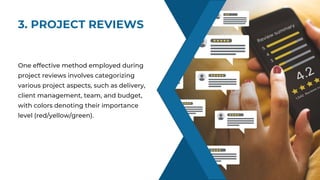
One effective method employed during
project reviews involves categorizing
various project aspects, such as delivery,
client management, team, and budget,
with colors denoting their importance
level (red/yellow/green).
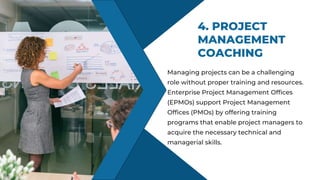
4. PROJECT
MANAGEMENT
COACHING
KNOWLEDGE
Managing projects can be a challenging
role without proper training and resources.
Enterprise Project Management Offices
(EPMOs) support Project Management
Offices (PMOs) by offering training
programs that enable project managers to
acquire the necessary technical and
managerial skills.
5. ESCALATED ISSUE
MANAGEMENT
SKILLS
Escalated issue management refers to
handling critical problems that cannot
be resolved at lower levels of the project
hierarchy. Project managers escalate
these issues to higher management or
designated authorities for resolution.
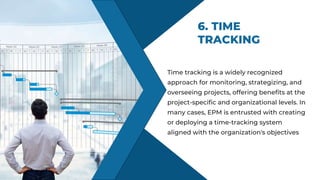
6. TIME
TRACKING
KNOWLEDGE
Time tracking is a widely recognized
approach for monitoring, strategizing, and
overseeing projects, offering benefits at the
project-specific and organizational levels. In
many cases, EPM is entrusted with creating
or deploying a time-tracking system
aligned with the organization's objectives
7. INFORMATION
SYSTEM
MANAGEMENT
SKILLS
Information system management in
EPM includes selecting appropriate
project management software, ensuring
data security, integrating different
software applications, and optimizing
the use of technology to facilitate
project communication, collaboration,
and documentation.
To learn more about "Enterprise
Project Management," checkout the
Invensis Learning blog section

Key Elements of Enterprise Project Management.pptx

  • 1.
  • 2.
    1. RISK ANALYSIS SKILLS Riskanalysis in enterprise project management involves identifying, assessing, and managing potential risks that could impact the project's objectives. This process includes evaluating both internal and external factors that might affect project progress, budget, or quality.
  • 3.
    2. STRUCTURED ESTIMATING KNOWLEDGE Project estimation,which involves estimating project costs, resources, and duration, is an essential part of project management. EPM establishes guidelines for structured estimating for project managers.
  • 4.
    3. PROJECT REVIEWS SKILLS Oneeffective method employed during project reviews involves categorizing various project aspects, such as delivery, client management, team, and budget, with colors denoting their importance level (red/yellow/green).
  • 5.
    4. PROJECT MANAGEMENT COACHING KNOWLEDGE Managing projectscan be a challenging role without proper training and resources. Enterprise Project Management Offices (EPMOs) support Project Management Offices (PMOs) by offering training programs that enable project managers to acquire the necessary technical and managerial skills.
  • 6.
    5. ESCALATED ISSUE MANAGEMENT SKILLS Escalatedissue management refers to handling critical problems that cannot be resolved at lower levels of the project hierarchy. Project managers escalate these issues to higher management or designated authorities for resolution.
  • 7.
    6. TIME TRACKING KNOWLEDGE Time trackingis a widely recognized approach for monitoring, strategizing, and overseeing projects, offering benefits at the project-specific and organizational levels. In many cases, EPM is entrusted with creating or deploying a time-tracking system aligned with the organization's objectives
  • 8.
    7. INFORMATION SYSTEM MANAGEMENT SKILLS Information systemmanagement in EPM includes selecting appropriate project management software, ensuring data security, integrating different software applications, and optimizing the use of technology to facilitate project communication, collaboration, and documentation.
  • 9.
    To learn moreabout "Enterprise Project Management," checkout the Invensis Learning blog section