ITIL
Implementation
Roadmap
This presentation outlines a comprehensive roadmap for implementing
the Information Technology Infrastructure Library (ITIL) framework
within an organization. ITIL is a globally recognized best practice for IT
service management, offering a structured approach to improving
efficiency, reducing costs, and enhancing customer satisfaction.
Assessment and Planning
1 Current State Assessment
Analyze the organization's existing IT processes, tools,
and capabilities to identify areas for improvement.
2 ITIL Maturity Assessment
Evaluate the organization's current level of ITIL adoption
and maturity to establish a baseline.
3 Project Scope and Objectives
Define the project's scope, objectives, and key
performance indicators to align with the organization's
goals.
Service Strategy
Business Strategy
Alignment
Ensure that the ITIL implementation is
closely tied to the organization's
overall business strategy and
objectives.
Service Portfolio
Management
Develop and maintain a
comprehensive service portfolio that
aligns with the organization's needs
and priorities.
Financial Management
Establish effective financial
management practices to control and
optimize the costs associated with IT
services.
Service Design
SLAs
Define and implement robust
Service Level Agreements
(SLAs) to ensure that IT
services meet the
organization's requirements.
Service Catalog
Create a comprehensive
service catalog that clearly
documents the available IT
services and their associated
offerings.
Technology Roadmap
Develop a technology roadmap to guide the implementation and
integration of the necessary tools and infrastructure.
Service Transition
Change Management
Implement robust change management processes to
ensure a smooth and controlled transition to the new IT
services.
Release and Deployment
Establish effective release and deployment practices to
efficiently roll out new or updated IT services.
Knowledge Management
Capture and share institutional knowledge to facilitate the
adoption and ongoing support of the ITIL implementation.
Service Operation
Incident Management
Implement effective incident
management to quickly
identify, prioritize, and
resolve IT service
disruptions.
Problem
Management
Proactively identify and
address the root causes of IT
issues to prevent recurring
incidents.
Access Management
Establish efficient access
management processes to
ensure authorized user
access to IT services.
Event Management
Monitor and respond to IT
events to maintain the
health and performance of
IT services.
Continual Service
Improvement
1 Measurement and Reporting
Establish key performance indicators and reporting mechanisms
to track the effectiveness of the ITIL implementation.
2 Process Review
Regularly review and optimize ITIL processes to ensure they
remain aligned with the organization's evolving needs.
3 Continuous Improvement
Foster a culture of continuous improvement, leveraging lessons
learned and best practices to drive ongoing enhancements.
Key Benefits of ITIL
Implementation
1 Improved Service
Quality
ITIL helps organizations deliver
IT services that better meet the
needs of their customers and
stakeholders.
2 Cost Optimization
By streamlining processes and
managing resources more
effectively, ITIL can lead to
significant cost savings.
3 Enhanced Agility
ITIL's structured approach
enables organizations to adapt
more quickly to changing
business requirements.
4 Risk Reduction
ITIL's focus on best practices
helps organizations mitigate
risks and maintain a high level
of service reliability.
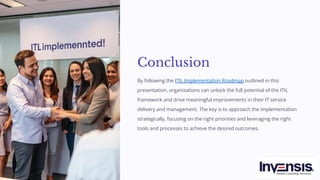
Conclusion
By following the ITIL Implementation Roadmap outlined in this
presentation, organizations can unlock the full potential of the ITIL
framework and drive meaningful improvements in their IT service
delivery and management. The key is to approach the implementation
strategically, focusing on the right priorities and leveraging the right
tools and processes to achieve the desired outcomes.

Information Technology Infrastructure Library (ITIL) Implementation Roadmap

  • 1.
    ITIL Implementation Roadmap This presentation outlinesa comprehensive roadmap for implementing the Information Technology Infrastructure Library (ITIL) framework within an organization. ITIL is a globally recognized best practice for IT service management, offering a structured approach to improving efficiency, reducing costs, and enhancing customer satisfaction.
  • 2.
    Assessment and Planning 1Current State Assessment Analyze the organization's existing IT processes, tools, and capabilities to identify areas for improvement. 2 ITIL Maturity Assessment Evaluate the organization's current level of ITIL adoption and maturity to establish a baseline. 3 Project Scope and Objectives Define the project's scope, objectives, and key performance indicators to align with the organization's goals.
  • 3.
    Service Strategy Business Strategy Alignment Ensurethat the ITIL implementation is closely tied to the organization's overall business strategy and objectives. Service Portfolio Management Develop and maintain a comprehensive service portfolio that aligns with the organization's needs and priorities. Financial Management Establish effective financial management practices to control and optimize the costs associated with IT services.
  • 4.
    Service Design SLAs Define andimplement robust Service Level Agreements (SLAs) to ensure that IT services meet the organization's requirements. Service Catalog Create a comprehensive service catalog that clearly documents the available IT services and their associated offerings. Technology Roadmap Develop a technology roadmap to guide the implementation and integration of the necessary tools and infrastructure.
  • 5.
    Service Transition Change Management Implementrobust change management processes to ensure a smooth and controlled transition to the new IT services. Release and Deployment Establish effective release and deployment practices to efficiently roll out new or updated IT services. Knowledge Management Capture and share institutional knowledge to facilitate the adoption and ongoing support of the ITIL implementation.
  • 6.
    Service Operation Incident Management Implementeffective incident management to quickly identify, prioritize, and resolve IT service disruptions. Problem Management Proactively identify and address the root causes of IT issues to prevent recurring incidents. Access Management Establish efficient access management processes to ensure authorized user access to IT services. Event Management Monitor and respond to IT events to maintain the health and performance of IT services.
  • 7.
    Continual Service Improvement 1 Measurementand Reporting Establish key performance indicators and reporting mechanisms to track the effectiveness of the ITIL implementation. 2 Process Review Regularly review and optimize ITIL processes to ensure they remain aligned with the organization's evolving needs. 3 Continuous Improvement Foster a culture of continuous improvement, leveraging lessons learned and best practices to drive ongoing enhancements.
  • 8.
    Key Benefits ofITIL Implementation 1 Improved Service Quality ITIL helps organizations deliver IT services that better meet the needs of their customers and stakeholders. 2 Cost Optimization By streamlining processes and managing resources more effectively, ITIL can lead to significant cost savings. 3 Enhanced Agility ITIL's structured approach enables organizations to adapt more quickly to changing business requirements. 4 Risk Reduction ITIL's focus on best practices helps organizations mitigate risks and maintain a high level of service reliability.
  • 9.
    Conclusion By following theITIL Implementation Roadmap outlined in this presentation, organizations can unlock the full potential of the ITIL framework and drive meaningful improvements in their IT service delivery and management. The key is to approach the implementation strategically, focusing on the right priorities and leveraging the right tools and processes to achieve the desired outcomes.