Quality Control:
Ensuring Excellence
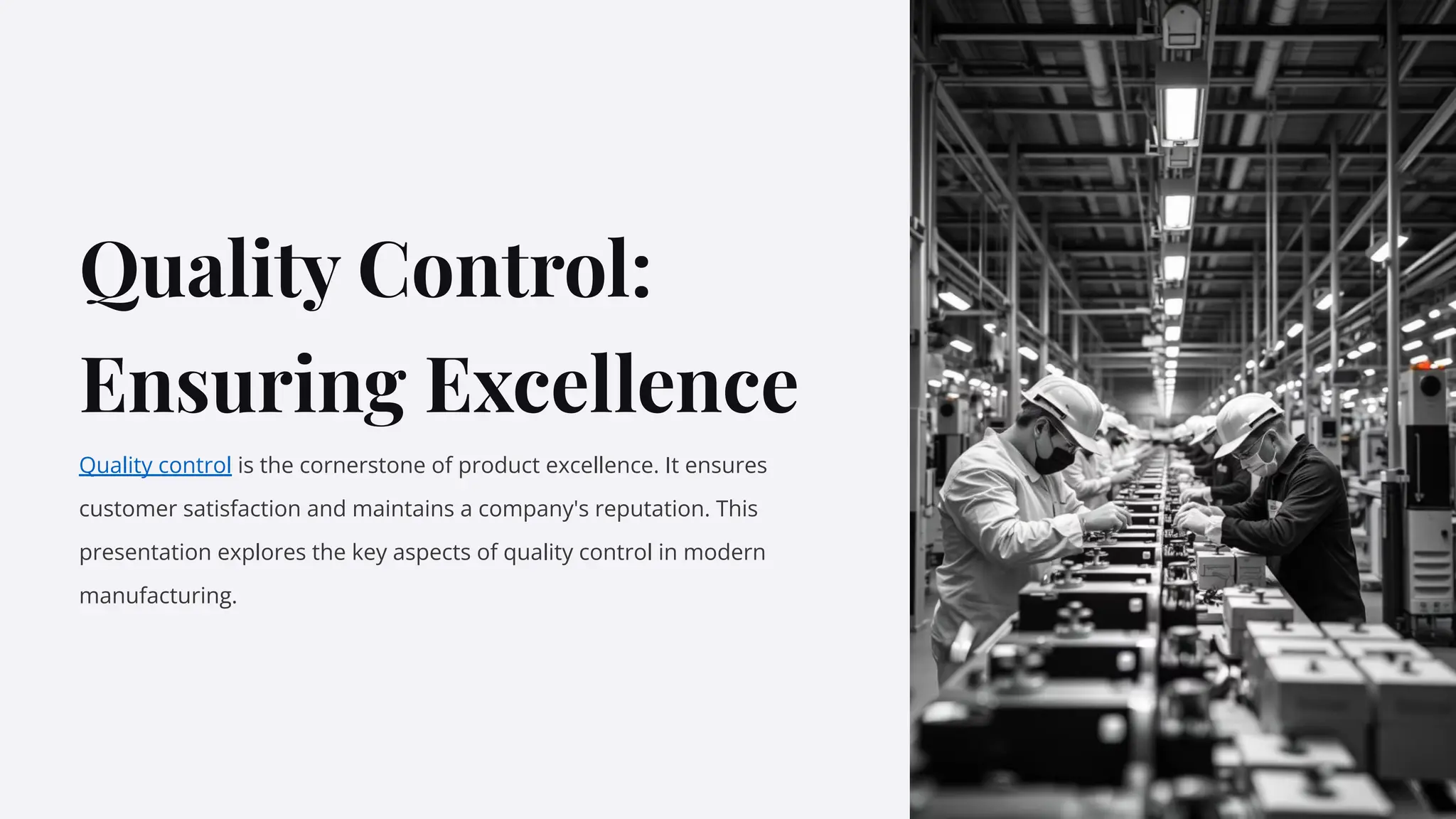
Quality control is the cornerstone of product excellence. It ensures
customer satisfaction and maintains a company's reputation. This
presentation explores the key aspects of quality control in modern
manufacturing.
What is Quality
Control?
Definition
Quality control is a systematic
process ensuring products or
services meet specific
standards. It involves rigorous
testing and inspection
throughout production.
Goal
The primary aim is to identify
and prevent defects or errors.
This proactive approach
minimizes waste and improves
overall product quality.
Implementation
Quality control is integrated at every stage of production. It utilizes
various tools and techniques to maintain consistency.
Definition of Quality Control
1 Systematic Process
Quality control involves a series
of planned, methodical steps to
ensure product excellence. It's
not random, but carefully
designed.
2 Specific Standards
Each industry and product has
its own set of quality
benchmarks. These standards
guide the entire production
process.
3 Continuous Monitoring
Quality control is ongoing, not a
one-time check. It requires
constant vigilance and
adjustment throughout
production.
Goal of Quality
Control
Identify Issues
The first step is spotting potential problems. This involves
thorough inspection and testing at various stages.
Prevent Defects
Once identified, steps are taken to prevent defects. This
may involve adjusting processes or materials.
Ensure Excellence
The ultimate goal is to deliver flawless products. This
builds customer trust and brand reputation.
Key Principles of Quality Control
Customer Focus
Understanding and meeting customer needs is paramount. It drives all quality control
efforts.
Process Approach
Implementing and improving processes is crucial. It ensures consistent, high-quality
outcomes.
Teamwork
Quality control requires collaboration across departments. Everyone plays a role in
ensuring product excellence.
Customer Focus in Quality Control
Understanding Needs
Quality control starts with deep
customer insights. This involves
market research and direct feedback.
Meeting Expectations
Products must not only meet but
exceed customer expectations. This
drives loyalty and positive
word-of-mouth.
Continuous Improvement
Customer needs evolve. Quality
control must adapt to changing
preferences and market trends.
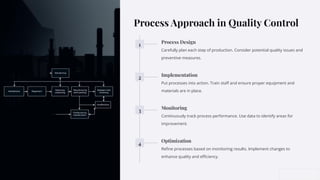
Process Approach in Quality Control
1 Process Design
Carefully plan each step of production. Consider potential quality issues and
preventive measures.
2 Implementation
Put processes into action. Train staff and ensure proper equipment and
materials are in place.
3 Monitoring
Continuously track process performance. Use data to identify areas for
improvement.
4 Optimization
Refine processes based on monitoring results. Implement changes to
enhance quality and efficiency.
Quality Control Tools and
Techniques
1 Statistical Process
Control
Uses statistical methods to
monitor and control quality.
It helps identify variations
in processes.
2 Failure Mode and
Effects Analysis
(FMEA)
Proactively identifies
potential failures in
processes or products. It
helps prevent issues before
they occur.
3 Six Sigma
A data-driven approach to eliminate defects. It aims for
near-perfect quality in all processes.
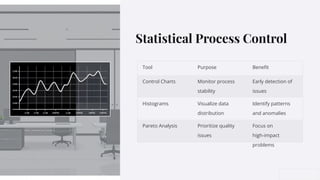
Statistical Process Control
Tool Purpose Benefit
Control Charts Monitor process
stability
Early detection of
issues
Histograms Visualize data
distribution
Identify patterns
and anomalies
Pareto Analysis Prioritize quality
issues
Focus on
high-impact
problems
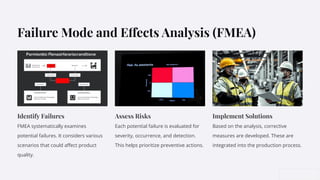
Failure Mode and Effects Analysis (FMEA)
Identify Failures
FMEA systematically examines
potential failures. It considers various
scenarios that could affect product
quality.
Assess Risks
Each potential failure is evaluated for
severity, occurrence, and detection.
This helps prioritize preventive actions.
Implement Solutions
Based on the analysis, corrective
measures are developed. These are
integrated into the production process.

What is Quality Control: Beyond the Surface

  • 1.
    Quality Control: Ensuring Excellence Qualitycontrol is the cornerstone of product excellence. It ensures customer satisfaction and maintains a company's reputation. This presentation explores the key aspects of quality control in modern manufacturing.
  • 2.
    What is Quality Control? Definition Qualitycontrol is a systematic process ensuring products or services meet specific standards. It involves rigorous testing and inspection throughout production. Goal The primary aim is to identify and prevent defects or errors. This proactive approach minimizes waste and improves overall product quality. Implementation Quality control is integrated at every stage of production. It utilizes various tools and techniques to maintain consistency.
  • 3.
    Definition of QualityControl 1 Systematic Process Quality control involves a series of planned, methodical steps to ensure product excellence. It's not random, but carefully designed. 2 Specific Standards Each industry and product has its own set of quality benchmarks. These standards guide the entire production process. 3 Continuous Monitoring Quality control is ongoing, not a one-time check. It requires constant vigilance and adjustment throughout production.
  • 4.
    Goal of Quality Control IdentifyIssues The first step is spotting potential problems. This involves thorough inspection and testing at various stages. Prevent Defects Once identified, steps are taken to prevent defects. This may involve adjusting processes or materials. Ensure Excellence The ultimate goal is to deliver flawless products. This builds customer trust and brand reputation.
  • 5.
    Key Principles ofQuality Control Customer Focus Understanding and meeting customer needs is paramount. It drives all quality control efforts. Process Approach Implementing and improving processes is crucial. It ensures consistent, high-quality outcomes. Teamwork Quality control requires collaboration across departments. Everyone plays a role in ensuring product excellence.
  • 6.
    Customer Focus inQuality Control Understanding Needs Quality control starts with deep customer insights. This involves market research and direct feedback. Meeting Expectations Products must not only meet but exceed customer expectations. This drives loyalty and positive word-of-mouth. Continuous Improvement Customer needs evolve. Quality control must adapt to changing preferences and market trends.
  • 7.
    Process Approach inQuality Control 1 Process Design Carefully plan each step of production. Consider potential quality issues and preventive measures. 2 Implementation Put processes into action. Train staff and ensure proper equipment and materials are in place. 3 Monitoring Continuously track process performance. Use data to identify areas for improvement. 4 Optimization Refine processes based on monitoring results. Implement changes to enhance quality and efficiency.
  • 8.
    Quality Control Toolsand Techniques 1 Statistical Process Control Uses statistical methods to monitor and control quality. It helps identify variations in processes. 2 Failure Mode and Effects Analysis (FMEA) Proactively identifies potential failures in processes or products. It helps prevent issues before they occur. 3 Six Sigma A data-driven approach to eliminate defects. It aims for near-perfect quality in all processes.
  • 9.
    Statistical Process Control ToolPurpose Benefit Control Charts Monitor process stability Early detection of issues Histograms Visualize data distribution Identify patterns and anomalies Pareto Analysis Prioritize quality issues Focus on high-impact problems
  • 10.
    Failure Mode andEffects Analysis (FMEA) Identify Failures FMEA systematically examines potential failures. It considers various scenarios that could affect product quality. Assess Risks Each potential failure is evaluated for severity, occurrence, and detection. This helps prioritize preventive actions. Implement Solutions Based on the analysis, corrective measures are developed. These are integrated into the production process.