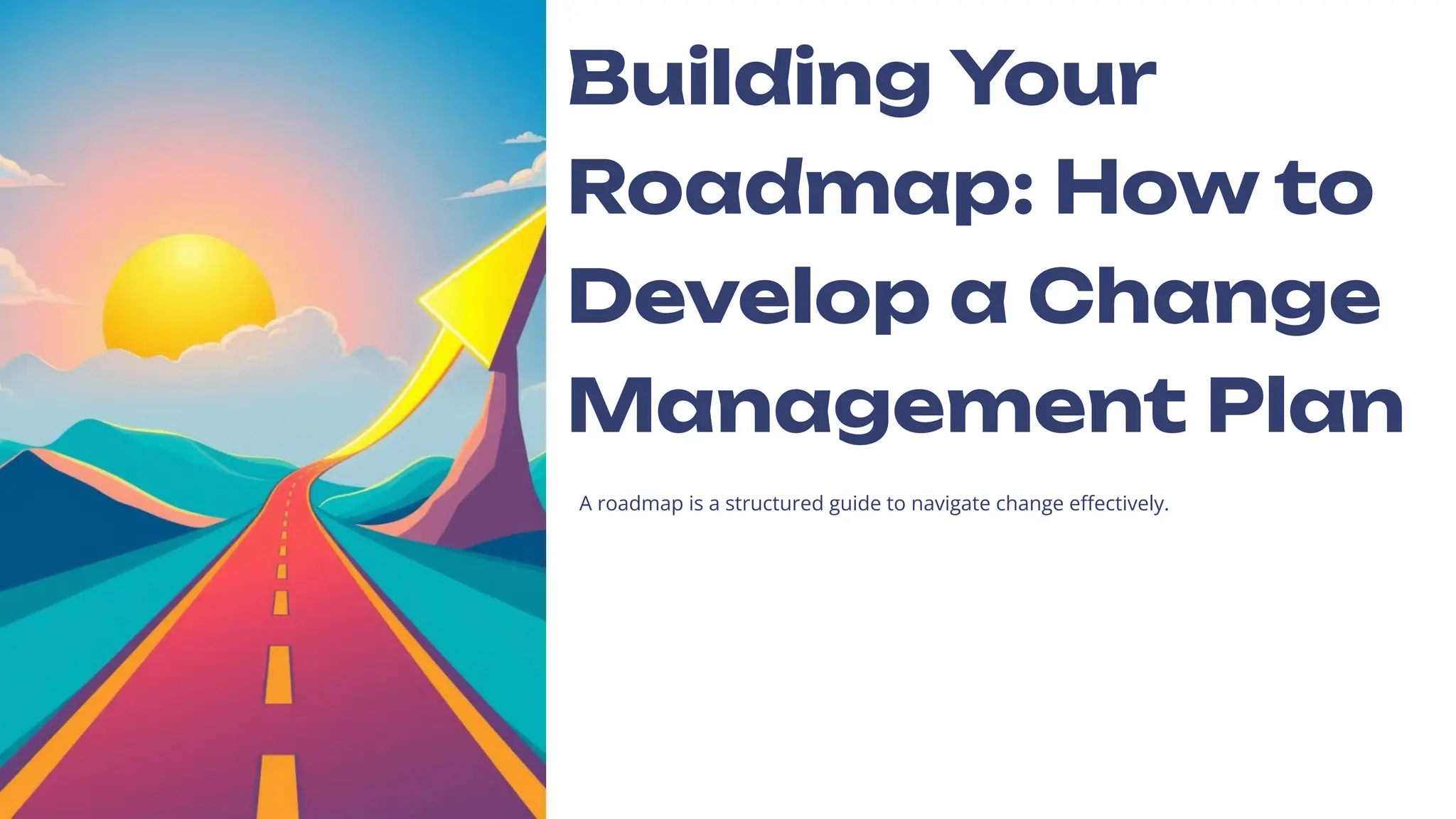
Building Your
Roadmap: How to
Develop a Change
Management Plan
A roadmap is a structured guide to navigate change effectively.
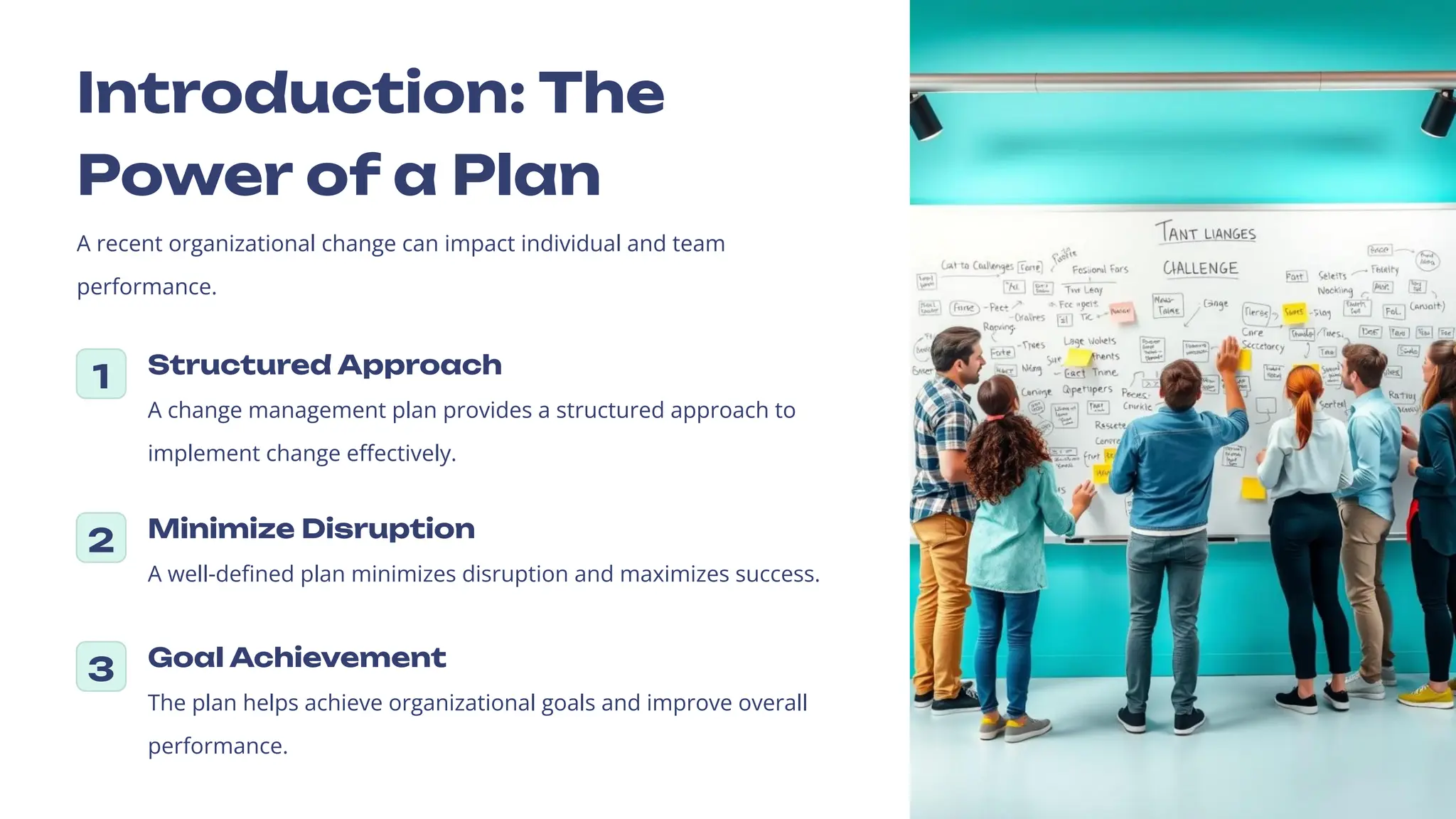
Introduction: The
Power of a Plan
A recent organizational change can impact individual and team
performance.
1 Structured Approach
A change management plan provides a structured approach to
implement change effectively.
2 Minimize Disruption
A well-defined plan minimizes disruption and maximizes success.
3 Goal Achievement
The plan helps achieve organizational goals and improve overall
performance.
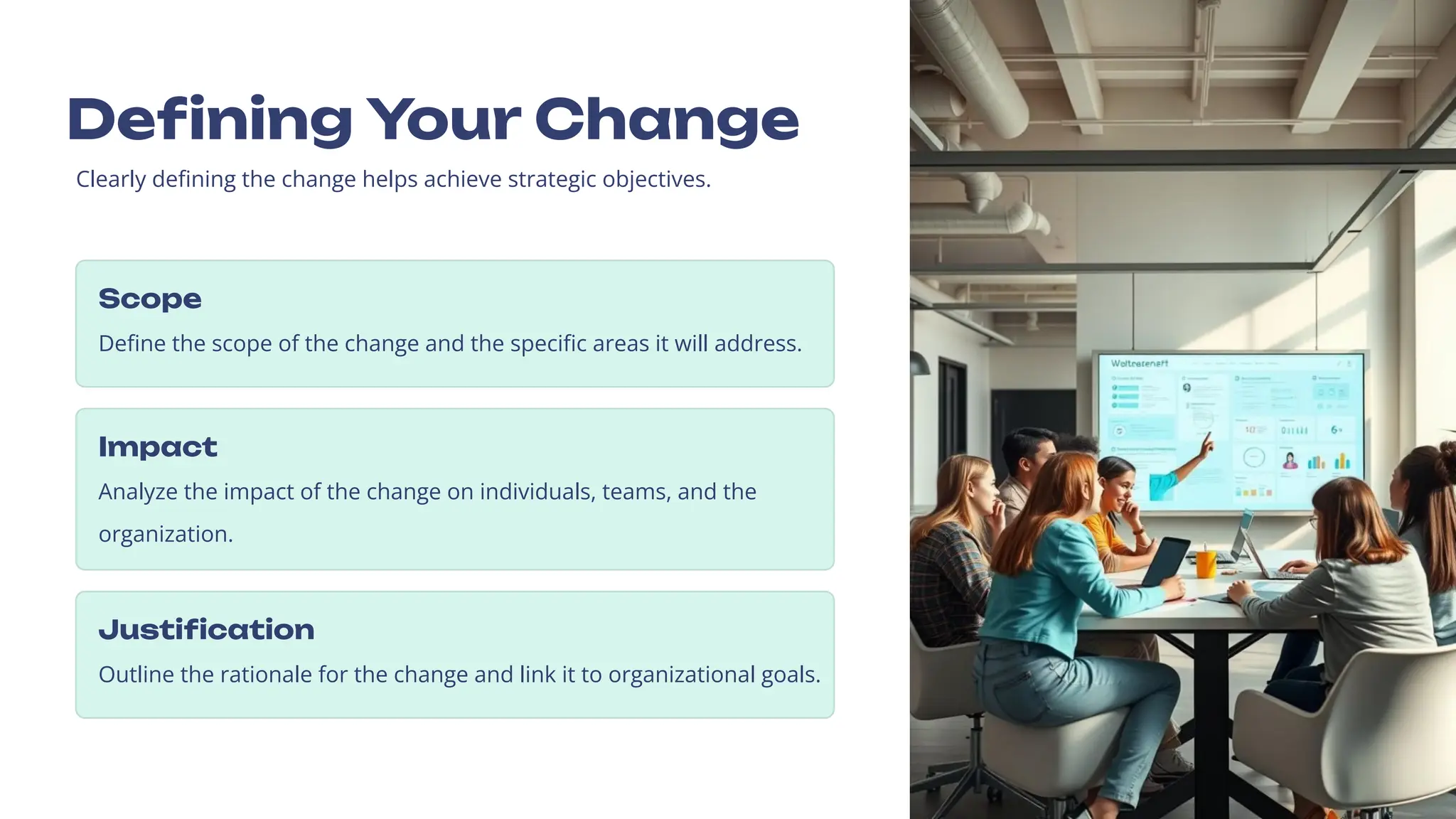
Defining Your Change
Clearly defining the change helps achieve strategic objectives.
Scope
Define the scope of the change and the specific areas it will address.
Impact
Analyze the impact of the change on individuals, teams, and the
organization.
Justification
Outline the rationale for the change and link it to organizational goals.
Building Your Change Team
A dedicated change team champions the change and oversees execution.
Importance
A dedicated team brings expertise
and promotes collaboration.
Composition
The team should include subject
matter experts and
communication specialists.
Responsibilities
Clearly defined roles and
responsibilities ensure effective
collaboration.
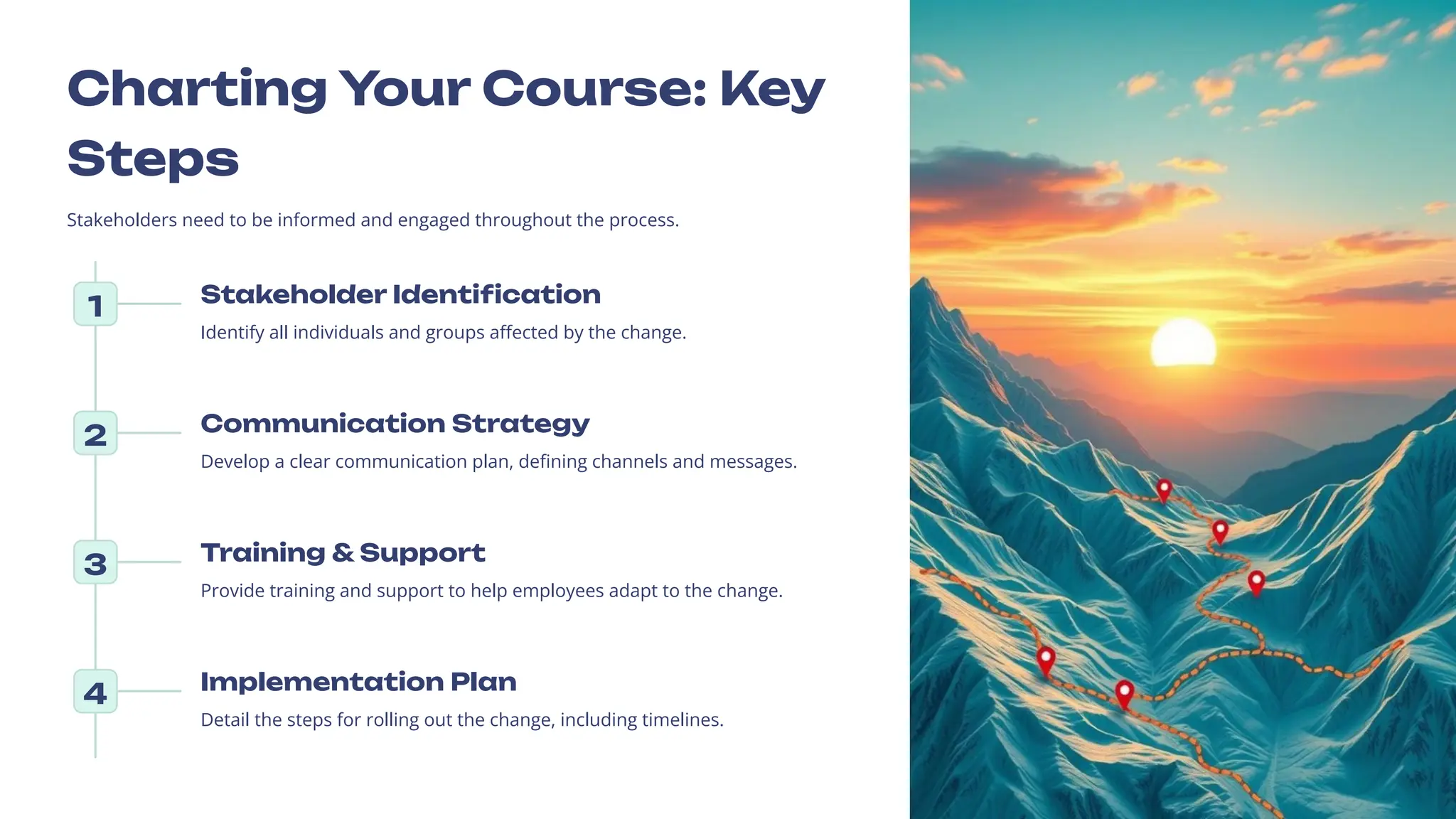
Charting Your Course: Key
Steps
Stakeholders need to be informed and engaged throughout the process.
1 Stakeholder Identification
Identify all individuals and groups affected by the change.
2 Communication Strategy
Develop a clear communication plan, defining channels and messages.
3 Training & Support
Provide training and support to help employees adapt to the change.
4 Implementation Plan
Detail the steps for rolling out the change, including timelines.
Preparing for Challenges
Resistance is normal, and addressing concerns is crucial.
Resistance to Change
Acknowledge resistance and develop strategies to address concerns.
Risk Management
Identify potential risks and create mitigation plans.
Change Evaluation
Assess the change's success and identify areas for improvement.
Conclusion: A Roadmap to
Success
Building a change management plan requires careful planning.
Define the Change
Define the scope, impact, and justification.
Build the Team
Assemble a team with diverse expertise.
Develop the Plan
Identify stakeholders, plan communication, and provide training.
Prepare for Challenges
Anticipate resistance, manage risks, and evaluate the change.

Building Your Roadmap: How to Develop a Change Management Plan

  • 1.
    Building Your Roadmap: Howto Develop a Change Management Plan A roadmap is a structured guide to navigate change effectively.
  • 2.
    Introduction: The Power ofa Plan A recent organizational change can impact individual and team performance. 1 Structured Approach A change management plan provides a structured approach to implement change effectively. 2 Minimize Disruption A well-defined plan minimizes disruption and maximizes success. 3 Goal Achievement The plan helps achieve organizational goals and improve overall performance.
  • 3.
    Defining Your Change Clearlydefining the change helps achieve strategic objectives. Scope Define the scope of the change and the specific areas it will address. Impact Analyze the impact of the change on individuals, teams, and the organization. Justification Outline the rationale for the change and link it to organizational goals.
  • 4.
    Building Your ChangeTeam A dedicated change team champions the change and oversees execution. Importance A dedicated team brings expertise and promotes collaboration. Composition The team should include subject matter experts and communication specialists. Responsibilities Clearly defined roles and responsibilities ensure effective collaboration.
  • 5.
    Charting Your Course:Key Steps Stakeholders need to be informed and engaged throughout the process. 1 Stakeholder Identification Identify all individuals and groups affected by the change. 2 Communication Strategy Develop a clear communication plan, defining channels and messages. 3 Training & Support Provide training and support to help employees adapt to the change. 4 Implementation Plan Detail the steps for rolling out the change, including timelines.
  • 6.
    Preparing for Challenges Resistanceis normal, and addressing concerns is crucial. Resistance to Change Acknowledge resistance and develop strategies to address concerns. Risk Management Identify potential risks and create mitigation plans. Change Evaluation Assess the change's success and identify areas for improvement.
  • 7.
    Conclusion: A Roadmapto Success Building a change management plan requires careful planning. Define the Change Define the scope, impact, and justification. Build the Team Assemble a team with diverse expertise. Develop the Plan Identify stakeholders, plan communication, and provide training. Prepare for Challenges Anticipate resistance, manage risks, and evaluate the change.