SYNCING DIGITAL LEARNING TO KEY LEARNING AREAS
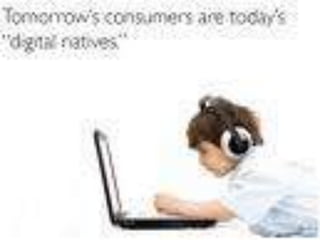
Why sync?
So what does that mean for us as teachers?Classroom teachers of the Twentieth First Century require flexible and reflective pedagogical practices to engage, educate and develop students into adaptive, creative and connected learners. 3
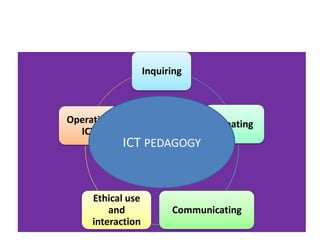
ICT PEDAGOGYICT PEDAGOGY
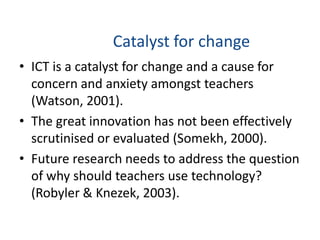
DefinitionsICT is “an inadequate term” to define the dynamic, fluid and multi-contextual nature of a wide range of technologies (Loveless, 2003). Catalyst for changeICT is a catalyst for change and a cause for concern and anxiety amongst teachers  (Watson, 2001).The great innovation has not been effectively scrutinised or evaluated (Somekh, 2000).Future research needs to address the question of why should teachers use technology? (Robyler & Knezek, 2003).
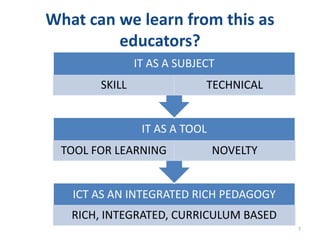
What can we learn from this as educators?7
CreatingTeachers integrate ICT based on pedagogical needs & provide opportunities for problem solving, analysing, self-learning.
Integration of ICT occurs in powerful, novel and creative ways.
It is the pedagogy driving ICT and student are active producers of knowledge.
ICT Pedagogy creates sustained and personalisedlearning for gifted students, while providing platforms for students to showcase their creativity.InquiryInquiry has become integrated with ICT to drive learning, acquisition and the creation of knowledge.
The learning contexts are shifting too and accelerated, high-level learning is possible and enable the teacher to become a  facilitator.
While ICT is powerful the subject knowledge is key. You can choose the strategy from this premise. Operating ICT Competencies using ICT were shifting with web 2.0 technologies.
Students in primary are doing more than mouse clicking and word processing.
Leading the teachers using publisher & flash.Ethical Use and Interaction There are ethical issues such as web safety, interaction, bullying, censorship that conflict with the communication, and inquiry skills that ICT are enhancingThis is particularly evident with web 2.0 technologies such as wikis and blogs.
Ethical Use and Interaction The need to supervise internet content and the risks involved are evident.   ICT use is managed and controlled by the coordinator.The need for the email and the network to be filtered.
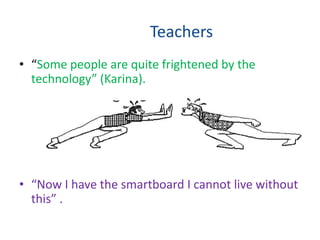
Teachers“Some people are quite frightened by the technology” (Karina). “Now I have the smartboard I cannot live without this” .
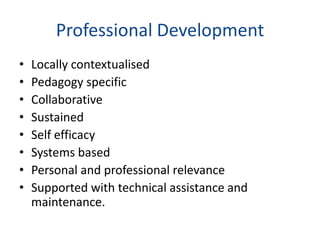
Professional DevelopmentFlexible PD is preferred.Informal professional development is already occurring in terms of colleague to colleague sharing ideas.PD is difficult when implemented in isolation for lack of validation, accountability, support and strategic thinking for future pedagogical directions.
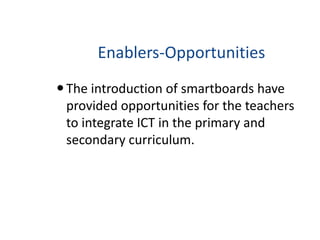
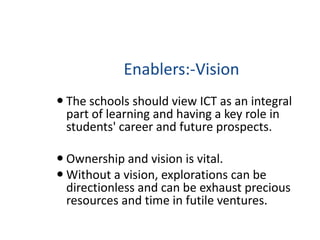
Changing the role of teaching/learningStudents have become sources of quasi professional learning.Enablers-OpportunitiesThe introduction of smartboards have provided opportunities for the teachers to integrate ICT in the primary and secondary curriculum.Enablers:-Vision The schools should view ICT as an integral part of learning and having a key role in students' career and future prospects.
Ownership and vision is vital.

Syncing digital learning

  • 1.
    SYNCING DIGITAL LEARNINGTO KEY LEARNING AREAS
  • 2.
  • 3.
    So what doesthat mean for us as teachers?Classroom teachers of the Twentieth First Century require flexible and reflective pedagogical practices to engage, educate and develop students into adaptive, creative and connected learners. 3
  • 4.
  • 5.
    DefinitionsICT is “aninadequate term” to define the dynamic, fluid and multi-contextual nature of a wide range of technologies (Loveless, 2003). Catalyst for changeICT is a catalyst for change and a cause for concern and anxiety amongst teachers (Watson, 2001).The great innovation has not been effectively scrutinised or evaluated (Somekh, 2000).Future research needs to address the question of why should teachers use technology? (Robyler & Knezek, 2003).
  • 6.
    What can welearn from this as educators?7
  • 7.
    CreatingTeachers integrate ICTbased on pedagogical needs & provide opportunities for problem solving, analysing, self-learning.
  • 8.
    Integration of ICToccurs in powerful, novel and creative ways.
  • 9.
    It is thepedagogy driving ICT and student are active producers of knowledge.
  • 10.
    ICT Pedagogy createssustained and personalisedlearning for gifted students, while providing platforms for students to showcase their creativity.InquiryInquiry has become integrated with ICT to drive learning, acquisition and the creation of knowledge.
  • 11.
    The learning contextsare shifting too and accelerated, high-level learning is possible and enable the teacher to become a facilitator.
  • 12.
    While ICT ispowerful the subject knowledge is key. You can choose the strategy from this premise. Operating ICT Competencies using ICT were shifting with web 2.0 technologies.
  • 13.
    Students in primaryare doing more than mouse clicking and word processing.
  • 14.
    Leading the teachersusing publisher & flash.Ethical Use and Interaction There are ethical issues such as web safety, interaction, bullying, censorship that conflict with the communication, and inquiry skills that ICT are enhancingThis is particularly evident with web 2.0 technologies such as wikis and blogs.
  • 15.
    Ethical Use andInteraction The need to supervise internet content and the risks involved are evident.   ICT use is managed and controlled by the coordinator.The need for the email and the network to be filtered.
  • 16.
    Teachers“Some people arequite frightened by the technology” (Karina). “Now I have the smartboard I cannot live without this” .
  • 17.
    Professional DevelopmentFlexible PDis preferred.Informal professional development is already occurring in terms of colleague to colleague sharing ideas.PD is difficult when implemented in isolation for lack of validation, accountability, support and strategic thinking for future pedagogical directions.
  • 18.
    Changing the roleof teaching/learningStudents have become sources of quasi professional learning.Enablers-OpportunitiesThe introduction of smartboards have provided opportunities for the teachers to integrate ICT in the primary and secondary curriculum.Enablers:-Vision The schools should view ICT as an integral part of learning and having a key role in students' career and future prospects.
  • 19.