Bridging the digital divide


             Miranda Valkenburg

                      April 16 2012
Topics

 The impact of ICT on education
     Trends
     Challenges in (ict) education

 Digital literacy and diversity
     Research on gender and ict
     Project Ict-STER
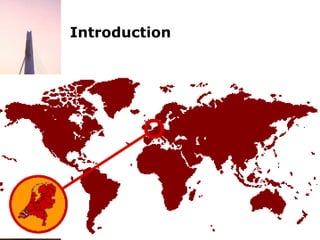
Introduction
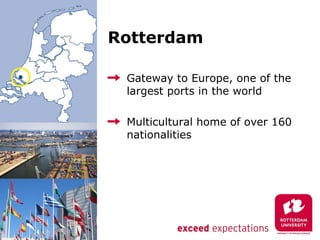
Rotterdam

 Gateway to Europe, one of the
 largest ports in the world

 Multicultural home of over 160
 nationalities
Rotterdam University

  28.000 students
  11 institutes
  Motto: outside in - inside out
     strong relationships with companies
    and organizations in the area


  Institute for Communication, Media
  and Information Technology (CMI)
Who am I?

 Programme Director Bachelor of
 Informatics at Hogeschool Rotterdam

 Have been working in higher
 education - technological and ict -
 from 1993 until now

 Proud mother of a son (21) and a
 daughter (17)
Topics

 The impact of ICT on education
     Trends
     Challenges in (ict) education

 Digital literacy and diversity
     Research on gender and ict
     Project Ict-STER
The impact of ICT
on education

 New technologies have great impact
 on our lives

 ICT changes the way we
 communicate, access information, and
 connect with peers and colleagues

 This leads to challenges that have a
 significant impact on teaching and
 learning
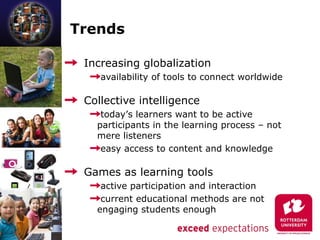
Trends

 Increasing globalization
    availability of tools to connect worldwide

 Collective intelligence
    today’s learners want to be active
   participants in the learning process – not
   mere listeners
    easy access to content and knowledge

 Games as learning tools
    active participation and interaction
    current educational methods are not
   engaging students enough
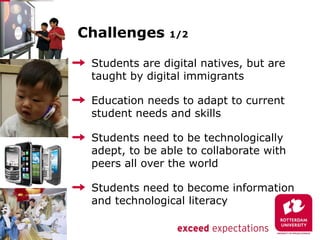
Challenges     1/2


 Students are digital natives, but are
 taught by digital immigrants

 Education needs to adapt to current
 student needs and skills

 Students need to be technologically
 adept, to be able to collaborate with
 peers all over the world

 Students need to become information
 and technological literacy
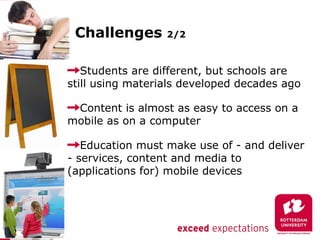
Challenges       2/2


   Students are different, but schools are
still using materials developed decades ago

 Content is almost as easy to access on a
mobile as on a computer

   Education must make use of - and deliver
- services, content and media to
(applications for) mobile devices
Bridging the digital divide


  Access to computers and the internet
  and the ability to effectively use ict is
  necessary for full participation

  It’s important to make children AND
  teachers digital literate
Topics

 The impact of ICT on education
     Trends
     Challenges in (ict) education

 Digital literacy and diversity
     Research on gender and ict
     Project Ict-STER
Gender and ICT

  In NL – like many western countries –
  the participation of women in ict
  professions is very low (10%)

  Enrolment of women students in ict
  education is even lower (6%)

  Without encouraging measurements
  these percentages will not increase
Why is it important?

  Economic reasons
     Industry benefits from diversity
     Increasing demand for highly educated ict
    professionals
     The number of young people is
    decreasing


  Ethical reasons
    Technology designs the future: women
    must play a part
    Equal opportunities for girls and boys
What causes the gender gap?

 Confidence gap: differences in how
 students (f/m) assess their own
 performance

 The scarcity of female role models

 Ict programmes ‘made by men, made
 for boys’

 The lack of a sufficient critical mass to
 sustain supportive peer communities
What to do?


  Increase the enrolment of female
  students in ict programmes

  Transfer female ict students to ict
  positions on the labour market

  Recruitment and retention of female ict
  professionals
Project Ict-STER                2005-2007


  Joint action
    Education, industry, professionals, experts

  Integral approach
    Raising awareness among teachers, parents,
    policy makers,..
    Supporting and influencing actions for girls

  Comprehensive approach
    From primary education to the labour market

  Combined strategies
    Specific policy for girls
    Gender mainstreaming
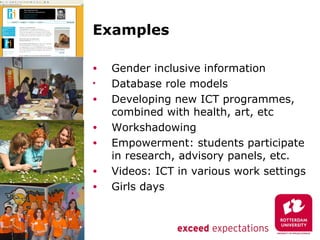
Examples

•   Gender inclusive information
•   Database role models
•   Developing new ICT programmes,
    combined with health, art, etc
•   Workshadowing
•   Empowerment: students participate
    in research, advisory panels, etc.
•   Videos: ICT in various work settings
•   Girls days
Results
•   Nowadays, more girls choose STEM in
    secondary education
•   Stabilized enrolment female students in
    higher education ICT (but… still no
    increase)
•   Interventions are still necessary
•   Many universities benefit from the
    experiences in Ict-STER
•   Ict-STER continues
Bridging the digital divide


•Our   children define the future

•Make sure that girls AND boys have equal
opportunities to use and produce ICT
Q&A


m.w.valkenburg@hr.nl

120414 Mv Presentation Yogyakarta

  • 1.
    Bridging the digitaldivide Miranda Valkenburg April 16 2012
  • 2.
    Topics The impactof ICT on education Trends Challenges in (ict) education Digital literacy and diversity Research on gender and ict Project Ict-STER
  • 3.
  • 4.
    Rotterdam Gateway toEurope, one of the largest ports in the world Multicultural home of over 160 nationalities
  • 5.
    Rotterdam University 28.000 students 11 institutes Motto: outside in - inside out strong relationships with companies and organizations in the area Institute for Communication, Media and Information Technology (CMI)
  • 6.
    Who am I? Programme Director Bachelor of Informatics at Hogeschool Rotterdam Have been working in higher education - technological and ict - from 1993 until now Proud mother of a son (21) and a daughter (17)
  • 7.
    Topics The impactof ICT on education Trends Challenges in (ict) education Digital literacy and diversity Research on gender and ict Project Ict-STER
  • 8.
    The impact ofICT on education New technologies have great impact on our lives ICT changes the way we communicate, access information, and connect with peers and colleagues This leads to challenges that have a significant impact on teaching and learning
  • 9.
    Trends Increasing globalization availability of tools to connect worldwide Collective intelligence today’s learners want to be active participants in the learning process – not mere listeners easy access to content and knowledge Games as learning tools active participation and interaction current educational methods are not engaging students enough
  • 10.
    Challenges 1/2 Students are digital natives, but are taught by digital immigrants Education needs to adapt to current student needs and skills Students need to be technologically adept, to be able to collaborate with peers all over the world Students need to become information and technological literacy
  • 11.
    Challenges 2/2 Students are different, but schools are still using materials developed decades ago Content is almost as easy to access on a mobile as on a computer Education must make use of - and deliver - services, content and media to (applications for) mobile devices
  • 12.
    Bridging the digitaldivide Access to computers and the internet and the ability to effectively use ict is necessary for full participation It’s important to make children AND teachers digital literate
  • 13.
    Topics The impactof ICT on education Trends Challenges in (ict) education Digital literacy and diversity Research on gender and ict Project Ict-STER
  • 14.
    Gender and ICT In NL – like many western countries – the participation of women in ict professions is very low (10%) Enrolment of women students in ict education is even lower (6%) Without encouraging measurements these percentages will not increase
  • 15.
    Why is itimportant? Economic reasons Industry benefits from diversity Increasing demand for highly educated ict professionals The number of young people is decreasing Ethical reasons Technology designs the future: women must play a part Equal opportunities for girls and boys
  • 16.
    What causes thegender gap? Confidence gap: differences in how students (f/m) assess their own performance The scarcity of female role models Ict programmes ‘made by men, made for boys’ The lack of a sufficient critical mass to sustain supportive peer communities
  • 17.
    What to do? Increase the enrolment of female students in ict programmes Transfer female ict students to ict positions on the labour market Recruitment and retention of female ict professionals
  • 18.
    Project Ict-STER 2005-2007 Joint action Education, industry, professionals, experts Integral approach Raising awareness among teachers, parents, policy makers,.. Supporting and influencing actions for girls Comprehensive approach From primary education to the labour market Combined strategies Specific policy for girls Gender mainstreaming
  • 19.
    Examples • Gender inclusive information • Database role models • Developing new ICT programmes, combined with health, art, etc • Workshadowing • Empowerment: students participate in research, advisory panels, etc. • Videos: ICT in various work settings • Girls days
  • 20.
    Results • Nowadays, more girls choose STEM in secondary education • Stabilized enrolment female students in higher education ICT (but… still no increase) • Interventions are still necessary • Many universities benefit from the experiences in Ict-STER • Ict-STER continues
  • 21.
    Bridging the digitaldivide •Our children define the future •Make sure that girls AND boys have equal opportunities to use and produce ICT
  • 22.