THE DICOM 2014 Chengdu Workshop 
August 25, 2014 Chengdu, China 
Keeping It Safe 
Securing DICOM 
Brad Genereaux, Agfa HealthCare 
Product Manager 
Industry Co-Chair, DICOM WG-27, Web Technologies
What is security? 
• Protecting data security (against 
unauthorized access) 
• Protecting data integrity (against 
unauthorized changes) 
• Protecting data loss (against 
unauthorized deletions) 
• Protecting data availability (against 
denial of service)
What are the implications if 
security is compromised? 
• Data corruption and loss 
• Fraud against those victimized 
• Civil penalties (fines and lawsuits) 
• Criminal penalties 
• Serious harm and death
What is NOT security? 
• Changing names of parameters, 
servers or functions to make it harder 
to guess 
• Including dangerous functions in a 
release but not including them in 
documentation
Keeping DICOM Safe 
DICOM 
DICOM 
Simple workflow 
•Modality transmits images to archive 
•Radiologist requests images for reading 
: Out to cause security issues 
August 2014, THE DICOM 2014 Chengdu Workshop Keeping It Safe – Brad Genereaux 6
DICOM Security Profiles 
• Defined in PS3.15, “Security and 
System Management Profiles” 
• Describes methods to mitigate various 
security concerns 
• Items in red describe solutions that are 
used in the industry but not explicity 
part of the DICOM standard 
August 2014, THE DICOM 2014 Chengdu Workshop Keeping It Safe – Brad Genereaux 7
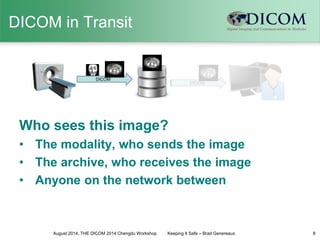
DICOM in Transit 
DICOM 
DICOM 
Who sees this image? 
• The modality, who sends the image 
• The archive, who receives the image 
• Anyone on the network between 
August 2014, THE DICOM 2014 Chengdu Workshop Keeping It Safe – Brad Genereaux 8
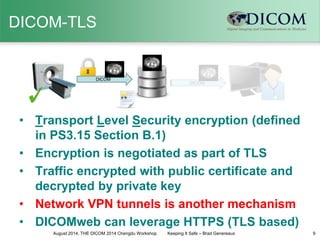
DICOM-TLS 
DICOM 
DICOM 
• Transport Level Security encryption (defined 
in PS3.15 Section B.1) 
• Encryption is negotiated as part of TLS 
• Traffic encrypted with public certificate and 
decrypted by private key 
• Network VPN tunnels is another mechanism 
• DICOMweb can leverage HTTPS (TLS based) 
August 2014, THE DICOM 2014 Chengdu Workshop Keeping It Safe – Brad Genereaux 9
DICOM in Transit 
DICOM 
DICOM 
Who are the actors in transmission? 
• The modality, who sends the image 
• The archive, who receives the image 
• Anyone pretending to be these actors 
August 2014, THE DICOM 2014 Chengdu Workshop Keeping It Safe – Brad Genereaux 10
Node Identity 
DICOM 
DICOM 
• DICOM-TLS certificates specifies 
identifying information about the 
owner 
• Verification of certificates are done 
against a signing authority 
• AE titles are a less secure alternative 
August 2014, THE DICOM 2014 Chengdu Workshop Keeping It Safe – Brad Genereaux 11
User Authentication 
DICOM 
DICOM 
Who can retrieve images? 
• Device is validated by DICOM-TLS 
• User can retrieve images 
• Anyone else using device can, too 
August 2014, THE DICOM 2014 Chengdu Workshop Keeping It Safe – Brad Genereaux 12
User Authentication 
DICOM 
DICOM 
• Defined in PS3.15 B.4-7 
• Authentication of users can occur via 
• Mutual TLS authentication (each side presents certificates) 
• Authentication during association negotiation (SAML, 
Kerberos, etc) 
• Authenticating users at the application level and 
making trusted calls to the imaging backend is an 
alternative approach 
August 2014, THE DICOM 2014 Chengdu Workshop Keeping It Safe – Brad Genereaux 13
Auditing 
• Described in PS 3.15 Part A.5 
• User should be known 
• Events for authentication, query, 
access, transfer, import/export, and 
deletion 
• This is used in the IHE ITI ATNA profile 
with Radiology option 
August 2014, THE DICOM 2014 Chengdu Workshop Keeping It Safe – Brad Genereaux 14
DICOM at Rest 
DICOM 
DICOM 
Who ensures the images are genuine as 
the modality provides them? 
• The archive accomplishes this task 
• Anyone else who can manipulate the 
archive 
August 2014, THE DICOM 2014 Chengdu Workshop Keeping It Safe – Brad Genereaux 15
Digital Signatures 
DICOM 
DICOM 
• DICOM supports digital signatures which provides 
integrity check and other features 
• Defined in PS3.15 Section C 
• Individual fields can also be selectively encrypted 
• Disk-level encryption can also be used to maintain 
integrity at rest 
August 2014, THE DICOM 2014 Chengdu Workshop Keeping It Safe – Brad Genereaux 16
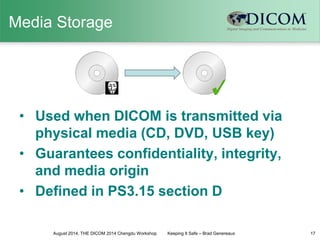
Media Storage 
• Used when DICOM is transmitted via 
physical media (CD, DVD, USB key) 
• Guarantees confidentiality, integrity, 
and media origin 
• Defined in PS3.15 section D 
August 2014, THE DICOM 2014 Chengdu Workshop Keeping It Safe – Brad Genereaux 17
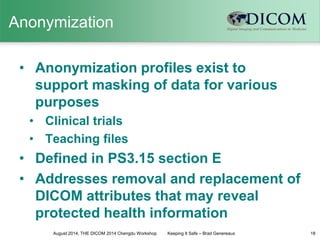
Anonymization 
• Anonymization profiles exist to 
support masking of data for various 
purposes 
• Clinical trials 
• Teaching files 
• Defined in PS3.15 section E 
• Addresses removal and replacement of 
DICOM attributes that may reveal 
protected health information 
August 2014, THE DICOM 2014 Chengdu Workshop Keeping It Safe – Brad Genereaux 18
DICOM’s Stance 
• DICOM enables a very wide variety of 
authentication and access control 
policies, but does not mandate them 
• DICOMweb shares the same position 
through the use of standard internet 
technologies 
August 2014, THE DICOM 2014 Chengdu Workshop Keeping It Safe – Brad Genereaux 19
Suggestions 
 Use DICOM-TLS, and HTTPS for DICOMweb 
 Use appropriate authentication and 
authorization measures 
 Use appropriate at-rest encryption 
mechanisms 
 Control access via managed environments, 
strong identity management, firewalls 
 Consider security throughout your project 
lifecycle, not at the end 
August 2014, THE DICOM 2014 Chengdu Workshop Keeping It Safe – Brad Genereaux 20
Keep It Safe! 
DICOM 
Questions? Thank you! 
DICOM 
August 2014, THE DICOM 2014 Chengdu Workshop Keeping It Safe – Brad Genereaux 21

Keeping it safe: Securing DICOM

  • 1.
    THE DICOM 2014Chengdu Workshop August 25, 2014 Chengdu, China Keeping It Safe Securing DICOM Brad Genereaux, Agfa HealthCare Product Manager Industry Co-Chair, DICOM WG-27, Web Technologies
  • 2.
    What is security? • Protecting data security (against unauthorized access) • Protecting data integrity (against unauthorized changes) • Protecting data loss (against unauthorized deletions) • Protecting data availability (against denial of service)
  • 3.
    What are theimplications if security is compromised? • Data corruption and loss • Fraud against those victimized • Civil penalties (fines and lawsuits) • Criminal penalties • Serious harm and death
  • 4.
    What is NOTsecurity? • Changing names of parameters, servers or functions to make it harder to guess • Including dangerous functions in a release but not including them in documentation
  • 5.
    Keeping DICOM Safe DICOM DICOM Simple workflow •Modality transmits images to archive •Radiologist requests images for reading : Out to cause security issues August 2014, THE DICOM 2014 Chengdu Workshop Keeping It Safe – Brad Genereaux 6
  • 6.
    DICOM Security Profiles • Defined in PS3.15, “Security and System Management Profiles” • Describes methods to mitigate various security concerns • Items in red describe solutions that are used in the industry but not explicity part of the DICOM standard August 2014, THE DICOM 2014 Chengdu Workshop Keeping It Safe – Brad Genereaux 7
  • 7.
    DICOM in Transit DICOM DICOM Who sees this image? • The modality, who sends the image • The archive, who receives the image • Anyone on the network between August 2014, THE DICOM 2014 Chengdu Workshop Keeping It Safe – Brad Genereaux 8
  • 8.
    DICOM-TLS DICOM DICOM • Transport Level Security encryption (defined in PS3.15 Section B.1) • Encryption is negotiated as part of TLS • Traffic encrypted with public certificate and decrypted by private key • Network VPN tunnels is another mechanism • DICOMweb can leverage HTTPS (TLS based) August 2014, THE DICOM 2014 Chengdu Workshop Keeping It Safe – Brad Genereaux 9
  • 9.
    DICOM in Transit DICOM DICOM Who are the actors in transmission? • The modality, who sends the image • The archive, who receives the image • Anyone pretending to be these actors August 2014, THE DICOM 2014 Chengdu Workshop Keeping It Safe – Brad Genereaux 10
  • 10.
    Node Identity DICOM DICOM • DICOM-TLS certificates specifies identifying information about the owner • Verification of certificates are done against a signing authority • AE titles are a less secure alternative August 2014, THE DICOM 2014 Chengdu Workshop Keeping It Safe – Brad Genereaux 11
  • 11.
    User Authentication DICOM DICOM Who can retrieve images? • Device is validated by DICOM-TLS • User can retrieve images • Anyone else using device can, too August 2014, THE DICOM 2014 Chengdu Workshop Keeping It Safe – Brad Genereaux 12
  • 12.
    User Authentication DICOM DICOM • Defined in PS3.15 B.4-7 • Authentication of users can occur via • Mutual TLS authentication (each side presents certificates) • Authentication during association negotiation (SAML, Kerberos, etc) • Authenticating users at the application level and making trusted calls to the imaging backend is an alternative approach August 2014, THE DICOM 2014 Chengdu Workshop Keeping It Safe – Brad Genereaux 13
  • 13.
    Auditing • Describedin PS 3.15 Part A.5 • User should be known • Events for authentication, query, access, transfer, import/export, and deletion • This is used in the IHE ITI ATNA profile with Radiology option August 2014, THE DICOM 2014 Chengdu Workshop Keeping It Safe – Brad Genereaux 14
  • 14.
    DICOM at Rest DICOM DICOM Who ensures the images are genuine as the modality provides them? • The archive accomplishes this task • Anyone else who can manipulate the archive August 2014, THE DICOM 2014 Chengdu Workshop Keeping It Safe – Brad Genereaux 15
  • 15.
    Digital Signatures DICOM DICOM • DICOM supports digital signatures which provides integrity check and other features • Defined in PS3.15 Section C • Individual fields can also be selectively encrypted • Disk-level encryption can also be used to maintain integrity at rest August 2014, THE DICOM 2014 Chengdu Workshop Keeping It Safe – Brad Genereaux 16
  • 16.
    Media Storage •Used when DICOM is transmitted via physical media (CD, DVD, USB key) • Guarantees confidentiality, integrity, and media origin • Defined in PS3.15 section D August 2014, THE DICOM 2014 Chengdu Workshop Keeping It Safe – Brad Genereaux 17
  • 17.
    Anonymization • Anonymizationprofiles exist to support masking of data for various purposes • Clinical trials • Teaching files • Defined in PS3.15 section E • Addresses removal and replacement of DICOM attributes that may reveal protected health information August 2014, THE DICOM 2014 Chengdu Workshop Keeping It Safe – Brad Genereaux 18
  • 18.
    DICOM’s Stance •DICOM enables a very wide variety of authentication and access control policies, but does not mandate them • DICOMweb shares the same position through the use of standard internet technologies August 2014, THE DICOM 2014 Chengdu Workshop Keeping It Safe – Brad Genereaux 19
  • 19.
    Suggestions  UseDICOM-TLS, and HTTPS for DICOMweb  Use appropriate authentication and authorization measures  Use appropriate at-rest encryption mechanisms  Control access via managed environments, strong identity management, firewalls  Consider security throughout your project lifecycle, not at the end August 2014, THE DICOM 2014 Chengdu Workshop Keeping It Safe – Brad Genereaux 20
  • 20.
    Keep It Safe! DICOM Questions? Thank you! DICOM August 2014, THE DICOM 2014 Chengdu Workshop Keeping It Safe – Brad Genereaux 21