Juvenile delinquency
Sub:-Social Problems in India
Presentedby:-
ALLWINTHOMAS N T
Juvenile Delinquency
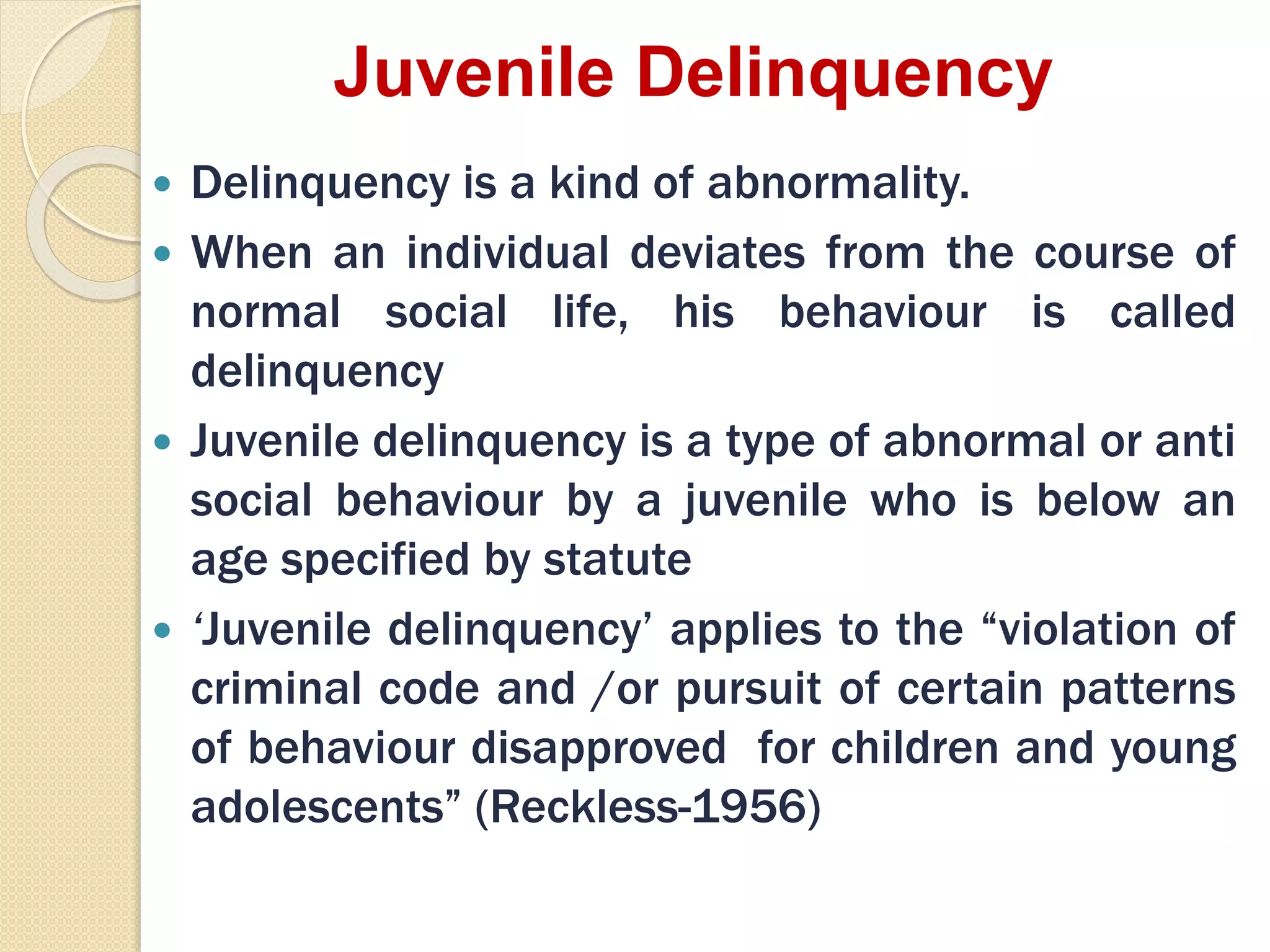
 Delinquency is a kind of abnormality.
 When an individual deviates from the course of
normal social life, his behaviour is called
delinquency
 Juvenile delinquency is a type of abnormal or anti
social behaviour by a juvenile who is below an
age specified by statute
 ‘Juvenile delinquency’ applies to the “violation of
criminal code and /or pursuit of certain patterns
of behaviour disapproved for children and young
adolescents” (Reckless-1956)
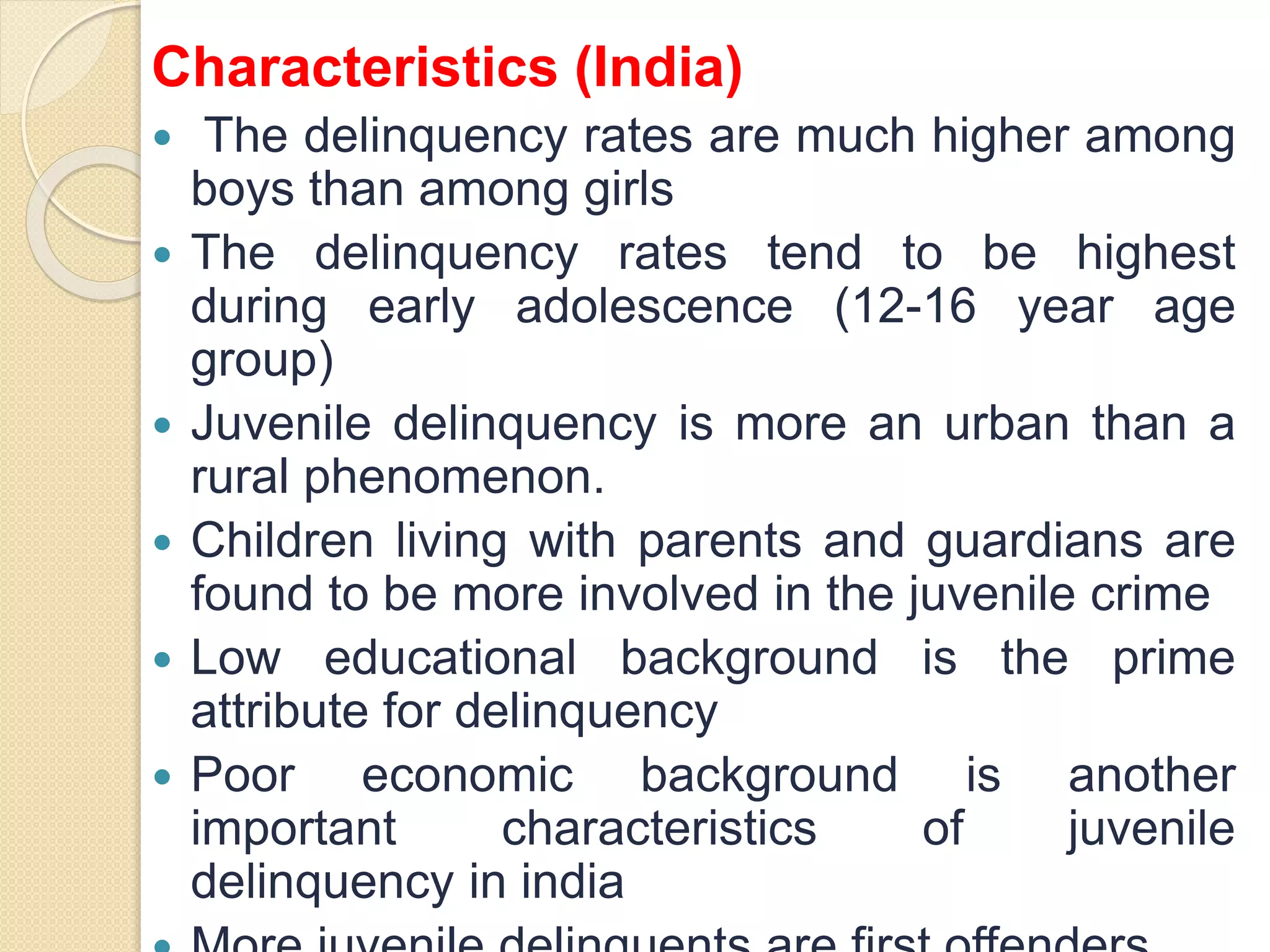
Characteristics (India)
 The delinquency rates are much higher among
boys than among girls
 The delinquency rates tend to be highest
during early adolescence (12-16 year age
group)
 Juvenile delinquency is more an urban than a
rural phenomenon.
 Children living with parents and guardians are
found to be more involved in the juvenile crime
 Low educational background is the prime
attribute for delinquency
 Poor economic background is another
important characteristics of juvenile
delinquency in india
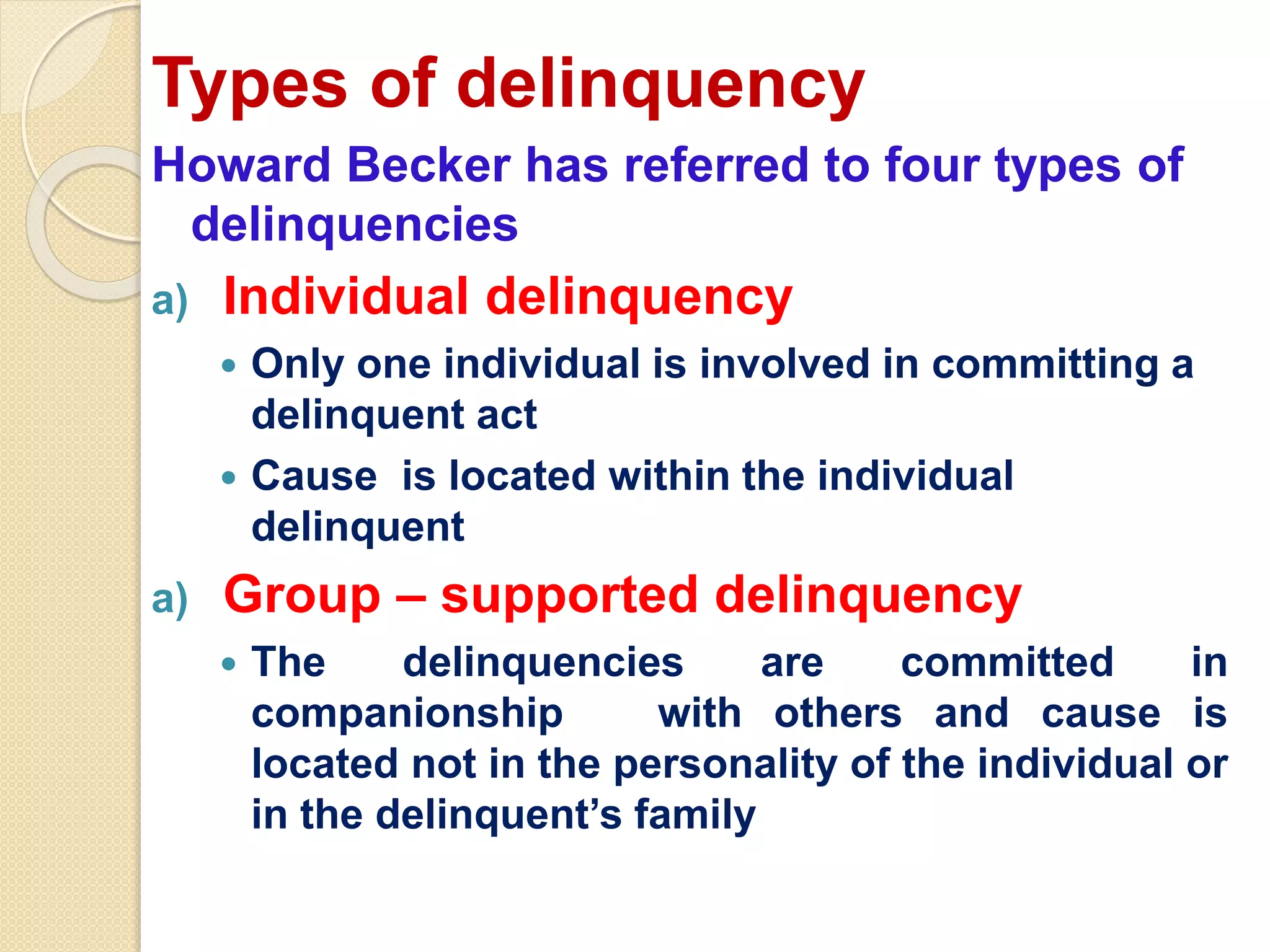
Types of delinquency
Howard Becker has referred to four types of
delinquencies
a) Individual delinquency
 Only one individual is involved in committing a
delinquent act
 Cause is located within the individual
delinquent
a) Group – supported delinquency
 The delinquencies are committed in
companionship with others and cause is
located not in the personality of the individual or
in the delinquent’s family
a) Organized delinquency
 The delinquencies that are committed by
developing formally organized groups
a) Situational delinquency
 Situational delinquency is not deeply rooted
 Because of less developed impulse controls
and /or because of lesser reinforcement of
family restraints
Causes of delinquency
Causes are divided into two groups
a) Individual factors
b) Situational factors
Individual factors (Personality traits )
Submissiveness, defiance, hostility,
impulsiveness, feeling of in security, fear, lack
of self control and emotional conflicts
Situational factor
 Family
Parent’s discipline, parent’s affection,
cohesiveness of family, conduct – standards of
home, substitute parents, economic condition
of family, broken homes, affection of siblings
 Peer group relation
 School environment
Adjustment to school mates, attitudes
towards school, failure in classes or
academic interests
 Movies
 Working environment
Preventive Programes
 Organizing activities that contribute to
healthy personality development and
adjustments of children
 General improvements in the institutional
structure of the society (family,
neighbourhood, school)
 Raising the income levels of poverty- stricken
families
 Establishing schools
 Providing recreational facilities in
neighbourhoods
 Improving marital relations through family
counseling services and family social work
 Imparting moral and social education
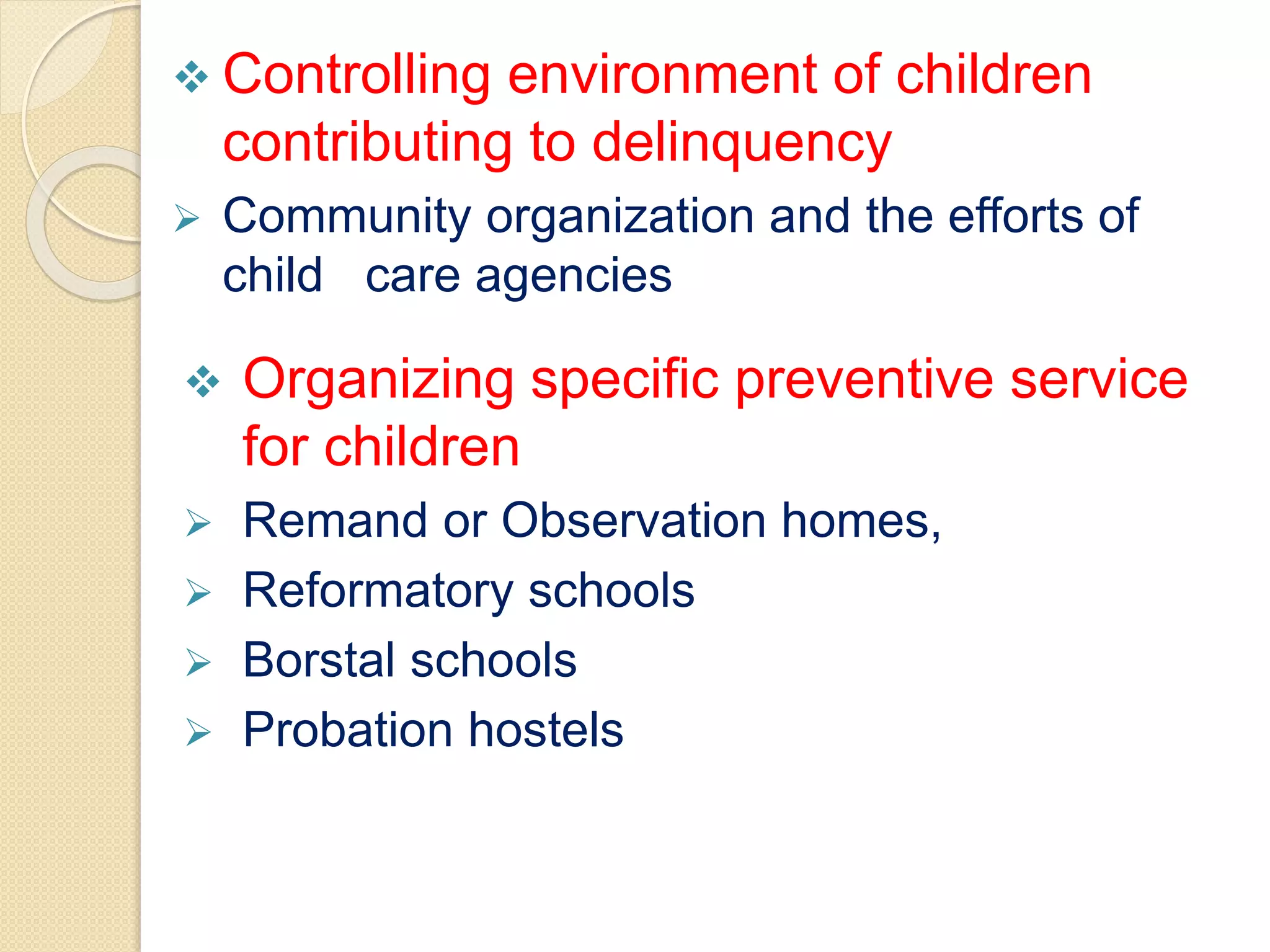
 Controlling environment of children
contributing to delinquency
 Community organization and the efforts of
child care agencies
 Organizing specific preventive service
for children
 Remand or Observation homes,
 Reformatory schools
 Borstal schools
 Probation hostels
Any
Queries????
Juvenile delinquency

Juvenile delinquency

  • 1.
    Juvenile delinquency Sub:-Social Problemsin India Presentedby:- ALLWINTHOMAS N T
  • 2.
    Juvenile Delinquency  Delinquencyis a kind of abnormality.  When an individual deviates from the course of normal social life, his behaviour is called delinquency  Juvenile delinquency is a type of abnormal or anti social behaviour by a juvenile who is below an age specified by statute  ‘Juvenile delinquency’ applies to the “violation of criminal code and /or pursuit of certain patterns of behaviour disapproved for children and young adolescents” (Reckless-1956)
  • 3.
    Characteristics (India)  Thedelinquency rates are much higher among boys than among girls  The delinquency rates tend to be highest during early adolescence (12-16 year age group)  Juvenile delinquency is more an urban than a rural phenomenon.  Children living with parents and guardians are found to be more involved in the juvenile crime  Low educational background is the prime attribute for delinquency  Poor economic background is another important characteristics of juvenile delinquency in india
  • 4.
    Types of delinquency HowardBecker has referred to four types of delinquencies a) Individual delinquency  Only one individual is involved in committing a delinquent act  Cause is located within the individual delinquent a) Group – supported delinquency  The delinquencies are committed in companionship with others and cause is located not in the personality of the individual or in the delinquent’s family
  • 5.
    a) Organized delinquency The delinquencies that are committed by developing formally organized groups a) Situational delinquency  Situational delinquency is not deeply rooted  Because of less developed impulse controls and /or because of lesser reinforcement of family restraints
  • 6.
    Causes of delinquency Causesare divided into two groups a) Individual factors b) Situational factors Individual factors (Personality traits ) Submissiveness, defiance, hostility, impulsiveness, feeling of in security, fear, lack of self control and emotional conflicts
  • 7.
    Situational factor  Family Parent’sdiscipline, parent’s affection, cohesiveness of family, conduct – standards of home, substitute parents, economic condition of family, broken homes, affection of siblings  Peer group relation  School environment Adjustment to school mates, attitudes towards school, failure in classes or academic interests  Movies  Working environment
  • 8.
    Preventive Programes  Organizingactivities that contribute to healthy personality development and adjustments of children  General improvements in the institutional structure of the society (family, neighbourhood, school)  Raising the income levels of poverty- stricken families  Establishing schools  Providing recreational facilities in neighbourhoods  Improving marital relations through family counseling services and family social work  Imparting moral and social education
  • 9.
     Controlling environmentof children contributing to delinquency  Community organization and the efforts of child care agencies  Organizing specific preventive service for children  Remand or Observation homes,  Reformatory schools  Borstal schools  Probation hostels
  • 10.