By- Gayatri Telang
MSW IIsem
Central university of karnataka
• Introduction
• Meaning
• Definitions of Marriage
• Characteristic
• Types of Marriage
• Important legal matters on marriage
• Functions
• Trends
• Problems
• Conclusion
• Refarence
Introduction
Marriage is one of the universal
social institution. It is established by the
human society to control and regulate
the sex life of human. It is closely
connected with the institution of family.
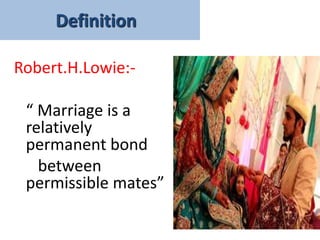
Robert.H.Lowie:-
“ Marriage is a
relatively
permanent bond
between
permissible mates”
Definition
Definition
Malinowski :-
“Contract for
the
production
and
maintenance
of children”
Definition
Encyclopedia
Britannica:-
“Marriage is a
physical, legal and
moral union
between man and
woman in complete
community life for
the establishment of
a family.”
Characteristics of marriage
(1)Marriage is a universal social institution.
It is found in almost all societies and at
all stages of development.
(2) Marriage is a permanent bond between
husband and wife. It is designed to fulfill
the social, psychological, biological and
religious aims.
(3) Marriage is a specific relationship
between two individuals of opposite sex
and based on mutual rights and
obligations. Relationship is enduring.
• (4) Marriage requires social approval. The
relationship between men and women
must have social approval. Without which
marriage is not valid.
(5) Marriage establishes family. Family helps
in providing facilities for the procreation
and upbringing of children.
(6) Marriage creates mutual obligations
between husband and wife. The couple
fulfill their mutual obligations on the basis
of customs or rules.
(7) Marriage is always associated with
some civil and religious ceremony. This
social and religious ceremony provides
validity to marriage. Though modern
marriage performed in courts still it
requires certain religious or customary
practices.
(8) Marriage regulates sex relationship according
to prescribed customs and laws.
(9) Marriage has certain symbols like ring,
vermillion, special cloths, special sign before
the house etc
1. Regulation of sex life
2. Marriage leads establishment of family
3. Provides economic cooperation
4. Marriage contributes to emotional and
intellectual interstimulation of the
partners
5. Marriage aims at social solidarity
Functions of marriage
Marriage
Two Aspects:
1. Legal point of view- states that
marriage is a contract.
2. Religious point of view- states that
marriage is a sacrament.
Types of Marriage
1. Monogamy- Marriage between one man and
one woman.
2. Polygamy or plural marriages- refers to the
marriage of more than one mate at a given
time. It has three forms.
Three forms of Polygamy
Marriage
• Polygyny- one husband and two more wives.
• Polyandry- one wife and two or more
husbands.
• Group Marriage- marriage of several man to
several women.
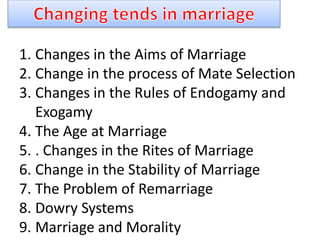
1. Changes in the Aims of Marriage
2. Change in the process of Mate Selection
3. Changes in the Rules of Endogamy and
Exogamy
4. The Age at Marriage
5. . Changes in the Rites of Marriage
6. Change in the Stability of Marriage
7. The Problem of Remarriage
8. Dowry Systems
9. Marriage and Morality
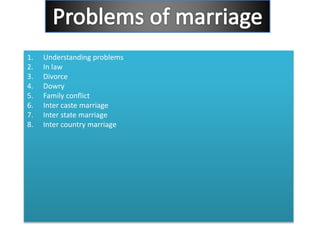
1. Understanding problems
2. In law
3. Divorce
4. Dowry
5. Family conflict
6. Inter caste marriage
7. Inter state marriage
8. Inter country marriage
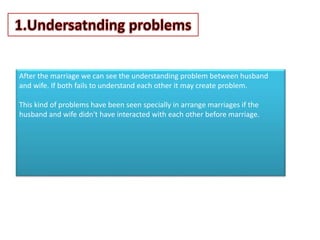
After the marriage we can see the understanding problem between husband
and wife. If both fails to understand each other it may create problem.
This kind of problems have been seen specially in arrange marriages if the
husband and wife didn't have interacted with each other before marriage.
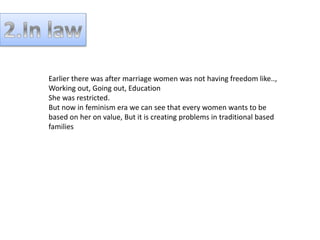
Earlier there was after marriage women was not having freedom like..,
Working out, Going out, Education
She was restricted.
But now in feminism era we can see that every women wants to be
based on her on value, But it is creating problems in traditional based
families
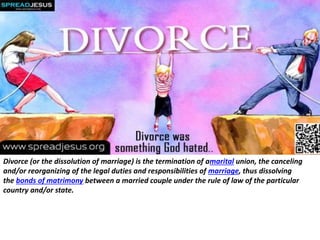
Divorce (or the dissolution of marriage) is the termination of amarital union, the canceling
and/or reorganizing of the legal duties and responsibilities of marriage, thus dissolving
the bonds of matrimony between a married couple under the rule of law of the particular
country and/or state.
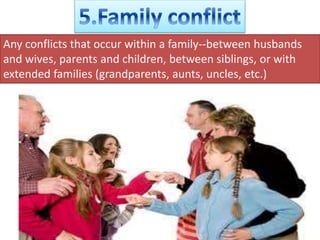
Any conflicts that occur within a family--between husbands
and wives, parents and children, between siblings, or with
extended families (grandparents, aunts, uncles, etc.)
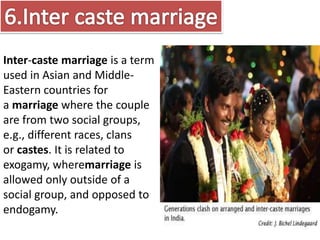
Inter-caste marriage is a term
used in Asian and Middle-
Eastern countries for
a marriage where the couple
are from two social groups,
e.g., different races, clans
or castes. It is related to
exogamy, wheremarriage is
allowed only outside of a
social group, and opposed to
endogamy.
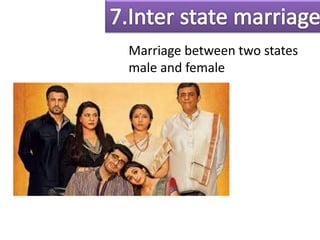
Marriage between two states
male and female
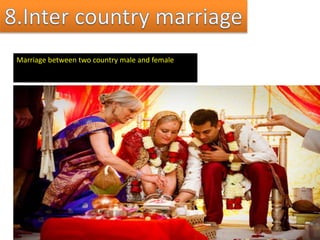
Marriage between two country male and female
Marriage is most important step or
condition of a human life, but in western
countries influence of marriage is
decreasing because it was practiced to
control the sexual life of human being and
establishment of family. But now a days it is
totally change.
References:
1.Principles of sociology with an introduction to social
thought , C.N.shankar rao,c.chand and company
2.An introduction to sociology,vidhyabhushan
kitab mahal patna
3. 2.An introduction to sociology, Ramachandra joshi
4.Internet
• Any doubts …?????????
marriage

marriage

  • 2.
    By- Gayatri Telang MSWIIsem Central university of karnataka
  • 3.
    • Introduction • Meaning •Definitions of Marriage • Characteristic • Types of Marriage • Important legal matters on marriage • Functions • Trends • Problems • Conclusion • Refarence
  • 4.
    Introduction Marriage is oneof the universal social institution. It is established by the human society to control and regulate the sex life of human. It is closely connected with the institution of family.
  • 5.
    Robert.H.Lowie:- “ Marriage isa relatively permanent bond between permissible mates” Definition
  • 6.
  • 7.
    Definition Encyclopedia Britannica:- “Marriage is a physical,legal and moral union between man and woman in complete community life for the establishment of a family.”
  • 8.
    Characteristics of marriage (1)Marriageis a universal social institution. It is found in almost all societies and at all stages of development. (2) Marriage is a permanent bond between husband and wife. It is designed to fulfill the social, psychological, biological and religious aims.
  • 9.
    (3) Marriage isa specific relationship between two individuals of opposite sex and based on mutual rights and obligations. Relationship is enduring. • (4) Marriage requires social approval. The relationship between men and women must have social approval. Without which marriage is not valid.
  • 10.
    (5) Marriage establishesfamily. Family helps in providing facilities for the procreation and upbringing of children. (6) Marriage creates mutual obligations between husband and wife. The couple fulfill their mutual obligations on the basis of customs or rules.
  • 11.
    (7) Marriage isalways associated with some civil and religious ceremony. This social and religious ceremony provides validity to marriage. Though modern marriage performed in courts still it requires certain religious or customary practices.
  • 12.
    (8) Marriage regulatessex relationship according to prescribed customs and laws. (9) Marriage has certain symbols like ring, vermillion, special cloths, special sign before the house etc
  • 13.
    1. Regulation ofsex life 2. Marriage leads establishment of family 3. Provides economic cooperation 4. Marriage contributes to emotional and intellectual interstimulation of the partners 5. Marriage aims at social solidarity Functions of marriage
  • 14.
    Marriage Two Aspects: 1. Legalpoint of view- states that marriage is a contract. 2. Religious point of view- states that marriage is a sacrament.
  • 15.
    Types of Marriage 1.Monogamy- Marriage between one man and one woman. 2. Polygamy or plural marriages- refers to the marriage of more than one mate at a given time. It has three forms.
  • 16.
    Three forms ofPolygamy Marriage • Polygyny- one husband and two more wives. • Polyandry- one wife and two or more husbands. • Group Marriage- marriage of several man to several women.
  • 18.
    1. Changes inthe Aims of Marriage 2. Change in the process of Mate Selection 3. Changes in the Rules of Endogamy and Exogamy 4. The Age at Marriage 5. . Changes in the Rites of Marriage 6. Change in the Stability of Marriage 7. The Problem of Remarriage 8. Dowry Systems 9. Marriage and Morality
  • 19.
    1. Understanding problems 2.In law 3. Divorce 4. Dowry 5. Family conflict 6. Inter caste marriage 7. Inter state marriage 8. Inter country marriage
  • 20.
    After the marriagewe can see the understanding problem between husband and wife. If both fails to understand each other it may create problem. This kind of problems have been seen specially in arrange marriages if the husband and wife didn't have interacted with each other before marriage.
  • 21.
    Earlier there wasafter marriage women was not having freedom like.., Working out, Going out, Education She was restricted. But now in feminism era we can see that every women wants to be based on her on value, But it is creating problems in traditional based families
  • 22.
    Divorce (or thedissolution of marriage) is the termination of amarital union, the canceling and/or reorganizing of the legal duties and responsibilities of marriage, thus dissolving the bonds of matrimony between a married couple under the rule of law of the particular country and/or state.
  • 25.
    Any conflicts thatoccur within a family--between husbands and wives, parents and children, between siblings, or with extended families (grandparents, aunts, uncles, etc.)
  • 26.
    Inter-caste marriage isa term used in Asian and Middle- Eastern countries for a marriage where the couple are from two social groups, e.g., different races, clans or castes. It is related to exogamy, wheremarriage is allowed only outside of a social group, and opposed to endogamy.
  • 27.
    Marriage between twostates male and female
  • 28.
    Marriage between twocountry male and female
  • 30.
    Marriage is mostimportant step or condition of a human life, but in western countries influence of marriage is decreasing because it was practiced to control the sexual life of human being and establishment of family. But now a days it is totally change.
  • 31.
    References: 1.Principles of sociologywith an introduction to social thought , C.N.shankar rao,c.chand and company 2.An introduction to sociology,vidhyabhushan kitab mahal patna 3. 2.An introduction to sociology, Ramachandra joshi 4.Internet
  • 32.
    • Any doubts…?????????