dr salman kareem 
Junior resident
 Controversial topic 
 No clear cut definition 
 Various different studies
 Debate continues about itspresentation, 
course and co-morbidity patterns.
Signs and symptoms 
 The most common presentations among 
adolescents and youth with bipolar disorder 
in community settings were outbursts of 
 mood lability, 
 irritability and 
 aggression
 BD in children and adolescents has many 
symptoms which overlap with other disorders 
like attention deficit hyperactivity disorder and 
disruptive behavior disorder.
Recovery and relapse rates 
 Recovery in BD is defined as eight 
consecutive weeks without meeting any of 
the DSM-IV criteria for mania, hypomania, 
depression, or mixed affective state. 
 With these criteria, studies of childrenand 
adolescents with BD have reported that 50- 
100% will recover in a period of 1–2 years
 longitudinalstudies of a cohort initially 
ascertained before puberty have found that 
children with BD tend to show lengthy 
episodes with frequent mixed states, and 
high rates of relapse following remission or 
recovery.
Issues of mixed episodes and 
rapid cycling course
DSM V 
 A proposed new diagnostic category, temper 
dysregulation with dysphoria (TDD), within 
the Mood Disorders section of the manual. 
The new criteria are based on a decade of 
research onsevere mood dysregulation, and 
may help clinicians better differentiate 
children with these symptoms from those 
with bipolar disorder or oppositional defiant 
disorder
Diagnostic Issues relevent to 
children
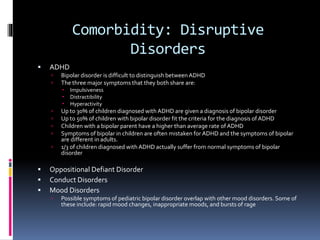
Comorbidity: Disruptive 
Disorders 
 ADHD 
 Bipolar disorder is difficult to distinguish between ADHD 
 The three major symptoms that they both share are: 
 Impulsiveness 
 Distractibility 
 Hyperactivity 
 Up to 30% of children diagnosed with ADHD are given a diagnosis of bipolar disorder 
 Up to 50% of children with bipolar disorder fit the criteria for the diagnosis of ADHD 
 Children with a bipolar parent have a higher than average rate of ADHD 
 Symptoms of bipolar in children are often mistaken for ADHD and the symptoms of bipolar 
are different in adults. 
 1/3 of children diagnosed with ADHD actually suffer from normal symptoms of bipolar 
disorder 
 Oppositional Defiant Disorder 
 Conduct Disorders 
 Mood Disorders 
 Possible symptoms of pediatric bipolar disorder overlap with other mood disorders. Some of 
these include: rapid mood changes, inappropriate moods, and bursts of rage
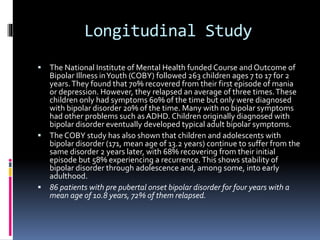
Longitudinal Study 
 The National Institute of Mental Health funded Course and Outcome of 
Bipolar Illness in Youth (COBY) followed 263 children ages 7 to 17 for 2 
years. They found that 70% recovered from their first episode of mania 
or depression. However, they relapsed an average of three times. These 
children only had symptoms 60% of the time but only were diagnosed 
with bipolar disorder 20% of the time. Many with no bipolar symptoms 
had other problems such as ADHD. Children originally diagnosed with 
bipolar disorder eventually developed typical adult bipolar symptoms. 
 The COBY study has also shown that children and adolescents with 
bipolar disorder (171, mean age of 13.2 years) continue to suffer from the 
same disorder 2 years later, with 68% recovering from their initial 
episode but 58% experiencing a recurrence. This shows stability of 
bipolar disorder through adolescence and, among some, into early 
adulthood. 
 86 patients with pre pubertal onset bipolar disorder for four years with a 
mean age of 10.8 years, 72% of them relapsed.
TREATMENT
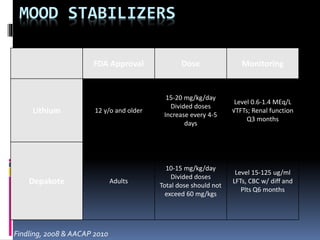
MOOD STABILIZERS 
FDA Approval Dose Monitoring 
Lithium 12 y/o and older 
15-20 mg/kg/day 
Divided doses 
Increase every 4-5 
days 
Level 0.6-1.4 MEq/L 
√TFTs; Renal function 
Q3 months 
Depakote Adults 
10-15 mg/kg/day 
Divided doses 
Total dose should not 
exceed 60 mg/kgs 
Level 15-125 ug/ml 
LFTs, CBC w/ diff and 
Plts Q6 months 
Findling, 2008 & AACAP 2010
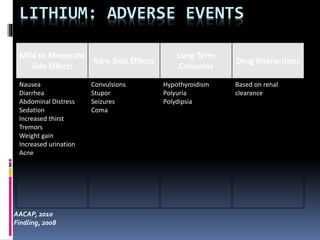
LITHIUM: ADVERSE EVENTS 
Mild to Moderate 
Side Effects 
Rare Side Effects 
Long Term 
Concerns 
Drug Interactions 
Nausea 
Diarrhea 
Abdominal Distress 
Sedation 
Increased thirst 
Tremors 
Weight gain 
Increased urination 
Acne 
Convulsions 
Stupor 
Seizures 
Coma 
Hypothyroidism 
Polyuria 
Polydipsia 
Based on renal 
clearance 
AACAP, 2010 
Findling, 2008
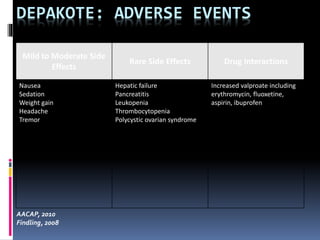
DEPAKOTE: ADVERSE EVENTS 
Mild to Moderate Side 
Effects 
Rare Side Effects Drug Interactions 
Nausea 
Sedation 
Weight gain 
Headache 
Tremor 
Hepatic failure 
Pancreatitis 
Leukopenia 
Thrombocytopenia 
Polycystic ovarian syndrome 
Increased valproate including 
erythromycin, fluoxetine, 
aspirin, ibuprofen 
AACAP, 2010 
Findling, 2008
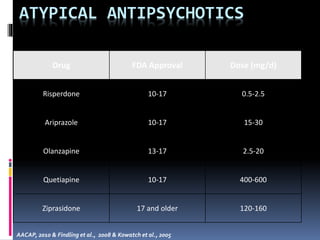
ATYPICAL ANTIPSYCHOTICS 
Drug FDA Approval Dose (mg/d) 
Risperdone 10-17 0.5-2.5 
Ariprazole 10-17 15-30 
Olanzapine 13-17 2.5-20 
Quetiapine 10-17 400-600 
Ziprasidone 17 and older 120-160 
AACAP, 2010 & Findling et al., 2008 & Kowatch et al., 2005
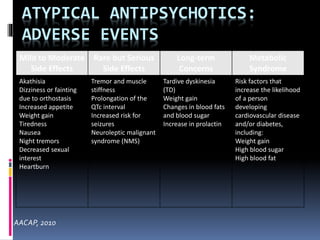
ATYPICAL ANTIPSYCHOTICS: 
ADVERSE EVENTS 
Mild to Moderate 
Side Effects 
Rare but Serious 
Side Effects 
Long-term 
Concerns 
Metabolic 
Syndrome 
Akathisia 
Dizziness or fainting 
due to orthostasis 
Increased appetite 
Weight gain 
Tiredness 
Nausea 
Night tremors 
Decreased sexual 
interest 
Heartburn 
Tremor and muscle 
stiffness 
Prolongation of the 
QTc interval 
Increased risk for 
seizures 
Neuroleptic malignant 
syndrome (NMS) 
Tardive dyskinesia 
(TD) 
Weight gain 
Changes in blood fats 
and blood sugar 
Increase in prolactin 
Risk factors that 
increase the likelihood 
of a person 
developing 
cardiovascular disease 
and/or diabetes, 
including: 
Weight gain 
High blood sugar 
High blood fat 
AACAP, 2010
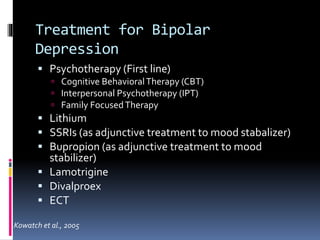
Treatment for Bipolar 
Depression 
 Psychotherapy (First line) 
 Cognitive Behavioral Therapy (CBT) 
 Interpersonal Psychotherapy (IPT) 
 Family Focused Therapy 
 Lithium 
 SSRIs (as adjunctive treatment to mood stabalizer) 
 Bupropion (as adjunctive treatment to mood 
stabilizer) 
 Lamotrigine 
 Divalproex 
 ECT 
Kowatch et al., 2005
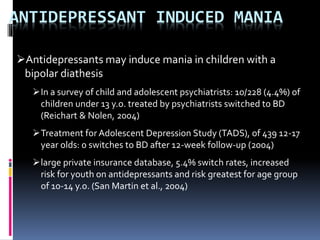
ANTIDEPRESSANT INDUCED MANIA 
Antidepressants may induce mania in children with a 
bipolar diathesis 
In a survey of child and adolescent psychiatrists: 10/228 (4.4%) of 
children under 13 y.o. treated by psychiatrists switched to BD 
(Reichart & Nolen, 2004) 
Treatment for Adolescent Depression Study (TADS), of 439 12-17 
year olds: 0 switches to BD after 12-week follow-up (2004) 
large private insurance database, 5.4% switch rates, increased 
risk for youth on antidepressants and risk greatest for age group 
of 10-14 y.o. (San Martin et al., 2004)
Frequency of Child Bipolar Disorder 
 Prevalence is largely unknown as there are no well 
accepted criteria for the diagnosis of Child Bipolar 
disorder. 
 This is because DSM IV criteria are generally viewed as 
inadequate for use with younger children. 
 The best guess is that the disorder occurs at least as 
often as adult bipolar disorder (e.g., about 1%) 
 However, many believe that this disorder is 
significantly under diagnosed in children.
Frequency of Child Bipolar Disorder 
 It is suspected that a significant number of children 
diagnosed with ADHD at an early age actually have 
early-onset bipolar disorder instead of (or along with) 
ADHD. 
 According to the American Academy of Child and 
Adolescent Psychiatry, up to one-third of children 
and adolescents with depressive disorders may 
actually have early onset of bipolar disorder. 
 20 to 40 % of adults with Bipolar Disorder report a 
childhood onset of symptoms.
Child/Adolescent Bipolar Disorder: 
Clinical Presentation 
 As with adults, Bipolar disorder in children is 
viewed a serious mental disorder 
 Characterized by recurrent episodes of depression, 
mania, and/or mixed symptom states. 
 Some evidence suggests that child bipolar disorder 
may be a different and possibly more severe form of 
the illness than older adolescent and adult-onset 
bipolar disorder.
Child/Adolescent Bipolar 
Disorder: 
Clinical Presentation 
 While older adolescents often have a clinical 
presentation that is somewhat similar to that seen 
with adults. 
 The clinical presentation of early-onset bipolar 
disorder in children can look quite different than 
that seen in older individuals. 
 Clinicians may fail to diagnose this disorder when 
using DSM IV criteria for the diagnosis of this 
condition.
Child/Adolescent Bipolar 
Disorder: 
Clinical Presentation 
 Most cases of child bipolar disorder do not 
present with the sudden or acute onset often 
found with adults. 
 Most do not show the improvement between 
episodes, often found with adult bipolar 
disorder. 
 With children the symptom onset may be more 
insidious.
Child/Adolescent Bipolar 
Disorder: 
Clinical  With children, Presentation 
 initial symptoms of the disorder can be depressive in 
nature 
 With these being confused with and treated as MDD. 
 In other cases, ADHD like symptoms appear first 
 with these symptoms being followed later by a full manic episode. 
 Unlike adults - children in a manic state are more 
likely to be irritable and prone to destructive 
outbursts than to be elated or euphoric.
Child/Adolescent Bipolar 
Disorder: 
Clinical Presentation 
 Children, more often show 
 rapid cycling and mixed states rather than clear manic or 
clear depressive episodes, and 
 an “ongoing and continuous mood disturbance that is a 
mix of mania (or hypomania) and depression”. 
 The rapid and severe cycling between moods 
produces chronic irritability and few clear periods 
of wellness between episodes.
Child/Adolescent Bipolar Disorder: 
Clinical Presentation 
 Depression and dysphoria are an almost constant part of 
pediatric bipolar disorder. 
 As noted earlier, hyperactivity is often the first 
manifestation of early-onset bipolar disorder. 
 When children are initially seen because of bipolar 
symptoms, 
 approximately 90% of early-onset, and 
 30 % of adolescents with bipolar disorder meet criteria for a 
diagnosis of ADHD. 
 Comorbid conduct disorder is also quite common.
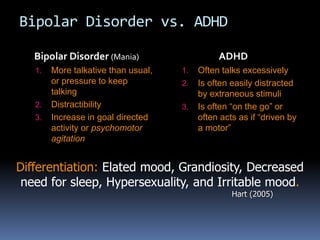
Bipolar Disorder vs. ADHD 
Bipolar Disorder (Mania) 
1. More talkative than usual, 
or pressure to keep 
talking 
2. Distractibility 
3. Increase in goal directed 
activity or psychomotor 
agitation 
ADHD 
1. Often talks excessively 
2. Is often easily distracted 
by extraneous stimuli 
3. Is often “on the go” or 
often acts as if “driven by 
a motor” 
Differentiation: Elated mood, Grandiosity, Decreased 
need for sleep, Hypersexuality, and Irritable mood. 
Hart (2005)
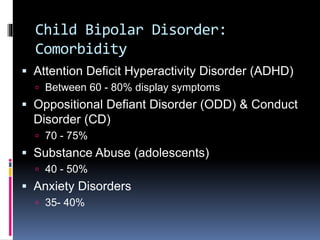
Child Bipolar Disorder: 
Comorbidity 
 Attention Deficit Hyperactivity Disorder (ADHD) 
 Between 60 - 80% display symptoms 
 Oppositional Defiant Disorder (ODD) & Conduct 
Disorder (CD) 
 70 - 75% 
 Substance Abuse (adolescents) 
 40 - 50% 
 Anxiety Disorders 
 35- 40%
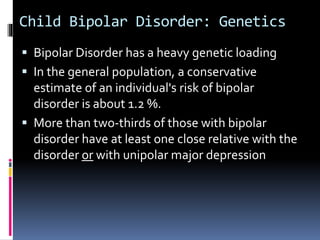
Child Bipolar Disorder: Genetics 
 Bipolar Disorder has a heavy genetic loading 
 In the general population, a conservative 
estimate of an individual's risk of bipolar 
disorder is about 1.2 %. 
 More than two-thirds of those with bipolar 
disorder have at least one close relative with the 
disorder or with unipolar major depression
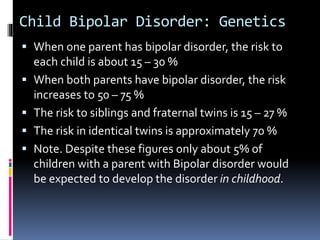
Child Bipolar Disorder: Genetics 
 When one parent has bipolar disorder, the risk to 
each child is about 15 – 30 % 
 When both parents have bipolar disorder, the risk 
increases to 50 – 75 % 
 The risk to siblings and fraternal twins is 15 – 27 % 
 The risk in identical twins is approximately 70 % 
 Note. Despite these figures only about 5% of 
children with a parent with Bipolar disorder would 
be expected to develop the disorder in childhood.
Etiology :What is Inherited? 
 A significant question is What is Inherited?? 
 The answer is not entirely clear, but … 
 It's believed this condition is caused by an imbalance in 
neurotransmitters. 
 a low or high level of a specific neurotransmitter such as 
serotonin, norepinephrine or dopamine is the likely 
cause. 
 Others have suggested that it is an imbalance of these 
substances that may be the problem 
 Here, a specific level of a neurotransmitter may not as 
important as its amount in relation to the other 
neurotransmitters. 
 Still other studies have found evidence that a change in 
the sensitivity of the receptors may be the issue. 
 It seems likely that the neurotransmitter system is at 
least part of the cause of bipolar disorder, but further 
research is still needed to define its exact role.
Etiology of Bipolar Disorder 
Environmental Factors 
 That more than hereditary is involved in Bipolar 
Disorder is indicated by the fact that in studies 
involving identical twins, raised in the same home, 
one twin sometimes develops bipolar disorder while 
one does not . 
 Here it is suggested that environmental factors may 
play a role in bipolar disorder. 
 For some, stresses such as a death in the family, 
divorce, or other traumatic events seem to trigger a 
first episode of mania or depression.
Etiology of Bipolar Disorder 
Environmental Factors 
 Puberty may trigger the disorder in adolescent females. 
 Stressful life events can lead to the onset 
 Once the disorder is triggered and progresses, it seems to develop 
a life of its own. 
 Once the cycle begins, a psychological or pathophysiological 
process takes over and ensures that the disorder will continue. 
 The best explanation for this disorder seems to be 
reflected in the "Diathesis-Stress Model." 
 Genetics PLUS environmental percipients.
Treatment of Child Bipolar 
Disorder 
 Treatment of children and adults with bipolar 
disorder is generally similar to adults with this 
disorder. 
 Less is known about the effectiveness & safety of the 
medications used. 
 Lithium appears to frequently have a strong 
prophylactic effect against mania, and is sometimes 
used with children. 
 However, in very early onset bipolar disorder, with a 
heavy family loading, children may not respond as well 
to lithium as do adults.
Treatment of Child Bipolar 
Disorder 
 As with adults, anti-convulsants are often used to 
control rapid cycling and aggressive behavior. 
 Depakote – an anti-convulsant – used to control rapid 
cycling. 
 Tergetol – an anti-convulsant – has anti-manic and anti-aggressive 
qualities. 
 Other anti-convulsants (Neurontin, Lamictal, Topamax) 
Sometimes these are used in combination with 
Lithium.
Treatment of Child Bipolar 
Disorder 
 As with adults, certain antipsychotic drugs may also 
be used to control symptoms. 
Included here are atypical antipsychotic medications 
such as Clozaril®, Zyprexa®, Risperdal®, and 
Seroquel®. 
 Such drugs have been shown to sometimes function 
as mood stabilizers in cases were drugs like lithium 
and anticonvulsants may not work 
 They are used to deal with acute mania, and/or to 
treat psychotic depression.
Issues in the Pharmacological 
Treatment of Child Bipolar 
Disorder 
 Bipolar youth often require multiple medications for 
mood stabilization, treatment of attention problems, 
depression, and sometimes psychotic symptoms. 
 There can, however, be risks with drug treatments 
 Problems can arise in cases of misdiagnosis. 
 Sometimes children with undiagnosed bipolar 
disorder are mistakenly treated for MDD with 
antidepressants.
Issues in the Pharmacological 
Treatment of Child Bipolar 
Disorder 
 Treating such children with antidepressants (in the 
absence of a mood stabilizer) can actually 
precipitate or exacerbate manic symptoms. 
 In children with ADHD symptoms, treatment with 
stimulant drugs (in the absence of a mood 
stabilizer) can result in manic symptoms and/or 
worsen symptoms.
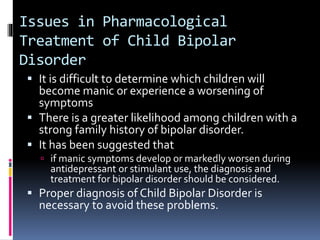
Issues in Pharmacological 
Treatment of Child Bipolar 
Disorder 
 It is difficult to determine which children will 
become manic or experience a worsening of 
symptoms 
 There is a greater likelihood among children with a 
strong family history of bipolar disorder. 
 It has been suggested that 
 if manic symptoms develop or markedly worsen during 
antidepressant or stimulant use, the diagnosis and 
treatment for bipolar disorder should be considered. 
 Proper diagnosis of Child Bipolar Disorder is 
necessary to avoid these problems.
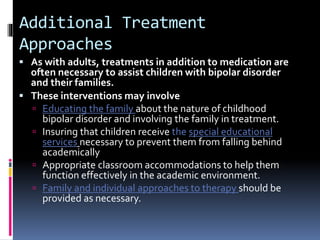
Additional Treatment 
Approaches 
 As with adults, treatments in addition to medication are 
often necessary to assist children with bipolar disorder 
and their families. 
 These interventions may involve 
 Educating the family about the nature of childhood 
bipolar disorder and involving the family in treatment. 
 Insuring that children receive the special educational 
services necessary to prevent them from falling behind 
academically 
 Appropriate classroom accommodations to help them 
function effectively in the academic environment. 
 Family and individual approaches to therapy should be 
provided as necessary.
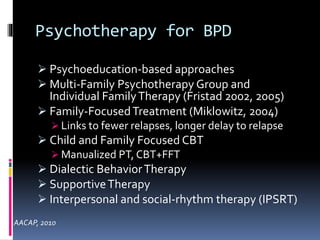
Psychotherapy for BPD 
 Psychoeducation-based approaches 
 Multi-Family Psychotherapy Group and 
Individual Family Therapy (Fristad 2002, 2005) 
 Family-Focused Treatment (Miklowitz, 2004) 
 Links to fewer relapses, longer delay to relapse 
 Child and Family Focused CBT 
 Manualized PT, CBT+FFT 
 Dialectic Behavior Therapy 
 Supportive Therapy 
 Interpersonal and social-rhythm therapy (IPSRT) 
AACAP, 2010
“If uncertainties make you anxious, don’t think about being a child psychiatrist” 
Dr. Elizabeth McCullough

Juvenile bipolar disorder

  • 1.
    dr salman kareem Junior resident
  • 2.
     Controversial topic  No clear cut definition  Various different studies
  • 3.
     Debate continuesabout itspresentation, course and co-morbidity patterns.
  • 4.
    Signs and symptoms  The most common presentations among adolescents and youth with bipolar disorder in community settings were outbursts of  mood lability,  irritability and  aggression
  • 5.
     BD inchildren and adolescents has many symptoms which overlap with other disorders like attention deficit hyperactivity disorder and disruptive behavior disorder.
  • 6.
    Recovery and relapserates  Recovery in BD is defined as eight consecutive weeks without meeting any of the DSM-IV criteria for mania, hypomania, depression, or mixed affective state.  With these criteria, studies of childrenand adolescents with BD have reported that 50- 100% will recover in a period of 1–2 years
  • 7.
     longitudinalstudies ofa cohort initially ascertained before puberty have found that children with BD tend to show lengthy episodes with frequent mixed states, and high rates of relapse following remission or recovery.
  • 8.
    Issues of mixedepisodes and rapid cycling course
  • 9.
    DSM V A proposed new diagnostic category, temper dysregulation with dysphoria (TDD), within the Mood Disorders section of the manual. The new criteria are based on a decade of research onsevere mood dysregulation, and may help clinicians better differentiate children with these symptoms from those with bipolar disorder or oppositional defiant disorder
  • 10.
  • 11.
    Comorbidity: Disruptive Disorders  ADHD  Bipolar disorder is difficult to distinguish between ADHD  The three major symptoms that they both share are:  Impulsiveness  Distractibility  Hyperactivity  Up to 30% of children diagnosed with ADHD are given a diagnosis of bipolar disorder  Up to 50% of children with bipolar disorder fit the criteria for the diagnosis of ADHD  Children with a bipolar parent have a higher than average rate of ADHD  Symptoms of bipolar in children are often mistaken for ADHD and the symptoms of bipolar are different in adults.  1/3 of children diagnosed with ADHD actually suffer from normal symptoms of bipolar disorder  Oppositional Defiant Disorder  Conduct Disorders  Mood Disorders  Possible symptoms of pediatric bipolar disorder overlap with other mood disorders. Some of these include: rapid mood changes, inappropriate moods, and bursts of rage
  • 12.
    Longitudinal Study The National Institute of Mental Health funded Course and Outcome of Bipolar Illness in Youth (COBY) followed 263 children ages 7 to 17 for 2 years. They found that 70% recovered from their first episode of mania or depression. However, they relapsed an average of three times. These children only had symptoms 60% of the time but only were diagnosed with bipolar disorder 20% of the time. Many with no bipolar symptoms had other problems such as ADHD. Children originally diagnosed with bipolar disorder eventually developed typical adult bipolar symptoms.  The COBY study has also shown that children and adolescents with bipolar disorder (171, mean age of 13.2 years) continue to suffer from the same disorder 2 years later, with 68% recovering from their initial episode but 58% experiencing a recurrence. This shows stability of bipolar disorder through adolescence and, among some, into early adulthood.  86 patients with pre pubertal onset bipolar disorder for four years with a mean age of 10.8 years, 72% of them relapsed.
  • 13.
  • 14.
    MOOD STABILIZERS FDAApproval Dose Monitoring Lithium 12 y/o and older 15-20 mg/kg/day Divided doses Increase every 4-5 days Level 0.6-1.4 MEq/L √TFTs; Renal function Q3 months Depakote Adults 10-15 mg/kg/day Divided doses Total dose should not exceed 60 mg/kgs Level 15-125 ug/ml LFTs, CBC w/ diff and Plts Q6 months Findling, 2008 & AACAP 2010
  • 15.
    LITHIUM: ADVERSE EVENTS Mild to Moderate Side Effects Rare Side Effects Long Term Concerns Drug Interactions Nausea Diarrhea Abdominal Distress Sedation Increased thirst Tremors Weight gain Increased urination Acne Convulsions Stupor Seizures Coma Hypothyroidism Polyuria Polydipsia Based on renal clearance AACAP, 2010 Findling, 2008
  • 16.
    DEPAKOTE: ADVERSE EVENTS Mild to Moderate Side Effects Rare Side Effects Drug Interactions Nausea Sedation Weight gain Headache Tremor Hepatic failure Pancreatitis Leukopenia Thrombocytopenia Polycystic ovarian syndrome Increased valproate including erythromycin, fluoxetine, aspirin, ibuprofen AACAP, 2010 Findling, 2008
  • 17.
    ATYPICAL ANTIPSYCHOTICS DrugFDA Approval Dose (mg/d) Risperdone 10-17 0.5-2.5 Ariprazole 10-17 15-30 Olanzapine 13-17 2.5-20 Quetiapine 10-17 400-600 Ziprasidone 17 and older 120-160 AACAP, 2010 & Findling et al., 2008 & Kowatch et al., 2005
  • 18.
    ATYPICAL ANTIPSYCHOTICS: ADVERSEEVENTS Mild to Moderate Side Effects Rare but Serious Side Effects Long-term Concerns Metabolic Syndrome Akathisia Dizziness or fainting due to orthostasis Increased appetite Weight gain Tiredness Nausea Night tremors Decreased sexual interest Heartburn Tremor and muscle stiffness Prolongation of the QTc interval Increased risk for seizures Neuroleptic malignant syndrome (NMS) Tardive dyskinesia (TD) Weight gain Changes in blood fats and blood sugar Increase in prolactin Risk factors that increase the likelihood of a person developing cardiovascular disease and/or diabetes, including: Weight gain High blood sugar High blood fat AACAP, 2010
  • 19.
    Treatment for Bipolar Depression  Psychotherapy (First line)  Cognitive Behavioral Therapy (CBT)  Interpersonal Psychotherapy (IPT)  Family Focused Therapy  Lithium  SSRIs (as adjunctive treatment to mood stabalizer)  Bupropion (as adjunctive treatment to mood stabilizer)  Lamotrigine  Divalproex  ECT Kowatch et al., 2005
  • 20.
    ANTIDEPRESSANT INDUCED MANIA Antidepressants may induce mania in children with a bipolar diathesis In a survey of child and adolescent psychiatrists: 10/228 (4.4%) of children under 13 y.o. treated by psychiatrists switched to BD (Reichart & Nolen, 2004) Treatment for Adolescent Depression Study (TADS), of 439 12-17 year olds: 0 switches to BD after 12-week follow-up (2004) large private insurance database, 5.4% switch rates, increased risk for youth on antidepressants and risk greatest for age group of 10-14 y.o. (San Martin et al., 2004)
  • 21.
    Frequency of ChildBipolar Disorder  Prevalence is largely unknown as there are no well accepted criteria for the diagnosis of Child Bipolar disorder.  This is because DSM IV criteria are generally viewed as inadequate for use with younger children.  The best guess is that the disorder occurs at least as often as adult bipolar disorder (e.g., about 1%)  However, many believe that this disorder is significantly under diagnosed in children.
  • 22.
    Frequency of ChildBipolar Disorder  It is suspected that a significant number of children diagnosed with ADHD at an early age actually have early-onset bipolar disorder instead of (or along with) ADHD.  According to the American Academy of Child and Adolescent Psychiatry, up to one-third of children and adolescents with depressive disorders may actually have early onset of bipolar disorder.  20 to 40 % of adults with Bipolar Disorder report a childhood onset of symptoms.
  • 23.
    Child/Adolescent Bipolar Disorder: Clinical Presentation  As with adults, Bipolar disorder in children is viewed a serious mental disorder  Characterized by recurrent episodes of depression, mania, and/or mixed symptom states.  Some evidence suggests that child bipolar disorder may be a different and possibly more severe form of the illness than older adolescent and adult-onset bipolar disorder.
  • 24.
    Child/Adolescent Bipolar Disorder: Clinical Presentation  While older adolescents often have a clinical presentation that is somewhat similar to that seen with adults.  The clinical presentation of early-onset bipolar disorder in children can look quite different than that seen in older individuals.  Clinicians may fail to diagnose this disorder when using DSM IV criteria for the diagnosis of this condition.
  • 25.
    Child/Adolescent Bipolar Disorder: Clinical Presentation  Most cases of child bipolar disorder do not present with the sudden or acute onset often found with adults.  Most do not show the improvement between episodes, often found with adult bipolar disorder.  With children the symptom onset may be more insidious.
  • 26.
    Child/Adolescent Bipolar Disorder: Clinical  With children, Presentation  initial symptoms of the disorder can be depressive in nature  With these being confused with and treated as MDD.  In other cases, ADHD like symptoms appear first  with these symptoms being followed later by a full manic episode.  Unlike adults - children in a manic state are more likely to be irritable and prone to destructive outbursts than to be elated or euphoric.
  • 27.
    Child/Adolescent Bipolar Disorder: Clinical Presentation  Children, more often show  rapid cycling and mixed states rather than clear manic or clear depressive episodes, and  an “ongoing and continuous mood disturbance that is a mix of mania (or hypomania) and depression”.  The rapid and severe cycling between moods produces chronic irritability and few clear periods of wellness between episodes.
  • 28.
    Child/Adolescent Bipolar Disorder: Clinical Presentation  Depression and dysphoria are an almost constant part of pediatric bipolar disorder.  As noted earlier, hyperactivity is often the first manifestation of early-onset bipolar disorder.  When children are initially seen because of bipolar symptoms,  approximately 90% of early-onset, and  30 % of adolescents with bipolar disorder meet criteria for a diagnosis of ADHD.  Comorbid conduct disorder is also quite common.
  • 29.
    Bipolar Disorder vs.ADHD Bipolar Disorder (Mania) 1. More talkative than usual, or pressure to keep talking 2. Distractibility 3. Increase in goal directed activity or psychomotor agitation ADHD 1. Often talks excessively 2. Is often easily distracted by extraneous stimuli 3. Is often “on the go” or often acts as if “driven by a motor” Differentiation: Elated mood, Grandiosity, Decreased need for sleep, Hypersexuality, and Irritable mood. Hart (2005)
  • 30.
    Child Bipolar Disorder: Comorbidity  Attention Deficit Hyperactivity Disorder (ADHD)  Between 60 - 80% display symptoms  Oppositional Defiant Disorder (ODD) & Conduct Disorder (CD)  70 - 75%  Substance Abuse (adolescents)  40 - 50%  Anxiety Disorders  35- 40%
  • 31.
    Child Bipolar Disorder:Genetics  Bipolar Disorder has a heavy genetic loading  In the general population, a conservative estimate of an individual's risk of bipolar disorder is about 1.2 %.  More than two-thirds of those with bipolar disorder have at least one close relative with the disorder or with unipolar major depression
  • 32.
    Child Bipolar Disorder:Genetics  When one parent has bipolar disorder, the risk to each child is about 15 – 30 %  When both parents have bipolar disorder, the risk increases to 50 – 75 %  The risk to siblings and fraternal twins is 15 – 27 %  The risk in identical twins is approximately 70 %  Note. Despite these figures only about 5% of children with a parent with Bipolar disorder would be expected to develop the disorder in childhood.
  • 33.
    Etiology :What isInherited?  A significant question is What is Inherited??  The answer is not entirely clear, but …  It's believed this condition is caused by an imbalance in neurotransmitters.  a low or high level of a specific neurotransmitter such as serotonin, norepinephrine or dopamine is the likely cause.  Others have suggested that it is an imbalance of these substances that may be the problem  Here, a specific level of a neurotransmitter may not as important as its amount in relation to the other neurotransmitters.  Still other studies have found evidence that a change in the sensitivity of the receptors may be the issue.  It seems likely that the neurotransmitter system is at least part of the cause of bipolar disorder, but further research is still needed to define its exact role.
  • 34.
    Etiology of BipolarDisorder Environmental Factors  That more than hereditary is involved in Bipolar Disorder is indicated by the fact that in studies involving identical twins, raised in the same home, one twin sometimes develops bipolar disorder while one does not .  Here it is suggested that environmental factors may play a role in bipolar disorder.  For some, stresses such as a death in the family, divorce, or other traumatic events seem to trigger a first episode of mania or depression.
  • 35.
    Etiology of BipolarDisorder Environmental Factors  Puberty may trigger the disorder in adolescent females.  Stressful life events can lead to the onset  Once the disorder is triggered and progresses, it seems to develop a life of its own.  Once the cycle begins, a psychological or pathophysiological process takes over and ensures that the disorder will continue.  The best explanation for this disorder seems to be reflected in the "Diathesis-Stress Model."  Genetics PLUS environmental percipients.
  • 36.
    Treatment of ChildBipolar Disorder  Treatment of children and adults with bipolar disorder is generally similar to adults with this disorder.  Less is known about the effectiveness & safety of the medications used.  Lithium appears to frequently have a strong prophylactic effect against mania, and is sometimes used with children.  However, in very early onset bipolar disorder, with a heavy family loading, children may not respond as well to lithium as do adults.
  • 37.
    Treatment of ChildBipolar Disorder  As with adults, anti-convulsants are often used to control rapid cycling and aggressive behavior.  Depakote – an anti-convulsant – used to control rapid cycling.  Tergetol – an anti-convulsant – has anti-manic and anti-aggressive qualities.  Other anti-convulsants (Neurontin, Lamictal, Topamax) Sometimes these are used in combination with Lithium.
  • 38.
    Treatment of ChildBipolar Disorder  As with adults, certain antipsychotic drugs may also be used to control symptoms. Included here are atypical antipsychotic medications such as Clozaril®, Zyprexa®, Risperdal®, and Seroquel®.  Such drugs have been shown to sometimes function as mood stabilizers in cases were drugs like lithium and anticonvulsants may not work  They are used to deal with acute mania, and/or to treat psychotic depression.
  • 39.
    Issues in thePharmacological Treatment of Child Bipolar Disorder  Bipolar youth often require multiple medications for mood stabilization, treatment of attention problems, depression, and sometimes psychotic symptoms.  There can, however, be risks with drug treatments  Problems can arise in cases of misdiagnosis.  Sometimes children with undiagnosed bipolar disorder are mistakenly treated for MDD with antidepressants.
  • 40.
    Issues in thePharmacological Treatment of Child Bipolar Disorder  Treating such children with antidepressants (in the absence of a mood stabilizer) can actually precipitate or exacerbate manic symptoms.  In children with ADHD symptoms, treatment with stimulant drugs (in the absence of a mood stabilizer) can result in manic symptoms and/or worsen symptoms.
  • 41.
    Issues in Pharmacological Treatment of Child Bipolar Disorder  It is difficult to determine which children will become manic or experience a worsening of symptoms  There is a greater likelihood among children with a strong family history of bipolar disorder.  It has been suggested that  if manic symptoms develop or markedly worsen during antidepressant or stimulant use, the diagnosis and treatment for bipolar disorder should be considered.  Proper diagnosis of Child Bipolar Disorder is necessary to avoid these problems.
  • 42.
    Additional Treatment Approaches  As with adults, treatments in addition to medication are often necessary to assist children with bipolar disorder and their families.  These interventions may involve  Educating the family about the nature of childhood bipolar disorder and involving the family in treatment.  Insuring that children receive the special educational services necessary to prevent them from falling behind academically  Appropriate classroom accommodations to help them function effectively in the academic environment.  Family and individual approaches to therapy should be provided as necessary.
  • 43.
    Psychotherapy for BPD  Psychoeducation-based approaches  Multi-Family Psychotherapy Group and Individual Family Therapy (Fristad 2002, 2005)  Family-Focused Treatment (Miklowitz, 2004)  Links to fewer relapses, longer delay to relapse  Child and Family Focused CBT  Manualized PT, CBT+FFT  Dialectic Behavior Therapy  Supportive Therapy  Interpersonal and social-rhythm therapy (IPSRT) AACAP, 2010
  • 44.
    “If uncertainties makeyou anxious, don’t think about being a child psychiatrist” Dr. Elizabeth McCullough