Dignity in Care
Professor of Nursing: Care for Older People
City University


Director: My Home Life programme
Age UK, City University, Joseph Rowntree Foundation, Dementia UK
Commission on Dignity


Recommendation 24
  Care homes need to work with
  residents to create an environment that
  makes their lives happy, varied,
  stimulating, fulfilling and dignified.
  Being a caring community must be the
  overarching principle that guides home
  life. The My Home Life movement (see
  case study) aims to support care home
  managers achieving this.
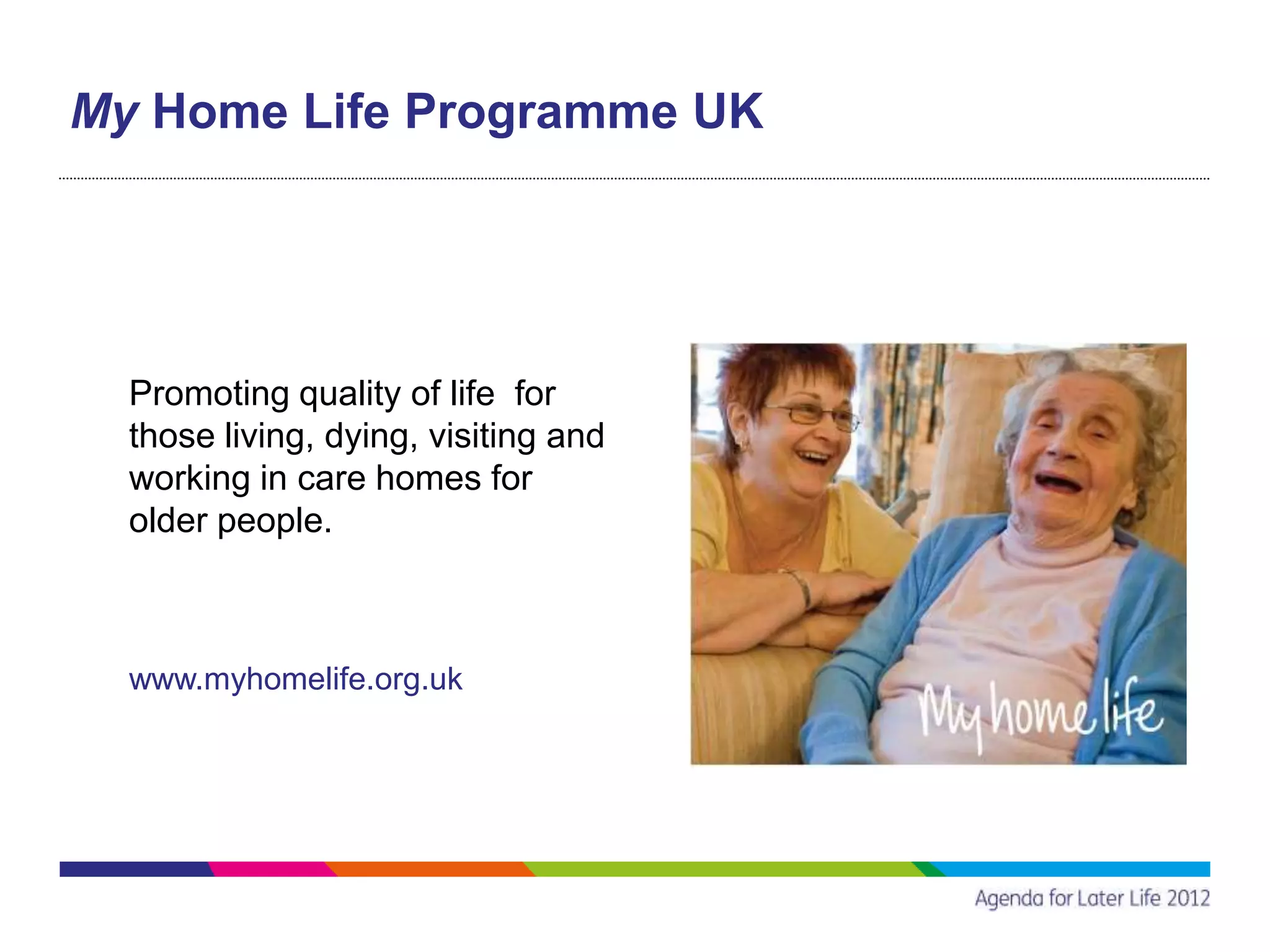
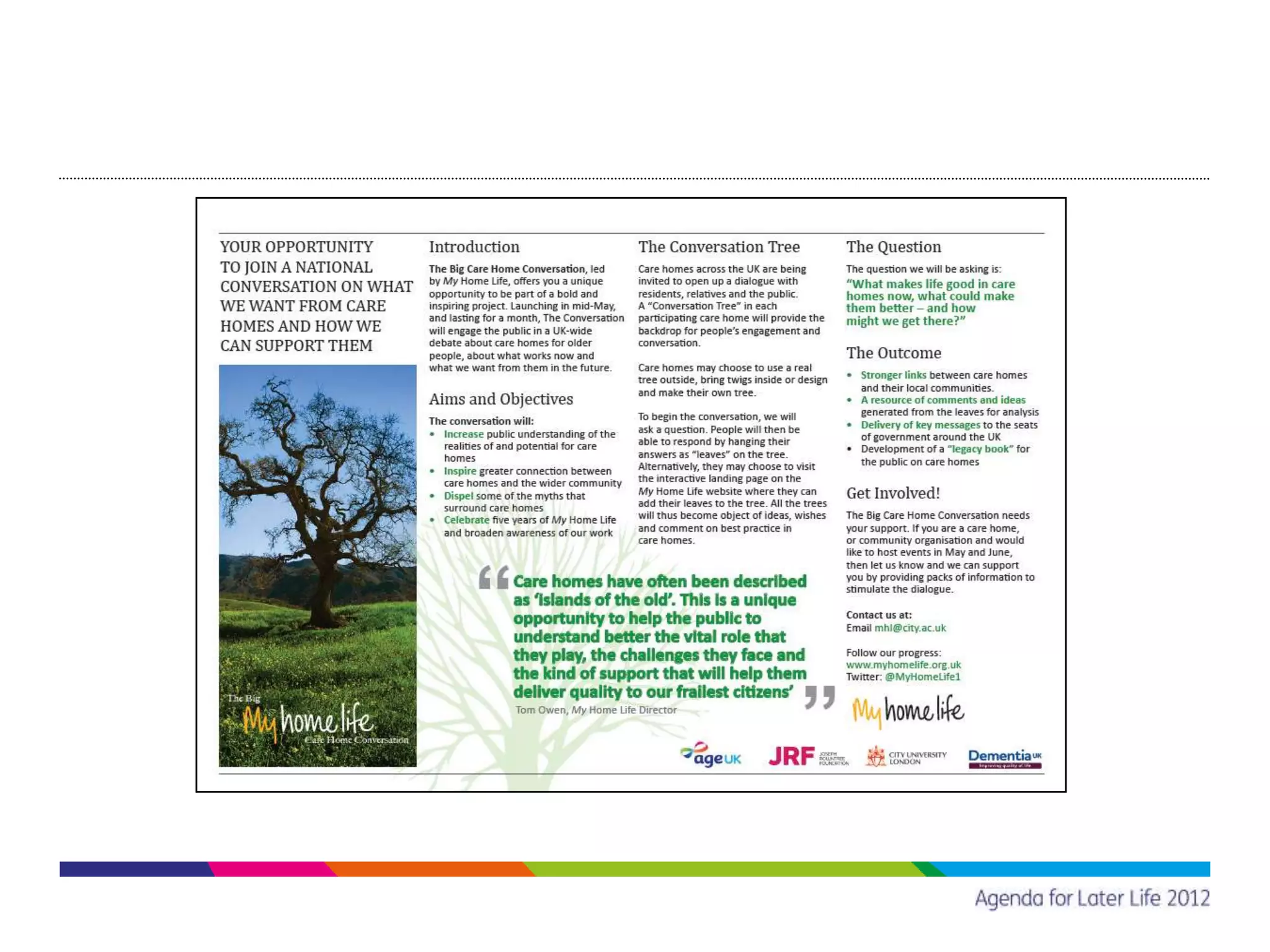
My Home Life Programme UK


  Promoting quality of life for
  those living, dying, visiting and
  working in care homes for
  older people.


  www.myhomelife.org.uk
Age UK, City University, Joseph Rowntree & Dementia UK

                           Other key organisations:
                           Relatives & Residents Association
                           National Care Forum
                           English Community Care Association
                           National Care Association
                           Registered Nursing Home Association
                           Care Forum Wales
                           Scottish Care
                           Independent Health & Care Providers
                           National Care Home R&D Forum
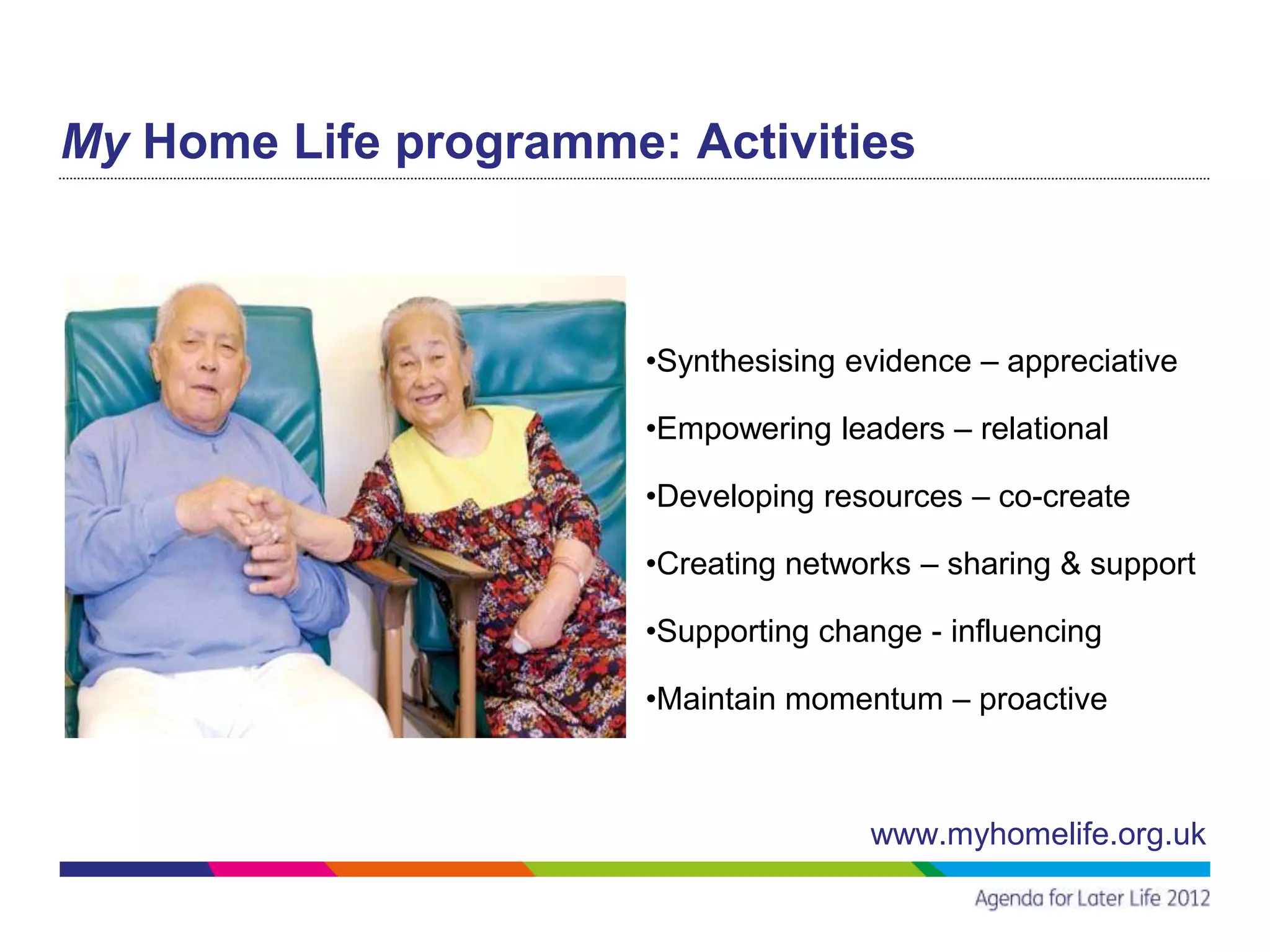
My Home Life programme: Activities


                       •Synthesising evidence – appreciative

                       •Empowering leaders – relational

                       •Developing resources – co-create

                       •Creating networks – sharing & support

                       •Supporting change - influencing

                       •Maintain momentum – proactive


                                      www.myhomelife.org.uk
MHL Vision
 Personalisation
 1.   Maintaining identity
 2.   Sharing decision-making
 3.   Creating community
 Navigation
 4.   Managing transitions
 5.   Improving health & healthcare
 6.   Supporting good end-of-life
 Transformation
 7.   Keeping workforce fit for purpose   www.myhomelife.org.uk

 8.   Promoting a positive culture        NCHR&D (2007)
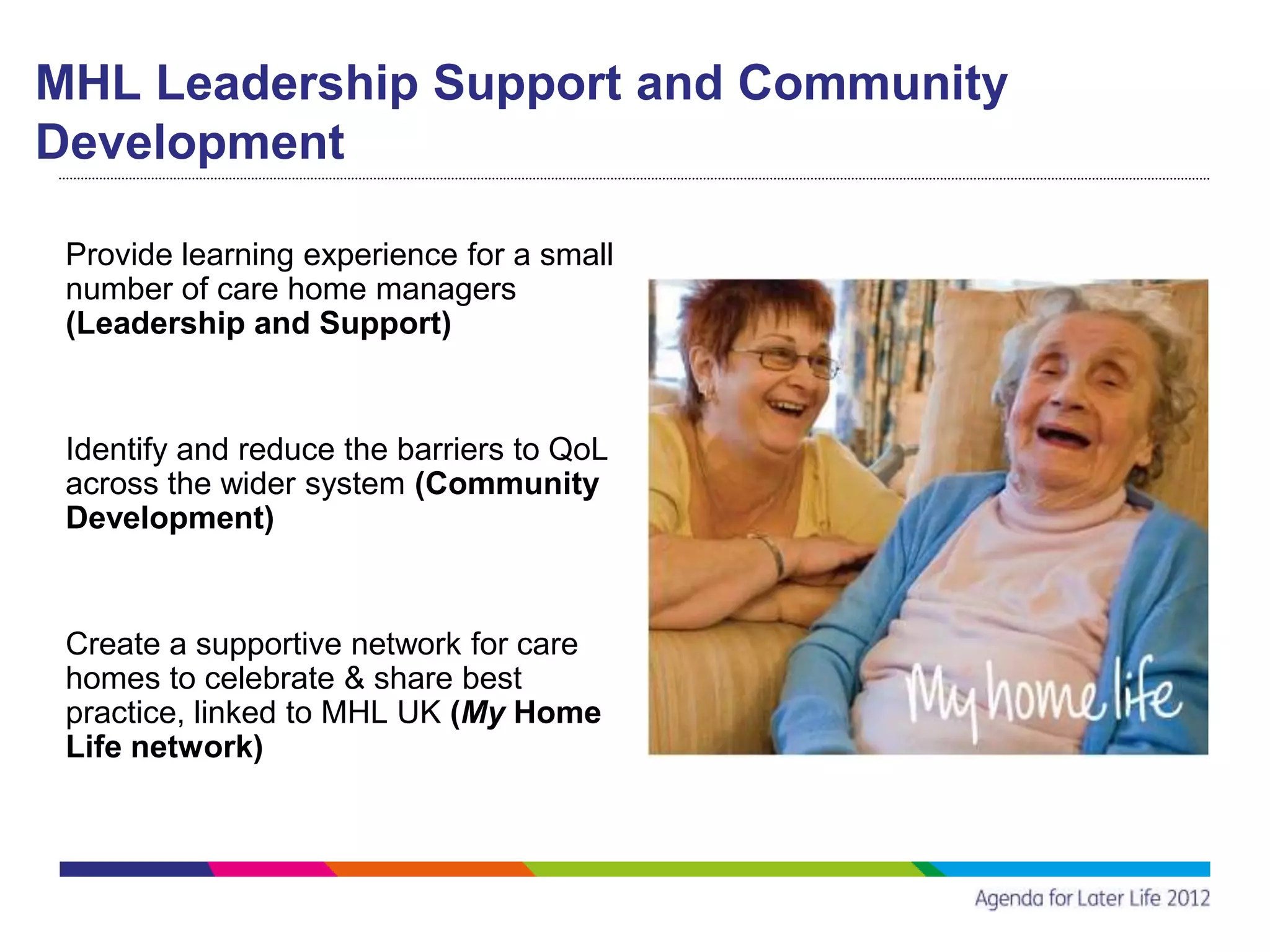
MHL Leadership Support and Community
Development

 Provide learning experience for a small
 number of care home managers
 (Leadership and Support)


 Identify and reduce the barriers to QoL
 across the wider system (Community
 Development)


 Create a supportive network for care
 homes to celebrate & share best
 practice, linked to MHL UK (My Home
 Life network)
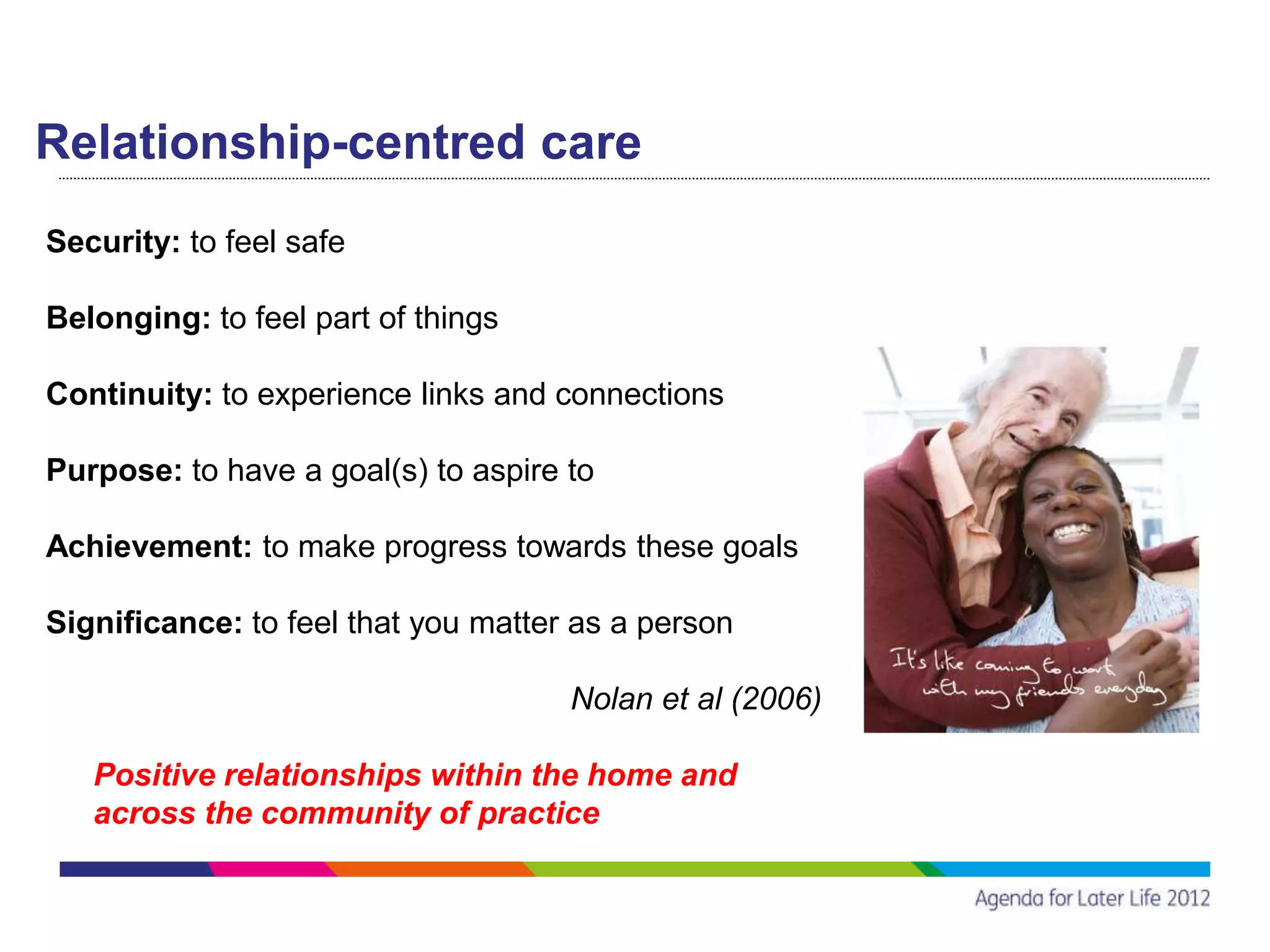
Relationship-centred care
Security: to feel safe

Belonging: to feel part of things

Continuity: to experience links and connections

Purpose: to have a goal(s) to aspire to

Achievement: to make progress towards these goals

Significance: to feel that you matter as a person

                                     Nolan et al (2006)

   Positive relationships within the home and
   across the community of practice
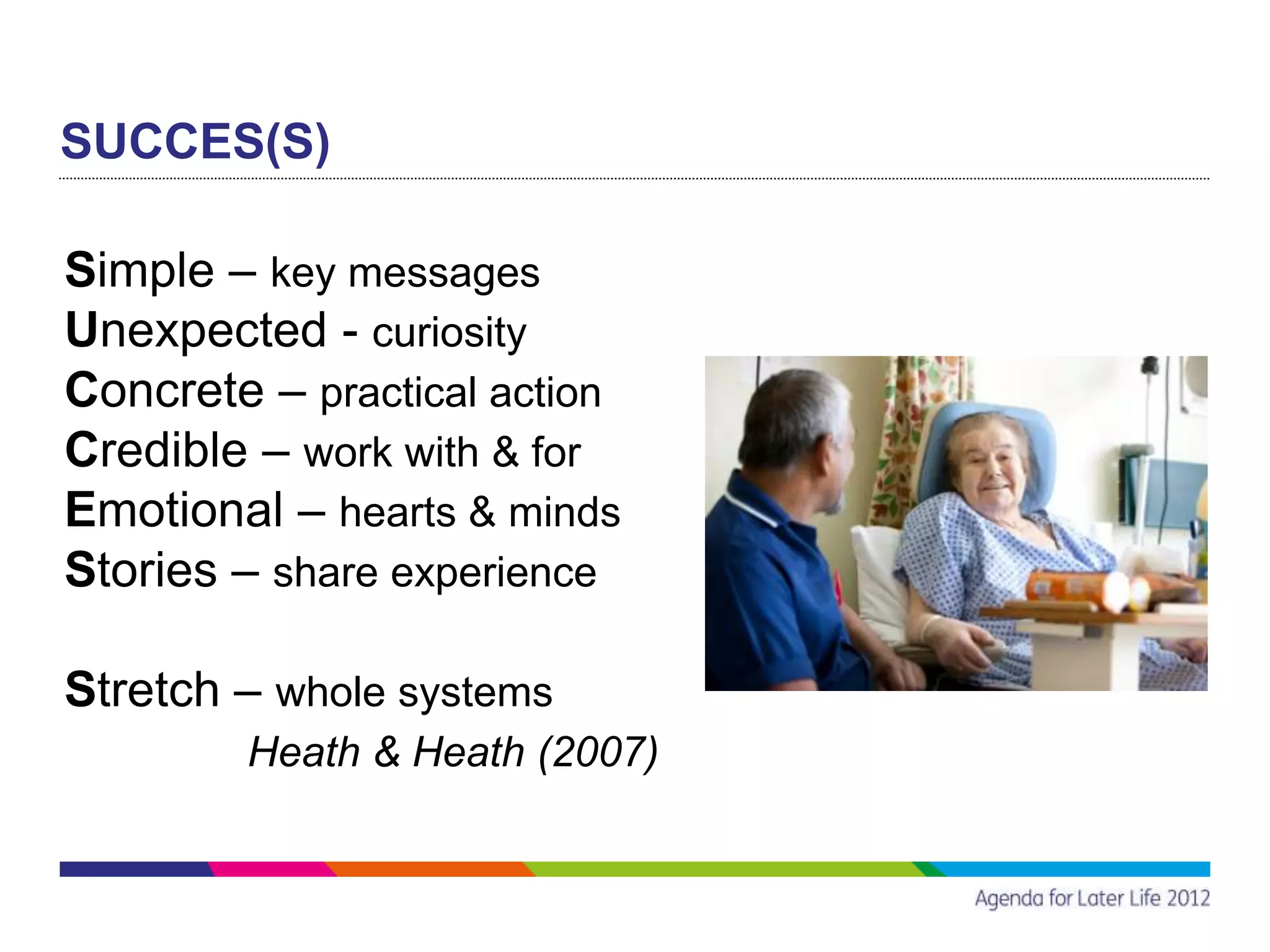
SUCCES(S)

Simple – key messages
Unexpected - curiosity
Concrete – practical action
Credible – work with & for
Emotional – hearts & minds
Stories – share experience

Stretch – whole systems
        Heath & Heath (2007)
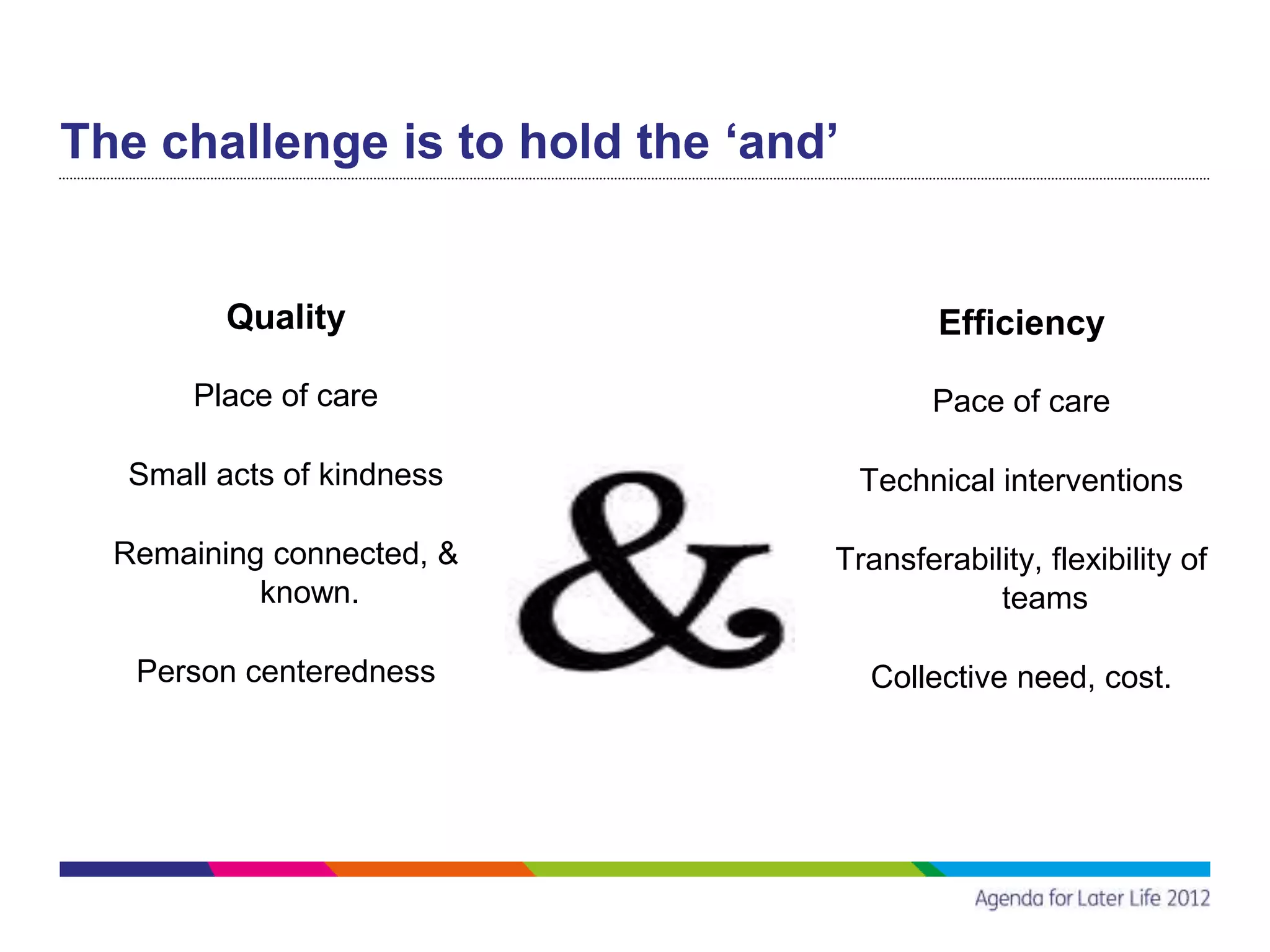
The challenge is to hold the ‘and’


         Quality                          Efficiency

       Place of care                      Pace of care

  Small acts of kindness             Technical interventions

  Remaining connected, &         Transferability, flexibility of
           known.                            teams

   Person centeredness               Collective need, cost.
Contact Details
Professor Julienne Meyer
City University
Philpot Street
London E1 2EA, England, UK
Tel: +44 (0)20 7040 5791/
Fax: +44 (0)20 7040 5529
Email: j.meyer@city.ac.uk
http://wwwmyhomelife.org.uk
http://city.ac.uk/dignityincare
http://www.city.ac.uk/bpop
http://www.city.ac.uk/listeningmakessense
Julienne meyer presentation for age uk

Julienne meyer presentation for age uk

  • 1.
    Dignity in Care Professorof Nursing: Care for Older People City University Director: My Home Life programme Age UK, City University, Joseph Rowntree Foundation, Dementia UK
  • 2.
    Commission on Dignity Recommendation24 Care homes need to work with residents to create an environment that makes their lives happy, varied, stimulating, fulfilling and dignified. Being a caring community must be the overarching principle that guides home life. The My Home Life movement (see case study) aims to support care home managers achieving this.
  • 3.
    My Home LifeProgramme UK Promoting quality of life for those living, dying, visiting and working in care homes for older people. www.myhomelife.org.uk
  • 4.
    Age UK, CityUniversity, Joseph Rowntree & Dementia UK Other key organisations: Relatives & Residents Association National Care Forum English Community Care Association National Care Association Registered Nursing Home Association Care Forum Wales Scottish Care Independent Health & Care Providers National Care Home R&D Forum
  • 5.
    My Home Lifeprogramme: Activities •Synthesising evidence – appreciative •Empowering leaders – relational •Developing resources – co-create •Creating networks – sharing & support •Supporting change - influencing •Maintain momentum – proactive www.myhomelife.org.uk
  • 6.
    MHL Vision Personalisation 1. Maintaining identity 2. Sharing decision-making 3. Creating community Navigation 4. Managing transitions 5. Improving health & healthcare 6. Supporting good end-of-life Transformation 7. Keeping workforce fit for purpose www.myhomelife.org.uk 8. Promoting a positive culture NCHR&D (2007)
  • 7.
    MHL Leadership Supportand Community Development Provide learning experience for a small number of care home managers (Leadership and Support) Identify and reduce the barriers to QoL across the wider system (Community Development) Create a supportive network for care homes to celebrate & share best practice, linked to MHL UK (My Home Life network)
  • 8.
    Relationship-centred care Security: tofeel safe Belonging: to feel part of things Continuity: to experience links and connections Purpose: to have a goal(s) to aspire to Achievement: to make progress towards these goals Significance: to feel that you matter as a person Nolan et al (2006) Positive relationships within the home and across the community of practice
  • 9.
    SUCCES(S) Simple – keymessages Unexpected - curiosity Concrete – practical action Credible – work with & for Emotional – hearts & minds Stories – share experience Stretch – whole systems Heath & Heath (2007)
  • 10.
    The challenge isto hold the ‘and’ Quality Efficiency Place of care Pace of care Small acts of kindness Technical interventions Remaining connected, & Transferability, flexibility of known. teams Person centeredness Collective need, cost.
  • 11.
    Contact Details Professor JulienneMeyer City University Philpot Street London E1 2EA, England, UK Tel: +44 (0)20 7040 5791/ Fax: +44 (0)20 7040 5529 Email: j.meyer@city.ac.uk http://wwwmyhomelife.org.uk http://city.ac.uk/dignityincare http://www.city.ac.uk/bpop http://www.city.ac.uk/listeningmakessense

Editor's Notes

  • #10 Portfolio of evidence/resources is grouped around factors that make ideas ‘stick’ identified by Heath and Heath (2007)The thesis argues that ideas which take root (stick) in an organisation/culture have certain key components that form the acronym SUCCESWe have found that SUCCESS mirrors our own findings. However project data suggests that in relation to maintaining the ‘stickiness’ of dignity in hospital, there is a seventh component (Stretch – where ideas/actions need to translate and spread through the whole system