 Presented by::
 Samrat Hossain Mamun
 Israr Uddin
 Masum Khan
 Khaled Shaifullah
We are
New Moon
 Coca-Cola is a cola (a type of carbonated soft drink) sold
in stores, restaurants and vending machines. It is
produced by The Coca-Cola Company (United States).
 The Coca-Cola Company offers nearly 400 brands in
over 200 countries or territories, which shows its
reorganization.
 The Coca-Cola Company only produces concentrate
syrup which is then sold to various bottlers throughout the
world who hold a Coca-Cola franchise.
History
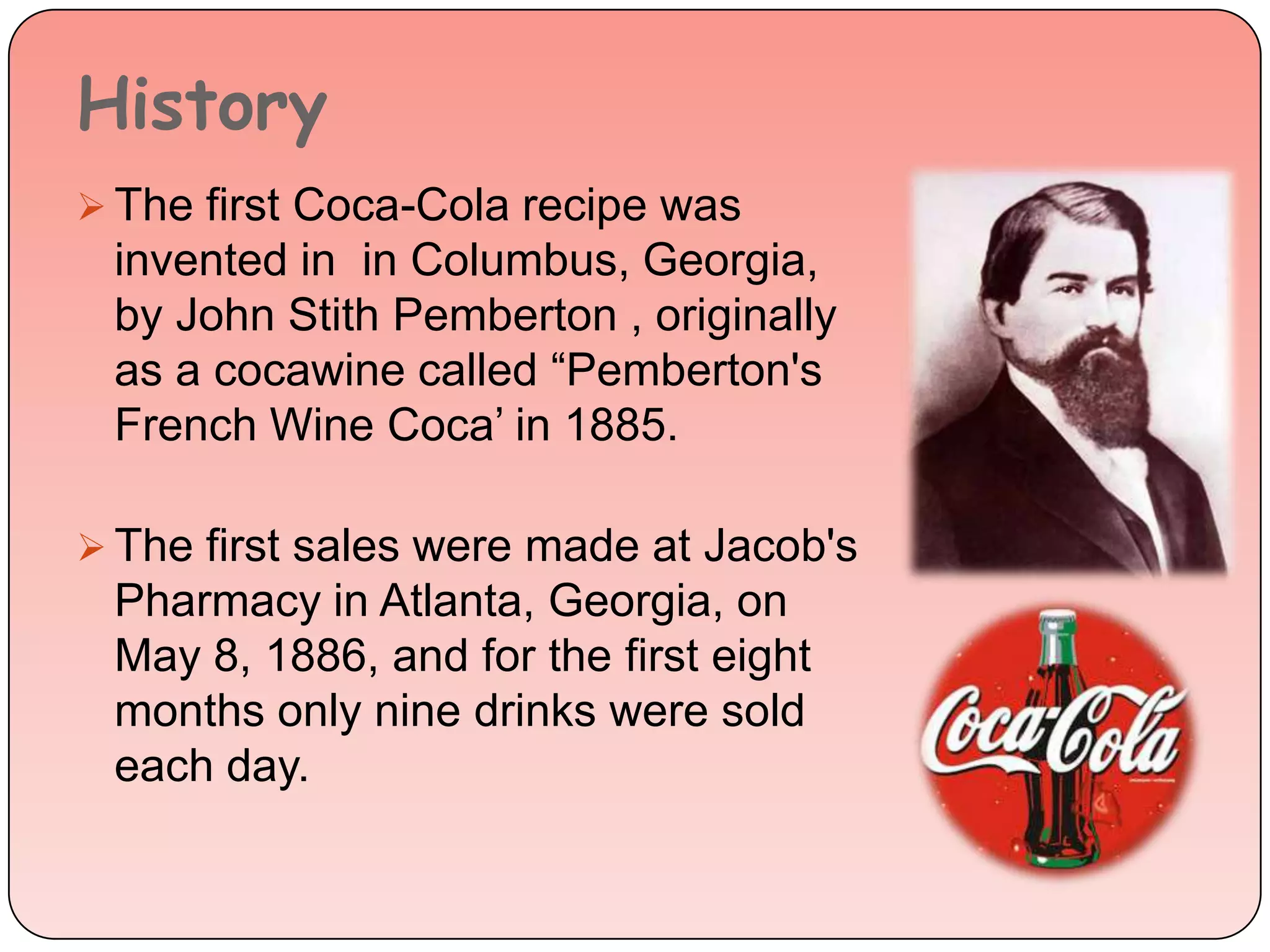
 The first Coca-Cola recipe was
invented in in Columbus, Georgia,
by John Stith Pemberton , originally
as a cocawine called “Pemberton's
French Wine Coca’ in 1885.
 The first sales were made at Jacob's
Pharmacy in Atlanta, Georgia, on
May 8, 1886, and for the first eight
months only nine drinks were sold
each day.
Who took over
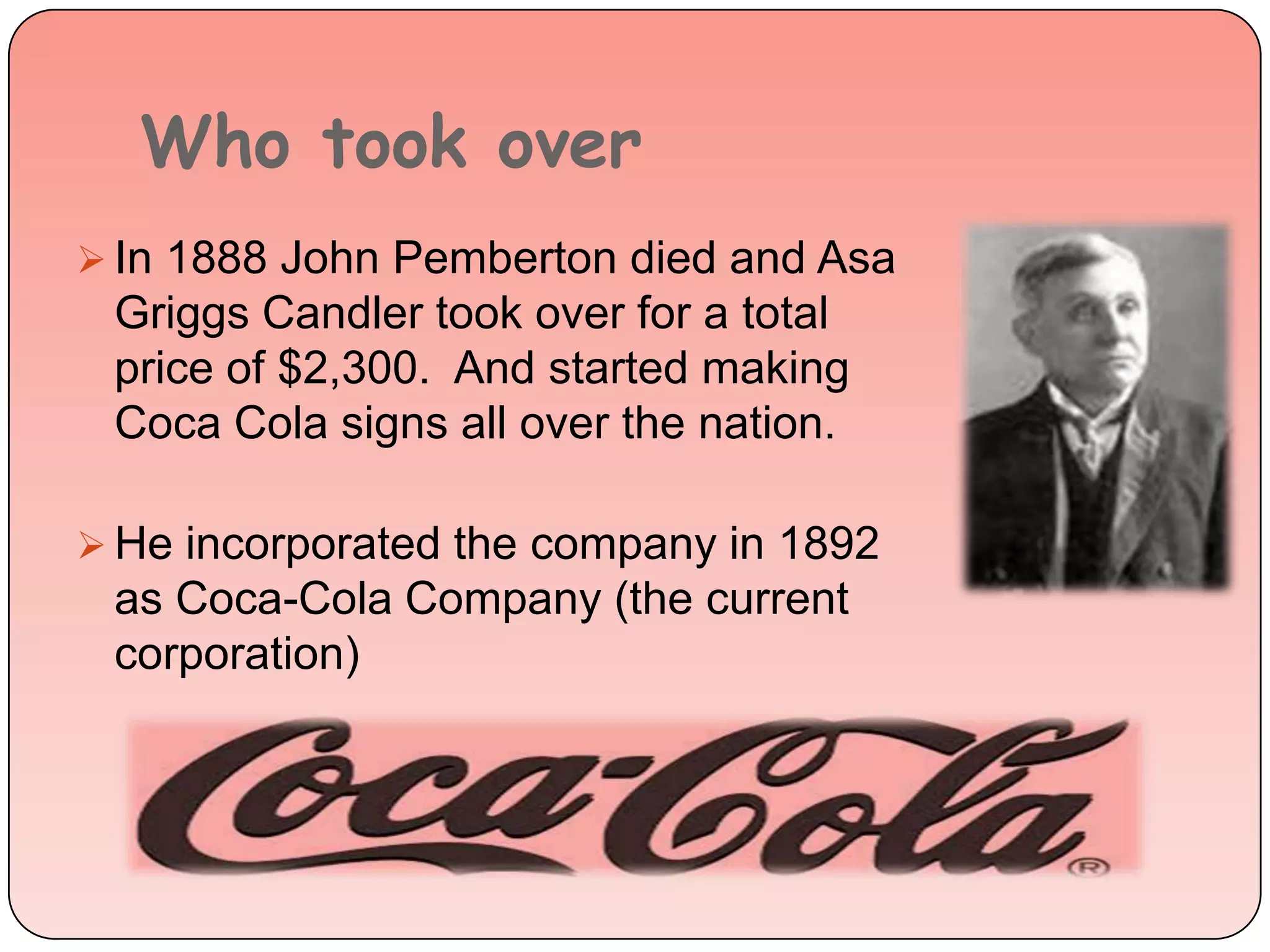
 In 1888 John Pemberton died and Asa
Griggs Candler took over for a total
price of $2,300. And started making
Coca Cola signs all over the nation.
 He incorporated the company in 1892
as Coca-Cola Company (the current
corporation)
Mission Vision
 To refresh the world...
 To inspire moments of
optimism and
happiness...
 To create value and
make a difference.
 People: Be a great place to work
where people are inspired to be
the best they can be.
 Portfolio: Bring to the world a
portfolio of quality beverage
brands that anticipate and satisfy
people's desires and needs.
 Partners: Nurture a winning
network of customers and
suppliers, together we create
mutual, enduring value.
 Planet: Be a responsible citizen
that makes a difference by
helping build and support
sustainable communities.
 Profit: Maximize long-term return
to shareowners while being
mindful of our overall
responsibilities.
 Productivity: Be a highly
effective, lean and fast-moving
Values Focus
 Leadership: The
courage to shape a
better future
 Collaboration: Leverag
e collective genius
 Integrity: Be real
 Accountability: If it is
to be, it's up to me
 Passion: Committed in
heart and mind
 Diversity: As inclusive
as our brands
 Quality: What we do,
we do well
 Focus on needs of our
consumers, customers
and franchise partners
 Get out into the market
and listen, observe and
learn
 Possess a world view
 Focus on execution in
the marketplace every
day
 Be insatiably curious
Company Background
 Name::The Coca Cola Company
 Industries Served::Beverages
 Geographic areas served::
WorldwideHeadquartersU.S.
 Current CEO:: Muhtar Kent
 Revenue$ :: 48.01 billion (2012)
 Profit$ :: 9.01 billion (2012)
 Employees::146,200
 Main Competitors ::PepsiCo Inc., Dr Pepper
Snapple Group, Inc., Unilever, Groupe Danone,
Kraft Foods Inc., Nestlé S.A. and others.
Coca Cola SWOT analysis 2013
Strengths Weaknesses
 The best global brand in
the world in terms of value
($77,839 billion)
 World’s largest market
share in beverage
 Strong marketing and
advertising
 Most extensive beverage
distribution channel
 Customer loyalty
 Bargaining power over
suppliers
 Corporate social
responsibility
 Significant focus on
carbonated drinks
 Undiversified product
portfolio
 High debt level due to
acquisitions
 Negative publicity
 Brand failures or
many brands with
insignificant amount
of revenues
Coca Cola SWOT analysis 2013
Opportunities Threats
 Bottled water
consumption growth
 Increasing demand
for healthy food and
beverage
 Growing beverages
consumption in
emerging markets
(especially BRICS)
 Growth through
acquisitions
 Changes in consumer
preferences
 Water scarcity
 Strong dollar
 Legal requirements to
disclose negative
information on product
labels
 Decreasing gross profit
and net profit margins
 Competition from
PepsiCo
 Saturated carbonated
drinks market
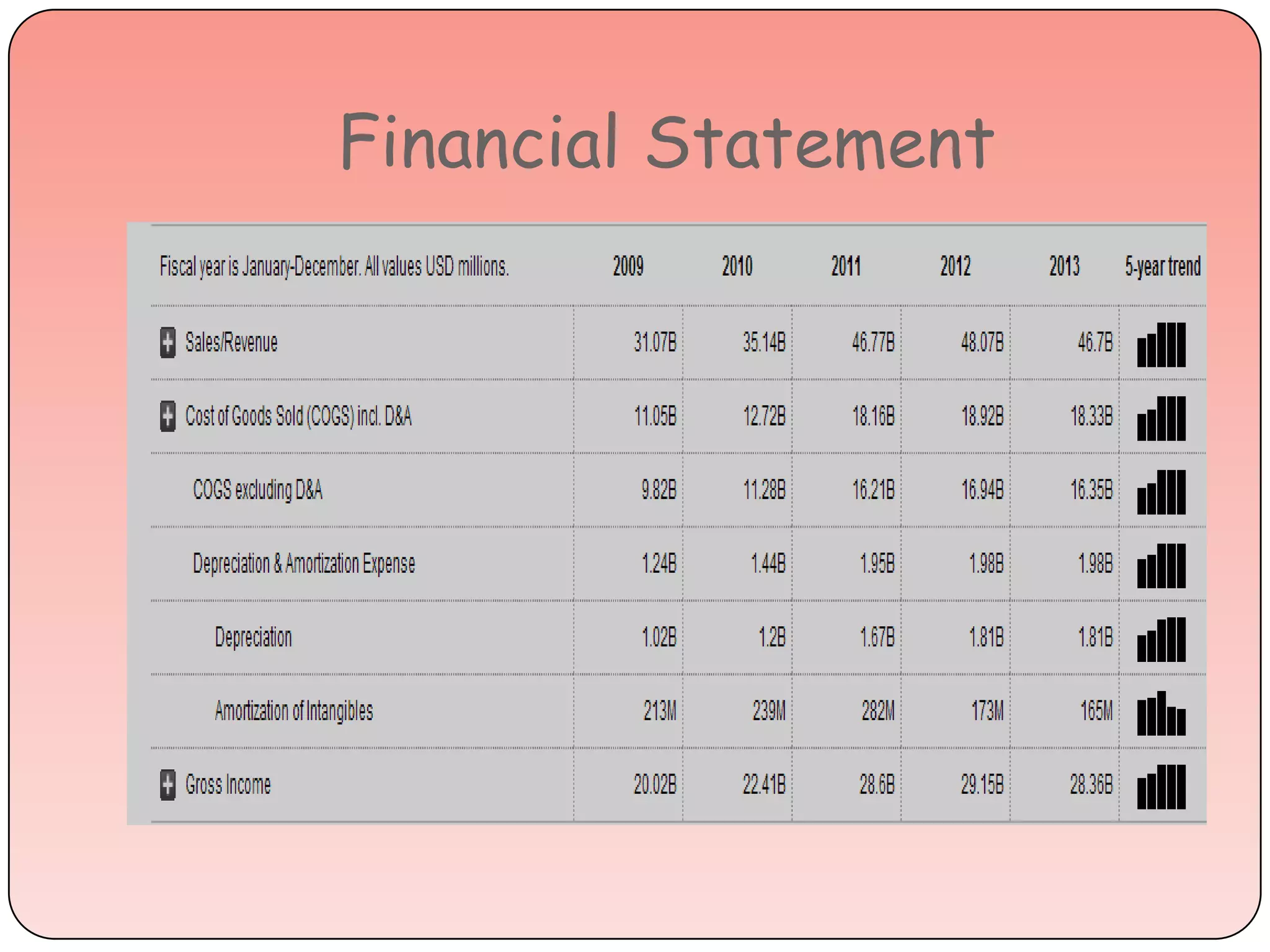
Financial Statement
Net income Graph
0
2
4
6
8
10
12
2009 2010 2011 2012 2013
Column1
Column2
Series 1
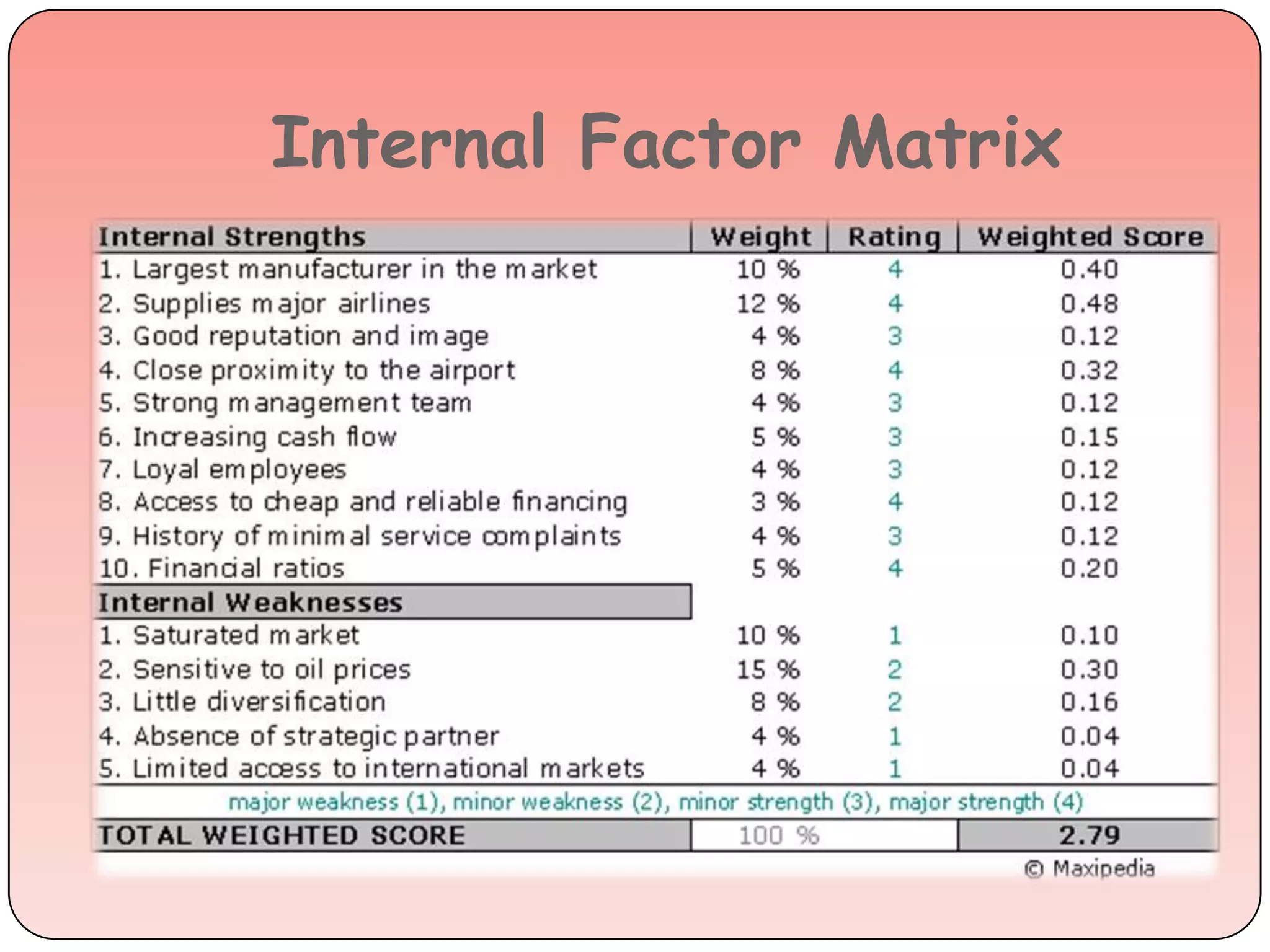
Internal Factor Matrix
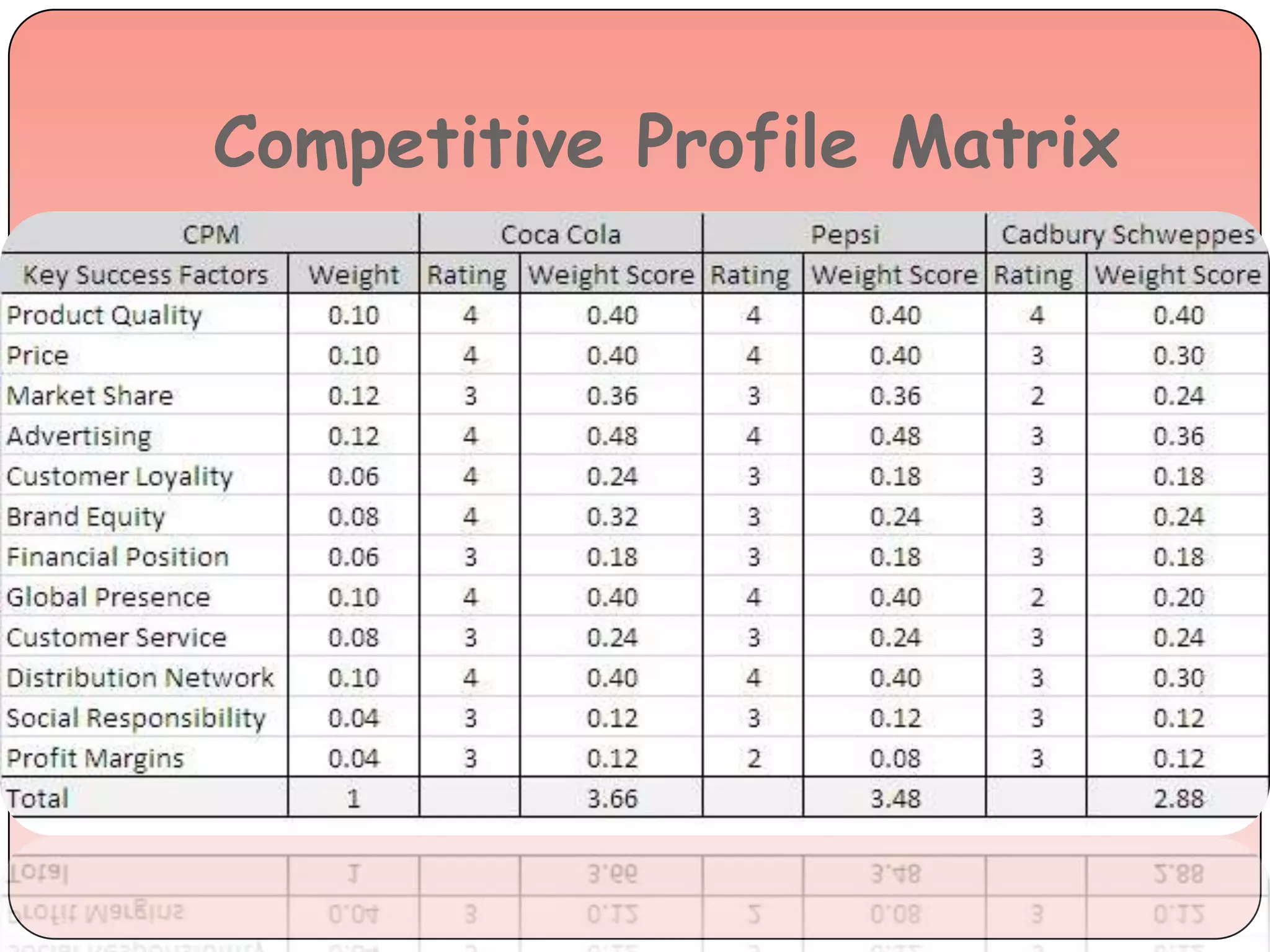
Competitive Profile Matrix
Competitive Advantages of Coca Cola
 Market leadership
 Business partnership
 Strong brand portfolio
 Collaborative customer relationships
 Channel Marketing
 Multi-Segmentation
 Client Value Management
 Go-to-market strategies
 Flexible sales and distribution models
 Full Operating Potential
Grand Strategy Matrix 2013
Possible Strategy base on GS
matrix
 Market Development
 Market Penetration
 Product development
 Forward integration
 Backward integration
 Related divesification
Coke will achieve the following by the
year 2020
Double
revenue and
increase
system
margins
Become
one of the
world’s
premier
employers
Be the most
preferred
and
trusted
business
partner
Attain
corporate
global
leadership
in
corporate
sustainabilit
y
Manage
people, time
and money
for
the greatest
effectivenes
s
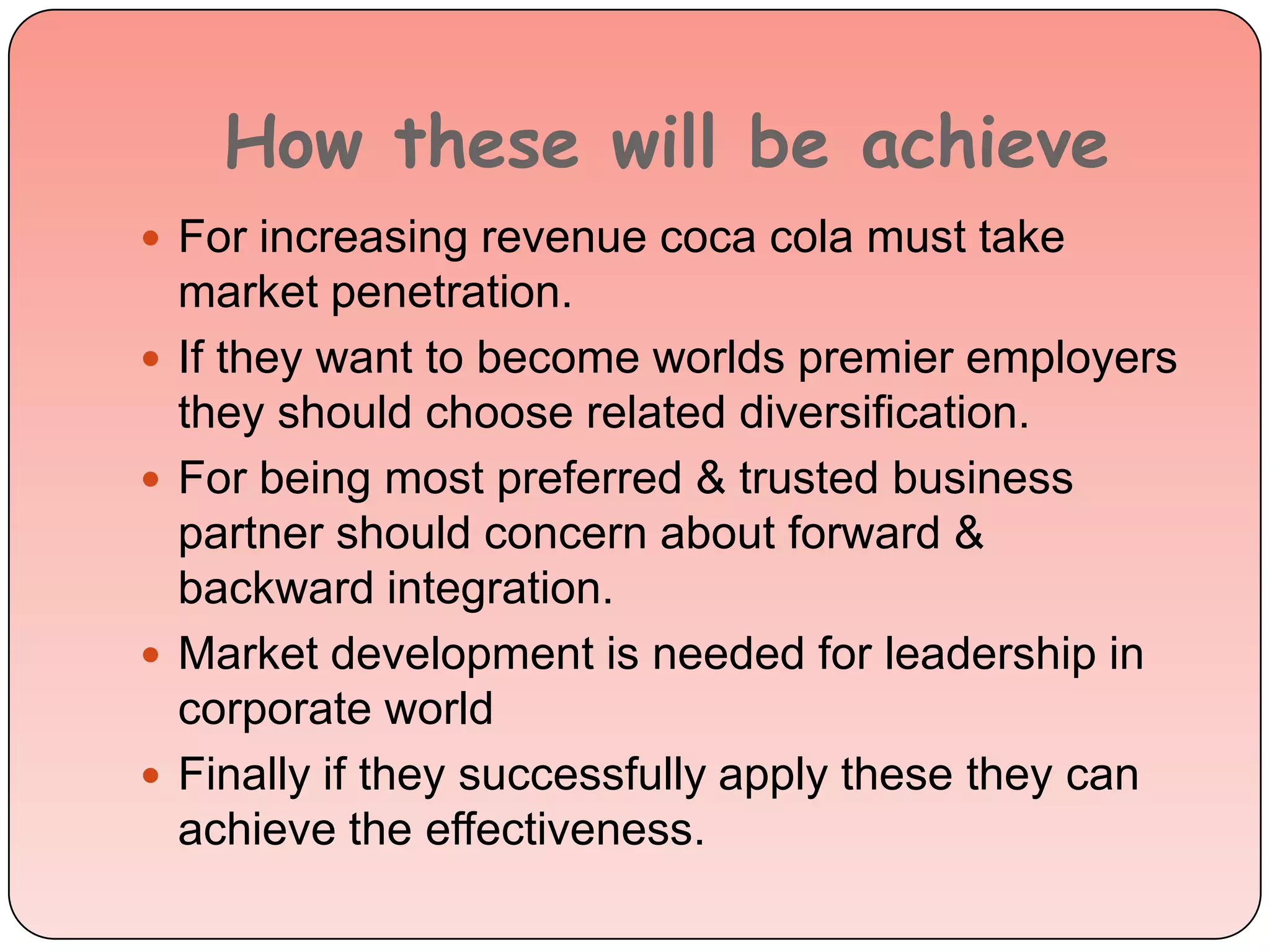
How these will be achieve
 For increasing revenue coca cola must take
market penetration.
 If they want to become worlds premier employers
they should choose related diversification.
 For being most preferred & trusted business
partner should concern about forward &
backward integration.
 Market development is needed for leadership in
corporate world
 Finally if they successfully apply these they can
achieve the effectiveness.
THE END
THANK
YOU

Company analysis of cocacola

  • 1.
     Presented by:: Samrat Hossain Mamun  Israr Uddin  Masum Khan  Khaled Shaifullah We are New Moon
  • 3.
     Coca-Cola isa cola (a type of carbonated soft drink) sold in stores, restaurants and vending machines. It is produced by The Coca-Cola Company (United States).  The Coca-Cola Company offers nearly 400 brands in over 200 countries or territories, which shows its reorganization.  The Coca-Cola Company only produces concentrate syrup which is then sold to various bottlers throughout the world who hold a Coca-Cola franchise.
  • 4.
    History  The firstCoca-Cola recipe was invented in in Columbus, Georgia, by John Stith Pemberton , originally as a cocawine called “Pemberton's French Wine Coca’ in 1885.  The first sales were made at Jacob's Pharmacy in Atlanta, Georgia, on May 8, 1886, and for the first eight months only nine drinks were sold each day.
  • 5.
    Who took over In 1888 John Pemberton died and Asa Griggs Candler took over for a total price of $2,300. And started making Coca Cola signs all over the nation.  He incorporated the company in 1892 as Coca-Cola Company (the current corporation)
  • 6.
    Mission Vision  Torefresh the world...  To inspire moments of optimism and happiness...  To create value and make a difference.  People: Be a great place to work where people are inspired to be the best they can be.  Portfolio: Bring to the world a portfolio of quality beverage brands that anticipate and satisfy people's desires and needs.  Partners: Nurture a winning network of customers and suppliers, together we create mutual, enduring value.  Planet: Be a responsible citizen that makes a difference by helping build and support sustainable communities.  Profit: Maximize long-term return to shareowners while being mindful of our overall responsibilities.  Productivity: Be a highly effective, lean and fast-moving
  • 7.
    Values Focus  Leadership:The courage to shape a better future  Collaboration: Leverag e collective genius  Integrity: Be real  Accountability: If it is to be, it's up to me  Passion: Committed in heart and mind  Diversity: As inclusive as our brands  Quality: What we do, we do well  Focus on needs of our consumers, customers and franchise partners  Get out into the market and listen, observe and learn  Possess a world view  Focus on execution in the marketplace every day  Be insatiably curious
  • 8.
    Company Background  Name::TheCoca Cola Company  Industries Served::Beverages  Geographic areas served:: WorldwideHeadquartersU.S.  Current CEO:: Muhtar Kent  Revenue$ :: 48.01 billion (2012)  Profit$ :: 9.01 billion (2012)  Employees::146,200  Main Competitors ::PepsiCo Inc., Dr Pepper Snapple Group, Inc., Unilever, Groupe Danone, Kraft Foods Inc., Nestlé S.A. and others.
  • 9.
    Coca Cola SWOTanalysis 2013 Strengths Weaknesses  The best global brand in the world in terms of value ($77,839 billion)  World’s largest market share in beverage  Strong marketing and advertising  Most extensive beverage distribution channel  Customer loyalty  Bargaining power over suppliers  Corporate social responsibility  Significant focus on carbonated drinks  Undiversified product portfolio  High debt level due to acquisitions  Negative publicity  Brand failures or many brands with insignificant amount of revenues
  • 10.
    Coca Cola SWOTanalysis 2013 Opportunities Threats  Bottled water consumption growth  Increasing demand for healthy food and beverage  Growing beverages consumption in emerging markets (especially BRICS)  Growth through acquisitions  Changes in consumer preferences  Water scarcity  Strong dollar  Legal requirements to disclose negative information on product labels  Decreasing gross profit and net profit margins  Competition from PepsiCo  Saturated carbonated drinks market
  • 11.
  • 12.
    Net income Graph 0 2 4 6 8 10 12 20092010 2011 2012 2013 Column1 Column2 Series 1
  • 13.
  • 14.
  • 15.
    Competitive Advantages ofCoca Cola  Market leadership  Business partnership  Strong brand portfolio  Collaborative customer relationships  Channel Marketing  Multi-Segmentation  Client Value Management  Go-to-market strategies  Flexible sales and distribution models  Full Operating Potential
  • 16.
  • 17.
    Possible Strategy baseon GS matrix  Market Development  Market Penetration  Product development  Forward integration  Backward integration  Related divesification
  • 18.
    Coke will achievethe following by the year 2020 Double revenue and increase system margins Become one of the world’s premier employers Be the most preferred and trusted business partner Attain corporate global leadership in corporate sustainabilit y Manage people, time and money for the greatest effectivenes s
  • 19.
    How these willbe achieve  For increasing revenue coca cola must take market penetration.  If they want to become worlds premier employers they should choose related diversification.  For being most preferred & trusted business partner should concern about forward & backward integration.  Market development is needed for leadership in corporate world  Finally if they successfully apply these they can achieve the effectiveness.
  • 20.