Addressing soil
degradation in
EU agriculture:
relevant processes,
practices and
policies
Report on the project
‘Sustainable Agriculture and
Soil Conservation (SoCo)’
Authors:
SoCo Project Team
Editors:
Geertrui Louwagie, Stephan Hubertus Gay, Alison Burrell
2009
EUR 23767 EN
The project ‘Sustainable Agriculture and
Soil Conservation (SoCo)’ is a pilot project
commissioned by the Directorate-General for
Agriculture and Rural Development, in response
to the request of the European Parliament
(Administrative Arrangement AGRI-2007-336).
European Commission
Joint Research Centre
http://www.jrc.ec.europa.eu
Contact information
Institute for Prospective Technological Studies
Address: Edificio Expo. c/ Inca Garcilaso 3. E-41092 Seville (Spain)
E-mail: jrc-ipts-secretariat@ec.europa.eu
Tel.: +34 954488318
Fax: +34 954488300
http://ipts.jrc.ec.europa.eu
Institute for Environment and Sustainability
Address: Via E. Fermi 2749.  I-21027 Ispra (VA)
(Italy)  
E-mail: ies-contact@jrc.ec.europa.eu
Tel.: +39 0332789111 
Fax: +39 0332789001 
http://ies.jrc.ec.europa.eu 
The SoCo project website: http://soco.jrc.ec.europa.eu/
Legal Notice
Neither the European Commission nor any person acting on behalf of the
Commission is responsible for the use which might be made of this publication.
Europe Direct is a service to help you find answers
to your questions about the European Union
Freephone number (*):
00 800 6 7 8 9 10 11
(*) Certain mobile telephone operators do not allow access to 00 800 numbers or these calls may be billed.
A great deal of additional information on the European Union is available on the Internet.
It can be accessed through the Europa server
http://europa.eu/
JRC 50424
EUR 23767 EN
ISBN 978-92-79-11358-1
ISSN 1018-5593
DOI 10.2791/69723
Luxembourg: Office for Official Publications of the European Communities
© European Communities, 2009
Reproduction is authorised provided the source is acknowledged
Printed in Spain
The mission of the JRC-IPTS is to provide customer-driven support to the EU policy-making
process by developing science-based responses to policy challenges that have both a socio-
economic as well as a scientific/technological dimension.
AddressingsoildegradationinEUagriculture:relevantprocesses,practicesandpolicies
3
SoCo Project Team
Authors of this report
European Commission, Joint Research Centre (JRC), Institute for Prospective Technological Studies (IPTS):
Stephan Hubertus Gay (SoCo co-ordinator)
Geertrui Louwagie
Frank Sammeth
Tomas Ratinger
Adriana Cristoiu
European Commission, Joint Research Centre (JRC), Institute for Environment and Sustainability (IES):
Brechje Maréchal
Paolo Prosperi
Ezio Rusco
Jean-Michel Terres
Kabindra Adhikari
Katalin Bódis
Roberto M. Cenci
Ciro Gardi
Beata Houšková
Hannes Isaak Reuter
Luis Rodriguez Lado
Vladimir Stolbovoy
Gergely Tóth
Leibniz-Centre for Agricultural Landscape Research (ZALF) e.V., Müncheberg:
Johannes Schuler
Thomas Kutter
Peter Zander
Roger Funk
Katharina Helming
SOLAGRO, Toulouse:
Sylvain Doublet
Marion Houtin
Philippe Pointereau
4
5
AddressingsoildegradationinEUagriculture:relevantprocesses,practicesandpolicies
Preface
In 2007, the European Parliament requested the European Commission to carry out a pilot project
on ‘Sustainable Agriculture and Soil Conservation through simplified cultivation techniques’ (SoCo).
The European Parliament considered that ‘in Europe, soil degradation and erosion is probably the most
significant environmental problem’ and underlines the importance of conservation agriculture as being a
‘set of soil management practices which minimise alteration of the composition, structure and biodiversity
of the soil, safeguarding it against erosion and degradation’. While stating that ‘Rural development
planning action for 2007 to 2013 affords a unique opportunity to make headway with these techniques’,
the European Parliament underlined that the project should ‘foster knowledge of these techniques so that
future European legislation can be easily applied’.
The SoCo project was designed in a close cooperation between the Directorate-General for Agriculture
and Rural Development (DG AGRI) and the Joint Research Centre (JRC) in form of an administrative
arrangement (AGRI-2007-336). It has been implemented by the JRC’s Institute for ProspectiveTechnological
Studies (IPTS) and Institute for Environment and Sustainability (IES). Further information about the SoCo
project is available on the website: http://soco.jrc.ec.europa.eu
The SoCo project is structured around four work packages. This report presents the findings of a stock-
taking of the current situation with respect to soil degradation processes, soil-friendly farming practices
and relevant policy measures within an EU-wide perspective and the outcome of the stakeholder workshop
which took place on 22 May 2008 in Brussels (work package 1). The following institutes contributed to
this report: the JRC-IPTS, the JRC-IES, Leibniz-Centre for Agricultural Landscape Research (ZALF) e.V. and
SOLAGRO.
This report has been reviewed by the SoCo Steering Group, comprising representatives of several DG
AGRI Units, the JRC-IPTS, the JRC-IES, DG Research and DG Environment, as well as by the SoCo Scientific
Advisory Board: Arnold Hermanus Arnoldussen, Štefan Bojnec, Floor Brouwer and Pierre Dupraz. We
thank all involved for their support to the work.
6
AddressingsoildegradationinEUagriculture:relevantprocesses,practicesandpolicies
7
SoCo Project Team	 3
Preface	 5
Executive summary	 13
1	 Introduction	 23
2	 Soil degradation processes across Europe	 29
2.1	 Erosion	 29
2.1.1	 Water erosion	 29
2.1.2	 Wind erosion	 36
2.1.3	 Tillage-related erosion	 38
2.2	 Organic carbon decline	 40
2.2.1	 Methodology	 41
2.2.2	 Results and discussion	 44
2.2.3	 Conclusions	 48
2.3	 Compaction	 49
2.3.1	 Methodology	 50
2.3.2	 Results and discussion	 51
2.3.3	 Conclusions	 52
2.4	 Salinisation and sodification	 53
2.4.1	 Methodology	 54
2.4.2	 Results and discussion	 56
2.4.3	 Conclusions	 56
2.5	 Contamination	 57
2.5.1	 Heavy metals and pesticides	 57
2.5.2	 Excess of nitrates and phosphates	 60
2.6	 Biodiversity in agricultural soils	 61
2.6.1	 Biodiversity and soil biodiversity	 62
2.6.2	 Soil biodiversity and agriculture	 64
2.6.3	 Conclusions	 65
2.7	 Conclusions on soil degradation processes	 66
Table of contents
Tableofcontents
8
3	 Soil conservation practices in agriculture	 67
3.1	 Practices addressing soil degradation: definition, environmental
impact and economic performance	 67
3.1.1	 Conservation agriculture	 67
3.1.2	 Organic farming	 83
3.1.3	 Ridge tillage	 88
3.1.4	 Contour farming	 89
3.1.5	 Subsoiling	 91
3.1.6	 Intercropping	 94
3.1.7	 Grasslands	 96
3.1.8	 Agroforestry	 98
3.1.9	 (Conservation) Buffers	 100
3.1.10	 Terracing	 101
3.2	 Other practices affecting soil	 103
3.2.1	 Practices linked to soil contamination	 103
3.2.2	 Practices linked to soil compaction	 106
3.2.3	 Practices mainly linked to salinisation	 106
3.2.4	 Practices mainly linked to erosion	 107
3.3	 Current extent of soil conservation practices in Europe	 107
4	 Regulatory environment and policy instruments	 109
4.1	 Analytical framework	 109
4.1.1	 Public goods and property rights	 109
4.1.2	 The intervention logic approach	 110
4.1.3	 EU-wide survey	 112
4.2	 Common Agricultural Policy	 118
4.2.1	 Cross compliance	 119
4.2.2	 Rural development	 126
4.3	 Environmental legislation	 137
4.3.1	 Specific reference to relevant directives included in cross
compliance (SMRs)	 137
4.3.2	 Water Framework Directive (2000/60/EC)	 141
4.3.3	 Thematic Strategy for Soil Protection (COM(2006) 231) and
proposal for Soil Framework Directive (COM(2006) 232)	 143
4.3.4	 Relevant international environmental policies	 146
4.4	 Survey of national/regional policy implementation	 147
4.4.1	 Mandatory measures	 148
4.4.2	 Voluntary incentive-based measures: rural development
measures (Regulation (EC) 1698/2005)	 154
4.4.3	 Awareness-increasing measures and private initiatives	 160
4.4.4	 Frequency and distribution of selected farming practices by
type of policy measure	 161
4.5	 Conclusion of the policy survey	 162
AddressingsoildegradationinEUagriculture:relevantprocesses,practicesandpolicies
9
5	 Summary of soil degradation processes, soil-friendly farming practices and
relevant policy measures	 165
5.1	 Classification of soil degradation processes and soil conservation practices	 165
5.2	 Classification of soil degradation processes, soil conservation practices
and policy measures	 174
6	 Workshop summary report	 185
6.1	 Opening	 185
6.2	 Session 1: Agricultural soil conservation context	 187
6.3	 Session 2: Soil conservation practices – agricultural perspective	 188
6.4	 Session 3: Costs and benefits of soil conservation practices	 189
6.5	 Session 4: Existing policy framework	 190
References	 193
European Union: regulations, directives and communications	 223
Annex	 227
Tableofcontents
10
List of figures
Figure 2.1:	 Diagram of model concept for PESERA	 31
Figure 2.2:	 PESERA map	 31
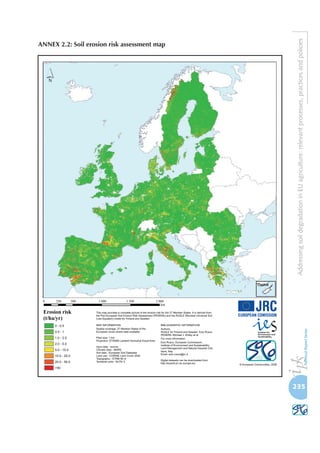
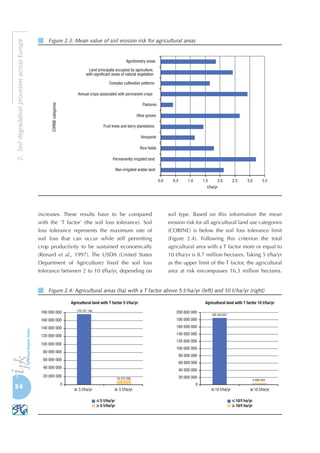
Figure 2.3:	 Mean value of soil erosion risk for agricultural areas	 34
Figure 2.4:	 Agricultural areas (ha) with a T factor above 5 t/ha/yr (left) and 10 t/ha/yr (right)	 34
Figure 2.5:	 The relative loss in wheat yields due to soil erosion in 100 years calculated for
NUTS 3 units and based on the UNEP yield scenario (Bakker et al., 2007)	 35
Figure 2.6:	 Number of erosive days per year calculated over the last 30 years (Annex 2.6)	 39
Figure 2.7:	 Conceptual model of SOC changes due to cultivation and land use modifications
in agricultural soil	 42
Figure 2.8:	 Critical threshold values for SOC	 43
Figure 2.9:	 Risk and probability zones for the SOC loss (indicated by horizontal lines)	 44
Figure 2.10:	 Min SOC content (Annex 2.7)	 44
Figure 2.11:	 Max SOC content (Annex 2.8)	 45
Figure 2.12:	 Actual SOC content (Annex 2.9)	 45
Figure 2.13:	 Potential SOC loss (t C/ha) (Annex 2.10)	 46
Figure 2.14:	 Risk zones of SOC loss in the EU (Annex 2.11)	 46
Figure 2.15:	 Potential SOC gain (t C/ha) (Annex 2.12)	 47
Figure 2.16:	 Probability zones of SOC gain in the EU (Annex 2.13)	 47
Figure 2.17:	 Map of natural soil susceptibility to compaction in the EU-27 (Annex 2.14)	 51
Figure 2.18:	 Natural soil susceptibility to compaction in relation to land use	 52
Figure 2.19:	 Map of saline and sodic soils in the European Union: status and potentials (Annex 2.15)	 55
Figure 2.20:	 Land use in salt-affected areas identified in Figure 2.19.	 56
Figure 2.21:	 Estimated cadmium concentration in agricultural soils	 58
Figure 2.22:	 Summary of the Biodiversity Action Plan	 62
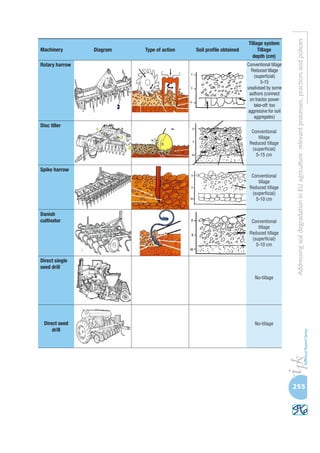
Figure 3.1:	 Simplified tillage techniques and intensity of soil fragmentation and soil inversion layers	 68
Figure 3.2:	 Comparison of the effectiveness of simplified cultivation methods	 72
Figure 3.3:	 Correlation between mulch soil cover and run-off or erosion	 73
Figure 3.4:	 Effect of long-term tillage systems on organic matter contents in soil, expressed by
the content of organic carbon in the topsoil of the Eutric Cambisol	 73
Figure 3.5:	 Simulated evolution of soil carbon content, Boigneville test, France	 74
Figure 3.6:	 Link between soil tillage methods, earthworm populations and their activity	 77
Figure 3.7:	 The transition phases of conservation agriculture adoption	 83
Figure 3.8:	 Average production cost by farming practice	 85
Figure 3.9:	 The structure of the deterministic simulation model (DSM) for cost calculations
and planning on organic farms KARSIM 1.0	 87
Figure 3.10:	Recovery of the cost of deep ripping in two Solonetzic and Chernozemic areas in
Canada. Units: CAD ($)/ac	 93
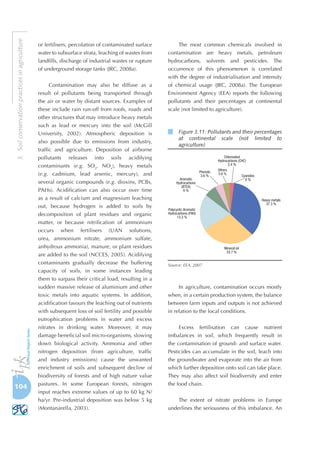
Figure 3.11:	 Pollutants and their percentages at continental scale (not limited to agriculture)	 104
Figure 4.1:	 Provision of environmental benefits versus avoiding harmful effects	 110
Figure 4.2:	 Analysis of the intervention logic approach	 111
Figure 4.3:	 Simplified presentation of the intervention logic approach	 112
Figure 4.4:	 Changing composition of CAP expenditure (1980-2007)	 119
Figure 4.5:	 The objective and outcomes of cross compliance	 121
Figure 4.6:	 Summary of the 2007-2013 rural development policy	 127
Figure 4.7:	 Additional costs associated with participation in agri-environment measures	 136
AddressingsoildegradationinEUagriculture:relevantprocesses,practicesandpolicies
11
Figure 4.8:	 Link between measures for soil protection and related activities	 137
Figure 4.9:	 Procedure for addressing erosion, organic matter decline, compaction, salinisation
and landslides	 145
Figure 4.10:	Frequency and distribution of selected farming practices by type of policy
measure	 161
Figure 5.1:	 Adoption of soil conservation practices (farming systems and/or practices) for soil
quality protection, conservation or improvement	 175
List of tables
Table 2.1:	 On-site and off-site damage due to soil erosion	 30
Table 2.2:	 Categories for soil compaction	 50
Table 2.3:	 Pedotransfer rule acronyms explanation	 51
Table 3.1:	 Classification of soil preparation techniques	 68
Table 3.2:	 Hierarchy of agronomical criteria necessary to build a crop rotation	 69
Table 3.3:	 Impact of reduced tillage (RT) and no-tillage (NT) on soil properties, compared to
conventional tillage (CT)	 71
Table 3.4:	 Impact of tillage system on K2 factor	 74
Table 3.5:	 Labour time (h/ha and % relative to CT) in Europe, as affected by tillage systems	 80
Table 3.6:	 Fuel savings in northern and southern Europe (l/ha) as affected by tillage systems	 81
Table 3.7:	 Purchase costs (EUR) of different machinery equipment: example for a 150 ha farm
in Germany	 82
Table 3.8:	 A weighted assessment of the overall effect of organic farming on the environment
relative to conventional farming	 84
Table 3.9:	 Mean values of soil characteristics by farming system	 85
Table 3.10:	 Economic parameters by farming system in EUR/yr/ha	 86
Table 3.11:	 Crop yields, production costs and returns to land and management for corn and
soybeans under conventional and ridge tillage	 90
Table 3.12:	 Comparison of the effects of no soil conservation, strip cropping and contour
farming scenarios	 91
Table 3.13:	 Effects of intercropping on yield, LER, protein content and cost effectiveness	 95
Table 3.14:	 Net returns from intercropping systems	 96
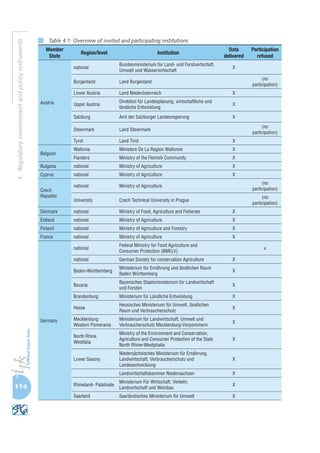
Table 4.1:	 Overview of invited and participating institutions	 114
Table 4.2:	 Soil protection policies by categories (number of measures per category)	 116
Table 4.3:	 Measures added or edited by ZALF (numbers)	 117
Table 4.4:	 Environmental statutory management requirements (SMRs) within cross
compliance	 121
Table 4.5:	 Standards for keeping land in good agricultural and environmental condition (GAEC)	 123
Table 4.6:	 Summary of specific national measures within GAEC	 124
Table 4.7:	 Rural development measures relating to soil conservation	 128
Table 4.8:	 Summary of rural development measures related to soil	 129
Table 4.9:	 Uptake of organic farming within the Member States until 20051	 134
Table 4.10:	 Environmental performance of agri-environment measures related to the reduction
of soil erosion	 135
Table 4.11:	 Environmental performance of agri-environment measures related to the reduction
of soil contamination	 135
Table 4.12:	 Changes in costs, working hours and revenue due to agri-environment project, %	 136
Tableofcontents
12
Table 4.13:	 Costs of compliance with environmental SMRs	 141
Table 4.14:	 Knowledge of soil degradation with respect to water quality protection presented
in the Article 5 reports of WFD	 143
Table 4.15:	 Self-declaration of EU Member States within the UNCCD	 147
Table 4.16:	 Classification of policy measures for further analysis	 148
Table 5.1:	 Summary of soil characteristics and soil-forming factors that determine soil
degradation processes	 165
Table 5.2:	 Summary of the effect of farming practices on (a) physical, (b) chemical and (c)
biological soil characteristics	 167
Table 5.3:	 Summary of the effect of farming practices on (a) soil degradation processes and
(b) related environmental issues	 170
Table 5.4:	 Summary of the effects of soil degradation processes on (a) other soil degradation
processes and (b) related environmental issues	 173
Table 5.5:	 (Expected) effects (positive, neutral or negative) of farming systems and practices on soil
degradation processes and related environmental issues and their link with policy measures	 176
13
AddressingsoildegradationinEUagriculture:relevantprocesses,practicesandpolicies
Executive summary
Agriculture occupies a substantial proportion of the European land, and consequently plays an
important role in maintaining natural resources and cultural landscapes, a precondition for other human
activities in rural areas. Unsustainable farming practices and land use, including mismanaged intensification
as well as land abandonment, have an adverse impact on natural resources. Having recognised the
environmental challenges of agricultural land use, the European Parliament requested the European
Commission in 2007 to carry out a pilot project on ‘Sustainable Agriculture and Soil Conservation through
simplified cultivation techniques’ (SoCo). The project originated from a close cooperation between the
Directorate-General for Agriculture and Rural Development (DG AGRI) and the Joint Research Centre
(JRC). It was implemented by the Institute for Prospective Technological Studies (IPTS) and the Institute for
Environment and Sustainability (IES).
The overall objectives of the SoCo project are: (i) to improve the understanding of soil conservation
practices in agriculture and their links with other environmental objectives; (ii) to analyse how farmers
can be encouraged, through appropriate policy measures, to adopt soil conservation practices; and (iii) to
make this information available to relevant stakeholders and policy makers in an EU-wide context.
This report presents the findings of a stock-taking of the current situation with respect to soil
degradation processes, soil-friendly farming practices and relevant policy measures within an EU-wide
perspective. This overview includes the results of the survey on the national/regional implementation
of EU policies and national policies, a classification of the described soil degradation processes, soil
conservation practices and policy measures, and finally the outcome of the stakeholder workshop which
took place on 22 May 2008 in Brussels.
The current findings and the data received from the stock-taking of the policies do not provide sufficiently
detailed insight into the investigated links and are thus too limited to allow policy recommendations. In
order to clarify the context-specific links between soil degradation processes, farming practices and policy
measures, SoCo therefore conducted ten case studies, spread over three macro-regions within the EU. The
methodological details and results of the case studies as well as an overall assessment of the effectiveness
of the policy framework as regards soil protection, conservation or improvement will be presented in the
SoCo Final report.
Nature, location and magnitude of soil degradation related to agriculture
Soil is defined as the top layer of the earth’s crust and is composed of mineral particles, water, air and
organic matter, including living organisms. It is a complex, mutable, living resource which performs many
vital functions: food and other biomass production, storage, filtration and transformation of substances
including water, carbon and nitrogen. Soil further serves as a habitat and a gene pool, and provides a basis
for human activities, landscape and heritage, and the supply of raw materials.
14
Executivesummary
Soil is also subject to a series of degradation processes. Six of the soil degradation processes recognised
by the Commission (water, wind and tillage erosion; decline of soil organic carbon; compaction; salinisation
and sodification; contamination; and declining soil biodiversity) are closely linked to agriculture. Within
SoCo, the magnitude of the related soil degradation risks was estimated at EU level and areas where
these risks are most likely to occur were identified. The degree of ‘risk’ of soil degradation is established
as a function of the underlying pre-disposing factors, and does not indicate the actual occurrence of
degradation processes in particular areas.
Due to the loss of topsoil, the soil becomes less fertile and the aquatic ecosystem contaminated. Erosion
in agricultural areas could result in undercut slopes which remove the slope base, causing landslides. The
major drivers for water erosion are intense rainfall (particularly pronounced in clay soils after long droughts),
topography, low soil organic matter content, percentage and type of vegetation cover, inappropriate farming
practices and land marginalisation or abandonment. Following the geographical distribution of these major
drivers, several areas with a high risk of erosion (including some hotspots) are located in the Mediterranean
regions. Erosion risk is also observed across western and central Europe. Even though the risk is relatively
limited in, e.g. France, Germany and Poland, water erosion can still be a substantial problem here. On the
other hand, the analysis shows hilly to mountainous areas (Pyrenees, Apennines and the Alps) with very low
or no erosion risk. These are largely forest areas with soils stabilised through tree roots.
Wind erosion, involving a removal of predominantly the finest soil particles, results in an ongoing
decrease in soil fertility, so that the effects of wind erosion on agricultural productivity are detectable only
after years or decades. A soil’s susceptibility to wind erosion is determined by its erodibility (mainly soil
texture and organic matter content) and the climate’s erosivity (mainly wind velocity and direction and
precipitation). Wind erosion is additionally influenced by the interactions of various components (such
as land use) resulting in a high temporal variability in the actual wind erosion risk of a particular site. The
highest number of erosive days on bare soil per year (calculated over the last 30 years) is found across the
sand belt covering southeast England, the Netherlands, northern Germany and Poland. Additionally, the
areas exposed to high wind speed along coastlines show elevated levels of wind erosion. However, the
outcome of the modelling exercise might be influenced strongly by lacking data (e.g. detailed info on soil,
climate and land management) and scale effects.
Soil organic carbon is a source of food for soil fauna and contributes to soil biodiversity. Soil organic
carbon supports the soil’s structure, which improves the physical environment for roots to penetrate
through the soil, enhances the water-retention capacity, and supports drainage (thus reducing run-off and
erosion). A loss in organic carbon content can limit the soil’s ability to provide nutrients for sustainable
plant production. Apart from soil characteristics (such as soil texture) and soil type, the soil organic carbon
content is determined by land use, climate (mainly temperature and precipitation) and soil hydrology. Risk
related to soil organic carbon decline is defined in terms of the potential of soils to lose organic carbon
(removal of carbon from the soil) compared to rates of accumulation of soil organic carbon. The climate
factor explains the existence of a north-south climatic gradient, with high soil organic carbon levels in the
colder humid northern part of Europe and in mountainous areas, and lower levels in the warmer semi-
arid southern part. The model results show that agricultural soils in Europe have very different actual soil
organic carbon levels and are subject to different risk levels of soil organic carbon decline. Maintaining and
optimising organic carbon levels (as a specific objective of land management) is important in contributing
to climate change mitigation.
15
AddressingsoildegradationinEUagriculture:relevantprocesses,practicesandpolicies
Compaction can create significant damage to the soil infiltration rate, redistribution of water and
nutrients, root development, and the direction and depth of root growth. As the degree of compaction
increases, cultivation becomes more difficult demanding more energy as well as decreasing crop yields
and productivity. The natural susceptibility of soils to compaction mainly depends on soil texture, with
sandy soils being least and clayey soils being most susceptible. Human-induced compaction is caused
by soil use and management (e.g. heavy machinery used under wet conditions). European soils used
for agricultural and pastoral purposes have a predominantly low or medium natural susceptibility to
compaction. Agroforestry and permanently irrigated land (mainly on light sandy soils) - with the exception
of rice fields, mostly on clay soils with a high water table - are least susceptible to compaction.
Salinisation leads to an excessive increase of water-soluble salts in the soil, whereas sodification
concerns an increased content of exchangeable sodium (Na+
). High levels of salinity in soils provoke the
withering of plants both due to the increase of osmotic pressure and the toxic effects of salts. Salinisation
increases the impermeability of soil layers, eliminating the possibility to use the land for cultivation. When
alkalinity takes place, the high pH level does not, in most cases, permit plant life. Excess sodium on the
exchange complex results in the destruction of the soil structure that due to a lack of oxygen, cannot sustain
either plant growth or animal life. Alkaline soils are easily eroded by water and wind. The main natural
factors influencing soil salinity are climate, the salt contents of the parent material and groundwater, land
cover and topography. The most influential human-induced factors are land use, farming systems, and land
management, such as the use of salt-rich irrigation water and/or insufficient drainage. Saline soils have
developed in most arid regions, where climate is the determining driver. Salinity of local groundwater or
substrata is causing problems of salinity too. The countries most affected are Spain, Hungary and Romania.
Other countries show localised occurrence of these conditions, which could have a devastating effect
locally. Particular types of soil, such as acid sulphate soils may be at risk of salinisation under certain
environmental conditions.
SoCo has not been able to produce comprehensive risk assessments of the degree of soil contamination
(by heavy metals and pesticides; excess of nitrates and phosphates) or declining soil biodiversity due to a
lack of data.
Heavy metal input in agriculture may be caused by human activities, such as fertilisation and
amendment practices, used to increase soil productivity. High concentrations of heavy metals in soils can
be toxic for living organisms, resulting in biodiversity decline and groundwater pollution. Heavy metals
together with excessive nitrogen inputs are regarded as the main sources of contamination in agricultural
soils with significant effects on water quality.
Soil biodiversity tends to be greater in forests (compared to grasslands) and in undisturbed natural
lands (compared to cultivated fields). Agricultural land use and management practices can have
significant positive (liming in grasslands or low levels of disturbance) and negative (ploughing, overuse
of agrochemicals or organic wastes) impacts on different components of soil biodiversity. Soil tillage
operations modify the soil’s architecture (soil structure, porosity, bulk density, and water-holding capacity),
the distribution of crop residues and organic carbon content. The adoption of organic farming and low-
input farming can reduce the impact of agricultural activity on soil biodiversity. Changes in biodiversity
alter ecosystem processes and change the resilience of ecosystems to environmental change.
16
Executivesummary
The macro-assessment of the soil degradation processes provided in this report represents EU-wide
estimates only and should not be interpreted with the same accuracy as field measurements. Risk was
assessed through parametric and empirical models, using the European Soil Database and Corine Land
Cover Database. Given the general EU-wide character of the evaluation and despite using the best
available data, important drivers for actual soil degradation at the local level (e.g. land use and land use
change, farming practices, farming systems) could not be taken into account. Also, these data show serious
differences and gaps in quality, comparability and geographical distribution. To create a more complete
picture, improved data collection would be required, ideally through the development of a harmonised
monitoring system across Europe and through additional research on EU-wide soil degradation processes.
Relevant farming practices for soil protection, conservation and improvement, their
uptake and related environmental objectives
SoCo focused its review on two specific farming systems, namely conservation agriculture and organic
farming, along with a range of farming practices.
Farming systems
Conservation agriculture comprises a combination of practices which minimise alteration of the
composition and structure of the soil, safeguarding it against erosion and degradation, and preserving
soil biodiversity. No-tillage and reduced tillage, in combination with permanent soil cover (cover crops,
crop residues) and crop rotation, are essential practices in conservation agriculture. Crop rotation involves
growing a range of crops in the same space in sequential seasons to avoid the build-up of pathogens and
pests that often occur when a species is continuously cropped. Uptake of no-tillage varies from 4.5 to
10 % (of total arable land) in Finland and Greece and from 2.5 to 4.5 % in the Czech Republic, Slovakia,
Spain and the United Kingdom. Reduced tillage is practised on 40 to 55 % of the arable land in Finland
and the United Kingdom, and on 20 to 25 % in France, Germany and Portugal. All mentioned practices
minimise the risk of soil degradation by increasing the organic carbon stock, thus improving biological
activity, soil fertility, soil structure and the water-retention capacity of soils, thus reducing soil erosion
and nutrient run-off (with positive effects on water quality), and improving soil resistance to compaction.
As for crop rotations, in addition to erosion control, the interaction between distinctive crops within a
crop rotation can increase the yields, especially for the first consecutive crop. An example is the positive
effect of legumes on the subsequent yields of a grain crop. On the economic side, significant cost savings
with respect to labour and fuel consumption are reported. Reduced tillage and no-tillage can potentially
reduce the need for labour hours by 30-40 and 50-75 % respectively, depending on the geographical
location (northern or southern Europe). Similarly, consumption of fuel can realistically drop by 10-20 %
(up to 50 %) and 25-35  % (up to 60 %) for reduced tillage and no-tillage respectively. Nevertheless,
switching to conservation agriculture might require significant capital investment (for example, in sowing
equipment) and greater attention in the use of chemicals (that is for weeding). Furthermore, conservation
agriculture is a complex, site-specific farming system, requiring training of farmers and adaptation to local
circumstances before maximum economic benefits can be obtained. The practices forming the basis for
conservation agriculture are also (individually) used in other farming systems (e.g. conventional, organic).
17
AddressingsoildegradationinEUagriculture:relevantprocesses,practicesandpolicies
Organic production is an integrated system of farm management and food production that combines
best environmental practices, a high level of biodiversity, the preservation of natural resources, the
application of high animal welfare standards and a production method in line with the preference of certain
consumers for products produced using natural substances and processes (FAO, 2008b). Organic farming
plays a dual societal role, on the one hand responding to consumer demand for organic products, and on
the other hand delivering public goods through the protection of the environment and animal welfare,
and thus contributing to rural development (Regulation (EC) 834/2007). Over the period 1998-2005, the
area under organic farming (including conversion areas) certified under Council Regulation (EEC) 2092/91
increased by 130 % in the EU-15, and by 2005 it amounted to 4 % of the total utilised agricultural area
(UAA) in the EU-25. However, there is considerable variation between Member States. Organic farming,
although different from conservation agriculture, has similar positive effects on soil organic carbon content
and soil biodiversity. Energy consumption is reduced and beneficial effects are reported on water quality,
in particular with respect to pesticides (which are strictly limited in organic farming), and on above-
ground biodiversity (in particular species abundance and/or richness) and landscape. Net returns depend
on yields, with some variation according to the crops.
Farming practices
Ridge tillage, i.e. cultivating crops on pre-formed ridges, alternated with furrows protected by crop
residues, has positive effects on moisture-holding capacity, soil fertility maintenance (including organic
carbon content) and biological activity and thus on water erosion and nutrient run-off. Evidence suggests
that ridge tillage can be an economically viable alternative to conventional tillage with higher net returns
and lower economic risk. Ridge tillage has only been studied in experiments in most parts of Europe.
Contour farming involves activities, such as ploughing, furrowing and planting, carried out along
contours instead of up and down the slope. It aims at creating detention storage in the soil surface horizon
and slowing down the rate of run-off. Contour farming thus increases the soil’s infiltration capacity, may
have positive effects on organic carbon content, and results in controlling water and tillage erosion.
However, climate, soil type, slope aspect and land use should be taken into account when judging the
suitability of this practice. Data on cost-benefit analyses are scarce.
Subsoiling involves loosening deep hardpans in soils, thereby improving the soil’s infiltration rate and
root penetration. In particular, it has a beneficial effect on infiltration rate and capacity, but shows variable
effects on nutrient cycling. The effects of subsoiling are influenced by many other parameters such as a
combination of practices, type of crop and soil, (micro-)climate, period of soil cultivation, etc.
Intercropping is the growth of two or more crops in proximity in the same field during a growing
season to promote the interaction between them. As in any biodiverse ecosystem, the interaction between
complementary plants enhances the overall stability of the system, including a significant resilience against
pests, diseases and weeds. This practice increases soil porosity and supports organic carbon and nitrogen
cycles; there are indications of positive effects on soil biology and biodiversity too. Studies highlight the
variability in net returns for a number of intercrops.
Maintenance and establishment of permanent grassland (grass sward over five years) and temporary
grassland (grass sward less than five years) can improve soil protection. Permanent grassland covers 32 %
18
Executivesummary
of the European UAA with important differences between the Member States: e.g. in the United Kingdom,
Ireland and Slovenia, permanent grassland covers at least 60 % of the UAA. Both permanent and temporary
grasslands have undergone a gradual decline over the past 25 years, having been converted into cropland
or forest, returned to fallow land or abandoned. However, the 2003 CAP reform introduced the obligation
to maintain permanent pastures in order to prevent massive conversion into arable land. This resulted, in
2006 and 2007, in a limited increase in permanent pasture in most Member States. Permanent grasslands
significantly contribute to aggregate size and stability and soil biology (from micro- to macro-organisms).
They also support the cycling of nutrients (organic carbon, nitrogen, phosphorus and potassium) in the
soil. The continuous vegetative cover reduces the erosion risk by water and wind.
Agroforestry refers to land use systems and technologies where woody perennials (trees, shrubs) are
deliberately combined with agricultural crops, either in some form of spatial arrangement or temporal
sequence. Agroforestry has positive effects on soil fertility maintenance, water-holding capacity, erosion
control, biodiversity, carbon sequestration and control of nitrate leaching. However, its environmental
effects are highly variable, depending on biophysical conditions, management intensity, and choice of
crops and tree species. Research has shown that the long-term economic profitability of silvo-arable
agroforestry systems relative to that of conventional arable farming is not clear-cut; when the profitability
of the latter is high, the overall economic performance of agroforestry depends on the proportion of farm
land planted, tree density and land quality.
Buffer strips (filter strips, field borders, windbreaks, grassed waterways, riparian buffers, etc.) at the
edge of arable lands can significantly reduce (by 70-90 %) the volume of suspended solids, nitrates and
phosphates transported by agricultural run-off to water bodies. Depending on the type, they can reduce
wind erosion and contribute to biodiversity and aesthetics of the landscape. On the economic side, buffer
strips lead to a retraction in the productive area and investment in their establishment (seeding, planting).
In return and depending on local conditions, they may replace or reduce the need for other nature
restoration activities.
Bench terraces consist of a series of (nearly) levelled platforms built along contour lines, at suitable
intervals and generally sustained by stone walls. Terracing has a particularly beneficial effect on the soil’s
infiltration rate and capacity and thus on controlling water erosion. However, the high maintenance
required, coupled with the high cost of labour and the significant changes in the socio-economic structure
of the agricultural population over the last decades, has led farmers to abandon terraces. In turn, many
authors report adverse effects of terracing once they are badly maintained or even abandoned. A simple
cost-benefit analysis of terracing is often not sufficient to establish its profitability.
Review of the regulatory environment and policy instruments that address conservation agriculture and
soil conservation practices
The review of the regulatory environment and policy instruments is based on three forms of data
collection. Firstly, a review of the existing, relevant EU legislation; secondly, a review of impact assessments,
evaluations and research projects relating to EU policies; and thirdly, a survey monitoring national and
regional implementation. The results from the policy survey are not exhaustive, i.e. they do not reflect all
existing policies in the EU-27 with a soil protection, conservation or improvement potential.
19
AddressingsoildegradationinEUagriculture:relevantprocesses,practicesandpolicies
To date, soil protection is not a specific objective of any EU legislation but it features in some legislation
as a secondary objective. To close this gap, the Commission proposed a Soil Framework Directive in
September 2006. Reviewing existing legislation from a soil protection point of view requires considering
all stated objectives and their expected effects on soil quality. In many cases other environmental objectives
(e.g. water protection and waste management) contribute to some extent to soil protection, although not
always effectively.
In the framework of the Cardiff Process, environmental objectives are to be integrated into EU sectoral
policies, including the Common Agricultural Policy (CAP). The CAP comprises two principal headings
of budgetary expenditure: market price support and direct income payments (Pillar 1), and a range of
selective incentive payments targeting rural development (Pillar 2).
Cross compliance, a horizontal tool for both pillars and compulsory since 2005 (Regulation (EC)
1782/2003), plays an important role in soil protection, conservation and/or improvement. Under cross
compliance rules, the receipt of the Single Farm Payment and payments for eight rural development
measures under Axis 2 is conditional on a farmer’s compliance with a set of standards. The statutory
management requirements (SMRs) create synergies between the Direct Payments Scheme and the need
to ensure compliance with a number of relevant EU environmental directives, including the Nitrates
Directive. The requirement to keep agricultural land (whether in productive use or not) in good agricultural
and environmental condition (GAEC) aims at preventing land abandonment and ensuring a minimum
maintenance of agricultural land. The elements of GAEC specifically target protection against soil erosion,
maintenance or improvement of soil organic matter, and maintenance of a good soil structure.
Within Pillar 2 (Regulation (EC) 1698/2005), a wide range of measures can be supported and is
potentially relevant to soil protection, conservation or improvement. Member States or regions are obliged
to spread their rural development funding across three thematic axes: (1) competitiveness; (2) environment
and land management; and (3) economic diversity and quality of life; with minimum spending thresholds
applied per axis. ‘LEADER’ is a horizontal axis complementing the three thematic axes. The axes contain
measures which offer Member States the possibility of supporting actions to reduce soil degradation on
agricultural land when such a need has been identified in their territories, in particular:
-	 Axis 1: Vocational training and information actions (Art. 20 (a) (i)); Use of advisory services (Art.
20 (a) (iv)); Setting up of farm management, farm relief and farm advisory services (Art. 20 (a) (v));
Modernisation of agricultural holdings (Art. 20 (b) (i)); Restoring agricultural production potential
damaged by natural disasters and introducing appropriate prevention actions (Art. 20 (b) (vi)).
-	 Axis 2: Natural handicap payments in mountain areas and payments in other areas with handicaps
(Art. 36 (a) (i-ii)); Natura 2000 payments and payments linked to Directive 2000/60/EC (Art. 36 (a)
(iii)); Agri-environment measures (Art. 36 (a) (iv)); Support for non-productive investment (Art. 36
(a) (vi)); First afforestation of agricultural land (Art. 36 (b) (i)); and First establishment of agroforestry
systems on agricultural land (Art. 36 (b) (ii)).
Axis 2 measures are of particular interest within the scope of soil quality, since both environmental
improvement and preservation of the countryside and landscape encompass soil degradation processes.
Also, the listed measures can stimulate specific farming practices and farming systems such as organic
farming and conservation agriculture. Measures should be well targeted and focused on actions above the
20
Executivesummary
reference level. As such, a range of rural development measures provides the Member States or regions with
possibilities for encouraging farmers to go voluntarily beyond the reference level of soil quality, established
through the requirements under SMRs, GAEC, minimum requirements for fertilisers and plant protection
products and other relevant mandatory requirements established by national legislation. However, in most
cases, it is impossible to conclude at the EU level to what extent the measures focus on soil quality, since
the required level of detailed information, in particular the link between farming practices and specific
soil degradation processes, can only be obtained at the programme level.
Currently the most relevant EU environmental directives with respect to soil quality are the Nitrates
Directive and the Water Framework Directive. Others, such as the Birds and Habitats Directives, the
Sewage Sludge Directive and the Plant Protection Products Directive, are expected to have beneficial
effects on soil quality, but to a lesser extent owing to a more focused set of objectives.
-	 The Nitrates Directive (91/676/EEC) is designed to protect the Community’s waters against nitrates
from agricultural sources, one of the main causes of water pollution from diffuse sources, and is
thus primarily targeting water quality. However, it is expected to have positive effects on local and
diffuse soil pollution by nitrates (and phosphates). Also in particular cases, soil compaction might be
positively affected, as fertiliser spreading is banned in the winter period (with prevailing wet or water-
saturated soils).
-	 The Water Framework Directive (2000/60/EC), including its daughter directives such as the new
Groundwater Directive (2006/118/EC), is primarily focused on water quality and mitigating the effects
of floods and droughts. Because of the link between water and soil quality, measures taken under
these directives may contribute to reducing diffuse soil contamination, with expected positive side-
effects on soil biodiversity.
-	 Avoiding pollution or deterioration of agricultural soils is regarded as an implicit precondition for
the protection or recovery of habitats under the Birds Directive (79/409/EEC) and Habitats Directive
(92/43/EEC). Soil biodiversity is likely to benefit from the (extensive) farm practices implemented
under these directives. Positive effects on (local and) diffuse soil contamination are expected too. A
coherent European ecological network known as ‘Natura 2000’ is integrating the protected areas of
both directives.
-	 The Sewage Sludge Directive (86/278/EEC) addresses the decline of organic matter and soil
contamination, through regulating the use of sewage sludge on agricultural land, while encouraging
its correct use.
-	 The Plant Protection Products Directive (91/414/EEC) and related policies address risks resulting
from the actual use of pesticides (mainly plant protection products and biocides). These policies are
expected to have repercussions for soil contamination and soil biodiversity.
Given the socio-economic and environmental importance of soils, the Sixth Environment Action
Programme called for the development of a Soil Thematic Strategy, published by the Commission in 2006.
Its overall objective is the protection and sustainable use of soil, based on the prevention of further soil
degradation, preserving soil functions and restoring degraded soils to a level of functionality consistent
with current and intended use. The proposed Soil Framework Directive (COM(2006) 232) requires
21
AddressingsoildegradationinEUagriculture:relevantprocesses,practicesandpolicies
Member States to identify areas at risk of soil degradation processes, as well as to set up an inventory
of contaminated sites. Subsequently Member States have to adopt measures, which could be built on
measures already implemented in national and Community contexts. However, Member States are free
to decide upon the level of ambition of their soil policy, to set their own targets and to decide how and
by when to achieve them. The European Parliament adopted its first reading decision on the proposed
Directive in November 2007, endorsing the proposal and calling for a Directive on soil protection. In
the Environment Council meeting of 20 December 2007, despite the support and call for legislation
from 22 Member States, there were five Member States (France, Germany, United Kingdom, Austria, the
Netherlands) that voted against the compromise text prepared by the Portuguese Presidency, thus creating
a blocking minority. The proposal is still under discussion in the Environment Council.
The United Nations Convention to Combat Desertification (UNCCD) (United Nations, 1994; into force
since 2006) and United Nations Framework Convention on Climate Change (UNFCCC) (United Nations,
1992) are two multilateral international agreements going beyond the EU borders that have potential for
soil quality protection, maintenance and improvement.
SoCo conducted an extensive survey of policy implementation at Member State and regional levels across
the EU-27. The results indicate that the existing policy measures have the potential to address all recognised
soil degradation processes across the EU-27, even though not all policy measures are implemented in all
Member States or regions. Measures are implemented using the flexibility provided within the legislative
framework of the EU. Adaptation to local conditions influences the implementation but not always to the
desired degree. The link between available policy measures, implied soil conservation practices and soil
degradation processes can be either two-stage, by supporting or requiring a specific farming practice which
positively affects soil quality, or one-stage with a direct link to soil quality and a free choice of farming
practices. Typically, the two-stage policy intervention is either through support for beneficial farming
practices, or through the prevention or prohibition of damaging practices. Especially with regard to voluntary
incentive-based measures (VIBM), it is important to monitor the uptake, as this provides an indication of their
relevance to the social, economic and natural environment of farms and of their expected effect. Compliance
with prescriptions (mandatory measures) and levels of uptake of voluntary incentive-based measures, in
particular, are both strengthened through increasing awareness and advice.
Establishment of a classification of soil degradation processes, soil conservation
practices and policy measures
SoCo established a classification of soil conservation practices and related policy measures. It
provides a schematic representation of the (expected) effects of farming systems (organic and conservation
agriculture) and farming practices on soil degradation processes and related environmental issues, as
well as indicating which policy measures encourage the adoption of such practices. The earlier-presented
information on the impacts of farming practices on soil degradation processes is based on the scientific
literature, which mostly concerns observed effects under particular geo-climatic conditions and farming
characteristics such as farming type and tradition. On the contrary, the survey on the implementation of
EU policies at Member State or regional level did not illuminate the extent to which the links between
farm technical requirements and soil degradation processes are based on actual measurements. Given
differences in the use and implementation of policy measures, these hypothesised cause-and-effect models
may not reflect what happens on the ground in the diverse and more complex agri-environment reality.
22
Executivesummary
However, a lack of monitoring and of a (quantitative) database hinders a comprehensive evaluation of the
impact, effectiveness and efficiency of the different policy measures at the present time.
Summary of stakeholder workshop in May 2008
A stakeholder workshop at EU level (involving farmers, land owners, actors affected by soil
degradation, policy makers, policy-implementing institutions, relevant NGOs, etc.), jointly organised by
the Joint Research Centre and DG Agriculture and Rural Development, was held on 22 May 2008, in
Brussels, and brought together about 120 stakeholders. Its aim was twofold: (i) informing stakeholders on
the SoCo study and establishing a platform for project cooperation, and (ii) gathering stakeholder opinions
and experience in the area of soil conservation.
Mariann Fischer Boel, Commissioner for Agriculture and Rural Development, recalled in her welcome
address the importance of soil protection and informed the audience about the objectives of the project
to investigate good soil conservation practices and analyse how policy can best be used to encourage
farmers to adopt such practices. Member of the European Parliament (MEP) Stéphane Le Foll introduced the
background of SoCo, initiated as a pilot project from the European Parliament within the 2007 budget. The
idea was born from the need to rethink agriculture; in his view, the discussion surrounding agriculture has
remained the same in Europe, although the worldwide context has rapidly and fundamentally changed.
The first results of the project were then presented in a session on the ‘Agricultural soil conservation
context’. Stakeholders discussed how to move from the strategic to the operational level. The importance
of suppliers in adopting new farming practices was stressed.
An overview of ‘Soil conservation practices – agricultural perspective’ provided insight into different
farming approaches to remedy soil degradation processes. Stakeholders also emphasised the importance
of standards and indicators for good agricultural practice. The diversity of agricultural systems and agro-
climatic conditions throughout Europe was highlighted and a case-by-case approach (cf. site-specificity)
recommended as regards developing and adopting solutions. Agri-environment measures and organic
farming were advocated as enabling such site-specific approaches.
In the session on ‘Costs and benefits of soil conservation practices’, some caution about ‘conservation
agriculture’ was voiced during the discussion. Stakeholders expressed the opinion that the CAP should
leave room for a range of systems and models, including other relevant agricultural techniques.
The final session ‘Existing policy framework’ provided an overview of the current stage of the EU
policy frame and made some references to other regions. During the discussion, the importance of
involving farmers in the policy making and implementation process was stressed by several stakeholders.
Support for the training of farmers in order to help them dealing with the technical complexity of farming
techniques was reiterated. The issue of property rights was also mentioned as private ownership of land
may limit public intervention. There was a general call for enough flexibility for Member States and for
regions in the implementation of EU policies, allowing them to maintain the diversity of Europe by taking
into account the local agri-environmental conditions.
23
AddressingsoildegradationinEUagriculture:relevantprocesses,practicesandpolicies
1	 Introduction
Agriculture occupies a substantial proportion
of the European land, and consequently plays an
important role in maintaining natural resources and
cultural landscapes, a precondition for other human
activities in rural areas. Unsustainable farming
practices and land use, including mismanaged
intensification and land abandonment, have an
adverse impact on natural resources.
Having recognised the environmental
challenges of agricultural land use, the European
Parliament requested the European Commission
in 2007 to carry out a pilot project on ‘Sustainable
Agriculture and Soil Conservation through
simplified cultivation techniques’ (SoCo). The
European Parliament considered that ‘in Europe,
soil degradation and erosion is probably the most
significant environmental problem’ and underlines
the importance of conservation agriculture as
being a ‘set of soil management practices which
minimise alteration of the composition, structure
and biodiversity of the soil, safeguarding it against
erosion and degradation’. While stating that ‘Rural
development planning action for 2007 to 2013
affords a unique opportunity to make headway
with these techniques’, the European Parliament
underlined that the project should ‘foster knowledge
of these techniques so that future European
legislation can be easily applied’. The project will
include knowledge dissemination activities.
The SoCo project was designed in a close
cooperation between the Directorate-General for
Agriculture and Rural Development (DG AGRI)
and the Joint Research Centre (JRC). It has been
implemented by the JRC’s Institute for Prospective
Technological Studies (IPTS) and Institute for
Environment and Sustainability (IES). Further
information about the SoCo project is available
on the website: http://soco.jrc.ec.europa.eu.
The overall objectives of the SoCo project
are: (i) to improve the understanding of soil
conservation practices in agriculture and links
with other environmental protection objectives,
(ii) to analyse how farmers can be encouraged
to adopt soil conservation practices through
appropriate policy measures, and (iii) to make
this information available to relevant stakeholders
and policy makers in an EU-wide context.
The SoCo project is structured in four work
packages (WP):
WP 1:	 Stock-taking of the current situation
within an EU-wide perspective
WP1 reviews the existing literature on
agricultural conservation practices, in
relation to the main soil degradation
processes (erosion, loss of soil organic
matter, compaction, salinisation and
sodification, contamination, and soil
biodiversity decline), and provides a
stock-taking of the current situation
regarding policy measures that address (or
contribute to) soil conservation within an
EU-wide perspective.
WP 2:	 Case studies on soil/land management
and policy measures
WP 2 comprises 10 case studies in the EU-
27 taking into account territorial coverage,
farm structures, typical agricultural soil
degradation processes, farming systems
and practices, existing policy measures
and institutional conditions.
WP 3:	 Conclusions and recommendations
WP 3 sums up and synthesises the findings,
and translates them into conclusions and
recommendations. WP 3 brings the results
24
1.Introduction
from the case studies (WP 2) back to the
EU-wide perspective and links them with
the results of WP 1.
WP 4: Dissemination
The SoCo project focuses on six soil
degradation processes related to agriculture:
soil erosion (water, wind or tillage); soil organic
carbon decline; soil compaction; soil salinisation
and sodification; soil contamination: heavy
metals and pesticides, excess of nitrates and
phosphates; and declining soil biodiversity. The
review of sustainable farming practices includes
eleven individual farming practices and two
farming systems (conservation agriculture and
organic farming).
Understanding the behaviour of farmers
with respect to soil management is central to
the project. There are many factors affecting
farmers’ decisions: farmers use soil management
practices according to their business objectives
and particular conditions (natural and economic),
traditions and knowledge, market conditions
(commodity prices, role of the retail industry,
etc.) and policies (mandatory regulations,
incentive-based measures, recommendations
and good practices, etc.). There is a long history
of regulating farming practices with respect
to natural resources. There are various policy
frameworks for the protection of natural resources;
major natural resources protection measures are
interlinked and, thus, there is a regulatory and
policy-incentive system in place, at national
and EU levels, influencing soil-relevant farming
practices.
Overview of soil degradation processes
in connection to agriculture
Soil is defined as the top layer of the earth’s
crust and is composed of mineral particles, water,
air and organic matter, including living organisms.
It is a complex, mutable, living resource which
performs many vital functions: food and other
biomass production, storage, filtration and
transformation of substances including water,
carbon and nitrogen. Soil further serves as a
habitat and gene pool, and provides a platform
for human activities, landscape and heritage, and
the supply of raw materials1
. However, despite
being a non-renewable resource, soil can be
protected against negative pressure, maintained
and/or improved in its current status given it is
properly used (e.g. by choosing a suitable soil
function, appropriate farming practices, etc.).
Sustained economic growth is based on
fertile agricultural ecosystems and good soils.
If large parts of European soil are, in the future,
no longer suitable for agricultural production,
due to pollution, loss of organic matter, erosion,
salinisation, sodification or compaction,
important economic activities can no longer be
sustained (EEB, 2006).
Soil structure is affected by cultivation and
livestock activities. Agriculture can have positive
effects on the state of soils. For instance, land
management practices like organic and integrated
farming or extensive agricultural practices in
mountain areas, can maintain and enhance
organic matter in the soil and prevent landslides.
However, the measures working in favour of soil
protection, conservation and improvement are
spread across many areas, and are designed in
many cases to safeguard other environmental
media or to promote other objectives. Agricultural
activity may increase the possibility of erosion
in general but also decrease the risk of erosion.
This depends on the type of cultivation and on
soil coverage and will be discussed in more
detail throughout this project. When the humus
or topsoil is eroded by water or wind, soil
fertility diminishes, with resulting lower yields.
Soil erosion in an upstream area can lead to
downstream dams being blocked by sediments.
This means a loss of water-holding capacity
1	 Source: http://ec.europa.eu/environment/soil/index_en.htm
25
AddressingsoildegradationinEUagriculture:relevantprocesses,practicesandpolicies
downstream, which can also cause floods. A
good soil structure with an appropriate organic
matter content contributes therefore to helping
prevent or reduce the impact of flooding in a
flood-exposed watershed by holding the water for
as long as possible higher up in the watershed.
Carbon sequestration is considered an option
for mitigating climate change and combating
organic carbon loss from agricultural soils. Both
organic and conventional agriculture systems
can fix carbon: organic systems up to 4 000 kg
CO2
/ha and conventional systems up to 1 000
kg CO2
/ha. However, farming often contributes
to greenhouse gas (GHG) emissions by causing
loss of organic matter and through high inputs of
fertilisers (EEB, 2006). A loss in organic carbon
content can limit the soil’s ability to provide
nutrients for sustainable plant production. Soil
organic matter provides the physical environment
for roots to penetrate the soil and for excess water
to drain freely from the soil. Organic matter
can hold up to 20 times its weight in water,
contributing to the water-retention capacity of
soils. A healthy level of organic carbon in a soil
will contribute to a good agricultural productivity
of that soil (EEB, 2006).
High levels of salinity in soils cause the
withering of plants due to both the increase of
osmotic pressure and toxic effects of salts. When
alkalinity processes take place, the high pH level
does, in most cases, not permit plant life. Excess
of sodium, on the exchange complex, results in
the destruction of the soil structure that, due to
insufficient oxygen, is not capable of sustaining
either plant growth or animal life. Alkaline soils
are easily eroded by water and wind. Salinisation
increases the impermeability of deep soil layers,
eliminating the possibility to use the land for
cultivation (Van-Camp et al., 2004).
Compaction can create significant damage
to soil functions (mainly infiltration rate,
redistribution of water and nutrients), root
development, direction of root growth as well
as economical damage by decreases in crop
yields and soil productivity (DeJong-Hughes et
al., 2001). Compaction reduces rooting depth
and plant growth resulting in a lower harvest.
Cultivation becomes more difficult demanding
more energy. This can cause soils not to be
economically viable.
Although soils themselves generally do not
travel, the causes and impacts of soil degradation
often do. The uptake of contaminants by
agricultural food products poses a health threat
as most of these products are transported and
consumed throughout Europe. The impact of soils
on other media like water, air and biodiversity
is considered of common importance, e.g.
transboundary pollution of rivers or groundwater
coming from polluted soils (pesticides, excess
of phosphates, heavy metals, etc.). Polluted
or degraded soils can also lead to lower soil
biodiversity (insects/food chain) (EEB, 2006)
influencing the breakdown of nutrients and
agricultural production. Last but not least, climate
change aspects affect soils across country borders;
they are equally addressed (e.g. mitigation,
adaptation) at a supranational level.
Overview on the European policy frame
regarding soil protection
European environment policy has evolved
significantly since the 1970s. It has given the EU
cleaner air and water and a better understanding
of our dependence on a healthy environment.
Many environmental problems go beyond
national and regional borders and can only be
resolved through concerted action at EU and
international level. From an initial focus on single
pollutants and impacts, the policy has moved
into an integration phase, with emphasis on
understanding and addressing the pressures on
the environment and examining the effects of
different policies and behaviour patterns.
26
1.Introduction
Different Community policies contribute to
soil protection, particularly environment (e.g. air
and water) and the Common Agriculture Policy
(CAP) (rural development and cross compliance,
i.e. linking a farmer’s eligibility for agricultural
subsidies to environmental conditions).
The Sixth Environment Action Programme
(6th EAP) sets out the framework for environmental
policy making in the European Union for the
period 2002-2012 and outlines actions that
need to be taken to achieve them. The priorities
of the 6th EAP are climate change, nature and
biodiversity, health and quality of life, and
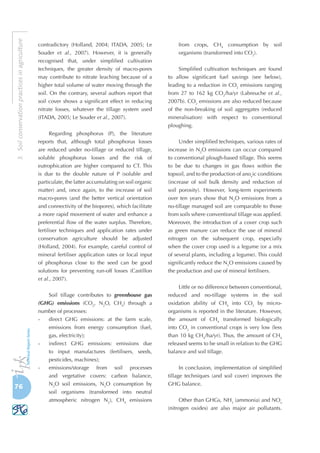
natural resources and waste. The 6th EAP calls
for the development of seven thematic strategies,
including a strategy on the protection of soil. The
Soil Thematic Strategy comprises three elements:
•	 a communication laying down the
principles of Community soil protection
policy;
•	 a legislative proposal for the protection
of soil, comprising a proposal for a Soil
Framework Directive;
•	 an analysis of the environmental,
economic and social impacts of the
Strategy.
Related research projects and institutions
Results derived from research projects are
incorporated in the stock-taking within an EU-
wide perspective to the extent that they give
answers to the project’s research questions. In
order to give an idea of the active players and
topics in the fields covered, a non-exhaustive
list of European Commission funded research is
provided in Annex 1.2. Results of many of these
projects have been utilised to prepare these report
among them the CC Network, ITAES, ENVASSO.
Also, the following governmental and
non-profit institutions form a reliable source
of information related to the general topic of
this project. While many environmental or
agricultural institutions include soil degradation
within their analyses2
, several international and/
or European organisations dedicate themselves
specifically to soil3
. Amongst other similar
institutions, the International Soil Reference and
Information Centre (ISRIC; http://www.isric.org/),
the European Society for Soil Conservation (ESSC;
http://www.essc.sk/), the European Conservation
Agriculture Federation (ECAF; www.ecaf.org),
and, the International Federation of Organic
Agriculture Movements – European Regional
Group (IFOAM-EU; http://www.ifoam.org)
specifically aim at increasing and disseminating
knowledge on sustainable land use and soil
conservation practices through research projects,
establishment of databases and development of
best practices. The European Confederation of
Soil Science Societies (ECSSS: www.ecsss.net),
a European umbrella organisation founded in
2004, organises quadrennial conferences on soil
conservation issues. The European Soil Bureau
Network (ESBN; http://eusoils.jrc.it/esbn/Esbn_
overview.html), located at the Joint Research
Centre (JRC) of the European Commission, Ispra,
was created in 1996 as a network of national soil
science institutions. Its main tasks are to collect,
harmonise,organiseanddistributesoilinformation
for Europe. European Cities and Municipalities
have formed in 2000 the European Land and Soil
Alliance (ELSA), based on a common manifesto
and the already existing climate alliance. ELSA
defines itself as a ‘network of European local
authorities which jointly pursue the aims of
sustainable urban development - in particular the
promotion of a sustainable utilisation of soils - in
the sense of Agenda 21’ (http://www.soil-alliance.
org/en/index2.htm).
2	 For example, the European Environment Agency (EEA;
http://www.eea.europa.eu/) dedicates a chapter to soil
degradation in its environmental assessment report
(European Environment Agency, 2003).
3	 The European Society for Soil Conservation published
in 2005 a list of regional and national organisations
and persons working on soil. (European Society for Soil
Conservation (ESSC), 2005).
27
AddressingsoildegradationinEUagriculture:relevantprocesses,practicesandpolicies
Generally, it is possible to distinguish between
institutions with a broader scope, such as soil
degradation, and specialised ones that exclusively
tackle particular aspects of soil degradation and
sustainable soil use. Their organisational form
ranges from advocacy groups, non-academic
think-tanks to local, national and regional groups,
some of them further specialised on one of the soil
issues. Depending on their origin and mandate,
these institutions either stress the environmental,
agro-economical, technical or political aspect of
soil degradation and sustainable soil use.
Structure of this report
This report contains the findings of WP 1
(Stock-taking of the current situation within an
EU-wide perspective). Chapter 2 focuses on the
nature, location and extent of soil degradation
processes. Chapter 3 provides information on
soil conservation practices in agriculture, their
environmental effects as well as economic
costs-benefits and where available, their uptake.
Chapter 4 provides a review of the regulatory
environment and policy measures for soil
protection, conservation and improvement in EU
and national/regional implementation. Chapter
5 links the three preceding chapters to establish
an EU-wide classification of farming techniques
and policy measures addressing soil degradation
processes. This is followed in chapter 6 by the
summary report of the stakeholder workshop on
22 May in Brussels and leads into an outlook on
the further work of the SoCo project.
Outlook and further work
The following linkages are of particular
importance to the SoCo study:
i)	 the link between farming practices and the
state of soils, i.e. how soil characteristics
(indicators of soil states) are affected by
individual farming practices and systems;
ii)	 the link between policy measures and
farming practices;
iii)	 the link between the policies for soil
protection, conservation and/or improvement
actually applied and the state of soils.
In order to be able to establish these
linkages and to analyse their mechanisms so as to
formulate appropriate policy recommendations,
the project initially collected the required data
through taking stock of relevant policies and
measures related to soils within the EU-27.
However, the current findings and the data
received from the stock-taking of the policies do
not provide sufficiently detailed insight, since
several indicators and data-sets are not available
at EU level, or are too general or indirect to be
utilised.
It is, therefore, necessary to conduct further
data collection. Considering the level of precision
required from the data and taking account of the
conclusions and recommendations expected,
this can only be achieved at the case study level.
Case studies are also needed to check the theory
against the practice and clarify context-specific
links between soil degradation processes, farming
practices and policy measures.
The case studies envisaged in the SoCo
project had to be representative of the situation
within the European Union as well as respond to
the data needs of the project. Consequently, ten
case studies were selected; they were located in
three different macro-regions:
i)	 the northern and western European region:
Belgium (West-Vlaanderen), Denmark
(Bjerringbro and Hvorslev), and United
Kingdom (Axe and Parrett catchments);
ii)	 the Mediterranean region: Greece (Rodópi),
Spain (Guadalentín basin), France (Midi-
Pyrénées), and Italy (Marche);
28
1.Introduction
iii)	 the central and eastern European region:
Bulgaria (Belozem), Czech Republic (Svratka
river basin), and Germany (Uckermark).
The case studies followed a common
outline:
i)	 developing a common agri-environmental
framework;
ii)	 developing a common framework for policy
analysis;
iii)	 conducting the case studies according to
the same analytical and methodological
framework;
iv)	 case study workshops to present and discuss
the main results with relevant stakeholders;
v)	 identifying which measures, and under
which conditions, have provided better or
worse results and assessing the underlying
reasons.
The methodological details and results of the
case studies as well as an overall assessment of the
effectiveness of the policy framework as regards
soil protection, conservation or improvement are
provided in a forthcoming SoCo report.
29
AddressingsoildegradationinEUagriculture:relevantprocesses,practicesandpolicies
2	 Soil degradation processes across Europe
processes, the research needs will be specified in
the respective paragraphs.
A summary of all assessment methods with
corresponding input and output indicators for
each of the described soil degradation processes
is presented in Annex 2.17.
2.1	 Erosion
2.1.1	 Water erosion
Soil particles are detached by raindrop
impact and flow traction and transported
by overland water flow. Physical factors like
climate, topography and soil characteristics are
important in the process of soil erosion. Also land
abandonment can result in increased erosion, for
example through the collapse of old terraces.
Indicators of water erosion are the presence
of rills, gullies and the accumulation of sediment
at obstructions or where the land levels out.
Erosion is a natural process, but is intensified
and accelerated by human activities such as
deforestation for agricultural purposes, changes
in hydrological conditions, overgrazing and
inappropriate cultivation techniques and/or
cropping practices.The impact of raindrops causes
the breakdown of soil aggregates into smaller
parts, which are re-deposited between aggregates
on and close to the surface, forming ‘soil crusts’.
Soil crusts seal the surface, limit infiltration and
increase run-off. Bare soils are more vulnerable
since the raindrops are not intercepted by
vegetation and are subject to the full impact of
the raindrops. With the loss of topsoil, the soil
becomes less fertile and the aquatic ecosystem
contaminated. Erosion in agricultural areas could
Soil degradation is accelerating, with negative
effects on human health, natural ecosystems and
climate change, as well as on our economy. In
order to achieve the objective of the SoCo project
which is to encourage farmers to adopt ‘simplified
cultivation techniques’ that enhance agricultural
sustainability, a European-wide assessment needs
to be made of the agricultural soil degradation
processes. The diversity of European soils,
climate and agricultural practices produce both
widespread and localised degradation problems
which require site-specific measures to enable the
continuation of agriculture as will be discussed
in chapter 3. The nature, location and magnitude
of the following agricultural soil degradation
processes are reviewed:
-	 erosion (water, wind and tillage);
-	 decline in organic carbon content;
-	 compaction;
-	 salinisation and sodification;
-	 contamination (heavy metals and pesticides;
excess of nitrates and phosphates);
-	 decline in biodiversity.
Links with soil conservation practices and
related environmental issues (e.g. water quality,
air quality, biodiversity) are explored as well.
The soil degradation processes have been
analysed using the best available data. However,
available data show serious gaps in quality,
comparability and geographical distribution. To
create a more complete and qualitatively better
picture, data improvements need to be pursued.
Ideally, this would be done by developing a
harmonised monitoring system across Europe.
Furthermore, additional research is needed to
complete and update the knowledge on EU-
wide soil degradation processes. As these needs
vary depending on the different degradation
30
2.SoildegradationprocessesacrossEurope
undercut the base of slopes, causing landslides.
With a very slow rate of soil formation, any soil
loss of more than 1 t/ha/yr can be considered as
irreversible within a time span of 50-100 years
(Van-Camp et al., 2004).
The Mediterranean region is particularly
prone to erosion as it is subject to long dry
periods, followed by heavy bursts of erosive rain,
falling on fragile soils on steep slopes. It is clear
that water erosion is irreversibly degrading the
soils in many parts of Europe. In both cases off-
site impacts are as damaging as on-site effects
(Table 2.1). Erosion mitigation and prevention
can be obtained through conservation tillage,
using an increased percentage of soil cover,
reduced or no-tillage. Land abandonment should
be prevented where there is a risk that it will
result in land degradation. In husbandry it is
important to bring stocking densities in line with
the ecological capacity of the area to prevent soil
compaction and erosion.
‘An estimated 115 million hectares or 12 %
of Europe’s total land area are subject to water
erosion, and 42 million hectares are affected by
wind erosion’ (COM(2006) 231). It is estimated
that at present water erosion in the Mediterranean
region could result in the loss of 20-40 t/ha of soil
after a single cloudburst, and in extreme cases
the soil loss could be over 100 t/ha. Besides soil
loss, the financial aspect is also substantial; the
impact assessment of the Thematic Strategy states
that the cost of soil erosion for the EU-27 is EUR
0.7-14.0 billion.
Methodology
At European level, many models have been
applied for soil erosion risk assessments. To date,
PESERA provides the only Europe-wide estimates
of water erosion that are based on a harmonised
approach and standard data sets (Kirkby et
al., 2004). PESERA is a physically based and
spatially distributed model, combining the effect
of topography, climate and soil into a single
integrated forecast of run-off and soil erosion.
Four main datasets are required to run the PESERA
model: climate, soils, land cover and topographic
data. PESERA uses the simplest possible storage,
or ‘bucket’ model to convert daily rainfall to daily
overland flow run-off. Run-off is estimated by
subtracting ‘Threshold storage’ from ‘Rainfall’.The
threshold depends on factors related to the soil,
vegetation cover, tillage and soil moisture status.
The MARS database (Monitoring of Agriculture
with Remote Sensing – MARS project, JRC)
provides daily time series of rainfall, temperature
and potential evapotranspiration, interpolated to
a 50 km grid for Europe. These data have been
further interpolated at a 1  km resolution, using
an inverse-spline mathematical procedure, to
provide the monthly data layers for the model.
Table 2.1: On-site and off-site damage due to soil erosion
Kind of erosion On-site damage Off-site damage
Water Loss of organic matter
Soil structure degradation
Soil surface compaction
Reduction of water penetration
Supply reduction to water table
Surface erosion
Nutrient removal
Increase of the coarse fraction of soil
Rill and gully generation
Plant uprooting
Reduction of soil productivity
Floods
Water pollution
Infrastructures burial
Obstruction of drainage networks
Changes in watercourses shape
Water eutrophication
31
AddressingsoildegradationinEUagriculture:relevantprocesses,practicesandpolicies
Version 2.0 of the European Soil Database
(ESDB, 2004) has been used to provide soil
erodibility (run-off to erosion rates conversion),
soil water storage capacity (maximum storage
capacity of the soil before run-off) and crustability
(sets the lower limit of storage capacity for a
crusted soil in areas lacking vegetation), on a
consistent basis at 1 km resolution across Europe.
Land use is based on the CORINE Land
Cover at 250  m resolution for 1990, and these
data are combined with cereal planting dates
to provide the parameters for a crop or natural
vegetation growth model. A 30 second (1  km)
digital elevation model available from EROS
(Earth Resources Observation and Science) has
provided the topographic basis for the PESERA
erosion map (Kirkby et al., 2004).
The diagram of the PESERA concept is given
in Figure 2.1.
The scale of the data used for the PESERA
model is mentioned in the diagram. The data
refers to a continental scale and the final output
is a grid with a 1 km cell size (100 ha) (Figure
2.2). The PESERA model excludes Finland and
Sweden, mainly due to a lack of topographic
data. This is due to the fact that the SRTM (Shuttle
Radar Topography Mission) data do not cover the
area above 60 degrees latitude.
In order to have a complete picture of the soil
erosion risk in all 27 Member States, the Revised
Universal Soil Loss Equation (RUSLE) was applied
for Finland and Sweden; the model is explained
in Box 2.1. Annex 2.2 gives the combined soil
erosion risk assessment map for the EU-27 (based
on the PESERA and RUSLE models).
The SoCo project focuses on sustainable
agriculture and soil conservation. The soil
Figure 2.1: Diagram of model concept for
PESERA
Erodigility, k
Topographic potential, Λ
DTM (1 km grid) Combined erosion, kΛΩ
Soil
storage
Water balance
(SMD)
Vegetation
Biomass
(kg/m2
)
Run-off
Ground cover
compare with AVHRR
Run-off and climate/vegetation
Erosion potential, Ω
Digitalsoil,landuseandgeology
mapsat1:1000000
Grided (50 km) climate data for Rf.
Temp & Port E-T
Figure 2.2: PESERA map
Coordinate reference system:
ETRS89 Lambert Azimuthal Equal Area
© European Communities 2004
Model run: PESARA103, October 2003, with Global Correction
Map produced by: Institute for Environment and Sustainability
September 2004
© EuroGeographics 2001 for the administrative boundaries
Pan-European Soil Erosion Risk Assessment - PESERA
These data have been prepared by the PESERA Project, European Commission
funded fifth framework project - contract "QLK5-CT- 1999-01323". Further details
are described in:
Kirkby, M.J., Jones, R.J.A., Irvine, B., Gobin, A, Govers, G., Cerdan, O., Van Rompaey, A.J.J., Le
Bissonnais, Y., Daroussin, J., King, D., Montanarella, L., Grimm, M., Vieillefont, V., Puigdefabregas,
J., Boer, M., Kosmas, C., Yassoglou, N., Tsara, M., Mantel, S., Van Lynden, G.J. and Huting, J.
(2004). Pan-European Soil Erosion Risk Assessment: The PESERA Map, Version 1 October 2003.
Explanation of Special Publication Ispra 2004 No.73 (S.P.I.04.73). European Soil Bureau Research
Report No.16, EUR 21176, 18pp. and 1 map in ISO B1 format. Office for Official Publications of
the European Communities, Luxembourg.
Soil loss t/ha/yr
0 - 0.5
0.5 - 1
1 - 2
2 - 5
5 - 10
10 - 20
20 - 50
>50
Rivers (large)
Rivers (medium)
Lake (large)
Major water
Urban
0 500 1 000250 km
© EuroGeographics 2001 for the administrative boundaries
32
2.SoildegradationprocessesacrossEurope
Box 2.1: RUSLE approach for Finland and Sweden
RUSLE estimates erosion by means of an empirical equation:
A = R*K*L*S*C*P ; with:
A = (annual) soil loss (t/ha/yr)
R = rainfall erosivity factor (MJ mm/ha/h/yr)
K = soil erodibility factor (t h/MJ/mm)
L = slope length factor (dimensionless)
S = slope steepness factor (dimensionless)
C = cover management factor (dimensionless)
P = Support practices factor (dimensionless)
As no spatial information regarding practices (reflecting the impact of support practices on the average
annual erosion rate) was available, the P factor was given value 1 and, thus is not taken into consideration.
The outcomes of the SoCo project will include the information referring to the conservation agricultural
practices which will make it possible to adjust the P factor.
The data used for the RUSLE model are as follows:
-	 climate, R factor, monthly precipitation from MARS database;
-	 soil, K factor, Soil Geographical Database of Europe 1:1 000 000;
-	 topography, L and S factor, SRTM and for the area of Finland and Sweden not covered by SRTM
data, a DTM was used with a resolution of 90 m derived from topographic maps (see following
Figure B.1);
-	 land cover, C factor, CORINE Land Cover 2000 (Suri et al., 2002).
The main changes in the data elaboration compared to the RUSLE standard methodology are related to the
calculation of the R factor and L factor. The available MARS climatic data are not detailed enough in order to
apply the R factor according to methodology proposed by Wischmeier (1959). The definition of R factor for
Finland and Sweden has been prepared using empirical algorithms. Many of them, e.g. Arnoldus (1980), Yu
and Rosewell (1996), are tested for those areas and the most suitable is Renard and Freimund (1994) using the
Fournier Modified Index.
Figure B.1: Area covered by SRTM (below) and data derived by topographic map (left)
The output of the RUSLE model for Finland and Sweden
is a grid with a 100 m resolution. The final result is shown
in the following Figure B.2.
33
AddressingsoildegradationinEUagriculture:relevantprocesses,practicesandpolicies
When analysing the results for Finland and Sweden, it has to be noted that the RUSLE equation gives an
overestimation of the soil erosion risk for the northwestern part of Sweden. This is mainly due to topographical
and land cover factors (L, S and C factor). The C factor (the effect of cropping and management practices
on erosion rates) is evaluated according to CORINE Land Cover, at more than 0.5. This implies that the
actual soil erosion risk is estimated as just half of the potential soil erosion.
degradation processes are analysed in relation to
the agricultural land. The agricultural areas are
identified using the CORINE Land Cover 2000
data and correspond to class 2 of the first level of
the CORINE Land Cover classification (see Annex
2.3).
The positive effects of agricultural
conservation practices on soil are well known,
but at a European level it is quite difficult to
identify areas where those practices are applied.
The first step in portraying the soil erosion risk in
agricultural areas is to define the magnitude of
the problem. A straightforward evaluation is to
use the average of the soil erosion risk, expressed
in t/ha/yr, for agricultural land as defined through
the CORINE Land Cover 2000 (Figure 2.3).
Results and discussion
According to the PESERA (and RUSLE for
Sweden and Finland) analysis the average soil
erosion risk for agricultural areas is relatively low.
In these models it is not possible to give an equal
importance to all factors that influence erosion.
When using models the results have to be
interpreted taking into account the limitations of a
model. Some factors, such as run-off for example,
are at risk of being overestimated. Whether rain
becomes run-off or infiltrates into the soil, depends
on the condition of the soil. The model does not
include the infiltration rate, but instead focuses
on the available water capacity. For example, a
clay soil in summer may be very dry which makes
the PESERA model expect this soil can absorb a
lot of rainwater. Instead the soil has dried out so
much, a crust has developed preventing water
to infiltrate and thus all rain becomes run-off.
The model will still show this soil to have a low
erosion risk, while field observations show the
opposite. Flat areas are generally expected to
have a low risk of run-off. PESERA shows a high
erosion risk for the Po Valley, indicating that in
this area other factors have a greater influence
on the erosion risk assessment than slope. When
excluding all agricultural land with no slope
from the analysis, the average soil erosion risk
Figure B.2: Soil erosion risk assessment for Finland and Sweden
0 - 0.5 t/ha/yr
0.5 - 1 t/ha/yr
1.0 - 2.0 t/ha/yr
2.0 - 5.0 t/ha/yr
5.0 - 10.0 t/ha/yr
10.0 - 20.0 t/ha/yr
20.0 - 50.0 t/ha/yr
>50 t/ha/yr
Legend
RUSLE FI SW
<VALUE>
34
2.SoildegradationprocessesacrossEurope
increases. These results have to be compared
with the ‘T factor’ (the soil loss tolerance). Soil
loss tolerance represents the maximum rate of
soil loss that can occur while still permitting
crop productivity to be sustained economically
(Renard et al., 1997). The USDA (United States
Department of Agriculture) fixed the soil loss
tolerance between 2 to 10 t/ha/yr, depending on
soil type. Based on this information the mean
erosion risk for all agricultural land use categories
(CORINE) is below the soil loss tolerance limit
(Figure 2.4). Following this criterion the total
agricultural area with a T factor more or equal to
10 t/ha/yr is 8.7 million hectares. Taking 5 t/ha/yr
as the upper limit of the T factor, the agricultural
area at risk encompasses 16.3 million hectares.
Figure 2.3: Mean value of soil erosion risk for agricultural areas
Figure 2.4: Agricultural areas (ha) with a T factor above 5 t/ha/yr (left) and 10 t/ha/yr (right)
35
AddressingsoildegradationinEUagriculture:relevantprocesses,practicesandpolicies
Soils with a T factor of 2 t/ha are generally not
used for cultivation as they are shallow and very
vulnerable.
In many cases statistical data on agriculture
(farms structure, livestock, crops, mechanisation,
etc.) including management practices, refer to
an administrative level. Even if it is impossible
to geo-reference the data, it could be useful to
analyse them in comparison with the soil erosion
risk at the same NUTS level (Nomenclature of
Territorial Units for Statistics). Therefore the soil
erosion risk map was mapped at NUTS 2 and 3
(Annex 2.5 and 2.6).
Bakker et al. (2007) have investigated the effect
of soil erosion on yield loss. These results (Figure
2.5) are at NUTS 3 level and correspond to the
results in Figure 2.3. Locations with highest yield
losses correspond to areas with highest erosion risk
on the PESERA-RUSLE map (Annex 2.2).
Conclusions
The analysis demonstrated that the spatial
resolution of the soil erosion risk map is suitable
to make evaluations and analyses at European
level using simple indicators like mean risk of soil
erosion for agricultural areas.
According to what can be expected from
the geographical distribution of the major
drivers for soil erosion (intense rainfall and long
droughts, topography, low soil organic matter
content, vegetation cover, marginalisation/land
abandonment) in the Mediterranean countries
several areas can be observed with a high risk
of erosion, emphasising the hotspots in need of
attention. Figure 2.2 (and Annex 2.2) also shows
a widespread erosion risk across among others
France, Germany and Poland. This risk may be at
the lower range but can amount to a substantial
problem. Unexpectedly, the map shows hilly to
mountainous areas (Pyrenees, Apennines and the
Alps) with very low or no erosion risk. These are
largely forested areas by which soils are stabilised.
Figure 2.5: The relative loss in wheat yields due to soil erosion in 100 years calculated for NUTS 3
units and based on the UNEP yield scenario (Bakker et al., 2007)
0 %
0 - 1 %
1 - 2 %
2 - 4 %
4 - 6 %
6 - 10 %
10 - 20 %
Relative yield loss
due to soil erosion
36
2.SoildegradationprocessesacrossEurope
One of the main challenges is how to create
a link between the soil erosion risk and the
management factors and land use. Unfortunately
these data are not organised and easily applicable
into the models used. Much more efforts and
research are needed in order to calibrate and
validate the prediction model for soil erosion
risk; a better link with the management practices
(human-induced soil erosion) is needed too.
A possible approach is to consider the agro-
ecological zones in Europe. Climate, soil and
terrain relationships decide the potential and/
or limitations of agricultural production. A set
of management factors will help to optimise
sustainable production. National policy and
support measures need to be adapted to these
facts. This will prevent cropping systems being
established under unsuitable conditions (e.g.
ploughing extensive grazing fields to replace
these by barley).
2.1.2	 Wind erosion
Wind erosion is the transport of soil particles
by wind and forms part of the degradation process
on arable land by segregating the soil particles.
The removal of mainly the finest soil particles
results in a gradual decrease in the soil fertility, so
that the effects of wind erosion are detectable only
after years or decades. The Global Assessment of
Soil Degradation (GLASOD) found 42 million
hectares or 4 % of the European territory to be
affected by wind erosion (EEA, 2003). Three
different modes of particle transport, which
depend on particle size, can be defined: creep
(>500 µm along the surface, event), saltation (70-
500 µm, event), short-term suspension (20-70 µm,
hours) and long-term suspension (<20 µm, days,
>100 km transport) (Shao, 2000).
Wind erosion occurs when two conditions
coincide: favourable meteorological conditions
(e.g. high wind velocity) and favourable ground
conditions (loose particles on a susceptible
surface and lack of surface protection by crops
or plant residues). Wind erosion itself is a natural
phenomenon, but might be accelerated by human
influence, especially cultivation or overgrazing.
The climate’s erosivity and the soil’s erodibility
determine the extent of wind erosion and are
additionally influenced by the interactions of
various other components resulting in a high
temporal variability of the actual erodibility of a
particular site (Lyles, 1988; Warren and Bärring,
2003). The climate’s erosivity depends on the
interactions between intensity, frequency and
duration of wind velocity and wind direction,
amount and distribution of precipitation, humidity,
radiation, snow depth and evaporation (Funk and
Reuter, 2006). The soil’s ability to resist erosive
meteorological conditions mainly depends on
soil texture and organic matter content, which
influence the water-holding capacity and the
ability of the soil to produce aggregates or crusts
(Chepil, 1955). Other influencing parameters are
vegetation cover, roughness, field size, which are
further discussed in Funk and Reuter (2006).
Measures against wind erosion are manifold
and can be divided into measures to increase
the resistance of the soil surface and measures
to reduce the surface wind speed, whereas
some measures against wind erosion meet
both. Creating a rougher surface stimulates the
turbulence of air masses, which increases the
dissipation of the kinetic energy of the wind at the
surface thereby slowing down the wind velocity
(Stull, 1988). This is valid at all scales, from
landscapes to single particles. Secondly, at field
level, arranging hedges perpendicularly to the
prevailing wind direction can give a protection
of up to 25 times their height (Nägeli, 1943). The
creation of shelterbelts is a very expensive long-
term strategy, and becomes effective only after a
number of years. Additionally, by creating larger
soil clods (e.g. by applying no or reduced tillage),
more area is sheltered because the leeward side
of clods or furrows is shielded against wind
action and particle impact (Potter and Zobeck,
1988). Soil cover is the best measure against wind
erosion. Wind erosion risk is greatly increased on
37
AddressingsoildegradationinEUagriculture:relevantprocesses,practicesandpolicies
soils that are covered for less than 10 % (Morgan
and Finney, 1987; Funk, 1995; Sterk, 2000). Soil
cover greater than 10  % reduces wind erosion
rapidly, and complete prevention occurs when
the soil cover is over 40 %. Other measures like
surface fixations with slurry exist.
Other considerations appropriate at field
level are water table management using drainage
and irrigation systems, and crop management
according to good farming practices. For
example, the increase in maize of recent decades
has resulted in an increased susceptibility to
wind erosion; the reduced plant cover combined
with the longer duration of bare soil are
responsible. At regional level, the roughness of
the landscape can be described according to the
size and distribution of its elements. The greater
the heterogeneity of a landscape (e.g. a mixture
of forest and agricultural area), the greater is its
roughness, which results in a lower susceptibility
to wind erosion.
Wind erosion decreases soil fertility by
removing the finest, more nutrient-rich top
layers of the soil (van Lynden, 1995). It impacts
on air quality, which in turn influences the
global climate due to changes in atmospheric
radiation balance by aerosols (Shao, 2000; EEA,
2003; Goossens, 2003). It damages crops to the
point where arable land has to be taken out of
production (Schroeder and Kort, 1989; Jönsson,
1992; Veen et al., 1997) and pollutes adjacent
areas. Wind erosion removes soil organic matter,
thereby decreasing the aggregate stability of the
soil, which negatively affects the denitrification
potential (removal of nitrogen by micro-
organisms) for biomass productivity, and even
decreases soil organic matter storage in terms of
climate change mitigation.
Methodology
A first approximation of wind erosivity across
different years can be made by summarising wind
integrals (hourly, daily) for the texture of different
soil surfaces depending on wind velocities
thresholds (Beinhauer and Kruse, 1994). The
Wind Force Integral (WFI) defines the potential
transport capacity of the wind at the soil surface
as a function of the wind force and the surface
moisture content, providing that the following
conditions are met:
(i)	 precipitation <0.3 mm in that time step
(e.g. no rain event),
(ii)	 precipitation (m) < evaporation (m),
and,
(iii)	 average wind speed (u) in m/s > the soil
textural threshold (uthr
) in m/s:
	
	 for the time steps (n) per month or per year.
Climate data used in the presented analysis
are provided by the FP5 research project
PRUDENCE (http://prudence.dmi.dk), which
provides high resolution downscaled climate
scenarios. The soil textural threshold has been
derived based on the dominant soil surface
texture from the European Soil Database (ESDB,
2004). Soil textural data from Zobler (1986) were
used as an additional information layer in areas
where no data were available in version  2.0 of
the European Soil Database. It is assumed that
only agricultural areas under cultivation are prone
to wind erosion. Agricultural areas have been
extracted from the CORINE Land Cover 2000
database or from the Global Land Cover database
(GLC) 2000 (Bartholomé and Belward, 2005). No
information on plant cover, seeding times or field
size has been used, as a consistent dataset with
sufficient resolution and harmonised methods is
not available for Europe.
Results and discussion
The map in Figure 2.6 evaluates the erosivity
of the climate according to climatic conditions
(e.g. wind velocity) and the soil erodibility (e.g.
soil texture). It shows the 30-year average number
of erosive days for bare soil conditions (enlarged
version in Annex 2.6). The daily, monthly and
38
2.SoildegradationprocessesacrossEurope
yearly variability of wind erosivity in Europe shows
a strong spatially diverse pattern over the years.
The maximum number of erosive days, observed
over the whole area modelled, varies between
11 and 24 days over the period 1961-1990. The
northeastern part of the UK experienced quite
severe erosion conditions in 1983 and 1987;
whereas only limited erosion was observed in
the years in between. A similar observation can
be made for northeastern Germany. A changing
pattern in extent and distribution of wind
erosion potential should be expected as climate
conditions and the soil surface are interacting
differently from year to year (month or day).
Using the present data, it appears that areas
with high potential for wind erosion coincide
with the sand belt (e.g. areas in northeastern
UK, Denmark, northern Germany, Poland, parts
of Russia). Certain countries (e.g. Sweden and
Norway) do not show any wind erosion risk, even
if these countries contain agricultural areas and
are known to observe wind erosion (Jönsson,
1992). However, the information currently
contained and used for the threshold friction
velocity is based on the European Soil Database,
which may not represent sufficiently the current
conditions and hence may need updating.
Conclusions
The map in Figure 2.6 provides an overview
of the geographic spread of areas prone to wind
erosion. For this evaluation the soil is assumed to
be bare, since land cover and management are
not incorporated into the model. The omission
of soil cover is a limiting factor in this analysis
and the interpretation of the results should take
that into account. The highest number of erosive
days on bare soil per year (calculated over the
last 30 years) can be found across the sand belt
that covers southeast England, the Netherlands,
northern Germany, and Poland. Additionally,
the areas exposed to high wind velocities at
coastlines show elevated levels of wind erosion.
However, these areas might be influenced
strongly by scale effects of the modelling exercise.
These scale problems can only be overcome if
more detailed information about soil, climate
and land management is available for modelling.
The hotspots for wind erosion on bare ground
may have a different distribution when the data
allow the cell size to be smaller than the 100 km2
used here. The hotspots on coastlines will
certainly disappear if a wind erosion assessment
is performed that includes soil cover and/or
management factor. To specify hotspots of wind
erosion for policy purposes the evaluation needs
more (soil cover and land management) and more
detailed data.
Some progress has been achieved in wind
erosion research in recent years. The transfer
of detailed field-scale results, as provided by
WEELS (Wind Erosion on European Light Soils,
2008) or the WELSON (Wind Erosion and Loss of
SOil Nutrients in semi-arid Spain; Gomes et al.,
2003) project, to larger scales should be the next
Europe-wide challenge. LIDAR-based devices
that allow to measure air pollution in a 3-D space
have already been developed, but still need
further research. A time series of meteorological
data is needed for any erosion risk assessment to
give at least an idea of how the risk is related to
time. Indeed, as a small number of events per year
can affect large areas, meteorological data sets
with sufficient temporal (e.g. daily) and spatial
resolution are needed to assess the erosion risk.
In addition, digital soil mapping that provides
discrete quantitative values (not just classes) of
soil properties, including the uncertainty of these
properties, could improve the precision of wind
erosion mapping.
2.1.3	 Tillage-related erosion
Two other erosion processes should be
mentioned in relation to human influence; tillage
erosion and soil loss due to harvesting.
Tillage erosion is the displacement of the
cultivation layer due to cultivation. Slope and the
tool used for tillage have quite a strong influence
39
AddressingsoildegradationinEUagriculture:relevantprocesses,practicesandpolicies
(Lindstrom et al., 1992; Govers et al., 1999).
Tillage erosion is not just soil loss (as is the case
with water erosion, where sediments are washed
into river and streams), but rather a translocation
of soil in the landscape. Tillage erosion can be
generally be influenced by (van Oost and Govers,
2006):
i)	 reducing tillage speed and depth,
ii)	 ploughing on consolidated instead of
pre-tilled soils and
iii)	 ploughing along contour lines.
Erosion rates often exceed 10 t/ha/yr (Govers
et al., 1994; Poesen et al., 1997; Tsara et al.,
2001; de Alba, 2003); however, no Europe-wide
assessment has been performed.
A second type of tillage-related erosion is the
loss of soil due to crop harvesting. The literature
(e.g. Auerswald and Schmidt, 1986; Eichler, 1994;
Poesen et al., 2001) reports rates of around 2 t/ha/
yr for potato and 9 t/ha/yr for sugar beet, therefore
similar to water and tillage erosion values. A first
attempt to quantify the effects of soil loss through
harvest has been performed by Ruysschaert et al.
Figure 2.6: Number of erosive days per year calculated over the last 30 years (Annex 2.6)
This map shows the 30-year average soil erosivity according to climatic conditions (e.g. wind velocity)
and the erodibility of the soil (e.g. texture).
0 500 1 000 1 500 2 000250
km
Nr of erosive days/yr
0.03 - 0.25
0.26 - 0.5
0.51 - 1
1.01 - 1.5
1.51 - 2
2.01 - 3
3.01 - 5
5.01 - 10
Spatial coverage: 27 Member States of the
European Union where data available
Pixel size: 10 km
Projection: ETRS89 Lambert Azimuthal Equal Area
Temporal coverage: 1961-1990
Input data - source
Climate data - PRUDENCE (http://prudence.dmi.dk)
Soil data - European Soil Database
Land use - CORINE Land Cover 2000,
Global Land Cover Database (GLC)
MAP INFORMATION
© European Communities, 2008
Hannes Reuter, European Commission,
Institute of Environment and Sustainability,
Land Management and Natural Hazards Unit,
Ispra, Italy.
Email: hannes.reuter@jrc.it
Digital datasets can be downloaded from
http://eusoils.jrc.ec.europa.eu/
For more information:
BIBLIOGRAPHIC INFORMATION
Author: Hannes Reuter
Cyprus
40
2.SoildegradationprocessesacrossEurope
(2006); however more reliable information across
all Member States is strongly needed.
2.2	 Organic carbon decline
The soil organic carbon content includes
all carbon-containing constituents like
undecomposed organic vegetation residues, soil
fauna and humus. It is not a uniform material but
is made up of very heterogeneous mixtures of
both simple and complex substances containing
carbon (C). Soil organic carbon (SOC) can be
divided into different pools based on composition
and ease of decomposition.
Firstly, the labile pool includes easily
decomposable organic materials that stay in the
soil for fairly short periods, from a few days to
months. They are important as food and energy
sources for soil organisms, as a source of plant
nutrients (nitrogen and phosphorus) and for
promoting the stability of large soil aggregates.
This pool also includes micro-organisms, many of
which are involved in the actual decomposition
and recycling processes. Because these materials
stay in a soil for only a short time, they are not
taken into account in this report. Secondly,
the slow pool includes well decomposed and
stabilised organic materials, often referred to as
humus. They stay in the soil for many years and
are important for stabilising soil structure (micro-
aggregates), improving water-holding capacity
and retaining plant nutrients, e.g. cations. Thirdly,
the inert pool includes biologically very resistant
organic materials which are thousands of years
old in soils. Chemically they are similar to
charcoal and because of their charge properties
and porous nature they can retain cations and
improve soil physical properties.
For a healthy soil, the three pools of organic
carbon are all present and are needed to serve
different functions of the ecosystem. Therefore
SOC is a good indicator of soil health. Not only
total SOC but also the proportions of the different
pools are also indicative of the health status of
the soil. Organic carbon inputs can thus restore
and increase soil health.
Many degraded soils lack labile and slow
pools of organic carbon. To restore soil health, it
would be necessary to add organic C materials
that can replenish both the labile pool (to increase
the food source for soil microbes and provide
available nutrients for plants) and the slow
pool (to improve soil structure and soil physical
properties) (Chan, 2008).
Soil organic carbon (SOC) accounts for more
than 95  % of the total carbon accumulated in
pastures and perennial crops and nearly 100 %
of the total carbon accumulated in arable land.
SOC enhances the resilience of agricultural
ecosystems. In addition, soil is among the
mandatory carbon pools to be reported for
agricultural land use under the Kyoto Protocol,
and it is certainly one with the highest potential,
both in terms of enhancement of the C sink and
reduction in C emissions. SOC can be a source of
greenhouse gases through the formation of CO2
,
CH4
and N2
O. It can be also a sink through C
sequestration under an organic form (Van-Camp
et al., 2004).
Soil type and properties (e. g. soil texture) are
important and contribute to an explanation of the
initial carbon content. Sandy soils are normally
low in organic matter (OM); in contrast many
soils rich in clay (e.g. Luvisols) or amorphous
products (e.g. Andosols) can accumulate OM in a
stable form (humus).
SOC is a dynamic characteristic that is mostly
affected by land use, climate and the hydrological
situation. Climate (mainly temperature and
precipitation) has a critical influence on carbon
mineralisation or accumulation. This influence
explains the existence of a climatic gradient
from north to south, with high carbon content
in the cold, northern part of Europe and in
mountainous areas and lower concentrations in
41
AddressingsoildegradationinEUagriculture:relevantprocesses,practicesandpolicies
the hot, semi-arid southern part (Mediterranean).
Another influencing factor is the soil hydrology:
organically rich soils (e.g. peats) are normally
formed in anaerobic and wet conditions,
which favour accumulation of undecomposed
vegetation residues. Considering the whole of
Europe, 22 million ha of soils have more than
6 % organic carbon; in contrast, 74 % of the soils
in the southern part of Europe have less than 2 %
organic C (Van-Camp et al., 2004).
Under appropriate long-term agricultural
practice, the SOC content can be kept in
equilibrium with climate, temperature and
precipitation, due to the nature of the crop
residues and organic matter management. Recent
trends in land use and climate change resulted
in SOC loss at a rate equivalent to 10 % of the
total fossil fuel emissions at pan-European scale
(Janssens et al., 2004). A survey of Belgian
croplands (210 000 soil samples taken between
1989 and 1999) indicated a mean annual SOC
loss of 76 g C/m2
(Sleutel et al., 2003). A large-
scale inventory in Austria revealed that croplands
were losing 24 g C/m2
annually (Dersch and
Boehm, 1997). Carbon losses from soils across
England and Wales in 1978-2003 were about 13
million tonnes of carbon annually (Bellamy et al.,
2005). Grassland is seen as a net C sink in most
European countries. The overall mean C sink is
60 g C/m2
annually.
However, the uncertainty of this estimate is
high (Vleeshouwers and Verhagen, 2002). SOC
enhancement in agriculture can be achieved
either through a reduction in soil disturbance and
a decrease in the rate of SOC mineralisation (e.g.
reduced or zero tillage, set-aside land, growth of
perennialcrops, etc.)orthroughanincreasedinput
of organic materials into the soil (e.g. application
of manure, crop residues, fertilisation, etc.) or
both (Lal, 2004). Several studies have evaluated
the capacities of the different modifications in
land use and land management to increase the
SOC stocks in the EU (Freibauer et al., 2002; Liski
et al., 2002; Smith et al., 2005, 2006). However,
these studies do not explicitly relate SOC
enhancement measures to diversity of soil types.
This indicates a need to synthesise the existing
knowledge on the SOC dynamics in agricultural
soils with a view to developing a methodology
for identifying areas and magnitudes for potential
changes of SOC over time.
Following the framework for risk area
identification (Eckelmann et al., 2006), the risk is
defined as the probability of SOC loss (removal of
carbon from the soil) or SOC gain (accumulation
of carbon in the soil). A loss in SOC content can
limit the soil’s ability to provide nutrients for
sustainable plant production. SOC is a source
of food for soil fauna and contributes to soil
biodiversity. SOC supports soil structure, which
improves the physical environment for roots to
penetrate through the soil, enhances the water-
retention capacity, supports excess water to drain
freely from the soil (thus reducing overland flow
and erosion), etc.
2.2.1	 Methodology
Concepts
There are several theories explaining SOC
content and dynamics (e.g. Turin, 1965; Orlov,
1990; Stevenson, 1994). In this analysis, the
following assumptions are adopted:
1.	 The amount and the quality of the SOC
content are specific parameters for a given
soil typological unit (STU). These parameters
depend on a combination of soil-forming
factors. In a steady state ecosystem (either
native vegetation or an agricultural system
under constant management practices) a
quasi-equilibrium SOC level is obtained
since C losses from soil eventually equal C
inputs into soil.
2.	 The above-mentioned STU-specific quasi-
equilibrium in SOC content in cropland
depends on the land management (Turin,
1965; Goulding et al., 2000). For a
homogeneous bioclimatic region, the actual,
42
2.SoildegradationprocessesacrossEurope
minimum and maximum threshold values
of the SOC can be estimated based on the
observed SOC content. These threshold
SOC values allow for the interpretation of
the SOC status in terms of potential to gain/
lose SOC (Figure 2.8), and (using the derived
limited and high SOC thresholds) areas can
be classified as having limited, enhanced or
high risk of SOC loss or probability of SOC
gain (Figure 2.9). The dynamic aspects are
illustrated in Figure 2.7.
The initial SOC content in the steady state
shows a neutral C balance (ΔC≈0).The conversion
into cropland shifts the C balance towards C loss
(ΔC<0). Stable management returns the C balance
to the neutral path (ΔC≈0), which results in a
new steady state for SOC. Further management
modification might lead either to positive C
balance and C gain (ΔC>0) or to negative C
balance (ΔC<0) and C loss.
Model description
SOC content can be characterised by three
critical threshold values (Figure 2.8):
1.	 The actual SOC (Act SOC) levels are the
available data on C amounts (kg/m2
or t/
ha), which are either physically observed
or model-derived for the Soil Typological
Unit within a bioclimatic region. These data
originate from pedotransfer rules for the EU
(Jones et al., 2004). For any STU, the Act SOC
content coincides with bioclimatic conditions
and land use practices (see assumption 1
above). The Act SOC is calculated from the
equation: Act SOC = C*BD*Depth*(1-Frag),
where C is the percentage of SOC content,
BD is the bulk density of soil (in kg/m3 or t/
ha), Depth is the thickness of a soil layer (in
m) and (1-Frag) is the content of stones (as a
percentage).
2.	 The minimum SOC (Min SOC) content
is the lowest Act SOC amount that a soil
can absorb. The Min SOC content can be
associated with biologically ‘inert’ organic
carbon. There are several models for
identifying the value of the Min SOC content
(Falloon et al., 2000). We assume that for
the STU under homogeneous bioclimatic
conditions the variation of SOC content
depends on different land use practices. The
distribution of SOC content is assumed to
be normal. Setting the Min SOC at about -2
standard deviations from the mean SOC, the
Figure 2.7: Conceptual model of SOC changes due to cultivation and land use modifications in
agricultural soil
Source: modified from Johnson, 1995
43
AddressingsoildegradationinEUagriculture:relevantprocesses,practicesandpolicies
Min SOC content accounts for 95.45  % of
the SOC observations.
3.	 The maximum SOC (Max SOC) content for
the STU, under homogeneous bioclimatic
conditions, illustrates that the variation of
the Act SOC content depends on different
land use practices. The Max SOC content is
selected as being the maximum observable
Act SOC content for the STU within a
bioclimatic region.
These thresholds determine the potential of
SOC loss and gain (Figure 2.8) of an STU within a
bioclimatic region.
Act (red dotted line) is the actual SOC
content, Min (the lower horizontal dashed line)
refers to the steady minimum, and Max (the upper
horizontal dashed line) is the steady maximum
contents. The exponential curve (dashed line with
one dot) illustrates SOC loss. The exponential
curve (dashed line with two dots) demonstrates
SOC gain. The difference between Max and Act
content shows the potential to gain SOC. The
difference between Act and Min content displays
the potential to lose SOC.
The kinetics of the SOC changes follow an
exponential curve that shows a declining rate
of SOC accumulation/loss with time when soil
approaches either the maximum or minimum
SOC content (Figure 2.9). These kinetics allow for
the suggestion that the probability of SOC gain is
higher for carbon unsaturated soil; and the risk of
the SOC loss is higher for carbon saturated soil.
These assumptions are phrased above as the ‘risk
of SOC loss’. For practical reasons, the threshold
intervals are equally distributed and computed as
(Max SOC – Min SOC)/3.
In the zone of limited risk, the soil is close
to the Min SOC threshold value; in the zone of
enhanced risk, the soil is between Min and Max
SOC threshold values; and in the zone of high risk,
the soil is close to the Max SOC threshold value.
Main equations:
1.	 Act SOC = measured SOC density
2.	 Max SOC = maximum SOC value from all
observations
3.	 Min SOC = Mean SOC value - 2δ
4.	 Potential SOC loss = Min SOC – Act SOC4
5.	 Potential SOC gain = Max SOC – Act SOC
6.	 SOC threshold interval = (Max-Min)/3
7.	 Limited SOC threshold = Min SOC + (Max-
Min)/3
8.	 High SOC threshold = Min SOC + 2(Max-
Min)/3.
4	 Due to incompleteness of the database the mean
(arithmetic average) of Act SOC content is applied in the
calculation.
Figure 2.8: Critical threshold values for SOC
44
2.SoildegradationprocessesacrossEurope
Input parameters
The computation of the soil organic carbon
(SOC grid) is performed for each dominant
Soil Typological Unit (as defined in the Soil
Geographical Database) for all agricultural land
use types (as defined in CORINE 2000 v6) and for
each climatic region (as defined in soil regions v2).
The spatial resolution of the grid (map) is 1 km.
2.2.2	 Results and discussion
SOC critical threshold values
Figure 2.9: Risk and probability zones for the SOC loss (indicated by horizontal lines)
Figure 2.10: Min SOC content (Annex 2.7)
This map shows that the Min SOC contents vary from 20-40  t C/ha (yellow) for most of the EU.
Distribution of the high values (more than 80 t C/ha) of the Min SOC content is sporadic. The general
picture of Min SOC does not follow any geographical pattern which is explained by the close link of the
Min SOC contents with soil texture and mineralogy of the parent material.
This map shows the minimum carbon content of mineral soils in agricultural areas.
The minimum soil organic carbon (Min SOC) content refers to the lowest limit of Act SOC content for the
Soil Typological Unit within a bioclimatic region. Assuming that distribution of the Act SOC content for
the Soil Typological Unit within a bioclimatic region is normal, the value of Min SOC follows the
equation: Min SOC = MEAN Act SOC - 2δ.
0 500 1 000 1 500 2 000250
km
in t C/ha
<20
21 - 40
41 - 60
61 - 80
81 - 100
101 - 200
201 - 400
>400
Spatial coverage: 27 Member States of the
European Union where data available
Pixel size: 1 km
Projection: ETRS89 Lambert Azimuthal Equal Area
Input data - source
Soil data - European Soil Database v2
Land Use - CORINE Land Cover 2000
Climatic areas - Soil regions map of Europe
MAP INFORMATION
© European Communities, 2008
Vladimir Stolbovoy, European Commission,
Institute of Environment and Sustainability,
Land Management and Natural Hazards Unit,
Ispra, Italy.
Email: vladimir.stolbovoy@jrc.it
Digital datasets can be downloaded from
http://eusoils.jrc.ec.europa.eu/
For more information:
BIBLIOGRAPHIC INFORMATION
Authors: Vladimir Stolbovoy, Brechje Maréchal
Cyprus
45
AddressingsoildegradationinEUagriculture:relevantprocesses,practicesandpolicies
Figure 2.11: Max SOC content (Annex 2.8)
The dominating Max SOC values (dark brown) are more than 100 t C/ha. These values are observed
in the northern two thirds of the EU territory. This distribution coincides with the bioclimatic zone of
temperate forest. This zone has a temperature-precipitation ratio that is favourable for SOC accumulation.
A relatively low Max SOC content of less than 100 t C/ha (light brown) is observed in the southern part of
the EU and coincides with the extent of the Mediterranean semi-arid climatic zone.
Figure 2.12: Actual SOC content (Annex 2.9)
The distribution of the Act SOC values shows a gradual decrease in SOC content from north to south.
This pattern is in line with the bioclimatic gradients. The mosaic variation in the regional Act SOC value is
explained by variation in soils and land use practices.
This map shows the minimum carbon content of mineral soils in agricultural areas.
The minimum soil organic carbon (Min SOC) content refers to the lowest limit of Act SOC content for the
Soil Typological Unit within a bioclimatic region. Assuming that distribution of the Act SOC content for
the Soil Typological Unit within a bioclimatic region is normal, the value of Min SOC follows the
equation: Min SOC = MEAN Act SOC - 2δ.
0 500 1 000 1 500 2 000250
km
in t C/ha
<20
21 - 40
41 - 60
61 - 80
81 - 100
101 - 200
201 - 400
>400
Spatial coverage: 27 Member States of the
European Union where data available
Pixel size: 1 km
Projection: ETRS89 Lambert Azimuthal Equal Area
Input data - source
Soil data - European Soil Database v2
Land Use - CORINE Land Cover 2000
Climatic areas - Soil regions map of Europe
MAP INFORMATION
© European Communities, 2008
Vladimir Stolbovoy, European Commission,
Institute of Environment and Sustainability,
Land Management and Natural Hazards Unit,
Ispra, Italy.
Email: vladimir.stolbovoy@jrc.it
Digital datasets can be downloaded from
http://eusoils.jrc.ec.europa.eu/
For more information:
BIBLIOGRAPHIC INFORMATION
Authors: Vladimir Stolbovoy, Brechje Maréchal
Cyprus
This map shows the minimum carbon content of mineral soils in agricultural areas.
The minimum soil organic carbon (Min SOC) content refers to the lowest limit of Act SOC content for the
Soil Typological Unit within a bioclimatic region. Assuming that distribution of the Act SOC content for
the Soil Typological Unit within a bioclimatic region is normal, the value of Min SOC follows the
equation: Min SOC = MEAN Act SOC - 2δ.
0 500 1 000 1 500 2 000250
km
in t C/ha
<20
21 - 40
41 - 60
61 - 80
81 - 100
101 - 200
201 - 400
>400
Spatial coverage: 27 Member States of the
European Union where data available
Pixel size: 1 km
Projection: ETRS89 Lambert Azimuthal Equal Area
Input data - source
Soil data - European Soil Database v2
Land Use - CORINE Land Cover 2000
Climatic areas - Soil regions map of Europe
MAP INFORMATION
© European Communities, 2008
Vladimir Stolbovoy, European Commission,
Institute of Environment and Sustainability,
Land Management and Natural Hazards Unit,
Ispra, Italy.
Email: vladimir.stolbovoy@jrc.it
Digital datasets can be downloaded from
http://eusoils.jrc.ec.europa.eu/
For more information:
BIBLIOGRAPHIC INFORMATION
Authors: Vladimir Stolbovoy, Brechje Maréchal
Cyprus
46
2.SoildegradationprocessesacrossEurope
Figure 2.14: Risk zones of SOC loss in the EU (Annex 2.11)
The distribution of the risk zone for SOC loss is patchy. Most of the soils in northern Europe
(Scandinavia) have an enhanced risk (orange); western and eastern parts have considerable soil areas
at high risk (red). The southern part of the EU has more of a mosaic pattern of regions with limited and
enhanced risks of SOC loss.
Figure 2.13: Potential SOC loss (t C/ha) (Annex 2.10)
The highest rates of potential SOC loss (more than 150 t C/ha) are found in northern Europe. Central
Europe shows a mosaic distribution of the SOC loss potential ranging from less than 50 to more than 150 t
C/ha. Southern Europe has a potential SOC loss rate of less than 50 t C/ha.
SOC loss
This map shows the potential of mineral soils in agricultural areas to lose organic carbon.
The potential SOC loss refers to the amount of SOC (in t C/ha) that can be lost by a given Soil Typological
Unit within a bioclimatic region. The potential of SOC loss is calculated from the equation:
Potential of SOC loss = Mean SOC - Min SOC.
0 500 1 000 1 500 2 000250
km
in t C/ha
<50
51 - 100
101 - 150
151 - 500
501 - 1 000
>1 000
Spatial coverage: 27 Member States of the
European Union where data available
Pixel size: 1 km
Projection: ETRS89 Lambert Azimuthal Equal Area
Input data - source
Soil data - European Soil Database v2
Land use - CORINE Land Cover 2000
Climatic areas - Soil regions map of Europe
MAP INFORMATION
© European Communities, 2008
Vladimir Stolbovoy, European Commission,
Institute of Environment and Sustainability,
Land Management and Natural Hazards Unit,
Ispra, Italy.
Email: vladimir.stolbovoy@jrc.it
Digital datasets can be downloaded from
http://eusoils.jrc.ec.europa.eu/
For more information:
BIBLIOGRAPHIC INFORMATION
Authors: Vladimir Stolbovoy, Brechje Maréchal
Cyprus
This map shows the risk of mineral soils in agricultural areas to lose organic carbon.
The risk of SOC loss refers to the likelihood of SOC to decline in a given Soil Typological Unit within
a bioclimatic region. The risk of SOC loss relates Act SOC with Max SOC and Min SOC content (e.g. if an
Act SOC is close to the Max SOC the risk of SOC loss is high and, if an Act SOC is close to the Min SOC
the risk of SOC loss is limited).
0 500 1 000 1 500 2 000250
km
Risk classes
Limited
Enhanced
High Spatial coverage: 27 Member States of the
European Union where data available
Pixel size: 1 km
Projection: ETRS89 Lambert Azimuthal Equal Area
Input data - source
Soil data - European Soil Database v2
Land use - CORINE Land Cover 2000
Climatic areas - Soil regions map of Europe
MAP INFORMATION
© European Communities, 2008
Vladimir Stolbovoy, European Commission,
Institute of Environment and Sustainability,
Land Management and Natural Hazards Unit,
Ispra, Italy.
Email: vladimir.stolbovoy@jrc.it
Digital datasets can be downloaded from
http://eusoils.jrc.ec.europa.eu/
For more information:
BIBLIOGRAPHIC INFORMATION
Authors: Vladimir Stolbovoy, Brechje Maréchal
Cyprus
47
AddressingsoildegradationinEUagriculture:relevantprocesses,practicesandpolicies
SOC gain
Figure 2.15: Potential SOC gain (t C/ha) (Annex 2.12)
The highest rates of potential SOC gain (more than 150 t C/ha) are in the north of the EU (green). The
central part of the EU has a mosaic distribution of SOC gain potential ranging from less than 50 to more
than 150 t C/ha. Southern Europe has a SOC gain potential of less than 50 t C/ha.
Figure 2.16: Probability zones of SOC gain in the EU (Annex 2.13)
Most of the soils in the north (Scandinavia) have a limited probability of SOC gain (light green). The
rest of the EU has a mosaic pattern of regions with a combination of enhanced (green) and high (dark
green) probability zones of SOC gain.
This map shows the potential of mineral soils in agricultural areas to gain organic carbon.
The probability of SOC gain refers to the likelihood of SOC to be stocked in a given Soil Typological
Unit within a bioclimatic region. The probability of SOC gain is related to the Act SOC, Max SOC and
Min SOC values (e.g. if an Act SOC is close to the Max SOC the probability of SOC gain is limited and,
if an Act SOC is close to the Min SOC the probability of SOC gain is high).
0 500 1 000 1 500 2 000250
km
in t C/ha
<50
51 - 100
101 - 150
151 - 500
501 - 1 000
>1 000
Spatial coverage: 27 Member States of the
European Union where data available
Pixel size: 1 km
Projection: ETRS89 Lambert Azimuthal Equal Area
Input data - source
Soil data - European Soil Database v2
Land use - CORINE Land Cover 2000
Climatic areas - Soil regions map of Europe
MAP INFORMATION
© European Communities, 2008
Vladimir Stolbovoy, European Commission,
Institute of Environment and Sustainability,
Land Management and Natural Hazards Unit,
Ispra, Italy.
Email: vladimir.stolbovoy@jrc.it
Digital datasets can be downloaded from
http://eusoils.jrc.ec.europa.eu/
For more information:
BIBLIOGRAPHIC INFORMATION
Authors: Vladimir Stolbovoy, Brechje Maréchal
Cyprus
This map shows the probability of mineral soils in agricultural areas to gain organic carbon.
The probability of SOC gain refers to the likelihood of SOC to be stocked in a given Soil Typological
Unit within a bioclimatic region. The probability of SOC gain is related to the Act SOC, Max SOC and
Min SOC values (e.g. if an Act SOC is close to the Max SOC the probability of SOC gain is limited and,
if an Act SOC is close to the Min SOC the probability of SOC gain is high).
0 500 1 000 1 500 2 000250
km
Risk classes
High
Enhanced
Limited Spatial coverage: 27 Member States of the
European Union where data available
Pixel size: 1 km
Projection: ETRS89 Lambert Azimuthal Equal Area
Input data - source
Soil data - European Soil Database v2
Land use - CORINE Land Cover 2000
Climatic areas - Soil regions map of Europe
MAP INFORMATION
© European Communities, 2008
Vladimir Stolbovoy, European Commission,
Institute of Environment and Sustainability,
Land Management and Natural Hazards Unit,
Ispra, Italy.
Email: vladimir.stolbovoy@jrc.it
Digital datasets can be downloaded from
http://eusoils.jrc.ec.europa.eu/
For more information:
BIBLIOGRAPHIC INFORMATION
Authors: Vladimir Stolbovoy, Brechje Maréchal
Cyprus
48
2.SoildegradationprocessesacrossEurope
Land management is a crucial factor in a
soil’s SOC content (see Figure 2.7). This issue has
been comprehensively reviewed by Freibauer et
al. (2002). The assessment in this report avoids
repeating previous studies and draws attention to
the fact that the same change in land management
on the same soil type might have a different effect
on soils, depending on the actual SOC level. The
land management history of the soil provides the
explanation for this effect.
However, to lose carbon any soil must
have carbon. Observing Figure 2.9, it is easy to
recognise that the rate (amount of carbon per unit
of time) of SOC loss would be higher for soils that
are rich in carbon. This dependence is interpreted
as a risk of carbon loss. The same can be said for
carbon gain. The indication of the high potential
for further carbon gain in the SOC-rich northern
regions is an unexpected result.
Another finding is that the zones with a
probability to gain carbon do not follow SOC
gain potentials. In fact, the rate of carbon gain
in the southern regions is higher than that in the
northern regions. This finding is supported by field
measurements in Piemonte region, Italy (see Tóth
et al., 2007). The rate of carbon sequestration in
soils under ten years oak plantation was nearly
7 t C/ha/yr. This is about 4.5 times more than the
published average for European cropland (1.5 t C/
ha/yr) and more than one order higher than land
in conversion from cropland to forest (Smith et al.,
2005). In other words, there is faster accumulation
of SOC but a lower SOC content in the south
compared to a slow rate of accumulation and
higher SOC content in the north. The temperature
stimulates the decomposition of organic materials,
removing SOC from the soil. In colder and wetter
areas the decomposition is much slower and results
in higher SOC contents as shown in Figure 2.9.
2.2.3	 Conclusions
The study illustrates that agricultural soils
have very different SOC levels and qualities in
terms of potential and risk of soil organic carbon
(SOC) changes in Europe.
In the EU there are more than 70 billion
tonnes of organic carbon in the soils. This stock
has a considerable impact on climate change
mitigation. Indeed, releasing to the atmosphere
just a small fraction of the carbon currently stocked
in European soils could wipe out all the savings
that other sectors of the economy are achieving
in order to contain anthropogenic greenhouse
gas emissions. It is, therefore, necessary to
promote practices that favour maintaining or even
increasing soil organic matter levels.
However, the optimisation of SOC content
as a specific objective of land management in
order to contribute to climate change mitigation
is not widely recognised at present. There are
a limited number of studies showing that the
relationship between SOC and soil productivity
is rather complicated and there is an upper
threshold of SOC beyond which no further
increases in productivity are achieved (e.g.
Carter, 2004; Tóth et al., 2007). Clearly, for a
successful implementation of an optimisation
goal of any future post-Kyoto agreement,
continually updated knowledge of the SOC status
indicators is valuable. Establishing a harmonised
monitoring system across Europe and developing
an accounting system are essential.
A new quantitative model ‘Soil Organic
Carbon Status Indicators’ (SOCSI) is applied to
investigate organic carbon decline risk in the EU.
This approach can distinguish between SOC loss/
gain and the risk of SOC loss and probability of
SOC gain. The SOCSI model provides a spatially
explicit diversification of the SOC content.
The model also allows actual, maximum and
minimum SOC contents to be estimated.
Interpretation of the results can focus on SOC
management (SOC stabilisation, enhancement
or production) in the framework of conservation
agriculture practices (including minimum soil
49
AddressingsoildegradationinEUagriculture:relevantprocesses,practicesandpolicies
tillage, crop rotation and continuous residue
cover). Further research should be focused on
improved soil characterisation which should
replace model-derived data by measured
parameters. In addition, the SOCSI should be
tested in the different environments of the EU.
There is an urgent need to systemise the
existing knowledge on the SOC dynamics in
agricultural soils with the aim of establishing a
methodology for identifying areas and magnitudes
for potential changes of SOC over time.
2.3	 Compaction
Soil compaction is the rearrangement of soil
aggregates and/or particles by reducing or even
eliminating voids and pores between aggregates
and particles, causing the soil to become
denser. When compaction is very intensive the
aggregates can be fully destroyed. The porosity of
the internal aggregates is also influenced. Direct
indicators of soil compaction are the orientation,
size and shape of soil aggregates. In compacted
soil, aggregates are oriented horizontally (platy
structure). Also a plough pan (hard layer) is
typically observed in compacted arable soils.
The susceptibility of a soil to compaction is
the probability that a soil becomes compacted
when exposed to a compaction risk (e.g. the use
of heavy machinery). Such susceptibility can be
low, medium, high and very high depending on
soil properties and the set of external factors such
as climate and land use.
There are different causes of soil
susceptibility to compaction and thus of actual
soil compaction. They are divided into two main
types: natural and man-induced; a third type
consists of a combination of natural and man-
induced compaction occurring simultaneously in
the same place.
Soil properties largely determine the
natural susceptibility of a soil to compaction.
Man-induced soil compaction (or secondary
compaction) is exclusively caused by soil use
and soil management. In many cases secondary
compaction is planned, e.g. in civil engineering,
and not necessarily considered to be negative.
In forestry and agriculture, soil compaction is
considered a negative consequence of improper
soil use. In these cases soil compaction is seen
as a soil quality issue. Compaction can create
significant damage to soil functions (mainly
infiltration rate and redistribution of water and
nutrients), root development and direction of root
growth, as well as economic damage, through
decreasing crop yields and soil productivity
(DeJong-Hughes et al., 2001), up to the point
where agricultural production is no longer
economically viable.
Increased use of irrigation causes the soil to
be permanently wet. The use of heavy equipment
when a soil is wet intensifies compaction.
Although these causes can be removed by
changing management practices, the problem
with compaction is that it becomes irreversible
once certain thresholds have been passed. These
thresholds depend on the soil type. In general,
soil compaction is considered to be a hidden
problem in agriculture.This explains why the most
important action for combating non-desirable soil
compaction is prevention.
Soil compaction can induce or accelerate
other soil degradation processes, e.g. erosion or
landslides. Compaction reduces the infiltration
rate, which increases run-off in sloping areas.
Compaction in flat areas can cause water-
logging, resulting in the destruction of aggregates
and causing crust formation. In sloping areas,
the presence of a compacted layer with low
permeability can cause the upper part of the soil,
once saturated with water and thus heavier, to
slide, provoking mass movements and landslides.
50
2.SoildegradationprocessesacrossEurope
The evaluation of man-induced (secondary)
susceptibility of soils to compaction focuses
primarily on soils that are intensively cultivated,
mainly with root crops. These soils are
continuously ploughed and the crop requires
repeated machinery use among others for the
application of fertilisers or pesticides. Secondary
susceptibility is expected to be higher in big
fields where the use of heavy machinery is
indispensable as well as on very small fields
where ploughing is done by horse power, very
often to the same depth. These assumptions
are prone to great inaccuracies and can have
major implications for farmers if interpreted
inaccurately. Comprehensive information about
the use of machinery linked to specific fields is
currently not available and therefore a Europe-
wide analysis of the issue cannot be attempted.
Finally, livestock can damage soil structure
by causing compaction at the surface. In many
modern husbandry systems, problems can
already arise if cattle are held overnight on
relatively small fields. Animals can also affect
bigger areas when they are outwintered. In both
cases, in combination with wet soil conditions
the emergence of irreversible compaction may be
the result.
2.3.1	 Methodology
The evaluation of natural soil susceptibility
is based on the creation of logical connections
between relevant parameters, called pedotransfer
rules. The input parameters for these pedotransfer
rules are taken from the attributes of the European
Soil Database (ESDB, 2004). The most important
parametersare:soiltype,texture,soilwaterregime,
depth to textural change and the limitation of the
soil for agricultural use. To increase the accuracy
of questionable cases, auxiliary parameters were
used: impermeable layer, depth of an obstacle to
roots, water management system, dominant and
secondary land use. It was assumed that every
soil, as a porous medium, could be compacted,
meaning that there is no soil without a natural
susceptibility to compaction.
In order to create these pedotransfer rules,
SoCo evaluated all parameters individually
regarding their susceptibility to compaction. Table
2.2 shows the categories for soil compaction.
Pedotransfer rules comprise the basic
assumption (Table 2.3): If the soil represents
a given soil unit (WRB_GRP), with a given soil
subunit (WRB_ADJ), and has a specific topsoil
texture (TEXT_SRF), and a specific subsoil texture
(TEXT_SUB), with a given depth to textural
change (TEXT-DEPTH-CHG), and with a given
water regime (WR)1
, and depending on whether
a limitation to agricultural use (AGLIM)2
is present
or not, THEN the soil has low, medium, high or
very high natural susceptibility to compaction.
Selected parameters of the ESDB have
been evaluated according to above-mentioned
assumption. Simplification occurs in two marginal
situations:
Table 2.2: Categories for soil compaction
Nr. Classes Description
0 no soil represents water bodies, glaciers and rock outcrops
1 low susceptibility to compaction
2 medium susceptibility to compaction
3 high susceptibility to compaction
4 very high susceptibility to compaction
9 no evaluation possible in towns or soils disturbed by man and marshland
51
AddressingsoildegradationinEUagriculture:relevantprocesses,practicesandpolicies
-	 if all selected parameters show a high
susceptibility to compaction, then the soil has
very high final susceptibility to compaction;
-	 if all selected parameters show a low
susceptibility to compaction, then the soil
has a low final susceptibility to compaction.
All other situations have been evaluated
according to the basic assumption and expert
knowledge.
2.3.2	 Results and discussion
Figure 2.17 shows the natural susceptibility
of a soil to compaction if it were to be exposed
to compaction. Based on soil properties, it gives
an idea of the geographic spread of compaction
susceptibility and could be used to identify
potential hotspots. These data are used to evaluate
the natural compaction per agricultural practice
(CORINE 2000 v6) (Figure 2.18).
Table 2.3: Pedotransfer rule acronyms explanation
Acronym Explanation
WRB_GRP Main reference soil groups
WRB_ADJ Soil subunits
TEXT_SRF Texture for topsoil
TEXT_SUB Texture for subsoil
TEXT-DEPTH-CHG Depth to the textural change in soil profile
WR Water regime
AGLIM Primary and secondary limitation to agricultural use
1 WR can also possibly be evident also from a given water management system (WM1)
2 AGLIM may be evident also from the depth to impermeable (IL) layer and the depth to the layer having obstacle for roots
development (ROO).
Figure 2.17: Map of natural soil susceptibility to compaction in the EU-27 (Annex 2.14)
This map shows the natural susceptibility of agric
compaction. The evaluation of the soil’s natural s
between relevant parameters (pedotransfer rules
taken from the attributes of the European soil dat
depth to textural change and the limitation of the
parameters have been used as impermeable laye
dominant and secondary land use. It was assum
0 500 1 000 1 500 2250
Natural susceptibility
to compaction
No soil
Low
Medium
High
Very high
No evaluation
Spatial coverage: 27 Member States of the
European Union where data available
Pixel size: 1 km
Projection: ETRS89 Lambert Azimuthal Equal Ar
Input data - source
Soil data - European Soil Database v2
Land use - CORINE Land Cover 2000
MAP INFORMATION
52
2.SoildegradationprocessesacrossEurope
According to the results presented in Figure
2.18 European soils used for agricultural and
pastoral purposes have a predominantly low or
medium natural susceptibility to compaction.
Agroforestry and permanently irrigated
land show the highest percentages of low
susceptibility to compaction. For permanently
irrigated lands this is linked to the fact that
irrigation is mainly applied on light sandy
soils. Exceptions are soils used for rice fields,
where soils with high natural susceptibility to
compaction predominate. It concerns mostly
clay soils with a high water table. When these
soils are saturated with water they become
more susceptible to compaction.
Cultivation on any type of soil with high and
very high natural susceptibility to compaction
should focus on proper soil moisture (field
capacity) and crop rotation patterns which require
few external entries on the field. Root crops are
unsuitable for such types of soil.
2.3.3	 Conclusions
Susceptibility to compaction does not mean
that a soil is compacted. It is the likelihood
that compaction occurs if subjected to factors
that are known to cause compaction. The map
shows the conclusion that can be derived from
the natural characteristics that influence the soil
susceptibility to compaction. The actual status of
soil compaction was not evaluated due to a lack
of actual data concerning direct measurements.
Susceptibility to compaction depends on soil
texture; it ranges from sand (least susceptible) –
loamy sand – sandy loam – loam – clayey loam
– loamy clay – to clay soils (most susceptible to
natural compaction) (Woods et al., 1944). This is
due to the weight of the soil, the stability of soil
structure and the soil’s water regime. Clay soils
are the heaviest, and the upper parts of the soil
compact the lower parts. They have a high water-
holding capacity and it is difficult to maintain the
proper soil moisture (around field capacity) for
Figure 2.18: Natural soil susceptibility to compaction in relation to land use
53
AddressingsoildegradationinEUagriculture:relevantprocesses,practicesandpolicies
their cultivation. They are usually too wet and
thus too fragile for the use of heavy machinery.
As mentioned in section 2.2, soil structure
is improved by soil organic carbon (SOC).
Susceptibility to compaction may be reduced (all
other factors remaining the same) by an increased
SOC content. A higher SOC content improves
soil structure, and thereby helps to reduce the
susceptibility to compaction. If less compaction
occurs, the degradation processes that are
induced or accelerated by compaction (such as
erosion and landslides) will be reduced as well.
In order to perform more in-depth research
on hotspots (i.e. soils with a high or very high
natural susceptibility to compaction), further
ground validation is needed to verify the results
obtained by pedotransfer rules. The evaluation of
man-induced susceptibility to compaction is a
sensitive issue and will need a lot more detailed
data before an attempt can be made to visualise
this issue.
2.4	 Salinisation and sodification
Salt is a natural element of soils and water.
Salt-affected soils result from the accumulation
of excess salts. Saline and alkaline soils are soils
with a high salt (or salt ion) content. Processes
causing the formation of salt-affected soils can be
characterised as salinisation and sodification.
Salinisation
Salinisation is the process that leads to
an excessive increase of water-soluble salts
in the soil. The accumulated salts include
sodium, potassium, magnesium and calcium,
chloride, sulphate, carbonate and bicarbonate
(mainly sodium chloride and sodium sulphate).
A distinction can be made between primary
and secondary salinisation processes. Primary
salinisation involves salt accumulation through
natural processes due to a high salt content of
the parent material or in groundwater. Secondary
salinisation is caused by human interventions
such as inappropriate irrigation practices, e.g.
with salt-rich irrigation water and/or insufficient
drainage.
Sodification
Sodification is the process by which the
exchangeable sodium (Na) content of the soil is
increased. [Na+
] accumulates in the solid and/or
liquid phases of the soil as crystallised NaHCO3
or Na2
CO3
salts (salt ‘effloresces’), as ions in the
highly alkaline soil solution (alkalisation), or as
exchangeable ions in the soil absorption complex
(ESP).
High levels of salinity in soils provoke the
withering of plants both due to the increase of
osmotic pressure and the toxic effects of salts.
When alkalinity processes take place, the high
pH level does not, in most cases, permit plant life.
Excess sodium on the exchange complex results
in the destruction of the soil structure that, due
to the lack of oxygen, cannot sustain either plant
growth or animal life. Alkaline soils are easily
eroded by water and wind. Salinisation increases
the impermeability of deep soil layers, making it
impossible to use the land for cultivation (Van-
Camp et al., 2004).
The types of salt-affected soils differ both
in physical, chemical, physical-chemical
and biological properties as well as in their
geographical distribution. The degradation risk of
salinisation/sodification reflects the occurrence
and the potential occurrence of the salinisation/
sodification process due to human activities that
adversely affect one or more soil functions.
The main natural factors influencing the
salinity of soils are climate, soil parent material,
land cover and/or vegetation type, topography
and soil attributes. The most influential human-
induced factors are land use, farming systems,
land management and land degradation.
Prevention management practices could include
quality control of irrigation water (water coming
54
2.SoildegradationprocessesacrossEurope
from areas rich in salts) and stabilisation of the
groundwater table.
Soil salinisation affects an estimated one to
three million hectares in the enlarged EU, mainly
in the Mediterranean regions. It is regarded as a
major cause of desertification and therefore is a
serious form of soil degradation. With increases
in temperature and decreases in precipitation,
characteristic of the climate in recent years, the
problem of salinisation in Europe is getting worse
(Van-Camp et al., 2004).
Salinisation and sodification are among
the major degradation processes endangering
the potential use of European soils. However,
no continent-wide assessment of salt-affected
soils has been carried out since the compilation
of Szabolcs’ (1974) map: ‘Salt Affected Soils in
Europe’. The most up-to-date information on the
salt-affected soils with a continental coverage is
available in the European Soil Database (ESDB,
2004), which stands as the main general purpose
soil database in Europe. Although the ESDB
provides information in greater taxonomic detail
about the types of salt-affected soils occurring
across the continent, the spatial resolution of the
ESDB (1:1 million) does not go beyond Szabolcs’
map, compiled on a scale of 1:1 million and
published on a scale of 1:5 million. Based on
the available information on salt-affected soils at
European scale, a new map was generated for the
delineation of areas threatened by salinisation or
sodification in the European Union.
From the environmental risk point of view,
a third category of soils can be distinguished:
soils with specific characteristics in certain
environmental conditions that may be at risk of
salinisation such as acid sulphate soils.
2.4.1	 Methodology
Two major data sources are available to
delineate areas at risk of salt accumulation in
Europe: the European Soil Database (ESDB,
2004) and the map of salt-affected soils in Europe
compiled by Szabolcs (1974). Szabolcs’ map
was important and timely in the 1970s because
soil salinity and alkalinity were hindering the
satisfactory agricultural utilisation of lands in
many regions.
To establish an updated map of salt-affected
soils in Europe, items from the two databases were
selected that have characteristics of salt-affected
or potentially salt effected soils. Potentially salt-
affected refers to soils that are at present not or
to a very low degree saline or alkaline, but where
human intervention (irrigation) may cause their
considerable salinisation and/or alkanisation/
sodification (Szabolcs, 1974).
The information on salinity and alkalinity,
available directly or through pedotransfer rules in
the ESDB, is described in detail by Baruth et al.
(2006). In the WRB (World Reference Base) soil
names that give information about salinity are
Solonchaks, ‘salic’ horizons, or ‘petrosalic’ layers.
In the definition of Solonchaks, the reference to
salinity is given by the presence of a salic horizon
within a depth of up to 50 cm. The salic horizon
is a surface or a shallow subsurface horizon
that contains a secondary enrichment of readily
soluble salts, i.e. salts more soluble than gypsum.
Analysis of the available information shows that
the information from the soil name can be used
to characterise the presence of a horizon having
saline properties at a maximum depth of 125 cm.
Three classes of salinity are proposed:
•	 low: ECse < 4 dS/m (deciSiemens per
metre)
•	 medium: 4 < ECse < 15 dS/m
•	 high: ECse > 15 dS/m
	 where ECse is the electrical conductivity
of the soil saturation extract from the root
zone.
In the WRB, soils having alkaline
characteristics are Solonetz, ‘natric’ horizons,
or ‘sodic’ properties or soils. In the definition of
55
AddressingsoildegradationinEUagriculture:relevantprocesses,practicesandpolicies
Solonetz, the reference to alkalinity is given by
the presence of a natric horizon occurring within
100 cm from the soil surface. The natric horizon
is a dense subsurface horizon with higher clay
content than the overlying horizons and that
has a high content in exchangeable sodium and/
or magnesium. Solonetz, ‘natric’ horizons and
soils with ‘sodic’ or ‘endosodic’ properties are
considered to have a high alkalinity. ‘Hyposodic’
soils, have medium alkalinity. Analysis of the
available information shows that the information
from the soil name can be used to characterise the
presence of a horizon having sodic properties.
Three classes of alkalinity are proposed for
further analysis:
• low: ESP < 6 %
• medium: 6 < ESP < 15 %
• high: ESP > 15 %
	 where ESP is the exchangeable sodium
percentage.
The saline/sodic areas in Europe were
determined as follows:
•	 Digital geodatabases were prepared from
Szabolcs' map in the Lambert Azimuthal
Equal Area coordination system (‘Digital
Szabolcs Map’), using the same projection
as the ESDB. Once the databases were in
the same reference system, we were able to
match the spatial information and explore
the semantic characteristics of the data (i.e.
verbal description of properties of the data).
•	 Soil mapping units with saline and/or sodic
soils were selected from the ESDB and the
percentage share of salt-affected areas of
the polygons were calculated. (>50  % and
<50  % for saline and alkaline soils). These
polygons were displayed on a separate layer.
•	 The Digital Szabolcs Map was overlaid by
the new salt-affected soil layer of the ESDB.
Figure 2.19: Map of saline and sodic soils in the European Union: status and potentials (Annex 2.15)
Legend
Saline > 50 % of the area
Sodic > 50 % of the area
Saline < 50 % of the area
Sodic < 50 % of the area
Potentially salt-affected soils
56
2.SoildegradationprocessesacrossEurope
•	 On areas where both maps had information
on salinity, the information from the ESDB
took priority. Areas outside the salinity/
sodicity layer of the ESDB were characterised
by the ‘Digital Szabolcs Map’.
2.4.2	 Results and discussion
Following the above-described method we
compiled an updated version of the salt-affected
soils map (Figure 2.19).
Figure 2.20 shows the area distribution of
different land use for those categories where
salinity or alkalinity is the spatially dominant
feature. The accuracy of the input data only
allows the designation of salt-affected areas
with a limited reliability (e.g. 50 to 100 % of the
area); therefore the results represented in Figure
2.20 should only be used for impressionistic
purposes. Salinisation or sodification is not
evenly spread across Europe. The definition of the
degradation process is based on soil properties
and soil-forming factors, and thus depends on the
geographic location of the soils.
Human factors influencing salinisation and
sodification include:
	irrigation of waters rich in salts;
	rising water table due to activities
such as filtration from unlined canals
and reservoirs, uneven distribution
of irrigation water, poor irrigation
practice and improper drainage);
	use of fertilisers and amendments,
especially where intensive
agriculture is carried out on soils
with low permeability and limited
leaching capacity;
	use of wastewaters rich in salts for
irrigation;
	salt-rich wastewater disposal on
soils;
	contamination of soils with salt-rich
waters and industrial by-products.
2.4.3	 Conclusions
Saline soils have developed in the most
arid regions. The few exceptions to this rule are
caused by salinity of local groundwater or soil-
Figure 2.20: Land use in salt-affected areas identified in Figure 2.19.
57
AddressingsoildegradationinEUagriculture:relevantprocesses,practicesandpolicies
forming substrata (Szabolcs, 1974). The countries
most affected as defined by the methodology used
in this report are Spain, Hungary and Romania.
Other countries show localised occurrence of
salinity or sodicity which could have a devastating
effect locally.
As the accumulation of sodium salts capable
of alkaline hydrolysis is based on different
biogeochemical processes, soil sodicity (caused
by sodium carbonate) occurs under arid,
moderate, and humid climate as well (Szabolcs,
1974).
From the environmental risk point of view,
a third category of soils can be distinguished:
soils with specific characteristics in certain
environmental conditions that may be at risk of
salinisation such as acid sulphate soils.
Further research is needed to predict the
extent of salt-affected soils with an increased
accuracy in comparison to the continental or
global geographical soil databases available at
the moment. However, the ancillary information
currently available on a continental coverage,
namely the SRTM-derived digital elevation model
for Europe, the European Groundwater Database,
and the European Map of Aridity Index were found
to be inadequate for increasing the accuracy
of the delineations. Salt content information is
essential for any further progress.
2.5	 Contamination
2.5.1	 Heavy metals and pesticides
Soil pollution is recognised among the main
soil degradation processes in Europe. It has
been estimated that a large proportion of soils
in industrialised countries contain higher levels
of inorganic pollutants than the corresponding
natural background values found in a pristine
situation. Moreover, heavy metal concentration in
European soils is following an increasing trend.
There are many definitions of the concept
of heavy metals. A commonly used definition
states that heavy metals are those elements with
a specific density of more than 5 g/cm3
. Even if
traces of some heavy metals (cobalt, copper, iron,
zinc, etc.) are required by living organisms in some
metabolic processes, their presence above certain
thresholds leads to the apparition of toxicity
symptoms. Looking at human health protection,
the main concerns of heavy metals in soils and
water are linked with the exposure to lead,
cadmium, mercury and trace element arsenic.
Heavy metals in soils can come from both
anthropogenic and geogenic sources (originating
in the soil). However, it is generally recognised
that, during recent decades, the input of heavy
metals into soils from human activities exceeded
the natural inputs due to pedogenesis and
atmospheric deposition. Industrial activities,
agricultural practices, transport emissions, use of
fertilisers and pesticides, waste disposal, oil spills,
etc. lead in many cases to high concentrations
of heavy metals in soils that can create toxicity
problems for living organisms, the decrease of
biodiversity and the pollution of groundwater.
Heavy metals, together with eutrophication due
to high nitrogen and phosphorus inputs, are
regarded as the main sources of pollution in
agricultural soils. However, heavy metals, unlike
many organic compounds and radio nuclides,
are considered the most persistent contaminants
in soils and they are prone to bioaccumulation.
Sources of heavy metals in agricultural soils
Heavy metal input in agriculture is mainly
caused by anthropogenic activities like fertilisation
and amendment practices, which are commonly
used to increase soil productivity. However, in
special situations (e.g. vicinity of volcanoes,
presence of mafic and ultramafic substrates,
lateritic deposits, hydrothermalism), natural
contributions can be also an important source of
these elements to soils. It is necessary to determine
the natural background values for heavy metals
in order to assess the contribution of each source
58
2.SoildegradationprocessesacrossEurope
to the overall heavy metal concentration in soils
which will help develop and implement adequate
policy control measurements to avoid the risks
derived from high concentrations of these elements
in the environment. This section focuses on the
anthropogenic sources of heavy metals.
Mineral, organo-mineral and organic fertilisers
Among mineral fertilisers, phosphate based
fertilisers are those that contain the highest
concentration of heavy metals (especially
cadmium but also chromium, nickel, zinc, lead
and arsenic) due to the heavy metal contents
already generally found in the crude source
mineral (phosphates and apatite). The cadmium
concentration in these rocky materials varies
widely depending on their origin, ranging
between 0.3 and 100 mg/kg. Generally the heavy
metal concentration in potassium and nitrogen
fertilisers is low because they are derived from
ammonia or nitric acid. In addition lime-based
fertilisers used to correct the soil pH can contain
small amounts of heavy metals as Cd, Cu, Pb
and Zn, depending on the origin of the calcium
carbonate used in their production.
According to the FOREGS geochemical
database for European soils (http://eusoils.
jrc.it/foregshmc/), the level of total cadmium
concentration ranges between 0.06 and 0.6 ppm.
Figure 2.21 shows the estimated concentration
of cadmium in European agricultural soils by
Figure 2.21: Estimated cadmium concentration in agricultural soils
Total Cd
concentration
(ppm)
0	 250	 500	 1 000	 1 500	 2 000
km
59
AddressingsoildegradationinEUagriculture:relevantprocesses,practicesandpolicies
regression kriging using 1 588 samples from the
above-mentioned database.
This map shows that higher cadmium
concentrations are found in the UK, Ireland,
northern France, Belgium, the Netherlands,
central Germany, Slovakia, Czech Republic and
Hungary. However, the estimated cadmium
values are below the most limiting threshold value
of 1 ppm for agricultural soils. More information
about the estimated total concentration of other
heavy metals in European soils can be found on
the FOREGS site.
Pesticides (including ‘fungicides’, ‘insecticides’,
‘herbicides’, etc.)
Pesticides are intensively used in viticulture,
fruit farming and horticulture. They can act as an
important source of heavy metals like copper, zinc,
manganese and tin in the soil. The composition
of numerous inorganic fungicides is based
on copper (copper sulphur, copper sulphate,
industrial Bordeaux mixture, copper oxychloride,
copper zinc chromate, copper hydroxide, etc.),
while some organic fungicides containing
zinc, manganese and tin (dithiocarbamates
and organic tin compounds) are resistant to
biodegradation and thus can be very persistent
in soils. Pesticides based on mercury, nowadays
forbidden, were extensively used during the past
for the disinfecting and protecting seeds.
Some herbicides, particularly those applied
in pre-emergence, can persist for several months
in soils and leach down later into the groundwater.
It is in particular due to concern about potential
contamination of groundwater and/or their
strong persistence in the soil that some of the
oldest active substances, like atrazine, simazine,
trifluralin and diuron, have been withdrawn from
the EU market.
Sewage sludge
Sewage sludge may contain high
concentrations of heavy metals as it is the product
of treated wastewater from varied domestic and
industrial sources. The concentrations of heavy
metals and organic contaminants like dioxins can
reach substantial levels. Sewage sludge may also
contain traces of medications like antibiotics and
hormones.
Compost and manure
In general, compost has a lower metal
concentration. Compost from organic and green
waste contains relatively low concentrations
of heavy metals (Centemero and Corti, 2000).
However, some heavy metals are used in animal
nutrition as growth stimulants, and may end up
in animal manure. Pig manure may contain high
concentrations of, in particular, copper and zinc,
since the amount of these metals used as food
supplements for pigs can be significant (Mordenti
et al., 2001). Only a small percentage of these two
elements is absorbed by the animal’s digestive
system (20-28 % of Cu and 4-8 % of Zn), while
the rest ends up in their waste which is often used
as a soil fertiliser.
Atmospheric deposition
The atmospheric deposition of heavy metals,
organic and inorganic contaminants to soils and
water, can be from both natural and anthropogenic
origins. Natural sources of pollutants to the
atmosphere include volcanic emissions, natural
degasification processes, erosion and combustion
processes due to forest fires. These processes
can emit large amounts of heavy metals, dioxin,
nitrogen and sulphur compounds and organic
compounds like dioxins and furanes to the
atmosphere. The main anthropogenic emissions
are derived from activities like fossil fuel
consumption, industrial, activities and electric
power production, meaning that agricultural
activity is thus not the only source. The heavy
metals formed in these processes will return
to the earth surface through both dry and wet
deposition (Nappi et al., 2003).
Other sources of heavy metals
Many other materials used in agriculture,
like fertiliser, may also contain high heavy
60
2.SoildegradationprocessesacrossEurope
metal concentrations. They are derived from
fossil organic materials (like peat, lignites),
agro-industrial residues (waste from sugar beet
production, food processing and industries, and
from the tannery industry). This last material
consists of leather waste produced from skins
tanned with products containing chromium,
thus containing an elevated level of this element.
The waste situation in the tannery industry has
improved in recent years. The introduction of
tanning alternatives has favoured a reduction
of the amounts of chromium employed in the
treatment of the skins (Benedetti and Ciavatta,
1998). Ashes from wood coming from bioenergy
production can also contain high levels of heavy
metals.
Conclusions
Heavy metals and pesticide residues do
not only remain in the food chain, but can also
be found in soil and water. Although the effect
and behaviour of active substances and other
components of plant protection products are
thoroughly investigated before allowing them
to be brought onto the market, the models and
calculations used during the risk assessment might
not always predict accurately the real behaviour
of substances and their residues under particular
conditions. Therefore it is very important to
measure pesticide concentrations in soil and
water (surface and groundwater) in order to verify
whether the models and forecasting techniques
are correct and whether all risk mitigation
measures and use of pesticides according to
good agricultural practice do actually lead to
acceptable concentrations of these products in
the environment (SEC(2006) 895).
Discussion of the risks due to the presence of
heavy metals in soils must start by establishing the
natural background values to determine whether
the concentrations found in soils have a geogenic
or anthropogenic origin. In any case, total
concentration of heavy metals, their speciation,
toxicity, bioavailability and chemical behaviour
under changing situations should be fully
addressed in environmental impact assessment
studies.
2.5.2	 Excess of nitrates and phosphates
In agriculture, the trend towards greater
intensification and higher productivity during
much of the past 50 years was accompanied by
a significant increase in the use of both inorganic
nitrogen (N) and phosphate (P) fertilisers.
However, since the mid 1980s, a progressive
reduction in fertiliser consumption has been
recorded (COM(2007) 120 final).
One of the main sources of nitrate pollution
of EU waters from diffuse sources is agriculture,
as nitrate leaches through the soil into the water.
Codes of good agricultural practice have been
set up to reduce pollution by nitrates from this
source. Another important source of pollution
is the nutrients coming from untreated urban
wastewaters. Pursuant to the Nitrates Directive
(Directive 91/676/EEC), Member States are
required to identify waters that could be affected
by pollution, e.g. whether groundwater contains
or could contain more than 50 mg/l nitrates.
The third report on the implementation of
the Nitrates Directive for the reporting period
2000-2003, submitted by EU-15 Member States,
shows improvement in the quality of monitoring
and reporting.
With regard to groundwater quality, the
overall trend is stable or improving in 64 % of the
monitoring sites; whereas an increase in nitrate
pollution was observed in 36  % of sites, and
17 % of sites showed nitrate concentrations above
50 mg/l. In surface waters, stable or decreasing
nitrate concentrations were observed in 86 % of
sites, confirming trends already seen in several
Member States in the previous report. However,
further data are needed to assess the influence
of climatic conditions and urban wastewater
treatment improvement on this development.
Significant progress has been made in recent
61
AddressingsoildegradationinEUagriculture:relevantprocesses,practicesandpolicies
years regarding both designation of vulnerable
zones and action programmes. Vulnerable zones
increased from 35.5 % of EU-15 territory in 1999
up to the 44 % in 2003, with further designations
thereafter. However, based on a review of
available information on nitrogen pressure and
water quality, the Commission considers that
there are still gaps in designation that need to be
filled (COM(2007) 120 final).
2.6	 Biodiversity in agricultural soils
Humans have extensively altered the global
environment and caused a reduction in the world’s
biodiversity. These changes in biodiversity alter
ecosystem processes and change the resilience
of ecosystems to environmental change. It is
estimated that human activities have increased
the rates of extinction 100 to 1 000 times (Lawton
and May, 1995). In the absence of major changes
in policy and human behaviour, anthropogenic
effects on the environment will continue to alter
biodiversity. Land use change is projected to have
the largest impact on biodiversity by the year
2100 (Chapin et al., 2000). With agricultural land
covering 38  % of the land surface worldwide
(arable land 10.7  %, permanent crops 1  %,
pastures 26.5  %), the intensity of agricultural
practices and crop management also affect
biodiversity (FAO, 2007).
Since the UNCED Conference in Rio de
Janeiro 1992, the need to protect biodiversity
has been universally acknowledged. The EU had
already included biodiversity conservation in
its legislation before this date, e.g. the Council
Directive 79/409/EEC on the conservation of wild
birds and the Council Directive 92/43/EEC on the
conservation of natural habitat and wild fauna
and flora.
Furthermore several initiatives addressing
biodiversity arose from the Convention on
Biological Diversity, such as the Pan-European
Biological and Landscape Diversity Strategy
(PEBLDS) and the Biodiversity Conservation
Strategy (ECBS) which were adopted in 1995
and 1998 respectively. The European Strategy
for Sustainable Development also indicated
that optimisation of agricultural systems is the
major way to ‘manage natural resources more
responsibly to protect and restore habitats and
natural systems and halt the loss of biodiversity’.
The Commission’s Communication
2006/216 ‘Halting the losses of biodiversity by
2010 and beyond’5
(COM(2006) 216), represents
a milestone in biodiversity conservation policy.
The communication focuses on the main threats
to biodiversity and on the needs to integrate
biodiversity issues more closely into agriculture
and rural development policy. The associated
Action Plan aims at:
-	 reinforcing action to halt the loss of
biodiversity in the EU by 2010;
-	 accelerating progress towards the recovery of
habitats and natural systems in the EU; and
-	 optimising the EU’s contribution towards
significantly reducing the rate of biodiversity
loss worldwide by 2010.
The Action Plan represents an important
new approach for EU biodiversity policy; all
the relevant economic sectors and policy areas
are addressed in a single strategy document and
apportioned a share of the responsibility in its
implementation.
A summary of the Biodiversity Action Plan is
provided in Figure 2.22.
Biodiversity plays an important role in
agriculture. Indeed, in the ECBS, element of the
5th
Environmental Action Programme, it is said
that ‘biodiversity is essential for maintaining the
long-term viability of agriculture’. The recent CAP
reform represents a continuing effort to integrate
5	 http://ec.europa.eu/environment/nature/biodiversity/
comm2
006/index_en.htm
62
2.SoildegradationprocessesacrossEurope
environmental aspects into agricultural policy
by strengthening agri-environment measures
and introducing cross compliance. It should
be noted that the only explicit reference to soil
biodiversity is in COM(2002) 179, ‘Towards a
Thematic Strategy on Soil Protection’, where
biodiversity decline was identified among the
main threats to European soils. However, in point
4 of the preamble to the Commission’s ‘Proposal
for a Directive of the European Parliament and
of the Council establishing a framework for
the Protection of Soil and amending Directive
2004/35/EC6
, it is stated that ‘The current scientific
knowledge on soil biodiversity and its behaviour
is too limited to allow for specific provisions in
this Directive aiming at its protection.’
6	 h t t p : / / e c . e u r o p a . e u / e nv i r o n m e n t / s o i l / p d f /
com_2006_0232_en.pdf
In this chapter we aim to give a brief overview
of the relationships between agriculture and soil
biodiversity.
2.6.1	 Biodiversity and soil biodiversity
When considering biodiversity, it is necessary
to bear in mind that the expression ‘biological
diversity’ means the variability among living
organisms from all sources including, inter alia,
terrestrial, marine and other aquatic ecosystems
and the ecological complexes of which they
are part; this includes diversity within species,
between species and of ecosystems (CBD).
Biodiversity refers not only to the components of
the system but also to the system’s structure and
to the functional interactions between species
within the sytem. The term ‘biodiversity’ often
gets confused with the term ‘bio-indicator’.
The concept is different but both can be used
for environmental assessments. The term
‘bio-indicator’, coming from ‘biological’ and
Figure 2.22: Summary of the Biodiversity Action Plan
63
AddressingsoildegradationinEUagriculture:relevantprocesses,practicesandpolicies
‘indicator’, refers to a living organism that is able
to tell us whether our environment is healthy or
unhealthy.
Soil represents one of the most important
reservoirs of biodiversity. The biological diversity
in soils is several orders of magnitude greater than
that above ground (Heywood, 1995) and is seen
as the last frontier for biodiversity on earth (Swift,
1999).
Although not generally visible to the naked
eye, soil is one of the earth’s most diverse habitats
and contains one of the most diverse assemblages
of living organisms (Giller et al., 1997). In a
handful of soil, there are 100 billion bacteria and
a large amount of other animal and plant species.
In addition, the soil contains tens of thousands
of different species that are little known or
completely unknown (Loveland and Thompson,
2001; Ritz et al., 2003).
The complex physical and chemical nature
of the soil, with its porous structure, immense
surface area, and extremely variable supply of
organic materials, food, water and chemicals
mean that various animal, plant and microbial
worlds can co-exist simultaneously and find
appropriate niches for their development. This
provides a range of habitats for a multitude of
fauna and flora ranging from macro- to micro-
levels depending on climate, vegetation and
physical and chemical characteristics of the
given soil. The species numbers, composition and
diversity of a given soil depend on many factors
including aeration, temperature, acidity, moisture,
nutrient content and organic substrate.
Soil biodiversity tends to be greater in forests
than grasslands, and in undisturbed natural lands
compared to cultivated fields. However, the
number and types of organism vary from one
system and environment to another and this is
strongly influenced by agricultural practices. It is
recognised that soil biodiversity can be used as
an indicator of soil quality and stable ecosystems
(FAO, 2008c).
In natural ecosystems such as pastures,
earthworms can reach a biomass density of up
to 300  g/m2
, whereas in agricultural areas the
density of earthworm population is around 40 g/
m2
. All mechanised activities (ploughing, milling,
weeding, harrowing, etc.) cause the complete
destruction of the niches of the soil fauna in the
area treated. The application of pesticides can
have harmful effects on earthworms and other
animals present in soils in the same way as
elevated rates of mineral fertilisation.
It is clear that pilot studies, like the Bio-Bio
project (Cenci and Sena, 2006), are necessary in
order to understand the biodiversity in agricultural
soils. These studies need to take into account the
principle components of the soil fauna and the
historical, chemical and physical aspects of the
soils.
Each soil organism has a specific role in the
complex web of life in the soil (FAO, 2001):
−	 The activities of 'soil engineers' like worms
and termites, but also plant roots and ants
and other macro-fauna affect soil structure
through mixing soil horizons and organic
matter and increasing porosity. This directly
determines vulnerability to soil erosion and
availability of the soil profile to plants.
−	 The functions of soil biota are central to
decomposition processes and nutrient
cycling.The rate at which the process operates
is determined by small grazers (micro-
predators) such as protozoa and nematodes.
Larger animals may enhance some processes
by providing niches or microbial growth
within their guts or excrement. Specific soil
micro-organisms also enhance the amount
and efficiency of nutrient acquisition by the
vegetation through the formation of symbiotic
associations such as those of mycorrhiza
and N2
-fixing root nodules. Nutrient cycling
64
2.SoildegradationprocessesacrossEurope
by the soil biota is essential for all forms of
agriculture and forestry. Soil biota affect
plant growth and productivity as well as the
release of pollutants in the environment, for
example the leaching of nitrates into water
resources.
−	 Certain soil organisms, like the build-up of
nematodes under certain cropping practices,
can be detrimental to plant growth. However,
they can also protect crops from pest and
disease outbreaks through biological control
and reduced susceptibility.
−	 The activities of decomposers, bacteria
and fungi (greatly facilitated by mites,
millipedes, earthworms and termites),
determine the carbon cycle – the rates of
carbon sequestration and gaseous emissions
(CO2
and CH4
), and soil organic matter
transformation.
−	 Plant roots, through their interactions
with other soil components and symbiotic
relationships, especially Rhizobium bacteria
and mycorrhiza, play a key role in the uptake
of nutrients and water, and contribute to the
maintenance of soil porosity and organic
matter content, through their growth and
biomass.
−	 Soil organisms can also be used to reduce or
eliminate environmental hazards resulting
from accumulations of toxic chemicals or
other hazardous wastes. This action is known
as bioremediation.
Pimentel et al. (1997) investigated the
economic benefits of soil biodiversity and
found that the most obvious service is the waste
recycling, while other services are less evident,
such as plant pollination; many species of
pollinators in fact, have an edaphic phase in their
life cycle.
2.6.2	 Soil biodiversity and agriculture
The Millennium Ecosystem Assessment,
which was called for by the United Nations
Secretary General in 2000 with the objective of
assessing the consequences of ecosystem change
for human well-being and the scientific basis
for action needed to enhance the conservation
and sustainable use of those systems and their
contribution to human well-being, described the
state of cultivated systems and their impacts on
ecosystem services, as follows:
a)	 As the demand for food, feed, and fibre is
increasing, farmers respond by expanding
the cultivated area, intensifying production,
or both (Hassan et al., 2005);
b)	 At the global level, conversion of natural
habitat to agricultural use is perhaps the
single greatest threat to biodiversity (UNEP/
CBD/SBSTTA/13/2, 2007).
The main agricultural practices that impact
on biodiversity are the following (COM(2001)
162 final):
−	 unsustainable use of fertilisers and plant
protection products (agro-chemicals.
pesticides),
−	 traditional practices giving way to more
mechanisation (use of heavy machinery),
−	 specialisation of production systems
and intensification of certain practices
(overgrazing, abandonment of mixed
cropping systems and of cereals growing in
grazing systems),
−	 reduction in number of species and varieties
used,
−	 conversion of natural ecosystems (wetlands,
hedgerows) to agriculture as well as
abandonment of farm land,
−	 re-parcelling (larger parcel size,
disappearance of field margins: hedges,
ditches, etc.),
−	 drainage and irrigation (especially when
dimensions are not adapted to conditions i.e.
overexploiting groundwaters and rivers).
65
AddressingsoildegradationinEUagriculture:relevantprocesses,practicesandpolicies
These can result in:
−	 degradation of site conditions, in particular
soil degradation and erosion (affecting soil
fauna),
−	 simplification and homogenisation of
ecosystems,
−	 uncontrolled spread of alien and wild
species.
Climate change is another driver whose
effects on biodiversity (such as its distribution,
migration and reproductive patterns) are already
observable. In Europe, average temperatures
are expected to rise by 2-6.3  °C above 1990
temperatures by the year 2100. This will have
profound effects on biodiversity (COM(2006) 216
final).
The impacts of individual agricultural
practices on various components of soil
biodiversity have been researched for several
decades and there have been many reviews (e.g.
Andrén et al., 1990; Paoletti et al., 1992; Curry,
1994; Bardgett and Cook, 1998). Agricultural
land use and management practices can have
significant (positive and negative) impacts on
different components of soil biodiversity. For
example, ploughing generally reduces diversity
while liming tends to increase species richness
in nutrient-poor semi-natural grasslands. The
overuse of agrochemicals or industrial/domestic
organic wastes will, in general, have a detrimental
impact on soil organisms. Soil tillage operations
deeply modify the soil environment, especially
the soil architecture (soil structure, porosity, bulk
density, water-holding capacity), crop residues
distribution and organic carbon content. Soil
environments directly influence the soil micro-
arthropod community with respect to numbers
and composition (Andrén and Lagerlof, 1983)
and, their spatial distribution (Farrar and Crossley,
1983).
In a review that compared the soil biological
community in fields with conventional and
alternative fertiliser strategies (organic or
biodynamic), Ryan (1999) concluded that the total
soil microbial biomass and the biomass of many
specific groups of soil organisms will reflect the
level of soil organic matter inputs. Hence, organic
or traditional farming practices, that include
regular inputs of organic matter in their rotation,
permit larger soil communities than conventional
farming practices (Ryan, 1999). Observations
on the impacts of agricultural management on
communities of micro-arthropods showed that the
high input levels of intensively managed systems
tend to result in low diversity while lower input
systems conserve diversity (Bardgett and Cook,
1998; Siepel and van de Bund, 1988).
Due to the complexity of agriculture and
biodiversity, it is very difficult to analyse the
links between (the variability of) agricultural
production and biodiversity. An appropriate set
of biodiversity indicators is a powerful tool for
monitoring the biological diversity status and
trends in order to evaluate the effects of different
farming systems.
The adoption of organic farming and low-
input farming can reduce the impact of agricultural
activity on biodiversity. These types of agriculture
are increasing in Europe: organic and low-input
farming areas reached 4  % (2007) and 28  %
(2000) respectively of the total agricultural area.
Similarly, extensive management of grazing land
has proved worthwhile for maintaining diversity
of flora, fauna and micro-fauna (COM(2001) 162
final).
2.6.3	 Conclusions
At European level, most studies of
agricultural areas look at the use of bacteria as
leading biological indicator in order to estimate
CO2
production rather than from the point of
view of their biodiversity. It is necessary to
highlight that the results of such studies are not
always comparable, which is principally due to
the lack of standardised methods; moreover the
66
2.SoildegradationprocessesacrossEurope
presence of organic material in the soil can mask
the real state of the soil’s health. Specific research
on soil biodiversity needs to be carried out, using
standardised methods, and covering all Member
States in order to inform policy makers on the
status of the soil fauna.
2.7	 Conclusions on soil degradation
processes
SoCo’s evaluations of soil degradation
processes have been performed using models.
These models provide EU-wide estimates and
should not be interpreted with the same accuracy
as field measurements, which are costly and
difficult (logistics, harmonised methods, etc.) to
collect for such a large area.
Soil properties and thus degradation
processes influence each other; the open question
is to what extent this occurs. A soil that gains soil
organic carbon will improve its structure, which
will impact on its susceptibility to compaction.
When less compaction occurs, the consequences
of compaction (increased run-off and landslides)
are lessened and thus soil fertility is maintained.
Organic matter absorbs pollutants and micro-
organisms help to break these down into
harmless elements. A reduction in organic matter
means less food for organisms. A reduction in
porosity reduces the amount of oxygen and water
for organisms, leading to reduced populations,
affecting soil health. Insufficient oxygen for
plant roots may result in lower yields. A healthy
soil means that all these factors are in balance.
Priorities for preserving soil quality are site-
specific.
A soil monitoring system that evaluates the
magnitude of the soil degradation processes
needs to be established as a first priority.
67
AddressingsoildegradationinEUagriculture:relevantprocesses,practicesandpolicies
3	 Soil conservation practices in agriculture
•	 plant protection against insects and
fungi
•	 plant nutrition
•	 water supply.
Specific techniques, by their specification of
the tools to be used, determine how objectives
are met. Each technique has a certain impact
on the soil and can serve several purposes.
Soil preparation techniques can be classified
according to the depth of their actions and to
their mechanical effects on soil strata:
•	 inversion or non-inversion
•	 mixing, i.e. a tillage operation whereby
soil layers are blended into the soil mass
•	 fragmentation.
The combination of these three mechanical
effects defines the degree of soil disturbance of a
given technique. Table 3.1 below summarises the
main techniques applied in agriculture for soil
preparation and their impact on soil strata, as well
as their respective level of disturbance. Pictures
of machinery for each of these techniques are
shown in Annex 3.2 and a description of their
physical action on the soil is given.
3.1.1	 Conservation agriculture
The concept of ‘conservation agriculture’
covers practices that minimise alteration of the
composition, structure and natural biodiversity
of soil, safeguarding it against erosion and
degradation. These techniques are also referred to
as ‘simplified cultivation techniques’ combining
surface working, mulch sowing, direct sowing,
non-incorporation of crop residues, crop rotation
and vegetation cover (spontaneous vegetation
or vegetation resulting from the sowing of
appropriate species).
A major objective of this report is to raise
awareness of the need for the use of sustainable
soil management practices, and to synthesise
current knowledge on relevant long-term farming
practices (including those relating to livestock
management) including their physical, social,
economic and environmental charactersitics.
This chapter will focus on a set of sustainable
cultivation techniques known as ‘conservation
agriculture’, which are of relatively recent
introduction, as well as on some more traditional
agronomic measures and organic farming. The
information contained in this chapter was derived
from a comprehensive review of scientific papers,
agronomic literature, research projects, official
statistical sources and trustworthy websites. A
table summarising the agricultural practices
suggested as beneficial for various aspects of soil
conservation can be found in Annex 3.1.
3.1	 Practices addressing soil degradation:
definition, environmental impact and
economic performance
Agriculture is found in a variety of forms and
management patterns with variable impacts on
the environment and on the soil. It is common to
distinguish between arable, livestock and mixed
farming according to the objectives of production:
crops (sensu lato), animals or both.
In arable farming, cultivation methods are
defined by the combination of certain objectives,
techniques (or means) and tools. A cultivation
method usually consists of the following features:
•	 soil preparation for seedbed
•	 weed control
68
3.Soilconservationpracticesinagriculture
The main difference between conventional
cultivation methods (conventional tillage) and
simplified cultivation techniques is in the lack of
inversion ploughing. Furthermore, fragmentation
and disturbance are greatly reduced in simplified
cultivation techniques. Soil fragmentation
decreases from deep reduced tillage to direct
sowing (Figure 3.1).
The three principles of conservation
agriculture include: direct planting of crop seeds
(no-tillage); permanent soil cover, especially by
crop residues and cover crops; and crop rotation
(FAO, 2008a). In this section the following
practices will be described: no-tillage, reduced
tillage, cover crop and crop rotation.
No-tillage (FAO, 1993; Gilliam et al., 1997;
Boame, 2005; ECAF, 2008a)
No-tillage (NT) is a cultivation technique
consisting of a one-pass planting and, if needed,
one fertiliser operation. Soil and residues
from the previous crop (mulch or stubble) are
minimally disturbed. The machines used are
normally equipped with coulters, row cleaners,
disk openers, in-row chisels or roto-tillers. These
penetrate the mulch, opening narrow seeding
slots (2-3 cm wide) or small holes, and place the
seed and fertilisers into the slots. Weed control
is generally achieved with adapted crop rotations
and/or herbicides. The entire soil surface remains
covered by mulch, or dead sod on more than
50  % of the total surface. This technique is
different from the one-passage sowing, where
reduced tillage is performed with a combined
tool (e.g. drill and rotary harrow).
Table 3.1: Classification of soil preparation techniques
Techniques
Depth of soil
preparation (cm)
Inversion Mixing Fragmentation
Degree of
disturbance
Subsoil tillage (or subsoiling) 40 - 80 No No Yes Low
Soil decompaction
(or decompression)
15 - 40 No No Yes Low – medium
Ploughing 15 - 40 Yes Yes Yes Very high
Deep soil preparation 15 - 30 No Yes Yes High
Reduced tillage 5 - 15 No Yes Yes Medium – Low
No-tillage (or direct sowing) 5 No No No None
Figure 3.1: Simplified tillage techniques and intensity of soil fragmentation and soil inversion layers
Source: De Tourdonnet et al., 2007a
PloughingPloughing 	 Reduced tillage: deep or superficial	 Direct seeding
Inversion Non-inversion
	 Fragmentation
69
AddressingsoildegradationinEUagriculture:relevantprocesses,practicesandpolicies
Reduced tillage
Deep or superficial reduced tillage without
soil inversion represent all the practices where soil
tillage is situated between no-ploughing and no-
tillage, regardless of the soil cover management.
Reduced tillage can be used for different
objectives: stubble breaking (crop residues
mix with the topsoil), seedbed preparation,
mechanical weed control and destruction of soil
lumps (for example, after ploughing).
Cover crop (Sullivan, 2003; FFTC, 2007)
A cover crop is any crop grown to provide
soil cover, regardless of the period or soil
incorporation. ‘Green manuring’ involves
soil incorporation of any field or forage crop,
while it is still green or soon after its flowering.
Cover crops and green manures can be annual,
biennial, or perennial herbaceous plants grown
in a pure or mixed stand, during all or part of
the year, generally during or between primary
cropping seasons. When cover crops are planted
to produce some quick livestock feed or reduce
nutrient leaching, at a time when the land would
otherwise be left fallow (after a main crop), they
are often called ‘catch crops’. Mulches are crop
residues from cover crops left on the soil surface.
Cover crops are grown primarily to prevent
soil erosion by wind and water. Cover crops and
mulches help suppress the growth of weeds,
provide additional organic matter, and improve
the physical and chemical properties of the soil.
Furthermore, they physically shelter the soil so
that erosion from exposure is reduced. Green
manuring is used for soil improvement.
Crop rotation (USDA, 1996; Grubinger, 1999)
Crop rotation is a planned system of growing
different kinds of crops, in the same sequence, on
the same land and over three or more years. By
exploiting the different ecological niches of crops,
crop rotation helps to make a better use of natural
resources and, therefore, improve or maintain
soil fertility, reduce erosion and the build-up
of pests, spread the workload, reduce risks of
weather damage and the reliance on agricultural
chemicals, and generally increases net profits. To
establish a balanced crop rotation, agronomical
aspects need to be taken into account prior to the
economical ones. Some criteria were established
by Viaux (1999). These are listed in hierarchical
order (most to least important) in Table 3.2.
Table 3.2: Hierarchy of agronomical criteria necessary to build a crop rotation
Criteria Consequences
1 List of the species most adapted to the area(s)
Higher or better development of the crop, due to
adaptating to the local pedo-climatic conditions and
problems related to local pests and diseases
2
Introduction of a maximum number of different
families and species in the rotation
The more genetically unconnected the species are, the
fewer common parasites
3 Introduction of at least one legume in the rotation
Free nitrogen (nitrogen fixation) for the following crop and
a high protein rate content
4 At least 1/3 of cereal straw content
If straw is not burnt or exported, it maintains soil organic
matter
5
At least every three years, introduction of a long
intercrop (e.g. a spring crop) integrating winter
crops and spring crops
Stale seedbed technique in the intercrop favours the
germination of weed seeds, mechanically eliminated later
6
Sow nitrogen demanding winter crops after annual
legumes such as peas or a legume cover crop
Following harvest, some crops unload large amounts of
nitrogen (such as peas), which will be used by nitrogen
demanding crops such as wheat
7
Alternate phosphorus and potash demanding crops,
with crops having a small demand of these elements
Same as in nitrogen demanding crops
Source: Viaux, 1999
70
3.Soilconservationpracticesinagriculture
Beck (2005) proposes six rotation types:
-	 simple rotation, with only one crop of each
crop type in a set sequence: e.g. winter
wheat-corn-fallow, wheat-canola, spring
wheat-winter wheat-corn-sunflower, corn-
soybean, or even winter wheat-corn-pea
-	 simple rotation followed by a long perennial
sequence: e.g. corn-soybean-corn-soybean-
corn-soybean-alfalfa-alfalfa-alfalfa-alfalfa
-	 compound rotation combining two or more
simple rotations to create a longer and more
diverse sequence: e.g. spring wheat-winter
wheat-corn-soybean followed by corn-
soybean
-	 complex rotation, where crops within the
same crop type vary, e.g. winter wheat-
corn-sunflower-sorghum-soybean or barley-
canola-wheat-pea; in this example barley
has been substituted for one of the wheat
crops, sorghum for corn, and sunflowers for
soybean
-	 stacked rotation, including rotations where
different crops, or crops within the same
crop type, are grown in succession (normally
twice, following a long break), e.g. wheat-
wheat-corn-corn-soybean-soybean or barley-
wheat-pea-canola
-	 crop rotation combining both stacked and
normal sequences, e.g. canola-winter wheat-
soybean-corn-corn and spring wheat-winter
wheat-pea-corn-millet-sunflower (the latter
is designed for cool and dry areas).
Environmental impact
No-tillage, reduced tillage and cover crops
The use of non-inversion tillage techniques
has significant effects on several soil properties
that in turn regulate soil behaviour relevant to
degradation. Table 3.3 summarises the results of
conservation agriculture on physical, chemical
and biological soil properties that will be dealt
with, hereafter, in more detail.
Factors determining soil erosion are
analysed in chapter 2. The ability of rainwater to
penetrate the soil strongly affects the degree of
run-off and erosion (Ancelin et al., 2007). This
process is linked to soil permeability, soil porosity
(continuity and level) and topsoil compaction.
Under simplified cultivation methods, porosity
is mainly biological porosity (biopores) due to
anecic earthworm burrows (i.e. those feeding on
decaying surface litter). These biogenic macro-
pores have a vertical profile, are very resistant
to pressure loading and allow a higher rainfall
infiltration rate (Tebrügge and Düring, 1999).
Improved aggregate stability means a better
resistance to the impact of raindrops and surface
sealing. According to many authors, the structural
stability (or aggregate stability) is closely linked
to the organic carbon rate. As described in the
table above, reduced or no-tillage increases the
organic carbon rate in the topsoil layer, thereby
also increasing aggregate stability.
These results reinforce and confirm evidence
that reduced or no-tillage techniques can
diminish springtime run-off and erosion, provided
the soil is sufficiently covered (with mulch, green
manure, catch crops, etc.) and its biological
activity is significant (Ancelin et al., 2007). Given
certain values of slope, texture, rainfall and
so on, the run-off process can be reduced by a
factor ranging from 1 to 5 under conservation
agriculture compared to conventional tillage
methods, and erosion by a factor ranging from
1 to 10, as summarised in Figure 3.2. Simplified
tillage techniques are more efficient in reducing
erosion than run-off.
However, charts show that there are cases
when erosion and run-off can be higher even
under simplified cultivation techniques. This
seems to occur in connection to the presence of
severe soil compaction and soil crusting which
tend to reduce or block rainfall infiltration at the
soil surface and permeability over the arable soil
layer (Ancelin et al., 2007).
71
AddressingsoildegradationinEUagriculture:relevantprocesses,practicesandpolicies
In European perennial crops (vineyards,
olive groves, etc.), ‘zero soil cover’ combined
with ‘zero tillage’ is currently the most common
management method. The intensive weed control
(with herbicide or grazing) keeps the soil weed-
free and bare, while completely unprotected
from water erosion, thus making perennial crops
the highest soil loss contributors in agriculture.
The implementation of soil cover (permanent
or temporary living soil cover) would be the
best solution to reduce soil losses and run-off
significantly.
However, because of the competition for
water between perennial crops and the living soil
cover, the use of cover crops is difficult, especially
under Mediterranean conditions. The vegetative
soil cover between crop rows has to be managed
by, for example, use of herbicides or mechanical
weed control, or grazing.
Table 3.3: Impact of reduced tillage (RT) and no-tillage (NT) on soil properties, compared to
conventional tillage (CT)
Soil properties Consequence
Physical properties Soil porosity
NT: A reduction of total soil porosity (during the first years of NT
implementation) and an increase of bulk density
NT: A comparable soil porosity after a transition phase
RT: No difference in soil porosity between RT and CT
NT-RT: Higher macro-porosity (mainly resulting from earthworm activity)
Porosity architecture NT-RT: Higher macro-pores with a vertical orientation and high connectivity
Bulk density
NT-RT: Bulk density of top layer increases a little – for most crops, it does
not exceed the optimal condition limits
Aggregate size
NT-RT: Higher aggregate size in the topsoil layer (0 - 5 cm)
RT: + 40 %
NT: +100 %
Aggregate stability
NT-RT: Higher aggregate stability (especially for low clay content soil)
RT: + 40 %
NT: +100 %
Structure stability NT-RT: Higher structural stability
Soil water
NT-RT: Reduction of water loss by evaporation and higher soil moisture (NT:
up to +300 %; RT: up to +35 %)
NT-RT: Higher water-holding capacity
Soil flows Water NT: Higher infiltration rate
Gas NT-RT: Reduction of gas permeability
Chemical properties N cycle
NT-RT: Higher N content in the topsoil layer
NT-RT: Reduction of N mineralisation
P cycle
NT-RT: Higher P stratification
NT-RT: Higher P content in the topsoil layer
pH
NT-RT: Reduction (<0.5 pH unit) of the pH of the surface soil layer
(0 - 10 cm)
Soil organic matter
NT-RT: Higher soil organic matter and carbon content in the topsoil layer
NT-RT: Higher stratification (decreasing gradient from the surface to the
deeper layers)
NT-RT: Higher particulate organic matter
Biological
properties
Microbial activity NT-RT: Higher enzymatic activity
Micro-fauna NT-RT: Higher biomass (from +30 % to +100 %)
Mycorrhiza NT-RT: More favourable conditions (NT>RT)
Meso-/Macro-fauna NT-RT: Higher earthworm population (NT>RT)
72
3.Soilconservationpracticesinagriculture
It is important to note that whatever the
cultivation method – conventional or not – a
minimum of 30  % covered soil is effective in
reducing run-off by 50 % and erosion by 80 %
(Figure 3.3). Cover crops, associated with
simplified techniques, allow both a reduction in
raindrop impact and a better soil structure (due to
better aggregate stability and soil organic matter
content).
Under conventional tillage, soil organic
carbon distribution is uniform over the first
30 centimetres, as a result of soil turnover by
ploughing. When conservation agriculture is
applied, soil organic matter originated by crop
residues is not buried but accumulates in the
topsoil: 75 % of the organic carbon from the crop
can be found in the uppermost 5 cm (Labreuche
et al., 2007a). Between the surface and the deeper
layers, a decreasing gradient of organic carbon
occurs. This gradient depends on the duration of
reduced tillage or no-tillage practices and on the
type of practice: the less the soil is disturbed, the
more the gradient is apparent.
The actual increase of organic carbon under
conservation agriculture is generally between
4 and 120  g  C/m2
/yr (Soane and Ball, 1998;
Tebrügge and Düring, 1999; Arrouays et al.,
2002).
An increase in organic carbon of 50 g C/m2
/
yr will increase the organic matter content in the
topsoil by 1  % over 30 years (figure calculated
on the top 25 cm, a soil density of 1.2 t/m3
and a
carbon content of 50 % in organic matter).
Figure 3.2: Comparison of the effectiveness of simplified cultivation methods
%ofsoilerosioncomparedtoCT(base100)
Impact on soil erosion
reduction by a factor ranging
from 1 to 10
Impact on run-off
reduction by a factor ranging
from 1 to 5
%ofrun-offcomparedtoCT(base100)
A B C Cbis D EA B C D E
(A, B, C, D, E) on soil erosion and run-off, with ploughing (base 100)
Bar length relates to variability of results, rhombi represent the ponderate average
A = Conventional tillage without mouldboard plough; B = Decompaction; C = Strip till; Cbis = Ridge till; D = Reduced tillage; E =
No-till
Source: De Tourdonnet et al., 2007a
73
AddressingsoildegradationinEUagriculture:relevantprocesses,practicesandpolicies
Figure 3.3: Correlation between mulch soil cover and run-off (upper chart) or erosion (bottom)
Source: Kainz, 1989 in Labreuche et al., 2007a
Figure 3.4: Effect of long-term tillage systems on organic matter contents in soil, expressed by the
content of organic carbon in the topsoil of the Eutric Cambisol
Note: CT: conventional tillage; NT: no-tillage
Source: Tebrügge and Düring, 1999
74
3.Soilconservationpracticesinagriculture
This increase of the organic carbon stock
is mainly located in the topsoil layer (the first
10  cm). The process continues until a new
balance is reached between accumulation and
destruction in the topsoil layer. According to the
authors, the time needed to reach this balance is
quite variable: a minimum of 10 to 20 years is
required (Figure 3.5) (Labreuche et al., 2007a).
On the other hand, this equilibrium is very
fragile. The increase of organic carbon stock
mainly concerns organic matter with rapid
turnover (Oorts, 2006) which is highly sensitive
to mineralisation. Therefore, the alternate use of
ploughing and conservation agriculture systems
can cause the rapid disappearance of all the
positive effects of conservation agriculture on
organic carbon in soil.
The use of cover crops (during the crop
succession period), combined with simplified
tillage techniques, can increase the organic carbon
stock more rapidly. In the case of a systematic use
(every year), the amount of stored carbon can reach
160 kg C/ha/yr (Arrouays et al., 2002).
Conventional ploughing accelerates
mineralisation of organic matter by soil micro-
organisms because, by destroying soil aggregates,
the contact surface between organic matter
and soil organisms is increased and so is the
availability of nitrogen (Guerif, 1994).
Vice versa, by not destroying soil aggregates,
simplified cultivation methods significantly
reduce transformation of organic matter into
mineral component (K2) (Thevenet et al., 2002),
as illustrated in Table 3.4.
Table 3.4: Impact of tillage system on K2
factor
Tillage methods
K2 mineralisation
constant
Ploughing (25 cm) 0.046
Reduced tillage (superficial) 0.032
No-tillage 0.017
Source: Balesdent, 2002
In warm climates of southern Europe, where
mineralisation processes are rapid, simplified
cultivation techniques appear particularly desirable
to enhance soil organic carbon content.
Soil compaction occurs when mechanical
pressure is applied, especially in wet conditions.
Figure 3.5: Simulated evolution of soil carbon content, Boigneville test, France
Source: Balesdent, 2002
75
AddressingsoildegradationinEUagriculture:relevantprocesses,practicesandpolicies
In an agriculture pattern, mechanical pressure
relates to cultivation methods (number of tractor
passages) and livestock management (stocking
density, overgrazing).
It is assumed that with no-tillage, the number
of tractor passages decreases significantly; which
is not always true under reduced tillage.
There are few available data on the impact of
simplified cultivation techniques on soil lift, i.e.
the capacity of the soil to bear a certain weight
without suffering damage, and its resistance to
compaction, but the vertical orientation of the
pores and better aggregate stability improve soil
resistance to severe soil packing. Moreover, other
data show that under no-tillage, the resistance to
penetration can increase.
The effect of tillage practices (conventional
or not) on soil compaction depends mainly on:
•	 soil humidity during tractor passages,
•	 the initial state of the soil,
•	 crop rotation.
Surface water contamination by pesticides
is directly linked to the amount of water flowing
as run-off. By reducing water run-off (see above),
simplified tillage and soil cover can improve
the surface water quality and reduce the lateral
losses of pesticides compared to conventional
tillage (CT), on equal amounts of pesticides
used (Tebrügge and Düring, 1999; ITADA,
2005; Labreuche et al., 2007a). The reduction
of pesticide flow ranges from 29  % to 100  %
(ITADA, 2005), depending on the type of pesticide
(solubility, absorption coefficient) and the type of
simplified tillage systems applied (the simpler the
tillage system, the more efficient the reduction of
pesticide transfer).
Moreover, the increase of soil organic matter
and biological activity can increase the amount of
pesticides fixed (adsorption) or their breakdown
in the topsoil layer, and reduce pesticide transfers
by run-off (Labreuche et al., 2007a; ITADA,
2005).
Several processes are involved in pesticide
leaching, but the effects of adopting simplified
tillage techniques are highly variable (Tebrügge
and Düring, 1999; Holland, 2004; ITADA, 2005;
Labreuche et al., 2007a). On the one hand, under
simplified cultivation methods (and especially
no-tillage), the increase of soil macro-pores (and
the better vertical orientation and connectivity
of these biopores) facilitates a more rapid
movement of water and of the pesticides within
(preferential vertical transport). On the other
hand, the macro-pores created by earthworms
(biopores) are covered with organic matter and
retain agrochemicals, preventing the preferential
vertical transport. Adsorption and breakdown of
pesticides are higher under no-tillage or reduced
tillage (associated with soil cover) because of the
increase of soil organic matter and biological
activity in the surface soil.
Regarding the parameters listed above, the
most important factor for reducing groundwater
pollution is the management of the period of
pesticide use in the field. If a high draining
period (significant rainfall) takes place just after
the pesticide is used in the field, the quantity
of pesticides transferred to groundwater could
be higher under no-tillage or reduced tillage
(preferential vertical transport). On the contrary,
if no draining period occurs after the pesticide
is used, biological breakdown could play a
significant role and prevent water contamination.
Water quality is also very much affected
by nitrogen (N) and phosphorus (P), typically
contained in fertilisers. Nitrates are soluble
nutrients, loosely linked to soil particles. Thus,
nitrate losses are directly linked to soil water
flows, in particular more with leaching than run-
off (Le Souder et al., 2007).
Findings concerning the effect of tillage
systems on nitrate leaching are sometimes
76
3.Soilconservationpracticesinagriculture
contradictory (Holland, 2004; ITADA, 2005; Le
Souder et al., 2007). However, it is generally
recognised that, under simplified cultivation
techniques, the greater density of macro-pores
may contribute to nitrate leaching because of a
higher total volume of water moving through the
soil. On the contrary, several authors report that
soil cover shows a significant effect in reducing
nitrate losses, whatever the tillage system used
(ITADA, 2005; Le Souder et al., 2007).
Regarding phosphorus (P), the literature
reports that, although total phosphorus losses
are reduced under no-tillage or reduced tillage,
soluble phosphorus losses and the risk of
eutrophication are higher compared to CT. This
is due to the double nature of P (soluble and
particulate, the latter accumulating on soil organic
matter) and, once again, to the increase of soil
macro-pores (and the better vertical orientation
and connectivity of the biopores), which facilitate
a more rapid movement of water and enhance a
preferential flow of the water surplus. Therefore,
fertiliser techniques and application rates under
conservation agriculture should be adjusted
(Holland, 2004). For example, careful control of
mineral fertiliser application rates or local input
of phosphorus close to the seed can be good
solutions for preventing run-off losses (Castillon
et al., 2007).
Soil tillage contributes to greenhouse gas
(GHG) emissions (CO2
, N2
O, CH4
) through a
number of processes:
-	 direct GHG emissions: at the farm scale,
emissions from energy consumption (fuel,
gas, electricity);
-	 indirect GHG emissions: emissions due
to input manufactures (fertilisers, seeds,
pesticides, machines);
-	 emissions/storage from soil processes
and vegetative covers: carbon balance,
N2
O soil emissions, N2
O consumption by
soil organisms (transformed into neutral
atmospheric nitrogen N2
), CH4
emissions
from crops, CH4
consumption by soil
organisms (transformed into CO2
).
Simplified cultivation techniques are found
to allow significant fuel savings (see below),
leading to a reduction in CO2
emissions ranging
from 27 to 162  kg CO2
/ha/yr (Labreuche et al.,
2007b). CO2
emissions are also reduced because
of the non-breaking of soil aggregates (reduced
mineralisation) with respect to conventional
ploughing.
Under simplified techniques, various rates of
increase in N2
O emissions can occur compared
to conventional plough-based tillage. This seems
to be due to changes in gas flows within the
topsoil, and to the production of anox
ic conditions
(increase of soil bulk density and reduction of
soil porosity). However, long-term experiments
over ten years show that N2
O emissions from a
no-tillage managed soil are comparable to those
from soils where conventional tillage was applied.
Moreover, the introduction of a cover crop such
as green manure can reduce the use of mineral
nitrogen on the subsequent crop, especially
when the cover crop used is a legume (or a mix
of several plants, including a legume). This could
significantly reduce the N2
O emissions caused by
the production and use of mineral fertilisers.
Little or no difference between conventional,
reduced and no-tillage systems in the soil
oxidation ability of CH4
into CO2
by micro-
organisms is reported in the literature. However,
the amount of CH4
transformed biologically
into CO2
in conventional crops is very low (less
than 10 kg CH4
/ha/yr). Thus, the amount of CH4
released seems to be small in relation to the GHG
balance and soil tillage.
In conclusion, implementation of simplified
tillage techniques (and soil cover) improves the
GHG balance.
Other than GHGs, NH3
(ammonia) and NOx
(nitrogen oxides) are also major air pollutants.
77
AddressingsoildegradationinEUagriculture:relevantprocesses,practicesandpolicies
However, few data are available across Europe
on this topic.
Simplified tillage techniques may have
diverse effects on ammonia volatilisation from the
soil. On the one hand, crop residues on surface
soil increase the soil-atmosphere exchange
surface, and thereby may increase ammonia
volatilisation. On the other hand, the presence of
crop residues on surface soil reduces water losses
by evapotranspiration, soil temperature and soil
pH. All these processes involve a decrease in
ammonia volatilisation.
The reduced soil aeration, under simplified
cultivation techniques, seems to increase nitrogen
oxide emissions with respect to conventional
tillage.
Reduced tillage or no-tillage methods
increase the amount of biological activity and
change its composition and distribution compared
to conventional tillage (Holland, 2004; Javürek
et al., 2006). Soil structure, and the amount and
distribution of soil organic matter, are the main
factors influencing soil biodiversity (Holland,
2004).
Evidence in the literature shows positive
trends as regards the abundance and activity of
the micro-organisms (+30 to +100  % microbial
biomass in topsoil, according to De Tourdonnet
et al. (2007a) and meso- or macro-fauna feeding
on soil organic matter.
Soil micro-organisms have a variety of
functions, particularly that of recycling of
nutrients. Furthermore, meso- and macro-fauna
have an important role in creating soil porosity.
However, many other factors influence
soil biodiversity as well, including fertility, time
of cultivation, use of pesticides, crop residues
management, crop rotation, and use of mineral
fertiliser. The impact of the simplified tillage
system on earthworm populations feeding on
organic matter is well documented, and its effects
are clearly positive (see Figure 3.6)
Figure 3.6: Link between soil tillage methods, earthworm populations and their activity
Source: Tebrügge and Düring, 1999
78
3.Soilconservationpracticesinagriculture
Few data are available on the impact of
conservation agriculture on biodiversity outside
the soil domain. However, the intensification
of agriculture is considered to be the cause of
decline in many bird species (Holland, 2004).
In Europe, the supply of adequate seeds over
the winter, and of invertebrate food for chicks,
are considered to be two of the factors driving
bird population dynamics. Ploughed fields are
universally avoided, probably because they
provide little seed or invertebrate food, with birds
preferring fields where stubble remains. The soil
surface is less disturbed under simplified tillage
techniques and, therefore, seed availability
should be higher than under conventional tillage.
Moreover, the crop residues left when simplified
tillage techniques are used provide a habitat for
arthropods, attracting more frequent visits by
birds and a greater diversity. The presence of crop
residues is considered the most important factor
influencing the choice of nesting sites of ground
nesting birds.
Simplified cultivation techniques may also
favour undesired forms of biodiversity like weeds
and pests (diseases), related to the non-deep burial
of seeds (ITADA, 2005; Labreuche et al., 2007a).
The vertical distribution of seeds is modified
by the use of direct-drilling (more than 90 % of
seeds remain in the first 10 cm of soil). Therefore,
contrary to conventional ploughing, most of the
stock of weed seeds is concentrated in the top
layer (Aibar, 2006). Moreover, the crop residues
left by no-tillage increase soil humidity and
decrease soil temperature. This creates favourable
conditions for germination and emergence, and
induces a change in the number and type of
weeds: perennials and annual grass are promoted,
while dicotyledonous are disadvantaged.
It is reported that the amount of herbicides
used does not systematically increase under
simplified cultivation techniques, but rather non-
selective herbicides are preferred (there are risks
of resistant weed species coming up). The effect
of the quality of weeding and of the agricultural
system (rotation, sowing density, period of
sowing, variety choice) remains dominant for
weed management (ITADA, 2005; Labreuche et
al., 2007a).
The presence of crop residues in the topsoil
layer, and the moisture increase, can have an
effect on pests and crop diseases (Labreuche et
al., 2007a; Real et al., 2007). Diseases or pests,
especially those attenuated by soil inversion, are
clearly favoured by reduced tillage or no-tillage
methods. This is the case for various fusarium
species, ergot, take-all (fungal diseases of cereals)
and slugs (especially in no-tillage or with the
sowing of a cover crop). However, a wide range
of diseases is not affected by soil tillage. In
some other cases, such as that of cereal eyespot,
reduced tillage or no-tillage decrease the level of
infestation.
The literature reports that the overall amount
of insecticides or fungicides is not significantly
affected by the use of simplified cultivation
techniques. However, the use of molluscicides
(against slugs) might increase (Labreuche et al.,
2007a).
Crop rotation
Compared to the previous conservation
agriculture practices, much less literature is
available on crop rotations and, in particular,
on their impact on the environment and their
economic performance. This is mainly due to the
vast amount of possible crop combinations and
local soil and climate conditions that could be
encountered.
Nevertheless, the following general
guidelines can be given.
Suitable and well adapted crop rotations can
effectively contribute to soil conservation by:
-	 decreasing weed, pest and disease pressures,
leading to a reduction in herbicide and
79
AddressingsoildegradationinEUagriculture:relevantprocesses,practicesandpolicies
pesticide use, and prevention of water
contamination;
-	 improving soil quality and soil fertility;
-	 decreasing soil erosion thanks to a better soil
cover;
-	 recycling mineral elements (mainly nitrate,
phosphorus and potassium), leading to a
reduction in fertiliser use and prevention of
water contamination;
-	 reducing energy dependence (less mineral
nitrogen is needed if leguminous plants are
introduced in the rotation), and;
-	 increasing crop and farmland biodiversity,
with a long rotation composed of many
varieties (landscape diversity), supplying food
and habitat for numerous animals (Arrúe et
al., 2007a; Barz et al., 2007).
Various features of crop rotations can
be responsible for these beneficial effects.
First, the incorporation of legumes in cereal
rotations provides the nitrogen necessary for the
development of arable crops by means of N2
-
fixation (Arrúe et al., 2007b; Magid and Nielsen,
2007). Indirectly, the resulting lower application
of chemical fertilisers allows saving energy and
reduced N2
O emissions. It is important, when
including legumes in a rotation, to take into
account the period when nitrate leaching is most
likely to occur (Barz et al., 2007).
Second, inclusion of grass and legumes in a
rotation can also increase the yield of the main
crop, especially during the first year of row-crop
cultivation. This is due to the improvement in the
organic status and fertility of the soil (Morgan,
2005; Arrúe et al., 2007b; Labreuche et al.,
2007a; Magid and Nielsen, 2007).
Third, the control of weeds, pests and
diseases by a suitable crop rotation significantly
reduces the need for pesticides (Viaux, 1999)
and decreases the risk of pollution. However,
to minimise the risks of weed, pest and disease-
infestations, the longest possible rotation (at
least five to ten years) is necessary (Viaux, 1999;
ITADA, 2005). The sequence should be composed
of many varieties of crops adapted to the local
pedo-climatic conditions. Species should be
genetically distant to reduce the number of
common parasites. It follows that monocultures
and short rotations, being more sensitive to pests
and diseases, should be avoided (Arrúe et al.,
2007a; Barz et al., 2007).
Economic performance
This section is divided into five topics to
show the separate economic consequences of
simplified tillage techniques at farm level and
analyse their effectiveness on:
•	 crop yields
•	 labour time
•	 fuel use
•	 machinery costs
•	 profitability (gross and net margins, cost
effectiveness).
These effects often differ according to soil
type and climate, with marked differences
between northern and southern Europe.
No-tillage ensures more homogeneous
yields in the long run. It can produce crop yields
in the first years at least comparable to those of
conventional tillage. With time, yields can be
significantly higher, especially during drought
periods (Baker, 2007; Lahmar and Arrúe, 2007).
Pedo-climatic conditions have an important
influence on no-tillage yields. Indeed, under a
semi-arid climate such as that in the Mediterranean
area, rainfall is low, variable and erratic, with
high intensity storms (precipitation is distributed
within two periods: autumn/early winter, and
spring – the latter occurring only in western
areas). Under these conditions, soils are dry
and subject to wind and water erosion, and no-
tillage is particularly appropriate (increase of soil
water content, erosion reduction); for example,
Lahmar and Arrúe (2007) reported an increase in
80
3.Soilconservationpracticesinagriculture
yields from 10 to 15 % in Mediterranean Basin
conditions. An increase in yields from 10 to
15 % was observed (Lahmar and Arrúe, 2007) in
the Mediterranean Basin conditions. In northern
Europe temperate climates, precipitations are
more abundant and better distributed throughout
the year. These weather conditions allow the use
of simplified tillage techniques, but losses in yields
are observed. However, only 5  % of European
fields under simplified tillage techniques are
affected by a loss of yield greater than 10  %
(Holland, 2004).
As for crop rotations, in addition to erosion
control, the inclusion of grass and legumes in
a rotation can increase the yield of the main
crop, especially during the first year of row-crop
cultivation. This is due to the improvement of the
organic status and fertility of the soil (Morgan,
2005). In Spain, it was found that yields are
significantly lower in the cereal/cereal rotation
than in the cereal/fallow and cereal/legume
rotations (Arrúe et al., 2007b). Likewise, the
introduction of pea in a rotation induces a rise of
wheat yields, which is greater under direct sowing
than under conventional tillage (Labreuche et al.,
2007a).
All the literature reviewed agrees that,
whatever the geographical area concerned,
simplified cultivation techniques lead to a
decrease in labour time per hectare for arable
crops (for soil tillage, mechanical or chemical
weed control before sowing and sowing). This is
mainly due to the reduced volume of displaced
soil and to the less frequent machine passages
(Rieu, 2004; De Tourdonnet et al., 2007b).
Results of studies for northern Europe (see
Table 3.5) show a reduction of labour time of
60-70  % when switching from conventional
to no-tillage methods; and of 30-40  % from
conventional to reduced tillage methods
(Tebrügge and Böhrnsen, 1997; ITADA, 2005;
Longueval, 2007).
In the semi-arid areas of southern Europe
(see Table 3.5), where NT is more suitable for the
pedo-climatic conditions, labour time is reduced
by a factor of 4 (Pérez de Ciriza et al., 2006).Thus,
using NT systems, farmers can handle an area four
times larger than that using CT (Sánchez-Girón et
al., 2004). In Italy, labour time is reduced by a
factor 2 (Bonari et al., 1995).
Table 3.5: Labour time (h/ha and % relative to CT) in Europe, as affected by tillage systems
Northern Europe Southern Europe
Midi-Pyrénées, France France Germany
Castilla-
León,
Spain
Navarra,
Spain
Toscana, Italy
Crops
Cereal
straw
Sunflower Maize Cereals Rape
CT 3h45 4h 4h 7h 3h 4h
RT-d 3h20 3h 6h30 2h 2h30
RT-s 2h30 2h 6h 1h45
NT 1h10 4h 0h30 1h
RT-d/
CT (%)
-20 % -25 % -10 % -33 %
-22 %
-38 %
RT-s/ CT
(%)
-33 % -50 % -14 % -55 %
NT/CT (%) -68 % -57 % -83 % -45 % -75 %
CT= conventional tillage; RT-d = deep reduced tillage; RT-s = surface reduced tillage; NT= no-tillage
Source: Bonari et al., 1995; Tebrügge and Böhnsen, 1997; Rieu, 2004; Pérez de Ciriza et al., 2006; Longueval, 2007
81
AddressingsoildegradationinEUagriculture:relevantprocesses,practicesandpolicies
Due to lower labour time requirements and
limited machine passages, reduced tillage and no-
tillage allow systematic savings on fuel (Bonari et
al., 1995; Pérez de Ciriza et al., 2006; Arrúe et
al., 2007b; Kavvadias, 2007; Lahmar and Arrúe,
2007; Lahmar and de Tourdonnet, 2007) (see
Table 3.6). However, the size of the fuel saving
is very variable, and can depend on the type of
cultivation technique used: reduced or no-tillage,
and the type of soil (in particular its clay content)
(Labreuche et al., 2007a).
Reduced tillage allows savings ranging from
10 to 50 l/ha, while most of the available data
show savings ranging from 10 to 20 l/ha. The
most important benefits (35 to 50 l/ha) concern
heavy soils with high clay content.
No-tillage allows savings ranging from 15 to
60 l/ha (up to 80 l/ha for olive tree plantations).
Most of the available data show savings ranging
from 25 to 35 l/ha. Again, the greatest savings
(45 to 60 l/ha) concern heavy soils with high clay
content.
Compared to CT, NT systems overall do not
increase agricultural machinery costs, but farmers
have initially to invest in relatively expensive
specific machines for sowing (direct drill) (Baker,
2007; Lahmar and Arrúe, 2007). Therefore, a
large-size farm, or alternatively, the support of
farmer associations, could help pay for these
investments more easily (Rieu, 2004; ITADA,
2005; Lahmar and Arrúe, 2007).
In spite of the initial expenses, fewer
machines are needed and they are used less,
significantly contributing to reducing machine
expenses (less wear). Over a long period, NT
lower machinery operating costs translate into
profits:
-	 In France, EUR 26 /ha savings in the first
years, and up to EUR 81 /ha in the following
years, are possible (Rieu, 2004).
-	 In England, under the same agricultural
conditions, NT was cheaper than CT by
EUR 76 /ha, and RT less expensive than CT
by EUR 38 /ha (Baker, 2007).
-	 In Germany, the purchase costs are 40  %
lower under NT than CT (Tebrügge and
Böhrnsen, 1997) (Table 3.7).
-	 In Greece, 79 % of holdings are under 5 ha.
Therefore, the purchase of new machinery
presents financial difficulties. A solution for
Table 3.6: Fuel savings in northern and southern Europe (l/ha) as affected by tillage systems
Northern Europe
Midi-Pyrénées, France France
Germany
Crops DW-S S M W
RT/CT 11.5 23 45 20-40 15.6
NT/CT 36.7
Southern Europe
Seville, Spain
Navarre,
Spain
Spain
Greece
Crops S W M Op W M S SB C A T
RT/CT 9.2 9.6 26-38 60-80 l/yr
NT/CT 28.7 21.8 48 13-30 24-36 10-16 21-31 15-22 17-25 14-21
DW=Durum Wheat; S = Sunflower; M = Maize; SG = Small grain; W=Wheat;
Op = Olive tree plantations; SB = Sugar beet; C = Cotton; A = Alfalfa; T=Tomatoes (legumes).
CT= conventional tillage; RT-d = deep reduced tillage; RT-s = superficial reduced tillage; NT= no-tillage
Source: Tsatsarelis, 1994; Tebrügge and Böhrnsen, 1997; García-Torres et al., 2002; AEAC.SV, 2006; Pérez de Ciriza et al., 2006;
Longueval, 2007
82
3.Soilconservationpracticesinagriculture
these farmers would probably be to hire a
contractor (Tsatsarelis, 1994).
Conservation agriculture produces yields
comparable to CT but, unlike organic farming,
does not justify selling products at a better
price (there is no specific market or labelling
system). Therefore, the economic profitability
of conservation agriculture largely depends on
reducing costs (Tebrügge and Böhrnsen, 1997;
Holland, 2004; Lahmar and de Tourdonnet,
2007), including costs of labour, machinery,
purchased inputs and water.
These costs vary greatly from case to case,
and closely depend on the farmer’s skills (Arrúe
et al., 2007a), on the geographical and climate
conditions and on the type of soil (Holland, 2004).
In northern Europe, results of simplified tillage
techniques appear slightly less favourable (Kächele
et al., 2001; ITADA, 2005; Javürek et al., 2007).
In general, CA is a more complex agriculture
than CT, requiring a period of training and local
adaptation before favourable economic results
can be obtained.
The transition period (see Figure 3.7) is
variable and risky: yield losses can occur. In
this case, economic profitability is reduced.
The possibility of receiving subsidies, especially
during the transition period, appears to be a
major factor for economic viability (Lahmar and
de Tourdonnet, 2007).
In several European countries (France,
Germany, UK), there is evidence that margins
increase with time (Tebrügge and Böhrnsen, 1997;
Kächele et al., 2001; Meyer-Aurich et al., 2001;
Holland, 2004; ITADA, 2005; Barz et al., 2007;
Vandeputte, 2007). Farm size is an important
factor for economic viability: CA appears more
economically interesting for large farms, where
Table 3.7: Purchase costs (EUR) of different machinery equipment: example for a 150 ha farm in
Germany
Tillage system NT RT CT
Tractor (52 kW)
EUR 30 500
(100kW)
EUR 55 000
(100 kW)
EUR 55 000
Stubble cultivation Disc harrow
(4 m)
EUR 15 500
Disc harrow
(4 m)
EUR 15 500
Plant protection Sprayer
(12 m, 1000 l)
(EUR 5 500)
Sprayer
(12 m, 1000 l)
(EUR 5 500)
Sprayer
(12 m, 1000 l)
(EUR 5 500)
Soil tillage Wing share cultivator
+ rotary harrow
4-furrow plough
(1.70 m)
EUR 10 500
+ land packer
EUR 1 600
vertical rotary harrow
Grain drill No-tillage drill
(3 m)
EUR 26 000
+ seed drill
(2.5 m)
EUR 22 500
+ seed drill
(3 m)
EUR 16 000
Sugar beet, 6 rows
Spacing drill EUR 7 600 EUR 7 600 EUR 6 000
TOTAL EUR 64 100 EUR 100 600 EUR 104 600
Source: Tebrügge and Böhrnsen, 1997
83
AddressingsoildegradationinEUagriculture:relevantprocesses,practicesandpolicies
labour time is limited (De Tourdonnet et al.,
2007b).
A summary table of the economic
performance of simplified cultivation techniques
at farm level is given in Annex 3.3.
3.1.2	 Organic farming
Organic production is an integrated system
of farm management and food production that
combines best environmental practices, a high
level of biodiversity, the preservation of natural
resources, the application of high animal welfare
standards and a production method in line with
the preference of certain consumers for products
produced using natural substances and processes
(FAO, 2008b). The organic production method
thus plays a dual societal role, where, on the one
hand, it supplies a specific market responding to a
consumer demand for organic products, and, on
the other hand, delivers public goods contributing
to the protection of the environment and animal
welfare, as well as to rural development (Council
Regulation (EC) 834/2007). Organic farming (OF),
therefore, emphasises the use of management
practices in preference to the use of purchased
inputs, taking into account that regional
conditions require locally adapted systems. This
is accomplished by using agronomic, biological
and mechanical methods, as opposed to using
synthetic materials, to fulfil any specific function
within the system.
Environmental impact and economic
performance
In 2005, the area devoted to organic farming
(including area within fully organic systems
and area under conversion), certified under
Regulation (EEC) 2092/91, covered 5.3 million ha
in the EU-15 (6.1 million ha in the EU-25), while
in 1998 it covered only 2.3 million ha (Eurostat,
2007b). This represents an increase of 130 % over
the period 1998-2005. The organic farming area
reached 3.7  % of the total utilised agricultural
area (UAA) of the EU-25 in 2003 and 4  % in
2005. However, there is considerable variation
amongst Member States: in 2005, one fifth of the
EU-25 organic farming area was located in Italy.
Using the driving force-state-response (DSR)
framework for the identification of a series of
qualitative indicators, Hansen et al. (2001)
assessed the impact of organic farming on the
Figure 3.7: The transition phases of conservation agriculture adoption
First phase: improvement of tillage techniques; second phase: improvement of soil conditions and fertility; third phase: diversification
of cropping pattern; fourth phase: the integrated farming system is functioning smoothly
Source: FAO, 2004
84
3.Soilconservationpracticesinagriculture
environment. Qualitative results, summarised in
Table 3.8, confirm the findings of other authors.
Conventional farming is known to sometimes
to lead to a reduction in soil fertility as a result
of soil organic matter depletion. To understand
whether organic farming could be a solution to soil
fertility loss, Melero et al. (2006) carried out field
experiments and assessed the different impact of
inorganic and organic fertilisers in a crop rotation
system. Table 3.9 displays the results. Soil pH
and soil salinity were not found to be different
between conventional and organic management.
Indeed, neither inorganic nor organic fertilisation
appeared to cause soil salinisation. However,
organic fertilisation increased total organic
carbon (TOC) content, more than conventional
fertilisation and positively affected soil organic
matter content, thus improving soil quality.
Contrary to the above thesis, some
other authors (Gosling and Shepherd, 2005;
Monokrousos et al., 2008) have argued that the
long-term application of OF does not give rise
to significant differences in total soil organic
matter, total nitrogen or C:N ratio, compared
to conventionally managed soils. Instead,
concentrations of extractable potassium and
phosphorus are reported to be significantly lower
in soils managed organically, thereby, contributing
to a decline in soil fertility.
Transformation of organic fertilisers into soil
organic matter and nutrients is operated by soil
micro-organisms and enzymes based on physical
and chemical conditions, in particular temperature
and water content. Microbial biomass, which acts
itself as a reservoir of plant nutrients such as N
and P, was found to be significantly higher under
organic than conventional management (Melero
et al., 2006; Truu et al., 2008).
Hole et al. (2005) carried out a complete
review of the effects of organic farming on
biodiversity in the UK. The majority of the studies
considered clearly demonstrated that organic
farming tends to increase species abundance and/
or richness across a wide range of taxa compared
to conventional farms, especially for those
species known to have experienced declines in
range and/or abundance as a consequence of
past agricultural intensification.
Table 3.8: A weighted assessment of the overall effect of organic farming on the environment relative
to conventional farming
Category Group of indicators Effect Major driving force
State of the
environment
Aquatic
environment
Pesticides leaching
Nitrate leaching
Phosphorous leaching
++
+/0
+/0
Ban of pesticides
Crop rotation, nutrient use
Soil Organic matter
Biology
Structure
+/0
++
+/0
Ecosystem Arable and
Semi-cultivated areas
Small biotopes
Landscape
++/+
+/0
+/0
+/0
Crop rotation, ban of pesticides
Ban of pesticides, nutrient use
Crop rotation, farm layout
Driving forces Resource use and
balance
Nitrogen
Phosphorus
Potassium
Energy use
+/0/-
+/0
+/0
++/+
Source: Hansen et al., 2001
85
AddressingsoildegradationinEUagriculture:relevantprocesses,practicesandpolicies
As far as the economic impact is concerned,
Sartori et al. (2005) studied the production costs
of a 3-year soya bean, maize and wheat rotation
in Italy under both conservation farming (reduced
tillage) and organic farming (OF). Results are
presented in Figure 3.8 and Table 3.10.
In general, conservation farming costs are
heavily affected by the need to purchase fertilisers,
insecticides and herbicides, whereas OF is more
affected by the cost of mechanical operations.
The net return clearly depends also on the
yields (higher in conservation farming), with
some variation according to the crop. Overall,
the results showed that, in the area studied,
and despite the higher production costs for
conservation farming, its higher yields generated
Table 3.9: Mean values of soil characteristics by farming system
Mean values of soil (0-15 cm) pH and electrical conductivity (EC1:2.5); total organic carbon (TOC); Kjeldahl-N (Kjel-N); C/N ratio; and
available-P (Av-P)
Crop Sampling Treatment pH EC
(dS/m)
TOC
(g/kg)
Kjel-N
(g/kg)
Av-P
(mg/kg)
Broad bean 19 June 2000 Conventional
Organic
8.51 a
8.38 a
0.33 a
0.57 a
8.4 b
20.0 a
1.1 b
2.7 a
–
–
25 April 2000 Conventional
Organic
8.50 a
8.33 a
0.24 b
0.37 a
8.3 b
22.0 a
1.1 b
2.4 a
24 b
94 a
Melon/water
melon
14 May 2000 Conventional
Organic
7.37 a
7.37 a
0.43 a
0.49 a
10.6 b
23.3 a
1.1 b
2.2 a
32 b
91 a
28 August
2001
Conventional
Organic
7.81 a
7.70 a
0.93 a
0.76 a
8.7 b
20.5 a
1.1 b
2.0 a
22 b
65 a
Values at the same sampling time in the same column followed by the same letter do not differ significantly (p<0.05)
Source: Melero et al., 2006
Figure 3.8: Average production cost by farming practice
Source: Sartori et al. (2005)
86
3.Soilconservationpracticesinagriculture
a better net return (excluding subsidies) than that
of OF. However, once EU subsidies were also
considered, the opposite was true and organic
farming scored higher net economic benefits,
primarily because of greater policy support for
organic production systems.
Pažek and Rozman (2007) developed a
technological and economic computer model
(acronym: KARSIM; Figure 3.9) for simulating
different business alternatives before and after
investment in farm product processing. The
simulation model calculates organic enterprise
budgets for individual farms, but also other results
that are useful as input parameters for cost-benefit
analyses, such as Net Present Value and Internal
Rate of Return7
. On the assumption that expected
prices and yields are achieved and that products
successfully marketed, after ten years of constant
cash flow and 8 % discount rate, the study showed
7	 IRR: The internal rate of return (IRR) is an indicator of
the efficiency of an investment (whether it should be
done or not), as opposed to net present value (NPV),
which indicates value or magnitude. For NPV, see also
the Agroforestry paragraph for an explanation.
that investments into farm food processing on
the two sampled organic farms8
are financially
feasible, with a generated maximal Net Present
Value of EUR 7 705.26 on the organic farm 2.
Acs (2006) analysed the consequences of
conversion from a conventional to organic farming
system over time by developing and running
a Dynamic Linear Programming model for a
typical arable farm in the central clay region of
the Netherlands. The results of the analysis of the
basic scenario, based on average local empirical
data, seem to confirm the above results. With a
10-year planning horizon, conversion to organic
farming appears more profitable than maintaining
conventional production. Yet farmers have to
8	 Organic farm 1: production of apples and plums (69 %
and 31 % of area, respectively) in a grassland orchard and
their processing into apple cider (50 %), apple vinegar
(50 %) and plum brandy (100 %) (where % is the share
of output produced). Further, milking sheep, with 100 %
of milk processed into soft sheep cheese. Organic farm
2: production of apples and plums (80 % and 20 % of
area, respectively) and their processing into apple cider
(87 %), apple vinegar (7 %), apple juice (6 %) and plum
brandy (100 %). Transformation of spelt wheat into spelt
flour and husked spelt grain in equal share.
Table 3.10: Economic parameters by farming system in EUR/yr/ha
Economic parameters, expressed as EUR/ha/yr, considered in the economic analysis for conservation farming
(CF) and organic farming (OF) systems
Crop Economic value of
yield EUR/ha/yr
Total production
cost, EUR/ha/yr
Net return,
EUR/ha/yr
Economic integration
support*
EUR/ha/yr
Integrated net
return,
EUR/ha/yr
(a) (b)
Conservation farming
Soya bean
Maize
Wheat
Average
973
1088
781
–
435
618
472
508
438
470
309
406
569 (46)
559 (44)
475 (47)
534 (45)
236 (20)
236 (19)
236 (23)
236 (20)
1243
1265
1019
1176
Organic farming
Soya bean
Maize
Wheat
Average
738
880
736
–
332
661
472
488
406
219
264
297
569 (39)
559 (44)
475 (39)
534 (41)
480 (33)
480 (38)
480 (39)
480 (37)
1455
1258
1218
1310
(a), EU economic integration of farm gross margin considering the Italian economic support for each type of crop, according
to the guidelines of the Common Agricultural Policy; (b), EU economic integration of farm gross margin, being different for
the cropping system adopted by the farm (Reg. EC 1257/99).
* Values in parentheses refer to the percentage incidence of economic integration support on the total integrated return
Source: Sartori et al. (2005)
87
AddressingsoildegradationinEUagriculture:relevantprocesses,practicesandpolicies
‘survive’ the economically difficult conversion
period of at least two years, when yields are
lower but they receive only conventional product
prices, in order to get this higher income. This is
also confirmed by other authors (Kerselaers et al.,
2007).
However, conversion to organic farming may
not always be economically optimal if additional
difficulties arise. Indeed, extra depreciation costs
lower the labour income during the conversion
period and, if these extra costs are higher than
25  %, conversion becomes less profitable than
conventional farming. Also a slight drop in
prices makes conversion less profitable than
conventional farming. It is suggested that a
stepwise conversion is best to overcome the
economic difficulties of the conversion period.
In this situation, governmental incentives (e.g.,
taxes on chemical use, subsidies to organic
production, investment subsidies for machinery
and buildings, tax benefits or income support
during the conversion period) might be helpful to
motivate farmers to convert.
According to Abildtrup et al. (2006), the
empirical evidence does not indicate that
conversion to organic farming will enhance
economic growth and employment despite the
clear environmental benefits of organic farming
due primarily to the absence of pesticides.
Argilés and Duch Brown (2008) performed
a panel regression with a sample of farms in
Catalonia, Spain, to test the influence of organic
farming on farm output, costs and incomes.
Figure 3.9: The structure of the deterministic simulation model (DSM) for cost calculations and
planning on organic farms KARSIM 1.0
Source: Pažek, K. and Rozman (2005)
88
3.Soilconservationpracticesinagriculture
The cost structures of both types of farming and
comments on their social and environmental
performance were also assessed. Results indicate
that organic agriculture has a significant influence
on raising financial returns, yet no significant
influence was found on farm costs or bottom line
profits when calculating them with registered
financial costs and also including the opportunity
costs of the work effort supplied by the farm
family.
In addition, detailed information on
costs showed that organic farming generates
more employment and consumes less energy,
insecticides, fungicides, chemical-based
fertilisers and crop protectors, as well as less
purchased feedstuff and medicines for livestock,
thus contributing to alleviate the environmental
impact of agriculture.
Pacini et al. (2004) argued that a rigorous
financial and environmental sustainability
analysis requires an integrated ecological-
economic modelling approach that is
implemented at a spatial scale detailed enough
to allow pedo-climatic characteristics, spatial
aspects, impacts of alternative production
practices and their economic performances to be
addressed. Indeed, the authors maintain that the
assessment of environmental impacts associated
with agricultural production, including organic
farming, are location-specific and are intrinsically
connected with production decisions.
Pacini et al. (2003) evaluated the financial
and environmental aspects of sustainability of
organic, integrated and conventional farming
systems at farm level. They applied an integrated
economic-environmental accounting framework
to three case study farms inTuscany, Italy, covering
different farming systems and different spatial
scales. Although the environmental response
of each system was found to depend closely on
pedo-climatic factors, both at regional and site
scale, results evidenced that OF has the potential
to improve the efficiency of many environmental
indicators as well as being remunerative.
3.1.3	 Ridge tillage
Ridge tillage is the system of cultivating
crops on pre-formed ridges, alternated with
furrows protected by crop residues. Ridges may
be narrow or wide and furrows can be parallel
to the contour lines or constructed with a slight
slope, depending on whether the objective is to
conserve moisture or to drain excess moisture.
Ridges can be semi-permanent or be constructed
each year, which will govern the amount of
residue material remaining on the surface.
Environmental impact and economic
performance
Ridge tillage is the second most common
non-inversion tillage system in the cornbelt of
the USA after no-tillage. It is used in various parts
of the world (Henriksen et al., 2006), but is has
only been studied in experiments in most parts of
Europe (Gyuricza et al., 1999).
Ridge tillage has repeatedly proven to
maintain or even increase yield and profitability,
allowing a reduction in the use of fertilisers and
pesticides. For instance, it has potential to increase
nitrogen use efficiency by plants (Henriksen et
al., 2006; Schlinker et al., 2007) because, given
the conformation of ridges, precipitation runs off
the side of the ridge, thereby reducing leaching
of inorganic N placed deep in the middle. In
northern Europe, where N leaching is a major
concern in agriculture, the implementation of
ridge tilling in autumn and winter could greatly
ease this problem. Moreover, the shape of ridges
has also an important effect on soil moisture,
radiation absorption and decomposition of
organic matter (increased mineralisation). Soil
microbial biomass has been found to be two to
three times higher in fields with ridges, which
may affect N-turnover (Henriksen et al., 2006).
89
AddressingsoildegradationinEUagriculture:relevantprocesses,practicesandpolicies
Other studies on the impact of ridge tillage
regarding specific crops, pests, chemical products
and soil response generally confirm the positive
effect of this cultivation system. Stathakos et
al. (2006) reported higher yields compared to
conventional tillage for cotton cultivation (with
early sowing), and demonstrated that ridge
tillage cultivation methods allow more than 20 %
machinery savings (reduced energy requirements
and costs).
For maize cultivation under direct drilling
and ridge tillage, the soil moisture content of the
0-10  cm layer in the interrows was 3.5-5.6  %
higher than in the ploughed field or elsewhere on
the ridge (sides and top of the ridge) (Birkás et al.,
1998; Gyuricza et al., 1999). An opposite trend
was found for the temperature.
Birkás et al. (1998) reported that the maize
yields achieved with ridge tillage in an experiment
carried out on a 3  % slope, were 10  % higher
over a 3-year average than in the traditional
tillage treatment, while the effect of erosion on
the area used for ridge tillage was 85 % less than
on traditionally tilled areas. Neither of the tillage
systems proved to be disadvantageous as regards
weed cover.
On the contrary, ridge tillage has no
significant or low effect on the dynamics of
herbicides (half-life) (Otto et al., 1997), on cotton
pests (Aphis gossypii Glov. and Thrips tabaci
Lind) (Gencsoylu and Yalcın, 2004), on microbial
counts in the soil under potato fields and on
potato yield compared to conventional tillage, in
combination with mechanical and mechanical-
chemical weed control (Klikocka et al., 2003).
Archer et al. (2002) performed a cost-benefit
analysis of ridge tillage in a corn (Zea mays L.)
and soybean (Glycine max (L.) Merr.) rotation
with high, medium and low nitrogen treatments
on a Chernozem soil in the northern Corn Belt of
the USA. Comparison of ten years of experimental
data on the economic returns, risk and input use
for ridge tillage with those for conventional tillage
produced the following results (Table 3.11).
The analysis above confirmed that ridge
tillage can be an economically viable alternative
to conventional tillage with higher net returns
and lower economic risk (at high N treatment
levels). Yields, operating costs and fertiliser use
were not significantly different between tillage
systems. Conversely, ridge tillage was reported to
need significantly higher amounts of pesticides,
whereas fuel and labour use were significantly
lower.
3.1.4	 Contour farming
Contour farming involves field activities
such as ploughing, furrowing and planting to be
carried out along contours (at right angles to the
normal flow of run-off), and not up and down the
slope (IIRR, 2008).
Environmental impact and economic
performance
Contour farming aims to create detention
storage within the soil surface horizon and
slow down the rate of run-off, thus giving water
the time to infiltrate the soil. It is successful on
slopes with a gradient of less than 10  % (IIRR,
2008). On steeper slopes, contour ploughing
should be combined with other measures, such
as terracing or strip cropping. The effectiveness of
contour farming for water and soil conservation
depends on the design of the systems, but also
on soil, climate, slope aspect and land use of the
individual fields.
Tillage erosion can be considered as the
major degradation and desertification process
in cultivated hilly areas (DISME, 2004). The
morphology (slope gradient, curvature) and
characteristics of tillage operations (tillage
implement, and the direction, speed and depth of
tillage) appear to be the main factors controlling
soil redistribution over a slope.
90
3.Soilconservationpracticesinagriculture
In Denmark, Heckrath et al. (2006)
conducted mouldboard ploughing experiments
to systematically investigate the effect of different
tillage directions on soil redistribution, on hill
slopes. Tillage in the direction of the maximum
slope was found to be almost twice as erosive
as slantwise contour tillage. However, the study
highlighted that actually up- and downslope
tillage at 45º to the direction of the maximum
slope, turning soil upslope, is the least erosive
of possible directions. Moreover, Van Muysen et
al. (2002) clearly showed with experimental data
that the average soil displacement distance is not
only a function of slope gradient, but also strongly
affected by tillage speed and tillage depth: the
higher the speed and the deeper the tillage depth,
the more erosion. Tillage in the direction of the
slope was demonstrated to be about 22 % more
erosive than contour tillage carried out at a similar
tillage depth and speed.
Table 3.11: Crop yields, production costs and returns to land and management for corn and soybeans
under conventional and ridge tillage
Crop yields, production costs and returns to land and management for corn and soybeans under CT and RT
1990-1999
Data
Tillage and N treatment levela
CT-H CT-M CT-L RT-H RT-M RT-L
Yield (kg/ha/yr)
Corn
Soybean
7714 ab
2354 a
6890 b
2008 b
4671 c
1732 d
7697 a
2279 a
6338 b
1882 c
4536 d
1797 cd
Gross returns (USD/ha/yr)c
Corn
Soybean
Rotation average
698.63 a
518.27 a
608.45 a
623.99 b
442.04 b
533.02 b
423.06 c
381.30 d
402.18 d
697.04 a
501.60 a
599.32 a
573.95 b
414.29 c
494.12 c
410.75 d
395.60 cd
403.17 d
Operating costs (USD/ha/yr)
Corn
Soybean
Rotation average
432.26 a
288.44 a
360.35 a
360.05 b
263.32 b
311.69 b
273.61 d
222.77 c
248.19 d
426.49 a
284.24 a
355.37 a
341.13 c
257.61 b
299.37 c
267.76 d
234.18 c
250.97 d
Ownership costs (USD/ha/yr)
Corn
Soybean
Rotation average
206.54 a
171.54 a
189.04 a
206.66 a
171.37 a
189.02 a
197.46 b
170.64 a
184.05 b
183.90 c
148.43 c
166.17 c
183.95 c
148.36 c
166.16 c
181.17 d
153.09 b
167.13 c
Gross margin (USD/ha/yr)d
Corn
Soybean
Rotation average
266.37 a
229.83 a
248.10 a
263.94 a
178.72 b
221.33 b
149.45 c
158.54 c
153.99 d
270.55 a
217.36 a
243.96 a
232.83 b
156.68 c
194.75 c
142.99 c
161.42 bc
152.21 d
Net returns (USD/ha/yr)e
Corn
Soybean
Rotation average
59.83 b
58.29 a
59.06 b
57.27 b
7.35 b
32.31 c
-48.01 c
-12.10 c
-30.06 d
86.65 a
68.92 a
77.79 a
48.87 b
8.32 b
28.60 c
-38.18 c
8.33 b
-14.93 d
a
CT-H: conventional tillage high N treatment level, CT-M: conventional tillage medium N treatment level, CT-L: conventional
tillage low N treatment level, RT-H: ridge tillage high N treatment level, RT-M: ridge tillage medium N treatment level, RT-L:
ridge tillage low N treatment level.
b
Means within rows joined by the same letter are not significantly different (P=0.05)
c
Gross returns calculated as (crop yield) x (crop price)
d
Gross margin calculated as (gross returns) - (operating costs)
e
Net returns calculated as (gross margin) - (ownership costs)
Source: Archer et al., 2002
91
AddressingsoildegradationinEUagriculture:relevantprocesses,practicesandpolicies
However, De Alba et al. (2006) argued,
based on model simulations, that the rate
of displacement of a soil particle on a 15  %
slope was almost at its maximum with contour
ploughing (at 30  cm depth) compared to other
tillage directions. Indeed, contour tillage with
lateral overturning in a downward direction
(i.e. a 90º direction) caused a soil down-slope
displacement that was 2.2 times higher than
that of down-slope tillage carried out along the
steepest slope.
Regarding water run-off, a 3-year experiment
was carried out between 1997 and 2000 in
central Greece (Terzoudi et al., 2007) to assess
this phenomenon on sloping cultivated fields,
combining tillage (conventional tillage, reduced
tillage using a heavy cultivator and a disk-
harrow), tillage and planting directions (parallel
or perpendicular to the contours) and presence/
absence of winter cover crops. The study reports
that reduced tillage and winter cover crops had a
positive effect on the time to incipient ponding,
reducing run-off and erosion. Other studies
have confirmed these results (Quinton and Catt,
2004).
De Alba and Barbero (2007) suggested,
however, that there may be a threshold value of
rainfall intensity, beyond which contour tillage
could not be an effective practice for reducing
water erosion. Beyond this threshold, this practice
could significantly increase soil losses.
Literature on other effects of contour
tillage on soil conditions, apart from erosion, is
very scarce for Europe. Some authors include
beneficial effects on the carbon content and
soil organic matter but only when coupled with
appropriate conservation agriculture techniques,
such as reduced or no-tillage, implying the use of
crop residues on the soil surface.
Based on a literature review and the use
of a model, Kapadia et al. (2002) carried out a
cost-benefit analysis of some soil conservation
measures, including contour farming and strip
cropping in a watershed basin with downslope
reservoir and dam in Northwest Connecticut
(US), relative to a non-conservation scenario.
They demonstrated that, apart from being more
beneficial than strip cropping for soil conservation
(reservoir life increased by 30 years), contour
farming is also economically more viable, unless
discount rate and soil erosion rate parameters
are at relatively high values (>6 % and >3.6 t/ac/
yr respectively) (see Table 3.12). On the whole,
erosion is controlled more effectively with strip
cropping, but economic analysis favours the
adoption of contour farming.
Table 3.12: Comparison of the effects of no
soil conservation, strip cropping and contour
farming scenarios
Agg.
NPV USD
Year of complete
siltation
No soil
conservation
15 266 035 2039
Strip cropping 14 572 704 2071
Contour farming 15 287 846 2070
NPV=Net Present Value (see the Agroforestry paragraph);
figures calculated based on dam’s year of construction 1961;
interest rate=6 %; soil erosion rate=3.4 t/ac/yr; years of model
run 1958-2000, watershed surface 12.7 km2
.
Source: Kapadia et al., 2002
Interestingly, it has been calculated that if
a total of 1.3 million m3
of sediment had been
excavated in the year of major storms in the
simulation (1994), a 30-year extension in the
reservoir life would have been achieved at a
discounted cost of USD  26  099. This is the
amount that could have been saved by the public
authorities if conservation had been practiced in
upstream cropland.
3.1.5	 Subsoiling
Subsoiling involves loosening deep hardpans
in soils, thereby improving the soil’s infiltration
rate and root penetration. The operation
reaches below the ploughing depth to break
up a compacted layer beyond the reach of the
92
3.Soilconservationpracticesinagriculture
normal tillage equipment. The working depth
of the subsoiler should be decided according to
the compaction identified and the soil moisture
content at this depth (FAO, 2000).
Environmental impact and economic
performance
Agriculture worldwide is witnessing a
steady increase in the use of larger and heavier
equipment for field operations, which can
cause or contribute to enhancing the risk of soil
compaction. ‘Traditional’ mouldboard tillage
leads after a while, in most soils, to the formation
of a harder soil layer just below the cultivation
depth. This is the result of machinery pressure,
the plodding of draught animals’ hooves and
tractor wheels running in the open furrow
during ploughing operations (Spoor et al., 2003).
These surface crusts are often accompanied by
a worsening of soil structure and a decrease in
porosity, causing water retention to deteriorate
(Piovanelli et al., 2006). But the usual remedies
(deep mechanical operations) are often applied
wrongly and fail to prevent further soil loading
stresses (soil rearrangement, loss of bearing
capacity). In addition to a given loading stress,
compaction damage depends largely on soil
particles and the stability of aggregates, as well
as upon soil moisture status and the protection
received by the subsoil from the topsoil at
the time of loading. The degree of protection
depends upon the firmness of the soil above and
on the presence or absence of any stronger soil
layers. Soil hardpan should be simply fissured or
cracked to restore rooting and drainage, but with
minimum disturbance to the remaining bulk of
the soil profile.
Crop yield reductions, caused by soil
compaction, can vary depending upon crop
sensitivity and the position of the pan within the
soil profile (Birkás et al., 2004).
Field studies by Pagliai et al. (2004) showed
that the use of ripper subsoiling and minimum
tillage on a loam soil increased soil macro- and
micro-porosity and the homogeneity of the soil
profile compared to conventional tillage systems.
Moreover, Piovanelli et al. (2006) concluded that
this tillage combination on a loamy-sandy soil can
be regarded as an excellent conservation system,
as it permits a better sequestration of carbon,
reducing CO2
emissions into the atmosphere.
The effects of subsoiling are influenced by
many other parameters such as a combination
of practices, type of crop and soil, (micro-)
climate, period of soil cultivation, etc. In their
study on interrow subsoiling applied for potato
crops in the growing season, Henriksen et al.
(2007) reported that effects of subsoiling may
be influenced by the soil water status in the
growing season, precipitation immediately
before and after the subsoiling operations, and
the crop growth stage at the time of subsoiling.
Henriksen et al. (2005) showed that under the
Kemink system (based on subsoiling, ridges and
controlled traffic), only pre-planting subsoiling
gave positive results on sugar beet yields (but
with no consequences on barley). Olesen and
Munkholm (2007), after analysing subsoiling in
organic farming on loamy sand and sandy loam
soils in Denmark, concluded that under cool and
generally moist climates and for the crops studied
(winter wheat, lupin, barley), subsoil loosening
was not always to be recommended for counter-
acting subsoil compaction. By contrast, in arid
and semi-arid regions of Spain, and on loamy
sand soils under crop rotation with grey pea
and barley, improvements on the physical and
chemical conditions of the soil were recorded
in the months following subsoiling. However,
they diminished rapidly with time and only some
residual effects on total N and available P and K
content in the top-layer were still evident after
two years following the experiment (Lopez-Fando
et al., 2007).
Experiments to identify the effects of
subsoiling on long-term no-tilled corn fields
in Kentucky (US) have demonstrated that
subsoiling is likely to be profitable only on fields
93
AddressingsoildegradationinEUagriculture:relevantprocesses,practicesandpolicies
where significant compaction is found to exist
(Murdock, 1999). In the test area, where less than
30  % surface area was moderately compacted,
plant stands were only about 5  % higher on
average when subsoiling was used, compared to
no-till, no-subsoiled ones. A small rise in corn
yield (82  kg/ha) was registered in favour of the
subsoiling treatment but this was not statistically
significant, and was not sufficient to cover the
cost (USD 40 /ha) of the subsoiling operation.
Furthermore, because even after 10 to 15 years of
no-tillage the test fields had only a small amount
of compaction as indicated by soil penetrometer
measurements, long-term no-tillage of fields was
not found to be sufficient grounds on which to
base a subsoiling decision.
In Saskatchewan (Canada), the Soil and
Crop Management Subcouncil has investigated
the financial consequences of subsoiling (deep
ripping) in two areas characterised by Solonetzic
(very dense, high in clay and sodium) and
Chernozemic (better quality prairie) soils (SSCMS,
2005). The economic returns to deep ripping
of Solonetzic soils in the test areas suggest that
the revenues generated by the first two crops
are sufficient to pay for the cost of the operation
(Figure 3.10). This study used average market
crop prices of the 1980s and an annual discount
rate of 5 % for interest and inflation. The impact
of subsequent crop revenues becomes smaller
as the yield increases diminish and the discount
accumulates. The study also clearly shows
that deep ripping Chernozemic soil zones is
economically impractical, as the costs are much
greater than the benefits.
Other authors oppose the idea that subsoiling
can indeed favour crop growth, and question
whether it might ever bring any yield advantage
(Arbieri et al., 1997). No information is available
in the European literature on the financial aspect
of subsoiling.
Figure 3.10: Recovery of the cost of deep ripping in two Solonetzic and Chernozemic areas in Canada.
Units: CAD ($)/ac
Source: SSCMS, 2005
94
3.Soilconservationpracticesinagriculture
3.1.6	 Intercropping
Intercropping is defined as the growth of
two or more crops in proximity, in the same field
during a growing season, to promote interaction.
Each crop species has its own characteristic
needs for light, water and nutrients according
to its own ecological niche. In monocropping
systems, all plants belong to the same species
and compete for exactly the same resources. It
follows that the simultaneous growing of different
crops (with sufficiently different niches) on the
same piece of land could bring more efficient
exploitation of these resources (Hauggaard-
Nielsen et al., 2001).
In intercropping, as in any bio-diverse
ecosystem, the competition/complementarity
between plants enhances the overall stability
of the system, including a significant resilience
against pests, diseases and weeds.
A common example of intercropping is
legumes and cereals. Legumes are well known to
helpmaintainsoilfertilityviasymbioticdi-nitrogen
(N2
) soil fixation, which could be exploited by
cereals for a complementary and more efficient
use of N sources without compromising cereal N
use, yield level and stability (Intercrop, 2008).
At the same time, some authors also warn
that combinations of crops in intercrop systems
must be carefully chosen and, that under certain
conditions (if intercropping leads to excessive
competition for resources), intercrops might show
reduced yields with respect to stand-alone crops
(Santalla et al., 2001; Thorsted et al., 2006a,
2006b).
Environmental impact and economic
performance
Intercropping pea and barley showed that
productivity increased by 25 to 36 % compared
to sole crops. This is explained by the intake of N
by barley, generated by pea (while N generated
by peas as a sole crop, is mainly available for
weeds) (Hauggaard-Nielsen et al., 2001).
Intercropping legume and cereal crops may
be favourable against pests. In Spain, where the
weedy root parasite Orobanche crenata causes
huge damage to legume crops and where standard
agronomic practices (use of herbicides) do not
sufficiently respond to the problem, intercropping
of faba bean and pea reduces O. crenata
infestation significantly. This was also confirmed
under intercrop culture of faba bean and cereals.
It was suggested that inhibition of the weed’s seed
germination might be due to allelochemicals
released by cereal roots (Fenández-Aparicio et
al., 2007).
Intercropping may be also useful for reducing
nutrient pollution from farming while maintaining
yields. Whitmore and Schroder (2007) reported
positive effects (reduced leaching) on soil
nitrogen dynamics under competing intercrops.
Under-sowing grass, between the rows of an
established maize crop, appears to reduce nitrate
concentrations in water draining from soils during
winter by 15 mg/l compared with a conventional
catch crop and by more than 20 mg/l compared
with a fallow soil.
In terms of soil biodiversity, Schmidt et al.
(2003) reported that temperate wheat–clover
intercropping systems have been shown to support
much larger earthworm (Lumbricidae) populations
than conventional wheat monocropping systems
in Ireland and Britain. In particular, earthworm
populations seem to greatly benefit from the input
of organic matter from the mixed winter wheat–
white clover crop, given its quantity, nutritional
quality and also continuity throughout the year.
Earthworms are responsible for the creation
and maintenance of the soil macro-porosity, as
discussed for other practices.
An economic analysis based on prices
and costs, including labour, revealed that the
economic returns from field maize intercropped
95
AddressingsoildegradationinEUagriculture:relevantprocesses,practicesandpolicies
with some dry bean varieties were similar to the
average income value of the bean sole cropping.
Yet, the highest economic returns of the bean–
sweet maize intercropping systems were superior
to the average income value of single-cropped
beans (Santalla et al., 2001).
Martin et al. (1987) studied the consequences
of intercropping corn and soybean in Canada,
confirming that intercropped corn is generally
more cost-effective than mono-cropped corn.
Fertiliser cost of treatments was lower, generating
an economic advantage of USD 130-260 /ha
as shown in Table 3.13. Quality or percent of
crude protein of the intercrop silage was also
significantly higher than silage from mono-
cropped corn.
Prins and de Wit (2006) argued that the
commonly used Land Equivalent Ratio (LER)
(see Table 3.13) is a poor measure for measuring
cropping advantage of intercrops over sole
cropping. Instead, net returns, weed suppression
abilities and yield reliability of the different crops
should be compared. Indeed, single-cropped
grain legumes are highly susceptible to weeds
and have low yield reliability. Other authors
have supported this approach, stating that the
feasibility of intercropping depends heavily on the
profitability of the system in addition to increased
yields (University of Manitoba, 2006).
Table 3.14 highlights the variability in net
returns for a number of intercrops tested by
the University of Manitoba in experiments in
the US, ranging from USD  655 /ac to a loss of
USD 82 /ac (University of Manitoba, 2006). Full-
rate wheat was among the most consistently
profitable treatments, and even half-rate wheat
was more profitable than many of the intercrop
combinations. Wheat-barley and wheat-spring
rye were the more profitable cereal intercrop
combinations. The wheat-mustard intercrop
proved to be among the most profitable, while
wheat-flax and wheat-field pea gave inconsistent
but potentially promising results.
Table 3.13: Effects of intercropping on yield, LER, protein content and cost effectiveness
Treatments
Dry weight yield
(kg/ha)
LER Protein (%)
Cost effectiveness
compared to
control (C)
C Monocropped corn
120 kg N/ha
13 946
(10 398)
-
-
9.38
(8.16)
same
same
I-1 100 % corn-50 % bean
60 kg N/ha
alternate rows
15 186
-
1.21
-
9.10
-
USD 261
-
I-2 100 % corn – 100 % bean
60 kg N/ha
alternate rows
14 691
-
1.23
-
9.63
-
USD 217
-
I-3 67 % corn-67 % bean
60 kg N/ha
within rows
12 807
-
1.14
-
10.09
-
USD 150
-
I-4 67 % corn-67 % bean
60 kg N/ha
alternate rows
13 213
(10 353)
1.13
(1.23)
10.04
(8.75)
USD 132
(USD 135)
I-5
67 % corn-67 % bean
120 kg N/ha
alternate rows
12 997
(9 958)
1.13
(1.20)
10.76
(9.95)
USD 76
(USD 44)
LER=Land Equivalent Ratio (e.g. LER=1.21 indicates that the amount of land needed to produce a certain yield from pure stands is
21 % higher than the amount of land needed to grow the same yield under intercrops with the same species
Source: Martin et al., 1987.
96
3.Soilconservationpracticesinagriculture
The cover crop treatments tended to have
lower returns because the cover crops did not
provide a marketable product, nor did they
generally have significant positive effects on
wheat yield. In fact, the cover crops resulted in
negative returns in two cases (see Table 3.14).
However, not included in this analysis are the
benefits that cover crops can provide to the
subsequently grown crops. Legume cover crops,
in particular, can provide significant nitrogen
contributions to the soil, which are especially
important in organic cropping systems.
3.1.7	 Grasslands
Definition and types
Grasslands are areas on which the vegetation
is dominated by grass and grass-like plants. The
latter are plants that resemble grasses but have
stems that are solid in cross-section, including
rushes and sedges (IFAD, 2008).
There are many types of grasslands
(temperate, flooded, mountain), but this project
will distinguish only between temporary and
permanent grasslands.
TheEuropeanCommissiondefinespermanent
grassland (pasture) as ‘land used to grow grasses
or other herbaceous forage naturally (self-seeded)
or through cultivation (sown) and that has not
been included in the crop rotation of the holding
for five years or longer’ (Commission Regulation
796/2004). Therefore, temporary grasslands are
those of less than five years of age, included in
a crop rotation; they might also be considered as
a form of cover crop. In the Mediterranean area
the term ‘temporary’ grassland is not in use but
replaced by ‘artificial’ grassland containing wheat/
barley or some grasses to be grazed during one
or two seasons respectively (EGF, 2007). In some
Member States, the requirement to keep land in
good agricultural and environmental condition
(GAEC) includes measures for the protection
of grasslands. The cross compliance conditions
attached to the CAP’s direct income support
contain the requirement for Member States to
ensure that land which was under permanent
pasture in 2003 is maintained under permanent
pasture (Council Regulation (EC) 1782/2003).
Environmental impact and economic
performance
In Europe, permanent and temporary
grasslands occupy about 20 % of the continental
landmass, but have undergone a gradual decline
over the past 25 years having been turned over to
crops, abandoned or returned to fallow land or
Table 3.14: Net returns from intercropping systems
Treatment
Net Return (USD/ac)
Clearwater 2004 Carman 2004 Carman 2005
Wheat-oat 72.53 227.34 66.05
Wheat-barley – 233.13 191.82
Wheat-spring rye 96.98 185.35 122.87
Wheat-flax 5.61 315.55 111.00
Wheat-field pea 79.67 243.59 66.19
Wheat-mustard 136.70 655.29 134.15
Wheat-red clover 100.29 156.41 62.84
Wheat-hairy vetch 104.74 189.57 -82.08
Wheat-annual ryegrass 74.06 124.02 -18.30
Half-rate wheat 119.15 194.34 120.81
Full-rate wheat 155.56 244.71 156.53
Source: University of Manitoba, 2006: Clearwater and Carman are the two test sites.
97
AddressingsoildegradationinEUagriculture:relevantprocesses,practicesandpolicies
forest (INRA, 2005). More specifically, permanent
grasslands cover 32 % of the EU’s UAA but with
important differences between the Member
States: France, UK and Spain have over seven
million of hectares of permanent grassland; in the
UK, Ireland and Slovenia permanent grassland
covers at least 60  % of the UAA. Eurostat and
many national statistic collections allocate
temporary grassland (<5 years) to arable land.
There is no overview of the temporary grassland
area available in Eurostat (EGF, 2007).
Many analysts and observers have suggested
that the CAP might be partially responsible for
having stimulated the market intensification of
agriculture, even after the introduction of the agri-
environment measures in 1992, which proved
insufficient to reduce agronomic pressures to
plough up grassland (Souchère et al., 2003).
Gardi et al. (2002) found that the quality
of soils was higher in permanent grasslands
with respect to arable lands, as evidenced by
the standard soil quality indicators (organic
carbon, aggregate stability), and demonstrated
the importance of permanent grasslands as
biodiversity ‘hot spots’ within the intensive agro-
ecosystems.
On the biological side, Plantureux et al.
(2005) reported that profitable intensive grass
production (fertilisation, grazing and mowing
management) from semi-natural grasslands is
incompatible with maintaining a high level of
biodiversity.
Plassart et al. (2008) confirmed this view.
They studied the influence of ageing grassland
on microbial community structure in different
long-term grassland regimes and compared
them to tillage in neighbouring fields in order to
evaluate whether grassland restoration can be
considered to be a specific type of management
for soil conservation in northern France. The
authors found much richer fungal and bacterial
populations in permanent grassland than in
croplands, and a strong relationship between
fungal genetic diversity and the ageing grassland.
An increase in microbial activities (percent of
mineralisation) was also observed according to
the age of the meadow confirming that grassland
restoration may have a positive impact on
maintaining the soil status.
Other authors have recognised that
permanent pastures with a good botanical
composition can effectively cover the soil, with
positive effects on production, carbon storage,
capturing minerals and nitrates, and erosion
prevention (EGF, 2007). Finally, Souchère et al.
(2003) used mathematical modelling to show that
ploughing of 17 % of permanent grassland leads
to a sharp rise both in run-off volume (>75  %)
and soil loss (>85 %) within a catchment basin.
Nevens and Reheul (2003) made a 31-year
comparison, from the production point of view, of
permanent grassland with 3-year leys alternating
with three years of arable forage crops, and
found no significant differences in net grassland
feed energy yield. The permanent grassland was
grazed by heifers after a silage cut in spring.
Both the grasslands were regularly fertilised
(200-350 kg N/ha/yr). The authors explained this
high performance of the permanent grassland in
terms of (a) an optimal (or even supra-optimal)
N fertilisation and (b) the preservation of a fairly
good botanical composition.
Furthermore, regular renovation of grasslands
and establishment of temporary grasslands would
allow for the introduction of the newest developed
varieties of good and well adapted grass species
on the farm. Breeding always creates new
varieties with specific characteristics for higher
yield and/or quality, improved resistance against
diseases, and biotic and abiotic stress (caused by
frost, draught, etc.) (EGF, 2007).
In ley-arable farming, the grassland is
temporary and apart from the forage production
an important function is to improve soil fertility
98
3.Soilconservationpracticesinagriculture
for future arable crops. Organic farming depends
heavily on a ley-arable farming system and the
area of short-term grass-white clover (Trifolium
repens L.) swards is expected to grow in parallel
with the rise of organic farming.
Hoving (2005) affirmed that grassland
renovation is a relatively expensive activity, where
the benefits largely involve the temporary increase
in net grass production. Although an appropriate
cost-benefit analysis is hard to perform since
financial benefits are difficult to determine,a
computer program named ‘Grassland Renovation
Guide’ for simulating a cost-benefit analysis and
a nitrogen balance is available from the Animal
Science Group Institute at Wageningen University
(the Netherlands).
The Lithuanian Agricultural Advisory Service
(2001) agreed that cost-benefit analysis is not
easy to perform for grassland improvement. The
latter would only be justified if the costs involved
were compensated by higher yields, better forage
quality and easier working. In the Netherlands,
conditions for renovation of grassland are
reported to include:
-	 grass sward containing less than 50 % good
quality grasses and less than 35 % perennial
ryegrass;
-	 sward containing more than 15  % couch
grass or more than 25  % annual meadow
grass;
-	 land being very uneven and proper working,
e.g. mowing, no more feasible;
-	 grass sward being seriously damaged by frost
or heavy machinery;
-	 insufficient or inefficient drainage.
Grasslands of medium botanical quality
(50-75 % good grasses and <25 % couch grass)
can be improved through proper fertilisation,
intensive mowing or grazing provided that the
lower quality grass species are evenly distributed
over the area. However, this implies embarking
farmers in a 2-year, expensive process (Lithuanian
Agricultural Advisory Service, 2001).
From the conservation point of view,
Hodgson et al. (2005) found that, over a wide
range of productivity scenarios, an induced
increase of grassland soil fertility causes a large,
apparently exponential, increase in livestock-
carrying capacity and in marginal returns.
However, high levels of biodiversity are usually
confined to less productive conditions, with an
inherently low carrying capacity for livestock
and low marginal returns. Thus, management
of grasslands to maintain high biodiversity is
generally incompatible with management for
maximum economic profit.
According to Kumm (2004), an increasing
proportion of the remaining semi-natural pastures
in the Swedish forest-dominated regions are
losing their grazing (along with their biodiversity).
This is caused by the high costs of grazing small
pastures with cattle from generally small herds,
and by the cessation of income support per head
of cattle from the CAP.
The author suggested, based on calculations
of economies of scale in beef production and
opportunity cost of forest and arable land, that
recreating extensive pasture-forest mosaics
consisting of existing semi-natural pastures and
adjacent arable fields and forests can secure
economically sustainable grazing. This solution
would also reduce the risk of local extinction of
grassland species due to habitat isolation, usually
occurring in small and isolated grasslands.
3.1.8	 Agroforestry
Agroforestry is a collective name for land
use systems and technologies where woody
perennials (trees, shrubs) are deliberately used on
the same land management unit as agricultural
crops, either in some form of spatial arrangement
or temporal sequence (ICRAF, 1993).
99
AddressingsoildegradationinEUagriculture:relevantprocesses,practicesandpolicies
The denomination ‘silvo-arable agroforestry’
(SAF) comprises agricultural systems where trees
and crops are cultivated on the same land area.
Environmental impact and economic
performance
As far as soil degradation processes are
concerned, many authors suggest that agroforestry
has positive effects on soil fertility maintenance,
erosion control (Torquebiau, 2000), water-
holding capacity, carbon sequestration and nitrate
leaching in intensively managed agricultural
landscapes, through the potential for tree roots
to recover nitrogen from below the crop rooting
zone (Reisner et al., 2007). However, the effects
of agroforestry on the environment are highly
variable, depending on biophysical conditions,
management, choice of crops and tree species
(Palma et al., 2007b).
Torquebiau (2000) also reported that
agroforestry contributes to a vast series of
additional services, such as micro-climate
improvement, biodiversity enhancement,
watershed protection, and provides multiple
products, including food, wood, fodder, mulch,
fibres, medicines, but also warned about potential
competition between trees and crops for water,
light and nutrients.
Palma et al. (2007a), using Yield-SAFE (‘Yield
Estimator for Long term Design of Silvoarable
AgroForestry, SAF, in Europe’) and other relevant
models, assessed the environmental performance
of agroforestry systems by measuring variations
of four different indicators (soil erosion, nitrogen
leaching, carbon sequestration and landscape
biodiversity) at 19 randomly stratified landscape
test sites in the Mediterranean and Atlantic
regions of Europe. At each site, the effect of
introducing agroforestry was examined at plot
level to simulate the growth of one of five tree
species (hybrid walnut Juglans spp., wild cherry
Prunus avium L., poplar Populus spp., holm oak
Quercus ilex L. subsp. ilex and stone pine Pinus
pinea L.) at two tree densities (50 and 113 trees/
ha) in combination with up to five crops (wheat
Triticum spp., sunflower Helianthus annuus L.,
oilseed rape Brassica napus L., grain maize and
silage maize Zea mays L.). At landscape level, the
effect of introducing agroforestry on 10 or 50 %
of the agricultural area, on either the best or worst
quality land, was examined.
Across the 19 landscape test sites, the
computer simulations showed that SAF could
significantly reduce erosion by up to 65 % when
combined with contouring practices at medium
(>0.5 and <3 t/ha/yr) and high (>3 t/ha/yr) erosion
sites. Nitrogen leaching could be reduced by
up to 28 % in areas where leaching is currently
estimated to be high (>100 kg N/ha/yr), but this
was dependent on tree density. Predicted mean
carbon sequestration through immobilisation in
trees over a 60-year period ranged from 0.1 to
3.0  t  C/ha/yr (5-179 t C/ha) depending on tree
species and location. Landscape biodiversity
was increased by introducing SAF by an average
factor of 2.6.
The long-term economic profitability of SAF
systems was also assessed by Palma et al. (2007b)
for the above test sites.
The criteria used in the evaluation (soil erosion,
nitrogen leaching, carbon sequestration, landscape
biodiversity), and infinite net present value9
were
assessed at each landscape test site and under six
alternative levels of government financial support.
Assuming equal weighting between environmental
and economic performance, the analysis showed
that SAF systems were preferable to conventional
arable farming for the French site. Here, the best
results were observed when agroforestry was
implemented on 50 % of the farm’s highest quality
land on the farm; the effect of tree density (50-113
trees/ha) was small. By contrast, in Spain and the
Netherlands, the consistently greater profitability
9	 See Glossary for net present value (NPV). The infinite
NPV (iNPV) is today’s NPV of a system of infinite
duration, in which each replication has a rotation of n
years.
100
3.Soilconservationpracticesinagriculture
of conventional arable agriculture relative to the
agroforestry alternatives made overall performance
of agroforestry systems dependent on the
proportion of the farm planted, and the tree density
and land quality used (Palma et al., 2007b).
Reisner et al. (2007) reported that, in
temperate and Mediterranean climatic zones,
agroforestry can contribute to enabling farmers to
cultivate poor soils as arable land and to protect
large areas through the soil-improving effects
of trees (e.g. enhancing soil organic matter,
improving water-holding capacity and increasing
nutrient inputs through nitrogen fixation). This can
make marginal areas economically more attractive
and can help preserve attractive landscapes
for recreation. However, modern agroforestry
systems are hardly adopted by farmers. One
reason for this could be that agroforestry is not
supported by subsidies, whereas agriculture and
forestry receive government support separately in
all countries.
The development and introduction of new
agroforestry techniques could help to reduce of
environmental risks on a considerable amount of
the European arable land area. Results indicate
that silvoarable agroforestry systems deserve
public support to, at least, the same extent as
conventional agricultural and forestry production
(Reisner et al., 2007).
3.1.9	 (Conservation) Buffers
Conservation buffers, or buffer zones, are
areas or strips of land maintained in permanent
vegetation (NRCS, 2008).
Many different types of buffers are in use
worldwide (filter strips, field borders, windbreaks,
grassed waterways, riparian buffers and so on)
aimed at preventing soil erosion from wind and
water, reducing leaching of nutrients and drift of
pesticides from arable fields into water bodies,
roads or other areas, enhancing biodiversity and
diversifying output.
Environmental impact and economic
performance
Most studies report that buffer strips next to
arable land can significantly reduce the volume
of suspended solids, nitrates and phosphates
transported by agricultural run-off to water
bodies. They can abate 70 - 80 % of suspended
solids, 70 - 98 % of phosphorus and 70 - 95 %
of nitrogen (Bradbury and Kirby, 2006) but their
effectiveness remains linked to the mechanisms
by which these pollutants are transported
(Muscutt et al., 1993). Probst et al. (2005)
demonstrated also that the width of the buffer
strips and the degree of plant interception are two
of the most significant parameters determining
their effectiveness. Furthermore, Maa et al. (2002)
found that widening as opposed to lengthening
the buffers might also have a positive effect on
flora species concentration.
Despite numerous studies on the
environmental efficiency of buffer strips, their cost
effectiveness and their economic consequences
for farmers and society are not appropriately
documented.
In general, establishing buffer areas
necessarily reduces the amount of land area
available for other uses including agriculture,
and costs money for soil preparation and seeding
or planting. Certain national agri-environmental
measures include compensation to farmers for
these costs. In addition, for buffers consisting of
grassed strips, constant maintenance is required
to keep the buffer filter efficiency at a high level
(Tschantz et al., 2003), generating additional
costs. Regarding benefits, evidence based on 12
and 24 m wide grass strips has shown that the
filter effect of buffers allows a significant reduction
of pollution in water bodies and soil, with clear
beneficial consequences for public expenditure
on pollution remedy programmes, biodiversity
conservation and enhancement strategies, and
health protection plans (Morschel et al., 2004).
Buffers might also become a source of additional
products (wood, fruits, etc.) and income.
101
AddressingsoildegradationinEUagriculture:relevantprocesses,practicesandpolicies
A study of the financial aspects of setting up
grass buffer strips alongside cropland to avoid
sediment deposition on adjacent roadways
(Morschel et al., 2004) showed that, by
concentrating the intervention on high risk zones,
savings from reduced road clean-ups can already
cover compensation costs to farmers for planting
and maintaining grass strips. The same study also
highlighted that erosion control programmes
often have little effect due to poor awareness
among farmers and to insufficient subsidies to
motivate them (compared to other subsidies for
other land use types).
Furthermore, a case study in Denmark on
the effectiveness and cost of using buffer zones
to protect nitrogen-poor nature areas vulnerable
to ammonia eutrophication (ammonia emissions
from livestock) (Schou et al., 2006) found that the
average cost of establishing buffer zones was from
five to thirteen times less than other measures,
such as extensive farming on eutrophicated areas.
Thus, depending on local conditions, establishing
buffer zones can indeed bring an economic
advantage if they replace or reduce the need for
other nature restoration activities. Management
of field margins, buffer strips along waterways
and woodland patches are already included in
the Finish agri-environmental programme.
Helmers et al. (2006) reviewed some studies
on the cost-benefit aspects of buffer zones in
the US. According to Qiu (2003, in Helmers
et al., 2006), installing buffers on two small
watersheds in Missouri and considering a 10-
year evaluation horizon, private costs linked to
land use opportunity and buffer installation costs,
resulted in an annualised cost of USD 62.4 and
in an annualised benefit of USD 73.30 /ac, that
includes Conservation Reserve Program land
rental rate and 50 % cost share for the creation of
the buffer from government subsidies. However,
the value of the production lost by taking land
out of production should be balanced against the
value of ‘green’ payments received, which may
offset the loss.
The US National Conservation Buffer
Initiative’s goal of establishing two million
miles of buffers on private land by 2002 was
analysed by Santhi et al. (2001, in Helmers et
al., 2006). The study considered the economic
and environmental benefits of the present goal
and of a hypothetical doubled goal. Estimated
reductions in losses of sediment, total nitrogen
and total phosphorus, as well as the total net
cost of the buffers (including the US consumers’
loss from reduced supply, program payments to
landowners, federal technical assistance cost,
and the US producers’ net gain from higher prices
due to the reduced supply) were calculated. The
net cost was then compared to the value of water
quality improvements based on studies cited in
Ribaudo et al. (1999, in Helmers et al., 2006).
Results indicated that the two million mile buffer
goal cost was USD  793 million and the value
of water quality improvements was USD  3  288
million, yielding a benefit-cost ratio of 4:1. With
a doubling of the goal to four million miles, the
cost increased to USD 1 302 million, the return
from water quality improvements was estimated
to be USD  5  650 million, with a benefit-cost
ratio of 4:3. The analyses thus showed the buffer
programs to be cost-effective.
Nakao and Sohngen (2000, in DEFRA,
2008) found that the cost of a ton of soil erosion
reduction varies across site characteristics in
a watershed depending on a range of factors
including field shape, tillage methods and field
size, plus the effectiveness of the buffers and
soil type. Therefore, given a certain objective
of erosion reduction, the cost of a buffer and its
cost-benefit ratio might vary significantly.
3.1.10	Terracing
Bench terraces consist of a series of levelled
or nearly levelled platforms built along contour
lines, at suitable intervals and generally sustained
by stone walls (FFTC, 2007).
102
3.Soilconservationpracticesinagriculture
Environmental impact and economic
performance
Terracing is one of the oldest means of
cultivating slopes while saving soil and water.
Terraces are created to stop or reduce the
degrading effect of soil erosion by intercepting
surface run-off, facilitating its infiltration,
evaporation or channelling it at a controlled
velocity to avoid soil erosion (Dorren and Rey,
2004). This is a type of technique very much
used in the past and seen as an important cultural
heritage in some areas.
Most of the available literature on terracing
focuses on the effects on soil erosion. Little is
known on other soil conservation problems.
A review by Dorren and Rey (2004) of the
effect of terracing on erosion found that the
efficacy of terraces against surface run-off and
soil erosion depends on local conditions and
dimensions, form and stability of the terraces.
Efficiency greatly benefits from the application of
additional conservation practices such as contour
ploughing, strip cropping and permanent soil
cover.They also cited numerous studies according
to which terracing reduces run-off and soil loss
due to water erosion to varying degrees, but does
not prevent wind erosion.
Numerous other authors have also reported
adverse effects of terracing, mainly linked to lack
of maintenance or abandonment. Indeed, the
high maintenance required, coupled with the
high cost of labour and significant changes that
have occurred in the socio-economic structure
of the agricultural population in recent decades,
generally induce farmers to abandon terraces
(Dorren and Rey, 2004). Díaz et al. (2007)
observed that, in some areas of Spain already
characterised as badlands, recently abandoned
terraces have undergone severe piping (or tunnel
erosion). Klimek and Latocha (2007) reported
that in hilly areas of central Europe, agricultural
terraces were built in ancient times to allow
cultivation and prevent surface wash. Terraces
acted as ‘sediment traps’, storing the washed-
off material within the slope. However, after
abandonment, part of the washed material was
transferred to valleys, often becoming overbank
deposits, covering older gravel and boulder
alluvium.
However, Cots-Folch et al. (2006) highlight
that the EU policy for vineyard restructuring10
subsidises up to 50 % of the construction cost
of terraces, which in turn account for 34  %
of the total cost of starting a new terraced
vineyard. Ramos et al. (2007) observed that
in Spain, for instance, terraces have been
adapted for mechanisation by levelling, usually
in disregard for traditional soil and water
conservation measures. New terraces are also
constructed almost exclusively on the basis of
their trafficability (suitable width for machinery
movement), and thus in a totally different manner
from the local tradition. These new terraces,
very costly to build and maintain, have proved
unsustainable due to their dimensions, with
major mass and soil movements and damage to
vineyard soon after construction.
Cots-Folch et al. (2006) also noted that
huge amounts of earth materials are displaced
to build these terraces, which results in a deep
transformation of the landscape. The figures given
are in the range of those typical of catastrophic
natural mass movements, confirming terracing as a
major anthrophic geomorphic process causing the
detachment and displacement of huge amounts of
soil particles, parent materials and rocks resulting
in the loss of the original soil profiles.
Literature on the economics of terraces is
very scarce. No information on European cases
was found.
10	 EC Council Regulation 1227/2000
103
AddressingsoildegradationinEUagriculture:relevantprocesses,practicesandpolicies
A study on Peruvian slow formation
terraces11
(Antle et al., 2004) noted that location,
discount rates, access to credit, physical features
like soil characteristics and slope of their fields,
wealth, and other characteristics may influence
terrace investment decisions. Using an integrated
modelling approach, the authors found that, with
no subsidy and low productivity, only about 8 %
of terraced fields with low slopes, and about 14 %
of steeply sloped terraced fields, were profitable
in the area. On steeply sloped fields, a 90  %
subsidy on construction and maintenance costs
turned terraces profitable on 95-100 % of these
fields, but a 100  % subsidy achieved less than
65  % adoption on fields with low slopes. With
medium terrace productivity and high slopes,
terrace adoption approached 100  % with an
80 % subsidy on construction and maintenance.
Finally, assuming higher interest rates with
medium productivity, even on steeply sloped
fields with a 100  % subsidy, adoption reached
about 60 % only, showing again the sensitivity of
the analysis to interest rates.
Having investigated the economics of
terraces in the Peruvian Andes, Valdivia (2002)
argued that a simple cost-benefit analysis of
terracing is often not sufficient to establish its
profitability and confirmed that many factors
can affect it. Discount rates, investment and
maintenance costs, time needed to achieve full
maturity of terraces, erosion and terracing effects
on productivity are some of the key parameters
influencing profitability. Erosion, in turn, is
affected by farmers’ land management decisions
based on economic, social and institutional
factors. Therefore, more complex models should
be used, especially in geomorphologically
heterogeneous territories like the one studied.
11	 A slow-formation terrace is a terrace formed
after erection of a barrier by accumulation
of soil behind it as soil movement occurs on
the field.
For northern Peru, Valdivia (2002) applied
such a model, concluding that terrace investments
may be profitable for farmers in a significant
number of areas. However, the actual probability
of implementation increases with factors linked to
erosion (e.g., slope, and related soil and climatic
conditions), making terrace adoption most likely
to occur on steeply sloped fields.
Peru was also the study area for Posthumus
and De Graaff (2004), who carried out a cost-
benefit analysis for eleven cases of bench
terraces based on both measurement of physical
parameters and farmers’ interviews. The study
revealed that profitability of bench terraces
was lower than farmers believed. The financial
attractiveness of terracing to farmers was shown
to depend on their personal opportunity cost
of labour. Because farmers’ labour in bench
terracing is only a temporary off-farm activity, an
opportunity cost of their labour below the market
wage could be appropriate, which would make
terracing worthwhile in most cases.
3.2	 Other practices affecting soil
This section reports on soil conservation
practices that have not yet been addressed in
the previous sections. Practices are analysed
according the soil degradation processes which
they refer to. This distinction is introduced for
ease of reading, yet it is clearly artificial since soil
has to be considered as a complex structure and
soil degradation processes are always interlinked
with one another.
3.2.1	 Practices linked to soil contamination
Soil contamination is the occurrence of
pollutants in soil above a certain level, causing
a deterioration or loss of one or more soil
functions. Contamination may occur locally as
a consequence of the deliberate or accidental
release of man-made chemicals into the soil,
typically arising from the application of pesticides
104
3.Soilconservationpracticesinagriculture
or fertilisers, percolation of contaminated surface
water to subsurface strata, leaching of wastes from
landfills, discharge of industrial wastes or rupture
of underground storage tanks (JRC, 2008a).
Contamination may also be diffuse as a
result of pollutants being transported through
the air or water by distant sources. Examples of
these include rain run-off from roofs, roads and
other structures that may introduce heavy metals
such as lead or mercury into the soil (McGill
University, 2002). Atmospheric deposition is
also possible due to emissions from industry,
traffic and agriculture. Deposition of airborne
pollutants releases into soils acidifying
contaminants (e.g. SO2
, NOx
), heavy metals
(e.g. cadmium, lead arsenic, mercury), and
several organic compounds (e.g. dioxins, PCBs,
PAHs). Acidification can also occur over time
as a result of calcium and magnesium leaching
out, because hydrogen is added to soils by
decomposition of plant residues and organic
matter, or because nitrification of ammonium
occurs when fertilisers (UAN solutions,
urea, ammonium nitrate, ammonium sulfate,
anhydrous ammonia), manure, or plant residues
are added to the soil (NCCES, 2005). Acidifying
contaminants gradually decrease the buffering
capacity of soils, in some instances leading
them to surpass their critical load, resulting in a
sudden massive release of aluminium and other
toxic metals into aquatic systems. In addition,
acidification favours the leaching out of nutrients
with subsequent loss of soil fertility and possible
eutrophication problems in water and excess
nitrates in drinking water. Moreover, it may
damage beneficial soil micro-organisms, slowing
down biological activity. Ammonia and other
nitrogen deposition (from agriculture, traffic
and industry emissions) cause the unwanted
enrichment of soils and subsequent decline of
biodiversity of forests and of high nature value
pastures. In some European forests, nitrogen
input reaches extreme values of up to 60 kg N/
ha/yr. Pre-industrial deposition was below 5 kg
(Montanarella, 2003).
The most common chemicals involved in
contamination are heavy metals, petroleum
hydrocarbons, solvents and pesticides. The
occurrence of this phenomenon is correlated
with the degree of industrialisation and intensity
of chemical usage (JRC, 2008a). The European
Environment Agency (EEA) reports the following
pollutants and their percentages at continental
scale (not limited to agriculture).
Figure 3.11: Pollutants and their percentages
at continental scale (not limited to
agriculture)
Source: EEA, 2007
In agriculture, contamination occurs mostly
when, in a certain production system, the balance
between farm inputs and outputs is not achieved
in relation to the local conditions.
Excess fertilisation can cause nutrient
imbalances in soil, which frequently result in
the contamination of ground- and surface water.
Pesticides can accumulate in the soil, leach into
the groundwater and evaporate into the air from
which further deposition onto soil can take place.
They may also affect soil biodiversity and enter
the food chain.
The extent of nitrate problems in Europe
underlines the seriousness of this imbalance. An
105
AddressingsoildegradationinEUagriculture:relevantprocesses,practicesandpolicies
additional problem relates to heavy metals (e.g.
cadmium, copper) in fertilisers and animal feed.
Their effects on soil and soil organisms are not
clear, although studies have shown the possible
uptake of cadmium in the food chain. The effects
on soil of antibiotics contained in animal feed are
unknown.
Pesticides are toxic compounds deliberately
released onto the crops to fight plant pests and
diseases. The current authorisation process of
pesticides assesses inter alia the environmental
risks of individual pesticides in the soil. By
this authorisation process, pesticides with
unacceptable risks are being eliminated. However,
information on the combined effects remains
limited.The volume of active pesticide ingredients
sold across the EU-15 reached 321 386 t in 1998.
While the use of pesticides is regulated, and they
should be only applied in accordance with good
farming practices, pesticides have been found to
leach through the soil into groundwater and to be
eroded with soil into surface water. Accumulation
in the soil occurs, in particular, with those active
components now prohibited in the EU.
Waste and sewage sludge discharged on
agricultural soil are also of real concern in some
parts of Europe. A whole range of pollutants, such
as heavy metals and poorly biodegradable trace
organic compounds, potentially contaminate soils
which can result in an increase of concentrations.
Some compounds can be broken down to
harmless molecules by soil micro-organisms,
whereas others are persistent, including heavy
metals, which may accumulate in the soil with the
subsequent risk of soil micro-organisms, plants,
fauna and human beings. Potentially pathogenic
organisms like viruses and bacteria are also
present. However, sewage sludge contains organic
matter and nutrients such as nitrogen, phosphorus
and potassium, that are of value to the soil, and
the options for its use include application on
agricultural land. Provided contamination is
ascertained at source and prevented, the careful,
monitored use of sewage sludge on soil should
not cause a problem. On the contrary, it could
be beneficial and contribute to an increase of soil
organic matter content. Every year, 6.5 million
tonnes of sludge (dry matter) are produced in
the EU. Release of sewage sludge is regulated
in Europe by the Council Directive 86/278/
EEC, which is one of the statutory management
requirements included under the CAP Pillar 1
cross compliance mechanism.
A more serious concern for human
health arises from the large number of highly
contaminated sites in Europe. According to recent
estimates, soil contamination requiring clean up is
present at approximately 250 000 sites in Europe
(EU Member States plus Iceland, Liechtenstein,
Norway, Switzerland and Turkey) (EEA, 2007).
The clean-up of contaminated soils is usually
a difficult and costly operation (Montanarella,
2003) that can be carried out off-site (soil is
removed from the field, treated and returned) or
on-site (contaminants are removed without any
soil movements), depending on the type, severity
and extent of contamination. No information
is available on large-scale clean-up operations
carried out in agricultural soils in Europe. Mitchell
(2001) and McGill University (2002), the latter
with a focus on urban agriculture, proposed the
following techniques:
-	 liming: this is a technique for reducing
soil acidity. Limestone (calcite), primarily
calcium carbonate (CaCO3
), is discharged to
neutralise acid waters and soils.
-	 soil washing: soil is physically removed
from the contaminated parcel, followed by
treatment at a plant on or off-site;
-	 soil vapour extraction: soil contaminants
are extracted through a system of wells and
pipes, which is usually an effective technique
but very expensive;
-	 excavation: soil is physically excavated,
moved to a landfill and replaced using heavy
machinery by new soil, at a relatively high
cost. If necessary, the new soil layer can be
106
3.Soilconservationpracticesinagriculture
isolated from deeper non-excavated layers
by applying geotextiles (synthetic blanket-
like materials) that work as an impermeable
barrier against contaminants. Geotextiles are
themselves relatively low-cost, but liable to
tear;
-	 microbial/fungal remediation: selected
microbes or fungi are used to transform
contaminants into a less toxic form.
Microbes can be very effective in the
treatment of hydrocarbons, polycyclic
aromatic hydrocarbons (PAHs), pesticides,
and polychlorinated biphenyls (PCBs). Cost
is generally relatively low, and the timeframe
is short. However, increased toxicity from
certain metals can appear;
-	 phyto-remediation: selected plants are used
to extract contaminants or to degrade them
in the soil. Cost is low but the time frame can
extend up to several years and contaminated
plants must then be eliminated.
3.2.2	 Practices linked to soil compaction
Soil compaction in conventional farming is
caused by a number of factors, namely excessive
weight of machinery, high number of passes, long-
term use of mouldboard ploughing operations and
cattle trampling. When soil compaction occurs,
solutions do not always exist (see subsoiling) or
may not be easy to apply.
Cropping techniques that are alternatives
to soil-compacting tillage systems have already
been discussed (see no-tillage and reduced
tillage). Whatever the tillage applied, however,
the problem of machinery impact on soil
remains. Several authors (Alakukku et al., 2003;
Vermeulen and Klooster, 1992) recommended
the use of lighter machinery or adjusted tyres.
Keller and Arvidsson (2004) demonstrated that
risk of subsoil compaction can be reduced by
the use of reduced wheel load, e.g. by the use
of dual or tandem wheels that, despite the larger
area trafficked, would also allow tyre inflation
pressure to be reduced. Indeed, tyre pressure
affects the soil-tyre surface of contact and, in turn,
has significant repercussions on stress exerted
on topsoil and upper subsoil. These authors also
found that soil stress and soil compaction are not
a function of axle or total vehicle load.
Other authors have advised that widespread
compaction can be prevented by careful design
of permanent tramlines or traffic lanes limiting
damage to small, dedicated strips of land (Lamers
et al., 1986).
This, however, does not solve the problem
of deep plough pans caused by conventional
ploughing. Munkholm et al. (2005) successfully
experienced cultivation of grass-clover ley as a
contributing solution to compaction.
Soil compaction can also be caused by
excessive cattle trampling. In this case, reduction
of the stocking density, areal grazing restrictions
(rotational grazing) and pasture improvement
(sod seeding) should be applied.
3.2.3	 Practices mainly linked to salinisation
Secondary soil salinisation is related to and
affected by irrigation. Irrigation serves the purpose
of feeding plants when rainfall is not sufficient,
but water needs to be extracted cautiously from
rivers and aquifers to avoid their depletion.
Furthermore, excessive irrigation can degrade
waterbodies, soils and wildlife habitats by
dissolving and transporting chemicals (Bellows,
2004).
The use of non-polluted water, and in the
right amount, is essential for avoiding the removal
of nutrients (especially N) and soil structural
modifications.
In arid and semi-arid environments, on soils
rich in salt, insufficient irrigation or irrigation
with saline water, combined with a high degree
of evapotranspiration might result in the uptake
of soil salts and in the formation of salt crusts on
107
AddressingsoildegradationinEUagriculture:relevantprocesses,practicesandpolicies
the soil surface (FAO, 2005). Several different
irrigation methods (micro- or drip irrigation, spray
or sprinkler irrigation, flood irrigation, etc.) might
also influence soil in different ways. Common
agricultural formulae can be used to determine
the exact water requirements for each crop so as
to avoid the above soil problems.
3.2.4	 Practices mainly linked to erosion
Beyond ‘conventional’ ploughing, other
traditional agricultural practices such as stubble
burning may greatly contribute to soil degradation.
Stubble burning has traditionally been used in
semi-arid land for pest and weed control, and to
remove crop residues to facilitate planting (Virto
et al., 2007). However, a number of detrimental
soil and atmospheric property modifications are
attributed to the burning of crop residues (IRRI-
CIMMYT, 2007), including:
-	 loss of soil cover leading to greater erosion;
-	 destruction of soil nutrients and organic
matter, especially nitrogen (for wheat, 40 to
80 % of the nitrogen in crop residues is lost
as ammonia);
-	 increase in soil urease activity due to after-
burn ashes and further long-term N losses
from soil and applied fertilisers;
-	 deterioration of the soil’s physical properties
such as soil structure and fertility and
reduction of soil fauna;
-	 release of carbon dioxide, nitrous oxide,
ammonia and particulate matter are released
into the atmosphere.
As a consequence, permanent stubble
burning has been banned or time-limited in many
European countries as part of their respective
Good Agriculture and Environmental Conditions
for the entitlement to Common Agriculture Policy
payments.
Water-related soil degradation can also be
prevented by an appropriate drainage system
intended to avoid excess water on the soil,
limit and divert water run-off (and therefore soil
erosion) or avoid water stagnation on flat surfaces
(causing anaerobic soil conditions). Drainage
can be superficial, such as in the case of ditches,
or sub-superficial, with deep permeable drains.
When crops are cultivated on the slopes, for
example, hillside ditches can be excavated more
or less along contour lines to convey the excess
run-off water outside the crop. Furthermore,
superficial drains can be structured with grass
cover, small dams, rocks or irregular routes to
avoid water erosion.
Field patterns and size, especially when
accompanied by appropriate hedgerows, buffers,
and drainage, can also have an influence on soil
erosion. By controlling these parameters, in fact,
the water run-off path at watershed level can
be diversified or diverted, and erosion reduced
or blocked, as Martin et al. (2004) showed for
France.
In conclusion, it has to be stressed that some
practices, or failure to use appropriate remedies,
could have a very negative impact on soil
degradation. Policy makers should take this into
account.
3.3	 Current extent of soil conservation
practices in Europe
The lack of official statistical data at European
level on the type and spatial distribution of the
various soil-relevant agricultural practices makes
it impossible to give a precise picture of the extent
of soil conservation practices used in agriculture.
However, several sources of information other
than statistical have been investigated in order to
understand the current general picture in Europe.
Initially, estimates at national level were
retrieved from the European Conservation
Agriculture Federation (ECAF) website regarding
conservation agriculture (ECAF, 2008b); the Farm
Structure Survey (FSS) of Eurostat (2007a) and the
108
3.Soilconservationpracticesinagriculture
Farm Accountancy Data Network (FADN, 2008)
were then analysed, but they contain very little
regarding the actual farming practices.
Therefore, data were gleaned from various
European research studies and projects, in
particular IRENA (Indicator reporting on the
integration of environmental concerns into
agriculture policy, indicator 14), which proved
useful in permitting practices to be mapped at
NUTS 2 or 3 level (Nomenclature des Units
Territoriales Statistiques) for EU-15 (IRENA,
2005).
The IRENA operation was initiated following
a specific request by the European Council to
the Commission to report on the integration
of environmental concerns into Community
sectoral policies. As a contribution to meeting
this requirement for the agricultural sector, the
Commission developed agri-environmental
indicators (AEI)	 to monitor such integration,
including indicators 14.1 (soil cover on arable
land) and 14.2 (tillage systems). However, IRENA
provides a snapshot of the situation in 2004, and
relied on ad hoc research and other EU projects
like PAIS (Proposal for Agri-Environmental
Indicators) and LUCAS (Land Use/Cover Area
frame statistical Survey) as sources of data.
A survey was then e-mailed to selected
agriculture research institutes, national mapping
agencies, farmers’ associations involved with
conservation agriculture and experts to try and
get more updated and complete results in each
of the 27 Member States. The response rate was
not particularly high, and all the replies received
confirmed the present lack of any precise or
statistically structured data, except for a few
countries, notably France and Ireland.
A relevant ongoing project, contracted by the
European Environment Agency (EEA, 2008) to the
University of Eberswalde (Germany), to provide
‘support for agri-environmental analysis at the
EEA’, was later found. One of the project tasks
was to ‘report on available farm management
data and their potential use in updating Agro
Environmental Indicators (IRENA) fact sheets 14.1
and 14.2’. This study, which reiterates the need
for a systematic collection of data on farming
practices, analysed the current availability of
information through existing projects such as
MOCA, MARS, KUL, LUCAS, GEOSYS, PAIS and
KASSA. The update of the IRENA 14.2 figures was
kindly provided by EEA to JRC, but once again,
these figures only concern estimates at national
level.
The situation may improve in the future with
a new survey (Survey on Agriculture Production
Methods (SAPM)) that Eurostat intends to launch.
This new initiative should start in 2011 and will
be an additional module of the FSS. Hopefully,
tillage methods will be part of the questionnaires.
Of all the practices taken into account in this
chapter, only organic farming is well documented
in European agriculture surveys. Indeed, detailed
statistics (mainly at NUTS 2 level) are available
from the FSS 2005 (Eurostat, 2007), which have
allowed the creation of a specific map. These
data and the map on the current application of
conservation agriculture techniques in Europe,
based on all available data, are contained in
Annex 3.4.
109
AddressingsoildegradationinEUagriculture:relevantprocesses,practicesandpolicies
4.1	 Analytical framework
This chapter analyses EU policies, including
their national and regional implementation,
with respect to their relevance for protecting,
conserving and/or improving soil quality within
an agricultural context. The intervention logic
approach has been chosen as the most appropriate
concept for this analysis, since it allows all the
above-mentioned aspects to be addressed from
the policy perspective required by the scope of the
project. It also allows the framing of policies and
linkages in a consistent way without having to pass
through general theoretical assumptions from both
an economic and political point of view.
Policy design starts with identifying the
expressed needs of society, and transforms this
into appropriate policy responses. In our context,
society demands the public good soil quality and
the arrest of soil degradation. The policy response
is a catalogue of measures within the Common
Agricultural Policy (CAP) and environmental
legislation. In the context of soil and agricultural
land use, private property rights to land and the
public good (soil quality through addressing soil
degradation) have to be reconciled and integrated.
4.1.1	 Public goods and property rights
Most environmental quality attributes (assets
or services), including those related to soil (such
as soil biodiversity, soil organic matter, soil
health and so on) are associated with incomplete
markets. An incomplete market refers to the
inability of institutions to establish well-defined
property rights12
.
12	 Proprty rights of land are generally well defined;
however, those relating to water and air usually lack
definition, and hence these resources are not ‘owned’
(see, for example, Barzel, 1997).
A common cause of market failure concerning
the property rights of environmental quality is the
non-excludability of its consumption (that is, no
one can be effectively excluded from using the
good). Since in addition, there is non-rivalry in
consumption (the quantity of supply does not
decrease with consumption), environmental
quality has public good characteristics. As a result,
environmental quality will not be sufficiently
provided without public intervention (Hanley et
al., 1997).
Market failure also expresses itself as
(negative) externality, in our case soil degradation.
An externality exists, if the consumption or
production activities of an economic agent
affect (positively or negatively) the utility or
profit of another agent. Off-site effects of water
or wind erosions are such examples. The market
is incomplete because no exchange institution
exists where agents can buy and sell external
benefits or costs. A special case are externalities
‘over time’ like the gradual but slow loss of
organic matter, which affects soil fertility in the
future. In this case, the consequences are borne
by the next generation.
Hence, both public goods and externalities
justify public intervention in order to satisfy
society’s demand for environmental quality (i.e.
soil protection and conservation).
Following Ortiz-Miranda and Estruch-Guitart
(2004), the first step of public intervention is
to define and allocate property rights over the
environment (assets, products), which until this is
done, are freely obtained from the public domain
(Barzel, 1997). This might result in either the
withdrawal or confirmation of (all or parts of) the
rights enjoyed by farmers and other agents in the
past (Bromley and Hodge, 1990; Ortiz-Miranda
4	 Regulatory environment and policy instruments
110
4.Regulatoryenvironmentandpolicyinstruments
and Estruch-Guitart, 2004). The second step is
to define the reference level (Scheele, 2008a, b),
i.e. what level of environmental protection must
be respected by all according to current legal
requirements, as opposed to those improvements
that go beyond these expectations and that may
therefore be supported or rewarded by additional
incentive-based policies.
Once the reference level has been defined,
public intervention represents in terms of
property rights i) the enforcement of property
rights, i.e. respecting the given environmental
standard as laid down by environmental (and
agricultural) legislation (e.g. Nitrates Directive),
and ii) bargaining additional property rights, e.g. a
provision of agricultural soil conservation practices
that improve the environment beyond the reference
level (environmental target of Figure 4.1).
The first of these two aspects of public
intervention refers to the application of the
polluter pays principle, while the second can be
understood as purchasing public goods provided
by the private sector.
The Common Agricultural Policy recognises
both these aspects in its instruments through
introducing cross compliance conditions
to improve the adherence by farmers to
environmental legislation (SMRs) and to require
additional agricultural and environmental
standards (GAEC). Incentives for environmental
improvements that go beyond the minimum
standards are provided by compensation
payments under rural development policy.
It is not always possible to establish
environmental standards, including measurable
reference levels (threshold values), at farm or
field level; instead these standards are often
expressed in the form of direct requirements on
farmers’ behaviour (farming practices), while
threshold values are established for regions
(nitrate vulnerable zones, river basins, etc.).
4.1.2	 The intervention logic approach
The intervention logic approach breaks a
policy down into different steps, from societal
needs to policy formulation, implementation
and impacts. This allows a clear and detailed
Figure 4.1: Provision of environmental benefits versus avoiding harmful effects
Source: Scheele (2008a, b)
111
AddressingsoildegradationinEUagriculture:relevantprocesses,practicesandpolicies
understanding of all the mechanisms involved
and their effects. This procedure leads eventually
to the identification of gaps or malfunctions and
permits improvements to be recognised at each
stage of the policy cycle.
In a first step, the analysis of the relevance
of a policy by comparing the formulated policy
objectives with soil protection needs is performed
ex ante, in order to evaluate to what extent the
policy matches the needs. The second analytical
step is the ex post analysis of the effectiveness of
the policy with regard to soil protection. Figure
4.2 illustrates the intervention logic approach,
while Figure 4.3 sets out the analytical sequence.
The analysis through the intervention logic
approach starts with defining the needs that
are to be addressed by the policy. These needs
are translated into policy objectives that can be
framed in a directive or regulation. We distinguish
here between three categories of objectives:
general, specific and operational objectives.
General objectives represent those referred to
in the legislation (such as maintaining permanent
pasture), while the specific objectives are those
leading to the achievement of the general
objectives (for example, compliance with the
requirement to keep land in good agricultural and
environmental condition (GAEC)). Finally, the
operational objectives represent targets regarding
implementation, enforcement and monitoring
mechanisms (such as rates of payment reduction
imposed on non-compliant farmers).
The next step in the policy cycle is the
transformation of the different objectives into
appropriate inputs. These inputs are concrete
measures directed to achieving the objective,
consisting of mechanisms like control systems,
inspection regimes and the details of policy
implementation. These inputs produce measurable
outputs, like uptake rates, monitoring frequency,
and extent of achievement regarding the operational
objectives. Beyond these outputs are the results,
which relate to the specific objectives, for example,
the rate of compliance with certain requirements.
Figure 4.2: Analysis of the intervention logic approach
Source: European Commission, Budget Directorate-General (2004)13
13	 European Commission, Budget Directorate-General (2004): Evaluating EU Activities. A Practical Guide for the Commission
Services. DG BUDG, p. 72.
112
4.Regulatoryenvironmentandpolicyinstruments
In order to asses how far the policy meets
its general objectives, it is necessary to evaluate
the type of impact these results produce. The
impact assessment allows us to measure the
extent to which the societal need (for example,
the maintenance of permanent pasture) has
been met.
The final step, which closes the sequence, is
a verification of the utility and sustainability of the
policy in relation to the needs the policy should
address. Utility here refers to the occurrence of
other effects (either positive or negative) than those
effects that correspond with the stated objectives
of an intervention. Evaluating sustainability
involves assessing to what extent any positive
changes resulting from a policy intervention can
be expected to last beyond the actual period of
policy implementation.
The orange arrows in Figure 4.3 represent
the different levels of evaluation from bottom to
top; for example from farm level (bottom arrow)
to European Union level (two upper arrows).
Description and analysis of the different
components of the intervention logic requires the
use of indicators that reflect measurable results.
These have to be developed appropriately for
each policy.
4.1.3	 EU-wide survey
The EU-wide survey of policies addressing
soil degradation processes through soil-friendly
farming practices included national and/or
regional implementation of CAP instruments
(i.e. cross compliance and rural development
policy) and relevant national and environmental
policies14
. In order to complement the literature
review with a policy inventory, the questionnaire
was designed to gather, to the best extent possible,
the following information:
14	 The survey was carried out by the Leibniz-Centre for
Agricultural Landscape Research (ZALF) e.V. in the
spring of 2008.
Figure 4.3: Simplified presentation of the intervention logic approach
Source: Canenbley (s.a)
113
AddressingsoildegradationinEUagriculture:relevantprocesses,practicesandpolicies
i)	 Main policy objective,
ii)	 Soil conservation objectives within the
policy (where applicable),
iii)	 Geographical coverage of the policy,
iv)	 Level of implementation (EU, national,
regional),
v)	 Technical measures required,
vi)	 Uptake or compliance rate,
vii)	 Implementation parameters (contract
length, monitoring, control and
sanctioning, mechanisms, etc.), and
viii)	Expert views on appropriateness of
specifications and success and problems
of its implementation.
The policy inventory was based on a
voluntary online survey directed towards relevant
officers and experts in national ministries and
administrative bodies.
Adapting a common classification of
environmental policies according to their
influence on farmers’ behaviour (Baumol and
Oates, 1979), the policies have been grouped
into three categories: ‘mandatory measures’ (like
environmental directives, cross compliance),
‘voluntary incentive-based measures’ (such as
measures within Rural Development Plans,
national and regional efforts) and ‘awareness-
increasing measures and private initiatives’ (like
environmental farm plans, sustainable agriculture
initiatives, codes of good agricultural practice).
Some complementary questions on interviewees’
perception of the performance of agricultural
soil conservation via national and EU policy
instruments, as well as their perception of the
survey were briefly addressed. Since many
experts on policy and regulatory environment
concerning soil conservation were consulted by
the review, this opportunity was used to gather
some additional information on the feasibility of
online questionnaires as a research tool at the
supranational (EU) level.
Data were received from 53 institutions
from 24 Member States, providing more than
400 data entries, each describing one policy
measure or a group of measures relevant for soil
conservation. With the exception of the Czech
Republic, Lithuania and Spain, all Member States
contributed to the survey. For countries with a
federal structure (Austria, Belgium, Germany,
Italy and the United Kingdom), data were also
obtained at regional level.
Given the voluntary nature of the survey,
information per country did not necessarily contain
the complete list of policy measures relevant for
soil conservation. Some participating experts did
not have easy access to the relevant information.
Besides, experts did not always describe single
measures (like planting of hedges, reduced tillage,
or restricted use of pesticides), but often entire
programmes containing a variety of measures of
which only a part related to soil protection (e.g.
Rural Development Programme, ÖPUL, MEKA,
etc.). Consequently, the inventory should not be
treated as a complete list of measures, but rather as
an overview of soil conservation policy measures
existing in the EU-27 Member States.
As illustrated in Table 4.1, only three of
the administrations approached (the Lithuanian
Ministry of Agriculture, the Federal Ministry
for Food, Agriculture and Consumer Protection
(BMELV), Germany, and the Federal State Ministry
of Agriculture of Thüringen) formally refused to
participate, while eight others did not participate
but did not formally decline.
More than 400 soil protection measures were
identified by the selected experts, while several
measures were additionally added by Leibniz-
Centre forAgricultural Landscape Research (ZALF)
e.V. (Table 4.3). Most measures were inserted
in the category ‘mandatory measures’ (MM)
followed by the category ‘voluntary incentive-
based measures’ (VIBM). Only a limited number
of ‘awareness-increasing measures and private
initiatives’ (AIM+PI)	 were contributed to the
survey (Table 4.2). Details (Member State, region,
policy measure category, year of introduction and
description) of all measures are given in Annex
4.2 (Country fiches).
114
4.Regulatoryenvironmentandpolicyinstruments
Table 4.1: Overview of invited and participating institutions
Member
State
Region/level Institution
Data
delivered
Participation
refused
Austria
national
Bundesministerium für Land- und Forstwirtschaft,
Umwelt und Wasserwirtschaft
X
Burgenland Land Burgenland
(no
participation)
Lower Austria Land Niederösterreich X
Upper Austria
Direktion für Landesplanung, wirtschaftliche und
ländliche Entwicklung
X
Salzburg Amt der Salzburger Landesregierung X
Steiermark Land Steiermark
(no
participation)
Tyrol Land Tirol X
Belgium
Wallonia Ministere De La Region Wallonne X
Flanders Ministry of the Flemish Community X
Bulgaria national Ministry of Agriculture X
Cyprus national Ministry of Agriculture X
Czech
Republic
national Ministry of Agriculture
(no
participation)
University Czech Technical University in Prague
(no
participation)
Denmark national Ministry of Food, Agriculture and Fisheries X
Estland national Ministry of Agriculture X
Finland national Ministry of Agriculture and Forestry X
France national Ministry of Agriculture X
Germany
national
Federal Ministry for Food Agriculture and
Consumer Protection (BMELV)
x
national German Society for conservation Agriculture X
Baden-Württemberg
Ministerium für Ernährung und ländlichen Raum
Baden Württemberg
X
Bavaria
Bayerisches Staatsministerium für Landwirtschaft
und Forsten
X
Brandenburg Ministerium für Ländliche Entwicklung X
Hesse
Hessisches Ministerium für Umwelt, ländlichen
Raum und Verbraucherschutz
X
Mecklenburg
Western Pomerania
Ministerium für Landwirtschaft, Umwelt und
Verbraucherschutz Mecklenburg-Vorpommern
X
North Rhine
Westfalia
Ministry of the Environment and Conservation,
Agriculture and Consumer Protection of the State
North Rhine-Westphalia
X
Lower Saxony
Niedersächsisches Ministerium für Ernährung,
Landwirtschaft, Verbraucherschutz und
Landesentwicklung
X
Landwirtschaftskammer Niedersachsen X
Rhineland- Palatinate
Ministerium Für Wirtschaft, Verkehr,
Landwirtschaft und Weinbau
X
Saarland Saarländisches Ministerium für Umwelt X
115
AddressingsoildegradationinEUagriculture:relevantprocesses,practicesandpolicies
Member
State
Region/level Institution
Data
delivered
Participation
refused
Germany
Sachsen-Anhalt
Ministerium für Landwirtschaft und Umwelt
Sachsen-Anhalt
(no
participation)
Saxonia
Sächsisches Staatsministerium für Umwelt und
Landwirtschaft
X
Schleswig-Holstein
Ministerium für Landwirtschaft, Umwelt, und
ländliche Räume des Landes Schleswig-Holstein
(no
participation)
Thüringen Federal State Ministry of Agriculture x
Greece national Ministry of agriculture X
Hungary
national Ministry of Agriculture X
Research Institute
Research Institute for Soil Science and Agricultural
Chemistry of the Hungarian Academy of Sciences
X
Italy
national APAT - Servizio Geologico d’Italia X
national
Ministero delle Politiche Agricole Alimentari e
Forestali X
Piemonte, Campania,
Liguria, Lazio,
Marche, Bolzano,
Sardegna
Regions were involved by the Ministero delle
Politiche Agricole Alimentari e Forestali X
Ireland national Ministry of Agriculture X
Latvia national Ministry of Agriculture X
Lithuania
national Ministry of Agriculture x
Research Institute Lithuanian Institute of Agrarian Economics
(no
participation)
Luxembourg national Ministry of Agriculture, X
Malta national Ministry for Rural Affairs and the Environment X
Netherlands national Ministry of Agriculture X
Poland national
Joint venture of ministries of agriculture and
environment and civil experts
X
Portugal national Ministry of Agriculture X
Romania national Ministry of Agriculture and Rural Development X
Slovak
Republic
national Soil Science and Conservation Research Institute X
Slovenia national Ministry for Agriculture and scientific consortium X
Spain national
Ministerio de Medio Ambiente y Medio Rural y
Marino
(no
participation)
Sweden national Ministry of Agriculture X
United
Kingdom
UK (England)
DEFRA-Department of the Environment Food and
rural affairs
X
Scotland Soil Policy Coordination Team,ERAD/ACE X
Wales Welsh Assembly Government X
Northern Ireland
UK Environmental Policy Branch of the Department
of Agriculture and Rural Development, Northern
Ireland
X
116
4.Regulatoryenvironmentandpolicyinstruments
Table 4.2: Soil protection policies by categories (number of measures per category)
Member State Code
Mandatory
measures (MM)
Voluntary
incentive-based
measures (VIBM)
Awareness-
increasing
measures and
private initiatives
(AIM+PI)
Total number of
measures
Austria* AT 33 7 8 48
Belgium* BE 8 1 - 9
Bulgaria BG 6 5 - 11
Cyprus CY 1 1 1 3
Czech Republic+ CZ 4 2 - 6
Denmark DK 1 9 1 11
Estonia EE 8 6 - 14
Finland FI 7 5 1 13
France FR 5 11 - 16
Germany* DE 10 25 8 43
Greece GR 8 3 - 11
Hungary HU 3 2 - 5
Ireland IE 2 1 - 3
Italy* IT 46 22 5 73
Latvia LV 3 1 - 4
Lithuania+ LT 2 2 - 4
Luxembourg LU 2 6 1 9
Malta MT 5 13 - 18
Netherlands NL 1 1 - 2
Poland PL 1 2 1 4
Portugal PT 6 2 - 8
Romania RO 1 7 - 8
Slovakia SK 11 11 - 22
Slovenia SI 9 5 - 14
Spain+ ES 6 1 2 9
Sweden SE 2 5 1 8
United Kingdom* UK 37 10 6 53
Total - 228 166 35 429
*Member States with regional responsibilities regarding soil conservation
+ Data added by ZALF
Where a country was not covered by at least
two data entries from national experts, an additional
literature review was necessary. Measures were
thus inserted for the Czech Republic, Lithuania
and Spain, and the data inserted by ZALF were
labelled as additional data. The added information
is less precise than the questionnaire replies, and
could not be used to provide specific examples
in section 4.4 due to lack of detail. Overall 19
measures were added to the online forms, while 57
measures received major editing (i.e. translation,
renaming, adding of references, and removal of
non-functioning links) or other major corrections
(Table 4.3). Concerning the policy attributes, no
editing was done. The following sources have been
utilised in this process.
117
AddressingsoildegradationinEUagriculture:relevantprocesses,practicesandpolicies
-	 EEA (European Environment Agency)
(2006): Integration of environment into EU
agriculture policy-the IRENA indicator based
assessment report, Copenhagen, Denmark.
-	 Eggers, J., Mettepenningen, E., Beckmann,
V., Kunz, A. and Hagedorn, K. (2005):
Analysing Institutional Arrangements of Agri-
Environmental Schemes in Europe. Final
Report.
-	 European Commission (2008b): Standing
Committee on Agricultural Research Portal.
-	 European Commission, Agriculture and Rural
Development Directorate-General (2008a):
Beneficiaries of CAP payments.
-	 Hartmann, E., Schekahn, A., Luick, R.
and Thomas, F. (2006): Kurzfassung der
Agrarumwelt- und Naturschutzprogramme,
Bundesamt für Naturschutz, Bonn, Germany.
-	 JRC (Joint Research Centre of the European
Commission) (2008b): Institute for the
Environment and Sustainability, Land
Management and Natural Hazards Unit
Links to soil related bodies.
-	 Prokop, G. (2005): The state of EU soil
policy and soil related research. Reviews in
Environmental Science and Bio/Technology
4, pp. 81-86.
-	 Rubio, J.L., Imeson, A.C., Bielek, P., Fullen,
M.A., Pascual, J.A., Andreu, V. and Recatalá,
L.A.C. (2006): Directory of European
Organisations and Persons Working on Soil
Protection. Bratislava, Slovakia.
In those Member States having federal
structures, the number of reported policy
measures was generally much higher than for
other countries. The following countries are
represented by more than one institution:
Austria*: Federal Ministry of Agriculture, Forestry,
Environment and Water Management
(National level) and the regions of: Lower
Austria, Upper Austria, Salzburg, and Tyrol.
	 missing: Burgenland, Steiermark, Kärnten,
Vorarlberg
Belgium*: Regions of Flanders and Wallonia
Germany*: Baden-Württemberg, Bayern,
Brandenburg, Hessen, Mecklenburg-
Vorpommern, Niedersachsen, Nordrhein-
Westfalen, Rheinland-Pfalz, Saarland,
Sachsen.
	 missing: Federal Ministry for Food, Agriculture
and Consumer Protection, Thüringen,
Schleswig-Holstein, Sachsen-Anhalt; (City-
states Berlin, Bremen and Hamburg were not
involved in the survey).
Italy*:	 APAT (National Level) and the regions of:
Piemonte, Campania, Liguria, Lazio, Marche,
Bolzano, Sardinia.
	 missing: Valle d’Aosta, Lombardia, Provincia
Autonoma Trento, Veneto, Friuli-Venezia
Giulia, Emilia-Romagna, Toscana, Umbria,
Abruzzo, Molise, Puglia, Calabria, Sicilia.
United Kingdom*: England, Scotland, Northern
Ireland and Wales.
Table 4.3: Measures added or edited by
ZALF (numbers)
Member State
Measures
added
Measures
edited
Austria* 11
Czech Republic 6
Denmark 3
Finland 8
France 16
Germany 12
Hungary 3
Lithuania 2
Portugal 6
Romania 1
Spain 8
Sum 19 57
When single measures like hedge-planting,
reduced tillage or restricted pesticide use were
118
4.Regulatoryenvironmentandpolicyinstruments
listed as single policies, more data entries were
received than when programmes containing a
variety of measures (e.g. Rural Development
Programmes) were entered as a single soil
conservation policy. Listing all submeasures
relevant to agricultural soil conservation in
the EU-27 on the level of their design and
implementation (National, Regional or local)
would have resulted in several thousand entries.
Finally, it has to be kept in mind that the
differences among the MS reflect: i) the diversity
of soil conditions and problems, ii) the attention
the MS pay to soil protection, iii) the levels of
policy design below the national level and the
commitment of respondents within the EU-wide
survey.
Analysis of the above records has enabled
cause-effect links to be identified between EU
level policies and farm-level action through their
national/regional implementation (section 4.4).
4.2	 Common Agricultural Policy
The agricultural and rural development
policy of the European Union (EU) – the
Common Agricultural Policy (CAP) – has always
been concerned with ensuring that Europe has
sufficient food at reasonable and stable prices.
The goal of food security is as important as
ever. However, societal expectations in Europe
are evolving. The CAP is increasingly designed
to meet a wide range of needs, including the
maintenance of farm incomes and environment-
friendly farming practices, enhancing food quality
and promoting animal welfare. In particular, the
desired relationship between agriculture and the
environment is captured by the term ‘sustainable
agriculture’. This calls for natural resources to be
managed in a way that ensures that their benefits
are also available for the future.
The CAP comprises two principal headings of
budgetary expenditure: Pillar 1, which comprises
direct income support to farmers mainly under
the Single Payment Scheme (Single Area Payment
Scheme in the New Member States), together
with some internal and external market support
measures, and Pillar 2, which consists of a range
of selective incentive payments targeting rural
development. Notwithstanding recent reforms,
Pillar 1 remains the dominant part of the CAP in
terms of the EU budget dedicated to it and the area
of farmland benefiting from it. Direct payments to
farmers are important instruments of the CAP in
terms of income support and, although they are
now for the most part decoupled from production
decisions, the cross compliance conditions
attached to them affect the agriculture-soil link
either directly (via requirements that directly
target soil use) or indirectly (by influencing
other resource management decisions that have
implications for soil use).
The 2003 reform of the CAP shifted the basis
for support from production (coupled support) to
agricultural area regardless of its use (decoupled
support), with sanctions-backed obligations for
farmers to adhere to environmental standards,
public, animal and plant health safeguards, and
animal welfare requirements (compulsory cross
compliance). Our report will focus on cross
compliance (section 4.2.1). Other aspects of Pillar
1 policies may have an impact on soils albeit of a
more indirect nature. Rural development policies
(Pillar 2) will be dealt with in section 4.2.2.
Compulsory modulation shifts budgetary
funds from Pillar 1 to Pillar 2. In addition,
national envelopes under Article 69 of Regulation
1782/2003 increased the levels of funding
available for environmental measures. This
gives Member States the possibility of using an
additional instrument to strengthen environmental
objectives: ‘The additional payment shall be
granted for specific types of farming which are
important for the protection or enhancement
of the environment or for improving the quality
and marketing of agricultural products under
conditions to be defined by the Commission in
119
AddressingsoildegradationinEUagriculture:relevantprocesses,practicesandpolicies
accordance with the procedure referred to in
Article 144(2).’ (Art. 69 of Regulation 1782/2003).
Among the eight Member States using this
instrument, only Finland explicitly targets
improvement of the soil structure to prevent
erosion, while the other seven refer to general
environmental objectives only.
Finally, it is worth mentioning that
compulsory set-aside, which had for some years
been an integral part of the Direct Payments
Scheme (with considerable effects on land use
and soil status), and was maintained by the 2003
reform of the CAP, was finally discontinued in the
Health Check revision of the CAP in 2008.15
4.2.1	 Cross compliance
Cross compliance, a horizontal tool for both
pillars and compulsory since 2005 (Council
Regulation (EC) 1782/2003), plays an important
role in the protection, conservation and/or
improvement of soils. Under cross compliance
15	 For more details on the Health Check revision of the
CAP please refer to: http://ec.europa.eu/agriculture/
healthcheck/index_en.htm.
rules, a farmer’s receipt of the single farm payment
and payments for eight rural development
measures under Axis 2 are conditional on his
compliance with a set of standards.
Direct aids to farmers are made mainly via
one ‘Single Farm Payment’ (SFP) per year. After
the 2003 CAP reform, various Member States
chose (subject to certain rules) to maintain
some production-linked support. However,
with the 2008 Health Check revision of the
CAP, all remaining production-linked support
was removed except for suckler cow, goat and
sheep premia. The shift in the emphasis of CAP
support towards direct aids to farmers, and away
from price support, has been accompanied by
clearer obligations on farmers to manage their
farms in sustainable ways. ‘Cross compliance’
makes direct payments to farmers conditional
on their respecting environmental and other
requirements defined at EU and national levels.
The Health Check simplified cross compliance
requirements by withdrawing standards that
are unrelated to farmer responsibility, and will
add new requirements intended to retain the
Figure 4.4: Changing composition of CAP expenditure (1980-2007)
Source: European Commission, Agriculture and Rural Development Directorate-General (2008b)
120
4.Regulatoryenvironmentandpolicyinstruments
environmental benefits of set-aside and improve
water management.16
The primary purpose of cross compliance
is to promote more sustainable agriculture. As
summarised by IEEP (2006), the preamble to
Regulation 1782/2003 set out three objectives.
The first is to integrate basic standards for the
environment, food safety, animal health and
welfare and good agricultural and environmental
practice into the common market organisations by
linking direct aid to rules relating to agricultural
land and agricultural production activity. The use
of the word ‘basic’ is noteworthy. It is apparent
that cross compliance is a means of enforcing
compliance with pre-existing legislation in the
agricultural sector and is therefore a tool to help
meet the objectives of this body of legislation.
This objective has been summarised by Farmer
et al. (2007) as: ‘More broadly, cross-compliance
can also be considered to be a tool to speed up
Member State implementation of the various
regulations and directives that constitute the
statutory management requirements (SMRs) listed
in Annex III of Regulation 1782/2003. It also
seeks to complement a control system founded
on criminal prosecution with a more efficient
sanctioning system linked to the Single Payment.
Moreover, cross compliance is one approach to
‘greening the CAP’, the general aim of which is
to increase the broader acceptability of making
direct payments to farmers in the opinion of
both the WTO, in the context of the multi-lateral
trading system, and the general public, who hold
concerns about the environmental damage caused
by intensive agriculture’ (Farmer et al., 2007, p.8).
Secondly, in order to avoid the abandonment of
agricultural land and ensure that it is maintained
in good agricultural and environmental condition,
standards should be established taking account of
16	 COM(2008) 306 final, p. 5: ‘In particular, the proposals
aim at withdrawing certain Statutory Mandatory
Requirements that are considered not relevant or linked
to farmer responsibility, and to introduce into Good
Agricultural Environmental Condition requirements that
retain the environmental benefits from set-aside and
address issues of water management.’
the specific characteristics of the areas concerned,
including soil and climatic conditions and existing
farming systems (land use, crop rotation, farming
practices) and farm structures. The third general
objective of cross compliance is to encourage the
maintenance of existing permanent pasture and
to avoid a massive conversion into arable land.
An assessment of the effectiveness of cross
compliance must focus on the extent to which
these three general EU level objectives are being
met (see the list of measurable impacts in Figure
4.5).
Farmers must, in any case, comply with
all legislation affecting their businesses. The
significance of cross compliance is that farmers
must comply in order to receive direct aids.
Cross compliance is not a new concept but it
was previously only voluntary for Member States
and applied only to environmental standards.
Cross compliance became compulsory with
the implementation of the CAP reform 2003
(Regulation 1782/2003). All farmers receiving
direct payments (even when they were/are not
yet part of the SPS) have been subject to cross
compliance since 2005. A farmer’s failure to
respect cross compliance conditions can result
in deductions from, or complete cancellation of,
his direct payments, even when they are not yet
part of the SPS (i.e. the few remaining coupled
payments). Amounts of direct payments resulting
from such penalties revert to the EU (though
Member States may retain up to 25 % of the
amounts deducted).
Statutory management requirements (SMRs)
All direct payments are subject to 19 statutory
management requirements17
(SMRs) in the field of
environment, public, animal and plant health,
and animal welfare (Table 4.4). These SMRs have
all been part of EU legislation for some time.
However, their link with farmers’ direct payments
via the cross compliance requirement gradually
17	 Regulation 1782/2003, Annex III
121
AddressingsoildegradationinEUagriculture:relevantprocesses,practicesandpolicies
Figure 4.5: The objective and outcomes of cross compliance
Source: Alliance Environment (2007), p. 5
Table 4.4: Environmental statutory management requirements (SMRs) within cross compliance
Birds Directive
Council Directive 79/409/EEC of 2 April 1979 on the conservation of wild birds (OJ EC L
103, 25 April 1979, Page 1) Art. 3, 4(1), (2), (4), 5, 7, and 8
Habitats Directive
Council Directive 92/43/EEC of 21 May 1992 on the conservation of natural habitats and
of wild fauna and flora (OJ EC L 206, 22 July 1992, Page 7) Art. 6, 13, 15, and 22(b)
Nitrates Directive
Council Directive 91/676/EEC of 12 December 1991 concerning the protection of waters
against pollution caused by nitrates from agricultural sources (OJ EC L 375, 31 December
1991, Page 1) Art. 4 and 5
Sewage Sludge Directive
Council Directive 86/278/EEC of 12 June 1986 on the protection of the environment, and
in particular of the soil, when sewage sludge is used in agriculture (OJ EC L 181, 4 July
1986, Page 6) Art. 3
Groundwater Directive
Council Directive 80/68/EEC of 17 December 1979 on the protection of groundwater
against pollution caused by certain dangerous substances (OJ EC L 20, 26 January 1980,
Page 43) Art. 4 and 5
122
4.Regulatoryenvironmentandpolicyinstruments
became applicable between January 2005 and
January 2007. The new Member States applying
the Single Area Payment Scheme (SAPS) have
been granted a transitional derogation from the
application of these requirements and all (except
Malta and Slovenia) have made use of this
derogation.
The monitoring of statutory management
requirements (SMRs) is a central element of the
cross compliance instrument. Standards need
to be verifiable in order to implement proper
monitoring and enforcement measures. In
principle, two basic monitoring approaches can
be distinguished: direct, on-the-ground checking
of whether or not particular requirements are
satisfied, and the use of indicators reflecting
outputs or results. The relative merits of these
approaches partly depend on the particular
SMR concerned, and which of its aspects is
being evaluated. ‘On the spot measurements
and control is the most efficient way to control
standards in the public, animal and plant health
area; the identification and registration of animals
and the rules on animal welfare differ from most
of the standards relating to the environment. Due
to the complexity of agricultural ecosystems and
the interrelations involved there is often no direct,
easily measurable link between agricultural
practices and environmental qualities. In
particular when it comes to diffuse pollution
issues, cumulative effects or effects that can only
be measured on a landscape level rather than on
a farm level are difficult to measure directly. […]
The success of any kind of control or auditing
system is directly related to how practical the
selected indicators are.’ (Jongeneel et al., 2007,
p. 67). The latter statement not only holds true
for the environmental SMRs but also to a large
extent to the issues and standards set by GAEC. In
addition, the selection of indicators depends on
the availability of reference information.
The extent of compliance with environmental
SMRs covered by cross compliance in selected
European countries, based on 2005 information,
is reported by Jongeneel et al. (2007). On
average, the degree of compliance with the
Birds and Habitats Directives, the protection of
groundwater and compliance with the Sewage
Sludge Directive was found to be high, with
some minor exceptions. In contrast, the rate
of compliance with the Nitrates Directive was
not satisfactory in some of the Member States
analysed. These results have to be interpreted
cautiously, as they depend on expert judgement
and selective observation and are not based on a
complete evaluation.
The effectiveness of SMR enforcement with
respect to soil protection depends on two main
factors. The first is the degree to which a specific
SMR is aimed at reducing soil degradation
processes. This will be discussed in section 4.3.
Second, it depends on how the obligation set out
in the SMR is translated into specific farm-level
requirments, and how well these are understood
by farmers. Although linking compliance with the
SMRs to the receipt of SPS is a powerful tool, the
effectiveness of this tool depends strongly on these
operational characteristics. Member States have
some discretion when translating some elements
of the SMR standards into farm-level restrictions or
guidelines so as to take their own environmental
specificites into account. They are also required
to set up a farm advisory system (FAS) in order to
support cross compliance practices at farm level.
A review of existing farm advisory systems for
cross compliance environmental SMRs, carried
out in 13 Member States18
in the context of the
CIFAS project19
, found that the situation differs
greatly between Member States. Differences
depend partly on budget limitations and lack of
experience and capacity in some Member States.
The report highlights the particular challenge in
18	 Czech Republic, Germany, Denmark, Estonia, Spain,
France, Greece, Hungary, Italy, Poland, Sweden,
Slovenia, and the United Kingdom.
19	 Cross compliance Indicators in the context of the Farm
Advisory System (CIFAS). European Environmental
Agency: http://cifas.ew.eea.europa.eu/
123
AddressingsoildegradationinEUagriculture:relevantprocesses,practicesandpolicies
the provision of farm advice to small farmers for
countries with a large number of small farms.
Despite these variations and difficulties,
early signs regarding the overall effectiveness
of cross compliance are positive. ‘Evidence for
both the known and expected outcomes of cross
compliance indicates it is making, or likely to
make, a significant contribution to ensuring
compliance with obligations. The initial costs of
these achievements (arising only from obligations
newly introduced by cross compliance and
administrative costs), both for farmers and the
authorities, have been substantial in some cases
although some of these costs may be considered as
start-up costs which will reduce once the system
is fully up and running’ (Alliance Environment,
2007, p. 142).
Maintaining land in good agricultural and
environmental condition (GAEC)
Another requirement under the common
rules for direct payments is maintaining
agricultural land, as already briefly mentioned,
in good agricultural and environmental condition
(GAEC). It is up to the Member States to define the
minimum requirements in accordance with the
framework set out in Annex IV of the Regulation
1782/2003. GAEC directly addresses soil
protection and relates soil problems to farming
practices, both in terms of machinery use as well
as land management (see Table 4.5).
GAEC constitutes a common policy
(framework) toward certain aspects of agricultural
soil protection, and land and landscape
maintenance. The Regulation (EC) 1782/2003,
however, does not provide either common
‘minimum’ standards in the above respects or
an indication of what the minimum should
be. Hudec et al. (2007) emphasised that the
intention to include GAEC standards in the cross
compliance framework was based in part on
the fear that large parts of formerly agricultural
land would be abandoned after the decoupling
of production from support. While the long-
term implications of land abandonment for soil
quality are rather variable, and in many locations
positive, this motivation for the measure explains
why Annex IV aims at rather short-term effects of
land abandonment than at systematic long-term
soil protection. Some Member States have used
GAEC to compensate for gaps in their existing
national legislation on soil protection, whereas
other Member States already had a legislative
basis in place, which they merely adopted for
Table 4.5: Standards for keeping land in good agricultural and environmental condition (GAEC)
Good agricultural and environmental condition referred to in Article 5
Issue Standards
Soil erosion:
protect soil through appropriate measures
– Minimun soil cover
– Minimun land management reflecting site-specific
conditions
– Retain terraces
Soil organic matter:
maintain soil organic matter levels through
appropriate practices
– Standards for crop rotations where applicable
– Arable stubble management
Soil structure:
maintain soil structure through appropriate measures
– Appropriate machinery use
Minimun level of maintenance:
ensure a minimum level of maintenance and avoid the
deterioration of habitats
– Minimun livestock stocking rates or/and appropriate
regimes
– Protection of permanent pasture
– Retention of landscape features
– Avoiding the encroachment of unwanted vegetation on
agricultural land
Note: The issues and standards were updated in the Health Check revision of the CAP.
Source: Council Regulation (EC) 1782/2003, Annex IV.
124
4.Regulatoryenvironmentandpolicyinstruments
cross compliance (Hudec et al. 2007). This means
that the extent and detail of the GAEC measures
developed varies greatly across Member States.
While the technical measures established
in some countries might be insufficient and
ineffective, they could well go beyond the scope
and philosophy of Annex IV of Regulation (EC)
1782/2003 in other Member States (Dimopoulos
et al., 2006).
The degree to which cross compliance, and
especially the GAEC requirement, is implemented
will inevitably differ between the Member States
for several reasons. The discretion available to
Table 4.6: Summary of specific national measures within GAEC
GAEC issue
Standard
(Annex IV)
Specified technical
measures
Applies to Member State
General Farm soil erosion-reduction
plan, soil protection review
Erosion vulnerable sites NL, UK(EN,WA)
Maintenance of landscape
features
Agricultural land NL, CZ, UK(SC)
Re-establishment of
grasslands
Recently converted
grasslands
DK
Erosion Minimum soil
cover
Green (winter) cover Utilised/ unutilised arable
land/permanent crops
CY, DK, FR, LT, NL, PT, UK,
DK, IT, NL, PT, ES
Crop residue, Stubble
cover, mulching
Utilised arable land IE, FR, NL, UK
No-tillage, reduced tillage Utilised arable land DE, ES
Tillage (no cover) Agricultural land NL, ES. UK
Minimum land
management
reflecting
site-specific
conditions
Green (winter) cover Erosion vulnerable sites/
uncultivated field
BE(FL), NL, ES, HU, FI,PL
Crop residue, Stubble
cover, mulching
PL
No-tillage, reduced tillage Erosion vulnerable sites,
(meadows - LU)
BE(FL), LU, ES
Contour tillage (ploughing)
and cultivation.
Erosion vulnerable sites GR, MT, SK, ES, HU, SI, CY
Restriction on growing row
crops
Erosion vulnerable sites BE(FL), CZ, NL, SK, HU
Buffer strips Erosion vulnerable sites BE(FL), GR
Preventing over grazing,
stock density
Common-ages, natural,
semi-natural vegetation,
IE, UK (EN, SC)
Drainage furrows Erosion vulnerable sites IT
Retain terraces Ban on destruction CZ, DE, GR, IT, ES, LU, MT,
HU, CY, AT
Standards for
crop rotation
Crop rotation techniques Arable land; 5 - 15% per
crop (FR, DE), or minimum
area on which rotation is
required (SI)
FR, DE, MT, LU, HU, SI, IE,
UK(SC)
Humus balance calculation
or soil organic matter
analysis
Where crop rotation
requirement is not met
DE, UK(SC)
125
AddressingsoildegradationinEUagriculture:relevantprocesses,practicesandpolicies
Member States on the implementation of cross
compliance is likely to result in different specific
measures; the fact that Member States can
implement cross compliance regionally increases
the potential diversity. Political considerations,
such as the extent to which Member States are
willing to regulate the farming industry, appear to
be a factor here (Gay and Osterburg, 2006). The
summary of measures given in Table 4.6 is based
on an inventory of measures throughout the EU
made by Hudec et al. (2007). It shows that, taken
together, Member States use almost the whole
range of measures that appear frequently in the
literature, but that individual Member States
use them very selectively. The fact that GAEC is
defined at national level enables Member States
GAEC issue
Standard
(Annex IV)
Specified technical
measures
Applies to Member State
Soil organic
matter
Incorporation into the
ground leguminous crops
or organic materials
20 % of holding area (GR),
where deficit is persistent
(EI)
GR, EI, UK(SC)
Cover crop Fallow land SE
Arable stubble
management
The ban to burn straw,
stubble or other crop plant
remains
Arable land BE, CZ, FR, DE, MT, ES,
UK(EN,WA)
Incorporation crop remains,
green manure and stubble
into the soil
Arable land, where stubble
was burned (MT)
GR, LV, LT, MT, UK(SC)
Grazing crop remains and
stubble
Arable land GR
Mulching crop remains and
stubble
Arable land GR
Keeping stubble Arable land SE
Soil structure
Appropriate
machinery use
Ban of use of machinery Water-logged soils,
pastures (IT)
AT, FI, GR, HU, MT, IE, IT,
ES, UK
Restrictions on the use of
machinery - no track visible
Agricultural land SI
Minimum
level of
maintenance
Minimum
livestock
stocking rates/
and appropriate
regimes
To avoid overgrazing;
maximum stoking rate
Permanent pastures IT, ES, UK (SC,WA), HU
Ban to convert grasslands
into arable land
Permanent pastures IT
Protection of
permanent
pasture
Restriction or ban
on the conversion of
grasslands into other
use, re-establishment of
grasslands
Permanent pastures AT, BE, CZ, DE, DK, FR, IE,
IT, LU, NL, PT, SE, UK(WA)
Restriction or ban on
ploughing grasslands
Permanent pastures GR, ES, UK(SC)
To avoid overgrazing;
maximum stoking rate
Permanent pastures ES, CY
Retention of
landscape
features
Maintenance of landscape
features like hedgerows,
windbreaks, canals,
ditches, drainage systems,
etc.
Agricultural land CZ, ES (except Extramadura
and Navarra), weakly linked:
DE, GR, IE, UK
Source: Own summary of Hudec et al. (2007)
126
4.Regulatoryenvironmentandpolicyinstruments
to address soil protection issues flexibly according
to national priorities and local needs. However,
Regulation (EC) 1782/2003 does not require
there to be an assessment of needs, and therefore
such an assessment is generally not provided by
the Member States. In addition, some Member
States have specific national standards and related
measures.
Table 4.6 highlights that Member States
have made use of the flexibility provided within
the establishment of GAEC. An evaluation of
implementation at Member State level (Hudec et
al., 2007) has found both positive and negative
examples, spanning all Member States, of how this
flexibility has been used. The specific conditions
of Member States and regions are considered in
most cases, but the evaluation emphasises that an
even sharper focus would have been possible. The
implementation of the GAEC requirement is still in
its early stages, and it can be expected that further
adjustments will be introduced in the coming years
as experience with this policy tool increases.
Cost estimates related to cross compliance with
GAEC in selected EU Member States reported
in Jongeneel et al. (2007) reflect the different
requirements stemming from different applications
of Annex IV. Data are scarce for all four groups of
GAEC standards. The costs associated with soil
erosion control are provided only for Italy, and
amount to EUR 66 /ha for creating water gullies,
EUR 20 /ha for extra ploughing costs, EUR 17 /ha
for cleaning channels, and EUR 2 /ha for expenses
related to shredding and planting. By contrast, the
costs of reducing soil erosion by green manure
cover crops, could reach EUR 500 /ha (Jongeneel
et al., 2007, p. 79). Based on information from
farmers’ associations, costs of mowing and
removing stubble material in Germany were EUR
50-300 /ha. Costs associated with soil structure are
also reported only for Italy, namely EUR 36 /ha
for surface levelling and water drainage, and
EUR 6  /ha for cleaning ditches. Data regarding
minimum level of maintenance, again available
only for Italy, vary in the range EUR 20-1 740 /ha.
Average costs associated with maintenance of
soil organic matter are EUR 222  /arable farm
in France, and EUR 200 /arable farm in Spain
(no information given in either case for animal
farms); in the Netherlands, the operational costs
of maintaining soil organic matter are low,
with annual investment costs of EUR 0-100 /ha
(median value of EUR 5  /ha) (Jongeneel et al.,
2007, p. 76). Other cost estimates provided for
Italy are: yield loss from maintaining straw on the
land (aimed at managing organic matter content
of the soil): EUR 27 /ha; preventing deterioration
of habitats on grassland: EUR 20  /ha; set-aside
land management: about EUR 400  /ha; grove
maintenance (including pruning, elimination of
shoots and thorns): EUR 1 130 /ha; retention of
landscape features for terraced surfaces: about
EUR 1 750 /ha. Some cost estimates for the UK
were given as: performing the soil protection
review: up to EUR 3 /ha; post-harvest management
of combinable crop land: were estimated to be
nil; introducing 2 m margins next to hedgerows
and watercourses: EUR 7-10 /ha.
4.2.2	 Rural development
The Rural Development Regulation (EC)
1698/2005 provides a policy framework with a
set of measures that Member States can utilise
to support the sustainable development of
their rural areas. The Regulation provides the
principle objectives and the common rules for
their applications. However, the selection of the
measures most relevant to the local conditions,
and the final specification of those measures, are
chosen under the Rural Development Programme
at national or regional levels (NUTS 0-2). The
selection and specification of measures results
from an assessment of the situation and the needs
of the programming region but in accordance with
the Community priorities for the programming
period as outlined in the Strategic Guidelines
(Decision 2006/144/EC). After consultation with
the Commission and public discussion with the
local stakeholders, the final draft of the Rural
Development Programme of a given region is
127
AddressingsoildegradationinEUagriculture:relevantprocesses,practicesandpolicies
submitted to the Rural Development Committee
for approval.
Member States and regions are obliged to
spread their rural development funding over
four axes and to allocate a minimum EAFRD
share to each axis (Figure 4.6). Three axes are
thematic (minimum spending of 10% for Axes
1 and 3, and 25% for Axis 2). The fourth axis,
‘LEADER’, is horizontal (minimum spending
of 5  %; 2.5  % in the new Member States),
complementing the three thematic axes. All four
axes contain measures or programmes that offer
Member States the possibility to support actions
for reducing soil degradation when such a need
has been identified in their territories. Axis 2 is of
particular relevance to soil protection, since both
environmental improvement, and preservation
of the countryside and landscape, encompass
soil degradation processes. Regarding this axis,
Member States are encouraged to focus on key
actions of which some explicitly refer to soil,
such as the delivery of environmental services (in
particular, water and soil resources) or stress the
role of soils in adapting to climate change.
Figure 4.6: Summary of the 2007-2013 rural
development policy
Source: European Commission, Agriculture and Rural
Development Directorate-General (2006), p. 7.
Rural development policy offers options to the
Member States or regions for encouraging farmers
to go beyond the reference level of soil quality.
Table 4.7 lists the measures included in the Rural
Development Regulation (EC) 1698/2005 that can
be regarded as potentially relevant to soil quality
protection, conservation or improvement). Some
of them, rather than directly targeting soil quality,
address important determinants of soil quality.
Through LEADER, support is granted to
local action groups (LAGs) to implement local
development strategies with a view to achieving
the objectives of one or more of the three other
axes, as well as to implement cooperation projects
involving the objectives selected, and to run and
animate the local action group. It is impossible
to conclude to which extent they address soil
protection at the EU level, since the required
level of detailed information, in particular
the link to farming practices and specific soil
degradation processes, can only be obtained at
the programme level. The policies can, however,
be potentially used as instruments to promote
soil-friendly practices and knowledge and to help
farmers in their investments.
Table 4.8, which is based on the analysis
of eight Rural Development Programmes (from
websites of the respective Ministries ofAgriculture,
accessed in February 2008) provides an overview
of rural development measures with an explicit
reference to soil degradation processes. Due
to the limited number of Rural Development
Programmes included, the information can only
be considered as an indication:
-	 Vocational training, information actions and
use of advisory services can promote major
diffusion of knowledge among farmers, which
is essential for changing practices toward
those that are more environment-friendly
and sustainable (Challen, 2001; Eggers et
al., 2007). However, from the eight Rural
Development Programmes investigated,
only the Irish one dedicates the vocational
128
4.Regulatoryenvironmentandpolicyinstruments
training and information action measure fully
to environment-friendly farming and only
the Czech programme explicitly mentions
soil erosion as an area where education is
needed.
-	 Under the investment support measure,
soil protection is never mentioned as
an objective in the eight cases studied.
However, supporting innovations with
respect to environmental and resource use
efficiency may have potential for addressing
soil quality issues.
-	 Maintaining the countryside and maintaining
and promoting sustainable farming systems
through continued use of agricultural land are
the overarching objective of the Less Favoured
Table 4.7: Rural development measures relating to soil conservation
Measure
Reference
number
Objective
Vocational training and
information actions (Art. 20
(a) (i))
111 To promote diffusion of knowledge in respect to technological innovation
and sustainable management of natural resources
Use of advisory services (Art.
20 (a) (iv))
114 To help farmers meet costs arising from the use of advisory services for the
improvement of the overall performance of their holding
Setting up of farm
management, farm relief and
farm advisory services (Art.
20 (a) (v))
115 To cover costs arising from the setting up of farm management, farm relief
and farm advisory services
Modernisation of agricultural
holdings (Art. 20 (b) (i))1
121 To improve the overall performance of the agricultural holding, while
respecting the Community standards applicable to the investment concerned
Restoring agricultural
production potential damaged
by natural disasters and
introducing appropriate
prevention actions (Art. 20
(b) (vi))
126
Natural handicap payments in
mountain areas and payments
in other areas with handicap
(Art. 36 (a) (i-ii))2
211- 212 To support continued use of agricultural land (preventing abandonment of
farming) and compensate for farmers’ additional costs and income foregone
related to the handicap for agricultural production in the area concerned
Natura 2000 payments and
payments linked to Directive
2000/60/EC (Art. 36 (a) (iii))
213 To help farmers address specific problems resulting from implementation
of the Birds, Habitats and Water Framework Directives in agricultural areas
through compensation for costs incurred and income foregone
Agri-environment measures
(Art. 36 (a) (iv))
214 To support provision of environmental services in agricultural areas
Support for non-productive
investment (Art. 36 (a) (vi))
216 To support non-remunerative investments in order to achieve agri-
environmental objectives (including those in the framework of agri-
environment measures) or to enhance the amenity value of NATURA 2000
and High Nature Value areas
Afforestation of agricultural
land (Art. 36 (b) (i)) and First
establishment of agroforestry
stems on agricultural land
(Art. 36 (b) (ii))
221, 222 To stimulate diversification from agriculture toward forestry which has high
ecological (and good long-term economic) potential
1
Alternatively called: Investment support
2
Alternatively called: Less Favoured Area (LFA) payments
Source: Regulations (EC) 1698/2005 and (EC) 1974/2006
Note:	 Measures related to forest areas (except for agroforestry and afforestation of agricultural land) were not taken into account as
the SoCo study focuses on agricultural land use.
129
AddressingsoildegradationinEUagriculture:relevantprocesses,practicesandpolicies
Table4.8:Summaryofruraldevelopmentmeasuresrelatedtosoil
Country
Soil degradation
described
Policymeasureswithpresenceofasoilprotection-relatedobjective
Technicalmeasuresin
agri-environmentmeasures
Vocational training
and information
actions
Investment support
LFA payments
Natura 2000, WFD
payments
Non-productive
investment
Afforestation of
agricultural land
Agri-environment
measures
Individual
Organic farming
111121211,212213216221,222214
ATSoilerosion
Explicit(but
marginal)
referenceonlyto
environmental
protection
knowledge
Innovations
inrespectto
environmental
andresource
useefficiency
Noexplicit
reference
tosoil
protection
√-
Onlyimplicitly
intheecological
concernofthe
afforestationand
particularland
Erosionandsurfacewater
run-off
Under-sowncropsbymaize,grass
coverorgreenmulchorstrawcover,
maintenanceofterraces,greencover
crop(winter),mulchanddirect
sowing.
√
CZ
Soilerosion,
compaction,
lossoforganic
matter,
contamination
Explicitreference
totheprotection
againsterosion.
Noexplicit
referenceto
environment
protection
Noexplicit
reference
tosoil
protection
√-
General
improvementof
environment,no
referencetosoil
protection
Landscapemanagement
Establishmentofgrasslandson
arableland,intercrops,biostrips
√
DE(Saxony)Soilerosion-
Innovative
environment
improving
technology
(howeverno
soilprotection
mentioned
explicitly)
Noexplicit
reference
tosoil
protection
--
Protectionagainst
erosion
Reductionoferosion
(effects):lowinput
cultivationsystems,
environmentallyfriendly
cultivationofarableland
Intercrops,under-sowncrops,direct
sowing,fallowareas(i.e.buffer
strips),leavingstubbleoverwinter.
√
ES(Andalusia)Soilerosion
Noexplicit
referenceto
environmental
protection
Noexplicit
referenceto
environment
protection
Noexplicit
reference
tosoil
protection
√
Noreference
tosoil
protection
Tocorrecteffectsof
erosion
Conservationagriculture,
conservationofmixed
agricultural,agroforestry
anddehesasystems.
Conservationagriculturetechniques√
130
4.Regulatoryenvironmentandpolicyinstruments
Country
Soil degradation
described
Policymeasureswithpresenceofasoilprotection-relatedobjective
Technicalmeasuresin
agri-environmentmeasures
Vocational training
and information
actions
Investment support
LFA payments
Natura 2000, WFD
payments
Non-productive
investment
Afforestation of
agricultural land
Agri-environment
measures
Individual
Organic farming
111121211,212213216221,222214
IE
Soilerosion,
compaction,
lossoforganic
matter,butno
widespreadrisk
ofthese,only
local
Trainingsupporting
AEMandNATURA
2000
Marginal
referenceto
environment
protection
Noexplicit
reference
tosoil
protection
√
Noreference
tosoil
protection
-
Action9:Produce
tillagecropsrespecting
environmentalprinciples
-biodiversityandsoil
protection
Greencoverestablishment,increased
arablemargins,minimumtillage
crops
√
PL
Soilerosion,
organicmatter
decline,
compaction,
soilcontamina-
tion,
acidification
Noexplicit
referenceto
soilprotection,
onlygeneral
environmental
protection
Noexplicit
referencetosoil
protection
Noexplicit
reference
tosoil
protection
√-
Noexplicit
referencetosoil
protection
Soilandwaterprotection,
biodiversityprotection
Under-sowncrops,intercrops,buffer
strips
√
SE
Noserioussoil
degradation,
excepthigh
contentof
nitratesand
phosphorusin
topsoils
Noreferencetosoil
protection
Noreferenceto
soilprotection,
butsustainable
useofresources
Noreference
tosoil
protection,
but
sustainable
useof
resources
√
Only
biodiversity
andcultural
heritage
-
Noparticularaimatsoil
protection
√
UK(England)
Soilerosion,
organicmatter
decline,water
absorption
capacity
ofsoils,
biodiversity
Noexplicit
referencetosoil
protection,while
towaterprotection
yes
Noexplicit
referenceto
environment
protection
Noexplicit
reference
tosoil
protection
-
Noreference
tosoil
protection,
itmightbe
introduced
jointlywith
AEMwithin
HLS
Noexplicit
referencetosoil
protection
Referenceatbothlevels:
theEntryLevelScheme
(ELS)andHighLevel
Scheme(HLS):erosion,
compaction,lossof
organicmatter
NotspecifiedforELS;forHLS:
restrictionsongrazing(toreducesoil
compaction),seasonalremovalof
cattleinareaspronetowaterlogging,
compactionandpoaching,reversion
oferodedarablelandtounfertilised
permanentpasture
√
(OELS)
Source:RuralDevelopmentProgrammesofAustria,Andalusia,England,CzechRepublic,Poland,SaxonyandSweden,publishedontherespectivewebsitesoftheMinistriesofAgriculture,accessedin
February2008
131
AddressingsoildegradationinEUagriculture:relevantprocesses,practicesandpolicies
Areas (LFA) Scheme as revised in 2005
(Regulation (EC) 1698/2005). With respect
to LFA payments, none of the scanned Rural
Development Programmes refer in particular
to soil protection. Nevertheless, LFA measures
are generally relevant to soil protection
through their objective of preventing land
abandonment. Farmland abandonment has
generally negative impacts on soil, such
as increased erosion and reduction of soil
organic matter quality (Pointereau et al.,
2008). Targeting LFA aid to areas suffering
from natural handicaps like poor soil texture or
steep slopes, and to extensive farming systems
important for land management, reduces the
above risks. Maintaining agricultural land use
in these areas thus delivers environmental
and landscape benefits that would otherwise
not be provided by the market alone. The LFA
Scheme compensates farmers who continue
the agricultural activity for additional costs and
income foregone resulting from the natural
handicap in the area concerned. However,
the payments do not compensate farmers for
the costs incurred or income forgone resulting
from complying with specific environmental
requirements in terms of farm management
practices.
-	 Non-productive investment was either not
introduced (5 regions) or not specifically
targeted to soil protection (3 regions).
-	 Only two out of eight examples mention soil
protection as a particular objective of the
afforestation of agricultural land measure.
Both these cases aim at controlling or
correcting effects of erosion.
-	 Three out of eight agri-environment schemes
do not particularly refer to soil protection;
among these three, however, the Czech
and Andalusian cases refer to related
environmental objectives (such as landscape)
or mention soil-friendly farming practices
(such as conservation agriculture).
In a study commissioned by DG AGRI, 63
Rural Development Programmes of six Member
States (Austria, France, Germany, Ireland, Italy and
the United Kingdom) were screened for measures20
that have a potential effect on soil or biodiversity
protection or on greenhouse gas (GHG) mitigation
(European Commission, 2006b). Out of a total
of more than 3  000 reviewed measures, 246
measures are expected to have a medium potential
impact on soil protection and 113 measures a high
potential impact. The results clearly show that the
core environmental focus of Rural Development
Programmes in the six Member States is on above-
ground biodiversity protection (habitat, species and
genetic diversity). However, in Italy, the focus is on
soil protection, followed by biodiversity protection
and GHG mitigation.
Agri-environment measures
Within Axis 2 in particular, measures with
the capacity to support specific farming practices
and farming systems, such as agri-environment
measures, have a high potential to target soil
quality. Agri-environment measures were set up to
accompany the 1992 CAP reform with a double
objective: to provide alternative income for
farmers and to respond to an increasing demand
for environmental services that go beyond the
application of usual good farming practice.
The Agenda 2000 reforms further
strengthened agri-environment measures by
making them mandatory for Member States and
included them in the context of a broader Rural
Development Programme ((EC) 1257/1999).
As the current Rural Development Regulation
retains this rationale, agri-environment measures
continue to be an important policy instrument
aiming at ‘supporting sustainable development of
rural areas and responding to society’s demand
20	 Considering the following seven measures of the
Regulation 1257/1999: (1) Investment in agricultural
holdings (Ch. I, Art. 4-7); (2) Less Favoured Areas (Ch.
V, Art. 13-21) and Areas with environmental restrictions
(Ch. V, Art. 16); (3) Agri-environmental measures
(Ch. VI, Art. 22-24); (4) Improving processing and
marketing of agricultural products (Ch. VII, Art. 25-
28); (5) Afforestation of agricultural land; (6) Other
forestry measures (Ch. VIII, Art. 30-32); and (7) Land
improvement.
132
4.Regulatoryenvironmentandpolicyinstruments
for environmental services’ (Regulation (EC)
1698/2005, Preamble (35)).
Agri-environment measures are voluntary
incentive-based measures designed to encourage
farmers to protect and enhance the environmental
quality on their farmland. They provide for
payments to farmers in return for a service that
goes beyond simply maintaining a reference
level, which may come either from the mandatory
standards established pursuant to Articles 4
and 5 and Annexes III (SMRs) and IV (GAEC)
to the Regulation (EC) 1782/2003, or from the
requirements for fertiliser and plant protection
product use and other relevant mandatory
requirements established by national legislation
and identified in the Rural Development
Programme. The agri-environmental measures are
defined in the Rural Development Programme,
usually along with a description of technical
measures to be adopted by farmers as well as
eligibility criteria and payments. The actual
service is agreed between the implementation
authority and a farmer through a contract of
a minimum of five years. The provision of agri-
environment measures represents the only
compulsory measure for Member States within
their Rural Development Programmes.
Agri-environment measures are designed at
programme level (national or regional). While
diverse in their application, they broadly respond
to either or both the reduction of environmental
risk associated with modern farming and the
preservation and improvement of nature and
cultivated landscape. Thus, agri-environment
measures have varied considerably and still differ
amongst the Member States in both uptake and
expenditure for several reasons, including their
first introduction, the degree of discretion granted
to the Member States in defining the measures
and the general attitude towards environment
within the agricultural sector.
Agri-environment measures with the explicit
objective of soil conservation, particularly
addressing erosion, are common (Finn et al., 2007)
under Regulations 1257/1999 and 1698/2005.
Additionally some schemes with other objectives
like water or biodiversity protection, or landscape
maintenance require or support the adoption
of soil conservation practices. The following
agri-environment measures are relevant to soil
protection21
:
-	 Input reduction, including reductions in
fertilisers and plant protection products.
When part of an ‘integrated farming’
approach, it can also be combined with
crop rotation measures. The measures are
expected to enhance biodiversity and soil
quality.
-	 Organic farming: Similarly to input
reduction, this clearly defined and controlled
approach to farming is expected to enhance
biodiversity and soil quality through input
reduction, crop rotation and extensificiation
of livestock.
-	 Extensification of livestock: This can
be expected to have positive effects on
soil quality, biodiversity and landscape
preservation.
-	 Conversion of arable land to grassland and
rotation measures: Conversion of arable land
to grassland can have positive effects on soil
quality, biodiversity and landscape. If drawn
up with clear environmental objectives,
rotation measures can have positive effects
on soil quality, biodiversity and landscapes.
-	 Undersowing and cover crops, strips (e.g.
farmed buffer strips) and preventing erosion
and fire: Undersowing and cover crops
can have positive impacts on soil quality
(controlling soil erosion in particular) and
biodiversity. Field strips can also help prevent
soil erosion.
-	 Voluntary set-aside: set-aside managed for
environmental purposes could be expected to
have positive impacts on biodiversity and soil
erosion. Measures include both large areas of
21	 DG AGRI (2005): Agri-environment measures, p. 11s.
133
AddressingsoildegradationinEUagriculture:relevantprocesses,practicesandpolicies
set-aside and small ones such as uncultivated
field strips. Set-aside, in order to have positive
environmental effects, must be implemented
according to site-specific circumstances and
often needs to be combined with appropriate
management, as simple abandonment can
cause environmental problems.
The analysis of the environmental impact
of agri-environment measures based on the
mid-term evaluation reports of the 2000-2006
programming period includes examples of
benefits for soil protection and conservation
(European Commission, Agriculture and Rural
Development Directorate-General, 2005).
-	 For the Piemonte region (Italy) it is shown
that hedge-planting measures have had a
significant impact on soil erosion.
-	 In Austria, it has been shown that direct
sowing techniques in maize production have
resulted in a 40 % reduction in soil erosion.
-	 In Umbria (Italy) organic farming techniques
have been found to reduce soil erosion on
average by 6.8 t/ha/yr. Conversion of arable
to grassland is estimated to have resulted in a
reduction of 30 t/ha/yr.
-	 Many of the measures in Niedersachsen,
Germany, are designed to have positive
impacts on soil quality and erosion,
particularly the use of green cover, arable
set-aside, and reversion of arable land to
grassland (nearly 30  000 ha under these
measures). Improved soil quality has
also been noted on arable land farmed
organically.
-	 In Bavaria (Germany) the vast majority of
farmed land is under the agri-environment
programme, many of whose measures are
designed to prevent soil erosion. In Flanders
(Belgium), calculations based on detailed
scientific knowledge indicate that green
cover of the soil reduces soil erosion by at
least 50%.
-	 Extrapolating from detailed figures for two
communes in Flanders, the mid-term report
estimates that, during the period 1999-2002,
green cover measures will have prevented
the erosion of one million tonnes of soil.
-	 In the Piemonte region, a combination of soil
analysis and modelling was used to calculate
the impact of farming on soil on farms with
agri-environment measures and control
farms using only good farming practice. This
showed considerable reductions of polluting
substances in the soil for the main crops.
An important agri-environment measure
relates to conversion to and maintenance of organic
farming (Regulations 2092/91, 1804/1999 and
834/2007); uptake until 2005 is given in Table 4.9.
One goal of organic farming is to maintain ‘soil in a
healthy, fertile and natural state (trying) to enhance
its condition through the provision of appropriate
nutrients, improvements to soil structure and
effective water management’22
through a set of
appropriate farming practices such as:
-	 tillage and cultivation practices that maintain
or increase soil organic matter, enhance soil
stability and soil biodiversity, and prevent
soil compaction and soil erosion;
-	 multi-annual crop rotation, including
legumes and other green manure crops,
application of livestock manure or organic
material, preferably composted, from organic
production. These practices maintain and
increase soil fertility and biological activity
of the soil.
In the framework of the ITAES23
project, Finn
et al. (2007) estimated environmental performance
of agri-environment measures implemented in
the programming period 2000-2006 (Regulation
1257/1999). The evaluation approach adopted
combines the effectiveness and efficiency
perspectives and is based on expert consultation.
22	 http://ec.europa.eu/agriculture/organic/environment/
soil_en (Accessed: September 2008)
23	 For the ITAES (Integrated Tools to Design and Implement
Agro Environmental Schemes) project, see for example
http://ec.europa.eu/research/fp6/ssp/iteas_en.htm.
134
4.Regulatoryenvironmentandpolicyinstruments
The experts were asked to evaluate five aspects of
environmental performance of the measures pair-
wise with their objectives (either main or side) by
associating scores 1 (low) to 5 (high) to each pair
and evaluation aspect. The evaluation aspects
included cause-and-effect relationships, quality
of institutional implementation (administration),
farmer compliance, geographical targeting
and extent of participation. Finn et al. (2007)
examined two agri-environment objectives
Table 4.9: Uptake of organic farming within the Member States until 20051
Utilised agricultural area
under organic farming (ha)
2005
Share of utilised
agricultural area under
organic farming (%)
2005
Average annual
frowth Rate of utilised
agricultural area under
organic farming (%/yr)
2000-2005
Austria 360 369 11.03 5.50
Belgium 22 994 1.66 2.16
Bulgaria 14 320 0.52 118.73
Cyprus 1 698 1.12 100.81
Czech Republic 254 982 7.17 9.00
Denmark 134 129 5.18 -3.18
Estonia 59 741 7.21 43.34
Finland 147 587 6.52 0.04
France2
550 488 2.00 8.27
Germany 807 406 4.74 8.14
Greece 288 737 7.25 60.98
Hungary 128 576 3.01 22.18
Ireland 34 912 0.83 5.10
Italy 1 069 462 8.42 0.55
Latvia 118 612 6.97 93.26
Lithuania 64 544 2.31 68.81
Luxembourg 3 158 2.45 30.95
Malta 14 0.14 169.06
The Netherlands 48 765 2.49 8.57
Poland 82 730 0.56 34.87
Portugal 233 458 6.34 37.17
Romania 87 916 0.63 38.20
Slovakia 90 206 4.80 9.06
Slovenia 23 499 4.84 34.00
Spain 807 569 3.25 16.22
Sweden 222 738 6.98 5.04
United Kingdom 608 952 3.82 1.02
EU-12 926 838 1.97 24.48
EU-15 5 340 724 4.28 6.46
EU-25 6 165 326 3.97 7.36
EU-27 6 269 567 3.65 9.19
Notes: 1
2004 for Luxembourg and Poland; 2
The data for France and therefore the European aggregates include the overseas
departments.
Source: European Commission, Agriculture and Rural Development Directorate-General (2007), p. 158
135
AddressingsoildegradationinEUagriculture:relevantprocesses,practicesandpolicies
related to soil protection: reduction of soil
erosion, and prevention or reduction of chemical
contamination of soils. Their results are presented
in Table 4.10 and Table 4.11. In general, the
measures are considered to be well designed and
administered, but are weaker in terms of targeting
and uptake.
Also within ITAES, Mettepenningen et al.
(2007) estimated private transaction costs of agri-
environment measures by surveying 1 320 farms
(covering all case study regions) and conducting
a follow-up of 120 farms in six of the above-
mentioned case study regions. They found that
there were significant transaction costs before
the actual start of conservation projects. The
average time span between a farmer’s decision to
participate and the actual participation in the agri-
environment measure was 10.6 months, ranging
from 7.5 in Finland to almost 15 in France (Basse
Normandie). Most of the time and costs were due
to information gathering, training and negotiating
the contract. From the follow-up of case study
farms, Mettepenningen et al. (2007) derived
Table 4.10: Environmental performance of agri-environment measures related to the reduction of
soil erosion
Member State/
region
Causality
Institutional
implemen-
tation
Farmer
compliance
Targeting Participation
Average
score
Ireland 5 1 4.8 2.4 2.6 2.7
Czech Republic 3 3 5 2 4 3.2
Flanders 5 4 4 4 1 3.2
Finland 5 4.6 5 3 4.3 4.3
Basse Normandie 3 2.8 4 2.6 2.4 2.9
Veneto 3 4 3.7 3.8 2.8 3.4
Emilia Romagna 4 2.8 4.4 3 2.8 3.3
Brandenburg 3.5 2.8 5 4 2 3.3
Total 3.9 3.1 4.5 3.1 2.7 3.4
Notes: Scores range from 1 (low) to 5 (high); average score: geometric mean
Source: Finn et al. (2007)
Table 4.11: Environmental performance of agri-environment measures related to the reduction of
soil contamination
Member State/
region
Causality
Institutional
implemen-
tation
Farmer
compliance
Targeting Participation Average score
Ireland 3 5 4.5 2.5 2.5 3.3
Czech Republic 5 3.5 5 3.5 4 4.1
Flanders 5 3 4 3 1 2.8
Basse Normandie 2.8 4.3 4 3.3 2 3.2
England 5 4 5 2 1 2.9
Veneto 4 4 4 2.7 2.2 3.3
Brandenburg 4 2.8 5 4.3 2.3 3.5
Total 4.1 3.8 4.5 3.0 2.1 3.4
Notes: Scores range from 1 (low) to 5 (high); average score: geometric mean
Source: Finn et al. (2007)
136
4.Regulatoryenvironmentandpolicyinstruments
the (additional) costs associated with running a
conservation project: transaction costs related to
paper work and other administration, additional
operational costs, additional investment and
revenue foregone. These costs were estimated
by comparing plots under the scheme with
reference plots. Mettepenningen et al. (2007)
extracted cases of conservation projects relating
to soil protection. Most of these concerned the
reduction of erosion by applying field cover
during winter. Table 4.12 shows changes in costs
(operational, investment, excluding farmer’s own
Table 4.12: Changes in costs, working hours and revenue due to agri-environment project, %
Region
Activity
Percentage change in
Costs
Operational
hours
Administra-
tive hours
Revenue
(without
premium)
Flanders
Mechanical weeding 13 8 -4
Cover crop during winter 17 33 63 -18
Basse
Normandie
Winter covering 8 185 17
England
Overwinter stubbles followed by spring/
summer fallow
-98 -100 -39 -91
IT
Cover crop -67 -21
Increase of organic matter 13 100 22
Branderburg
Intercropping (winter)/ undersown
crops
-4 -4
Source: Own presentation of Mettepenningen et al., 2007.
Figure 4.7: Additional costs associated with participation in agri-environment measures
Source: Own presentation of Mettepenningen et al., 2007
137
AddressingsoildegradationinEUagriculture:relevantprocesses,practicesandpolicies
labour), farmer’s hours necessary to complete the
new work and revenue due to the participation in
agri-environment measures.
Figure 4.7 shows the structure of costs arising
from agri-environment measures. Transaction
costs (TC) are rather small compared to the
other costs like operational costs and investment
costs. Although costs and hours vary significantly
among measures (see Table 4.12 and Figure 4.7),
they are not negligible and obviously might play
an important role in farmers’ decisions whether
to take part in agri-environment measures and
to adopt soil conservation practices. The level of
their compensation will be critical for the uptake
of a voluntary policy measure.
4.3	 Environmental legislation
While various EU policies may primarily
target environmental objectives other than soil
(for example, water, waste, chemicals or nature
protection or pesticides), they may nevertheless
contribute to soil protection. Figure 4.8 gives an
overview of the main policies that may affect soil
conservation.
Figure 4.8: Link between measures for soil
protection and related activities
Source: European Commission, 2006a, p. 21.
4.3.1	 Specific reference to relevant directives
included in cross compliance (SMRs)
The incorporation of a number of statutory
management requirements (SMRs) into the cross
compliance conditions attached to Pillar 1 direct
payments reinforces existing legistlation relating
to (i)	 environment, (ii)	public, animal and plant
health, (iii)	 notification of diseases, and (iv)
animal welfare (4.2.1). Some of the directives
concerning the first two issues are of particular
relevance to soils in an agricultural context and
are delineated below.
Environment regulations supported by cross
compliance
The Birds Directive (79/409/EEC) aims
at long-term conservation of wild bird
species across the EU by means of protection,
management and monitoring of these species.
Member States shall take the required measures to
maintain the population of each species at a level
correspondingtoecological,scientificandcultural
requirements, while taking account of economic
and recreational requirements, or to adjust the
population of these species to that level. The most
suitable territories for wild bird conservation,
which include a high proportion of wetlands,
are designated as Special Protected Areas (SPAs).
Conservation measures include maintenance
and re-establishment of biotopes and habitats.
Member States shall also take appropriate steps to
avoid pollution or deterioration of habitats or any
disturbances affecting birds inside the protected
areas; even outside these areas, Member States
shall strive to avoid pollution or deterioration
of birds’ habitats. As such, the Birds Directive
is likely to have a positive effect on (local and)
diffuse soil contamination, e.g. through extensive
grassland management.
The ongoing deterioration of natural
habitats and the threats posed to certain species
(plants and animals) are a major concern of
EU environment policy. The Habitats Directive
(92/43/EEC) is intended to ensure biodiversity
138
4.Regulatoryenvironmentandpolicyinstruments
by establishing a ‘favourable conservation status’
for natural habitats and wild species, organised
in a coherent European ecological network
known as Natura 2000. This network comprises
Special Areas of Conservation (SACs) and the
SPAs (previously mentioned in the context of
the Birds Directive). Member States designate
the Natura 2000 sites in partnership with the
Commission, and have six years to put the
necessary management measures in place. In
spite of implementation delays (COM(2003) 845),
the network will comprise more than 25  000
sites, covering around 20 % of the total land area
of the EU, or around 800 000 km2
by the end of
2008 (European Commission, 2008a); however,
only a small fraction of this land is in agricultural
use. The Directive provides for co-financing
of conservation measures by the Community
through integrating its funding into other relevant
Community policies and the EU’s broader land
management policies (e.g. RDP-Axis 2). Thus,
agricultural land within Natura 2000 sites has to
comply with the Habitats Directive requirements
to be eligible for payments related to the
management of these sites through the Rural
Development Regulation.
Protection and conservation of soils are
not mentioned explicitly in either the Birds
Directive or the Habitats Directive; however,
agricultural soil protection can be considered
an implicit precondition for the protection or
recovery of habitats. Soil biodiversity is likely to
benefit from the (extensive) farm practices that
the implementation of these Directives induces.
The network structure of the Natura 2000 sites
(at least where interconnected) provides an
additional bonus in this respect. Protecting sites
such as forests and peatlands furthermore adds to
the soil’s carbon pool function.
The Nitrates Directive (91/676/EEC) is
designed to protect the Community’s waters
against nitrates from agricultural sources, which
are one of the main causes of water pollution
from diffuse sources. Intensive livestock farming
(poultry, pigs), with its growing density of livestock
building and manure/fodder storage facilities, and
intensive arable farming are likely to aggravate
water pollution by nitrates.
Member States must identify, within their
territory, those surface waters and groundwater
affected or liable to be affected by pollution
(in particular when nitrate concentrations in
groundwater or surface waters exceed 50 mg/l),
and vulnerable zones that contribute to pollution,
that is zones that drain into waters affected by
pollution.
Member States must then establish codes of
good agricultural practice to be implemented by
farmers on a voluntary basis, as defined in Annex
II to the Directive. These should cover provisions
relating to:
-	 the use and storage of nitrate fertilisers and
livestock manures, for periods when the land
application of fertiliser is inappropriate;
-	 application of fertiliser on steeply sloping
ground;
-	 application of fertiliser to water-saturated,
flooded, frozen or snow-covered ground;
-	 the conditions for application of fertiliser on
land near watercourses;
-	 the capacity and construction of storage
for livestock manures, including measures
to prevent water pollution by run-off and
seepage into the groundwater and surface
water of liquids containing livestock manures
and effluents from stored plant materials
such as silage;
-	 application practices for both chemical
fertiliser and livestock manure, including
rate and uniformity of spreading, that will
maintain nutrient losses to water at an
acceptable level.
The code may also include a set of technical
measures related to soil management:
139
AddressingsoildegradationinEUagriculture:relevantprocesses,practicesandpolicies
-	 land use management, including the use of
crop rotation systems and the proportion of
the land area devoted to permanent crops
relative to annual tillage crops;
-	 maintenance of a minimum quantity of
vegetation cover during (rainy) periods that
will take up the nitrogen from the soil that
could otherwise cause nitrate pollution of
water;
-	 prevention of water pollution from run-off
and the downward water movement beyond
the reach of crop roots in irrigation systems;
and
-	 the establishment of fertiliser plans on a farm-
by-farm basis and the keeping of records on
fertiliser use.
Member States must define and implement
action programmes for vulnerable zones (Annex
III). These should include rules relating to the
capacity of storage vessels for livestock manure,
and limitations of the land application of
fertilisers. The latter include prohibited periods for
certain types of fertilisers. The limitations should
also be consistent with codes of good agricultural
practice, take into account the characteristics of
the vulnerable zone concerned, in particular (a)
soil conditions, soil type and slope, (b) climatic
conditions, rainfall and irrigation, and (c) land use
and agricultural practices, including crop rotation
systems, and should be based on a balance
between the foreseeable nitrogen requirements of
and supply to (soil, fertilisers) the crops.
In addition, Member States must monitor
water quality, applying reference methods
to measure the nitrogen compound content.
Member States must report regularly on the
implementation of the Directive and eventually
revise their farm management requirements.
The Nitrates Directive primarily targets water
quality. However, it is expected to have positive
effects on local and diffuse soil contamination.
In particular cases, even soil compaction might
be positively affected, as fertiliser spreading is
banned in the winter period (with prevailing wet
or water-saturated soils).
The European Union regulates the use of
sewage sludge in agriculture by means of the
Sewage Sludge Directive (86/278/EEC). Sewage
sludge contains large amounts of nutrients, and is
therefore regarded as a good fertiliser for agriculture.
However, sludge can also be contaminated with
heavy metals, bacteria, viruses and a number of
organic substances. Due to harmful or even toxic
effects of these substances to human beings and
plants (e.g. crop contamination by pathogens),
the Directive sets limits on the concentrations of
certain substances in sludge, bans the use of sludge
in certain cases and regulates its treatment. Thus,
in using sewage sludge, account must be taken of
the nutrient needs of the plants without, however,
impairing the quality of the soil and of surface and
groundwater. The Directive specifies that it aims at
‘establishing certain initial Community measures in
connection with soil protection’. It addresses the
decline of organic matter and soil contamination
through regulating the use of sewage sludge on
agricultural land, while encouraging its correct use.
The Groundwater Directive (80/68/EEC)
and new Groundwater Directive (2006/118/
EC) prohibit or limit the discharge of certain
toxic, persistent and bio-accumulable substances
(especially pesticides and fertilisers) into
groundwater, and establish systematic monitoring
of the quality of such water. They will be repealed
by the Water Framework Directive (2000/60/EC)
as of 21 December 2013.
There are two lists of dangerous substances
drawn up for the protection of groundwater:
-	 List I: substances, including organohalogen,
organophosphorus and organotin compounds,
mercury and cadmium and their compounds,
and hydrocarbons and cyanides;
-	 List II: substances, including certain metals
such as copper, zinc, lead and arsenic, and
other substances such as fluorides, toxic or
140
4.Regulatoryenvironmentandpolicyinstruments
persistent organic compounds of silicon, and
biocides and their derivatives not appearing
in List I.
Direct discharges of substances in List I
are prohibited, while indirect discharges of
substances in List I as well as all direct and
indirect discharges of substances in List II are
subject to prior authorisation as specified in the
Directive. Nevertheless, the Directive provides
for exceptions, under certain conditions, to the
ban on direct discharges of substances in List I.
Monitoring compliance with these conditions
and the effects of discharges on groundwater is
the responsibility of the competent authorities of
the Member States. Again, this Directive is likely
to reduce diffuse soil contamination and may
have positive side-effects on soil biodiversity.
Costs of compliance with environmental SMRs
Jongeneel et al. (2007) estimated the costs
of compliance with environmental SMRs,
obtaining the figures shown in Table 4.13.
Different approaches have to be used to estimate
these costs, and it is not clear to what extent
the estimates are method-dependent. Therefore,
although the figures give some indication of costs,
overall the picture is rather tentative.
Public, animal and plant health regulations
supported by cross compliance
The Plant Protection Products Directive
(91/414/EEC) concerns the authorisation, placing
on the market, use and control within the EU
of plant protection products in commercial
use. Member States shall ensure that a plant
protection product is not authorised unless its
active substances (as listed in Annex I to Directive
91/414/EEC) are authorised for incorporation
in plant protection products and any related
conditions are fulfilled. Companies wanting to
introduce a product on the market should apply
to one Member State for the inclusion of its
active substance(s) in Annex I. The application
dossier (according to the requirements outlined
in Annex II to Directive 91/414/EEC) should
provide the information necessary for evaluating
the foreseeable risks, whether immediate or
delayed, which the substance may entail for
humans and the environment. With respect to
the environmental effects, the document should
include a description of the fate and residue
behaviour of plant protection products in the soil,
such as rate and route of degradation, adsorption-
desorption and mobility in different soil types, as
well as extent and nature of the bound residues
(point 7.1). The report should also cover eco-
toxicological studies on the active substance
(point 8), including toxicity to earthworms and
to other soil non-target macro-organisms. This
Directive will be replaced with a regulation once
the Commission proposal (COM(2006) 388 final)
is adopted by the Council and the European
Parliament.
In 2002, the EU launched a Thematic Strategy
on the Sustainable Use of Pesticides to address
risks entailed by the actual use of pesticides
(mainly plant protection products and biocides).
It includes a Communication (COM(2006) 372
final) and a legislative proposal for a Framework
Directive (COM(2006) 373 final), which is
intended to complement Directive 91/414/
EEC, and is accompanied by a detailed impact
assessment. The responsible parties adopted the
Communication on 12 July 2006. Discussions
on acceptance of the (amended) proposal for a
Framework Directive are ongoing.
A similar approach has been adopted in the
Directive on Biocidal Products (98/8/EC), aiming
inter alia at providing a high level of protection for
the environment, including soils. This Directive
has however not been included among the SMRs
under cross compliance.
Nevertheless, given the above provisions,
both Directives are expected to have repercussions
for soil contamination and soil biodiversity.
141
AddressingsoildegradationinEUagriculture:relevantprocesses,practicesandpolicies
4.3.2	 Water Framework Directive (2000/60/EC)
In order to prevent and reduce pollution,
promote sustainable water use, protect the
aquatic environment, improve the status of
aquatic ecosystems and mitigate the effects of
floods and droughts, the EU has established the
Water Framework Directive (2000/60/EC) (WFD).
The goal of the Directive is to establish a ‘good
status’ for all waters (surface waters, groundwater,
transitional water and coastal water) by the year
2015.
To this purpose, Member States have to
identify all the river basins lying within their
national territory and assign them to individual
river basin districts. River basins covering the
territory of more than one Member State are
Table 4.13: Costs of compliance with environmental SMRs
Environment
France
Germany
Italy
Netherlands
United
Kingdom
Spain
Poland
Environment
BirdsandHabitatDirectives
EUR 190 /ha
depends on
management plan
farmers may be
compensated
(rural
development)
n.a. depends on
management
plan farmers
may be
compensated
(rural
development)
n.a.
depends on
management
plan farmers
may be
compensated
(rural
development)
EUR 160 /ha
depends on
management plan,
farmers may be
compensated
(rural
development)
low, directive
does not
compel farmers
to carry out
positive out
positive
management
EUR 33 /ha
excluding
any AES
compensation
payment
EUR 200
/arable farm
EUR 500
/animal farm
ProtectionofGroundwater
Low, as for
management of
exhausted oils
EUR 30 /farm
Return system
of exhausted oils
is free for charge
considerable
costs might be
incurred with
storage
Delivery
charge for
exhausted oils
and pesticide
containers is
zero
Delivery charge
of exhausted oils
(low), costs for
storage
Costs of
requesting
authorisation
and correct
storage
EUR 1000-
8000 costs
for flow
measurement
system
EUR 500 per
household
SewageSludgeDirective
All costs of
soil testing,
transportation
and application
are met by seware
producers.
Sewage sludge
is free source
of nutrients
providing net
gain approximate
EUR 33 /ha as
fertilization value
No costs
farmers are
usually paid for
applying sewage
sludge
n.a.
No significant
costs main costs
come from record
keeping
All costs of
soil testing
transportation
and application
are met
by sewage
producers.
Sewage sludge
is free source
of nutrients
providing net
gain
n.a.
analysis
costs EUR
75 /ha/yr
NitrateDirective
Costs for storage
and spreading
manure EUR
205 /head for
intensive dairies
Costs for
exceeding
manure and
storage EUR 4
/m3
fee paid by
supplier EUR
120-175 /ha
(land rent price)
EUR 50-200 /m3
(costs storage
facilities)
In pig sector
of Lombardy
adjustment
costs will rise
from EUR
0.11-0.23 per
kg of liveweight
meat (transport
spreading right
storage)
EUR 40 million
(manure disposal
costs dairy sector)
in 2006; will
increase to EUR
60 million in 2009
EUR 5000-7000
/farm benefit for
specialised arable
farms (spreading
right payments)
Approx. EUR
29 million
per annum,
of which EUR
11.9 million
storage and
transport costs
and 17 million
record keeping
costs
n.a.
Storage EUR
350-500
cow full
costs EUR
500-750
/cow
Source: Jongeneel et al. (2007), pp. 77-78
Legend: n.a., not available
142
4.Regulatoryenvironmentandpolicyinstruments
assigned to an international river basin district.
According to this concept, water bodies are no
longer considered as autonomous environmental
compartments; the surrounding environment
including soil (river basins) is equally considered.
At the latest, four years after the date of entry
into force of this Directive, Member States must
have completed an analysis of the characteristics
of each river basin district (Article 5), a review
of the impact of human activity on water and
an economic analysis of water use, and must
compile a register of areas requiring special
protection. Agricultural activities are listed as a
possible origin of pollution (through the use of
fertilisers and pesticides).
Nine years after the date of entry into
force of the Directive, a management plan and
programme of measures must be produced for
each river basin district, taking account of the
results of the analyses and studies carried out.
The river basin management plans have to be
reviewed every six years.
The Commission’s Environment Directorate-
General conducted a study looking into the soil
protection aspects of amongst others this Directive
(Hudec et al., 2007). Fifty one (out of 61) national
and international river basin district reports (WFD
Article 5 reports), covering 121 river basin districts,
or 99% of the area of the EU-25, were reviewed
using the following key questions:
1.	 To what extent have soil degradation
processes been identified as a negative
factor for water quality in a given river basin
district and, in cases where it has been,
how has the soil state been characterised?
2.	 In how far can the basic characterisation
of river basin districts be used to predict
the soil degradation processes occurring
in a given river basin district?
The quality of the information available on
river basin districts is summarised in Table 4.14.
With respect to the first question, erosion
was identified as a negative factor for water
quality to differing extents in 62 % of the
reports covering 20 Member States, although
mostly only in a general way. Erosion is not
mentioned as negative for water resources in
Estonia, Sweden, Finland, Ireland, Portugal,
and Spain. Local contamination has been
identified as a negative factor for water quality
in all 25 Member States (covering 73 % of the
reports). Diffuse soil contamination was seen as
negative for water quality in 98 % of the reports;
pesticide application, nutrient input into soils
or atmospheric deposition were mentioned as
determinants. Decline in organic matter was
only in one case recognised as a negative factor
for water quality. However, 21 % of the reports
identified practices, such as the draining of peat
soils, which can be reasonably expected to
cause a decline in organic matter. Compaction
was only mentioned in the Rhine river basin
district report, where it was explicitly identified
as increasing flood risks. Salinisation was
not specifically identified as having negative
consequences for water quality, whereas decline
in soil biodiversity and landslides were not
mentioned as soil degradation processes in any
of the evaluated reports, due to their weak link
with water quality.
For erosion and diffuse contamination, the
causality between soil degradation and water
quality is relatively well known, and the flow of
of phosphorus and nitrogen into water systems
has been modelled. In contrast, little or no
information was availablein the source reports
on the extent (in terms of affected area), intensity
or causes of soil degradation; this holds for all
examined degradation processes.
As to the second question, only the soil
degradation processes that have been identified
as putting pressure on water resources are
reported. The pressures were described at a rather
general level; therefore, the information value of
the reports is also very limited for the assessment
of such processes.
143
AddressingsoildegradationinEUagriculture:relevantprocesses,practicesandpolicies
However, in spite of their poor description in
the reports, one can expect that soil degradation
processes (mainly soil erosion and diffuse
contamination) will be directly addressed in
the required management plans of river basin
districts as they have been identified as significant
negative factors.
4.3.3	 Thematic Strategy for Soil Protection
(COM(2006) 231) and proposal for Soil
Framework Directive (COM(2006) 232)
Soil provides food, biomass and raw
materials. It serves as a basis for human activities
and landscape, and as an archive of heritage, and
plays a central role as a habitat and gene pool.
Table 4.14: Knowledge of soil degradation with respect to water quality protection presented in the
Article 5 reports of WFD
  Pressure on water quality Soil degradation description 
Soil
degradation
Identification Described causality Area Intensity Cause
Erosion Significant diffuse
source negative for
surface water bodies
Run-off of nutrients
with soil; model
MONERIS for
phosphorus fluxes
(applied for Danube
RBD, about half of
phosphorus fluxes
due to soil erosion)
No information
given except
vague
statements like
agricultural land.
Mostly unknown;
in the Czech report
- potential soil
loss of 0.41 t/ha
and 0.3 for Elbe
RBD and Odra
RBD respectively,
calculated by
USLE.
Either not
specified or vague
statements like
agricultural land
use, topography,
etc.
Organic
carbon decline
Mostly presented
in the opposite
direction: drawdown
of ground water
causing organic
carbon decline.
(see Intensity) No quantitative
information
given; usually
stated in
qualitative terms,
wetlands, former
moor areas, etc.
Theoretical
considerations of
the drawdown of
groundwater level
on soil condition,
but the real impact
is unknown.
Drawdown of
ground water
level inducing
mineralisation
Compaction Reported only
for RBD Rhine.
Deterioration of
natural flood plains
due to sealing and
compaction.
  No information
given.
The intensity is
unknown.
No agricultural
practices
mentioned
Salinisation Reported only
for RBD Cecina
and RBD Malta.
Significant pressure
on ground water
quality.
  No information
given.
The level of
salinisation is not
given.
Improper irrigation
Diffuse
contamination
of soils
Significant diffuse
source negative for
mainly ground water
bodies
Ground water
leaching of nutrients;
model MONERIS
for nitrogen
leaking (applied
for Danube - about
half of nitrogen
diffuse input into
the river system
due to ground water
pathway through
contaminated soils)
No quantitative
information
given; usually
stated in vague
qualitative terms
like agricultural
land
Actual
contamination
of soils usually
unknown.
Agricultural land
use - uncontrolled
use of fertilisers
and chemicals
(Danube RBD)
Source: based on Hudec et al. (2007)
144
4.Regulatoryenvironmentandpolicyinstruments
It stores, filters and transforms many substances,
including water, nutrients and carbon. In fact, it
is the biggest terrestrial carbon store in the world
(1 500 gigatonnes)24
. Soil thus performs a number
of functions for humans and ecosystems; the
Commission identified the following as important:
biomass production, including in agriculture
and forestry; storing, filtering and transforming
nutrients, substances and water; biodiversity pool,
such as habitats, species and genes; physical and
cultural environment for humans and human
activities; source of raw materials; acting as
carbon pool; and archive of geological and
archaeological heritage. These functions must be
protected because of both their socio-economic
and environmental importance.
Soil is also subject to a series of degradation
processes, including erosion, decline in organic
matter, local and diffuse contamination, sealing,
compaction, decline in biodiversity, salinisation,
floods and landslides. A combination of some of
these degradation processes can ultimately lead
to desertification under arid or sub-arid climatic
conditions. There are an estimated 115 million
ha, or 12 % of Europe’s total land area, that are
affected by water erosion, and 42 million ha are
affected by wind erosion, of which 2 % severely
affected; around 45 % of soils in Europe have a
low or very low organic matter content (meaning
0-2 % organic carbon) and 45 % have a medium
content (meaning 2-6 % organic carbon)25
. This is
particularly worrying because soil organic matter
is very important for maintaining soil fertility and
plays a major role in the carbon cycle of the soil.
Due to more than 200 years of industrialisation,
3.5 million sites across the EU may be potentially
contaminated, with 0.5 million sites being really
contaminated and needing remediation26
.
24	 Summary of the impact assessment of the Thematic
Strategy for Soil Protection: SEC(2006) 620
25	 Summary of the impact assessment of the Thematic
Strategy for Soil Protection: SEC(2006) 620
26	 Summary of the impact assessment of the Thematic
Strategy for Soil Protection: SEC(2006) 620
Recalling the crucial functions soil performs for
European society and its ecosystems, and the
need to prevent further soil degradation, and
additionally recognising legislative differences
among Member States in dealing with soil
problems that may distort competition within
the single market, the Sixth Environment
Action Programme called for the development
of a Thematic Strategy for Soil Protection.
Consequently, the European Commission thus
published theThematic Strategy for Soil Protection
in September 2006.
This Strategy revolves around a proposal
for a Soil Framework Directive (COM(2006)
232), which aims at striking the right balance
between EU action and subsidiarity. The proposal
is accompanied by a communication from the
Commission to the other European Institutions
(COM(2006) 231), laying down the principles
of Community soil protection policy, and an
impact assessment according to Commission
guidelines (SEC(2006) 1165 and SEC(2006) 620),
which provides an analysis of the environmental,
economic and social impacts of the different
options that were considered in the preparatory
phase of the Strategy and of the measures finally
retained by the Commission.
Objective of the Strategy
To reverse the above-mentioned
unsustainable trends, the Commission has
adopted the Soil Thematic Strategy, which
explains why EU action is needed to ensure a
high level of soil protection and what kind of
action must be taken. It is stressed that soil is a
fundamental and irreplaceable natural resource
that performs a number of fundamental functions,
which ought to be protected. The Strategy takes
into account all the different functions that soils
can perform, their variability and complexity and
the range of different degradation processes to
which they can be subject, while also considering
socio-economic aspects.
145
AddressingsoildegradationinEUagriculture:relevantprocesses,practicesandpolicies
The overall objective of the Strategy is
protection and sustainable use of soil, which can
be achieved through the following:
(1)	 preventing further soil degradation and
preserving its functions, and;
(2)	 restoring degraded soils to a level of
functionality consistent at least with
current and intended use, thus also
considering the cost implications of the
restoration of soil.
To achieve these objectives, the Commission
considers it important to have an overarching
EU framework legislation (Proposal for Soil
Framework Directive (COM(2006) 232)), despite
existing initiatives at national and local level
(e.g. nine Member States have specific legislation
on soil protection, albeit often addressing only
one specific degradation process). In parallel,
it suggests integrating soil protection in the
formulation and implementation of national and
Community policies. Being fully aware of the
need to respect the principles of subsidiarity,
action is thus required at different levels: local,
national and European. Soil is a prime example
of the need to think globally and act locally.
Research and awareness-raising complete the list
of four pillars of action.
In essence, the proposal for a Soil Framework
Directive (COM(2006) 232) requires Member
States to preserve soil functions, to identify where
degradation is already occurring and to set their
own level of ambition and their own timetable to
combat such degradation. Erosion, organic matter
decline, salinisation, compaction and landslides
are soil degradation processes that are of
particular relevance to agricultural activities. They
are addressed by the sequence set out in Figure
4.9. Within five years of the Directive becoming
binding in a Member State, risk areas have to be
identified at the appropriate level using common
criteria (like soil type, textures, density, hydraulic
properties, topography, land cover, land use and
climate) as defined in Annex 1 of the Directive
(Articles 6 and 7). Either empirical evidence
(monitoring data) or modelling (preferably
validated) should be used.
Figure 4.9: Procedure for addressing
erosion, organic matter decline, compaction,
salinisation and landslides
Source: COM(2006) 231
Within eight years of the Directive becoming
binding, targets should be established and
programmes of measures applied, containing at
least risk reduction targets, appropriate measures
for reaching those targets, a timetable for
implementation, and a draft allocation of private
or public funds (Article 8). The levels of risk
acceptability, the level of ambition regarding the
targets to be achieved and the choice of measures
to reach those targets are left to Member States.
Risk acceptability and measures will vary in
response to the severity of the degradation
processes, local conditions and socio-economic
considerations. Programmes can build on
measures already implemented in national and
Community contexts, such as cross compliance
and rural development under the CAP. Member
States will be free to combine approaches to
combat concurrent threats.
A slightly different approach is suggested
for contamination, including the setting up of a
146
4.Regulatoryenvironmentandpolicyinstruments
national inventory of contaminated sites (with
so-called dangerous substances), and a national
remediation strategy. Soil sealing will have to
be limited or its effects mitigated. However, soil
contamination with dangerous substances and
soil sealing are only of marginal relevance to the
agricultural sector.
Both the European Parliament and the
Council have to agree on a common text on
the basis of the Commission proposal, taking
into account the opinions of the Committee
of the Regions and the European Economic
and Social Committee. The Committee of the
Regions (13 February 2007) and the European
Economic and Social Committee (25 April 2007)
formulated favourable opinions. The European
Parliament has adopted its first reading opinion
on 13 November 2007, endorsing with a large
support (two thirds) the proposal and call for a
directive on soil protection, maintaining all the
key elements of the Commission proposal, while
providing more flexibility in some provisions
and strengthening others. However, despite
amendments introducing additional flexibility for
the Member States, the Council of Environment
Ministers did not reach political agreement on
the European Commission proposals for an EU
Soil Framework Directive at the EU Environment
Council meeting on 20 December 2007. From 22
Member States, there were five Member States
(France, Germany, United Kingdom, Austria, the
Netherlands) that voted against the compromise
text prepared by the Portuguese Presidency, thus
creating a blocking minority. The proposal is still
under discussion in the Environment Council.
4.3.4	 Relevant international environmental
policies
The first important attempt to establish an
international legally binding instrument came
through the Convention for the Sustainable Use
of Soils in 1997 (the so-called Tutzing proposal).
However, this initiative did not gain international
support. While the UNEP Montevideo III
programme ‘objective 12’ supports the national
legal capacities, it cannot incorporate the
necessary complementary normative approach
(de Kalbermatten, 2008).
De Kalbermatten (2008) explored the further
potential of the United Nations Convention
to Combat Desertification (UNCCD) (United
Nations, 1994, in force since 2006). According to
him, the UNCCD is the only universal normative
sustainable development instrument addressing
the problems of desertification and land
degradation, and their effects on loss of fertility
and biodiversity. National Action Programmes
(NAPs) are one of the key instruments in the
implementation of the Convention. Furthermore,
the UNCCD 10-year (2008-2018) Strategic Plan
and Framework to Enhance the Implementation
of the Convention, adopted by the Conference
of the 192 Parties in September 2007, provides
a global strategic framework to ‘support the
development and implementation of national
and regional policies, programmes and measures
(including land use practices) to prevent, control
and reverse desertification/land degradation
and mitigate the effects of drought through
scientific and technological excellence, raising
public awareness, standard setting, advocacy
and resource mobilisation, thereby contributing
to poverty reduction’. It thus enlarges the
scope from desertification to land degradation.
Important interlinkages between soil and climate
change have also been recognised. The EU
Thematic Strategy on Soil Protection is seen as
a potential tool for disseminating good practices
and stimulating a wider international debate.
The European Commission, Environment
Directorate-General (2007) conducted a study
looking into the soil protection aspects of the
UNCCD in the (then) 25 Member States of the
EU based on the analysis of 21 national reports
and three National Action Programmes (NAPs)
(Greece, Italy, and Portugal). Only the NAPs
contain information on implemented measures
and techniques. Table 4.15 shows how EU
147
AddressingsoildegradationinEUagriculture:relevantprocesses,practicesandpolicies
Member States have classified themselves
according to their desertification status.
The material gathered by the study was assessed
to learn which soil degradation processes have been
identified as determinants of desertification. Erosion,
salinisation and contamination were recognised
as the main factors; however, only erosion was
reported in greater detail. As a consequence, it
was impossible to quantify the extent to which soil
degradation processes contribute to desertification.
Finally and most importantly for this study, the
NAPs were scanned for measures addressing
desertification in order to assess to what extent such
measures are likely to contribute to preventing or
reducing soil degradation processes. Unfortunately,
conclusions on the actual effectiveness of the
measures could not be derived, as the information
was too general.
The United Nations Framework Convention
on Climate Change (UNFCCC) (United Nations,
1992), seeking to stabilise greenhouse gas
concentrations in the atmosphere, recognises in
this context the role and importance of terrestrial
ecosystems as sinks for greenhouse gases, and
that land degradation problems and changes in
land use can contribute to the emission of gases to
the atmosphere. In 1998, the EU signed the Kyoto
Protocol (United Nations, 1997) to the Convention
(setting quantified emission limits for greenhouse
gases) and ratified the Protocol in 2002.
Considering soil protection, the Protocol promotes
sustainable development and calls on each Annex
I Party to implement policies and measures to
protect and enhance sinks and reservoirs of
greenhouse gases in order to help achieve its
commitments on greenhouse gas reduction (Art.
2(a)). In order to implement the Kyoto Protocol,
the European Commission launched the European
Climate Change Programme (ECCP) in 2000 and
the second ECCP was launched in 2005. The
ECCP was designed to identify and develop all
instruments necessary for the EU to implement its
commitments under the Kyoto Protocol. Soils as
carbon sinks are part of its activities.
As part of the European Climate Change
Programme (ECCP), a Working Group on Sinks
(Subgroup on Agricultural Soils) was established
in December 2000 to consider the mitigation
potential of improved use and management of
agricultural soils. The Working Group on Sinks
recognises that measures for carbon sequestration
have to be viewed not only from the perspective
of climate change mitigation, but also regarding
their contribution to a European policy of soil
protection. Some technical measures to help
combat global warming, identified by the Working
Group on Sinks, are also suitable for the European
agricultural sector. These measures include
organic farming and conservation tillage, and aim
to increase soil carbon as well as to reduce its
loss. These measures are eligible for inclusion in
national Rural Development Programmes, where
they can be financially supported under the agri-
environment schemes.
4.4	 Survey of national/regional policy
implementation
The aim of this section is to show the
spectrum of technical measures for soil protection
and conservation implied by the current policies
and level of their adoption (compliance or
Table 4.15: Self-declaration of EU Member States within the UNCCD
Developed countries not affected Affected developed countries Affected recipient countries
Austria, Belgium, the Czech Republic, Germany,
Denmark, Finland, France, Ireland, Luxembourg,
Lithuania, the Netherlands, Poland, Sweden,
UK.
Bulgaria, Cyprus, Hungary, Italy, Greece,
Latvia, Malta, Portugal, Romania, Slovak
Republic, Slovenia, Spain.
None
148
4.Regulatoryenvironmentandpolicyinstruments
uptake), based on the information from the policy
measure survey at national or regional level. Six
items of the survey records have been selected to
stratify the records: type of policy measure, main
target of the policy (e.g. soil conservation, water,
biodiversity), soil degradation processes being
addressed by the measure, presence of specific
farming practices/techniques, year of introduction
and rate of compliance or uptake. Only records
where the soil degradation processes and
farming practices (and thus the likely effects of
the measure) were explicitly mentioned, have
been taken into account; records where these
were described only in a general way were not
considered. In addition to the information derived
from the literature and policy documents, the
records enabled (detailed) farming practices to
be linked to particular soil degradation processes,
as opposed to soil protection, conservation
or improvement as a general objective. They
also provide information about compliance
(mandatory measures) and uptake (voluntary
incentive-based measures), and in some cases
provide insight into implementation problems.
Some records include more than one category
of the Rural Development measures under Axis 2.
In the following subsection, examples from
Member States or regions27
are given in brackets;
following the country abbreviation, the year of
implementation is given and, where available,
the compliance rate (for mandatory measures;
unit: %), or the planned and actual uptake (for
voluntary incentive-based measures; unit: ha
or farms). Where relevant, implementation
difficulties/challenges are mentioned too,
especially when there is a gap between the
planned and actual uptake. The interrelations
between soil conservation practices (farming
systems and single practices), soil degradation
processes and policy measures that are presented
in this section, are summarised in Table 5.5.
4.4.1	 Mandatory measures
Mandatory measures implemented as part
of cross compliance: statutory management
requirements (SMRs)
In this category, respondents mostly referred
to the Sewage Sludge Directive (86/278/EEC) and
the Nitrates Directive (91/676/EEC) as having soil
conservation as an important target.
Legislation focussing on water quality (and
quantity) also affects soil quality indirectly. For the
27	 The reference code provided refers to NUTS codes:
http://simap.europa.eu/codes-and-nomenclatures/
codes-nuts/codes-nuts-table_en.html.
Table 4.16: Classification of policy measures for further analysis
Category Policy package Policy measure cluster
1
Mandatory measures
(MM)
Mandatory measures
implemented as part of cross
compliance
Statutory management requirements (SMRs)
2 Maintaining land in good agricultural and environmental
condition (GAEC)3
4 Mandatory measures not part of cross compliance
5
Voluntary incentive-
based measures (VIBM)
Rural development measures
- Axis 2
Natural handicap payments to farmers in mountain and
non-mountain areas (Less Favoured Area payments)
6
Natura 2000 payments and payments linked to the Water
Framework Directive
7 Agri-environment measures/payments;
8 Afforestation, and establishment of agro-forestry systems
9 Awareness-increasing measures and private initiatives (AIM+PI)
149
AddressingsoildegradationinEUagriculture:relevantprocesses,practicesandpolicies
implementation of the Nitrates Directive (91/676/
EEC) (aimed at reducing nitrate leaching), storage
of organic fertilisers (FI, 2005, 75-90 %; IE, 1991),
livestock management (AT, 2003, 50-75  %; IE,
1991), fertiliser (organic and inorganic) spreading
(FI; DK, 1980) and limits to Nitrate Vulnerable
Zones (UKM, 2003: The Action Programme for
Nitrate Vulnerable Zones (Scotland) Regulations
2003) are reported to tackle local and diffuse
soil contamination, as well as declining organic
matter and soil biodiversity. Ireland (IE, 1991)
mentions the practices only in a general way
(livestock management, cultivation methods,
drilling, fertilisation, tillage, use of organic soil
improvers/exogenous organic matter) but reports
that they are likely to contribute to combating
water erosion and off-site damage related
to soil erosion. Nitrate pollution (diffuse soil
contamination) is prevented inter alia by manure
application limits (GR, 2005, 100 %).
Limiting the accumulation of hazardous
concentrations of heavy metals in soil (local soil
contamination) is achieved by regulating the use
of (maximum quantities of) sewage sludge in
agriculture (AT31, 1991: ‘Oö. Bodenschutzgesetz
1991’; AT32, 2002: “Klärschlamm-
Bodenschutzverordnung”; BE2, 2004; FI, 2005;
UK, 1989: The Sludge (Use in Agriculture)
Regulations 1989). In AT31, this conservation
measure also aims at tackling the decline in
soil biodiversity. Apart from one case, effective
sanctions are in place; compliance estimates
are, however, not always given. Compliance in
Finland is reported to be 75-90  %; an efficient
training system providing farmers with the exact
knowledge and requirements of how to use
sewage sludge is reported to be lacking. Local
contamination as well as water and wind erosion
are addressed in Lower Austria by regulating use
of exogenous organic matter, sewage sludge and
urban waste water in particular (AT12, 1988:
‘NÖ Bodenschutzgesetz’). However, compliance
is reported to be under 50 % due to inefficient
monitoring mechanisms and sanctions.
The United Kingdom (UK, 1998) refers to
the Groundwater Directive (80/68/EEC) (aimed
at protecting groundwater against pollution with
certain dangerous substances) but only makes a
rather general reference to practices where listed
substances are applied to the soil.
Referring to the Plant Protection Products
Directive (91/414/EEC), diffuse and local soil
contamination, declining soil biodiversity (as well
as water quality) are addressed through regulating
plant protection product/pesticide use in AT31
(‘Oö. Bodenschutzgestz, 1991’), FI and EE. In
EE, legislation sets maximum limits to dangerous
substances in soil and groundwater; however,
compliance is only 75-90 %, indicating that the
difficulty of locating the source of pollution can
reduce incentives to comply.
Mandatory measures implemented as part of
cross compliance: requirements to keep the land
in good agricultural and environmental condition
(GAEC)
Three GAEC standards address water
erosion, namely those referring to minimum soil
cover, minimum land management reflecting site-
specific conditions, and retaining terraces.
The minimum soil cover requirements include
following practices: provision of minimum green
soil cover (40 %) with winter crops or perennial
feed crops, or intercropping, or stubble from
15 October to 1 March on parcels with slopes
of 12  % on arable land (SK, 2007, 75-90  %);
at least 40 % continuous surface of crop cover
on the land under common rotation (BG, 2007,
0–50 %); or, mandatory green cover (planted or
spontaneous) on agricultural land and forest area
with under-planted crops between 15 November
and 1 March, except during soil preparation
work for new crop cultivation (PT, 2005, 100 %).
In Flanders (BE2, 2005) relevant measures
(involving crop rotation, strip cropping, change
of field patterns and sizes, construction work) are
only required on highly erosion-sensitive parcels.
Regarding the low level of estimated compliance
in Bulgaria (despite effective sanctions), this
150
4.Regulatoryenvironmentandpolicyinstruments
country mentions a lack of experience in
implementing environment-friendly practices,
aspects of which are that farmers are presented
with new possibilities and that administrative
procedures have not been fully tested.
The standard requiring retention of terraces
includes a ban on destruction of existing
terraces in vineyards and orchards (SK, 2007,
75-90 %); maintenance of existing terraces (LU,
2005, 0-50  % for package of three measures)
and maintenance of load-bearing rubble walls
(that serve to retain soil on terraced land) in a
good state as well as repairing them should any
breaches or collapse occur as a result of soil
saturation after storms (MT, 2005). In Bulgaria, in
addition to the maintenance of existing terraces
on a farm or parcel, the conclusion of agreements
between land users within a particular area
is mandatory (BG, 2007, 0-50 %). However,
extreme land fragmentation and difficulties in
persuading small farms to co-operate within
larger areas cause major difficulties in respecting
this obligation. Terracing is also considered to
control wind erosion.
The minimum soil maintenance standard
reflecting the site-specific conditions includes the
following.
-	 Carrying out ploughing, cultivation and
planting across the direction of the slope
on parcels having a slope greater than
10  % (with the result-oriented note that
there should be no evidence of sheet, rill or
erosion gullies on site) (MT, 2005). However,
presence of small land parcels is signalled as
an implementation problem.
-	 Measures to prevent arable land from gully
erosion (with gullies exceeding 20 cm)
(SK, 2007, 75-90  %), ban on ploughing
permanent grassland if the slope is more
than 12 % and the length is more than 50 m
(LU, 2005).
-	 Maintenance of surface water drainage
systems, except in areas that are designated
as environmentally sensitive (LV, 2004);
temporary channelling of surface water
through drainage furrows (after the sowing) on
sloping ground with clear erosion phenomena
(e.g. widespread presence of rills) (IT/ITD1,
2000, 100 %; ITF6, 2005, 100 %).
-	 Green cover on terrace slopes between
15 November and 1 March (PT, 2008, 75-
90 %).
-	 Restrictions on crop use for parcels with
high risk of soil erosion (IQFP or plot
physiographic qualification index equal
to 5). On these parcels, (except for terrace
plots or plots in areas integrated into flood
plains), no temporary crops or the plantation
of new permanent pastures are allowed. The
improvement of natural permanent pastures is
allowed, but without soil tillage; the plantation
of new permanent crops is only allowed
in situations considered to be technically
adequate by the regional services of the
Ministry of Agriculture (PT, 2005, 100 %).
-	 Prohibition on intensive crop production
on river banks within less than 5 m of the
watercourse (BG, 2007, 0–50 %). The low
compliance rate reflects poor knowledge of
the farming obligations and restrictions, and
of the consequences (sanctions) in the case
of non-compliance.
In response to site-specificity, Germany
(DE, 2006, 75-90  %) mentions the initiative to
create a land register of potential erosion with
special measures addressing the potential hazard:
prohibition of tillage on 40 % of the arable farm
land from each agricultural enterprise during
the winter months, from post-harvest time up
to 15 February in the following year. However,
implementation is hampered by farmers’ fear of
problems with weeds or their lack the necessary
technical equipment; in some cases, they are
not aware that erosion is a possible side-effect of
cultivation.
The maintenance of olive groves standards
is reported to have positive effects on combating
151
AddressingsoildegradationinEUagriculture:relevantprocesses,practicesandpolicies
water erosion and floods and landslides (ITF6,
2005, 100 %). Farmers are requested not to grub
up olive trees, to prune olive trees at least every
three years or more frequently and to remove
multi-year offshoots, brambles and weeds.
Maintaining a crop cover, using coarse
seedbeds, shelter belts, nurse crops, or by taking
otherappropriatemeasuresthathaveanequivalent
effect, are promoted as suitable techniques in
areas prone to wind erosion (in spring) (UKM,
2005). Arable stubble management, in particular
delaying the incorporation of livestock manures
(that should usually happen within two weeks
after spreading on stubbles) in areas prone to wind
erosion is another control technique. The positive
side-effect on maintenance of soil organic matter
and guarding against nutrient losses is recognised
too (UKM, 2005).
Arable stubble management is mostly
specified as prohibition on stubble or straw, and/or
crop residue burning (AT, 2005; FR, 2005, 100 %;
UK, 2005, 100  %); in some Member States,
the former practice should be accompanied by
working the crop residues into the soil (BG, 2007,
0–50 %; LV, 2004). Some regions, however, report
water quality (rather than soil conservation) to
be the main beneficiary of such practices (BE2,
2005). Some Member States or regions specify the
arable crops concerned, e.g. burning is prohibited
after harvesting grains, legume and oilseed crops
in Slovakia (SK, 2007, 75-90 %). Others extend
its applicability to farming types other than arable
farming, where stubble and crop residue burning
(dead grass, hay and straw) is also forbidden on
grassland (natural or sowed) and pastures (IT/
ITD1/ITF6, 2005, 100 %; ITE3, 2005, 75-90 %)
or on agricultural land in general (EE, 2007,
100 %). Despite full compliance, both countries
report implementation problems: in Italy (IT/
ITD1/ITE3), it is hard to persuade farmers of the
damaging effects of stubble and residue burning,
a traditional practice, whereas in Estonia (EE) it
is difficult to define whether the farmer or third
parties started the fire. ITF6/ITE3 also recognise
the positive side-effect of not burning stubble on
declining soil biodiversity, whilst nevertheless
signalling a problem in ITF6 of dissemination of
this measure to the local level. Some countries
or regions add restrictions or suggest corrective
action in cases when the burning ban is breached
(for example, with the aim of preventing
transmission of plant diseases). In the latter case,
Malta (MT, 2005) restricts the burning to a limited
area of the field (10  m2
) and/or proposes green
manuring or application of organic material prior
to the establishment of the following crop.
Crop rotation standards are country- or
region-specific, or even site-specific. When
specified for an entire country or region, they
consist of prohibiting mono-succession of cereals
for more than five years (FR/ITE3, 2005, 100 %;
IT/ITD1, 2007), not cultivating the same root crop
on the same spot for two consecutive years (SK,
2007, 75-90  %), prohibiting mono-culture of
flax, sunflower (Helianthus annuus), sugar beet
and peas on a single parcel for more than two
consecutive years (BG, 2007, 0-50 %), or using
suitable break crops in the arable rotation (UKM,
2005). In addition, use of organic materials should
be optimised based on soil and crop needs, and
records of added organic materials (where break
cops are not used) should be kept for five years
(UKM, 2005). Breaking mono-succession of
cereals is also reported to have a positive side-
effect on avoiding soil compaction (FR, 2005,
100 %; IT/ITD1, 2007). A further degree of fine-
tuning is foreseen in Flanders (BE2, 2005) where
crop rotation specifications (such as green cover
in winter) depend on the soil organic carbon
content of individual arable plots (of 10  ha).
Standards for crop rotation are also applied on
irrigated land with water quality as the primary
target, whilst also expecting a positive side-effect
on soil organic matter content. Crop rotation
should be practised regularly, and crops belonging
to the same botanical family should not be grown
successively on the same parcel. Preferably, crops
belonging to the same soil humus-depleting
category should not be grown for more than three
152
4.Regulatoryenvironmentandpolicyinstruments
successive years on the same parcel, and have to
be put into rotation with at least one year of the
soil-improving crops or with at least one year of
set-aside (MT, 2005).
Compared to the other examples, Luxemburg
(LU, 2005, 0-50  %) takes a somewhat more
holistic approach to organic matter preservation.
Recommendations depend on specific conditions,
such as fertilising application rates, proportion
of arable land over the total agricultural surface
or the organic matter balance. In addition, soil
structure preservation, in particular reducing the
susceptibility to soil compaction, is recognised
as a positive secondary effect of organic matter
preservation.
Farming practices addressing soil compaction
refer mainly to the GAEC standard of appropriate
machinery use, aimed at maintaining soil
structure. This includes not entering agricultural
land at times when it is compacted or muddy
(SK, 2007, 75-90 %), and prohibiting the use of
a manure spreader (BE2, 2005), tillage (AT, 2005)
or cultivation in general (MT, 2005; UKM, 2005)
on water-saturated, frozen, snow-covered and/
or flooded agricultural land. Additional positive
effects of respecting the cultivation stability of the
soil, that is, cultivating fields at a time when the
machinery used will not leave deeper traces than
the cultivation depth, are equally important with
regards to off-site damage related to soil erosion
(EE, 2007, 100  %). Other standards relating
to soil compaction include livestock-related
measures (not further specified) (UKL, 2005)
or maintenance of an efficient surface water
drainage system and cleaning of existing water
channels, outfall ditches and drains by removing
natural vegetation, ground and sediments (ITF6,
2005, 100 %).
Ensuring a minimum level of maintenance
contributes to combating the decline in soil
biodiversity. In most cases, biodiversity as a
wider objective is, however, indicated as the
primary objective. The corresponding GAEC
standards are (i)	minimum stocking rates and/or
appropriate regimes, (ii)	 protection of permanent
pasture, (iii)	 retention of landscape features,
and, (iv) avoiding encroachment of unwanted
vegetation on agricultural land.
Only the minimum stocking rate standard is
listed with soil conservation as its main purpose.
It is specified as maintaining a minimum load of
livestock units of polygastric animals per hectare
of permanent grassland, increasing this minimum
over subsequent years, or avoiding mulching
the declared areas (SK, 2007, 75-90  %), and
maintaining all grasslands by appropriate cutting
or grazing (period delineations depending on
altitude).
Protection of permanent pasture is primarily
aiming at biodiversity, nevertheless including soil
biodiversity (ITE3, 2005, 75-90  %). Forbidding
conversion of permanent grassland to arable land
is, in addition, likely to contribute to overcoming
floods and landslides (SK, 2007, 75-90  %).
Restrictions on ploughing up pasture of high
environmental or archaeological value, such as
species-rich grassland, Machair habitats, pastoral
woodland and heather moorland (UKM, 2005),
and converting it to any other land use on Natura
2000 sites (ITD1, 2005, 100  %; ITF6, 2005)
further contributes to preventing water erosion
and soil organic matter decline.
Also, conservation of landscape elements, in
particular alleys, windbreaks and solitary trees, is
reported to contribute primarily to biodiversity, as
well as having a positive effect on soil biodiversity
(SK, 2007).
The same is valid for the standard to avoid
encroachment. Relevant practices are, for
example,establishingagreencoverthroughoutthe
year, mowing grass or carrying out an equivalent
operation at least once a year, in areas no longer
in agricultural use (i.e. set-aside) (IT/ITD1, 2000,
100  %; ITF6, 2005, 100  %), and maintaining
green cover (natural or artificial) all year round
153
AddressingsoildegradationinEUagriculture:relevantprocesses,practicesandpolicies
and implementing agronomic practices to protect
the state of fertility, wildlife and fire prevention
(ITE3, 2005, 75-90  %). Safeguarding land and
its wildlife on abandoned agricultural land are
important reasons for policy implementation
here. In the ‘Provincia Autonoma Bolzano/Bozen’
(ITD1, 2005, 100 %) it is forbidden to reduce the
permanent pasture area; on Natura 2000 sites,
permanent pasture cannot be converted into a
different type of land use and soil may not be
tilled. Combating soil organic matter decline and
water erosion might be additional positive effects
of these practices.
Mandatory measures not part of cross
compliance
Examples of mandatory measures not part
of cross compliance tend to be general soil
protection, soil monitoring (AT31, 1991: ‘Oö.
Bodenschutzgesetz 1991’; AT32, 1989) and
soil information reporting (AT31, 1991: ‚Oö.
Bodenschutzgesetz 1991‘“) initiatives. As such,
they address a diverse range of soil degradation
processes; farming practices are not described in
detail. Examples are:
-	 Plan for regeneration and improvement of
the soil: if soil is damaged or soil functions
are affected, the user of the soil has to submit
(in co-operation with the advisory service
for soil protection) a plan with improvement
measures to the authority (AT31, 1991: ‘Oö.
Bodenschutzgesetz 1991’);
-	 General obligations for soil protection aimed
at protecting and restoring soil functions on
a permanent sustainable basis and measures
for soil improvement, whereby the property
owner and the occupant of a property shall
be obliged to prevent harmful soil changes
and improve the soil conditions (AT32,
2001: ‘Gesetz zum Schutz der Böden vor
schädlichen Einflüssen (Bodenschutzgesetz)
LGBL 80/2001’);
-	 General principles of good practice in
agricultural soil use aimed at permanent
protection of the soil’s fertility and of the
soil’s functional capacity as a natural
resource (AT32, 2001: ‘Gesetz zum Schutz
der Böden vor schädlichen Einflüssen
(Bodenschutzgesetz) LGBL 80/2001’);
-	 Protection of agricultural and forestry
soils (land) aimed at limiting high quality
agricultural and forestry land being used as
building investment areas. This act regulates
all aspects related to fees paid if high-quality
land is converted into non-agriculture or
non-forestry functions and also introduces
obligations for reclamation of degraded soils
and provides protection for organic soils.
However, there is ongoing dispute with
the developers’ lobby that are against this
regulation. (PL, 1995: ‘Ustawa z dnia 3 lutego
1995 r. o ochronie gruntów rolnych i les’nych
wraz z przepisami wykonawczymi’);
-	 Precautionary soil protection enabling to
react when certain limit values of heavy
metals in soil are exceeded, targeting local
and diffuse soil contamination (AT31, 2006:
‘Oö. Bodengrenzwerte-Verordnung 2006’,
100% compliance).
The UK (2002, updated in 2007, 100  %)
mentions the National Emission Ceilings
Regulations 2002 as part of a European Parliament
and Council Directive (2001/81/EC relating to
national emission ceilings for certain atmospheric
pollutants) aiming at reducing acidification and
eutrophication (soil contamination) of soils
and ground-level ozone by regulating pollutant
emission. Important agricultural practices
involved are related to agricultural ammonia
emissions. This measure is reported to be relevant
for extensively used, nitrogen sensitive upland
habitat (such as large areas of upland Scotland).
The Nature Conservation (Scotland) Act
2004, primarily aimed at biodiversity, is likely
to have beneficial effects on declining in soil
biodiversity (UKM, 2004). Twenty-six percent
(26  %) of Scotland’s land area has at least one
nature conservation designation, and many
areas have several, although soil conservation
154
4.Regulatoryenvironmentandpolicyinstruments
is not one of the reasons for the designation
(for example, the area may be targeted because
of the habitat provided by its peat soils). Sites
of Special Scientific Interest (SSSIs) form the
backbone of conservation sites in the UK. These
have been designated on biological, geological
and mixed criteria with no explicit consideration
of pedological features. Many of these are also
designated as Special Areas of Conservation
(SACs) and Special Protection Areas (SPAs) under
the EU Habitat and Birds Directives respectively.
Although there is no provision in UK law for
the conservation of particular soils through site
designation, it can be argued that soils within
SSSIs are protected from potentially damaging
operations and that management agreements will
implicitly conserve soil functionality.
Two measures are reported to primarily
target water quality, but address particular
soil protection objectives as well. The Waste
Management Licensing Regulations (UK, 1994,
100% compliance) ensure that wastes are used
properly when applied to soils and are as such
controlling local and diffuse soil contamination.
Risks caused by diffuse pollution from agriculture
and forestry through water erosion processes are
the subject of the Water Environment (Diffuse
Pollution) (Scotland) Regulations (UKM, 2008).
These regulations consist of a number of ‘general
binding rules’ that managers should comply with
in order to reduce the risk of diffuse pollution,
including measures such as non-cultivated strips
alongside watercourses.
Examples of measures without a specific
environmental objective but nevertheless having
relevance for (broader) soil protection are:
-	 Land Consolidation Law (AT12, 1975:
‚Flurverfassungs-Landesgesetz 1975, LGBl.
6650-6‘, 100 % compliance);
-	 Regulation of Forestry, covering afforestation
(AT, 1975: ‘Forstgesetz 1975, BGBl. Nr.
440/1975 in der Fassung BGBl. I Nr.
55/2007’);
-	 Environmental Permitting Regime, i.e. a
regulatory regime for controlling pollution from
certain high-intensity agricultural activities,
such as pigs and poultry (e.g. aerial deposition
of pollutants on soils) (UKL, 2008);
-	 Waste Management Law of Lower Austria,
specificallyaddressinglocalsoilcontamination
(AT12, 1992: ‘NÖ Abfallwirtschaftsgesetz
1992, LGBl. 8240-4’).
4.4.2	 Voluntary incentive-based measures: rural
development measures (Regulation (EC)
1698/2005)
Natural handicap payments to farmers in
mountain and non-mountain areas (Less
Favoured Area (LFA) payments)
The Romanian National Rural Development
Programme2007-2013(RO,2008,planneduptake
>1 Mio. ha) provides financial compensation for
setting up green cover crops on arable land during
winter time in its other Less Favoured Areas (areas
with handicaps, other than mountain areas). This
technique is likely to contribute to controlling
water and wind erosion.
The Slovakian measure providing natural
handicap payments in mountain areas and
payments in other areas with handicaps (SK,
2007: Rural Development Programme of the
Slovak Republic 2007-2013; uptake area >1 Mio.
ha, or 1-10 thousand eligible farms) is primarily
targeting biodiversity, but may address declining
soil biodiversity too. Slovakia is a predominantly
mountainous country with a high share of
low productivity soils and soils with specific
disadvantages (water-logged soils, sandy soils
and skeletal soils). Required farming techniques/
production methods are only mentioned in a
general way.
Support for LFAs (areas with handicaps,
other than mountain areas) in the Estonian
Rural Development Plans 2004-2006 and 2007-
2013 (EE, 2004; uptake area between 100  000
and 1 Mio. ha, or 1-10 thousand farms) aims at
155
AddressingsoildegradationinEUagriculture:relevantprocesses,practicesandpolicies
maintaining the countryside through continuous
use of agricultural land, and promoting systems
of sustainable agricultural production, including
the improvement of the environment and the
countryside by the maintenance of lands. Tillage
and crop rotation are reported to contribute to
tackling declining organic matter.
National Handicap Payments to Farmers in
Mountain Areas and Payments to Farmers in Areas
with Handicap other than Mountain Areas in
France (1970; 10-100 thousand farms) are intended
to maintain extensive farming in areas affected
by natural handicaps (with low soil productivity
or difficult climatic conditions) and are likely to
contribute to controlling water erosion.
In Piemonte (ITC1, 1991; uptake 10-
100  thousand ha, or 1-10  thousand farms),
farmers in mountain areas are entitled to
compensatory LFA payments and receive
management support to ensure that they
continue sustainable agricultural practice while
observing environmental requirements. Farming
practices, which are not specified but affect land
consolidation, are reported to address water
erosion, soil compaction and declining soil
biodiversity.
Natura 2000 payments and payments linked to
the Water Framework Directive (2000/60/EC)
Natura 2000 and Water Framework Directive
payments are mostly mentioned in combination
with at least one other type of Axis 2 measures.
In Slovakia (SK, 2007; uptake 1-10 thousand
ha, less than 100 farms) these payments aim at
helping farmers to solve the specific disadvantages
resulting from the implementation of the Natura
2000 network (5th level of protection) and the
Water Framework Directive through sustainable
use of agricultural land with High Nature Value
areas and protection and improvement of the
state of water sources. The farming practices
involved are livestock management, pesticide use,
cultivation methods and fertilisation. Although
this measure primarily targets biodiversity, it
nevertheless reports likely positive effects on
declining soil biodiversity.
The Finnish ‘establishment of multifunctional
wetlands and initial clearing and enclosing of
valuable traditional biotopes’ measure (FI1, 2008;
uptake 1-10 thousand ha and 100 to 1 000 ha, the
latter corresponding to 1-10  thousand farms) is
subject to payments for support for non-productive
investments and Natura 2000 and Water
Framework Directive payments. This measure
primarily promotes water conservation and
maintenance and improvement of biodiversity in
the agricultural environment, but is also reported
to address water and wind erosion, decline in
organic matter, decline in soil biodiversity and
off-site damage related to soil erosion.
In the Estonian Rural Development Plan
2004-2006 (EE, 2004; less than 1  000 farms
affected), the Natura 2000 and Water Framework
Directive payments cover prescriptions and
standards for manure storage facilities, which
must be leak-proof in order to prevent soil and
water pollution, and must have a likely positive
effect on local and diffuse soil contamination.
Monitoring is hampered by lacking the ability
to define whether the underground part of the
storage is leak-proof.
Support for non-productive investments
in Natura 2000 areas in the Marche region
(ITE3, 2008) contributes to the protection and
improvementofecosystems(marchesinparticular)
and the rural landscape, reducing the risk of
erosion and disruption, and having likely positive
effects on water erosion, floods and landslides,
soil compaction, diffuse soil contamination,
decline in organic matter and decline in soil
biodiversity too. The farming practices and types
of farm infrastructure involved are drainage,
rearrangement of the field size, establishment
of linear elements, crop rotation, strip cropping
and technical constructions (ditches, terraces,
retention ponds).
156
4.Regulatoryenvironmentandpolicyinstruments
Agri-environment measures
Amongst the range of agri-environment
measures targeting primarily soil conservation,
some support agricultural production methods,
rather than specific or particular soil conservation
techniques (mostly within the context of
conventional agriculture). Examples of the
former are the promotion of organic farming
and conservation agriculture techniques, such
as no-tillage. Most measures are aimed at arable
farming types, although some target livestock
farming, viticulture or horticulture.
A number of measures have a likely positive
effect on controlling water erosion, with likely
positive effects on related soil degradation
processes, such as off-site damage related to soil
erosion and/or floods and landslides and/or soil
compaction and/or soil organic matter and/or
soil biodiversity decline.
In zones with high risk of soil erosion,
Calabria (ITF6) offers farmers the possibility
to adopt techniques to reduce run-off, such as
drainage facilities, rearrangement of field size,
strip cropping or change of field patterns and
sizes (ITF6, 2007). Flanders (BE2, 2004, uptake:
1-10 thousand ha or <1 000 farmers) proposes a
number of commitments to combat (water and
tillage) erosion, such as installing and maintaining
grass buffer zones, grass corridors or erosion
ponds and dams (to reduce the consequences of
soil erosion) and direct sowing and non-inversion
tillage (to tackle tillage erosion at the source).
On arable land, Romania (RO, 2008, planned
uptake: 100 000-1 Mio. ha) offers payments for
green cover crops during winter time.
In the context of conservation tillage (arable
farming), mulch or direct seeding is promoted (DE,
1996, uptake: 1-10  thousand ha or 100-1  000
farmers; DE, 2003, uptake: 10-100 thousand
ha or 1-10 thousand farmers). This technique
consists of leaving rests of crops, mostly straw,
on the field (usually) during the winter months
and directly drilling/putting the new seed under
the mulch. However, some countries or regions
report implementation problems, such as weed
and disease (fusarium) infestation (DE, 1996; LU,
2002; DED, 2007), and the cost of investing in
new equipment (DE, 1996) as well as too short a
contracting period (five years) (LU, 2002). Sachsen
and Luxemburg correspondingly report a gap
between planned and actual uptake (DED: 10-
100 thousand ha and 1-10 thousand ha or <100
farmers; LU: 1-10 thousand ha and 100-1 000 ha
respectively). In the case of Luxemburg, this gap
probably also has to do with the laws related to
the new programming period not having entered
into force yet. In some regions with additional
problems of nitrates in the groundwater (e.g
Rheinland-Pfalz, Germany), this policy measure is
in particular promoted in areas with water bodies
at risk (in response to Directive2000/60/EC); here
a positive impact on water protection and diffuse
soil contamination is expected (as P-losses are
reduced due to the reduced run-off) too.
Farmers on irrigated land in Greece (GR,
2005) get support to build or rebuild soil retention
structures, such as terraces and walls, on the
boundaries of sloping fields.
In livestock farming, stocking density is
reduced in pastures in order to minimise adverse
effects of overgrazing (GR, 2004, planned uptake:
100 000-1 Mio. ha).
In vineyards, it is suggested to cover the soil
with straw or organic material, or perform some
form of extensive tillage, or have grass vegetation
between the vine rows (LU, 2000, uptake: 1-10
thousand ha). A similar measure for arboreal
crops (ITF, 2007) is expected to have a positive
effect on soil compaction problems.
Some policy measures aim to control water
and wind erosion at the same time. Brandenburg
(DE4, 2000) supports the development and
advancement of soil functions through legumes
on recultivated agricultural land (uptake: 1-10
157
AddressingsoildegradationinEUagriculture:relevantprocesses,practicesandpolicies
thousand ha or <100 farmers). Conservation
tillage measures, such as mulch or direct seeding
and grass strips, are reported also to address
both types of erosion (DEA, 2000, uptake: 1-100
thousand ha or 1-10 thousand farmers, ended
in 2006, payments ongoing until 2011). The
experience in Nordrhein-Westfalen shows that
farmers have to be committed to changing their
tillage system beyond the 5-year contract period
in order for the measure to have sustainable effects
(even in areas with high risk of soil erosion).
A number of agri-environment measures
addressing both water and wind erosion aim to
tackle soil organic matter and/or soil biodiversity
decline at the same time.The Lower-Austrian Land
Consolidation Law (included in agri-environment
measures) promotes planting of soil protection
plants and windbreaks (e.g. trees) (AT12, 2002).
Catch and under-sown crops (DEC, 2007, uptake:
100-1  000 ha or <1  000 farmers) or increasing
the diversity of crop rotations (FR, 2007, actual
uptake: <10  000 farmers) are alternative soil
conservation techniques. The conservation tillage
technique of mulch or direct sowing, combined
with no-tillage measures, is also in this respect
seen as efficient (DEC, 2005, uptake: 100-1 000
ha or 100-1 000 farmers).
Examples of measures that address decline
in organic matter and decline in soil biodiversity
in particular are:
-	 use of exogenous organic matter to increase
the soil organic matter content (ITF6, 2007);
-	 (for arable farming, in particular annual crops)
conservation agriculture techniques, such as
no-tillage on areas of high biodiversity value
(PT, 2007);
-	 (for livestock farming) forage culture, where
farmers are requested to protect water by
not using mineral fertilisers and herbicides
(ITD1, 1994, uptake: 1-10 thousand ha or
100-1 000 farmers);
-	 (for vineyards) restricted use of pesticides,
use of herbicides only on strips (ITD1, 1994,
uptake: <100 ha or <100 farmers).
Some countries or regions give support to
(conversion to) organic farming in order to address
particular soil degradation processes (DK, 1990,
planned uptake: 10-100 thousand ha, actual
uptake: 100  000-<1 Mio. ha or 1-10 thousand
farmers; SE, 2007, uptake: 100  000-1 Mio. ha
or 10-100 thousand farmers). Organic farming
is expected to have positive effects on declining
organic matter and soil biodiversity, as well as
on local and diffuse soil contamination. Specific
techniques of this agricultural production method
affect a range of farming practices (including
pesticide and fertiliser use, cultivation methods,
crop rotation, strip cropping, use of organic soil
improvers/exogenous organic matter, fallow);
however, details are however not mentioned.
Despite the (relative) success of these measures,
farmers in Sweden claim that the rules are
difficult to fulfil and that there are obstacles for
the organic farmer to reach the market with his
products.
A number of measures that primarily target
water quality are nevertheless likely to have a
positive effect on soil degradation processes.
Conversion of arable land to permanent
pasture (meadow) is designed to reduce water
erosion and off-site damage related to soil
erosion and the volumes of nitrogen and
phosphorus reaching water bodies at risk (LT,
2007). It is reported as an effective measure, but it
is not very popular among farmers (uptake: 1-10
thousand ha or <1 000 farmers). Extensification of
riverbanks (buffer strips), i.e. seeding of different
grass-types on riverbanks, and very extensive
grassland use with limited fertiliser application
and grazing restrictions for a minimum duration
of five years are similar soil erosion control
techniques (DE, 1988, uptake: 1-10 thousand ha
or farmers). However, high economic pressure
(rise of commodity prices) has decreased farmers’
158
4.Regulatoryenvironmentandpolicyinstruments
acceptance of the latter techniques. Especially
in drinking water-catchment areas, farmers are
encouraged to grow catch crops before spring-
crops, and thus maintain the cover over winter
time (LU, 2002, 1-10 thousand ha or <1  000
farmers). This technique is expected to have a
positive effect on soil compaction too. However,
bad climatic conditions at the end of the summer
and beginning of autumn often cause delay in
sowing time, producing bad results; also, the
5-year contract period is sometimes considered
inappropriate.
A Bavarian extensification measure called
‘Protection and environmental improvement
of the cultural landscape’ contains similar
techniques as the above and addresses organic
matter decline in addition to water erosion.
The grassland measures differ according to the
production branch and include extensification of
grassland usage by abandoning the use of mineral
fertilisers, and a general prohibition of ploughing
up of grassland (DE2, 2007, planned uptake:
100 000-1 Mio. ha). The cultivation measures (on
a single field basis) consist of as sowing (winter)
green cover, conversion of fields to grassland
and green strips (DE2, 2007, planned uptake:
100 000-1 Mio. ha).
Examples of measures that target both water
and wind erosion are grassland extensification,
(including minimum livestock density, limited
fertilisation and plant-protective agents) (DEC,
2000, uptake: 1-100 thousand ha). Maintenance
of grassland with a prohibition on turning
grassland into arable land additionally contributes
to organic matter build-up (AT32, 1998, uptake:
10-100 thousand ha). Integrated horticultural
production, whereby vegetation is planted during
the wintertime and on machine and irrigation
tracks, addresses declining soil biodiversity
and soil compaction in addition to the actually
mentioned water and wind erosion (DE4, 2007,
uptake: 1-10 thousand ha).
A number of measures that target primarily
water quality have likely beneficial effects on local
and diffuse soil contamination. The establishment
and management of non-cultivated border
strips alongside lakes and open watercourses
aim at reducing the leaching of phosphorus and
pesticides into surface water (DK, 1994, planned
and actual uptake: respectively 1-10 thousand
ha and 100-1  000 ha, corresponding to 100-
1 000 farms). However, there is a lack of interest
in applying for support, mainly due to the small
areas concerned on each farm (10- to 20-metre
buffer zones alongside lakes and watercourses)
resulting in small compensation for each farm
(contract); this probably explains the gap
between planned and actual uptake. Promoting
pesticide-free farming and extensive production
on agricultural land provides another means of
controlling soil contamination (as a supplement
to the conversion to organic farming measure but
open to both organic and conventional farmers)
(DK, 1990, uptake: 100  000-1 Mio. ha or 1-10
thousand farms). Establishment and management
of wetlands in especially sensitive agricultural
areas are also primarily aimed at reducing the use
of plant protection products and nutrients leaching
into the aquatic environment (DK, 1987, uptake:
1-10 thousand ha or 100-1 000 farms). However,
despite a relatively high compensation (>500 /ha),
the Danish government is experiencing problems
in persuading farmers to agree on wetland projects,
as the conversion to wetland is permanent.
Conversion of conventional to organic farming is
also advocated for contributing to the control of
soil contamination and offering additional benefits
for declining soil biodiversity (DE8, 1992, uptake:
10-100 thousand ha or 100-1  000 farms; GR,
2000, uptake: 100 000-1 Mio. ha).
Most measures that primarily target
biodiversity also have beneficial effects on soil
biodiversity, such as Malta’s, environment-
friendly plant protection products in vineyards,
which includes reductions in chemical inputs
(MT, 2008, uptake: 1-10 thousand ha, or –1-10
159
AddressingsoildegradationinEUagriculture:relevantprocesses,practicesandpolicies
thousand farms). Protecting permanent pastures
and meadows by means of continued grazing or
cutting, and by banning pesticides and fertilisers
(other than the manure left by grazing animals)
additionally contributes to controlling diffuse
soil contamination (DK, 1990, uptake: 10-100
thousand ha or 1-10 thousand farms). Organic
farming, i.e. avoiding the use of herbicides,
pesticides and using only organic fertilisers,
contributes additionally to soil organic matter
build-up and supposedly to control diffuse soil
contamination (ITD1, 1994, uptake: resp. <100
ha and 100-1  000 ha, the latter corresponding
to less than 100 farms). Establishment and
maintenance of conservation buffer strips target
water and wind erosion, next to declining soil
biodiversity (MT, 2008, uptake: 1-10 thousand ha
or 1-10 thousand farms).
On the other hand, water margins and
enhanced riparian buffer zones aim at protecting
water margins from water erosion and diffuse
pollution, whilst encouraging the development
of waterside vegetation that stabilises the banks
and enhances biodiversity (without specifically
mentioning soil biodiversity) (UKM, 2008).
Farmers and land managers must submit proposals
for approval before funding can be guaranteed
as part of a competitive scheme. The funding
is, however, limited and the large increases in
commodity prices in 2008 made it less attractive
for farmers to take strips of land out of production
for environmental reasons. Extensification of
farming practices on pastures also addresses
water erosion and off-site damage related to soil
erosion along with local soil contamination (DE2,
2007, planned uptake: 10-100 thousand ha).
In a number of cases (conversion to) organic
farming is mentioned without a specified
environmental aim, but nevertheless addressing
water erosion (DEC, 2000, uptake: respectively
1-10 thousand ha and 10-100 thousand ha, the
latter corresponding to 1-10 thousand farms; DE2,
2007, planned uptake: 100 000-1 Mio. ha), wind
erosion (DEC, 2000, uptake: idem as above),
organic matter decline (DEC, 2000, uptake: idem
as above; DE2, 2007, uptake: idem as above;
ITC1, 1995, uptake: 10-100 thousand ha, or 1-10
thousand farms; UKL, 2007), soil biodiversity
decline (DEC, 2000, uptake: idem as above; GR,
2000, planned uptake: 100 000-1 Mio. ha), local
(GR, 2000, uptake: idem as above; ITC1, 1995,
uptake: idem as above) and diffuse (DE8, 1992;
GR, 2000) soil contamination. Farming practices
are, however, not specified.
Another measure where the main target
has not been mentioned, is the cultivation of
intercrops, which is aimed at protecting the soil
against water and wind erosion and washout of
nutrients (nitrates in particular), and promoting
biological activity and structuring of the soil
and the protection of groundwater. This practice
is promoted after the main harvest (DE, 2004,
uptake: 10-100 thousand ha or 100-1 000 farms).
Afforestation of agricultural land, and
establishment of agroforestry systems
Only one record explicitly refers to payments
linked to the first establishment of agroforestry
systems on agricultural land; other records
mention agroforestry as part of a bigger package
(e.g. the Rural Development Programme). Soil
conservation is mentioned as the primary target
of first afforestation of agricultural land (except
pasture) (ITF3, 2007, uptake: 1 000-10 000 ha or
100-1 000 farms) and reconstitution of damaged
forests (ITF3, 2007, uptake: 100 000-1 Mio. ha).
Other countries do not specify the main target
(ITC1, 1992 uptake: 1  000-10  000 ha/farms;
RO, 2008, uptake: 100  000-1 Mio. farms; SK,
2007, uptake: 100-1  000 ha or <100 farms)
but, nevertheless, they expect these measures to
prevent and mitigate water erosion, wind erosion,
floods and landslides, off-site damage related
to soil erosion, decline in soil biodiversity, and
also, in the case of Romania, decline in organic
matter, acidification and/or salinisation. Romania
stresses, howeve, the aspect of vocational training,
information actions and diffusion of knowledge.
160
4.Regulatoryenvironmentandpolicyinstruments
4.4.3	 Awareness-increasing measures and
private initiatives
In this category, most reported measures and
initiatives primarily targeting soil conservation aim
at increasing soil awareness and involve advisory
and information services for soil protection and
conservation. They are often linked to a regulatory
framework. Examples of the latter are the ‘Oö.
Bodenschutzgesetz 1991’ (AT31, 1991); the Defra
Soil Strategy (Draft) (UK, 2008), a follow up to the
Soil Action Plan; the Soil Code 1998, a code to
avoid long-term damage to soils on farm and in
mineral extraction (UKL, 1998); or; the Welsh
Soils Action Plan (proposed) (UKL, 2008). Some
of the measures tend towards evaluation, such as
the ‘Soil workshops for farmers’ where farmers
learn to understand and estimate their soils (DE9,
2006); the ‘Farm soils plan’, a guidance document
assisting farmers to assess whether they were
complying with cross compliance requirements
and advising on best practice (UKM, 2005); or
the development of soil quality objectives with
regard to contamination, erosion and soil sealing,
compaction and organic matter for advisors and
public authorities (DE9, 1997). The information
flow can be a transfer between farmers, scientists,
officials, municipalities and so on; the established
system then often acts as a platform or network
(DE, DE9). The European Land and Soil Alliance
(ELSA) is an example of the latter (AT12, 2007).
The previous examples mostly envisage
a range of soil degradation processes and are
operational at the level of farming systems;
particular farming techniques are, however,
not described. Some measures even focus on
particular agricultural production methods, such
as organic farming (AT32, 2007) or conservation
agriculture (DE, DE9); as such, the initiatives
could be promotional in nature. However,
some measures address only one (or a few) soil
degradation process, suggesting one (or a set of)
particular technique(s), e.g. the ‘RegionalAdvisory
Programme on Irrigation’ of the Campania region,
aimed at rationalising the use of irrigation water
(ITF3, 2006); appropriate livestock management,
cultivation methods or exogenous organic matter
to control local and diffuse soil contamination
(DE9, 2004); use of models to calculate water
erosion risk (DE9, 2007); or voluntary crop
rotation, planting shelter belts or appropriate time
of manure spreading to control wind erosion and
organic matter decline (DK, 1900).
Reported implementation problems are:
-	 (with regard to raising soil awareness) limited
visibility of soil degradation processes,
resistance to change (of attitude) and the
long-term nature of the awareness-creating
process (AT32, 2003);
-	 (with regard to promoting conservation
agriculture) resistance to change, limited
know-how, lack of EU subsidies, policies or
other institutional support, risk aversion, lack,
low economic pressure, lack of problem-
oriented practical research (current research
seen as too academic), farm management
problems due to prevailing mono-culture
of cereals, inadequate crop rotation and/or
excessive or low crop residues cause (DE);
-	 (with regard to organic farming) farmers’
concern with their income, prices,
bureaucracy, coping with environmental
standards and so on; part-time (even week-
end) farming and the concomitant need for
a second income; and/or lack of visible signs
of soil degradation processes (AT32, 2007).
-	 (with regard to the ‘Farm soils plan’ (UKM,
2005)) getting sufficient farmers to undertake
a full farm soils audit without financial
incentives being in place.
The listed measures that mainly target water
quality are mostly of an advisory nature too;
hence, concrete farming techniques are not or
poorly specified.
The ‘Agri-environment plan’, a mandatory
document for farmers who apply for agri-
environment measures in PL (2004), highlights
161
AddressingsoildegradationinEUagriculture:relevantprocesses,practicesandpolicies
biodiversity as its major aim, but nevertheless
contributes to addressing almost the entire suite
of soil degradation processes. Its aim is to be a
source of information about the agri-environment
programme participation rules, to ease the
controls and programme evaluations.
The ‘Nature protection plan for the entire
agricultural enterprise’ (DEB, 2007) is worth
mentioning in the group of measures where the
environmental objective is not specified. It is more
organisational in nature and aims at selecting the
best measure for each field (without having a
minimum field-size or lowest public sponsorship),
as opposed to implementing environmental
measures in all fields of the farm. The drawback
of this ‘tailored’ measure is the need for a very
intensive and complete consultation to find the
best mixture of measures and for a complex
evaluation to measure/estimate the effects.
About half of all 35 reported awareness-
increasing measures and private initiatives were
organised by government (top-down) and half by
farmers’ organisations (bottom-up).
4.4.4	 Frequency and distribution of selected
farming practices by type of policy
measure
The distribution of farming practices in the
responses of the policy survey roughly illustrates
theiruptake.Twentyfarmingpracticesorcategories
of practices were offered in the questionnaire to
the respondents (mostly officials from agricultural
ministries). Figure 4.10 shows frequencies of a
Figure 4.10: Frequency and distribution of selected farming practices by type of policy measure
Legend: MM, mandatory measures; VIBM, voluntary incentive-based measures
Source: Own presentation of policy survey
162
4.Regulatoryenvironmentandpolicyinstruments
selection of categories of practices28
representing
slightly more than 70  % of the entries. There
were more than 15 hundred entries of practices
in specifications of mandatory measures (231
records) and voluntary incentive-based measures
(167 records). It can be concluded that, on
average, a single policy measure defined or
included three farming practices. However, there
is large variability, also depending on whether
a respondent included a particular operational
policy measure or a category of measures (e.g.
agri-environment measures).
As can be seen in Figure 4.10, the difference
in the use of practices along the categories of
policy measures is low. Crop rotation and soil
cover practices are most widely distributed (11-
13  %). Having in mind that there were twenty
practices offered in the questionnaire, these
figures are considerably higher than 5 % (expected
percentage with assumed equal distribution
of the practices). Also requirements on tillage
are frequently presented, as well as livestock-
related practices. The remaining practices are
used less frequently, which is probably due to the
particularity of the soil degradation process they
address.
4.5	 Conclusion of the policy survey
To date, soil protection is not a specific
objective of any EU legislation but it features
in some legislation as a secondary objective.
To close this gap, the Commission launched a
Thematic Strategy on soil protection in September
2006, including a proposal for a Soil Framework
Directive. Currently, the most important EU
environmental directives with respect to soil
quality are the Nitrates Directive and the Water
Framework Directive. Others, such as the Birds
and Habitats Directives, the Sewage Sludge
28	 Practices not included in these categories include
fertilisation, pesticide use, strip cropping, drilling and
other; for the detailed list: see Annex 4.1.
Directive and the Plant Protection Products
Directive, are expected to have beneficial effects
on soil quality but to a lesser extent, owing to a
more focused set of objectives.
In the framework of the Cardiff Process,
environmental objectives are to be integrated
into EU sectoral policies, including the Common
Agricultural Policy (CAP). The CAP comprises two
principal forms of budgetary expenditure: market
support and direct income payments (Pillar 1),
and a range of targeted, incentive-based payments
for rural development measures (Pillar 2).
Compulsory cross compliance, a horizontal
tool for both pillars and compulsory since
2005, plays an important role in soil protection
and conservation. Inclusion of some statutory
management requirements (SMRs) under cross
compliance helps to enforce a number of relevant
EU environmental directives, in particular the
Nitrates Directive. The requirement to keep land
in good agricultural and environmental condition
(GAEC) aims at preventing total abandonment of
land and ensuring a minimum maintenance level.
In many Member States, the GAEC requirements
specifically include protection against soil
erosion, maintenance or improvement of soil
organic matter, and maintenance of a good soil
structure.
Within Pillar 2 (Council Regulation (EC)
1698/2005), a wide range of measures can be
supported. Member States or regions are obliged
to spread their rural development funding across
three thematic axes: (1) competitiveness; (2)
environment and land management; and (3)
economic diversity and quality of life. ‘LEADER’
is a horizontal axis complementing the three
thematic axes. All axes contain measures which
offer Member States the possibility to support
actions to reduce soil degradation when such
a need has been identified in their territories.
Some of the most important are in Axis 2 where
agri-environment measures have the capacity to
support appropriate farming practices and farming
163
AddressingsoildegradationinEUagriculture:relevantprocesses,practicesandpolicies
systems such as organic farming or conservation
agriculture. Measures should be well targeted
and focused on actions above the reference
level. As such, a range of rural development
measures provide the Member States or regions
with the possibility of encouraging farmers to
go voluntarily beyond the reference level of soil
quality, established through the requirements
under SMRs, GAEC and national legislation.
The Commission published the Soil Thematic
Strategy in 2006. Its overall objective is the
protection and sustainable use of soil, based
on the prevention of further soil degradation,
preserving soil functions and restoring degraded
soils to a level of functionality consistent with
current and intended use. The proposed Soil
Framework Directive (COM(2006) 232) requires
Member States to identify areas at risk of soil
degradation, as well as to set up an inventory of
contaminated sites. Subsequently Member States
have to adopt measures, which could be built on
measures already implemented in national and
Community contexts. The proposed Directive is
currently under discussion.
SoCo conducted a survey of policy
implementation at Member State and regional
levels across the EU-27 (a summary of which
is provided in Table 5.5), which was extensive
although not fully comprehensive. The results
indicate that the existing policy measures have
the potential to address all recognised soil
degradation processes across the EU-27, although
not all policy measures are implemented in
all Member States or regions. Measures are
implemented at the Member State and regional
levels, using the flexibility provided within the
legislative framework of the EU. Adaptation to
local conditions influences the implementation
but not always to the desired degree. The link
between available policy measures, implied
soil conservation practices and soil degradation
processes can be either two-stage, by supporting
or requiring a specific farming practice which
positively affects soil quality, or one-stage with
a direct link to soil quality and a free choice of
farming practices. Typically, the two-stage policy
intervention is either through support for beneficial
farming practices, or through the prevention or
prohibition of damaging practices. Especially with
regard to voluntary incentive-based measures
(VIBM), it is important to monitor the uptake, as
this provides an indication of their relevance to
the social, economic and natural environment of
farms and of their expected effect. Compliance
with prescriptions (mandatory measures) and
levels of uptake of voluntary incentive-based
measures, in particular, are both strengthened
through increasing awareness and advice.
164
165
AddressingsoildegradationinEUagriculture:relevantprocesses,practicesandpolicies
5.1	 Classification of soil degradation
processes and soil conservation
practices
In order to synthesise and analyse results
from a large number of diverse sources, SoCo
developed a classification of soil conservation
practices and policy measures that address soil
degradation processes.
The relationships between soil degradation
processes and farming practices are provided
by three consecutive tables summarising the
knowledge reviewed in chapters 2 and 3:
2.	 the soil characteristics and soil-forming
factors that influence the soil degradation
processes: Table 5.1;
3.	 the effect (positive, neutral or negative) of
farming practices on soil characteristics:
Table 5.2;
4.	 the effect (positive, neutral or negative)
of farming practices on soil degradation
5	 Summary of soil degradation processes, soil-friendly
farming practices and relevant policy measures
Table 5.1: Summary of soil characteristics and soil-forming factors that determine soil degradation
processes
Soil degradation processes
Watererosion
Winderosion
Tillageerosion
Organiccarbondecline
Compaction
Salinisation/Sodification
Contamination
Soilbiodiversity
decline
Landslidesandfloods
Determiningsoilcharacteristics
Physical
Texture
Porosity
Infiltration rate/capacity
Gas permeability
Aggregate stability (/size)
Moisure content/-holding capacity
Soil temperature
x
x
x
x
x
x
x
[x]
x
x
x
x
[x]
x
x
x
x
x
[x]
x
x
[x]
x
x
x
[x]
x
x
x
[x]
[x]
[x]
x
x
x
x
x
x
x
x
x
x
x
Chemical
pH/Acidity/Alkalinity
Organic carbon
N (cycle)
P (cycle)
K (cycle)
Electrical conductivity (EC)
x x x
x
x
x
x
x
x
x
x
x
x
x
x
x
x
x
Biological activity x x x x x
Determiningsoil-
formingfactors
Parent material and substratum
Climate
Landform and topography
Hydrology and soil moisture regime
Vegetation type/Soil cover
Human influence1
x
x
x
[x]
x
x
x
x
x
x
x
x
x
x
x
x
x
x
x
x
x
x
x
x
x
x
x
x
x
x
x
x
x
x
x
x
x
x
x
x
x
x
x
x
x
x
x
x
x
x
x
x
Legend: x, essential factor in the process; [x], factor that expectedly has an influence on the process; empty field: no particulars
mentioned within the context of this stock-taking exercise; 1
Human influence here often refers to (change of) land use. However,
other farming practices, such as stocking density, cultivation techniques or field size can also play a role.
166
5.Summaryofsoildegradationprocesses,soil-friendlyfarmingpracticesandrelevantpolicymeasure
processes and related environmental
quality issues: Table 5.3.
5.	 In addition, interlinkages between
soil degradation processes and related
environmental issues (water, air,
biodiversity and landscape) are provided
in Table 5.4.
The tables have to be interpreted within the
scope and limitations of the stock-taking. While
the mapping cannot be fully comprehensive, it
schematises the main relationships.
Table 5.1 describes how soil characteristics
(soil response properties) and soil formation
factors (external factors of degradation) influence
soil degradation processes.The links are potential,
while the actual occurrence of the indicated
relationship is site-specific. Most of the links are
relatively straightforward; however some deserve
additional explanation to be fully understood.
-	 With respect to the effect of texture on
organic matter decline: sandy soils usually
have a low initial soil organic carbon
content, as opposed to soils rich in clay or
amorphous products that can accumulate
stable forms of soil organic carbon (humus).
-	 Water erosion is influenced, in particular,
by pore number, size and continuity, the
presence or absence of topsoil compaction,
as well as by landslides and floods risk. The
drainage direction (vertical or horizontal) of
the pore system affects the salinisation or
sodification risk. Aeration is important for
preserving soil biodiversity.
-	 The better the aggregate stability, the better
the resistance to the impact of raindrops and
surface sealing, and thus to water erosion.
Aggregate stability is also closely linked
to organic carbon content. Soil structure
(composed of pedality29
and porosity) and
soil organic matter (amount and distribution)
29	 i.e., arrangement of soil constituents into discrete units
are also the main factors influencing soil
biodiversity.
-	 With respect to the effect of moisture content
and moisture-holding capacity on organic
matter decline: anaerobic and wet conditions
favour accumulation of undecomposed
vegetation residues.
The soil-forming factors refer to natural and
anthropogenic processes that, in combination,
affect all soil degradation processes. The
distinction between natural and anthropogenic
factors is particularly important because soil
degradation processes may be accelerated or
decelerated by human activities. A detailed
explanation is given for some of the links below.
-	 Salts originating from the parent material
and substratum may induce salinisation,
involving water-soluble salt accumulation.
As parent material indeed influences which
minerals are present in the soil, it will have
an influence on the biodiversity that naturally
occurs in the soil.
-	 Climate and climate variability or change
will influence all soil degradation processes,
since climate influences the water-holding
capacity. This has a snowball effect on
other soil properties and in turn, on soil
degradation processes. Climate’s erosivity
has an effect on wind erosion. Mainly
temperature and precipitation have a critical
influence on carbon mineralisation and
accumulation. The water balance in a soil, in
which the proportion between precipitation
and evapotranspiration play an important
role, affects primary salinisation.
-	 Landform and topography, in particular
slope, affect tillage erosion.
-	 Groundwater can act as a carrier (or
medium of transport) of water-soluble salts.
Accumulation of the latter may lead to
salinisation.
-	 Surface roughness or resistance, in particular,
and thus the presence or absence and/or type
of soil cover, influences the soil’s erodibility.
167
AddressingsoildegradationinEUagriculture:relevantprocesses,practicesandpolicies
Table 5.2: Summary of the effect of farming practices on (a) physical, (b) chemical and (c) biological
soil characteristics
(a)
Soil physical characteristics
Porosity
Infiltration
rate/capacity
Gas
permeability
Aggregate
stability/size
Moisture
content/
-holding
capacity
Soil
temperature
Farmingpractices
No-tillage
Reduce tillage
Cover crops
Crop rotation
Ridge tillage
Contour farming
Subsoiling
Intercropping
Grasslands, esp. permanent
Agroforestry
(Conservation) Buffers
Terracing
+ (macro-porosity)
+ (macro-porosity)
[x]
(0/+)
+
[x]
+
+
+
+
+
[x]
+
-
-
[x]
+
+
+
+
+
+
+
+
[x]
+
-
-
-
-
[x]
[x]
(b)
Soil chemical characteristics
pH/Acidity/
Alkalinity
Organic
carbon
Nitrogen
(cycle)
Phosphorus
(cycle)
Potassium
(cycle)
Electrical
conductivity
(EC)
Farmingpractices
No-tillage
Reduce tillage
Cover crops
Crop rotation
Ridge tillage
Contour farming
Subsoiling
Intercropping
Grasslands, esp. permanent
Agroforestry
(Conservation) Buffers
Terracing
-
-
-
+
+
+
(+)
+
(+)
+
+
+
+
+
+
0/+
x
(0/+)
+
+
+
[+]
+
+
[+]
0/+
(0/+)
+
+
[+]
0/+
+
+
(c)
Soil biological characteristics
Macro-
fauna
Meso-
fauna
Micro-
fauna
Mycorhiza
Microbial
activity
Farmingpractices
No-tillage
Reduce tillage
Cover crops
Crop rotation
Ridge tillage
Contour farming
Subsoiling
Intercropping
Grasslands, esp. permanent
Agroforestry
(Conservation) Buffers
Terracing
+
+
+
+
(+)
+
[x]
[+]
+
+
[x]
(+)
+
[x]
[+]
+
+
[x]
+
(+)
+
[x]
[+]
+
+
[x]
(+)
+
[x]
[+]
+
+
[x]
+
(+)
+
[x]
[+]
Legend: +, positive observed effect; 0, neutral observed effect; -, negative observed effect; [x], expected effect; (x), limited (e.g. short-
term) or indirect effect; empty field: no particulars mentioned within the context of this stock-taking exercise
168
5.Summaryofsoildegradationprocesses,soil-friendlyfarmingpracticesandrelevantpolicymeasure
Land use decisions determine vegetation
type and/or soil cover to a large extent.
-	 Finally, other human activities (including
farming practices) affect many soil
degradation processes; examples include:
deforestation, drainage, irrigation with
salt-rich water, overgrazing, inappropriate
cultivation and the application of phosphate-
and lime-based fertilisers. Policy intervention
can in its turn affect farmer’s actions, in
particular their farming practices.
Farming practices affect soil characteristics
and thus soil degradation processes. Table 5.2
gives an overview of the effects of soil-friendly
farming practices on soil characteristics. The
effects of farming systems as a whole (e.g.
conservation agriculture, organic farming)
are not presented, nor are those conservation
practices which address one particular soil
degradation process (e.g. appropriate irrigation
practices to control and/or avoid salinisation and
sodification).
The way in which farming practices affect
soil characteristics is complex; nevertheless
it is useful to summarise the essentials of these
relationships (as demonstrated in chapter 3).
-	 No- and reduced tillage both result, after
a transition phase, in a higher macro-
porosity with vertical orientation and high
connectivity of the pores (as a consequence
of increased earthworm activity); soil
aeration also increases. The bulk density of
the top horizon increases only slightly, and
does not exceed the production limits for
most crops. These practices also induce a
higher aggregate stability, especially in soils
with low clay content, and an increase of
up to 40 % in aggregate size in the surface
horizon (0-5 cm). As no- and reduced tillage
reduce soil evaporation and thus water
loss, they can lead to an increase in the soil
moisture content of up to 300 % and 35 %
respectively. Soil temperature is reduced as
a consequence of the crop residues left on
and in the soil. The pH in the surface horizon
(0-10 cm) can be reduced by <0.5 pH units;
also, pH is negatively correlated to organic
carbon content. No- and reduced tillage
result in a higher organic carbon content
of the surface horizon (especially the top
5 cm), with annual increases of 4-120 g C/
m2
/yr. However, it mainly concerns organic
matter with a rapid turnover, sensitive
to mineralisation. At the same time, the
mineralisation rate is reduced to 0.017 and
0.032 respectively (as compared to 0.046
when ploughing the top 25 cm). The organic
matter under no- or reduced till has a higher
proportion of particulate matter and shows
more stratification, with a decreasing gradient
from surface to bottom and more apparent
with time. Both no- and reduced tillage
result in a higher N and P content of the
surface horizon, reduced N mineralisation
and increased P stratification. These practices
favour earthworm populations and activity
(macro- and meso-fauna), no-tillage even
more so than reduced tillage, and result in an
increased biomass (important for recycling)
of up to 30-100 %, and support mycorrhizal
and enzymatic (microbial) activity.
-	 Systematic use of cover crops leads to
an annual increase in organic carbon of
up to 160  kg C/ha/yr. Due to the positive
correlation between organic carbon content
on the one hand and aggregate stability,
moisture content and biodiversity abundance
on the other hand, the effect of cover crops
on the latter characteristics is also expected
to be positive. However, the effect of soil
temperature is expected to be negative, as
soil cover protects the soil from direct light
impact.
-	 Generally speaking, crop rotation improves
soil fertility due to its recycling effect
and through ensuring reduced leakage of
nutrients. Depending on the type of rotation,
however, it has a neutral or positive effect
on nutrient (N/P/K) content and cycles. By
169
AddressingsoildegradationinEUagriculture:relevantprocesses,practicesandpolicies
definition, rotations also encourage greater
biodiversity and have a positive effect on
macro-fauna.
-	 Ridge shape has an important effect on
soil moisture; for example, soil moisture
in maize increased in the top 10 cm of the
interrows by 3.5-5.6 %. Ridge shape also has
an important effect on radiation absorption
(in the same example, soil temperature
decreased by 3.5-5.6  % in the interrows),
and it dramatically affects organic carbon
production and decomposition. Furthermore,
ridge tillage leaves residues among the
ridges, and has therefore the same effect as
reduced tillage. The soil microbial biomass
under ridge tillage is two to three times
higher and thus may affect nitrogen turnover,
micro-fauna and microbial activity.
-	 There is limited evidence that contour farming
positively affects soil organic carbon.
-	 Subsoiling combined with conservation
agriculture practices can result in increased
porosity, hence its positive to neutral effect.
There is limited evidence of positive effects
of subsoiling on N/P content and/or cycles.
-	 Examples from Ireland and the UK show
that temperate winter wheat-white clover
intercropping resulted in an increased input
of organic matter, and supported much
larger earthworm (Lumbricidae) populations
than conventional wheat mono-cropping.
These animals are responsible for the
creation and maintenance of soil macro-
porosity. Legumes contribute to soil fertility
via symbiotic N2
fixation in legume-cereal
intercropping. Examples of improved
biological characteristics also exist.
-	 Agroforestry results in better soil cover and in
more moderate soil temperatures. It also has
a positive effect on the maintenance of soil
fertility and thus positively affects nutrient
content and cycles, as well as soil biological
characteristics.
-	 Buffers result in reduced leaching of N and
P and thus positively affect N and P content
and cycles. These reinforced nutrient cycles
positively affect biological life and activity.
Table 5.3 sets out the effects of farming
practices on multiple soil degradation processes
and related environmental issues.
The most important effects of farming
practices on soil degradation processes (Table
5.3) are highlighted below.
-	 No- and reduced tillage (NT and RT) can
diminish spring time run-off and erosion.
Provided the soil is sufficiently covered
(mulch, green manure, catch crops, etc.)
and has significant biological activity, run-
off and erosion can be reduced by a factor
1 to 5 and 1 to 10 respectively, compared
to conventional tillage. However, higher
run-off and erosion may occur in cases of
severe soil compaction and soil crusting;
no-tillage combined with no soil cover can
even result in a significant increase in water
erosion. Wind erosion can be reduced by
creating larger soil clods (both under no-
and reduced tillage) and thus protecting the
leeward side of clods or furrows from wind
erosion and particle impact. As mentioned
above, no-tillage also counteracts organic
carbon decline. The reduced number of
tractor passages on fields under NT or RT
should result in a reduced compaction risk.
Vertical orientation of pores and aggregate
stability also improve soil resistance to severe
soil packing. However, both practices are
known to cause local compaction problems,
especially on clay soils at the edges of fields,
where the machines turn around30
. In relation
to the increased organic carbon content and
biological activity, adsorption and breakdown
of pesticides is higher under no- and reduced
tillage (with soil cover), despite the higher
macro-porosity and preferential vertical
transport, which is positive in preventing soil
30	 Written communication A. Arnoldussen.
170
5.Summaryofsoildegradationprocesses,soil-friendlyfarmingpracticesandrelevantpolicymeasure
and water pollution. Furthermore, surface
water contamination by pesticides is directly
linked to run-off. Reduced run-off using no-
and reduced tillage can result in a pesticide
flow reduction of 29-100 %, depending on
the type of pesticide and cultivation practice
used. However, in a period of high drainage
(after significant rainfall), preferential
vertical transport could lead to groundwater
pollution; on the contrary, the absence of a
draining period could support the biological
breakdown of pesticides. The risk of nitrogen
pollution also increases with increased
leaching under preferential vertical transport.
However, soil cover shows significant effects
in reducing nitrate losses, irrespective of
Table 5.3: Summary of the effect of farming practices on (a) soil degradation processes and (b) related
environmental issues
(a)
Soil degradation processes
Watererosion
Winderosion
Tillageerosion
Organiccarbon
decline
Compaction
Salinisation/
Sodification
Contamination
Soilbiodiversity
decline
Landslidesand
floods
Farmingpractices
No-tillage
Reduce tillage
Cover crops/Vegetation cover
Crop rotation
Ridge tillage
Contour farming
Subsoiling
Intercropping
Grasslands, esp. permanent
Agroforestry
(Conservation) Buffers
Terracing
-/+
-/+
+
+
+
+
+
x
+
+
+
+
++
+
[+]
+
x
+
0
++
[+]
[+]
[x]
+
+
x
+
+
+
+
+
+
+
(+)
(-/+)
(-/+)
+
(+)
+
+
+
+
+
[+]
+
+
[+]
+
+
[+]
[+]
(+)
-/+
(b)
Related environmental quality/quantity issues
Water quality
Airquality1
Energy
Biodiversity
Landscape2
Pesticides
Nitrogen
Phosphorus
Potassium
Farmingpractices
No-tillage
Reduce tillage
Cover crops/Vegetation cover
Crop rotation
Ridge tillage
Contour farming
Subsoiling
Intercropping
Grasslands, esp. permanent
Agroforestry
(Conservation) Buffers
Terracing
-/+
-/+
[+]
+
+
+
+
+
+
+
+
++
+
+
+
+
+
+
-/+
-/+
[-/+]
+
+
+
+
+
-/+
-/+
+
(+)
+
+
+
+
+
+
[-]
[-]
[+]
[+]
[+]
+
+
+
+
+
+
x
[+]
+
+
+
-
Legend: +, positive observed effect; 0, neutral observed effect; -, negative observed effect; [x], expected effect; (x), limited (e.g. short-
term) or indirect effect; empty field: no particulars mentioned within the context of this stock-taking exercise; 1 The term air quality
mostly refers to greenhouse gas emissions here.; 2 The term landscape refers to a group of characteristics that cannot be described
as abiotic (water, soil, air) neither as biotic resources (genetic, species and habitat diversity) but refer to visual aspects/aesthetics,
cultural heritage, etc.
171
AddressingsoildegradationinEUagriculture:relevantprocesses,practicesandpolicies
the tillage system used. The situation with
respect to phosphorus is more complicated
because it is both soluble and particulate, the
latter property causing it to accumulate on
soil organic matter. Despite reduced total P
losses under no- and reduced tillage, soluble
P losses increase, resulting in an increased
risk of eutrophication. Fuel savings have a
positive impact on greenhouse gas emissions
and air quality in general: reduced CO2
emissions of 27-162 kg CO2
/ha/yr; reduced
N2
O emissions, at least when no-tillage
is combined with a cover crop (for green
manure, etc.), especially a leguminous one.
However, increased N2
O emissions as well
as NOx
have also been reported, the latter as
a consequence of reduced soil aeration. Bird
populations are likely to increase due to the
higher seed availability and presence of crop
residues.
-	 Cover crops are considered to be the best
measure against wind erosion. They also
provide additional organic matter (up to
160  kg C/ha/yr) and thus contribute to
reversing organic matter decline. So-called
catch crops, in particular, reduce nutrient
leaching and thus have a positive impact
on soil contamination. Soil cover in general
shows significant effects in reducing nitrate
losses, whatever the tillage system used,
and thus improves water quality. Reduced
emissions of N2
O (greenhouse gas emission)
were observed when no- and reduced tillage
was combined with cover crops, especially
leguminous ones.
-	 Crop rotation contributes to controlling
erosion because of better soil cover. Inclusion
of grass and legumes improves the organic
carbon status of soils. Crop rotation also
reduces reliance on agricultural chemicals
and thus prevents contamination. Due to
reduced use of herbicides and pesticides, it
improves water quality; however, the longest
possible rotation of 5-10 years is necessary
to minimise risks of weed, pest and disease
development. Furthermore, nutrient (N/P/K)
recycling allows reduced fertiliser use and
thus reduces the risk of leaching nutrients
into the water. The lower use of N fertilisers
also reduces N2
O emissions and saves fuel
(energy use), with knock-on effects on CO2
emissions. Introducing leguminous plants
additionally contributes to reduced energy
dependence. In addition, crop rotation
also promotes biodiversity by varying crop
species and types of farmland habitats, with
long rotations composed of many varieties
contributing to genetic biodiversity and an
aesthetically pleasing landscape.
-	 Ridge tillage may reduce erosion; for
example, maize grown on a 3  % slope
using this tillage practice resulted in an
85 % reduction in water erosion compared
to traditionally tilled areas. However, tillage
erosion is likely to arise because of the yearly
formation of ridges.At the same time, residues
left in the furrows counteract organic carbon
and biodiversity decline. Increased yield
and profitability allow for lower fertiliser
and pesticide- use, and reduced leaching of
inorganic N31
, with ensuing positive effects
on water quality. An example of ridge tillage
in cotton cultivation resulted in machinery
savings of over 20 %.
-	 Contour farming slows down run-off due to
the increased infiltration capacity and thus
controls water erosion. On slopes less than
10 % and below a given threshold level of
rainfall intensity, contour farming may help
to reduce tillage erosion. However, tillage
speed and depth are reported to be as
important as slope gradient. Slope farming
inevitably affects the landscape too. There
are technological limits to contour farming;
for example, root crops might be significantly
31	 Given the conformation of ridges, precipitation
slips away on the ridge’s side, thereby reducing the
leaching of inorganic N applied in the middle (ridge)
and increasing N use efficiency by plants (Schlinker et
al., 2007; Henriksen et al., 2006). In northern Europe,
as N leaching is a major concern in agriculture, the
implementation of ridge tilling in autumn and winter
could greatly ease the problem.
172
5.Summaryofsoildegradationprocesses,soil-friendlyfarmingpracticesandrelevantpolicymeasure
damaged during the harvest, resulting in
lower yield as well as affecting product
quality.
-	 Subsoiling has a very short-term positive
effect on soil compaction, i.e. compaction
can occur again after subsoiling if the
causes (e.g mouldboard ploughing) are not
eliminated. It is also associated with high
energy costs.
-	 Increases in organic matter and earthworms
from particular combinations of intercropping
help to reverse the decline in organic carbon
and soil biodiversity. For example, faba bean-
pea and faba bean-cereals intercropping
reduced Orobanche crenata infestation
(thanks to the production of allelochemicals),
thus reducing the need for pesticides, and
maize-grass intercropping reduced NO3
by
15 and 20  mg/l compared to conventional
catch crop and fallow soil, respectively.
Lower pesticide and N use both potentially
improve water quality. The mixture of
crops results in higher biodiversity, and the
landscape is also likely to benefit.
-	 Agroforestry has a positive effect on soil
fertility maintenance and thus on organic
carbon decline. Some trees (namely willows,
poplars and certain eucalyptus trees) can
potentially help to reduce water-logging and
thus contribute to preventing landslides and
floods. Agroforestry has a positive effect on
nitrate leaching due to the potential of tree
roots to recover N from below the crop
rooting zone; it thus favours watershed
protection. This practice may also increase
carbon sequestration and improve the soil’s
CO2
sink potential.
-	 Soil contamination in (conservation) buffers
is potentially reduced by plant absorption.
The reduced drift of pesticides and leaching
of nutrients (abatement of 70-95  % in
N, abatement of 70-98  % in P) results in
improved water quality. Buffer zones or strips
also contribute to diversifying the landscape.
-	 When combined with other conservation
practices, such as contour ploughing, strip
cropping or permanent soil cover, terracing
can reduce water erosion. However, severe
piping or tunnel erosion may occur when
terraces are abandoned. The effect on
landslides and floods depends on the slope
stability per se, i.e. terraces might either
contribute to stabilisation or cause instability.
On the downside, terrace creation requires
a lot of energy. Terracing also produces
significant landscape transformation, and a
loss of original soil profiles.
Table 5.4 describes the interlinkages
between soil degradation processes and related
environmental issues. All soil degradation
processes are interrelated; however, not all
relationships between soil degradation processes
are direct and the occurrence and degree of
effects depends on site-specific conditions.
The following relationships can be
emphasised.
-	 Water erosion is linked to the occurrence of
floods. If as a consequence of soil loss, the
saline horizon comes to the surface, erosion
has a negative impact on salinisation.
Water erosion is equally linked to soil
contamination, as soil removal includes
nutrient removal; soil nutrient pollution
can also affect water quality. Surface water
contamination by pesticides is directly linked
to run-off. Simplified cultivation practices
can result in a reduction of the pesticide
flow by 29-100 %, depending on the type of
pesticide and practice used.
-	 Organic carbon decline results in reduced
aggregate stability and thus an enhanced risk
of wind erosion. During wind erosion events
pesticides can be displaced together with
soil particles, potentially resulting in water
contaminated with pesticides. Aerosols
cause changes in the atmospheric radiation
balance; wind erosion thus has an additional
effect on the aesthetics of the landscape
(perceived in a broad sense).
173
AddressingsoildegradationinEUagriculture:relevantprocesses,practicesandpolicies
-	 Soil organic carbon enhances the water-
retention capacity and allows excess water
to drain freely from the soil, thus reducing
overland flow and water erosion. As such,
organic carbon decline exacerbates water
erosion. As organic carbon supports the soil
structure, organic carbon decline may also
contribute to compaction. Loss of organic
carbon results in decreased aggregate stability
with a negative impact on the denitrification
potential for biomass productivity, thus
resulting in soil contamination. Organic
carbon contributes to soil biodiversity;
organic carbon and soil biodiversity decline
are thus interrelated. Conversely, increased
organic carbon content and biological
activity may enhance pesticide fixation and/
or adsorption in the soil or their breakdown
in the surface horizon, and thus reduced risk
of surface run-off, with an expected positive
effect on water quality.
-	 (Surface) compaction creates significant
damage to infiltration rate and can thus
accelerate erosion and landslides.
-	 Contamination of surface and groundwater
affects water quality in all its aspects
Table 5.4: Summary of the effects of soil degradation processes on (a) other soil degradation processes
and (b) related environmental issues
(a)
Soil degradation processes
Watererosion
Winderosion
Tillageerosion
Organiccarbon
decline
Compaction
Salinisation/
Sodification
Contamination
Soilbiodiversity
decline
Landslidesand
floods
Soildegradation
processes
Water erosion
Wind erosion
Tillage erosion
Organic carbon decline
Compaction
Salinisation/Sodification
Contamination
Soil biodiversity decline
Landslides and floods
x
x
x
x
x
x
x
x
x
x
x
x
x
x
x
x
x
x
x
x
x
x
x
x
x
x
x
x
x
x
x
x
x
x
x
x
x
x
x
x
x
x
x
(b)
Related environmental quality/quantity issues
Water quality
Airquality
Biodiversity
Landscape1
Pesticides
Nitrogen
Phosphorus
Potassium
Soildegradation
processes
Water erosion
Wind erosion
Tillage erosion
Organic carbon decline
Compaction
Salinisation/Sodification
Contamination
Soil biodiversity decline
Landslides and floods
x
x
x
x
x
x
x
x
x
x
x
x
x
x
x
x
x
x
x
x
x
x
x
x
x
x
x
x
x
x
x
x
x
x
x
Legend: x, observed/measured effect; [x], expected effect; (x), limited (e.g. short-term) or indirect effect; empty field: no particulars
mentioned within the context of this stock-taking exercise; 1 The term landscape refers to a group of characteristics that cannot be
described as abiotic (water, soil, air) neither as biotic resources (genetic, species and habitat diversity) but that refer to visual aspects/
aesthetics, cultural heritage, etc.
174
5.Summaryofsoildegradationprocesses,soil-friendlyfarmingpracticesandrelevantpolicymeasure
(pesticides, nutrients). Pesticide accumulation
may also affect all genetic and species
biodiversity, including soil biodiversity, as
the food chain may be affected.
-	 Biological activity and soil biodiversity
increase the breakdown of pesticides and
thus reduce the risk of their removal through
surface run-off, and negatively affecting
water quality.
5.2	 Classification of soil degradation
processes, soil conservation
practices and policy measures
This section aims at exploring the
relationships between soil degradation
processes and soil conservation practices.
Soil degradation processes imply a need for
protection, maintenance and improvement of
soil quality. This corresponds to protecting from
‘bad’, maintaining ‘good’ and applying ‘best’
practice respectively. However, due to the public
good characteristics of the desired soil quality,
its optimal level of provision is not assured
through the market (market failure). Thus, policy
intervention is required to reach adequate levels
of soil protection through appropriate practices.
The policy process includes allocation of property
rights through the establishment of a reference
level which distinguishes between what is
mandatory and what exceeds the reference level
and should therefore be obtained contractually
(voluntary incentive-based).
Figure 5.1 illustrates the process of adopting
soil conservation practices (farming systems
and/or practices) under social demand for soil
protection, conservation and improvement. It
outlines the parallel processes of science and
policy (making), which ideally interact with one
another.
As mentioned in 5.1, soil degradation
processes are driven by the internal properties of
the soil as well as by external soil-forming factors
such as climate, land use, soil management, and
so on. Certain farming systems and practices
aim at addressing soil degradation processes, at
times as a consequence of inappropriate farm
management. Both the environmental and the
economic (cost-benefit) effects of such practices
can be monitored, providing empirical evidence
for cause-effect links. Such empirical models feed
into the policy cycle.
Policy seeks to address society’s expressed
needs of dealing with soil degradation processes.
The main instruments used are mandatory and
voluntary incentive-based measures.The reference
level separates both types of policy measures
by defining what is considered a minimum
(mandatory) requirement, and what goes beyond
that level. These policy measures can be either
action- or result-oriented, meaning that either the
farm technical requirements, or the required soil
quality objective are prescribed. The latter leaves
the farmer with the choice of selecting those
actions that suit the farm context best, in order
to reach the required soil quality level. In both
cases, however, adoption of farming practices or
a farming system, will usually involve costs and/
or additional administration. Furthermore, the
adopted farming practices are expected to have
an environmental, and in particular, a soil quality
effect.
An analysis of the intervention logic (which
was adopted for the policy analysis) breaks
a measure down into different steps, from
society’s needs to policy formulation and design,
implementation and effects. This, in turn allows
one to assess the relevance and effectiveness
of a measure. Relevance is the extent to which
the policy is responsive to the underlying
needs, and is assessed by comparing the policy
objectives with the soil protection, conservation
and improvement problems to be addressed.
Effectiveness is the extent to which the policy
output matches the objectives, whereas efficiency
depends on the amount of policy output per
unit of input (i.e. financial and/or administrative
175
AddressingsoildegradationinEUagriculture:relevantprocesses,practicesandpolicies
resources). However, the latter will be hard to
measure in the current study due to unavailability
of data (not least the different costs associated
with an intervention).
These evaluation aspects can only be
quantified (measured or estimated) using
appropriate indicators.
In order to identify the cause-effect links
activated by policy measures that are relevant to
soil protection, conservation and improvement,
it is necessary to confront the scientific evidence
on soil degradation and farming practices with
the policy measures in operation.
Table 5.5 presents the interrelationships
between soil conservation practices (farming
systems and single practices), soil degradation
processes and policy measures. It describes
(expected) effects of farming systems (integrated,
organic and conservation farming) and farming
practices on soil degradation processes and
related environmental issues. The colours
indicate which types of policy measures
encourage the different practices that seek to
address one or more particular soil degradation
processes. The survey on national and regional
policy implementation (section 4.4) provided the
evidence supporting most of the links presented.
Furthermore, the colours indicate whether or not
the link has ever been observed regardless of its
frequency. The synthesis nevertheless highlights
the potential of the existing EU policy framework
(through its national or regional implementation)
and other national policies for supporting soil
conservation practices.
The information on soil degradation
processes and soil conservation practices is based
Figure 5.1: Adoption of soil conservation practices (farming systems and/or practices) for soil quality
protection, conservation or improvement
Legend: MM, mandatory measure; VIBM, voluntary incentive-based measure; , exchange between science and policy process;
, environmental quality objectives
Sources: European Commission, Budget Directorate-General (2004); Scheele (2008a, b)
176
5.Summaryofsoildegradationprocesses,soil-friendlyfarmingpracticesandrelevantpolicymeasure
Table5.5:(Expected)effects(positive,neutralornegative)offarmingsystemsandpracticesonsoildegradationprocessesandrelatedenvironmentalissues
andtheirlinkwithpolicymeasures
SoildegradationprocessesRelatedenvironmentalquality/quantityissues
Water erosion
Wind erosion
Tillage erosion
Related offsite damages
Organic carbon decline
Compaction
Salinisation/ Sodification
Acidification
Contamination (local)
Contamination (difuse)
Soil biodiversity decline
Landslides and floods
Waterquality
Air quality (Green-house
gas emissions)
Energy
Biodiversity
Landscape
General
Pesticides
Nitrogen
Phosphorus
Potassium
Farming
systems
Integratedhorticulturalproduction[+][+][+][+][+][+][+]
(Conversionfromconventionalto)
Organicfarming
+/00+++/0+/0+++/0
[+]/+[+][+][+][+][+][+][+][+]
Farming practices
ARABLELAND
No-tillage-/+++++(-/)+++-/++-/+-/++[+]
[+]
[+]/+[+][+][+][+][+][+][+][+]
Reducedtillage-/++[+]+(-/)+++-/++-/+-/++[+]
[+]
[+][+][+][+][+][+]
Covercrops/Vegetationcover+++[+]++[+][+]++[-/+]++[+]
[+][+][+]
[+]/+[+][+][+][+][+][+][+][+][+][+][+][+][+][+]
[+][+]
Croprotation+++++++++(+)+++
[+][+][+][+][+][+][+][+]
[+][+][+][+][+][+][+]
[+]
177
AddressingsoildegradationinEUagriculture:relevantprocesses,practicesandpolicies
SoildegradationprocessesRelatedenvironmentalquality/quantityissues
Water erosion
Wind erosion
Tillage erosion
Related offsite damages
Organic carbon decline
Compaction
Salinisation/ Sodification
Acidification
Contamination (local)
Contamination (difuse)
Soil biodiversity decline
Landslides and floods
Waterquality
Air quality (Green-house
gas emissions)
Energy
Biodiversity
Landscape
General
Pesticides
Nitrogen
Phosphorus
Potassium
Farming practices
Ridgetillage+[+][-]++++++
Contourfarming++x
[+]
Subsoling(+)[+][-]
Coarseseedheds[+]
Intercropping[+]++++++[+]
[+][+][+][+][+][+][+][+][+]
Stripcropping[+][+]
[+][+][+][+][+][+]
Restrictionsongrowingrowcrops[+]
Legumesonrecultivatedagricultural
land[+][+]
Maintenanceandincorporationof
stubbleandcrop(s)(residues)[+][+][+][+][+][+]
Delayedmanureincorporation[+]
(Appropriate)Useofexogenous
organicmatter
[+][+][+][+][+][+]
[+][+][+]
(Limitedorno)Fertiliseruse[+][+][+][+][+]
[+][+][+][+][+][+]
Reduced(orno)plantprotection/
pesticideuse
[+][+][+][+][+]
[+][+][+][+][+][+]
Restrictionsonintensivecrop
productioninreversideareas[+][+][+][+][+]
Grazingcropremainsandstubble[+]
178
5.Summaryofsoildegradationprocesses,soil-friendlyfarmingpracticesandrelevantpolicymeasure
SoildegradationprocessesRelatedenvironmentalquality/quantityissues
Water erosion
Wind erosion
Tillage erosion
Related offsite damages
Organic carbon decline
Compaction
Salinisation/ Sodification
Acidification
Contamination (local)
Contamination (difuse)
Soil biodiversity decline
Landslides and floods
Waterquality
Air quality (Green-house
gas emissions)
Energy
Biodiversity
Landscape
General
Pesticides
Nitrogen
Phosphorus
Potassium
Farming practices
GRASSLAND
Conversionarablefarmingto
(permanent)pasture[+]/+[+]/+[+][+][+][+][+][+][+][+][+]
Grasslands,esp.permanent++++++++
[+][+][+][+][+][+][+]
[+][+][+][+][+][+][+]
Extensivegrasslandmanagement[+][+][+][+][+][+][+][+][+]
[+][+][+][+][+][+]
[+][+][+][+][+][+][+][+][+][+][+][+]
Temporaryrestrictionsongrazing[+][+]
Establishmentof(permanent)
wetlands
[+][+][+][+][+]
[+][+][+][+][+][+][+][+][+][+]
FOREST
Agroforestryxxx(+)(+)++++++
[+][+][+][+][+]
Afforestationofagriculturalland[+][+][+][+][+][+][+][+]
NON-AGRICULTURALLAND
Avoidencroachment[+][+][+][+]
179
AddressingsoildegradationinEUagriculture:relevantprocesses,practicesandpolicies
SoildegradationprocessesRelatedenvironmentalquality/quantityissues
Water erosion
Wind erosion
Tillage erosion
Related offsite damages
Organic carbon decline
Compaction
Salinisation/ Sodification
Acidification
Contamination (local)
Contamination (difuse)
Soil biodiversity decline
Landslides and floods
Waterquality
Air quality (Green-house
gas emissions)
Energy
Biodiversity
Landscape
General
Pesticides
Nitrogen
Phosphorus
Potassium
Farming practices
LINEARLANDELEMENTS
(Conservation)Buffers++[+][+]+++++
[+][+][+][+][+]
[+]/+[+][+][+][+][+][+][+][+]
Extensificationofbufferstrips[+][+][+][+][+][+][+][+][+][+][+]
FARMINFRASTRUCTURE
Rearrangementoffieldsize[+][+][+][+]
Terracing:maintenanceor
reconstruction
+0-/+[-]-
[+][+]
[+][+]
Efficientsurfacewaterdrainage
system[+][+]
Appropriateirrigationsystem[+]
Adequatestorageoforganicfertiliser[+][+]
[+][+][+][+][+]
Appropriatemachineryuse[+][+]
Legend:+,positiveeffect;0,neutraleffect;-,negativeeffect;x,actual/observed/measuredeffect;[x],expectedeffect;(x),limited(e.g.short-term)orindirecteffect;emptyfield:noparticularsmentioned
withinthecontextofthisstock-takingexercise;1Thetermlandscapereferstoagroupofcharacteristicsthatcannotbedescribedasabiotic(water,soil,air)neitherasbioticresources(genetic,speciesand
habitatdiversity)butthatrefertovisualaspects/aesthetics,culturalheritage,etc.;,Conservationagriculture;,SMR;,GAEC;,RDP–Axis2:LFA;,Natura2000(andWater
FrameworkDirective);,RDP–Axis2:Agri-environmentmeasures;,RDP-Axis2:Agroforestryandafforestation
180
5.Summaryofsoildegradationprocesses,soil-friendlyfarmingpracticesandrelevantpolicymeasure
on scientific literature, which mostly concerns
observed or measured effects under particular
geo-climatic and farming conditions. As regards
the incorporation of the policy review results, the
survey did not illuminate the extent to which the
links between farm technical requirements (i.e.
mandatory farming practices or those prescribed
under voluntary contracts) and soil degradation
processes are based on actual measurements.
Being aware of local specificities of most
scientific studies, these causal links may not
necessarily produce the same effect in the diverse
and more complex agri-environment reality. As a
consequence, Table 5.5 indicates expected (rather
than observed) effects of policy measures.
Rural development policy (Rural
Development Regulation (EC) 1698/2005)
refers to statutory management requirements
(SMRs) and requirements to keep land in good
agricultural and environmental condition (GAEC)
as part of the reference level for a number of
measures under Axis 2. It can be seen from Table
5.5 that in some Member States or regions rural
development measures support practices that in
other countries are required by SMRs or GAEC.
Therefore, what is considered mandatory in one
context is apparently seen in another context as
an environmental outcome that goes beyond the
reference level, and for whose provision farmers
should be compensated. This could indicate
different equity considerations or different
approaches towards specifying farmers’ property
rights. In this respect, the scope for harmonisation
remains to be explored.
Evaluating the effectiveness of policy
measures with respect to soil quality would be
facilitated if a (quantified) framework for soil
quality objectives existed. This would require
a complex database that takes into account the
wide variability of geo-climatic conditions and
of farming types in the EU-27. This complexity
could be addressed, however, if soil quality
objectives were defined following common
criteria according to the function of the soil (for
example, for agricultural soils, the soil erosion risk
is acceptable if it does not seriously impede crop
production), but allowing quantitative differences
from context to context.
For a proper understanding of Table 5.5
some explanation regarding the required farming
practices as prescribed in the policies is needed.
-	 Integrated horticultural production covers
practices like planting vegetation during the
winter time, or on machine and irrigation
tracks. It is supported under agri-environment
payments.
-	 (Conversion from conventional to) organic
farming includes requirements like no
or limited pesticide use, crop rotation
including legumes and other green manure
crops, strict conditions on fertilisation (with
emphasis on application of livestock manure
or organic material) and tillage practices.
Organic farming is encouraged under agri-
environment payments. In Umbria, Italy,
mid-term evaluations of agri-environment
measures (2000-2006) indicate that organic
farming practices were found to reduce soil
erosion on average by 6.8 t/ha/yr. Conversion
of arable to grassland was estimated to have
resulted in a reduction of 30 t/ha/yr.
-	 Mid-term evaluations of agri-environment
measures (2000-2006) in Austria have
shown that direct sowing practices in maize
production resulted in a 40 % reduction of
soil erosion.
-	 Cover crops, i.e. any crop grown to provide
soil cover, regardless of the period or soil
incorporation, include catch crops and
green cover. Catch crops are especially
used in drinking water catchment areas and
thus serve water quality objectives too. In
addressing water erosion in particular, the
practice may refer to minimum soil cover
during winter or after the main harvest,
such as green cover (on terrace plots). In
controlling wind erosion, it could mean
using coarse seedbeds or shelter belts, or
181
AddressingsoildegradationinEUagriculture:relevantprocesses,practicesandpolicies
the spring-planting of nurse crops (i.e. an
annual crop used to establish a perennial
crop), especially when sowing on light soils.
GAEC, as well as agri-environment measures
and LFA payments specify the use of cover
crops to reach their respective aims. The
mid-term evaluation of agri-environment
measures (2000-2006) in Flanders, Belgium,
found that green cover of the soil reduces
soil erosion by at least 50 %.
-	 Intercropping, i.e. growing one or more
crops in proximity and in the same field
during a growing season to promote
interaction, is perceived to control water
erosion as it provides minimum soil cover
in winter. This practice is believed to have
a structuring effect on soils and, as such,
may prevent soil compaction. Undersown
crops are considered as a particular type of
intercropping. Intercropping is used under
GAEC and agri-environment measures.
-	 Strip cropping, i.e. alternating strips of
closely sown crops (e.g. hay, wheat,
or other small grains) with strips of
row crops (e.g. corn, soybeans, cotton,
maize, or sugar beets), can be seen as
a special type of intercropping. So-
called bio-strips, which involve sowing
(a mixture of) weeds (e.g. white clover
and perennial grasses, wild herbs,
wildflowers) between crop rows (e.g.
lettuce, tomatoes, peppers in raised
beds), are also considered under this
practice. This integration of weeds into
cropping systems creates the following
benefits: (i)	 a diverse, protective
habitat and food supply for beneficial
insects and micro-organisms in the
field alongside the crops; (ii)	 a
source of organic matter or mulch from
the clippings of the plants (making sure
to mow before any wildflowers go to
seed); and (iii)	 confinement of potential
compaction to bio-strips, where the soil
is supported by the root system of this
mix (SARE, 2008). Strip cropping is also
covered by GAEC and agri-environment
measures.
-	 Maintenance and incorporation of stubbles
and crop residues (including mulch) refers
to either the prohibition of stubble and crop
residue burning, or stubble maintenance
(on arable and grassland), or the working of
plants (including legumes) or plant residues
into the soil to maintain fertility. This practice
is part of GAEC.
-	 Livestock manure should usually be
incorporated within a limited time (e.g. two
weeks) after spreading on stubbles. However,
in areas prone to wind erosion, incorporation
may be delayed, specifically to control this
soil degradation process (practice applied
under GAEC).
-	 Fertiliser use refers to both organic and
inorganic fertilisers. The implementation
of the Nitrates Directive should lead to
restrictions on:
	 periods when the application of fertiliser
to soil is inappropriate;
	 applying fertiliser on steeply sloping
ground or on water-saturated, flooded,
frozen or snow-covered ground and
conditions for land application near
watercourses;
	 the rate and uniformity of spreading, of
both chemical fertiliser and livestock
manure, such that nutrient losses to
water are kept to an acceptable level.
-	 Reduced (or no) use of plant protection
products or pesticides refers amongst other
things to the Plant Protection Products
Directive (91/414/EEC), a statutory
management requirement (SMR) (dealing
with public, animal and plant health).
-	 The same expected effects of establishing
or maintaining permanent grasslands as
described under agri-environment schemes
(surveynationalandregionalimplementation)
can be expected under GAEC.
182
5.Summaryofsoildegradationprocesses,soil-friendlyfarmingpracticesandrelevantpolicymeasure
-	 Extensive grassland management (and
extensification in general) can cover the
following farm management actions:
restricting livestock density or maintenance
of minimum livestock density, avoidance
of cutting or mulching on permanent
grasslands, and using limited fertilisation or
plant protection products.
-	 Temporary restrictions on grazing (supported
through agri-environment measures) may
consist of seasonal removal of cattle in areas
prone to water-logging, compaction and
poaching, or even changing the location of
feeders.
-	 Establishment of (permanent) wetlands is
especially promoted in sensitive areas, such
as those used for drinking water extraction.
This practice was reported under agri-
environment schemes and in Natura 2000
areas.
-	 Avoiding encroachment on land that is not
or no longer used for agricultural production
is often attained through maintaining a
minimum amount of livestock on the land.
-	 Conservation buffers, i.e. areas or strips of
land maintained in permanent vegetation,
can include riparian buffers, windbreaks,
shelterbelts or hedgerows. Mid-term
evaluations of agri-environment measures
(2000-2006) in the Piemonte region, Italy,
have shown that planting hedges had a
significant positive impact on soil erosion.
-	 Efficient surface water drainage systems (e.g.
drainage furrows) are particularly relevant
on sloping ground and on sites that are
vulnerable to erosion.
-	 With respect to adequate storage of organic
fertiliser the implementation of the Nitrates
Directive should cover provisions for the
capacity and construction of storage for
livestock manures, including measures
to prevent water pollution by run-off and
seepage into the groundwater and surface
water of liquids containing livestock manures
and effluents from stored plant materials
such as silage.
-	 Appropriate machinery use (under GAEC)
is of utmost importance on water-logged or
frozen soils where a ban might be required.
Although conservation agriculture is
supported explicitly in only a few Rural
Development Programmes (e.g. Andalucía,
Nordrhein-Westfalen, Saarland), individual soil-
conserving practices (no-tillage, reduced tillage,
soil cover, and crop rotation) are covered under
a number of national GAEC standards and Rural
Development Programmes.
Table 5.5 also provides information
weaknesses relevant to the policy process.
The policy survey showed that soil protection,
conservation and improvement measures are
mostly defined in terms of farming practices
rather than specific environmental objectives.
This means that policy makers need detailed
knowledge of the cause-effect links between
farming practices and soil degradation processes.
However, our review of the research literature
showed that scientific models based on field
experiments and actual measurements of the
effects of farming practices on soil characteristics
and degradation processes, do not provide a
sufficient base for reliable policy models. This
is mainly due to their context-specificity, which
makes their generalisation problematic given the
diversity of European soil, climatic, farming, etc.
conditions.
Furthermore, even if some models are
accurate enough to provide a reliable assessment
of soil protection, conservation and improvement
effects on a national or EU scale, the detailed
database required to run these models is often
lacking. This holds not only for the effects but also
for the assessment of the state of soil degradation
across the EU as a whole. Although the state of
the soil can be directly observed, for example
while inspecting farms for cross compliance
purposes, nevertheless, most models used for
calculating the occurrence and extent of soil
degradation, or the risk thereof, do not take into
183
AddressingsoildegradationinEUagriculture:relevantprocesses,practicesandpolicies
account precise farm elements beyond CORINE
Land Cover. The challenge of mitigating or at
least adapting to natural disasters like floods,
long-term threats such as global warming and
unsatisfactory progress in improving the quality
of European waters, highlights the need for more
action in the field of soil protection, conservation
and improvement.
These observations also call for agri-
environment monitoring based on reliable and
comprehensive indicators of (i) the state of soils
(soil degradation), (ii) the social impact (cost) of soil
degradation, and (iii) the effects of soil protection,
conservation and improvement practices. The
development of operational indicators requires
sound indicator selection criteria and designing a
monitoring system with a related database. In this
spirit, the ENVASSO consortium (Kibblewhite et
al., 2008) has developed ‘a system to harmonise
existing, mostly national soil monitoring networks
and databases, to form a European-wide reference
that can assess current and future soil status and
support the sustainable management of soil
resources’. The current absence of systematic
monitoring and operational indicators is mirrored
by the proposed Soil Framework Directive. Even
though the proposal suggests common criteria
and factors (such as soil type, texture, hydraulic
properties, land use, topography and climate) for
a harmonised definition of risk areas32
, it leaves
the responsibility for selecting indicators to the
Member States or regions. Also the definition
of threshold, reference and target levels is
shifted to the implementation level, which is
appropriate, as it is impossible to set threshold
levels centrally. Nevertheless, it should be
emphasised that the proposed Soil Framework
Directive strongly recommends collecting
information and monitoring the state of soils.
Despite the policy survey review not being
fully comprehensive across the EU-27 and the
fact that not all policy measures are implemented
in all regions or Member States, the review
nevertheless highlights that the implementation of
current EU and national policy measures has the
potential to address all recognised soil degradation
processes at EU level. It is also consistent with
the use of the wide variety of relevant soil
conservation practices (farming practices and
systems). However, the lack of monitoring and a
(quantitative) database hinders a comprehensive
evaluation of effectiveness and efficiency of the
applied measures. The analysis at local and farm
level appears necessary to clarify what drives
successful adoption of proposed measures. The
latter is especially relevant for understanding the
adoption of whole farming systems, rather than a
number of uncoordinated individual practices.
32	 In a technical report to DG Environment, Eckelmann et
al. (2006) provided elaborate common criteria for risk
area identification for the following soil degradation
processes: soil organic matter decline, erosion,
compaction, salinisation and landslides.
184
185
AddressingsoildegradationinEUagriculture:relevantprocesses,practicesandpolicies
Following the draft WP1 report, a stakeholder
workshop at EU level (involving farmers, land
owners, actors affected by soil degradation,
policy makers, policy implementing institutions
and relevant NGOs) was held in Brussels on 22
May, 2008. The workshop was jointly organised
by the Joint Research Centre and DG Agriculture
and Rural Development, and gathered about 120
stakeholders. Its aim was twofold: (i) to inform
stakeholders about the SoCo study and establish
a platform for project cooperation, and (ii) to
gather stakeholder opinions and experience in
the area of soil conservation. A summary of the
presentations and the discussions is provided in
the following sections.
6.1	 Opening
Welcome address (Commissioner M. Fischer Boel)
In her welcome address, Mariann Fischer
Boel, Commissioner for Agriculture and Rural
Development, recalled that the project, carried
out jointly by DG AGRI and the JRC, following
an initiative of the European Parliament, aimed
to investigate issues of good soil conservation
practices and to analyse how policy can be used
to encourage farmers to adopt such practices.
The Commissioner welcomed the project in
the context of the concurrent Health Check of the
Common Agricultural Policy (CAP), since theCAP
Health Check analysis showed that the current
provisions for maintaining agricultural land in
good agricultural and environmental condition
provide a good basis for soil conservation.
Furthermore, soil conservation would be part of
the ‘new challenges’ section in the Health Check
aiming at helping farms take on future challenges
and opportunities. Under this chapter, the
Commissioner informed the meeting that she had
proposed to boost funding for rural development
projects that improve soil conservation practices
as part of the effort to help farmers curb climate
change33
.
Moreovoer, she considered that the workshop
had a role to play, regarding the environment and
climate change, in bridging the gap between
citizens’ concerns and farmers’ practices, and
helping to improve farmers’ understanding
of what society expects from agriculture.
Furthermore, citizens also should understand the
vital role that agriculture plays in preserving the
rural environment, including soils, habitats and
landscapes.
As for the increase in world population and
Europe’s responsibility in assuring food security,
the Commissioner saw the solution for reconciling
increasing environmental and food demands
in the development of innovative techniques.
She stressed the importance of research in this
context, and pointed out that the EU is already
funding such innovative projects under the rural
development policy.
The Commissioner emphasised that the
mandatory policy instruments under cross
compliance, in particular, the scheme’s provisions
for maintaining agricultural land in good
agricultural and environmental condition that
directly address soil conservation, complement
the voluntary rural development measures,
making it a dynamic duo of stick and carrot.
Finally, she recalled that the Commission has
proposed the Soil Framework Directive, saying
33	 An increase in modulation by 5 %, distributed over 4
steps beginning in 2009, has been agreed as part of the
Health Check CAP revision.
6	 Workshop summary report
186
6.Workshopsummaryreport
that, so far, no agreement has been reached by
the Member States.
Keynote address (Member of the European
Parliament S. Le Foll)
MEP Stéphane Le Foll introduced the
background of SoCo, initiated as a pilot project
from the European Parliament within the 2007
budget.The idea was born from a realisation of the
need to rethink agriculture, since the discussion
surrounding agriculture remained unchanged
in Europe, although the worldwide context had
rapidly and fundamentally shifted.
Le Foll expressed his conviction that the
old model of agriculture has reached its limits,
constrained by natural resource availability.
He cited his involvement in the Groupe Saint
Germain, composed of European researchers,
experts and farmers, keen to develop the concept
of a new agricultural paradigm to replace the
dominant post-war production model. Le Foll
went on to enumerate a number of examples
where energy dependency and unsustainable
agriculture were in collision with, or were
even exacerbating, the constraints of limited
resources.
In order to face these challenges, agriculture
should be fundamentally rethought, exploiting
research and knowledge leading to appropriate
new technologies, which then have to be
integrated into the Common Agricultural Policy.
This represents for Le Foll what Michel Griffon
called a ‘double green revolution’34
, becoming
the core of the new agricultural paradigm.
In this context, Le Foll referred to
conservation agriculture as one example of these
new forms of agriculture that aim to optimise the
functioning of the ecosystem, energy cycle and
protection from erosion through soil conservation
34	 Fok, M., Griffon, M., (1998): ‘Double green revolution:
a challenging contribution towards sustainable
development of agriculture in the 21st century’. Science
& Technology Review 4, pp. 37-39.
and permanent cover. Conservation agriculture
also provides energy savings and cost reductions.
At the European level, Le Foll called for
innovative research in this field and for the broad
dissemination of the results.
Regarding the Common Agricultural Policy,
Le Foll appealed for a switch from a ‘logic of
control’ to a ‘logic of contract’, which would
integrate and involve farmers in the process of
change.
Concluding, Le Foll recalled the final step
of the project, the dissemination of the results
and of the acquired knowledge, hoping that
dissemination would help change mentalities
and mobilise stakeholders, thereby bringing
agriculture and society closer together.
Presentations: SoCo project: Background and
objectives (M. Scheele, Head of Unit DG AGRI.
H1); SoCo project: Methodology and management
(P. Sørup, Head of Unit JRC/IPTS, AGRILIFE).
Martin Scheele introduced the project by
first outlining the initiative of the European
Parliament. He then presented the policy context,
the project’s overall objectives and finally the
administrative and organisational structure (work
packages).
After introducing the Joint Research Centre,
Per Sørup clarified the internal JRC arrangement
of the project. He then concentrated on the
general conceptual approach by which the
project objectives would be achieved and
how this was translated into individual work
packages. Finally, Per Sørup briefly introduced
the case study areas.
187
AddressingsoildegradationinEUagriculture:relevantprocesses,practicesandpolicies
6.2	 Session 1: Agricultural soil
conservation context
Presentation: Soil conservation problems,
agriculture and policies: EU-wide review (SoCo):
first results (T. Ratinger and S.H. Gay, JRC/IPTS).
The coordinator of the SoCo project, Tomas
Ratinger presented the current status of the EU-
wide stock-taking (WP1) of soil degradation
processes, soil conservation techniques and policy
measures relevant to agricultural soil protection
and conservation designed at EU-level.
Wind and water erosion, loss of soil organic
matter, compaction, salinisation/sodification
and soil biodiversity decline are the five soil
degradation processes that were taken into
account. Currently, the extent of the various soil
degradation risks is assessed mostly through static
models using the European Soil Database and
CORINE Land Cover. Consequently, issues to be
addressed from the methodological point of view
are the lack of information on farming practices
at the required scale, which renders an actual
(rather than a risk) assessment of soil degradation
processes difficult, the need for clear thresholds
for policy practice, and insufficient knowledge on
impacts (causalities).
For the project, two farming systems
(conservation agriculture (CA) and organic
farming (OF)) and eleven conservation practices
(no-tillage, reduced tillage, cover crops, ridge
tillage, agroforestry, buffers, contour farming,
intercropping, subsoiling, terracing, water
management) were undergoing assessment from
the environmental and economic perspectives,
and regarding their effectiveness in addressing
soil degradation processes. These practices
appear to have varying capacity for achieving
environmental objectives, and knowledge
regarding their economic implications is limited.
Furthermore, with the exception of CA and OF,
information on the uptake and continuing use of
conservation practices is limited.
The policy analysis within the project is based
on a literature review (ranging over the entire
EU) and a policy survey at national and regional
scale, covering the two CAP pillars (market and
income support and rural development). While
the EU policy provides the framework, sufficient
flexibility in the national/regional implementation
is left to the Member States to address their needs.
National implementation of CAP measures is
mostly action-oriented, focussing on farming
practices. Literature on the evaluation of policy
effectiveness and efficiency is scarce, and the
available studies lack consistency between each
other.
It was concluded that information for
the different aspects of the stock-taking was
available, albeit with gaps. Literature on linking
the fields (policy measures – farming practices –
soil degradation processes) is, however, scarce.
The ongoing SoCo case studies would provide
the level of detail required to address the links
between these elements at regional/farm level
and the factors (including property rights and
farmers’ awareness) affecting these links.
Discussion
There was not unreserved agreement that LFA
payments always help to prevent soil degradation,
because the continuation of farming (especially
arable farming) can – like abandonment - have
negative consequences for soil protection.
A policy response to the issues surrounding
the management of peatland under agriculture,
given its high carbon content and vulnerability
to drainage practices, was demanded. Identifying
peatlands at a European scale is, however,
difficult since adequate data are not available. The
issue (including its link with drainage practices
and greenhouse gas emissions) is covered in the
proposed Soil Framework Directive (SFD).
The Driving force-Pressure-State-Impact-
Response (DPSIR) framework was recommended
as a successful tool for moving from the strategic
188
6.Workshopsummaryreport
to the operational level. The SoCo project is using
a similar methodological approach in its case
studies, identifying problems, state and action at
the operational level. Farming practices and their
link with soil conservation are indeed crucial in
helping Member States to address soil quality
issues when designing policy measures.
There was an appeal for greater recognition of
the potential roles for other interested parties apart
from policy makers and farmers. It was agreed
that machinery suppliers, for example, generally
follow the trends in agriculture and agricultural
policy very quickly and can contribute effectively
to soil conservation.
6.3	 Session 2: Soil conservation
practices – agricultural perspective
Presentation: Conservation agriculture: The
sustainable response for soil conservation and
other challenges facing European agriculture (G.
Basch, Universidade de Évora, Portugal/European
Conservation Agriculture Federation).
Referring to the eight soil degradation
processes as defined in the Soil Thematic Strategy
(erosion, organic matter decline, compaction,
soil biodiversity decline, landslides and floods,
contamination, salinisation and sealing),
Gottlieb Basch elaborated upon the first five in
addressing their direct link with agricultural
land use and different farming systems. He
advocated soil management as being the key to
soil conservation. Conservation agriculture (CA)
in particular promotes soil protection by causing
no or minimum soil disturbance, using cover
crops or continuous cover residues, and adopting
crop rotation. Moreover, it responds to the CAP
objectives of protecting abiotic and biotic natural
resources and landscape, whilst maintaining
profitability and competitiveness. The speaker
stressed that the effective implementation of
CA is supported by GAEC requirements, the
Water Framework Directive, the Air Quality
Framework Directive and the proposed Soil
Framework Directive (SFD). He subsequently
gave an overview of the extent of CA (no-tillage,
minimum tillage and cover crops) in Europe
(15 countries) with estimates of its uptake area
(no-tillage) worldwide; in total, 15.5  % of the
arable land in the reported European countries
was under CA management in 2005/06 (Source:
ECAF). He closed by calling for more accurately
defined standards that would oblige Member
States to mitigate soil threats, whilst recognising
the benefits of the CA concept, incentivising
farmers to adopt soil conservation measures with
an emphasis on CA and compensating farmers
during the transition period.
Presentation: Position of farmers on soil
conservation practices (A. Reinl, Austrian
Chambers of Agriculture, Austria/Vice-Chairman
of COPA-COGECA Working Group on
Environment).
Against the background of the current
legislation on soil protection, Anton Reinl gave
an overview of the achievements of European
agriculture with respect to the environment.
He emphasised the rich landscape diversity,
the increase in protected areas and organic
production, the strong improvement in water
quality in several Member States, the reduction in
greenhouse gas emissions from agriculture (with
a drop of 11 % and 20 % since 1990 for the EU-
15 and EU-27 respectively), and the increase in
renewable energy production from agricultural
and forestry sources.
He mentioned the remaining challenges for
soil conservation, including the private ownership
status of soil (unlike resources such as air, wild
flora and fauna), soil as a carbon sink in adapting
to climate change, the increasing demand for
agricultural products (food and energy), the
maintenance of agricultural production in all
regions and quantitative soil protection. Despite
possible conflicts between different environmental
targets, the speaker pointed out that agri-
189
AddressingsoildegradationinEUagriculture:relevantprocesses,practicesandpolicies
environment measures are being successfully
adopted by farmers and obtaining environmental
improvements, soil erosion control and nutrient
leaching. He closed by recommending continued
education, training, advice and research; a
regional approach through incentives (such
as agri-environment measures, or stakeholder
consultation in water services), special contracts
for ‘hot spots’ through sponsoring, investment aid
for environmental techniques (e.g. equipment for
direct seed drilling) and coherent environmental
legislation, duly reflected in trade rules.
Discussion
Stakeholders expressed their concern that,
even over time, adoption of CA would not
necessarily allow new equilibria (for example, in
organic carbon levels) to be reached, and that the
use of phyto-pharmaceutical products could well
increase under CA. Other stakeholders considered
that herbicide use does not necessarily decrease
under CA and, furthermore, CA uses so-called
contact herbicides, which are of a different type.
Stakeholders also emphasised the importance
of standards and indicators for good agricultural
practice. The OECD was mentioned as providing
criteria and the proposed Soil Framework
Directive (SFD) as providing clear standards/
indicators for farmers and policy makers (as
opposed to the existing GAEC). The speakers
agreed on the need to identify indicators, and
recognised the challenge involved in collecting
sufficient information in order to establish
standards and to make indicators region-specific.
They also suggested that the agricultural supply
industry can provide farmers with technical
means to meet standards and restrictions on
farming practices. Another stakeholder called
for adapting indicators to regional conditions,
considering the dynamic nature of indicators like
organic carbon content.
The diversity of agricultural systems and
agro-climatic conditions throughout Europe
was highlighted and a case-by-case, site-
specific approach was recommended as regards
developing and recommending solutions such
as CA. Agri-environment measures and organic
farming were welcomed as enabling such site-
specific approaches. Site-specificity was also
referred to regarding research into possible trade-
offs between different environmental objectives.
In response to reservations expressed
regarding the progress of agriculture on
environmental matters, the COPA-COGECA
speaker highlighted the importance of extension
services and science in providing farmers with
the necessary information in order to cope with
responding to the policy changes and adopting
new practices. Research findings and farmers’
expertise were seen as important inputs into soil
and environment conservation and for creating
the ‘new agicultural model’ advocated by MEP Le
Foll in his speech, the latter requiring a global or
at least a concerted European approach.
One stakeholder asked for analyses of the
economic sustainability of technical requirements,
for example, in reconciling no-tillage with
other aspects of sustainable production systems
exploiting soil as a carbon sink.
6.4	 Session 3: Costs and benefits of
soil conservation practices
Presentation: Environmental and economic
perspective (J. Labreuche, ARVALIS Institut du
vegetal, France).
Jérôme Labreuche emphasised the
importance of long-term experiments in assessing
the environmental and economic impact of
farming practices. Experiments on non-inversion
tillage techniques indicate a positive impact on
environmental components, as reduced energy
needs and greenhouse gas emissions, reduced
erosion along with reduced run-off of nutrients
and pesticides subsequently affecting water
quality, and farm management aspects like
190
6.Workshopsummaryreport
reduced time and cost of production. As negative
side-effects, he mentioned crop protection
aspects (use of herbicides, pesticides), (somewhat)
increased drainage of phosphorus and pesticides
into groundwater and the specialised knowledge
required to apply conservation agriculture.
Despite the overall positive balance, the speaker
nevertheless emphasised the gap between the
outcome of experiments and daily farming
practice.
Presentation: Conservation agriculture: an
answer to European challenges (K. Schreiber,
Association pour la Promotion d’une Agriculture
Durable (APAD)/AgriBretagne Agriculture Sol et
Environnement (BASE), France).
Referring to the European challenges in
terms of food production, resource preservation
and climate change and Europe’s dependence on
food, feed and energy, Konrad Schreiber addressed
the potential of CA as a possible response. After
having outlined the environmental and economic
benefits of CA, he argued that CA is in line with the
principles of the sustainable agriculture ecosystem
model: producing (economy) for consumption
(society) while recycling (environment).
He subsequently illustrated his view of the
reality of soil degradation with soil chemical
characteristics (pH, C, N, cations) from soils
under different management techniques: plough,
reduced tillage and no-tillage (Source: the
Coopagri laboratory in Bretagne). With time,
ploughing proved harmful, showing decreasing
levels of organic C and total N. By contrast, soil
conservation technologies present a high potential
for both production of biodiversity as well as
biomass for food, feed and energy, together with
an enhanced CO2
sink function. In this sense
APAD/BASE applied no-tillage (with permanent
soil cover) in a 5-year rotation (‘Semis direct
sous Couvert Végétal Énergie ‘). Extrapolated to
the European Union and applying the successful
sequence to half of the total arable area, this
would result in a potential energy production of
60 and 100 million tonnes of grain and biomass
respectively. The speaker concluded that soil
protection and maintenance of the carbon cycle
are crucial in adapting Europe’s agriculture
to climate change and providing society with
ecological services.
Discussion
Stakeholders referred to the limitations
of CA in dealing with animal husbandry and
mixed farming. Others stated that CA does not
adequately address the biological function of the
soil, as ecosystems consist of a range of organisms
and are not limited to earthworm activity. CA
further requires a medium-term transition period
(3-5 years) before economic benefits can arise;
more holistic systems offering a wide spectrum
from intensive to no-tillage were thus called for
to address these time issues. Correspondingly,
stakeholders expressed the opinion that the CAP
should establish a range of systems and models,
including other relevant farming practices as well
as CA.
One representative was concerned that the
dynamics of micro-economic units (individual
households) as well as macro-economic outcomes
should be taken into account. Regarding the
latter, it was questioned whether money spent on
Pillar 2 of the CAP was justified.
6.5	 Session 4: Existing policy
framework
Presentation: The policy framework for soils:
Design, implementation and institutional issues
(D. Baldock - Institute for European Environmental
Policy).
David Baldock began by focussing on the
necessity for a policy intervention with regard to
soil protection. Soils are in the process of being
degraded by avoidable anthropogenic, as well
as natural, causes. At the same time, the value of
191
AddressingsoildegradationinEUagriculture:relevantprocesses,practicesandpolicies
the resource is likely to increase over time with
growing demands for both crop production and
ecosystem services, such as carbon sequestration.
Experience indicates that it is not sufficient to rely
on market forces and the predominantly shorter-
term perspective of land owners and occupiers
to achieve good management. Whilst farmers
and other land managers have an interest in soil
conservation, they do not necessarily have the
knowledge, motivation or means to adopt good
practice and meet wider social objectives.
Historically, policy measures to protect soil
have not been adopted or implemented with the
vigour that might be expected, compared to policy
measures related to other environmental media.
The great variety of soil conditions, contexts and
management practices, and the importance of
local factors in determining outcomes is only one
reason for this. There is also a sense that private
owners should be sufficiently self-interested and
long-sighted to manage their own soil.
There is a wide variety of policy interventions
affecting soils, based on the agricultural and
environmental policy framework. Many are
concerned with environmental aspects of
agricultural land management without necessarily
including very specific provisions for soils. Policy
interventions on the EU-level include a range of
environmental regulations (such as the Sewage
Sludge and Nitrates Directives), mandatory
requirements arising from agricultural policy
(especially those within the GAEC requirement),
incentives for appropriate land management
(such as agri-environment measures), investment
aid for productive or ‘unproductive’ investments
affecting soil, mainly through Pillar 2 of the CAP,
guidance, advice, information on good practice
and training for farmers.
In principle, agri-environment schemes will
tend to benefit soils, but most of the prescriptions
focus on other parameters. GAEC refers explicitly
to soils and there is some information about how
Member States have translated these requirements
into specific standards and guidelines. Guidance
and advice may be quite specific, for example about
input use or the management of vulnerable soils.
There is a wide range of targeted agri-
environment measures, with an extensive
application in the EU but not necessarily in
the areas with the greatest soil conservation
challenges. The evidence of impacts on soils is
not readily available but some case studies have
provided insights.
Within GAEC, a wide range of obligations
relating to soil erosion exist within Member States.
The most common requirement is to maintain soil
coverage beyond a minimum level (17 Member
States). Requirements to introduce measures
that respond to site-specific conditions are also
widespread (e.g. areas with high erosion risk).
Nine Member States have introduced requirements
to maintain terraces. The impact on the ground of
all GAEC obligations is not yet clear.
Agri-environment measures are developed by
a combination of agricultural and environmental
authorities. Agricultural ministries and agencies
are in the lead on most soil specific measures.
They are typically advised by technical
institutions, some with dedicated soil expertise.
Advice is usually offered via extension services
with a general remit, not by soil specialists.
It is necessary to have a robust evidence base
and adequate data to respond to the soil challenges.
Monitoring of the status of soils, and the effect and
efficiency of political and technical measures are
especially important as a basis for successful soil
protection. The political will and engagement
requires local, national and EU commitment to
ensure the enforcement of soil protection.
Discussion
During the discussion, the involvement of
farmers in the policy making and implementation
process was stressed by several stakeholders. The
need for support in training farmers in order to face
192
6.Workshopsummaryreport
the technical complexity of farming techniques
was reiterated. Here, the issue of property rights
was also mentioned as private ownership of
land may limit public intervention. The balance
between different and partly conflicting policy
aims should be considered. Flexibility for Member
States and even regions in the implementation
allows for maintaining the diversity of Europe
and catering for the local agri-environmental
conditions. This context-specificity also includes
a challenge for soil monitoring and database set-
up. On the other hand, soil protection aims are,
at the moment, not legally coordinated at the
EU level and appear in different policies. In the
framework of the Rural Development Regulation
and especially regarding agri-environment
measures, specific reference to soil protection
was proposed by stakeholders.
AddressingsoildegradationinEUagriculture:relevantprocesses,practicesandpolicies
193
-	 Abildtrup, J., Dubgaard, A. and Andersen, K.S. (2006): Support to organic farming and bio-energy as
rural development drivers. In: Saxe, H. and Rasmussen C. (eds.): Green roads to growth, proceedings
of expert and policy maker forums, Copenhagen, 1-2 March 2006. Institute for miljøvurdering, pp.
348-393. Available at: http://orgprints.org/13198/01/13198.pdf.
-	 Acs, S. (2006): Bio-economic modelling of conversion from conventional to organic farming. PhD
Thesis, Wageningen University, The Netherlands, 152 pp. Available at: http://library.wur.nl/wda/
dissertations/dis4002.pdf.
-	 AEAC.SV. (2006): Consumo de gasoil y maquinaria agrícola: ahorro gracias a la Agricultura de
Conservación. Revista de la Asociación Española de Agricultura de Conservación/Suelos Vivos 3.
Available at: http://www.aeac-sv.org/pdfs/revistaac3.pdf.
-	 Aibar, J. (2006): The control of weeds in cereals under no-tillage conditions: Main problems. In:
Arrúe, J.L. and Cantero-Martínez, C. (eds.): Options Méditerranéennes. Troisèmes rencontres
Méditerranéennes du Semis Direct, Série A, 69, pp. 19-26.
-	 Alakukku, L., Weisskopf, P., Chamenc, W.C.T., Tijink, F.G.J., van der Linden, J.P., Pires, S., Sommer, C.
and Spoor, G. (2003): Prevention strategies for field traffic-induced subsoil compaction: a review Part
1, machine/soil interactions. Soil and Tillage Research 73, pp. 145-160.
-	 Alliance Environment (2007): Evaluation of the application of cross compliance as foreseen under
Regulation 1782/2003. Part II: Replies to evaluation questions. Deliverable prepared for DG
Agriculture. Available at: http://ec.europa.eu/agriculture/eval/reports/cross_compliance/part2.pdf.
-	 Álvarez, M.A., González-Barragán, M.I., de Benito, A. and Sombrero, A. (2004): Tillage systems and
crop rotation effect on soil properties in a semi-arid region of the Duero basin. Actas VI Congreso
SEAE. II, Congreso Iberoamericano Agroecología. Almería, Spain.
-	 Alvaro-Fuentes, J., López, M.V., Cantero-Martínez, C., Garcias, R. and Arrúe, J.L. (2006): No-tillage,
soil organic matter and soil structure: relationships and implications. In: Arrúe, J.L. and Cantero-
Martínez, C. (eds.): Options Méditerranéennes. Troisèmes rencontres Méditerranéennes du Semis
Direct, Série A, 69, pp. 149-153.
-	 Ancelin, O., Bonafos, A., Caboulet, D., Cahurel, J.Y., Darboux, F., Derancourt, F., Duval, R., Heddadj,
D., Labreuche, J., Le Bissonnais, Y., Longueval, C., Luce, M., Martin, P. and Ouvry, J.F. (2007): Impact
des TCSL sur le ruissellement et l’érosion. Assessment of the environmental impact of non-inversion
tillage methods in France.
-	 Andrén, O. and Lagerlof, J. (1983): Soil fauna (microarthropods, enchytraeids, nematodes) in Swedish
agricultural cropping systems. Acta Agriculturae Scaninavica 33, pp. 33-52.
References
References
194
-	 Andrén, O., Lindberg, T., Paustian, K. and Rosswall, T. (eds.) (1990): Ecology of arable land. Organisms,
carbon and nitrogen cycling. Ecology Bulletin. Munksgaard, Copenhagen.
-	 Angás, P. and Cantero-Martínez, C. (2000): Trends of soil nitrate in semi-arid areas of Ebro Valley:
Tillage and N-fertilization effects. In: Proceedings of the 3rd International Crop Science Congress,
European Society for Agronomy, June 1999. Hamburg, Germany. p. 46.
-	 Angás, P., Gabrielle, B. and Cantero-Martínez, C. (1999): Crop growth and soil water and nitrogen
dynamics, as affected by tillage and fertilizer nitrogen under semi-arid conditions. Simulation by Ceres-
Barley. International Symposium of Modelling Cropping Systems. European Society for Agronomy, Lleida.
-	 Angelici, L.G., Mazzoncini, M. and Tonioni, A. (1997): Long-term effects of reduced tillage practices
and differential nitrogen fertilization on yield and nutrient uptake of winter wheat. Fragmenta
Agronomica 2, pp. 27-30.
-	 Antle, J.M.,Valdivia, R.O., Crissman, C.C., Stoorvogel, J.J. andYanggen, D. (2004): Spatial heterogeneity
and adoption of soil conservation investments: Integrated assessment of slow formation terraces in the
Andes. Preliminary version of a paper published in 2005. Journal of International Agricultural Trade
and Development 1(1), pp. 29-53. Available at: http://www.tradeoffs.montana.edu/pdf/soilcons.pdf.
-	 Arbieri, J.L., Alleoni, L.R.F. and Donzelli, J.L. (1997): Agronomic and economic analysis of soil tillage
systems for sugarcane. Revista brasileira de ciência do solo 21 (1), pp. 89-98.
-	 Archer, D.W., Pikul, J.L. and Riedell, W.E. (2002): Economic risk, returns and input use under ridge
and conventional tillage in the northern Corn Belt, USA. Soil and Tillage Research 67 (1), pp. 1-8.
-	 Argilés, J.M. and Duch Brown, N. (2008): A comparison of the economic and environmental
performances of conventional and organic farming: Evidence from financial statements. University
of Barcelona, Institut d’Economia Barcelona. Available at: http://www.pcb.ub.es/ieb/aplicacio/
fitxers/2007/12/Doc2007-8.pdf.
-	 Arnal Atarés, P. (2006): Semis direct dans la vallée moyenne de l’Ebre: résumé des résultats et analyse
économique. In: Arrúe, J.L. and Cantero-Martínez, C. (eds.): Options Méditerranéennes. Troisèmes
rencontres Méditerranéennes du Semis Direct, Série A, 69, pp. 77-85.
-	 Arnoldus, H.M.J. (1980): An approximation of the rainfall factor in the Universal Soil Loss Equation.
In: de Boodt, M., Gabriels, D. (eds.): Assessment of Erosion, Wiley, Chichester, pp. 127-132.
-	 Arrouays, D., Balesdent, J., Germon, J.C., Jayet, P.A., Soussana, J.F. and Stengel, P. (2002): Increasing
carbon stocks in French agricultural soils? Synthesis of an assessment report, Editions INRA.
-	 Arrúe, J.L., Cantero-Martínez, C., Cardarelli, A., Kavvadias, V., Lopez, M.V., Moreno, F., Mrabet,
R., Murillo, J.M., Pérez de Ciriza, J.J., Sombrero, A., Tenorio, J.L. and Zambrana, E. (2007a):
Comprehensive inventory and assessment of existing knowledge on sustainable agriculture. KASSA
project, Mediterranean platform.
AddressingsoildegradationinEUagriculture:relevantprocesses,practicesandpolicies
195
-	 Arrúe, J.L., Cantero-Martínez, C., López, M.V., Moreno, F., Murillo, J.M., Pérez de Ciriza, J.J.,
Sombrero, A., Tenorio, J.L. and Zambrana, E. (2007b): Conservation agriculture research in Spain.
KASSA project, Mediterranean platform, deliverable 1.2, appendix A1.
-	 Auerswald, K. and Schmidt, F. (1986): Atlas der Erosiongefährdung in Bayern. GLA Fachberichte 1,
Bayerisches Geologisches Landesamt, München.
-	 Baker, C.J. (2007): Some economic comparisons. In: Baker, C.J. and Saxton K.E. (eds.): No tillage
seeding and conservation agriculture, 2nd edition, FAO and CAB International 2007, pp. 268-277.
-	 Bakker, M.M., Govers, G., Jones, R.A. and Rounsevell, M.D.A. (2007): The effect of soil erosion on
Europe’s crop yields. Ecosystems 10 (7), pp. 1209-1219. Springer, New York.
-	 Balesdent, J. (2002): Estimations chiffrées, par unité de surface, du stockage de carbone dans le
sol associé aux changements de pratiques agricoles. In: Arrouays, D., Balesdent, J., Germon, J.C.,
Jayet, P.A., Soussana, J.F. and Stengel, P. (2002): Increasing carbon stocks in French agricultural soils?
Synthesis of an assessment report, Editions INRA, pp. 115-200.
-	 Bardgett, R.D. and Cook, R. (1998): Functional aspects of soil animal diversity in agricultural
grasslands. Applied Soil Ecology, 10, pp. 263-276.
-	 Bartholomé, E. and Belward, A.S. (2005): GLC2000: A new approach to global land cover mapping
from earth observation data. International Journal of Remote Sensing 26 (9), pp. 1959-1977.
-	 Baruth, B., Genovese, G. and Montanarella, L. (2006): New soil information for the MARS crop yield
forecasting system, Office for Official Publications of the European Communities, Luxembourg, 95 p.
-	 Barz, P., Edwards, T., Campbell, T.I. and Hood, D.W. (2007): Alternative agricultural systems in the
United Kingdom. KASSA project, European Platform, deliverable 1.1, appendix A8.
-	 Barzel, Y. (1997): Economic analysis of property rights. 2nd edition, Cambridge, Cambridge University
press.
-	 Baumol, W.J. and Oates, W.E. (1979): Economics, environmental policy and the quality of life.
Englewood Cliffs, N.J., Prentice-Hall.
-	 Beaufoy, G. (1998): The EU habitats directive in Spain: can it contribute effectively to the conservation
of extensive agroecosystems? Journal of Applied Ecology 35, pp. 974-978.
-	 Beck, D.L. (2005): An emphasis on rotations. Dakota Lakes Research Farm. Available at: http://www.
notill.org/KnowledgeBase/03_emphasisrotations_Beck.pdf.
-	 Beinhauer, R. and Kruse, B. (1994): Soil erosivity by wind in moderate climates. Ecological Modelling
75/76, pp. 279-287.
References
196
-	 Bellamy, P.H., Loveland, P.J., Bradley, R.I., Lark, R.M. and Kirk, G.J.D. (2005): Carbon losses from all
soils across England and Wales 1978-2003. Nature, Letters 437, pp. 245-248.
-	 Bellows, B. (2004): Irrigation. National Sustainable Agriculture Information Service, http://attra.ncat.
org/downloads/water_quality/irrigation.pdf.
-	 Benedetti, A. and Ciavatta, C. (1998): Cuoio idrolizzato e/o torrefatto. I fertilizzanti organici. Edizioni
L’Informatore Agrario, pp. 49-66.
-	 Bescansa, P., Imaz, M.J., Virto, I., Enrique, A., Pérez de Ciriza, J.J., Delgado, J., Irañeta, I. and Díaz,
E. (2006a): Laboreo de conservación y calidad de suelos. Un ensayo de larga duración en Olite
(Navarra), Navarra Agraria 157 (in Spanish).
-	 Bescansa, P., Imaz, M.J., Virto, I., Enrique, A. and Hoogmoed, W.B. (2006b): Soil water retention as
affected by tillage and residue management in semi-arid Spain. Soil and Tillage Research 87, pp. 19-27.
-	 Birkás, M., Gyuricza, C., Percze, A. and Szalai, T. (1998): Experiments with ridge tillage for maize in a
brown forest soil. Novenytermeles 47(5), pp. 559-571.
-	 Birkás, M., Szalai, T., Gyuricza, C., Gesce, M. and Bordas, K. (2002): Effects of disk tillage on soil
condition, crop yield and weed infestation. Rostlinna Vyroba 48 (1), pp. 20-26.
-	 Birkás, M., Jolánkai, M., Gyuricza, C. and Percze, A. (2004):Tillage effects on compaction, earthworms
and other soil quality indicators in Hungary. Soil and Tillage Research 78, pp. 185-196.
-	 Boame, A.K. (2005): Zero tillage: a greener way for Canadian farms. Agriculture Division of Statistics
Canada, Catalogue no. 21-004-XIE. Available at: http://dsp-psd.pwgsc.gc.ca/Collection/Statcan/21-
004-X/21-004-XIE2005006.pdf.
-	 Bonari, E., Mazzoncini, M. and Peruzzi, A. (1995): Effects on conventional and minimum tillage on
winter oilseed rape (Brassica napus L.) in a sandy soil. Soil and Tillage Research 33 (2), pp. 91-108.
-	 Bradbury, R.B. and Kirby, W.B. (2006): Farmland birds and resource protection in the UK: Cross-
cutting solutions for multi-functional farming? Biological Conservation 129, pp. 530-542.
-	 Bromley, D.W. and Hodge, I. (1990): Private property rights and presumptive policy entitlements
reconsidering the premises of rural policy. European Review of Agricultural Economics 17(2), pp. 197-214.
-	 Canenbley, C. (s.a.): Evaluating the Common Agricultural Policy. Presentation. European Commission,
Agriculture and Rural Development Directorate-General, AGRI G.4. Available at: http://www.rlg.nl/
english/publications/downloads/canenbly.ppt.
-	 Cantero-Martínez, C., Angás, P. and Lampurlanés, J. (2003): Growth, yield and water productivity of
barley (Hordeum vulgare L.) affected by tillage and N fertilization in Mediterranean semiarid, rainfed
conditions of Spain. Field Crops Research 84, pp. 341-357.
AddressingsoildegradationinEUagriculture:relevantprocesses,practicesandpolicies
197
-	 Cantero-Martínez, C., Santiveri, F. and Gregori, J. (2004): Agricultura de Conservación: Conservación
del agua. Cámara Agraria de Valladolid 55, pp. 20-22.
-	 Carter, M.R. (2004): Researching structural complexity in agricultural soils. Advances in soil structure.
Soil and Tillage Research 79(1), pp. 1-6.
-	 Castillon, P., Dorioz, J.M. and Hanocq, D. (2007): Impacts des TCSL sur le transfert de phosphore
vers le réseau hydrographique. In: Assessment of the environmental impact of non-inversion tillage
methods in France, p. 19.
-	 Cenci, R. M. and Sena, F. (eds.) (2006): BIO-BIO Project. Biodiversity-Bioindication to evaluate soil
health. EUR 22245 EN, 148 p.
-	 Centemero, M. and Corti, C. (2000): Impiego e commercializzazione del compost da matrici
organiche selezionate, produzione ed impiego del compost di qualità. Atti del 4° Corso nazionale di
base, Consorzio italiano compostatori, pp. 219-250.
-	 Challen, R. (2001): Non-government approaches to the provision of non-commodity. agricultural
outputs: a transaction-cost perspective. OECD-Workshop on Multifunctionality, Paris, 2-3 July 2001.
-	 Chan,Y. (2008): Defining carbon in soil, Agriculture Today 3. NSW Department of Industries. Available
at: http://www.dpi.nsw.gov.au/aboutus/news/agriculture-today/march-2008/defining-carbon-in-soil.
-	 Chapin, F.S. III, Zavaleta, E.S., Eviner, V.T., Naylor, R.L., Vitousek, P.M., Reynolds, H.L., Hooper, D.U.,
Lavorel, S., Sala, O.E., Hobbie, S.E., Mack, M.C. and Diaz, S. (2000): Consequences of changing
biodiversity. Nature 405, pp. 234-242.
-	 Chepil, W.S. (1955): Factors that influence clod structure and erodibility of soil by wind. IV. Sand, silt
and clay. Soil Science 80, pp. 155-162.
-	 CORINE (COoRdination of INformation on the Environment) (2008): Website. Available at: http://
reports.eea.europa.eu/COR0-landcover/en.
-	 Cots-Folch, R., Martínez-Casasnovas, J.A. and Ramos, M.C. (2006): Land terracing for new vineyard
plantations in the north-eastern Spanish Mediterranean region: Landscape effects of the EU Council
Regulation policy for vineyards’ restructuring. Agriculture, Ecosystems and Environment 115, pp. 88-96.
-	 Curry, J.P. (1994): Grassland invertebrates. Chapman and Hall, London.
-	 De Alba, S. (2003): Simulating long-term soil redistribution generated by different patterns of mouldboard
ploughing in landscapes of complex topography. Soil and Tillage Research 71, pp. 71-86.
-	 De Alba, S., Borselli, L., Torri, D., Pellegrini, S. and Bazzoffi, P. (2006): Assessment of tillage erosion
by mouldboard plough in Tuscany (Italy). Soil and Tillage Research 85, pp. 123-142.
References
198
-	 De Alba, S. and Barbero, F. (2007): Effectiveness of contour tillage to reduce water erosion during
extreme rainfall events. Geophysical Research Abstracts 9, 11328.
-	 De Benito, A., Sombrero, A., Escribano, C. (1998): Soil moisture evolution and its relation with cereal
yield in different tillage systems in the Duero Basin. In: Zima, M. and Bartosova, M.L. (eds.): IV
Congress European Society of Agronomy. Nitra, Slovakia, pp. 49-50.
-	 De Benito, A., Sombrero, A. and Escribano, C. (1999): Influence of conservation tillage on soil
properties. Agricultura LXVIII, pp. 538-541.
-	 DEFRA (Department for Environment, Food and Rural Affairs) (2008): A review of the literature on the
strategic placement and design of buffering features for sediment and P in the landscape,DEFRA Project
PE020,Appendix B.Available at: http://randd.defra.gov.uk/Document.aspx?Document=PE0205_6736_
FRA.pdf.
-	 DeJong-Hughes, J., Moncrief, J.F., Voorhees, W.B. and Swan, J.B. (2001): Soil compaction: causes,
effect and control. Communication and Educational Services; University of Minnesota Extension
Service. Available at: http://www.extension.umn.edu/distribution/cropsystems/components/3115s02.
html#summary (Retrieved: April 2008).
-	 De Kalbermatten, G.G. (2008). Implementing the UNCCD Strategy: Reflections on how better to
integrate science’s contribution on soil and land issues. Oral presentation at the EuroSoil conference,
Vienna, 27 August 2008.
-	 Dersch, G. and Boehm, K. (1997): Bodenschutz in Österreich. In: Blum, W. E. H., Klaghofer, E.,
Loechl, A. and Ruckenbauer, P. (eds.): Bodenschutz in Österreich, Bundesamt und Forschungszentrum
für Landwirtschaft, Wien, pp. 411-432.
-	 De Tourdonnet, S., Chenu, C., Straczek, A., Cortet, J., Felix, I., Gobtier, L., Heddadj, D., Labreuche,
J., Laval, K., Longueval, C., Richard, G. and Tessier, D. (2007a): Impact des TCSL sur la qualité des
sols et la biodiversité. In: Assessment of the environmental impact of non-inversion tillage methods in
France, p. 39.
-	 De Tourdonnet, S., Nozières, A., Barz, P., Chenu, C., Düring, R.A., Frielinghaus, M., Kõlli, R., Kubat,
J., Magid, J., Medvedev, V., Michels, A., Müller, L., Netland, J., Nielsen, N.E., Nieves Mortensen,
C., Picard, D., Quillet, J.C., Saulas, P., Tessier, D., Thinggaard, K. and Vandeputte, E. (2007b):
Comprehensive inventory and assessment of existing knowledge on sustainable agriculture in the
European platform. KASSA project, European platform, deliverable 1.1.
-	 Díaz, A.R., Sanleandro, P.M., Soriano, A.S., Belmonte Serrato, F. and Faulkner, H. (2007): The causes
of piping in a set of abandoned agricultural terraces in southeast Spain. Catena 69, pp. 282-293.
-	 Dimopoulos, D., Fermantzis, Y., Vlahos, G. and Farmer, M. (2006): The responsiveness of cross
compliance standards to environmental pressures, Cross Compliance Network Bulletin. Available
at: http://www.ieep.eu/publications/pdfs/crosscompliance/Cross%20Compliance%20Network%20
Bulletin%20Autumn%202006.pdf.
AddressingsoildegradationinEUagriculture:relevantprocesses,practicesandpolicies
199
-	 DISME (Desertification Indicators System for Mediterranean Europe) project (2004): Tillage direction.
Available at: http://www.geog.leeds.ac.uk/people/m.kirkby/DIS4ME_1104/indicator_descriptions/
tillage_direction.htm.
-	 Dorren, L. and Rey, F. (2004): A review of the effect of terracing on erosion. Soil Conservation and
Protection for Europe (SCAPE) project.
-	 Dumanski, J. Peiretti, R., Benites, J.R., McGarry, D. and Pieri, C. (2006): The paradigm of Conservation
Agriculture. Proceedings of World Association of Soil and Water Conservation P1, pp. 58-64. Available
at: http://www.unapcaem.org/admin/exb/ADImage/ConservationAgri/ParaOfCA.pdf.
-	 ECAF (European Conservation Agriculture Federation) (2008a): What is Conservation Agriculture?
Available at: http://www.ecaf.org/news.html#3.
-	 ECAF (European Conservation Agriculture Federation) (2008b): Situation of Conservation Agriculture
in Europe. Available at: http://www.ecaf.org/Situation.htm.
-	 Eckelmann, W., Baritz R., Bialousz, S., Carre, F., Jones, R.J.A., Kibblewhite, M., Kozak, J., Le Bas,
C., Tóth, G., Várallyay, G., Yli Halla, M. and Zupan M. (eds.) (2006): European Soil Bureau research
report No.31. EUR 22185 EN, 103 p. Office for Official Publications of the European Communities,
Luxembourg.
-	 EEA (European Environment Agency) (2003): Environmental assessment report No 10, Chapter 9, Soil
Degradation, Copenhagen, Denmark.
-	 EEA (European Environment Agency) (2006): Integration of environment into EU agriculture policy,
the IRENA indicator based assessment report, Copenhagen, Denmark.
-	 EEA (European Environment Agency) (2007): Progress in management of contaminated sites (CSI
015), assessment published August 2007. Available at: http://themes.eea.europa.eu/IMS/ISpecs/
ISpecification20041007131746/IAssessment1152619898983/view_content.
-	 EEA (European Environment Agency) (2008): Support for agri-environmental analysis at the EEA, EEA/
EAS/06/002 Framework Contract.
-	 EEB (European Environmental Bureau) (2006): EU soil policy “From neglect to protection”. The
need for EU level legal protection. Available at: http://www.eeb.org/activities/Soil/documents/
EEBpositionpaperonaSoilThematicStrategy_002.pdf (retrieved: April 2008).
-	 EGF (European Grassland Federation) (2007): Permanent and temporary grassland plant, environment
and economy. Proceedings of the 14th Symposium of the European Grassland Federation Ghent,
Belgium, 3-5 September 2007. Available at: http://www.ilvo.vlaanderen.be/NGdec07/Boeken.htm.
-	 Eggers, J., Mettepenningen, E., Beckmann,V., Kunz, A. and Hagedorn, K. (2005): Analysing institutional
arrangements of agri-environmental schemes in Europe. Final Report.
References
200
-	 Eggers, J., Beckmann, V., Mettepenningen, E., Ehlers, M.H., Hurrelmann, A., Kunz, A. and Hagedorn,
K. (2007): Analysing institutional arrangements for agri-environmental schemes in Europe. ITAES WP4
final report. Available at: http://merlin.lusignan.inra.fr/ITAES/website/Publicdeliverables.
-	 Eichler, H. (1994): Ackern und Forschen im Kraichgauer Löss. Bemerkungen zu Problemen und
Phänomenen der Bodenerosion und der Bodenerosionforschung in einer sich wandelnden agrarischen
Welt. Heidelberger Geographische Gesellschaft, Journal 7/8, pp. 58-88.
-	 Escribano, J. (2006). Study of the effects of conservation agriculture compared to traditional agriculture.
In: Arrúe, J.L. and Cantero-Martínez, C. (eds.): Options Méditerranéennes. Troisèmes rencontres
Méditerranéennes du Semis Direct, Série A, 69, pp. 57-61.
-	 ESDB (European Soil Database) (2004): European Soil Portal, version 2.0. EUR 19945 EN, European
Soil Bureau Network and the European Commission. Website. Available at: http://eusoils.jrc.it.
-	 ESSC (European Society for Soil Conservation) (2005): Directory of European organisations and persons
working on soil protection, Bratislava. Available at: http://www.essc.sk/news/directory_eo.pdf.
-	 European Commission (2006a): Soil protection – The story behind the strategy. Office for Official
Publications of the European Communities, Luxembourg.
-	 European Commission (2006b): Germany, France, Italy, United Kingdom, Ireland, Austria – Analysis of
the requirements for soil and biodiversity protection as well as for greenhouse gas mitigation within
the rural development programmes, final deliverable. Available at: http://ec.europa.eu/agriculture/
analysis/external/soil_biodiv/.
-	 European Commission (2008a): Environment fact sheet: Natura 2000. Available at: http://ec.europa.
eu/environment/pubs/pdf/factsheets/natura2000_en.pdf.
-	 European Commission (2008b): Standing Committee on Agricultural Research Portal. Website.
Available at: http://ec.europa.eu/research/agriculture/scar/index_en.cfm.
-	 European Commission, Agriculture and Rural Development Directorate-General (2005): Agri-
environment measures, overview on general principles, types of measures, and application. Available
at: http://ec.europa.eu/agriculture/publi/reports/agrienv/rep_en.pdf.
-	 European Commission, Agriculture and Rural Development Directorate-General (2006): Fact sheet,
the EU Rural Development Policy 2007–2013.
-	 European Commission, Agriculture and Rural Development Directorate-General (2007): Rural
development in the European Union, statistical and economic information, report 2007. Available at:
http://ec.europa.eu/agriculture/agrista/rurdev2007/index_en.htm.
-	 European Commission, Agriculture and Rural Development Directorate-General (2008a): Beneficiaries
of CAP payments. Website. Available at: http://ec.europa.eu/agriculture/funding/index_en.htm.
AddressingsoildegradationinEUagriculture:relevantprocesses,practicesandpolicies
201
-	 European Commission, Agriculture and Rural Development Directorate-General (2008b): EU
farming: meeting society’s needs and expectations. Available at: http://ec.europa.eu/agriculture/publi/
eufarming2008/text_en.pdf.
-	 European Commission, Budget Directorate-General (2004): Evaluating EU activities. A practical guide
for the commission services. Available at: http://ec.europa.eu/agriculture/eval/guide/eval_activities_
en.pdf.
-	 European Commission, Environment Directorate-General (2007): Evaluation of soil protection aspects
in certain programmes of measures adopted by member states. Final Report, including Executive
summary and Annexes.
-	 Eurostat (Statistical Office of the European Communities) (2007a): Farm structure survey 1999-2005.
Website. Available at: http://epp.eurostat.ec.europa.eu/portal/page?_pageid=3075,68081472&_
dad=portal&_schema=PORTAL.
-	 Eurostat (Statistical Office of the European Communities) (2007b): Different organic farming patterns
within EU-25, an overview of the current situation. Statistics in focus, Agriculture and Fisheries 69.
Available at: http://epp.eurostat.ec.europa.eu/cache/ITY_OFFPUB/KS-SF-07-069/EN/KS-SF-07-069-
EN.PDF.
-	 FADN (Farm Accountancy Data Network) (2008): Website. Available at: http://ec.europa.eu/
agriculture/rica/index_en.cfm.
-	 Falloon, P., Smith, P., Coleman, K. and Marshall, S., (2000): How important is inert organic matter for
predictive soil modelling using the Rothamsted carbon model? Soil Biology and Biochemistry 32, pp.
433-436.
-	 FAO (Food and Agriculture Organization of the United Nations) (1993): Soil tillage in Africa: needs
and challenges. FAO soils bulletin 69. Available at: http://www.fao.org/docrep/t1696e/t1696e09.htm.
-	 FAO (Food and Agriculture Organization of the United Nations) (2000): Manual on integrated soil
management and conservation practices, FAO land and water bulletin. Available at: ftp://ftp.fao.org/
agl/agll/docs/lw8e.pdf.
-	 FAO (Food and Agriculture Organization of the United Nations) (2001): Agricultural biological
diversity: Soil biodiversity and sustainable agriculture, paper submitted by the FAO to the UNEP
Convention on biological diversity subsidiary body on scientific technical and technological advice,
Seventh meeting, Montreal, 12-16 November 2001, (UNEP/CBD/SBSTTA/7/INF/11). Available at:
http://www.cbd.int/doc/meetings/sbstta/sbstta-07/information/sbstta-07-inf-11-en.doc.
-	 FAO (Food and Agriculture Organization of the United Nations) (2004): Conservation of natural
resources for sustainable agriculture: training modules. FAO land and water digital media series, CD-
ROM 27. Partially available at: http://www.fao.org/ag/ca/5.html.
References
202
-	 FAO (Food and Agriculture Organization of the United Nations) (2005): Management of irrigation-
induced salt-affected soils. Available at: ftp://ftp.fao.org/agl/agll/docs/salinity_brochure_eng.pdf.
-	 FAO (Food and Agriculture Organization of the United Nations) (2007): The state of food and
agriculture. Available at: http://www.fao.org/docrep/010/a1200e/a1200e00.htm.
-	 FAO (Food and Agriculture Organization of the United Nations) (2008a): The main principles of
conservation agriculture. Available at: http://www.fao.org/ag/ca/1b.html.
-	 FAO (Food and Agriculture Organization of the United Nations) (2008b): Organic agriculture,
frequently asked questions on organic agriculture. Website. Available at: http://www.fao.org/organicag/
faq.jsp.
-	 FAO (Food and Agriculture Organization of the United Nations) (2008c): Soil Biodiversity Portal.
Website. Available at: http://www.fao.org/ag/AGL/agll/soilbiod/soilbtxt.stm.
-	 Farmer, M., Swales,V., Kristensen, L., Nitsch, H., Osterburg, O. and Poux, X. (2007): Cross compliance:
practice, lessons and recommendations. Deliverable 24 of the Cross Compliance Network Project,
SSPE-CT-2005-022727. Available at: (http://www.ieep.eu/publications/pdfs/crosscompliance/cc_
network_D24.pdf).
-	 Farrar, F.P. and Crossley, D.A. (1983): Detection of soil microarthropod aggregations in soybean fields,
using a modified tullgren extractor. Environmental Entomology 12, pp. 1303-1309.
-	 Fenández-Aparicio, M., Sillero, J.C. and Rubiales, D. (2007): Intercropping with cereals reduces
infection by Orobanche crenata in legumes. Crop Protection 26, pp. 1166-1172.
-	 FFTC (Food and Fertilizer Technology Center) (2007): Soil conservation practices for slopelands.
Available at: http://www.agnet.org/library/pt/2001024/.
-	 Fiener, P. and Auerswald K. (2006): Rotation effects of potato, maize and winter wheat on water
erosion from cultivated land. Advances in GeoEcology 38, pp. 273-280.
-	 Finn, J.A., Bourke, D., Kurz, I. and Dunne, L. (2007): Estimating the environmental performance of
agri-environmental schemes via use of expert consultations. ITAES WP5 Final Report. Available at:
http://merlin.lusignan.inra.fr/ITAES/website/Publicdeliverables (retrieved: April 2008).
-	 Fleskens, L. (2007): Conservation scenarios for olive farming on sloping land in the Mediterranean,
doctoral Thesis at Wageningen University. Available at: http://library.wur.nl/wda/dissertations/dis4231.
pdf.
-	 Freibauer, A., Rounsevell, M.A., Smith, P. and Verhagen, A. (2002): Background paper on carbon
sequestration in agricultural soils under Article 3.4 of the Kyoto Protocol. Report under Contract
N°.2001.40.CO001, ECCP Sinks, Subgroup Soils.
AddressingsoildegradationinEUagriculture:relevantprocesses,practicesandpolicies
203
-	 Funk, R. (1995): Quantifizierung der Winderosion auf einem Sandstandort Brandenburgs unter
besonderer Berücksichtigung derVegetationswirkung. ZALF-Berichte 16, Zentrum für Agrarlandschafts-
und Landnutzungsforschung, Müncheberg.
-	 Funk, R. and Reuter, H.I. (2006): Wind erosion. In: Boardman, J. and Poesen, J. (eds.): Soil erosion in
Europe. John Wiley and Sons, pp. 563-582.
-	 Gabrielle, B., Roche, R., Angás, P., Cantero-Martínez, C., Cosentino, L., Mantineo, M., Langensiepen,
M., Hénault, C., Laville, P. and Nicoullau, D. (2002): A priori parameterization of the CERES soil-crop
models and test against several European data sets. Agronomie 22, pp. 119-132.
-	 García-Torres, L., Martínez-Vilela, A., Holgado-Cabrera, A. and González-Sanchez, E. (2002):
Conservation agriculture, environmental and economic benefits.
-	 Gardi, C., Tomaselli, M., Parisi, V., Petraglia, A. and Santini, C. (2002): Soil quality indicators and
biodiversity in northern Italian permanent grasslands. European Journal of Soil Biology 38, pp. 103-
110.
-	 Gay, S.H. and Osterburg, B. (2006): Land use implications of the 2003 reform of the Common
Agricultural Policy in the European Union. In: Schriften der Gesellschaft für Wirtschafts- und
Sozialwissenschaften des Landbaus e.V., Band 41 Unternehmen im Agrarbereich vor neuen
Herausforderungen, pp. 435-445.
-	 Gencsoylu, I. and Yalcın, I. (2004): Advantages of different tillage systems and their effects on the
economically important pests, Thrips tabaci Lind. and Aphis gossypii Glov. in cotton fields. Journal of
Agronomy and Crop Science 190(6), pp. 381-388.
-	 Giller, K.E., Beare, M.H., Lavelle, P., Izac, A.M.N. and Swift, M.J. (1997): Agricultural intensification,
soil biodiversity and agroecosystem function. Applied Soil Ecology 6, pp. 3-16.
-	 Gilliam, J.W., Osmond, D.L. and Evans, R.O. (1997): Selected agricultural best management practices
to control nitrogen in the Neuse River Basin. North Carolina Agricultural Research Service, Technical
Bulletin 31. North Carolina State University, Raleigh, NC. Available at: http://www.soil.ncsu.edu/
publications/BMPs/glossary.html.
-	 Giordano, A. (2002): Pedologia forestale e conservazione del suolo. UTET.
-	 Gomes, L., Arrué, J.L., López, M.V., Sterk, G., Richard, D., Gracia, R., Sabre, M., Gaudichet, A. and
Frangi, J.P. (2003): Wind erosion in a semi-arid agricultural area of Spain: the WELSONS project,
Catena 52, pp. 235-256.
-	 Gómez, J.A., Giráldez, J.V., Pastor M. and M., Fereres, E. (1999): Effects of tillage method on soil
physical properties, infiltration and yield in an olive orchard. Soil and Tillage Research 52, pp. 167-
175.
References
204
-	 Gómez, J.A., Romero, P., Giradles, J.V. and Fereres, E. (2004): Experimental assessment of run-off and
soil erosion in olive grove on a Vertic soil in southern Spain as affected by soil management, Soil Use
and Management 20, pp. 426-431.
-	 Goossens, D. (2003): On-site and off-site effects of wind erosion. In: Warren A. (ed.): Wind erosion on
agricultural land in Europe. European Commission, EUR 20370, pp. 29-38.
-	 Gosling, P. and Shepherd, M. (2005): Long-term changes in soil fertility in organic arable farming
systems in England, with particular reference to phosphorus and potassium. Agriculture, Ecosystems
and Environment 105, pp. 425-432.
-	 Goulding, K.W.T., Murphy, D.V., MacDonald, A., Stockdale, E.A., Gaunt, J.L., Blake, L., Ayaga, G.
and Brookes, P. (2000): The role of soil organic matter and manures in sustainable nutrient cycling.
In: Rees, R.M., Ball, B.C., Cambell, C.D. and Watson, C.A. (eds.): Sustainable management of soil
organic matter. London: CAB, 2000, pp. 221-232.
-	 Govers, G., Vandaele, K., Desmet, P.J.J., Poesen, J. and Bunte, K. (1994): The role of soil tillage in soil
redistribution on hillslopes. European Journal of Soil Science 45 (4), pp. 469-478.
-	 Govers, G., Lobb, D.A. and Quine, T.A. (1999): Tillage erosion and translocation: emergence of a new
paradigm in soil erosion research. Soil and Tillage Research 51, pp. 167-174.
-	 Grubinger, V. (1999): Sustainable vegetable production from start-up to market. NRAES, 268 p.
-	 Guerif, J. (1994): Influence de la simplification du travail du sol sur l’état structural des horizons
de surface: conséquences sur leurs propriétés physiques et leurs comportements mécaniques. In:
Monnier, G., Thévenet, G. and Lesaffre, B. (eds.). Simplification du travail du sol, Les Colloques 65,
INRA Editions, Paris, pp. 13-33.
-	 Gyuricza, C., Liebhard, P., László, P. and Birkás, M. (1999): Effect of ridge tillage on the physical
status of the soil and on the maize yield. Novenytermeles 48(6), pp. 631-645.
-	 Hanley, N., Shogren, J.F. and White, B. (1997): Environmental economics in theory and practice,
Houndmills and London, 459 p.
-	 Hansen, B., Fjelsted Alrøe, H. and Steen Kristensen, E. (2001): Approaches to assess the environmental
impact of organic farming with particular regard to Denmark. Agriculture, Ecosystems and Environment
83, pp. 11-26.
-	 Hartmann, E., Schekahn, A., Luick, R. and Thomas, F. (2006): Kurzfassung der Agrarumwelt- und
Naturschutzprogramme, Bundesamt für Naturschutz, Bonn, Germany.
-	 Hassan, R., Scholes, R. and Ash, N. (eds.) (2005): Ecosystems and human well-being: current state and
trends, findings of the Condition and Trends Working Group. The millennium ecosystem assessment
series 1. Available at: http://www.maweb.org.
AddressingsoildegradationinEUagriculture:relevantprocesses,practicesandpolicies
205
-	 Hauggaard-Nielsen, H., Andersen, M.K., Jørnsgaard, B. and Jensen, E.S. (2001): Density and relative
frequency effects on competitive interactions and resource use in pea-barley intercrops. Field Crops
Research 95, pp. 256-267.
-	 Heckrath, G., Halekoh, U., Djurhuus, J. and Govers, G. (2006): The effect of tillage direction on soil
redistribution by mouldboard ploughing on complex slopes. Soil and Tillage Research 88, pp. 225-
241.
-	 Helmers, M.J., Isenhart, T., Dosskey, M., Dabney, S. and Strock, J. (2006): Buffers and vegetative
filter strips. US Environmental Protection Agency. Available at: http://randd.defra.gov.uk/Document.
aspx?Document=PE0205_6736_FRA.pdf.
-	 Henriksen, C.B, Rasmussen, J. and Søgaard, C. (2005): Kemink subsoiling before and after planting.
Soil and Tillage Research 80, pp. 59-68.
-	 Henriksen, C.B., Rasmussen, J. and Søgaard, C. (2006): Ridging in autumn as an alternative to
mouldboard ploughing in a humid-temperate region. Soil and Tillage Research 85, pp. 27-37.
-	 Henriksen, C.B., Mølgaard, J.P. and Rasmussen, J. (2007): The effect of autumn ridging and inter-row
subsoiling on potato tuber yield and quality on a sandy soil in Denmark. Soil and Tillage Research 93,
pp. 309-315.
-	 Heywood, V.H. (1995): Global biodiversity assessment. Cambridge University Press, Cambridge.
-	 Hodgson, J.G., Montserrat-Martí, G., Tallowin, J., Thompson, K., Diaz, S., Cabido, M., Grime,
J.P., Wilson, P.J., Band, S.R., Bogard, A., Cabido, R., Caceres, D., Castro-Diez, P., Ferrer, C.,
Maestro-Martínez, M., Perez-Rontomé, M.C., Charles, M., Cornelissen, J.H.C., Dabbert, S., Perez-
Harguindeguy, N., Krimly, T., Sijtsma, F.J., Strijker, D., Vendramini, F., Guerrero-Campo, J., Hynd, A.,
Jones, G., Romo-Díez, A., de Torres Espuny, L., Villar-Salvador, P. and Zak, M.R. (2005): How much
will it cost to save grassland diversity? Biological Conservation 122 (2), pp. 263-273.
-	 Hole, D.G., Perkins, A.J., Wilson, J.D., Alexander, I.H., Grice, P.V. and Evans, A.D. (2005): Does
organic farming benefit biodiversity? Biological Conservation 122, pp. 113-130.
-	 Holland, J.M. (2004): The environmental consequences of adopting conservation tillage in Europe:
reviewing the evidence. Agriculture, Ecosystems and Environment 103, pp. 1-25.
-	 Hoving, I.E. (2005): Economy of grassland renovation: a model approach. Land use systems in
grassland dominated regions. Proceedings of the 20th General Meeting of the European Grassland
Federation, Luzern, Switzerland, 21-24 June 2004. Grassland Science in Europe 9, pp. 544-546.
-	 Hudec, B., Kaufmann, C., Landgrebe-Trinkunaite, R. and Naumann, S. (2007): Evaluation of soil
protection aspects in certain programmes of measures adopted by Member States. Final report of the
Contract 07010401/2006/443994/ATA/B1, DG Environment, Eco-Logic, AHU-AG.
References
206
-	 ICRAF (International Centre for Research in Agroforestry) (1993): Annual report 1993. Nairobi, Kenya,
208 p.
-	 IEEP (Institute for European Environmental Policy) (2006): Cross compliance: An example of better
regulation? Background Paper for the Cross Compliance Seminar held in Paris on 3 July 2006.
Deliverable 15 of the Cross Compliance Network Project, SSPE-CT- 2005-022727. Available at: http://
www.ieep.eu/publications/pdfs/crosscompliance/D15%20Paris%20Seminar%20Background%20
Paper.pdf.
-	 IFAD (International Fund for Agricultural Development) (2008): Combating range degradation, the
experience of IFAD. Available at: http://www.ifad.org/lrkm/theme/range.htm.
-	 IIRR (International Institute of Rural Reconstruction) (2008): Sustainable agriculture extension manual.
Available at: http://www.iirr.org/book.htm.
-	 INRA (National Institute for Agricultural Research) (2005): Grasslands worth their weight in gold.
Available at: http://www.international.inra.fr/press/grasslands_worth_their_weight_in_gold.
-	 Intercrop (2008): Project final report. Available at: http://www.intercrop.dk/General.htm.
-	 IRENA (Indicator reporting on the integration of environmental concerns into agricultural policy)
(2005): Interest group for the IRENA Project, project website. Available at: http://www.eea.europa.eu/
projects/irena.
-	 IRRI-CIMMYT (International Rice Research Institute – International Maize and Wheat Improvement
Centre) (2007): Crop residue management fact sheet. Available at: http://www.knowledgebank.irri.
org/wheat/factsheets/Crop%20residue%20management.doc.
-	 ITADA (InstitutTransfrontalier d’Application et de Développement Agronomique) (2005): Etablissement
et validation d’un referential regional sur le travail du sol simplifié dans le Rhin supérieur. Programme
ITADA III (2002-2005). Rapport final du projet 1.
-	 Janssens, I.A., Freibaur, A., Schlamadinger, B., Ceulemans, R., Ciais, P., Dolman, A., Heimann, M.,
Nabuurs, G.J., Smith, P., Valentini, R. and Schulze, E.D. (2004): The carbon budget of terrestrial
ecosystems at the country-scale – a European case study, Biogeosciences Discussions 1(1). Available
at: www.biogeosciences.net/bgd/1/167/SRef-ID: 1810-6285/bgd/2004-1-167.
-	 Javürek, M., Mikanova, O. and Vach, M. (2006): Changes of biological activity in soil after 10 years
of minimum and no soil tillage for stand establishment. In: Book of abstracts of the 17th Triennial
Conference “Sustainability – its Impact on Soil Management and Environment”, 28.8.-3.9.2006, Kiel,
Germany, p. 62.
-	 Javürek, M., Vach, M. and Strasil, Z. (2007): Production, economic and energetic aspect of continuous
ten-year use of conservation soil tillage. Scientia Agriculturae Bohemica 38(4), pp.179-185.
AddressingsoildegradationinEUagriculture:relevantprocesses,practicesandpolicies
207
-	 Johnson, D.W. (1995): Role of carbon in the cycling of other nutrients in forested ecosystems. In:
Kelly, J.M and McFee, W.M. (eds.): Carbon: Forms and functions in forest soils. Soil Science Society of
America Journal, pp. 299-328.
-	 Jones, R.J.A., Hiederer, R., Rusco, E., Loveland, P.J. and Montanarella, L. (2004): The map of organic
carbon in topsoils in Europe, Version 1.2, September 2003: Explanation of Special Publication Ispra
2004 No.72 (S.P.I.04.72). European Soil Bureau Research Report No.17, EUR 21209 EN. Office for
Official Publications of the European Communities, Luxembourg.
-	 Jongeneel, R., Brouwer, F., Farmer, M., Müssner, R., Roest, K.D., Poux, C., Fox, G., Meister, A.,
Karaczun, Z., Winsten, J. and Ortéga, C. (2007): Compliance with mandatory standards in agriculture.
A comparative approach of the EU vis-à-vis the United States, Canada and New Zealand. LEI
Wageningen, The Hague.
-	 Jönsson, P. (1992): Wind erosion on sugar beet fields in Scania, southern Sweden. Agricultural and
Forest Meteorology 62, pp. 141-157.
-	 JRC (Joint Research Centre of the European Commission) (2008a): Institute for the Environment and
Sustainability, Soil Action. Website. Available at: http://eusoils.jrc.it/events/SummerSchool_2003/
presentations%5CIII_SoilFunctions%5CLT07Contam_Galbiati.ppt.
-	 JRC (Joint Research Centre of the European Commission) (2008b): Links to soil related bodies, Institute
for the Environment and Sustainability, Land Management and Natural Hazards Unit, website: http://
eusoils.jrc.ec.europa.eu/library/links/soil.cfm.
-	 Kächele, H., Frielinghaus, M. and Kühn, G. (2001): Economic assessment of soil systems in Northeast
Germany. ZALF-Berichte 47: Soil Conservation, pp. 115-120.
-	 Kainz, M. (1989): Runoff, erosion and sugar beet yields in conventional and mulched cultivation.
Results of the 1988 experiment. Soil Technology Series 1, pp. 103-114.
-	 Kapadia, M., Shah, F. and Warner, G. (2002): Sedimentation of reservoirs: prevention vs. cleanup.
American Agricultural Economics Association Annual Meeting 2002, Long Beach, CA. 27-31 July.
Available at: http://ageconsearch.umn.edu/handle/19593.
-	 Kavvadias, K. (2007): Conservation agriculture and organic farming in Greece. KASSA project,
Mediterranean platform, deliverable 1.2, appendix A4.
-	 Keller, T. and Arvidsson, J. (2004): Technical solutions to reduce the risk of subsoil compaction: effects
of dual wheels, tandem wheels and tyre inflation pressure on stress propagation in soil. Soil and
Tillage Research 79, pp. 191-205.
-	 Kerselaers, E., De Cock, L., Lauwers, L. and van Huylenbroeck, G. (2007): Modelling farm-level
economic potential for conversion to organic farming. Agricultural Systems 94 (3), pp. 671-682.
References
208
-	 Kibblewhite, M.G., Jones, R.J.A., Baritz, R., Huber, S., Arrouays, D., Micheli, E. and Stephens, M.
(2008): ENVASSO final report, Part I: Scientific and Technical Activities. ENVASSO Project coordinated
by Cranfield University, UK, for Scientific Support to Policy, European Commission 6th Framework
Research Programme.
-	 Kirkby, M.J., Jones, R.J.A., Irvine, B., Gobin, A, Govers, G., Cerdan, O., van Rompaey, A.J.J., Le
Bissonnais, Y., Daroussin, J., King, D., Montanarella, L., Grimm, M., Vieillefont, V., Puigdefabregas,
J., Boer, M., Kosmas, C., Yassoglou, N., Tsara, M., Mantel, S., van Lynden, G.J. and Huting, J. (2004):
Pan-European soil erosion risk assessment: The PESERA map, Version 1, October 2003. European
Soil Bureau Research Report No.16, EUR 21176, Office for Official Publications of the European
Communities, Luxembourg.
-	 Klikocka, H., Stöven, K. and Schnug, E. (2003): Effect of different soil treatment methods and weed
control on microbiological properties of soil and potato yield. Landbauforschung Volkenrode 53 (4),
pp. 209-215.
-	 Klimek, K. and Latocha, A. (2007): Response of small mid-mountain rivers to human impact with
particular reference to the last 200 years: Eastern Sudetes, Central Europe. Geomorphology 92,
pp.147-165.
-	 Kõlli, R., Ellermäe, O. and Köster, T. (2007): Soil conservation in Estonia. KASSA project, European
platform, deliverable 1.1, appendix A9.
-	 Kumm, K.I. (2004): Does re-creation of extensive pasture-forest mosaics provide an economically
sustainable way of nature conservation in Sweden’s forest dominated regions? Journal for Nature
Conservation 12 (4), pp. 213-218.
-	 Labreuche, J., de Tourdonnet, S., Germon, J.C., Ouvry, J.F., Le Souder, C., Castillon, P., Real, B., Felix,
I., Duval, R., Galienne, J. and Quere, L. (2007a): Synthèse des impacts environnementaux des TCSL
par milieu. Assessment of the environmental impact of non-inversion tillage methods in France.
-	 Labreuche, J., Lellahi, A., Deseau, A., Felix, I., Ganteil, A., Galienne, J., Gabrielle, B. and Reau, R.
(2007b): Impacts des TCSL sur les gaz à effet de serre – bilans. Assessment of the environmental
impact of non-inversion tillage methods in France, pp. 41-53.
-	 Lahmar, R. and Arrúe, J.L. (2007): KASSA: Main results, gaps in knowledge and challenges in the
Mediterranean platform.
-	 Lahmar, R. and de Tourdonnet, S. (2007): Knowledge assessment and sharing on sustainable
agriculture: main results, gaps in knowledge and challenges in the European platform. KASSA project,
deliverable 5.3.
-	 Lal, R. (2004): Soil carbon sequestration impacts on global climate change and food security. Science
304, pp. 1623-1627.
AddressingsoildegradationinEUagriculture:relevantprocesses,practicesandpolicies
209
-	 Lamers, J.G., Perdok, U. D., Lumkes, L. M. and Klooster, J. J. (1986): Controlled traffic farming systems
in the Netherlands. Soil and Tillage Research 8, pp. 65-76.
-	 Lampurlanés, J. and Cantero-Martínez, C. (2004): Hydraulic conductivity, residue cover, and soil
surface roughness under different tillage systems in semi-arid conditions. Soil and Tillage Research (in
revision).
-	 Lampurlanés, J., Angás, P. and Cantero-Martínez, C. (1997): Influencia del sistema de laboreo sobre el
desarrollo radicular de la cebada en condiciones de secano. Segundo Congreso Nacional Agricultura
de Conservación. AELC/SV. Burgos.
-	 Lampurlanés, J., Angás, P. and Cantero-Martínez, C. (2001a): Root growth, soil water content and yield
of barley under different tillage systems on two soils in semi-arid conditions. Field Crops Research 69,
pp. 27-40.
-	 Lampurlanés, J., Angás, P. and Cantero-Martínez, C. (2001b): Tillage effect on water storage efficiency
during fallow, and soil water content, root growth and yield of the following barley crop on two
different soils in semi-arid conditions. Soil and Tillage Research 65, pp. 207-220.
-	 Lampurlanés, J. and Cantero-Martínez, C. (2003): Soil bulk density and penetration resistance
under different tillage and crop management systems and their relationship with barley root growth.
Agronomy Journal 95, pp. 526-536.
-	 Lawton, J.H. and May, R.M. (1995): Extinction Rates. Oxford Univ. Press, Oxford.
-	 Le Bissonnais, Y. and Andrieux, P. (2006): Erosion and run-off in vineyards: impact of different inter-
rows management. LISAH Mondiaviti.
-	 Le Souder, C., Castillon, P., Genermont, S., Gillet, J.P., Laurent, F., Lebreton, J.C., Malaval, C.,
Nicolardot, B., Quere, L. and Reau, R. (2007): Impacts des TCSL sur la dynamique de l’azote et les
pertes de composes azotes. Assessment of the environmental impact of non-inversion tillage methods
in France, 23 p.
-	 Lindstrom, M.J., Nelson, W.W. and Schumacher, T.E. (1992): Quantifying tillage erosion rates due to
moldboard plowing. Soil and Tillage Research 24, pp. 243-255.
-	 Liski, J., Perruchoud, D. and Karjalainen, T. (2002): Increasing carbon stocks in the forest soils of
Western Europe. Forest Ecology and Management 169, pp. 159-175.
-	 Lithuanian Agricultural Advisory Service (2001): Grassland renovation. Baltic Agricultural run-off
Action Programme. Available at: http://www.baap.lt/education/grass_ren/grass_ren.pdf.
-	 Llewellyn, C. (2005): Protecting French vineyards from soil erosion – Results from 4 years of the
ProTerra project 2001-2005.
References
210
-	 Longueval, C. (2007): Réussir le passage au non-labour, Groupe Régional Non-Labour Midi-Pyrénées.
-	 López, M.V., Arrúe, J.L. and Sánchez-Girón, V. (1996): A comparison between seasonal changes in
soil water storage and penetration resistance under conventional and conservation tillage systems in
Aragón. Soil and Tillage Research 37, pp. 251-271.
-	 López-Bellido, L., López-Bellido, R.J., Castillo, J.E., López-Bellido, F.J. (2000): Effects of tillage, crop
rotation, and nitrogen fertilization on wheat under rainfed Mediterranean conditions. Agronomy
Journal 92, pp. 1054-1063.
-	 López-Fando, C., Dorado, J. and Pardo, M.T. (2007): Effects of zone-tillage in rotation with no-tillage
on soil properties and crop yields in a semi-arid soil from central Spain. Soil and Tillage Research 95,
pp. 266-276.
-	 Loveland, P.J. and Thompson, T.R.E. (eds.) (2001): Identification and development of a set of national
indicators for soil quality. Environment Agency R&D Technical Report P5-053/2/TR, Bristol.
-	 Lyles, L. (1988): Basic wind erosion processes. Agriculture, ecosystems and environment, 22/23, pp.
91-101.
-	 Maa, M., Tarmi, S. and Helenius, J. (2002): Revisiting the species-area relationship in a semi-natural
habitat: floral richness in agricultural buffer zones in Finland. Agriculture, Ecosystems and Environment
89, pp. 137-148.
-	 Magid, J. and Nielsen, N.E. (2007): Organic farming in Denmark. KASSA project, European platform,
deliverable 1.1, appendix A3.
-	 Martin, R., Smith, D. and Voldeng, H. (1987): Intercropping corn and soybeans, REAP Canada.
Available at: http://eap.mcgill.ca/magrack/SF/FAll%2087%20B.htm.
-	 Martin, P., Joannon, A., Souchere, V. and Papy, F. (2004): Management of soil surface characteristics
for soil and water conservation: the case of a silty loam region (Pays de Caux, France). Earth Surface
Processes and Landforms 29, pp. 1105-1115.
-	 McGill University, School of Environment (2002): Soil contamination and urban agriculture, Montreal.
Available at: http://mse-research.mcgill.ca/envr401_2002/brownfields/guide.pdf
-	 Melero, S., Ruiz Porras, J.C., Herencia, J.F. and Madejon, E. (2006): Chemical and biochemical
properties in a silty loam soil under conventional and organic management. Soil and Tillage Research
90, pp. 162-170.
-	 Mettepenningen, E.,Verspecht, A., van Huylenbroeck, G., D’Haese, M., Aertens, J. andVandermuelen,
V. (2007): Analysis of private transaction costs related to agri-environmental schemes. ITAES WP6
Consolidated report, http://merlin.lusignan.inra.fr/ITAES/website/Publicdeliverables (retrieved: April
2008).
AddressingsoildegradationinEUagriculture:relevantprocesses,practicesandpolicies
211
-	 Meyer-Aurich, A., Schuler, J., Auerswald, K., Zander, P. and Kachele, H. (2001): Trade off of soil
protection – assessing economic consequences of erosion control. ZALF-Berichte, Müncheberg.
-	 Mitchell, C.C. (2001): Soil acidity and liming – Part, I: Internet inservice training. Available at: http://
hubcap.clemson.edu/~blpprt/acidity2_review.html.
-	 Monokrousos, N., Papatheodorou, E.M., and Stamou, G.P. (2008): The response of soil biochemical
variables to organic and conventional cultivation of Asparagus sp. Soil Biology and Biochemistry 40
(1), pp. 198-206.
-	 Montanarella, L. (2003): The EU thematic strategy on soil protection. Available at: http://eusoils.jrc.it/
events/SummerSchool_2003/presentations%5CIII_SoilFunctions%5CPT01SoilProtStrat_LM.doc.pdf.
-	 Mordenti, A., Pacchioli, M. T. and Della Casa, G. (2001): Riduzione del tenore in azoto, fosforo,
rame, zinco con interventi sulla dieta. Liquami zootecnici. In: C.R.P.A. Manuale per l’utilizzazione
agronomica, edizioni l’informatore agrario, pp. 99-114.
-	 Moreno, F., Pelegrín, F., Fernández, J. E. and Murillo, J.M. (1997): Soil physical properties, water
depletion and crop development under traditional and conservation tillage in southern Spain. Soil
and Tillage Research 41 (1-2), pp. 25-42.
-	 Moret, D., López, M.V. and Arrúe, J.L. (2000): Soil water evaporation under three fallow management
systems in Central Aragón. III International Congress of the European Society for Soil Conservation
(ESSC), 28 March-1 April 2000, Valencia. Abstracts Book, p. 107.
-	 Moret, D., Arrúe, J.L., López, M.V., Gracia, R. (2006): Influence of fallowing practices on soil water
and precipitation storage efficiency in semi-arid Aragon (NE Spain). Agricultural Water Management
82 (1-2), pp. 161-176.
-	 Morgan, R.P.C. (2005): Soil erosion and conservation, 3rd edition. Blackwell Publishing Ltd., 303 p.
-	 Morgan, R.P.C. and Finney, H.J. (1987): Drag coefficient of single crop rows and their implications
for wind erosion control. In: Gardiner, V. (ed.): International Geomorphology 1986, Part II, John Wiley
and Sons, Chichester, pp. 449-460.
-	 Morschel, J., Fox, D.M. and Bruno, J.F. (2004): Limiting sediment deposition on roadways: topographic
controls on vulnerable roads and cost analysis of planting grass buffer strips. Environmental Science
and Policy 7, pp. 39-45.
-	 Mrabet, R. (2006): Soil quality and carbon sequestration: Impacts of no-tillage systems. In: Arrúe, J.L.
and Cantero-Martínez, C. (eds.): Options Méditerranéennes. Troisèmes rencontres Méditerranéennes
du Semis Direct, Série A, 69, pp. 43-55.
-	 Munkholm, L.J., Schjønning, P., and Rüegg, K. (2005): Mitigation of subsoil recompaction by light
traffic and on-land ploughing I. soil response. Soil and Tillage Research 80, pp. 149-158.
References
212
-	 Murdock, L. (1999): Subsoiling of no-tilled corn, University of Kentucky. Available at: http://www.uky.
edu/Ag/Agronomy/Extension/ssnv/ssvl203.pdf
-	 Murillo, M., Schnabel, S. and González, F. (2004): Effect of different pasture improvement techniques
on soil erosion and herbaceous vegetation in a wooded rangeland, South-West Spain. In: Schnabel, S.
and Ferreira, A. (eds.). Advances in Geoecology 37, pp. 377-389.
-	 Muscutt, A. D., Harris, G. L., Bailey, S. W. and Davies, D. B. (1993): Buffer zones to improve water
quality: a review of their potential use in UK agriculture. Agriculture, Ecosystems and Environment 45
(1-2), pp. 59-77.
-	 Nägeli, W. (1943): Untersuchungen über die Windverhältnisse im Bereich der Windschutzstreifen.
Mitteilungen der Schweizerischen Anstalt für forstliches Versuchswesen 23, 223 p.
-	 Nakao, M. and Sohngen, B. (2000): The effect of site quality on the costs of reducing soil erosion with
Riparian buffers. Journal of Soil and Water Conservation 55, pp. 231-237.
-	 Nappi, P., Cenci, R. M., Barberis, R. and Dabergami, D. (2003): Suoli e muschi del Piemonte centro-
nord: ditribuzione della concentrazione di elementi in tracce e flussi di deposizione. Bollettino della
Società Italiana della Scienza del Suolo 52 (1-2), pp. 775-787.
-	 NCCES (North Carolina Cooperative Extension Service) (2005): Soil acidity and liming:basic information
for farmers and gardeners, AG-439-51. Available at: http://www.soil.ncsu.edu/publications/Soilfacts/
AGW-439-51/basics_12-3.pdf.
-	 Nevens, F. and Reheul, D. (2003): Effects of cutting or grazing grassland on herbage yield, nitrogen
uptake and residual soil nitrate at different levels of N fertilization. Grass and Forage Science, pp.
431-449.
-	 NRCS (Natural Resources Conservation Service) (2008): Buffers, common-sense conservation.
Available at: http://www.nrcs.usda.gov/feature/buffers/BufrsPub.html.
-	 Olesen, J.E. and Munkholm, L.J. (2007): Subsoil loosening in a crop rotation for organic farming
eliminated plough pan with mixed effects on crop yield. Soil and Tillage Research 94, pp. 376-385.
-	 Oorts, K. (2006): Effects of tillage systems of soil organic matter stocks and C and N fluxes in cereal
cropping systems on a silt loam soil in northern France. Doctoral Thesis INAPG, 159 p.
-	 Orlov, D.S. (1990): Humid acids in soils and general theory of humification. Moscow State University,
325 [in Russian].
-	 Ortiz-Miranda, D. and Estruch-Guitart, V. (2004): The role of agri-environmental measures in the
definition of property rights. In: Van Huylenbroeck, G., Verbecke, W. and Lauwers, L. (Eds.): Role of
Institutions in Rural Policies and Agricultural Markets, Amsterdam, pp.335-348.
AddressingsoildegradationinEUagriculture:relevantprocesses,practicesandpolicies
213
-	 Otto, S., Riello, L., Düring R.A., Hummel, H.E. and Zanin, G. (1997): Herbicide dissipation and
dynamics modelling in three different tillage systems. Chemosphere 34(1), pp. 163-178.
-	 Pacini, C., Wossink, A., Giesen, G., Vazzana, C. and Huirne, R. (2003): Evaluation of sustainability
of organic, integrated and conventional farming systems: a farm and field-scale analysis. Agriculture,
Ecosystems and Environment 95 (1), pp. 273-288.
-	 Pacini, C., Giesen, G., Wossink, A., Omodei-Zorini, L. and Huirne, R. (2004): The EU’s Agenda 2000
reform and the sustainability of organic farming in Tuscany: ecological-economic modelling at field
and farm level. Agricultural Systems 80 (2), pp. 171-197.
-	 Pagliai, M., Vignozzi, N. and Pellegrini, S. (2004): Soil structure and the effect of management
practices. Soil and Tillage Research 79, pp. 131-143.
-	 Palma, J.H.N., Graves, A.R., Bunce, R.G.H., Burgess, P.J., de Filippi, R., Keesman, K.J., van Keulen,
H., Liagre, F., Mayus, M., Moreno, G., Reisner, Y. and Herzog, F. (2007a): Modeling environmental
benefits of silvoarable agroforestry in Europe. Agriculture, Ecosystems and Environment 119, pp. 320–
334.
-	 Palma, J., Graves,A.R., Burgess, P.J., van derWerf,W. and Herzog, F. (2007b): Integrating environmental
and economic performance to assess modern silvoarable agroforestry in Europe. Ecological Economics
63, pp. 759-767.
-	 Paoletti, M.G., Pimentel, D., Stinner, B.R. and Stinner, D. (1992): Agroecosystems biodiversity –
matching production and conservation biology. Agriculture, Ecosystem and Environment 40, pp.
3-23.
-	 Pastor, M. and Castro, J. (1995): Soil management systems and erosion. Olivae 59. International Olive
Oil Council, Madrid.
-	 Pažek, K. and Rozman, Č. (2007): The simulation model for cost-benefit analysis on organic farms.
Agronomski Glasnik 3, pp. 209-223.
-	 Pérez de Ciriza, J.J. (2004a): Etudes économiques comparatives en Navarre: travail profond –
superficiel – semis direct. In: Actes II Rencontres Méditerranéennes sur le Semis Direct, 19-22 janvier
2004, Tabarka, Tunisie, 108 p.
-	 Pérez de Ciriza, J.J. (2004b): La sembradora de chorrillo, Navarra Agraria, ISSN 0214. Available at:
http://www.navarraagraria.com/n142/arsemba.pdf.
-	 Pérez de Ciriza, J.J. (2004c): Las cumas y el ahorro energetico. Available at: http://www.navarraagraria.
com/n147/arcuma.pdf.
-	 Pérez de Ciriza, J.J. and Delgado, J. (2006): Resultados de laboreo en Navarra. Tierras de Castilla y
León 121, pp. 62-66 (in Spanish).
References
214
-	 Pérez de Ciriza, J.J., Pérez Zabalza, T., Delgado Pérez, J., Carro Echerría, P. (2006): El laboreo en
Navarra. Navarra Agraria (Mayo-Junio), pp. 11-24.
-	 Pimentel, D., Wilson, C., McCullum, C., Huang, R., Dwen, P., Flack, J., Tran, Q., Saltman, T. and Cliff,
B. (1997): Economic and environmental benefits of biodiversity. Bioscience 47, pp. 747-757.
-	 Piovanelli, C., Gamba, C., Brandi, G., Simoncini, S. and Batistoni, E. (2006): Tillage choices affect
biochemical properties in the soil profile. Soil and Tillage Research 90, pp. 84-92.
-	 Plantureux, S., Peeters, A. and McCracken, D. (2005): Biodiversity in intensive grasslands, effects of
management, improvement and challenges. In: Lillak, R.,Viiralt, R., Linke, A. and Geherman,V. (eds.):
Integrating efficient grassland farming and biodiversity. Estonian Grassland Society, Tartu, Estonia, pp.
417-426.
-	 Plassart, P., Akpa Vinceslas, M., Gangneuxa, C., Merciera, A., Barrayc, S. and Lavala, K. (2008):
Molecular and functional responses of soil microbial communities under grassland restoration.
Agriculture, Ecosystems and Environment, pp. 286-293.
-	 Poesen, J.W., van Weemael, B., Govers, G., Martinez-Fernandez, J., Desmet, P.,Vandaele, K., Quine, T.
and Degraer, G. (1997): Patterns of rock fragment cover generated by tillage erosion. Geomorphology
18, pp. 183-197.
-	 Poesen, J.W., Verstraeten, G., Soenens, R. and Seynaeve, L. (2001): Soil losses due to harvesting of
chicory roots and sugar beet: an underrated geomorphic process? Catena 43 (1), pp. 35-47.
-	 Pointereau, P., Coulon, F., Girard, P., Lambotte, M., Stuczynski, T., Sanchez Ortega, V., Del Rio, A.;
Anguiano, E., Bamps, C. and Terres, J-M. (eds.) (2008): Analysis of farmland abandonment and the
extent and location of agricultural areas that are actually abandoned or are in risk to be abandoned.
European Commission, Joint Research Centre, Institute for Environment and Sustainability, JRC
Scientific and Technical Reports, EUR 23411EN – 2008.
-	 Posthumus, H. and de Graaff, J. (2004): Cost-benefit analysis of bench terraces, a case study in Peru.
Land Degradation and Development 16 (1), pp. 1-11.
-	 Potter, K.N. and Zobeck, T.M. (1988): Simulation of Soil Microrelief. ASAE Paper 88-2557.
-	 Poveda, K., Steffan-Dewenter, I., Scheu, S. and Tscharntke, T. (2006): Belowground effects of
organic and conventional farming on aboveground plant-herbivore and plant-pathogen interactions.
Agriculture, Ecosystems and Environment 113, pp. 162-167.
-	 Prins, U. and de Wit, J. (2006): Intercropping cereals and grain legumes: a farmer’s perspective. Joint
Organic Congress, Odense, Denmark, May 30-31, 2006. Available at: http://orgprints.org/7297/01/
Intercropping_paper_Odense_final.pdf.
AddressingsoildegradationinEUagriculture:relevantprocesses,practicesandpolicies
215
-	 Probst, M., Berenzen, N., Lentzen-Godding, A. and Schulz, R. (2005): Scenario-based simulation
of runoff-related pesticide entries into small streams on a landscape level. Ecotoxicology and
Environmental Safety 62, pp. 145-159.
-	 Prokop, G. (2005): The state of EU soil policy and soil related research. Reviews in Environmental
Science and Bio/Technology 4, pp. 81-86.
-	 Qiu, Z.Y. (2003): A VSA-based strategy for placing conservation buffers in agricultural watersheds.
Environmental Management 32, pp. 299-311.
-	 Quinton, J.N. and Catt, J.A. (2004): The effects of minimal tillage and contour cultivation on surface
runoff, soil loss and crop yield in the long-term Woburn erosion reference wxperiment on sandy soil
at Woburn, England. Soil Use and Management 20(3), pp. 343-349.
-	 Ramos, M.C., Cots-Folch, R. and Martínez-Casasnovas, J.A. (2007): Sustainability of modern land
terracing for vineyard plantation in a Mediterranean mountain environment – The case of the Priorat
region (NE Spain). Geomorphology 86, pp. 1-11.
-	 Raper, R.L. (2005): Agricultural traffic impacts on soil. Journal of Terramechanics 42, pp. 259-280.
-	 Real, B., Malaval, C., Bonin, L., Labreuche, J., Barriuso, E., Benoit, P., Bedos, C., Köller, R., Haddadj,
D., Quere, L., Cariolle, M. and Caboulet, D. (2007): Impact de TCSL sur la pression parasitaire.
Assessment of the environmental impact of non-inversion tillage methods in France, pp. 21-30.
-	 Reisner, Y., de Filippi, R., Herzog, F. and Palma, J. (2007): Target regions for silvoarable agroforestry in
Europe. Ecological engineering 29, pp. 401-418.
-	 Renard, K.G. and Freimund, J.R. (1994): Using monthly precipitation data to estimate the R-factor in
the revised USLE. Journal of Hydrology 157, pp. 287-306.
-	 Renard, K.G., Foster, G.R., Weessies, G.A., McCool, D.K. and Yoder, D.C. (eds.) (1997): Predicting
soil erosion by water: a guide to conservation planning with the Revised Universal Soil Loss Equation
(RUSLE). U.S. Department of Agriculture, Agriculture Handbook 703.
-	 Ribaudo, M.O., Richard, D.H. and Smith, M.E. (1999): Economics of water quality protection from
nonpoint sources – theory and practice. U.S. Department of Agriculture, Agricultural Economic Report
782.
-	 Rieu, C. (2004): Les enjeux économiques de la simplification du travail du sol. Du labour au semis
direct: les enjeux agronomiques, pp. 21-22.
-	 Ritz, K., McHugh, M. and Harris, J. (2003): Biological diversity and function in soil: contemporary
perspectives and implication in relation to the formulation of effective indicators. Proceeding OECD
Expert meeting on soil erosion and soils biodiversity indicators. Rome, March 25-28, 2003.
References
216
-	 Rubio, J.L., Imeson, A.C., Bielek, P., Fullen, M.A., Pascual, J.A., Andreu,V. and Recatalá, L.A.C. (2006):
Directory of European organisations and persons working on soil protection. Bratislava, Slovakia.
-	 Ruysschaert, G, Poesen, J, Verstraeten, G. and Govers, G. (2006): Tillage erosion. In: Boardman J. and
Poesen, J. (eds.): Soil erosion in Europe, pp. 609-621.
-	 Ryan, M. (1999): Is an enhanced soil biological community, relative to conventional neighbours, a
consistent feature of alternative (organic and biodynamic) agricultural systems? Biological Agriculture
and Horticulture 17 (2), pp. 131-144.
-	 Sánchez-Girón, V., Serrano, A., Hernanz, J.L. and Navarrete, L. (2004): Economic assessment of three
long-term tillage systems for rainfed cereal and legume production in semi-arid central Spain. Soil
and Tillage Research 78, pp. 35-44.
-	 Santalla, M., Rodino, A.P., Casquero, P.A. and de Ron, A.M. (2001): Interactions of bush bean
intercropped with field and sweet maize. European Journal of Agronomy 15, pp. 185-196.
-	 Santhi, C., Atwood, J.D., Lewis, J., Potter, S.R. and Srinivasan, R. (2001): Environmental and economic
impacts of reaching and doubling the USDA buffer initiative program on water quality. ASAE Meeting
Paper 01-2068.
-	 SARE (Sustainable Agriculture Research and Education) (2008): Website. Available at:
http://64.233.183.104/search?q=cache:OlxSW0YAxq4J:www.sare.org/publications/organic/
organic04.htm+bio+strips&hl=en&ct=clnk&cd=8.
-	 Sartori, L., Basso, B., Bertocco, M. and Oliviero, G. (2005): Energy use and economic evaluation of a
three year crop rotation for conservation and organic farming in NE Italy. Biosystems Engineering 91
(2), pp. 245-256.
-	 Scheele, M. (2008a): Evaluating public goods – concepts and challenges. Presentation. European
Commission, Agriculture and Rural Development Directorate-General, AGRI H1. Available at: http://
pmk.agri.ee/pkt/konverents_pildid/presentations/Plenary_-_Martin_Scheele.pdf.
-	 Scheele, M. (2008b): Integrating environmental requirements into the Common Agricultural Policy:
public goods, environmental services, and meeting standards. Presentation at the Brussels Session
of the EAAE Congress on Future Challenges for Agriculture: A day of scientific dialogue, 28 August
2008, Brussels.
-	 Schlinker, G., Sander, G., Decker, M., Kremer-Schillings, W., Burcky, K. and Koch, H.-J. (2007): Ridge
cultivation of sugarbeet – Recent experiences and experimental results from Germany. Zuckerindustrie
132 (12), pp. 920-924.
-	 Schmidt, O., Clements, R.O. and Donaldson, G. (2003): Why do cereal-legume intercrops support
large earthworm populations? Applied Soil Ecology 22, pp. 181-190.
AddressingsoildegradationinEUagriculture:relevantprocesses,practicesandpolicies
217
-	 Schou, J.S., Tybirk, K., Løfstrøm, P. and Hertel, O. (2006): Economic and environmental analysis of
buffer zones as an instrument to reduce ammonia loads to nature areas. Land Use Policy 23, pp. 533-
541.
-	 Schroeder, W.R. and Kort, J. (1989): Shelterbelts in the Soviet Union. Journal of Soil and Water
Conservation 44(2), pp. 130-134.
-	 Shao, Y. (2000): Physics and Modelling of Wind Erosion. Atmospheric and Oceanographic Sciences
Library 23, Kluwer Academic Publishers, 393 p.
-	 Siepel, H. and van de Bund, C. (1988): The influence of management practices on the microarthropod
community of grassland. Pedobiologia 31, pp. 339-354.
-	 Sleutel, S., de Neve, S. and Hofman, G. (2003): Estimates of carbon stock changes in Belgian cropland.
Soil Use and Management 19, pp. 166-171.
-	 Smith, J., Smith, P., Wattenbach, M., Zaehle, S., Hiederer, R., Jones, R.J.A., Montanarella, L.,
Rounsevell, M.D.A, Reginster, I. and Ewert, F. (2005): Projected changes in mineral soil carbon of
European croplands and grasslands, 1990-2080. Global Change Biology 11(12), p. 2141.
-	 Smith, P., Smith, J., Wattenbach, M., Meyer, J., Lindner, M., Zaehle, S., Hiederer, R., Jones, R.J.A.,
Montanarella, L., Rounsevell, M., Reginster, I. and Kankaanpää, S. (2006): Projected changes in
mineral soil carbon of European forests, 1990-2100. Canadian Journal of Soil Science 86, pp. 159-
169.
-	 Soane, B.D. and Ball, B.C. (1998): Review of management and conduct of long-term tillage studies
with special reference to a 25-year experiment on barley in Scotland. Soil Tillage Research 45, pp. 17-
38.
-	 Sombrero, A., de Benito, A., Escribano, C. and García, M.A. (1996): Water content and compaction
soil evolution under three tillage systems. National Congress of Conservation Agriculture, Córdoba
(Spain), pp. 183-187.
-	 Sombrero, A., de Benito, A. and Escribano, C. (1998): Alternative tillage systems: minimum and no
tillage systems. Boletín Informativo, Servicio Agrario Caja de Burgos 35, pp. 12-16.
-	 Sopena, P. (2006): Direct seeding in Aragón: Aragón’s Association of Conservation Agriculture.
In: Arrúe, J.L. and Cantero-Martínez, C. (eds.): Options Méditerranéennes. Troisèmes rencontres
Méditerranéennes du Semis Direct, Série A, 69, pp. 101-105.
-	 Souchère, V., King, C., Dubreuil, N., Lecomte-Morel, V., Le Bissonnais, Y. and Chalat, M. (2003):
Grassland and crop trends: role of the European Union Common Agricultural Policy and consequences
for runoff and soil erosion. Environmental Science and Policy 6(1), pp. 7-16.
-	 Spoor, G., Tijink, F.G.J. and Weisskopf, P. (2003): Subsoil compaction: risk, avoidance, identification
and alleviation. Soil and Tillage Research 73, pp. 175-182.
References
218
-	 SSCMS (Saskatchewan Soil and Crop Management Subcouncil) (2005): Deep tillage – agriculture,
Government of Saskatchewan. Available at: http://www.agriculture.gov.sk.ca/Default.
aspx?DN=e0d8aef7-b0ed-4a6a-ac6b-e52bee8e50ac.
-	 Stathakos, T.D., Gemtos, T.A., Tsatsarelis, C.A. and Galanopoulou, S. (2006): Evaluation of three
cultivation practices for early cotton establishment and improving crop profitability. Soil and Tillage
Research 87, pp. 135-145.
-	 Sterk, G. (2000): Flattened residue effects on wind speed and sediment transport. Soil Science Society
of America Journal 64, pp. 852-858.
-	 Stevenson, F. J. (1994): Humus chemistry: genesis, composition, reactions. John Wiley and Sons, New
York, USA, 281 p.
-	 Stone, R.P. and Moore, N. (1986): Control of soil erosion. Ontario Ministry of Agriculture, Food and
Rural Affairs Factsheet N 95-089.
-	 Stull, R.B. (1988): An introduction to boundary layer meteorology. Atmospheric Science Library,
Kluwer Academic Publishers, Dorbrecht Boston London.
-	 Sullivan, P. (2003): Overview of cover crops and green manures. National Sustainable Agriculture
Information Service (ATTRA). Available at: http://attra.ncat.org/attra-pub/PDF/covercrop.pdf.
-	 Suri, M., Cebecauer, T., Hofierka, J. and Fulajtar, E. (2002): Soil erosion assessment of Slovakia at a
regional scale using GIS. Ekologia 21 (4), pp. 404-422.
-	 Swift, M.J. (1999): Towards the second paradigm: integrated biological management of soil. In:
Siqueira, J.O., Moreira, F.M.S., Lopes, A.S., Guilherme, L.R.G., Faquin, V., Furtani Neto, A.E. and
Carvalho, J.G. (eds.): Interrelação Fertilidade, Biologia do Solo e Nutrição de Plantas, Lavras, Brasil,
pp. 11-24.
-	 Szabolcs, I. (1974): Salt Affected Soils in Europe. Martinus Nijhoff, The Hague and RISSAC, Budapest,
63 p.
-	 Tebrügge, F. and Böhrnsen, A. (1997): Crop yields and economic aspects of no-tillage compared
to plough tillage: results of long-term soil tillage field experiments in Germany. Experiences with
the application of no-tillage crop production in the West-European countries. In: Tebrügge, F. and
Böhrnsen, A. (eds.): Proceedings of the EC-Workshop IV, Boigneville, 12-14 May 1997, pp. 25-43.
-	 Tebrügge, F. and Düring, R.A. (1999): Reduction tillage intensity – a review of results from a long-term
study in Germany. Soil and Tillage Research 53, pp. 15-28.
-	 Tenorio, J.L., Catalán, G., de Andrés, E.F., Sánchez, J. and Ayerbe, L. (2001): Eficiencia en el uso
del agua de diferentes cultivos bajo la aplicación de diferentes tratamientos de laboreo. (Water use
efficiency under different crops and tillage systems). I World Congress on Conservation Agriculture,
pp. 609-613.
AddressingsoildegradationinEUagriculture:relevantprocesses,practicesandpolicies
219
-	 Tenorio, J.L., de Andrés, E.F., Sánchez, J., Estaban, E. and Catalán, G. (2002): Effect of different tillage
systems in cold semi-arid Spain. VII Congress of the European Society for Agronomy, pp. 545-546.
-	 Terzoudi, C.B., Gemtos, T.A., Danalatos, N.G. and Argyrokastritis, I. (2007): Applicability of an
empirical runoff estimation method in central Greece. Soil and Tillage Research 92, pp. 198-212.
-	 Thevenet, G., Mary, B. and Wylleman, R. (2002): Carbon sequestration and soil cultivation in
temperate climate: results of a 30 years’ experimentation of arable crops. Comptes rendus de
l’Academie d’Agriculture de France 88, pp. 71-78.
-	 Thomas, F. (2006): Increase of circulating biomass in plant cover and plant cover mixtures: the
experience of France. In: Arrúe, J.L. and Cantero-Martínez, C. (eds.): Options Méditerranéennes.
Troisèmes rencontres Méditerranéennes du Semis Direct, Série A, 69, pp. 37-42.
-	 Thorsted, M.D., Olesen, J.E. and Weiner, J. (2006a): Width of clover strips and wheat rows influence
grain yield in winter wheat/white clover intercropping. Field Crops Research 95, pp. 280-290.
-	 Thorsted, M.D., Olesen, J.E. and Weiner, J. (2006b): Mechanical control of clover improves nitrogen
supply and growth of wheat in winter wheat/white clover intercropping. European Journal for
Agronomy 24, pp. 149-155.
-	 Tombesi, A., Michelakis, N. and Pastor, M. (1996): Recommendations of the working group on olive
farming production techniques and productivity. Olivae 63, pp. 38-51.
-	 Torquebiau, E.F. (2000): A renewed perspective on agroforestry concepts and classification. Comptes
Rendus de l’Académie des Sciences, Sciences de la vie 323, pp. 1009-1017.
-	 Tóth, G., Stolbovoy, V. and Montanarella, L. (2007): Soil quality and sustainability evaluation – An
integrated approach to support soil-related policies of the European Union. EUR 22721EN. 40 p.
Office for Official Publications of the European Communities, Luxembourg.
-	 Truu, M., Truu, J. and Ivask, M. (2008): Soil microbiological and biochemical properties for assessing
the effect of agricultural management practices in Estonian cultivated soils. European Journal of Soil
Biology 44, pp. 231-237.
-	 Tsara, M., Gerontidis, S., Marathianou, M. and Kosmas, C. (2001): The long-term effect of tillage on
soil displacement of hilly areas used for growing wheat in Greece. Soil Use and Management 17, pp.
113-120.
-	 Tsatsarelis, C.A. (1994): Tillage practices for crop production in Greece. Possibilities for reduced or
no-tillage techniques from energy point of view. Proceedings of the EC Workshop I, Giessen, pp. 27-
28.
-	 Tschantz, B.A., Gangaware, T.R. and Morton, R.G. (2003): Guide to the selection and design of
Stormwater Best Management Practices (BMPs). Tennessee Water Resources Research Center,
University of Tennessee, pp. 215-226.
References
220
-	 Turin, U.V. (1965): Soil organic matter and its role in the soil fertility. Nauka, Moscow, 319 p. [in
Russian]
-	 UNEP/CBD/SBSTTA/13/2 (2007): In-depth review of the implementation of the programme of work
on agricultural biodiversity. Biodiversity in agricultural soils.
-	 United Nations (1992): Framework Convention on climate change. New York.
-	 United Nations (1994): United Nations Convention to combat desertification in countries experiencing
serious drought and/or desertification, particularly in Africa. Paris.
-	 United Nations (1997): Kyoto Protocol to the United Nations Framework Convention on climate
change. Kyoto.
-	 University of Manitoba (2006): Cultivar mixtures, cover crops, and intercropping with organic spring
wheat. Available at: http://www.umanitoba.ca/outreach/naturalagriculture/articles/wheatintercrop.
html.
-	 USDA (United States Department of Agriculture) (1996): Conservation crop rotation effects on soil
quality. Natural Resources Conservation Service, Soil Quality Institute, technical note 2. Available at:
http://soils.usda.gov/sqi/management/files/sq_atn_2.pdf.
-	 Valdivia, R.O. (2002): The economics of terraces in the Peruvian Andes: An application of sensitivity
analysis in an integrated assessment model. Thesis at Montana State University. Available at: http://
www.tradeoffs.montana.edu/pdf/valdivia/valdivia.pdf.
-	 Van-Camp, L., Bujarrabal, B., Gentile, A.R., Jones, R.J.A., Montanarella, L., Olazabal, C. and
Selvaradjou, S.K. (2004): Reports of the echnical Working Groups established under the thematic
strategy for soil protection. Office for Official Publications of the European Communities, Luxembourg
(EUR 21319 EN/3).
-	 Vandeputte, E. (2007): Changes in the agricultural practices by giving up ploughing in France. KASSA
project, European platform, deliverable 1.1, appendix A2.
-	 Van Lynden, G.W.J. (1995): European soil resources. Current status of soil degradation, causes impacts
and need for action. Nature and Environment 71, Council of Europe.
-	 Van Muysen, W., Govers, G. and van Oost, K. (2002): Identification of important factors in the process
of tillage erosion: the case of mouldboard tillage. Soil and Tillage Research 65 (1), pp. 77-93.
-	 Van Oost, K. and Govers, G. (2006): Tillage erosion. In: Boardman, J. and Poesen, J. (eds.): Soil erosion
in Europe, pp. 599-608.
-	 Veen, P.H., Kampf, H. and Liro, A. (1997): Nature development on former state farms in Poland. Report
within the framework of the Memorandum of Understanding for Nature Conservation between the
AddressingsoildegradationinEUagriculture:relevantprocesses,practicesandpolicies
221
Polish Ministry of Environmental Protection, Natural Resources and Forestry and the Dutch Ministry
of Agriculture, Nature Management and Fisheries, 48 p.
-	 Vermeulen, G.D. and Klooster, J.J. (1992): The potential of a low ground pressure traffic system to
reduce soil compaction on a clayey loam soil. Soil and Tillage Research 24, pp. 337-358.
-	 Viaux, P. (1999): Une 3e voie en grande culture. Editions Agridécisions, 211 p.
-	 Virto, I., Imaz, M.J., Enrique, A., Hoogmoed W. and Bescansa, P. (2007): Burning crop residues under
no-till in semi-arid land, Northern Spain – effects on soil organic matter, aggregation, and earthworm
populations. Australian Journal of Soil Research 45(6), pp. 414-421.
-	 Vleeshouwers, L. M. and Verhagen, A. (2002): Carbon emissions and sequestration by agricultural
land use: a model study for Europe. Global Change Biology 8, pp. 519-530.
-	 Warren, A. and Bärring, L. (2003): Introduction. In: Warren, A. (ed.): Wind erosion on agricultural
land in Europe. European Commission, EUR 20370, pp. 7-12.
-	 WEELS (Wind Erosion on European Light Soils) (2008): Website. Available at: http://www2.geog.ucl.
ac.uk/weels/.
-	 Whitmore, A.P. and Schroder, J.J. (2007): Intercropping reduces nitrate leaching from under field crops
without loss of yield: A modelling study. European Journal of Agronomy 27, pp. 81-88.
-	 Wischmeier, W.H. (1959): A rainfall erosion index for a universal soil loss equation. Soil Science
Society of America Journal 32, pp. 246-249.
-	 Woods, K.B., Gregg, L.E., Hittle, J.E. and Beddoe, G.H. (1944): Pavement performance related to soil
texture and compaction. Highway Research Board Proceedings 24, pp. 426-440.
-	 Yu, B. and Rosewell, C.J. (1996): A robust estimator of the R factor for the Universal Soil Loss Equation.
Transaction of the ASAE 39 (2), pp. 559-561.
-	 Zobler, L. (1986): A world soil file for global climate modelling. NASA Technical Memorandum 87802.
NASA Goddard Institute for Space Studies, New York, U.S.A.
222
AddressingsoildegradationinEUagriculture:relevantprocesses,practicesandpolicies
223
-	 Council of the European Union (1979): Council Directive 79/409/EEC of 2 April 1979 on the
conservation of wild birds.
-	 Council of the European Union (1980): Council Directive 80/68/EEC of 17 December 1979 on the
protection of groundwater against pollution caused by certain dangerous substances, OJ L 020,
26/01/1980, pp. 43-48.
-	 Council of the European Union (1986): Council Directive 86/278/EEC of 12 June 1986 on the protection
of the environment, and in particular of the soil, when sewage sludge is used in agriculture.
-	 Council of the European Union (1991): Council Regulation (EEC) No 2092/91 of 24 June 1991 on
organic production of agricultural products and indications referring thereto on agricultural products
and foodstuffs, OJ L 198, 22.7.1991.
-	 Council of the European Union (1991): Council Directive 91/414/EEC of 15 July 1991 concerning the
placing of plant protection products on the market OJ L 230, 19.8.1991.
-	 Council of the European Union (1991): Council Directive 91/676/EEC of 12 December 1991
concerning the protection of waters against pollution caused by nitrates from agricultural sources, OJ
L 375, 31.12.1991.
-	 Council of the European Union (1992): Council Directive 92/43/EEC of 21 May 1992 on the
conservation of natural habitats and of wild fauna and flora.
-	 Council of the European Union (1998): Directive 98/8/EC of the European Parliament and of the
Council of 16 February 1998 concerning the placing of biocidal products on the market, L 123/1,
24.4.98.
-	 Council of the European Union (1999): Council regulation No 1257/1999 of 17 May 1999 on support
for rural development from the European Agricultural Guidance and Guarantee Fund (EAGGF) and
amending and repealing certain Regulations.
-	 Council of the European Union (1999): Council Regulation (EC) No 1804/1999 of 19 July 1999
supplementing Regulation (EEC) No 2092/91 on organic production of agricultural products and
indications referring thereto on agricultural products and foodstuffs to include livestock production,
OJ L 222, 24.8.1999.
-	 Council of the European Union (2000): Directive 2000/60/EC of the European Parliament and of the
Council of 23 October 2000 establishing a framework for Community action in the field of water
policy, OJ L 327, 22.12.2000.
	 European Union: regulations, directives and
communications
EuropeanUnion:regulations,directivesandcommunications
224
-	 European Commission (2000): Commission Regulation (EC) No 1227/2000 of 31 May 2000 laying
down detailed rules for the application of Council Regulation (EC) No 1493/1999 on the common
organisation of the market in wine, as regards production potential. OJ L 143, 16.6.2000, pp. 1-21.
-	 Council of the European Union (2001): Directive 2001/81/EC of the European Parliament and of
the Council of 23 October 2001 on national emission ceilings for certain atmospheric pollutants, L
309/22 27.11.2001.
-	 European Commission (2001): Communication from the Commission to the Council, the European
Parliament. Biodiversity Action Plan for Agriculture, III (COM(2001) 162 final).
-	 European Commission (2002): Communication from the Commission to the Council, the European
Parliament, the European Economic and Social Committee and the Committee of the Regions. Towards
a Thematic Strategy for Soil Protection (COM(2002) 179 final).
-	 Council of the European Union (2003): Council Regulation (EC) No 1782/2003 of 29 September
2003 establishing common rules for direct support schemes under the common agricultural policy
and establishing certain support schemes for farmers and amending Regulations (EEC) No 2019/93,
(EC) No 1452/2001, (EC) No 1453/2001, (EC) No 1454/2001, (EC) 1868/94, (EC) No 1251/1999, (EC)
No 1254/1999, (EC) No 1673/2000, (EEC) No 2358/71 and (EC) No 2529/2001.
-	 European Commission (2003): Report from the Commission of 5 January 2004 on the implementation of
the Directive 92/43/EEC on the conservation of natural habitats and of wild fauna and flora, COM(2003)
845 final.
-	 European Commission (2004): Commission Regulation (EC) No 796/2004 of 21 April 2004 laying
down detailed rules for the implementation of cross-compliance, modulation and the integrated
administration and control system provided for in of Council Regulation (EC) No 1782/2003
establishing common rules for direct support schemes under the common agricultural policy and
establishing certain support schemes for farmers, OJ L 141, 30.4.2004, p. 18.
-	 European Commission (2004): Directive 2004/35/CE of the European Parliament and of the Council of
21 April 2004 on environmental liability with regard to the prevention and remedying of environmental
damage. OJ L 143, 30.4.2004, pp. 56–75.
-	 Council of the European Union (2005): Council Regulation (EC) No 1698/2005 of 20 September 2005
on support for rural development by the European Agricultural Fund for Rural Development (EAFRD),
OJ L 277/1, 21.10.2005.
-	 Council of the European Union (2006): Council Decision 2006/144/EC of 20 February 2006 on
Community strategic guidelines for rural development (programming period 2007 to 2013), OJ L
55/20, 25.2.2006.
AddressingsoildegradationinEUagriculture:relevantprocesses,practicesandpolicies
225
-	 European Commission (2006): Commission Regulation (EC) No 1974/2006 of 15 December 2006
laying down detailed rules for the application of Council Regulation (EC) No 1698/2005 on support
for rural development by the European Agricultural Fund for Rural Development (EAFRD), OJ L 368,
23.12.2006.
-	 European Commission (2006): Report from the Commission on the Implementation of Directive
79/409/EEC on The Conservation of Wild Birds, COM(2006) 164 final.
-	 European Commission (2006): Communication from the Commission to the Council, the European
Parliament, the European Economic and Social Committee and the Committee of the Regions. Halting
the loss of biodiversity by 2010 and beyond, sustaining ecosystem services for human well-being
(COM(2006) 216 final).
-	 European Commission (2006): Thematic Strategy for Soil Protection, COM(2006) 231.
-	 European Commission (2006): Proposal for a Directive of the European Parliament and of the Council
establishing a framework for the protection of soil and amending Directive 2004/35/EC, COM(2006)
232.
-	 European Commission (2006): Communication from the Commission to the Council, the European
Parliament, the European Economic and Social Committee and the Committee of the Regions. A
Thematic Strategy on the Sustainable Use of Pesticides, COM(2006) 372 final.
-	 European Commission (2006): Proposal for a Directive of the European Parliament and of the Council
establishing a framework for Community action to achieve a sustainable use of pesticides (presented
by the Commission), Brussels, 12.7.2006, COM(2006) 373 final.
-	 European Commission (2006): Communication from the Commission to the Council, the European
Parliament, the European Economic and Social Committee and the Committee of the Regions.
Summary of the Impact Assessment of the Thematic Strategy on Soil Protection (SEC(2006) 1165 and
SEC(2006) 620).
-	 European Commission (2006): Communication from the Commission to the Council, the European
Parliament, the European Economic and Social Committee and the Committee of the Regions. A
Thematic Strategy on the Sustainable Use of Pesticides, Technical Annex (SEC(2006) 895).
-	 Council of the European Union (2007): Council Regulation (EC) No 834/2007 of 28 June 2007 on
organic production and labelling of organic products and repealing Regulation (EEC) No 2092/91.
-	 European Commission (2007): Regulation (EC) No 614/2007 of the European Parliament and of
the Council of 23 May 2007 concerning the Financial Instrument for the Environment (LIFE+) -
Commission statement. OJ L 149, 9.6.2007, pp. 1–17.
226
-	 European Commission (2007): Communication from the Commission to the Council, the European
Parliament, the European Economic and Social Committee and the Committee of the Regions. Nitrates
report on implementation of Council Directive 91/676/EEC concerning the protection of waters
against pollution caused by nitrates from agricultural sources for the period 2000-2003, (COM(2007)
120 final).
-	 European Commission (2008): Proposal for a Council Regulation establishing common rules for direct
support schemes for farmers under the common agricultural policy and establishing certain support
schemes for farmers; Proposal for a Council Regulation on modifications to the common agricultural
policy by amending Regulations (EC) No 320/2006, (EC) No 1234/2007, (EC) No 3/2008 and (EC) No
[…]/2008; Proposal for a Council Regulation amending Regulation (EC) No 1698/2005 on support for
rural development by the European Agricultural Fund for Rural Development (EAFRD); Proposal for a
Council Decision amending Decision 2006/144/EC on the Community strategic guidelines for rural
development (programming period 2007 to 2013), (COM(2008) 306 final).
AddressingsoildegradationinEUagriculture:relevantprocesses,practicesandpolicies
227
Annex
ANNEX 1.1:	 Selective glossary of scientific and technical terms	 229
ANNEX 1.2:	 Examples of European Commission-funded research	 232
ANNEX 2.1:	 Pan-European Soil Erosion Risk Assessment – PESERA	 234
ANNEX 2.2:	 Soil erosion risk assessment map	 235
ANNEX 2.3:	 Agricultural areas of Europe	 236
ANNEX 2.4:	 Mean soil erosion risk for NUTS 2 level	 237
ANNEX 2.5:	 Mean soil erosion risk for NUTS 3 level	 238
ANNEX 2.6:	 Wind erosion: number of erosive days	 239
ANNEX 2.7:	 Minimum organic carbon content in agricultural mineral soils	 240
ANNEX 2.8:	 Maximum organic carbon content in agricultural mineral soils	 241
ANNEX 2.9:	 Actual organic carbon content in agricultural mineral soils	 242
ANNEX 2.10:	 The potential of agricultural mineral soils to lose organic carbon	 243
ANNEX 2.11:	 The risk of agricultural mineral soils to lose organic carbon	 244
ANNEX 2.12:	 The potential of agricultural mineral soils to gain organic carbon	 245
ANNEX 2.13:	 The probability of agricultural mineral soils to gain organic carbon	 246
ANNEX 2.14:	 The natural susceptibility of soils to compaction	 247
ANNEX 2.15:	 Map of saline and sodic soils in Europe	 248
ANNEX 2.16:	 Estimated cadmium concentration in agricultural soils	 249
ANNEX 2.17:	 Overview of soil degradation process assessment methods	 250
ANNEX 3.1:	 Soil degradation processes and suggested agricultural solutions	 253
ANNEX 3.2:	 Main machines used for soil preparation and their effect on soil	 254
ANNEX 3.3:	 Economic consequences of the use of simplified cultivation techniques	 256
ANNEX 3.4:	 Maps of the current application of conservation agriculture techniques and
organic agriculture in Europe in 2007	 257
ANNEX 3.5:	 Summary of the revised literature	 260
ANNEX 4.1:	 Printed version of the online questionnaire	 278
ANNEX 4.2:	 Country fiches	 288
228
229
AddressingsoildegradationinEUagriculture:relevantprocesses,practicesandpolicies
ANNEX 1.1: Selective glossary of
scientific and technical terms
-	 Abiotic (biotic) (resources): abiotic resources
are derived from the non-living world (such
as minerals, water) and generally from finite
sources. Biotic resources are derived from living
organisms. Thus, the abiotic/biotic resource
distinction corresponds closely to that between
non-renewable and renewable resources.
-	 Alkalinity: the ability of a solution to
neutralise acids to the equivalence point of
carbonate or bicarbonate. It is measured in
terms of acid-neutralising bases (often alkalis
or basic, ionic salts of an alkali metal or
alkaline earth metal element) in the solution
(unit: milliequivalent per liter or parts per
million (ppm)).
-	 Allelochemical: a substance produced by
members of one species that influences the
behaviour or growth of members of another
species.
-	 Anecic (earthworms): earthworms living in
deep vertical burrows that feed at or near the
soil surface, especially at night.
-	 Anthropic/anthropogenic (effects,
processes): derived from human activities,
rather than occurring in natural (‘pristine’)
environments without human influence.
-	 Cation: a positively charged ion. The more
cations a soil can hold, the greater its
capacity to hold plant nutrients and hence
the greater its natural fertility. Clay soil has a
higher cation exchange capacity than sandy
soil.
-	 Discounting/discount rate: Discounting is
the process of adjusting monetary amounts
accruing at different time periods, in order to
make them comparable with each other in
a single time period. It is based on the idea
that, from the current vantage point, USD
100 now is worth more than USD 100 in
a year’s time (due to the cost of ‘waiting’).
It is therefore misleading to add these two
amounts together without adjusting for
the time lag. The rate used to make the
adjustment is the discount rate. For example,
if the annual discount rate is 5 %, USD 100
in a year’s time is equivalent to EUR 95.24
=(100÷(1+5/100)) today.
-	 Edaphic: Influenced by factors inherent in the
soil rather than by climatic or other external
factors (for edaphology, see pedology).
-	 Furane (or furan): an organic compound
obtained from the thermal decomposition
of pentose-containing materials, cellulosic
solids especially pine wood. It is a
flammable, highly volatile liquid with a
relatively low boiling point. It is toxic and
may be carcinogenic.
-	 Grain legumes: crop plants belonging to the
legume family, having papilionaceous flowers
and seed pods that are rich in protein and
energy (for human or animal consumption).
They include pulses (peas, beans, lentils)
and leguminous oilseeds (soya beans). By
contrast, with forage legumes (clovers,
alfalfa), the whole crop is used for animal
feed. Most members of the legume family are
able to use atmospheric nitrogen to produce
their own protein compounds, via nitrogen-
fixing bacteria within nodules on their roots.
Hence, optimal growth of leguminous crops
can occur without nitrogen fertilisation.
-	 Intercropping: growing one or more crops
in proximity and in the same field during a
growing season, most usually with the aim
of obtaining greater benefit from a given
land area by exploiting resources that would
not be utilised by a single crop. Careful
selection of plant species can make use of
complementarities (one cultivar provides
230
Annex
support or shade to the other) and have other
benefits such as fostering biodiversity or pest
control.
-	 Internal rate of return (IRR): the rate of
net return earned on an investment outlay
over its income-generating lifetime. The IRR
should be greater than the opportunity cost
of capital (representing the rate of return on
the next-most profitable use of the capital) in
order to justify the investment activity.
-	 Interrow cultivation: practice of hoeing or
tilling between crop rows, as a means of
weed control. May increase yields and/or
keep down herbicide resistance.
-	 Inversion (ploughing): tillage methods by
which the soil is turned over. Inversion
may be complete (180 º) or less. Non-
inversion tillage breaks up hard earth pans
by slicing thinly through the pan vertically
while lifting and then dropping the soil. It
increases available soil depth enabling roots
to penetrate deeper into the soil to reach
nutrients and moisture that were formerly
unavailable, but without turning over the soil.
It is therefore considered to have minimal
negative impact on soil structure.
-	 IQFP: plot physiographic qualification index,
an indicator of the risk of erosion of a soil
plot, based on the plot morphology. It ranges
from 1 (least risky) to 5 (riskiest).
-	 Kriging: method for obtaining predictions
by interpolation from sample data. Ordinary
kriging involves the use of the sample mean
as the best estimator, assuming constant
mean and variance. Regression kriging is
based on the use of linear regression. These
methods are used (for example) by geologists,
hydrologists, or soil scientists to perform
best-prediction interpolation.
-	 Machair: fertile low-lying grassy land
found on the some of the northwest coasts
of Ireland and Scotland, in particular the
Outer Hebrides. Some machairs (in the form
of sandy pastures) are used for agriculture.
The feritility of machairs is due to the high
seashell content of their sand. They are the
object of conservation efforts because of
their unique ecosystems.
-	 Micro-arthropod: small invertebrates (<2
mm) in the Arthropoda group, of which the
best known members are mites.
-	 Net present value: The net present value
(NPV) is the capitalised value (i.e. converted
to its equivalent value as a lump sum in the
present) of an investment’s future net cash
flows minus the initial investment. If positive,
the investment should be made unless an
even better investment exists, otherwise it
should not.
-	 Nurse crop: an annual crop used to assist in
establishment of a perennial crop (including
permanent grass) by creating conditions
that protect or favour the growth of young
seedlings. Oats are a common nurse crop.
-	 Pedology/pedological: the study of soils
in their natural environment. It concerns
pedogenesis, soil morphology, and soil
classification, while the other main branch
of soil science – edaphology – deals with
the interactions between soils and living
organisms, such as plants.
-	 Ponding: (water) collecting to form a pond.
Ponding can occur once surface soil layers
become saturated.
-	 Sealing: soil sealing (for example, by
compaction due to agricultural machinery)
causes it to behave like an impermeable
medium. This reduces the infiltration of
231
AddressingsoildegradationinEUagriculture:relevantprocesses,practicesandpolicies
water from rainfall or irrigation, and air
penetration.
-	 Single Area Payment Scheme (SAPS): A
simplified version of the Single Payment
Scheme (SPS) available for the new Member
States. It involves the payment of uniform
amounts per eligible hectare of agricultural
land, up to a national ceiling laid down in
the Accession Agreements. Payment rates
increase annually from the year of accession.
Changes introduced as part of the 2008
Health Check allow Member States that are
applying the simplified Single Area Payment
Scheme to continue to do so until 2013
instead of being forced into the SPS by 2010.
With their switch to the SPS, their adoption
of cross compliance becomes compulsory.
-	 Single Payment Scheme (SPS): Most of the
support provided to EU-15 farmers in the
different commodity sectors was transferred
from the common market organisations
(CMOs) to this payment system during 2005
and 2006. Payments are no longer linked
to quantities of particular commodities
produced, or to the areas or livestock numbers
used to produce them. Therefore, farmers
can decide what to produce as a function of
demand and of their farm’s inherent natural
advantages, knowing that they will receive
the same amount of aid. This enables all aid
within this scheme to be delivered in the
form of a Single Farm Payment (SFP). The
SFP involves cross compliance conditions.
A farmer’s eligibility for the SFP requires a
payment entitlement, which also determines
the size of his payment. Entitlements are
calculated on the basis of the payments
received by each farmer during a reference
period (historical model) or the number of
eligible hectares farmed during the first year
of implementation of the scheme (regional
model). Initially, Member States could opt
to reduce the value of payment entitlements
and continue to make direct payments linked
to production for arable crops and hops and
to the number of animals for sheep meat
and goat meat and for beef and veal. Since
the Health Check adjustments to the CAP in
2008, this option remains only for suckler
cow, goat and sheep premia.
-	 Spelt (Triticum spelta): a hexaploid wheat
species. Spelt was an important staple in
parts of Europe until medieval times, became
rare but is now marketed commercially as a
health food.
-	 Strip cropping/strip farming: alternating
strips of closely sown crops (such as hay,
wheat, or other small grains) with strips
of row crops (like corn, soybeans, cotton,
maize, or sugar beets), or grass and vines,
which helps to reverse organic carbon and
soil biodiversity decline. Orienting the
strips at right angles to the prevailing wind
direction or following the natural contours
of the terrain discourages wind and/or water
erosion of the soil.
-	 Urease: an enzyme (protein) that acts as
catalyst for the hydrolysis of urea into carbon
dioxide and ammonia. It is found in bacteria,
yeast and various crop species.
232
Annex
ANNEX 1.2: Examples of European
Commission-funded research
Research on soil-related issues, which took
place under the last three Framework Programmes
(FP4, FP5, FP6) addressed different soil
degradation processes, environmental policies,
and main policy instruments (agri-environment
schemes and cross compliance) through a set of
different projects.
Research projects (Framework Programmes) addressing different soil degradation processes,
environmental policies and the main policy instruments
Degradation
process/
Topic Projects
Methodology/
Outcome Reference
Erosion EFLAM
TERON
PESERA
ALPEROS
MEDACTION
SNOWMAN
Decision-making
tools
Assessment
Assessment
Regional soil
protection
Regional soil
protection
Policy assessment
and coordination
http://ec.europa.eu/research/agro/fair/en/fr0458.html
http://ec.europa.eu/research/agro/fair/en/be1478.html
http://cordis.europa.eu/data/PROJ_LIFE/
ACTIONeqDndSESSIONeq19013200595ndDOCeq548ndTBLeqEN_PROJ.htm
http://ec.europa.eu/research/agro/fair/en/at4024.html
http://cordis.europa.eu/data/PROJ_EESD/
ACTIONeqDndSESSIONeq15675200595ndDOCeq201ndTBLeqEN_PROJ.htm
http://cordis.europa.eu/fetch?CALLER=FP6_PROJ&ACTION=D&DOC=2&CAT
=PROJ&QUERY=1203089148116&RCN=72871
Compaction CA SUBSOIL
COMPACTION
Assessment http://www.alterra.wageningen-ur.nl/subsoil-compaction/
Loss of organic
matter
EUROPEAT Assessment
Decision-making
tools
http://cordis.europa.eu/data/PROJ_LIFE/
ACTIONeqDndSESSIONeq19013200595ndDOCeq190ndTBLeqEN_PROJ.htm
Salinisation IRRISEASOIL
QUALIWATER
Technical project
Assessment
http://cordis.europa.eu/fetch?CALLER=FP6_PROJ&ACTION=D&DOC=3&CAT
=PROJ&QUERY=1203089460826&RCN=74215
http://cordis.europa.eu/fetch?CALLER=FP6_PROJ&ACTION=D&DOC=16&CA
T=PROJ&QUERY=1203089460826&RCN=75405
Carbon
sequestration
CAMELS
CARBOMONT
INSEA
Assessment
Assessment
Assessment
http://cordis.europa.eu/data/PROJ_EESD/
ACTIONeqDndSESSIONeq15675200595ndDOCeq38ndTBLeqEN_PROJ.htm
http://cordis.europa.eu/data/PROJ_EESD/
ACTIONeqDndSESSIONeq15675200595ndDOCeq46ndTBLeqEN_PROJ.htm
http://ec.europa.eu/research/fp6/ssp/insea_en.htm
Agri-
environment
measures
IMPLEMENTA-
TION+EFFECTIVENESS
REG 2078 SCHEMES
AEMBAC
AE-FOOTPRINT
ITAES
Assessment
Assessment/
evaluation
Assessment/
evaluation
Design/
governance
http://ec.europa.eu/research/agro/fair/en/de0274.html
http://cordis.europa.eu/data/PROJ_LIFE/
ACTIONeqDndSESSIONeq19013200595ndDOCeq7ndTBLeqEN_PROJ.htm
http://ec.europa.eu/research/fp6/ssp/footprint_en.htm
http://merlin.lusignan.inra.fr/ITAES/website
Cross
compliance
CROSS-COMPLIANCE
CROSS-COMPLIANCE
NETWORK
CCAT
Review of
implementation
Assessment
Assessment
http://www.cross-compliance-fp6.eu/
http://www.ieep.eu/projectminisites/crosscompliancenetworkproj/index.php
http://cordis.europa.eu/fetch?CALLER=FP6_PROJ&ACTION=D&DOC=31&CA
T=PROJ&QUERY=1203089460826&RCN=84125
Soil degradation
General
RAMSOIL
ENVASSO
Assessment tools
Assessment/
Monitoring
http://cordis.europa.eu/fetch?CALLER=FP6_PROJ&ACTION=D&DOC=27&CA
T=PROJ&QUERY=1203089460826&RCN=84079
http://www.envasso.com
233
AddressingsoildegradationinEUagriculture:relevantprocesses,practicesandpolicies
Furthermore, the European Commission
supports soil protection through LIFE (ec.europa.
eu/environment/life/index.htm). LIFE, which was
extended in 2007 (Regulation (EC) 614/2007),
is the EU’s financial instrument supporting
environmental and nature conservation projects
throughout the EU, as well as in some Candidate,
Acceding and Neighbouring Countries. Since
1992, LIFE has co-financed some 2 750 projects
and the budget for 2007-2013 is EUR 2 143
billion (see table below for an overview of soil-
related LIFE projects).
Soil-related projects supported in the framework of LIFE
Project title Year Summary Country Reference
LIFE99
ENV/B/000637
1999 Policy formulation in
erosion/
Flood prevention
Belgium http://ec.europa.eu/environment/life/project/Projects/
index.cfm?fuseaction=home.home&cfid=528961&
cftoken=fcc8caf54f0fb0f6-EA6E1188-99BC-E700-
946D332E3BA05C73
LIFE95 ENV/
GR/000993
1995 Policy formulation
in erosion/
Desertification
prevention
Greece http://ec.europa.eu/environment/life/project/Projects/
index.cfm?fuseaction=home.home&cfid=528961&
cftoken=fcc8caf54f0fb0f6-EA6E1188-99BC-E700-
946D332E3BA05C73
LIFE96
ENV/E/000338
1996 Knowledge
dissemination
Spain http://ec.europa.eu/environment/life/project/Projects/
index.cfm?fuseaction=home.home&cfid=528961&
cftoken=fcc8caf54f0fb0f6-EA6E1188-99BC-E700-
946D332E3BA05C73
LIFE98
ENV/E/000347
1998 Policy implementation Spain http://ec.europa.eu/environment/life/project/Projects/
index.cfm?fuseaction=home.home&cfid=528961&
cftoken=fcc8caf54f0fb0f6-EA6E1188-99BC-E700-
946D332E3BA05C73
LIFE95
ENV/E/000581
1995 Policy implementation/
Desertification
Spain http://ec.europa.eu/environment/life/project/Projects/
index.cfm?fuseaction=home.home&cfid=528961&
cftoken=fcc8caf54f0fb0f6-EA6E1188-99BC-E700-
946D332E3BA05C73
LIFE99
ENV/P/000657
1999 Policy implementation/
Desertification
Portugal http://ec.europa.eu/environment/life/project/Projects/
index.cfm?fuseaction=home.home&cfid=528961&
cftoken=fcc8caf54f0fb0f6-EA6E1188-99BC-E700-
946D332E3BA05C73
LIFE03 ENV/
UK/000617
2003 Policy
implementation
United
Kingdom
http://www.sowap.org/
Annex
234
ANNEX 2.1: Pan-European Soil Erosion Risk Assessment – PESERA
Coordinate reference system:
ETRS89 Lambert Azimuthal Equal Area
© European Communities 2004
Model run: PESARA103, October 2003, with Global Correction
Map produced by: Institute for Environment and Sustainability
September 2004
© EuroGeographics 2001 for the administrative boundaries
Pan-European Soil Erosion Risk Assessment - PESERA
These data have been prepared by the PESERA Project, European Commission
funded fifth framework project - contract "QLK5-CT- 1999-01323". Further details
are described in:
Kirkby, M.J., Jones, R.J.A., Irvine, B., Gobin, A, Govers, G., Cerdan, O., Van Rompaey, A.J.J., Le
Bissonnais, Y., Daroussin, J., King, D., Montanarella, L., Grimm, M., Vieillefont, V., Puigdefabregas,
J., Boer, M., Kosmas, C., Yassoglou, N., Tsara, M., Mantel, S., Van Lynden, G.J. and Huting, J.
(2004). Pan-European Soil Erosion Risk Assessment: The PESERA Map, Version 1 October 2003.
Explanation of Special Publication Ispra 2004 No.73 (S.P.I.04.73). European Soil Bureau Research
Report No.16, EUR 21176, 18pp. and 1 map in ISO B1 format. Office for Official Publications of
the European Communities, Luxembourg.
Soil loss t/ha/yr
0 - 0.5
0.5 - 1
1 - 2
2 - 5
5 - 10
10 - 20
20 - 50
>50
Rivers (large)
Rivers (medium)
Lake (large)
Major water
Urban
0 500 1 000250 km
© EuroGeographics 2001 for the administrative boundaries
AddressingsoildegradationinEUagriculture:relevantprocesses,practicesandpolicies
235
ANNEX 2.2: Soil erosion risk assessment map
This map provides a complete picture of the erosion risk for the 27 Member States. It is derived from
the Pan-European Soil Erosion Risk Assessment (PESERA) and the RUSLE (Revised Universal Soil
Loss Equation) model for Finland and Sweden.
0 500 1 000 1 500 2 000250
km
Spatial coverage: 27 Member States of the
European Union where data available
Pixel size: 1 km
Projection: ETRS89 Lambert Azimuthal Equal Area
Input data - source
Climatic data - MARS
Soil data - European Soil Database
Land use - CORINE Land Cover 2000
Topography - STRM 90 m
Territorial units - NUTS 3
MAP INFORMATION
© European Communities, 2008
Ezio Rusco, European Commission,
Institute of Environment and Sustainability,
Land Management and Natural Hazards Unit,
Ispra, Italy.
Email: ezio.rusco@jrc.it
Digital datasets can be downloaded from
http://eusoils.jrc.ec.europa.eu/
For more information:
BIBLIOGRAPHIC INFORMATION
Authors:
RUSLE for Finland and Sweden: Ezio Rusco
PESERA: Michael J. Kirkby et al.
Erosion risk
(t/ha/yr)
0 - 0.5
0.5 - 1
1.0 - 2.0
2.0 - 5.0
5.0 - 10.0
10.0 - 20.0
20.0 - 50.0
>50
Annex
236
ANNEX 2.3: Agricultural areas of Europe
This map shows the 198 569 603 ha of agricultural
areas derived from CORINE Land Cover 2000.
0 500 1 000 1 500 2 000250
km
Agricultural areas
Agroforestry areas
Annual crops associated with permanent crops
Complex cultivation patterns
Fruit trees and berry plantations
Land principally occupied by agriculture, with significant areas of natural vegetation
Non-irrigated arable land
Olive groves
Pastures
Permanently irrigated land
Rice fields
Vineyards
Spatial coverage: 27 Member States of the
European Union where data available
Pixel size: 1 km
Projection: ETRS89 Lambert Azimuthal Equal Area
Input data - source
Climatic data - Soil Regions of Europe (v2)
Soil data - European Soil Database
Land use - CORINE Land Cover 2000
MAP INFORMATION
© Copyright EEA, Copenhagen, 2000
Cyprus
AddressingsoildegradationinEUagriculture:relevantprocesses,practicesandpolicies
237
ANNEX 2.4: Mean soil erosion risk for NUTS 2 level
This map provides an overview of the erosion risk for the 27 Member States on a NUTS 2 level. It is derived
from the Pan-European Soil Erosion Risk Assessment (PESERA) and the RUSLE (Revised Universal Soil
Loss Equation) model for Finland and Sweden.
0 500 1 000 1 500 2 000250
km
Mean soil erosion risk
(t/ha/yr)
<1
2
3
4 - 5
6 - 10
11 - 20
21 - 40
>40
Spatial coverage: 27 Member States of the
European Union where data available
Pixel size: 1 km
Projection: ETRS89 Lambert Azimuthal Equal Area
Input data - source
Climatic data - MARS
Soil data - European Soil Database
Land use - CORINE Land Cover 2000
Topography - STRM 90m
Territorial units - NUTS 2
MAP INFORMATION
© European Communities, 2008
Ezio Rusco, European Commission,
Institute of Environment and Sustainability,
Land Management and Natural Hazards Unit,
Ispra, Italy.
Email: ezio.rusco@jrc.it
Digital datasets can be downloaded from
http://eusoils.jrc.ec.europa.eu/
For more information:
BIBLIOGRAPHIC INFORMATION
Author: Ezio Rusco
Cyprus
Annex
238
ANNEX 2.5: Mean soil erosion risk for NUTS 3 level
This map provides an overview of the erosion risk for the 27 Member States on a NUTS 3 level. It is derived
from the Pan-European Soil Erosion Risk Assessment (PESERA) and the RUSLE (Revised Universal Soil
Loss Equation) model for Finland and Sweden.
0 500 1 000 1 500 2 000250
km
Spatial coverage: 27 Member States of the
European Union where data available
Pixel size: 1 km
Projection: ETRS89 Lambert Azimuthal Equal Area
Input data - source
Climatic data - MARS
Soil data - European Soil Database
Land Use - CORINE Land Cover 2000
Topography - STRM 90 m
Territorial units - NUTS 3
MAP INFORMATION
© European Communities, 2008
Ezio Rusco, European Commission,
Institute of Environment and Sustainability,
Land Management and Natural Hazards Unit,
Ispra, Italy.
Email: ezio.rusco@jrc.it
Digital datasets can be downloaded from
http://eusoils.jrc.ec.europa.eu/
For more information:
BIBLIOGRAPHIC INFORMATION
Author: Ezio Rusco
Cyprus
Mean soil
erosion risk
(t/ha/yr)
<1
2
3
4 - 5
6 - 10
11 - 20
21 - 40
>40
AddressingsoildegradationinEUagriculture:relevantprocesses,practicesandpolicies
239
ANNEX 2.6: Wind erosion: number of erosive days
This map shows the 30-year average soil erosivity according to climatic conditions (e.g. wind velocity)
and the erodibility of the soil (e.g. texture).
0 500 1 000 1 500 2 000250
km
Nr of erosive days/yr
0.03 - 0.25
0.26 - 0.5
0.51 - 1
1.01 - 1.5
1.51 - 2
2.01 - 3
3.01 - 5
5.01 - 10
Spatial coverage: 27 Member States of the
European Union where data available
Pixel size: 10 km
Projection: ETRS89 Lambert Azimuthal Equal Area
Temporal coverage: 1961-1990
Input data - source
Climate data - PRUDENCE (http://prudence.dmi.dk)
Soil data - European Soil Database
Land use - CORINE Land Cover 2000,
Global Land Cover Database (GLC)
MAP INFORMATION
© European Communities, 2008
Hannes Reuter, European Commission,
Institute of Environment and Sustainability,
Land Management and Natural Hazards Unit,
Ispra, Italy.
Email: hannes.reuter@jrc.it
Digital datasets can be downloaded from
http://eusoils.jrc.ec.europa.eu/
For more information:
BIBLIOGRAPHIC INFORMATION
Author: Hannes Reuter
Cyprus
Annex
240
ANNEX 2.7: Minimum organic carbon content in agricultural mineral soils
This map shows the minimum carbon content of mineral soils in agricultural areas.
The minimum soil organic carbon (Min SOC) content refers to the lowest limit of Act SOC content for the
Soil Typological Unit within a bioclimatic region. Assuming that distribution of the Act SOC content for
the Soil Typological Unit within a bioclimatic region is normal, the value of Min SOC follows the
equation: Min SOC = MEAN Act SOC - 2δ.
0 500 1 000 1 500 2 000250
km
in t C/ha
<20
21 - 40
41 - 60
61 - 80
81 - 100
101 - 200
201 - 400
>400
Spatial coverage: 27 Member States of the
European Union where data available
Pixel size: 1 km
Projection: ETRS89 Lambert Azimuthal Equal Area
Input data - source
Soil data - European Soil Database v2
Land Use - CORINE Land Cover 2000
Climatic areas - Soil regions map of Europe
MAP INFORMATION
© European Communities, 2008
Vladimir Stolbovoy, European Commission,
Institute of Environment and Sustainability,
Land Management and Natural Hazards Unit,
Ispra, Italy.
Email: vladimir.stolbovoy@jrc.it
Digital datasets can be downloaded from
http://eusoils.jrc.ec.europa.eu/
For more information:
BIBLIOGRAPHIC INFORMATION
Authors: Vladimir Stolbovoy, Brechje Maréchal
Cyprus
AddressingsoildegradationinEUagriculture:relevantprocesses,practicesandpolicies
241
ANNEX 2.8: Maximum organic carbon content in agricultural mineral soils
This map shows the maximum carbon content of mineral soils in agricultural areas.
The maximum soil organic carbon (Max SOC) content refers to the upper limit of the Act SOC content for
the Soil Typological Unit within a bioclimatic region. The Max SOC is derived from statistics on the
Act SOC content.
0 500 1 000 1 500 2 000250
km
in t C/ha
<20
21 - 40
41 - 60
61 - 80
81 - 100
101 - 200
201 - 400
>400
Spatial coverage: 27 Member States of the
European Union where data available
Pixel size: 1 km
Projection: ETRS89 Lambert Azimuthal Equal Area
Input data - source
Soil data - European Soil Database v2
Land use - CORINE Land Cover 2000
Climatic areas - Soil regions map of Europe
MAP INFORMATION
© European Communities, 2008
Vladimir Stolbovoy, European Commission,
Institute of Environment and Sustainability,
Land Management and Natural Hazards Unit,
Ispra, Italy.
Email: vladimir.stolbovoy@jrc.it
Digital datasets can be downloaded from
http://eusoils.jrc.ec.europa.eu/
For more information:
BIBLIOGRAPHIC INFORMATION
Authors: Vladimir Stolbovoy, Brechje Maréchal
Cyprus
Annex
242
ANNEX 2.9: Actual organic carbon content in agricultural mineral soils
This map shows the actual carbon content of mineral soils in agricultural areas. The actual soil organic carbon
content (Act SOC) refers to the amount of carbon (kg/m2
or t C/ha) derived by pedotransfer rule for the Soil
Typological Units within a bioclimatic region. The pedotransfer rule (Jones et al., 2004) provides its results in four
classes: very low <1.0 %, low 1.1-2.0 %, medium 2.1-6.0 % and high >6 %. The actual amount of soil organic carbon
(kg/m2
or t C/ha) is calculated using Act SOC = C*BD*Depth*(1-Frag), where C is the percentage of SOC content,
BD is the bulk density of soil (in kg/m3
or t/ha), Depth is the thickness of a soil layer (in m) and, (1-Frag) is the
content of stones (in %).
0 500 1 000 1 500 2 000250
km
in t C/ha
<20
21 - 40
41 - 60
61 - 80
81 - 100
101 - 200
201 - 400
>400
Spatial coverage: 27 Member States of the
European Union where data available
Pixel size: 1 km
Projection: ETRS89 Lambert Azimuthal Equal Area
Input data - source
Soil data - European Soil Database v2
Land use - CORINE Land Cover 2000
Climatic areas - Soil regions map of Europe
MAP INFORMATION
© European Communities, 2008
Vladimir Stolbovoy, European Commission,
Institute of Environment and Sustainability,
Land Management and Natural Hazards Unit,
Ispra, Italy.
Email: vladimir.stolbovoy@jrc.it
Digital datasets can be downloaded from
http://eusoils.jrc.ec.europa.eu/
For more information:
BIBLIOGRAPHIC INFORMATION
Authors: Vladimir Stolbovoy, Brechje Maréchal
Cyprus
AddressingsoildegradationinEUagriculture:relevantprocesses,practicesandpolicies
243
ANNEX 2.10: The potential of agricultural mineral soils to lose organic carbon
This map shows the potential of mineral soils in agricultural areas to lose organic carbon.
The potential SOC loss refers to the amount of SOC (in t C/ha) that can be lost by a given Soil Typological
Unit within a bioclimatic region. The potential of SOC loss is calculated from the equation:
Potential of SOC loss = Mean SOC - Min SOC.
0 500 1 000 1 500 2 000250
km
in t C/ha
<50
51 - 100
101 - 150
151 - 500
501 - 1 000
>1 000
Spatial coverage: 27 Member States of the
European Union where data available
Pixel size: 1 km
Projection: ETRS89 Lambert Azimuthal Equal Area
Input data - source
Soil data - European Soil Database v2
Land use - CORINE Land Cover 2000
Climatic areas - Soil regions map of Europe
MAP INFORMATION
© European Communities, 2008
Vladimir Stolbovoy, European Commission,
Institute of Environment and Sustainability,
Land Management and Natural Hazards Unit,
Ispra, Italy.
Email: vladimir.stolbovoy@jrc.it
Digital datasets can be downloaded from
http://eusoils.jrc.ec.europa.eu/
For more information:
BIBLIOGRAPHIC INFORMATION
Authors: Vladimir Stolbovoy, Brechje Maréchal
Cyprus
Annex
244
ANNEX 2.11: The risk of agricultural mineral soils to lose organic carbon
This map shows the risk of mineral soils in agricultural areas to lose organic carbon.
The risk of SOC loss refers to the likelihood of SOC to decline in a given Soil Typological Unit within
a bioclimatic region. The risk of SOC loss relates Act SOC with Max SOC and Min SOC content (e.g. if an
Act SOC is close to the Max SOC the risk of SOC loss is high and, if an Act SOC is close to the Min SOC
the risk of SOC loss is limited).
0 500 1 000 1 500 2 000250
km
Risk classes
Limited
Enhanced
High Spatial coverage: 27 Member States of the
European Union where data available
Pixel size: 1 km
Projection: ETRS89 Lambert Azimuthal Equal Area
Input data - source
Soil data - European Soil Database v2
Land use - CORINE Land Cover 2000
Climatic areas - Soil regions map of Europe
MAP INFORMATION
© European Communities, 2008
Vladimir Stolbovoy, European Commission,
Institute of Environment and Sustainability,
Land Management and Natural Hazards Unit,
Ispra, Italy.
Email: vladimir.stolbovoy@jrc.it
Digital datasets can be downloaded from
http://eusoils.jrc.ec.europa.eu/
For more information:
BIBLIOGRAPHIC INFORMATION
Authors: Vladimir Stolbovoy, Brechje Maréchal
Cyprus
AddressingsoildegradationinEUagriculture:relevantprocesses,practicesandpolicies
245
ANNEX 2.12: The potential of agricultural mineral soils to gain organic carbon
This map shows the potential of mineral soils in agricultural areas to gain organic carbon.
The probability of SOC gain refers to the likelihood of SOC to be stocked in a given Soil Typological
Unit within a bioclimatic region. The probability of SOC gain is related to the Act SOC, Max SOC and
Min SOC values (e.g. if an Act SOC is close to the Max SOC the probability of SOC gain is limited and,
if an Act SOC is close to the Min SOC the probability of SOC gain is high).
0 500 1 000 1 500 2 000250
km
in t C/ha
<50
51 - 100
101 - 150
151 - 500
501 - 1 000
>1 000
Spatial coverage: 27 Member States of the
European Union where data available
Pixel size: 1 km
Projection: ETRS89 Lambert Azimuthal Equal Area
Input data - source
Soil data - European Soil Database v2
Land use - CORINE Land Cover 2000
Climatic areas - Soil regions map of Europe
MAP INFORMATION
© European Communities, 2008
Vladimir Stolbovoy, European Commission,
Institute of Environment and Sustainability,
Land Management and Natural Hazards Unit,
Ispra, Italy.
Email: vladimir.stolbovoy@jrc.it
Digital datasets can be downloaded from
http://eusoils.jrc.ec.europa.eu/
For more information:
BIBLIOGRAPHIC INFORMATION
Authors: Vladimir Stolbovoy, Brechje Maréchal
Cyprus
Annex
246
ANNEX 2.13: The probability of agricultural mineral soils to gain organic carbon
This map shows the probability of mineral soils in agricultural areas to gain organic carbon.
The probability of SOC gain refers to the likelihood of SOC to be stocked in a given Soil Typological
Unit within a bioclimatic region. The probability of SOC gain is related to the Act SOC, Max SOC and
Min SOC values (e.g. if an Act SOC is close to the Max SOC the probability of SOC gain is limited and,
if an Act SOC is close to the Min SOC the probability of SOC gain is high).
0 500 1 000 1 500 2 000250
km
Risk classes
High
Enhanced
Limited Spatial coverage: 27 Member States of the
European Union where data available
Pixel size: 1 km
Projection: ETRS89 Lambert Azimuthal Equal Area
Input data - source
Soil data - European Soil Database v2
Land use - CORINE Land Cover 2000
Climatic areas - Soil regions map of Europe
MAP INFORMATION
© European Communities, 2008
Vladimir Stolbovoy, European Commission,
Institute of Environment and Sustainability,
Land Management and Natural Hazards Unit,
Ispra, Italy.
Email: vladimir.stolbovoy@jrc.it
Digital datasets can be downloaded from
http://eusoils.jrc.ec.europa.eu/
For more information:
BIBLIOGRAPHIC INFORMATION
Authors: Vladimir Stolbovoy, Brechje Maréchal
Cyprus
AddressingsoildegradationinEUagriculture:relevantprocesses,practicesandpolicies
247
ANNEX 2.14: The natural susceptibility of soils to compaction
This map shows the natural susceptibility of agricultural soils to compaction if they were to be exposed to
compaction. The evaluation of the soil’s natural susceptibility is based on the creation of logical connections
between relevant parameters (pedotransfer rules). The input parameters for these pedotransfer rules are
taken from the attributes of the European soil database, e.g. soil properties: type, texture and water regime,
depth to textural change and the limitation of the soil for agricultural use. Besides the main parameters auxiliary
parameters have been used as impermeable layer, depth of an obstacle to roots, water management system,
dominant and secondary land use. It was assumed that every soil, as a porous medium, could be compacted.
0 500 1 000 1 500 2 000250
km
Natural susceptibility
to compaction
No soil
Low
Medium
High
Very high
No evaluation
Spatial coverage: 27 Member States of the
European Union where data available
Pixel size: 1 km
Projection: ETRS89 Lambert Azimuthal Equal Area
Input data - source
Soil data - European Soil Database v2
Land use - CORINE Land Cover 2000
MAP INFORMATION
© European Communities, 2008
Beata Houšková, European Commission,
Institute of Environment and Sustainability,
Land Management and Natural Hazards Unit,
Ispra, Italy.
Email: beata.houskova@jrc.it
Digital datasets can be downloaded from
http://eusoils.jrc.ec.europa.eu/
For more information:
BIBLIOGRAPHIC INFORMATION
Author: Beata Houšková
Cyprus
Annex
248
ANNEX 2.15: Map of saline and sodic soils in Europe
This map shows the occurrence of salt affected areas and potentially salt affected areas in
agricultural areas on a scale of 1:1 000 000. To produce an overview of most significant
salt-affected regions the most appropriate is to use 3 main classes (saline soils, sodic or
alkali soils and potentially salt-affected soils).
0 500 1 000 1 500 2 000250
km
Occurrence of salinisation/
sodification
Saline >50 % of the area
Sodic >50 % of the area
Saline <50 % of the area
Sodic <50 % of the area
Potentially affected areas
Spatial coverage: 27 Member States of the
European Union where data available
Pixel size: 1 km
Projection: ETRS89 Lambert Azimuthal Equal Area
Input data - source
Map of salt affected soils in Europe (Szabolcs (1974))
Soil data - European Soil Database
Land use - CORINE Land Cover 2000
MAP INFORMATION
© European Communities, 2008
Gergely Tóth, European Commission,
Institute of Environment and Sustainability,
Land Management and Natural Hazards Unit,
Ispra, Italy.
Email: gergely.toth@jrc.it
Digital datasets can be downloaded from
http://eusoils.jrc.ec.europa.eu/
For more information:
BIBLIOGRAPHIC INFORMATION
Authors: Gergely Tóth, Kabindra Adhikari,
Vladimir Stolbovoy and Katalin Bódis
Cyprus
AddressingsoildegradationinEUagriculture:relevantprocesses,practicesandpolicies
249
ANNEX 2.16: Estimated cadmium concentration in agricultural soils
This map shows the estimated concentration of cadmium in the agricultural soils of Europe by regression
kriging using 1 588 samples from the FOREGS geochemical database for Europe. Despite the limited number
of samples, this map shows the trend to find higher cadmium concentrations in the UK, Ireland, north of
France, Belgium, The Netherlands, central Germany, Slovakia, Czech Republic and Hungary. However, the
estimated cadmium values are below the most limiting threshold value of 1 ppm for agricultural soils.
0 500 1 000 1 500 2 000250
km
Total Cd
concentration
(ppm)
0.6
0.0
Spatial coverage: 27 Member States of the
European Union where data available
Pixel size: 5 km
Projection: ETRS89 Lambert Azimuthal Equal Area
Input data - source
Cadmium data - FOREGS geochemical database
Land use - CORINE Land Cover 2000
Topographic data - SRTM DEM
Remote sensing images - MODIS
Geology - USGS
Earthquake magnitude - earthquake.usgs.gov/eqcenter
Lights at night image - www.ngdc.noaa.gov/dmsp
MAP INFORMATION
© European Communities, 2008
Luis Rodríguez Lado, European Commission,
Institute of Environment and Sustainability,
Land Management and Natural Hazards Unit,
Ispra, Italy.
Email: luis.rodriguez-lado@jrc.it
Digital datasets can be downloaded from
http://eusoils.jrc.ec.europa.eu/foregshmc/
For more information:
BIBLIOGRAPHIC INFORMATION
Authors: Luis Rodriguez Lado,
Tomislav Hengl, Hannes Isaak Reuter
Cyprus
Annex
250
ANNEX 2.17: Overview of soil degradation process assessment methods
Soil
degradation
process
Method Input
Type of
assessment
Name Parameters/Indicators
Database/Remote sensing
source
Resolution
Water erosion Water erosion
risk
PESERA Climate: rainfall, temperature,
evapotranspiration
Soil: erodibility, water storage
capacity, crustability
Land cover/use
Crop planting dates
Topography: digital elevation
model
MARS
European Soil Database v2.0
(ESDB, 2004)
CORINE Land Cover 2000
DEM (Digital Elevation
Model)/SRTM (Shuttle
Radar Topography Model)
(interpolated)
1 km
1 km
250 m
1 km/90 m
Water erosion
risk
RUSLE
(Finland and
Sweden)
Climate: rainfall, erosivity (R)
Soil: soil erodibility (K)
Topography: slope length (L)
and steepness (S)
Land cover (C)
Support practices (P)
MARS
European Soil Database v2.0
(ESDB, 2004)
STRM (Shuttle Radar
Topography Model) or DTM
CORINE Land Cover 1990
Not available
90 m
Wind erosion (Wind
erosion risk)
Risk:
Climate´s
erosivity
WFI (Wind
Force
Integral)
Climate: high resolution
downscaled climate scenarios
Soil texture
Land cover
Plant cover, seeding times, field
size
PRUDENCE
European Soil Database v2.0
(ESDB, 2004); Zobler (1986)
CORINE Land Cover 2000;
Global Land Cover Database
2000
Not available (as consistent
dataset with sufficient
resolution)
AddressingsoildegradationinEUagriculture:relevantprocesses,practicesandpolicies
251
Soil
degradation
process
Method Output (map) Threshold
Type of
assessment
Name Indicator Resolution
Indicator
and level
Source of indicator
threshold
Resolution
Water erosion Water erosion
risk
PESERA Annual soil
loss (t/ha/yr)
1 km
(cells of
100 ha)
T factor =
2-10 t/ha/yr
USDA
Water erosion
risk
RUSLE
(Finland
and
Sweden)
Annual soil
loss (t/ha/yr)
Wind erosion (Wind erosion
risk)
Soil cover
> 10 %:
significant
reduction;
Soil cover
> 40 %:
complete
prevention
Risk:
Climate´s
erosivity
WFI (Wind
Force
Integral)
Average
number of
erosive days
per year
(1961-1990)
for bare soil
conditions
10 km Friction
velocity
European Soil
Database
Soil
degradation
process
Method Input
Type of
assessment
Name Parameters/Indicators
Database/Remote sensing
source
Resolution
Soil organic
carbon decline
Potential and
probability of
losing/gaining
SOC
SOCSI
(Soil Organic
Carbon
Status
Indicators)
Soil
Land cover/use
Climate areas
European Soil Database v2.0
(ESDB, 2004)
CORINE Land Cover 2000
Soil regions v2
Soil
Typological
Unit
Soil
compaction
Natural
susceptibility
of soil to soil
compaction
(when exposed
to compaction
risk, e.g. heavy
machinery)
Pedotransfer
rules (ESDB,
2004)
Soil: soil type, soil texture,
water regime, depth to
textural change, limitation
of soil for agricultural use
Land cover/use
European Soil Database v2.0
(ESDB, 2004)
CORINE Land Cover 2000
Salinisation/
sodification
Occurrence of
salinisation/
sodification
Soil: soil mapping units
with saline and/or sodic
soils; percentage share
of salt-affected areas of
polygons
Land use
European Soil Database v2.0
(ESDB, 2004); Szabolcs
(1974) map (for areas
outside the salinity/sodicity
layer of ESDB)
CORINE Land Cover 2000
Contamination:
Heavy metals
Regression
kriging using
1 588 samples
form FOREGS
database
Total Cd concentration
(ppm)
FOREGS geochemical
database for European soils
Contamination:
Excess nitrates
and
phosphates
–
Annex
252
Soil
degradation
process
Method Output (map) Threshold
Type of
assessment
Name Indicator
Resol.
Indicator and level
Source of
indicator
threshold
Resol.
Soil organic
carbon decline
Potential and
probability of
losing/gaining
SOC
SOCSI (Soil
Organic
Carbon
Status
Indicators)
Minimun SOC in
agricultural soils (t C/ha)
Maximun SOC in
agricultural soils (t C/ha)
Actual SOC in agricultural
soils (t C/ha)
Potential of agricultural
soils to lose SOC (t C/ha)
Risk of agricultural soils
to lose SOC (t C/ha)
Potential of agricultural
soils to gain SOC (t C/ha)
Probability of agricultural
soils to gain SOC (t C/ha)
1 km
1 km
1 km
1 km
1 km
1 km
1 km
Threshold relative
to respective
statistical result
calculated for each
combination of
soil type, CORINE
category and
climatic region
1 km
1 km
1 km
1 km
1 km
1 km
1 km
Soil compaction Natural
susceptibility
of soil to soil
compaction
(when
exposed to
compaction
risk, e.g.
heavy
machinery)
Pedotransfer
rules
(ESDB, 2004)
Natural susceptibility
of agricultural soils to
compaction (susceptibility
classes: from ‘No’ to ‘Very
high’)
1 km Threshold for
the different
susceptibility
classes depends on
the soil texture; it
ranges from sandy
(least susceptible)
– loamy sand –
sandy loam – loam
– clayey loam
– loamy clay – to
clay soils (most
susceptible to
natural compaction)
Woods
et al.,
1944
Salinisation/
sodification
Occurrence of
salinisation/
sodification
Occurrence of salinisation
or sodification (3 classes:
<50 %, >50 %, potentially
affected)
1 km EC (dS/m):
Electrical
Conductivity in the
rootzone
low: <4,
medium:
4<EC<15,
high: >15
(Baruth et
al., 2006)
Contamination:
Heavy metals
Regression
kriging
using 1 588
samples form
FOREGS
database
Estimated total Cd
concetration (ppm)
Cd concentration =
1 ppm (agricultural
soils)
Natural background
values
Contamination:
Excess nitrates
and phosphates
– Nitrates: 50 mg/l in
groundwater
Directive
91/676/
EEC
AddressingsoildegradationinEUagriculture:relevantprocesses,practicesandpolicies
253
ANNEX 3.1: Soil degradation processes and suggested agricultural solutions
Soil degradation processes Determining soil parameter
Good (and potentially well adapted)
agricultural solutions addressing soil
degradation processes
Compaction: subsoil and topsoil Soil moisture/water regime/
water-holding capacity
Texture (sandy soil= least
susceptible, clay= most
susceptible to natural
compaction)
Stability of soil structure
Organic matter content
Porosity and infiltration rate,
permeability
pH
Use of large tyres
Adapted ploughs allowing the tractor to drive
with all wheels on the untilled land
Permanent traffic lanes
Subsoil tillage (to destroy plough pan)
Simplified cultivation techniques (soil structure
improvement, lift capacity improvement)
Soil cover (soil structure improvement, lift
capacity improvement)
Land use change
Salinisation: continental salt
accumulation and human-
induced salt accumulation
pH
Soil type and texture
Vertical or horizontal drainage
conditions (porosity)
Water management (reduce irrigation using salt-
rich irrigation or waste water)
Simplified cultivation techniques (increase
infiltration rate and soil porosity)
Soil cover (increase infiltration rate and soil
porosity)
Decrease of soil organic carbon
content
Organic material content in soil,
aggregate stability
Water holding capacity
Soil type and texture
Adapted land cover and residue management
Simplified cultivation techniques (increase of soil
organic matter)
Soil cover (increase of soil organic matter)
Input of organic matter (easily decomposable and
well decomposed organic materials)
Accelerated water erosion
(diffuse erosion and run-off)
Accelerated wind erosion
Soil cover
Organic matter content
Aggregate stability
Infiltration rate (porosity)
Soil texture
Water holding capacity
Adapted landscape management: reduction
of slope length (hedgerow, terrace, contour
ploughing), use of windbreak/barriers, reducing
field size 
Simplified cultivation techniques (reduction of
erosion risk: diffuse wind and water erosion,
run-off)
Soil cover (reduction of erosion risk: diffuse wind
and water erosion, run-off): green manure, mulch
(live  or dead), crop residue management
Limits or ban on straw burning, organic matter
input
Limits to overgrazing (sustainable LSU numbers)
Mixed cropping (after main crop is harvested,
other crop remains on the field)
Time of sowing (to ensure soil cover when winds
are most erosive)
Land use change ( from arable land to pasture or
woodland)
Decline in soil biodiversity Availability of soil organic matter
(nutrients)
Aeration/porosity
Moisture-/water-holding capacity
Acidity
Temperature
Level of (pesticide) contamination
Organic farming
Reduction of pesticide use (integrated farming,
crop rotation, cultivar choice, etc.)
Simplified cultivation techniques (no-tillage, soil
biodiversity increase, reduction of pesticide use)
Soil cover (increase of soil biodiversity, reduction
of pesticide use)
External input of organic matter
Landslides Infiltration rate (porosity: total,
size and continuity)
Soil type, texture
See erosion and compaction risks
Channels to drain away water from the fields to
prevent water saturated soils becoming unstable
Annex
254
ANNEX 3.2: Main machines used for soil preparation and their effect on soil
Techniques Machines
Subsoil tillage (or subsoiling) Subsoil plow, griffon plow 
Soil decompaction (or decompression) Subsoil plow, griffon plow 
Ploughing Mouldboard plough, reversible plough 
Deep soil preparation
Subsoil cultivator, chisel, chisel cultivator, chisel plough, spading machine, Perrein
plough
Reduced tillage
Rotovator, cultivator, Danish cultivator, harrow, disc harrow (cover crop) stubble,
rotary harrow, rotary cultivator, etc.
No-tillage (or direct sowing) Direct seed drill
Machinery Diagram Type of action Soil profile obtained
Tillage system
Tillage
depth (cm)
Mouldboard
plough
Conventional
tillage
15–40 cm
Decompactor
Conventional
tillage
Reduced tillage
(deep)
15-40 cm
Chisel –
heavy
cultivator Conventional
tillage
Reduced tillage
(deep)
15-30 cm
Spading
machine Conventional
tillage
Reduced tillage
(deep)
15-45 cm
Cultivator
Conventional
tillage
Reduced tillage
(superficial)
5-15 cm
AddressingsoildegradationinEUagriculture:relevantprocesses,practicesandpolicies
255
Machinery Diagram Type of action Soil profile obtained
Tillage system
Tillage
depth (cm)
Rotary harrow Conventional tillage
Reduced tillage
(superficial)
5-15
unadvised by some
authors (connect
on tractor power
take-off: too
aggressive for soil
aggregates)
Disc tiller
Conventional
tillage
Reduced tillage
(superficial)
5-15 cm
Spike harrow
Conventional
tillage
Reduced tillage
(superficial)
5-10 cm
Danish
cultivator Conventional
tillage
Reduced tillage
(superficial)
5-10 cm
Direct single
seed drill
No-tillage
Direct seed
drill
No-tillage
Annex
256
ANNEX 3.3:	Economic consequences of the use of simplified cultivation techniques
(RT = Reduced Tillage or NT = No-Tillage)
Economic Strengths Weaknesses Proposal
Yields Southern Europe:
Higher under dry conditions (up to
+15 %)
Similar under favourable conditions
Northern Europe: yields are
generally comparable or
lower; 5 % of the fields are
concerned by a loss of yield
higher than 10 %.
Severe decrease during the
transition phase (NT)
Avoid monoculture
Adaptation of the system and
farmer’s skill improvement are
necessary
Labour time Labour time reduction: up to 60 %
for NT and 40 % for RT
Fuel consumption Fuel consumption reduction: ranges
from 25 to 35 l/ha with NT (up to
60l/ha for heavy soils) and from 10
to 20 l/h with RT (up to 50 l/ha for
heavy soil)
Machineries Less wear and reduction of
mechanisation expenses
NT: high initial investment
(machinery)
Input cost Higher herbicide cost
Profitability Southern Europe: generally higher,
depending on local conditions.
Northern Europe: more
economically interesting in the case
of large farms, where labour time
is limited
The transition period is
unstable and risky
An adequate training period
and local adaptation are
required to obtain favourable
economic results
Farmer’s skills It is a more complex
agriculture requiring a training
period and local adaptation
AddressingsoildegradationinEUagriculture:relevantprocesses,practicesandpolicies
257
ANNEX 3.4: Maps of the current application of conservation agriculture techniques and
organic agriculture in Europe in 2007
This map shows the use of conservation agriculture in EU-27 at NUTS 0, expressed as percentage on the
total arable land. Source of data is: European Environment Agency (EEA), EEA/EAS/06/002 framework contract,
“Support for agri-environmental analysis at the EEA”.
0 500 1 000 1 500 2 000250
km
Reduced tillage
Percent on total arabale land
<10
10 - 20
20 - 25
25 - 40
40 - 55
Non-EU countries
Spatial coverage: 27 Member States of the
European Union where data available
Projection: ETRS89 Lambert Azimuthal Equal Area
Input data - source
Land use - European Environment Agency,
EEA/EAS/06/002 framework contract
Map source - NUTS regions EUROGEOGRAPHICS, 2001
Other world boundaries - GISCO/EUROSTAT, 2000
MAP INFORMATION
Paolo Prosperi, European Commission,
Institute of Environment and Sustainability,
Environment and Sustainability Unit,
Ispra, Italy.
Email: paolo.prosperi@jrc.it
For more information:
OTHER INFORMATION
Authors: Paolo Prosperi
© European Communities, 2008
Annex
258
0 500 1 000 1 500 2 000250
km
No-tillage
Percent on total arabale land
<0.5
0.5 - 1
1 - 2.5
2.5 - 4.5
4.5 - 10
Non-EU countries © European Communities, 2008
This map shows the use of conservation agriculture in EU-27 at NUTS 0, expressed as percentage on the
total arable land. Source of data is: European Environment Agency (EEA), EEA/EAS/06/002 framework contract,
“Support for agri-environmental analysis at the EEA”.
Spatial coverage: 27 Member States of the
European Union where data available
Projection: ETRS89 Lambert Azimuthal Equal Area
Input data - source
Land use - European Environment Agency,
EEA/EAS/06/002 framework contract
Map source - NUTS regions EUROGEOGRAPHICS, 2001
Other world boundaries - GISCO/EUROSTAT, 2000
MAP INFORMATION
Paolo Prosperi, European Commission,
Institute of Environment and Sustainability,
Environment and Sustainability Unit,
Ispra, Italy.
Email: paolo.prosperi@jrc.it
For more information:
OTHER INFORMATION
Authors: Paolo Prosperi
AddressingsoildegradationinEUagriculture:relevantprocesses,practicesandpolicies
259
This map shows the use of organic agriculture in Europe expressed as percentage on the utilised agriculture
area. Source of data is EUROSTAT farm structure survey (FSS) 2005 at NUTS 3 level for the following Member States:
Belgium, Denmark, Finland, France, Greece, Hungary, Italy, Polonia, Portugal, Latvia, Lithuania, Slovakia, Sweden,
The Netherlands, United Kingdom. The following countries are represented at NUTS 0: Austria, Bulgaria, Germany, Ireland,
Romania, Slovenia. Denmark: data of FSS 2003. Italy, France, data of FSS 2000.
0 500 1 000 1 500 2 000250
km
Organic agriculture
Percent on UAA
0 - 1
1 - 2
2 - 5
5 - 10
10 - 20
Non-EU countries
Spatial coverage: 27 Member States of the
European Union where data available
Projection: ETRS89 Lambert Azimuthal Equal Area
Input data - source
Land use - FSS 2005, 2003, 2000, EUROSTAT
Map source - NUTS regions EUROGEOGRAPHICS, 2001
Other world boundaries - GISCO/EUROSTAT, 2000
MAP INFORMATION
Paolo Prosperi, European Commission,
Institute of Environment and Sustainability,
Environment and Sustainability Unit,
Ispra, Italy.
Email: paolo. prosperi@jrc.it
For more information:
OTHER INFORMATION
Authors: Paolo Prosperi
© European Communities, 2008
260
Annex
ANNEX 3.5: Summary of the revised
literature
The control of weeds in cereals under no-tillage
conditions: main problems (Aibar, 2006)
The majority of farmers in the study (in
Aragon, Spain) found the worst problem related
to direct drilling to be weed control and changes
in the weed population. Crop residues left in no-
tillage systems increase soil humidity and decrease
soil temperature, which induce a change in the
number and type of weeds (‘flora inversion’). The
vertical distribution of seed is modified by direct-
drilling: contrary to conventional ploughing, most
of the stock of weed seeds is concentrated in the
top layer, exposing them to the best conditions
for germination. According to the farmers
surveyed, weeds causing the most problems
are Bromus ssp., Lolium rigidum, Avena ssp.,
Alopecurus mysuroides, or even Vulpia myuros.
One aspect of this problem is an increased risk
of the emergence of herbicide-resistant weed
species (particularly if the same herbicide is used
repeatedly on the same plot). Shallow tillage and
an appropriate herbicide regime (especially when
weeds are at an early, more sensitive growth
stage) are good preventive measures.. In addition,
harvesting equipment must be kept clean. Other
effective measures include using an appropriate
crop rotation (such as cereals-dicotyledons), and
changing the date and density of sowing. The
rotation wheat-maize, and the use of legumes as
cover crop are potentially good options for weed
control.
Keywords: direct-drilling, flora inversion, resistant
ecotypes, turnover, weed, rotation
Increase of circulating biomass in plant cover
and plant cover mixtures: the experience of
France (Thomas, 2006)
An experiment carried out in Ambon
(Brittany) in 2006 aimed to find the best cover
crops and cover crop mixtures adapted to France.
Plant cover helps to maintain the soil structure
and produce maximum biomass (notion of
‘biomax’). It improves the soil’s structural stability,
supplies fresh organic matter and enhances
biological activity. As well as introducing
biomass, heterogeneous plant mixtures promote
the recycling of various minerals and allow self-
fertilisation. If cover crops are well matched, there
may be a positive synergy between them and
optimal soil nutrient recycling. With a mixture
of plants of different heights, plant density is
maximised and all ecological niches are filled.
It becomes easier to control weeds and allows
input reductions. The best mixtures turn out to
be composed for the most part of frost-sensitive
plants that can be destroyed using a ‘rolo faca’
(i.e., straw chopper, a roller with metal blades),
which crushes and chops up the vegetation under
an intense heat avoiding any soil disturbance.
Results of this experiment showed that the plant
cover mixture providing the most biomass is giant
sunflower-phacelia (5 t of dry matter/ha) and the
‘biomax’ mixture (at the least containing four
matched plants) shows a production of biomass
between 5 and 7 t of dry matter/ha.
Keywords:	plants cover, biomass, recycling,
turnover
Soil quality and carbon sequestration: impacts of
no-tillage systems (Mrabet, 2006)
Ploughing (soil inversion) is considered to
be the main cause of CO2
emissions from arable
land. Various effects of no-tillage systems on soil
quality and carbon sequestration are described.
Many studies, performed in warm climates, show
that increase of soil carbon sequestration due to
no-tillage systems is greater and faster in cases of
continuous cropping rather than in fallow-based
rotations. Soil organic matter (SOM) from plant
residues, with the help of soil organisms, store soil
organic carbon (SOC) in aggregates (this is not
found in ploughed systems). A study conducted
in the semi-arid area of Morocco, observed that
261
AddressingsoildegradationinEUagriculture:relevantprocesses,practicesandpolicies
organic carbon, particulate organic matter, and
nitrogen contents are proportional to plant residue
level. Crop residues improve soil structure as well,
in the long and medium term. With time, a better
soil structure made possible by no-tillage also
allows better hydraulic conductivity (compared
to conventional tillage). Water erosion is better
controlled. Finally, no-tillage systems reduce the
risks of run-off and pollution of surface water
with sediments, pesticides and nutrients, and in
the long term, favours the decrease of extremes of
water-logging and drought.
Keywords:	no-tillage, SOC, SOM, particulate
organic matter, carbon sequestration
Study of the effects of conservation agriculture
compared to traditional agriculture (Escribano,
2006)
The experimental site was a farm near
Zargoza (Spain), characterised by a semi-arid
climate, dry soil, poor in organic matter, and with
soil erosion. On three plots with a maize crop
and sprinkler irrigation, three experiments were
performed. On the first, a mulch of uncrushed
barley straw (3 cm) was used; on the second, the
soil was left bare and drip irrigation was used in
addition to the sprinkler; and on the third plot
(control), traditional cultivation methods and
irrigation by sprinkler alone were used. Higher
productivity and reduced water needs were found
on the first plot. Indeed, run-off was reduced and
percolation was enhanced. Thus, the presence
of plant residues limits the evaporation and
preserves moisture stored in the soil, prevents
soil erosion, and also provides organic matter for
the next crop. Finally, the shade offered by the
ground cover delayed weed development. The
conclusion is that conservation agriculture allows
better natural resource control than traditional
cultivation methods, and is more advantageous in
terms of productivity and water saving.
Keywords:	conservation agriculture, field crops,
erosion, run-off, water saving
Direct drilling in the mid-Ebro valley: summary
of results and economic analysis (Arnal Atares,
2006).
An economic analysis was made comparing
agriculture under no-tillage and reduced tillage
with the conventional tillage conditions, in three
communities of the mid-Ebro valley (Spain):
Navarra, Aragon and Lleida. Results show that,
despite a lower yield (in kg/ha) than traditional
tillage, low machinery and labour costs make
reduced tillage, and especially direct drilling
(no-tillage), much more beneficial to the farmer.
Moreover, no-tillage offered time savings that
could be used to benefit other plots.
Keywords:	direct drilling, reduced tillage,
traditional tillage, yields, profitability
Direct seeding in Aragon: Aragon’s Association
of Conservation Agriculture (Sopena, 2006)
Aragon (Spain) is a dry region strongly subject
to water and wind erosion, loss of soil fertility
and slowly declining profitability. Following the
pioneering activity of some local farmers who
adopted conservation agriculture in the late 1980s
and early 1990s, the association AGRACON was
created in 1998 to help farmers and promote
conservation agriculture. Through no-tillage
and reduced tillage, crop residues provide
organic matter and favour carbon sequestration.
In addition, where conservation agriculture
techniques are well applied, a reduction in
soil erosion and an increase in wildlife have
been found. Finally, not only does conservation
agriculture allow farmers to adopt better input
management, but it also favours sustainable
water use and so allows helps to maintain yields
during the dry periods. In 2004/05, about 100
thousand hectares in Aragon were planted using
direct drilling, and the Association counted 120
members in 2006.
Keywords:	no-tillage, reduced tillage, profitability,
yields, water saving, erosion
262
Annex
The environmental consequences of adopting
conservation tillage in Europe: reviewing the
evidence (Holland, 2004)
At least 16 % of Europe’s cultivated land
(24 million ha) is prone to soil degradation
related to intensive agriculture. The adoption
of conservation tillage (CT) could allow more
environment-respectful farming and reduced
production costs. The paper reviews the evidence
relating to CT’s effects over a wide range of
environmental aspects, including soil structure,
water quality (nutrient leaching, sediments
and pesticide pollution), air quality and energy
use. By minimising soil disruption, favouring
soil cover and incorporation of soil residues, it
improves soil structure, which in turn facilitates
drainage and water-holding capacity, recharging
groundwater and reduces the need for irrigation.
Run-off is reduced, and with it the risk of
surface water pollution by nutrients, pesticides
and sediments. However, if CT is used when
conditions are unsuitable, the effect is reversed.
Moreover, CT encourages flow and leaching
through the creation of macro-pores, which may
enhance nitrate losses and the risk of groundwater
contamination by pesticides. No soil inversion,
crop residues and soil organic mater encourage
soil biota, and better nutrient recycling. CT can
improve the energy balance of farming per hectare
(lower direct machinery energy consumption
and energy used to manufacture agrichemicals,
lower emissions of carbon (and other greenhouse
gases)); however, because of lower yields, whether
or not the total energy balance per ton of crop
output improves over a complete rotation cycle
has been found to be site-specific. The paper also
reviews evidence on meso- and macro-fauna
(including birds and mammals). By increasing
soil micro-organisms and soil organic matter,
CT enhances food and habitats for many birds
and small mammals. Financial gains are evident
where reduced irrigation, lower machinery use,
and lower input costs compensate for any yield
reductions. However, the beneficial effects of CT
depend mainly on geographical area, climate
and type of soil, and whether it is part of an
integrated approach to crop management. The
review stresses that, as detailed studies have not
been conducted at the catchment scale in Europe,
farm-level findings should be treated with caution
until they can be verified at a larger scale and
for a greater range of climatic, cropping and soil
conditions.
Keywords:	conservation tillage, soil, pesticides,
integrated farming, pollution, water
quality, biodiversity
KASSA: Changes in the agricultural practices by
giving up ploughing in France (Vandeputte, 2007)
In central and western France, farmers
have been changing their tillage systems. The
reasons are mainly environmental (constraints on
nitrogen surplus and slurry spreading), economic
(need to reduce costs of machinery and fuel) and
technical (soil impoverishment due to decreased
organic matter). They have progressively opted
for no-tillage systems and have thereby improved
the management of their arable area. In northern
France, however, where ploughing gives better
yields and gross margins, many farmers are
refusing to change their cultivation techniques.
Ploughing is still ingrained in the French
mentality and some farmers remain reluctant to
change, even though reduced tillage practices
allow savings in labour time. At the same time,
it must be said that some problems caused by
reduced tillage practices are not yet resolved,
such as pest and weed control, soil compaction.
In order to assist farmers who want to implement
conservation tillage systems, FNACS (‘Fondation
Nationale pour une Agriculture de Conservation
des Sols’) is supporting the exchange of
information and experience among farmers.
Keywords:	conservation tillage, benefits, pests,
weeds
263
AddressingsoildegradationinEUagriculture:relevantprocesses,practicesandpolicies
KASSA: Soil conservation in Estonia (Kõlli et al.,
2007)
Important soil degradation processes on
arable land in Estonia are soil contamination
with heavy metals, water erosion (sheet and
rill erosion), alkalinisation, acidification and
decreased soil fertility. Poor crop management is
exacerbating soil degradation. Deep ploughing
and intensive tillage exacerbate the deterioration
of the humus status and the decrease in soil
carbon content. The global balance remains
positive, however, due to the enrichment with
organic matter in colluvial deposits (‘deluvial
soil’)35
. Subsoil compaction is also observed (due
to unsuitable use of machines) that affects the
eco-physiology and composition of plant cover,
and involves the formation of uneven fields.
Finally, lower productivity and adverse economic
consequences have resulted. Crop rotation
influences the availability of nutrients and soil
quality: an optimal crop rotation and the use of
extra organic improvers are the key agronomic
factors for enhancing the annual inflow of
organic residues, thereby preventing weed
development and favouring soil fertility. Thus,
good management of arable area could address
the productivity and environmental problems,
but in Estonia there is no legislation related to soil
conservation.
Keywords:	water erosion, humus, subsoil
compaction, ‘deluvial soil’, rotation
KASSA: Alternative agricultural systems in the
United Kingdom (Barz et al., 2007)
Reduced tillage (RT) and no-tillage (NT) are
compared with organic, low-input, integrated,
35	 The term ‘deluvial’ is applied to deposits
formed through geodynamic processes in
hilly and undulating landscapes by natural
and technogenic movement of topsoil or
products of weathering down the slope and
their subsequent accumulation.
conservation and current conventional systems.
RT and NT are considered suitable in southern
and midland England (contrary to Scotland
where soils are too cold). The mulch left by these
systems decreases pH and favours mycorrhizal
fungi diversity and an abundance of fauna. Some
are beneficial, such as increased populations
of earthworms, which improve soil porosity, or
conditions favouring certain predatory species
related to pest control. Furthermore, appropriate
composting of cover and use of manure can
decrease the amounts of pests, diseases and weed
seeds introduced. Concerning soil and water
pollution, plant residues reduce run-off, prevent
eutrophication of surface water, and the spoiling
of aquatic ecosystems by man-made synthetic
substances. Regarding nutrients, in a number of
the systems reviewed the choice of rotation is
important for synchronising the timing of nitrogen
transformation processes and plant requirements.
Regarding the economic impacts of most of
the alternative systems (relative to conventional
cropping systems), it was noted that reducing
pesticide rates is likely to be economically viable
in certain crops, notably cereals. Reduced tillage,
in spite of the additional problems of weed control
and soil compaction, significantly reduces costs,
soil erosion, energy and time (the most attractive
aspect for farmers). There is no statistical difference
in gross margin between integrated arable farming
systems and conventional cropping systems, but no
gross margin results were reported for RT and NT. It
was pointed out that the pedo-climatic conditions
of the site influence these systems of tillage and
the most favourable sites for reduced tillage are the
well drained soils in lower rainfall areas. Although
the low adoption rate of RT and NT suggests poor
technical effectiveness and economics in the
UK, the authors also consider that lessons from
countries where adoption is much higher may be
helpful.
Keywords:	mycorrhizal fungi, earthworms,
labour, birds, weeds, pests, economic
impacts
264
Annex
Trade-off of soil protection – assessing economic
consequences of soil erosion (Meyer-Aurich et
al., 2001)
With the input of experimental data from
Scheyern (Bavaria, Germany), the MODAM model
was used to assess economic consequences
of taking soil erosion costs into account in
farm management decisions. The aim was to
find the optimal land use strategy for reducing
environmental impacts whilst maintaining profit,
when cultivation options are conventional tillage,
conventional tillage plus catch crops, and reduced
tillage plus catch crops, and when each of four
crops (maize, potato, winter wheat, winter barley)
occupies a different place in the rotation sequence.
The impact on soil erosion is calculated within the
model by the Universal Soil Loss Equation (USLE).
The results show that catch crops and reduced
tillage significantly decrease erosion (up to 71 %
for maize). Moreover, the fact that the gross margin
was generally higher when erosion decreases, led
to the conclusion that it is possible to combine
economic viability and soil conservation practices.
However, this is only the case if premiums,
which in Bavaria are paid for mulch cropping in
combination with a catch crop, are taken into
account. Despite the significant reductions in soil
erosion, most of the time the financial stimulus
(premium) contributes considerably to the adoption
of this cultivation method (mulch) by farmers. At
the same time, the lower rate of soil loss is linked
with an increase in nitrogen surplus, energy input
and global warming potential.
Keywords:	reduced tillage, cover crops, mulch,
erosion, model, economic impacts
Resultados de laboreo en Navarra (Ploughing in
Navarra) (Pérez de Ciriza and Delgado, 2006)
Results of adopting conservation agriculture
(CA) systems in Navarra (Spain), a region subject to
a dry climate, are reported. Use of these methods
stems from concern about soil erosion, decline in
soil organic matter and soil fertility. The study was
realised in low mountain, middle and semi-arid
areas, three zones where climate, soil, crops and
the drilling systems used are different. Middle
and semi-arid areas are more favourable to no-
tillage techniques, whereas sowing conditions are
considered unfavourable in wet and arid zones.
Comparing the different systems, labour time and
fuel consumption were both about 75 % lower
using no-tillage compared with deep tillage, and
about 40 % lower compared with shallow tillage.
However, the accumulation of plant residues in
the soil (especially in low mountain and middle
zone) increased weeds (especially grass and
dicotyledons), diseases and pests in wheat under
no-tillage, thereby increasing the pesticide cost.
The report considers that subsidised credit for
machinery purchase would lead to a greater
uptake of CA among small arable farmers.
ITGA (Instituto Técnico y de Gestion Agricola)
is working on crop rotations in semi-arid areas.
It concludes that no-tillage associated with a
rotation of the type set-aside or pea-barley-barley
was more productive than reduced or deep
tillage with a monoculture of barley. Moreover,
no-till allows the best economic profitability and
reduction of raw material costs.
Keywords:	reduced-tillage,no-tillage,profitability,
labour time, fuel, pesticides, weeds,
pests, diseases, rotation
Laboreo de conservación y calidad de suelos, un
ensayo de larga duración, Olite (Navarra) (Long-
extended attempt about ploughing of conservation
and soil quality) (Bescansa et al., 2006a)
This study, by ITGA (Instituto Técnico y de
Gestion Agricola) with researchers from the
University of Navarra, focused on three different
cultivation systems (NT: no-tillage; NTBR: no-
tillage with burning of plant residues; MT:
minimum tillage), and compared them with deep
tillage (DT). The study was carried out in the Ebro
Valley of Navarra from 1994 to 2006. The first
reports are in favour of NT because it provides
savings in labour time and costs, and improves
265
AddressingsoildegradationinEUagriculture:relevantprocesses,practicesandpolicies
soil quality as well. Indeed, soil organic matter
(SOM) content, and nitrogen, phosphorus and
potassium content are higher than under DT. Soil
is richer in nitrogen also when plant residues are
burned (NTBR). Earthworms are more numerous
under no-tillage, and contribute to soil mixing
and SOM. These agricultural techniques also have
drawbacks like compaction and a colder soil, but
these effects are very variable depending on the
geographical situation. In semi-arid areas, NT is
particularly advantageous: soil water retention is
higher. Results show that no-tillage can be more
productive (average yield for 2002-2006 of 3 256
kg/ha of barley is 15 % higher than that of DT).
Keywords:	reduced tillage, no-tillage, profitability,
soil organic matter, nitrogen,
earthworms, water retention, yields
Economic assessment of three long-term
tillage systems for rain-fed cereal and legume
production in semi-arid central Spain (Sanchez-
Girón et al., 2004)
The objective of this study (spanning 1986-
2001) was to assess the economic feasibility of
rain-fed reduced tillage (CP: chisel ploughing) and
no-tillage (NT) systems compared to conventional
tillage (MP: mouldboard ploughing) for a winter
wheat-vetch rotation (WV) and a winter barley
monoculture (BM) in a semi-arid region of central
Spain, where the water deficit is high, soil organic
matter (SOM) is low and soil structure is poor.
First results do not show significant differences
in crop yields between tillage systems in two
rotations studied.
The three tillage systems were found to
have similar gross margins and risk regardless
of the crop grown averaged over the 16-year
period. Nevertheless, when precipitation was
low (1991–1992 and 1994–1995), NT tended to
be less profitable than MP and CP. These results
contrast with those reported for semi-arid regions
elsewhere. For a standard farm enterprise (100
ha) and for the crop rotations considered, total
costs were similar for the three tillage systems.
Total costs with CP were lower than those for NT
if the farm enterprise had a land area less than
222 ha, but higher otherwise.
For the three tillage systems compared, land
and labour costs together accounted for 50 % of
the total costs. NT required greater machinery
fixed costs than MP, due to the high cost of a no-
till drill, and had higher variable costs because
of greater herbicide use, but lower machinery
operating costs.
The risk associated with crops and rotations
was similar with the three tillage systems. The
largest difference between tillage systems was
in the land area that a farmer could manage. It
was four times higher with NT than with MP, and
1.5 times higher with CP than with MP. Since
the active farm population is declining, and
the average farm size of extensive rain-fed farm
enterprises is growing, farmers in central Spain
will, in the long run, be compelled to adopt
reduced tillage or even no-tillage systems in order
to sustain the profitability of their enterprises.
Keywords:	chisel ploughing, no-tillage, rotation,
gross margin, herbicide costs,
machinery costs
Changes of biological activity in soil after 10
years of minimum and no-tillage for stand
establishment (Javürek et al., 2006)
Microbial activity and composition
changes compared to conventional soil tillage
were studied in a 10-year field experiment on
Luvisol36
using minimum tillage with organic
36	 Luvisols are characterised by a surface layer of humus
over a markedly leached layer containing almost no clay
or iron-bearing minerals, on top of a mixed clay layer
with high levels of available mineral nutrients. The high
nutrient content and good drainage of Luvisols make
them suitable for a wide range of land uses. Luvisols
form on flat or gently sloping landscapes under diverse
climatic regimes. In Europe, they are found in central
Europe and the Mediterranean basin.
266
Annex
matter incorporation, no-tillage without post-
harvest residues and no-tillage with mulch. The
experimental site is located in the Czech Republic
and the rotation was composed of winter wheat,
spring barley and pea. The results obtained are
an average of data from the period 2001-2005.
The study investigated the impact of these three
different tillage practices on soil microbial
biomass carbon, the total number of bacteria,
Azotobacter occurrence, dehydrogenase, urease
and invertase activity and oxidisable organic
carbon content in the soil. The soil samples
were taken in autumn from two depths of
topsoil, and from subsoil down to 0.5 m. The
results shed light on the relationships between
microbial processes, tillage depth and organic
matter supply. Practically all parameters reached
higher values (some of them significantly) under
conservation tillage treatments compared with
conventional tillage. The results show the positive
influence of continuous 10-year conservation
tillage, especially in treatments supplied with
organic matter, on the reviving of topsoil by
micro-organisms. Soil fertility improvements due
to conservation tillage treatments were linked
to yield increases (compared with conventional
tillage) during the duration of the experment.
Keywords:	conservation soil tillage, minimum
and no-tillage, mulch, crop residues,
microbial activity, soil quality
improvement
Production, economic and energetic aspects
of continuous 10-year use of conservation soil
tillage (Javürek et al., 2007)
This study reports a field experiment at the
Prague-Ruzyn site (Czech Republic). It ran for
a period of ten years but results are reported for
the period 2002-2004, for a winter wheat, spring
barley and pea rotation. The aim was to compare
yields, economic results and energy use under
conventional tillage (CT: mouldboard ploughing to
a depth of 0.20 m + current seedbed preparation
and sowing), minimum tillage (Mta for winter
wheat: incorporation of chopped pea straw into
soil by disc tiller, sowing with John Deere 750
drill machine; MTb for spring crops (barley, pea):
after pre-crop harvest shallow tillage, seedbed
preparation, catch crop sowing, in spring direct
drilling into no-tilled soil covered by frost-killed
biomass of catch crop (mustard)) and no-tillage
(NT: straw removal, pre-sowing application of
non-selective herbicide (glyphosat), direct sowing
into no-tilled soil with drill machine John Deere
750 A).
Conservation soil tillage technologies achieved
comparableorhigherproductionthanconventional
tillage (especially for winter wheat and spring
barley). Minimum soil tillage with possible straw
and post-harvest residue incorporation appeared to
have the lowest costs compared with the other two
tillage treatments. MTb proved to have the highest
costs and, in the case of comparable yields, the
lowest cost effectiveness. No-till technology was
expected to be the cheapest but the costs often
increased due to the greater need for pesticides.
The highest demand of total supplementary energy
input was for winter wheat under CT technology,
and the lowest one for pea, also with CT. The best
use of supplementary energy inputs was calculated
for winter wheat.
The highest average cost effectiveness with
all three tillage systems was achieved in winter
wheat (food variety). If yields under all systems
are the same, the relative cost effectiveness is as
follows: Mta: 29.9 %, NT: 18.8 %, CT: 12.4 %.
The incorporation of chopped straw (Mta) can
increase profitability and cost effectiveness.
For pea, the output price was lower than
the total costs, thus effectiveness values were
negative. Economically, this crop is inefficient,
but it is often used in the Czech Republic as a pre-
crop, especially for cereals, in order to improve
soil properties. Under NT, total costs tend to rise
because of the need for more effective herbicides
and higher nitrogen doses.
267
AddressingsoildegradationinEUagriculture:relevantprocesses,practicesandpolicies
Comparing energy balances for each tillage
systems (average for all crop studied), the highest
is CT (15.71 GJ/ha/yr) and the lowest is NT (14.74
GJ/ha/yr). Considering the type of crop, CT has
the higher total energy input with winter wheat
and inversely with pea.
Keywords:	winter wheat, spring barley, pea,
minimum tillage, no-tillage, yields,
economic results and energy use
No-tillage, soil organic matter and soil structure:
relationships and implications (Alvaro-Fuentes et
al., 2006)
Long-term experiments on three sites with
different precipitation rates (Selvanera (Sv): 500
mm/yr; Agramunt (Ag): 430 mm/yr; Penaflor (Pn):
390 mm/yr) in the semi-arid Ebro river valley (NE
Spain) compared no-tillage (NT: leaving crop
residues on the soil surface) and conventional
tillage (CT-Sv: with subsoil ploughing up to 0.50
m; CT-Ag and CT-Pn: with mouldboard ploughing
up to 0.40 m) and different crop rotations (Sv:
wheat-barley-barley-rapeseed, Ag: barley-wheat;
Pn: barley monoculture or barley-fallow). With
most crops, the residues were returned every
year, with barley-fallow every two years. The
results show that soil organic carbon (SOC)
is greater with NT than CT, mainly due to the
slower decomposition of the soil organic matter
(SOM) under NT conditions. The best results
were obtained with a crop residue return every
year. Moreover, it was observed that the fallow
provided less SOM to the soil and thus less SOC.
This difference of SOC in function of tillage is
mainly due to the stability and the resistance
of soil aggregates. Tillage caused a decrease in
macro-aggregate (>250 µm) stability as compared
to NT. This effect was especially significant in CT
where in some sites nearly 70 % of the macro-
aggregates broke down (after becoming wet
quickly) compared with less than 50 % with
NT. A higher aggregate resistance to break-up
corresponds to a reduced SOC decomposition by
soil fauna.
Keywords:	no-tillage, soil organic carbon, soil
organic matter, aggregate resistance
No-tillage seeding in conservation agriculture:
some economic comparisons (Baker, 2007)
The economic consequences of a change to
conservation agriculture techniques are evaluated
in an example from England, where a contractor
provided the annual economic analysis for a
client cropping cereals on a 404-hectare farm.
The machinery costs of full plough-based
tillage (CT (Conventional tillage): subsoiler +
ploughing + power harrow + rolling + fertilising
+ combination conventional drill + cultivator-
drill + spraying) are compared with no-tillage
(NT: advanced no-tillage drill + spraying) and
minimum tillage (MT: subsoiler + tillage train +
rolling + fertilising + cultivator-drill + spraying).
Spraying costs were the same for all methods. The
results show that NT provided a saving of GBP
87 /ha (EUR 115) compared to CT. Likewise,
in the same agricultural conditions, NT was
cheaper than MT by GBP 58 /ha (EUR 76) and
MT was less costly than CT by GBP 29 /ha (EUR
38). Moreover, other experiments have shown
that using advanced NT machinery and systems
produced crop yields at least comparable to CT
in the first year, and probably even better with
time. These differences may not have been so
marked if less advanced no-tillage machines had
been used.
Keywords:	large farms, economic comparison,
minimum tillage, advanced no-tillage
Crop yields and economic aspects of no-tillage
compared to plough tillage: results of long-
term soil tillage field experiments in Germany
(Tebrügge and Böhrnsen, 1997)
This study reports an economic analysis
from long-term soil tillage field experiments to
compare conventional tillage (CT: plough tillage
(to 0.25 m) + land packer + secondary tillage
(to 0.10 m) +vertical harrow + seed drill), non-
268
Annex
inversion tillage (WR: primary implements
(chisel plough with rotary harrow or wing share
cultivator) + seed drill combination) and no-
tillage (NT: absence of any soil cultivation action,
i.e. no-till drill). The five sites are located in Hesse
(Germany), on different soil types, under different
climatic conditions, and using different rotations
(Giessen, clay 31 %; rotation of winter wheat-
oats-winter barley-silage maize; Wernborn, clay
26.5 %; rotation of winter rape-winter wheat-
winter rye; Ossenheim, silt 67.3 %; rotation of
sugar beet-winter wheat-winter barley or winter
wheat; Hassenhausen, silt 66.7 %: rotation
of winter rape-winter wheat-winter barley;
Bruchkobel, sand 65 %: rotation of sugar beet-
winter wheat-sweet maize).
The first results (for a 150-ha farm) indicate
a significant saving of EUR 40 500 on machinery
equipment (purchase cost) with NT compared to
CT, and around 40 l/ha of fuel (corresponding to
a saving of 2.5 hours of labour time per hectare).
Consequently, for a 100-ha arable farm, the
variable costs (wages, fuel and repair costs) of
NT are lower by 75 % and the fixed costs (tractor
stubble cultivation, soil tillage and sowing) by two-
thirds compared to CT. Moreover, savings with WR
are substantially less than for NT. Regarding total
operating costs and overall economic performance,
almost EUR 150 /ha/year on average can be saved
by using the NT system (the costs of EUR 25 /ha
corresponding to a complement of pre-seeding
herbicide have to be taken into account in winter
cereals crop rotation).
Assuming 250 hours per crop cycle, the
cultivated area is limited by the performance of
plough tillage. With one labour unit, an area up
to a maximum of 100 ha can be cultivated by the
CT system whereas about 450 ha can be cultivated
using NT during the same 250-hour period.
In the case of a 500-ha farm or larger, two
different tillage systems (CT and NT) can be
combined in different proportions (100 % NT; 50
% NT or 33.3 % NT). Using CT on 500 ha the
total process cost is about EUR 225 /ha. EUR 175
/ha can be saved by using no-tillage on the whole
farm (100 % NT); EUR 145 /ha can be saved with
both NT and CT techniques applied (50 % NT) or
EUR 170 /ha when one third of the arable land is
sown using NT.
NT is possible for a wide range of field crops
and for different soil types, especially on well
structured soils. Nonetheless, cold humid regions
and undrained soils with high clay content (less air
permeable and with a lower N mineralisation) seem
to be less suitable for the use of this technique.
Keywords:	non-inversion tillage, no-tillage,
machinery equipment, purchase cost,
variable costs, fixed costs, operating
costs, labour unit, process cost
Economic assessment of soil conservation systems
in northeast Germany (Kächele et al., 2001)
This study analysed the economic impacts of
three different tillage systems aimed to prevent soil
erosion on farms of 500 ha or more in northeast
Germany.The rotation, identical in the three cases,
consists of winter barley, winter rye, maize, winter
wheat and set-aside without vegetation cover
(case I), catch crop between harvest of winter rye
and maize planting (case II) or straw mulch (case
III). The first tillage system is intensive tillage (with
case I), whereas reduced tillage is applied to cases
II and III, using a chisel plough for barley, maize
and winter wheat. Based on five replications, the
average marginal return (including machinery
and labour costs, and EU subsidies except those
distributed by means of agro-ecological programs
as for conservation tillage) of the intensive
tillage system (case I) totals EUR 310 /ha. Soil
conservation management systems (cases II
and III) result in very different marginal returns.
Case II (catch crop implementation) leads to an
income loss of approx EUR 49 /ha, whereas the
marginal return increases by EUR 321 /ha in
case III. Thus, prevention of soil erosion does not
automatically lower income and soil conservation
269
AddressingsoildegradationinEUagriculture:relevantprocesses,practicesandpolicies
is feasible without income loss. But under certain
circumstances, soil-protecting systems can also
cost more than traditional ploughing practices;
and even though both soil-protecting systems
do not differ with respect to soil cover, marginal
returns vary by about 19 % or EUR 61 /ha (but
the sample is very small: n=15).
The study also shows a stronger influence
of annual weather conditions on the economic
impacts than the land management system. For
example, maize is not suitable in this region, as
it is too costly in terms of water consumption.
The influence of the management system on the
variance of the marginal return is 11 % whereas
the influence of the weather is nearly seven
times as high (76 %). Thus, the adoption of soil
conservation management can turn out more
expensive than intensive tillage, if it is done in the
wrong conditions.
Keywords:	reduced tillage, arable crops, rotation,
catch crop, straw mulching, marginal
return, weather
Effects of tillage, crop rotation, and nitrogen
fertilisation on wheat under rain-fed Mediterranean
conditions (López-Bellido et al., 2000)
This analysis studied long-term effects of
tillage method (conventional tillage (CT) and no-
tillage (NT)), crop rotation (2 years) and nitrogen
(N) fertiliser rates (0, 50, 100 and 150 kg N/ha) on
grain yield (wheat) under rain-fed Mediterranean
conditions. The field experiments were conducted
on theVertisol37
of Cordoba (southern Spain), with
the following rotations: WFB (wheat-faba pea),
37	 Vertisols (‘heavy cracking clay soils’) are dark
montmorillonite-rich clays (clay content >30 % to at
least 50 cm from the surface) with marked shrinking/
swelling properties. When dry, cracks of at least 1 cm
width can exceed a depth of 50 cm. Vertisols occur
principally in hot environments with alternating wet
and dry seasons on sedimentary plains. Smaller areas of
Vertisols are found on hill slopes and piedmont plains.
The natural climax vegetation is savannah grassland
and/or woodland. In Europe, they occur in southern
central Europe and the south of the Iberian Peninsula.
WF (wheat-fallow), WS (wheat-sunflower), WCP
(wheat-chickpea) and CW (continuous wheat).
The aim was to assess the impact of management
practices during a run of wet years (1995-1998),
and over a longer period (1986-1998). Wheat
yield in the wet years was lower under NT than
under CT (with relative yield losses ranked, by
rotation, as follows: WFB >> WF > WS > WCP >>
CW). The opposite was true during dry years, and
for all the rates of N. On the whole, the presence
of legumes (WFB and WCP) attenuates the N
effect and wheat appeared not to respond to N
fertiliser rates above 100 kg per ha, even in wet
year and has no effect in the dry years. Indeed, N
can easily be lost through denitrification or run-
off and leaching in the rainy years. So, the timing
of N applications is probably more critical for
these years.
Keywords:	no-tillage, wheat, rotation, nitrogen
rate, yields
Long-term effects of reduced tillage practices
and differential nitrogen fertilisation on yield
and nutrient uptake of winter wheat (Angelici et
al., 1997)
This study, carried out in Pisa (Italy) for a
winter wheat in rotation with soybean, assessed
the effect of N fertilisation together with CT
(ploughing to a depth of 50 cm) or RT (10-15 cm
deep disk harrowing) on nutrient uptake patterns.
In countries of the Mediterranean area, water
is often the main limiting factor for crop yield,
and the supply of fertilisers rarely produces the
expected yield enhancement due to drought
during grain filling. In this study, two nitrogen
treatments were tested: 0 (N0) and 200 kg/ha
(N200); before planting, phosphate and potassium
fertilisers were also applied.
Results show that continuous RT led to an
enrichment of upper soil layers with organic
matter (2.6 % under RT vs. 2.0 % under CT);
nitrogen, potassium and phosphorus increased
with the level of N fertiliser. Moreover, soils
270
Annex
under RT also showed higher values of nitrate
content in the uppermost soil layer in comparison
to CT (14.60 vs. 12.17 mg/kg for RT N200 and
CT N200, and 14.68 vs. 2.17 mg/ha for RT N0
and CT N0, respectively). Tillage also significantly
influenced grain yield, with higher values
observed in RT (350 vs. 276 g/m2
). Likewise, seed
density is higher under RT than CT (13 315 and
10 576 seeds/m2
, respectively).
RT allowed greater soil water availability
during the grain filling stage compared with CT,
N200 contributing to a better N uptake. RT soil
with high N-NO3
content could supply most of
nitrogen needed by the crop and consequently
lower response to N fertilisation could be
expected. In addition, RT enhanced yield
capacity due to greater water availability along
the different soil layers during the grain filling
stage when plants were subjected to drought
stress, as is typical in this area.
Keywords:	N fertiliser, reduced tillage, winter
wheat, crop yield, P K and N rates,
soil water availability
Protecting French vineyards from soil erosion
– Results from 4 years of the ProTerra project
2001-2005 (Llewellyn, 2005)
The ProTerra project (set up in 2001 to
test agronomic approaches for soil and water
conservation in Mediterranean perennial cropping
systems) involves erosion monitoring sites in
southern France, Portugal and Italy (vineyards)
and in southern Spain (olive groves).
The field trials involved the use of non-
selective herbicide to manage vegetative soil
cover between crop rows. The vegetative
cover consisted of either sown vegetation or
naturally occurring weeds. The comparison with
conventional interrow management (use of soil
tillage to maintain weed-free interrows) showed
that after an establishment phase of 1-2 years, the
cover crop was effective in reducing erosion. Soil
cover effectiveness also worked after a very heavy
thunderstorm, making it easier to work after the
rains had stopped and reducing other external
social costs (like cleaning-up operations for local
roads).
The two French sites were at La Romane
(Vaucluse) and Villarzel-Cabardes (Aude). At
the first site, conservation agriculture was not as
effective as hoped in preventing soil erosion in
the early years of the trial, when the grass cover
crop was establishing itself. From October 2001
to April 2003, soil losses were 137 t/ha and 114 t/
ha from the conventional and conservation plots,
respectively. However after this establishment
phase, the effectiveness of the cover crops
became apparent. Between April 2003 and
November 2004, 28 t/ha of soil was eroded from
the conventional plots, but only 8 t/ha from the
conservation plots. On these cultivated plots,
losing 28 t/ha of soil with an average soil density
of 1.5 kg/l is equivalent to losing 1.9 mm of
soil across the whole field every 18 months (or
127mm every 100 years). A similar trend during
the establishment phase of the cover crop was
observed at the second ProTerra site in France
(Villarzel-Cabardes). From November 2001 to
April 2003, soil losses were 19 t/ha and 12 t/ha
from the conventional and conservation plots,
respectively. These erosion rates were much lower
than those at La Romane because of the Aude
site’s lower rainfall and gentler slope. Between
April 2003 and November 2004, soil losses
from the conventional plot were 24 t/ha (with an
average soil density of 1.5 kg/l this is equivalent
to losing 1.6 mm of soil across the whole field
every 18 months, or 107mm every 100 years) but
only 1.3 t/ha from the cover-cropped area. The
loss of soil organic matter was 246 kg/ha from the
conventional plots and only 22 kg/ha from the
conservation treatment.
Keywords:	vineyard, soil cover, herbicide weed
control, erosion, run-off
271
AddressingsoildegradationinEUagriculture:relevantprocesses,practicesandpolicies
Erosion and run-off in vineyards: impact of
different interrows management (Le Bissonnais
and Andrieux, 2006)
An experiment in the Languedoc-Roussillon
region (France) compared effects on erosion and
run-off of four cultivation techniques involving
interrow management: permanent uncovered
soil (controlled by herbicide use), temporary
soil cover controlled by herbicide, temporary
soil cover controlled by reduced tillage, and
permanent soil cover (sowed grass) with use of
herbicide on the row.The highest run-off occurred
with the permanent uncovered soil situation and
the lowest with the permanent soil cover (sowed
grass). Run-off was halved between these two
interrow management techniques. The highest
erosion value was obtained with the permanent
uncovered soil situation (33.9 t/ha) and the
lowest with the permanent soil cover (5.4 t/ha)
(reduction by a factor of 7).
Keywords:	vineyard, soil cover, interrows
management, erosion, run-off
Experimental assessment of run-off and soil erosion
in olive grove on a Vertisol in southern Spain as
affected by soil management (Gómez et al., 2004)
Historically, olives groves in the
Mediterraneanbasinhaveoftenoccupiedmarginal
soils and hills, where other crops proved to be
unsustainable. Due to limited rainfall, traditional
orchard management in the Mediterranean
region is based on reduced tree density, canopy
size control by pruning and intensive weed
control to avoid competition for stored soil water.
Weed control by cultivation (conventional tillage
based on disk plough application) is still the most
common method in the Mediterranean region
Alternative methods increasingly adopted in the
last 10 years include: no-tillage combined with
herbicide use, reduced tillage with or without
herbicide use, and a cover crop sown in the
autumn and killed with herbicides in spring (strips
or full interrow cover). In Andalusia (Spain), olive
groves covered 1.48 million ha in 2003, mostly
planted on slopes (25 % of the trees are on
slopes steeper than 20 %, and 59 % on slopes
between 5 and 20 %). Tree density is generally
low, with 41 % of trees planted at or less than
100 trees/ha (and only 10 % at 200 trees/ha and
more). Today, despite the expansion of irrigation,
83 % of the olives trees in Andalusia are rain-
fed (Gómez et al., 2004). The few published
experiments showed a dramatic impact of soil
management on erosion risk. The intensive weed
control keeps the soil weed-free and bare, and at
the same time, completely unprotected against
water erosion. Results from an experiment on
heavy clay soil near Cordoba (Spain) showed
that no-tillage system with herbicide use gave the
largest soil loss (8.5 t/ha/yr) due to an increased
soil compaction (particularly outside the canopy
projection area); systems that used a grass cover
had the lowest soil losses (1.2 t/ha/yr) due to the
protective cover and increased soil aggregate
stability. Conventional tillage (rotary tiller, three
or four passes) gave intermediate results with soil
losses of 4.0 t/ha/yr. These results indicate that no-
tillage and herbicide use should be discouraged to
prevent soil losses. In this experiment, most of the
farms that had adopted cover grass management
used weeds as a cover because sowing a cover
annually is not financially viable. Moreover,
farmers’ reluctance to adopt grass cover comes
from the risk of competition with the trees for the
water stored in the soil, a significant threat for
yield in the rain-fed groves of Andalusia. Research
is needed to find out how best to manage the
balance between yield and soil protection.
Keywords:	olive orchards, soil loss, erosion, run-
off, soil management, grass cover, no-
tillage, reduced tillage
Conservation scenarios for olive farming on sloping
land in the Mediterranean – Soil conservation option
for olive orchards on sloping land (Fleskens, 2007)
Historically, olive tree have played an
important role in rural development in southern
272
Annex
Europe. They have been a major source of
income and employment, and have reduced
the rural exodus in relatively poor rain-fed
areas, where soil erosion is a key environmental
problem. Several erosion risk factors are present:
rainfall erosivity, soil erodibility, steep slopes,
and insufficient ground cover because of clean
weeding. Moreover, since the 1970s, when
mechanisation was introduced, olive orchard
design was altered to allow tractors to pass.
Systems designed for soil and water conservation
purpose (terraces and hedges) were removed to
facilitate mechanisation.
Much research has been conducted on
tillage systems in olive orchards, especially in
Spain. Conventional tillage, consisting of various
cultivation treatments amounting to 10 tractor
hours of tillage/ha/yr is still widely used (Pastor
and Castro, 1995). Although tillage enhances
infiltration, frequent machine passing also
results in a dense plough pan and increases the
erodibility of the topsoil. Reduced and no-tillage
systems have been developed to combat erosion.
Under no-tillage, surface crusting is common
and the soil is compacted, the effect being more
evident in the rows between the trees. Decreased
infiltration rates have been observed (Gómez et al.,
1999) resulting in higher surface run-off but, due
to better soil structure, lower sediment losses. The
no-tillage system, while performing better with
regard to preventing sheet erosion, promotes the
formation of deep gullies, especially on sloping
lands. These have a negative visual effect, impair
orchard access and may even divide the orchard.
Semi-tillage, consisting of tilled strips between
the tree rows, combines the beneficial effects
of conventional tillage and no-tillage. In some
cases where no-tillage reportedly caused surface
crusting, which severely hampered infiltration,
semi-tillage was found to be a solution to both
increase infiltration and reduce run-off velocity.
Inert and live plant covers provide good
soil protection, and contribute to favourable
hydrological soil properties. Live plant cover
(weeds or crops) should have an autumn-winter
cycle with an early growth start, and should
be turned into mulch in early spring, either by
mowing or application of contact herbicides
to prevent competition for water (Tombesi et
al., 1996). Soil cover is especially important
in traditional olive orchards with lower tree
densities. Weed cover can be adequate, but is
difficult to manage. Barley (Hordeum vulgare L.)
in combination with chemical mowing in spring,
was found to present a suitable cover crop, which
produces sufficient biomass on marginal land even
in dry years (Pastor and Castro, 1995). It produces
resistant straw, an important characteristic for
protecting the soil against the impact of torrential
summer rains. Vetch (Vicia sativa L.) is considered
a less effective and more expensive alternative,
but it has been reported to fix large amounts of N
in the soil. Herbaceous shrubs (Thymus baeticus)
performed better as a strip cover crop than
cereals and legumes (respectively 4 and 13 times
less aggregate soil loss over 19 rainfall events).
Further research is needed into the effects on the
water balance of herbaceous strips, as they are
perennial plants and might compete for water in
summer. However, these shrubs may present an
additional economic value.
In Italy, a system of maintaining a permanent
grass cover over the whole orchard is known as
‘inerbimiento’ (Beaufoy, 1998). It is extremely
effective in soil conservation, but requires
sufficient rainfall or irrigation to avoid competition
for water. It also rules out harvesting of fallen
olives, and is therefore particularly adapted to
high quality (table) olive production systems, in
which olives are harvested from trees only.
Sheep grazing in olive orchards has a long
tradition and is still applied in certain areas
(Beaufoy, 1998). In combination with permanent
grassland, scope in semi-arid areas is very limited.
Sheep grazing of cover crops could be a viable
option, provided that stocking rates are not too
high. However, grazing of cover crops leaves
the soil unprotected vis-à-vis aggressive rainfall
273
AddressingsoildegradationinEUagriculture:relevantprocesses,practicesandpolicies
events in summer (Pastor and Castro, 1995).
Grazing cannot be integrated with olive farming if
low stem varieties are used. In Greece, excessive
grazing pressure in (abandoned) orchards in
marginal sloping lands has led to degradation in
many areas. Abandonment of olive orchards often
leads to shrub invasion and a gradual reversion
to natural woodland, presenting a high fire risk.
In this case, and where fire risk of cover crops
or residues could destroy productive orchards,
grazing could be a viable option.
The most promising soil and water
conservation methods for sloping land depend
on agro-ecological conditions and orchard
characteristics, but include mechanical water
harvesting measures for arid regions, permanent
grassland (with or without sheep grazing) in the
more humid regions and certain soil cover (area
or line interventions) in the semi-arid areas.
Keywords:	olive orchards, soil loss, erosion, run-
off, soil management, soil covers,
barley, shrubs, no-tillage, reduced
tillage, sheep grazing
Effect of different pasture improvement
techniques on soil erosion and herbaceous
vegetation in a wooded rangeland, southwest
Spain (Murillo et al., 2004)
Dehesas are a widespread agro-silvo-
pastoral land use system in the Iberian Peninsula
characterised by extensive multiple exploitation.
At present, dehesa ecosystems show signs
of degradation in many areas, including
impoverishment of the pasture cover, accelerated
soil erosion and physical soil degradation. We
investigated the effect of different techniques of
pasture improvement on soil erosion, run-off and
herbaceous vegetation in a dehesa of southwest
Spain. The experimental set-up consisted of eight
treatments, each equipped with two closed soil
erosion plots. The treatments, with a size of 0.5
ha each, included a natural pasture, a fertilised
pasture, a ploughed one and five treatments,
where different annual legume seeding techniques
were applied together with phosphate fertilisation.
These five treatments were direct seeding, direct
seeding covering the seeds after sowing, strip
cropping (alternating bands of tilled and non-tilled
strips) and two treatments with complete tillage,
one of them including lupin seeds. Soil properties,
pasture development, surface run-off and soil loss
produced by water erosion were monitored over
three years following the treatments. At the end
of the study period, the direct seeding technique,
which included seed covering, was the one that
showed the best overall results: a mean annual
vegetation cover of 69 %, with 27 % of legumes,
dry matter production in excess of 3 500 kg/
ha, good pasture quality and a high proportion
of desirable herbaceous species and an annual
soil loss rate of only 12.7 g/m2
/yr. Although
traditional seeding with complete tillage showed
similar results to the direct seeding technique, the
occurrence of heavy storms can cause severe rill
erosion. This was observed after an extreme event
in 1997 with soil losses in the order of 100 t/ha.
Direct seeding without covering the seeds after
sowing, traditional seeding including lupin seeds,
and strip cropping, all displayed slow pasture
improvement.
Keywords:	dehesas, soil loss, erosion, run-off,
soil management, soil covers, pasture,
direct seeding
KASSA: Conservation agriculture in Spain
(extract from Chapter 2-2-2 Main scientific and
practical results obtains: Agronomic impact)
(Arrúe et al., 2007b)
In Andalusia and Extremadura (Spain),
Moreno et al. (1997) investigated in an integrated
way the long-term effects of tillage systems on
soil physical properties (bulk density, penetration
resistance, infiltration, hydraulic conductivity,
soil water content), crop development, crop yield
and water use by the crop in a typical wheat-
sunflower rotation under rain-fed conditions.
Their research shows the benefits of conservation
274
Annex
tillage for soil and crops, particularly in years
with much lower rainfall than normal, and is a
reference for agriculture and the environment in
semi-arid regions. In central Spain, long fallowing
is practised for water storage and conservation in
the soil profile (Tenorio et al., 2001, 2002). An
experiment comparing no-tillage and minimum
tillage with conventional tillage under different
rotations (cereal-fallow, leguminous-cereal, and
cereal monoculture) showed that the soil water
stored at sowing was 10 % higher under the barley-
fallow rotation than under barley monoculture or
a vetch-barley rotation.Tenorio et al. (2001, 2002)
concluded that in areas with high evaporation,
this benefit would occur only with no-tillage
fallow management. Water use efficiency was
significantly higher under conventional tillage and
no-tillage than under minimum tillage (Tenorio et
al., 2002). In Castilla-León, the influence of CA
practices on soil properties has been studied by
Sombrero et al. (1996, 1998), De Benito et al.
(1998, 1999) and Álvarez et al. (2004). Large
and significant differences in soil organic matter
(SOM) between the three tillage systems were
found in the upper 30 cm of soil. After 10 years
of trials, SOM content significantly increased in
the first 15 cm of soil of the conservation plots
compared to conventional plots. Regarding crop
rotations, SOM in the first 15 cm was higher under
rotations including legumes than under cereal
monoculture or cereal-fallow. Nitrogen content
presented the same trend. Soil phosphorus and
potassium content increased under conservation
tillage systems, but no differences were found
among crop rotations. Soil water content was
higher under conservation tillage than under
conventional tillage, especially in dry years.
In Catalonia, long-term studies by Angás et al.
(1999), Angás and Cantero-Martínez (2000),
Gabrielle et al. (2002) and Cantero-Martínez et al.
(2003) in the northeast of the Ebro Valley studied
the optimal nitrogen (N) fertilisation for different
tillage systems. To this end, the impact on growth,
yield, yield components and water productivity
of combinations of tillage and N fertilisation was
evaluated for cropped barley. Two models (CERES
and CROPsyst) were tested as decision-support
tools for agronomic recommendations. The use of
conservation tillage improved the yield and water
use efficiency (WUE) of barley, and proved to be a
valuable system especially under dry conditions,
providing greater water storage in the recharge
period from October to January. In the same area,
Lampurlanés et al. (1997, 2001a, 2001b, 2003),
Lampurlanés and Cantero-Martínez (2004) and
Cantero-Martínez et al. (2004) evaluated the use
of conservation tillage practices in the long term.
These authors assessed the agronomic responses
of barley and wheat in terms of growth, yield and
its components, water use and WUE, soil mineral
N and some soil physical properties under winter
cereal monoculture and cereal-fallow rotation,
with particular attention to the growth and
development of the crop root system. They found
that in soils with high water-holding capacity,
surface conditions were very important for soil
water storage and determined the differences
among tillage systems. No-tillage was potentially
better for semi-arid regions because it maintains
greater water content in the soil and promotes root
growth in the surface soil layers, in some cases
also deep in the soil profile, especially in years
of low rainfall. In shallow soils, no-tillage proved
to be better because of the lower soil water-
holding capacity. In these soils, yield depends
on favourable rainfall distribution throughout the
growing season, including the grain filling period.
Crop residues of the preceding crop should be left
spread over the soil to reduce evaporation losses
during the March-October fallow subperiod and
then to increase the water storage efficiency.
The ability of long fallowing to promote soil
water conservation has been questioned in some
dryland regions. This topic has been investigated
in central Aragón by López et al. (1996), Moret
et al. (2000, 2006). The water storage efficiency
of long fallowing in a cereal-fallow rotation
compared with a continuous cropping system was
evaluated and compared under both conventional
and conservation tillage techniques. Results from
the first 2 trial years in a long-term tillage study
(López et al., 1996) suggested that reduced tillage,
275
AddressingsoildegradationinEUagriculture:relevantprocesses,practicesandpolicies
under both cropping systems, could replace
conventional tillage without adverse effects on
soil water content and storage. However, no-
tillage was not a viable alternative in the most
arid zones of Aragón. After 8-10 years of trial, the
studies by Moret et al. (2000, 2006) were aimed
to quantify soil water losses, soil water storage
and precipitation storage efficiency of long
fallow. Total soil water loss at the end of fallow
was similar for the three fallow management
systems. Overall, long fallow precipitation
storage efficiency was small (11 % on average).
Neither soil water storage nor precipitation
storage efficiency were significantly affected by
the tillage system. This implies that conservation
tillage systems could replace conventional tillage
for soil management during fallow without
adverse effects on soil water conservation. In
semi-arid Navarra, soil water content and storage
were higher under conservation tillage than under
conventional tillage (Bescansa et al., 2006b). In
these areas, crop yields also were significantly
greater under no-tillage than under conventional
tillage. In contrast, crop yields were lower in sub-
humid areas (Pérez de Ciriza, 2004a, 2004b,
2004c).
Keywords: no-tillage, reduced tillage, water use
efficiency, soil water content
Assessment of the environmental impact of non-
inversion tillage methods in France (Labreuche
et al., 2007a)
The bibliographical summaries produced
by six working groups, covering nitrogen,
phosphorus, crop protection products, erosion,
greenhouse gases, and soil quality and
biodiversity, confirm that soil cultivation has an
environmental impact. Numerous indicators
were taken into account. Although the effect of
minimum tillage techniques can turn out to be
contradictory from one indicator to the next, a
few trends emerge.
For a few indicators, insufficient current
knowledge prevents conclusions being drawn
about soil cultivation impacts. Generally, little is
known about gas emissions into the atmosphere
because they are difficult to measure. There is,
therefore, insufficient data to be able to give a
pertinent opinion about the impact of minimum
tillage techniques on ammonia or crop protection
product volatilisation. A little more information
is available regarding nitric oxide (NO), nitrogen
dioxide (NO2
) and nitrous oxide (N2
O). It is also
difficult to draw any conclusions concerning
the impact of cultivation on soil contamination
by plant protection products or metallic trace
elements.
Some environmental indicators appear in
the main to be hardly affected by soil cultivation.
This is true, for example, of resource use
(other than energy) and of the technological
quality of agricultural products. Changes in the
mineralisation of organic matter are sufficiently
limited to explain also a low impact on the
levels of nitrate leaching into water. The effect of
minimum tillage on organic matter stocks is real
but limited, and decreases with time. Minimum
tillage techniques increase the level of emission of
N2
O, a greenhouse gas and also the scope of CO2
emission reduction. In most cases, if minimum
tillage techniques are correctly implemented,
yields are not affected.
Other indicators tend to show improvements
when ploughing is discontinued. On the whole,
fuel and energy savings are achieved and
greenhouse gas emissions are reduced (taking
into account both the fuel consumption resulting
from growing a crop and the CO2
and N2
O
emissions from the soil). The extent of these
reductions varies with the type of soil cultivation
implemented, with and without ploughing.
Minimum tillage techniques also reduce NO
emissions, as well as helping to reduce erosion,
to concentrate organic matter at the soil surface,
and improve biodiversity and biological activity.
276
Annex
The consumption of plant protection products
shows a tendency to increase with minimum
tillage, especially during the intercropping
season, but the impact of soil cultivation is very
dependent on the choice of crop rotation. Some
decisions taken at farm level (mechanical or
chemical weed control during the intercropping
season, whether or not to adjust crop rotation)
also have an impact on use.
When ploughing is given up, some indicators
show huge variability depending on the
agronomic choices made. For example, the impact
of soil cultivation on phyto-sanitary conditions
varies depending on the order in which crops
succeed each other. Likewise, crop protection
product and phosphorus transfers can increase or
decrease depending on how water passes through
the soil. Where run-off is very likely, minimum
tillage can reduce water and pollutant transfer.
Conversely, where the soil is drained, minimum
tillage can encourage the transfer of phosphorus
or crop protection products applied during the
winter season. For some environments, like clay-
calcareous soils, we have no data on how the
transfer of crop protection products depends on
the type of soil cultivation implemented.
Keywords:	no-tillage, reduced tillage, water
quality,soilorganicmatter,biodiversity,
erosion, run-off, greenhouse gases
Tillage practices for crop production in Greece.
Possibilities for reduced or no-tillage techniques
from energy point of view (Tsatsarelis, 1994)
This research aimed to evaluate energy
savings and the adoption potential of the no-
tillage technique. The organic matter content
of the soil studied was naturally low (1-2 %).
Results showed that the energy requirement for
crop establishment was highest for winter cereals
(16-17 %) but only 7.8 % for sunflower, 5.8 %
for maize, 4.6 % for sugar beet and tomatoes,
4.5 % for cotton and 3.5 for alfalfa. Based on
a 20-30 % reduction in energy inputs with NT,
the total fuel savings would be 13-30 l/ha for
cereals, 10-16 l/ha for sunflowers, 24-36 l/ha for
maize, 21-31 l/ha for sugar beet, 14-21 l/ha for
processing tomatoes, 15-22 l/ha for cotton and
17-25 l/ha for alfalfa. Total fuel savings would be
considerable for cereals, sugar beet and maize
given the areas cultivated. The savings would
be also considerable for cotton and alfalfa, but
these crops demand careful soil preparation for
establishment. However, the adoption of NT
techniques in Greece is difficult because so many
holdings are under 5 ha (79 % at the time of the
research) and new machinery purchase poses
financial difficulties.
Keywords:	energy saving, fuel saving, no-tillage
Effects of disk tillage on soil condition, crop yield
and weed infestation (Birkás et al., 2002)
In Hungary, disk tillage (non-inversion
technique) has been used since the 1890s.
This research (1991-1998) evaluated the
consequences of this agricultural practice on soil
condition, crop yield and weed infestation. The
experiment was set up at Godollo, on a Brown
Forest Soil (Chromic Luvisol), which is a sandy
loam. D tillage (disk, 16-20 cm) was compared
to LD tillage (disk, 16-20 cm + loosening, 35-40
cm), and with three treatments of fertiliser (F1: no,
F2: low dose, F3: high dose). Field experiments
with different levels of nutrient were set up in
1991 (trial A) with a crop sequence 3×maize-
winter wheat–maize-winter wheat–maize, and in
1994 (trial B) with a crop sequence maize–winter
wheat–maize–winter wheat.
The evaluation of the soil condition, measured
by bulk density and cone resistance curves,
indicates that use of disking annually results in a
dense soil layer below the disking depth (diskpan
compaction), especially during wet periods. Soil
deterioration due to diskpan compaction (D)
decreases the maize yield significantly by 20
(A) and 42 (B) %, and that of wheat by 13 (A)
and 15 (B) % in comparison to soils benefiting
277
AddressingsoildegradationinEUagriculture:relevantprocesses,practicesandpolicies
from loosening (LD). The difference between the
yields of two methods was higher between dry
and wet vegetation periods. Averaging over the
three fertiliser levels, the cover percentage of the
total, grass and perennial weeds on loosened soil
was respectively 73, 69 and 65 % lower than
in case of simple D. Moreover, the loosening
effect is more favourable for maize than wheat
production, considering a long period, this is
because maize is more sensitive to soil condition
than winter wheat.
Keywords:	loosening, diskpan compaction,
winter wheat, maize, yields, weeds
Rotation effects of potato, maize and winter
wheat on water erosion from cultivated land
(Fiener and Auerswald, 2006)
This study was set up on the Scheyern
Experimental Farm in Bavaria (Germany). Its
objectives are to evaluate how water erosion
differs between potato and maize, and how these
crops influence soil loss undere winter wheat in
the following year. Four watersheds, observed
during 198 rainfall-run-off events (1994 to 2001),
include one field with a crop rotation of winter
wheat-potato-winter wheat-maize cultivated
on loamy or silty loamy Inceptisols38
. For the
first watershed (W1), the ridges followed slope
(maize-potato slope) and for watersheds W2-W4,
ridges followed contours (maize-potato contour).
38	 A grey-brown soil, composed mainly of clayey and
silty loams, which is not particularly fertile but can be
productive when properly managed (e.g. appropriate
erosion control/drainage). Inceptisols are of relatively
new origin and display little evidence of layers produced
by soil-forming factors. They are the most abundant of
the planet’s soils (occupying over one fifth of the non-
polar land area). Their geographic settings vary widely,
from river deltas and areas of glacial deposits to upland
forests and tundra environments, often in sites conducive
to soil erosion or water-logging.
When all the watersheds are combined, run-
off and soil loss from potato and maize differed
only slightly (respectively, 17.3 and 19.8 kg/
ha of sediment delivery) because the protection
by cover during maize years is compensated by
a better protection from contouring with potato
ridges. Soil loss under wheat was much greater
after potatoes than after maize. This could be
explained by less residue cover, disintegration of
aggregates and a lower aggregate stability. Most
of these effects mainly arose from the potato
harvest. Potatoes thus enhance erosion more than
maize but this is mainly caused by the adverse
carry-over effects and not directly during the year
of potato cultivation. This carry-over effect should
be taken into account optimising crop rotations in
respect to soil conservation; moreover it is highly
relevant for the modelling of water erosion from
agricultural areas.
Keywords:	soil erosion, carry-over effect, potato,
maize, soil conservation
Annex
278
ANNEX 4.1: Printed version of the online questionnaire
Editorial note: The online version of the questionnaire contains a series of functions not available
in the print version (e.g. obligatory fields). Participants were encouraged to fill in forms for each
individual measure.
Welcome page
Thank you very much for participating in the ongoing project as an expert in soil conservation, and in
the policy and regulatory environment.
This project will provide an EU-wide review of the attention paid to soil protection within the
agricultural and rural development policies of the EU’s Common Agricultural Policy (CAP).
The overall objective of the current survey is to establish an overview on the current status of
implementation and monitoring of policies addressing soil conservation issues in the EU-27. The main
policies that need to be covered are:
1.	 good agricultural and environmental condition (GAEC) specified in the Directive No.1782/2003,
Annex IV and implemented through cross compliance (CC) (in relation to SPS or SAPS in the new
Member States);
2.	 measures as part of the Rural Development Plans (Directive No.1698/2005, Axis 1, 2 and 4
(LEADER));
3.	 any national or regional policy of significant importance.
Inserting data
Data can be inserted in different ways. Open fields demand text entries. Some questions allow only
yes/no answers and for some questions there are select lists or multiple entry options.
Please do not forget to press the CREATE/UPDATE-Button to upload your data when you are
submitting data, otherwise data is not being saved.
As long as the survey is online, you can administer (Edit, Add, Destroy) the data you submitted.
For any question regarding the report or further questions on the survey, please do not hesitate to
contact the ZALF project team.
AddressingsoildegradationinEUagriculture:relevantprocesses,practicesandpolicies
279
Policy inventory forms
Mandatory measures (MM)
Please add data within this category concerning: the requirement to keep land in good agricultural and
environmental condition (GAEC) as implemented in relation to cross compliance (CC) for Single Payment
Scheme (SPS), and according to Single Area Payment Scheme (SAPS) in the New Member States as well as
national and regional laws and regulations (e.g. cross compliance regulations, ambient standards, emission
standards, mandatory practices, etc.)
1. Please insert the English name of the MM:
2. Please insert the local name of the MM:
3. Please give a short description of the MM (1 sentence):
4. For which region (NUTS) is the MM valid? (... on which spatial level?)
	 Select (from region list)
5. When was the MM implemented? (Year):
6. Does the Mandatory Measure (MM) refer to the Good Agricultural and Environmental Condition (GAEC) standards as
defined in the directive EC 1782/2003, Annex 4, 1-3?
	 Select: Yes/ No
6. Is this MM implemented in form of a cross compliance regulation (with direct payments SPS/SAPS)?  
	 Select: Yes/ No
7. Which institutions, initiatives and others were involved developing the MM? (apart from EU institutions)
	 (Multiple entries possible via [ctrl] + mouse-click)
-	 ---
-	 National Ministry of Agriculture
-	 National Ministry of the Environment
-	 Federal State Ministry of Agriculture
-	 Federal State Ministry of the Environment
-	 Agricultural paying Agency, Environmental authority
-	 University
-	 Research institution
-	 Farmer association
-	 Environmental organisation
-	 NGO
-	 Other
8. Why was the MM implemented? (1 sentence)
9. What is the main target of the MM?
-	 ---
-	 Soil conservation
-	 Water
-	 Air
-	 Biodiversity
-	 Other (not specified)
10. Which soil protection problems are addressed in the MM?  
	 (Multiple entries possible via [ctrl] + mouse-click)
-	 ---
-	 Soil erosion (water)
-	 Soil erosion (wind)
-	 Decline in organic matter
-	 Soil contamination (local)
-	 Soil contamination (diffuse)
-	 Soil compaction
-	 Decline in soil biodiversity
-	 Salinisation
-	 Floods and landslides
-	 Acidification
-	 Off-site damage related to soil erosion
Annex
280
11. Which agricultural cropping or tillage practices are affected by the MM?  
	 (Multiple entries possible via [ctrl] + mouse-click)
-	 ---
-	 Land consolidation
-	 Set-aside
-	 Rearrangement in field size
-	 Establishment of linear elements
-	 Cultivation methods
-	 Tillage
-	 Fertilisation
-	 Drilling
-	 Crop rotation
-	 Pesticide use
-	 Irrigation
-	 Drainage
-	 Livestock management
-	 Other
13. Which agricultural long term practices/measures are affected by the MM?
	 (Multiple entries possible via [ctrl] + mouse-click)
-	 ---
-	 Crop rotation
-	 Strip cropping
-	 Use of organic soil improvers/exogenous organic material
-	 Control of irrigation and drainage
-	 Change of field patterns and size
-	 Technical constructions (ditches, terraces, retention ponds)
-	 Livestock-related measures
-	 Other
14. If agricultural practices addressing soil conservation have not been specified above, please specify:
14. Is the MM result-oriented or measure-oriented? (Example: Result-oriented: meets certain measurable values of (say)
toxins, nitrates, etc.; Measure-oriented: no-tillage, reduced tillage, one cut per year, etc.)
	 Select: Result-oriented, Measure-oriented
15. Are agricultural practices specified or recommended by the MM?
	 Select: Yes/ No
16. Who is the implementation authority of the MM?
-	 ---
-	 National Ministry of Agriculture
-	 National Ministry of the Environment
-	 Federal State Ministry of Agriculture
-	 Federal State Ministry of the Environment
-	 Agricultural paying agency
-	 Environmental authority
-	 Other
17. Who is the monitoring authority of the MM?
-	 ---
-	 National Ministry of Agriculture
-	 National Ministry of the Environment
-	 Federal State Ministry of Agriculture
-	 Federal State Ministry of the Environment
-	 Agricultural paying agency
-	 Environmental authority
-	 Other
18. What are the monitoring mechanisms of the MM?
	 (Multiple entries possible via [ctrl] + mouse-click)
-	 ---
-	 Random field survey
-	 Complete survey
-	 Self reporting
-	 Others
AddressingsoildegradationinEUagriculture:relevantprocesses,practicesandpolicies
281
19. Are there (punitive) sanctions for non-compliance in practice?
-	 ---
-	 Yes, but not sufficiently effective
-	 Yes, there are effective sanctions
-	 No; sanctions are not relevant
20. What is the (estimated) percentage of compliance of the MM?
-	 ---
-	 0-50 %
-	 50-75 %
-	 75-90 %
-	 90-100 %
20. What are the main problems implementing the above described MM concerning soil protection in your country/region?
21. Please give reference to the MM (title of document, name of law)
22. and/or website/url :  
Voluntary incentive-based measures (VIBM)
Please add data within this category concerning: measures as part of the Rural Development Plans (Directive
No.1698/2005, Axis 1 (‘Improving the competitiveness of the agricultural and forestry sector’), 2 (‘Improving
the environment and the countryside’) and 4 (‘LEADER’)) as well as national and regional efforts.
1. Please insert the English name of the VIBM:
2. Please insert the local name of the VIBM:
3. Please give a short description of the VIBM (1 sentence):
4. For which region (NUTS) is the VIBM valid? (... on which spatial level?)
	 Select (from region list)
5. When was the VIBM implemented? (Year)
6. Does the VIBM refer to the Good Agricultural and Environmental Condition (GAEC) standards as defined in the directive EC
1782/2003, Annex 4, 1-3?
	 Select: Yes/ No
7. Is this VIBM addressing soil conservation implemented in form of Less Favoured Area Payments (LFA)?
	 Select: Yes/ No
8. Does the VIBM addressing soil conservation include one or more of the following within the range of rural development
measures (EC 1698/2005)? (Improving the competitiveness of the agricultural and forestry sector, Axis 1)
	 (Multiple entries possible via [ctrl] + mouse-click)
-	 ---
-	 Training of farmers
-	 Use of advisory services by farmers
-	 Restoring of agricultural production potential and prevention of natural disasters
-	 Modernisation of agricultural production systems
9. Does the VIBM concerning soil conservation include one or more of the following within the range of rural development
measures (EC 1698/2005)? (Improving the environment and the countryside, Axis 2)
	 (Multiple entries possible via [ctrl] + mouse-click)
-	 ---
-	 Payments to farmers in areas with handicaps, other than mountain areas (Less Favoured Areas, LFA)
-	 Natura 2000 payments and payments linked to Directive 2000/60/EC
-	 Agri-environmental payments
-	 Support for non productive investments
-	 Afforestation
-	 Establishment of agroforestry systems
Annex
282
10. Does the VIBM concerning soil conservation include one or more of the following within the range of rural development
measures (EC 1698/2005)? (LEADER, Axis 4)
	 (Multiple entries possible via [ctrl] + mouse-click)
-	 ---
-	 Area-based public private partnerships
-	 Bottom-up approach with a decision making power for local action groups
-	 Implementation of cooperation projects
-	 Networking of local partnerships
11. Which institutions, initiatives and others were involved developing the MM? (apart from EU institutions)
	 (Multiple entries possible via [ctrl] + mouse-click)
-	 ---
-	 National Ministry of Agriculture
-	 National Ministry of the Environment
-	 Federal State Ministry of Agriculture
-	 Federal State Ministry of the Environment
-	 Agricultural paying agency, Environmental Authority
-	 University
-	 Research institution
-	 Farmer association
-	 Environmental organisation
-	 NGO
-	 Other
12. Why was the VIBM implemented? (1 sentence)
13. What is the main target of the VIBM?
-	 ---
-	 Soil conservation
-	 Water
-	 Air
-	 Biodiversity
-	 Other (not specified)
14. Which soil protection problems are addressed in the VIBM?
	 (Multiple entries possible via [ctrl] + mouse-click)
-	 ---
-	 Soil erosion (water)
-	 Soil erosion (wind)
-	 Decline in organic matter
-	 Soil contamination (local)
-	 Soil contamination (diffuse)
-	 Soil compaction
-	 Decline in soil biodiversity
-	 Salinisation
-	 Floods and landslides
-	 Acidification
-	 Off-site damage related to soil erosion
15. Which agricultural cropping or tillage practices are affected by the VIBM?
	 (Multiple entries possible via [ctrl] + mouse-click)
-	 ---
-	 Land consolidation
-	 Set-aside
-	 Rearrangement in field size
-	 Establishment of linear elements
-	 Cultivation methods
-	 Tillage
-	 Fertilisation
-	 Drilling
-	 Crop rotation
-	 Pesticide use
-	 Irrigation
-	 Drainage
-	 Livestock management
-	 Other
AddressingsoildegradationinEUagriculture:relevantprocesses,practicesandpolicies
283
16. Which agricultural long term practices/measures are affected by the VIBM?
	 (Multiple entries possible via [ctrl] + mouse-click)
-	 ---
-	 Crop rotation
-	 Strip cropping
-	 Use of organic soil improvers/exogenous organic material
-	 Control of irrigation and drainage
-	 Change of field patterns and size
-	 Technical constructions (ditches, terraces, retention ponds)
-	 Livestock-related measures
-	 Other
17. If further agricultural practices concerning soil conservation related to the VIBM have not been specified above, please
specify.
18. Is the VIBM result-oriented or measure-oriented? (Example: Result-oriented: meets certain measurable values of (say) toxins,
nitrates, etc.; Measure-oriented: no-tillage, reduced tillage, one cut per year, etc.)
	 Select: Result-oriented, Measure-oriented, Other
19.Are there eligibility restrictions for participation in the measure? (Example: Spatial restriction: participation on VIBM considering soil
erosion only in sloping areas. Factual restriction: participation in VIBM for organic farming only for certified organic farms, etc.)
	 Select: Yes/ No
20. Who is the implementing authority of the VIBM?
-	 ---
-	 National Ministry of Agriculture
-	 National Ministry of the Environment
-	 Federal State Ministry of Agriculture
-	 Federal State Ministry of the Environment
-	 Agricultural paying agency
-	 Environmental authority
-	 Other
21. Who is the monitoring authority of the VIBM?
-	 ---
-	 National Ministry of Agriculture
-	 National Ministry of the Environment
-	 Federal State Ministry of Agriculture
-	 Federal State Ministry of the Environment
-	 Agricultural paying agency
-	 Environmental authority
-	 Other
22. What are the monitoring mechanisms of the VIBM?
	 (Multiple entries possible via [ctrl] + mouse-click)
-	 ---
-	 Random field survey
-	 Complete survey
-	 Self reporting
-	 Others
23. What is the planned uptake area of the VIBM (in ha)? (if relevant, not relevant for taxes)
-	 ---
-	 <100 ha
-	 <1 000 ha
-	 <10 000 ha
-	 <100 000 ha
-	 <1 Mio ha
-	 >1 Mio ha
24. What is the actual uptake area of the VIBM? (if relevant, not relevant for taxes)
-	 ---
-	 <100 ha
-	 <1 000 ha
-	 <10 000 ha
-	 <100 000 ha
-	 <1 Mio ha
-	 >1 Mio ha
Annex
284
25. How many farms participate in the VIBM? (if relevant, not relevant for taxes)
-	 ---
-	 <100
-	 <1 000
-	 <10 000
-	 <100 000
-	 <1 Mio
-	 >1 Mio
26. What is the contract period of the VIBM?
-	 ---
-	 <5
-	 <10
-	 <20
-	 no time limit
27. What is the total (estimated) budget of the VIBM [€] (including European funds)? (if relevant, not relevant for taxes)
-	 ---
-	 EUR <100 000
-	 EUR <1 Mio
-	 EUR <10 Mio
-	 EUR <100 Mio
-	 EUR <1 000 Mio
-	 EUR >1 000 Mio
28. What is the amount of compensations per ha (in €)? (if relevant, not relevant for taxes)
-	 ---
-	 EUR <100
-	 EUR 100-300
-	 EUR 300-500
-	 EUR >500
29. What are the main problems implementing the above described VIBM concerning soil protection in your country/region?
30. Please give reference to the VIBM (title of document, name of law):
31. and/or website/url :
AddressingsoildegradationinEUagriculture:relevantprocesses,practicesandpolicies
285
Awareness-increasing measures and private initiatives (AIM+PI)
Please add data within this category concerning: environmental farm plans, sustainable agriculture
initiatives, good practices, environmental workshops, private initiatives.
1. Please insert the English name of the AIM+PI:
2. Please insert the local name of the AIM+PI:
3. Please give a short description of the AIM+PI (1 sentence):
4. For which region (NUTS) is the AIM+PI valid? (... on which spatial level?)
	 Select (from region list)
5. When was the AIM+PI implemented? (Year)
7. Which institutions, initiatives and others were involved developing the AIM+PI? (apart from EU institutions)
	 (Multiple entries possible via [ctrl] + mouse-click)
-	 ---
-	 National Ministry of Agriculture
-	 National Ministry o the Environment
-	 Federal State Ministry of Agriculture
-	 Federal State Ministry of the Environment
-	 Agricultural Paying Agency, Environmental Authority
-	 University
-	 Research institution
-	 Farmer association
-	 Environmental organisation
-	 NGO
-	 Other
8. Why was the AIM+PI implemented? (1 sentence)
9. How was the AIM+PI implemented? (Example: Top-down: government offers courses; Bottom-up: farmer organisation offers
courses)
	 Select: Top-down/ Bottom-up
10. What is the main target of the AIM+PI?
-	 ---
-	 Soil conservation
-	 Water
-	 Air
-	 Biodiversity
-	 Other (not specified)
11. Which soil protection problems are addressed in the AIM+PI?
	 (Multiple entries possible via [ctrl] + mouse-click)
-	 ---
-	 Soil erosion (water)
-	 Soil erosion (wind)
-	 Decline in organic matter
-	 Soil contamination (local)
-	 Soil contamination (diffuse)
-	 Soil compaction
-	 Decline in soil biodiversity
-	 Salinisation
-	 Floods and landslides
-	 Acidification
-	 Off-site damage related to soil erosion
Annex
286
12. Which agricultural cropping or tillage practices are affected by the AIM+PI?
	 (Multiple entries possible via [ctrl] + mouse-click)
-	 ---
-	 Land consolidation
-	 Set-aside
-	 Rearrangement in field size
-	 Establishment of linear elements
-	 Cultivation methods
-	 Tillage
-	 Fertilisation
-	 Drilling
-	 Crop rotation
-	 Pesticide use
-	 Irrigation
-	 Drainage
-	 Livestock management
-	 Other
13. Which agricultural long term practices/measures are affected by the AIM+PI?
	 (Multiple entries possible via [ctrl] + mouse-click)
-	 ---
-	 Crop rotation
-	 Strip cropping
-	 Use of organic soil improvers/exogenous organic material
-	 Control of irrigation and drainage
-	 Change of field patterns and size
-	 Technical constructions (ditches, terraces, retention ponds)
-	 Livestock-related measures
-	 Other.
14. If further agricultural practices concerning soil conservation related to the AIM+PI have not been specified above, please
specify:
15. What is the planned uptake area of the AIM+PI (in ha)? (if relevant, not relevant for taxes)
-	 ---
-	 <100 ha
-	 <1 000 ha
-	 <10 000 ha
-	 <100 000 ha
-	 <1 Mio ha
-	 >1 Mio ha
16. What is the actual uptake area of the AIM+PI? (if relevant, not relevant for taxes)
-	 ---
-	 <100 ha
-	 <1 000 ha
-	 <10 000 ha
-	 <100 000 ha
-	 <1 Mio ha
-	 >1 Mio ha
17. How many farms participate in the AIM+PI? (if relevant, not relevant for taxes)
-	 ---
-	 <100
-	 <1 000
-	 <10 000
-	 <100 000
-	 <1 Mio
-	 >1 Mio
AddressingsoildegradationinEUagriculture:relevantprocesses,practicesandpolicies
287
18. What is the total (estimated) budget of the AIM+PI [€] (including European funds)? (if relevant, not relevant for taxes)
-	 ---
-	 EUR <100 000
-	 EUR <1 Mio
-	 EUR <10 Mio
-	 EUR <100 Mio
-	 EUR <1 000 Mio
-	 EUR >1 000 Mio
19. What are the main problems implementing the above described AIM+PI concerning soil protection in your country/
region?
20. Please give reference to the AIM+PI (title of document, name of law):
21. and/or website/url :
288
Annex
ANNEX 4.2: Country fiches
In this Annex, Member States’ efforts towards
agricultural soil conservation are presented in
‘country fiches’. The categories ‘implementation
level (region)’, ‘year of implementation’, ‘name of
policy/measure’ and ‘description’ that were part
of the policy attributes considered are presented
as they were contributed by the participating
experts.
The country fiches do not aim to present a
complete picture of soil conservation efforts in
the Member States, but represent a descriptive
list of the most important measures regarding
agricultural soil conservation according to the
participating experts. Not all regions (some
regions in Germany, Austria, Italy and Spain)
could be covered with expert statements in
the survey. An additional literature review was
performed only for countries where no expert
data could have been gained through the survey
(Czech Republic, Lithuania, and Spain).
AddressingsoildegradationinEUagriculture:relevantprocesses,practicesandpolicies
289
AT-Austria
RegionCategoryYearPolicy/MeasureDescription
Austriamm2008Standardsforcroprotations
whereapplicable
Holdingswithastockingdensityoflessthan0.5LU/hawhichhavemorethan5haarableareamaycultivatecereals
(includingspelt,durum,barley,oats,rye,triticaleanddurum)andmaizeonamaximumof85%oftheirarableareas.
2005AppropriatemachineryuseSoiltillageonutilisedagriculturalareaswithagriculturalmachinesisnotpermittedonsoilswherethegroundisfrozen,
waterlogged,floodedorhasacompletesnowcover.Aminimumdistancemustbekeptwhenworkinglandisclosetowater.
2005ArablestubblemanagementTheburningofstrawonstubblefieldsisprohibited.Exceptionsmustbeapprovedbythecompetentauthorities.
2005Avoidingtheencroachment
ofunwantedvegetationon
agriculturalland
Thelandmustbemaintainedinasatisfactoryagriculturalconditionbymeansofsuitablemaintenancemeasures,thus
avoidingtheencroachmentoftreesorbushesanddesertification.Thisdoesnotapplytolandforwhichspecificconservation
requirementsorothercontractualrequirementsprovideotherwise.
2005Minimumlandmanagement
reflectingsite-specific
conditions
Undercertainconditions(wherethegroundisfrozen,waterlogged,floodedorwherethegroundhasacompletesnowcover)
itisnotpermittedtoworkthesoilonagriculturallyutilisedlandwithagriculturalmachinery.Abovethat,aminimumdistance
mustbekeptwhenworkinglandisclosetowater.
2005Minimumlivestockstocking
ratesor/andappropriate
regimes
Clearingasaminimummaintenancemeasureisonlypermittedonamaximumof50%ofthearableandpermanent
grasslandareasonthefarm.Onallotherarableandpermanentgrasslandareas,thevegetationmustbeusedeachyearby
harvestingorusingaspasture.Inthiscontexttendedpastures,mountainpastures,scatteredmeadowsandAlpinepastures
donotcountaspermanentgrassland.
2005MinimumsoilcoverArablelandwhichisnotusedforagriculturalproductionmustbeplantedandtendedduringthevegetationperiod(normally
fromApriltoSeptember);thegreeninghastotakeplacebefore1April.Thereareonlyexceptionsfromtheobligationof
greeningandfromtheannualtending,if,forreasonsofnatureconservation,analternativeprocedurehasbeenprovidedfor.
Since2008,areasusedforwinegrowing,fruitgrowingorhopgrowing,andonwhich,forthepurposeofsoilregeneration,
arestperiodofatleastonegrowingseasontakesplacebetweengrubbingandreplanting,havetobeplantedduringtherest
period.
2005Protectionofpermanent
pasture
Thereisageneralbanonploughingonslopeswithanaveragegradientgreaterthan15%(exceptions:theconversionof
permanentgrasslandforothertypesofagriculturalland,ploughingamaximumof0.5haofpermanentgrasslandperfarm
wherethepermanentgrasslandmakesupmorethan80%oftheareaofthefarm,ploughingforthecultivationofpermanent
orperennialcrops)andforgrasslandonwaterbufferstripswithaminimumwidthof20mborderingstandingwater(witha
watersurfaceareaofatleast1ha)an10mborderingflowingwater(withabottomwidthof5mormore).
2005TerraceretentionTerracesmustnotbeeliminated(i.e.activelydestroyed).Onlythoseterraceswhoseeliminationisexplicitlyprovidedfor
withintheframeworkofofficialagriculturalproceduresareexempted.
2005Retentionoflandscape
features,includingwhere
appropriatetheprohibitionof
thegrubbingofolivetrees
Landscapefeaturesenjoyingspecialprotectionandregisteredunderconservationordersanddecisionsmaynotberemoved.
Thisincludes,forexample,naturalmonuments.
2003ActionProgramme2008Protectionofwaterfromcontaminationbynitrates
Annex
290
RegionCategoryYearPolicy/MeasureDescription
Austriamm1975ForestryLaw,BGBl.Nr.
440/1975asamendedon
BGBl.INr.55/2007
RegulationofForestry
vibm1995‘Agri-Environmental
Programme’forthe
promotionofan
environmentallycompatible,
extensiveagriculturewhich
preservesnaturalareasof
living
Theagri-environmentalprogrammeÖPULaimsatpromotingenvironmentallyfriendlyandextensiveagriculturethatprotects
naturalhabitats.Furthermore,valuableandendangeredculturallandscapesshallbemaintained.
LowerAustriamm1992WasteManagementLawof
LowerAustria,LGBl.8240-4
RegulationofWasteManagement
1988SoilProtectionLawofLower
Austria,Number6160-4
S.P.L.shallreducesoilcontamination,windandwatererosionandcompactionandimprovethefertilityandhealthofsoil.
1988UseofPlantProtection
ProductsinAgricultureLaw,
Number6170-2
UseofPlantProtectionProductsinAgriculture
1975LandConsolidationLaw,
Number6650-6
RegulationofLandConsolidation
vibm2002Soilprotectionplants/
Windbreaks
Plantdifferenttreestoreducesoilerosion
1995Extensificationofriverbanks
(bufferstrips)
ThemeasureÖkopunkteisanadditionalprogrammeinthecontextoftheÖPUL2007thatmainlyaimstosupportextensive
farming.
aim_pi2007EuropeanLandandSoil
Alliance(ELSA)
TheLandandSoilAllianceregardsitselfasanetwork,inwhichtownsandmunicipalitiescooperateonanequallevel,and
maintaintheexchangeofinformationandexperiencesregardingthetopicofsoilprotection.
UpperAustriamm2006Precautionbysoillimitsof
heavymetals
Limitsofheavymetalsinsoilmustnotbeexceeded.
1991Certificateofexpert
knowledgeinplantprotection
/pesticideuse
Onlypeoplewhohavedemonstrableexpertknowledgeinpesticideuseareallowedtousepesticides.
1991Generalobligationsofsoil
protection
Everyoneisrequiredtoconservesoil,abovealltoavoidsoilcontamination.
1991Obligationformanurestorage
capacityof6months
Everyfarmwithlivestockisobligatedtohaveamanurestoragecapacityof6months.
AddressingsoildegradationinEUagriculture:relevantprocesses,practicesandpolicies
291
RegionCategoryYearPolicy/MeasureDescription
UpperAustriamm1991PlanonimprovementofsoilIfsoilisdamagedorsoilfunctionsareaffected,theuserofsoilhas-incooperationwiththeadvisoryserviceforsoil
protection-tosubmitaplanwithimprovementmeasurestotheauthority.
1991RegulationofsewagesludgeAregulationbasedontheSoilProtectionLaw.Useofsewagesludgeisforbiddenongrasslandandotheragriculturalland.
Qualityandquantitycontrol.
1991SoilprotectionlawofUpper
Austria
Thisisalawforthepreservation,protectionandimprovementofsoilconditionforallsoilsexceptforestsoils;includes
regulationofsewagesludgeuse,pesticideuseandfertiliser/manureuseinagriculture.
1991Soilsurvey,soilmonitoringThefederalstategovernmenthasanalysedsoilsamples(nutrients,contamination,erosion,etc.)allovertheregionand
collectedthedata.
1991Triennialsoilinformation
report
ThefederalstategovernmenthastomakeandpublishatriennialreportontheconditionofUpperAustriansoilsincludinga
soildevelopmentprogramme.
vibm2007Regionalprojectfor
groundwaterprotection
Financialincentivesforfarmerswiththetargetofgroundwaterprotection
1991Encouragementofsoil
protectionmeasures
TheUpperAustriangovernmentcanencouragesoilprotectionmeasures,e.g.plantprotection,cultivation,fertilisation,
technicalandothermeasures.
aim_pi2007SoilProtectionFestivalThefederalstategovernmentarrangespubliclyavailablefestivalswhereinformationaboutsoilandsoilprotectionisgivenin
aplayful,enjoyableandplainway.
2000Advisoryserviceforwater
protection
Anassociationforadvisingfarmerstokeepthegroundwaterclean-consideringtheconnectionbetweensoiland
groundwater.
1991Advisoryserviceforsoil
protection
Theadvisoryserviceforsoilprotectionwasestablishedtoincreasesoilawareness-aboveallforfarmers.Maintasksare
advice,information,education,events,training,researchandprojects,aswellascooperationconcerningtheexecutionofthe
soilprotectionlaw.
Salzburgmm2002UseofsewagesludgeonsoilProhibitionandrestrictionfortheuseofsewagesludge.
2001ApplicationandIntroduction
ofMaterialsontoorintothe
Soil
Restrictionontheusageofcertainmaterialsonsoils.
2001Generalobligationsforsoil
protection
Theobligationaimstoprotectorrestorethefunctionsofthesoilonapermanentsustainablebasis.
2001Generalprinciplesfor
agriculturepractices
Theprinciplesofgoodpracticeinagriculturalsoilusearethepermanentprotectionofthesoil’sfertilityandofthesoil’s
functionalcapacityasanaturalresource.
2001Measuresforsoil
improvement
Thepropertyownerandtheoccupantofarealpropertyshallbeobligatedtotakemeasurestopreventharmfulsoilchanges
andimprovethesoilconditions.
1989Soilsurvey-soilmonitoringThefederalstategovernmentcollectsdataallovertheregionandprovidesananalysisofsoilsamples(nutrients,
contamination,erosion,etc.).
Annex
292
RegionCategoryYearPolicy/MeasureDescription
Salzburgvibm2001Encouragementofsoil
protectionmeasures
Soilprotectionmeasures,whichareadditionaltothemandatorymeasures,canbeadditionallygrantedbythefederal
governmentofSalzburg.
1998Regionalprojectfor
groundwaterandmaintenance
ofgrassland
Theprojectsupportstheprotectionofgroundwaterandthemaintenanceofgrassland.
aim_pi2007Certificationcoursefor
practicalworkonpermanent
grassland
Thiscoursewasdesignedforfarmersandteachersoftheagriculturalsecondaryschoolstoimprovetheirknowledgeonsoil,
asfertilesoilsarethebasisespeciallyoforganicfarming.
Salzburgaim_pi2003Soilconservationadvisory
service
Thesoilconservationadvisoryservicewasestablishedtoincreasesoilawarenessespeciallyamongfarmers,themainusers
ofsoils,byadvice,information,education,training,articles,fielddays,events,lectures,exhibition,bestpractiseexamples,
implementationofnewtechnologies,supportingresearch,projects.
1950Advisoryservicefor
agronomyandgrassland
management
Theadvisoryservicegivesinformation,teachesandtrainsfarmers,organisesfielddays,helpsasfaraspossibletosolve
problems,representstheinterestsofthefarmersinpublicinagronomyandespeciallyingrasslandthemes.
1950Soilconservationfielddays
(workshops)
Atthefielddaysnewtechnologiesarepresentedoutdoorsatworkandtheiradvantagesanddisadvantagesarediscussed;in
addition,expertsgiveinformation-lecturesindoors.
Tyrolmm2000‘Field’protectionlaw2000Protectionofagriculturalareaandoutdoorinfrastructure,includingtheuseofslurry.
1997Regionalplanningand
developmentlaw2006
Regulationsforplanning,useanddevelopmentofthearea
AddressingsoildegradationinEUagriculture:relevantprocesses,practicesandpolicies
293
BE-Belgium
RegionCategoryYearPolicy/MeasureDescription
Flandersmm
vibm
2005AppropriatemachineryuseFarmersmaynotusefertilisersonwater-saturatedandfloodedagriculturalland.
2005ArablestubblemanagementNostubbleburningisallowed.
2005Assessmentofthecarbon
contentandacidityand
follow-upofadvicereceived
Farmersmusthavethecarboncontentandacidity(pH)oftheirarablelandassessed.Thisassessmentisneededforevery10
haofarableland.Ifthecarboncontentistoolow,farmershavetofollowtheadviceforcroprotationand/ortakeappropriate
measures.IfthepHistolow,farmershavetolime.
2005Minimumlandmanagement
reflectingsite-specific
conditions
Farmersshallapplyappropriatemeasurestoensureaminimumsoilcoveronhighlyerosion-sensitiveparcels.
2005MinimumsoilcoverFarmersshallapplyappropriatemeasurestoensureaminimumsoilcoveronhighlyerosion-sensitiveparcels.
2005Standardsforcroprotation
whereapplicable
Farmersmusthavethecarboncontentoftheirlandassessed.Thisassessmentisneededforevery10haofarableland.If
thecarboncontentistoolow,farmershavetofollowtheadviceforcroprotationand/ortakeappropriatemeasuressuchasa
greencoverinwinter.
2004Prescribeduseofsewage
sludge
Farmershavetorespectthemaximumquantitiesofsludgewhichmaybeappliedtothesoil.
2004Agri-environmental
commitmentstocombat
erosion
Bylayingoutandmaintaininggrassbufferzones,grasscorridorsorerosionpoolsanddams,theconsequenceoferosion
canbereduced.Byapplyingerosioncombatingcultivationmethodssuchasdirectsowingandnonturningtillageerosion
canbetackledatsource.
Walloniamm2005Prohibitionofcultureof
plantsweededorcomparable
onpiecesattherisk
Prohibitionofcultureofplantsweededorcomparableonpiecesattherisk,exceptifagrassbandisinstalledonthepart
locatedatbottomoftheslopeandinedgeofthepieceinquestion.Thisprohibitionisnotapplicationincertaincases(e.g.
ifthecontiguouspiecelocatedatthebottomofthepieceatriskoferosionisapasture).Thisgrassbandmustbeinstalled
beforesowingoftheweededplantandforoneminimaldurationequivalenttothedurationofthisoneandtoanswerthe
followingrequirements:
-theminimalwidthofthegrassbandis6meters;
-compositionofsowing:thegrassbandmustbesownwithamixturemadeupofgraminaceouspastureorthe
graminaceouspastureonesandleguminous;
-otherconditions:itcannotbegrazedandintheeventofmowing,themowingcanbecarriedoutonlyafterJuly1.
Apieceofcultureisconsideredatriskwhenmorethan50%ofitssurface(orminimum50ares)presentahigherslopeor
equalto10%.
Annex
294
BG-Bulgaria
RegionCategoryYearPolicy/MeasureDescription
Bulgariamm2007NationalGAECStandard1.1:Itisobligatorytohaveatleast40%
ofthecropswithunbroken/unseparatedsurfacetobeincludedin
thelandundercommonrotation
ThisMMistheGAECstandardforensuringminimumsoilcoverinordertoprotectsoil
fromerosion.
2007NationalGAECStandard1.2:Usingriversideareaatadistanceof
lessthantheminimumof5mfromtheriverforintensivecrop
productionisforbidden.
Thisstandardprotectsbiodiversityandhelpstoreducesoilerosion.
2007NationalGAECStandard1.3:Retainingandmaintainingthe
existingterraceswithinthewholeagriculturalparceland
theconclusionofagreementsbetweenthelanduserswithin
aparticularareaisobligatory(inordertodealwithhighly
fragmentedlanduseand/orownership).
Toretainexistingterracesatalevelofaparticulararea.
2007NationalStandard2.1:Monoculturegrowingofflax,sunflower
(Helianthusannuus),sugarbeetandpeasonasingleagricultural
parcelformorethantwoconsecutiveyearsisforbidden.
ThisGAECstandardistoprotectsoilorganicmatter.
2007NationalStandard2.2:Itisobligatoryforthearablecrop
stubblestobeploughedintothesoilinordertocreatefavourable
conditionsfortheirtransformationintoorganicmatter,andtheir
burningisforbidden.
Toprovidebetterconditionsfortransformationofcropresiduesintoorganicmatter.
2007NationalStandard3.1:Itisobligatorythatthroughthechoiceof
appropriateagriculturalmachineryandappropriatecultivation
technologies,secondarysoilcongestionforcropswith
unseparatedsurfaceisnotallowed
Toprotectthesoilstructure.
vibm2008Measure121’ModernisationofAgriculturalHoldings’Improvetheoverallperformanceofagricultureandprotectandconservethe
environment.
2008Measure143‘ProvisionofFarmAdvisoryandExtensionServices
inBulgariaandRomania’
-
2008Measure214‘Agri-environmentalpayments’ThismeasureisobligatoryforalltheEUMemberStates.
AddressingsoildegradationinEUagriculture:relevantprocesses,practicesandpolicies
295
RegionCategoryYearPolicy/MeasureDescription
Bulgariavibm2008SW1:DecreaseofnitratepollutionThisVIBMispartfromSubmeasure3:SoilandWaterProtectionScheme(SW)from
Measure214‘Agri-environmentalpayments’,RDP2007-2013.Themainobjectives
aretosupport:
-introductionofsustainablecroprotationsincorporatingwintertimegreencoverand
legumes(beans,soy,lucernes,clover);
-nutrientmanagementplanning(includingthestorageandapplicationoflivestock
manures);
-increaseduseofcroprotationsthataredesignedaccordingtospecificcriteriafora)
thecontrolofsoilerosion(slighttomoderate)andb)thereductionofnutrientlosses
(especiallynitrateleaching).
2008SW2:SoilerosioncontrolSupportfarmers;decreasesoilpollution;preventdegradationprocessesinagricultural
landthreatenedoraffectedbyerosion;Contributetopreservation,restorationand
improvementofsoilfertilityandecosystemfunctionsofthesoilcover.
CY-Cyprus
RegionCategoryYearPolicy/MeasureDescription
Cyprusmm2005GoodAgriculturalandEnvironmentalCondition(GAEC)GAECisagroupofagriculturalmeasuresfriendlytotheenvironmentthataimstoprotect
thesoil(erosion,structure,organicmatter,andtheachievementoftheminimumlevelof
conservationofthelandscape).
vibm2007IncentivemeasuresintheframeworkoftheR.D.P.Measuresthataimtoprotecttheenvironmentandimprovecompetitiveness.
aim_pi2002GoodAgriculturalPracticesAgroupofagriculturalpracticesconcerningthesustainableandappropriateuseoffertilisers,
manure,sludgeandrecycledwater.
Annex
296
CZ-CzechRepublic
RegionCategoryYearPolicy/MeasureDescription
Czech
Republic+
mm2004ArablestubblemanagementNoburningofplantresiduesonfieldblocks.
2004Minimumlandmanagement
reflectingsitespecific
conditions
Nodestructionoflandscapefeatures,particularlyfieldbanks/hedgerows,terraces,windbreaks,grasslandsinalluvialplains
andfieldpathsusingnaturalslopesandrespectingcontourlines,(fieldpaths)accompaniedbysideditches,aswellas
surfacewaterstreamsandwaterbodies).
2004Minimumlandmanagement
reflectingsitespecific
conditionsforcropping
Exclusionofwide-rowcrops(suchas)maize,potatoes,beet,broadbeans,soya-beans,andsunflowersonfieldblocks
whoseaverageslopeexceeds12degrees.
1997Protectionofpermanent
pasture
Noconversionofgrasslandsintoarableland.
vibm2000SupportforLessFavoured
Areas(LFAs)
SupportforLessFavouredAreas(LFAs)andagri-environmentmeasures(AEMs)wasintroducedin1998.In2000,the
governmentissuedadecreetoharmonisethesupportofLFAsandAEMs,andintroducedtheconceptofgoodagricultural
practice.AmixtureofnewandalreadyexistingAEMswasproposedunderthisprogramme,laterdevelopingintotheRDP.
1990
Agri-environmental
measures
WithEUaccession,apackageofhorizontalAEMswasimplementedintheframeworkofthehorizontalRDP2004-2006,
accordingtoReg.(EC)1257/1999andReg.(EC)445/2002.Mostofthemarehorizontal;onlytwoareregionalmeasures.
SomeformernationalAEMs–suchasorganicfarming,grasslandmaintenanceandconversionofarablelandinto
grassland-havebeenkept.
AddressingsoildegradationinEUagriculture:relevantprocesses,practicesandpolicies
297
DE-Germany
RegionCategoryYearPolicy/MeasureDescription
Germanymm2006Particularlyprohibitionof
tillageduringthewinter-
month
Tillageisforbiddenon40%ofthearablefarmlandfromeachagriculturalenterpriseduringthewinter-months,afterthe
harvestofthepreviouscropuntil15Februaryofthefollowingyear.
2005AvoidanceofsoilerosionAvoidanceofsoilerosion.
2005Maintenanceofsoilorganic
matter
Maintenanceofsoilorganicmatter,whichmayincludeadherencetotheannualcroppingpracticesonagriculturalsideson
farmlevel,providingahumusbalanceoridentificationofthehumuscontent.
2005Minimumlevelof
maintenance:Avoidingthe
encroachmentofunwanted
vegetationonagricultural
land
Adherencetoobligationsconcerningtheencroachmentofunwantedvegetationonagriculturalland.
2005Minimumlevelof
maintenance:Retentionof
landscapefeatures
Minimumlevelofmaintenance:Retentionoflandscapefeatures.Certainlandscapeelementsaretobeprotectedandshould
notberemoved.
2005PreventionofsoilerosionRestrictionorreductionoftillageduringthecriticalperiod.
vibm2004CultivationofintercropsToprotectthesoilagainsterosionandleachingofnutrients,topromotebiologicalactivityandstructuringofthesoil,andto
protectgroundwater.Afterthemainharvest,thecultivationofintercropsispromoted.
2003Directdrilling/no-tillageMulchordirectseedingonarablelandispromoted.Thesemethodsofcultivationcanhelptoreducewatererosionin
potentiallyvulnerableareas.
1996Mulch-seeding/reducedor
no-tillage
Cropresidues,mostlystraw,usuallystayonthefieldduringthewintermonthsandthenewseedissownunderthemulch.
1988Extensificationofriverbanks
(bufferstrips)
Extensificationofriverbanks(bufferstrips);seedingofdifferentgrasstypesonriverbanks,veryextensivelandusewithout
applicationoffertilisers,restrictionongrazingforaminimumdurationof5years.
aim_pi1999GermanAssociationfor
ConservationAgriculture
(GKB)
GKBistheleadingcommunicationandinformationplatformforallquestionsaroundConservationAgricultureinGermany.
Itworksasanon-profitorganisationwiththeaimtodemonstratethebenefitsofconservationtillageandtopromotethe
exchangeofexperiencebetweenfarmers,consultantsandscientists.
Baden-
Württemberg
vibm2007MEKA-Agri-environmental
Programme,Baden-
Württemberg
Agri-environmentalProgrammeofthefederalstateofBaden-Württemberg
2007RuralDevelopment
Programme,Baden-
Württemberg2007-2013
ProgrammeforthedevelopmentofruralareasinthefederalstateofBaden-Württemberg.
Annex
298
RegionCategoryYearPolicy/MeasureDescription
Bavariavibm2007Cultivationmeasures
accordingtotheproduction
branch
Cultivationmeasuresaccordingtotheproductionbranch-versatilecroprotation(min.5crops),extensivecroprotation
(max.33%intensivecrops)
2007Cultivationmeasuresona
singlefieldbasis
Cultivationmeasuresonasinglefieldbasis(sowngreencover,wintergreencover,agro-ecologicallysoundcultivation
measures,conversionoffieldstograssland,greenstripfortheconservationofbodiesofwaterandsoil).
2007Extensivecropping
measures
Protectionandimprovementoftheenvironmentalqualityofagriculturalland.Extensificationoffarmingpractices.
2007Extensivegrassland
measures
Protectionandimprovementoftheenvironmentalqualityofmeadows.Extensificationoflanduse.
2007ExtensivepasturemeasuresExtensificationoffarmingpracticesonpastures.
2007Grasslandmeasures
accordingtotheproduction
branch
Grasslandmeasuresaccordingtotheproductionbranch(Environmentallyorientedgrasslandusage,extensificationof
grasslandusagebyabandoningtheuseofmineralfertilisers)l.c.generalbanonploughingofgrassland.
2007Organicfarmingonthe
entireagriculturalholding
CompliancewithReg.(EC)2091/92onentireagriculturalholding.
Brandenburgvibm2007Integratedhorticultural
production
Plantingvegetationduringthewintertimeandplantingvegetationonmachinetracksandirrigationtracks.
2000Croppingoflegumeson
recultivatedagriculturalland
Developmentandadvancementofsoilfunctionsbycroppinglegumesonrecultivatedagriculturalland.
Hessevibm2008HessianIntegratedAgri-
EnvironmentalProgramme
Measuresagainstnegativeeffectsfromagriculture(organicfarming,under-sowncrops,extensificationofgrassland)
Mecklenburg-
Western
Pomerania
vibm2008PreventionofsoilerosionCultivationofperennialfeedcropstoreducetheriskofsoilerosion.
2000Promotionofhedgesand
landscapeelements
Promotionofhedgesandlandscapeelements.
1992OrganicfarmingConversionofconventionalfarmingpracticestoorganicfarming.
Lower
Saxony
aim_pi2007POLARISinformation
system,moduleerosion
POLARISisaGISbaseddatabasetocalculateerosionanderosionrisk(ABAG,erosion).
2006SoilworkshopsforfarmersAttheseworkshops,farmerslearntounderstandandassesstheirsoils.
2004Advisoryservicesfor
sensitiveareas
Adviceforsensitiveareas,mostlynearrivers,becauseofharmfulsubstancesinsoil,milkandmeat.
2004Bulletinofbeetsoilfor
farmersandadvisors
Thebulletininformsfarmersandadvisorsabouttheapplicationofbeetsoil,whichcomesfromthesugarrefinery.
AddressingsoildegradationinEUagriculture:relevantprocesses,practicesandpolicies
299
RegionCategoryYearPolicy/MeasureDescription
Lower
Saxony
aim_pi2001Workgroupofconservation
agriculture
Anassociationoffarmers,advisorsofofficialinstitutions,companieswhomeetforfielddays,workshops,courses.
1997Qualityobjectivesofsoil
inLowerSaxony:harmful
substances,nutrients,
erosionandsoilsealing,
compaction,organicmatter
Informationforadvisersandpublicauthoritiesaboutguidelinesandrecommendationsofthethemeerosion,compaction,
organicmatter.
NorthRhine
-Westphalia
vibm2000ErosioncontrolAgri-environmentalpaymentfor5-yearconservationtillagemeasures(mulchseedingordirectseeding,grassstrips)ina
definedareawithincreasedriskofsoilerosion.
Rhineland-
Palatinate
aim_pi2007Natureprotectionplan
fortheentireagricultural
enterprise
Necessarymeasuresforeachareaareorganisedinaglobalplanforthewholeagriculturalenterprise
Saarlandvibm2007Catchcroppingand
undersowncrops
Thismeasurepromotestheseedingofcatchcropsandintercrops.
2005Mulchsowing,directsowingNonploughingtillagemeasures.
2000GrasslandextensificationGrasslandfertilisedwithmanureofmax.1.4livestockunits,noplantprotectiveagents,max.120kg/hanitrogenapplication,
atleast0.3livestockunits.
2000OrganicfarmingPromotionoforganicfarmingandconversionfromconventionaltoorganicfarming.
Sachsenvibm2007AXIS2:Durable
conservationtillage/no-
tillage
AXIS2:durableconservationtillage/no-tillage.ApplicationinareaswithwaterbodiesatriskconcerningDirective2000/60/
ECformin.fiveyears.
Annex
300
DK-Denmark
RegionCategoryYearPolicy/MeasureDescription
Denmarkmm1980Regulationoftheuseoffertilisersby
agricultureandonplantcover
AgriculturalenterprisesmustregisterintheRegistryforFertiliserAccountsinordertopurchasefertiliser
withoutpayingafee.Theenterpriseannuallyhastodrawupfertiliserplansandfertiliserstatusaccountson
theuseofnitrogen.Consumptionofnitrogenmustnotexceedthefixednitrogenquotacalculatedandallotted
yearlyfortheenterprise,whichiscalculatedas10%belowagro-economicoptimum.Detectednon-compliance
issanctionedwithfines.
vibm2007Modernisationofagriculturalholdings
Articles20(b)(i)and26ofCouncil
Regulation(EC)No1698/2005
Thepurposeistopromoteinvestmentsintonewprocessesandtechnologiesinagriculture,whilealsoreducing
undesirableeffectsonthesurroundingsociety,e.g.technologiestoovercomeenvironmentalproblems.
2007UseofadvisoryservicesArticle20(a)(iv)
ofCouncilRegulation(EC)No1698/2005
Theadvisoryservicecanprovideadviceforstaffinagricultureandtherebyincreasethesector’scapacityto
farmsustainablyandsafeguardthesoilenvironment.
2007Vocationaltrainingandinformation
actions;Article20(a)(1)ofRegulation
1698/2005
Themeasurewillincludetwosubmeasures:1)promotingtheagricultural,forestryandfoodprocessing
sectorsbysupportingdemonstrationanddiffusionofknowledgeofnewprocessesandtechnologiesand2)
trainingandinformation.
1994Establishmentandmanagementofset-
asideborderstrips
Areapaymentsoverfiveyearsforreplacementandspecialconservationofset-asideareas.Theset-asidemust
beplacedonborderstripsadjacenttolakesandwatercourses.
1990Conservationbygrazingorcuttingon
pastureandnaturalareas
Supportfortheconservationofpastureandnaturalareasinconnectionwithyearlygrazingorcutting.
Thebeneficiarymustalsocommittonotaddplantprotectionproductsorfertiliserstothelandduringthe
commitmentperiod,otherthanthemanurethatisleftbygrazinganimals.
1990Conversiontoorganicagricultural
production
Supportwillbegrantedforconversiontoorganicfarmingforcultivatedagriculturalareasduringa5-year
commitmentperiod.
1990ExtensiveproductiononagriculturallandSupportwillbegrantedforpesticide-freefarmingduringa5-yearcommitmentperiod.Supportispaidfor
cultivatedagriculturalareasonly.ThismeasuresupplementstheobligationsinthemeasureConversionto
organicfarming.Theschemeisopentobothorganicandconventionalfarmers.
1987Establishmentandmanagementof
wetlands
Supportisofferedforestablishmentandsustainablemanagementofwetlandsonfarmlandgeographically
situatedwithinspecialsensitiveagriculturalareas.
1900Establishmentoflandscapeandbiotope-
improvingvegetation,includingshelter
plants
Supportshallbegrantedfornon-remunerativeinvestmentslinkedtoplantationofshelterplantsonagricultural
land.
aim_pi1900Voluntarycroprotation,choiceofcrop
accordingtosoil,fertilisationpractices,
useofWintercrops,plantingof
shelterbelts
Inordertopreventwindandsanderosionandsuboptimalfarmingbecauseofthis,farmersvoluntarilyuse
croprotationandchoosetheiragriculturalpracticesaccordingtosoilandwindconditions;forexample,they
farmWintercropsinsteadofSpringcropsandplantshelterbelts,spreadanimalmanureintheSpringtoavoid
soilerosion,etc.
AddressingsoildegradationinEUagriculture:relevantprocesses,practicesandpolicies
301
EE-Estonia
RegionCategoryYearPolicy/MeasureDescription
Estoniamm2007Incaseoffieldwork,cultivationstability
ofsoilmustbeconsidered.Itisallowed
tocultivatefieldsatatimewhenthe
machineryusedwillnotleavedeeper
traces,comparedtocultivationdepth
Machineryusedoncultivationdoesnotleaveadeepertracethancultivationdepth,i.e.donotcompactthe
soil.
2007Itisprohibitedtoburndeadgrass,hay
andstrawonagriculturalland
Burningdeadgrass,hayandstrawisnotallowedonagriculturalland.
2005§65SoilprotectionrequirementsProtectionofsoilduringextractionofmineralresources.
2004§12Maximumlimitsfordangerous
substancesinsoil,groundwater,surface
water,seawater,sedimentsandorganisms
Limitsfordangeroussubstancesinsoils.
2004Maximumallowedlimitsofdangerous
substancesinearth
Maximumallowedlimitsofdangeroussubstancesineartharesetup.
2004PlantProtectionActrequirementsRequirementsforplantprotectionproducts,havingalsoeffectonsoil.
2002Requirementsforuseofwastewater
sludge
Requirementsforuseofwastewatersludgeareset.
1994WaterActrequirementsRequirementsformaintainingwaterquality,butalsohavingeffectonsoilquality.
vibm2007Agri-environmentalsupportsIncludessubmeasures:supportforenvironmentallyfriendlymanagement;supportfororganicproduction;
supportforkeepinganimalsoflocalendangeredbreeds,supportforgrowingplantsoflocalvarieties;support
forthemaintenanceofsemi-naturalhabitats.
2005Natura2000supportforagriculturallandToensureconformitywithnatureprotectionrequirementsinNatura2000areas.
2004EnvironmentallyFriendlyProduction
Scheme
Followingenvironmentallyfriendlyagriculturalpractices.
2004MeetingstandardssupportManurestoragesmustmeetstandards.
2004SupportforLessFavouredAreasTheaimofthemeasureistomaintainthecountrysidethroughcontinualuseofagriculturallandandto
promotesystemsofsustainableagriculturalproduction,supportingtheimprovementoftheenvironmentand
thecountrysidebythemaintenanceoflands.
2004SupporttoorganicproductionSupportorganicproductionpractices.
Annex
302
ES-Spain
RegionCategoryYearPolicy/MeasureDescription
Spain+mm2005Decree824/2005ontheuseoffertilisers
2005Decree2352/2004onthelinkageofdirect
paymentstothecommonagriculturalpolicy
ImplementingofGAECviacrosscomplianceandadaptionofSpanishlegislationtoEuropeanlaw
2005MinimumSoilCover
2002Law16/2002,onthepreventionandthe
integratedmanagementofcontamination
2002SoilProtectionMeasuresComplywithEUregulation(CE)n°1259/1999
1998Law10/1998onwastemanagement
vibm2007MeasuresoftheRuralDevelopmentplans18RuralDevelopmentPlansinSpainexistonaregionallevel.EachPlancontainsavarietyofsoilrelated
measures(agri-environmentalpayments,etc.)
aim_pi2004GoodEnvironmentalPracticesinthe
professionalfamily:Agriculture
ThemanualdescribesseveralGoodEnvironmentalPracticesinAgriculture
2000BuenasPrácticasAgrarias
AddressingsoildegradationinEUagriculture:relevantprocesses,practicesandpolicies
303
FI-Finland
RegionCategoryYearPolicy/MeasureDescription
Finlandmm2006Crosscompliance/Statutorymanagement
requirements/Plantprotectionproductsdirective
(91/414/EEC)requirements
Therightuseoftheapprovedproductsandregisteredpreparations.
2005Crosscompliance/GAEC/Minimumlevelof
maintenance
Toensureaminimumlevelofmaintenanceandavoidthedeteriorationofhabitants:permanent
pasturemustmainlybeusedforthemainpurpose,smallgroupsoftrees,bushesandpatchesof
rocklocatedwithinarablelandmustmainlyberetained,thecontrolofwildoatsmustbeensured.
2005Crosscompliance/GAEC/SoilerosionProtectingsoilfromerosion:untilledheadland,plant-coveredset-asides,limitedamountofseedof
nitrogen-fixingplantsingroundwaterareas,manageduncultivatedarablelandmustbecoveredwith
vegetation(grasscovered,andgreenset-asidesmustbemowntakingintoaccounttheprotectionof
wildbirdsandmammals),alsostubbleset-asidesanduntilledbareset-asidesmustbemownaiming
topreventweedsfromspreading.
2005Crosscompliance/GAEC/SoilorganicmatterStrawonarablelandshouldnotbeburned(withcertainexceptions).
2005Crosscompliance/GAEC/SoilstructurePreservingthestructureofthesoil:drivingheavymachineryonwetarable/manageduncultivated
landshouldbeavoided.
2005Crosscompliance/Statutorymanagement
requirements/NitratesDirective(91/676/EEC)
requirements
Regulatesfertilisation,theuseandstorageofmanure.
2005Crosscompliance/Statutorymanagement
requirements/SewageSludgeDirective(86/278/
EEC)requirements
Regulatingtheuseofsewagesludgeinagriculture.
Manner-
Suomi
vibm2008RuralDevelopmentProgrammeforMainland
Finland/Axis2/Non-productiveinvestments
Promotewaterconservation,andmaintainandincreasethebiodiversityoftheagricultural
environment.
2007RuralDevelopmentProgrammeforMainland
Finland2007–2013/Axis2/Basicmeasuresrelating
toagri-environmentalpayments
Environmentalplanningandmonitoringoffarmpractices;set-asidewithplantcover(greenset-aside,
gameset-asideandlandscapeset-aside);fertilisationofarablecrops,fertilisationofhorticultural
crops,headlandsandfilterstrips.
2007RuralDevelopmentProgrammeforMainland
Finland/Axis2/Additionalmeasuresrelatingtoagri-
environmentalpayments
Plantcoverinwinterandreducedtilling,plantcoverinwinter(insupportareasAandB),intensified
plantcoverinwinter(insupportareasAandB),cropdiversification(insupportareasAandB),
extensivegrasslandproduction(insupportareasAandB),cultivationofcatchplants(insupport
areasAandB),extensivegrasslandproduction(insupportareasAandB),spreadingofmanure
duringthegrowingseason,useofmulchinperennialhorticulturalcrops,useofpestmonitoring
methods(horticulturalholdings).
Annex
304
RegionCategoryYearPolicy/MeasureDescription
Manner-
Suomi
vibm2007RuralDevelopmentProgrammeforMainland
Finland/Axis2/Specialmeasuresrelatingtoagri-
environmentalpayments
Establishmentandmanagementofriparianzones;managementofmultifunctionalwetlands.Arable
farmingingroundwaterareas;run-offwatertreatmentmethods(controlledsubsurfacedrainage
andirrigation,recyclingofdrainagewater);organicproduction;managementoftraditionalbiotopes;
enhancingofbiologicalandlandscapediversity;incorporationofliquidmanureintothesoil;long-
termgrasscultivationofthepeatyarableland.
2007RuralDevelopmentProgrammeforMainland
Finland/Axis4/Agri-environmentspecialmeasures
(214)whichisimplementedbyLEADER
Themeasureisimplementingtwoagri-environmentspecialmeasures:managementof
multifunctionalwetlandsandmanagementoftraditionalbiotopes.
aim_pi2008Pilotprojectonincreasingtheeffectivenessof
waterprotectionmeasuresinagriculture2008-
2010
Theobjectiveoftheprojectistoapplythemostefficientwaterprotectionmeasures(includingsoil
protection)indifferentsituations,totestinpracticethesuitabilityofthemeasuresonfarms,and
assesstheenvironmentalimpactsandcost-efficiencyofthemeasuresonthefarm,local,regional
andwatercoursearealevel.PilotprojectislocatedinSouth-WesternFinland,butitsresultscanbe
laterusedinthewholecountry.
AddressingsoildegradationinEUagriculture:relevantprocesses,practicesandpolicies
305
FR-France
RegionCategoryYearPolicy/MeasureDescription
Francemm2007AEM-Complementary
measuresforfertilisersand
pesticides
Theserequirementsareintendedtoestablishalinkbetweenfarmpayments(foragri-environmentalmeasuresandLess
favouredregions)andthecompliancerequirementsregardingtheenvironment,publichealth,andanimalandplanthealth.
2005GAECIEstablishingminimumsoilcoverage.
2005GAECIIProhibitionofburningstubbles.
2005GAECIIIEstablishingdiversityofcroprotations.
2005GAECIVRegulationofwaterdrawingsforuseinirrigatingarablecrops.
vibm2007AEM-National-AVoluntaryagro-environmentalmeasureforgrassland,designedtopromotetheimplementationofenvironmentallyfriendly
agriculturalpracticesbyafarmer,anannualpaymentunderafive-yearcommitment.
2007AEMNational-BIncreasethediversityofcroprotations,designedtopromotetheimplementationofenvironmentallyfriendlyagricultural
practicesbyafarmer,anannualpaymentunderafive-yearcommitment.
2007AEMTerritorial-CoverMeasurestopromotelandcover,annualpaymentunderafiveyearcontract.
2007AEMTerritorial-FERTILimitingthetotalfertiliserandmineralnitrogen,designedtopromotetheimplementationofenvironmentallyfriendly
agriculturalpracticesbyafarmer,anannualpaymentunderafive-yearcommitment.
2007AEMTerritorial-MilieuDelayedharvestsoflavendersandmaintenanceofsaltmarshes,anannualpaymentunderafive-yearcommitment.
2007AEMTerritorial-OpenOpening(abandoned)areasbyhandormechanicalremovalofplants,orbycontrolledburning,withinthevoluntary
frameworkofenvironmentallyfriendlyagriculturalpracticesbyafarmerforanannualfeewithina5-yearcommitment.
2007AEMTerritorial-PesticidesAvoidanceorreductionofplanttreatment,establishmentofbiologicalpestcontrol,mulchingonvegetablecropsand
diversityofcroprotationsinvegetablecrops,basedonanannualpaymentunderafive-yearcommitment.
2007AEMTerritorial-SocleManagementofgrasslands(inconjunctionwithNationalMAE-A-PHAE2),annualpaymentunderafiveyearcontract.
2003SustainableAgriculture
Agreement
Voluntarycontractforfarmersagreeingtoimplementagri-environmentalmeasuresforaperiodoffiveyears.
2000TerritorialAgreementfor
AgriculturalExploitation
Voluntaryandcontractualcommitmentoffarmersagreeingtoimplementagri-environmentmeasuresforaperiodoffive
years.
1970NHPFMA(NationalHandicap
PaymentstoFarmers
inMountainAreas)and
PFAHMA(Paymentsto
FarmersinAreaswith
Handicapotherthan
MountainAreas)
Measurestomaintainextensivefarminginareasaffectedbynaturalhandicaps(LFA)(lowsoilproductivity,difficultclimatic
conditions...).
Annex
306
GR-Greece
RegionCategoryYearPolicy/MeasureDescription
Greecemm2005AnticompactionNoheavymachineryshouldbeusedonfloodedorsnow-coveredsoils.
2005CroprotationFarmersareencouragedtocultivateleguminouscropsperiodically.
2005ManureapplicationlimitAnimalmanureappliedonsoilshouldbelimitedto170kg/ha/year.
2005Retainterrace,fencesandwallsattheedge
ofthefields
Ifstructuresliketerracing,fencesandwallsarepresentatthefield,thefarmermustretainandmaintain
them.
2005SoilprotectiononslopingfieldsFieldswithaslopeofmorethan10%areploughedparalleltothecontours,greencoverismaintainedin
winter,terracesaremaintained.
2005StockingdensityinpasturesMaximum3andminimum0.2animalunitsperhectareinpasturelandareallowed.
2005StubblemanagementFarmershavetoincorporatestubbleintothesoilanddonotburnit.
vibm2005Soilretentionstructures(terraces,walls,
etc.)creationandmaintenance
Farmersgetsupporttobuildorrebuildterraces,wallsetc.,ontheboundariesofslopingfieldsinorderto
retainsoil.
2004ExtensificationofanimalfarmingReducestockingdensityinpastures.
2000OrganicfarmingOrganicfarmingforcropsandanimals.
Kentriki
Ellada
mm1997Prohibitiononburningofplantresidues,
applicationofcroprotationscheme,
set-aside,measuresagainstforestfires
andtheresultingconsequences,pasture
landcanbeploughedafterauthorisation,
preservationofterraces
Farmersareobligedtoapplydecreasedquantitiesofinorganicfertilisers,alsotoprotectthewaterresources
fromoverexploitation.
AddressingsoildegradationinEUagriculture:relevantprocesses,practicesandpolicies
307
HU-Hungary
RegionCategoryYearPolicy/MeasureDescription
Hungarymm2008GoodAgriculturaland
EnvironmentalCondition
(GAEC)
TheseeightstandardscomplywiththerelevantregulationsoftheEUlegislation.Themeasurescontainprescriptionsin
connectionwithsoilconservation,soilerosion,croprotation,soilorganicmatter,soilstructure,andminimumlevelof
maintenance.
2000LawXXXVof2000onplant
protection
1994LawLVof1994on
cultivatedsoils.
TheSection‘Aimofsoilprotection’emphasisesthattheshrinkingofcultivatedlandacreageshouldbesloweddown.
Thereisaneedtosafeguardthequalityofcropland.Thelawalsoaimsatprotectionagainsterosion,water-logging,aridity,
salinisationandacidification;thisprotectionisexpectedtobeperformedbythelanduserhimself.
TheSection‘Tasksofthestate’statesthatlandregistration,monitoring,legislation,strategy,researchandcreatingan
administrativeauthorityarethetasksofthestate.
TheSection‘Obligationsofthelanduser’statesthatsuchobligationsincludeprotectionagainsterosion,acidification,
salinisationandpollution.Theuseofcertificatedamendmentsisalsoanobligationofthelanduser.Thereisafurther
Section‘Obligationsrelatedtolandmanagement’.TheSection‘Landprotectionauthorityanditstasks’statesthattheland
protectionauthoritycontrolssoilprotection,permitsspecialuseofland,andprovidesinformationonsoils,aswellas
imposingfinesforillegalactionsrelatedtosoils.ThereisaSection‘Soilprotectionfine’,inwhichitiswrittenthatthetotal
fineforeachhectarecanbebetween850and18300timesthewheatprice/kgdependingontheillegalaction.Thefines
paidallgotothesocalled‘SoilProtectionFund’.
vibm2008Agri-environmental
measures
Themaintargetsoftheactionaretosupportthesustainabledevelopmentofruralareas,topreserveandimprove
environmentalconditions,toreducetheenvironmentalloadfromagriculturalsources,toofferenvironmentalprotection
services,andtopromoteagriculturalpracticebaseduponthesustainableuseofnaturalresources.
2000Natura2000Hungary
IE-Ireland
RegionCategoryYearPolicy/MeasureDescription
Ireland
mm
1998
CommonageFramework
Plan
Theplanaimsatcontrollingthestockingdensityoncommonagelandandpreventingovergrazing.
1991NitratesDirective
TheNitratesDirectiveconcernstheprotectionofwatersagainstpollutioncausedbynitratesfromagriculturalsources;it
aimstoreducewaterpollutioncausedorinducedbynitratesfromagriculturalsources.
vibm1994
RuralEnvironmental
ProtectionScheme(REPS)
Thisschemerewardsfarmersforfarminginanenvironmentallyfriendlyway.
Annex
308
IT-Italy
RegionCategoryYearPolicy/MeasureDescription
Italymm2007CroprotationThemonocultureofthesamecerealformorethanfiveyearsisprohibited.Thisstandardreferstosome
specificcereals.
2005MaintenanceofexistingterracesFarmersarerequiredtonoteliminateexistingterraces;nottolevelthelandwithoutauthorisation;tomaintain
terracesingoodcondition.
2005Maintenanceofolivegrovesingood
vegetativecondition
Farmersarerequiredtonotgrubupolivetrees,topruneolivetreesatleasteveryfiveyears,ormore
frequently;toremovemultiyearoffshoots,bramblesandweed.
2005ProhibitiontoburnstubbleBurningofstubbleandcropresiduesisforbiddenforarablecrops,grassland(naturalorsowed)andpastures.
2005ProtectionofpermanentpasturePermanentpasturemustbecorrectlymanaged.Itisforbiddentoreducethepermanentpasturearea,to
convertitintodifferentlanduseonNatura2000sites,toploughit.
2000Maintenanceofanefficientsurfacewater
drainagesystem
Farmersmustmaintainanefficientwaterdrainagesystemandcleanexistingwaterchannels,outfalls,ditches
anddrains,byremovingnaturalvegetation,groundandsediments.‘Baulatura’(traditionalconvexshapingof
land),ifexisting,mustbemaintained.
2000Maintenanceofgreencoveronlandsno
longerinagriculturaluse
Inareasnolongerinagriculturaluse,farmersarerequired:1)toestablishagreencoverthroughouttheyear;
2)tomowgrass,ortocarryoutanyotherequivalentoperation,atleastonceayear.
2000Temporarychannellingofsurfacewater
onslopingground
Farmersareaskedtoinserttemporarydrainagefurrows(afterthesowing)onslopinglandwithclearerosion
phenomena(thatis,widespreadpresenceofrills).
Piemontemm2007GoodAgriculturalandEnvironmental
Conditions(GAEC)asimplementedin
relationtocrosscompliance(CC)
Theserulesencouragetheadoptionofappropriatepracticestoprotectsoilsagainsterosion,maintainlevelsof
organicmatter,alternatingagriculturalcropsandtomaintainsoilstructure.
vibm2007Measure122Improvingtheeconomic
valueofforests
Improvingandbroadeningtheeconomicvalueofforestsbyincreasingdiversificationofproduction
andenhancingmarketopportunitiesinsectorssuchasthatforrenewableenergy,whilemaintainingthe
sustainablemanagementandthemultifunctionalroleofforests.
2002Measure214Agri-environment
payments-action214.3increaseof
organiccarboninthesoil
Thismeasuresetsincentivesforfarmerstotakemeasurestoincreasesoilorganicmatterandreducetheuse
ofmineralfertilisers.
2000Measure226Restoringforestrypotential
andintroducingpreventionactions
Restoreforestrypotentialinforestsdamagedbynaturaldisastersandfire,andtointroducepreventiveactions,
creationandmaintainingforestsfirebreaks,establishmentofprotectiveinfrastructures,landslidesettlement.
1995Measure214Agri-environment
payments-action214.2organicfarming
Toencourageconversiontoorganicproduction.
1992Measure221Firstafforestationof
agriculturalland
Contributetowardsanimprovementinforestresources;supportfortheafforestationofagriculturalland,to
coverestablishmentscosts,anannualpremiumcontributingtocovermaintenancecostsandafurtherannual
premiumcontributestocoverincomelossesresultingfromafforestation.
1991Measure211Naturalhandicappayments
tofarmersinmountainareas
FarmersinmountainousregionsareentitledtoLessFavouredArea(LFA)compensatorypaymentstoensure
thattheycancontinuesustainableagriculturalpracticewithattentiontoenvironmentalrequirements.
AddressingsoildegradationinEUagriculture:relevantprocesses,practicesandpolicies
309
RegionCategoryYearPolicy/MeasureDescription
Liguriamm2006Actionprogramto91/676/CENitrates
Directive
Actionprograminrespecttothe91/676/CENitratesDirectiveandNationalD.Lgs152/2006aboutwater
protection.
2006Defenceofthestructureofsoilsthrough
efficiencyofthewaterdrainagesystem
networkandusesuitablefarmmachinery
Farmersmustmaintainanefficientwaterdrainagesystem,cleanwaterchannels,outfalls,ditchesanddrains,
byremovingnaturalvegetationandsediments.
2006MaintenanceofolivegrovesItisnotallowedtoremoveolivetrees,andfarmersarerequiredtopruneolivetrees.
vibm2007Agro-environmentalpaymentsPaymentstopromotesustainabledevelopmentofruralareasthroughtheapplicationofagriculturalproduction
methodscompatiblewithenvironmentandbiodiversity.
Bolzanomm2007CroprotationThemonocultureofthesamecerealformorethanfiveyearsisprohibited.Thisstandardreferstosome
specificcereals
2005MaintenanceofexistingterracesFarmersarerequestednottoeliminateexistingterraces;nottolevelthelandwithoutauthorization;tomaintain
terracesingoodcondition.
2005ProhibitiontoburnstubbleStubbleandcropresidueburningisforbiddenonarableland,grassland(naturalorsowed)andpastures.
2005ProtectionofpermanentpasturePermanentpasturemustbecorrectlymanaged.Itisforbiddentoreducethepermanentpastureareaandto
convertittodifferentlanduseonNatura2000sitesandtotillthesesites.
2000Maintenanceofanefficientsurfacewater
drainagesystem
Maintainanefficientwaterdrainagesystemandcleanexistingwaterchannels,outfallditchesanddrains,by
removingnaturalvegetation,groundandsediments.
2000Maintenanceofgreencoveronlandsno
longerinagriculturaluse
Inareasnolongerinagriculturaluse,farmersmustestablishagreencoverthroughouttheyearandtomow
grass,ortocarryoutanyotherequivalentoperation,atleastonceayear.
2000Temporarychannellingofsurfacewater
onslopingground
Farmersareaskedtocreatetemporarydrainagefurrows(afterthesowing)onslopinglandwithvisibleerosion
phenomena(thatiswidespreadpresenceofrills).
vibm1994Agri-environmentalpayments-forage
cultures
Farmersarerequiredtoprotectwaterbynotusingmineralfertilisersandherbicides.
1994Agri-environmentalpayments-organic
farming
Farmersarerequiredtoreducetheenvironmentalimpactofagriculturebyavoidingtheuseofherbicides,
pesticidesandusingonlyorganicfertilisers;maintenanceofbiodiversity.
1994Agri-environmentalpayments-viticultureFarmersarerequiredtomaintainsoilfertility,touseonlycertainpesticides;useofherbicidesonlyonstrips.
Marchemm2006Actionprogrammeto91/676/CENitrates
Directive
Itisanactionprogrammerespect91/676/CENitratesDirectiveandNationalD.Lgs152/2006aboutwater
protection.
2005CroprotationThemonocultureofthesamecerealformorethanfiveyearsisprohibited.
2005Defenceofthestructureofsoilsthrough
efficiencyofthewaterdrainagesystem
networkandusesuitablefarmmachinery
Maintainanefficientwaterdrainagesystem,cleanwaterchannels,outfalls,ditchesanddrains,byremoving
naturalvegetationandsediments.
Annex
310
RegionCategoryYearPolicy/MeasureDescription
2005Maintenanceofdistinctivefeaturesof
landscape
Farmersarerequestedtonoteliminateexistingterracesandtomaintaintheseterracesingoodcondition.
2005MaintenanceofolivegrovesFarmersarenotallowedtoremoveolivetrees,andtheymustprunethem.
2005Managementoflandsnolongerin
agriculturaluse
Maintenanceofgreencover,naturalorartificial,throughouttheyearandimplementagronomicpracticesto
protectthestateoffertility,wildlifeandpreventfires.
2005ProhibitiontoburnstubbleItisprohibitedtoburnstubbleandcropresiduesonarableland,grasslandandpasture.
2005ProtectionofstablepastureItinprohibitedtoreducethestablepasturearea.
2005Temporarychannellingofsurfacewater
onslopingground
Temporarydrainageonslopinglandwithclearerosionphenomena.Thedrainsshouldbeplaced80mapart,
and5mofgreenstripsevery60m.
vibm2008Agro-environmentalpaymentsPromotingthesustainabledevelopmentofruralareasandencouragingfarmerstoservecivilsociety,through
theapplicationofagriculturalproductionmethodscompatiblewiththeenvironmentandnaturalresources
protection(soilandbiodiversity).
2008Supportfornon-productiveinvestmentsThesemeasurescontributetotheprotectionandimprovementofmarchesandtherurallandscape,reducing
theriskoferosionanddisruption.Theyalsoleadtotheimprovementandenhancementofecosystemswith
particularreferenceinNatura2000areas.
2008AgriculturalConsultingServiceThismeasureisasupporttocomplementaryactionstoimprovetheoverallfarmandforestrysector,andin
particulartoimprovethecompetitivenessofenterprises,environmentalmanagementoftheterritory(soils
protection),anddiversificationofeconomicactivitiesofcompanies.
Laziomm2008AppropriatemachineryuseLandtillageoperationsmustonlybedoneinappropriatesoilhumidityconditions,sothatsoilstructureshould
notbealteredduetomachinerytransit.
2008StandardsforcroprotationsInordertomaintainsoilorganicmatterlevels,itisconvenienttofavourcroprotationonfarmlands.
Therefore,therepeatedcultivationofthesamecereal(i.e.‘monoculture’)onaparticularlandparcelshallnot
continueformorethanfiveyears.Thedefinitionof‘cereal’includesthefollowingcrops:wheat,durumwheat,
barley,rye,oats,triticale,spelt,millet,Canarygrass,maize,sorghum.
2005ArablestubblemanagementStubbleburningisforbiddenonarablecrops,grasslandandpastures.Forarableland,thereisaderogationfor
ricecropsandwheneverstubbleburningisprescribedbythePhyto-sanitaryServiceduetoexceptionalphyto-
sanitaryemergencies.
2005Maintenanceoflandcanalsanddraining
network
Farmersmustkeepcanalsandsitesforrainfallcollectioncleanfromundesiredvegetationandstructures.
Theeliminationofcanalsisforbidden,exceptincaseoffieldnetworkre-designing,duetoextensification/
intensificationofcropsystems.Insuchcases,anewdrainagenetworkmustalsobeputinplace.
2005Minimumlivestockstockingratesor/and
appropriateregimes
Generalobligationonpermanentpastureinuseforgrazingtokeeplivestockdensitywithintherange0.2to4
LU/ha.
AddressingsoildegradationinEUagriculture:relevantprocesses,practicesandpolicies
311
RegionCategoryYearPolicy/MeasureDescription
Laziomm2005Minimumsite-specificlandmanagementThestandardencouragestheannualformationoffurrowstocollectrun-offwaterfromslopingcultivatedland
inordertolimitthedamagerainwatermaycausetothesoilsurface.Thesefurrowsshouldbedeeperthan
thenormalploughingdepth.Alternatively,whereversoilcharacteristicsmayhampertheexecutionofsuch
furrows,becauseofinstabilityproblemsformachineryoperators,farmersshouldpreventsoilerosionby
leavingstripsofuntilledgroundtransversaltothemaximumslopedirection.
2005MinimumsoilcoverMaintenanceofsoilcoverinautumnandwinter,onset-asideandretiredland(regulation4.2).
2005ProtectionofpermanentpastureThetotalfarmsurfaceofpermanentpasturesmustnotbereduced;no-tillageoperationsareadmittedon
pasturesapartfromthoseaimingattheperiodicrenewalofgrazingvegetationandthedrainagenetwork
maintenance.
2005RetainterracesTerracesmustnotbeeliminated.Relevantsoil-levellingoperationsmusthaveanauthorisation.
Campaniavibm2007Agri-environmentalpaymentsFinancialsupportforenvironmentallycompatiblemethodsofagriculturalcultivation,intendedtocreateof
sustainemployment.
2007FirstafforestationofagriculturallandAfforestationofagriculturalareas(exceptpastures)inordertopreventormitigatesoilerosionandlandslides.
2007Reconstitutionofdamagedforestsand
introductionofprevention
Rebuildingofforestecosystemsafterdamagefromnaturaldisastersandfires,andactionsofpreventionand
protectionfromwoodlandfirescomprisetheactivefight.
2007Supportfornon-productiveinvestments
inagriculture
Supportfornon-productiveinvestmentsinagriculture.
2007Supportfornon-productiveinvestments
inforestry
Preserveforestecosystems,protectthecountryside,favourhighqualityecosystems,improvedegraded
ecosystemsandguaranteethetouristicqualityofforestareas.
aim_pi2006RegionalAdvisoryProgrammeon
irrigation
Rationalisetheuseofirrigationwaterthroughadvisoryservices,viaremotesensingandnewcommunication
technologies(GSM).
2004Actionprogrammeforvulnerablezones
causedbynitratesfromagricultural
sources
Thismeasuretargetsagroupofvariousagronomictechniques,andparticularlythoseofnitrogenous
fertilisationandtheagronomicuseoflivestockeffluents.Measuresaimtomitigatetheriskofnitrateleaching
intosurfaceandgroundwater.
2000RegionalAdvisoryProgrammeon
fertilisation
Rationalisetheuseoffertilisersthroughadvisoryservicesandappropriatetechnicalnorms.
1996ProgrammeofForestArrangementConservation,improvementandwideningoftheregionalwoodlandpatrimony,theincreaseofwood
production,soilprotectionandthehydraulicengineer-forestsystems,thepreventionanddefenceofforest
fires,theconservationandtheimprovementofmountainpastures.
1993RegionalAdvisoryProgrammeon
IntegratedPesticideManagement
Theaimistorationalisetheuseofpesticidesthroughadvisoryservicesandappropriatetechnicalstandards.
mm2007CroprotationThemonocultureofthesamecropformorethanfiveyearsisprohibited.Thisstandardreferstospecific
crops.
Annex
312
RegionCategoryYearPolicy/MeasureDescription
2005Maintenanceofanefficientsurfacewater
drainagesystem
Tomaintainanefficientwaterdrainagesystemandtocleanexistingwaterchannels,outfalls,ditchesand
drains,byremovingnaturalvegetation,soilandsediments.
2005MaintenanceofexistingterracesFarmersarerequirednottoeliminateexistingterraces,nottolevelthelandwithoutauthorisationandto
maintainterracesingoodcondition.
2005Maintenanceofolivegrovesingood
vegetative
Farmersarerequirednottogrubupolivetrees,topruneolivetreesatleastevery3years,ormorefrequently,
toremovemulti-yearoffshoots,bramblesandweed.
2005MaintenanceofplantcoverMaintenanceofplantcoveronlandthatisnotinagriculturaluse.Inareasthatarenolongerinagricultural
use,farmersmustestablishagreencoverthroughouttheyear,andmowgrassorcarryoutanyother
equivalentoperation,atleastonceayear.
2005ProhibitiontoburnstubbleBurningofstubbleandcropresiduesisforbiddenonarablecrops,grassland(naturalorsown)andpastures.
2005ProtectionofpermanentpasturePermanentpasturemustbecorrectlymanaged.Itisforbiddentoreducethepermanentpasturearea,orto
convertittoadifferentlanduseonNatura2000sites;tillageisprohibited.
2005Temporarychannellingofsurfacewater
onslopingground
Farmersareaskedtoinserttemporarydrainagesystems(afterthesowing)onslopinglandwithclearerosion
phenomena(ifthereisthewidespreadpresenceofrills).
Calabriavibm2007IncreaseoforganicmatterFarmersmustadopttechniquesaddressedtotheincreaseoforganicmatter.
2007ReductionofthesoilerosionInzoneswithhighriskofsoilerosion(seemapoftheriskofsoilerosion–Calabria),farmersadopt
techniquestoreducetherun-off.
2007SoilgrassingofarborealcropsFarmersadoptandmaintaingrasscoverinorchards.
Sardiniamm2007MinisterialAct.RegionalGovernment
Act.DecreeoftheRegionalGovernment
ResponsibleforAgriculture.
Regionalrulesforimplementingcrosscompliance(bothstatutorymanagementrequirementsandGAEC).
vibm2008RuralDevelopmentPlan2007-2013.
Measure214(Agri-environmental
Payments).Action2(SoilProtection).
Agri-environmentalpaymentstofarmerswhocomplywithcertainmeasuresforsixyears.
AddressingsoildegradationinEUagriculture:relevantprocesses,practicesandpolicies
313
LT-Lithuania
RegionCategoryYearPolicy/MeasureDescription
Lithuania+mm2005ArablestubblemanagementOnarableland,cropresiduesandstubblemustbeploughedintothesoilorusedfortheproductionof
fertilisers.
2005GAEC1:minimumsoilcoverGAEC:Arablelandshallbeplantedwithagriculturalplantsoritshallbeleftasgreenorblackfallow.Black
fallowshallbecultivatedperiodicallyinordertofreeitfromweedsandtoimprovethequalityofthesoil.
vibm2007Conversionofarablelandtopermanent
pasture(meadow)
Thismeasureisdesignedtoreducesoilerosionandthevolumesofnitrogenandphosphorusreachingwater
bodiesatrisk.
2007RuralDevelopmentProgramme
Lithuania
WithintherangeoftheRuralDevelopmentProgrammeForLithuania2007-2013manymeasurestargeting
agriculturalsoilprotectionareconsidered
LU-Luxemburg
RegionCategoryYearPolicy/MeasureDescription
Luxembourgmm2005Avoidingsoilerosion1.Avoidinggullyerosion.2.Interdictiononploughingpermanentgrasslandifslope>12%andlength>50m.
3.Maintainingexistingterracesholdingbackthesoilerosion.
2005Preservationoforganicmatterinsoil
andthesoilstructure
Ifthefertilisingunit/ha<0.75andifarableland>50%ofagriculturalsurface,thenacroprotationofthree
differentcropsoranorganicbalance>-75kgorganicC/ha/yroraminimumleveloforganicsoilmatteris
obligatory,dependingonthesoiltype.
vibm2008Improvementofsoils1.Reconstructionofthepotentialofproductionafterlandconsolidation2.Undersilage3.Drainage.
2008Protectionofforestsoilagainstcollapse
anderosion
Avoidingcollapseanderosionofforestsoilbyencouragingtheremovaloftimberbyhorses.
2002Agri-environmentalmeasure:incentive
forbarrierstrips
Toencouragefarmerstosowpermanent,3-10mwidegrassstripsonslopesinarablefields,havingabarrier
function.
2002Agri-environmentalmeasure:incentive
forcatchcrops
Toencouragefarmerstogrowcatchcropsbeforespringcrops,andtomaintainthecoveroverwintertime.
2002Agri-environmentalmeasure:incentive
forlow-tillage
Toencouragefarmerstosowmaincropswithoutploughing,bydirect-drillingorlow-tillage.
2000PreventionofsoilerosioninvineyardsTosupportsoilcoveringwithstrawororganicmaterialorextensivetillageorgrassvegetationbetweenthevine
rows.
aim_pi1995Agriculturaladviceprojectsinwater
protectionareas
Agriculturaladviceprojectsincludingfertilisationplans,catchcrops,croprotations,minimumtillage,
pesticidesinwaterprotectionarea,incooperationwithwaterworks.
Annex
314
LV-Latvia
RegionCategoryYearPolicy/MeasureDescription
Latviamm2004AppropriatemachineryuseAppropriateagriculturalmachineryisusedforcultivationandgrowingofcropsonagriculturalland,i.e.complywithterms
forsowingandmaintainingfertilisation,restrictionofweedsandotherplantprotectionactivitiesonagriculturalland.
2004ArablestubblemanagementPlants,orplantandstubbleremains,areworkedintoagriculturalsoiltomaintainfertility.
2004Minimumlandmanagement
reflectingsite-specific
conditions
Farmershavetomaintaindrainagesystemsonfarmlandthereforeensuringregulationofsoilmoistureregime,exceptin
areasthataredesignatedasespeciallyenvironmentallysensitiveareas.
vibm2004MeasuresoftheRural
DevelopmentPlan
Voluntarycommitmentstomanagethedeclaredareainlinewiththeaideligibilitycriteria.
AddressingsoildegradationinEUagriculture:relevantprocesses,practicesandpolicies
315
MT-Malta
RegionCategoryYearPolicy/MeasureDescription
Maltamm2005AppropriatemachineryuseUnnecessarytramplingonsoilwithheavymachineryshouldbeavoidedatalltimes.Itisforbiddentoenterintothefield
unnecessarilywithavehicle,andtouseanypartofthefieldasaparkingspaceforvehiclesandmachinery.
2005AppropriatemachineryuseItisprohibitedtousemachineryfornormalagronomicpurposeswhenthesoiliswater-saturatedorfloodedtoavoid
compactionanddeteriorationofsoilstructure.
2005ArablestubblemanagementItisforbiddentoburnstubbleorvegetationresiduesdirectlyonthesoil,exceptbyordersofthenationalplanthealth
authority.Followingsuchcases,farmersshalladoptcorrectiveactions,includinggreenmanuringorapplicationoforganic
materialpriortotheestablishmentofthefollowingcrop.
Incaseswhereharvestedvegetableresiduesarecollectedinaheapandneedtobedestroyedforthepreventionof
transmissibleplantdiseases,thisshouldbedoneinalimitedareaofthefield,notexceeding10m2
.Appropriatestubble
management,includingploughingandincorporationofresidues,shouldbepracticedwherepossibleandwhereagronomic
conditionspermit,inordertoincreasesoilorganicmatter.
2005Minimumlandmanagement
reflectingsite-specific
conditions
Onparcelshavingaslopegreaterthan10%,ploughing,cultivationandplantingshouldbecarriedoutacrossthedirection
oftheslope.Thereshouldbenoevidenceofsheet,rillorerosiongulliesonsite.
2005RetainterracesLoad-bearingrubblewallsthatservetoretainsoilonterracedlandshouldbemaintainedinagoodstate.Anybreaches
occurringasaresultofsoilsaturationfollowingstormsshouldberepairedinordertopreventfurthersoilloss.
2005Standardsforcroprotations
whereapplicable
Onirrigatedland,croprotationshouldbepractisedregularly,andcropsbelongingtothesamebotanicalfamilyshouldnot
begrownsuccessivelyonthesameparcelofland.Preferably,cropsbelongingtothesamesoilhumus-depletingcategory
shouldnotbegrownformorethanthreeyearssuccessivelyonthesameparcelandhavetobeputintorotationwithat
leastoneyearofthesoil-improvingcropsorwithatleastoneyearofset-aside.
vibm2008Axis2LessFavouredArea
Measure
Toensurecontinuedfarmingofareasthatisnaturallydisadvantagedasaresultofpoorclimateconditionsandlowsoil
productivity.
2008Axis3Conservationand
upgradingofruralheritage
Improvingqualityofruralareas.
2008Conservationofendangered
breeds
Geneticconservationofendemicspecies.
2008Conservationofrural
structures
Protectionplusaddedfloraandfaunahabitat.
2008Modernizationof
AgriculturalHoldings
Provisionofonfarminvestments.
2008Supportforconservationof
geneticresources
ConsolidatingconservationofMaltesegeneticpool.
Annex
316
RegionCategoryYearPolicy/MeasureDescription
Maltavibm2008Supportforlowinput
farming
Reductionofplantprotectionproducts.
2008SupportfororganicfarmingPromotingorganicproduction.
2008Supportforprovidinga
healthyforageareaforbees
Supportingbiodiversityandincreasingenvironmentalawareness.
2008Supportforthe
establishmentand
maintenanceof
conservationbufferstrips
Creationofconservationbufferzones.
2008Supportfortheuseof
environmentallyfriendly
plantprotectionproductsin
vineyards
Lesschemicalinputsinvineyards.
2008Supportfortraditionalcrop
rotation
ConsolidationofcultivationofHedysarumcoronariumlegumecrop.
2008Supporttosuppress
herbicidesinvineyardsand
orchards
Prohibitionofherbicidesinspecifiedareas.
AddressingsoildegradationinEUagriculture:relevantprocesses,practicesandpolicies
317
NL-Netherlands
RegionCategoryYearPolicy/MeasureDescription
Nederlandmm2005GoodAgriculturalandEnvironmental
Conditionofland,crosscompliance
PartoftheGAECisrelatedtosoil.Therearespecificrulesrelatedtosoilfor:soilprotectionrelatedto
groundwater,usingfertilisersandmanure,erosionofthesoil,structureofthesoilandorganicmatter.
vibm2008SPADE(StimulationprogramforAgro
biodiversityandsustainablemanagement
ofthesoilinagriculture)
SPADEaimstoimprovefurtherthesustainableuseofthesoilandagrobiodiversitybygathering,sharing
andcreatingnewknowledgeamongfarmers.Theprogrammeisvoluntary.
PL-Poland
RegionCategoryYearPolicy/MeasureDescription
Polandmm1995Actof3February1995forprotectionof
agriculturalandforestrysoils(land)and
appropriateRegulations
Thisactregulatesallaspectsrelatedtofeespaidifhighqualitylandisconvertedintonon-agriculturalnon-
forestryfunction.Italsointroducesobligationsforreclamationofdegradedsoilsandprovidesprotectionfor
organicsoils.
vibm2008Measure‘Participationoffarmersinfood
qualityschemes’withintheframeofRDP
2007-2013,inparticularunder‘Integrated
production(IP)’scheme.
Integratedproduction(IP)isadevelopingpro-environmentalmanagementsystemthattakesintoaccount
thenewestachievementsofscienceandagriculturaltechnologyandunderwhichfoodisproduced.
2004Measure1.1‘Investmentsinagricultural
holdings’underSOP‘Restructuringand
modernizationoffoodsectorandrural
development’and‘Modernisationof
agriculturalholdings’undertheAxis1of
RDP2007-2013
Withintheframeofabovementionedmeasures,wherepossibletoequipagriculturalholdingswithmachines
allowingconservationtillageandno-tillageperformance(directdrilling).
aim_pi2004Agri-environmentalplanAgri-environmentalplanisamandatorydocumentforeverysingleagriculturalproducerwhoappliesfor
paymentsundertheMeasure4‘Supportforagri-environmentandanimalwelfare’withintheframeofthe
RuralDevelopmentPlan(2004-2006)andundereachpackageoftheAgri-environmentalprogramme(Agri-
environmentalpayments)withintheframeofRuralDevelopmentProgramme(2007-2013).
Annex
318
PT-Portugal
RegionCategoryYearPolicy/MeasureDescription
Portugalmm2008CroprotationStandard:‘Croprotation’-Parcelswithspring-summertemporarycrops,exceptricefields,shouldbetween15November
and1Marchhaveacatchcropofadifferentgroupor,alternatively,aspontaneousgreencover.Catchcropsallowedare
autumn-winterarablecrops,autumn-wintertemporaryforagecropsandautumn-winteroutdoorvegetablecrops.
2008TerraceplotsStandard:‘Terraceplots’-terraceplotsshouldhavegreencoverontheslopebetween15Novemberand1March.Control
ofthisgreencovermaybedonewithoutploughingoutsidethisperiod.
2005Mechanicalequipment
-Controlofwoody
spontaneousvegetation
Standard:‘Controlofwoodyspontaneousvegetation’-inparcelswithIQFPequalorabove4,vegetationcontrolcanonlybe
donewithoutploughing,exceptinterraceplotsandinareasintegratedinfloodplains.
2005Minimummaintenancelevel
-Cropuseinparcelswith
IQFP4
Standard:‘CropuseinparcelswithIQFP4’-inparcelswithIQFP4,exceptinterraceplotsandinareasintegratedin
floodplains,notemporarycropsareallowed,andtheplantationofnewpermanentcropsorpasturesisonlyallowedin
situationsconsideredtobetechnicallyadequatebytheregionalservicesoftheMinistryofAgriculture(DRAP).TheIQFP
(plotphysiographicqualificationindex)isanindicatorthatprovidestherelationshipbetweentheplotmorphologyandthe
riskoferosion.Itrangesfrom1to5thataretheriskiest.ItisincludedintheP1modeloftheAgriculturalPlotIdentification
System.
2005Minimummaintenancelevel
-Cropuseinparcelswith
IQFP5
Standard:‘CropuseinparcelswithIQFP5’-inparcelswithIQFP5,exceptinterraceplotsandinareasintegratedin
floodplains,notemporarycropsortheplantationofnewpermanentpasturesareallowed.Theimprovementofnatural
permanentpasturesisallowed,butwithoutsoiltillage;plantingnewpermanentcropsisonlyallowedinsituations
consideredtobetechnicallyadequatebytheregionalservicesoftheMinistryofAgriculture(DRAP).TheIQFP(plot
physiographicqualificationindex)isanindicatorthatprovidestherelationshipbetweentheplotmorphologyandtherisk
oferosion.Itrangesfrom1to5thataretheriskiest.ItisincludedintheP1modeloftheAgriculturalPlotIdentification
System.
2005ParcelCoverAgriculturalareaandforestareawithunderplantedcropsshouldhaveagreencover,eitherplantedorspontaneous,
between15Novemberand1March,exceptduringsoilpreparationworkforplantingnewcrops.Thefollowingparcelsare
notcoveredbytheminimumcoverstandard:a)parcelswithIQFP(physiographicindex)equalorbelow2withpermanent
crops;b)areaswithprotectedcrops.
Withoutprejudicetoprovisionsinstandardsfor‘cropuseinparcelswithIQFP4’and‘cropuseinparcelswithIQFP5’,
parcelswithIQFPequalorabove3withpermanentcropsshouldhavegreencoverintheinterrowareafrom15November
to1March.
vibm2007Changesinagricultural
productionmethods
Thismeasureaimstosupportthesustainabledevelopmentofruralareas,byencouragingfarmerstovoluntarilyadopt
specificproductionmethods,favouringeconomicactivitiescompatiblewiththepreservationofnaturalresources(organic
farming,integratedfarming),stimulatedbyagri-environmentpayments.
2007No-tillageonTerritorial
IntegratedInterventions
(Naturasites)
Useofno-tillagecultivationforannualcropsonareasofnatureconservation-Naturasites,viewingbestmanagementof
naturalresources,compatiblewithbiodiversityvalues.
AddressingsoildegradationinEUagriculture:relevantprocesses,practicesandpolicies
319
RO-Romania
RegionCategoryYearPolicy/MeasureDescription
Romaniamm2008GoodAgriculturalandEnvironmental
Conditionofland
MandatorymeasuresaimingatsoilconservationaccordingtoGAECstandards:minimumsoilcover,
minimumlandmanagementreflectingsitespecificconditions,retainterraces.
vibm2008Agri-environmentpackageGreenCoverCropsProvidesfinancialcompensationforsettingupgreencovercropsonarablelandduringwintertime.
2008ImplementationoftheLocalDevelopment
Strategies
Measure41aimsatcombiningthethreeobjectivesofthethreeaxesofEAFRD,namely,competitiveness,
improvingtheenvironmentandqualityoflife/diversification.
2008Improvinganddevelopingtheinfrastructure
relatedtothedevelopmentandadaptationof
agricultureandforestry
Adaptingagriculturalandforestryinfrastructuretothenewpropertystructure,resultingaftertheproperty
restitutionprocessinordertoincreaseagriculturalandforestrysectorcompetitiveness.
2008LessFavouredAreaSchemesProvidesfinancialcompensationforcontinuationofagriculturalactivitiesinLFAs;providesfinancial
compensationforsettingupgreencovercropsonarablelandduringwintertime.
2008ModernisationofagriculturalholdingsIncreasingthecompetitivenessofagriculturalholdingsthroughabetteruseofhumanresourcesand
productionfactors.
2008Providingfarmadvisoryandextension
services
Improvingthecompetitivenessoftheagriculturalsectorbyamelioratingthesustainablemanagementof
agriculturalholdingspracticedbyfarmersthatwillleadtoabetterperformance.
2008Vocationaltraining,informationactionsand
diffusionofknowledge
Toimprovecompetitivenessinagricultural,forestryandfoodsectorsaswellasthesustainableuse
ofagriculturallandandenvironmentprotectionbytraining,informationanddiffusionofinnovative
knowledgeactivitiesforadultswhoareactiveinthespecifiedareas.
Annex
320
SE-Sweden
RegionCategoryYearPolicy/MeasureDescription
Swedenmm2005Cultivationrequirements-soilerosionRequirementsforfarmersregardingcovercrops.
2005Cultivationrequirements-soilorganicmatterRulesforsoilcover.
2005Cultivationrequirements-soilorganicmatterRulesforcultivationofstubble.
vibm2007EnvironmentprotectionmeasuresThissubmeasureisprimarilyintendedtocontributetoachievingthenationalenvironmentalquality
objectivesANon-ToxicEnvironmentandZeroEutriphication.
2007Extensiveleymanagementforabetter
environmentandanopenlandscape
Thesubmeasureisdividedintwoparts:
−PartAiseligibleinforest-dominatedareaswiththeobjectiveofenhancingbiodiversity.
−PartBiseligibleinareasinthesouthernpartofSwedenwithanintensiveagriculturalproduction.The
objectiveofpartBistoreducenutrientlosses.
2007Modernisationofagriculturalholdings;
plantingofenergycrops
Investmentsupportfortheestablishmentofpermanentenergycropsforenergypurposesonfarmland.
2007OrganicfarmingSupportfororganicfarming.
2007ReducednutrientleachingfromarablelandSupportschemetoreducenutrientlossesfromarableland.
aim_pi2001FocusonNutrientsProjecttoreducelossesofnutrientstoairandwaterfromlivestockandcropproduction.
AddressingsoildegradationinEUagriculture:relevantprocesses,practicesandpolicies
321
SK-Slovakia
RegionCategoryYearPolicy/MeasureDescription
Slovakiamm2007Applicationofthesuitable
machinery
Maintainsoilstructureusingsuitablemeasures.
2007Conservationoflandscape
elements
Notremovelandscapeelementslikealleys,windbreaksandsolitarytrees.
2007GAECandstatutory
managementrequirements
SlovakRepublicappliesSAPSandGAECfrom2004onwards,thefullcrosscompliancewillbeenforcedfrom2009(three
yearstransitionperiodwithsequentialimplementation2009-2011).
2007Maintenanceofthefield
withthestubble
Itisprohibitedtoburnoutharvestfieldsandtoburnplantresiduesafterharvestofgrain,legumeandoilycrops.
2007Minimumbreedingintensity
and/orsuitableregimes
Maintainaminimumloadof0.2livestockunits(LU)ofpolygastricanimalsperhectareofpermanentgrassland(TTP)or
avoidmulchingthedeclaredTTPareas.Minimumloadshallincreaseby0.05LU/haineachyearfollowingyear2007.
Maintainallgrasslandsaccordingtoaltitude(metresabovesealevel)bycuttingorgrazingintheappropriateperiod;one
cuttingormulching*pergrazingcycle.
0–400m
	15June	15May
401–600m	1July	25May
601–800m	15July	10June
Over800m	25July	20June
*whenconditionsofminimumloadingareapplied
Removethecutmatterfromgrassfieldswithin14daysfollowingthecutting;notapplicableifconditionspecifiedinthesoil
structuresectionapplies.
2007MinimumsoilcoverProvideforarablelandminimalgreensoilcover(40%)withwintercropsorperennialfeedcroporintercroporstubble
from15Octoberto1Marchonparcelswiththeslope12%..
2007Minimumsoilmaintenance
reflectingthespecificlocal
conditions
Usesuitablemeasurestopreventarablelandfromgullyerosionwitherosiongulliesexceeding20cm.
2007Potentialstandardcrop
rotation
Nottocultivatetheidenticalrootcroponthesameplaceintwoconsecutiveyears.
2007Protectionofpermanent
pastureland
Tobantheconversionofpermanentgrasslandtoarablelandunlessanexceptiontothespecialruleisallowedbythe
authorities.
2007RetainterracesLiquidationofexistingterracesinvineyardsisforbidden.
2007Toavoidtoinfiltrationof
unwantedvegetationon
agriculturalland
Removeself-sowntrees,bushesandinvadingtypesofplantsandstringyweed.Permanentlymaintainarablelandareasnot
usedforcropproductionbymethodspreventingfromweedseeding.
Annex
322
RegionCategoryYearPolicy/MeasureDescription
Slovakiavibm2007Agri-environmental
payments
Toimplementagriculturalproductionmethodscompatiblewiththeprotectionandimprovementofenvironment,country,
naturalresourcesexceedingtheframeworkofrelevantmandatorystandards.
2007Firstafforestationof
agriculturalland
Tostrengthenecologicalstabilityofthelandscapeandcontributetotheimprovementoftheenvironmentandbiodiversity
withinutilisationofruralresources.
Tosupporttheafforestationofarablelandbymixedwoodyspeciestoensurethestabilityandprotectionofterritories
damagedbywatererosion,landslidesandfloods.
2007Implementingcooperation
projects
Tosupportthecooperation,innovation,necessaryskills,exchangeandtransferofexperiencewiththeimplementationof
theLeaderapproach.
2007Implementingintegrated
localdevelopmentstrategies
Improvingthequalityoflifeinruralareasandimprovementofeconomicopportunitiesandsocialconditionsoftherural
population.
2007Naturalhandicappayments
inmountainareasand
Paymentsinotherareas
withhandicaps
TofosterasustainableuseofagriculturallandinLessFavouredAreasbypreservingandsupportingsustainablefarming
systems,respectingenvironmentalprotectionandthecharacterofthecountryside.
2007Modernisationof
agriculturalholdings
Toimprovethecompetitivenessofagriculturalholdingsbyabetteruseofproductionfactorsandtheapplicationofnew
technologyandinnovation.
2007Natura2000paymentsand
paymentslinkedtoDirective
2000/60/EC
TohelpfarmersintheprocessofsolvingthespecificdisadvantagesresultingfromimplementationoftheDirectivesofthe
NATURA2000network(5thlevelofprotection)andtheWaterFrameworkDirectiveonwaterpolicythroughsustainableuse
ofagriculturallandwithhighnaturevalue;protectionandimprovementofwatersources.
2007Runningthelocalaction
group
CreatingandstrengtheningcapacitiesfortheimplementationoftheLeaderapproach.
Thisobjectiveshallbeaccomplishedinparticularthroughcreatingpreconditionsfortheeffectiveimplementationofthe
strategies,anddevelopingskillsinthefieldoflocalmanagement.
2007RuralDevelopmentPlan
SlovakRepublic2007-2013
RDPfor2007-13containsallfourAxes.
2007UseofadvisoryservicesToallowagriculturalandforestryenterprisestoimprovemanagementoftheirenterprisesintheenvironmentalsenseofthe
word.
2007Vocationaltrainingand
informationactions
Tobroadenthescopeoftrainingandinformationactivitiesandtoexpandknowledgeforallworkersinagriculture,the
foodindustryandforestry.Thisobjectiveshallbeaccomplishedinparticularthrough:creatingconditionsforachievingthe
greatestreturnsandaddedvalueinthescopeoftherelevantmeasuresoftheprogramme;providingnecessaryknowledge
andskillsfor:introducinginnovations,newmethodsandinstrumentsforworkinagricultural,foodandforestbusinessesin
ordertoincreasetheireffectiveness,introducinganddisseminatinginformationandcommunicationtechnologiesrelated
totheagricultural,forestryorprimaryprocessingactivities;ensuringandincreasingthequalityofmanagement,production
andsafetyoffood;maintenanceofexistingandcreationofnewjobs;improvingprotectionoftheenvironment;observing
occupationalsafety.
AddressingsoildegradationinEUagriculture:relevantprocesses,practicesandpolicies
323
SL-Slovenia
RegionCategoryYearPolicy/MeasureDescription
Sloveniamm2007Cultivatedplantsaregrownduringvegetationperiodon
agriculturalland
2007Maintenanceoflandscapefeatures
2007Olivegrovesmustbecultivatedaccordingtoestablished
technologicalpractice
2007Terracesaremaintainedwherevertheymeantopreventsoil
erosion
2005Agriculturallandmustbecultivatedeveryyear
2005Minimumlevelofmaintenanceofagriculturallandisachieved
throughmowing,grazingorcombinationofboth
2005Thereshouldbenomarksofuseofinappropriate
mechanisationonthemajorityoftheparcel
2005A3-yearcroprotationisobligatory
2005Novisiblesoilerosionshallbecausedbycultivation
vibm2008ImplementationoflocaldevelopmentstrategiesImplementationoftheprojectsundertheLEADERprinciplesbasedonthelocal
developmentpotentialsandreflectingtheneedsofthelocalpopulationaswellas
contributingtowardstheimprovedqualityoflifeandjobcreationinthecountryside.
2008Improvinganddevelopinginfrastructurerelatedtothe
developmentandadaptationofagriculture
Byinvestinginlandinfrastructure,themeasureisaimedatacceleratingtherestructuring
ofagriculture,leadingtoamoreefficientutilisationofproductionfactorsandthusto
increasedincomeandlabourproductivity;withinthisrangeliesthetechnicalupgradingof
theexistingameliorationsystemsandtheconstructionofnewirrigationsystemsaswell
asmorerationalwaterconsumptionandmorecontrolledinputofnutrients.
2008Promotinginter-territorialandtransnationalcooperationGroupingruralareaswithsimilardevelopmentopportunitiesandneedstojointly
implementdevelopmentprojectsexchangetheknowledgeandexperienceandthereby
contributetoamoreeffectiveimplementationoflocaldevelopmentstrategies.
2007Agri-environmentalPaymentsMeasurethatprovidessustainablefarmingandruraldevelopmentandwhose
requirementsgobeyondEUandnationalmandatorystandardsandgoodagriculturaland
environmentalconditions.
2007ImprovingtheeconomicvalueofforestsThesupportisaimedatimprovingtheperformanceoftheprivateforestsmanagement
throughincreasedutilisationoftheproductionpotentialofforests,introductionofnew
productsandproductionimprovementsinfellingandextraction,increasedsafetyatwork
inforestsandthuscontributestoincreasedlabourproductivityinforestryinaccordance
withtheobjectivesofthenationalandEUforestrystrategy.
Annex
324
UK-UnitedKingdom
RegionCategoryYearPolicy/MeasureDescription
United
Kingdom/
England
mm2006GAEC1:SoilProtection
Review
TheSoilProtectionReviewaimstoensuregoodsoilmanagement.ItrequiresSingleFarmPaymentclaimantstoconductan
assessmentoftheirholdingandidentifyanysoilrisksandproblemsoccurringontheirholding.Theyarealsorequiredto
selectandimplementmeasurestotackletheseproblems.
2005GAEC2:Post-harvest
managementofland
Toensurethatlandwhichhasbeenharvestedbyeithercombineharvesterormowerisleftinastateinwhichrun-off(and
soilerosion)isunlikely.
2005GAEC3:WaterloggedsoilSingleFarmPaymentclaimantsmustnotcarryoutorallowmechanicalfieldoperations,orallow(orallowtheuseof)a
motorisedvehicleonwaterloggedsoil,exceptincaseswherecertainsetconditionsapply.
2005GAEC4:Cropresidue
burningrestrictions
Maintainsoilorganicmatterandpreventdamagetolandscapefeaturesbyprohibitingtheburningofcropresidues.
2002NationalEmissionCeilings
Regulations2002SINo
3118
Thedirectiveaimstoreduceacidificationandeutrophicationbyregulatingpollutantemission.Thisisrelevantforlarge
areasofuplandScotland,whichareunderextensiveuse.MemberStatesarerequiredtodrawupnationalprogrammes
todemonstratehowtheyaregoingtomeetthenationalemissionsceilingsby2010.MemberStateswereobligedto
drawupasecondupdatednationalprogrammebytheendof2006.TheupdatedUKnationalprogrammetocombat
acidification,eutrophicationandground-levelozonewaspublishedon2March2007.Itisareportonthemeasuresbeing
taken,andnotabasisfornewpolicydevelopmentsImportantagriculturalpracticeswhicharetargetedarealsorelated
toagriculturalammoniaemissions.http://www.defra.gov.uk/environment/airquality/eu-int/eu-directives/ceiling/pdf/necd-
nationalprog2007.pdf
1998GroundwaterDirectiveTopreventthereleaseofsubstancesintoorontolandandthentogroundwater,andcanhaveavitalroletoplayinland
protection.
1994TheWasteManagement
LicensingRegulations1994
Actionagainstcarryingonanexemptactivityonlandwherenotentitledtodoso,i.e.theactivityisnotregistered,it
presentsarisktosoil,plantsoranimalsorotherregulatoryrequirementsarenotbeingadheredto.
1989TheSludge(Usein
Agriculture)Regulations
1989,asamended
AuditregistersheldbysludgeproducerstoensurethattherequirementsoftheRegulationsarebeingmet(whichincludes
thepreventionofaccumulationofhazardousconcentrationsofheavymetalsinsoil).
vibm2005EnvironmentalStewardship
-EntryLevelScheme
Broadrangeofoptionsforfarmerstoimplementaspartoftheir‘entrylevel’agri-environmentagreements.Optionsinclude
managementofmaizecropstoreducesoilerosion;managementofwoodlandedges;takingarchaeologicalfeaturesout
ofcultivation;reducingdepthofcultivationsonarchaeologicalfeatures;2m,4m,and6mbufferstripsoncultivatedland;
fieldcornermanagement;over-winteredstubbles;beetlebanks;undersownspringcereals;&cerealsforwholecropsilage
followedbyover-winteredstubbles.
AddressingsoildegradationinEUagriculture:relevantprocesses,practicesandpolicies
325
RegionCategoryYearPolicy/MeasureDescription
United
Kingdom/
England
vibm2005EnvironmentalStewardship
-HigherLevelScheme
UppertierofEnvironmentalStewardship,includingoptionssuchas:arablereversiontounfertilisedgrasslandtoprevent
erosionorrun-off;arablereversiontograsslandwithlowfertiliserinputtopresenterosionorrun-off;infieldgrassareasto
preventerosionorrun-off;preventingerosionorrun-offfromintensivelymanagedimprovedgrassland;seasonallivestock
removalongrasslandwithnoinputrestriction;restoration/creationofwoodland;arablereversionbynaturalregeneration;
cropestablishmentbydirectdrilling;fallowplots;unharvested,fertiliserfreeconservationheadlands;reducedherbicide,
cerealcropmanagementprecedingover-winteredstubbleandaspringcrop;etc..
2005EnvironmentalStewardship
-OrganicEntryLevel
Scheme
Broadrangeofoptionsforfarmerstoimplementaspartoftheir‘entrylevel’agri-environmentagreements.Optionsinclude
managementofmaizecropstoreducesoilerosion;managementofwoodlandedges;takingarchaeologicalfeaturesout
ofcultivation;reducingdepthofcultivationsonarchaeologicalfeatures;2m,4m,and6mbufferstripsoncultivatedland;
fieldcornermanagement;over-winteredstubbles;beetlebanks;undersownspringcereals;&cerealsforwholecropsilage
followedbyover-winteredstubbles.
2005EnvironmentalStewardship
-OrganicHigherLevel
Scheme
Uppertier(organic)ofEnvironmentalStewardship,includingoptionssuchas:arablereversiontounfertilisedgrasslandto
preventerosionorrun-off;arablereversiontograsslandwithlowfertiliserinputtopresenterosionorrun-off;infieldgrass
areastopreventerosionorrun-off;preventingerosionorrun-offfromintensivelymanagedimprovedgrassland;seasonal
livestockremovalongrasslandwithnoinputrestriction;restoration/creationofwoodland;arablereversionbynatural
regeneration;cropestablishmentbydirectdrilling;fallowplots;unharvested,fertiliserfreeconservationheadlands;reduced
herbicide,cerealcropmanagementprecedingover-winteredstubbleandaspringcrop;etc.
aim_pi2008TheDefraSoilStrategy
(Draft)
TheDraftSoilStrategyaimstoensurethatmeasuresfortheprotectionofsoilfunctionsinrespectofagriculturaland
forestsoilsareeffective,targetedandproportionate,takeintoaccountfuturepressuresincludingourchangingclimateand
minimiseadverseimpactsonair,water,biodiversityandgreenhousegasemissions;Reducetherateofsoilorganicmatter
declineandprotecthabitatsbasedonorganicsoilstomaintainourcarbonstores;establishthedegreeofriskfromputting
organicmaterialsonsoilsandtheconsequencesforhuman,animalandplanthealthandtheenvironment,andseektokeep
thoserisksatanacceptablelevel.
Northern
Ireland
mm2006TheNitratesAction
Programme(NAP)
Regulations(NI)2006
RestrictstheapplicationofNitratestofarmland.
2006ThePhosphorus(Usein
Agriculture)(P)Regulations
(NI)2006
RestrictstheapplicationofPhosphatestofarmland.
2005GAEC1.SoilManagementLandmustnotbeseverelytrampledorpoached.Cultivatedlandmusthaveeitheracrop,stubbleorgrasscoverorisleft
ploughedordicedoverthefollowingwinter.Nocultivationsshouldbecarriedoutifsoiliswaterlogged.
vibm2008NorthernIrelandRural
DevelopmentProgramme
2007-2013:Agri-
EnvironmentMeasure
Multi-annualcommitmentsfromfarmerstoreduceinputs,managegrazinglevels,manageandenhanceimportanthabitats
andprotectfarmwaterways.
Annex
326
RegionCategoryYearPolicy/MeasureDescription
Scotlandmm2008(DiffusePollution)
(Scotland)Regulations2008
Theseregulationsconsistofanumberof‘GeneralBindingRules’whichmanagersshouldcomplywithinordertoreduce
theriskofdiffusepollution.Theserulesincludemeasuressuchasnoncultivatedstripsalongsidewatercourses.
2005GAEC11OvergrazingOvergrazingwithlivestockandotherspeciesinsuchnumbersastoadverselyaffectthegrowthshouldbeavoided.
Structureorspeciescompositionofvegetationonthelandshouldbemaintained.Theonlyexceptiontothisiswhere
vegetationisnormallygrazedtodestructiontoasignificantdegree(i.e.landthatistobecultivatedimmediatelyafter
grazingbylivestock,whichremovetheentirecrop).
2005GAEC12Ploughingpastures
ofhighenvironmentalor
archaeologicalvalue.
Anyproposaltoploughuppastureofhighenvironmentalorarchaeologicalvalue,e.g.species-richgrassland,Marsh
habitats,pastoralwoodlandandheathermoorlandwillrequiretheconsentoftherelevantauthority(e.g.SNHforlandin
SPAsorSACs;SGRPIDforlandunderanagri-environmentagreement;orapprovalundertheEIARegulations.
2005GAEC13Protectionof
roughgrazing/semi-natural
areas
Toensuretheprotectionofroughgrazingareasandothersemi-naturalareasyoumustnotundertakenewdrainageworks,
ploughing,clearing,levelling,re-seedingorcultivatingunlessapprovedundertheEnvironmentalImpactAssessment
(UncultivatedLandandSemi-NaturalAreas(Scotland)Regulations2002.
2005GAEC1PostHarvest
ManagementofLand
Allcroppedlandoverthefollowingwintermust,wheresoilconditionsafterharvestallow,haveeitheracropcover,grass
cover,stubblecoverploughedsurfaceorroughlycultivatedsurface.Fineseedbedsshouldonlybecreatedverycloseto
sowing.
2005GAEC2WindErosionInareaspronetowinderosionyoumusttakestepstoreducetheriskofsoillossinthespringbymaintainingacropcover,
usingcoarseseedbeds,shelterbelts,nursecrops,ortakeotherappropriatemeasuresthathaveanequivalenteffect.
2005GAEC3SoilCappingOnsiteswherecappingisaproblemyoumustformacoarseseedbedorbreakanycapthatformstoavoiderosion.
2005GAEC4Erosioncausedby
livestock
Theerosionoflandshouldbeprevented.Banksofwatercourses,atwateringpointsandfeedingareasshouldbeprotected
fromovergrazing,heavytramplingorheavypoachingbylivestock.
2005GAEC5Maintenanceof
functionalfielddrainage
systems
Functionalfielddrainagesystemsshouldbemaintained,includingclearingditches,unlessenvironmentalgaincanbe
achievedbynotmaintainingfielddrainagesystems.
2005GAEC6MuirburnCodeThelatesteditionoftheMuirburnCodeshouldbefollowed.
2005GAEC7ArableCrop
RotationStandards
Onarableland,suitablebreakcropsshouldbeusedinthearablerotationandtheuseoforganicmaterialsshouldbeused
bybasingtherateofapplicationonsoilandcropneedsshouldbeoptimised.Wherebreakcopsarenotused,arecordof
organicmaterialsappliedtoarablelandshouldbekeptfor5years.
2005GAEC8ArableStubble
Management
Livestockmanuresshouldbeincorporatedwithintwoweeksafterspreadingonstubbles,unlessinareaspronetowind
erosionwhenincorporationmaybedelayed.
2005GAEC9Appropriate
MachineryUse
Ifwaterisstandingonthesurfaceorthesoilissaturated,cultivationsshouldnotbecarriedout.
2004NatureConservation
(Scotland)Act2004
Adutyonallpublicbodiestofurthertheconservationofbiodiversity.
AddressingsoildegradationinEUagriculture:relevantprocesses,practicesandpolicies
327
RegionCategoryYearPolicy/MeasureDescription
Scotlandmm2003TheActionProgrammefor
NitrateVulnerableZones
(Scotland)Regulations2003
LimitsnitrogenfertiliserusewithindesignatedareasknownasNVZs.Landprotectionisnotanobjectiveofthesecontrols,
butobviouslylandisprotectedifgoodpracticesareadopted(e.g.landsuitabilityandcondition,timingandrateof
application,etc.).
vibm2008SoilsandWater
ManagementProgramme
TheSWMPwillassesstheriskstosoilandwateronthefarmincludingsoilerosion,compaction,structuraldegradation,
lossoforganicmatterandnutrients.Whereriskstosoilsortothewaterenvironmenthavebeenidentified,management
practicesshouldbeoutlinedbythefarmerinhis/herSWMPtoprotectsoilsandthewaterenvironment.Thismayinclude
thepreventionormitigationofsoilerosionorcompaction,orthepreventionofwaterpollutionbysoilerosion,manuresor
othernutrients.
2008WaterMarginsand
EnhancedRiparianBuffer
Zones
TheaimofthisOptionistoprotectwatermarginsfromerosionanddiffusepollution,whilstencouragingthedevelopment
ofwatersidevegetationthatstabilisesthebanksandenhancesbiodiversity.
aim_pi2005FarmsoilsplanTheFarmSoilsPlanisanewguidancedocumentaimedatallfarmers,croftersandagriculturalcontractorsacross
Scotland.Itprovidesbasic,straightforwardguidanceonrecognisingandrectifyingpoorsoilconditions,targetednutrient
application,preventingsoillossandprotectingwaterqualityandprotectingyoursoils.Someofthesectionsprovideideas
toreducetheriskofsoilerosionorprotectwaterqualityaroundthefarm.TheFarmSoilsPlancanactasaguidetoassess
compliancewithGAECregardingsoilrelatedissues.
20024-PointPlanTheFour-PointPlancontainssimpleguidanceonhowtoreducedirtywateraroundthefarm,improvenutrientuse,carry
outalandriskassessmentforslurryandmanureandmanagewatermargins.
Walesmm2008EnvironmentalPermitting
Regime
Regulatoryregimeforcontrollingpollutionfromcertainhighintensityagriculturalactivities-pigsandpoultry(e.g.aerial
depositionofpollutantsonsoils).
2007EnvironmentalPermitting
Regulations2007
Regulationrelatingtorecoveryordisposalofwaste(excludinghouseholdersproducinghouseholdwaste).
2005GAECA1SoilErosionCompletionofsoilmanagementchecklisttoavoiderosiondamagetofarmsoils.
2005GAECA2SoilOrganic
Matter
Protectionoforganicmatteronfarmsoils.
2005GAECA3SoilStructureProtectionofsoilstructureonfarmlandsoils.
2002NitrateVulnerableZonesAnenvironmentalmeasuredesignedtoreducewaterpollutionbynitratefromagriculturalsources.
1991WaterResourcesActCoversanyagriculturalactivityreleasingasubstanceintoawaterbody.
1989TheSludge(Usein
Agriculture)Regulations
1989
Appliestocontrolofon-farmsewagesludgeapplication.
1966BestandMostVersatileland
protectionpolicy
Protectionofbestandmostversatileagriculturallandfromirreversiblelosstodevelopment.
Annex
328
RegionCategoryYearPolicy/MeasureDescription
mm1966MineralsplanningpolicyPlanningpolicyguidance,whichincludesallmineralsandsubstancesin,onorunderlandextractedeitherbyunderground
orsurfaceworking.
1953AgriculturalLand(Removal
ofSurfaceSoil)Act1953
(c.10)
Controlofremovalofsurfacesoilfromagriculturallandwithaviewtosale.
vibm2007TheOrganicFarming
Scheme
AschemeofferingpaymentstofarmersinWalestoaidtheminconvertingtoorganicfarmingandmaintainingtheirorganic
status.
2005TirCynnalAgri-environment
Scheme
‘Entrylevel’agri-environmentschemeapplyingtoallofWales.
1999TirGofal‘Higherlevel’agri-environmentscheme.
aim_pi2008TheWelshSoilsActionPlanAproposedactionplantoaddresssoilissuesinWales.
2000FertiliserRecommendations
forAgriculturaland
HorticulturalCrops(RB209)
Recommendationsforfertiliseruse.
1998TheSoilCodeAcodetoavoidlongtermdamagetosoilsonfarmandinmineralextraction
329
European Commission
EUR 23767 EN – Joint Research Centre – Institute for Prospective Technological Studies
Title: Addressing soil degradation in EU agriculture: relevant processes, practices and policies
Authors: SoCo Project Team
Editors: Geertrui Louwagie, Stephan Hubertus Gay, Alison Burrell
Luxembourg: Office for Official Publications of the European Communities
2009
EUR – Scientific and Technical Research series – ISSN 1018-5593
ISBN 978-92-79-11358-1
DOI 10.2791/69723
Abstract
Agriculture occupies a substantial proportion of the European land, and consequently plays an important
role in maintaining natural resources and cultural landscapes, a precondition for other human activities in
rural areas. Unsustainable farming practices and land use, including mismanaged intensification as well
as land abandonment, have an adverse impact on natural resources. Having recognised the environmental
challenges of agricultural land use, the European Parliament requested the European Commission in
2007 to carry out a pilot project on ’Sustainable Agriculture and Soil Conservation through simplified
cultivation techniques‘ (SoCo). The project originated from a close cooperation between the Directorate-
General for Agriculture and Rural Development (DG AGRI) and the Joint Research Centre (JRC). It was
implemented by the Institute for Prospective Technological Studies (IPTS) and the Institute for Environment
and Sustainability (IES).
This report presents the findings of a stock-taking of the current situation with respect to soil degradation
processes, soil-friendly farming practices and relevant policy measures within an EU-wide perspective.
This overview includes the results of the survey on the national/regional implementation of EU policies and
national policies, a classification of the described soil degradation processes, soil conservation practices
and policy measures, and finally the outcome of the Stakeholder Workshop which took place on 22 May
2008 in Brussels.
Annex
330
The mission of the JRC is to provide customer-driven scientific and technical support for the conception,
development, implementation and monitoring of EU policies. As a service of the European Commission,
the JRC functions as a reference centre of science and technology for the Union. Close to the policy-making
process, it serves the common interest of the Member States, while being independent of special interests,
whether private or national.
How to obtain EU publications
Our priced publications are available from EU Bookshop (http://bookshop.europa.eu), where you can place
an order with the sales agent of your choice.
The Publications Office has a worldwide network of sales agents. You can obtain their contact details by
sending a fax to (352) 29 29-42758.
Soil Degradation

Soil Degradation

  • 2.
    Addressing soil degradation in EUagriculture: relevant processes, practices and policies Report on the project ‘Sustainable Agriculture and Soil Conservation (SoCo)’ Authors: SoCo Project Team Editors: Geertrui Louwagie, Stephan Hubertus Gay, Alison Burrell 2009 EUR 23767 EN The project ‘Sustainable Agriculture and Soil Conservation (SoCo)’ is a pilot project commissioned by the Directorate-General for Agriculture and Rural Development, in response to the request of the European Parliament (Administrative Arrangement AGRI-2007-336).
  • 3.
    European Commission Joint ResearchCentre http://www.jrc.ec.europa.eu Contact information Institute for Prospective Technological Studies Address: Edificio Expo. c/ Inca Garcilaso 3. E-41092 Seville (Spain) E-mail: jrc-ipts-secretariat@ec.europa.eu Tel.: +34 954488318 Fax: +34 954488300 http://ipts.jrc.ec.europa.eu Institute for Environment and Sustainability Address: Via E. Fermi 2749.  I-21027 Ispra (VA)
(Italy)   E-mail: ies-contact@jrc.ec.europa.eu Tel.: +39 0332789111  Fax: +39 0332789001  http://ies.jrc.ec.europa.eu  The SoCo project website: http://soco.jrc.ec.europa.eu/ Legal Notice Neither the European Commission nor any person acting on behalf of the Commission is responsible for the use which might be made of this publication. Europe Direct is a service to help you find answers to your questions about the European Union Freephone number (*): 00 800 6 7 8 9 10 11 (*) Certain mobile telephone operators do not allow access to 00 800 numbers or these calls may be billed. A great deal of additional information on the European Union is available on the Internet. It can be accessed through the Europa server http://europa.eu/ JRC 50424 EUR 23767 EN ISBN 978-92-79-11358-1 ISSN 1018-5593 DOI 10.2791/69723 Luxembourg: Office for Official Publications of the European Communities © European Communities, 2009 Reproduction is authorised provided the source is acknowledged Printed in Spain The mission of the JRC-IPTS is to provide customer-driven support to the EU policy-making process by developing science-based responses to policy challenges that have both a socio- economic as well as a scientific/technological dimension.
  • 4.
    AddressingsoildegradationinEUagriculture:relevantprocesses,practicesandpolicies 3 SoCo Project Team Authorsof this report European Commission, Joint Research Centre (JRC), Institute for Prospective Technological Studies (IPTS): Stephan Hubertus Gay (SoCo co-ordinator) Geertrui Louwagie Frank Sammeth Tomas Ratinger Adriana Cristoiu European Commission, Joint Research Centre (JRC), Institute for Environment and Sustainability (IES): Brechje Maréchal Paolo Prosperi Ezio Rusco Jean-Michel Terres Kabindra Adhikari Katalin Bódis Roberto M. Cenci Ciro Gardi Beata Houšková Hannes Isaak Reuter Luis Rodriguez Lado Vladimir Stolbovoy Gergely Tóth Leibniz-Centre for Agricultural Landscape Research (ZALF) e.V., Müncheberg: Johannes Schuler Thomas Kutter Peter Zander Roger Funk Katharina Helming SOLAGRO, Toulouse: Sylvain Doublet Marion Houtin Philippe Pointereau
  • 5.
  • 6.
    5 AddressingsoildegradationinEUagriculture:relevantprocesses,practicesandpolicies Preface In 2007, theEuropean Parliament requested the European Commission to carry out a pilot project on ‘Sustainable Agriculture and Soil Conservation through simplified cultivation techniques’ (SoCo). The European Parliament considered that ‘in Europe, soil degradation and erosion is probably the most significant environmental problem’ and underlines the importance of conservation agriculture as being a ‘set of soil management practices which minimise alteration of the composition, structure and biodiversity of the soil, safeguarding it against erosion and degradation’. While stating that ‘Rural development planning action for 2007 to 2013 affords a unique opportunity to make headway with these techniques’, the European Parliament underlined that the project should ‘foster knowledge of these techniques so that future European legislation can be easily applied’. The SoCo project was designed in a close cooperation between the Directorate-General for Agriculture and Rural Development (DG AGRI) and the Joint Research Centre (JRC) in form of an administrative arrangement (AGRI-2007-336). It has been implemented by the JRC’s Institute for ProspectiveTechnological Studies (IPTS) and Institute for Environment and Sustainability (IES). Further information about the SoCo project is available on the website: http://soco.jrc.ec.europa.eu The SoCo project is structured around four work packages. This report presents the findings of a stock- taking of the current situation with respect to soil degradation processes, soil-friendly farming practices and relevant policy measures within an EU-wide perspective and the outcome of the stakeholder workshop which took place on 22 May 2008 in Brussels (work package 1). The following institutes contributed to this report: the JRC-IPTS, the JRC-IES, Leibniz-Centre for Agricultural Landscape Research (ZALF) e.V. and SOLAGRO. This report has been reviewed by the SoCo Steering Group, comprising representatives of several DG AGRI Units, the JRC-IPTS, the JRC-IES, DG Research and DG Environment, as well as by the SoCo Scientific Advisory Board: Arnold Hermanus Arnoldussen, Štefan Bojnec, Floor Brouwer and Pierre Dupraz. We thank all involved for their support to the work.
  • 7.
  • 8.
    AddressingsoildegradationinEUagriculture:relevantprocesses,practicesandpolicies 7 SoCo Project Team 3 Preface 5 Executive summary 13 1 Introduction 23 2 Soil degradation processes across Europe 29 2.1 Erosion 29 2.1.1 Water erosion 29 2.1.2 Wind erosion 36 2.1.3 Tillage-related erosion 38 2.2 Organic carbon decline 40 2.2.1 Methodology 41 2.2.2 Results and discussion 44 2.2.3 Conclusions 48 2.3 Compaction 49 2.3.1 Methodology 50 2.3.2 Results and discussion 51 2.3.3 Conclusions 52 2.4 Salinisation and sodification 53 2.4.1 Methodology 54 2.4.2 Results and discussion 56 2.4.3 Conclusions 56 2.5 Contamination 57 2.5.1 Heavy metals and pesticides 57 2.5.2 Excess of nitrates and phosphates 60 2.6 Biodiversity in agricultural soils 61 2.6.1 Biodiversity and soil biodiversity 62 2.6.2 Soil biodiversity and agriculture 64 2.6.3 Conclusions 65 2.7 Conclusions on soil degradation processes 66 Table of contents
  • 9.
    Tableofcontents 8 3 Soil conservationpractices in agriculture 67 3.1 Practices addressing soil degradation: definition, environmental impact and economic performance 67 3.1.1 Conservation agriculture 67 3.1.2 Organic farming 83 3.1.3 Ridge tillage 88 3.1.4 Contour farming 89 3.1.5 Subsoiling 91 3.1.6 Intercropping 94 3.1.7 Grasslands 96 3.1.8 Agroforestry 98 3.1.9 (Conservation) Buffers 100 3.1.10 Terracing 101 3.2 Other practices affecting soil 103 3.2.1 Practices linked to soil contamination 103 3.2.2 Practices linked to soil compaction 106 3.2.3 Practices mainly linked to salinisation 106 3.2.4 Practices mainly linked to erosion 107 3.3 Current extent of soil conservation practices in Europe 107 4 Regulatory environment and policy instruments 109 4.1 Analytical framework 109 4.1.1 Public goods and property rights 109 4.1.2 The intervention logic approach 110 4.1.3 EU-wide survey 112 4.2 Common Agricultural Policy 118 4.2.1 Cross compliance 119 4.2.2 Rural development 126 4.3 Environmental legislation 137 4.3.1 Specific reference to relevant directives included in cross compliance (SMRs) 137 4.3.2 Water Framework Directive (2000/60/EC) 141 4.3.3 Thematic Strategy for Soil Protection (COM(2006) 231) and proposal for Soil Framework Directive (COM(2006) 232) 143 4.3.4 Relevant international environmental policies 146 4.4 Survey of national/regional policy implementation 147 4.4.1 Mandatory measures 148 4.4.2 Voluntary incentive-based measures: rural development measures (Regulation (EC) 1698/2005) 154 4.4.3 Awareness-increasing measures and private initiatives 160 4.4.4 Frequency and distribution of selected farming practices by type of policy measure 161 4.5 Conclusion of the policy survey 162
  • 10.
    AddressingsoildegradationinEUagriculture:relevantprocesses,practicesandpolicies 9 5 Summary ofsoil degradation processes, soil-friendly farming practices and relevant policy measures 165 5.1 Classification of soil degradation processes and soil conservation practices 165 5.2 Classification of soil degradation processes, soil conservation practices and policy measures 174 6 Workshop summary report 185 6.1 Opening 185 6.2 Session 1: Agricultural soil conservation context 187 6.3 Session 2: Soil conservation practices – agricultural perspective 188 6.4 Session 3: Costs and benefits of soil conservation practices 189 6.5 Session 4: Existing policy framework 190 References 193 European Union: regulations, directives and communications 223 Annex 227
  • 11.
    Tableofcontents 10 List of figures Figure2.1: Diagram of model concept for PESERA 31 Figure 2.2: PESERA map 31 Figure 2.3: Mean value of soil erosion risk for agricultural areas 34 Figure 2.4: Agricultural areas (ha) with a T factor above 5 t/ha/yr (left) and 10 t/ha/yr (right) 34 Figure 2.5: The relative loss in wheat yields due to soil erosion in 100 years calculated for NUTS 3 units and based on the UNEP yield scenario (Bakker et al., 2007) 35 Figure 2.6: Number of erosive days per year calculated over the last 30 years (Annex 2.6) 39 Figure 2.7: Conceptual model of SOC changes due to cultivation and land use modifications in agricultural soil 42 Figure 2.8: Critical threshold values for SOC 43 Figure 2.9: Risk and probability zones for the SOC loss (indicated by horizontal lines) 44 Figure 2.10: Min SOC content (Annex 2.7) 44 Figure 2.11: Max SOC content (Annex 2.8) 45 Figure 2.12: Actual SOC content (Annex 2.9) 45 Figure 2.13: Potential SOC loss (t C/ha) (Annex 2.10) 46 Figure 2.14: Risk zones of SOC loss in the EU (Annex 2.11) 46 Figure 2.15: Potential SOC gain (t C/ha) (Annex 2.12) 47 Figure 2.16: Probability zones of SOC gain in the EU (Annex 2.13) 47 Figure 2.17: Map of natural soil susceptibility to compaction in the EU-27 (Annex 2.14) 51 Figure 2.18: Natural soil susceptibility to compaction in relation to land use 52 Figure 2.19: Map of saline and sodic soils in the European Union: status and potentials (Annex 2.15) 55 Figure 2.20: Land use in salt-affected areas identified in Figure 2.19. 56 Figure 2.21: Estimated cadmium concentration in agricultural soils 58 Figure 2.22: Summary of the Biodiversity Action Plan 62 Figure 3.1: Simplified tillage techniques and intensity of soil fragmentation and soil inversion layers 68 Figure 3.2: Comparison of the effectiveness of simplified cultivation methods 72 Figure 3.3: Correlation between mulch soil cover and run-off or erosion 73 Figure 3.4: Effect of long-term tillage systems on organic matter contents in soil, expressed by the content of organic carbon in the topsoil of the Eutric Cambisol 73 Figure 3.5: Simulated evolution of soil carbon content, Boigneville test, France 74 Figure 3.6: Link between soil tillage methods, earthworm populations and their activity 77 Figure 3.7: The transition phases of conservation agriculture adoption 83 Figure 3.8: Average production cost by farming practice 85 Figure 3.9: The structure of the deterministic simulation model (DSM) for cost calculations and planning on organic farms KARSIM 1.0 87 Figure 3.10: Recovery of the cost of deep ripping in two Solonetzic and Chernozemic areas in Canada. Units: CAD ($)/ac 93 Figure 3.11: Pollutants and their percentages at continental scale (not limited to agriculture) 104 Figure 4.1: Provision of environmental benefits versus avoiding harmful effects 110 Figure 4.2: Analysis of the intervention logic approach 111 Figure 4.3: Simplified presentation of the intervention logic approach 112 Figure 4.4: Changing composition of CAP expenditure (1980-2007) 119 Figure 4.5: The objective and outcomes of cross compliance 121 Figure 4.6: Summary of the 2007-2013 rural development policy 127 Figure 4.7: Additional costs associated with participation in agri-environment measures 136
  • 12.
    AddressingsoildegradationinEUagriculture:relevantprocesses,practicesandpolicies 11 Figure 4.8: Linkbetween measures for soil protection and related activities 137 Figure 4.9: Procedure for addressing erosion, organic matter decline, compaction, salinisation and landslides 145 Figure 4.10: Frequency and distribution of selected farming practices by type of policy measure 161 Figure 5.1: Adoption of soil conservation practices (farming systems and/or practices) for soil quality protection, conservation or improvement 175 List of tables Table 2.1: On-site and off-site damage due to soil erosion 30 Table 2.2: Categories for soil compaction 50 Table 2.3: Pedotransfer rule acronyms explanation 51 Table 3.1: Classification of soil preparation techniques 68 Table 3.2: Hierarchy of agronomical criteria necessary to build a crop rotation 69 Table 3.3: Impact of reduced tillage (RT) and no-tillage (NT) on soil properties, compared to conventional tillage (CT) 71 Table 3.4: Impact of tillage system on K2 factor 74 Table 3.5: Labour time (h/ha and % relative to CT) in Europe, as affected by tillage systems 80 Table 3.6: Fuel savings in northern and southern Europe (l/ha) as affected by tillage systems 81 Table 3.7: Purchase costs (EUR) of different machinery equipment: example for a 150 ha farm in Germany 82 Table 3.8: A weighted assessment of the overall effect of organic farming on the environment relative to conventional farming 84 Table 3.9: Mean values of soil characteristics by farming system 85 Table 3.10: Economic parameters by farming system in EUR/yr/ha 86 Table 3.11: Crop yields, production costs and returns to land and management for corn and soybeans under conventional and ridge tillage 90 Table 3.12: Comparison of the effects of no soil conservation, strip cropping and contour farming scenarios 91 Table 3.13: Effects of intercropping on yield, LER, protein content and cost effectiveness 95 Table 3.14: Net returns from intercropping systems 96 Table 4.1: Overview of invited and participating institutions 114 Table 4.2: Soil protection policies by categories (number of measures per category) 116 Table 4.3: Measures added or edited by ZALF (numbers) 117 Table 4.4: Environmental statutory management requirements (SMRs) within cross compliance 121 Table 4.5: Standards for keeping land in good agricultural and environmental condition (GAEC) 123 Table 4.6: Summary of specific national measures within GAEC 124 Table 4.7: Rural development measures relating to soil conservation 128 Table 4.8: Summary of rural development measures related to soil 129 Table 4.9: Uptake of organic farming within the Member States until 20051 134 Table 4.10: Environmental performance of agri-environment measures related to the reduction of soil erosion 135 Table 4.11: Environmental performance of agri-environment measures related to the reduction of soil contamination 135 Table 4.12: Changes in costs, working hours and revenue due to agri-environment project, % 136
  • 13.
    Tableofcontents 12 Table 4.13: Costsof compliance with environmental SMRs 141 Table 4.14: Knowledge of soil degradation with respect to water quality protection presented in the Article 5 reports of WFD 143 Table 4.15: Self-declaration of EU Member States within the UNCCD 147 Table 4.16: Classification of policy measures for further analysis 148 Table 5.1: Summary of soil characteristics and soil-forming factors that determine soil degradation processes 165 Table 5.2: Summary of the effect of farming practices on (a) physical, (b) chemical and (c) biological soil characteristics 167 Table 5.3: Summary of the effect of farming practices on (a) soil degradation processes and (b) related environmental issues 170 Table 5.4: Summary of the effects of soil degradation processes on (a) other soil degradation processes and (b) related environmental issues 173 Table 5.5: (Expected) effects (positive, neutral or negative) of farming systems and practices on soil degradation processes and related environmental issues and their link with policy measures 176
  • 14.
    13 AddressingsoildegradationinEUagriculture:relevantprocesses,practicesandpolicies Executive summary Agriculture occupiesa substantial proportion of the European land, and consequently plays an important role in maintaining natural resources and cultural landscapes, a precondition for other human activities in rural areas. Unsustainable farming practices and land use, including mismanaged intensification as well as land abandonment, have an adverse impact on natural resources. Having recognised the environmental challenges of agricultural land use, the European Parliament requested the European Commission in 2007 to carry out a pilot project on ‘Sustainable Agriculture and Soil Conservation through simplified cultivation techniques’ (SoCo). The project originated from a close cooperation between the Directorate-General for Agriculture and Rural Development (DG AGRI) and the Joint Research Centre (JRC). It was implemented by the Institute for Prospective Technological Studies (IPTS) and the Institute for Environment and Sustainability (IES). The overall objectives of the SoCo project are: (i) to improve the understanding of soil conservation practices in agriculture and their links with other environmental objectives; (ii) to analyse how farmers can be encouraged, through appropriate policy measures, to adopt soil conservation practices; and (iii) to make this information available to relevant stakeholders and policy makers in an EU-wide context. This report presents the findings of a stock-taking of the current situation with respect to soil degradation processes, soil-friendly farming practices and relevant policy measures within an EU-wide perspective. This overview includes the results of the survey on the national/regional implementation of EU policies and national policies, a classification of the described soil degradation processes, soil conservation practices and policy measures, and finally the outcome of the stakeholder workshop which took place on 22 May 2008 in Brussels. The current findings and the data received from the stock-taking of the policies do not provide sufficiently detailed insight into the investigated links and are thus too limited to allow policy recommendations. In order to clarify the context-specific links between soil degradation processes, farming practices and policy measures, SoCo therefore conducted ten case studies, spread over three macro-regions within the EU. The methodological details and results of the case studies as well as an overall assessment of the effectiveness of the policy framework as regards soil protection, conservation or improvement will be presented in the SoCo Final report. Nature, location and magnitude of soil degradation related to agriculture Soil is defined as the top layer of the earth’s crust and is composed of mineral particles, water, air and organic matter, including living organisms. It is a complex, mutable, living resource which performs many vital functions: food and other biomass production, storage, filtration and transformation of substances including water, carbon and nitrogen. Soil further serves as a habitat and a gene pool, and provides a basis for human activities, landscape and heritage, and the supply of raw materials.
  • 15.
    14 Executivesummary Soil is alsosubject to a series of degradation processes. Six of the soil degradation processes recognised by the Commission (water, wind and tillage erosion; decline of soil organic carbon; compaction; salinisation and sodification; contamination; and declining soil biodiversity) are closely linked to agriculture. Within SoCo, the magnitude of the related soil degradation risks was estimated at EU level and areas where these risks are most likely to occur were identified. The degree of ‘risk’ of soil degradation is established as a function of the underlying pre-disposing factors, and does not indicate the actual occurrence of degradation processes in particular areas. Due to the loss of topsoil, the soil becomes less fertile and the aquatic ecosystem contaminated. Erosion in agricultural areas could result in undercut slopes which remove the slope base, causing landslides. The major drivers for water erosion are intense rainfall (particularly pronounced in clay soils after long droughts), topography, low soil organic matter content, percentage and type of vegetation cover, inappropriate farming practices and land marginalisation or abandonment. Following the geographical distribution of these major drivers, several areas with a high risk of erosion (including some hotspots) are located in the Mediterranean regions. Erosion risk is also observed across western and central Europe. Even though the risk is relatively limited in, e.g. France, Germany and Poland, water erosion can still be a substantial problem here. On the other hand, the analysis shows hilly to mountainous areas (Pyrenees, Apennines and the Alps) with very low or no erosion risk. These are largely forest areas with soils stabilised through tree roots. Wind erosion, involving a removal of predominantly the finest soil particles, results in an ongoing decrease in soil fertility, so that the effects of wind erosion on agricultural productivity are detectable only after years or decades. A soil’s susceptibility to wind erosion is determined by its erodibility (mainly soil texture and organic matter content) and the climate’s erosivity (mainly wind velocity and direction and precipitation). Wind erosion is additionally influenced by the interactions of various components (such as land use) resulting in a high temporal variability in the actual wind erosion risk of a particular site. The highest number of erosive days on bare soil per year (calculated over the last 30 years) is found across the sand belt covering southeast England, the Netherlands, northern Germany and Poland. Additionally, the areas exposed to high wind speed along coastlines show elevated levels of wind erosion. However, the outcome of the modelling exercise might be influenced strongly by lacking data (e.g. detailed info on soil, climate and land management) and scale effects. Soil organic carbon is a source of food for soil fauna and contributes to soil biodiversity. Soil organic carbon supports the soil’s structure, which improves the physical environment for roots to penetrate through the soil, enhances the water-retention capacity, and supports drainage (thus reducing run-off and erosion). A loss in organic carbon content can limit the soil’s ability to provide nutrients for sustainable plant production. Apart from soil characteristics (such as soil texture) and soil type, the soil organic carbon content is determined by land use, climate (mainly temperature and precipitation) and soil hydrology. Risk related to soil organic carbon decline is defined in terms of the potential of soils to lose organic carbon (removal of carbon from the soil) compared to rates of accumulation of soil organic carbon. The climate factor explains the existence of a north-south climatic gradient, with high soil organic carbon levels in the colder humid northern part of Europe and in mountainous areas, and lower levels in the warmer semi- arid southern part. The model results show that agricultural soils in Europe have very different actual soil organic carbon levels and are subject to different risk levels of soil organic carbon decline. Maintaining and optimising organic carbon levels (as a specific objective of land management) is important in contributing to climate change mitigation.
  • 16.
    15 AddressingsoildegradationinEUagriculture:relevantprocesses,practicesandpolicies Compaction can createsignificant damage to the soil infiltration rate, redistribution of water and nutrients, root development, and the direction and depth of root growth. As the degree of compaction increases, cultivation becomes more difficult demanding more energy as well as decreasing crop yields and productivity. The natural susceptibility of soils to compaction mainly depends on soil texture, with sandy soils being least and clayey soils being most susceptible. Human-induced compaction is caused by soil use and management (e.g. heavy machinery used under wet conditions). European soils used for agricultural and pastoral purposes have a predominantly low or medium natural susceptibility to compaction. Agroforestry and permanently irrigated land (mainly on light sandy soils) - with the exception of rice fields, mostly on clay soils with a high water table - are least susceptible to compaction. Salinisation leads to an excessive increase of water-soluble salts in the soil, whereas sodification concerns an increased content of exchangeable sodium (Na+ ). High levels of salinity in soils provoke the withering of plants both due to the increase of osmotic pressure and the toxic effects of salts. Salinisation increases the impermeability of soil layers, eliminating the possibility to use the land for cultivation. When alkalinity takes place, the high pH level does not, in most cases, permit plant life. Excess sodium on the exchange complex results in the destruction of the soil structure that due to a lack of oxygen, cannot sustain either plant growth or animal life. Alkaline soils are easily eroded by water and wind. The main natural factors influencing soil salinity are climate, the salt contents of the parent material and groundwater, land cover and topography. The most influential human-induced factors are land use, farming systems, and land management, such as the use of salt-rich irrigation water and/or insufficient drainage. Saline soils have developed in most arid regions, where climate is the determining driver. Salinity of local groundwater or substrata is causing problems of salinity too. The countries most affected are Spain, Hungary and Romania. Other countries show localised occurrence of these conditions, which could have a devastating effect locally. Particular types of soil, such as acid sulphate soils may be at risk of salinisation under certain environmental conditions. SoCo has not been able to produce comprehensive risk assessments of the degree of soil contamination (by heavy metals and pesticides; excess of nitrates and phosphates) or declining soil biodiversity due to a lack of data. Heavy metal input in agriculture may be caused by human activities, such as fertilisation and amendment practices, used to increase soil productivity. High concentrations of heavy metals in soils can be toxic for living organisms, resulting in biodiversity decline and groundwater pollution. Heavy metals together with excessive nitrogen inputs are regarded as the main sources of contamination in agricultural soils with significant effects on water quality. Soil biodiversity tends to be greater in forests (compared to grasslands) and in undisturbed natural lands (compared to cultivated fields). Agricultural land use and management practices can have significant positive (liming in grasslands or low levels of disturbance) and negative (ploughing, overuse of agrochemicals or organic wastes) impacts on different components of soil biodiversity. Soil tillage operations modify the soil’s architecture (soil structure, porosity, bulk density, and water-holding capacity), the distribution of crop residues and organic carbon content. The adoption of organic farming and low- input farming can reduce the impact of agricultural activity on soil biodiversity. Changes in biodiversity alter ecosystem processes and change the resilience of ecosystems to environmental change.
  • 17.
    16 Executivesummary The macro-assessment ofthe soil degradation processes provided in this report represents EU-wide estimates only and should not be interpreted with the same accuracy as field measurements. Risk was assessed through parametric and empirical models, using the European Soil Database and Corine Land Cover Database. Given the general EU-wide character of the evaluation and despite using the best available data, important drivers for actual soil degradation at the local level (e.g. land use and land use change, farming practices, farming systems) could not be taken into account. Also, these data show serious differences and gaps in quality, comparability and geographical distribution. To create a more complete picture, improved data collection would be required, ideally through the development of a harmonised monitoring system across Europe and through additional research on EU-wide soil degradation processes. Relevant farming practices for soil protection, conservation and improvement, their uptake and related environmental objectives SoCo focused its review on two specific farming systems, namely conservation agriculture and organic farming, along with a range of farming practices. Farming systems Conservation agriculture comprises a combination of practices which minimise alteration of the composition and structure of the soil, safeguarding it against erosion and degradation, and preserving soil biodiversity. No-tillage and reduced tillage, in combination with permanent soil cover (cover crops, crop residues) and crop rotation, are essential practices in conservation agriculture. Crop rotation involves growing a range of crops in the same space in sequential seasons to avoid the build-up of pathogens and pests that often occur when a species is continuously cropped. Uptake of no-tillage varies from 4.5 to 10 % (of total arable land) in Finland and Greece and from 2.5 to 4.5 % in the Czech Republic, Slovakia, Spain and the United Kingdom. Reduced tillage is practised on 40 to 55 % of the arable land in Finland and the United Kingdom, and on 20 to 25 % in France, Germany and Portugal. All mentioned practices minimise the risk of soil degradation by increasing the organic carbon stock, thus improving biological activity, soil fertility, soil structure and the water-retention capacity of soils, thus reducing soil erosion and nutrient run-off (with positive effects on water quality), and improving soil resistance to compaction. As for crop rotations, in addition to erosion control, the interaction between distinctive crops within a crop rotation can increase the yields, especially for the first consecutive crop. An example is the positive effect of legumes on the subsequent yields of a grain crop. On the economic side, significant cost savings with respect to labour and fuel consumption are reported. Reduced tillage and no-tillage can potentially reduce the need for labour hours by 30-40 and 50-75 % respectively, depending on the geographical location (northern or southern Europe). Similarly, consumption of fuel can realistically drop by 10-20 % (up to 50 %) and 25-35  % (up to 60 %) for reduced tillage and no-tillage respectively. Nevertheless, switching to conservation agriculture might require significant capital investment (for example, in sowing equipment) and greater attention in the use of chemicals (that is for weeding). Furthermore, conservation agriculture is a complex, site-specific farming system, requiring training of farmers and adaptation to local circumstances before maximum economic benefits can be obtained. The practices forming the basis for conservation agriculture are also (individually) used in other farming systems (e.g. conventional, organic).
  • 18.
    17 AddressingsoildegradationinEUagriculture:relevantprocesses,practicesandpolicies Organic production isan integrated system of farm management and food production that combines best environmental practices, a high level of biodiversity, the preservation of natural resources, the application of high animal welfare standards and a production method in line with the preference of certain consumers for products produced using natural substances and processes (FAO, 2008b). Organic farming plays a dual societal role, on the one hand responding to consumer demand for organic products, and on the other hand delivering public goods through the protection of the environment and animal welfare, and thus contributing to rural development (Regulation (EC) 834/2007). Over the period 1998-2005, the area under organic farming (including conversion areas) certified under Council Regulation (EEC) 2092/91 increased by 130 % in the EU-15, and by 2005 it amounted to 4 % of the total utilised agricultural area (UAA) in the EU-25. However, there is considerable variation between Member States. Organic farming, although different from conservation agriculture, has similar positive effects on soil organic carbon content and soil biodiversity. Energy consumption is reduced and beneficial effects are reported on water quality, in particular with respect to pesticides (which are strictly limited in organic farming), and on above- ground biodiversity (in particular species abundance and/or richness) and landscape. Net returns depend on yields, with some variation according to the crops. Farming practices Ridge tillage, i.e. cultivating crops on pre-formed ridges, alternated with furrows protected by crop residues, has positive effects on moisture-holding capacity, soil fertility maintenance (including organic carbon content) and biological activity and thus on water erosion and nutrient run-off. Evidence suggests that ridge tillage can be an economically viable alternative to conventional tillage with higher net returns and lower economic risk. Ridge tillage has only been studied in experiments in most parts of Europe. Contour farming involves activities, such as ploughing, furrowing and planting, carried out along contours instead of up and down the slope. It aims at creating detention storage in the soil surface horizon and slowing down the rate of run-off. Contour farming thus increases the soil’s infiltration capacity, may have positive effects on organic carbon content, and results in controlling water and tillage erosion. However, climate, soil type, slope aspect and land use should be taken into account when judging the suitability of this practice. Data on cost-benefit analyses are scarce. Subsoiling involves loosening deep hardpans in soils, thereby improving the soil’s infiltration rate and root penetration. In particular, it has a beneficial effect on infiltration rate and capacity, but shows variable effects on nutrient cycling. The effects of subsoiling are influenced by many other parameters such as a combination of practices, type of crop and soil, (micro-)climate, period of soil cultivation, etc. Intercropping is the growth of two or more crops in proximity in the same field during a growing season to promote the interaction between them. As in any biodiverse ecosystem, the interaction between complementary plants enhances the overall stability of the system, including a significant resilience against pests, diseases and weeds. This practice increases soil porosity and supports organic carbon and nitrogen cycles; there are indications of positive effects on soil biology and biodiversity too. Studies highlight the variability in net returns for a number of intercrops. Maintenance and establishment of permanent grassland (grass sward over five years) and temporary grassland (grass sward less than five years) can improve soil protection. Permanent grassland covers 32 %
  • 19.
    18 Executivesummary of the EuropeanUAA with important differences between the Member States: e.g. in the United Kingdom, Ireland and Slovenia, permanent grassland covers at least 60 % of the UAA. Both permanent and temporary grasslands have undergone a gradual decline over the past 25 years, having been converted into cropland or forest, returned to fallow land or abandoned. However, the 2003 CAP reform introduced the obligation to maintain permanent pastures in order to prevent massive conversion into arable land. This resulted, in 2006 and 2007, in a limited increase in permanent pasture in most Member States. Permanent grasslands significantly contribute to aggregate size and stability and soil biology (from micro- to macro-organisms). They also support the cycling of nutrients (organic carbon, nitrogen, phosphorus and potassium) in the soil. The continuous vegetative cover reduces the erosion risk by water and wind. Agroforestry refers to land use systems and technologies where woody perennials (trees, shrubs) are deliberately combined with agricultural crops, either in some form of spatial arrangement or temporal sequence. Agroforestry has positive effects on soil fertility maintenance, water-holding capacity, erosion control, biodiversity, carbon sequestration and control of nitrate leaching. However, its environmental effects are highly variable, depending on biophysical conditions, management intensity, and choice of crops and tree species. Research has shown that the long-term economic profitability of silvo-arable agroforestry systems relative to that of conventional arable farming is not clear-cut; when the profitability of the latter is high, the overall economic performance of agroforestry depends on the proportion of farm land planted, tree density and land quality. Buffer strips (filter strips, field borders, windbreaks, grassed waterways, riparian buffers, etc.) at the edge of arable lands can significantly reduce (by 70-90 %) the volume of suspended solids, nitrates and phosphates transported by agricultural run-off to water bodies. Depending on the type, they can reduce wind erosion and contribute to biodiversity and aesthetics of the landscape. On the economic side, buffer strips lead to a retraction in the productive area and investment in their establishment (seeding, planting). In return and depending on local conditions, they may replace or reduce the need for other nature restoration activities. Bench terraces consist of a series of (nearly) levelled platforms built along contour lines, at suitable intervals and generally sustained by stone walls. Terracing has a particularly beneficial effect on the soil’s infiltration rate and capacity and thus on controlling water erosion. However, the high maintenance required, coupled with the high cost of labour and the significant changes in the socio-economic structure of the agricultural population over the last decades, has led farmers to abandon terraces. In turn, many authors report adverse effects of terracing once they are badly maintained or even abandoned. A simple cost-benefit analysis of terracing is often not sufficient to establish its profitability. Review of the regulatory environment and policy instruments that address conservation agriculture and soil conservation practices The review of the regulatory environment and policy instruments is based on three forms of data collection. Firstly, a review of the existing, relevant EU legislation; secondly, a review of impact assessments, evaluations and research projects relating to EU policies; and thirdly, a survey monitoring national and regional implementation. The results from the policy survey are not exhaustive, i.e. they do not reflect all existing policies in the EU-27 with a soil protection, conservation or improvement potential.
  • 20.
    19 AddressingsoildegradationinEUagriculture:relevantprocesses,practicesandpolicies To date, soilprotection is not a specific objective of any EU legislation but it features in some legislation as a secondary objective. To close this gap, the Commission proposed a Soil Framework Directive in September 2006. Reviewing existing legislation from a soil protection point of view requires considering all stated objectives and their expected effects on soil quality. In many cases other environmental objectives (e.g. water protection and waste management) contribute to some extent to soil protection, although not always effectively. In the framework of the Cardiff Process, environmental objectives are to be integrated into EU sectoral policies, including the Common Agricultural Policy (CAP). The CAP comprises two principal headings of budgetary expenditure: market price support and direct income payments (Pillar 1), and a range of selective incentive payments targeting rural development (Pillar 2). Cross compliance, a horizontal tool for both pillars and compulsory since 2005 (Regulation (EC) 1782/2003), plays an important role in soil protection, conservation and/or improvement. Under cross compliance rules, the receipt of the Single Farm Payment and payments for eight rural development measures under Axis 2 is conditional on a farmer’s compliance with a set of standards. The statutory management requirements (SMRs) create synergies between the Direct Payments Scheme and the need to ensure compliance with a number of relevant EU environmental directives, including the Nitrates Directive. The requirement to keep agricultural land (whether in productive use or not) in good agricultural and environmental condition (GAEC) aims at preventing land abandonment and ensuring a minimum maintenance of agricultural land. The elements of GAEC specifically target protection against soil erosion, maintenance or improvement of soil organic matter, and maintenance of a good soil structure. Within Pillar 2 (Regulation (EC) 1698/2005), a wide range of measures can be supported and is potentially relevant to soil protection, conservation or improvement. Member States or regions are obliged to spread their rural development funding across three thematic axes: (1) competitiveness; (2) environment and land management; and (3) economic diversity and quality of life; with minimum spending thresholds applied per axis. ‘LEADER’ is a horizontal axis complementing the three thematic axes. The axes contain measures which offer Member States the possibility of supporting actions to reduce soil degradation on agricultural land when such a need has been identified in their territories, in particular: - Axis 1: Vocational training and information actions (Art. 20 (a) (i)); Use of advisory services (Art. 20 (a) (iv)); Setting up of farm management, farm relief and farm advisory services (Art. 20 (a) (v)); Modernisation of agricultural holdings (Art. 20 (b) (i)); Restoring agricultural production potential damaged by natural disasters and introducing appropriate prevention actions (Art. 20 (b) (vi)). - Axis 2: Natural handicap payments in mountain areas and payments in other areas with handicaps (Art. 36 (a) (i-ii)); Natura 2000 payments and payments linked to Directive 2000/60/EC (Art. 36 (a) (iii)); Agri-environment measures (Art. 36 (a) (iv)); Support for non-productive investment (Art. 36 (a) (vi)); First afforestation of agricultural land (Art. 36 (b) (i)); and First establishment of agroforestry systems on agricultural land (Art. 36 (b) (ii)). Axis 2 measures are of particular interest within the scope of soil quality, since both environmental improvement and preservation of the countryside and landscape encompass soil degradation processes. Also, the listed measures can stimulate specific farming practices and farming systems such as organic farming and conservation agriculture. Measures should be well targeted and focused on actions above the
  • 21.
    20 Executivesummary reference level. Assuch, a range of rural development measures provides the Member States or regions with possibilities for encouraging farmers to go voluntarily beyond the reference level of soil quality, established through the requirements under SMRs, GAEC, minimum requirements for fertilisers and plant protection products and other relevant mandatory requirements established by national legislation. However, in most cases, it is impossible to conclude at the EU level to what extent the measures focus on soil quality, since the required level of detailed information, in particular the link between farming practices and specific soil degradation processes, can only be obtained at the programme level. Currently the most relevant EU environmental directives with respect to soil quality are the Nitrates Directive and the Water Framework Directive. Others, such as the Birds and Habitats Directives, the Sewage Sludge Directive and the Plant Protection Products Directive, are expected to have beneficial effects on soil quality, but to a lesser extent owing to a more focused set of objectives. - The Nitrates Directive (91/676/EEC) is designed to protect the Community’s waters against nitrates from agricultural sources, one of the main causes of water pollution from diffuse sources, and is thus primarily targeting water quality. However, it is expected to have positive effects on local and diffuse soil pollution by nitrates (and phosphates). Also in particular cases, soil compaction might be positively affected, as fertiliser spreading is banned in the winter period (with prevailing wet or water- saturated soils). - The Water Framework Directive (2000/60/EC), including its daughter directives such as the new Groundwater Directive (2006/118/EC), is primarily focused on water quality and mitigating the effects of floods and droughts. Because of the link between water and soil quality, measures taken under these directives may contribute to reducing diffuse soil contamination, with expected positive side- effects on soil biodiversity. - Avoiding pollution or deterioration of agricultural soils is regarded as an implicit precondition for the protection or recovery of habitats under the Birds Directive (79/409/EEC) and Habitats Directive (92/43/EEC). Soil biodiversity is likely to benefit from the (extensive) farm practices implemented under these directives. Positive effects on (local and) diffuse soil contamination are expected too. A coherent European ecological network known as ‘Natura 2000’ is integrating the protected areas of both directives. - The Sewage Sludge Directive (86/278/EEC) addresses the decline of organic matter and soil contamination, through regulating the use of sewage sludge on agricultural land, while encouraging its correct use. - The Plant Protection Products Directive (91/414/EEC) and related policies address risks resulting from the actual use of pesticides (mainly plant protection products and biocides). These policies are expected to have repercussions for soil contamination and soil biodiversity. Given the socio-economic and environmental importance of soils, the Sixth Environment Action Programme called for the development of a Soil Thematic Strategy, published by the Commission in 2006. Its overall objective is the protection and sustainable use of soil, based on the prevention of further soil degradation, preserving soil functions and restoring degraded soils to a level of functionality consistent with current and intended use. The proposed Soil Framework Directive (COM(2006) 232) requires
  • 22.
    21 AddressingsoildegradationinEUagriculture:relevantprocesses,practicesandpolicies Member States toidentify areas at risk of soil degradation processes, as well as to set up an inventory of contaminated sites. Subsequently Member States have to adopt measures, which could be built on measures already implemented in national and Community contexts. However, Member States are free to decide upon the level of ambition of their soil policy, to set their own targets and to decide how and by when to achieve them. The European Parliament adopted its first reading decision on the proposed Directive in November 2007, endorsing the proposal and calling for a Directive on soil protection. In the Environment Council meeting of 20 December 2007, despite the support and call for legislation from 22 Member States, there were five Member States (France, Germany, United Kingdom, Austria, the Netherlands) that voted against the compromise text prepared by the Portuguese Presidency, thus creating a blocking minority. The proposal is still under discussion in the Environment Council. The United Nations Convention to Combat Desertification (UNCCD) (United Nations, 1994; into force since 2006) and United Nations Framework Convention on Climate Change (UNFCCC) (United Nations, 1992) are two multilateral international agreements going beyond the EU borders that have potential for soil quality protection, maintenance and improvement. SoCo conducted an extensive survey of policy implementation at Member State and regional levels across the EU-27. The results indicate that the existing policy measures have the potential to address all recognised soil degradation processes across the EU-27, even though not all policy measures are implemented in all Member States or regions. Measures are implemented using the flexibility provided within the legislative framework of the EU. Adaptation to local conditions influences the implementation but not always to the desired degree. The link between available policy measures, implied soil conservation practices and soil degradation processes can be either two-stage, by supporting or requiring a specific farming practice which positively affects soil quality, or one-stage with a direct link to soil quality and a free choice of farming practices. Typically, the two-stage policy intervention is either through support for beneficial farming practices, or through the prevention or prohibition of damaging practices. Especially with regard to voluntary incentive-based measures (VIBM), it is important to monitor the uptake, as this provides an indication of their relevance to the social, economic and natural environment of farms and of their expected effect. Compliance with prescriptions (mandatory measures) and levels of uptake of voluntary incentive-based measures, in particular, are both strengthened through increasing awareness and advice. Establishment of a classification of soil degradation processes, soil conservation practices and policy measures SoCo established a classification of soil conservation practices and related policy measures. It provides a schematic representation of the (expected) effects of farming systems (organic and conservation agriculture) and farming practices on soil degradation processes and related environmental issues, as well as indicating which policy measures encourage the adoption of such practices. The earlier-presented information on the impacts of farming practices on soil degradation processes is based on the scientific literature, which mostly concerns observed effects under particular geo-climatic conditions and farming characteristics such as farming type and tradition. On the contrary, the survey on the implementation of EU policies at Member State or regional level did not illuminate the extent to which the links between farm technical requirements and soil degradation processes are based on actual measurements. Given differences in the use and implementation of policy measures, these hypothesised cause-and-effect models may not reflect what happens on the ground in the diverse and more complex agri-environment reality.
  • 23.
    22 Executivesummary However, a lackof monitoring and of a (quantitative) database hinders a comprehensive evaluation of the impact, effectiveness and efficiency of the different policy measures at the present time. Summary of stakeholder workshop in May 2008 A stakeholder workshop at EU level (involving farmers, land owners, actors affected by soil degradation, policy makers, policy-implementing institutions, relevant NGOs, etc.), jointly organised by the Joint Research Centre and DG Agriculture and Rural Development, was held on 22 May 2008, in Brussels, and brought together about 120 stakeholders. Its aim was twofold: (i) informing stakeholders on the SoCo study and establishing a platform for project cooperation, and (ii) gathering stakeholder opinions and experience in the area of soil conservation. Mariann Fischer Boel, Commissioner for Agriculture and Rural Development, recalled in her welcome address the importance of soil protection and informed the audience about the objectives of the project to investigate good soil conservation practices and analyse how policy can best be used to encourage farmers to adopt such practices. Member of the European Parliament (MEP) Stéphane Le Foll introduced the background of SoCo, initiated as a pilot project from the European Parliament within the 2007 budget. The idea was born from the need to rethink agriculture; in his view, the discussion surrounding agriculture has remained the same in Europe, although the worldwide context has rapidly and fundamentally changed. The first results of the project were then presented in a session on the ‘Agricultural soil conservation context’. Stakeholders discussed how to move from the strategic to the operational level. The importance of suppliers in adopting new farming practices was stressed. An overview of ‘Soil conservation practices – agricultural perspective’ provided insight into different farming approaches to remedy soil degradation processes. Stakeholders also emphasised the importance of standards and indicators for good agricultural practice. The diversity of agricultural systems and agro- climatic conditions throughout Europe was highlighted and a case-by-case approach (cf. site-specificity) recommended as regards developing and adopting solutions. Agri-environment measures and organic farming were advocated as enabling such site-specific approaches. In the session on ‘Costs and benefits of soil conservation practices’, some caution about ‘conservation agriculture’ was voiced during the discussion. Stakeholders expressed the opinion that the CAP should leave room for a range of systems and models, including other relevant agricultural techniques. The final session ‘Existing policy framework’ provided an overview of the current stage of the EU policy frame and made some references to other regions. During the discussion, the importance of involving farmers in the policy making and implementation process was stressed by several stakeholders. Support for the training of farmers in order to help them dealing with the technical complexity of farming techniques was reiterated. The issue of property rights was also mentioned as private ownership of land may limit public intervention. There was a general call for enough flexibility for Member States and for regions in the implementation of EU policies, allowing them to maintain the diversity of Europe by taking into account the local agri-environmental conditions.
  • 24.
    23 AddressingsoildegradationinEUagriculture:relevantprocesses,practicesandpolicies 1 Introduction Agriculture occupiesa substantial proportion of the European land, and consequently plays an important role in maintaining natural resources and cultural landscapes, a precondition for other human activities in rural areas. Unsustainable farming practices and land use, including mismanaged intensification and land abandonment, have an adverse impact on natural resources. Having recognised the environmental challenges of agricultural land use, the European Parliament requested the European Commission in 2007 to carry out a pilot project on ‘Sustainable Agriculture and Soil Conservation through simplified cultivation techniques’ (SoCo). The European Parliament considered that ‘in Europe, soil degradation and erosion is probably the most significant environmental problem’ and underlines the importance of conservation agriculture as being a ‘set of soil management practices which minimise alteration of the composition, structure and biodiversity of the soil, safeguarding it against erosion and degradation’. While stating that ‘Rural development planning action for 2007 to 2013 affords a unique opportunity to make headway with these techniques’, the European Parliament underlined that the project should ‘foster knowledge of these techniques so that future European legislation can be easily applied’. The project will include knowledge dissemination activities. The SoCo project was designed in a close cooperation between the Directorate-General for Agriculture and Rural Development (DG AGRI) and the Joint Research Centre (JRC). It has been implemented by the JRC’s Institute for Prospective Technological Studies (IPTS) and Institute for Environment and Sustainability (IES). Further information about the SoCo project is available on the website: http://soco.jrc.ec.europa.eu. The overall objectives of the SoCo project are: (i) to improve the understanding of soil conservation practices in agriculture and links with other environmental protection objectives, (ii) to analyse how farmers can be encouraged to adopt soil conservation practices through appropriate policy measures, and (iii) to make this information available to relevant stakeholders and policy makers in an EU-wide context. The SoCo project is structured in four work packages (WP): WP 1: Stock-taking of the current situation within an EU-wide perspective WP1 reviews the existing literature on agricultural conservation practices, in relation to the main soil degradation processes (erosion, loss of soil organic matter, compaction, salinisation and sodification, contamination, and soil biodiversity decline), and provides a stock-taking of the current situation regarding policy measures that address (or contribute to) soil conservation within an EU-wide perspective. WP 2: Case studies on soil/land management and policy measures WP 2 comprises 10 case studies in the EU- 27 taking into account territorial coverage, farm structures, typical agricultural soil degradation processes, farming systems and practices, existing policy measures and institutional conditions. WP 3: Conclusions and recommendations WP 3 sums up and synthesises the findings, and translates them into conclusions and recommendations. WP 3 brings the results
  • 25.
    24 1.Introduction from the casestudies (WP 2) back to the EU-wide perspective and links them with the results of WP 1. WP 4: Dissemination The SoCo project focuses on six soil degradation processes related to agriculture: soil erosion (water, wind or tillage); soil organic carbon decline; soil compaction; soil salinisation and sodification; soil contamination: heavy metals and pesticides, excess of nitrates and phosphates; and declining soil biodiversity. The review of sustainable farming practices includes eleven individual farming practices and two farming systems (conservation agriculture and organic farming). Understanding the behaviour of farmers with respect to soil management is central to the project. There are many factors affecting farmers’ decisions: farmers use soil management practices according to their business objectives and particular conditions (natural and economic), traditions and knowledge, market conditions (commodity prices, role of the retail industry, etc.) and policies (mandatory regulations, incentive-based measures, recommendations and good practices, etc.). There is a long history of regulating farming practices with respect to natural resources. There are various policy frameworks for the protection of natural resources; major natural resources protection measures are interlinked and, thus, there is a regulatory and policy-incentive system in place, at national and EU levels, influencing soil-relevant farming practices. Overview of soil degradation processes in connection to agriculture Soil is defined as the top layer of the earth’s crust and is composed of mineral particles, water, air and organic matter, including living organisms. It is a complex, mutable, living resource which performs many vital functions: food and other biomass production, storage, filtration and transformation of substances including water, carbon and nitrogen. Soil further serves as a habitat and gene pool, and provides a platform for human activities, landscape and heritage, and the supply of raw materials1 . However, despite being a non-renewable resource, soil can be protected against negative pressure, maintained and/or improved in its current status given it is properly used (e.g. by choosing a suitable soil function, appropriate farming practices, etc.). Sustained economic growth is based on fertile agricultural ecosystems and good soils. If large parts of European soil are, in the future, no longer suitable for agricultural production, due to pollution, loss of organic matter, erosion, salinisation, sodification or compaction, important economic activities can no longer be sustained (EEB, 2006). Soil structure is affected by cultivation and livestock activities. Agriculture can have positive effects on the state of soils. For instance, land management practices like organic and integrated farming or extensive agricultural practices in mountain areas, can maintain and enhance organic matter in the soil and prevent landslides. However, the measures working in favour of soil protection, conservation and improvement are spread across many areas, and are designed in many cases to safeguard other environmental media or to promote other objectives. Agricultural activity may increase the possibility of erosion in general but also decrease the risk of erosion. This depends on the type of cultivation and on soil coverage and will be discussed in more detail throughout this project. When the humus or topsoil is eroded by water or wind, soil fertility diminishes, with resulting lower yields. Soil erosion in an upstream area can lead to downstream dams being blocked by sediments. This means a loss of water-holding capacity 1 Source: http://ec.europa.eu/environment/soil/index_en.htm
  • 26.
    25 AddressingsoildegradationinEUagriculture:relevantprocesses,practicesandpolicies downstream, which canalso cause floods. A good soil structure with an appropriate organic matter content contributes therefore to helping prevent or reduce the impact of flooding in a flood-exposed watershed by holding the water for as long as possible higher up in the watershed. Carbon sequestration is considered an option for mitigating climate change and combating organic carbon loss from agricultural soils. Both organic and conventional agriculture systems can fix carbon: organic systems up to 4 000 kg CO2 /ha and conventional systems up to 1 000 kg CO2 /ha. However, farming often contributes to greenhouse gas (GHG) emissions by causing loss of organic matter and through high inputs of fertilisers (EEB, 2006). A loss in organic carbon content can limit the soil’s ability to provide nutrients for sustainable plant production. Soil organic matter provides the physical environment for roots to penetrate the soil and for excess water to drain freely from the soil. Organic matter can hold up to 20 times its weight in water, contributing to the water-retention capacity of soils. A healthy level of organic carbon in a soil will contribute to a good agricultural productivity of that soil (EEB, 2006). High levels of salinity in soils cause the withering of plants due to both the increase of osmotic pressure and toxic effects of salts. When alkalinity processes take place, the high pH level does, in most cases, not permit plant life. Excess of sodium, on the exchange complex, results in the destruction of the soil structure that, due to insufficient oxygen, is not capable of sustaining either plant growth or animal life. Alkaline soils are easily eroded by water and wind. Salinisation increases the impermeability of deep soil layers, eliminating the possibility to use the land for cultivation (Van-Camp et al., 2004). Compaction can create significant damage to soil functions (mainly infiltration rate, redistribution of water and nutrients), root development, direction of root growth as well as economical damage by decreases in crop yields and soil productivity (DeJong-Hughes et al., 2001). Compaction reduces rooting depth and plant growth resulting in a lower harvest. Cultivation becomes more difficult demanding more energy. This can cause soils not to be economically viable. Although soils themselves generally do not travel, the causes and impacts of soil degradation often do. The uptake of contaminants by agricultural food products poses a health threat as most of these products are transported and consumed throughout Europe. The impact of soils on other media like water, air and biodiversity is considered of common importance, e.g. transboundary pollution of rivers or groundwater coming from polluted soils (pesticides, excess of phosphates, heavy metals, etc.). Polluted or degraded soils can also lead to lower soil biodiversity (insects/food chain) (EEB, 2006) influencing the breakdown of nutrients and agricultural production. Last but not least, climate change aspects affect soils across country borders; they are equally addressed (e.g. mitigation, adaptation) at a supranational level. Overview on the European policy frame regarding soil protection European environment policy has evolved significantly since the 1970s. It has given the EU cleaner air and water and a better understanding of our dependence on a healthy environment. Many environmental problems go beyond national and regional borders and can only be resolved through concerted action at EU and international level. From an initial focus on single pollutants and impacts, the policy has moved into an integration phase, with emphasis on understanding and addressing the pressures on the environment and examining the effects of different policies and behaviour patterns.
  • 27.
    26 1.Introduction Different Community policiescontribute to soil protection, particularly environment (e.g. air and water) and the Common Agriculture Policy (CAP) (rural development and cross compliance, i.e. linking a farmer’s eligibility for agricultural subsidies to environmental conditions). The Sixth Environment Action Programme (6th EAP) sets out the framework for environmental policy making in the European Union for the period 2002-2012 and outlines actions that need to be taken to achieve them. The priorities of the 6th EAP are climate change, nature and biodiversity, health and quality of life, and natural resources and waste. The 6th EAP calls for the development of seven thematic strategies, including a strategy on the protection of soil. The Soil Thematic Strategy comprises three elements: • a communication laying down the principles of Community soil protection policy; • a legislative proposal for the protection of soil, comprising a proposal for a Soil Framework Directive; • an analysis of the environmental, economic and social impacts of the Strategy. Related research projects and institutions Results derived from research projects are incorporated in the stock-taking within an EU- wide perspective to the extent that they give answers to the project’s research questions. In order to give an idea of the active players and topics in the fields covered, a non-exhaustive list of European Commission funded research is provided in Annex 1.2. Results of many of these projects have been utilised to prepare these report among them the CC Network, ITAES, ENVASSO. Also, the following governmental and non-profit institutions form a reliable source of information related to the general topic of this project. While many environmental or agricultural institutions include soil degradation within their analyses2 , several international and/ or European organisations dedicate themselves specifically to soil3 . Amongst other similar institutions, the International Soil Reference and Information Centre (ISRIC; http://www.isric.org/), the European Society for Soil Conservation (ESSC; http://www.essc.sk/), the European Conservation Agriculture Federation (ECAF; www.ecaf.org), and, the International Federation of Organic Agriculture Movements – European Regional Group (IFOAM-EU; http://www.ifoam.org) specifically aim at increasing and disseminating knowledge on sustainable land use and soil conservation practices through research projects, establishment of databases and development of best practices. The European Confederation of Soil Science Societies (ECSSS: www.ecsss.net), a European umbrella organisation founded in 2004, organises quadrennial conferences on soil conservation issues. The European Soil Bureau Network (ESBN; http://eusoils.jrc.it/esbn/Esbn_ overview.html), located at the Joint Research Centre (JRC) of the European Commission, Ispra, was created in 1996 as a network of national soil science institutions. Its main tasks are to collect, harmonise,organiseanddistributesoilinformation for Europe. European Cities and Municipalities have formed in 2000 the European Land and Soil Alliance (ELSA), based on a common manifesto and the already existing climate alliance. ELSA defines itself as a ‘network of European local authorities which jointly pursue the aims of sustainable urban development - in particular the promotion of a sustainable utilisation of soils - in the sense of Agenda 21’ (http://www.soil-alliance. org/en/index2.htm). 2 For example, the European Environment Agency (EEA; http://www.eea.europa.eu/) dedicates a chapter to soil degradation in its environmental assessment report (European Environment Agency, 2003). 3 The European Society for Soil Conservation published in 2005 a list of regional and national organisations and persons working on soil. (European Society for Soil Conservation (ESSC), 2005).
  • 28.
    27 AddressingsoildegradationinEUagriculture:relevantprocesses,practicesandpolicies Generally, it ispossible to distinguish between institutions with a broader scope, such as soil degradation, and specialised ones that exclusively tackle particular aspects of soil degradation and sustainable soil use. Their organisational form ranges from advocacy groups, non-academic think-tanks to local, national and regional groups, some of them further specialised on one of the soil issues. Depending on their origin and mandate, these institutions either stress the environmental, agro-economical, technical or political aspect of soil degradation and sustainable soil use. Structure of this report This report contains the findings of WP 1 (Stock-taking of the current situation within an EU-wide perspective). Chapter 2 focuses on the nature, location and extent of soil degradation processes. Chapter 3 provides information on soil conservation practices in agriculture, their environmental effects as well as economic costs-benefits and where available, their uptake. Chapter 4 provides a review of the regulatory environment and policy measures for soil protection, conservation and improvement in EU and national/regional implementation. Chapter 5 links the three preceding chapters to establish an EU-wide classification of farming techniques and policy measures addressing soil degradation processes. This is followed in chapter 6 by the summary report of the stakeholder workshop on 22 May in Brussels and leads into an outlook on the further work of the SoCo project. Outlook and further work The following linkages are of particular importance to the SoCo study: i) the link between farming practices and the state of soils, i.e. how soil characteristics (indicators of soil states) are affected by individual farming practices and systems; ii) the link between policy measures and farming practices; iii) the link between the policies for soil protection, conservation and/or improvement actually applied and the state of soils. In order to be able to establish these linkages and to analyse their mechanisms so as to formulate appropriate policy recommendations, the project initially collected the required data through taking stock of relevant policies and measures related to soils within the EU-27. However, the current findings and the data received from the stock-taking of the policies do not provide sufficiently detailed insight, since several indicators and data-sets are not available at EU level, or are too general or indirect to be utilised. It is, therefore, necessary to conduct further data collection. Considering the level of precision required from the data and taking account of the conclusions and recommendations expected, this can only be achieved at the case study level. Case studies are also needed to check the theory against the practice and clarify context-specific links between soil degradation processes, farming practices and policy measures. The case studies envisaged in the SoCo project had to be representative of the situation within the European Union as well as respond to the data needs of the project. Consequently, ten case studies were selected; they were located in three different macro-regions: i) the northern and western European region: Belgium (West-Vlaanderen), Denmark (Bjerringbro and Hvorslev), and United Kingdom (Axe and Parrett catchments); ii) the Mediterranean region: Greece (Rodópi), Spain (Guadalentín basin), France (Midi- Pyrénées), and Italy (Marche);
  • 29.
    28 1.Introduction iii) the centraland eastern European region: Bulgaria (Belozem), Czech Republic (Svratka river basin), and Germany (Uckermark). The case studies followed a common outline: i) developing a common agri-environmental framework; ii) developing a common framework for policy analysis; iii) conducting the case studies according to the same analytical and methodological framework; iv) case study workshops to present and discuss the main results with relevant stakeholders; v) identifying which measures, and under which conditions, have provided better or worse results and assessing the underlying reasons. The methodological details and results of the case studies as well as an overall assessment of the effectiveness of the policy framework as regards soil protection, conservation or improvement are provided in a forthcoming SoCo report.
  • 30.
    29 AddressingsoildegradationinEUagriculture:relevantprocesses,practicesandpolicies 2 Soil degradationprocesses across Europe processes, the research needs will be specified in the respective paragraphs. A summary of all assessment methods with corresponding input and output indicators for each of the described soil degradation processes is presented in Annex 2.17. 2.1 Erosion 2.1.1 Water erosion Soil particles are detached by raindrop impact and flow traction and transported by overland water flow. Physical factors like climate, topography and soil characteristics are important in the process of soil erosion. Also land abandonment can result in increased erosion, for example through the collapse of old terraces. Indicators of water erosion are the presence of rills, gullies and the accumulation of sediment at obstructions or where the land levels out. Erosion is a natural process, but is intensified and accelerated by human activities such as deforestation for agricultural purposes, changes in hydrological conditions, overgrazing and inappropriate cultivation techniques and/or cropping practices.The impact of raindrops causes the breakdown of soil aggregates into smaller parts, which are re-deposited between aggregates on and close to the surface, forming ‘soil crusts’. Soil crusts seal the surface, limit infiltration and increase run-off. Bare soils are more vulnerable since the raindrops are not intercepted by vegetation and are subject to the full impact of the raindrops. With the loss of topsoil, the soil becomes less fertile and the aquatic ecosystem contaminated. Erosion in agricultural areas could Soil degradation is accelerating, with negative effects on human health, natural ecosystems and climate change, as well as on our economy. In order to achieve the objective of the SoCo project which is to encourage farmers to adopt ‘simplified cultivation techniques’ that enhance agricultural sustainability, a European-wide assessment needs to be made of the agricultural soil degradation processes. The diversity of European soils, climate and agricultural practices produce both widespread and localised degradation problems which require site-specific measures to enable the continuation of agriculture as will be discussed in chapter 3. The nature, location and magnitude of the following agricultural soil degradation processes are reviewed: - erosion (water, wind and tillage); - decline in organic carbon content; - compaction; - salinisation and sodification; - contamination (heavy metals and pesticides; excess of nitrates and phosphates); - decline in biodiversity. Links with soil conservation practices and related environmental issues (e.g. water quality, air quality, biodiversity) are explored as well. The soil degradation processes have been analysed using the best available data. However, available data show serious gaps in quality, comparability and geographical distribution. To create a more complete and qualitatively better picture, data improvements need to be pursued. Ideally, this would be done by developing a harmonised monitoring system across Europe. Furthermore, additional research is needed to complete and update the knowledge on EU- wide soil degradation processes. As these needs vary depending on the different degradation
  • 31.
    30 2.SoildegradationprocessesacrossEurope undercut the baseof slopes, causing landslides. With a very slow rate of soil formation, any soil loss of more than 1 t/ha/yr can be considered as irreversible within a time span of 50-100 years (Van-Camp et al., 2004). The Mediterranean region is particularly prone to erosion as it is subject to long dry periods, followed by heavy bursts of erosive rain, falling on fragile soils on steep slopes. It is clear that water erosion is irreversibly degrading the soils in many parts of Europe. In both cases off- site impacts are as damaging as on-site effects (Table 2.1). Erosion mitigation and prevention can be obtained through conservation tillage, using an increased percentage of soil cover, reduced or no-tillage. Land abandonment should be prevented where there is a risk that it will result in land degradation. In husbandry it is important to bring stocking densities in line with the ecological capacity of the area to prevent soil compaction and erosion. ‘An estimated 115 million hectares or 12 % of Europe’s total land area are subject to water erosion, and 42 million hectares are affected by wind erosion’ (COM(2006) 231). It is estimated that at present water erosion in the Mediterranean region could result in the loss of 20-40 t/ha of soil after a single cloudburst, and in extreme cases the soil loss could be over 100 t/ha. Besides soil loss, the financial aspect is also substantial; the impact assessment of the Thematic Strategy states that the cost of soil erosion for the EU-27 is EUR 0.7-14.0 billion. Methodology At European level, many models have been applied for soil erosion risk assessments. To date, PESERA provides the only Europe-wide estimates of water erosion that are based on a harmonised approach and standard data sets (Kirkby et al., 2004). PESERA is a physically based and spatially distributed model, combining the effect of topography, climate and soil into a single integrated forecast of run-off and soil erosion. Four main datasets are required to run the PESERA model: climate, soils, land cover and topographic data. PESERA uses the simplest possible storage, or ‘bucket’ model to convert daily rainfall to daily overland flow run-off. Run-off is estimated by subtracting ‘Threshold storage’ from ‘Rainfall’.The threshold depends on factors related to the soil, vegetation cover, tillage and soil moisture status. The MARS database (Monitoring of Agriculture with Remote Sensing – MARS project, JRC) provides daily time series of rainfall, temperature and potential evapotranspiration, interpolated to a 50 km grid for Europe. These data have been further interpolated at a 1  km resolution, using an inverse-spline mathematical procedure, to provide the monthly data layers for the model. Table 2.1: On-site and off-site damage due to soil erosion Kind of erosion On-site damage Off-site damage Water Loss of organic matter Soil structure degradation Soil surface compaction Reduction of water penetration Supply reduction to water table Surface erosion Nutrient removal Increase of the coarse fraction of soil Rill and gully generation Plant uprooting Reduction of soil productivity Floods Water pollution Infrastructures burial Obstruction of drainage networks Changes in watercourses shape Water eutrophication
  • 32.
    31 AddressingsoildegradationinEUagriculture:relevantprocesses,practicesandpolicies Version 2.0 ofthe European Soil Database (ESDB, 2004) has been used to provide soil erodibility (run-off to erosion rates conversion), soil water storage capacity (maximum storage capacity of the soil before run-off) and crustability (sets the lower limit of storage capacity for a crusted soil in areas lacking vegetation), on a consistent basis at 1 km resolution across Europe. Land use is based on the CORINE Land Cover at 250  m resolution for 1990, and these data are combined with cereal planting dates to provide the parameters for a crop or natural vegetation growth model. A 30 second (1  km) digital elevation model available from EROS (Earth Resources Observation and Science) has provided the topographic basis for the PESERA erosion map (Kirkby et al., 2004). The diagram of the PESERA concept is given in Figure 2.1. The scale of the data used for the PESERA model is mentioned in the diagram. The data refers to a continental scale and the final output is a grid with a 1 km cell size (100 ha) (Figure 2.2). The PESERA model excludes Finland and Sweden, mainly due to a lack of topographic data. This is due to the fact that the SRTM (Shuttle Radar Topography Mission) data do not cover the area above 60 degrees latitude. In order to have a complete picture of the soil erosion risk in all 27 Member States, the Revised Universal Soil Loss Equation (RUSLE) was applied for Finland and Sweden; the model is explained in Box 2.1. Annex 2.2 gives the combined soil erosion risk assessment map for the EU-27 (based on the PESERA and RUSLE models). The SoCo project focuses on sustainable agriculture and soil conservation. The soil Figure 2.1: Diagram of model concept for PESERA Erodigility, k Topographic potential, Λ DTM (1 km grid) Combined erosion, kΛΩ Soil storage Water balance (SMD) Vegetation Biomass (kg/m2 ) Run-off Ground cover compare with AVHRR Run-off and climate/vegetation Erosion potential, Ω Digitalsoil,landuseandgeology mapsat1:1000000 Grided (50 km) climate data for Rf. Temp & Port E-T Figure 2.2: PESERA map Coordinate reference system: ETRS89 Lambert Azimuthal Equal Area © European Communities 2004 Model run: PESARA103, October 2003, with Global Correction Map produced by: Institute for Environment and Sustainability September 2004 © EuroGeographics 2001 for the administrative boundaries Pan-European Soil Erosion Risk Assessment - PESERA These data have been prepared by the PESERA Project, European Commission funded fifth framework project - contract "QLK5-CT- 1999-01323". Further details are described in: Kirkby, M.J., Jones, R.J.A., Irvine, B., Gobin, A, Govers, G., Cerdan, O., Van Rompaey, A.J.J., Le Bissonnais, Y., Daroussin, J., King, D., Montanarella, L., Grimm, M., Vieillefont, V., Puigdefabregas, J., Boer, M., Kosmas, C., Yassoglou, N., Tsara, M., Mantel, S., Van Lynden, G.J. and Huting, J. (2004). Pan-European Soil Erosion Risk Assessment: The PESERA Map, Version 1 October 2003. Explanation of Special Publication Ispra 2004 No.73 (S.P.I.04.73). European Soil Bureau Research Report No.16, EUR 21176, 18pp. and 1 map in ISO B1 format. Office for Official Publications of the European Communities, Luxembourg. Soil loss t/ha/yr 0 - 0.5 0.5 - 1 1 - 2 2 - 5 5 - 10 10 - 20 20 - 50 >50 Rivers (large) Rivers (medium) Lake (large) Major water Urban 0 500 1 000250 km © EuroGeographics 2001 for the administrative boundaries
  • 33.
    32 2.SoildegradationprocessesacrossEurope Box 2.1: RUSLEapproach for Finland and Sweden RUSLE estimates erosion by means of an empirical equation: A = R*K*L*S*C*P ; with: A = (annual) soil loss (t/ha/yr) R = rainfall erosivity factor (MJ mm/ha/h/yr) K = soil erodibility factor (t h/MJ/mm) L = slope length factor (dimensionless) S = slope steepness factor (dimensionless) C = cover management factor (dimensionless) P = Support practices factor (dimensionless) As no spatial information regarding practices (reflecting the impact of support practices on the average annual erosion rate) was available, the P factor was given value 1 and, thus is not taken into consideration. The outcomes of the SoCo project will include the information referring to the conservation agricultural practices which will make it possible to adjust the P factor. The data used for the RUSLE model are as follows: - climate, R factor, monthly precipitation from MARS database; - soil, K factor, Soil Geographical Database of Europe 1:1 000 000; - topography, L and S factor, SRTM and for the area of Finland and Sweden not covered by SRTM data, a DTM was used with a resolution of 90 m derived from topographic maps (see following Figure B.1); - land cover, C factor, CORINE Land Cover 2000 (Suri et al., 2002). The main changes in the data elaboration compared to the RUSLE standard methodology are related to the calculation of the R factor and L factor. The available MARS climatic data are not detailed enough in order to apply the R factor according to methodology proposed by Wischmeier (1959). The definition of R factor for Finland and Sweden has been prepared using empirical algorithms. Many of them, e.g. Arnoldus (1980), Yu and Rosewell (1996), are tested for those areas and the most suitable is Renard and Freimund (1994) using the Fournier Modified Index. Figure B.1: Area covered by SRTM (below) and data derived by topographic map (left) The output of the RUSLE model for Finland and Sweden is a grid with a 100 m resolution. The final result is shown in the following Figure B.2.
  • 34.
    33 AddressingsoildegradationinEUagriculture:relevantprocesses,practicesandpolicies When analysing theresults for Finland and Sweden, it has to be noted that the RUSLE equation gives an overestimation of the soil erosion risk for the northwestern part of Sweden. This is mainly due to topographical and land cover factors (L, S and C factor). The C factor (the effect of cropping and management practices on erosion rates) is evaluated according to CORINE Land Cover, at more than 0.5. This implies that the actual soil erosion risk is estimated as just half of the potential soil erosion. degradation processes are analysed in relation to the agricultural land. The agricultural areas are identified using the CORINE Land Cover 2000 data and correspond to class 2 of the first level of the CORINE Land Cover classification (see Annex 2.3). The positive effects of agricultural conservation practices on soil are well known, but at a European level it is quite difficult to identify areas where those practices are applied. The first step in portraying the soil erosion risk in agricultural areas is to define the magnitude of the problem. A straightforward evaluation is to use the average of the soil erosion risk, expressed in t/ha/yr, for agricultural land as defined through the CORINE Land Cover 2000 (Figure 2.3). Results and discussion According to the PESERA (and RUSLE for Sweden and Finland) analysis the average soil erosion risk for agricultural areas is relatively low. In these models it is not possible to give an equal importance to all factors that influence erosion. When using models the results have to be interpreted taking into account the limitations of a model. Some factors, such as run-off for example, are at risk of being overestimated. Whether rain becomes run-off or infiltrates into the soil, depends on the condition of the soil. The model does not include the infiltration rate, but instead focuses on the available water capacity. For example, a clay soil in summer may be very dry which makes the PESERA model expect this soil can absorb a lot of rainwater. Instead the soil has dried out so much, a crust has developed preventing water to infiltrate and thus all rain becomes run-off. The model will still show this soil to have a low erosion risk, while field observations show the opposite. Flat areas are generally expected to have a low risk of run-off. PESERA shows a high erosion risk for the Po Valley, indicating that in this area other factors have a greater influence on the erosion risk assessment than slope. When excluding all agricultural land with no slope from the analysis, the average soil erosion risk Figure B.2: Soil erosion risk assessment for Finland and Sweden 0 - 0.5 t/ha/yr 0.5 - 1 t/ha/yr 1.0 - 2.0 t/ha/yr 2.0 - 5.0 t/ha/yr 5.0 - 10.0 t/ha/yr 10.0 - 20.0 t/ha/yr 20.0 - 50.0 t/ha/yr >50 t/ha/yr Legend RUSLE FI SW <VALUE>
  • 35.
    34 2.SoildegradationprocessesacrossEurope increases. These resultshave to be compared with the ‘T factor’ (the soil loss tolerance). Soil loss tolerance represents the maximum rate of soil loss that can occur while still permitting crop productivity to be sustained economically (Renard et al., 1997). The USDA (United States Department of Agriculture) fixed the soil loss tolerance between 2 to 10 t/ha/yr, depending on soil type. Based on this information the mean erosion risk for all agricultural land use categories (CORINE) is below the soil loss tolerance limit (Figure 2.4). Following this criterion the total agricultural area with a T factor more or equal to 10 t/ha/yr is 8.7 million hectares. Taking 5 t/ha/yr as the upper limit of the T factor, the agricultural area at risk encompasses 16.3 million hectares. Figure 2.3: Mean value of soil erosion risk for agricultural areas Figure 2.4: Agricultural areas (ha) with a T factor above 5 t/ha/yr (left) and 10 t/ha/yr (right)
  • 36.
    35 AddressingsoildegradationinEUagriculture:relevantprocesses,practicesandpolicies Soils with aT factor of 2 t/ha are generally not used for cultivation as they are shallow and very vulnerable. In many cases statistical data on agriculture (farms structure, livestock, crops, mechanisation, etc.) including management practices, refer to an administrative level. Even if it is impossible to geo-reference the data, it could be useful to analyse them in comparison with the soil erosion risk at the same NUTS level (Nomenclature of Territorial Units for Statistics). Therefore the soil erosion risk map was mapped at NUTS 2 and 3 (Annex 2.5 and 2.6). Bakker et al. (2007) have investigated the effect of soil erosion on yield loss. These results (Figure 2.5) are at NUTS 3 level and correspond to the results in Figure 2.3. Locations with highest yield losses correspond to areas with highest erosion risk on the PESERA-RUSLE map (Annex 2.2). Conclusions The analysis demonstrated that the spatial resolution of the soil erosion risk map is suitable to make evaluations and analyses at European level using simple indicators like mean risk of soil erosion for agricultural areas. According to what can be expected from the geographical distribution of the major drivers for soil erosion (intense rainfall and long droughts, topography, low soil organic matter content, vegetation cover, marginalisation/land abandonment) in the Mediterranean countries several areas can be observed with a high risk of erosion, emphasising the hotspots in need of attention. Figure 2.2 (and Annex 2.2) also shows a widespread erosion risk across among others France, Germany and Poland. This risk may be at the lower range but can amount to a substantial problem. Unexpectedly, the map shows hilly to mountainous areas (Pyrenees, Apennines and the Alps) with very low or no erosion risk. These are largely forested areas by which soils are stabilised. Figure 2.5: The relative loss in wheat yields due to soil erosion in 100 years calculated for NUTS 3 units and based on the UNEP yield scenario (Bakker et al., 2007) 0 % 0 - 1 % 1 - 2 % 2 - 4 % 4 - 6 % 6 - 10 % 10 - 20 % Relative yield loss due to soil erosion
  • 37.
    36 2.SoildegradationprocessesacrossEurope One of themain challenges is how to create a link between the soil erosion risk and the management factors and land use. Unfortunately these data are not organised and easily applicable into the models used. Much more efforts and research are needed in order to calibrate and validate the prediction model for soil erosion risk; a better link with the management practices (human-induced soil erosion) is needed too. A possible approach is to consider the agro- ecological zones in Europe. Climate, soil and terrain relationships decide the potential and/ or limitations of agricultural production. A set of management factors will help to optimise sustainable production. National policy and support measures need to be adapted to these facts. This will prevent cropping systems being established under unsuitable conditions (e.g. ploughing extensive grazing fields to replace these by barley). 2.1.2 Wind erosion Wind erosion is the transport of soil particles by wind and forms part of the degradation process on arable land by segregating the soil particles. The removal of mainly the finest soil particles results in a gradual decrease in the soil fertility, so that the effects of wind erosion are detectable only after years or decades. The Global Assessment of Soil Degradation (GLASOD) found 42 million hectares or 4 % of the European territory to be affected by wind erosion (EEA, 2003). Three different modes of particle transport, which depend on particle size, can be defined: creep (>500 µm along the surface, event), saltation (70- 500 µm, event), short-term suspension (20-70 µm, hours) and long-term suspension (<20 µm, days, >100 km transport) (Shao, 2000). Wind erosion occurs when two conditions coincide: favourable meteorological conditions (e.g. high wind velocity) and favourable ground conditions (loose particles on a susceptible surface and lack of surface protection by crops or plant residues). Wind erosion itself is a natural phenomenon, but might be accelerated by human influence, especially cultivation or overgrazing. The climate’s erosivity and the soil’s erodibility determine the extent of wind erosion and are additionally influenced by the interactions of various other components resulting in a high temporal variability of the actual erodibility of a particular site (Lyles, 1988; Warren and Bärring, 2003). The climate’s erosivity depends on the interactions between intensity, frequency and duration of wind velocity and wind direction, amount and distribution of precipitation, humidity, radiation, snow depth and evaporation (Funk and Reuter, 2006). The soil’s ability to resist erosive meteorological conditions mainly depends on soil texture and organic matter content, which influence the water-holding capacity and the ability of the soil to produce aggregates or crusts (Chepil, 1955). Other influencing parameters are vegetation cover, roughness, field size, which are further discussed in Funk and Reuter (2006). Measures against wind erosion are manifold and can be divided into measures to increase the resistance of the soil surface and measures to reduce the surface wind speed, whereas some measures against wind erosion meet both. Creating a rougher surface stimulates the turbulence of air masses, which increases the dissipation of the kinetic energy of the wind at the surface thereby slowing down the wind velocity (Stull, 1988). This is valid at all scales, from landscapes to single particles. Secondly, at field level, arranging hedges perpendicularly to the prevailing wind direction can give a protection of up to 25 times their height (Nägeli, 1943). The creation of shelterbelts is a very expensive long- term strategy, and becomes effective only after a number of years. Additionally, by creating larger soil clods (e.g. by applying no or reduced tillage), more area is sheltered because the leeward side of clods or furrows is shielded against wind action and particle impact (Potter and Zobeck, 1988). Soil cover is the best measure against wind erosion. Wind erosion risk is greatly increased on
  • 38.
    37 AddressingsoildegradationinEUagriculture:relevantprocesses,practicesandpolicies soils that arecovered for less than 10 % (Morgan and Finney, 1987; Funk, 1995; Sterk, 2000). Soil cover greater than 10  % reduces wind erosion rapidly, and complete prevention occurs when the soil cover is over 40 %. Other measures like surface fixations with slurry exist. Other considerations appropriate at field level are water table management using drainage and irrigation systems, and crop management according to good farming practices. For example, the increase in maize of recent decades has resulted in an increased susceptibility to wind erosion; the reduced plant cover combined with the longer duration of bare soil are responsible. At regional level, the roughness of the landscape can be described according to the size and distribution of its elements. The greater the heterogeneity of a landscape (e.g. a mixture of forest and agricultural area), the greater is its roughness, which results in a lower susceptibility to wind erosion. Wind erosion decreases soil fertility by removing the finest, more nutrient-rich top layers of the soil (van Lynden, 1995). It impacts on air quality, which in turn influences the global climate due to changes in atmospheric radiation balance by aerosols (Shao, 2000; EEA, 2003; Goossens, 2003). It damages crops to the point where arable land has to be taken out of production (Schroeder and Kort, 1989; Jönsson, 1992; Veen et al., 1997) and pollutes adjacent areas. Wind erosion removes soil organic matter, thereby decreasing the aggregate stability of the soil, which negatively affects the denitrification potential (removal of nitrogen by micro- organisms) for biomass productivity, and even decreases soil organic matter storage in terms of climate change mitigation. Methodology A first approximation of wind erosivity across different years can be made by summarising wind integrals (hourly, daily) for the texture of different soil surfaces depending on wind velocities thresholds (Beinhauer and Kruse, 1994). The Wind Force Integral (WFI) defines the potential transport capacity of the wind at the soil surface as a function of the wind force and the surface moisture content, providing that the following conditions are met: (i) precipitation <0.3 mm in that time step (e.g. no rain event), (ii) precipitation (m) < evaporation (m), and, (iii) average wind speed (u) in m/s > the soil textural threshold (uthr ) in m/s: for the time steps (n) per month or per year. Climate data used in the presented analysis are provided by the FP5 research project PRUDENCE (http://prudence.dmi.dk), which provides high resolution downscaled climate scenarios. The soil textural threshold has been derived based on the dominant soil surface texture from the European Soil Database (ESDB, 2004). Soil textural data from Zobler (1986) were used as an additional information layer in areas where no data were available in version  2.0 of the European Soil Database. It is assumed that only agricultural areas under cultivation are prone to wind erosion. Agricultural areas have been extracted from the CORINE Land Cover 2000 database or from the Global Land Cover database (GLC) 2000 (Bartholomé and Belward, 2005). No information on plant cover, seeding times or field size has been used, as a consistent dataset with sufficient resolution and harmonised methods is not available for Europe. Results and discussion The map in Figure 2.6 evaluates the erosivity of the climate according to climatic conditions (e.g. wind velocity) and the soil erodibility (e.g. soil texture). It shows the 30-year average number of erosive days for bare soil conditions (enlarged version in Annex 2.6). The daily, monthly and
  • 39.
    38 2.SoildegradationprocessesacrossEurope yearly variability ofwind erosivity in Europe shows a strong spatially diverse pattern over the years. The maximum number of erosive days, observed over the whole area modelled, varies between 11 and 24 days over the period 1961-1990. The northeastern part of the UK experienced quite severe erosion conditions in 1983 and 1987; whereas only limited erosion was observed in the years in between. A similar observation can be made for northeastern Germany. A changing pattern in extent and distribution of wind erosion potential should be expected as climate conditions and the soil surface are interacting differently from year to year (month or day). Using the present data, it appears that areas with high potential for wind erosion coincide with the sand belt (e.g. areas in northeastern UK, Denmark, northern Germany, Poland, parts of Russia). Certain countries (e.g. Sweden and Norway) do not show any wind erosion risk, even if these countries contain agricultural areas and are known to observe wind erosion (Jönsson, 1992). However, the information currently contained and used for the threshold friction velocity is based on the European Soil Database, which may not represent sufficiently the current conditions and hence may need updating. Conclusions The map in Figure 2.6 provides an overview of the geographic spread of areas prone to wind erosion. For this evaluation the soil is assumed to be bare, since land cover and management are not incorporated into the model. The omission of soil cover is a limiting factor in this analysis and the interpretation of the results should take that into account. The highest number of erosive days on bare soil per year (calculated over the last 30 years) can be found across the sand belt that covers southeast England, the Netherlands, northern Germany, and Poland. Additionally, the areas exposed to high wind velocities at coastlines show elevated levels of wind erosion. However, these areas might be influenced strongly by scale effects of the modelling exercise. These scale problems can only be overcome if more detailed information about soil, climate and land management is available for modelling. The hotspots for wind erosion on bare ground may have a different distribution when the data allow the cell size to be smaller than the 100 km2 used here. The hotspots on coastlines will certainly disappear if a wind erosion assessment is performed that includes soil cover and/or management factor. To specify hotspots of wind erosion for policy purposes the evaluation needs more (soil cover and land management) and more detailed data. Some progress has been achieved in wind erosion research in recent years. The transfer of detailed field-scale results, as provided by WEELS (Wind Erosion on European Light Soils, 2008) or the WELSON (Wind Erosion and Loss of SOil Nutrients in semi-arid Spain; Gomes et al., 2003) project, to larger scales should be the next Europe-wide challenge. LIDAR-based devices that allow to measure air pollution in a 3-D space have already been developed, but still need further research. A time series of meteorological data is needed for any erosion risk assessment to give at least an idea of how the risk is related to time. Indeed, as a small number of events per year can affect large areas, meteorological data sets with sufficient temporal (e.g. daily) and spatial resolution are needed to assess the erosion risk. In addition, digital soil mapping that provides discrete quantitative values (not just classes) of soil properties, including the uncertainty of these properties, could improve the precision of wind erosion mapping. 2.1.3 Tillage-related erosion Two other erosion processes should be mentioned in relation to human influence; tillage erosion and soil loss due to harvesting. Tillage erosion is the displacement of the cultivation layer due to cultivation. Slope and the tool used for tillage have quite a strong influence
  • 40.
    39 AddressingsoildegradationinEUagriculture:relevantprocesses,practicesandpolicies (Lindstrom et al.,1992; Govers et al., 1999). Tillage erosion is not just soil loss (as is the case with water erosion, where sediments are washed into river and streams), but rather a translocation of soil in the landscape. Tillage erosion can be generally be influenced by (van Oost and Govers, 2006): i) reducing tillage speed and depth, ii) ploughing on consolidated instead of pre-tilled soils and iii) ploughing along contour lines. Erosion rates often exceed 10 t/ha/yr (Govers et al., 1994; Poesen et al., 1997; Tsara et al., 2001; de Alba, 2003); however, no Europe-wide assessment has been performed. A second type of tillage-related erosion is the loss of soil due to crop harvesting. The literature (e.g. Auerswald and Schmidt, 1986; Eichler, 1994; Poesen et al., 2001) reports rates of around 2 t/ha/ yr for potato and 9 t/ha/yr for sugar beet, therefore similar to water and tillage erosion values. A first attempt to quantify the effects of soil loss through harvest has been performed by Ruysschaert et al. Figure 2.6: Number of erosive days per year calculated over the last 30 years (Annex 2.6) This map shows the 30-year average soil erosivity according to climatic conditions (e.g. wind velocity) and the erodibility of the soil (e.g. texture). 0 500 1 000 1 500 2 000250 km Nr of erosive days/yr 0.03 - 0.25 0.26 - 0.5 0.51 - 1 1.01 - 1.5 1.51 - 2 2.01 - 3 3.01 - 5 5.01 - 10 Spatial coverage: 27 Member States of the European Union where data available Pixel size: 10 km Projection: ETRS89 Lambert Azimuthal Equal Area Temporal coverage: 1961-1990 Input data - source Climate data - PRUDENCE (http://prudence.dmi.dk) Soil data - European Soil Database Land use - CORINE Land Cover 2000, Global Land Cover Database (GLC) MAP INFORMATION © European Communities, 2008 Hannes Reuter, European Commission, Institute of Environment and Sustainability, Land Management and Natural Hazards Unit, Ispra, Italy. Email: hannes.reuter@jrc.it Digital datasets can be downloaded from http://eusoils.jrc.ec.europa.eu/ For more information: BIBLIOGRAPHIC INFORMATION Author: Hannes Reuter Cyprus
  • 41.
    40 2.SoildegradationprocessesacrossEurope (2006); however morereliable information across all Member States is strongly needed. 2.2 Organic carbon decline The soil organic carbon content includes all carbon-containing constituents like undecomposed organic vegetation residues, soil fauna and humus. It is not a uniform material but is made up of very heterogeneous mixtures of both simple and complex substances containing carbon (C). Soil organic carbon (SOC) can be divided into different pools based on composition and ease of decomposition. Firstly, the labile pool includes easily decomposable organic materials that stay in the soil for fairly short periods, from a few days to months. They are important as food and energy sources for soil organisms, as a source of plant nutrients (nitrogen and phosphorus) and for promoting the stability of large soil aggregates. This pool also includes micro-organisms, many of which are involved in the actual decomposition and recycling processes. Because these materials stay in a soil for only a short time, they are not taken into account in this report. Secondly, the slow pool includes well decomposed and stabilised organic materials, often referred to as humus. They stay in the soil for many years and are important for stabilising soil structure (micro- aggregates), improving water-holding capacity and retaining plant nutrients, e.g. cations. Thirdly, the inert pool includes biologically very resistant organic materials which are thousands of years old in soils. Chemically they are similar to charcoal and because of their charge properties and porous nature they can retain cations and improve soil physical properties. For a healthy soil, the three pools of organic carbon are all present and are needed to serve different functions of the ecosystem. Therefore SOC is a good indicator of soil health. Not only total SOC but also the proportions of the different pools are also indicative of the health status of the soil. Organic carbon inputs can thus restore and increase soil health. Many degraded soils lack labile and slow pools of organic carbon. To restore soil health, it would be necessary to add organic C materials that can replenish both the labile pool (to increase the food source for soil microbes and provide available nutrients for plants) and the slow pool (to improve soil structure and soil physical properties) (Chan, 2008). Soil organic carbon (SOC) accounts for more than 95  % of the total carbon accumulated in pastures and perennial crops and nearly 100 % of the total carbon accumulated in arable land. SOC enhances the resilience of agricultural ecosystems. In addition, soil is among the mandatory carbon pools to be reported for agricultural land use under the Kyoto Protocol, and it is certainly one with the highest potential, both in terms of enhancement of the C sink and reduction in C emissions. SOC can be a source of greenhouse gases through the formation of CO2 , CH4 and N2 O. It can be also a sink through C sequestration under an organic form (Van-Camp et al., 2004). Soil type and properties (e. g. soil texture) are important and contribute to an explanation of the initial carbon content. Sandy soils are normally low in organic matter (OM); in contrast many soils rich in clay (e.g. Luvisols) or amorphous products (e.g. Andosols) can accumulate OM in a stable form (humus). SOC is a dynamic characteristic that is mostly affected by land use, climate and the hydrological situation. Climate (mainly temperature and precipitation) has a critical influence on carbon mineralisation or accumulation. This influence explains the existence of a climatic gradient from north to south, with high carbon content in the cold, northern part of Europe and in mountainous areas and lower concentrations in
  • 42.
    41 AddressingsoildegradationinEUagriculture:relevantprocesses,practicesandpolicies the hot, semi-aridsouthern part (Mediterranean). Another influencing factor is the soil hydrology: organically rich soils (e.g. peats) are normally formed in anaerobic and wet conditions, which favour accumulation of undecomposed vegetation residues. Considering the whole of Europe, 22 million ha of soils have more than 6 % organic carbon; in contrast, 74 % of the soils in the southern part of Europe have less than 2 % organic C (Van-Camp et al., 2004). Under appropriate long-term agricultural practice, the SOC content can be kept in equilibrium with climate, temperature and precipitation, due to the nature of the crop residues and organic matter management. Recent trends in land use and climate change resulted in SOC loss at a rate equivalent to 10 % of the total fossil fuel emissions at pan-European scale (Janssens et al., 2004). A survey of Belgian croplands (210 000 soil samples taken between 1989 and 1999) indicated a mean annual SOC loss of 76 g C/m2 (Sleutel et al., 2003). A large- scale inventory in Austria revealed that croplands were losing 24 g C/m2 annually (Dersch and Boehm, 1997). Carbon losses from soils across England and Wales in 1978-2003 were about 13 million tonnes of carbon annually (Bellamy et al., 2005). Grassland is seen as a net C sink in most European countries. The overall mean C sink is 60 g C/m2 annually. However, the uncertainty of this estimate is high (Vleeshouwers and Verhagen, 2002). SOC enhancement in agriculture can be achieved either through a reduction in soil disturbance and a decrease in the rate of SOC mineralisation (e.g. reduced or zero tillage, set-aside land, growth of perennialcrops, etc.)orthroughanincreasedinput of organic materials into the soil (e.g. application of manure, crop residues, fertilisation, etc.) or both (Lal, 2004). Several studies have evaluated the capacities of the different modifications in land use and land management to increase the SOC stocks in the EU (Freibauer et al., 2002; Liski et al., 2002; Smith et al., 2005, 2006). However, these studies do not explicitly relate SOC enhancement measures to diversity of soil types. This indicates a need to synthesise the existing knowledge on the SOC dynamics in agricultural soils with a view to developing a methodology for identifying areas and magnitudes for potential changes of SOC over time. Following the framework for risk area identification (Eckelmann et al., 2006), the risk is defined as the probability of SOC loss (removal of carbon from the soil) or SOC gain (accumulation of carbon in the soil). A loss in SOC content can limit the soil’s ability to provide nutrients for sustainable plant production. SOC is a source of food for soil fauna and contributes to soil biodiversity. SOC supports soil structure, which improves the physical environment for roots to penetrate through the soil, enhances the water- retention capacity, supports excess water to drain freely from the soil (thus reducing overland flow and erosion), etc. 2.2.1 Methodology Concepts There are several theories explaining SOC content and dynamics (e.g. Turin, 1965; Orlov, 1990; Stevenson, 1994). In this analysis, the following assumptions are adopted: 1. The amount and the quality of the SOC content are specific parameters for a given soil typological unit (STU). These parameters depend on a combination of soil-forming factors. In a steady state ecosystem (either native vegetation or an agricultural system under constant management practices) a quasi-equilibrium SOC level is obtained since C losses from soil eventually equal C inputs into soil. 2. The above-mentioned STU-specific quasi- equilibrium in SOC content in cropland depends on the land management (Turin, 1965; Goulding et al., 2000). For a homogeneous bioclimatic region, the actual,
  • 43.
    42 2.SoildegradationprocessesacrossEurope minimum and maximumthreshold values of the SOC can be estimated based on the observed SOC content. These threshold SOC values allow for the interpretation of the SOC status in terms of potential to gain/ lose SOC (Figure 2.8), and (using the derived limited and high SOC thresholds) areas can be classified as having limited, enhanced or high risk of SOC loss or probability of SOC gain (Figure 2.9). The dynamic aspects are illustrated in Figure 2.7. The initial SOC content in the steady state shows a neutral C balance (ΔC≈0).The conversion into cropland shifts the C balance towards C loss (ΔC<0). Stable management returns the C balance to the neutral path (ΔC≈0), which results in a new steady state for SOC. Further management modification might lead either to positive C balance and C gain (ΔC>0) or to negative C balance (ΔC<0) and C loss. Model description SOC content can be characterised by three critical threshold values (Figure 2.8): 1. The actual SOC (Act SOC) levels are the available data on C amounts (kg/m2 or t/ ha), which are either physically observed or model-derived for the Soil Typological Unit within a bioclimatic region. These data originate from pedotransfer rules for the EU (Jones et al., 2004). For any STU, the Act SOC content coincides with bioclimatic conditions and land use practices (see assumption 1 above). The Act SOC is calculated from the equation: Act SOC = C*BD*Depth*(1-Frag), where C is the percentage of SOC content, BD is the bulk density of soil (in kg/m3 or t/ ha), Depth is the thickness of a soil layer (in m) and (1-Frag) is the content of stones (as a percentage). 2. The minimum SOC (Min SOC) content is the lowest Act SOC amount that a soil can absorb. The Min SOC content can be associated with biologically ‘inert’ organic carbon. There are several models for identifying the value of the Min SOC content (Falloon et al., 2000). We assume that for the STU under homogeneous bioclimatic conditions the variation of SOC content depends on different land use practices. The distribution of SOC content is assumed to be normal. Setting the Min SOC at about -2 standard deviations from the mean SOC, the Figure 2.7: Conceptual model of SOC changes due to cultivation and land use modifications in agricultural soil Source: modified from Johnson, 1995
  • 44.
    43 AddressingsoildegradationinEUagriculture:relevantprocesses,practicesandpolicies Min SOC contentaccounts for 95.45  % of the SOC observations. 3. The maximum SOC (Max SOC) content for the STU, under homogeneous bioclimatic conditions, illustrates that the variation of the Act SOC content depends on different land use practices. The Max SOC content is selected as being the maximum observable Act SOC content for the STU within a bioclimatic region. These thresholds determine the potential of SOC loss and gain (Figure 2.8) of an STU within a bioclimatic region. Act (red dotted line) is the actual SOC content, Min (the lower horizontal dashed line) refers to the steady minimum, and Max (the upper horizontal dashed line) is the steady maximum contents. The exponential curve (dashed line with one dot) illustrates SOC loss. The exponential curve (dashed line with two dots) demonstrates SOC gain. The difference between Max and Act content shows the potential to gain SOC. The difference between Act and Min content displays the potential to lose SOC. The kinetics of the SOC changes follow an exponential curve that shows a declining rate of SOC accumulation/loss with time when soil approaches either the maximum or minimum SOC content (Figure 2.9). These kinetics allow for the suggestion that the probability of SOC gain is higher for carbon unsaturated soil; and the risk of the SOC loss is higher for carbon saturated soil. These assumptions are phrased above as the ‘risk of SOC loss’. For practical reasons, the threshold intervals are equally distributed and computed as (Max SOC – Min SOC)/3. In the zone of limited risk, the soil is close to the Min SOC threshold value; in the zone of enhanced risk, the soil is between Min and Max SOC threshold values; and in the zone of high risk, the soil is close to the Max SOC threshold value. Main equations: 1. Act SOC = measured SOC density 2. Max SOC = maximum SOC value from all observations 3. Min SOC = Mean SOC value - 2δ 4. Potential SOC loss = Min SOC – Act SOC4 5. Potential SOC gain = Max SOC – Act SOC 6. SOC threshold interval = (Max-Min)/3 7. Limited SOC threshold = Min SOC + (Max- Min)/3 8. High SOC threshold = Min SOC + 2(Max- Min)/3. 4 Due to incompleteness of the database the mean (arithmetic average) of Act SOC content is applied in the calculation. Figure 2.8: Critical threshold values for SOC
  • 45.
    44 2.SoildegradationprocessesacrossEurope Input parameters The computationof the soil organic carbon (SOC grid) is performed for each dominant Soil Typological Unit (as defined in the Soil Geographical Database) for all agricultural land use types (as defined in CORINE 2000 v6) and for each climatic region (as defined in soil regions v2). The spatial resolution of the grid (map) is 1 km. 2.2.2 Results and discussion SOC critical threshold values Figure 2.9: Risk and probability zones for the SOC loss (indicated by horizontal lines) Figure 2.10: Min SOC content (Annex 2.7) This map shows that the Min SOC contents vary from 20-40  t C/ha (yellow) for most of the EU. Distribution of the high values (more than 80 t C/ha) of the Min SOC content is sporadic. The general picture of Min SOC does not follow any geographical pattern which is explained by the close link of the Min SOC contents with soil texture and mineralogy of the parent material. This map shows the minimum carbon content of mineral soils in agricultural areas. The minimum soil organic carbon (Min SOC) content refers to the lowest limit of Act SOC content for the Soil Typological Unit within a bioclimatic region. Assuming that distribution of the Act SOC content for the Soil Typological Unit within a bioclimatic region is normal, the value of Min SOC follows the equation: Min SOC = MEAN Act SOC - 2δ. 0 500 1 000 1 500 2 000250 km in t C/ha <20 21 - 40 41 - 60 61 - 80 81 - 100 101 - 200 201 - 400 >400 Spatial coverage: 27 Member States of the European Union where data available Pixel size: 1 km Projection: ETRS89 Lambert Azimuthal Equal Area Input data - source Soil data - European Soil Database v2 Land Use - CORINE Land Cover 2000 Climatic areas - Soil regions map of Europe MAP INFORMATION © European Communities, 2008 Vladimir Stolbovoy, European Commission, Institute of Environment and Sustainability, Land Management and Natural Hazards Unit, Ispra, Italy. Email: vladimir.stolbovoy@jrc.it Digital datasets can be downloaded from http://eusoils.jrc.ec.europa.eu/ For more information: BIBLIOGRAPHIC INFORMATION Authors: Vladimir Stolbovoy, Brechje Maréchal Cyprus
  • 46.
    45 AddressingsoildegradationinEUagriculture:relevantprocesses,practicesandpolicies Figure 2.11: MaxSOC content (Annex 2.8) The dominating Max SOC values (dark brown) are more than 100 t C/ha. These values are observed in the northern two thirds of the EU territory. This distribution coincides with the bioclimatic zone of temperate forest. This zone has a temperature-precipitation ratio that is favourable for SOC accumulation. A relatively low Max SOC content of less than 100 t C/ha (light brown) is observed in the southern part of the EU and coincides with the extent of the Mediterranean semi-arid climatic zone. Figure 2.12: Actual SOC content (Annex 2.9) The distribution of the Act SOC values shows a gradual decrease in SOC content from north to south. This pattern is in line with the bioclimatic gradients. The mosaic variation in the regional Act SOC value is explained by variation in soils and land use practices. This map shows the minimum carbon content of mineral soils in agricultural areas. The minimum soil organic carbon (Min SOC) content refers to the lowest limit of Act SOC content for the Soil Typological Unit within a bioclimatic region. Assuming that distribution of the Act SOC content for the Soil Typological Unit within a bioclimatic region is normal, the value of Min SOC follows the equation: Min SOC = MEAN Act SOC - 2δ. 0 500 1 000 1 500 2 000250 km in t C/ha <20 21 - 40 41 - 60 61 - 80 81 - 100 101 - 200 201 - 400 >400 Spatial coverage: 27 Member States of the European Union where data available Pixel size: 1 km Projection: ETRS89 Lambert Azimuthal Equal Area Input data - source Soil data - European Soil Database v2 Land Use - CORINE Land Cover 2000 Climatic areas - Soil regions map of Europe MAP INFORMATION © European Communities, 2008 Vladimir Stolbovoy, European Commission, Institute of Environment and Sustainability, Land Management and Natural Hazards Unit, Ispra, Italy. Email: vladimir.stolbovoy@jrc.it Digital datasets can be downloaded from http://eusoils.jrc.ec.europa.eu/ For more information: BIBLIOGRAPHIC INFORMATION Authors: Vladimir Stolbovoy, Brechje Maréchal Cyprus This map shows the minimum carbon content of mineral soils in agricultural areas. The minimum soil organic carbon (Min SOC) content refers to the lowest limit of Act SOC content for the Soil Typological Unit within a bioclimatic region. Assuming that distribution of the Act SOC content for the Soil Typological Unit within a bioclimatic region is normal, the value of Min SOC follows the equation: Min SOC = MEAN Act SOC - 2δ. 0 500 1 000 1 500 2 000250 km in t C/ha <20 21 - 40 41 - 60 61 - 80 81 - 100 101 - 200 201 - 400 >400 Spatial coverage: 27 Member States of the European Union where data available Pixel size: 1 km Projection: ETRS89 Lambert Azimuthal Equal Area Input data - source Soil data - European Soil Database v2 Land Use - CORINE Land Cover 2000 Climatic areas - Soil regions map of Europe MAP INFORMATION © European Communities, 2008 Vladimir Stolbovoy, European Commission, Institute of Environment and Sustainability, Land Management and Natural Hazards Unit, Ispra, Italy. Email: vladimir.stolbovoy@jrc.it Digital datasets can be downloaded from http://eusoils.jrc.ec.europa.eu/ For more information: BIBLIOGRAPHIC INFORMATION Authors: Vladimir Stolbovoy, Brechje Maréchal Cyprus
  • 47.
    46 2.SoildegradationprocessesacrossEurope Figure 2.14: Riskzones of SOC loss in the EU (Annex 2.11) The distribution of the risk zone for SOC loss is patchy. Most of the soils in northern Europe (Scandinavia) have an enhanced risk (orange); western and eastern parts have considerable soil areas at high risk (red). The southern part of the EU has more of a mosaic pattern of regions with limited and enhanced risks of SOC loss. Figure 2.13: Potential SOC loss (t C/ha) (Annex 2.10) The highest rates of potential SOC loss (more than 150 t C/ha) are found in northern Europe. Central Europe shows a mosaic distribution of the SOC loss potential ranging from less than 50 to more than 150 t C/ha. Southern Europe has a potential SOC loss rate of less than 50 t C/ha. SOC loss This map shows the potential of mineral soils in agricultural areas to lose organic carbon. The potential SOC loss refers to the amount of SOC (in t C/ha) that can be lost by a given Soil Typological Unit within a bioclimatic region. The potential of SOC loss is calculated from the equation: Potential of SOC loss = Mean SOC - Min SOC. 0 500 1 000 1 500 2 000250 km in t C/ha <50 51 - 100 101 - 150 151 - 500 501 - 1 000 >1 000 Spatial coverage: 27 Member States of the European Union where data available Pixel size: 1 km Projection: ETRS89 Lambert Azimuthal Equal Area Input data - source Soil data - European Soil Database v2 Land use - CORINE Land Cover 2000 Climatic areas - Soil regions map of Europe MAP INFORMATION © European Communities, 2008 Vladimir Stolbovoy, European Commission, Institute of Environment and Sustainability, Land Management and Natural Hazards Unit, Ispra, Italy. Email: vladimir.stolbovoy@jrc.it Digital datasets can be downloaded from http://eusoils.jrc.ec.europa.eu/ For more information: BIBLIOGRAPHIC INFORMATION Authors: Vladimir Stolbovoy, Brechje Maréchal Cyprus This map shows the risk of mineral soils in agricultural areas to lose organic carbon. The risk of SOC loss refers to the likelihood of SOC to decline in a given Soil Typological Unit within a bioclimatic region. The risk of SOC loss relates Act SOC with Max SOC and Min SOC content (e.g. if an Act SOC is close to the Max SOC the risk of SOC loss is high and, if an Act SOC is close to the Min SOC the risk of SOC loss is limited). 0 500 1 000 1 500 2 000250 km Risk classes Limited Enhanced High Spatial coverage: 27 Member States of the European Union where data available Pixel size: 1 km Projection: ETRS89 Lambert Azimuthal Equal Area Input data - source Soil data - European Soil Database v2 Land use - CORINE Land Cover 2000 Climatic areas - Soil regions map of Europe MAP INFORMATION © European Communities, 2008 Vladimir Stolbovoy, European Commission, Institute of Environment and Sustainability, Land Management and Natural Hazards Unit, Ispra, Italy. Email: vladimir.stolbovoy@jrc.it Digital datasets can be downloaded from http://eusoils.jrc.ec.europa.eu/ For more information: BIBLIOGRAPHIC INFORMATION Authors: Vladimir Stolbovoy, Brechje Maréchal Cyprus
  • 48.
    47 AddressingsoildegradationinEUagriculture:relevantprocesses,practicesandpolicies SOC gain Figure 2.15:Potential SOC gain (t C/ha) (Annex 2.12) The highest rates of potential SOC gain (more than 150 t C/ha) are in the north of the EU (green). The central part of the EU has a mosaic distribution of SOC gain potential ranging from less than 50 to more than 150 t C/ha. Southern Europe has a SOC gain potential of less than 50 t C/ha. Figure 2.16: Probability zones of SOC gain in the EU (Annex 2.13) Most of the soils in the north (Scandinavia) have a limited probability of SOC gain (light green). The rest of the EU has a mosaic pattern of regions with a combination of enhanced (green) and high (dark green) probability zones of SOC gain. This map shows the potential of mineral soils in agricultural areas to gain organic carbon. The probability of SOC gain refers to the likelihood of SOC to be stocked in a given Soil Typological Unit within a bioclimatic region. The probability of SOC gain is related to the Act SOC, Max SOC and Min SOC values (e.g. if an Act SOC is close to the Max SOC the probability of SOC gain is limited and, if an Act SOC is close to the Min SOC the probability of SOC gain is high). 0 500 1 000 1 500 2 000250 km in t C/ha <50 51 - 100 101 - 150 151 - 500 501 - 1 000 >1 000 Spatial coverage: 27 Member States of the European Union where data available Pixel size: 1 km Projection: ETRS89 Lambert Azimuthal Equal Area Input data - source Soil data - European Soil Database v2 Land use - CORINE Land Cover 2000 Climatic areas - Soil regions map of Europe MAP INFORMATION © European Communities, 2008 Vladimir Stolbovoy, European Commission, Institute of Environment and Sustainability, Land Management and Natural Hazards Unit, Ispra, Italy. Email: vladimir.stolbovoy@jrc.it Digital datasets can be downloaded from http://eusoils.jrc.ec.europa.eu/ For more information: BIBLIOGRAPHIC INFORMATION Authors: Vladimir Stolbovoy, Brechje Maréchal Cyprus This map shows the probability of mineral soils in agricultural areas to gain organic carbon. The probability of SOC gain refers to the likelihood of SOC to be stocked in a given Soil Typological Unit within a bioclimatic region. The probability of SOC gain is related to the Act SOC, Max SOC and Min SOC values (e.g. if an Act SOC is close to the Max SOC the probability of SOC gain is limited and, if an Act SOC is close to the Min SOC the probability of SOC gain is high). 0 500 1 000 1 500 2 000250 km Risk classes High Enhanced Limited Spatial coverage: 27 Member States of the European Union where data available Pixel size: 1 km Projection: ETRS89 Lambert Azimuthal Equal Area Input data - source Soil data - European Soil Database v2 Land use - CORINE Land Cover 2000 Climatic areas - Soil regions map of Europe MAP INFORMATION © European Communities, 2008 Vladimir Stolbovoy, European Commission, Institute of Environment and Sustainability, Land Management and Natural Hazards Unit, Ispra, Italy. Email: vladimir.stolbovoy@jrc.it Digital datasets can be downloaded from http://eusoils.jrc.ec.europa.eu/ For more information: BIBLIOGRAPHIC INFORMATION Authors: Vladimir Stolbovoy, Brechje Maréchal Cyprus
  • 49.
    48 2.SoildegradationprocessesacrossEurope Land management isa crucial factor in a soil’s SOC content (see Figure 2.7). This issue has been comprehensively reviewed by Freibauer et al. (2002). The assessment in this report avoids repeating previous studies and draws attention to the fact that the same change in land management on the same soil type might have a different effect on soils, depending on the actual SOC level. The land management history of the soil provides the explanation for this effect. However, to lose carbon any soil must have carbon. Observing Figure 2.9, it is easy to recognise that the rate (amount of carbon per unit of time) of SOC loss would be higher for soils that are rich in carbon. This dependence is interpreted as a risk of carbon loss. The same can be said for carbon gain. The indication of the high potential for further carbon gain in the SOC-rich northern regions is an unexpected result. Another finding is that the zones with a probability to gain carbon do not follow SOC gain potentials. In fact, the rate of carbon gain in the southern regions is higher than that in the northern regions. This finding is supported by field measurements in Piemonte region, Italy (see Tóth et al., 2007). The rate of carbon sequestration in soils under ten years oak plantation was nearly 7 t C/ha/yr. This is about 4.5 times more than the published average for European cropland (1.5 t C/ ha/yr) and more than one order higher than land in conversion from cropland to forest (Smith et al., 2005). In other words, there is faster accumulation of SOC but a lower SOC content in the south compared to a slow rate of accumulation and higher SOC content in the north. The temperature stimulates the decomposition of organic materials, removing SOC from the soil. In colder and wetter areas the decomposition is much slower and results in higher SOC contents as shown in Figure 2.9. 2.2.3 Conclusions The study illustrates that agricultural soils have very different SOC levels and qualities in terms of potential and risk of soil organic carbon (SOC) changes in Europe. In the EU there are more than 70 billion tonnes of organic carbon in the soils. This stock has a considerable impact on climate change mitigation. Indeed, releasing to the atmosphere just a small fraction of the carbon currently stocked in European soils could wipe out all the savings that other sectors of the economy are achieving in order to contain anthropogenic greenhouse gas emissions. It is, therefore, necessary to promote practices that favour maintaining or even increasing soil organic matter levels. However, the optimisation of SOC content as a specific objective of land management in order to contribute to climate change mitigation is not widely recognised at present. There are a limited number of studies showing that the relationship between SOC and soil productivity is rather complicated and there is an upper threshold of SOC beyond which no further increases in productivity are achieved (e.g. Carter, 2004; Tóth et al., 2007). Clearly, for a successful implementation of an optimisation goal of any future post-Kyoto agreement, continually updated knowledge of the SOC status indicators is valuable. Establishing a harmonised monitoring system across Europe and developing an accounting system are essential. A new quantitative model ‘Soil Organic Carbon Status Indicators’ (SOCSI) is applied to investigate organic carbon decline risk in the EU. This approach can distinguish between SOC loss/ gain and the risk of SOC loss and probability of SOC gain. The SOCSI model provides a spatially explicit diversification of the SOC content. The model also allows actual, maximum and minimum SOC contents to be estimated. Interpretation of the results can focus on SOC management (SOC stabilisation, enhancement or production) in the framework of conservation agriculture practices (including minimum soil
  • 50.
    49 AddressingsoildegradationinEUagriculture:relevantprocesses,practicesandpolicies tillage, crop rotationand continuous residue cover). Further research should be focused on improved soil characterisation which should replace model-derived data by measured parameters. In addition, the SOCSI should be tested in the different environments of the EU. There is an urgent need to systemise the existing knowledge on the SOC dynamics in agricultural soils with the aim of establishing a methodology for identifying areas and magnitudes for potential changes of SOC over time. 2.3 Compaction Soil compaction is the rearrangement of soil aggregates and/or particles by reducing or even eliminating voids and pores between aggregates and particles, causing the soil to become denser. When compaction is very intensive the aggregates can be fully destroyed. The porosity of the internal aggregates is also influenced. Direct indicators of soil compaction are the orientation, size and shape of soil aggregates. In compacted soil, aggregates are oriented horizontally (platy structure). Also a plough pan (hard layer) is typically observed in compacted arable soils. The susceptibility of a soil to compaction is the probability that a soil becomes compacted when exposed to a compaction risk (e.g. the use of heavy machinery). Such susceptibility can be low, medium, high and very high depending on soil properties and the set of external factors such as climate and land use. There are different causes of soil susceptibility to compaction and thus of actual soil compaction. They are divided into two main types: natural and man-induced; a third type consists of a combination of natural and man- induced compaction occurring simultaneously in the same place. Soil properties largely determine the natural susceptibility of a soil to compaction. Man-induced soil compaction (or secondary compaction) is exclusively caused by soil use and soil management. In many cases secondary compaction is planned, e.g. in civil engineering, and not necessarily considered to be negative. In forestry and agriculture, soil compaction is considered a negative consequence of improper soil use. In these cases soil compaction is seen as a soil quality issue. Compaction can create significant damage to soil functions (mainly infiltration rate and redistribution of water and nutrients), root development and direction of root growth, as well as economic damage, through decreasing crop yields and soil productivity (DeJong-Hughes et al., 2001), up to the point where agricultural production is no longer economically viable. Increased use of irrigation causes the soil to be permanently wet. The use of heavy equipment when a soil is wet intensifies compaction. Although these causes can be removed by changing management practices, the problem with compaction is that it becomes irreversible once certain thresholds have been passed. These thresholds depend on the soil type. In general, soil compaction is considered to be a hidden problem in agriculture.This explains why the most important action for combating non-desirable soil compaction is prevention. Soil compaction can induce or accelerate other soil degradation processes, e.g. erosion or landslides. Compaction reduces the infiltration rate, which increases run-off in sloping areas. Compaction in flat areas can cause water- logging, resulting in the destruction of aggregates and causing crust formation. In sloping areas, the presence of a compacted layer with low permeability can cause the upper part of the soil, once saturated with water and thus heavier, to slide, provoking mass movements and landslides.
  • 51.
    50 2.SoildegradationprocessesacrossEurope The evaluation ofman-induced (secondary) susceptibility of soils to compaction focuses primarily on soils that are intensively cultivated, mainly with root crops. These soils are continuously ploughed and the crop requires repeated machinery use among others for the application of fertilisers or pesticides. Secondary susceptibility is expected to be higher in big fields where the use of heavy machinery is indispensable as well as on very small fields where ploughing is done by horse power, very often to the same depth. These assumptions are prone to great inaccuracies and can have major implications for farmers if interpreted inaccurately. Comprehensive information about the use of machinery linked to specific fields is currently not available and therefore a Europe- wide analysis of the issue cannot be attempted. Finally, livestock can damage soil structure by causing compaction at the surface. In many modern husbandry systems, problems can already arise if cattle are held overnight on relatively small fields. Animals can also affect bigger areas when they are outwintered. In both cases, in combination with wet soil conditions the emergence of irreversible compaction may be the result. 2.3.1 Methodology The evaluation of natural soil susceptibility is based on the creation of logical connections between relevant parameters, called pedotransfer rules. The input parameters for these pedotransfer rules are taken from the attributes of the European Soil Database (ESDB, 2004). The most important parametersare:soiltype,texture,soilwaterregime, depth to textural change and the limitation of the soil for agricultural use. To increase the accuracy of questionable cases, auxiliary parameters were used: impermeable layer, depth of an obstacle to roots, water management system, dominant and secondary land use. It was assumed that every soil, as a porous medium, could be compacted, meaning that there is no soil without a natural susceptibility to compaction. In order to create these pedotransfer rules, SoCo evaluated all parameters individually regarding their susceptibility to compaction. Table 2.2 shows the categories for soil compaction. Pedotransfer rules comprise the basic assumption (Table 2.3): If the soil represents a given soil unit (WRB_GRP), with a given soil subunit (WRB_ADJ), and has a specific topsoil texture (TEXT_SRF), and a specific subsoil texture (TEXT_SUB), with a given depth to textural change (TEXT-DEPTH-CHG), and with a given water regime (WR)1 , and depending on whether a limitation to agricultural use (AGLIM)2 is present or not, THEN the soil has low, medium, high or very high natural susceptibility to compaction. Selected parameters of the ESDB have been evaluated according to above-mentioned assumption. Simplification occurs in two marginal situations: Table 2.2: Categories for soil compaction Nr. Classes Description 0 no soil represents water bodies, glaciers and rock outcrops 1 low susceptibility to compaction 2 medium susceptibility to compaction 3 high susceptibility to compaction 4 very high susceptibility to compaction 9 no evaluation possible in towns or soils disturbed by man and marshland
  • 52.
    51 AddressingsoildegradationinEUagriculture:relevantprocesses,practicesandpolicies - if allselected parameters show a high susceptibility to compaction, then the soil has very high final susceptibility to compaction; - if all selected parameters show a low susceptibility to compaction, then the soil has a low final susceptibility to compaction. All other situations have been evaluated according to the basic assumption and expert knowledge. 2.3.2 Results and discussion Figure 2.17 shows the natural susceptibility of a soil to compaction if it were to be exposed to compaction. Based on soil properties, it gives an idea of the geographic spread of compaction susceptibility and could be used to identify potential hotspots. These data are used to evaluate the natural compaction per agricultural practice (CORINE 2000 v6) (Figure 2.18). Table 2.3: Pedotransfer rule acronyms explanation Acronym Explanation WRB_GRP Main reference soil groups WRB_ADJ Soil subunits TEXT_SRF Texture for topsoil TEXT_SUB Texture for subsoil TEXT-DEPTH-CHG Depth to the textural change in soil profile WR Water regime AGLIM Primary and secondary limitation to agricultural use 1 WR can also possibly be evident also from a given water management system (WM1) 2 AGLIM may be evident also from the depth to impermeable (IL) layer and the depth to the layer having obstacle for roots development (ROO). Figure 2.17: Map of natural soil susceptibility to compaction in the EU-27 (Annex 2.14) This map shows the natural susceptibility of agric compaction. The evaluation of the soil’s natural s between relevant parameters (pedotransfer rules taken from the attributes of the European soil dat depth to textural change and the limitation of the parameters have been used as impermeable laye dominant and secondary land use. It was assum 0 500 1 000 1 500 2250 Natural susceptibility to compaction No soil Low Medium High Very high No evaluation Spatial coverage: 27 Member States of the European Union where data available Pixel size: 1 km Projection: ETRS89 Lambert Azimuthal Equal Ar Input data - source Soil data - European Soil Database v2 Land use - CORINE Land Cover 2000 MAP INFORMATION
  • 53.
    52 2.SoildegradationprocessesacrossEurope According to theresults presented in Figure 2.18 European soils used for agricultural and pastoral purposes have a predominantly low or medium natural susceptibility to compaction. Agroforestry and permanently irrigated land show the highest percentages of low susceptibility to compaction. For permanently irrigated lands this is linked to the fact that irrigation is mainly applied on light sandy soils. Exceptions are soils used for rice fields, where soils with high natural susceptibility to compaction predominate. It concerns mostly clay soils with a high water table. When these soils are saturated with water they become more susceptible to compaction. Cultivation on any type of soil with high and very high natural susceptibility to compaction should focus on proper soil moisture (field capacity) and crop rotation patterns which require few external entries on the field. Root crops are unsuitable for such types of soil. 2.3.3 Conclusions Susceptibility to compaction does not mean that a soil is compacted. It is the likelihood that compaction occurs if subjected to factors that are known to cause compaction. The map shows the conclusion that can be derived from the natural characteristics that influence the soil susceptibility to compaction. The actual status of soil compaction was not evaluated due to a lack of actual data concerning direct measurements. Susceptibility to compaction depends on soil texture; it ranges from sand (least susceptible) – loamy sand – sandy loam – loam – clayey loam – loamy clay – to clay soils (most susceptible to natural compaction) (Woods et al., 1944). This is due to the weight of the soil, the stability of soil structure and the soil’s water regime. Clay soils are the heaviest, and the upper parts of the soil compact the lower parts. They have a high water- holding capacity and it is difficult to maintain the proper soil moisture (around field capacity) for Figure 2.18: Natural soil susceptibility to compaction in relation to land use
  • 54.
    53 AddressingsoildegradationinEUagriculture:relevantprocesses,practicesandpolicies their cultivation. Theyare usually too wet and thus too fragile for the use of heavy machinery. As mentioned in section 2.2, soil structure is improved by soil organic carbon (SOC). Susceptibility to compaction may be reduced (all other factors remaining the same) by an increased SOC content. A higher SOC content improves soil structure, and thereby helps to reduce the susceptibility to compaction. If less compaction occurs, the degradation processes that are induced or accelerated by compaction (such as erosion and landslides) will be reduced as well. In order to perform more in-depth research on hotspots (i.e. soils with a high or very high natural susceptibility to compaction), further ground validation is needed to verify the results obtained by pedotransfer rules. The evaluation of man-induced susceptibility to compaction is a sensitive issue and will need a lot more detailed data before an attempt can be made to visualise this issue. 2.4 Salinisation and sodification Salt is a natural element of soils and water. Salt-affected soils result from the accumulation of excess salts. Saline and alkaline soils are soils with a high salt (or salt ion) content. Processes causing the formation of salt-affected soils can be characterised as salinisation and sodification. Salinisation Salinisation is the process that leads to an excessive increase of water-soluble salts in the soil. The accumulated salts include sodium, potassium, magnesium and calcium, chloride, sulphate, carbonate and bicarbonate (mainly sodium chloride and sodium sulphate). A distinction can be made between primary and secondary salinisation processes. Primary salinisation involves salt accumulation through natural processes due to a high salt content of the parent material or in groundwater. Secondary salinisation is caused by human interventions such as inappropriate irrigation practices, e.g. with salt-rich irrigation water and/or insufficient drainage. Sodification Sodification is the process by which the exchangeable sodium (Na) content of the soil is increased. [Na+ ] accumulates in the solid and/or liquid phases of the soil as crystallised NaHCO3 or Na2 CO3 salts (salt ‘effloresces’), as ions in the highly alkaline soil solution (alkalisation), or as exchangeable ions in the soil absorption complex (ESP). High levels of salinity in soils provoke the withering of plants both due to the increase of osmotic pressure and the toxic effects of salts. When alkalinity processes take place, the high pH level does not, in most cases, permit plant life. Excess sodium on the exchange complex results in the destruction of the soil structure that, due to the lack of oxygen, cannot sustain either plant growth or animal life. Alkaline soils are easily eroded by water and wind. Salinisation increases the impermeability of deep soil layers, making it impossible to use the land for cultivation (Van- Camp et al., 2004). The types of salt-affected soils differ both in physical, chemical, physical-chemical and biological properties as well as in their geographical distribution. The degradation risk of salinisation/sodification reflects the occurrence and the potential occurrence of the salinisation/ sodification process due to human activities that adversely affect one or more soil functions. The main natural factors influencing the salinity of soils are climate, soil parent material, land cover and/or vegetation type, topography and soil attributes. The most influential human- induced factors are land use, farming systems, land management and land degradation. Prevention management practices could include quality control of irrigation water (water coming
  • 55.
    54 2.SoildegradationprocessesacrossEurope from areas richin salts) and stabilisation of the groundwater table. Soil salinisation affects an estimated one to three million hectares in the enlarged EU, mainly in the Mediterranean regions. It is regarded as a major cause of desertification and therefore is a serious form of soil degradation. With increases in temperature and decreases in precipitation, characteristic of the climate in recent years, the problem of salinisation in Europe is getting worse (Van-Camp et al., 2004). Salinisation and sodification are among the major degradation processes endangering the potential use of European soils. However, no continent-wide assessment of salt-affected soils has been carried out since the compilation of Szabolcs’ (1974) map: ‘Salt Affected Soils in Europe’. The most up-to-date information on the salt-affected soils with a continental coverage is available in the European Soil Database (ESDB, 2004), which stands as the main general purpose soil database in Europe. Although the ESDB provides information in greater taxonomic detail about the types of salt-affected soils occurring across the continent, the spatial resolution of the ESDB (1:1 million) does not go beyond Szabolcs’ map, compiled on a scale of 1:1 million and published on a scale of 1:5 million. Based on the available information on salt-affected soils at European scale, a new map was generated for the delineation of areas threatened by salinisation or sodification in the European Union. From the environmental risk point of view, a third category of soils can be distinguished: soils with specific characteristics in certain environmental conditions that may be at risk of salinisation such as acid sulphate soils. 2.4.1 Methodology Two major data sources are available to delineate areas at risk of salt accumulation in Europe: the European Soil Database (ESDB, 2004) and the map of salt-affected soils in Europe compiled by Szabolcs (1974). Szabolcs’ map was important and timely in the 1970s because soil salinity and alkalinity were hindering the satisfactory agricultural utilisation of lands in many regions. To establish an updated map of salt-affected soils in Europe, items from the two databases were selected that have characteristics of salt-affected or potentially salt effected soils. Potentially salt- affected refers to soils that are at present not or to a very low degree saline or alkaline, but where human intervention (irrigation) may cause their considerable salinisation and/or alkanisation/ sodification (Szabolcs, 1974). The information on salinity and alkalinity, available directly or through pedotransfer rules in the ESDB, is described in detail by Baruth et al. (2006). In the WRB (World Reference Base) soil names that give information about salinity are Solonchaks, ‘salic’ horizons, or ‘petrosalic’ layers. In the definition of Solonchaks, the reference to salinity is given by the presence of a salic horizon within a depth of up to 50 cm. The salic horizon is a surface or a shallow subsurface horizon that contains a secondary enrichment of readily soluble salts, i.e. salts more soluble than gypsum. Analysis of the available information shows that the information from the soil name can be used to characterise the presence of a horizon having saline properties at a maximum depth of 125 cm. Three classes of salinity are proposed: • low: ECse < 4 dS/m (deciSiemens per metre) • medium: 4 < ECse < 15 dS/m • high: ECse > 15 dS/m where ECse is the electrical conductivity of the soil saturation extract from the root zone. In the WRB, soils having alkaline characteristics are Solonetz, ‘natric’ horizons, or ‘sodic’ properties or soils. In the definition of
  • 56.
    55 AddressingsoildegradationinEUagriculture:relevantprocesses,practicesandpolicies Solonetz, the referenceto alkalinity is given by the presence of a natric horizon occurring within 100 cm from the soil surface. The natric horizon is a dense subsurface horizon with higher clay content than the overlying horizons and that has a high content in exchangeable sodium and/ or magnesium. Solonetz, ‘natric’ horizons and soils with ‘sodic’ or ‘endosodic’ properties are considered to have a high alkalinity. ‘Hyposodic’ soils, have medium alkalinity. Analysis of the available information shows that the information from the soil name can be used to characterise the presence of a horizon having sodic properties. Three classes of alkalinity are proposed for further analysis: • low: ESP < 6 % • medium: 6 < ESP < 15 % • high: ESP > 15 % where ESP is the exchangeable sodium percentage. The saline/sodic areas in Europe were determined as follows: • Digital geodatabases were prepared from Szabolcs' map in the Lambert Azimuthal Equal Area coordination system (‘Digital Szabolcs Map’), using the same projection as the ESDB. Once the databases were in the same reference system, we were able to match the spatial information and explore the semantic characteristics of the data (i.e. verbal description of properties of the data). • Soil mapping units with saline and/or sodic soils were selected from the ESDB and the percentage share of salt-affected areas of the polygons were calculated. (>50  % and <50  % for saline and alkaline soils). These polygons were displayed on a separate layer. • The Digital Szabolcs Map was overlaid by the new salt-affected soil layer of the ESDB. Figure 2.19: Map of saline and sodic soils in the European Union: status and potentials (Annex 2.15) Legend Saline > 50 % of the area Sodic > 50 % of the area Saline < 50 % of the area Sodic < 50 % of the area Potentially salt-affected soils
  • 57.
    56 2.SoildegradationprocessesacrossEurope • On areaswhere both maps had information on salinity, the information from the ESDB took priority. Areas outside the salinity/ sodicity layer of the ESDB were characterised by the ‘Digital Szabolcs Map’. 2.4.2 Results and discussion Following the above-described method we compiled an updated version of the salt-affected soils map (Figure 2.19). Figure 2.20 shows the area distribution of different land use for those categories where salinity or alkalinity is the spatially dominant feature. The accuracy of the input data only allows the designation of salt-affected areas with a limited reliability (e.g. 50 to 100 % of the area); therefore the results represented in Figure 2.20 should only be used for impressionistic purposes. Salinisation or sodification is not evenly spread across Europe. The definition of the degradation process is based on soil properties and soil-forming factors, and thus depends on the geographic location of the soils. Human factors influencing salinisation and sodification include:  irrigation of waters rich in salts;  rising water table due to activities such as filtration from unlined canals and reservoirs, uneven distribution of irrigation water, poor irrigation practice and improper drainage);  use of fertilisers and amendments, especially where intensive agriculture is carried out on soils with low permeability and limited leaching capacity;  use of wastewaters rich in salts for irrigation;  salt-rich wastewater disposal on soils;  contamination of soils with salt-rich waters and industrial by-products. 2.4.3 Conclusions Saline soils have developed in the most arid regions. The few exceptions to this rule are caused by salinity of local groundwater or soil- Figure 2.20: Land use in salt-affected areas identified in Figure 2.19.
  • 58.
    57 AddressingsoildegradationinEUagriculture:relevantprocesses,practicesandpolicies forming substrata (Szabolcs,1974). The countries most affected as defined by the methodology used in this report are Spain, Hungary and Romania. Other countries show localised occurrence of salinity or sodicity which could have a devastating effect locally. As the accumulation of sodium salts capable of alkaline hydrolysis is based on different biogeochemical processes, soil sodicity (caused by sodium carbonate) occurs under arid, moderate, and humid climate as well (Szabolcs, 1974). From the environmental risk point of view, a third category of soils can be distinguished: soils with specific characteristics in certain environmental conditions that may be at risk of salinisation such as acid sulphate soils. Further research is needed to predict the extent of salt-affected soils with an increased accuracy in comparison to the continental or global geographical soil databases available at the moment. However, the ancillary information currently available on a continental coverage, namely the SRTM-derived digital elevation model for Europe, the European Groundwater Database, and the European Map of Aridity Index were found to be inadequate for increasing the accuracy of the delineations. Salt content information is essential for any further progress. 2.5 Contamination 2.5.1 Heavy metals and pesticides Soil pollution is recognised among the main soil degradation processes in Europe. It has been estimated that a large proportion of soils in industrialised countries contain higher levels of inorganic pollutants than the corresponding natural background values found in a pristine situation. Moreover, heavy metal concentration in European soils is following an increasing trend. There are many definitions of the concept of heavy metals. A commonly used definition states that heavy metals are those elements with a specific density of more than 5 g/cm3 . Even if traces of some heavy metals (cobalt, copper, iron, zinc, etc.) are required by living organisms in some metabolic processes, their presence above certain thresholds leads to the apparition of toxicity symptoms. Looking at human health protection, the main concerns of heavy metals in soils and water are linked with the exposure to lead, cadmium, mercury and trace element arsenic. Heavy metals in soils can come from both anthropogenic and geogenic sources (originating in the soil). However, it is generally recognised that, during recent decades, the input of heavy metals into soils from human activities exceeded the natural inputs due to pedogenesis and atmospheric deposition. Industrial activities, agricultural practices, transport emissions, use of fertilisers and pesticides, waste disposal, oil spills, etc. lead in many cases to high concentrations of heavy metals in soils that can create toxicity problems for living organisms, the decrease of biodiversity and the pollution of groundwater. Heavy metals, together with eutrophication due to high nitrogen and phosphorus inputs, are regarded as the main sources of pollution in agricultural soils. However, heavy metals, unlike many organic compounds and radio nuclides, are considered the most persistent contaminants in soils and they are prone to bioaccumulation. Sources of heavy metals in agricultural soils Heavy metal input in agriculture is mainly caused by anthropogenic activities like fertilisation and amendment practices, which are commonly used to increase soil productivity. However, in special situations (e.g. vicinity of volcanoes, presence of mafic and ultramafic substrates, lateritic deposits, hydrothermalism), natural contributions can be also an important source of these elements to soils. It is necessary to determine the natural background values for heavy metals in order to assess the contribution of each source
  • 59.
    58 2.SoildegradationprocessesacrossEurope to the overallheavy metal concentration in soils which will help develop and implement adequate policy control measurements to avoid the risks derived from high concentrations of these elements in the environment. This section focuses on the anthropogenic sources of heavy metals. Mineral, organo-mineral and organic fertilisers Among mineral fertilisers, phosphate based fertilisers are those that contain the highest concentration of heavy metals (especially cadmium but also chromium, nickel, zinc, lead and arsenic) due to the heavy metal contents already generally found in the crude source mineral (phosphates and apatite). The cadmium concentration in these rocky materials varies widely depending on their origin, ranging between 0.3 and 100 mg/kg. Generally the heavy metal concentration in potassium and nitrogen fertilisers is low because they are derived from ammonia or nitric acid. In addition lime-based fertilisers used to correct the soil pH can contain small amounts of heavy metals as Cd, Cu, Pb and Zn, depending on the origin of the calcium carbonate used in their production. According to the FOREGS geochemical database for European soils (http://eusoils. jrc.it/foregshmc/), the level of total cadmium concentration ranges between 0.06 and 0.6 ppm. Figure 2.21 shows the estimated concentration of cadmium in European agricultural soils by Figure 2.21: Estimated cadmium concentration in agricultural soils Total Cd concentration (ppm) 0 250 500 1 000 1 500 2 000 km
  • 60.
    59 AddressingsoildegradationinEUagriculture:relevantprocesses,practicesandpolicies regression kriging using1 588 samples from the above-mentioned database. This map shows that higher cadmium concentrations are found in the UK, Ireland, northern France, Belgium, the Netherlands, central Germany, Slovakia, Czech Republic and Hungary. However, the estimated cadmium values are below the most limiting threshold value of 1 ppm for agricultural soils. More information about the estimated total concentration of other heavy metals in European soils can be found on the FOREGS site. Pesticides (including ‘fungicides’, ‘insecticides’, ‘herbicides’, etc.) Pesticides are intensively used in viticulture, fruit farming and horticulture. They can act as an important source of heavy metals like copper, zinc, manganese and tin in the soil. The composition of numerous inorganic fungicides is based on copper (copper sulphur, copper sulphate, industrial Bordeaux mixture, copper oxychloride, copper zinc chromate, copper hydroxide, etc.), while some organic fungicides containing zinc, manganese and tin (dithiocarbamates and organic tin compounds) are resistant to biodegradation and thus can be very persistent in soils. Pesticides based on mercury, nowadays forbidden, were extensively used during the past for the disinfecting and protecting seeds. Some herbicides, particularly those applied in pre-emergence, can persist for several months in soils and leach down later into the groundwater. It is in particular due to concern about potential contamination of groundwater and/or their strong persistence in the soil that some of the oldest active substances, like atrazine, simazine, trifluralin and diuron, have been withdrawn from the EU market. Sewage sludge Sewage sludge may contain high concentrations of heavy metals as it is the product of treated wastewater from varied domestic and industrial sources. The concentrations of heavy metals and organic contaminants like dioxins can reach substantial levels. Sewage sludge may also contain traces of medications like antibiotics and hormones. Compost and manure In general, compost has a lower metal concentration. Compost from organic and green waste contains relatively low concentrations of heavy metals (Centemero and Corti, 2000). However, some heavy metals are used in animal nutrition as growth stimulants, and may end up in animal manure. Pig manure may contain high concentrations of, in particular, copper and zinc, since the amount of these metals used as food supplements for pigs can be significant (Mordenti et al., 2001). Only a small percentage of these two elements is absorbed by the animal’s digestive system (20-28 % of Cu and 4-8 % of Zn), while the rest ends up in their waste which is often used as a soil fertiliser. Atmospheric deposition The atmospheric deposition of heavy metals, organic and inorganic contaminants to soils and water, can be from both natural and anthropogenic origins. Natural sources of pollutants to the atmosphere include volcanic emissions, natural degasification processes, erosion and combustion processes due to forest fires. These processes can emit large amounts of heavy metals, dioxin, nitrogen and sulphur compounds and organic compounds like dioxins and furanes to the atmosphere. The main anthropogenic emissions are derived from activities like fossil fuel consumption, industrial, activities and electric power production, meaning that agricultural activity is thus not the only source. The heavy metals formed in these processes will return to the earth surface through both dry and wet deposition (Nappi et al., 2003). Other sources of heavy metals Many other materials used in agriculture, like fertiliser, may also contain high heavy
  • 61.
    60 2.SoildegradationprocessesacrossEurope metal concentrations. Theyare derived from fossil organic materials (like peat, lignites), agro-industrial residues (waste from sugar beet production, food processing and industries, and from the tannery industry). This last material consists of leather waste produced from skins tanned with products containing chromium, thus containing an elevated level of this element. The waste situation in the tannery industry has improved in recent years. The introduction of tanning alternatives has favoured a reduction of the amounts of chromium employed in the treatment of the skins (Benedetti and Ciavatta, 1998). Ashes from wood coming from bioenergy production can also contain high levels of heavy metals. Conclusions Heavy metals and pesticide residues do not only remain in the food chain, but can also be found in soil and water. Although the effect and behaviour of active substances and other components of plant protection products are thoroughly investigated before allowing them to be brought onto the market, the models and calculations used during the risk assessment might not always predict accurately the real behaviour of substances and their residues under particular conditions. Therefore it is very important to measure pesticide concentrations in soil and water (surface and groundwater) in order to verify whether the models and forecasting techniques are correct and whether all risk mitigation measures and use of pesticides according to good agricultural practice do actually lead to acceptable concentrations of these products in the environment (SEC(2006) 895). Discussion of the risks due to the presence of heavy metals in soils must start by establishing the natural background values to determine whether the concentrations found in soils have a geogenic or anthropogenic origin. In any case, total concentration of heavy metals, their speciation, toxicity, bioavailability and chemical behaviour under changing situations should be fully addressed in environmental impact assessment studies. 2.5.2 Excess of nitrates and phosphates In agriculture, the trend towards greater intensification and higher productivity during much of the past 50 years was accompanied by a significant increase in the use of both inorganic nitrogen (N) and phosphate (P) fertilisers. However, since the mid 1980s, a progressive reduction in fertiliser consumption has been recorded (COM(2007) 120 final). One of the main sources of nitrate pollution of EU waters from diffuse sources is agriculture, as nitrate leaches through the soil into the water. Codes of good agricultural practice have been set up to reduce pollution by nitrates from this source. Another important source of pollution is the nutrients coming from untreated urban wastewaters. Pursuant to the Nitrates Directive (Directive 91/676/EEC), Member States are required to identify waters that could be affected by pollution, e.g. whether groundwater contains or could contain more than 50 mg/l nitrates. The third report on the implementation of the Nitrates Directive for the reporting period 2000-2003, submitted by EU-15 Member States, shows improvement in the quality of monitoring and reporting. With regard to groundwater quality, the overall trend is stable or improving in 64 % of the monitoring sites; whereas an increase in nitrate pollution was observed in 36  % of sites, and 17 % of sites showed nitrate concentrations above 50 mg/l. In surface waters, stable or decreasing nitrate concentrations were observed in 86 % of sites, confirming trends already seen in several Member States in the previous report. However, further data are needed to assess the influence of climatic conditions and urban wastewater treatment improvement on this development. Significant progress has been made in recent
  • 62.
    61 AddressingsoildegradationinEUagriculture:relevantprocesses,practicesandpolicies years regarding bothdesignation of vulnerable zones and action programmes. Vulnerable zones increased from 35.5 % of EU-15 territory in 1999 up to the 44 % in 2003, with further designations thereafter. However, based on a review of available information on nitrogen pressure and water quality, the Commission considers that there are still gaps in designation that need to be filled (COM(2007) 120 final). 2.6 Biodiversity in agricultural soils Humans have extensively altered the global environment and caused a reduction in the world’s biodiversity. These changes in biodiversity alter ecosystem processes and change the resilience of ecosystems to environmental change. It is estimated that human activities have increased the rates of extinction 100 to 1 000 times (Lawton and May, 1995). In the absence of major changes in policy and human behaviour, anthropogenic effects on the environment will continue to alter biodiversity. Land use change is projected to have the largest impact on biodiversity by the year 2100 (Chapin et al., 2000). With agricultural land covering 38  % of the land surface worldwide (arable land 10.7  %, permanent crops 1  %, pastures 26.5  %), the intensity of agricultural practices and crop management also affect biodiversity (FAO, 2007). Since the UNCED Conference in Rio de Janeiro 1992, the need to protect biodiversity has been universally acknowledged. The EU had already included biodiversity conservation in its legislation before this date, e.g. the Council Directive 79/409/EEC on the conservation of wild birds and the Council Directive 92/43/EEC on the conservation of natural habitat and wild fauna and flora. Furthermore several initiatives addressing biodiversity arose from the Convention on Biological Diversity, such as the Pan-European Biological and Landscape Diversity Strategy (PEBLDS) and the Biodiversity Conservation Strategy (ECBS) which were adopted in 1995 and 1998 respectively. The European Strategy for Sustainable Development also indicated that optimisation of agricultural systems is the major way to ‘manage natural resources more responsibly to protect and restore habitats and natural systems and halt the loss of biodiversity’. The Commission’s Communication 2006/216 ‘Halting the losses of biodiversity by 2010 and beyond’5 (COM(2006) 216), represents a milestone in biodiversity conservation policy. The communication focuses on the main threats to biodiversity and on the needs to integrate biodiversity issues more closely into agriculture and rural development policy. The associated Action Plan aims at: - reinforcing action to halt the loss of biodiversity in the EU by 2010; - accelerating progress towards the recovery of habitats and natural systems in the EU; and - optimising the EU’s contribution towards significantly reducing the rate of biodiversity loss worldwide by 2010. The Action Plan represents an important new approach for EU biodiversity policy; all the relevant economic sectors and policy areas are addressed in a single strategy document and apportioned a share of the responsibility in its implementation. A summary of the Biodiversity Action Plan is provided in Figure 2.22. Biodiversity plays an important role in agriculture. Indeed, in the ECBS, element of the 5th Environmental Action Programme, it is said that ‘biodiversity is essential for maintaining the long-term viability of agriculture’. The recent CAP reform represents a continuing effort to integrate 5 http://ec.europa.eu/environment/nature/biodiversity/ comm2 006/index_en.htm
  • 63.
    62 2.SoildegradationprocessesacrossEurope environmental aspects intoagricultural policy by strengthening agri-environment measures and introducing cross compliance. It should be noted that the only explicit reference to soil biodiversity is in COM(2002) 179, ‘Towards a Thematic Strategy on Soil Protection’, where biodiversity decline was identified among the main threats to European soils. However, in point 4 of the preamble to the Commission’s ‘Proposal for a Directive of the European Parliament and of the Council establishing a framework for the Protection of Soil and amending Directive 2004/35/EC6 , it is stated that ‘The current scientific knowledge on soil biodiversity and its behaviour is too limited to allow for specific provisions in this Directive aiming at its protection.’ 6 h t t p : / / e c . e u r o p a . e u / e nv i r o n m e n t / s o i l / p d f / com_2006_0232_en.pdf In this chapter we aim to give a brief overview of the relationships between agriculture and soil biodiversity. 2.6.1 Biodiversity and soil biodiversity When considering biodiversity, it is necessary to bear in mind that the expression ‘biological diversity’ means the variability among living organisms from all sources including, inter alia, terrestrial, marine and other aquatic ecosystems and the ecological complexes of which they are part; this includes diversity within species, between species and of ecosystems (CBD). Biodiversity refers not only to the components of the system but also to the system’s structure and to the functional interactions between species within the sytem. The term ‘biodiversity’ often gets confused with the term ‘bio-indicator’. The concept is different but both can be used for environmental assessments. The term ‘bio-indicator’, coming from ‘biological’ and Figure 2.22: Summary of the Biodiversity Action Plan
  • 64.
    63 AddressingsoildegradationinEUagriculture:relevantprocesses,practicesandpolicies ‘indicator’, refers toa living organism that is able to tell us whether our environment is healthy or unhealthy. Soil represents one of the most important reservoirs of biodiversity. The biological diversity in soils is several orders of magnitude greater than that above ground (Heywood, 1995) and is seen as the last frontier for biodiversity on earth (Swift, 1999). Although not generally visible to the naked eye, soil is one of the earth’s most diverse habitats and contains one of the most diverse assemblages of living organisms (Giller et al., 1997). In a handful of soil, there are 100 billion bacteria and a large amount of other animal and plant species. In addition, the soil contains tens of thousands of different species that are little known or completely unknown (Loveland and Thompson, 2001; Ritz et al., 2003). The complex physical and chemical nature of the soil, with its porous structure, immense surface area, and extremely variable supply of organic materials, food, water and chemicals mean that various animal, plant and microbial worlds can co-exist simultaneously and find appropriate niches for their development. This provides a range of habitats for a multitude of fauna and flora ranging from macro- to micro- levels depending on climate, vegetation and physical and chemical characteristics of the given soil. The species numbers, composition and diversity of a given soil depend on many factors including aeration, temperature, acidity, moisture, nutrient content and organic substrate. Soil biodiversity tends to be greater in forests than grasslands, and in undisturbed natural lands compared to cultivated fields. However, the number and types of organism vary from one system and environment to another and this is strongly influenced by agricultural practices. It is recognised that soil biodiversity can be used as an indicator of soil quality and stable ecosystems (FAO, 2008c). In natural ecosystems such as pastures, earthworms can reach a biomass density of up to 300  g/m2 , whereas in agricultural areas the density of earthworm population is around 40 g/ m2 . All mechanised activities (ploughing, milling, weeding, harrowing, etc.) cause the complete destruction of the niches of the soil fauna in the area treated. The application of pesticides can have harmful effects on earthworms and other animals present in soils in the same way as elevated rates of mineral fertilisation. It is clear that pilot studies, like the Bio-Bio project (Cenci and Sena, 2006), are necessary in order to understand the biodiversity in agricultural soils. These studies need to take into account the principle components of the soil fauna and the historical, chemical and physical aspects of the soils. Each soil organism has a specific role in the complex web of life in the soil (FAO, 2001): − The activities of 'soil engineers' like worms and termites, but also plant roots and ants and other macro-fauna affect soil structure through mixing soil horizons and organic matter and increasing porosity. This directly determines vulnerability to soil erosion and availability of the soil profile to plants. − The functions of soil biota are central to decomposition processes and nutrient cycling.The rate at which the process operates is determined by small grazers (micro- predators) such as protozoa and nematodes. Larger animals may enhance some processes by providing niches or microbial growth within their guts or excrement. Specific soil micro-organisms also enhance the amount and efficiency of nutrient acquisition by the vegetation through the formation of symbiotic associations such as those of mycorrhiza and N2 -fixing root nodules. Nutrient cycling
  • 65.
    64 2.SoildegradationprocessesacrossEurope by the soilbiota is essential for all forms of agriculture and forestry. Soil biota affect plant growth and productivity as well as the release of pollutants in the environment, for example the leaching of nitrates into water resources. − Certain soil organisms, like the build-up of nematodes under certain cropping practices, can be detrimental to plant growth. However, they can also protect crops from pest and disease outbreaks through biological control and reduced susceptibility. − The activities of decomposers, bacteria and fungi (greatly facilitated by mites, millipedes, earthworms and termites), determine the carbon cycle – the rates of carbon sequestration and gaseous emissions (CO2 and CH4 ), and soil organic matter transformation. − Plant roots, through their interactions with other soil components and symbiotic relationships, especially Rhizobium bacteria and mycorrhiza, play a key role in the uptake of nutrients and water, and contribute to the maintenance of soil porosity and organic matter content, through their growth and biomass. − Soil organisms can also be used to reduce or eliminate environmental hazards resulting from accumulations of toxic chemicals or other hazardous wastes. This action is known as bioremediation. Pimentel et al. (1997) investigated the economic benefits of soil biodiversity and found that the most obvious service is the waste recycling, while other services are less evident, such as plant pollination; many species of pollinators in fact, have an edaphic phase in their life cycle. 2.6.2 Soil biodiversity and agriculture The Millennium Ecosystem Assessment, which was called for by the United Nations Secretary General in 2000 with the objective of assessing the consequences of ecosystem change for human well-being and the scientific basis for action needed to enhance the conservation and sustainable use of those systems and their contribution to human well-being, described the state of cultivated systems and their impacts on ecosystem services, as follows: a) As the demand for food, feed, and fibre is increasing, farmers respond by expanding the cultivated area, intensifying production, or both (Hassan et al., 2005); b) At the global level, conversion of natural habitat to agricultural use is perhaps the single greatest threat to biodiversity (UNEP/ CBD/SBSTTA/13/2, 2007). The main agricultural practices that impact on biodiversity are the following (COM(2001) 162 final): − unsustainable use of fertilisers and plant protection products (agro-chemicals. pesticides), − traditional practices giving way to more mechanisation (use of heavy machinery), − specialisation of production systems and intensification of certain practices (overgrazing, abandonment of mixed cropping systems and of cereals growing in grazing systems), − reduction in number of species and varieties used, − conversion of natural ecosystems (wetlands, hedgerows) to agriculture as well as abandonment of farm land, − re-parcelling (larger parcel size, disappearance of field margins: hedges, ditches, etc.), − drainage and irrigation (especially when dimensions are not adapted to conditions i.e. overexploiting groundwaters and rivers).
  • 66.
    65 AddressingsoildegradationinEUagriculture:relevantprocesses,practicesandpolicies These can resultin: − degradation of site conditions, in particular soil degradation and erosion (affecting soil fauna), − simplification and homogenisation of ecosystems, − uncontrolled spread of alien and wild species. Climate change is another driver whose effects on biodiversity (such as its distribution, migration and reproductive patterns) are already observable. In Europe, average temperatures are expected to rise by 2-6.3  °C above 1990 temperatures by the year 2100. This will have profound effects on biodiversity (COM(2006) 216 final). The impacts of individual agricultural practices on various components of soil biodiversity have been researched for several decades and there have been many reviews (e.g. Andrén et al., 1990; Paoletti et al., 1992; Curry, 1994; Bardgett and Cook, 1998). Agricultural land use and management practices can have significant (positive and negative) impacts on different components of soil biodiversity. For example, ploughing generally reduces diversity while liming tends to increase species richness in nutrient-poor semi-natural grasslands. The overuse of agrochemicals or industrial/domestic organic wastes will, in general, have a detrimental impact on soil organisms. Soil tillage operations deeply modify the soil environment, especially the soil architecture (soil structure, porosity, bulk density, water-holding capacity), crop residues distribution and organic carbon content. Soil environments directly influence the soil micro- arthropod community with respect to numbers and composition (Andrén and Lagerlof, 1983) and, their spatial distribution (Farrar and Crossley, 1983). In a review that compared the soil biological community in fields with conventional and alternative fertiliser strategies (organic or biodynamic), Ryan (1999) concluded that the total soil microbial biomass and the biomass of many specific groups of soil organisms will reflect the level of soil organic matter inputs. Hence, organic or traditional farming practices, that include regular inputs of organic matter in their rotation, permit larger soil communities than conventional farming practices (Ryan, 1999). Observations on the impacts of agricultural management on communities of micro-arthropods showed that the high input levels of intensively managed systems tend to result in low diversity while lower input systems conserve diversity (Bardgett and Cook, 1998; Siepel and van de Bund, 1988). Due to the complexity of agriculture and biodiversity, it is very difficult to analyse the links between (the variability of) agricultural production and biodiversity. An appropriate set of biodiversity indicators is a powerful tool for monitoring the biological diversity status and trends in order to evaluate the effects of different farming systems. The adoption of organic farming and low- input farming can reduce the impact of agricultural activity on biodiversity. These types of agriculture are increasing in Europe: organic and low-input farming areas reached 4  % (2007) and 28  % (2000) respectively of the total agricultural area. Similarly, extensive management of grazing land has proved worthwhile for maintaining diversity of flora, fauna and micro-fauna (COM(2001) 162 final). 2.6.3 Conclusions At European level, most studies of agricultural areas look at the use of bacteria as leading biological indicator in order to estimate CO2 production rather than from the point of view of their biodiversity. It is necessary to highlight that the results of such studies are not always comparable, which is principally due to the lack of standardised methods; moreover the
  • 67.
    66 2.SoildegradationprocessesacrossEurope presence of organicmaterial in the soil can mask the real state of the soil’s health. Specific research on soil biodiversity needs to be carried out, using standardised methods, and covering all Member States in order to inform policy makers on the status of the soil fauna. 2.7 Conclusions on soil degradation processes SoCo’s evaluations of soil degradation processes have been performed using models. These models provide EU-wide estimates and should not be interpreted with the same accuracy as field measurements, which are costly and difficult (logistics, harmonised methods, etc.) to collect for such a large area. Soil properties and thus degradation processes influence each other; the open question is to what extent this occurs. A soil that gains soil organic carbon will improve its structure, which will impact on its susceptibility to compaction. When less compaction occurs, the consequences of compaction (increased run-off and landslides) are lessened and thus soil fertility is maintained. Organic matter absorbs pollutants and micro- organisms help to break these down into harmless elements. A reduction in organic matter means less food for organisms. A reduction in porosity reduces the amount of oxygen and water for organisms, leading to reduced populations, affecting soil health. Insufficient oxygen for plant roots may result in lower yields. A healthy soil means that all these factors are in balance. Priorities for preserving soil quality are site- specific. A soil monitoring system that evaluates the magnitude of the soil degradation processes needs to be established as a first priority.
  • 68.
    67 AddressingsoildegradationinEUagriculture:relevantprocesses,practicesandpolicies 3 Soil conservationpractices in agriculture • plant protection against insects and fungi • plant nutrition • water supply. Specific techniques, by their specification of the tools to be used, determine how objectives are met. Each technique has a certain impact on the soil and can serve several purposes. Soil preparation techniques can be classified according to the depth of their actions and to their mechanical effects on soil strata: • inversion or non-inversion • mixing, i.e. a tillage operation whereby soil layers are blended into the soil mass • fragmentation. The combination of these three mechanical effects defines the degree of soil disturbance of a given technique. Table 3.1 below summarises the main techniques applied in agriculture for soil preparation and their impact on soil strata, as well as their respective level of disturbance. Pictures of machinery for each of these techniques are shown in Annex 3.2 and a description of their physical action on the soil is given. 3.1.1 Conservation agriculture The concept of ‘conservation agriculture’ covers practices that minimise alteration of the composition, structure and natural biodiversity of soil, safeguarding it against erosion and degradation. These techniques are also referred to as ‘simplified cultivation techniques’ combining surface working, mulch sowing, direct sowing, non-incorporation of crop residues, crop rotation and vegetation cover (spontaneous vegetation or vegetation resulting from the sowing of appropriate species). A major objective of this report is to raise awareness of the need for the use of sustainable soil management practices, and to synthesise current knowledge on relevant long-term farming practices (including those relating to livestock management) including their physical, social, economic and environmental charactersitics. This chapter will focus on a set of sustainable cultivation techniques known as ‘conservation agriculture’, which are of relatively recent introduction, as well as on some more traditional agronomic measures and organic farming. The information contained in this chapter was derived from a comprehensive review of scientific papers, agronomic literature, research projects, official statistical sources and trustworthy websites. A table summarising the agricultural practices suggested as beneficial for various aspects of soil conservation can be found in Annex 3.1. 3.1 Practices addressing soil degradation: definition, environmental impact and economic performance Agriculture is found in a variety of forms and management patterns with variable impacts on the environment and on the soil. It is common to distinguish between arable, livestock and mixed farming according to the objectives of production: crops (sensu lato), animals or both. In arable farming, cultivation methods are defined by the combination of certain objectives, techniques (or means) and tools. A cultivation method usually consists of the following features: • soil preparation for seedbed • weed control
  • 69.
    68 3.Soilconservationpracticesinagriculture The main differencebetween conventional cultivation methods (conventional tillage) and simplified cultivation techniques is in the lack of inversion ploughing. Furthermore, fragmentation and disturbance are greatly reduced in simplified cultivation techniques. Soil fragmentation decreases from deep reduced tillage to direct sowing (Figure 3.1). The three principles of conservation agriculture include: direct planting of crop seeds (no-tillage); permanent soil cover, especially by crop residues and cover crops; and crop rotation (FAO, 2008a). In this section the following practices will be described: no-tillage, reduced tillage, cover crop and crop rotation. No-tillage (FAO, 1993; Gilliam et al., 1997; Boame, 2005; ECAF, 2008a) No-tillage (NT) is a cultivation technique consisting of a one-pass planting and, if needed, one fertiliser operation. Soil and residues from the previous crop (mulch or stubble) are minimally disturbed. The machines used are normally equipped with coulters, row cleaners, disk openers, in-row chisels or roto-tillers. These penetrate the mulch, opening narrow seeding slots (2-3 cm wide) or small holes, and place the seed and fertilisers into the slots. Weed control is generally achieved with adapted crop rotations and/or herbicides. The entire soil surface remains covered by mulch, or dead sod on more than 50  % of the total surface. This technique is different from the one-passage sowing, where reduced tillage is performed with a combined tool (e.g. drill and rotary harrow). Table 3.1: Classification of soil preparation techniques Techniques Depth of soil preparation (cm) Inversion Mixing Fragmentation Degree of disturbance Subsoil tillage (or subsoiling) 40 - 80 No No Yes Low Soil decompaction (or decompression) 15 - 40 No No Yes Low – medium Ploughing 15 - 40 Yes Yes Yes Very high Deep soil preparation 15 - 30 No Yes Yes High Reduced tillage 5 - 15 No Yes Yes Medium – Low No-tillage (or direct sowing) 5 No No No None Figure 3.1: Simplified tillage techniques and intensity of soil fragmentation and soil inversion layers Source: De Tourdonnet et al., 2007a PloughingPloughing Reduced tillage: deep or superficial Direct seeding Inversion Non-inversion Fragmentation
  • 70.
    69 AddressingsoildegradationinEUagriculture:relevantprocesses,practicesandpolicies Reduced tillage Deep orsuperficial reduced tillage without soil inversion represent all the practices where soil tillage is situated between no-ploughing and no- tillage, regardless of the soil cover management. Reduced tillage can be used for different objectives: stubble breaking (crop residues mix with the topsoil), seedbed preparation, mechanical weed control and destruction of soil lumps (for example, after ploughing). Cover crop (Sullivan, 2003; FFTC, 2007) A cover crop is any crop grown to provide soil cover, regardless of the period or soil incorporation. ‘Green manuring’ involves soil incorporation of any field or forage crop, while it is still green or soon after its flowering. Cover crops and green manures can be annual, biennial, or perennial herbaceous plants grown in a pure or mixed stand, during all or part of the year, generally during or between primary cropping seasons. When cover crops are planted to produce some quick livestock feed or reduce nutrient leaching, at a time when the land would otherwise be left fallow (after a main crop), they are often called ‘catch crops’. Mulches are crop residues from cover crops left on the soil surface. Cover crops are grown primarily to prevent soil erosion by wind and water. Cover crops and mulches help suppress the growth of weeds, provide additional organic matter, and improve the physical and chemical properties of the soil. Furthermore, they physically shelter the soil so that erosion from exposure is reduced. Green manuring is used for soil improvement. Crop rotation (USDA, 1996; Grubinger, 1999) Crop rotation is a planned system of growing different kinds of crops, in the same sequence, on the same land and over three or more years. By exploiting the different ecological niches of crops, crop rotation helps to make a better use of natural resources and, therefore, improve or maintain soil fertility, reduce erosion and the build-up of pests, spread the workload, reduce risks of weather damage and the reliance on agricultural chemicals, and generally increases net profits. To establish a balanced crop rotation, agronomical aspects need to be taken into account prior to the economical ones. Some criteria were established by Viaux (1999). These are listed in hierarchical order (most to least important) in Table 3.2. Table 3.2: Hierarchy of agronomical criteria necessary to build a crop rotation Criteria Consequences 1 List of the species most adapted to the area(s) Higher or better development of the crop, due to adaptating to the local pedo-climatic conditions and problems related to local pests and diseases 2 Introduction of a maximum number of different families and species in the rotation The more genetically unconnected the species are, the fewer common parasites 3 Introduction of at least one legume in the rotation Free nitrogen (nitrogen fixation) for the following crop and a high protein rate content 4 At least 1/3 of cereal straw content If straw is not burnt or exported, it maintains soil organic matter 5 At least every three years, introduction of a long intercrop (e.g. a spring crop) integrating winter crops and spring crops Stale seedbed technique in the intercrop favours the germination of weed seeds, mechanically eliminated later 6 Sow nitrogen demanding winter crops after annual legumes such as peas or a legume cover crop Following harvest, some crops unload large amounts of nitrogen (such as peas), which will be used by nitrogen demanding crops such as wheat 7 Alternate phosphorus and potash demanding crops, with crops having a small demand of these elements Same as in nitrogen demanding crops Source: Viaux, 1999
  • 71.
    70 3.Soilconservationpracticesinagriculture Beck (2005) proposessix rotation types: - simple rotation, with only one crop of each crop type in a set sequence: e.g. winter wheat-corn-fallow, wheat-canola, spring wheat-winter wheat-corn-sunflower, corn- soybean, or even winter wheat-corn-pea - simple rotation followed by a long perennial sequence: e.g. corn-soybean-corn-soybean- corn-soybean-alfalfa-alfalfa-alfalfa-alfalfa - compound rotation combining two or more simple rotations to create a longer and more diverse sequence: e.g. spring wheat-winter wheat-corn-soybean followed by corn- soybean - complex rotation, where crops within the same crop type vary, e.g. winter wheat- corn-sunflower-sorghum-soybean or barley- canola-wheat-pea; in this example barley has been substituted for one of the wheat crops, sorghum for corn, and sunflowers for soybean - stacked rotation, including rotations where different crops, or crops within the same crop type, are grown in succession (normally twice, following a long break), e.g. wheat- wheat-corn-corn-soybean-soybean or barley- wheat-pea-canola - crop rotation combining both stacked and normal sequences, e.g. canola-winter wheat- soybean-corn-corn and spring wheat-winter wheat-pea-corn-millet-sunflower (the latter is designed for cool and dry areas). Environmental impact No-tillage, reduced tillage and cover crops The use of non-inversion tillage techniques has significant effects on several soil properties that in turn regulate soil behaviour relevant to degradation. Table 3.3 summarises the results of conservation agriculture on physical, chemical and biological soil properties that will be dealt with, hereafter, in more detail. Factors determining soil erosion are analysed in chapter 2. The ability of rainwater to penetrate the soil strongly affects the degree of run-off and erosion (Ancelin et al., 2007). This process is linked to soil permeability, soil porosity (continuity and level) and topsoil compaction. Under simplified cultivation methods, porosity is mainly biological porosity (biopores) due to anecic earthworm burrows (i.e. those feeding on decaying surface litter). These biogenic macro- pores have a vertical profile, are very resistant to pressure loading and allow a higher rainfall infiltration rate (Tebrügge and Düring, 1999). Improved aggregate stability means a better resistance to the impact of raindrops and surface sealing. According to many authors, the structural stability (or aggregate stability) is closely linked to the organic carbon rate. As described in the table above, reduced or no-tillage increases the organic carbon rate in the topsoil layer, thereby also increasing aggregate stability. These results reinforce and confirm evidence that reduced or no-tillage techniques can diminish springtime run-off and erosion, provided the soil is sufficiently covered (with mulch, green manure, catch crops, etc.) and its biological activity is significant (Ancelin et al., 2007). Given certain values of slope, texture, rainfall and so on, the run-off process can be reduced by a factor ranging from 1 to 5 under conservation agriculture compared to conventional tillage methods, and erosion by a factor ranging from 1 to 10, as summarised in Figure 3.2. Simplified tillage techniques are more efficient in reducing erosion than run-off. However, charts show that there are cases when erosion and run-off can be higher even under simplified cultivation techniques. This seems to occur in connection to the presence of severe soil compaction and soil crusting which tend to reduce or block rainfall infiltration at the soil surface and permeability over the arable soil layer (Ancelin et al., 2007).
  • 72.
    71 AddressingsoildegradationinEUagriculture:relevantprocesses,practicesandpolicies In European perennialcrops (vineyards, olive groves, etc.), ‘zero soil cover’ combined with ‘zero tillage’ is currently the most common management method. The intensive weed control (with herbicide or grazing) keeps the soil weed- free and bare, while completely unprotected from water erosion, thus making perennial crops the highest soil loss contributors in agriculture. The implementation of soil cover (permanent or temporary living soil cover) would be the best solution to reduce soil losses and run-off significantly. However, because of the competition for water between perennial crops and the living soil cover, the use of cover crops is difficult, especially under Mediterranean conditions. The vegetative soil cover between crop rows has to be managed by, for example, use of herbicides or mechanical weed control, or grazing. Table 3.3: Impact of reduced tillage (RT) and no-tillage (NT) on soil properties, compared to conventional tillage (CT) Soil properties Consequence Physical properties Soil porosity NT: A reduction of total soil porosity (during the first years of NT implementation) and an increase of bulk density NT: A comparable soil porosity after a transition phase RT: No difference in soil porosity between RT and CT NT-RT: Higher macro-porosity (mainly resulting from earthworm activity) Porosity architecture NT-RT: Higher macro-pores with a vertical orientation and high connectivity Bulk density NT-RT: Bulk density of top layer increases a little – for most crops, it does not exceed the optimal condition limits Aggregate size NT-RT: Higher aggregate size in the topsoil layer (0 - 5 cm) RT: + 40 % NT: +100 % Aggregate stability NT-RT: Higher aggregate stability (especially for low clay content soil) RT: + 40 % NT: +100 % Structure stability NT-RT: Higher structural stability Soil water NT-RT: Reduction of water loss by evaporation and higher soil moisture (NT: up to +300 %; RT: up to +35 %) NT-RT: Higher water-holding capacity Soil flows Water NT: Higher infiltration rate Gas NT-RT: Reduction of gas permeability Chemical properties N cycle NT-RT: Higher N content in the topsoil layer NT-RT: Reduction of N mineralisation P cycle NT-RT: Higher P stratification NT-RT: Higher P content in the topsoil layer pH NT-RT: Reduction (<0.5 pH unit) of the pH of the surface soil layer (0 - 10 cm) Soil organic matter NT-RT: Higher soil organic matter and carbon content in the topsoil layer NT-RT: Higher stratification (decreasing gradient from the surface to the deeper layers) NT-RT: Higher particulate organic matter Biological properties Microbial activity NT-RT: Higher enzymatic activity Micro-fauna NT-RT: Higher biomass (from +30 % to +100 %) Mycorrhiza NT-RT: More favourable conditions (NT>RT) Meso-/Macro-fauna NT-RT: Higher earthworm population (NT>RT)
  • 73.
    72 3.Soilconservationpracticesinagriculture It is importantto note that whatever the cultivation method – conventional or not – a minimum of 30  % covered soil is effective in reducing run-off by 50 % and erosion by 80 % (Figure 3.3). Cover crops, associated with simplified techniques, allow both a reduction in raindrop impact and a better soil structure (due to better aggregate stability and soil organic matter content). Under conventional tillage, soil organic carbon distribution is uniform over the first 30 centimetres, as a result of soil turnover by ploughing. When conservation agriculture is applied, soil organic matter originated by crop residues is not buried but accumulates in the topsoil: 75 % of the organic carbon from the crop can be found in the uppermost 5 cm (Labreuche et al., 2007a). Between the surface and the deeper layers, a decreasing gradient of organic carbon occurs. This gradient depends on the duration of reduced tillage or no-tillage practices and on the type of practice: the less the soil is disturbed, the more the gradient is apparent. The actual increase of organic carbon under conservation agriculture is generally between 4 and 120  g  C/m2 /yr (Soane and Ball, 1998; Tebrügge and Düring, 1999; Arrouays et al., 2002). An increase in organic carbon of 50 g C/m2 / yr will increase the organic matter content in the topsoil by 1  % over 30 years (figure calculated on the top 25 cm, a soil density of 1.2 t/m3 and a carbon content of 50 % in organic matter). Figure 3.2: Comparison of the effectiveness of simplified cultivation methods %ofsoilerosioncomparedtoCT(base100) Impact on soil erosion reduction by a factor ranging from 1 to 10 Impact on run-off reduction by a factor ranging from 1 to 5 %ofrun-offcomparedtoCT(base100) A B C Cbis D EA B C D E (A, B, C, D, E) on soil erosion and run-off, with ploughing (base 100) Bar length relates to variability of results, rhombi represent the ponderate average A = Conventional tillage without mouldboard plough; B = Decompaction; C = Strip till; Cbis = Ridge till; D = Reduced tillage; E = No-till Source: De Tourdonnet et al., 2007a
  • 74.
    73 AddressingsoildegradationinEUagriculture:relevantprocesses,practicesandpolicies Figure 3.3: Correlationbetween mulch soil cover and run-off (upper chart) or erosion (bottom) Source: Kainz, 1989 in Labreuche et al., 2007a Figure 3.4: Effect of long-term tillage systems on organic matter contents in soil, expressed by the content of organic carbon in the topsoil of the Eutric Cambisol Note: CT: conventional tillage; NT: no-tillage Source: Tebrügge and Düring, 1999
  • 75.
    74 3.Soilconservationpracticesinagriculture This increase ofthe organic carbon stock is mainly located in the topsoil layer (the first 10  cm). The process continues until a new balance is reached between accumulation and destruction in the topsoil layer. According to the authors, the time needed to reach this balance is quite variable: a minimum of 10 to 20 years is required (Figure 3.5) (Labreuche et al., 2007a). On the other hand, this equilibrium is very fragile. The increase of organic carbon stock mainly concerns organic matter with rapid turnover (Oorts, 2006) which is highly sensitive to mineralisation. Therefore, the alternate use of ploughing and conservation agriculture systems can cause the rapid disappearance of all the positive effects of conservation agriculture on organic carbon in soil. The use of cover crops (during the crop succession period), combined with simplified tillage techniques, can increase the organic carbon stock more rapidly. In the case of a systematic use (every year), the amount of stored carbon can reach 160 kg C/ha/yr (Arrouays et al., 2002). Conventional ploughing accelerates mineralisation of organic matter by soil micro- organisms because, by destroying soil aggregates, the contact surface between organic matter and soil organisms is increased and so is the availability of nitrogen (Guerif, 1994). Vice versa, by not destroying soil aggregates, simplified cultivation methods significantly reduce transformation of organic matter into mineral component (K2) (Thevenet et al., 2002), as illustrated in Table 3.4. Table 3.4: Impact of tillage system on K2 factor Tillage methods K2 mineralisation constant Ploughing (25 cm) 0.046 Reduced tillage (superficial) 0.032 No-tillage 0.017 Source: Balesdent, 2002 In warm climates of southern Europe, where mineralisation processes are rapid, simplified cultivation techniques appear particularly desirable to enhance soil organic carbon content. Soil compaction occurs when mechanical pressure is applied, especially in wet conditions. Figure 3.5: Simulated evolution of soil carbon content, Boigneville test, France Source: Balesdent, 2002
  • 76.
    75 AddressingsoildegradationinEUagriculture:relevantprocesses,practicesandpolicies In an agriculturepattern, mechanical pressure relates to cultivation methods (number of tractor passages) and livestock management (stocking density, overgrazing). It is assumed that with no-tillage, the number of tractor passages decreases significantly; which is not always true under reduced tillage. There are few available data on the impact of simplified cultivation techniques on soil lift, i.e. the capacity of the soil to bear a certain weight without suffering damage, and its resistance to compaction, but the vertical orientation of the pores and better aggregate stability improve soil resistance to severe soil packing. Moreover, other data show that under no-tillage, the resistance to penetration can increase. The effect of tillage practices (conventional or not) on soil compaction depends mainly on: • soil humidity during tractor passages, • the initial state of the soil, • crop rotation. Surface water contamination by pesticides is directly linked to the amount of water flowing as run-off. By reducing water run-off (see above), simplified tillage and soil cover can improve the surface water quality and reduce the lateral losses of pesticides compared to conventional tillage (CT), on equal amounts of pesticides used (Tebrügge and Düring, 1999; ITADA, 2005; Labreuche et al., 2007a). The reduction of pesticide flow ranges from 29  % to 100  % (ITADA, 2005), depending on the type of pesticide (solubility, absorption coefficient) and the type of simplified tillage systems applied (the simpler the tillage system, the more efficient the reduction of pesticide transfer). Moreover, the increase of soil organic matter and biological activity can increase the amount of pesticides fixed (adsorption) or their breakdown in the topsoil layer, and reduce pesticide transfers by run-off (Labreuche et al., 2007a; ITADA, 2005). Several processes are involved in pesticide leaching, but the effects of adopting simplified tillage techniques are highly variable (Tebrügge and Düring, 1999; Holland, 2004; ITADA, 2005; Labreuche et al., 2007a). On the one hand, under simplified cultivation methods (and especially no-tillage), the increase of soil macro-pores (and the better vertical orientation and connectivity of these biopores) facilitates a more rapid movement of water and of the pesticides within (preferential vertical transport). On the other hand, the macro-pores created by earthworms (biopores) are covered with organic matter and retain agrochemicals, preventing the preferential vertical transport. Adsorption and breakdown of pesticides are higher under no-tillage or reduced tillage (associated with soil cover) because of the increase of soil organic matter and biological activity in the surface soil. Regarding the parameters listed above, the most important factor for reducing groundwater pollution is the management of the period of pesticide use in the field. If a high draining period (significant rainfall) takes place just after the pesticide is used in the field, the quantity of pesticides transferred to groundwater could be higher under no-tillage or reduced tillage (preferential vertical transport). On the contrary, if no draining period occurs after the pesticide is used, biological breakdown could play a significant role and prevent water contamination. Water quality is also very much affected by nitrogen (N) and phosphorus (P), typically contained in fertilisers. Nitrates are soluble nutrients, loosely linked to soil particles. Thus, nitrate losses are directly linked to soil water flows, in particular more with leaching than run- off (Le Souder et al., 2007). Findings concerning the effect of tillage systems on nitrate leaching are sometimes
  • 77.
    76 3.Soilconservationpracticesinagriculture contradictory (Holland, 2004;ITADA, 2005; Le Souder et al., 2007). However, it is generally recognised that, under simplified cultivation techniques, the greater density of macro-pores may contribute to nitrate leaching because of a higher total volume of water moving through the soil. On the contrary, several authors report that soil cover shows a significant effect in reducing nitrate losses, whatever the tillage system used (ITADA, 2005; Le Souder et al., 2007). Regarding phosphorus (P), the literature reports that, although total phosphorus losses are reduced under no-tillage or reduced tillage, soluble phosphorus losses and the risk of eutrophication are higher compared to CT. This is due to the double nature of P (soluble and particulate, the latter accumulating on soil organic matter) and, once again, to the increase of soil macro-pores (and the better vertical orientation and connectivity of the biopores), which facilitate a more rapid movement of water and enhance a preferential flow of the water surplus. Therefore, fertiliser techniques and application rates under conservation agriculture should be adjusted (Holland, 2004). For example, careful control of mineral fertiliser application rates or local input of phosphorus close to the seed can be good solutions for preventing run-off losses (Castillon et al., 2007). Soil tillage contributes to greenhouse gas (GHG) emissions (CO2 , N2 O, CH4 ) through a number of processes: - direct GHG emissions: at the farm scale, emissions from energy consumption (fuel, gas, electricity); - indirect GHG emissions: emissions due to input manufactures (fertilisers, seeds, pesticides, machines); - emissions/storage from soil processes and vegetative covers: carbon balance, N2 O soil emissions, N2 O consumption by soil organisms (transformed into neutral atmospheric nitrogen N2 ), CH4 emissions from crops, CH4 consumption by soil organisms (transformed into CO2 ). Simplified cultivation techniques are found to allow significant fuel savings (see below), leading to a reduction in CO2 emissions ranging from 27 to 162  kg CO2 /ha/yr (Labreuche et al., 2007b). CO2 emissions are also reduced because of the non-breaking of soil aggregates (reduced mineralisation) with respect to conventional ploughing. Under simplified techniques, various rates of increase in N2 O emissions can occur compared to conventional plough-based tillage. This seems to be due to changes in gas flows within the topsoil, and to the production of anox ic conditions (increase of soil bulk density and reduction of soil porosity). However, long-term experiments over ten years show that N2 O emissions from a no-tillage managed soil are comparable to those from soils where conventional tillage was applied. Moreover, the introduction of a cover crop such as green manure can reduce the use of mineral nitrogen on the subsequent crop, especially when the cover crop used is a legume (or a mix of several plants, including a legume). This could significantly reduce the N2 O emissions caused by the production and use of mineral fertilisers. Little or no difference between conventional, reduced and no-tillage systems in the soil oxidation ability of CH4 into CO2 by micro- organisms is reported in the literature. However, the amount of CH4 transformed biologically into CO2 in conventional crops is very low (less than 10 kg CH4 /ha/yr). Thus, the amount of CH4 released seems to be small in relation to the GHG balance and soil tillage. In conclusion, implementation of simplified tillage techniques (and soil cover) improves the GHG balance. Other than GHGs, NH3 (ammonia) and NOx (nitrogen oxides) are also major air pollutants.
  • 78.
    77 AddressingsoildegradationinEUagriculture:relevantprocesses,practicesandpolicies However, few dataare available across Europe on this topic. Simplified tillage techniques may have diverse effects on ammonia volatilisation from the soil. On the one hand, crop residues on surface soil increase the soil-atmosphere exchange surface, and thereby may increase ammonia volatilisation. On the other hand, the presence of crop residues on surface soil reduces water losses by evapotranspiration, soil temperature and soil pH. All these processes involve a decrease in ammonia volatilisation. The reduced soil aeration, under simplified cultivation techniques, seems to increase nitrogen oxide emissions with respect to conventional tillage. Reduced tillage or no-tillage methods increase the amount of biological activity and change its composition and distribution compared to conventional tillage (Holland, 2004; Javürek et al., 2006). Soil structure, and the amount and distribution of soil organic matter, are the main factors influencing soil biodiversity (Holland, 2004). Evidence in the literature shows positive trends as regards the abundance and activity of the micro-organisms (+30 to +100  % microbial biomass in topsoil, according to De Tourdonnet et al. (2007a) and meso- or macro-fauna feeding on soil organic matter. Soil micro-organisms have a variety of functions, particularly that of recycling of nutrients. Furthermore, meso- and macro-fauna have an important role in creating soil porosity. However, many other factors influence soil biodiversity as well, including fertility, time of cultivation, use of pesticides, crop residues management, crop rotation, and use of mineral fertiliser. The impact of the simplified tillage system on earthworm populations feeding on organic matter is well documented, and its effects are clearly positive (see Figure 3.6) Figure 3.6: Link between soil tillage methods, earthworm populations and their activity Source: Tebrügge and Düring, 1999
  • 79.
    78 3.Soilconservationpracticesinagriculture Few data areavailable on the impact of conservation agriculture on biodiversity outside the soil domain. However, the intensification of agriculture is considered to be the cause of decline in many bird species (Holland, 2004). In Europe, the supply of adequate seeds over the winter, and of invertebrate food for chicks, are considered to be two of the factors driving bird population dynamics. Ploughed fields are universally avoided, probably because they provide little seed or invertebrate food, with birds preferring fields where stubble remains. The soil surface is less disturbed under simplified tillage techniques and, therefore, seed availability should be higher than under conventional tillage. Moreover, the crop residues left when simplified tillage techniques are used provide a habitat for arthropods, attracting more frequent visits by birds and a greater diversity. The presence of crop residues is considered the most important factor influencing the choice of nesting sites of ground nesting birds. Simplified cultivation techniques may also favour undesired forms of biodiversity like weeds and pests (diseases), related to the non-deep burial of seeds (ITADA, 2005; Labreuche et al., 2007a). The vertical distribution of seeds is modified by the use of direct-drilling (more than 90 % of seeds remain in the first 10 cm of soil). Therefore, contrary to conventional ploughing, most of the stock of weed seeds is concentrated in the top layer (Aibar, 2006). Moreover, the crop residues left by no-tillage increase soil humidity and decrease soil temperature. This creates favourable conditions for germination and emergence, and induces a change in the number and type of weeds: perennials and annual grass are promoted, while dicotyledonous are disadvantaged. It is reported that the amount of herbicides used does not systematically increase under simplified cultivation techniques, but rather non- selective herbicides are preferred (there are risks of resistant weed species coming up). The effect of the quality of weeding and of the agricultural system (rotation, sowing density, period of sowing, variety choice) remains dominant for weed management (ITADA, 2005; Labreuche et al., 2007a). The presence of crop residues in the topsoil layer, and the moisture increase, can have an effect on pests and crop diseases (Labreuche et al., 2007a; Real et al., 2007). Diseases or pests, especially those attenuated by soil inversion, are clearly favoured by reduced tillage or no-tillage methods. This is the case for various fusarium species, ergot, take-all (fungal diseases of cereals) and slugs (especially in no-tillage or with the sowing of a cover crop). However, a wide range of diseases is not affected by soil tillage. In some other cases, such as that of cereal eyespot, reduced tillage or no-tillage decrease the level of infestation. The literature reports that the overall amount of insecticides or fungicides is not significantly affected by the use of simplified cultivation techniques. However, the use of molluscicides (against slugs) might increase (Labreuche et al., 2007a). Crop rotation Compared to the previous conservation agriculture practices, much less literature is available on crop rotations and, in particular, on their impact on the environment and their economic performance. This is mainly due to the vast amount of possible crop combinations and local soil and climate conditions that could be encountered. Nevertheless, the following general guidelines can be given. Suitable and well adapted crop rotations can effectively contribute to soil conservation by: - decreasing weed, pest and disease pressures, leading to a reduction in herbicide and
  • 80.
    79 AddressingsoildegradationinEUagriculture:relevantprocesses,practicesandpolicies pesticide use, andprevention of water contamination; - improving soil quality and soil fertility; - decreasing soil erosion thanks to a better soil cover; - recycling mineral elements (mainly nitrate, phosphorus and potassium), leading to a reduction in fertiliser use and prevention of water contamination; - reducing energy dependence (less mineral nitrogen is needed if leguminous plants are introduced in the rotation), and; - increasing crop and farmland biodiversity, with a long rotation composed of many varieties (landscape diversity), supplying food and habitat for numerous animals (Arrúe et al., 2007a; Barz et al., 2007). Various features of crop rotations can be responsible for these beneficial effects. First, the incorporation of legumes in cereal rotations provides the nitrogen necessary for the development of arable crops by means of N2 - fixation (Arrúe et al., 2007b; Magid and Nielsen, 2007). Indirectly, the resulting lower application of chemical fertilisers allows saving energy and reduced N2 O emissions. It is important, when including legumes in a rotation, to take into account the period when nitrate leaching is most likely to occur (Barz et al., 2007). Second, inclusion of grass and legumes in a rotation can also increase the yield of the main crop, especially during the first year of row-crop cultivation. This is due to the improvement in the organic status and fertility of the soil (Morgan, 2005; Arrúe et al., 2007b; Labreuche et al., 2007a; Magid and Nielsen, 2007). Third, the control of weeds, pests and diseases by a suitable crop rotation significantly reduces the need for pesticides (Viaux, 1999) and decreases the risk of pollution. However, to minimise the risks of weed, pest and disease- infestations, the longest possible rotation (at least five to ten years) is necessary (Viaux, 1999; ITADA, 2005). The sequence should be composed of many varieties of crops adapted to the local pedo-climatic conditions. Species should be genetically distant to reduce the number of common parasites. It follows that monocultures and short rotations, being more sensitive to pests and diseases, should be avoided (Arrúe et al., 2007a; Barz et al., 2007). Economic performance This section is divided into five topics to show the separate economic consequences of simplified tillage techniques at farm level and analyse their effectiveness on: • crop yields • labour time • fuel use • machinery costs • profitability (gross and net margins, cost effectiveness). These effects often differ according to soil type and climate, with marked differences between northern and southern Europe. No-tillage ensures more homogeneous yields in the long run. It can produce crop yields in the first years at least comparable to those of conventional tillage. With time, yields can be significantly higher, especially during drought periods (Baker, 2007; Lahmar and Arrúe, 2007). Pedo-climatic conditions have an important influence on no-tillage yields. Indeed, under a semi-arid climate such as that in the Mediterranean area, rainfall is low, variable and erratic, with high intensity storms (precipitation is distributed within two periods: autumn/early winter, and spring – the latter occurring only in western areas). Under these conditions, soils are dry and subject to wind and water erosion, and no- tillage is particularly appropriate (increase of soil water content, erosion reduction); for example, Lahmar and Arrúe (2007) reported an increase in
  • 81.
    80 3.Soilconservationpracticesinagriculture yields from 10to 15 % in Mediterranean Basin conditions. An increase in yields from 10 to 15 % was observed (Lahmar and Arrúe, 2007) in the Mediterranean Basin conditions. In northern Europe temperate climates, precipitations are more abundant and better distributed throughout the year. These weather conditions allow the use of simplified tillage techniques, but losses in yields are observed. However, only 5  % of European fields under simplified tillage techniques are affected by a loss of yield greater than 10  % (Holland, 2004). As for crop rotations, in addition to erosion control, the inclusion of grass and legumes in a rotation can increase the yield of the main crop, especially during the first year of row-crop cultivation. This is due to the improvement of the organic status and fertility of the soil (Morgan, 2005). In Spain, it was found that yields are significantly lower in the cereal/cereal rotation than in the cereal/fallow and cereal/legume rotations (Arrúe et al., 2007b). Likewise, the introduction of pea in a rotation induces a rise of wheat yields, which is greater under direct sowing than under conventional tillage (Labreuche et al., 2007a). All the literature reviewed agrees that, whatever the geographical area concerned, simplified cultivation techniques lead to a decrease in labour time per hectare for arable crops (for soil tillage, mechanical or chemical weed control before sowing and sowing). This is mainly due to the reduced volume of displaced soil and to the less frequent machine passages (Rieu, 2004; De Tourdonnet et al., 2007b). Results of studies for northern Europe (see Table 3.5) show a reduction of labour time of 60-70  % when switching from conventional to no-tillage methods; and of 30-40  % from conventional to reduced tillage methods (Tebrügge and Böhrnsen, 1997; ITADA, 2005; Longueval, 2007). In the semi-arid areas of southern Europe (see Table 3.5), where NT is more suitable for the pedo-climatic conditions, labour time is reduced by a factor of 4 (Pérez de Ciriza et al., 2006).Thus, using NT systems, farmers can handle an area four times larger than that using CT (Sánchez-Girón et al., 2004). In Italy, labour time is reduced by a factor 2 (Bonari et al., 1995). Table 3.5: Labour time (h/ha and % relative to CT) in Europe, as affected by tillage systems Northern Europe Southern Europe Midi-Pyrénées, France France Germany Castilla- León, Spain Navarra, Spain Toscana, Italy Crops Cereal straw Sunflower Maize Cereals Rape CT 3h45 4h 4h 7h 3h 4h RT-d 3h20 3h 6h30 2h 2h30 RT-s 2h30 2h 6h 1h45 NT 1h10 4h 0h30 1h RT-d/ CT (%) -20 % -25 % -10 % -33 % -22 % -38 % RT-s/ CT (%) -33 % -50 % -14 % -55 % NT/CT (%) -68 % -57 % -83 % -45 % -75 % CT= conventional tillage; RT-d = deep reduced tillage; RT-s = surface reduced tillage; NT= no-tillage Source: Bonari et al., 1995; Tebrügge and Böhnsen, 1997; Rieu, 2004; Pérez de Ciriza et al., 2006; Longueval, 2007
  • 82.
    81 AddressingsoildegradationinEUagriculture:relevantprocesses,practicesandpolicies Due to lowerlabour time requirements and limited machine passages, reduced tillage and no- tillage allow systematic savings on fuel (Bonari et al., 1995; Pérez de Ciriza et al., 2006; Arrúe et al., 2007b; Kavvadias, 2007; Lahmar and Arrúe, 2007; Lahmar and de Tourdonnet, 2007) (see Table 3.6). However, the size of the fuel saving is very variable, and can depend on the type of cultivation technique used: reduced or no-tillage, and the type of soil (in particular its clay content) (Labreuche et al., 2007a). Reduced tillage allows savings ranging from 10 to 50 l/ha, while most of the available data show savings ranging from 10 to 20 l/ha. The most important benefits (35 to 50 l/ha) concern heavy soils with high clay content. No-tillage allows savings ranging from 15 to 60 l/ha (up to 80 l/ha for olive tree plantations). Most of the available data show savings ranging from 25 to 35 l/ha. Again, the greatest savings (45 to 60 l/ha) concern heavy soils with high clay content. Compared to CT, NT systems overall do not increase agricultural machinery costs, but farmers have initially to invest in relatively expensive specific machines for sowing (direct drill) (Baker, 2007; Lahmar and Arrúe, 2007). Therefore, a large-size farm, or alternatively, the support of farmer associations, could help pay for these investments more easily (Rieu, 2004; ITADA, 2005; Lahmar and Arrúe, 2007). In spite of the initial expenses, fewer machines are needed and they are used less, significantly contributing to reducing machine expenses (less wear). Over a long period, NT lower machinery operating costs translate into profits: - In France, EUR 26 /ha savings in the first years, and up to EUR 81 /ha in the following years, are possible (Rieu, 2004). - In England, under the same agricultural conditions, NT was cheaper than CT by EUR 76 /ha, and RT less expensive than CT by EUR 38 /ha (Baker, 2007). - In Germany, the purchase costs are 40  % lower under NT than CT (Tebrügge and Böhrnsen, 1997) (Table 3.7). - In Greece, 79 % of holdings are under 5 ha. Therefore, the purchase of new machinery presents financial difficulties. A solution for Table 3.6: Fuel savings in northern and southern Europe (l/ha) as affected by tillage systems Northern Europe Midi-Pyrénées, France France Germany Crops DW-S S M W RT/CT 11.5 23 45 20-40 15.6 NT/CT 36.7 Southern Europe Seville, Spain Navarre, Spain Spain Greece Crops S W M Op W M S SB C A T RT/CT 9.2 9.6 26-38 60-80 l/yr NT/CT 28.7 21.8 48 13-30 24-36 10-16 21-31 15-22 17-25 14-21 DW=Durum Wheat; S = Sunflower; M = Maize; SG = Small grain; W=Wheat; Op = Olive tree plantations; SB = Sugar beet; C = Cotton; A = Alfalfa; T=Tomatoes (legumes). CT= conventional tillage; RT-d = deep reduced tillage; RT-s = superficial reduced tillage; NT= no-tillage Source: Tsatsarelis, 1994; Tebrügge and Böhrnsen, 1997; García-Torres et al., 2002; AEAC.SV, 2006; Pérez de Ciriza et al., 2006; Longueval, 2007
  • 83.
    82 3.Soilconservationpracticesinagriculture these farmers wouldprobably be to hire a contractor (Tsatsarelis, 1994). Conservation agriculture produces yields comparable to CT but, unlike organic farming, does not justify selling products at a better price (there is no specific market or labelling system). Therefore, the economic profitability of conservation agriculture largely depends on reducing costs (Tebrügge and Böhrnsen, 1997; Holland, 2004; Lahmar and de Tourdonnet, 2007), including costs of labour, machinery, purchased inputs and water. These costs vary greatly from case to case, and closely depend on the farmer’s skills (Arrúe et al., 2007a), on the geographical and climate conditions and on the type of soil (Holland, 2004). In northern Europe, results of simplified tillage techniques appear slightly less favourable (Kächele et al., 2001; ITADA, 2005; Javürek et al., 2007). In general, CA is a more complex agriculture than CT, requiring a period of training and local adaptation before favourable economic results can be obtained. The transition period (see Figure 3.7) is variable and risky: yield losses can occur. In this case, economic profitability is reduced. The possibility of receiving subsidies, especially during the transition period, appears to be a major factor for economic viability (Lahmar and de Tourdonnet, 2007). In several European countries (France, Germany, UK), there is evidence that margins increase with time (Tebrügge and Böhrnsen, 1997; Kächele et al., 2001; Meyer-Aurich et al., 2001; Holland, 2004; ITADA, 2005; Barz et al., 2007; Vandeputte, 2007). Farm size is an important factor for economic viability: CA appears more economically interesting for large farms, where Table 3.7: Purchase costs (EUR) of different machinery equipment: example for a 150 ha farm in Germany Tillage system NT RT CT Tractor (52 kW) EUR 30 500 (100kW) EUR 55 000 (100 kW) EUR 55 000 Stubble cultivation Disc harrow (4 m) EUR 15 500 Disc harrow (4 m) EUR 15 500 Plant protection Sprayer (12 m, 1000 l) (EUR 5 500) Sprayer (12 m, 1000 l) (EUR 5 500) Sprayer (12 m, 1000 l) (EUR 5 500) Soil tillage Wing share cultivator + rotary harrow 4-furrow plough (1.70 m) EUR 10 500 + land packer EUR 1 600 vertical rotary harrow Grain drill No-tillage drill (3 m) EUR 26 000 + seed drill (2.5 m) EUR 22 500 + seed drill (3 m) EUR 16 000 Sugar beet, 6 rows Spacing drill EUR 7 600 EUR 7 600 EUR 6 000 TOTAL EUR 64 100 EUR 100 600 EUR 104 600 Source: Tebrügge and Böhrnsen, 1997
  • 84.
    83 AddressingsoildegradationinEUagriculture:relevantprocesses,practicesandpolicies labour time islimited (De Tourdonnet et al., 2007b). A summary table of the economic performance of simplified cultivation techniques at farm level is given in Annex 3.3. 3.1.2 Organic farming Organic production is an integrated system of farm management and food production that combines best environmental practices, a high level of biodiversity, the preservation of natural resources, the application of high animal welfare standards and a production method in line with the preference of certain consumers for products produced using natural substances and processes (FAO, 2008b). The organic production method thus plays a dual societal role, where, on the one hand, it supplies a specific market responding to a consumer demand for organic products, and, on the other hand, delivers public goods contributing to the protection of the environment and animal welfare, as well as to rural development (Council Regulation (EC) 834/2007). Organic farming (OF), therefore, emphasises the use of management practices in preference to the use of purchased inputs, taking into account that regional conditions require locally adapted systems. This is accomplished by using agronomic, biological and mechanical methods, as opposed to using synthetic materials, to fulfil any specific function within the system. Environmental impact and economic performance In 2005, the area devoted to organic farming (including area within fully organic systems and area under conversion), certified under Regulation (EEC) 2092/91, covered 5.3 million ha in the EU-15 (6.1 million ha in the EU-25), while in 1998 it covered only 2.3 million ha (Eurostat, 2007b). This represents an increase of 130 % over the period 1998-2005. The organic farming area reached 3.7  % of the total utilised agricultural area (UAA) of the EU-25 in 2003 and 4  % in 2005. However, there is considerable variation amongst Member States: in 2005, one fifth of the EU-25 organic farming area was located in Italy. Using the driving force-state-response (DSR) framework for the identification of a series of qualitative indicators, Hansen et al. (2001) assessed the impact of organic farming on the Figure 3.7: The transition phases of conservation agriculture adoption First phase: improvement of tillage techniques; second phase: improvement of soil conditions and fertility; third phase: diversification of cropping pattern; fourth phase: the integrated farming system is functioning smoothly Source: FAO, 2004
  • 85.
    84 3.Soilconservationpracticesinagriculture environment. Qualitative results,summarised in Table 3.8, confirm the findings of other authors. Conventional farming is known to sometimes to lead to a reduction in soil fertility as a result of soil organic matter depletion. To understand whether organic farming could be a solution to soil fertility loss, Melero et al. (2006) carried out field experiments and assessed the different impact of inorganic and organic fertilisers in a crop rotation system. Table 3.9 displays the results. Soil pH and soil salinity were not found to be different between conventional and organic management. Indeed, neither inorganic nor organic fertilisation appeared to cause soil salinisation. However, organic fertilisation increased total organic carbon (TOC) content, more than conventional fertilisation and positively affected soil organic matter content, thus improving soil quality. Contrary to the above thesis, some other authors (Gosling and Shepherd, 2005; Monokrousos et al., 2008) have argued that the long-term application of OF does not give rise to significant differences in total soil organic matter, total nitrogen or C:N ratio, compared to conventionally managed soils. Instead, concentrations of extractable potassium and phosphorus are reported to be significantly lower in soils managed organically, thereby, contributing to a decline in soil fertility. Transformation of organic fertilisers into soil organic matter and nutrients is operated by soil micro-organisms and enzymes based on physical and chemical conditions, in particular temperature and water content. Microbial biomass, which acts itself as a reservoir of plant nutrients such as N and P, was found to be significantly higher under organic than conventional management (Melero et al., 2006; Truu et al., 2008). Hole et al. (2005) carried out a complete review of the effects of organic farming on biodiversity in the UK. The majority of the studies considered clearly demonstrated that organic farming tends to increase species abundance and/ or richness across a wide range of taxa compared to conventional farms, especially for those species known to have experienced declines in range and/or abundance as a consequence of past agricultural intensification. Table 3.8: A weighted assessment of the overall effect of organic farming on the environment relative to conventional farming Category Group of indicators Effect Major driving force State of the environment Aquatic environment Pesticides leaching Nitrate leaching Phosphorous leaching ++ +/0 +/0 Ban of pesticides Crop rotation, nutrient use Soil Organic matter Biology Structure +/0 ++ +/0 Ecosystem Arable and Semi-cultivated areas Small biotopes Landscape ++/+ +/0 +/0 +/0 Crop rotation, ban of pesticides Ban of pesticides, nutrient use Crop rotation, farm layout Driving forces Resource use and balance Nitrogen Phosphorus Potassium Energy use +/0/- +/0 +/0 ++/+ Source: Hansen et al., 2001
  • 86.
    85 AddressingsoildegradationinEUagriculture:relevantprocesses,practicesandpolicies As far asthe economic impact is concerned, Sartori et al. (2005) studied the production costs of a 3-year soya bean, maize and wheat rotation in Italy under both conservation farming (reduced tillage) and organic farming (OF). Results are presented in Figure 3.8 and Table 3.10. In general, conservation farming costs are heavily affected by the need to purchase fertilisers, insecticides and herbicides, whereas OF is more affected by the cost of mechanical operations. The net return clearly depends also on the yields (higher in conservation farming), with some variation according to the crop. Overall, the results showed that, in the area studied, and despite the higher production costs for conservation farming, its higher yields generated Table 3.9: Mean values of soil characteristics by farming system Mean values of soil (0-15 cm) pH and electrical conductivity (EC1:2.5); total organic carbon (TOC); Kjeldahl-N (Kjel-N); C/N ratio; and available-P (Av-P) Crop Sampling Treatment pH EC (dS/m) TOC (g/kg) Kjel-N (g/kg) Av-P (mg/kg) Broad bean 19 June 2000 Conventional Organic 8.51 a 8.38 a 0.33 a 0.57 a 8.4 b 20.0 a 1.1 b 2.7 a – – 25 April 2000 Conventional Organic 8.50 a 8.33 a 0.24 b 0.37 a 8.3 b 22.0 a 1.1 b 2.4 a 24 b 94 a Melon/water melon 14 May 2000 Conventional Organic 7.37 a 7.37 a 0.43 a 0.49 a 10.6 b 23.3 a 1.1 b 2.2 a 32 b 91 a 28 August 2001 Conventional Organic 7.81 a 7.70 a 0.93 a 0.76 a 8.7 b 20.5 a 1.1 b 2.0 a 22 b 65 a Values at the same sampling time in the same column followed by the same letter do not differ significantly (p<0.05) Source: Melero et al., 2006 Figure 3.8: Average production cost by farming practice Source: Sartori et al. (2005)
  • 87.
    86 3.Soilconservationpracticesinagriculture a better netreturn (excluding subsidies) than that of OF. However, once EU subsidies were also considered, the opposite was true and organic farming scored higher net economic benefits, primarily because of greater policy support for organic production systems. Pažek and Rozman (2007) developed a technological and economic computer model (acronym: KARSIM; Figure 3.9) for simulating different business alternatives before and after investment in farm product processing. The simulation model calculates organic enterprise budgets for individual farms, but also other results that are useful as input parameters for cost-benefit analyses, such as Net Present Value and Internal Rate of Return7 . On the assumption that expected prices and yields are achieved and that products successfully marketed, after ten years of constant cash flow and 8 % discount rate, the study showed 7 IRR: The internal rate of return (IRR) is an indicator of the efficiency of an investment (whether it should be done or not), as opposed to net present value (NPV), which indicates value or magnitude. For NPV, see also the Agroforestry paragraph for an explanation. that investments into farm food processing on the two sampled organic farms8 are financially feasible, with a generated maximal Net Present Value of EUR 7 705.26 on the organic farm 2. Acs (2006) analysed the consequences of conversion from a conventional to organic farming system over time by developing and running a Dynamic Linear Programming model for a typical arable farm in the central clay region of the Netherlands. The results of the analysis of the basic scenario, based on average local empirical data, seem to confirm the above results. With a 10-year planning horizon, conversion to organic farming appears more profitable than maintaining conventional production. Yet farmers have to 8 Organic farm 1: production of apples and plums (69 % and 31 % of area, respectively) in a grassland orchard and their processing into apple cider (50 %), apple vinegar (50 %) and plum brandy (100 %) (where % is the share of output produced). Further, milking sheep, with 100 % of milk processed into soft sheep cheese. Organic farm 2: production of apples and plums (80 % and 20 % of area, respectively) and their processing into apple cider (87 %), apple vinegar (7 %), apple juice (6 %) and plum brandy (100 %). Transformation of spelt wheat into spelt flour and husked spelt grain in equal share. Table 3.10: Economic parameters by farming system in EUR/yr/ha Economic parameters, expressed as EUR/ha/yr, considered in the economic analysis for conservation farming (CF) and organic farming (OF) systems Crop Economic value of yield EUR/ha/yr Total production cost, EUR/ha/yr Net return, EUR/ha/yr Economic integration support* EUR/ha/yr Integrated net return, EUR/ha/yr (a) (b) Conservation farming Soya bean Maize Wheat Average 973 1088 781 – 435 618 472 508 438 470 309 406 569 (46) 559 (44) 475 (47) 534 (45) 236 (20) 236 (19) 236 (23) 236 (20) 1243 1265 1019 1176 Organic farming Soya bean Maize Wheat Average 738 880 736 – 332 661 472 488 406 219 264 297 569 (39) 559 (44) 475 (39) 534 (41) 480 (33) 480 (38) 480 (39) 480 (37) 1455 1258 1218 1310 (a), EU economic integration of farm gross margin considering the Italian economic support for each type of crop, according to the guidelines of the Common Agricultural Policy; (b), EU economic integration of farm gross margin, being different for the cropping system adopted by the farm (Reg. EC 1257/99). * Values in parentheses refer to the percentage incidence of economic integration support on the total integrated return Source: Sartori et al. (2005)
  • 88.
    87 AddressingsoildegradationinEUagriculture:relevantprocesses,practicesandpolicies ‘survive’ the economicallydifficult conversion period of at least two years, when yields are lower but they receive only conventional product prices, in order to get this higher income. This is also confirmed by other authors (Kerselaers et al., 2007). However, conversion to organic farming may not always be economically optimal if additional difficulties arise. Indeed, extra depreciation costs lower the labour income during the conversion period and, if these extra costs are higher than 25  %, conversion becomes less profitable than conventional farming. Also a slight drop in prices makes conversion less profitable than conventional farming. It is suggested that a stepwise conversion is best to overcome the economic difficulties of the conversion period. In this situation, governmental incentives (e.g., taxes on chemical use, subsidies to organic production, investment subsidies for machinery and buildings, tax benefits or income support during the conversion period) might be helpful to motivate farmers to convert. According to Abildtrup et al. (2006), the empirical evidence does not indicate that conversion to organic farming will enhance economic growth and employment despite the clear environmental benefits of organic farming due primarily to the absence of pesticides. Argilés and Duch Brown (2008) performed a panel regression with a sample of farms in Catalonia, Spain, to test the influence of organic farming on farm output, costs and incomes. Figure 3.9: The structure of the deterministic simulation model (DSM) for cost calculations and planning on organic farms KARSIM 1.0 Source: Pažek, K. and Rozman (2005)
  • 89.
    88 3.Soilconservationpracticesinagriculture The cost structuresof both types of farming and comments on their social and environmental performance were also assessed. Results indicate that organic agriculture has a significant influence on raising financial returns, yet no significant influence was found on farm costs or bottom line profits when calculating them with registered financial costs and also including the opportunity costs of the work effort supplied by the farm family. In addition, detailed information on costs showed that organic farming generates more employment and consumes less energy, insecticides, fungicides, chemical-based fertilisers and crop protectors, as well as less purchased feedstuff and medicines for livestock, thus contributing to alleviate the environmental impact of agriculture. Pacini et al. (2004) argued that a rigorous financial and environmental sustainability analysis requires an integrated ecological- economic modelling approach that is implemented at a spatial scale detailed enough to allow pedo-climatic characteristics, spatial aspects, impacts of alternative production practices and their economic performances to be addressed. Indeed, the authors maintain that the assessment of environmental impacts associated with agricultural production, including organic farming, are location-specific and are intrinsically connected with production decisions. Pacini et al. (2003) evaluated the financial and environmental aspects of sustainability of organic, integrated and conventional farming systems at farm level. They applied an integrated economic-environmental accounting framework to three case study farms inTuscany, Italy, covering different farming systems and different spatial scales. Although the environmental response of each system was found to depend closely on pedo-climatic factors, both at regional and site scale, results evidenced that OF has the potential to improve the efficiency of many environmental indicators as well as being remunerative. 3.1.3 Ridge tillage Ridge tillage is the system of cultivating crops on pre-formed ridges, alternated with furrows protected by crop residues. Ridges may be narrow or wide and furrows can be parallel to the contour lines or constructed with a slight slope, depending on whether the objective is to conserve moisture or to drain excess moisture. Ridges can be semi-permanent or be constructed each year, which will govern the amount of residue material remaining on the surface. Environmental impact and economic performance Ridge tillage is the second most common non-inversion tillage system in the cornbelt of the USA after no-tillage. It is used in various parts of the world (Henriksen et al., 2006), but is has only been studied in experiments in most parts of Europe (Gyuricza et al., 1999). Ridge tillage has repeatedly proven to maintain or even increase yield and profitability, allowing a reduction in the use of fertilisers and pesticides. For instance, it has potential to increase nitrogen use efficiency by plants (Henriksen et al., 2006; Schlinker et al., 2007) because, given the conformation of ridges, precipitation runs off the side of the ridge, thereby reducing leaching of inorganic N placed deep in the middle. In northern Europe, where N leaching is a major concern in agriculture, the implementation of ridge tilling in autumn and winter could greatly ease this problem. Moreover, the shape of ridges has also an important effect on soil moisture, radiation absorption and decomposition of organic matter (increased mineralisation). Soil microbial biomass has been found to be two to three times higher in fields with ridges, which may affect N-turnover (Henriksen et al., 2006).
  • 90.
    89 AddressingsoildegradationinEUagriculture:relevantprocesses,practicesandpolicies Other studies onthe impact of ridge tillage regarding specific crops, pests, chemical products and soil response generally confirm the positive effect of this cultivation system. Stathakos et al. (2006) reported higher yields compared to conventional tillage for cotton cultivation (with early sowing), and demonstrated that ridge tillage cultivation methods allow more than 20 % machinery savings (reduced energy requirements and costs). For maize cultivation under direct drilling and ridge tillage, the soil moisture content of the 0-10  cm layer in the interrows was 3.5-5.6  % higher than in the ploughed field or elsewhere on the ridge (sides and top of the ridge) (Birkás et al., 1998; Gyuricza et al., 1999). An opposite trend was found for the temperature. Birkás et al. (1998) reported that the maize yields achieved with ridge tillage in an experiment carried out on a 3  % slope, were 10  % higher over a 3-year average than in the traditional tillage treatment, while the effect of erosion on the area used for ridge tillage was 85 % less than on traditionally tilled areas. Neither of the tillage systems proved to be disadvantageous as regards weed cover. On the contrary, ridge tillage has no significant or low effect on the dynamics of herbicides (half-life) (Otto et al., 1997), on cotton pests (Aphis gossypii Glov. and Thrips tabaci Lind) (Gencsoylu and Yalcın, 2004), on microbial counts in the soil under potato fields and on potato yield compared to conventional tillage, in combination with mechanical and mechanical- chemical weed control (Klikocka et al., 2003). Archer et al. (2002) performed a cost-benefit analysis of ridge tillage in a corn (Zea mays L.) and soybean (Glycine max (L.) Merr.) rotation with high, medium and low nitrogen treatments on a Chernozem soil in the northern Corn Belt of the USA. Comparison of ten years of experimental data on the economic returns, risk and input use for ridge tillage with those for conventional tillage produced the following results (Table 3.11). The analysis above confirmed that ridge tillage can be an economically viable alternative to conventional tillage with higher net returns and lower economic risk (at high N treatment levels). Yields, operating costs and fertiliser use were not significantly different between tillage systems. Conversely, ridge tillage was reported to need significantly higher amounts of pesticides, whereas fuel and labour use were significantly lower. 3.1.4 Contour farming Contour farming involves field activities such as ploughing, furrowing and planting to be carried out along contours (at right angles to the normal flow of run-off), and not up and down the slope (IIRR, 2008). Environmental impact and economic performance Contour farming aims to create detention storage within the soil surface horizon and slow down the rate of run-off, thus giving water the time to infiltrate the soil. It is successful on slopes with a gradient of less than 10  % (IIRR, 2008). On steeper slopes, contour ploughing should be combined with other measures, such as terracing or strip cropping. The effectiveness of contour farming for water and soil conservation depends on the design of the systems, but also on soil, climate, slope aspect and land use of the individual fields. Tillage erosion can be considered as the major degradation and desertification process in cultivated hilly areas (DISME, 2004). The morphology (slope gradient, curvature) and characteristics of tillage operations (tillage implement, and the direction, speed and depth of tillage) appear to be the main factors controlling soil redistribution over a slope.
  • 91.
    90 3.Soilconservationpracticesinagriculture In Denmark, Heckrathet al. (2006) conducted mouldboard ploughing experiments to systematically investigate the effect of different tillage directions on soil redistribution, on hill slopes. Tillage in the direction of the maximum slope was found to be almost twice as erosive as slantwise contour tillage. However, the study highlighted that actually up- and downslope tillage at 45º to the direction of the maximum slope, turning soil upslope, is the least erosive of possible directions. Moreover, Van Muysen et al. (2002) clearly showed with experimental data that the average soil displacement distance is not only a function of slope gradient, but also strongly affected by tillage speed and tillage depth: the higher the speed and the deeper the tillage depth, the more erosion. Tillage in the direction of the slope was demonstrated to be about 22 % more erosive than contour tillage carried out at a similar tillage depth and speed. Table 3.11: Crop yields, production costs and returns to land and management for corn and soybeans under conventional and ridge tillage Crop yields, production costs and returns to land and management for corn and soybeans under CT and RT 1990-1999 Data Tillage and N treatment levela CT-H CT-M CT-L RT-H RT-M RT-L Yield (kg/ha/yr) Corn Soybean 7714 ab 2354 a 6890 b 2008 b 4671 c 1732 d 7697 a 2279 a 6338 b 1882 c 4536 d 1797 cd Gross returns (USD/ha/yr)c Corn Soybean Rotation average 698.63 a 518.27 a 608.45 a 623.99 b 442.04 b 533.02 b 423.06 c 381.30 d 402.18 d 697.04 a 501.60 a 599.32 a 573.95 b 414.29 c 494.12 c 410.75 d 395.60 cd 403.17 d Operating costs (USD/ha/yr) Corn Soybean Rotation average 432.26 a 288.44 a 360.35 a 360.05 b 263.32 b 311.69 b 273.61 d 222.77 c 248.19 d 426.49 a 284.24 a 355.37 a 341.13 c 257.61 b 299.37 c 267.76 d 234.18 c 250.97 d Ownership costs (USD/ha/yr) Corn Soybean Rotation average 206.54 a 171.54 a 189.04 a 206.66 a 171.37 a 189.02 a 197.46 b 170.64 a 184.05 b 183.90 c 148.43 c 166.17 c 183.95 c 148.36 c 166.16 c 181.17 d 153.09 b 167.13 c Gross margin (USD/ha/yr)d Corn Soybean Rotation average 266.37 a 229.83 a 248.10 a 263.94 a 178.72 b 221.33 b 149.45 c 158.54 c 153.99 d 270.55 a 217.36 a 243.96 a 232.83 b 156.68 c 194.75 c 142.99 c 161.42 bc 152.21 d Net returns (USD/ha/yr)e Corn Soybean Rotation average 59.83 b 58.29 a 59.06 b 57.27 b 7.35 b 32.31 c -48.01 c -12.10 c -30.06 d 86.65 a 68.92 a 77.79 a 48.87 b 8.32 b 28.60 c -38.18 c 8.33 b -14.93 d a CT-H: conventional tillage high N treatment level, CT-M: conventional tillage medium N treatment level, CT-L: conventional tillage low N treatment level, RT-H: ridge tillage high N treatment level, RT-M: ridge tillage medium N treatment level, RT-L: ridge tillage low N treatment level. b Means within rows joined by the same letter are not significantly different (P=0.05) c Gross returns calculated as (crop yield) x (crop price) d Gross margin calculated as (gross returns) - (operating costs) e Net returns calculated as (gross margin) - (ownership costs) Source: Archer et al., 2002
  • 92.
    91 AddressingsoildegradationinEUagriculture:relevantprocesses,practicesandpolicies However, De Albaet al. (2006) argued, based on model simulations, that the rate of displacement of a soil particle on a 15  % slope was almost at its maximum with contour ploughing (at 30  cm depth) compared to other tillage directions. Indeed, contour tillage with lateral overturning in a downward direction (i.e. a 90º direction) caused a soil down-slope displacement that was 2.2 times higher than that of down-slope tillage carried out along the steepest slope. Regarding water run-off, a 3-year experiment was carried out between 1997 and 2000 in central Greece (Terzoudi et al., 2007) to assess this phenomenon on sloping cultivated fields, combining tillage (conventional tillage, reduced tillage using a heavy cultivator and a disk- harrow), tillage and planting directions (parallel or perpendicular to the contours) and presence/ absence of winter cover crops. The study reports that reduced tillage and winter cover crops had a positive effect on the time to incipient ponding, reducing run-off and erosion. Other studies have confirmed these results (Quinton and Catt, 2004). De Alba and Barbero (2007) suggested, however, that there may be a threshold value of rainfall intensity, beyond which contour tillage could not be an effective practice for reducing water erosion. Beyond this threshold, this practice could significantly increase soil losses. Literature on other effects of contour tillage on soil conditions, apart from erosion, is very scarce for Europe. Some authors include beneficial effects on the carbon content and soil organic matter but only when coupled with appropriate conservation agriculture techniques, such as reduced or no-tillage, implying the use of crop residues on the soil surface. Based on a literature review and the use of a model, Kapadia et al. (2002) carried out a cost-benefit analysis of some soil conservation measures, including contour farming and strip cropping in a watershed basin with downslope reservoir and dam in Northwest Connecticut (US), relative to a non-conservation scenario. They demonstrated that, apart from being more beneficial than strip cropping for soil conservation (reservoir life increased by 30 years), contour farming is also economically more viable, unless discount rate and soil erosion rate parameters are at relatively high values (>6 % and >3.6 t/ac/ yr respectively) (see Table 3.12). On the whole, erosion is controlled more effectively with strip cropping, but economic analysis favours the adoption of contour farming. Table 3.12: Comparison of the effects of no soil conservation, strip cropping and contour farming scenarios Agg. NPV USD Year of complete siltation No soil conservation 15 266 035 2039 Strip cropping 14 572 704 2071 Contour farming 15 287 846 2070 NPV=Net Present Value (see the Agroforestry paragraph); figures calculated based on dam’s year of construction 1961; interest rate=6 %; soil erosion rate=3.4 t/ac/yr; years of model run 1958-2000, watershed surface 12.7 km2 . Source: Kapadia et al., 2002 Interestingly, it has been calculated that if a total of 1.3 million m3 of sediment had been excavated in the year of major storms in the simulation (1994), a 30-year extension in the reservoir life would have been achieved at a discounted cost of USD  26  099. This is the amount that could have been saved by the public authorities if conservation had been practiced in upstream cropland. 3.1.5 Subsoiling Subsoiling involves loosening deep hardpans in soils, thereby improving the soil’s infiltration rate and root penetration. The operation reaches below the ploughing depth to break up a compacted layer beyond the reach of the
  • 93.
    92 3.Soilconservationpracticesinagriculture normal tillage equipment.The working depth of the subsoiler should be decided according to the compaction identified and the soil moisture content at this depth (FAO, 2000). Environmental impact and economic performance Agriculture worldwide is witnessing a steady increase in the use of larger and heavier equipment for field operations, which can cause or contribute to enhancing the risk of soil compaction. ‘Traditional’ mouldboard tillage leads after a while, in most soils, to the formation of a harder soil layer just below the cultivation depth. This is the result of machinery pressure, the plodding of draught animals’ hooves and tractor wheels running in the open furrow during ploughing operations (Spoor et al., 2003). These surface crusts are often accompanied by a worsening of soil structure and a decrease in porosity, causing water retention to deteriorate (Piovanelli et al., 2006). But the usual remedies (deep mechanical operations) are often applied wrongly and fail to prevent further soil loading stresses (soil rearrangement, loss of bearing capacity). In addition to a given loading stress, compaction damage depends largely on soil particles and the stability of aggregates, as well as upon soil moisture status and the protection received by the subsoil from the topsoil at the time of loading. The degree of protection depends upon the firmness of the soil above and on the presence or absence of any stronger soil layers. Soil hardpan should be simply fissured or cracked to restore rooting and drainage, but with minimum disturbance to the remaining bulk of the soil profile. Crop yield reductions, caused by soil compaction, can vary depending upon crop sensitivity and the position of the pan within the soil profile (Birkás et al., 2004). Field studies by Pagliai et al. (2004) showed that the use of ripper subsoiling and minimum tillage on a loam soil increased soil macro- and micro-porosity and the homogeneity of the soil profile compared to conventional tillage systems. Moreover, Piovanelli et al. (2006) concluded that this tillage combination on a loamy-sandy soil can be regarded as an excellent conservation system, as it permits a better sequestration of carbon, reducing CO2 emissions into the atmosphere. The effects of subsoiling are influenced by many other parameters such as a combination of practices, type of crop and soil, (micro-) climate, period of soil cultivation, etc. In their study on interrow subsoiling applied for potato crops in the growing season, Henriksen et al. (2007) reported that effects of subsoiling may be influenced by the soil water status in the growing season, precipitation immediately before and after the subsoiling operations, and the crop growth stage at the time of subsoiling. Henriksen et al. (2005) showed that under the Kemink system (based on subsoiling, ridges and controlled traffic), only pre-planting subsoiling gave positive results on sugar beet yields (but with no consequences on barley). Olesen and Munkholm (2007), after analysing subsoiling in organic farming on loamy sand and sandy loam soils in Denmark, concluded that under cool and generally moist climates and for the crops studied (winter wheat, lupin, barley), subsoil loosening was not always to be recommended for counter- acting subsoil compaction. By contrast, in arid and semi-arid regions of Spain, and on loamy sand soils under crop rotation with grey pea and barley, improvements on the physical and chemical conditions of the soil were recorded in the months following subsoiling. However, they diminished rapidly with time and only some residual effects on total N and available P and K content in the top-layer were still evident after two years following the experiment (Lopez-Fando et al., 2007). Experiments to identify the effects of subsoiling on long-term no-tilled corn fields in Kentucky (US) have demonstrated that subsoiling is likely to be profitable only on fields
  • 94.
    93 AddressingsoildegradationinEUagriculture:relevantprocesses,practicesandpolicies where significant compactionis found to exist (Murdock, 1999). In the test area, where less than 30  % surface area was moderately compacted, plant stands were only about 5  % higher on average when subsoiling was used, compared to no-till, no-subsoiled ones. A small rise in corn yield (82  kg/ha) was registered in favour of the subsoiling treatment but this was not statistically significant, and was not sufficient to cover the cost (USD 40 /ha) of the subsoiling operation. Furthermore, because even after 10 to 15 years of no-tillage the test fields had only a small amount of compaction as indicated by soil penetrometer measurements, long-term no-tillage of fields was not found to be sufficient grounds on which to base a subsoiling decision. In Saskatchewan (Canada), the Soil and Crop Management Subcouncil has investigated the financial consequences of subsoiling (deep ripping) in two areas characterised by Solonetzic (very dense, high in clay and sodium) and Chernozemic (better quality prairie) soils (SSCMS, 2005). The economic returns to deep ripping of Solonetzic soils in the test areas suggest that the revenues generated by the first two crops are sufficient to pay for the cost of the operation (Figure 3.10). This study used average market crop prices of the 1980s and an annual discount rate of 5 % for interest and inflation. The impact of subsequent crop revenues becomes smaller as the yield increases diminish and the discount accumulates. The study also clearly shows that deep ripping Chernozemic soil zones is economically impractical, as the costs are much greater than the benefits. Other authors oppose the idea that subsoiling can indeed favour crop growth, and question whether it might ever bring any yield advantage (Arbieri et al., 1997). No information is available in the European literature on the financial aspect of subsoiling. Figure 3.10: Recovery of the cost of deep ripping in two Solonetzic and Chernozemic areas in Canada. Units: CAD ($)/ac Source: SSCMS, 2005
  • 95.
    94 3.Soilconservationpracticesinagriculture 3.1.6 Intercropping Intercropping isdefined as the growth of two or more crops in proximity, in the same field during a growing season, to promote interaction. Each crop species has its own characteristic needs for light, water and nutrients according to its own ecological niche. In monocropping systems, all plants belong to the same species and compete for exactly the same resources. It follows that the simultaneous growing of different crops (with sufficiently different niches) on the same piece of land could bring more efficient exploitation of these resources (Hauggaard- Nielsen et al., 2001). In intercropping, as in any bio-diverse ecosystem, the competition/complementarity between plants enhances the overall stability of the system, including a significant resilience against pests, diseases and weeds. A common example of intercropping is legumes and cereals. Legumes are well known to helpmaintainsoilfertilityviasymbioticdi-nitrogen (N2 ) soil fixation, which could be exploited by cereals for a complementary and more efficient use of N sources without compromising cereal N use, yield level and stability (Intercrop, 2008). At the same time, some authors also warn that combinations of crops in intercrop systems must be carefully chosen and, that under certain conditions (if intercropping leads to excessive competition for resources), intercrops might show reduced yields with respect to stand-alone crops (Santalla et al., 2001; Thorsted et al., 2006a, 2006b). Environmental impact and economic performance Intercropping pea and barley showed that productivity increased by 25 to 36 % compared to sole crops. This is explained by the intake of N by barley, generated by pea (while N generated by peas as a sole crop, is mainly available for weeds) (Hauggaard-Nielsen et al., 2001). Intercropping legume and cereal crops may be favourable against pests. In Spain, where the weedy root parasite Orobanche crenata causes huge damage to legume crops and where standard agronomic practices (use of herbicides) do not sufficiently respond to the problem, intercropping of faba bean and pea reduces O. crenata infestation significantly. This was also confirmed under intercrop culture of faba bean and cereals. It was suggested that inhibition of the weed’s seed germination might be due to allelochemicals released by cereal roots (Fenández-Aparicio et al., 2007). Intercropping may be also useful for reducing nutrient pollution from farming while maintaining yields. Whitmore and Schroder (2007) reported positive effects (reduced leaching) on soil nitrogen dynamics under competing intercrops. Under-sowing grass, between the rows of an established maize crop, appears to reduce nitrate concentrations in water draining from soils during winter by 15 mg/l compared with a conventional catch crop and by more than 20 mg/l compared with a fallow soil. In terms of soil biodiversity, Schmidt et al. (2003) reported that temperate wheat–clover intercropping systems have been shown to support much larger earthworm (Lumbricidae) populations than conventional wheat monocropping systems in Ireland and Britain. In particular, earthworm populations seem to greatly benefit from the input of organic matter from the mixed winter wheat– white clover crop, given its quantity, nutritional quality and also continuity throughout the year. Earthworms are responsible for the creation and maintenance of the soil macro-porosity, as discussed for other practices. An economic analysis based on prices and costs, including labour, revealed that the economic returns from field maize intercropped
  • 96.
    95 AddressingsoildegradationinEUagriculture:relevantprocesses,practicesandpolicies with some drybean varieties were similar to the average income value of the bean sole cropping. Yet, the highest economic returns of the bean– sweet maize intercropping systems were superior to the average income value of single-cropped beans (Santalla et al., 2001). Martin et al. (1987) studied the consequences of intercropping corn and soybean in Canada, confirming that intercropped corn is generally more cost-effective than mono-cropped corn. Fertiliser cost of treatments was lower, generating an economic advantage of USD 130-260 /ha as shown in Table 3.13. Quality or percent of crude protein of the intercrop silage was also significantly higher than silage from mono- cropped corn. Prins and de Wit (2006) argued that the commonly used Land Equivalent Ratio (LER) (see Table 3.13) is a poor measure for measuring cropping advantage of intercrops over sole cropping. Instead, net returns, weed suppression abilities and yield reliability of the different crops should be compared. Indeed, single-cropped grain legumes are highly susceptible to weeds and have low yield reliability. Other authors have supported this approach, stating that the feasibility of intercropping depends heavily on the profitability of the system in addition to increased yields (University of Manitoba, 2006). Table 3.14 highlights the variability in net returns for a number of intercrops tested by the University of Manitoba in experiments in the US, ranging from USD  655 /ac to a loss of USD 82 /ac (University of Manitoba, 2006). Full- rate wheat was among the most consistently profitable treatments, and even half-rate wheat was more profitable than many of the intercrop combinations. Wheat-barley and wheat-spring rye were the more profitable cereal intercrop combinations. The wheat-mustard intercrop proved to be among the most profitable, while wheat-flax and wheat-field pea gave inconsistent but potentially promising results. Table 3.13: Effects of intercropping on yield, LER, protein content and cost effectiveness Treatments Dry weight yield (kg/ha) LER Protein (%) Cost effectiveness compared to control (C) C Monocropped corn 120 kg N/ha 13 946 (10 398) - - 9.38 (8.16) same same I-1 100 % corn-50 % bean 60 kg N/ha alternate rows 15 186 - 1.21 - 9.10 - USD 261 - I-2 100 % corn – 100 % bean 60 kg N/ha alternate rows 14 691 - 1.23 - 9.63 - USD 217 - I-3 67 % corn-67 % bean 60 kg N/ha within rows 12 807 - 1.14 - 10.09 - USD 150 - I-4 67 % corn-67 % bean 60 kg N/ha alternate rows 13 213 (10 353) 1.13 (1.23) 10.04 (8.75) USD 132 (USD 135) I-5 67 % corn-67 % bean 120 kg N/ha alternate rows 12 997 (9 958) 1.13 (1.20) 10.76 (9.95) USD 76 (USD 44) LER=Land Equivalent Ratio (e.g. LER=1.21 indicates that the amount of land needed to produce a certain yield from pure stands is 21 % higher than the amount of land needed to grow the same yield under intercrops with the same species Source: Martin et al., 1987.
  • 97.
    96 3.Soilconservationpracticesinagriculture The cover croptreatments tended to have lower returns because the cover crops did not provide a marketable product, nor did they generally have significant positive effects on wheat yield. In fact, the cover crops resulted in negative returns in two cases (see Table 3.14). However, not included in this analysis are the benefits that cover crops can provide to the subsequently grown crops. Legume cover crops, in particular, can provide significant nitrogen contributions to the soil, which are especially important in organic cropping systems. 3.1.7 Grasslands Definition and types Grasslands are areas on which the vegetation is dominated by grass and grass-like plants. The latter are plants that resemble grasses but have stems that are solid in cross-section, including rushes and sedges (IFAD, 2008). There are many types of grasslands (temperate, flooded, mountain), but this project will distinguish only between temporary and permanent grasslands. TheEuropeanCommissiondefinespermanent grassland (pasture) as ‘land used to grow grasses or other herbaceous forage naturally (self-seeded) or through cultivation (sown) and that has not been included in the crop rotation of the holding for five years or longer’ (Commission Regulation 796/2004). Therefore, temporary grasslands are those of less than five years of age, included in a crop rotation; they might also be considered as a form of cover crop. In the Mediterranean area the term ‘temporary’ grassland is not in use but replaced by ‘artificial’ grassland containing wheat/ barley or some grasses to be grazed during one or two seasons respectively (EGF, 2007). In some Member States, the requirement to keep land in good agricultural and environmental condition (GAEC) includes measures for the protection of grasslands. The cross compliance conditions attached to the CAP’s direct income support contain the requirement for Member States to ensure that land which was under permanent pasture in 2003 is maintained under permanent pasture (Council Regulation (EC) 1782/2003). Environmental impact and economic performance In Europe, permanent and temporary grasslands occupy about 20 % of the continental landmass, but have undergone a gradual decline over the past 25 years having been turned over to crops, abandoned or returned to fallow land or Table 3.14: Net returns from intercropping systems Treatment Net Return (USD/ac) Clearwater 2004 Carman 2004 Carman 2005 Wheat-oat 72.53 227.34 66.05 Wheat-barley – 233.13 191.82 Wheat-spring rye 96.98 185.35 122.87 Wheat-flax 5.61 315.55 111.00 Wheat-field pea 79.67 243.59 66.19 Wheat-mustard 136.70 655.29 134.15 Wheat-red clover 100.29 156.41 62.84 Wheat-hairy vetch 104.74 189.57 -82.08 Wheat-annual ryegrass 74.06 124.02 -18.30 Half-rate wheat 119.15 194.34 120.81 Full-rate wheat 155.56 244.71 156.53 Source: University of Manitoba, 2006: Clearwater and Carman are the two test sites.
  • 98.
    97 AddressingsoildegradationinEUagriculture:relevantprocesses,practicesandpolicies forest (INRA, 2005).More specifically, permanent grasslands cover 32 % of the EU’s UAA but with important differences between the Member States: France, UK and Spain have over seven million of hectares of permanent grassland; in the UK, Ireland and Slovenia permanent grassland covers at least 60  % of the UAA. Eurostat and many national statistic collections allocate temporary grassland (<5 years) to arable land. There is no overview of the temporary grassland area available in Eurostat (EGF, 2007). Many analysts and observers have suggested that the CAP might be partially responsible for having stimulated the market intensification of agriculture, even after the introduction of the agri- environment measures in 1992, which proved insufficient to reduce agronomic pressures to plough up grassland (Souchère et al., 2003). Gardi et al. (2002) found that the quality of soils was higher in permanent grasslands with respect to arable lands, as evidenced by the standard soil quality indicators (organic carbon, aggregate stability), and demonstrated the importance of permanent grasslands as biodiversity ‘hot spots’ within the intensive agro- ecosystems. On the biological side, Plantureux et al. (2005) reported that profitable intensive grass production (fertilisation, grazing and mowing management) from semi-natural grasslands is incompatible with maintaining a high level of biodiversity. Plassart et al. (2008) confirmed this view. They studied the influence of ageing grassland on microbial community structure in different long-term grassland regimes and compared them to tillage in neighbouring fields in order to evaluate whether grassland restoration can be considered to be a specific type of management for soil conservation in northern France. The authors found much richer fungal and bacterial populations in permanent grassland than in croplands, and a strong relationship between fungal genetic diversity and the ageing grassland. An increase in microbial activities (percent of mineralisation) was also observed according to the age of the meadow confirming that grassland restoration may have a positive impact on maintaining the soil status. Other authors have recognised that permanent pastures with a good botanical composition can effectively cover the soil, with positive effects on production, carbon storage, capturing minerals and nitrates, and erosion prevention (EGF, 2007). Finally, Souchère et al. (2003) used mathematical modelling to show that ploughing of 17 % of permanent grassland leads to a sharp rise both in run-off volume (>75  %) and soil loss (>85 %) within a catchment basin. Nevens and Reheul (2003) made a 31-year comparison, from the production point of view, of permanent grassland with 3-year leys alternating with three years of arable forage crops, and found no significant differences in net grassland feed energy yield. The permanent grassland was grazed by heifers after a silage cut in spring. Both the grasslands were regularly fertilised (200-350 kg N/ha/yr). The authors explained this high performance of the permanent grassland in terms of (a) an optimal (or even supra-optimal) N fertilisation and (b) the preservation of a fairly good botanical composition. Furthermore, regular renovation of grasslands and establishment of temporary grasslands would allow for the introduction of the newest developed varieties of good and well adapted grass species on the farm. Breeding always creates new varieties with specific characteristics for higher yield and/or quality, improved resistance against diseases, and biotic and abiotic stress (caused by frost, draught, etc.) (EGF, 2007). In ley-arable farming, the grassland is temporary and apart from the forage production an important function is to improve soil fertility
  • 99.
    98 3.Soilconservationpracticesinagriculture for future arablecrops. Organic farming depends heavily on a ley-arable farming system and the area of short-term grass-white clover (Trifolium repens L.) swards is expected to grow in parallel with the rise of organic farming. Hoving (2005) affirmed that grassland renovation is a relatively expensive activity, where the benefits largely involve the temporary increase in net grass production. Although an appropriate cost-benefit analysis is hard to perform since financial benefits are difficult to determine,a computer program named ‘Grassland Renovation Guide’ for simulating a cost-benefit analysis and a nitrogen balance is available from the Animal Science Group Institute at Wageningen University (the Netherlands). The Lithuanian Agricultural Advisory Service (2001) agreed that cost-benefit analysis is not easy to perform for grassland improvement. The latter would only be justified if the costs involved were compensated by higher yields, better forage quality and easier working. In the Netherlands, conditions for renovation of grassland are reported to include: - grass sward containing less than 50 % good quality grasses and less than 35 % perennial ryegrass; - sward containing more than 15  % couch grass or more than 25  % annual meadow grass; - land being very uneven and proper working, e.g. mowing, no more feasible; - grass sward being seriously damaged by frost or heavy machinery; - insufficient or inefficient drainage. Grasslands of medium botanical quality (50-75 % good grasses and <25 % couch grass) can be improved through proper fertilisation, intensive mowing or grazing provided that the lower quality grass species are evenly distributed over the area. However, this implies embarking farmers in a 2-year, expensive process (Lithuanian Agricultural Advisory Service, 2001). From the conservation point of view, Hodgson et al. (2005) found that, over a wide range of productivity scenarios, an induced increase of grassland soil fertility causes a large, apparently exponential, increase in livestock- carrying capacity and in marginal returns. However, high levels of biodiversity are usually confined to less productive conditions, with an inherently low carrying capacity for livestock and low marginal returns. Thus, management of grasslands to maintain high biodiversity is generally incompatible with management for maximum economic profit. According to Kumm (2004), an increasing proportion of the remaining semi-natural pastures in the Swedish forest-dominated regions are losing their grazing (along with their biodiversity). This is caused by the high costs of grazing small pastures with cattle from generally small herds, and by the cessation of income support per head of cattle from the CAP. The author suggested, based on calculations of economies of scale in beef production and opportunity cost of forest and arable land, that recreating extensive pasture-forest mosaics consisting of existing semi-natural pastures and adjacent arable fields and forests can secure economically sustainable grazing. This solution would also reduce the risk of local extinction of grassland species due to habitat isolation, usually occurring in small and isolated grasslands. 3.1.8 Agroforestry Agroforestry is a collective name for land use systems and technologies where woody perennials (trees, shrubs) are deliberately used on the same land management unit as agricultural crops, either in some form of spatial arrangement or temporal sequence (ICRAF, 1993).
  • 100.
    99 AddressingsoildegradationinEUagriculture:relevantprocesses,practicesandpolicies The denomination ‘silvo-arableagroforestry’ (SAF) comprises agricultural systems where trees and crops are cultivated on the same land area. Environmental impact and economic performance As far as soil degradation processes are concerned, many authors suggest that agroforestry has positive effects on soil fertility maintenance, erosion control (Torquebiau, 2000), water- holding capacity, carbon sequestration and nitrate leaching in intensively managed agricultural landscapes, through the potential for tree roots to recover nitrogen from below the crop rooting zone (Reisner et al., 2007). However, the effects of agroforestry on the environment are highly variable, depending on biophysical conditions, management, choice of crops and tree species (Palma et al., 2007b). Torquebiau (2000) also reported that agroforestry contributes to a vast series of additional services, such as micro-climate improvement, biodiversity enhancement, watershed protection, and provides multiple products, including food, wood, fodder, mulch, fibres, medicines, but also warned about potential competition between trees and crops for water, light and nutrients. Palma et al. (2007a), using Yield-SAFE (‘Yield Estimator for Long term Design of Silvoarable AgroForestry, SAF, in Europe’) and other relevant models, assessed the environmental performance of agroforestry systems by measuring variations of four different indicators (soil erosion, nitrogen leaching, carbon sequestration and landscape biodiversity) at 19 randomly stratified landscape test sites in the Mediterranean and Atlantic regions of Europe. At each site, the effect of introducing agroforestry was examined at plot level to simulate the growth of one of five tree species (hybrid walnut Juglans spp., wild cherry Prunus avium L., poplar Populus spp., holm oak Quercus ilex L. subsp. ilex and stone pine Pinus pinea L.) at two tree densities (50 and 113 trees/ ha) in combination with up to five crops (wheat Triticum spp., sunflower Helianthus annuus L., oilseed rape Brassica napus L., grain maize and silage maize Zea mays L.). At landscape level, the effect of introducing agroforestry on 10 or 50 % of the agricultural area, on either the best or worst quality land, was examined. Across the 19 landscape test sites, the computer simulations showed that SAF could significantly reduce erosion by up to 65 % when combined with contouring practices at medium (>0.5 and <3 t/ha/yr) and high (>3 t/ha/yr) erosion sites. Nitrogen leaching could be reduced by up to 28 % in areas where leaching is currently estimated to be high (>100 kg N/ha/yr), but this was dependent on tree density. Predicted mean carbon sequestration through immobilisation in trees over a 60-year period ranged from 0.1 to 3.0  t  C/ha/yr (5-179 t C/ha) depending on tree species and location. Landscape biodiversity was increased by introducing SAF by an average factor of 2.6. The long-term economic profitability of SAF systems was also assessed by Palma et al. (2007b) for the above test sites. The criteria used in the evaluation (soil erosion, nitrogen leaching, carbon sequestration, landscape biodiversity), and infinite net present value9 were assessed at each landscape test site and under six alternative levels of government financial support. Assuming equal weighting between environmental and economic performance, the analysis showed that SAF systems were preferable to conventional arable farming for the French site. Here, the best results were observed when agroforestry was implemented on 50 % of the farm’s highest quality land on the farm; the effect of tree density (50-113 trees/ha) was small. By contrast, in Spain and the Netherlands, the consistently greater profitability 9 See Glossary for net present value (NPV). The infinite NPV (iNPV) is today’s NPV of a system of infinite duration, in which each replication has a rotation of n years.
  • 101.
    100 3.Soilconservationpracticesinagriculture of conventional arableagriculture relative to the agroforestry alternatives made overall performance of agroforestry systems dependent on the proportion of the farm planted, and the tree density and land quality used (Palma et al., 2007b). Reisner et al. (2007) reported that, in temperate and Mediterranean climatic zones, agroforestry can contribute to enabling farmers to cultivate poor soils as arable land and to protect large areas through the soil-improving effects of trees (e.g. enhancing soil organic matter, improving water-holding capacity and increasing nutrient inputs through nitrogen fixation). This can make marginal areas economically more attractive and can help preserve attractive landscapes for recreation. However, modern agroforestry systems are hardly adopted by farmers. One reason for this could be that agroforestry is not supported by subsidies, whereas agriculture and forestry receive government support separately in all countries. The development and introduction of new agroforestry techniques could help to reduce of environmental risks on a considerable amount of the European arable land area. Results indicate that silvoarable agroforestry systems deserve public support to, at least, the same extent as conventional agricultural and forestry production (Reisner et al., 2007). 3.1.9 (Conservation) Buffers Conservation buffers, or buffer zones, are areas or strips of land maintained in permanent vegetation (NRCS, 2008). Many different types of buffers are in use worldwide (filter strips, field borders, windbreaks, grassed waterways, riparian buffers and so on) aimed at preventing soil erosion from wind and water, reducing leaching of nutrients and drift of pesticides from arable fields into water bodies, roads or other areas, enhancing biodiversity and diversifying output. Environmental impact and economic performance Most studies report that buffer strips next to arable land can significantly reduce the volume of suspended solids, nitrates and phosphates transported by agricultural run-off to water bodies. They can abate 70 - 80 % of suspended solids, 70 - 98 % of phosphorus and 70 - 95 % of nitrogen (Bradbury and Kirby, 2006) but their effectiveness remains linked to the mechanisms by which these pollutants are transported (Muscutt et al., 1993). Probst et al. (2005) demonstrated also that the width of the buffer strips and the degree of plant interception are two of the most significant parameters determining their effectiveness. Furthermore, Maa et al. (2002) found that widening as opposed to lengthening the buffers might also have a positive effect on flora species concentration. Despite numerous studies on the environmental efficiency of buffer strips, their cost effectiveness and their economic consequences for farmers and society are not appropriately documented. In general, establishing buffer areas necessarily reduces the amount of land area available for other uses including agriculture, and costs money for soil preparation and seeding or planting. Certain national agri-environmental measures include compensation to farmers for these costs. In addition, for buffers consisting of grassed strips, constant maintenance is required to keep the buffer filter efficiency at a high level (Tschantz et al., 2003), generating additional costs. Regarding benefits, evidence based on 12 and 24 m wide grass strips has shown that the filter effect of buffers allows a significant reduction of pollution in water bodies and soil, with clear beneficial consequences for public expenditure on pollution remedy programmes, biodiversity conservation and enhancement strategies, and health protection plans (Morschel et al., 2004). Buffers might also become a source of additional products (wood, fruits, etc.) and income.
  • 102.
    101 AddressingsoildegradationinEUagriculture:relevantprocesses,practicesandpolicies A study ofthe financial aspects of setting up grass buffer strips alongside cropland to avoid sediment deposition on adjacent roadways (Morschel et al., 2004) showed that, by concentrating the intervention on high risk zones, savings from reduced road clean-ups can already cover compensation costs to farmers for planting and maintaining grass strips. The same study also highlighted that erosion control programmes often have little effect due to poor awareness among farmers and to insufficient subsidies to motivate them (compared to other subsidies for other land use types). Furthermore, a case study in Denmark on the effectiveness and cost of using buffer zones to protect nitrogen-poor nature areas vulnerable to ammonia eutrophication (ammonia emissions from livestock) (Schou et al., 2006) found that the average cost of establishing buffer zones was from five to thirteen times less than other measures, such as extensive farming on eutrophicated areas. Thus, depending on local conditions, establishing buffer zones can indeed bring an economic advantage if they replace or reduce the need for other nature restoration activities. Management of field margins, buffer strips along waterways and woodland patches are already included in the Finish agri-environmental programme. Helmers et al. (2006) reviewed some studies on the cost-benefit aspects of buffer zones in the US. According to Qiu (2003, in Helmers et al., 2006), installing buffers on two small watersheds in Missouri and considering a 10- year evaluation horizon, private costs linked to land use opportunity and buffer installation costs, resulted in an annualised cost of USD 62.4 and in an annualised benefit of USD 73.30 /ac, that includes Conservation Reserve Program land rental rate and 50 % cost share for the creation of the buffer from government subsidies. However, the value of the production lost by taking land out of production should be balanced against the value of ‘green’ payments received, which may offset the loss. The US National Conservation Buffer Initiative’s goal of establishing two million miles of buffers on private land by 2002 was analysed by Santhi et al. (2001, in Helmers et al., 2006). The study considered the economic and environmental benefits of the present goal and of a hypothetical doubled goal. Estimated reductions in losses of sediment, total nitrogen and total phosphorus, as well as the total net cost of the buffers (including the US consumers’ loss from reduced supply, program payments to landowners, federal technical assistance cost, and the US producers’ net gain from higher prices due to the reduced supply) were calculated. The net cost was then compared to the value of water quality improvements based on studies cited in Ribaudo et al. (1999, in Helmers et al., 2006). Results indicated that the two million mile buffer goal cost was USD  793 million and the value of water quality improvements was USD  3  288 million, yielding a benefit-cost ratio of 4:1. With a doubling of the goal to four million miles, the cost increased to USD 1 302 million, the return from water quality improvements was estimated to be USD  5  650 million, with a benefit-cost ratio of 4:3. The analyses thus showed the buffer programs to be cost-effective. Nakao and Sohngen (2000, in DEFRA, 2008) found that the cost of a ton of soil erosion reduction varies across site characteristics in a watershed depending on a range of factors including field shape, tillage methods and field size, plus the effectiveness of the buffers and soil type. Therefore, given a certain objective of erosion reduction, the cost of a buffer and its cost-benefit ratio might vary significantly. 3.1.10 Terracing Bench terraces consist of a series of levelled or nearly levelled platforms built along contour lines, at suitable intervals and generally sustained by stone walls (FFTC, 2007).
  • 103.
    102 3.Soilconservationpracticesinagriculture Environmental impact andeconomic performance Terracing is one of the oldest means of cultivating slopes while saving soil and water. Terraces are created to stop or reduce the degrading effect of soil erosion by intercepting surface run-off, facilitating its infiltration, evaporation or channelling it at a controlled velocity to avoid soil erosion (Dorren and Rey, 2004). This is a type of technique very much used in the past and seen as an important cultural heritage in some areas. Most of the available literature on terracing focuses on the effects on soil erosion. Little is known on other soil conservation problems. A review by Dorren and Rey (2004) of the effect of terracing on erosion found that the efficacy of terraces against surface run-off and soil erosion depends on local conditions and dimensions, form and stability of the terraces. Efficiency greatly benefits from the application of additional conservation practices such as contour ploughing, strip cropping and permanent soil cover.They also cited numerous studies according to which terracing reduces run-off and soil loss due to water erosion to varying degrees, but does not prevent wind erosion. Numerous other authors have also reported adverse effects of terracing, mainly linked to lack of maintenance or abandonment. Indeed, the high maintenance required, coupled with the high cost of labour and significant changes that have occurred in the socio-economic structure of the agricultural population in recent decades, generally induce farmers to abandon terraces (Dorren and Rey, 2004). Díaz et al. (2007) observed that, in some areas of Spain already characterised as badlands, recently abandoned terraces have undergone severe piping (or tunnel erosion). Klimek and Latocha (2007) reported that in hilly areas of central Europe, agricultural terraces were built in ancient times to allow cultivation and prevent surface wash. Terraces acted as ‘sediment traps’, storing the washed- off material within the slope. However, after abandonment, part of the washed material was transferred to valleys, often becoming overbank deposits, covering older gravel and boulder alluvium. However, Cots-Folch et al. (2006) highlight that the EU policy for vineyard restructuring10 subsidises up to 50 % of the construction cost of terraces, which in turn account for 34  % of the total cost of starting a new terraced vineyard. Ramos et al. (2007) observed that in Spain, for instance, terraces have been adapted for mechanisation by levelling, usually in disregard for traditional soil and water conservation measures. New terraces are also constructed almost exclusively on the basis of their trafficability (suitable width for machinery movement), and thus in a totally different manner from the local tradition. These new terraces, very costly to build and maintain, have proved unsustainable due to their dimensions, with major mass and soil movements and damage to vineyard soon after construction. Cots-Folch et al. (2006) also noted that huge amounts of earth materials are displaced to build these terraces, which results in a deep transformation of the landscape. The figures given are in the range of those typical of catastrophic natural mass movements, confirming terracing as a major anthrophic geomorphic process causing the detachment and displacement of huge amounts of soil particles, parent materials and rocks resulting in the loss of the original soil profiles. Literature on the economics of terraces is very scarce. No information on European cases was found. 10 EC Council Regulation 1227/2000
  • 104.
    103 AddressingsoildegradationinEUagriculture:relevantprocesses,practicesandpolicies A study onPeruvian slow formation terraces11 (Antle et al., 2004) noted that location, discount rates, access to credit, physical features like soil characteristics and slope of their fields, wealth, and other characteristics may influence terrace investment decisions. Using an integrated modelling approach, the authors found that, with no subsidy and low productivity, only about 8 % of terraced fields with low slopes, and about 14 % of steeply sloped terraced fields, were profitable in the area. On steeply sloped fields, a 90  % subsidy on construction and maintenance costs turned terraces profitable on 95-100 % of these fields, but a 100  % subsidy achieved less than 65  % adoption on fields with low slopes. With medium terrace productivity and high slopes, terrace adoption approached 100  % with an 80 % subsidy on construction and maintenance. Finally, assuming higher interest rates with medium productivity, even on steeply sloped fields with a 100  % subsidy, adoption reached about 60 % only, showing again the sensitivity of the analysis to interest rates. Having investigated the economics of terraces in the Peruvian Andes, Valdivia (2002) argued that a simple cost-benefit analysis of terracing is often not sufficient to establish its profitability and confirmed that many factors can affect it. Discount rates, investment and maintenance costs, time needed to achieve full maturity of terraces, erosion and terracing effects on productivity are some of the key parameters influencing profitability. Erosion, in turn, is affected by farmers’ land management decisions based on economic, social and institutional factors. Therefore, more complex models should be used, especially in geomorphologically heterogeneous territories like the one studied. 11 A slow-formation terrace is a terrace formed after erection of a barrier by accumulation of soil behind it as soil movement occurs on the field. For northern Peru, Valdivia (2002) applied such a model, concluding that terrace investments may be profitable for farmers in a significant number of areas. However, the actual probability of implementation increases with factors linked to erosion (e.g., slope, and related soil and climatic conditions), making terrace adoption most likely to occur on steeply sloped fields. Peru was also the study area for Posthumus and De Graaff (2004), who carried out a cost- benefit analysis for eleven cases of bench terraces based on both measurement of physical parameters and farmers’ interviews. The study revealed that profitability of bench terraces was lower than farmers believed. The financial attractiveness of terracing to farmers was shown to depend on their personal opportunity cost of labour. Because farmers’ labour in bench terracing is only a temporary off-farm activity, an opportunity cost of their labour below the market wage could be appropriate, which would make terracing worthwhile in most cases. 3.2 Other practices affecting soil This section reports on soil conservation practices that have not yet been addressed in the previous sections. Practices are analysed according the soil degradation processes which they refer to. This distinction is introduced for ease of reading, yet it is clearly artificial since soil has to be considered as a complex structure and soil degradation processes are always interlinked with one another. 3.2.1 Practices linked to soil contamination Soil contamination is the occurrence of pollutants in soil above a certain level, causing a deterioration or loss of one or more soil functions. Contamination may occur locally as a consequence of the deliberate or accidental release of man-made chemicals into the soil, typically arising from the application of pesticides
  • 105.
    104 3.Soilconservationpracticesinagriculture or fertilisers, percolationof contaminated surface water to subsurface strata, leaching of wastes from landfills, discharge of industrial wastes or rupture of underground storage tanks (JRC, 2008a). Contamination may also be diffuse as a result of pollutants being transported through the air or water by distant sources. Examples of these include rain run-off from roofs, roads and other structures that may introduce heavy metals such as lead or mercury into the soil (McGill University, 2002). Atmospheric deposition is also possible due to emissions from industry, traffic and agriculture. Deposition of airborne pollutants releases into soils acidifying contaminants (e.g. SO2 , NOx ), heavy metals (e.g. cadmium, lead arsenic, mercury), and several organic compounds (e.g. dioxins, PCBs, PAHs). Acidification can also occur over time as a result of calcium and magnesium leaching out, because hydrogen is added to soils by decomposition of plant residues and organic matter, or because nitrification of ammonium occurs when fertilisers (UAN solutions, urea, ammonium nitrate, ammonium sulfate, anhydrous ammonia), manure, or plant residues are added to the soil (NCCES, 2005). Acidifying contaminants gradually decrease the buffering capacity of soils, in some instances leading them to surpass their critical load, resulting in a sudden massive release of aluminium and other toxic metals into aquatic systems. In addition, acidification favours the leaching out of nutrients with subsequent loss of soil fertility and possible eutrophication problems in water and excess nitrates in drinking water. Moreover, it may damage beneficial soil micro-organisms, slowing down biological activity. Ammonia and other nitrogen deposition (from agriculture, traffic and industry emissions) cause the unwanted enrichment of soils and subsequent decline of biodiversity of forests and of high nature value pastures. In some European forests, nitrogen input reaches extreme values of up to 60 kg N/ ha/yr. Pre-industrial deposition was below 5 kg (Montanarella, 2003). The most common chemicals involved in contamination are heavy metals, petroleum hydrocarbons, solvents and pesticides. The occurrence of this phenomenon is correlated with the degree of industrialisation and intensity of chemical usage (JRC, 2008a). The European Environment Agency (EEA) reports the following pollutants and their percentages at continental scale (not limited to agriculture). Figure 3.11: Pollutants and their percentages at continental scale (not limited to agriculture) Source: EEA, 2007 In agriculture, contamination occurs mostly when, in a certain production system, the balance between farm inputs and outputs is not achieved in relation to the local conditions. Excess fertilisation can cause nutrient imbalances in soil, which frequently result in the contamination of ground- and surface water. Pesticides can accumulate in the soil, leach into the groundwater and evaporate into the air from which further deposition onto soil can take place. They may also affect soil biodiversity and enter the food chain. The extent of nitrate problems in Europe underlines the seriousness of this imbalance. An
  • 106.
    105 AddressingsoildegradationinEUagriculture:relevantprocesses,practicesandpolicies additional problem relatesto heavy metals (e.g. cadmium, copper) in fertilisers and animal feed. Their effects on soil and soil organisms are not clear, although studies have shown the possible uptake of cadmium in the food chain. The effects on soil of antibiotics contained in animal feed are unknown. Pesticides are toxic compounds deliberately released onto the crops to fight plant pests and diseases. The current authorisation process of pesticides assesses inter alia the environmental risks of individual pesticides in the soil. By this authorisation process, pesticides with unacceptable risks are being eliminated. However, information on the combined effects remains limited.The volume of active pesticide ingredients sold across the EU-15 reached 321 386 t in 1998. While the use of pesticides is regulated, and they should be only applied in accordance with good farming practices, pesticides have been found to leach through the soil into groundwater and to be eroded with soil into surface water. Accumulation in the soil occurs, in particular, with those active components now prohibited in the EU. Waste and sewage sludge discharged on agricultural soil are also of real concern in some parts of Europe. A whole range of pollutants, such as heavy metals and poorly biodegradable trace organic compounds, potentially contaminate soils which can result in an increase of concentrations. Some compounds can be broken down to harmless molecules by soil micro-organisms, whereas others are persistent, including heavy metals, which may accumulate in the soil with the subsequent risk of soil micro-organisms, plants, fauna and human beings. Potentially pathogenic organisms like viruses and bacteria are also present. However, sewage sludge contains organic matter and nutrients such as nitrogen, phosphorus and potassium, that are of value to the soil, and the options for its use include application on agricultural land. Provided contamination is ascertained at source and prevented, the careful, monitored use of sewage sludge on soil should not cause a problem. On the contrary, it could be beneficial and contribute to an increase of soil organic matter content. Every year, 6.5 million tonnes of sludge (dry matter) are produced in the EU. Release of sewage sludge is regulated in Europe by the Council Directive 86/278/ EEC, which is one of the statutory management requirements included under the CAP Pillar 1 cross compliance mechanism. A more serious concern for human health arises from the large number of highly contaminated sites in Europe. According to recent estimates, soil contamination requiring clean up is present at approximately 250 000 sites in Europe (EU Member States plus Iceland, Liechtenstein, Norway, Switzerland and Turkey) (EEA, 2007). The clean-up of contaminated soils is usually a difficult and costly operation (Montanarella, 2003) that can be carried out off-site (soil is removed from the field, treated and returned) or on-site (contaminants are removed without any soil movements), depending on the type, severity and extent of contamination. No information is available on large-scale clean-up operations carried out in agricultural soils in Europe. Mitchell (2001) and McGill University (2002), the latter with a focus on urban agriculture, proposed the following techniques: - liming: this is a technique for reducing soil acidity. Limestone (calcite), primarily calcium carbonate (CaCO3 ), is discharged to neutralise acid waters and soils. - soil washing: soil is physically removed from the contaminated parcel, followed by treatment at a plant on or off-site; - soil vapour extraction: soil contaminants are extracted through a system of wells and pipes, which is usually an effective technique but very expensive; - excavation: soil is physically excavated, moved to a landfill and replaced using heavy machinery by new soil, at a relatively high cost. If necessary, the new soil layer can be
  • 107.
    106 3.Soilconservationpracticesinagriculture isolated from deepernon-excavated layers by applying geotextiles (synthetic blanket- like materials) that work as an impermeable barrier against contaminants. Geotextiles are themselves relatively low-cost, but liable to tear; - microbial/fungal remediation: selected microbes or fungi are used to transform contaminants into a less toxic form. Microbes can be very effective in the treatment of hydrocarbons, polycyclic aromatic hydrocarbons (PAHs), pesticides, and polychlorinated biphenyls (PCBs). Cost is generally relatively low, and the timeframe is short. However, increased toxicity from certain metals can appear; - phyto-remediation: selected plants are used to extract contaminants or to degrade them in the soil. Cost is low but the time frame can extend up to several years and contaminated plants must then be eliminated. 3.2.2 Practices linked to soil compaction Soil compaction in conventional farming is caused by a number of factors, namely excessive weight of machinery, high number of passes, long- term use of mouldboard ploughing operations and cattle trampling. When soil compaction occurs, solutions do not always exist (see subsoiling) or may not be easy to apply. Cropping techniques that are alternatives to soil-compacting tillage systems have already been discussed (see no-tillage and reduced tillage). Whatever the tillage applied, however, the problem of machinery impact on soil remains. Several authors (Alakukku et al., 2003; Vermeulen and Klooster, 1992) recommended the use of lighter machinery or adjusted tyres. Keller and Arvidsson (2004) demonstrated that risk of subsoil compaction can be reduced by the use of reduced wheel load, e.g. by the use of dual or tandem wheels that, despite the larger area trafficked, would also allow tyre inflation pressure to be reduced. Indeed, tyre pressure affects the soil-tyre surface of contact and, in turn, has significant repercussions on stress exerted on topsoil and upper subsoil. These authors also found that soil stress and soil compaction are not a function of axle or total vehicle load. Other authors have advised that widespread compaction can be prevented by careful design of permanent tramlines or traffic lanes limiting damage to small, dedicated strips of land (Lamers et al., 1986). This, however, does not solve the problem of deep plough pans caused by conventional ploughing. Munkholm et al. (2005) successfully experienced cultivation of grass-clover ley as a contributing solution to compaction. Soil compaction can also be caused by excessive cattle trampling. In this case, reduction of the stocking density, areal grazing restrictions (rotational grazing) and pasture improvement (sod seeding) should be applied. 3.2.3 Practices mainly linked to salinisation Secondary soil salinisation is related to and affected by irrigation. Irrigation serves the purpose of feeding plants when rainfall is not sufficient, but water needs to be extracted cautiously from rivers and aquifers to avoid their depletion. Furthermore, excessive irrigation can degrade waterbodies, soils and wildlife habitats by dissolving and transporting chemicals (Bellows, 2004). The use of non-polluted water, and in the right amount, is essential for avoiding the removal of nutrients (especially N) and soil structural modifications. In arid and semi-arid environments, on soils rich in salt, insufficient irrigation or irrigation with saline water, combined with a high degree of evapotranspiration might result in the uptake of soil salts and in the formation of salt crusts on
  • 108.
    107 AddressingsoildegradationinEUagriculture:relevantprocesses,practicesandpolicies the soil surface(FAO, 2005). Several different irrigation methods (micro- or drip irrigation, spray or sprinkler irrigation, flood irrigation, etc.) might also influence soil in different ways. Common agricultural formulae can be used to determine the exact water requirements for each crop so as to avoid the above soil problems. 3.2.4 Practices mainly linked to erosion Beyond ‘conventional’ ploughing, other traditional agricultural practices such as stubble burning may greatly contribute to soil degradation. Stubble burning has traditionally been used in semi-arid land for pest and weed control, and to remove crop residues to facilitate planting (Virto et al., 2007). However, a number of detrimental soil and atmospheric property modifications are attributed to the burning of crop residues (IRRI- CIMMYT, 2007), including: - loss of soil cover leading to greater erosion; - destruction of soil nutrients and organic matter, especially nitrogen (for wheat, 40 to 80 % of the nitrogen in crop residues is lost as ammonia); - increase in soil urease activity due to after- burn ashes and further long-term N losses from soil and applied fertilisers; - deterioration of the soil’s physical properties such as soil structure and fertility and reduction of soil fauna; - release of carbon dioxide, nitrous oxide, ammonia and particulate matter are released into the atmosphere. As a consequence, permanent stubble burning has been banned or time-limited in many European countries as part of their respective Good Agriculture and Environmental Conditions for the entitlement to Common Agriculture Policy payments. Water-related soil degradation can also be prevented by an appropriate drainage system intended to avoid excess water on the soil, limit and divert water run-off (and therefore soil erosion) or avoid water stagnation on flat surfaces (causing anaerobic soil conditions). Drainage can be superficial, such as in the case of ditches, or sub-superficial, with deep permeable drains. When crops are cultivated on the slopes, for example, hillside ditches can be excavated more or less along contour lines to convey the excess run-off water outside the crop. Furthermore, superficial drains can be structured with grass cover, small dams, rocks or irregular routes to avoid water erosion. Field patterns and size, especially when accompanied by appropriate hedgerows, buffers, and drainage, can also have an influence on soil erosion. By controlling these parameters, in fact, the water run-off path at watershed level can be diversified or diverted, and erosion reduced or blocked, as Martin et al. (2004) showed for France. In conclusion, it has to be stressed that some practices, or failure to use appropriate remedies, could have a very negative impact on soil degradation. Policy makers should take this into account. 3.3 Current extent of soil conservation practices in Europe The lack of official statistical data at European level on the type and spatial distribution of the various soil-relevant agricultural practices makes it impossible to give a precise picture of the extent of soil conservation practices used in agriculture. However, several sources of information other than statistical have been investigated in order to understand the current general picture in Europe. Initially, estimates at national level were retrieved from the European Conservation Agriculture Federation (ECAF) website regarding conservation agriculture (ECAF, 2008b); the Farm Structure Survey (FSS) of Eurostat (2007a) and the
  • 109.
    108 3.Soilconservationpracticesinagriculture Farm Accountancy DataNetwork (FADN, 2008) were then analysed, but they contain very little regarding the actual farming practices. Therefore, data were gleaned from various European research studies and projects, in particular IRENA (Indicator reporting on the integration of environmental concerns into agriculture policy, indicator 14), which proved useful in permitting practices to be mapped at NUTS 2 or 3 level (Nomenclature des Units Territoriales Statistiques) for EU-15 (IRENA, 2005). The IRENA operation was initiated following a specific request by the European Council to the Commission to report on the integration of environmental concerns into Community sectoral policies. As a contribution to meeting this requirement for the agricultural sector, the Commission developed agri-environmental indicators (AEI) to monitor such integration, including indicators 14.1 (soil cover on arable land) and 14.2 (tillage systems). However, IRENA provides a snapshot of the situation in 2004, and relied on ad hoc research and other EU projects like PAIS (Proposal for Agri-Environmental Indicators) and LUCAS (Land Use/Cover Area frame statistical Survey) as sources of data. A survey was then e-mailed to selected agriculture research institutes, national mapping agencies, farmers’ associations involved with conservation agriculture and experts to try and get more updated and complete results in each of the 27 Member States. The response rate was not particularly high, and all the replies received confirmed the present lack of any precise or statistically structured data, except for a few countries, notably France and Ireland. A relevant ongoing project, contracted by the European Environment Agency (EEA, 2008) to the University of Eberswalde (Germany), to provide ‘support for agri-environmental analysis at the EEA’, was later found. One of the project tasks was to ‘report on available farm management data and their potential use in updating Agro Environmental Indicators (IRENA) fact sheets 14.1 and 14.2’. This study, which reiterates the need for a systematic collection of data on farming practices, analysed the current availability of information through existing projects such as MOCA, MARS, KUL, LUCAS, GEOSYS, PAIS and KASSA. The update of the IRENA 14.2 figures was kindly provided by EEA to JRC, but once again, these figures only concern estimates at national level. The situation may improve in the future with a new survey (Survey on Agriculture Production Methods (SAPM)) that Eurostat intends to launch. This new initiative should start in 2011 and will be an additional module of the FSS. Hopefully, tillage methods will be part of the questionnaires. Of all the practices taken into account in this chapter, only organic farming is well documented in European agriculture surveys. Indeed, detailed statistics (mainly at NUTS 2 level) are available from the FSS 2005 (Eurostat, 2007), which have allowed the creation of a specific map. These data and the map on the current application of conservation agriculture techniques in Europe, based on all available data, are contained in Annex 3.4.
  • 110.
    109 AddressingsoildegradationinEUagriculture:relevantprocesses,practicesandpolicies 4.1 Analytical framework Thischapter analyses EU policies, including their national and regional implementation, with respect to their relevance for protecting, conserving and/or improving soil quality within an agricultural context. The intervention logic approach has been chosen as the most appropriate concept for this analysis, since it allows all the above-mentioned aspects to be addressed from the policy perspective required by the scope of the project. It also allows the framing of policies and linkages in a consistent way without having to pass through general theoretical assumptions from both an economic and political point of view. Policy design starts with identifying the expressed needs of society, and transforms this into appropriate policy responses. In our context, society demands the public good soil quality and the arrest of soil degradation. The policy response is a catalogue of measures within the Common Agricultural Policy (CAP) and environmental legislation. In the context of soil and agricultural land use, private property rights to land and the public good (soil quality through addressing soil degradation) have to be reconciled and integrated. 4.1.1 Public goods and property rights Most environmental quality attributes (assets or services), including those related to soil (such as soil biodiversity, soil organic matter, soil health and so on) are associated with incomplete markets. An incomplete market refers to the inability of institutions to establish well-defined property rights12 . 12 Proprty rights of land are generally well defined; however, those relating to water and air usually lack definition, and hence these resources are not ‘owned’ (see, for example, Barzel, 1997). A common cause of market failure concerning the property rights of environmental quality is the non-excludability of its consumption (that is, no one can be effectively excluded from using the good). Since in addition, there is non-rivalry in consumption (the quantity of supply does not decrease with consumption), environmental quality has public good characteristics. As a result, environmental quality will not be sufficiently provided without public intervention (Hanley et al., 1997). Market failure also expresses itself as (negative) externality, in our case soil degradation. An externality exists, if the consumption or production activities of an economic agent affect (positively or negatively) the utility or profit of another agent. Off-site effects of water or wind erosions are such examples. The market is incomplete because no exchange institution exists where agents can buy and sell external benefits or costs. A special case are externalities ‘over time’ like the gradual but slow loss of organic matter, which affects soil fertility in the future. In this case, the consequences are borne by the next generation. Hence, both public goods and externalities justify public intervention in order to satisfy society’s demand for environmental quality (i.e. soil protection and conservation). Following Ortiz-Miranda and Estruch-Guitart (2004), the first step of public intervention is to define and allocate property rights over the environment (assets, products), which until this is done, are freely obtained from the public domain (Barzel, 1997). This might result in either the withdrawal or confirmation of (all or parts of) the rights enjoyed by farmers and other agents in the past (Bromley and Hodge, 1990; Ortiz-Miranda 4 Regulatory environment and policy instruments
  • 111.
    110 4.Regulatoryenvironmentandpolicyinstruments and Estruch-Guitart, 2004).The second step is to define the reference level (Scheele, 2008a, b), i.e. what level of environmental protection must be respected by all according to current legal requirements, as opposed to those improvements that go beyond these expectations and that may therefore be supported or rewarded by additional incentive-based policies. Once the reference level has been defined, public intervention represents in terms of property rights i) the enforcement of property rights, i.e. respecting the given environmental standard as laid down by environmental (and agricultural) legislation (e.g. Nitrates Directive), and ii) bargaining additional property rights, e.g. a provision of agricultural soil conservation practices that improve the environment beyond the reference level (environmental target of Figure 4.1). The first of these two aspects of public intervention refers to the application of the polluter pays principle, while the second can be understood as purchasing public goods provided by the private sector. The Common Agricultural Policy recognises both these aspects in its instruments through introducing cross compliance conditions to improve the adherence by farmers to environmental legislation (SMRs) and to require additional agricultural and environmental standards (GAEC). Incentives for environmental improvements that go beyond the minimum standards are provided by compensation payments under rural development policy. It is not always possible to establish environmental standards, including measurable reference levels (threshold values), at farm or field level; instead these standards are often expressed in the form of direct requirements on farmers’ behaviour (farming practices), while threshold values are established for regions (nitrate vulnerable zones, river basins, etc.). 4.1.2 The intervention logic approach The intervention logic approach breaks a policy down into different steps, from societal needs to policy formulation, implementation and impacts. This allows a clear and detailed Figure 4.1: Provision of environmental benefits versus avoiding harmful effects Source: Scheele (2008a, b)
  • 112.
    111 AddressingsoildegradationinEUagriculture:relevantprocesses,practicesandpolicies understanding of allthe mechanisms involved and their effects. This procedure leads eventually to the identification of gaps or malfunctions and permits improvements to be recognised at each stage of the policy cycle. In a first step, the analysis of the relevance of a policy by comparing the formulated policy objectives with soil protection needs is performed ex ante, in order to evaluate to what extent the policy matches the needs. The second analytical step is the ex post analysis of the effectiveness of the policy with regard to soil protection. Figure 4.2 illustrates the intervention logic approach, while Figure 4.3 sets out the analytical sequence. The analysis through the intervention logic approach starts with defining the needs that are to be addressed by the policy. These needs are translated into policy objectives that can be framed in a directive or regulation. We distinguish here between three categories of objectives: general, specific and operational objectives. General objectives represent those referred to in the legislation (such as maintaining permanent pasture), while the specific objectives are those leading to the achievement of the general objectives (for example, compliance with the requirement to keep land in good agricultural and environmental condition (GAEC)). Finally, the operational objectives represent targets regarding implementation, enforcement and monitoring mechanisms (such as rates of payment reduction imposed on non-compliant farmers). The next step in the policy cycle is the transformation of the different objectives into appropriate inputs. These inputs are concrete measures directed to achieving the objective, consisting of mechanisms like control systems, inspection regimes and the details of policy implementation. These inputs produce measurable outputs, like uptake rates, monitoring frequency, and extent of achievement regarding the operational objectives. Beyond these outputs are the results, which relate to the specific objectives, for example, the rate of compliance with certain requirements. Figure 4.2: Analysis of the intervention logic approach Source: European Commission, Budget Directorate-General (2004)13 13 European Commission, Budget Directorate-General (2004): Evaluating EU Activities. A Practical Guide for the Commission Services. DG BUDG, p. 72.
  • 113.
    112 4.Regulatoryenvironmentandpolicyinstruments In order toasses how far the policy meets its general objectives, it is necessary to evaluate the type of impact these results produce. The impact assessment allows us to measure the extent to which the societal need (for example, the maintenance of permanent pasture) has been met. The final step, which closes the sequence, is a verification of the utility and sustainability of the policy in relation to the needs the policy should address. Utility here refers to the occurrence of other effects (either positive or negative) than those effects that correspond with the stated objectives of an intervention. Evaluating sustainability involves assessing to what extent any positive changes resulting from a policy intervention can be expected to last beyond the actual period of policy implementation. The orange arrows in Figure 4.3 represent the different levels of evaluation from bottom to top; for example from farm level (bottom arrow) to European Union level (two upper arrows). Description and analysis of the different components of the intervention logic requires the use of indicators that reflect measurable results. These have to be developed appropriately for each policy. 4.1.3 EU-wide survey The EU-wide survey of policies addressing soil degradation processes through soil-friendly farming practices included national and/or regional implementation of CAP instruments (i.e. cross compliance and rural development policy) and relevant national and environmental policies14 . In order to complement the literature review with a policy inventory, the questionnaire was designed to gather, to the best extent possible, the following information: 14 The survey was carried out by the Leibniz-Centre for Agricultural Landscape Research (ZALF) e.V. in the spring of 2008. Figure 4.3: Simplified presentation of the intervention logic approach Source: Canenbley (s.a)
  • 114.
    113 AddressingsoildegradationinEUagriculture:relevantprocesses,practicesandpolicies i) Main policyobjective, ii) Soil conservation objectives within the policy (where applicable), iii) Geographical coverage of the policy, iv) Level of implementation (EU, national, regional), v) Technical measures required, vi) Uptake or compliance rate, vii) Implementation parameters (contract length, monitoring, control and sanctioning, mechanisms, etc.), and viii) Expert views on appropriateness of specifications and success and problems of its implementation. The policy inventory was based on a voluntary online survey directed towards relevant officers and experts in national ministries and administrative bodies. Adapting a common classification of environmental policies according to their influence on farmers’ behaviour (Baumol and Oates, 1979), the policies have been grouped into three categories: ‘mandatory measures’ (like environmental directives, cross compliance), ‘voluntary incentive-based measures’ (such as measures within Rural Development Plans, national and regional efforts) and ‘awareness- increasing measures and private initiatives’ (like environmental farm plans, sustainable agriculture initiatives, codes of good agricultural practice). Some complementary questions on interviewees’ perception of the performance of agricultural soil conservation via national and EU policy instruments, as well as their perception of the survey were briefly addressed. Since many experts on policy and regulatory environment concerning soil conservation were consulted by the review, this opportunity was used to gather some additional information on the feasibility of online questionnaires as a research tool at the supranational (EU) level. Data were received from 53 institutions from 24 Member States, providing more than 400 data entries, each describing one policy measure or a group of measures relevant for soil conservation. With the exception of the Czech Republic, Lithuania and Spain, all Member States contributed to the survey. For countries with a federal structure (Austria, Belgium, Germany, Italy and the United Kingdom), data were also obtained at regional level. Given the voluntary nature of the survey, information per country did not necessarily contain the complete list of policy measures relevant for soil conservation. Some participating experts did not have easy access to the relevant information. Besides, experts did not always describe single measures (like planting of hedges, reduced tillage, or restricted use of pesticides), but often entire programmes containing a variety of measures of which only a part related to soil protection (e.g. Rural Development Programme, ÖPUL, MEKA, etc.). Consequently, the inventory should not be treated as a complete list of measures, but rather as an overview of soil conservation policy measures existing in the EU-27 Member States. As illustrated in Table 4.1, only three of the administrations approached (the Lithuanian Ministry of Agriculture, the Federal Ministry for Food, Agriculture and Consumer Protection (BMELV), Germany, and the Federal State Ministry of Agriculture of Thüringen) formally refused to participate, while eight others did not participate but did not formally decline. More than 400 soil protection measures were identified by the selected experts, while several measures were additionally added by Leibniz- Centre forAgricultural Landscape Research (ZALF) e.V. (Table 4.3). Most measures were inserted in the category ‘mandatory measures’ (MM) followed by the category ‘voluntary incentive- based measures’ (VIBM). Only a limited number of ‘awareness-increasing measures and private initiatives’ (AIM+PI) were contributed to the survey (Table 4.2). Details (Member State, region, policy measure category, year of introduction and description) of all measures are given in Annex 4.2 (Country fiches).
  • 115.
    114 4.Regulatoryenvironmentandpolicyinstruments Table 4.1: Overviewof invited and participating institutions Member State Region/level Institution Data delivered Participation refused Austria national Bundesministerium für Land- und Forstwirtschaft, Umwelt und Wasserwirtschaft X Burgenland Land Burgenland (no participation) Lower Austria Land Niederösterreich X Upper Austria Direktion für Landesplanung, wirtschaftliche und ländliche Entwicklung X Salzburg Amt der Salzburger Landesregierung X Steiermark Land Steiermark (no participation) Tyrol Land Tirol X Belgium Wallonia Ministere De La Region Wallonne X Flanders Ministry of the Flemish Community X Bulgaria national Ministry of Agriculture X Cyprus national Ministry of Agriculture X Czech Republic national Ministry of Agriculture (no participation) University Czech Technical University in Prague (no participation) Denmark national Ministry of Food, Agriculture and Fisheries X Estland national Ministry of Agriculture X Finland national Ministry of Agriculture and Forestry X France national Ministry of Agriculture X Germany national Federal Ministry for Food Agriculture and Consumer Protection (BMELV) x national German Society for conservation Agriculture X Baden-Württemberg Ministerium für Ernährung und ländlichen Raum Baden Württemberg X Bavaria Bayerisches Staatsministerium für Landwirtschaft und Forsten X Brandenburg Ministerium für Ländliche Entwicklung X Hesse Hessisches Ministerium für Umwelt, ländlichen Raum und Verbraucherschutz X Mecklenburg Western Pomerania Ministerium für Landwirtschaft, Umwelt und Verbraucherschutz Mecklenburg-Vorpommern X North Rhine Westfalia Ministry of the Environment and Conservation, Agriculture and Consumer Protection of the State North Rhine-Westphalia X Lower Saxony Niedersächsisches Ministerium für Ernährung, Landwirtschaft, Verbraucherschutz und Landesentwicklung X Landwirtschaftskammer Niedersachsen X Rhineland- Palatinate Ministerium Für Wirtschaft, Verkehr, Landwirtschaft und Weinbau X Saarland Saarländisches Ministerium für Umwelt X
  • 116.
    115 AddressingsoildegradationinEUagriculture:relevantprocesses,practicesandpolicies Member State Region/level Institution Data delivered Participation refused Germany Sachsen-Anhalt Ministerium fürLandwirtschaft und Umwelt Sachsen-Anhalt (no participation) Saxonia Sächsisches Staatsministerium für Umwelt und Landwirtschaft X Schleswig-Holstein Ministerium für Landwirtschaft, Umwelt, und ländliche Räume des Landes Schleswig-Holstein (no participation) Thüringen Federal State Ministry of Agriculture x Greece national Ministry of agriculture X Hungary national Ministry of Agriculture X Research Institute Research Institute for Soil Science and Agricultural Chemistry of the Hungarian Academy of Sciences X Italy national APAT - Servizio Geologico d’Italia X national Ministero delle Politiche Agricole Alimentari e Forestali X Piemonte, Campania, Liguria, Lazio, Marche, Bolzano, Sardegna Regions were involved by the Ministero delle Politiche Agricole Alimentari e Forestali X Ireland national Ministry of Agriculture X Latvia national Ministry of Agriculture X Lithuania national Ministry of Agriculture x Research Institute Lithuanian Institute of Agrarian Economics (no participation) Luxembourg national Ministry of Agriculture, X Malta national Ministry for Rural Affairs and the Environment X Netherlands national Ministry of Agriculture X Poland national Joint venture of ministries of agriculture and environment and civil experts X Portugal national Ministry of Agriculture X Romania national Ministry of Agriculture and Rural Development X Slovak Republic national Soil Science and Conservation Research Institute X Slovenia national Ministry for Agriculture and scientific consortium X Spain national Ministerio de Medio Ambiente y Medio Rural y Marino (no participation) Sweden national Ministry of Agriculture X United Kingdom UK (England) DEFRA-Department of the Environment Food and rural affairs X Scotland Soil Policy Coordination Team,ERAD/ACE X Wales Welsh Assembly Government X Northern Ireland UK Environmental Policy Branch of the Department of Agriculture and Rural Development, Northern Ireland X
  • 117.
    116 4.Regulatoryenvironmentandpolicyinstruments Table 4.2: Soilprotection policies by categories (number of measures per category) Member State Code Mandatory measures (MM) Voluntary incentive-based measures (VIBM) Awareness- increasing measures and private initiatives (AIM+PI) Total number of measures Austria* AT 33 7 8 48 Belgium* BE 8 1 - 9 Bulgaria BG 6 5 - 11 Cyprus CY 1 1 1 3 Czech Republic+ CZ 4 2 - 6 Denmark DK 1 9 1 11 Estonia EE 8 6 - 14 Finland FI 7 5 1 13 France FR 5 11 - 16 Germany* DE 10 25 8 43 Greece GR 8 3 - 11 Hungary HU 3 2 - 5 Ireland IE 2 1 - 3 Italy* IT 46 22 5 73 Latvia LV 3 1 - 4 Lithuania+ LT 2 2 - 4 Luxembourg LU 2 6 1 9 Malta MT 5 13 - 18 Netherlands NL 1 1 - 2 Poland PL 1 2 1 4 Portugal PT 6 2 - 8 Romania RO 1 7 - 8 Slovakia SK 11 11 - 22 Slovenia SI 9 5 - 14 Spain+ ES 6 1 2 9 Sweden SE 2 5 1 8 United Kingdom* UK 37 10 6 53 Total - 228 166 35 429 *Member States with regional responsibilities regarding soil conservation + Data added by ZALF Where a country was not covered by at least two data entries from national experts, an additional literature review was necessary. Measures were thus inserted for the Czech Republic, Lithuania and Spain, and the data inserted by ZALF were labelled as additional data. The added information is less precise than the questionnaire replies, and could not be used to provide specific examples in section 4.4 due to lack of detail. Overall 19 measures were added to the online forms, while 57 measures received major editing (i.e. translation, renaming, adding of references, and removal of non-functioning links) or other major corrections (Table 4.3). Concerning the policy attributes, no editing was done. The following sources have been utilised in this process.
  • 118.
    117 AddressingsoildegradationinEUagriculture:relevantprocesses,practicesandpolicies - EEA (EuropeanEnvironment Agency) (2006): Integration of environment into EU agriculture policy-the IRENA indicator based assessment report, Copenhagen, Denmark. - Eggers, J., Mettepenningen, E., Beckmann, V., Kunz, A. and Hagedorn, K. (2005): Analysing Institutional Arrangements of Agri- Environmental Schemes in Europe. Final Report. - European Commission (2008b): Standing Committee on Agricultural Research Portal. - European Commission, Agriculture and Rural Development Directorate-General (2008a): Beneficiaries of CAP payments. - Hartmann, E., Schekahn, A., Luick, R. and Thomas, F. (2006): Kurzfassung der Agrarumwelt- und Naturschutzprogramme, Bundesamt für Naturschutz, Bonn, Germany. - JRC (Joint Research Centre of the European Commission) (2008b): Institute for the Environment and Sustainability, Land Management and Natural Hazards Unit Links to soil related bodies. - Prokop, G. (2005): The state of EU soil policy and soil related research. Reviews in Environmental Science and Bio/Technology 4, pp. 81-86. - Rubio, J.L., Imeson, A.C., Bielek, P., Fullen, M.A., Pascual, J.A., Andreu, V. and Recatalá, L.A.C. (2006): Directory of European Organisations and Persons Working on Soil Protection. Bratislava, Slovakia. In those Member States having federal structures, the number of reported policy measures was generally much higher than for other countries. The following countries are represented by more than one institution: Austria*: Federal Ministry of Agriculture, Forestry, Environment and Water Management (National level) and the regions of: Lower Austria, Upper Austria, Salzburg, and Tyrol. missing: Burgenland, Steiermark, Kärnten, Vorarlberg Belgium*: Regions of Flanders and Wallonia Germany*: Baden-Württemberg, Bayern, Brandenburg, Hessen, Mecklenburg- Vorpommern, Niedersachsen, Nordrhein- Westfalen, Rheinland-Pfalz, Saarland, Sachsen. missing: Federal Ministry for Food, Agriculture and Consumer Protection, Thüringen, Schleswig-Holstein, Sachsen-Anhalt; (City- states Berlin, Bremen and Hamburg were not involved in the survey). Italy*: APAT (National Level) and the regions of: Piemonte, Campania, Liguria, Lazio, Marche, Bolzano, Sardinia. missing: Valle d’Aosta, Lombardia, Provincia Autonoma Trento, Veneto, Friuli-Venezia Giulia, Emilia-Romagna, Toscana, Umbria, Abruzzo, Molise, Puglia, Calabria, Sicilia. United Kingdom*: England, Scotland, Northern Ireland and Wales. Table 4.3: Measures added or edited by ZALF (numbers) Member State Measures added Measures edited Austria* 11 Czech Republic 6 Denmark 3 Finland 8 France 16 Germany 12 Hungary 3 Lithuania 2 Portugal 6 Romania 1 Spain 8 Sum 19 57 When single measures like hedge-planting, reduced tillage or restricted pesticide use were
  • 119.
    118 4.Regulatoryenvironmentandpolicyinstruments listed as singlepolicies, more data entries were received than when programmes containing a variety of measures (e.g. Rural Development Programmes) were entered as a single soil conservation policy. Listing all submeasures relevant to agricultural soil conservation in the EU-27 on the level of their design and implementation (National, Regional or local) would have resulted in several thousand entries. Finally, it has to be kept in mind that the differences among the MS reflect: i) the diversity of soil conditions and problems, ii) the attention the MS pay to soil protection, iii) the levels of policy design below the national level and the commitment of respondents within the EU-wide survey. Analysis of the above records has enabled cause-effect links to be identified between EU level policies and farm-level action through their national/regional implementation (section 4.4). 4.2 Common Agricultural Policy The agricultural and rural development policy of the European Union (EU) – the Common Agricultural Policy (CAP) – has always been concerned with ensuring that Europe has sufficient food at reasonable and stable prices. The goal of food security is as important as ever. However, societal expectations in Europe are evolving. The CAP is increasingly designed to meet a wide range of needs, including the maintenance of farm incomes and environment- friendly farming practices, enhancing food quality and promoting animal welfare. In particular, the desired relationship between agriculture and the environment is captured by the term ‘sustainable agriculture’. This calls for natural resources to be managed in a way that ensures that their benefits are also available for the future. The CAP comprises two principal headings of budgetary expenditure: Pillar 1, which comprises direct income support to farmers mainly under the Single Payment Scheme (Single Area Payment Scheme in the New Member States), together with some internal and external market support measures, and Pillar 2, which consists of a range of selective incentive payments targeting rural development. Notwithstanding recent reforms, Pillar 1 remains the dominant part of the CAP in terms of the EU budget dedicated to it and the area of farmland benefiting from it. Direct payments to farmers are important instruments of the CAP in terms of income support and, although they are now for the most part decoupled from production decisions, the cross compliance conditions attached to them affect the agriculture-soil link either directly (via requirements that directly target soil use) or indirectly (by influencing other resource management decisions that have implications for soil use). The 2003 reform of the CAP shifted the basis for support from production (coupled support) to agricultural area regardless of its use (decoupled support), with sanctions-backed obligations for farmers to adhere to environmental standards, public, animal and plant health safeguards, and animal welfare requirements (compulsory cross compliance). Our report will focus on cross compliance (section 4.2.1). Other aspects of Pillar 1 policies may have an impact on soils albeit of a more indirect nature. Rural development policies (Pillar 2) will be dealt with in section 4.2.2. Compulsory modulation shifts budgetary funds from Pillar 1 to Pillar 2. In addition, national envelopes under Article 69 of Regulation 1782/2003 increased the levels of funding available for environmental measures. This gives Member States the possibility of using an additional instrument to strengthen environmental objectives: ‘The additional payment shall be granted for specific types of farming which are important for the protection or enhancement of the environment or for improving the quality and marketing of agricultural products under conditions to be defined by the Commission in
  • 120.
    119 AddressingsoildegradationinEUagriculture:relevantprocesses,practicesandpolicies accordance with theprocedure referred to in Article 144(2).’ (Art. 69 of Regulation 1782/2003). Among the eight Member States using this instrument, only Finland explicitly targets improvement of the soil structure to prevent erosion, while the other seven refer to general environmental objectives only. Finally, it is worth mentioning that compulsory set-aside, which had for some years been an integral part of the Direct Payments Scheme (with considerable effects on land use and soil status), and was maintained by the 2003 reform of the CAP, was finally discontinued in the Health Check revision of the CAP in 2008.15 4.2.1 Cross compliance Cross compliance, a horizontal tool for both pillars and compulsory since 2005 (Council Regulation (EC) 1782/2003), plays an important role in the protection, conservation and/or improvement of soils. Under cross compliance 15 For more details on the Health Check revision of the CAP please refer to: http://ec.europa.eu/agriculture/ healthcheck/index_en.htm. rules, a farmer’s receipt of the single farm payment and payments for eight rural development measures under Axis 2 are conditional on his compliance with a set of standards. Direct aids to farmers are made mainly via one ‘Single Farm Payment’ (SFP) per year. After the 2003 CAP reform, various Member States chose (subject to certain rules) to maintain some production-linked support. However, with the 2008 Health Check revision of the CAP, all remaining production-linked support was removed except for suckler cow, goat and sheep premia. The shift in the emphasis of CAP support towards direct aids to farmers, and away from price support, has been accompanied by clearer obligations on farmers to manage their farms in sustainable ways. ‘Cross compliance’ makes direct payments to farmers conditional on their respecting environmental and other requirements defined at EU and national levels. The Health Check simplified cross compliance requirements by withdrawing standards that are unrelated to farmer responsibility, and will add new requirements intended to retain the Figure 4.4: Changing composition of CAP expenditure (1980-2007) Source: European Commission, Agriculture and Rural Development Directorate-General (2008b)
  • 121.
    120 4.Regulatoryenvironmentandpolicyinstruments environmental benefits ofset-aside and improve water management.16 The primary purpose of cross compliance is to promote more sustainable agriculture. As summarised by IEEP (2006), the preamble to Regulation 1782/2003 set out three objectives. The first is to integrate basic standards for the environment, food safety, animal health and welfare and good agricultural and environmental practice into the common market organisations by linking direct aid to rules relating to agricultural land and agricultural production activity. The use of the word ‘basic’ is noteworthy. It is apparent that cross compliance is a means of enforcing compliance with pre-existing legislation in the agricultural sector and is therefore a tool to help meet the objectives of this body of legislation. This objective has been summarised by Farmer et al. (2007) as: ‘More broadly, cross-compliance can also be considered to be a tool to speed up Member State implementation of the various regulations and directives that constitute the statutory management requirements (SMRs) listed in Annex III of Regulation 1782/2003. It also seeks to complement a control system founded on criminal prosecution with a more efficient sanctioning system linked to the Single Payment. Moreover, cross compliance is one approach to ‘greening the CAP’, the general aim of which is to increase the broader acceptability of making direct payments to farmers in the opinion of both the WTO, in the context of the multi-lateral trading system, and the general public, who hold concerns about the environmental damage caused by intensive agriculture’ (Farmer et al., 2007, p.8). Secondly, in order to avoid the abandonment of agricultural land and ensure that it is maintained in good agricultural and environmental condition, standards should be established taking account of 16 COM(2008) 306 final, p. 5: ‘In particular, the proposals aim at withdrawing certain Statutory Mandatory Requirements that are considered not relevant or linked to farmer responsibility, and to introduce into Good Agricultural Environmental Condition requirements that retain the environmental benefits from set-aside and address issues of water management.’ the specific characteristics of the areas concerned, including soil and climatic conditions and existing farming systems (land use, crop rotation, farming practices) and farm structures. The third general objective of cross compliance is to encourage the maintenance of existing permanent pasture and to avoid a massive conversion into arable land. An assessment of the effectiveness of cross compliance must focus on the extent to which these three general EU level objectives are being met (see the list of measurable impacts in Figure 4.5). Farmers must, in any case, comply with all legislation affecting their businesses. The significance of cross compliance is that farmers must comply in order to receive direct aids. Cross compliance is not a new concept but it was previously only voluntary for Member States and applied only to environmental standards. Cross compliance became compulsory with the implementation of the CAP reform 2003 (Regulation 1782/2003). All farmers receiving direct payments (even when they were/are not yet part of the SPS) have been subject to cross compliance since 2005. A farmer’s failure to respect cross compliance conditions can result in deductions from, or complete cancellation of, his direct payments, even when they are not yet part of the SPS (i.e. the few remaining coupled payments). Amounts of direct payments resulting from such penalties revert to the EU (though Member States may retain up to 25 % of the amounts deducted). Statutory management requirements (SMRs) All direct payments are subject to 19 statutory management requirements17 (SMRs) in the field of environment, public, animal and plant health, and animal welfare (Table 4.4). These SMRs have all been part of EU legislation for some time. However, their link with farmers’ direct payments via the cross compliance requirement gradually 17 Regulation 1782/2003, Annex III
  • 122.
    121 AddressingsoildegradationinEUagriculture:relevantprocesses,practicesandpolicies Figure 4.5: Theobjective and outcomes of cross compliance Source: Alliance Environment (2007), p. 5 Table 4.4: Environmental statutory management requirements (SMRs) within cross compliance Birds Directive Council Directive 79/409/EEC of 2 April 1979 on the conservation of wild birds (OJ EC L 103, 25 April 1979, Page 1) Art. 3, 4(1), (2), (4), 5, 7, and 8 Habitats Directive Council Directive 92/43/EEC of 21 May 1992 on the conservation of natural habitats and of wild fauna and flora (OJ EC L 206, 22 July 1992, Page 7) Art. 6, 13, 15, and 22(b) Nitrates Directive Council Directive 91/676/EEC of 12 December 1991 concerning the protection of waters against pollution caused by nitrates from agricultural sources (OJ EC L 375, 31 December 1991, Page 1) Art. 4 and 5 Sewage Sludge Directive Council Directive 86/278/EEC of 12 June 1986 on the protection of the environment, and in particular of the soil, when sewage sludge is used in agriculture (OJ EC L 181, 4 July 1986, Page 6) Art. 3 Groundwater Directive Council Directive 80/68/EEC of 17 December 1979 on the protection of groundwater against pollution caused by certain dangerous substances (OJ EC L 20, 26 January 1980, Page 43) Art. 4 and 5
  • 123.
    122 4.Regulatoryenvironmentandpolicyinstruments became applicable betweenJanuary 2005 and January 2007. The new Member States applying the Single Area Payment Scheme (SAPS) have been granted a transitional derogation from the application of these requirements and all (except Malta and Slovenia) have made use of this derogation. The monitoring of statutory management requirements (SMRs) is a central element of the cross compliance instrument. Standards need to be verifiable in order to implement proper monitoring and enforcement measures. In principle, two basic monitoring approaches can be distinguished: direct, on-the-ground checking of whether or not particular requirements are satisfied, and the use of indicators reflecting outputs or results. The relative merits of these approaches partly depend on the particular SMR concerned, and which of its aspects is being evaluated. ‘On the spot measurements and control is the most efficient way to control standards in the public, animal and plant health area; the identification and registration of animals and the rules on animal welfare differ from most of the standards relating to the environment. Due to the complexity of agricultural ecosystems and the interrelations involved there is often no direct, easily measurable link between agricultural practices and environmental qualities. In particular when it comes to diffuse pollution issues, cumulative effects or effects that can only be measured on a landscape level rather than on a farm level are difficult to measure directly. […] The success of any kind of control or auditing system is directly related to how practical the selected indicators are.’ (Jongeneel et al., 2007, p. 67). The latter statement not only holds true for the environmental SMRs but also to a large extent to the issues and standards set by GAEC. In addition, the selection of indicators depends on the availability of reference information. The extent of compliance with environmental SMRs covered by cross compliance in selected European countries, based on 2005 information, is reported by Jongeneel et al. (2007). On average, the degree of compliance with the Birds and Habitats Directives, the protection of groundwater and compliance with the Sewage Sludge Directive was found to be high, with some minor exceptions. In contrast, the rate of compliance with the Nitrates Directive was not satisfactory in some of the Member States analysed. These results have to be interpreted cautiously, as they depend on expert judgement and selective observation and are not based on a complete evaluation. The effectiveness of SMR enforcement with respect to soil protection depends on two main factors. The first is the degree to which a specific SMR is aimed at reducing soil degradation processes. This will be discussed in section 4.3. Second, it depends on how the obligation set out in the SMR is translated into specific farm-level requirments, and how well these are understood by farmers. Although linking compliance with the SMRs to the receipt of SPS is a powerful tool, the effectiveness of this tool depends strongly on these operational characteristics. Member States have some discretion when translating some elements of the SMR standards into farm-level restrictions or guidelines so as to take their own environmental specificites into account. They are also required to set up a farm advisory system (FAS) in order to support cross compliance practices at farm level. A review of existing farm advisory systems for cross compliance environmental SMRs, carried out in 13 Member States18 in the context of the CIFAS project19 , found that the situation differs greatly between Member States. Differences depend partly on budget limitations and lack of experience and capacity in some Member States. The report highlights the particular challenge in 18 Czech Republic, Germany, Denmark, Estonia, Spain, France, Greece, Hungary, Italy, Poland, Sweden, Slovenia, and the United Kingdom. 19 Cross compliance Indicators in the context of the Farm Advisory System (CIFAS). European Environmental Agency: http://cifas.ew.eea.europa.eu/
  • 124.
    123 AddressingsoildegradationinEUagriculture:relevantprocesses,practicesandpolicies the provision offarm advice to small farmers for countries with a large number of small farms. Despite these variations and difficulties, early signs regarding the overall effectiveness of cross compliance are positive. ‘Evidence for both the known and expected outcomes of cross compliance indicates it is making, or likely to make, a significant contribution to ensuring compliance with obligations. The initial costs of these achievements (arising only from obligations newly introduced by cross compliance and administrative costs), both for farmers and the authorities, have been substantial in some cases although some of these costs may be considered as start-up costs which will reduce once the system is fully up and running’ (Alliance Environment, 2007, p. 142). Maintaining land in good agricultural and environmental condition (GAEC) Another requirement under the common rules for direct payments is maintaining agricultural land, as already briefly mentioned, in good agricultural and environmental condition (GAEC). It is up to the Member States to define the minimum requirements in accordance with the framework set out in Annex IV of the Regulation 1782/2003. GAEC directly addresses soil protection and relates soil problems to farming practices, both in terms of machinery use as well as land management (see Table 4.5). GAEC constitutes a common policy (framework) toward certain aspects of agricultural soil protection, and land and landscape maintenance. The Regulation (EC) 1782/2003, however, does not provide either common ‘minimum’ standards in the above respects or an indication of what the minimum should be. Hudec et al. (2007) emphasised that the intention to include GAEC standards in the cross compliance framework was based in part on the fear that large parts of formerly agricultural land would be abandoned after the decoupling of production from support. While the long- term implications of land abandonment for soil quality are rather variable, and in many locations positive, this motivation for the measure explains why Annex IV aims at rather short-term effects of land abandonment than at systematic long-term soil protection. Some Member States have used GAEC to compensate for gaps in their existing national legislation on soil protection, whereas other Member States already had a legislative basis in place, which they merely adopted for Table 4.5: Standards for keeping land in good agricultural and environmental condition (GAEC) Good agricultural and environmental condition referred to in Article 5 Issue Standards Soil erosion: protect soil through appropriate measures – Minimun soil cover – Minimun land management reflecting site-specific conditions – Retain terraces Soil organic matter: maintain soil organic matter levels through appropriate practices – Standards for crop rotations where applicable – Arable stubble management Soil structure: maintain soil structure through appropriate measures – Appropriate machinery use Minimun level of maintenance: ensure a minimum level of maintenance and avoid the deterioration of habitats – Minimun livestock stocking rates or/and appropriate regimes – Protection of permanent pasture – Retention of landscape features – Avoiding the encroachment of unwanted vegetation on agricultural land Note: The issues and standards were updated in the Health Check revision of the CAP. Source: Council Regulation (EC) 1782/2003, Annex IV.
  • 125.
    124 4.Regulatoryenvironmentandpolicyinstruments cross compliance (Hudecet al. 2007). This means that the extent and detail of the GAEC measures developed varies greatly across Member States. While the technical measures established in some countries might be insufficient and ineffective, they could well go beyond the scope and philosophy of Annex IV of Regulation (EC) 1782/2003 in other Member States (Dimopoulos et al., 2006). The degree to which cross compliance, and especially the GAEC requirement, is implemented will inevitably differ between the Member States for several reasons. The discretion available to Table 4.6: Summary of specific national measures within GAEC GAEC issue Standard (Annex IV) Specified technical measures Applies to Member State General Farm soil erosion-reduction plan, soil protection review Erosion vulnerable sites NL, UK(EN,WA) Maintenance of landscape features Agricultural land NL, CZ, UK(SC) Re-establishment of grasslands Recently converted grasslands DK Erosion Minimum soil cover Green (winter) cover Utilised/ unutilised arable land/permanent crops CY, DK, FR, LT, NL, PT, UK, DK, IT, NL, PT, ES Crop residue, Stubble cover, mulching Utilised arable land IE, FR, NL, UK No-tillage, reduced tillage Utilised arable land DE, ES Tillage (no cover) Agricultural land NL, ES. UK Minimum land management reflecting site-specific conditions Green (winter) cover Erosion vulnerable sites/ uncultivated field BE(FL), NL, ES, HU, FI,PL Crop residue, Stubble cover, mulching PL No-tillage, reduced tillage Erosion vulnerable sites, (meadows - LU) BE(FL), LU, ES Contour tillage (ploughing) and cultivation. Erosion vulnerable sites GR, MT, SK, ES, HU, SI, CY Restriction on growing row crops Erosion vulnerable sites BE(FL), CZ, NL, SK, HU Buffer strips Erosion vulnerable sites BE(FL), GR Preventing over grazing, stock density Common-ages, natural, semi-natural vegetation, IE, UK (EN, SC) Drainage furrows Erosion vulnerable sites IT Retain terraces Ban on destruction CZ, DE, GR, IT, ES, LU, MT, HU, CY, AT Standards for crop rotation Crop rotation techniques Arable land; 5 - 15% per crop (FR, DE), or minimum area on which rotation is required (SI) FR, DE, MT, LU, HU, SI, IE, UK(SC) Humus balance calculation or soil organic matter analysis Where crop rotation requirement is not met DE, UK(SC)
  • 126.
    125 AddressingsoildegradationinEUagriculture:relevantprocesses,practicesandpolicies Member States onthe implementation of cross compliance is likely to result in different specific measures; the fact that Member States can implement cross compliance regionally increases the potential diversity. Political considerations, such as the extent to which Member States are willing to regulate the farming industry, appear to be a factor here (Gay and Osterburg, 2006). The summary of measures given in Table 4.6 is based on an inventory of measures throughout the EU made by Hudec et al. (2007). It shows that, taken together, Member States use almost the whole range of measures that appear frequently in the literature, but that individual Member States use them very selectively. The fact that GAEC is defined at national level enables Member States GAEC issue Standard (Annex IV) Specified technical measures Applies to Member State Soil organic matter Incorporation into the ground leguminous crops or organic materials 20 % of holding area (GR), where deficit is persistent (EI) GR, EI, UK(SC) Cover crop Fallow land SE Arable stubble management The ban to burn straw, stubble or other crop plant remains Arable land BE, CZ, FR, DE, MT, ES, UK(EN,WA) Incorporation crop remains, green manure and stubble into the soil Arable land, where stubble was burned (MT) GR, LV, LT, MT, UK(SC) Grazing crop remains and stubble Arable land GR Mulching crop remains and stubble Arable land GR Keeping stubble Arable land SE Soil structure Appropriate machinery use Ban of use of machinery Water-logged soils, pastures (IT) AT, FI, GR, HU, MT, IE, IT, ES, UK Restrictions on the use of machinery - no track visible Agricultural land SI Minimum level of maintenance Minimum livestock stocking rates/ and appropriate regimes To avoid overgrazing; maximum stoking rate Permanent pastures IT, ES, UK (SC,WA), HU Ban to convert grasslands into arable land Permanent pastures IT Protection of permanent pasture Restriction or ban on the conversion of grasslands into other use, re-establishment of grasslands Permanent pastures AT, BE, CZ, DE, DK, FR, IE, IT, LU, NL, PT, SE, UK(WA) Restriction or ban on ploughing grasslands Permanent pastures GR, ES, UK(SC) To avoid overgrazing; maximum stoking rate Permanent pastures ES, CY Retention of landscape features Maintenance of landscape features like hedgerows, windbreaks, canals, ditches, drainage systems, etc. Agricultural land CZ, ES (except Extramadura and Navarra), weakly linked: DE, GR, IE, UK Source: Own summary of Hudec et al. (2007)
  • 127.
    126 4.Regulatoryenvironmentandpolicyinstruments to address soilprotection issues flexibly according to national priorities and local needs. However, Regulation (EC) 1782/2003 does not require there to be an assessment of needs, and therefore such an assessment is generally not provided by the Member States. In addition, some Member States have specific national standards and related measures. Table 4.6 highlights that Member States have made use of the flexibility provided within the establishment of GAEC. An evaluation of implementation at Member State level (Hudec et al., 2007) has found both positive and negative examples, spanning all Member States, of how this flexibility has been used. The specific conditions of Member States and regions are considered in most cases, but the evaluation emphasises that an even sharper focus would have been possible. The implementation of the GAEC requirement is still in its early stages, and it can be expected that further adjustments will be introduced in the coming years as experience with this policy tool increases. Cost estimates related to cross compliance with GAEC in selected EU Member States reported in Jongeneel et al. (2007) reflect the different requirements stemming from different applications of Annex IV. Data are scarce for all four groups of GAEC standards. The costs associated with soil erosion control are provided only for Italy, and amount to EUR 66 /ha for creating water gullies, EUR 20 /ha for extra ploughing costs, EUR 17 /ha for cleaning channels, and EUR 2 /ha for expenses related to shredding and planting. By contrast, the costs of reducing soil erosion by green manure cover crops, could reach EUR 500 /ha (Jongeneel et al., 2007, p. 79). Based on information from farmers’ associations, costs of mowing and removing stubble material in Germany were EUR 50-300 /ha. Costs associated with soil structure are also reported only for Italy, namely EUR 36 /ha for surface levelling and water drainage, and EUR 6  /ha for cleaning ditches. Data regarding minimum level of maintenance, again available only for Italy, vary in the range EUR 20-1 740 /ha. Average costs associated with maintenance of soil organic matter are EUR 222  /arable farm in France, and EUR 200 /arable farm in Spain (no information given in either case for animal farms); in the Netherlands, the operational costs of maintaining soil organic matter are low, with annual investment costs of EUR 0-100 /ha (median value of EUR 5  /ha) (Jongeneel et al., 2007, p. 76). Other cost estimates provided for Italy are: yield loss from maintaining straw on the land (aimed at managing organic matter content of the soil): EUR 27 /ha; preventing deterioration of habitats on grassland: EUR 20  /ha; set-aside land management: about EUR 400  /ha; grove maintenance (including pruning, elimination of shoots and thorns): EUR 1 130 /ha; retention of landscape features for terraced surfaces: about EUR 1 750 /ha. Some cost estimates for the UK were given as: performing the soil protection review: up to EUR 3 /ha; post-harvest management of combinable crop land: were estimated to be nil; introducing 2 m margins next to hedgerows and watercourses: EUR 7-10 /ha. 4.2.2 Rural development The Rural Development Regulation (EC) 1698/2005 provides a policy framework with a set of measures that Member States can utilise to support the sustainable development of their rural areas. The Regulation provides the principle objectives and the common rules for their applications. However, the selection of the measures most relevant to the local conditions, and the final specification of those measures, are chosen under the Rural Development Programme at national or regional levels (NUTS 0-2). The selection and specification of measures results from an assessment of the situation and the needs of the programming region but in accordance with the Community priorities for the programming period as outlined in the Strategic Guidelines (Decision 2006/144/EC). After consultation with the Commission and public discussion with the local stakeholders, the final draft of the Rural Development Programme of a given region is
  • 128.
    127 AddressingsoildegradationinEUagriculture:relevantprocesses,practicesandpolicies submitted to theRural Development Committee for approval. Member States and regions are obliged to spread their rural development funding over four axes and to allocate a minimum EAFRD share to each axis (Figure 4.6). Three axes are thematic (minimum spending of 10% for Axes 1 and 3, and 25% for Axis 2). The fourth axis, ‘LEADER’, is horizontal (minimum spending of 5  %; 2.5  % in the new Member States), complementing the three thematic axes. All four axes contain measures or programmes that offer Member States the possibility to support actions for reducing soil degradation when such a need has been identified in their territories. Axis 2 is of particular relevance to soil protection, since both environmental improvement, and preservation of the countryside and landscape, encompass soil degradation processes. Regarding this axis, Member States are encouraged to focus on key actions of which some explicitly refer to soil, such as the delivery of environmental services (in particular, water and soil resources) or stress the role of soils in adapting to climate change. Figure 4.6: Summary of the 2007-2013 rural development policy Source: European Commission, Agriculture and Rural Development Directorate-General (2006), p. 7. Rural development policy offers options to the Member States or regions for encouraging farmers to go beyond the reference level of soil quality. Table 4.7 lists the measures included in the Rural Development Regulation (EC) 1698/2005 that can be regarded as potentially relevant to soil quality protection, conservation or improvement). Some of them, rather than directly targeting soil quality, address important determinants of soil quality. Through LEADER, support is granted to local action groups (LAGs) to implement local development strategies with a view to achieving the objectives of one or more of the three other axes, as well as to implement cooperation projects involving the objectives selected, and to run and animate the local action group. It is impossible to conclude to which extent they address soil protection at the EU level, since the required level of detailed information, in particular the link to farming practices and specific soil degradation processes, can only be obtained at the programme level. The policies can, however, be potentially used as instruments to promote soil-friendly practices and knowledge and to help farmers in their investments. Table 4.8, which is based on the analysis of eight Rural Development Programmes (from websites of the respective Ministries ofAgriculture, accessed in February 2008) provides an overview of rural development measures with an explicit reference to soil degradation processes. Due to the limited number of Rural Development Programmes included, the information can only be considered as an indication: - Vocational training, information actions and use of advisory services can promote major diffusion of knowledge among farmers, which is essential for changing practices toward those that are more environment-friendly and sustainable (Challen, 2001; Eggers et al., 2007). However, from the eight Rural Development Programmes investigated, only the Irish one dedicates the vocational
  • 129.
    128 4.Regulatoryenvironmentandpolicyinstruments training and informationaction measure fully to environment-friendly farming and only the Czech programme explicitly mentions soil erosion as an area where education is needed. - Under the investment support measure, soil protection is never mentioned as an objective in the eight cases studied. However, supporting innovations with respect to environmental and resource use efficiency may have potential for addressing soil quality issues. - Maintaining the countryside and maintaining and promoting sustainable farming systems through continued use of agricultural land are the overarching objective of the Less Favoured Table 4.7: Rural development measures relating to soil conservation Measure Reference number Objective Vocational training and information actions (Art. 20 (a) (i)) 111 To promote diffusion of knowledge in respect to technological innovation and sustainable management of natural resources Use of advisory services (Art. 20 (a) (iv)) 114 To help farmers meet costs arising from the use of advisory services for the improvement of the overall performance of their holding Setting up of farm management, farm relief and farm advisory services (Art. 20 (a) (v)) 115 To cover costs arising from the setting up of farm management, farm relief and farm advisory services Modernisation of agricultural holdings (Art. 20 (b) (i))1 121 To improve the overall performance of the agricultural holding, while respecting the Community standards applicable to the investment concerned Restoring agricultural production potential damaged by natural disasters and introducing appropriate prevention actions (Art. 20 (b) (vi)) 126 Natural handicap payments in mountain areas and payments in other areas with handicap (Art. 36 (a) (i-ii))2 211- 212 To support continued use of agricultural land (preventing abandonment of farming) and compensate for farmers’ additional costs and income foregone related to the handicap for agricultural production in the area concerned Natura 2000 payments and payments linked to Directive 2000/60/EC (Art. 36 (a) (iii)) 213 To help farmers address specific problems resulting from implementation of the Birds, Habitats and Water Framework Directives in agricultural areas through compensation for costs incurred and income foregone Agri-environment measures (Art. 36 (a) (iv)) 214 To support provision of environmental services in agricultural areas Support for non-productive investment (Art. 36 (a) (vi)) 216 To support non-remunerative investments in order to achieve agri- environmental objectives (including those in the framework of agri- environment measures) or to enhance the amenity value of NATURA 2000 and High Nature Value areas Afforestation of agricultural land (Art. 36 (b) (i)) and First establishment of agroforestry stems on agricultural land (Art. 36 (b) (ii)) 221, 222 To stimulate diversification from agriculture toward forestry which has high ecological (and good long-term economic) potential 1 Alternatively called: Investment support 2 Alternatively called: Less Favoured Area (LFA) payments Source: Regulations (EC) 1698/2005 and (EC) 1974/2006 Note: Measures related to forest areas (except for agroforestry and afforestation of agricultural land) were not taken into account as the SoCo study focuses on agricultural land use.
  • 130.
    129 AddressingsoildegradationinEUagriculture:relevantprocesses,practicesandpolicies Table4.8:Summaryofruraldevelopmentmeasuresrelatedtosoil Country Soil degradation described Policymeasureswithpresenceofasoilprotection-relatedobjective Technicalmeasuresin agri-environmentmeasures Vocational training andinformation actions Investment support LFA payments Natura 2000, WFD payments Non-productive investment Afforestation of agricultural land Agri-environment measures Individual Organic farming 111121211,212213216221,222214 ATSoilerosion Explicit(but marginal) referenceonlyto environmental protection knowledge Innovations inrespectto environmental andresource useefficiency Noexplicit reference tosoil protection √- Onlyimplicitly intheecological concernofthe afforestationand particularland Erosionandsurfacewater run-off Under-sowncropsbymaize,grass coverorgreenmulchorstrawcover, maintenanceofterraces,greencover crop(winter),mulchanddirect sowing. √ CZ Soilerosion, compaction, lossoforganic matter, contamination Explicitreference totheprotection againsterosion. Noexplicit referenceto environment protection Noexplicit reference tosoil protection √- General improvementof environment,no referencetosoil protection Landscapemanagement Establishmentofgrasslandson arableland,intercrops,biostrips √ DE(Saxony)Soilerosion- Innovative environment improving technology (howeverno soilprotection mentioned explicitly) Noexplicit reference tosoil protection -- Protectionagainst erosion Reductionoferosion (effects):lowinput cultivationsystems, environmentallyfriendly cultivationofarableland Intercrops,under-sowncrops,direct sowing,fallowareas(i.e.buffer strips),leavingstubbleoverwinter. √ ES(Andalusia)Soilerosion Noexplicit referenceto environmental protection Noexplicit referenceto environment protection Noexplicit reference tosoil protection √ Noreference tosoil protection Tocorrecteffectsof erosion Conservationagriculture, conservationofmixed agricultural,agroforestry anddehesasystems. Conservationagriculturetechniques√
  • 131.
    130 4.Regulatoryenvironmentandpolicyinstruments Country Soil degradation described Policymeasureswithpresenceofasoilprotection-relatedobjective Technicalmeasuresin agri-environmentmeasures Vocational training andinformation actions Investment support LFA payments Natura 2000, WFD payments Non-productive investment Afforestation of agricultural land Agri-environment measures Individual Organic farming 111121211,212213216221,222214 IE Soilerosion, compaction, lossoforganic matter,butno widespreadrisk ofthese,only local Trainingsupporting AEMandNATURA 2000 Marginal referenceto environment protection Noexplicit reference tosoil protection √ Noreference tosoil protection - Action9:Produce tillagecropsrespecting environmentalprinciples -biodiversityandsoil protection Greencoverestablishment,increased arablemargins,minimumtillage crops √ PL Soilerosion, organicmatter decline, compaction, soilcontamina- tion, acidification Noexplicit referenceto soilprotection, onlygeneral environmental protection Noexplicit referencetosoil protection Noexplicit reference tosoil protection √- Noexplicit referencetosoil protection Soilandwaterprotection, biodiversityprotection Under-sowncrops,intercrops,buffer strips √ SE Noserioussoil degradation, excepthigh contentof nitratesand phosphorusin topsoils Noreferencetosoil protection Noreferenceto soilprotection, butsustainable useofresources Noreference tosoil protection, but sustainable useof resources √ Only biodiversity andcultural heritage - Noparticularaimatsoil protection √ UK(England) Soilerosion, organicmatter decline,water absorption capacity ofsoils, biodiversity Noexplicit referencetosoil protection,while towaterprotection yes Noexplicit referenceto environment protection Noexplicit reference tosoil protection - Noreference tosoil protection, itmightbe introduced jointlywith AEMwithin HLS Noexplicit referencetosoil protection Referenceatbothlevels: theEntryLevelScheme (ELS)andHighLevel Scheme(HLS):erosion, compaction,lossof organicmatter NotspecifiedforELS;forHLS: restrictionsongrazing(toreducesoil compaction),seasonalremovalof cattleinareaspronetowaterlogging, compactionandpoaching,reversion oferodedarablelandtounfertilised permanentpasture √ (OELS) Source:RuralDevelopmentProgrammesofAustria,Andalusia,England,CzechRepublic,Poland,SaxonyandSweden,publishedontherespectivewebsitesoftheMinistriesofAgriculture,accessedin February2008
  • 132.
    131 AddressingsoildegradationinEUagriculture:relevantprocesses,practicesandpolicies Areas (LFA) Schemeas revised in 2005 (Regulation (EC) 1698/2005). With respect to LFA payments, none of the scanned Rural Development Programmes refer in particular to soil protection. Nevertheless, LFA measures are generally relevant to soil protection through their objective of preventing land abandonment. Farmland abandonment has generally negative impacts on soil, such as increased erosion and reduction of soil organic matter quality (Pointereau et al., 2008). Targeting LFA aid to areas suffering from natural handicaps like poor soil texture or steep slopes, and to extensive farming systems important for land management, reduces the above risks. Maintaining agricultural land use in these areas thus delivers environmental and landscape benefits that would otherwise not be provided by the market alone. The LFA Scheme compensates farmers who continue the agricultural activity for additional costs and income foregone resulting from the natural handicap in the area concerned. However, the payments do not compensate farmers for the costs incurred or income forgone resulting from complying with specific environmental requirements in terms of farm management practices. - Non-productive investment was either not introduced (5 regions) or not specifically targeted to soil protection (3 regions). - Only two out of eight examples mention soil protection as a particular objective of the afforestation of agricultural land measure. Both these cases aim at controlling or correcting effects of erosion. - Three out of eight agri-environment schemes do not particularly refer to soil protection; among these three, however, the Czech and Andalusian cases refer to related environmental objectives (such as landscape) or mention soil-friendly farming practices (such as conservation agriculture). In a study commissioned by DG AGRI, 63 Rural Development Programmes of six Member States (Austria, France, Germany, Ireland, Italy and the United Kingdom) were screened for measures20 that have a potential effect on soil or biodiversity protection or on greenhouse gas (GHG) mitigation (European Commission, 2006b). Out of a total of more than 3  000 reviewed measures, 246 measures are expected to have a medium potential impact on soil protection and 113 measures a high potential impact. The results clearly show that the core environmental focus of Rural Development Programmes in the six Member States is on above- ground biodiversity protection (habitat, species and genetic diversity). However, in Italy, the focus is on soil protection, followed by biodiversity protection and GHG mitigation. Agri-environment measures Within Axis 2 in particular, measures with the capacity to support specific farming practices and farming systems, such as agri-environment measures, have a high potential to target soil quality. Agri-environment measures were set up to accompany the 1992 CAP reform with a double objective: to provide alternative income for farmers and to respond to an increasing demand for environmental services that go beyond the application of usual good farming practice. The Agenda 2000 reforms further strengthened agri-environment measures by making them mandatory for Member States and included them in the context of a broader Rural Development Programme ((EC) 1257/1999). As the current Rural Development Regulation retains this rationale, agri-environment measures continue to be an important policy instrument aiming at ‘supporting sustainable development of rural areas and responding to society’s demand 20 Considering the following seven measures of the Regulation 1257/1999: (1) Investment in agricultural holdings (Ch. I, Art. 4-7); (2) Less Favoured Areas (Ch. V, Art. 13-21) and Areas with environmental restrictions (Ch. V, Art. 16); (3) Agri-environmental measures (Ch. VI, Art. 22-24); (4) Improving processing and marketing of agricultural products (Ch. VII, Art. 25- 28); (5) Afforestation of agricultural land; (6) Other forestry measures (Ch. VIII, Art. 30-32); and (7) Land improvement.
  • 133.
    132 4.Regulatoryenvironmentandpolicyinstruments for environmental services’(Regulation (EC) 1698/2005, Preamble (35)). Agri-environment measures are voluntary incentive-based measures designed to encourage farmers to protect and enhance the environmental quality on their farmland. They provide for payments to farmers in return for a service that goes beyond simply maintaining a reference level, which may come either from the mandatory standards established pursuant to Articles 4 and 5 and Annexes III (SMRs) and IV (GAEC) to the Regulation (EC) 1782/2003, or from the requirements for fertiliser and plant protection product use and other relevant mandatory requirements established by national legislation and identified in the Rural Development Programme. The agri-environmental measures are defined in the Rural Development Programme, usually along with a description of technical measures to be adopted by farmers as well as eligibility criteria and payments. The actual service is agreed between the implementation authority and a farmer through a contract of a minimum of five years. The provision of agri- environment measures represents the only compulsory measure for Member States within their Rural Development Programmes. Agri-environment measures are designed at programme level (national or regional). While diverse in their application, they broadly respond to either or both the reduction of environmental risk associated with modern farming and the preservation and improvement of nature and cultivated landscape. Thus, agri-environment measures have varied considerably and still differ amongst the Member States in both uptake and expenditure for several reasons, including their first introduction, the degree of discretion granted to the Member States in defining the measures and the general attitude towards environment within the agricultural sector. Agri-environment measures with the explicit objective of soil conservation, particularly addressing erosion, are common (Finn et al., 2007) under Regulations 1257/1999 and 1698/2005. Additionally some schemes with other objectives like water or biodiversity protection, or landscape maintenance require or support the adoption of soil conservation practices. The following agri-environment measures are relevant to soil protection21 : - Input reduction, including reductions in fertilisers and plant protection products. When part of an ‘integrated farming’ approach, it can also be combined with crop rotation measures. The measures are expected to enhance biodiversity and soil quality. - Organic farming: Similarly to input reduction, this clearly defined and controlled approach to farming is expected to enhance biodiversity and soil quality through input reduction, crop rotation and extensificiation of livestock. - Extensification of livestock: This can be expected to have positive effects on soil quality, biodiversity and landscape preservation. - Conversion of arable land to grassland and rotation measures: Conversion of arable land to grassland can have positive effects on soil quality, biodiversity and landscape. If drawn up with clear environmental objectives, rotation measures can have positive effects on soil quality, biodiversity and landscapes. - Undersowing and cover crops, strips (e.g. farmed buffer strips) and preventing erosion and fire: Undersowing and cover crops can have positive impacts on soil quality (controlling soil erosion in particular) and biodiversity. Field strips can also help prevent soil erosion. - Voluntary set-aside: set-aside managed for environmental purposes could be expected to have positive impacts on biodiversity and soil erosion. Measures include both large areas of 21 DG AGRI (2005): Agri-environment measures, p. 11s.
  • 134.
    133 AddressingsoildegradationinEUagriculture:relevantprocesses,practicesandpolicies set-aside and smallones such as uncultivated field strips. Set-aside, in order to have positive environmental effects, must be implemented according to site-specific circumstances and often needs to be combined with appropriate management, as simple abandonment can cause environmental problems. The analysis of the environmental impact of agri-environment measures based on the mid-term evaluation reports of the 2000-2006 programming period includes examples of benefits for soil protection and conservation (European Commission, Agriculture and Rural Development Directorate-General, 2005). - For the Piemonte region (Italy) it is shown that hedge-planting measures have had a significant impact on soil erosion. - In Austria, it has been shown that direct sowing techniques in maize production have resulted in a 40 % reduction in soil erosion. - In Umbria (Italy) organic farming techniques have been found to reduce soil erosion on average by 6.8 t/ha/yr. Conversion of arable to grassland is estimated to have resulted in a reduction of 30 t/ha/yr. - Many of the measures in Niedersachsen, Germany, are designed to have positive impacts on soil quality and erosion, particularly the use of green cover, arable set-aside, and reversion of arable land to grassland (nearly 30  000 ha under these measures). Improved soil quality has also been noted on arable land farmed organically. - In Bavaria (Germany) the vast majority of farmed land is under the agri-environment programme, many of whose measures are designed to prevent soil erosion. In Flanders (Belgium), calculations based on detailed scientific knowledge indicate that green cover of the soil reduces soil erosion by at least 50%. - Extrapolating from detailed figures for two communes in Flanders, the mid-term report estimates that, during the period 1999-2002, green cover measures will have prevented the erosion of one million tonnes of soil. - In the Piemonte region, a combination of soil analysis and modelling was used to calculate the impact of farming on soil on farms with agri-environment measures and control farms using only good farming practice. This showed considerable reductions of polluting substances in the soil for the main crops. An important agri-environment measure relates to conversion to and maintenance of organic farming (Regulations 2092/91, 1804/1999 and 834/2007); uptake until 2005 is given in Table 4.9. One goal of organic farming is to maintain ‘soil in a healthy, fertile and natural state (trying) to enhance its condition through the provision of appropriate nutrients, improvements to soil structure and effective water management’22 through a set of appropriate farming practices such as: - tillage and cultivation practices that maintain or increase soil organic matter, enhance soil stability and soil biodiversity, and prevent soil compaction and soil erosion; - multi-annual crop rotation, including legumes and other green manure crops, application of livestock manure or organic material, preferably composted, from organic production. These practices maintain and increase soil fertility and biological activity of the soil. In the framework of the ITAES23 project, Finn et al. (2007) estimated environmental performance of agri-environment measures implemented in the programming period 2000-2006 (Regulation 1257/1999). The evaluation approach adopted combines the effectiveness and efficiency perspectives and is based on expert consultation. 22 http://ec.europa.eu/agriculture/organic/environment/ soil_en (Accessed: September 2008) 23 For the ITAES (Integrated Tools to Design and Implement Agro Environmental Schemes) project, see for example http://ec.europa.eu/research/fp6/ssp/iteas_en.htm.
  • 135.
    134 4.Regulatoryenvironmentandpolicyinstruments The experts wereasked to evaluate five aspects of environmental performance of the measures pair- wise with their objectives (either main or side) by associating scores 1 (low) to 5 (high) to each pair and evaluation aspect. The evaluation aspects included cause-and-effect relationships, quality of institutional implementation (administration), farmer compliance, geographical targeting and extent of participation. Finn et al. (2007) examined two agri-environment objectives Table 4.9: Uptake of organic farming within the Member States until 20051 Utilised agricultural area under organic farming (ha) 2005 Share of utilised agricultural area under organic farming (%) 2005 Average annual frowth Rate of utilised agricultural area under organic farming (%/yr) 2000-2005 Austria 360 369 11.03 5.50 Belgium 22 994 1.66 2.16 Bulgaria 14 320 0.52 118.73 Cyprus 1 698 1.12 100.81 Czech Republic 254 982 7.17 9.00 Denmark 134 129 5.18 -3.18 Estonia 59 741 7.21 43.34 Finland 147 587 6.52 0.04 France2 550 488 2.00 8.27 Germany 807 406 4.74 8.14 Greece 288 737 7.25 60.98 Hungary 128 576 3.01 22.18 Ireland 34 912 0.83 5.10 Italy 1 069 462 8.42 0.55 Latvia 118 612 6.97 93.26 Lithuania 64 544 2.31 68.81 Luxembourg 3 158 2.45 30.95 Malta 14 0.14 169.06 The Netherlands 48 765 2.49 8.57 Poland 82 730 0.56 34.87 Portugal 233 458 6.34 37.17 Romania 87 916 0.63 38.20 Slovakia 90 206 4.80 9.06 Slovenia 23 499 4.84 34.00 Spain 807 569 3.25 16.22 Sweden 222 738 6.98 5.04 United Kingdom 608 952 3.82 1.02 EU-12 926 838 1.97 24.48 EU-15 5 340 724 4.28 6.46 EU-25 6 165 326 3.97 7.36 EU-27 6 269 567 3.65 9.19 Notes: 1 2004 for Luxembourg and Poland; 2 The data for France and therefore the European aggregates include the overseas departments. Source: European Commission, Agriculture and Rural Development Directorate-General (2007), p. 158
  • 136.
    135 AddressingsoildegradationinEUagriculture:relevantprocesses,practicesandpolicies related to soilprotection: reduction of soil erosion, and prevention or reduction of chemical contamination of soils. Their results are presented in Table 4.10 and Table 4.11. In general, the measures are considered to be well designed and administered, but are weaker in terms of targeting and uptake. Also within ITAES, Mettepenningen et al. (2007) estimated private transaction costs of agri- environment measures by surveying 1 320 farms (covering all case study regions) and conducting a follow-up of 120 farms in six of the above- mentioned case study regions. They found that there were significant transaction costs before the actual start of conservation projects. The average time span between a farmer’s decision to participate and the actual participation in the agri- environment measure was 10.6 months, ranging from 7.5 in Finland to almost 15 in France (Basse Normandie). Most of the time and costs were due to information gathering, training and negotiating the contract. From the follow-up of case study farms, Mettepenningen et al. (2007) derived Table 4.10: Environmental performance of agri-environment measures related to the reduction of soil erosion Member State/ region Causality Institutional implemen- tation Farmer compliance Targeting Participation Average score Ireland 5 1 4.8 2.4 2.6 2.7 Czech Republic 3 3 5 2 4 3.2 Flanders 5 4 4 4 1 3.2 Finland 5 4.6 5 3 4.3 4.3 Basse Normandie 3 2.8 4 2.6 2.4 2.9 Veneto 3 4 3.7 3.8 2.8 3.4 Emilia Romagna 4 2.8 4.4 3 2.8 3.3 Brandenburg 3.5 2.8 5 4 2 3.3 Total 3.9 3.1 4.5 3.1 2.7 3.4 Notes: Scores range from 1 (low) to 5 (high); average score: geometric mean Source: Finn et al. (2007) Table 4.11: Environmental performance of agri-environment measures related to the reduction of soil contamination Member State/ region Causality Institutional implemen- tation Farmer compliance Targeting Participation Average score Ireland 3 5 4.5 2.5 2.5 3.3 Czech Republic 5 3.5 5 3.5 4 4.1 Flanders 5 3 4 3 1 2.8 Basse Normandie 2.8 4.3 4 3.3 2 3.2 England 5 4 5 2 1 2.9 Veneto 4 4 4 2.7 2.2 3.3 Brandenburg 4 2.8 5 4.3 2.3 3.5 Total 4.1 3.8 4.5 3.0 2.1 3.4 Notes: Scores range from 1 (low) to 5 (high); average score: geometric mean Source: Finn et al. (2007)
  • 137.
    136 4.Regulatoryenvironmentandpolicyinstruments the (additional) costsassociated with running a conservation project: transaction costs related to paper work and other administration, additional operational costs, additional investment and revenue foregone. These costs were estimated by comparing plots under the scheme with reference plots. Mettepenningen et al. (2007) extracted cases of conservation projects relating to soil protection. Most of these concerned the reduction of erosion by applying field cover during winter. Table 4.12 shows changes in costs (operational, investment, excluding farmer’s own Table 4.12: Changes in costs, working hours and revenue due to agri-environment project, % Region Activity Percentage change in Costs Operational hours Administra- tive hours Revenue (without premium) Flanders Mechanical weeding 13 8 -4 Cover crop during winter 17 33 63 -18 Basse Normandie Winter covering 8 185 17 England Overwinter stubbles followed by spring/ summer fallow -98 -100 -39 -91 IT Cover crop -67 -21 Increase of organic matter 13 100 22 Branderburg Intercropping (winter)/ undersown crops -4 -4 Source: Own presentation of Mettepenningen et al., 2007. Figure 4.7: Additional costs associated with participation in agri-environment measures Source: Own presentation of Mettepenningen et al., 2007
  • 138.
    137 AddressingsoildegradationinEUagriculture:relevantprocesses,practicesandpolicies labour), farmer’s hoursnecessary to complete the new work and revenue due to the participation in agri-environment measures. Figure 4.7 shows the structure of costs arising from agri-environment measures. Transaction costs (TC) are rather small compared to the other costs like operational costs and investment costs. Although costs and hours vary significantly among measures (see Table 4.12 and Figure 4.7), they are not negligible and obviously might play an important role in farmers’ decisions whether to take part in agri-environment measures and to adopt soil conservation practices. The level of their compensation will be critical for the uptake of a voluntary policy measure. 4.3 Environmental legislation While various EU policies may primarily target environmental objectives other than soil (for example, water, waste, chemicals or nature protection or pesticides), they may nevertheless contribute to soil protection. Figure 4.8 gives an overview of the main policies that may affect soil conservation. Figure 4.8: Link between measures for soil protection and related activities Source: European Commission, 2006a, p. 21. 4.3.1 Specific reference to relevant directives included in cross compliance (SMRs) The incorporation of a number of statutory management requirements (SMRs) into the cross compliance conditions attached to Pillar 1 direct payments reinforces existing legistlation relating to (i) environment, (ii) public, animal and plant health, (iii) notification of diseases, and (iv) animal welfare (4.2.1). Some of the directives concerning the first two issues are of particular relevance to soils in an agricultural context and are delineated below. Environment regulations supported by cross compliance The Birds Directive (79/409/EEC) aims at long-term conservation of wild bird species across the EU by means of protection, management and monitoring of these species. Member States shall take the required measures to maintain the population of each species at a level correspondingtoecological,scientificandcultural requirements, while taking account of economic and recreational requirements, or to adjust the population of these species to that level. The most suitable territories for wild bird conservation, which include a high proportion of wetlands, are designated as Special Protected Areas (SPAs). Conservation measures include maintenance and re-establishment of biotopes and habitats. Member States shall also take appropriate steps to avoid pollution or deterioration of habitats or any disturbances affecting birds inside the protected areas; even outside these areas, Member States shall strive to avoid pollution or deterioration of birds’ habitats. As such, the Birds Directive is likely to have a positive effect on (local and) diffuse soil contamination, e.g. through extensive grassland management. The ongoing deterioration of natural habitats and the threats posed to certain species (plants and animals) are a major concern of EU environment policy. The Habitats Directive (92/43/EEC) is intended to ensure biodiversity
  • 139.
    138 4.Regulatoryenvironmentandpolicyinstruments by establishing a‘favourable conservation status’ for natural habitats and wild species, organised in a coherent European ecological network known as Natura 2000. This network comprises Special Areas of Conservation (SACs) and the SPAs (previously mentioned in the context of the Birds Directive). Member States designate the Natura 2000 sites in partnership with the Commission, and have six years to put the necessary management measures in place. In spite of implementation delays (COM(2003) 845), the network will comprise more than 25  000 sites, covering around 20 % of the total land area of the EU, or around 800 000 km2 by the end of 2008 (European Commission, 2008a); however, only a small fraction of this land is in agricultural use. The Directive provides for co-financing of conservation measures by the Community through integrating its funding into other relevant Community policies and the EU’s broader land management policies (e.g. RDP-Axis 2). Thus, agricultural land within Natura 2000 sites has to comply with the Habitats Directive requirements to be eligible for payments related to the management of these sites through the Rural Development Regulation. Protection and conservation of soils are not mentioned explicitly in either the Birds Directive or the Habitats Directive; however, agricultural soil protection can be considered an implicit precondition for the protection or recovery of habitats. Soil biodiversity is likely to benefit from the (extensive) farm practices that the implementation of these Directives induces. The network structure of the Natura 2000 sites (at least where interconnected) provides an additional bonus in this respect. Protecting sites such as forests and peatlands furthermore adds to the soil’s carbon pool function. The Nitrates Directive (91/676/EEC) is designed to protect the Community’s waters against nitrates from agricultural sources, which are one of the main causes of water pollution from diffuse sources. Intensive livestock farming (poultry, pigs), with its growing density of livestock building and manure/fodder storage facilities, and intensive arable farming are likely to aggravate water pollution by nitrates. Member States must identify, within their territory, those surface waters and groundwater affected or liable to be affected by pollution (in particular when nitrate concentrations in groundwater or surface waters exceed 50 mg/l), and vulnerable zones that contribute to pollution, that is zones that drain into waters affected by pollution. Member States must then establish codes of good agricultural practice to be implemented by farmers on a voluntary basis, as defined in Annex II to the Directive. These should cover provisions relating to: - the use and storage of nitrate fertilisers and livestock manures, for periods when the land application of fertiliser is inappropriate; - application of fertiliser on steeply sloping ground; - application of fertiliser to water-saturated, flooded, frozen or snow-covered ground; - the conditions for application of fertiliser on land near watercourses; - the capacity and construction of storage for livestock manures, including measures to prevent water pollution by run-off and seepage into the groundwater and surface water of liquids containing livestock manures and effluents from stored plant materials such as silage; - application practices for both chemical fertiliser and livestock manure, including rate and uniformity of spreading, that will maintain nutrient losses to water at an acceptable level. The code may also include a set of technical measures related to soil management:
  • 140.
    139 AddressingsoildegradationinEUagriculture:relevantprocesses,practicesandpolicies - land usemanagement, including the use of crop rotation systems and the proportion of the land area devoted to permanent crops relative to annual tillage crops; - maintenance of a minimum quantity of vegetation cover during (rainy) periods that will take up the nitrogen from the soil that could otherwise cause nitrate pollution of water; - prevention of water pollution from run-off and the downward water movement beyond the reach of crop roots in irrigation systems; and - the establishment of fertiliser plans on a farm- by-farm basis and the keeping of records on fertiliser use. Member States must define and implement action programmes for vulnerable zones (Annex III). These should include rules relating to the capacity of storage vessels for livestock manure, and limitations of the land application of fertilisers. The latter include prohibited periods for certain types of fertilisers. The limitations should also be consistent with codes of good agricultural practice, take into account the characteristics of the vulnerable zone concerned, in particular (a) soil conditions, soil type and slope, (b) climatic conditions, rainfall and irrigation, and (c) land use and agricultural practices, including crop rotation systems, and should be based on a balance between the foreseeable nitrogen requirements of and supply to (soil, fertilisers) the crops. In addition, Member States must monitor water quality, applying reference methods to measure the nitrogen compound content. Member States must report regularly on the implementation of the Directive and eventually revise their farm management requirements. The Nitrates Directive primarily targets water quality. However, it is expected to have positive effects on local and diffuse soil contamination. In particular cases, even soil compaction might be positively affected, as fertiliser spreading is banned in the winter period (with prevailing wet or water-saturated soils). The European Union regulates the use of sewage sludge in agriculture by means of the Sewage Sludge Directive (86/278/EEC). Sewage sludge contains large amounts of nutrients, and is therefore regarded as a good fertiliser for agriculture. However, sludge can also be contaminated with heavy metals, bacteria, viruses and a number of organic substances. Due to harmful or even toxic effects of these substances to human beings and plants (e.g. crop contamination by pathogens), the Directive sets limits on the concentrations of certain substances in sludge, bans the use of sludge in certain cases and regulates its treatment. Thus, in using sewage sludge, account must be taken of the nutrient needs of the plants without, however, impairing the quality of the soil and of surface and groundwater. The Directive specifies that it aims at ‘establishing certain initial Community measures in connection with soil protection’. It addresses the decline of organic matter and soil contamination through regulating the use of sewage sludge on agricultural land, while encouraging its correct use. The Groundwater Directive (80/68/EEC) and new Groundwater Directive (2006/118/ EC) prohibit or limit the discharge of certain toxic, persistent and bio-accumulable substances (especially pesticides and fertilisers) into groundwater, and establish systematic monitoring of the quality of such water. They will be repealed by the Water Framework Directive (2000/60/EC) as of 21 December 2013. There are two lists of dangerous substances drawn up for the protection of groundwater: - List I: substances, including organohalogen, organophosphorus and organotin compounds, mercury and cadmium and their compounds, and hydrocarbons and cyanides; - List II: substances, including certain metals such as copper, zinc, lead and arsenic, and other substances such as fluorides, toxic or
  • 141.
    140 4.Regulatoryenvironmentandpolicyinstruments persistent organic compoundsof silicon, and biocides and their derivatives not appearing in List I. Direct discharges of substances in List I are prohibited, while indirect discharges of substances in List I as well as all direct and indirect discharges of substances in List II are subject to prior authorisation as specified in the Directive. Nevertheless, the Directive provides for exceptions, under certain conditions, to the ban on direct discharges of substances in List I. Monitoring compliance with these conditions and the effects of discharges on groundwater is the responsibility of the competent authorities of the Member States. Again, this Directive is likely to reduce diffuse soil contamination and may have positive side-effects on soil biodiversity. Costs of compliance with environmental SMRs Jongeneel et al. (2007) estimated the costs of compliance with environmental SMRs, obtaining the figures shown in Table 4.13. Different approaches have to be used to estimate these costs, and it is not clear to what extent the estimates are method-dependent. Therefore, although the figures give some indication of costs, overall the picture is rather tentative. Public, animal and plant health regulations supported by cross compliance The Plant Protection Products Directive (91/414/EEC) concerns the authorisation, placing on the market, use and control within the EU of plant protection products in commercial use. Member States shall ensure that a plant protection product is not authorised unless its active substances (as listed in Annex I to Directive 91/414/EEC) are authorised for incorporation in plant protection products and any related conditions are fulfilled. Companies wanting to introduce a product on the market should apply to one Member State for the inclusion of its active substance(s) in Annex I. The application dossier (according to the requirements outlined in Annex II to Directive 91/414/EEC) should provide the information necessary for evaluating the foreseeable risks, whether immediate or delayed, which the substance may entail for humans and the environment. With respect to the environmental effects, the document should include a description of the fate and residue behaviour of plant protection products in the soil, such as rate and route of degradation, adsorption- desorption and mobility in different soil types, as well as extent and nature of the bound residues (point 7.1). The report should also cover eco- toxicological studies on the active substance (point 8), including toxicity to earthworms and to other soil non-target macro-organisms. This Directive will be replaced with a regulation once the Commission proposal (COM(2006) 388 final) is adopted by the Council and the European Parliament. In 2002, the EU launched a Thematic Strategy on the Sustainable Use of Pesticides to address risks entailed by the actual use of pesticides (mainly plant protection products and biocides). It includes a Communication (COM(2006) 372 final) and a legislative proposal for a Framework Directive (COM(2006) 373 final), which is intended to complement Directive 91/414/ EEC, and is accompanied by a detailed impact assessment. The responsible parties adopted the Communication on 12 July 2006. Discussions on acceptance of the (amended) proposal for a Framework Directive are ongoing. A similar approach has been adopted in the Directive on Biocidal Products (98/8/EC), aiming inter alia at providing a high level of protection for the environment, including soils. This Directive has however not been included among the SMRs under cross compliance. Nevertheless, given the above provisions, both Directives are expected to have repercussions for soil contamination and soil biodiversity.
  • 142.
    141 AddressingsoildegradationinEUagriculture:relevantprocesses,practicesandpolicies 4.3.2 Water FrameworkDirective (2000/60/EC) In order to prevent and reduce pollution, promote sustainable water use, protect the aquatic environment, improve the status of aquatic ecosystems and mitigate the effects of floods and droughts, the EU has established the Water Framework Directive (2000/60/EC) (WFD). The goal of the Directive is to establish a ‘good status’ for all waters (surface waters, groundwater, transitional water and coastal water) by the year 2015. To this purpose, Member States have to identify all the river basins lying within their national territory and assign them to individual river basin districts. River basins covering the territory of more than one Member State are Table 4.13: Costs of compliance with environmental SMRs Environment France Germany Italy Netherlands United Kingdom Spain Poland Environment BirdsandHabitatDirectives EUR 190 /ha depends on management plan farmers may be compensated (rural development) n.a. depends on management plan farmers may be compensated (rural development) n.a. depends on management plan farmers may be compensated (rural development) EUR 160 /ha depends on management plan, farmers may be compensated (rural development) low, directive does not compel farmers to carry out positive out positive management EUR 33 /ha excluding any AES compensation payment EUR 200 /arable farm EUR 500 /animal farm ProtectionofGroundwater Low, as for management of exhausted oils EUR 30 /farm Return system of exhausted oils is free for charge considerable costs might be incurred with storage Delivery charge for exhausted oils and pesticide containers is zero Delivery charge of exhausted oils (low), costs for storage Costs of requesting authorisation and correct storage EUR 1000- 8000 costs for flow measurement system EUR 500 per household SewageSludgeDirective All costs of soil testing, transportation and application are met by seware producers. Sewage sludge is free source of nutrients providing net gain approximate EUR 33 /ha as fertilization value No costs farmers are usually paid for applying sewage sludge n.a. No significant costs main costs come from record keeping All costs of soil testing transportation and application are met by sewage producers. Sewage sludge is free source of nutrients providing net gain n.a. analysis costs EUR 75 /ha/yr NitrateDirective Costs for storage and spreading manure EUR 205 /head for intensive dairies Costs for exceeding manure and storage EUR 4 /m3 fee paid by supplier EUR 120-175 /ha (land rent price) EUR 50-200 /m3 (costs storage facilities) In pig sector of Lombardy adjustment costs will rise from EUR 0.11-0.23 per kg of liveweight meat (transport spreading right storage) EUR 40 million (manure disposal costs dairy sector) in 2006; will increase to EUR 60 million in 2009 EUR 5000-7000 /farm benefit for specialised arable farms (spreading right payments) Approx. EUR 29 million per annum, of which EUR 11.9 million storage and transport costs and 17 million record keeping costs n.a. Storage EUR 350-500 cow full costs EUR 500-750 /cow Source: Jongeneel et al. (2007), pp. 77-78 Legend: n.a., not available
  • 143.
    142 4.Regulatoryenvironmentandpolicyinstruments assigned to aninternational river basin district. According to this concept, water bodies are no longer considered as autonomous environmental compartments; the surrounding environment including soil (river basins) is equally considered. At the latest, four years after the date of entry into force of this Directive, Member States must have completed an analysis of the characteristics of each river basin district (Article 5), a review of the impact of human activity on water and an economic analysis of water use, and must compile a register of areas requiring special protection. Agricultural activities are listed as a possible origin of pollution (through the use of fertilisers and pesticides). Nine years after the date of entry into force of the Directive, a management plan and programme of measures must be produced for each river basin district, taking account of the results of the analyses and studies carried out. The river basin management plans have to be reviewed every six years. The Commission’s Environment Directorate- General conducted a study looking into the soil protection aspects of amongst others this Directive (Hudec et al., 2007). Fifty one (out of 61) national and international river basin district reports (WFD Article 5 reports), covering 121 river basin districts, or 99% of the area of the EU-25, were reviewed using the following key questions: 1. To what extent have soil degradation processes been identified as a negative factor for water quality in a given river basin district and, in cases where it has been, how has the soil state been characterised? 2. In how far can the basic characterisation of river basin districts be used to predict the soil degradation processes occurring in a given river basin district? The quality of the information available on river basin districts is summarised in Table 4.14. With respect to the first question, erosion was identified as a negative factor for water quality to differing extents in 62 % of the reports covering 20 Member States, although mostly only in a general way. Erosion is not mentioned as negative for water resources in Estonia, Sweden, Finland, Ireland, Portugal, and Spain. Local contamination has been identified as a negative factor for water quality in all 25 Member States (covering 73 % of the reports). Diffuse soil contamination was seen as negative for water quality in 98 % of the reports; pesticide application, nutrient input into soils or atmospheric deposition were mentioned as determinants. Decline in organic matter was only in one case recognised as a negative factor for water quality. However, 21 % of the reports identified practices, such as the draining of peat soils, which can be reasonably expected to cause a decline in organic matter. Compaction was only mentioned in the Rhine river basin district report, where it was explicitly identified as increasing flood risks. Salinisation was not specifically identified as having negative consequences for water quality, whereas decline in soil biodiversity and landslides were not mentioned as soil degradation processes in any of the evaluated reports, due to their weak link with water quality. For erosion and diffuse contamination, the causality between soil degradation and water quality is relatively well known, and the flow of of phosphorus and nitrogen into water systems has been modelled. In contrast, little or no information was availablein the source reports on the extent (in terms of affected area), intensity or causes of soil degradation; this holds for all examined degradation processes. As to the second question, only the soil degradation processes that have been identified as putting pressure on water resources are reported. The pressures were described at a rather general level; therefore, the information value of the reports is also very limited for the assessment of such processes.
  • 144.
    143 AddressingsoildegradationinEUagriculture:relevantprocesses,practicesandpolicies However, in spiteof their poor description in the reports, one can expect that soil degradation processes (mainly soil erosion and diffuse contamination) will be directly addressed in the required management plans of river basin districts as they have been identified as significant negative factors. 4.3.3 Thematic Strategy for Soil Protection (COM(2006) 231) and proposal for Soil Framework Directive (COM(2006) 232) Soil provides food, biomass and raw materials. It serves as a basis for human activities and landscape, and as an archive of heritage, and plays a central role as a habitat and gene pool. Table 4.14: Knowledge of soil degradation with respect to water quality protection presented in the Article 5 reports of WFD   Pressure on water quality Soil degradation description  Soil degradation Identification Described causality Area Intensity Cause Erosion Significant diffuse source negative for surface water bodies Run-off of nutrients with soil; model MONERIS for phosphorus fluxes (applied for Danube RBD, about half of phosphorus fluxes due to soil erosion) No information given except vague statements like agricultural land. Mostly unknown; in the Czech report - potential soil loss of 0.41 t/ha and 0.3 for Elbe RBD and Odra RBD respectively, calculated by USLE. Either not specified or vague statements like agricultural land use, topography, etc. Organic carbon decline Mostly presented in the opposite direction: drawdown of ground water causing organic carbon decline. (see Intensity) No quantitative information given; usually stated in qualitative terms, wetlands, former moor areas, etc. Theoretical considerations of the drawdown of groundwater level on soil condition, but the real impact is unknown. Drawdown of ground water level inducing mineralisation Compaction Reported only for RBD Rhine. Deterioration of natural flood plains due to sealing and compaction.   No information given. The intensity is unknown. No agricultural practices mentioned Salinisation Reported only for RBD Cecina and RBD Malta. Significant pressure on ground water quality.   No information given. The level of salinisation is not given. Improper irrigation Diffuse contamination of soils Significant diffuse source negative for mainly ground water bodies Ground water leaching of nutrients; model MONERIS for nitrogen leaking (applied for Danube - about half of nitrogen diffuse input into the river system due to ground water pathway through contaminated soils) No quantitative information given; usually stated in vague qualitative terms like agricultural land Actual contamination of soils usually unknown. Agricultural land use - uncontrolled use of fertilisers and chemicals (Danube RBD) Source: based on Hudec et al. (2007)
  • 145.
    144 4.Regulatoryenvironmentandpolicyinstruments It stores, filtersand transforms many substances, including water, nutrients and carbon. In fact, it is the biggest terrestrial carbon store in the world (1 500 gigatonnes)24 . Soil thus performs a number of functions for humans and ecosystems; the Commission identified the following as important: biomass production, including in agriculture and forestry; storing, filtering and transforming nutrients, substances and water; biodiversity pool, such as habitats, species and genes; physical and cultural environment for humans and human activities; source of raw materials; acting as carbon pool; and archive of geological and archaeological heritage. These functions must be protected because of both their socio-economic and environmental importance. Soil is also subject to a series of degradation processes, including erosion, decline in organic matter, local and diffuse contamination, sealing, compaction, decline in biodiversity, salinisation, floods and landslides. A combination of some of these degradation processes can ultimately lead to desertification under arid or sub-arid climatic conditions. There are an estimated 115 million ha, or 12 % of Europe’s total land area, that are affected by water erosion, and 42 million ha are affected by wind erosion, of which 2 % severely affected; around 45 % of soils in Europe have a low or very low organic matter content (meaning 0-2 % organic carbon) and 45 % have a medium content (meaning 2-6 % organic carbon)25 . This is particularly worrying because soil organic matter is very important for maintaining soil fertility and plays a major role in the carbon cycle of the soil. Due to more than 200 years of industrialisation, 3.5 million sites across the EU may be potentially contaminated, with 0.5 million sites being really contaminated and needing remediation26 . 24 Summary of the impact assessment of the Thematic Strategy for Soil Protection: SEC(2006) 620 25 Summary of the impact assessment of the Thematic Strategy for Soil Protection: SEC(2006) 620 26 Summary of the impact assessment of the Thematic Strategy for Soil Protection: SEC(2006) 620 Recalling the crucial functions soil performs for European society and its ecosystems, and the need to prevent further soil degradation, and additionally recognising legislative differences among Member States in dealing with soil problems that may distort competition within the single market, the Sixth Environment Action Programme called for the development of a Thematic Strategy for Soil Protection. Consequently, the European Commission thus published theThematic Strategy for Soil Protection in September 2006. This Strategy revolves around a proposal for a Soil Framework Directive (COM(2006) 232), which aims at striking the right balance between EU action and subsidiarity. The proposal is accompanied by a communication from the Commission to the other European Institutions (COM(2006) 231), laying down the principles of Community soil protection policy, and an impact assessment according to Commission guidelines (SEC(2006) 1165 and SEC(2006) 620), which provides an analysis of the environmental, economic and social impacts of the different options that were considered in the preparatory phase of the Strategy and of the measures finally retained by the Commission. Objective of the Strategy To reverse the above-mentioned unsustainable trends, the Commission has adopted the Soil Thematic Strategy, which explains why EU action is needed to ensure a high level of soil protection and what kind of action must be taken. It is stressed that soil is a fundamental and irreplaceable natural resource that performs a number of fundamental functions, which ought to be protected. The Strategy takes into account all the different functions that soils can perform, their variability and complexity and the range of different degradation processes to which they can be subject, while also considering socio-economic aspects.
  • 146.
    145 AddressingsoildegradationinEUagriculture:relevantprocesses,practicesandpolicies The overall objectiveof the Strategy is protection and sustainable use of soil, which can be achieved through the following: (1) preventing further soil degradation and preserving its functions, and; (2) restoring degraded soils to a level of functionality consistent at least with current and intended use, thus also considering the cost implications of the restoration of soil. To achieve these objectives, the Commission considers it important to have an overarching EU framework legislation (Proposal for Soil Framework Directive (COM(2006) 232)), despite existing initiatives at national and local level (e.g. nine Member States have specific legislation on soil protection, albeit often addressing only one specific degradation process). In parallel, it suggests integrating soil protection in the formulation and implementation of national and Community policies. Being fully aware of the need to respect the principles of subsidiarity, action is thus required at different levels: local, national and European. Soil is a prime example of the need to think globally and act locally. Research and awareness-raising complete the list of four pillars of action. In essence, the proposal for a Soil Framework Directive (COM(2006) 232) requires Member States to preserve soil functions, to identify where degradation is already occurring and to set their own level of ambition and their own timetable to combat such degradation. Erosion, organic matter decline, salinisation, compaction and landslides are soil degradation processes that are of particular relevance to agricultural activities. They are addressed by the sequence set out in Figure 4.9. Within five years of the Directive becoming binding in a Member State, risk areas have to be identified at the appropriate level using common criteria (like soil type, textures, density, hydraulic properties, topography, land cover, land use and climate) as defined in Annex 1 of the Directive (Articles 6 and 7). Either empirical evidence (monitoring data) or modelling (preferably validated) should be used. Figure 4.9: Procedure for addressing erosion, organic matter decline, compaction, salinisation and landslides Source: COM(2006) 231 Within eight years of the Directive becoming binding, targets should be established and programmes of measures applied, containing at least risk reduction targets, appropriate measures for reaching those targets, a timetable for implementation, and a draft allocation of private or public funds (Article 8). The levels of risk acceptability, the level of ambition regarding the targets to be achieved and the choice of measures to reach those targets are left to Member States. Risk acceptability and measures will vary in response to the severity of the degradation processes, local conditions and socio-economic considerations. Programmes can build on measures already implemented in national and Community contexts, such as cross compliance and rural development under the CAP. Member States will be free to combine approaches to combat concurrent threats. A slightly different approach is suggested for contamination, including the setting up of a
  • 147.
    146 4.Regulatoryenvironmentandpolicyinstruments national inventory ofcontaminated sites (with so-called dangerous substances), and a national remediation strategy. Soil sealing will have to be limited or its effects mitigated. However, soil contamination with dangerous substances and soil sealing are only of marginal relevance to the agricultural sector. Both the European Parliament and the Council have to agree on a common text on the basis of the Commission proposal, taking into account the opinions of the Committee of the Regions and the European Economic and Social Committee. The Committee of the Regions (13 February 2007) and the European Economic and Social Committee (25 April 2007) formulated favourable opinions. The European Parliament has adopted its first reading opinion on 13 November 2007, endorsing with a large support (two thirds) the proposal and call for a directive on soil protection, maintaining all the key elements of the Commission proposal, while providing more flexibility in some provisions and strengthening others. However, despite amendments introducing additional flexibility for the Member States, the Council of Environment Ministers did not reach political agreement on the European Commission proposals for an EU Soil Framework Directive at the EU Environment Council meeting on 20 December 2007. From 22 Member States, there were five Member States (France, Germany, United Kingdom, Austria, the Netherlands) that voted against the compromise text prepared by the Portuguese Presidency, thus creating a blocking minority. The proposal is still under discussion in the Environment Council. 4.3.4 Relevant international environmental policies The first important attempt to establish an international legally binding instrument came through the Convention for the Sustainable Use of Soils in 1997 (the so-called Tutzing proposal). However, this initiative did not gain international support. While the UNEP Montevideo III programme ‘objective 12’ supports the national legal capacities, it cannot incorporate the necessary complementary normative approach (de Kalbermatten, 2008). De Kalbermatten (2008) explored the further potential of the United Nations Convention to Combat Desertification (UNCCD) (United Nations, 1994, in force since 2006). According to him, the UNCCD is the only universal normative sustainable development instrument addressing the problems of desertification and land degradation, and their effects on loss of fertility and biodiversity. National Action Programmes (NAPs) are one of the key instruments in the implementation of the Convention. Furthermore, the UNCCD 10-year (2008-2018) Strategic Plan and Framework to Enhance the Implementation of the Convention, adopted by the Conference of the 192 Parties in September 2007, provides a global strategic framework to ‘support the development and implementation of national and regional policies, programmes and measures (including land use practices) to prevent, control and reverse desertification/land degradation and mitigate the effects of drought through scientific and technological excellence, raising public awareness, standard setting, advocacy and resource mobilisation, thereby contributing to poverty reduction’. It thus enlarges the scope from desertification to land degradation. Important interlinkages between soil and climate change have also been recognised. The EU Thematic Strategy on Soil Protection is seen as a potential tool for disseminating good practices and stimulating a wider international debate. The European Commission, Environment Directorate-General (2007) conducted a study looking into the soil protection aspects of the UNCCD in the (then) 25 Member States of the EU based on the analysis of 21 national reports and three National Action Programmes (NAPs) (Greece, Italy, and Portugal). Only the NAPs contain information on implemented measures and techniques. Table 4.15 shows how EU
  • 148.
    147 AddressingsoildegradationinEUagriculture:relevantprocesses,practicesandpolicies Member States haveclassified themselves according to their desertification status. The material gathered by the study was assessed to learn which soil degradation processes have been identified as determinants of desertification. Erosion, salinisation and contamination were recognised as the main factors; however, only erosion was reported in greater detail. As a consequence, it was impossible to quantify the extent to which soil degradation processes contribute to desertification. Finally and most importantly for this study, the NAPs were scanned for measures addressing desertification in order to assess to what extent such measures are likely to contribute to preventing or reducing soil degradation processes. Unfortunately, conclusions on the actual effectiveness of the measures could not be derived, as the information was too general. The United Nations Framework Convention on Climate Change (UNFCCC) (United Nations, 1992), seeking to stabilise greenhouse gas concentrations in the atmosphere, recognises in this context the role and importance of terrestrial ecosystems as sinks for greenhouse gases, and that land degradation problems and changes in land use can contribute to the emission of gases to the atmosphere. In 1998, the EU signed the Kyoto Protocol (United Nations, 1997) to the Convention (setting quantified emission limits for greenhouse gases) and ratified the Protocol in 2002. Considering soil protection, the Protocol promotes sustainable development and calls on each Annex I Party to implement policies and measures to protect and enhance sinks and reservoirs of greenhouse gases in order to help achieve its commitments on greenhouse gas reduction (Art. 2(a)). In order to implement the Kyoto Protocol, the European Commission launched the European Climate Change Programme (ECCP) in 2000 and the second ECCP was launched in 2005. The ECCP was designed to identify and develop all instruments necessary for the EU to implement its commitments under the Kyoto Protocol. Soils as carbon sinks are part of its activities. As part of the European Climate Change Programme (ECCP), a Working Group on Sinks (Subgroup on Agricultural Soils) was established in December 2000 to consider the mitigation potential of improved use and management of agricultural soils. The Working Group on Sinks recognises that measures for carbon sequestration have to be viewed not only from the perspective of climate change mitigation, but also regarding their contribution to a European policy of soil protection. Some technical measures to help combat global warming, identified by the Working Group on Sinks, are also suitable for the European agricultural sector. These measures include organic farming and conservation tillage, and aim to increase soil carbon as well as to reduce its loss. These measures are eligible for inclusion in national Rural Development Programmes, where they can be financially supported under the agri- environment schemes. 4.4 Survey of national/regional policy implementation The aim of this section is to show the spectrum of technical measures for soil protection and conservation implied by the current policies and level of their adoption (compliance or Table 4.15: Self-declaration of EU Member States within the UNCCD Developed countries not affected Affected developed countries Affected recipient countries Austria, Belgium, the Czech Republic, Germany, Denmark, Finland, France, Ireland, Luxembourg, Lithuania, the Netherlands, Poland, Sweden, UK. Bulgaria, Cyprus, Hungary, Italy, Greece, Latvia, Malta, Portugal, Romania, Slovak Republic, Slovenia, Spain. None
  • 149.
    148 4.Regulatoryenvironmentandpolicyinstruments uptake), based onthe information from the policy measure survey at national or regional level. Six items of the survey records have been selected to stratify the records: type of policy measure, main target of the policy (e.g. soil conservation, water, biodiversity), soil degradation processes being addressed by the measure, presence of specific farming practices/techniques, year of introduction and rate of compliance or uptake. Only records where the soil degradation processes and farming practices (and thus the likely effects of the measure) were explicitly mentioned, have been taken into account; records where these were described only in a general way were not considered. In addition to the information derived from the literature and policy documents, the records enabled (detailed) farming practices to be linked to particular soil degradation processes, as opposed to soil protection, conservation or improvement as a general objective. They also provide information about compliance (mandatory measures) and uptake (voluntary incentive-based measures), and in some cases provide insight into implementation problems. Some records include more than one category of the Rural Development measures under Axis 2. In the following subsection, examples from Member States or regions27 are given in brackets; following the country abbreviation, the year of implementation is given and, where available, the compliance rate (for mandatory measures; unit: %), or the planned and actual uptake (for voluntary incentive-based measures; unit: ha or farms). Where relevant, implementation difficulties/challenges are mentioned too, especially when there is a gap between the planned and actual uptake. The interrelations between soil conservation practices (farming systems and single practices), soil degradation processes and policy measures that are presented in this section, are summarised in Table 5.5. 4.4.1 Mandatory measures Mandatory measures implemented as part of cross compliance: statutory management requirements (SMRs) In this category, respondents mostly referred to the Sewage Sludge Directive (86/278/EEC) and the Nitrates Directive (91/676/EEC) as having soil conservation as an important target. Legislation focussing on water quality (and quantity) also affects soil quality indirectly. For the 27 The reference code provided refers to NUTS codes: http://simap.europa.eu/codes-and-nomenclatures/ codes-nuts/codes-nuts-table_en.html. Table 4.16: Classification of policy measures for further analysis Category Policy package Policy measure cluster 1 Mandatory measures (MM) Mandatory measures implemented as part of cross compliance Statutory management requirements (SMRs) 2 Maintaining land in good agricultural and environmental condition (GAEC)3 4 Mandatory measures not part of cross compliance 5 Voluntary incentive- based measures (VIBM) Rural development measures - Axis 2 Natural handicap payments to farmers in mountain and non-mountain areas (Less Favoured Area payments) 6 Natura 2000 payments and payments linked to the Water Framework Directive 7 Agri-environment measures/payments; 8 Afforestation, and establishment of agro-forestry systems 9 Awareness-increasing measures and private initiatives (AIM+PI)
  • 150.
    149 AddressingsoildegradationinEUagriculture:relevantprocesses,practicesandpolicies implementation of theNitrates Directive (91/676/ EEC) (aimed at reducing nitrate leaching), storage of organic fertilisers (FI, 2005, 75-90 %; IE, 1991), livestock management (AT, 2003, 50-75  %; IE, 1991), fertiliser (organic and inorganic) spreading (FI; DK, 1980) and limits to Nitrate Vulnerable Zones (UKM, 2003: The Action Programme for Nitrate Vulnerable Zones (Scotland) Regulations 2003) are reported to tackle local and diffuse soil contamination, as well as declining organic matter and soil biodiversity. Ireland (IE, 1991) mentions the practices only in a general way (livestock management, cultivation methods, drilling, fertilisation, tillage, use of organic soil improvers/exogenous organic matter) but reports that they are likely to contribute to combating water erosion and off-site damage related to soil erosion. Nitrate pollution (diffuse soil contamination) is prevented inter alia by manure application limits (GR, 2005, 100 %). Limiting the accumulation of hazardous concentrations of heavy metals in soil (local soil contamination) is achieved by regulating the use of (maximum quantities of) sewage sludge in agriculture (AT31, 1991: ‘Oö. Bodenschutzgesetz 1991’; AT32, 2002: “Klärschlamm- Bodenschutzverordnung”; BE2, 2004; FI, 2005; UK, 1989: The Sludge (Use in Agriculture) Regulations 1989). In AT31, this conservation measure also aims at tackling the decline in soil biodiversity. Apart from one case, effective sanctions are in place; compliance estimates are, however, not always given. Compliance in Finland is reported to be 75-90  %; an efficient training system providing farmers with the exact knowledge and requirements of how to use sewage sludge is reported to be lacking. Local contamination as well as water and wind erosion are addressed in Lower Austria by regulating use of exogenous organic matter, sewage sludge and urban waste water in particular (AT12, 1988: ‘NÖ Bodenschutzgesetz’). However, compliance is reported to be under 50 % due to inefficient monitoring mechanisms and sanctions. The United Kingdom (UK, 1998) refers to the Groundwater Directive (80/68/EEC) (aimed at protecting groundwater against pollution with certain dangerous substances) but only makes a rather general reference to practices where listed substances are applied to the soil. Referring to the Plant Protection Products Directive (91/414/EEC), diffuse and local soil contamination, declining soil biodiversity (as well as water quality) are addressed through regulating plant protection product/pesticide use in AT31 (‘Oö. Bodenschutzgestz, 1991’), FI and EE. In EE, legislation sets maximum limits to dangerous substances in soil and groundwater; however, compliance is only 75-90 %, indicating that the difficulty of locating the source of pollution can reduce incentives to comply. Mandatory measures implemented as part of cross compliance: requirements to keep the land in good agricultural and environmental condition (GAEC) Three GAEC standards address water erosion, namely those referring to minimum soil cover, minimum land management reflecting site- specific conditions, and retaining terraces. The minimum soil cover requirements include following practices: provision of minimum green soil cover (40 %) with winter crops or perennial feed crops, or intercropping, or stubble from 15 October to 1 March on parcels with slopes of 12  % on arable land (SK, 2007, 75-90  %); at least 40 % continuous surface of crop cover on the land under common rotation (BG, 2007, 0–50 %); or, mandatory green cover (planted or spontaneous) on agricultural land and forest area with under-planted crops between 15 November and 1 March, except during soil preparation work for new crop cultivation (PT, 2005, 100 %). In Flanders (BE2, 2005) relevant measures (involving crop rotation, strip cropping, change of field patterns and sizes, construction work) are only required on highly erosion-sensitive parcels. Regarding the low level of estimated compliance in Bulgaria (despite effective sanctions), this
  • 151.
    150 4.Regulatoryenvironmentandpolicyinstruments country mentions alack of experience in implementing environment-friendly practices, aspects of which are that farmers are presented with new possibilities and that administrative procedures have not been fully tested. The standard requiring retention of terraces includes a ban on destruction of existing terraces in vineyards and orchards (SK, 2007, 75-90 %); maintenance of existing terraces (LU, 2005, 0-50  % for package of three measures) and maintenance of load-bearing rubble walls (that serve to retain soil on terraced land) in a good state as well as repairing them should any breaches or collapse occur as a result of soil saturation after storms (MT, 2005). In Bulgaria, in addition to the maintenance of existing terraces on a farm or parcel, the conclusion of agreements between land users within a particular area is mandatory (BG, 2007, 0-50 %). However, extreme land fragmentation and difficulties in persuading small farms to co-operate within larger areas cause major difficulties in respecting this obligation. Terracing is also considered to control wind erosion. The minimum soil maintenance standard reflecting the site-specific conditions includes the following. - Carrying out ploughing, cultivation and planting across the direction of the slope on parcels having a slope greater than 10  % (with the result-oriented note that there should be no evidence of sheet, rill or erosion gullies on site) (MT, 2005). However, presence of small land parcels is signalled as an implementation problem. - Measures to prevent arable land from gully erosion (with gullies exceeding 20 cm) (SK, 2007, 75-90  %), ban on ploughing permanent grassland if the slope is more than 12 % and the length is more than 50 m (LU, 2005). - Maintenance of surface water drainage systems, except in areas that are designated as environmentally sensitive (LV, 2004); temporary channelling of surface water through drainage furrows (after the sowing) on sloping ground with clear erosion phenomena (e.g. widespread presence of rills) (IT/ITD1, 2000, 100 %; ITF6, 2005, 100 %). - Green cover on terrace slopes between 15 November and 1 March (PT, 2008, 75- 90 %). - Restrictions on crop use for parcels with high risk of soil erosion (IQFP or plot physiographic qualification index equal to 5). On these parcels, (except for terrace plots or plots in areas integrated into flood plains), no temporary crops or the plantation of new permanent pastures are allowed. The improvement of natural permanent pastures is allowed, but without soil tillage; the plantation of new permanent crops is only allowed in situations considered to be technically adequate by the regional services of the Ministry of Agriculture (PT, 2005, 100 %). - Prohibition on intensive crop production on river banks within less than 5 m of the watercourse (BG, 2007, 0–50 %). The low compliance rate reflects poor knowledge of the farming obligations and restrictions, and of the consequences (sanctions) in the case of non-compliance. In response to site-specificity, Germany (DE, 2006, 75-90  %) mentions the initiative to create a land register of potential erosion with special measures addressing the potential hazard: prohibition of tillage on 40 % of the arable farm land from each agricultural enterprise during the winter months, from post-harvest time up to 15 February in the following year. However, implementation is hampered by farmers’ fear of problems with weeds or their lack the necessary technical equipment; in some cases, they are not aware that erosion is a possible side-effect of cultivation. The maintenance of olive groves standards is reported to have positive effects on combating
  • 152.
    151 AddressingsoildegradationinEUagriculture:relevantprocesses,practicesandpolicies water erosion andfloods and landslides (ITF6, 2005, 100 %). Farmers are requested not to grub up olive trees, to prune olive trees at least every three years or more frequently and to remove multi-year offshoots, brambles and weeds. Maintaining a crop cover, using coarse seedbeds, shelter belts, nurse crops, or by taking otherappropriatemeasuresthathaveanequivalent effect, are promoted as suitable techniques in areas prone to wind erosion (in spring) (UKM, 2005). Arable stubble management, in particular delaying the incorporation of livestock manures (that should usually happen within two weeks after spreading on stubbles) in areas prone to wind erosion is another control technique. The positive side-effect on maintenance of soil organic matter and guarding against nutrient losses is recognised too (UKM, 2005). Arable stubble management is mostly specified as prohibition on stubble or straw, and/or crop residue burning (AT, 2005; FR, 2005, 100 %; UK, 2005, 100  %); in some Member States, the former practice should be accompanied by working the crop residues into the soil (BG, 2007, 0–50 %; LV, 2004). Some regions, however, report water quality (rather than soil conservation) to be the main beneficiary of such practices (BE2, 2005). Some Member States or regions specify the arable crops concerned, e.g. burning is prohibited after harvesting grains, legume and oilseed crops in Slovakia (SK, 2007, 75-90 %). Others extend its applicability to farming types other than arable farming, where stubble and crop residue burning (dead grass, hay and straw) is also forbidden on grassland (natural or sowed) and pastures (IT/ ITD1/ITF6, 2005, 100 %; ITE3, 2005, 75-90 %) or on agricultural land in general (EE, 2007, 100 %). Despite full compliance, both countries report implementation problems: in Italy (IT/ ITD1/ITE3), it is hard to persuade farmers of the damaging effects of stubble and residue burning, a traditional practice, whereas in Estonia (EE) it is difficult to define whether the farmer or third parties started the fire. ITF6/ITE3 also recognise the positive side-effect of not burning stubble on declining soil biodiversity, whilst nevertheless signalling a problem in ITF6 of dissemination of this measure to the local level. Some countries or regions add restrictions or suggest corrective action in cases when the burning ban is breached (for example, with the aim of preventing transmission of plant diseases). In the latter case, Malta (MT, 2005) restricts the burning to a limited area of the field (10  m2 ) and/or proposes green manuring or application of organic material prior to the establishment of the following crop. Crop rotation standards are country- or region-specific, or even site-specific. When specified for an entire country or region, they consist of prohibiting mono-succession of cereals for more than five years (FR/ITE3, 2005, 100 %; IT/ITD1, 2007), not cultivating the same root crop on the same spot for two consecutive years (SK, 2007, 75-90  %), prohibiting mono-culture of flax, sunflower (Helianthus annuus), sugar beet and peas on a single parcel for more than two consecutive years (BG, 2007, 0-50 %), or using suitable break crops in the arable rotation (UKM, 2005). In addition, use of organic materials should be optimised based on soil and crop needs, and records of added organic materials (where break cops are not used) should be kept for five years (UKM, 2005). Breaking mono-succession of cereals is also reported to have a positive side- effect on avoiding soil compaction (FR, 2005, 100 %; IT/ITD1, 2007). A further degree of fine- tuning is foreseen in Flanders (BE2, 2005) where crop rotation specifications (such as green cover in winter) depend on the soil organic carbon content of individual arable plots (of 10  ha). Standards for crop rotation are also applied on irrigated land with water quality as the primary target, whilst also expecting a positive side-effect on soil organic matter content. Crop rotation should be practised regularly, and crops belonging to the same botanical family should not be grown successively on the same parcel. Preferably, crops belonging to the same soil humus-depleting category should not be grown for more than three
  • 153.
    152 4.Regulatoryenvironmentandpolicyinstruments successive years onthe same parcel, and have to be put into rotation with at least one year of the soil-improving crops or with at least one year of set-aside (MT, 2005). Compared to the other examples, Luxemburg (LU, 2005, 0-50  %) takes a somewhat more holistic approach to organic matter preservation. Recommendations depend on specific conditions, such as fertilising application rates, proportion of arable land over the total agricultural surface or the organic matter balance. In addition, soil structure preservation, in particular reducing the susceptibility to soil compaction, is recognised as a positive secondary effect of organic matter preservation. Farming practices addressing soil compaction refer mainly to the GAEC standard of appropriate machinery use, aimed at maintaining soil structure. This includes not entering agricultural land at times when it is compacted or muddy (SK, 2007, 75-90 %), and prohibiting the use of a manure spreader (BE2, 2005), tillage (AT, 2005) or cultivation in general (MT, 2005; UKM, 2005) on water-saturated, frozen, snow-covered and/ or flooded agricultural land. Additional positive effects of respecting the cultivation stability of the soil, that is, cultivating fields at a time when the machinery used will not leave deeper traces than the cultivation depth, are equally important with regards to off-site damage related to soil erosion (EE, 2007, 100  %). Other standards relating to soil compaction include livestock-related measures (not further specified) (UKL, 2005) or maintenance of an efficient surface water drainage system and cleaning of existing water channels, outfall ditches and drains by removing natural vegetation, ground and sediments (ITF6, 2005, 100 %). Ensuring a minimum level of maintenance contributes to combating the decline in soil biodiversity. In most cases, biodiversity as a wider objective is, however, indicated as the primary objective. The corresponding GAEC standards are (i) minimum stocking rates and/or appropriate regimes, (ii) protection of permanent pasture, (iii) retention of landscape features, and, (iv) avoiding encroachment of unwanted vegetation on agricultural land. Only the minimum stocking rate standard is listed with soil conservation as its main purpose. It is specified as maintaining a minimum load of livestock units of polygastric animals per hectare of permanent grassland, increasing this minimum over subsequent years, or avoiding mulching the declared areas (SK, 2007, 75-90  %), and maintaining all grasslands by appropriate cutting or grazing (period delineations depending on altitude). Protection of permanent pasture is primarily aiming at biodiversity, nevertheless including soil biodiversity (ITE3, 2005, 75-90  %). Forbidding conversion of permanent grassland to arable land is, in addition, likely to contribute to overcoming floods and landslides (SK, 2007, 75-90  %). Restrictions on ploughing up pasture of high environmental or archaeological value, such as species-rich grassland, Machair habitats, pastoral woodland and heather moorland (UKM, 2005), and converting it to any other land use on Natura 2000 sites (ITD1, 2005, 100  %; ITF6, 2005) further contributes to preventing water erosion and soil organic matter decline. Also, conservation of landscape elements, in particular alleys, windbreaks and solitary trees, is reported to contribute primarily to biodiversity, as well as having a positive effect on soil biodiversity (SK, 2007). The same is valid for the standard to avoid encroachment. Relevant practices are, for example,establishingagreencoverthroughoutthe year, mowing grass or carrying out an equivalent operation at least once a year, in areas no longer in agricultural use (i.e. set-aside) (IT/ITD1, 2000, 100  %; ITF6, 2005, 100  %), and maintaining green cover (natural or artificial) all year round
  • 154.
    153 AddressingsoildegradationinEUagriculture:relevantprocesses,practicesandpolicies and implementing agronomicpractices to protect the state of fertility, wildlife and fire prevention (ITE3, 2005, 75-90  %). Safeguarding land and its wildlife on abandoned agricultural land are important reasons for policy implementation here. In the ‘Provincia Autonoma Bolzano/Bozen’ (ITD1, 2005, 100 %) it is forbidden to reduce the permanent pasture area; on Natura 2000 sites, permanent pasture cannot be converted into a different type of land use and soil may not be tilled. Combating soil organic matter decline and water erosion might be additional positive effects of these practices. Mandatory measures not part of cross compliance Examples of mandatory measures not part of cross compliance tend to be general soil protection, soil monitoring (AT31, 1991: ‘Oö. Bodenschutzgesetz 1991’; AT32, 1989) and soil information reporting (AT31, 1991: ‚Oö. Bodenschutzgesetz 1991‘“) initiatives. As such, they address a diverse range of soil degradation processes; farming practices are not described in detail. Examples are: - Plan for regeneration and improvement of the soil: if soil is damaged or soil functions are affected, the user of the soil has to submit (in co-operation with the advisory service for soil protection) a plan with improvement measures to the authority (AT31, 1991: ‘Oö. Bodenschutzgesetz 1991’); - General obligations for soil protection aimed at protecting and restoring soil functions on a permanent sustainable basis and measures for soil improvement, whereby the property owner and the occupant of a property shall be obliged to prevent harmful soil changes and improve the soil conditions (AT32, 2001: ‘Gesetz zum Schutz der Böden vor schädlichen Einflüssen (Bodenschutzgesetz) LGBL 80/2001’); - General principles of good practice in agricultural soil use aimed at permanent protection of the soil’s fertility and of the soil’s functional capacity as a natural resource (AT32, 2001: ‘Gesetz zum Schutz der Böden vor schädlichen Einflüssen (Bodenschutzgesetz) LGBL 80/2001’); - Protection of agricultural and forestry soils (land) aimed at limiting high quality agricultural and forestry land being used as building investment areas. This act regulates all aspects related to fees paid if high-quality land is converted into non-agriculture or non-forestry functions and also introduces obligations for reclamation of degraded soils and provides protection for organic soils. However, there is ongoing dispute with the developers’ lobby that are against this regulation. (PL, 1995: ‘Ustawa z dnia 3 lutego 1995 r. o ochronie gruntów rolnych i les’nych wraz z przepisami wykonawczymi’); - Precautionary soil protection enabling to react when certain limit values of heavy metals in soil are exceeded, targeting local and diffuse soil contamination (AT31, 2006: ‘Oö. Bodengrenzwerte-Verordnung 2006’, 100% compliance). The UK (2002, updated in 2007, 100  %) mentions the National Emission Ceilings Regulations 2002 as part of a European Parliament and Council Directive (2001/81/EC relating to national emission ceilings for certain atmospheric pollutants) aiming at reducing acidification and eutrophication (soil contamination) of soils and ground-level ozone by regulating pollutant emission. Important agricultural practices involved are related to agricultural ammonia emissions. This measure is reported to be relevant for extensively used, nitrogen sensitive upland habitat (such as large areas of upland Scotland). The Nature Conservation (Scotland) Act 2004, primarily aimed at biodiversity, is likely to have beneficial effects on declining in soil biodiversity (UKM, 2004). Twenty-six percent (26  %) of Scotland’s land area has at least one nature conservation designation, and many areas have several, although soil conservation
  • 155.
    154 4.Regulatoryenvironmentandpolicyinstruments is not oneof the reasons for the designation (for example, the area may be targeted because of the habitat provided by its peat soils). Sites of Special Scientific Interest (SSSIs) form the backbone of conservation sites in the UK. These have been designated on biological, geological and mixed criteria with no explicit consideration of pedological features. Many of these are also designated as Special Areas of Conservation (SACs) and Special Protection Areas (SPAs) under the EU Habitat and Birds Directives respectively. Although there is no provision in UK law for the conservation of particular soils through site designation, it can be argued that soils within SSSIs are protected from potentially damaging operations and that management agreements will implicitly conserve soil functionality. Two measures are reported to primarily target water quality, but address particular soil protection objectives as well. The Waste Management Licensing Regulations (UK, 1994, 100% compliance) ensure that wastes are used properly when applied to soils and are as such controlling local and diffuse soil contamination. Risks caused by diffuse pollution from agriculture and forestry through water erosion processes are the subject of the Water Environment (Diffuse Pollution) (Scotland) Regulations (UKM, 2008). These regulations consist of a number of ‘general binding rules’ that managers should comply with in order to reduce the risk of diffuse pollution, including measures such as non-cultivated strips alongside watercourses. Examples of measures without a specific environmental objective but nevertheless having relevance for (broader) soil protection are: - Land Consolidation Law (AT12, 1975: ‚Flurverfassungs-Landesgesetz 1975, LGBl. 6650-6‘, 100 % compliance); - Regulation of Forestry, covering afforestation (AT, 1975: ‘Forstgesetz 1975, BGBl. Nr. 440/1975 in der Fassung BGBl. I Nr. 55/2007’); - Environmental Permitting Regime, i.e. a regulatory regime for controlling pollution from certain high-intensity agricultural activities, such as pigs and poultry (e.g. aerial deposition of pollutants on soils) (UKL, 2008); - Waste Management Law of Lower Austria, specificallyaddressinglocalsoilcontamination (AT12, 1992: ‘NÖ Abfallwirtschaftsgesetz 1992, LGBl. 8240-4’). 4.4.2 Voluntary incentive-based measures: rural development measures (Regulation (EC) 1698/2005) Natural handicap payments to farmers in mountain and non-mountain areas (Less Favoured Area (LFA) payments) The Romanian National Rural Development Programme2007-2013(RO,2008,planneduptake >1 Mio. ha) provides financial compensation for setting up green cover crops on arable land during winter time in its other Less Favoured Areas (areas with handicaps, other than mountain areas). This technique is likely to contribute to controlling water and wind erosion. The Slovakian measure providing natural handicap payments in mountain areas and payments in other areas with handicaps (SK, 2007: Rural Development Programme of the Slovak Republic 2007-2013; uptake area >1 Mio. ha, or 1-10 thousand eligible farms) is primarily targeting biodiversity, but may address declining soil biodiversity too. Slovakia is a predominantly mountainous country with a high share of low productivity soils and soils with specific disadvantages (water-logged soils, sandy soils and skeletal soils). Required farming techniques/ production methods are only mentioned in a general way. Support for LFAs (areas with handicaps, other than mountain areas) in the Estonian Rural Development Plans 2004-2006 and 2007- 2013 (EE, 2004; uptake area between 100  000 and 1 Mio. ha, or 1-10 thousand farms) aims at
  • 156.
    155 AddressingsoildegradationinEUagriculture:relevantprocesses,practicesandpolicies maintaining the countrysidethrough continuous use of agricultural land, and promoting systems of sustainable agricultural production, including the improvement of the environment and the countryside by the maintenance of lands. Tillage and crop rotation are reported to contribute to tackling declining organic matter. National Handicap Payments to Farmers in Mountain Areas and Payments to Farmers in Areas with Handicap other than Mountain Areas in France (1970; 10-100 thousand farms) are intended to maintain extensive farming in areas affected by natural handicaps (with low soil productivity or difficult climatic conditions) and are likely to contribute to controlling water erosion. In Piemonte (ITC1, 1991; uptake 10- 100  thousand ha, or 1-10  thousand farms), farmers in mountain areas are entitled to compensatory LFA payments and receive management support to ensure that they continue sustainable agricultural practice while observing environmental requirements. Farming practices, which are not specified but affect land consolidation, are reported to address water erosion, soil compaction and declining soil biodiversity. Natura 2000 payments and payments linked to the Water Framework Directive (2000/60/EC) Natura 2000 and Water Framework Directive payments are mostly mentioned in combination with at least one other type of Axis 2 measures. In Slovakia (SK, 2007; uptake 1-10 thousand ha, less than 100 farms) these payments aim at helping farmers to solve the specific disadvantages resulting from the implementation of the Natura 2000 network (5th level of protection) and the Water Framework Directive through sustainable use of agricultural land with High Nature Value areas and protection and improvement of the state of water sources. The farming practices involved are livestock management, pesticide use, cultivation methods and fertilisation. Although this measure primarily targets biodiversity, it nevertheless reports likely positive effects on declining soil biodiversity. The Finnish ‘establishment of multifunctional wetlands and initial clearing and enclosing of valuable traditional biotopes’ measure (FI1, 2008; uptake 1-10 thousand ha and 100 to 1 000 ha, the latter corresponding to 1-10  thousand farms) is subject to payments for support for non-productive investments and Natura 2000 and Water Framework Directive payments. This measure primarily promotes water conservation and maintenance and improvement of biodiversity in the agricultural environment, but is also reported to address water and wind erosion, decline in organic matter, decline in soil biodiversity and off-site damage related to soil erosion. In the Estonian Rural Development Plan 2004-2006 (EE, 2004; less than 1  000 farms affected), the Natura 2000 and Water Framework Directive payments cover prescriptions and standards for manure storage facilities, which must be leak-proof in order to prevent soil and water pollution, and must have a likely positive effect on local and diffuse soil contamination. Monitoring is hampered by lacking the ability to define whether the underground part of the storage is leak-proof. Support for non-productive investments in Natura 2000 areas in the Marche region (ITE3, 2008) contributes to the protection and improvementofecosystems(marchesinparticular) and the rural landscape, reducing the risk of erosion and disruption, and having likely positive effects on water erosion, floods and landslides, soil compaction, diffuse soil contamination, decline in organic matter and decline in soil biodiversity too. The farming practices and types of farm infrastructure involved are drainage, rearrangement of the field size, establishment of linear elements, crop rotation, strip cropping and technical constructions (ditches, terraces, retention ponds).
  • 157.
    156 4.Regulatoryenvironmentandpolicyinstruments Agri-environment measures Amongst therange of agri-environment measures targeting primarily soil conservation, some support agricultural production methods, rather than specific or particular soil conservation techniques (mostly within the context of conventional agriculture). Examples of the former are the promotion of organic farming and conservation agriculture techniques, such as no-tillage. Most measures are aimed at arable farming types, although some target livestock farming, viticulture or horticulture. A number of measures have a likely positive effect on controlling water erosion, with likely positive effects on related soil degradation processes, such as off-site damage related to soil erosion and/or floods and landslides and/or soil compaction and/or soil organic matter and/or soil biodiversity decline. In zones with high risk of soil erosion, Calabria (ITF6) offers farmers the possibility to adopt techniques to reduce run-off, such as drainage facilities, rearrangement of field size, strip cropping or change of field patterns and sizes (ITF6, 2007). Flanders (BE2, 2004, uptake: 1-10 thousand ha or <1 000 farmers) proposes a number of commitments to combat (water and tillage) erosion, such as installing and maintaining grass buffer zones, grass corridors or erosion ponds and dams (to reduce the consequences of soil erosion) and direct sowing and non-inversion tillage (to tackle tillage erosion at the source). On arable land, Romania (RO, 2008, planned uptake: 100 000-1 Mio. ha) offers payments for green cover crops during winter time. In the context of conservation tillage (arable farming), mulch or direct seeding is promoted (DE, 1996, uptake: 1-10  thousand ha or 100-1  000 farmers; DE, 2003, uptake: 10-100 thousand ha or 1-10 thousand farmers). This technique consists of leaving rests of crops, mostly straw, on the field (usually) during the winter months and directly drilling/putting the new seed under the mulch. However, some countries or regions report implementation problems, such as weed and disease (fusarium) infestation (DE, 1996; LU, 2002; DED, 2007), and the cost of investing in new equipment (DE, 1996) as well as too short a contracting period (five years) (LU, 2002). Sachsen and Luxemburg correspondingly report a gap between planned and actual uptake (DED: 10- 100 thousand ha and 1-10 thousand ha or <100 farmers; LU: 1-10 thousand ha and 100-1 000 ha respectively). In the case of Luxemburg, this gap probably also has to do with the laws related to the new programming period not having entered into force yet. In some regions with additional problems of nitrates in the groundwater (e.g Rheinland-Pfalz, Germany), this policy measure is in particular promoted in areas with water bodies at risk (in response to Directive2000/60/EC); here a positive impact on water protection and diffuse soil contamination is expected (as P-losses are reduced due to the reduced run-off) too. Farmers on irrigated land in Greece (GR, 2005) get support to build or rebuild soil retention structures, such as terraces and walls, on the boundaries of sloping fields. In livestock farming, stocking density is reduced in pastures in order to minimise adverse effects of overgrazing (GR, 2004, planned uptake: 100 000-1 Mio. ha). In vineyards, it is suggested to cover the soil with straw or organic material, or perform some form of extensive tillage, or have grass vegetation between the vine rows (LU, 2000, uptake: 1-10 thousand ha). A similar measure for arboreal crops (ITF, 2007) is expected to have a positive effect on soil compaction problems. Some policy measures aim to control water and wind erosion at the same time. Brandenburg (DE4, 2000) supports the development and advancement of soil functions through legumes on recultivated agricultural land (uptake: 1-10
  • 158.
    157 AddressingsoildegradationinEUagriculture:relevantprocesses,practicesandpolicies thousand ha or<100 farmers). Conservation tillage measures, such as mulch or direct seeding and grass strips, are reported also to address both types of erosion (DEA, 2000, uptake: 1-100 thousand ha or 1-10 thousand farmers, ended in 2006, payments ongoing until 2011). The experience in Nordrhein-Westfalen shows that farmers have to be committed to changing their tillage system beyond the 5-year contract period in order for the measure to have sustainable effects (even in areas with high risk of soil erosion). A number of agri-environment measures addressing both water and wind erosion aim to tackle soil organic matter and/or soil biodiversity decline at the same time.The Lower-Austrian Land Consolidation Law (included in agri-environment measures) promotes planting of soil protection plants and windbreaks (e.g. trees) (AT12, 2002). Catch and under-sown crops (DEC, 2007, uptake: 100-1  000 ha or <1  000 farmers) or increasing the diversity of crop rotations (FR, 2007, actual uptake: <10  000 farmers) are alternative soil conservation techniques. The conservation tillage technique of mulch or direct sowing, combined with no-tillage measures, is also in this respect seen as efficient (DEC, 2005, uptake: 100-1 000 ha or 100-1 000 farmers). Examples of measures that address decline in organic matter and decline in soil biodiversity in particular are: - use of exogenous organic matter to increase the soil organic matter content (ITF6, 2007); - (for arable farming, in particular annual crops) conservation agriculture techniques, such as no-tillage on areas of high biodiversity value (PT, 2007); - (for livestock farming) forage culture, where farmers are requested to protect water by not using mineral fertilisers and herbicides (ITD1, 1994, uptake: 1-10 thousand ha or 100-1 000 farmers); - (for vineyards) restricted use of pesticides, use of herbicides only on strips (ITD1, 1994, uptake: <100 ha or <100 farmers). Some countries or regions give support to (conversion to) organic farming in order to address particular soil degradation processes (DK, 1990, planned uptake: 10-100 thousand ha, actual uptake: 100  000-<1 Mio. ha or 1-10 thousand farmers; SE, 2007, uptake: 100  000-1 Mio. ha or 10-100 thousand farmers). Organic farming is expected to have positive effects on declining organic matter and soil biodiversity, as well as on local and diffuse soil contamination. Specific techniques of this agricultural production method affect a range of farming practices (including pesticide and fertiliser use, cultivation methods, crop rotation, strip cropping, use of organic soil improvers/exogenous organic matter, fallow); however, details are however not mentioned. Despite the (relative) success of these measures, farmers in Sweden claim that the rules are difficult to fulfil and that there are obstacles for the organic farmer to reach the market with his products. A number of measures that primarily target water quality are nevertheless likely to have a positive effect on soil degradation processes. Conversion of arable land to permanent pasture (meadow) is designed to reduce water erosion and off-site damage related to soil erosion and the volumes of nitrogen and phosphorus reaching water bodies at risk (LT, 2007). It is reported as an effective measure, but it is not very popular among farmers (uptake: 1-10 thousand ha or <1 000 farmers). Extensification of riverbanks (buffer strips), i.e. seeding of different grass-types on riverbanks, and very extensive grassland use with limited fertiliser application and grazing restrictions for a minimum duration of five years are similar soil erosion control techniques (DE, 1988, uptake: 1-10 thousand ha or farmers). However, high economic pressure (rise of commodity prices) has decreased farmers’
  • 159.
    158 4.Regulatoryenvironmentandpolicyinstruments acceptance of thelatter techniques. Especially in drinking water-catchment areas, farmers are encouraged to grow catch crops before spring- crops, and thus maintain the cover over winter time (LU, 2002, 1-10 thousand ha or <1  000 farmers). This technique is expected to have a positive effect on soil compaction too. However, bad climatic conditions at the end of the summer and beginning of autumn often cause delay in sowing time, producing bad results; also, the 5-year contract period is sometimes considered inappropriate. A Bavarian extensification measure called ‘Protection and environmental improvement of the cultural landscape’ contains similar techniques as the above and addresses organic matter decline in addition to water erosion. The grassland measures differ according to the production branch and include extensification of grassland usage by abandoning the use of mineral fertilisers, and a general prohibition of ploughing up of grassland (DE2, 2007, planned uptake: 100 000-1 Mio. ha). The cultivation measures (on a single field basis) consist of as sowing (winter) green cover, conversion of fields to grassland and green strips (DE2, 2007, planned uptake: 100 000-1 Mio. ha). Examples of measures that target both water and wind erosion are grassland extensification, (including minimum livestock density, limited fertilisation and plant-protective agents) (DEC, 2000, uptake: 1-100 thousand ha). Maintenance of grassland with a prohibition on turning grassland into arable land additionally contributes to organic matter build-up (AT32, 1998, uptake: 10-100 thousand ha). Integrated horticultural production, whereby vegetation is planted during the wintertime and on machine and irrigation tracks, addresses declining soil biodiversity and soil compaction in addition to the actually mentioned water and wind erosion (DE4, 2007, uptake: 1-10 thousand ha). A number of measures that target primarily water quality have likely beneficial effects on local and diffuse soil contamination. The establishment and management of non-cultivated border strips alongside lakes and open watercourses aim at reducing the leaching of phosphorus and pesticides into surface water (DK, 1994, planned and actual uptake: respectively 1-10 thousand ha and 100-1  000 ha, corresponding to 100- 1 000 farms). However, there is a lack of interest in applying for support, mainly due to the small areas concerned on each farm (10- to 20-metre buffer zones alongside lakes and watercourses) resulting in small compensation for each farm (contract); this probably explains the gap between planned and actual uptake. Promoting pesticide-free farming and extensive production on agricultural land provides another means of controlling soil contamination (as a supplement to the conversion to organic farming measure but open to both organic and conventional farmers) (DK, 1990, uptake: 100  000-1 Mio. ha or 1-10 thousand farms). Establishment and management of wetlands in especially sensitive agricultural areas are also primarily aimed at reducing the use of plant protection products and nutrients leaching into the aquatic environment (DK, 1987, uptake: 1-10 thousand ha or 100-1 000 farms). However, despite a relatively high compensation (>500 /ha), the Danish government is experiencing problems in persuading farmers to agree on wetland projects, as the conversion to wetland is permanent. Conversion of conventional to organic farming is also advocated for contributing to the control of soil contamination and offering additional benefits for declining soil biodiversity (DE8, 1992, uptake: 10-100 thousand ha or 100-1  000 farms; GR, 2000, uptake: 100 000-1 Mio. ha). Most measures that primarily target biodiversity also have beneficial effects on soil biodiversity, such as Malta’s, environment- friendly plant protection products in vineyards, which includes reductions in chemical inputs (MT, 2008, uptake: 1-10 thousand ha, or –1-10
  • 160.
    159 AddressingsoildegradationinEUagriculture:relevantprocesses,practicesandpolicies thousand farms). Protectingpermanent pastures and meadows by means of continued grazing or cutting, and by banning pesticides and fertilisers (other than the manure left by grazing animals) additionally contributes to controlling diffuse soil contamination (DK, 1990, uptake: 10-100 thousand ha or 1-10 thousand farms). Organic farming, i.e. avoiding the use of herbicides, pesticides and using only organic fertilisers, contributes additionally to soil organic matter build-up and supposedly to control diffuse soil contamination (ITD1, 1994, uptake: resp. <100 ha and 100-1  000 ha, the latter corresponding to less than 100 farms). Establishment and maintenance of conservation buffer strips target water and wind erosion, next to declining soil biodiversity (MT, 2008, uptake: 1-10 thousand ha or 1-10 thousand farms). On the other hand, water margins and enhanced riparian buffer zones aim at protecting water margins from water erosion and diffuse pollution, whilst encouraging the development of waterside vegetation that stabilises the banks and enhances biodiversity (without specifically mentioning soil biodiversity) (UKM, 2008). Farmers and land managers must submit proposals for approval before funding can be guaranteed as part of a competitive scheme. The funding is, however, limited and the large increases in commodity prices in 2008 made it less attractive for farmers to take strips of land out of production for environmental reasons. Extensification of farming practices on pastures also addresses water erosion and off-site damage related to soil erosion along with local soil contamination (DE2, 2007, planned uptake: 10-100 thousand ha). In a number of cases (conversion to) organic farming is mentioned without a specified environmental aim, but nevertheless addressing water erosion (DEC, 2000, uptake: respectively 1-10 thousand ha and 10-100 thousand ha, the latter corresponding to 1-10 thousand farms; DE2, 2007, planned uptake: 100 000-1 Mio. ha), wind erosion (DEC, 2000, uptake: idem as above), organic matter decline (DEC, 2000, uptake: idem as above; DE2, 2007, uptake: idem as above; ITC1, 1995, uptake: 10-100 thousand ha, or 1-10 thousand farms; UKL, 2007), soil biodiversity decline (DEC, 2000, uptake: idem as above; GR, 2000, planned uptake: 100 000-1 Mio. ha), local (GR, 2000, uptake: idem as above; ITC1, 1995, uptake: idem as above) and diffuse (DE8, 1992; GR, 2000) soil contamination. Farming practices are, however, not specified. Another measure where the main target has not been mentioned, is the cultivation of intercrops, which is aimed at protecting the soil against water and wind erosion and washout of nutrients (nitrates in particular), and promoting biological activity and structuring of the soil and the protection of groundwater. This practice is promoted after the main harvest (DE, 2004, uptake: 10-100 thousand ha or 100-1 000 farms). Afforestation of agricultural land, and establishment of agroforestry systems Only one record explicitly refers to payments linked to the first establishment of agroforestry systems on agricultural land; other records mention agroforestry as part of a bigger package (e.g. the Rural Development Programme). Soil conservation is mentioned as the primary target of first afforestation of agricultural land (except pasture) (ITF3, 2007, uptake: 1 000-10 000 ha or 100-1 000 farms) and reconstitution of damaged forests (ITF3, 2007, uptake: 100 000-1 Mio. ha). Other countries do not specify the main target (ITC1, 1992 uptake: 1  000-10  000 ha/farms; RO, 2008, uptake: 100  000-1 Mio. farms; SK, 2007, uptake: 100-1  000 ha or <100 farms) but, nevertheless, they expect these measures to prevent and mitigate water erosion, wind erosion, floods and landslides, off-site damage related to soil erosion, decline in soil biodiversity, and also, in the case of Romania, decline in organic matter, acidification and/or salinisation. Romania stresses, howeve, the aspect of vocational training, information actions and diffusion of knowledge.
  • 161.
    160 4.Regulatoryenvironmentandpolicyinstruments 4.4.3 Awareness-increasing measuresand private initiatives In this category, most reported measures and initiatives primarily targeting soil conservation aim at increasing soil awareness and involve advisory and information services for soil protection and conservation. They are often linked to a regulatory framework. Examples of the latter are the ‘Oö. Bodenschutzgesetz 1991’ (AT31, 1991); the Defra Soil Strategy (Draft) (UK, 2008), a follow up to the Soil Action Plan; the Soil Code 1998, a code to avoid long-term damage to soils on farm and in mineral extraction (UKL, 1998); or; the Welsh Soils Action Plan (proposed) (UKL, 2008). Some of the measures tend towards evaluation, such as the ‘Soil workshops for farmers’ where farmers learn to understand and estimate their soils (DE9, 2006); the ‘Farm soils plan’, a guidance document assisting farmers to assess whether they were complying with cross compliance requirements and advising on best practice (UKM, 2005); or the development of soil quality objectives with regard to contamination, erosion and soil sealing, compaction and organic matter for advisors and public authorities (DE9, 1997). The information flow can be a transfer between farmers, scientists, officials, municipalities and so on; the established system then often acts as a platform or network (DE, DE9). The European Land and Soil Alliance (ELSA) is an example of the latter (AT12, 2007). The previous examples mostly envisage a range of soil degradation processes and are operational at the level of farming systems; particular farming techniques are, however, not described. Some measures even focus on particular agricultural production methods, such as organic farming (AT32, 2007) or conservation agriculture (DE, DE9); as such, the initiatives could be promotional in nature. However, some measures address only one (or a few) soil degradation process, suggesting one (or a set of) particular technique(s), e.g. the ‘RegionalAdvisory Programme on Irrigation’ of the Campania region, aimed at rationalising the use of irrigation water (ITF3, 2006); appropriate livestock management, cultivation methods or exogenous organic matter to control local and diffuse soil contamination (DE9, 2004); use of models to calculate water erosion risk (DE9, 2007); or voluntary crop rotation, planting shelter belts or appropriate time of manure spreading to control wind erosion and organic matter decline (DK, 1900). Reported implementation problems are: - (with regard to raising soil awareness) limited visibility of soil degradation processes, resistance to change (of attitude) and the long-term nature of the awareness-creating process (AT32, 2003); - (with regard to promoting conservation agriculture) resistance to change, limited know-how, lack of EU subsidies, policies or other institutional support, risk aversion, lack, low economic pressure, lack of problem- oriented practical research (current research seen as too academic), farm management problems due to prevailing mono-culture of cereals, inadequate crop rotation and/or excessive or low crop residues cause (DE); - (with regard to organic farming) farmers’ concern with their income, prices, bureaucracy, coping with environmental standards and so on; part-time (even week- end) farming and the concomitant need for a second income; and/or lack of visible signs of soil degradation processes (AT32, 2007). - (with regard to the ‘Farm soils plan’ (UKM, 2005)) getting sufficient farmers to undertake a full farm soils audit without financial incentives being in place. The listed measures that mainly target water quality are mostly of an advisory nature too; hence, concrete farming techniques are not or poorly specified. The ‘Agri-environment plan’, a mandatory document for farmers who apply for agri- environment measures in PL (2004), highlights
  • 162.
    161 AddressingsoildegradationinEUagriculture:relevantprocesses,practicesandpolicies biodiversity as itsmajor aim, but nevertheless contributes to addressing almost the entire suite of soil degradation processes. Its aim is to be a source of information about the agri-environment programme participation rules, to ease the controls and programme evaluations. The ‘Nature protection plan for the entire agricultural enterprise’ (DEB, 2007) is worth mentioning in the group of measures where the environmental objective is not specified. It is more organisational in nature and aims at selecting the best measure for each field (without having a minimum field-size or lowest public sponsorship), as opposed to implementing environmental measures in all fields of the farm. The drawback of this ‘tailored’ measure is the need for a very intensive and complete consultation to find the best mixture of measures and for a complex evaluation to measure/estimate the effects. About half of all 35 reported awareness- increasing measures and private initiatives were organised by government (top-down) and half by farmers’ organisations (bottom-up). 4.4.4 Frequency and distribution of selected farming practices by type of policy measure The distribution of farming practices in the responses of the policy survey roughly illustrates theiruptake.Twentyfarmingpracticesorcategories of practices were offered in the questionnaire to the respondents (mostly officials from agricultural ministries). Figure 4.10 shows frequencies of a Figure 4.10: Frequency and distribution of selected farming practices by type of policy measure Legend: MM, mandatory measures; VIBM, voluntary incentive-based measures Source: Own presentation of policy survey
  • 163.
    162 4.Regulatoryenvironmentandpolicyinstruments selection of categoriesof practices28 representing slightly more than 70  % of the entries. There were more than 15 hundred entries of practices in specifications of mandatory measures (231 records) and voluntary incentive-based measures (167 records). It can be concluded that, on average, a single policy measure defined or included three farming practices. However, there is large variability, also depending on whether a respondent included a particular operational policy measure or a category of measures (e.g. agri-environment measures). As can be seen in Figure 4.10, the difference in the use of practices along the categories of policy measures is low. Crop rotation and soil cover practices are most widely distributed (11- 13  %). Having in mind that there were twenty practices offered in the questionnaire, these figures are considerably higher than 5 % (expected percentage with assumed equal distribution of the practices). Also requirements on tillage are frequently presented, as well as livestock- related practices. The remaining practices are used less frequently, which is probably due to the particularity of the soil degradation process they address. 4.5 Conclusion of the policy survey To date, soil protection is not a specific objective of any EU legislation but it features in some legislation as a secondary objective. To close this gap, the Commission launched a Thematic Strategy on soil protection in September 2006, including a proposal for a Soil Framework Directive. Currently, the most important EU environmental directives with respect to soil quality are the Nitrates Directive and the Water Framework Directive. Others, such as the Birds and Habitats Directives, the Sewage Sludge 28 Practices not included in these categories include fertilisation, pesticide use, strip cropping, drilling and other; for the detailed list: see Annex 4.1. Directive and the Plant Protection Products Directive, are expected to have beneficial effects on soil quality but to a lesser extent, owing to a more focused set of objectives. In the framework of the Cardiff Process, environmental objectives are to be integrated into EU sectoral policies, including the Common Agricultural Policy (CAP). The CAP comprises two principal forms of budgetary expenditure: market support and direct income payments (Pillar 1), and a range of targeted, incentive-based payments for rural development measures (Pillar 2). Compulsory cross compliance, a horizontal tool for both pillars and compulsory since 2005, plays an important role in soil protection and conservation. Inclusion of some statutory management requirements (SMRs) under cross compliance helps to enforce a number of relevant EU environmental directives, in particular the Nitrates Directive. The requirement to keep land in good agricultural and environmental condition (GAEC) aims at preventing total abandonment of land and ensuring a minimum maintenance level. In many Member States, the GAEC requirements specifically include protection against soil erosion, maintenance or improvement of soil organic matter, and maintenance of a good soil structure. Within Pillar 2 (Council Regulation (EC) 1698/2005), a wide range of measures can be supported. Member States or regions are obliged to spread their rural development funding across three thematic axes: (1) competitiveness; (2) environment and land management; and (3) economic diversity and quality of life. ‘LEADER’ is a horizontal axis complementing the three thematic axes. All axes contain measures which offer Member States the possibility to support actions to reduce soil degradation when such a need has been identified in their territories. Some of the most important are in Axis 2 where agri-environment measures have the capacity to support appropriate farming practices and farming
  • 164.
    163 AddressingsoildegradationinEUagriculture:relevantprocesses,practicesandpolicies systems such asorganic farming or conservation agriculture. Measures should be well targeted and focused on actions above the reference level. As such, a range of rural development measures provide the Member States or regions with the possibility of encouraging farmers to go voluntarily beyond the reference level of soil quality, established through the requirements under SMRs, GAEC and national legislation. The Commission published the Soil Thematic Strategy in 2006. Its overall objective is the protection and sustainable use of soil, based on the prevention of further soil degradation, preserving soil functions and restoring degraded soils to a level of functionality consistent with current and intended use. The proposed Soil Framework Directive (COM(2006) 232) requires Member States to identify areas at risk of soil degradation, as well as to set up an inventory of contaminated sites. Subsequently Member States have to adopt measures, which could be built on measures already implemented in national and Community contexts. The proposed Directive is currently under discussion. SoCo conducted a survey of policy implementation at Member State and regional levels across the EU-27 (a summary of which is provided in Table 5.5), which was extensive although not fully comprehensive. The results indicate that the existing policy measures have the potential to address all recognised soil degradation processes across the EU-27, although not all policy measures are implemented in all Member States or regions. Measures are implemented at the Member State and regional levels, using the flexibility provided within the legislative framework of the EU. Adaptation to local conditions influences the implementation but not always to the desired degree. The link between available policy measures, implied soil conservation practices and soil degradation processes can be either two-stage, by supporting or requiring a specific farming practice which positively affects soil quality, or one-stage with a direct link to soil quality and a free choice of farming practices. Typically, the two-stage policy intervention is either through support for beneficial farming practices, or through the prevention or prohibition of damaging practices. Especially with regard to voluntary incentive-based measures (VIBM), it is important to monitor the uptake, as this provides an indication of their relevance to the social, economic and natural environment of farms and of their expected effect. Compliance with prescriptions (mandatory measures) and levels of uptake of voluntary incentive-based measures, in particular, are both strengthened through increasing awareness and advice.
  • 165.
  • 166.
    165 AddressingsoildegradationinEUagriculture:relevantprocesses,practicesandpolicies 5.1 Classification ofsoil degradation processes and soil conservation practices In order to synthesise and analyse results from a large number of diverse sources, SoCo developed a classification of soil conservation practices and policy measures that address soil degradation processes. The relationships between soil degradation processes and farming practices are provided by three consecutive tables summarising the knowledge reviewed in chapters 2 and 3: 2. the soil characteristics and soil-forming factors that influence the soil degradation processes: Table 5.1; 3. the effect (positive, neutral or negative) of farming practices on soil characteristics: Table 5.2; 4. the effect (positive, neutral or negative) of farming practices on soil degradation 5 Summary of soil degradation processes, soil-friendly farming practices and relevant policy measures Table 5.1: Summary of soil characteristics and soil-forming factors that determine soil degradation processes Soil degradation processes Watererosion Winderosion Tillageerosion Organiccarbondecline Compaction Salinisation/Sodification Contamination Soilbiodiversity decline Landslidesandfloods Determiningsoilcharacteristics Physical Texture Porosity Infiltration rate/capacity Gas permeability Aggregate stability (/size) Moisure content/-holding capacity Soil temperature x x x x x x x [x] x x x x [x] x x x x x [x] x x [x] x x x [x] x x x [x] [x] [x] x x x x x x x x x x x Chemical pH/Acidity/Alkalinity Organic carbon N (cycle) P (cycle) K (cycle) Electrical conductivity (EC) x x x x x x x x x x x x x x x x x x Biological activity x x x x x Determiningsoil- formingfactors Parent material and substratum Climate Landform and topography Hydrology and soil moisture regime Vegetation type/Soil cover Human influence1 x x x [x] x x x x x x x x x x x x x x x x x x x x x x x x x x x x x x x x x x x x x x x x x x x x x x x x Legend: x, essential factor in the process; [x], factor that expectedly has an influence on the process; empty field: no particulars mentioned within the context of this stock-taking exercise; 1 Human influence here often refers to (change of) land use. However, other farming practices, such as stocking density, cultivation techniques or field size can also play a role.
  • 167.
    166 5.Summaryofsoildegradationprocesses,soil-friendlyfarmingpracticesandrelevantpolicymeasure processes and relatedenvironmental quality issues: Table 5.3. 5. In addition, interlinkages between soil degradation processes and related environmental issues (water, air, biodiversity and landscape) are provided in Table 5.4. The tables have to be interpreted within the scope and limitations of the stock-taking. While the mapping cannot be fully comprehensive, it schematises the main relationships. Table 5.1 describes how soil characteristics (soil response properties) and soil formation factors (external factors of degradation) influence soil degradation processes.The links are potential, while the actual occurrence of the indicated relationship is site-specific. Most of the links are relatively straightforward; however some deserve additional explanation to be fully understood. - With respect to the effect of texture on organic matter decline: sandy soils usually have a low initial soil organic carbon content, as opposed to soils rich in clay or amorphous products that can accumulate stable forms of soil organic carbon (humus). - Water erosion is influenced, in particular, by pore number, size and continuity, the presence or absence of topsoil compaction, as well as by landslides and floods risk. The drainage direction (vertical or horizontal) of the pore system affects the salinisation or sodification risk. Aeration is important for preserving soil biodiversity. - The better the aggregate stability, the better the resistance to the impact of raindrops and surface sealing, and thus to water erosion. Aggregate stability is also closely linked to organic carbon content. Soil structure (composed of pedality29 and porosity) and soil organic matter (amount and distribution) 29 i.e., arrangement of soil constituents into discrete units are also the main factors influencing soil biodiversity. - With respect to the effect of moisture content and moisture-holding capacity on organic matter decline: anaerobic and wet conditions favour accumulation of undecomposed vegetation residues. The soil-forming factors refer to natural and anthropogenic processes that, in combination, affect all soil degradation processes. The distinction between natural and anthropogenic factors is particularly important because soil degradation processes may be accelerated or decelerated by human activities. A detailed explanation is given for some of the links below. - Salts originating from the parent material and substratum may induce salinisation, involving water-soluble salt accumulation. As parent material indeed influences which minerals are present in the soil, it will have an influence on the biodiversity that naturally occurs in the soil. - Climate and climate variability or change will influence all soil degradation processes, since climate influences the water-holding capacity. This has a snowball effect on other soil properties and in turn, on soil degradation processes. Climate’s erosivity has an effect on wind erosion. Mainly temperature and precipitation have a critical influence on carbon mineralisation and accumulation. The water balance in a soil, in which the proportion between precipitation and evapotranspiration play an important role, affects primary salinisation. - Landform and topography, in particular slope, affect tillage erosion. - Groundwater can act as a carrier (or medium of transport) of water-soluble salts. Accumulation of the latter may lead to salinisation. - Surface roughness or resistance, in particular, and thus the presence or absence and/or type of soil cover, influences the soil’s erodibility.
  • 168.
    167 AddressingsoildegradationinEUagriculture:relevantprocesses,practicesandpolicies Table 5.2: Summaryof the effect of farming practices on (a) physical, (b) chemical and (c) biological soil characteristics (a) Soil physical characteristics Porosity Infiltration rate/capacity Gas permeability Aggregate stability/size Moisture content/ -holding capacity Soil temperature Farmingpractices No-tillage Reduce tillage Cover crops Crop rotation Ridge tillage Contour farming Subsoiling Intercropping Grasslands, esp. permanent Agroforestry (Conservation) Buffers Terracing + (macro-porosity) + (macro-porosity) [x] (0/+) + [x] + + + + + [x] + - - [x] + + + + + + + + [x] + - - - - [x] [x] (b) Soil chemical characteristics pH/Acidity/ Alkalinity Organic carbon Nitrogen (cycle) Phosphorus (cycle) Potassium (cycle) Electrical conductivity (EC) Farmingpractices No-tillage Reduce tillage Cover crops Crop rotation Ridge tillage Contour farming Subsoiling Intercropping Grasslands, esp. permanent Agroforestry (Conservation) Buffers Terracing - - - + + + (+) + (+) + + + + + + 0/+ x (0/+) + + + [+] + + [+] 0/+ (0/+) + + [+] 0/+ + + (c) Soil biological characteristics Macro- fauna Meso- fauna Micro- fauna Mycorhiza Microbial activity Farmingpractices No-tillage Reduce tillage Cover crops Crop rotation Ridge tillage Contour farming Subsoiling Intercropping Grasslands, esp. permanent Agroforestry (Conservation) Buffers Terracing + + + + (+) + [x] [+] + + [x] (+) + [x] [+] + + [x] + (+) + [x] [+] + + [x] (+) + [x] [+] + + [x] + (+) + [x] [+] Legend: +, positive observed effect; 0, neutral observed effect; -, negative observed effect; [x], expected effect; (x), limited (e.g. short- term) or indirect effect; empty field: no particulars mentioned within the context of this stock-taking exercise
  • 169.
    168 5.Summaryofsoildegradationprocesses,soil-friendlyfarmingpracticesandrelevantpolicymeasure Land use decisionsdetermine vegetation type and/or soil cover to a large extent. - Finally, other human activities (including farming practices) affect many soil degradation processes; examples include: deforestation, drainage, irrigation with salt-rich water, overgrazing, inappropriate cultivation and the application of phosphate- and lime-based fertilisers. Policy intervention can in its turn affect farmer’s actions, in particular their farming practices. Farming practices affect soil characteristics and thus soil degradation processes. Table 5.2 gives an overview of the effects of soil-friendly farming practices on soil characteristics. The effects of farming systems as a whole (e.g. conservation agriculture, organic farming) are not presented, nor are those conservation practices which address one particular soil degradation process (e.g. appropriate irrigation practices to control and/or avoid salinisation and sodification). The way in which farming practices affect soil characteristics is complex; nevertheless it is useful to summarise the essentials of these relationships (as demonstrated in chapter 3). - No- and reduced tillage both result, after a transition phase, in a higher macro- porosity with vertical orientation and high connectivity of the pores (as a consequence of increased earthworm activity); soil aeration also increases. The bulk density of the top horizon increases only slightly, and does not exceed the production limits for most crops. These practices also induce a higher aggregate stability, especially in soils with low clay content, and an increase of up to 40 % in aggregate size in the surface horizon (0-5 cm). As no- and reduced tillage reduce soil evaporation and thus water loss, they can lead to an increase in the soil moisture content of up to 300 % and 35 % respectively. Soil temperature is reduced as a consequence of the crop residues left on and in the soil. The pH in the surface horizon (0-10 cm) can be reduced by <0.5 pH units; also, pH is negatively correlated to organic carbon content. No- and reduced tillage result in a higher organic carbon content of the surface horizon (especially the top 5 cm), with annual increases of 4-120 g C/ m2 /yr. However, it mainly concerns organic matter with a rapid turnover, sensitive to mineralisation. At the same time, the mineralisation rate is reduced to 0.017 and 0.032 respectively (as compared to 0.046 when ploughing the top 25 cm). The organic matter under no- or reduced till has a higher proportion of particulate matter and shows more stratification, with a decreasing gradient from surface to bottom and more apparent with time. Both no- and reduced tillage result in a higher N and P content of the surface horizon, reduced N mineralisation and increased P stratification. These practices favour earthworm populations and activity (macro- and meso-fauna), no-tillage even more so than reduced tillage, and result in an increased biomass (important for recycling) of up to 30-100 %, and support mycorrhizal and enzymatic (microbial) activity. - Systematic use of cover crops leads to an annual increase in organic carbon of up to 160  kg C/ha/yr. Due to the positive correlation between organic carbon content on the one hand and aggregate stability, moisture content and biodiversity abundance on the other hand, the effect of cover crops on the latter characteristics is also expected to be positive. However, the effect of soil temperature is expected to be negative, as soil cover protects the soil from direct light impact. - Generally speaking, crop rotation improves soil fertility due to its recycling effect and through ensuring reduced leakage of nutrients. Depending on the type of rotation, however, it has a neutral or positive effect on nutrient (N/P/K) content and cycles. By
  • 170.
    169 AddressingsoildegradationinEUagriculture:relevantprocesses,practicesandpolicies definition, rotations alsoencourage greater biodiversity and have a positive effect on macro-fauna. - Ridge shape has an important effect on soil moisture; for example, soil moisture in maize increased in the top 10 cm of the interrows by 3.5-5.6 %. Ridge shape also has an important effect on radiation absorption (in the same example, soil temperature decreased by 3.5-5.6  % in the interrows), and it dramatically affects organic carbon production and decomposition. Furthermore, ridge tillage leaves residues among the ridges, and has therefore the same effect as reduced tillage. The soil microbial biomass under ridge tillage is two to three times higher and thus may affect nitrogen turnover, micro-fauna and microbial activity. - There is limited evidence that contour farming positively affects soil organic carbon. - Subsoiling combined with conservation agriculture practices can result in increased porosity, hence its positive to neutral effect. There is limited evidence of positive effects of subsoiling on N/P content and/or cycles. - Examples from Ireland and the UK show that temperate winter wheat-white clover intercropping resulted in an increased input of organic matter, and supported much larger earthworm (Lumbricidae) populations than conventional wheat mono-cropping. These animals are responsible for the creation and maintenance of soil macro- porosity. Legumes contribute to soil fertility via symbiotic N2 fixation in legume-cereal intercropping. Examples of improved biological characteristics also exist. - Agroforestry results in better soil cover and in more moderate soil temperatures. It also has a positive effect on the maintenance of soil fertility and thus positively affects nutrient content and cycles, as well as soil biological characteristics. - Buffers result in reduced leaching of N and P and thus positively affect N and P content and cycles. These reinforced nutrient cycles positively affect biological life and activity. Table 5.3 sets out the effects of farming practices on multiple soil degradation processes and related environmental issues. The most important effects of farming practices on soil degradation processes (Table 5.3) are highlighted below. - No- and reduced tillage (NT and RT) can diminish spring time run-off and erosion. Provided the soil is sufficiently covered (mulch, green manure, catch crops, etc.) and has significant biological activity, run- off and erosion can be reduced by a factor 1 to 5 and 1 to 10 respectively, compared to conventional tillage. However, higher run-off and erosion may occur in cases of severe soil compaction and soil crusting; no-tillage combined with no soil cover can even result in a significant increase in water erosion. Wind erosion can be reduced by creating larger soil clods (both under no- and reduced tillage) and thus protecting the leeward side of clods or furrows from wind erosion and particle impact. As mentioned above, no-tillage also counteracts organic carbon decline. The reduced number of tractor passages on fields under NT or RT should result in a reduced compaction risk. Vertical orientation of pores and aggregate stability also improve soil resistance to severe soil packing. However, both practices are known to cause local compaction problems, especially on clay soils at the edges of fields, where the machines turn around30 . In relation to the increased organic carbon content and biological activity, adsorption and breakdown of pesticides is higher under no- and reduced tillage (with soil cover), despite the higher macro-porosity and preferential vertical transport, which is positive in preventing soil 30 Written communication A. Arnoldussen.
  • 171.
    170 5.Summaryofsoildegradationprocesses,soil-friendlyfarmingpracticesandrelevantpolicymeasure and water pollution.Furthermore, surface water contamination by pesticides is directly linked to run-off. Reduced run-off using no- and reduced tillage can result in a pesticide flow reduction of 29-100 %, depending on the type of pesticide and cultivation practice used. However, in a period of high drainage (after significant rainfall), preferential vertical transport could lead to groundwater pollution; on the contrary, the absence of a draining period could support the biological breakdown of pesticides. The risk of nitrogen pollution also increases with increased leaching under preferential vertical transport. However, soil cover shows significant effects in reducing nitrate losses, irrespective of Table 5.3: Summary of the effect of farming practices on (a) soil degradation processes and (b) related environmental issues (a) Soil degradation processes Watererosion Winderosion Tillageerosion Organiccarbon decline Compaction Salinisation/ Sodification Contamination Soilbiodiversity decline Landslidesand floods Farmingpractices No-tillage Reduce tillage Cover crops/Vegetation cover Crop rotation Ridge tillage Contour farming Subsoiling Intercropping Grasslands, esp. permanent Agroforestry (Conservation) Buffers Terracing -/+ -/+ + + + + + x + + + + ++ + [+] + x + 0 ++ [+] [+] [x] + + x + + + + + + + (+) (-/+) (-/+) + (+) + + + + + [+] + + [+] + + [+] [+] (+) -/+ (b) Related environmental quality/quantity issues Water quality Airquality1 Energy Biodiversity Landscape2 Pesticides Nitrogen Phosphorus Potassium Farmingpractices No-tillage Reduce tillage Cover crops/Vegetation cover Crop rotation Ridge tillage Contour farming Subsoiling Intercropping Grasslands, esp. permanent Agroforestry (Conservation) Buffers Terracing -/+ -/+ [+] + + + + + + + + ++ + + + + + + -/+ -/+ [-/+] + + + + + -/+ -/+ + (+) + + + + + + [-] [-] [+] [+] [+] + + + + + + x [+] + + + - Legend: +, positive observed effect; 0, neutral observed effect; -, negative observed effect; [x], expected effect; (x), limited (e.g. short- term) or indirect effect; empty field: no particulars mentioned within the context of this stock-taking exercise; 1 The term air quality mostly refers to greenhouse gas emissions here.; 2 The term landscape refers to a group of characteristics that cannot be described as abiotic (water, soil, air) neither as biotic resources (genetic, species and habitat diversity) but refer to visual aspects/aesthetics, cultural heritage, etc.
  • 172.
    171 AddressingsoildegradationinEUagriculture:relevantprocesses,practicesandpolicies the tillage systemused. The situation with respect to phosphorus is more complicated because it is both soluble and particulate, the latter property causing it to accumulate on soil organic matter. Despite reduced total P losses under no- and reduced tillage, soluble P losses increase, resulting in an increased risk of eutrophication. Fuel savings have a positive impact on greenhouse gas emissions and air quality in general: reduced CO2 emissions of 27-162 kg CO2 /ha/yr; reduced N2 O emissions, at least when no-tillage is combined with a cover crop (for green manure, etc.), especially a leguminous one. However, increased N2 O emissions as well as NOx have also been reported, the latter as a consequence of reduced soil aeration. Bird populations are likely to increase due to the higher seed availability and presence of crop residues. - Cover crops are considered to be the best measure against wind erosion. They also provide additional organic matter (up to 160  kg C/ha/yr) and thus contribute to reversing organic matter decline. So-called catch crops, in particular, reduce nutrient leaching and thus have a positive impact on soil contamination. Soil cover in general shows significant effects in reducing nitrate losses, whatever the tillage system used, and thus improves water quality. Reduced emissions of N2 O (greenhouse gas emission) were observed when no- and reduced tillage was combined with cover crops, especially leguminous ones. - Crop rotation contributes to controlling erosion because of better soil cover. Inclusion of grass and legumes improves the organic carbon status of soils. Crop rotation also reduces reliance on agricultural chemicals and thus prevents contamination. Due to reduced use of herbicides and pesticides, it improves water quality; however, the longest possible rotation of 5-10 years is necessary to minimise risks of weed, pest and disease development. Furthermore, nutrient (N/P/K) recycling allows reduced fertiliser use and thus reduces the risk of leaching nutrients into the water. The lower use of N fertilisers also reduces N2 O emissions and saves fuel (energy use), with knock-on effects on CO2 emissions. Introducing leguminous plants additionally contributes to reduced energy dependence. In addition, crop rotation also promotes biodiversity by varying crop species and types of farmland habitats, with long rotations composed of many varieties contributing to genetic biodiversity and an aesthetically pleasing landscape. - Ridge tillage may reduce erosion; for example, maize grown on a 3  % slope using this tillage practice resulted in an 85 % reduction in water erosion compared to traditionally tilled areas. However, tillage erosion is likely to arise because of the yearly formation of ridges.At the same time, residues left in the furrows counteract organic carbon and biodiversity decline. Increased yield and profitability allow for lower fertiliser and pesticide- use, and reduced leaching of inorganic N31 , with ensuing positive effects on water quality. An example of ridge tillage in cotton cultivation resulted in machinery savings of over 20 %. - Contour farming slows down run-off due to the increased infiltration capacity and thus controls water erosion. On slopes less than 10 % and below a given threshold level of rainfall intensity, contour farming may help to reduce tillage erosion. However, tillage speed and depth are reported to be as important as slope gradient. Slope farming inevitably affects the landscape too. There are technological limits to contour farming; for example, root crops might be significantly 31 Given the conformation of ridges, precipitation slips away on the ridge’s side, thereby reducing the leaching of inorganic N applied in the middle (ridge) and increasing N use efficiency by plants (Schlinker et al., 2007; Henriksen et al., 2006). In northern Europe, as N leaching is a major concern in agriculture, the implementation of ridge tilling in autumn and winter could greatly ease the problem.
  • 173.
    172 5.Summaryofsoildegradationprocesses,soil-friendlyfarmingpracticesandrelevantpolicymeasure damaged during theharvest, resulting in lower yield as well as affecting product quality. - Subsoiling has a very short-term positive effect on soil compaction, i.e. compaction can occur again after subsoiling if the causes (e.g mouldboard ploughing) are not eliminated. It is also associated with high energy costs. - Increases in organic matter and earthworms from particular combinations of intercropping help to reverse the decline in organic carbon and soil biodiversity. For example, faba bean- pea and faba bean-cereals intercropping reduced Orobanche crenata infestation (thanks to the production of allelochemicals), thus reducing the need for pesticides, and maize-grass intercropping reduced NO3 by 15 and 20  mg/l compared to conventional catch crop and fallow soil, respectively. Lower pesticide and N use both potentially improve water quality. The mixture of crops results in higher biodiversity, and the landscape is also likely to benefit. - Agroforestry has a positive effect on soil fertility maintenance and thus on organic carbon decline. Some trees (namely willows, poplars and certain eucalyptus trees) can potentially help to reduce water-logging and thus contribute to preventing landslides and floods. Agroforestry has a positive effect on nitrate leaching due to the potential of tree roots to recover N from below the crop rooting zone; it thus favours watershed protection. This practice may also increase carbon sequestration and improve the soil’s CO2 sink potential. - Soil contamination in (conservation) buffers is potentially reduced by plant absorption. The reduced drift of pesticides and leaching of nutrients (abatement of 70-95  % in N, abatement of 70-98  % in P) results in improved water quality. Buffer zones or strips also contribute to diversifying the landscape. - When combined with other conservation practices, such as contour ploughing, strip cropping or permanent soil cover, terracing can reduce water erosion. However, severe piping or tunnel erosion may occur when terraces are abandoned. The effect on landslides and floods depends on the slope stability per se, i.e. terraces might either contribute to stabilisation or cause instability. On the downside, terrace creation requires a lot of energy. Terracing also produces significant landscape transformation, and a loss of original soil profiles. Table 5.4 describes the interlinkages between soil degradation processes and related environmental issues. All soil degradation processes are interrelated; however, not all relationships between soil degradation processes are direct and the occurrence and degree of effects depends on site-specific conditions. The following relationships can be emphasised. - Water erosion is linked to the occurrence of floods. If as a consequence of soil loss, the saline horizon comes to the surface, erosion has a negative impact on salinisation. Water erosion is equally linked to soil contamination, as soil removal includes nutrient removal; soil nutrient pollution can also affect water quality. Surface water contamination by pesticides is directly linked to run-off. Simplified cultivation practices can result in a reduction of the pesticide flow by 29-100 %, depending on the type of pesticide and practice used. - Organic carbon decline results in reduced aggregate stability and thus an enhanced risk of wind erosion. During wind erosion events pesticides can be displaced together with soil particles, potentially resulting in water contaminated with pesticides. Aerosols cause changes in the atmospheric radiation balance; wind erosion thus has an additional effect on the aesthetics of the landscape (perceived in a broad sense).
  • 174.
    173 AddressingsoildegradationinEUagriculture:relevantprocesses,practicesandpolicies - Soil organiccarbon enhances the water- retention capacity and allows excess water to drain freely from the soil, thus reducing overland flow and water erosion. As such, organic carbon decline exacerbates water erosion. As organic carbon supports the soil structure, organic carbon decline may also contribute to compaction. Loss of organic carbon results in decreased aggregate stability with a negative impact on the denitrification potential for biomass productivity, thus resulting in soil contamination. Organic carbon contributes to soil biodiversity; organic carbon and soil biodiversity decline are thus interrelated. Conversely, increased organic carbon content and biological activity may enhance pesticide fixation and/ or adsorption in the soil or their breakdown in the surface horizon, and thus reduced risk of surface run-off, with an expected positive effect on water quality. - (Surface) compaction creates significant damage to infiltration rate and can thus accelerate erosion and landslides. - Contamination of surface and groundwater affects water quality in all its aspects Table 5.4: Summary of the effects of soil degradation processes on (a) other soil degradation processes and (b) related environmental issues (a) Soil degradation processes Watererosion Winderosion Tillageerosion Organiccarbon decline Compaction Salinisation/ Sodification Contamination Soilbiodiversity decline Landslidesand floods Soildegradation processes Water erosion Wind erosion Tillage erosion Organic carbon decline Compaction Salinisation/Sodification Contamination Soil biodiversity decline Landslides and floods x x x x x x x x x x x x x x x x x x x x x x x x x x x x x x x x x x x x x x x x x x x (b) Related environmental quality/quantity issues Water quality Airquality Biodiversity Landscape1 Pesticides Nitrogen Phosphorus Potassium Soildegradation processes Water erosion Wind erosion Tillage erosion Organic carbon decline Compaction Salinisation/Sodification Contamination Soil biodiversity decline Landslides and floods x x x x x x x x x x x x x x x x x x x x x x x x x x x x x x x x x x x Legend: x, observed/measured effect; [x], expected effect; (x), limited (e.g. short-term) or indirect effect; empty field: no particulars mentioned within the context of this stock-taking exercise; 1 The term landscape refers to a group of characteristics that cannot be described as abiotic (water, soil, air) neither as biotic resources (genetic, species and habitat diversity) but that refer to visual aspects/ aesthetics, cultural heritage, etc.
  • 175.
    174 5.Summaryofsoildegradationprocesses,soil-friendlyfarmingpracticesandrelevantpolicymeasure (pesticides, nutrients). Pesticideaccumulation may also affect all genetic and species biodiversity, including soil biodiversity, as the food chain may be affected. - Biological activity and soil biodiversity increase the breakdown of pesticides and thus reduce the risk of their removal through surface run-off, and negatively affecting water quality. 5.2 Classification of soil degradation processes, soil conservation practices and policy measures This section aims at exploring the relationships between soil degradation processes and soil conservation practices. Soil degradation processes imply a need for protection, maintenance and improvement of soil quality. This corresponds to protecting from ‘bad’, maintaining ‘good’ and applying ‘best’ practice respectively. However, due to the public good characteristics of the desired soil quality, its optimal level of provision is not assured through the market (market failure). Thus, policy intervention is required to reach adequate levels of soil protection through appropriate practices. The policy process includes allocation of property rights through the establishment of a reference level which distinguishes between what is mandatory and what exceeds the reference level and should therefore be obtained contractually (voluntary incentive-based). Figure 5.1 illustrates the process of adopting soil conservation practices (farming systems and/or practices) under social demand for soil protection, conservation and improvement. It outlines the parallel processes of science and policy (making), which ideally interact with one another. As mentioned in 5.1, soil degradation processes are driven by the internal properties of the soil as well as by external soil-forming factors such as climate, land use, soil management, and so on. Certain farming systems and practices aim at addressing soil degradation processes, at times as a consequence of inappropriate farm management. Both the environmental and the economic (cost-benefit) effects of such practices can be monitored, providing empirical evidence for cause-effect links. Such empirical models feed into the policy cycle. Policy seeks to address society’s expressed needs of dealing with soil degradation processes. The main instruments used are mandatory and voluntary incentive-based measures.The reference level separates both types of policy measures by defining what is considered a minimum (mandatory) requirement, and what goes beyond that level. These policy measures can be either action- or result-oriented, meaning that either the farm technical requirements, or the required soil quality objective are prescribed. The latter leaves the farmer with the choice of selecting those actions that suit the farm context best, in order to reach the required soil quality level. In both cases, however, adoption of farming practices or a farming system, will usually involve costs and/ or additional administration. Furthermore, the adopted farming practices are expected to have an environmental, and in particular, a soil quality effect. An analysis of the intervention logic (which was adopted for the policy analysis) breaks a measure down into different steps, from society’s needs to policy formulation and design, implementation and effects. This, in turn allows one to assess the relevance and effectiveness of a measure. Relevance is the extent to which the policy is responsive to the underlying needs, and is assessed by comparing the policy objectives with the soil protection, conservation and improvement problems to be addressed. Effectiveness is the extent to which the policy output matches the objectives, whereas efficiency depends on the amount of policy output per unit of input (i.e. financial and/or administrative
  • 176.
    175 AddressingsoildegradationinEUagriculture:relevantprocesses,practicesandpolicies resources). However, thelatter will be hard to measure in the current study due to unavailability of data (not least the different costs associated with an intervention). These evaluation aspects can only be quantified (measured or estimated) using appropriate indicators. In order to identify the cause-effect links activated by policy measures that are relevant to soil protection, conservation and improvement, it is necessary to confront the scientific evidence on soil degradation and farming practices with the policy measures in operation. Table 5.5 presents the interrelationships between soil conservation practices (farming systems and single practices), soil degradation processes and policy measures. It describes (expected) effects of farming systems (integrated, organic and conservation farming) and farming practices on soil degradation processes and related environmental issues. The colours indicate which types of policy measures encourage the different practices that seek to address one or more particular soil degradation processes. The survey on national and regional policy implementation (section 4.4) provided the evidence supporting most of the links presented. Furthermore, the colours indicate whether or not the link has ever been observed regardless of its frequency. The synthesis nevertheless highlights the potential of the existing EU policy framework (through its national or regional implementation) and other national policies for supporting soil conservation practices. The information on soil degradation processes and soil conservation practices is based Figure 5.1: Adoption of soil conservation practices (farming systems and/or practices) for soil quality protection, conservation or improvement Legend: MM, mandatory measure; VIBM, voluntary incentive-based measure; , exchange between science and policy process; , environmental quality objectives Sources: European Commission, Budget Directorate-General (2004); Scheele (2008a, b)
  • 177.
    176 5.Summaryofsoildegradationprocesses,soil-friendlyfarmingpracticesandrelevantpolicymeasure Table5.5:(Expected)effects(positive,neutralornegative)offarmingsystemsandpracticesonsoildegradationprocessesandrelatedenvironmentalissues andtheirlinkwithpolicymeasures SoildegradationprocessesRelatedenvironmentalquality/quantityissues Water erosion Wind erosion Tillageerosion Related offsite damages Organic carbon decline Compaction Salinisation/ Sodification Acidification Contamination (local) Contamination (difuse) Soil biodiversity decline Landslides and floods Waterquality Air quality (Green-house gas emissions) Energy Biodiversity Landscape General Pesticides Nitrogen Phosphorus Potassium Farming systems Integratedhorticulturalproduction[+][+][+][+][+][+][+] (Conversionfromconventionalto) Organicfarming +/00+++/0+/0+++/0 [+]/+[+][+][+][+][+][+][+][+] Farming practices ARABLELAND No-tillage-/+++++(-/)+++-/++-/+-/++[+] [+] [+]/+[+][+][+][+][+][+][+][+] Reducedtillage-/++[+]+(-/)+++-/++-/+-/++[+] [+] [+][+][+][+][+][+] Covercrops/Vegetationcover+++[+]++[+][+]++[-/+]++[+] [+][+][+] [+]/+[+][+][+][+][+][+][+][+][+][+][+][+][+][+] [+][+] Croprotation+++++++++(+)+++ [+][+][+][+][+][+][+][+] [+][+][+][+][+][+][+] [+]
  • 178.
    177 AddressingsoildegradationinEUagriculture:relevantprocesses,practicesandpolicies SoildegradationprocessesRelatedenvironmentalquality/quantityissues Water erosion Wind erosion Tillageerosion Related offsite damages Organic carbon decline Compaction Salinisation/ Sodification Acidification Contamination (local) Contamination (difuse) Soil biodiversity decline Landslides and floods Waterquality Air quality (Green-house gas emissions) Energy Biodiversity Landscape General Pesticides Nitrogen Phosphorus Potassium Farming practices Ridgetillage+[+][-]++++++ Contourfarming++x [+] Subsoling(+)[+][-] Coarseseedheds[+] Intercropping[+]++++++[+] [+][+][+][+][+][+][+][+][+] Stripcropping[+][+] [+][+][+][+][+][+] Restrictionsongrowingrowcrops[+] Legumesonrecultivatedagricultural land[+][+] Maintenanceandincorporationof stubbleandcrop(s)(residues)[+][+][+][+][+][+] Delayedmanureincorporation[+] (Appropriate)Useofexogenous organicmatter [+][+][+][+][+][+] [+][+][+] (Limitedorno)Fertiliseruse[+][+][+][+][+] [+][+][+][+][+][+] Reduced(orno)plantprotection/ pesticideuse [+][+][+][+][+] [+][+][+][+][+][+] Restrictionsonintensivecrop productioninreversideareas[+][+][+][+][+] Grazingcropremainsandstubble[+]
  • 179.
    178 5.Summaryofsoildegradationprocesses,soil-friendlyfarmingpracticesandrelevantpolicymeasure SoildegradationprocessesRelatedenvironmentalquality/quantityissues Water erosion Wind erosion Tillageerosion Related offsite damages Organic carbon decline Compaction Salinisation/ Sodification Acidification Contamination (local) Contamination (difuse) Soil biodiversity decline Landslides and floods Waterquality Air quality (Green-house gas emissions) Energy Biodiversity Landscape General Pesticides Nitrogen Phosphorus Potassium Farming practices GRASSLAND Conversionarablefarmingto (permanent)pasture[+]/+[+]/+[+][+][+][+][+][+][+][+][+] Grasslands,esp.permanent++++++++ [+][+][+][+][+][+][+] [+][+][+][+][+][+][+] Extensivegrasslandmanagement[+][+][+][+][+][+][+][+][+] [+][+][+][+][+][+] [+][+][+][+][+][+][+][+][+][+][+][+] Temporaryrestrictionsongrazing[+][+] Establishmentof(permanent) wetlands [+][+][+][+][+] [+][+][+][+][+][+][+][+][+][+] FOREST Agroforestryxxx(+)(+)++++++ [+][+][+][+][+] Afforestationofagriculturalland[+][+][+][+][+][+][+][+] NON-AGRICULTURALLAND Avoidencroachment[+][+][+][+]
  • 180.
    179 AddressingsoildegradationinEUagriculture:relevantprocesses,practicesandpolicies SoildegradationprocessesRelatedenvironmentalquality/quantityissues Water erosion Wind erosion Tillageerosion Related offsite damages Organic carbon decline Compaction Salinisation/ Sodification Acidification Contamination (local) Contamination (difuse) Soil biodiversity decline Landslides and floods Waterquality Air quality (Green-house gas emissions) Energy Biodiversity Landscape General Pesticides Nitrogen Phosphorus Potassium Farming practices LINEARLANDELEMENTS (Conservation)Buffers++[+][+]+++++ [+][+][+][+][+] [+]/+[+][+][+][+][+][+][+][+] Extensificationofbufferstrips[+][+][+][+][+][+][+][+][+][+][+] FARMINFRASTRUCTURE Rearrangementoffieldsize[+][+][+][+] Terracing:maintenanceor reconstruction +0-/+[-]- [+][+] [+][+] Efficientsurfacewaterdrainage system[+][+] Appropriateirrigationsystem[+] Adequatestorageoforganicfertiliser[+][+] [+][+][+][+][+] Appropriatemachineryuse[+][+] Legend:+,positiveeffect;0,neutraleffect;-,negativeeffect;x,actual/observed/measuredeffect;[x],expectedeffect;(x),limited(e.g.short-term)orindirecteffect;emptyfield:noparticularsmentioned withinthecontextofthisstock-takingexercise;1Thetermlandscapereferstoagroupofcharacteristicsthatcannotbedescribedasabiotic(water,soil,air)neitherasbioticresources(genetic,speciesand habitatdiversity)butthatrefertovisualaspects/aesthetics,culturalheritage,etc.;,Conservationagriculture;,SMR;,GAEC;,RDP–Axis2:LFA;,Natura2000(andWater FrameworkDirective);,RDP–Axis2:Agri-environmentmeasures;,RDP-Axis2:Agroforestryandafforestation
  • 181.
    180 5.Summaryofsoildegradationprocesses,soil-friendlyfarmingpracticesandrelevantpolicymeasure on scientific literature,which mostly concerns observed or measured effects under particular geo-climatic and farming conditions. As regards the incorporation of the policy review results, the survey did not illuminate the extent to which the links between farm technical requirements (i.e. mandatory farming practices or those prescribed under voluntary contracts) and soil degradation processes are based on actual measurements. Being aware of local specificities of most scientific studies, these causal links may not necessarily produce the same effect in the diverse and more complex agri-environment reality. As a consequence, Table 5.5 indicates expected (rather than observed) effects of policy measures. Rural development policy (Rural Development Regulation (EC) 1698/2005) refers to statutory management requirements (SMRs) and requirements to keep land in good agricultural and environmental condition (GAEC) as part of the reference level for a number of measures under Axis 2. It can be seen from Table 5.5 that in some Member States or regions rural development measures support practices that in other countries are required by SMRs or GAEC. Therefore, what is considered mandatory in one context is apparently seen in another context as an environmental outcome that goes beyond the reference level, and for whose provision farmers should be compensated. This could indicate different equity considerations or different approaches towards specifying farmers’ property rights. In this respect, the scope for harmonisation remains to be explored. Evaluating the effectiveness of policy measures with respect to soil quality would be facilitated if a (quantified) framework for soil quality objectives existed. This would require a complex database that takes into account the wide variability of geo-climatic conditions and of farming types in the EU-27. This complexity could be addressed, however, if soil quality objectives were defined following common criteria according to the function of the soil (for example, for agricultural soils, the soil erosion risk is acceptable if it does not seriously impede crop production), but allowing quantitative differences from context to context. For a proper understanding of Table 5.5 some explanation regarding the required farming practices as prescribed in the policies is needed. - Integrated horticultural production covers practices like planting vegetation during the winter time, or on machine and irrigation tracks. It is supported under agri-environment payments. - (Conversion from conventional to) organic farming includes requirements like no or limited pesticide use, crop rotation including legumes and other green manure crops, strict conditions on fertilisation (with emphasis on application of livestock manure or organic material) and tillage practices. Organic farming is encouraged under agri- environment payments. In Umbria, Italy, mid-term evaluations of agri-environment measures (2000-2006) indicate that organic farming practices were found to reduce soil erosion on average by 6.8 t/ha/yr. Conversion of arable to grassland was estimated to have resulted in a reduction of 30 t/ha/yr. - Mid-term evaluations of agri-environment measures (2000-2006) in Austria have shown that direct sowing practices in maize production resulted in a 40 % reduction of soil erosion. - Cover crops, i.e. any crop grown to provide soil cover, regardless of the period or soil incorporation, include catch crops and green cover. Catch crops are especially used in drinking water catchment areas and thus serve water quality objectives too. In addressing water erosion in particular, the practice may refer to minimum soil cover during winter or after the main harvest, such as green cover (on terrace plots). In controlling wind erosion, it could mean using coarse seedbeds or shelter belts, or
  • 182.
    181 AddressingsoildegradationinEUagriculture:relevantprocesses,practicesandpolicies the spring-planting ofnurse crops (i.e. an annual crop used to establish a perennial crop), especially when sowing on light soils. GAEC, as well as agri-environment measures and LFA payments specify the use of cover crops to reach their respective aims. The mid-term evaluation of agri-environment measures (2000-2006) in Flanders, Belgium, found that green cover of the soil reduces soil erosion by at least 50 %. - Intercropping, i.e. growing one or more crops in proximity and in the same field during a growing season to promote interaction, is perceived to control water erosion as it provides minimum soil cover in winter. This practice is believed to have a structuring effect on soils and, as such, may prevent soil compaction. Undersown crops are considered as a particular type of intercropping. Intercropping is used under GAEC and agri-environment measures. - Strip cropping, i.e. alternating strips of closely sown crops (e.g. hay, wheat, or other small grains) with strips of row crops (e.g. corn, soybeans, cotton, maize, or sugar beets), can be seen as a special type of intercropping. So- called bio-strips, which involve sowing (a mixture of) weeds (e.g. white clover and perennial grasses, wild herbs, wildflowers) between crop rows (e.g. lettuce, tomatoes, peppers in raised beds), are also considered under this practice. This integration of weeds into cropping systems creates the following benefits: (i) a diverse, protective habitat and food supply for beneficial insects and micro-organisms in the field alongside the crops; (ii) a source of organic matter or mulch from the clippings of the plants (making sure to mow before any wildflowers go to seed); and (iii) confinement of potential compaction to bio-strips, where the soil is supported by the root system of this mix (SARE, 2008). Strip cropping is also covered by GAEC and agri-environment measures. - Maintenance and incorporation of stubbles and crop residues (including mulch) refers to either the prohibition of stubble and crop residue burning, or stubble maintenance (on arable and grassland), or the working of plants (including legumes) or plant residues into the soil to maintain fertility. This practice is part of GAEC. - Livestock manure should usually be incorporated within a limited time (e.g. two weeks) after spreading on stubbles. However, in areas prone to wind erosion, incorporation may be delayed, specifically to control this soil degradation process (practice applied under GAEC). - Fertiliser use refers to both organic and inorganic fertilisers. The implementation of the Nitrates Directive should lead to restrictions on:  periods when the application of fertiliser to soil is inappropriate;  applying fertiliser on steeply sloping ground or on water-saturated, flooded, frozen or snow-covered ground and conditions for land application near watercourses;  the rate and uniformity of spreading, of both chemical fertiliser and livestock manure, such that nutrient losses to water are kept to an acceptable level. - Reduced (or no) use of plant protection products or pesticides refers amongst other things to the Plant Protection Products Directive (91/414/EEC), a statutory management requirement (SMR) (dealing with public, animal and plant health). - The same expected effects of establishing or maintaining permanent grasslands as described under agri-environment schemes (surveynationalandregionalimplementation) can be expected under GAEC.
  • 183.
    182 5.Summaryofsoildegradationprocesses,soil-friendlyfarmingpracticesandrelevantpolicymeasure - Extensive grasslandmanagement (and extensification in general) can cover the following farm management actions: restricting livestock density or maintenance of minimum livestock density, avoidance of cutting or mulching on permanent grasslands, and using limited fertilisation or plant protection products. - Temporary restrictions on grazing (supported through agri-environment measures) may consist of seasonal removal of cattle in areas prone to water-logging, compaction and poaching, or even changing the location of feeders. - Establishment of (permanent) wetlands is especially promoted in sensitive areas, such as those used for drinking water extraction. This practice was reported under agri- environment schemes and in Natura 2000 areas. - Avoiding encroachment on land that is not or no longer used for agricultural production is often attained through maintaining a minimum amount of livestock on the land. - Conservation buffers, i.e. areas or strips of land maintained in permanent vegetation, can include riparian buffers, windbreaks, shelterbelts or hedgerows. Mid-term evaluations of agri-environment measures (2000-2006) in the Piemonte region, Italy, have shown that planting hedges had a significant positive impact on soil erosion. - Efficient surface water drainage systems (e.g. drainage furrows) are particularly relevant on sloping ground and on sites that are vulnerable to erosion. - With respect to adequate storage of organic fertiliser the implementation of the Nitrates Directive should cover provisions for the capacity and construction of storage for livestock manures, including measures to prevent water pollution by run-off and seepage into the groundwater and surface water of liquids containing livestock manures and effluents from stored plant materials such as silage. - Appropriate machinery use (under GAEC) is of utmost importance on water-logged or frozen soils where a ban might be required. Although conservation agriculture is supported explicitly in only a few Rural Development Programmes (e.g. Andalucía, Nordrhein-Westfalen, Saarland), individual soil- conserving practices (no-tillage, reduced tillage, soil cover, and crop rotation) are covered under a number of national GAEC standards and Rural Development Programmes. Table 5.5 also provides information weaknesses relevant to the policy process. The policy survey showed that soil protection, conservation and improvement measures are mostly defined in terms of farming practices rather than specific environmental objectives. This means that policy makers need detailed knowledge of the cause-effect links between farming practices and soil degradation processes. However, our review of the research literature showed that scientific models based on field experiments and actual measurements of the effects of farming practices on soil characteristics and degradation processes, do not provide a sufficient base for reliable policy models. This is mainly due to their context-specificity, which makes their generalisation problematic given the diversity of European soil, climatic, farming, etc. conditions. Furthermore, even if some models are accurate enough to provide a reliable assessment of soil protection, conservation and improvement effects on a national or EU scale, the detailed database required to run these models is often lacking. This holds not only for the effects but also for the assessment of the state of soil degradation across the EU as a whole. Although the state of the soil can be directly observed, for example while inspecting farms for cross compliance purposes, nevertheless, most models used for calculating the occurrence and extent of soil degradation, or the risk thereof, do not take into
  • 184.
    183 AddressingsoildegradationinEUagriculture:relevantprocesses,practicesandpolicies account precise farmelements beyond CORINE Land Cover. The challenge of mitigating or at least adapting to natural disasters like floods, long-term threats such as global warming and unsatisfactory progress in improving the quality of European waters, highlights the need for more action in the field of soil protection, conservation and improvement. These observations also call for agri- environment monitoring based on reliable and comprehensive indicators of (i) the state of soils (soil degradation), (ii) the social impact (cost) of soil degradation, and (iii) the effects of soil protection, conservation and improvement practices. The development of operational indicators requires sound indicator selection criteria and designing a monitoring system with a related database. In this spirit, the ENVASSO consortium (Kibblewhite et al., 2008) has developed ‘a system to harmonise existing, mostly national soil monitoring networks and databases, to form a European-wide reference that can assess current and future soil status and support the sustainable management of soil resources’. The current absence of systematic monitoring and operational indicators is mirrored by the proposed Soil Framework Directive. Even though the proposal suggests common criteria and factors (such as soil type, texture, hydraulic properties, land use, topography and climate) for a harmonised definition of risk areas32 , it leaves the responsibility for selecting indicators to the Member States or regions. Also the definition of threshold, reference and target levels is shifted to the implementation level, which is appropriate, as it is impossible to set threshold levels centrally. Nevertheless, it should be emphasised that the proposed Soil Framework Directive strongly recommends collecting information and monitoring the state of soils. Despite the policy survey review not being fully comprehensive across the EU-27 and the fact that not all policy measures are implemented in all regions or Member States, the review nevertheless highlights that the implementation of current EU and national policy measures has the potential to address all recognised soil degradation processes at EU level. It is also consistent with the use of the wide variety of relevant soil conservation practices (farming practices and systems). However, the lack of monitoring and a (quantitative) database hinders a comprehensive evaluation of effectiveness and efficiency of the applied measures. The analysis at local and farm level appears necessary to clarify what drives successful adoption of proposed measures. The latter is especially relevant for understanding the adoption of whole farming systems, rather than a number of uncoordinated individual practices. 32 In a technical report to DG Environment, Eckelmann et al. (2006) provided elaborate common criteria for risk area identification for the following soil degradation processes: soil organic matter decline, erosion, compaction, salinisation and landslides.
  • 185.
  • 186.
    185 AddressingsoildegradationinEUagriculture:relevantprocesses,practicesandpolicies Following the draftWP1 report, a stakeholder workshop at EU level (involving farmers, land owners, actors affected by soil degradation, policy makers, policy implementing institutions and relevant NGOs) was held in Brussels on 22 May, 2008. The workshop was jointly organised by the Joint Research Centre and DG Agriculture and Rural Development, and gathered about 120 stakeholders. Its aim was twofold: (i) to inform stakeholders about the SoCo study and establish a platform for project cooperation, and (ii) to gather stakeholder opinions and experience in the area of soil conservation. A summary of the presentations and the discussions is provided in the following sections. 6.1 Opening Welcome address (Commissioner M. Fischer Boel) In her welcome address, Mariann Fischer Boel, Commissioner for Agriculture and Rural Development, recalled that the project, carried out jointly by DG AGRI and the JRC, following an initiative of the European Parliament, aimed to investigate issues of good soil conservation practices and to analyse how policy can be used to encourage farmers to adopt such practices. The Commissioner welcomed the project in the context of the concurrent Health Check of the Common Agricultural Policy (CAP), since theCAP Health Check analysis showed that the current provisions for maintaining agricultural land in good agricultural and environmental condition provide a good basis for soil conservation. Furthermore, soil conservation would be part of the ‘new challenges’ section in the Health Check aiming at helping farms take on future challenges and opportunities. Under this chapter, the Commissioner informed the meeting that she had proposed to boost funding for rural development projects that improve soil conservation practices as part of the effort to help farmers curb climate change33 . Moreovoer, she considered that the workshop had a role to play, regarding the environment and climate change, in bridging the gap between citizens’ concerns and farmers’ practices, and helping to improve farmers’ understanding of what society expects from agriculture. Furthermore, citizens also should understand the vital role that agriculture plays in preserving the rural environment, including soils, habitats and landscapes. As for the increase in world population and Europe’s responsibility in assuring food security, the Commissioner saw the solution for reconciling increasing environmental and food demands in the development of innovative techniques. She stressed the importance of research in this context, and pointed out that the EU is already funding such innovative projects under the rural development policy. The Commissioner emphasised that the mandatory policy instruments under cross compliance, in particular, the scheme’s provisions for maintaining agricultural land in good agricultural and environmental condition that directly address soil conservation, complement the voluntary rural development measures, making it a dynamic duo of stick and carrot. Finally, she recalled that the Commission has proposed the Soil Framework Directive, saying 33 An increase in modulation by 5 %, distributed over 4 steps beginning in 2009, has been agreed as part of the Health Check CAP revision. 6 Workshop summary report
  • 187.
    186 6.Workshopsummaryreport that, so far,no agreement has been reached by the Member States. Keynote address (Member of the European Parliament S. Le Foll) MEP Stéphane Le Foll introduced the background of SoCo, initiated as a pilot project from the European Parliament within the 2007 budget.The idea was born from a realisation of the need to rethink agriculture, since the discussion surrounding agriculture remained unchanged in Europe, although the worldwide context had rapidly and fundamentally shifted. Le Foll expressed his conviction that the old model of agriculture has reached its limits, constrained by natural resource availability. He cited his involvement in the Groupe Saint Germain, composed of European researchers, experts and farmers, keen to develop the concept of a new agricultural paradigm to replace the dominant post-war production model. Le Foll went on to enumerate a number of examples where energy dependency and unsustainable agriculture were in collision with, or were even exacerbating, the constraints of limited resources. In order to face these challenges, agriculture should be fundamentally rethought, exploiting research and knowledge leading to appropriate new technologies, which then have to be integrated into the Common Agricultural Policy. This represents for Le Foll what Michel Griffon called a ‘double green revolution’34 , becoming the core of the new agricultural paradigm. In this context, Le Foll referred to conservation agriculture as one example of these new forms of agriculture that aim to optimise the functioning of the ecosystem, energy cycle and protection from erosion through soil conservation 34 Fok, M., Griffon, M., (1998): ‘Double green revolution: a challenging contribution towards sustainable development of agriculture in the 21st century’. Science & Technology Review 4, pp. 37-39. and permanent cover. Conservation agriculture also provides energy savings and cost reductions. At the European level, Le Foll called for innovative research in this field and for the broad dissemination of the results. Regarding the Common Agricultural Policy, Le Foll appealed for a switch from a ‘logic of control’ to a ‘logic of contract’, which would integrate and involve farmers in the process of change. Concluding, Le Foll recalled the final step of the project, the dissemination of the results and of the acquired knowledge, hoping that dissemination would help change mentalities and mobilise stakeholders, thereby bringing agriculture and society closer together. Presentations: SoCo project: Background and objectives (M. Scheele, Head of Unit DG AGRI. H1); SoCo project: Methodology and management (P. Sørup, Head of Unit JRC/IPTS, AGRILIFE). Martin Scheele introduced the project by first outlining the initiative of the European Parliament. He then presented the policy context, the project’s overall objectives and finally the administrative and organisational structure (work packages). After introducing the Joint Research Centre, Per Sørup clarified the internal JRC arrangement of the project. He then concentrated on the general conceptual approach by which the project objectives would be achieved and how this was translated into individual work packages. Finally, Per Sørup briefly introduced the case study areas.
  • 188.
    187 AddressingsoildegradationinEUagriculture:relevantprocesses,practicesandpolicies 6.2 Session 1:Agricultural soil conservation context Presentation: Soil conservation problems, agriculture and policies: EU-wide review (SoCo): first results (T. Ratinger and S.H. Gay, JRC/IPTS). The coordinator of the SoCo project, Tomas Ratinger presented the current status of the EU- wide stock-taking (WP1) of soil degradation processes, soil conservation techniques and policy measures relevant to agricultural soil protection and conservation designed at EU-level. Wind and water erosion, loss of soil organic matter, compaction, salinisation/sodification and soil biodiversity decline are the five soil degradation processes that were taken into account. Currently, the extent of the various soil degradation risks is assessed mostly through static models using the European Soil Database and CORINE Land Cover. Consequently, issues to be addressed from the methodological point of view are the lack of information on farming practices at the required scale, which renders an actual (rather than a risk) assessment of soil degradation processes difficult, the need for clear thresholds for policy practice, and insufficient knowledge on impacts (causalities). For the project, two farming systems (conservation agriculture (CA) and organic farming (OF)) and eleven conservation practices (no-tillage, reduced tillage, cover crops, ridge tillage, agroforestry, buffers, contour farming, intercropping, subsoiling, terracing, water management) were undergoing assessment from the environmental and economic perspectives, and regarding their effectiveness in addressing soil degradation processes. These practices appear to have varying capacity for achieving environmental objectives, and knowledge regarding their economic implications is limited. Furthermore, with the exception of CA and OF, information on the uptake and continuing use of conservation practices is limited. The policy analysis within the project is based on a literature review (ranging over the entire EU) and a policy survey at national and regional scale, covering the two CAP pillars (market and income support and rural development). While the EU policy provides the framework, sufficient flexibility in the national/regional implementation is left to the Member States to address their needs. National implementation of CAP measures is mostly action-oriented, focussing on farming practices. Literature on the evaluation of policy effectiveness and efficiency is scarce, and the available studies lack consistency between each other. It was concluded that information for the different aspects of the stock-taking was available, albeit with gaps. Literature on linking the fields (policy measures – farming practices – soil degradation processes) is, however, scarce. The ongoing SoCo case studies would provide the level of detail required to address the links between these elements at regional/farm level and the factors (including property rights and farmers’ awareness) affecting these links. Discussion There was not unreserved agreement that LFA payments always help to prevent soil degradation, because the continuation of farming (especially arable farming) can – like abandonment - have negative consequences for soil protection. A policy response to the issues surrounding the management of peatland under agriculture, given its high carbon content and vulnerability to drainage practices, was demanded. Identifying peatlands at a European scale is, however, difficult since adequate data are not available. The issue (including its link with drainage practices and greenhouse gas emissions) is covered in the proposed Soil Framework Directive (SFD). The Driving force-Pressure-State-Impact- Response (DPSIR) framework was recommended as a successful tool for moving from the strategic
  • 189.
    188 6.Workshopsummaryreport to the operationallevel. The SoCo project is using a similar methodological approach in its case studies, identifying problems, state and action at the operational level. Farming practices and their link with soil conservation are indeed crucial in helping Member States to address soil quality issues when designing policy measures. There was an appeal for greater recognition of the potential roles for other interested parties apart from policy makers and farmers. It was agreed that machinery suppliers, for example, generally follow the trends in agriculture and agricultural policy very quickly and can contribute effectively to soil conservation. 6.3 Session 2: Soil conservation practices – agricultural perspective Presentation: Conservation agriculture: The sustainable response for soil conservation and other challenges facing European agriculture (G. Basch, Universidade de Évora, Portugal/European Conservation Agriculture Federation). Referring to the eight soil degradation processes as defined in the Soil Thematic Strategy (erosion, organic matter decline, compaction, soil biodiversity decline, landslides and floods, contamination, salinisation and sealing), Gottlieb Basch elaborated upon the first five in addressing their direct link with agricultural land use and different farming systems. He advocated soil management as being the key to soil conservation. Conservation agriculture (CA) in particular promotes soil protection by causing no or minimum soil disturbance, using cover crops or continuous cover residues, and adopting crop rotation. Moreover, it responds to the CAP objectives of protecting abiotic and biotic natural resources and landscape, whilst maintaining profitability and competitiveness. The speaker stressed that the effective implementation of CA is supported by GAEC requirements, the Water Framework Directive, the Air Quality Framework Directive and the proposed Soil Framework Directive (SFD). He subsequently gave an overview of the extent of CA (no-tillage, minimum tillage and cover crops) in Europe (15 countries) with estimates of its uptake area (no-tillage) worldwide; in total, 15.5  % of the arable land in the reported European countries was under CA management in 2005/06 (Source: ECAF). He closed by calling for more accurately defined standards that would oblige Member States to mitigate soil threats, whilst recognising the benefits of the CA concept, incentivising farmers to adopt soil conservation measures with an emphasis on CA and compensating farmers during the transition period. Presentation: Position of farmers on soil conservation practices (A. Reinl, Austrian Chambers of Agriculture, Austria/Vice-Chairman of COPA-COGECA Working Group on Environment). Against the background of the current legislation on soil protection, Anton Reinl gave an overview of the achievements of European agriculture with respect to the environment. He emphasised the rich landscape diversity, the increase in protected areas and organic production, the strong improvement in water quality in several Member States, the reduction in greenhouse gas emissions from agriculture (with a drop of 11 % and 20 % since 1990 for the EU- 15 and EU-27 respectively), and the increase in renewable energy production from agricultural and forestry sources. He mentioned the remaining challenges for soil conservation, including the private ownership status of soil (unlike resources such as air, wild flora and fauna), soil as a carbon sink in adapting to climate change, the increasing demand for agricultural products (food and energy), the maintenance of agricultural production in all regions and quantitative soil protection. Despite possible conflicts between different environmental targets, the speaker pointed out that agri-
  • 190.
    189 AddressingsoildegradationinEUagriculture:relevantprocesses,practicesandpolicies environment measures arebeing successfully adopted by farmers and obtaining environmental improvements, soil erosion control and nutrient leaching. He closed by recommending continued education, training, advice and research; a regional approach through incentives (such as agri-environment measures, or stakeholder consultation in water services), special contracts for ‘hot spots’ through sponsoring, investment aid for environmental techniques (e.g. equipment for direct seed drilling) and coherent environmental legislation, duly reflected in trade rules. Discussion Stakeholders expressed their concern that, even over time, adoption of CA would not necessarily allow new equilibria (for example, in organic carbon levels) to be reached, and that the use of phyto-pharmaceutical products could well increase under CA. Other stakeholders considered that herbicide use does not necessarily decrease under CA and, furthermore, CA uses so-called contact herbicides, which are of a different type. Stakeholders also emphasised the importance of standards and indicators for good agricultural practice. The OECD was mentioned as providing criteria and the proposed Soil Framework Directive (SFD) as providing clear standards/ indicators for farmers and policy makers (as opposed to the existing GAEC). The speakers agreed on the need to identify indicators, and recognised the challenge involved in collecting sufficient information in order to establish standards and to make indicators region-specific. They also suggested that the agricultural supply industry can provide farmers with technical means to meet standards and restrictions on farming practices. Another stakeholder called for adapting indicators to regional conditions, considering the dynamic nature of indicators like organic carbon content. The diversity of agricultural systems and agro-climatic conditions throughout Europe was highlighted and a case-by-case, site- specific approach was recommended as regards developing and recommending solutions such as CA. Agri-environment measures and organic farming were welcomed as enabling such site- specific approaches. Site-specificity was also referred to regarding research into possible trade- offs between different environmental objectives. In response to reservations expressed regarding the progress of agriculture on environmental matters, the COPA-COGECA speaker highlighted the importance of extension services and science in providing farmers with the necessary information in order to cope with responding to the policy changes and adopting new practices. Research findings and farmers’ expertise were seen as important inputs into soil and environment conservation and for creating the ‘new agicultural model’ advocated by MEP Le Foll in his speech, the latter requiring a global or at least a concerted European approach. One stakeholder asked for analyses of the economic sustainability of technical requirements, for example, in reconciling no-tillage with other aspects of sustainable production systems exploiting soil as a carbon sink. 6.4 Session 3: Costs and benefits of soil conservation practices Presentation: Environmental and economic perspective (J. Labreuche, ARVALIS Institut du vegetal, France). Jérôme Labreuche emphasised the importance of long-term experiments in assessing the environmental and economic impact of farming practices. Experiments on non-inversion tillage techniques indicate a positive impact on environmental components, as reduced energy needs and greenhouse gas emissions, reduced erosion along with reduced run-off of nutrients and pesticides subsequently affecting water quality, and farm management aspects like
  • 191.
    190 6.Workshopsummaryreport reduced time andcost of production. As negative side-effects, he mentioned crop protection aspects (use of herbicides, pesticides), (somewhat) increased drainage of phosphorus and pesticides into groundwater and the specialised knowledge required to apply conservation agriculture. Despite the overall positive balance, the speaker nevertheless emphasised the gap between the outcome of experiments and daily farming practice. Presentation: Conservation agriculture: an answer to European challenges (K. Schreiber, Association pour la Promotion d’une Agriculture Durable (APAD)/AgriBretagne Agriculture Sol et Environnement (BASE), France). Referring to the European challenges in terms of food production, resource preservation and climate change and Europe’s dependence on food, feed and energy, Konrad Schreiber addressed the potential of CA as a possible response. After having outlined the environmental and economic benefits of CA, he argued that CA is in line with the principles of the sustainable agriculture ecosystem model: producing (economy) for consumption (society) while recycling (environment). He subsequently illustrated his view of the reality of soil degradation with soil chemical characteristics (pH, C, N, cations) from soils under different management techniques: plough, reduced tillage and no-tillage (Source: the Coopagri laboratory in Bretagne). With time, ploughing proved harmful, showing decreasing levels of organic C and total N. By contrast, soil conservation technologies present a high potential for both production of biodiversity as well as biomass for food, feed and energy, together with an enhanced CO2 sink function. In this sense APAD/BASE applied no-tillage (with permanent soil cover) in a 5-year rotation (‘Semis direct sous Couvert Végétal Énergie ‘). Extrapolated to the European Union and applying the successful sequence to half of the total arable area, this would result in a potential energy production of 60 and 100 million tonnes of grain and biomass respectively. The speaker concluded that soil protection and maintenance of the carbon cycle are crucial in adapting Europe’s agriculture to climate change and providing society with ecological services. Discussion Stakeholders referred to the limitations of CA in dealing with animal husbandry and mixed farming. Others stated that CA does not adequately address the biological function of the soil, as ecosystems consist of a range of organisms and are not limited to earthworm activity. CA further requires a medium-term transition period (3-5 years) before economic benefits can arise; more holistic systems offering a wide spectrum from intensive to no-tillage were thus called for to address these time issues. Correspondingly, stakeholders expressed the opinion that the CAP should establish a range of systems and models, including other relevant farming practices as well as CA. One representative was concerned that the dynamics of micro-economic units (individual households) as well as macro-economic outcomes should be taken into account. Regarding the latter, it was questioned whether money spent on Pillar 2 of the CAP was justified. 6.5 Session 4: Existing policy framework Presentation: The policy framework for soils: Design, implementation and institutional issues (D. Baldock - Institute for European Environmental Policy). David Baldock began by focussing on the necessity for a policy intervention with regard to soil protection. Soils are in the process of being degraded by avoidable anthropogenic, as well as natural, causes. At the same time, the value of
  • 192.
    191 AddressingsoildegradationinEUagriculture:relevantprocesses,practicesandpolicies the resource islikely to increase over time with growing demands for both crop production and ecosystem services, such as carbon sequestration. Experience indicates that it is not sufficient to rely on market forces and the predominantly shorter- term perspective of land owners and occupiers to achieve good management. Whilst farmers and other land managers have an interest in soil conservation, they do not necessarily have the knowledge, motivation or means to adopt good practice and meet wider social objectives. Historically, policy measures to protect soil have not been adopted or implemented with the vigour that might be expected, compared to policy measures related to other environmental media. The great variety of soil conditions, contexts and management practices, and the importance of local factors in determining outcomes is only one reason for this. There is also a sense that private owners should be sufficiently self-interested and long-sighted to manage their own soil. There is a wide variety of policy interventions affecting soils, based on the agricultural and environmental policy framework. Many are concerned with environmental aspects of agricultural land management without necessarily including very specific provisions for soils. Policy interventions on the EU-level include a range of environmental regulations (such as the Sewage Sludge and Nitrates Directives), mandatory requirements arising from agricultural policy (especially those within the GAEC requirement), incentives for appropriate land management (such as agri-environment measures), investment aid for productive or ‘unproductive’ investments affecting soil, mainly through Pillar 2 of the CAP, guidance, advice, information on good practice and training for farmers. In principle, agri-environment schemes will tend to benefit soils, but most of the prescriptions focus on other parameters. GAEC refers explicitly to soils and there is some information about how Member States have translated these requirements into specific standards and guidelines. Guidance and advice may be quite specific, for example about input use or the management of vulnerable soils. There is a wide range of targeted agri- environment measures, with an extensive application in the EU but not necessarily in the areas with the greatest soil conservation challenges. The evidence of impacts on soils is not readily available but some case studies have provided insights. Within GAEC, a wide range of obligations relating to soil erosion exist within Member States. The most common requirement is to maintain soil coverage beyond a minimum level (17 Member States). Requirements to introduce measures that respond to site-specific conditions are also widespread (e.g. areas with high erosion risk). Nine Member States have introduced requirements to maintain terraces. The impact on the ground of all GAEC obligations is not yet clear. Agri-environment measures are developed by a combination of agricultural and environmental authorities. Agricultural ministries and agencies are in the lead on most soil specific measures. They are typically advised by technical institutions, some with dedicated soil expertise. Advice is usually offered via extension services with a general remit, not by soil specialists. It is necessary to have a robust evidence base and adequate data to respond to the soil challenges. Monitoring of the status of soils, and the effect and efficiency of political and technical measures are especially important as a basis for successful soil protection. The political will and engagement requires local, national and EU commitment to ensure the enforcement of soil protection. Discussion During the discussion, the involvement of farmers in the policy making and implementation process was stressed by several stakeholders. The need for support in training farmers in order to face
  • 193.
    192 6.Workshopsummaryreport the technical complexityof farming techniques was reiterated. Here, the issue of property rights was also mentioned as private ownership of land may limit public intervention. The balance between different and partly conflicting policy aims should be considered. Flexibility for Member States and even regions in the implementation allows for maintaining the diversity of Europe and catering for the local agri-environmental conditions. This context-specificity also includes a challenge for soil monitoring and database set- up. On the other hand, soil protection aims are, at the moment, not legally coordinated at the EU level and appear in different policies. In the framework of the Rural Development Regulation and especially regarding agri-environment measures, specific reference to soil protection was proposed by stakeholders.
  • 194.
    AddressingsoildegradationinEUagriculture:relevantprocesses,practicesandpolicies 193 - Abildtrup, J.,Dubgaard, A. and Andersen, K.S. (2006): Support to organic farming and bio-energy as rural development drivers. In: Saxe, H. and Rasmussen C. (eds.): Green roads to growth, proceedings of expert and policy maker forums, Copenhagen, 1-2 March 2006. Institute for miljøvurdering, pp. 348-393. Available at: http://orgprints.org/13198/01/13198.pdf. - Acs, S. (2006): Bio-economic modelling of conversion from conventional to organic farming. PhD Thesis, Wageningen University, The Netherlands, 152 pp. Available at: http://library.wur.nl/wda/ dissertations/dis4002.pdf. - AEAC.SV. (2006): Consumo de gasoil y maquinaria agrícola: ahorro gracias a la Agricultura de Conservación. Revista de la Asociación Española de Agricultura de Conservación/Suelos Vivos 3. Available at: http://www.aeac-sv.org/pdfs/revistaac3.pdf. - Aibar, J. (2006): The control of weeds in cereals under no-tillage conditions: Main problems. In: Arrúe, J.L. and Cantero-Martínez, C. (eds.): Options Méditerranéennes. Troisèmes rencontres Méditerranéennes du Semis Direct, Série A, 69, pp. 19-26. - Alakukku, L., Weisskopf, P., Chamenc, W.C.T., Tijink, F.G.J., van der Linden, J.P., Pires, S., Sommer, C. and Spoor, G. (2003): Prevention strategies for field traffic-induced subsoil compaction: a review Part 1, machine/soil interactions. Soil and Tillage Research 73, pp. 145-160. - Alliance Environment (2007): Evaluation of the application of cross compliance as foreseen under Regulation 1782/2003. Part II: Replies to evaluation questions. Deliverable prepared for DG Agriculture. Available at: http://ec.europa.eu/agriculture/eval/reports/cross_compliance/part2.pdf. - Álvarez, M.A., González-Barragán, M.I., de Benito, A. and Sombrero, A. (2004): Tillage systems and crop rotation effect on soil properties in a semi-arid region of the Duero basin. Actas VI Congreso SEAE. II, Congreso Iberoamericano Agroecología. Almería, Spain. - Alvaro-Fuentes, J., López, M.V., Cantero-Martínez, C., Garcias, R. and Arrúe, J.L. (2006): No-tillage, soil organic matter and soil structure: relationships and implications. In: Arrúe, J.L. and Cantero- Martínez, C. (eds.): Options Méditerranéennes. Troisèmes rencontres Méditerranéennes du Semis Direct, Série A, 69, pp. 149-153. - Ancelin, O., Bonafos, A., Caboulet, D., Cahurel, J.Y., Darboux, F., Derancourt, F., Duval, R., Heddadj, D., Labreuche, J., Le Bissonnais, Y., Longueval, C., Luce, M., Martin, P. and Ouvry, J.F. (2007): Impact des TCSL sur le ruissellement et l’érosion. Assessment of the environmental impact of non-inversion tillage methods in France. - Andrén, O. and Lagerlof, J. (1983): Soil fauna (microarthropods, enchytraeids, nematodes) in Swedish agricultural cropping systems. Acta Agriculturae Scaninavica 33, pp. 33-52. References
  • 195.
    References 194 - Andrén, O.,Lindberg, T., Paustian, K. and Rosswall, T. (eds.) (1990): Ecology of arable land. Organisms, carbon and nitrogen cycling. Ecology Bulletin. Munksgaard, Copenhagen. - Angás, P. and Cantero-Martínez, C. (2000): Trends of soil nitrate in semi-arid areas of Ebro Valley: Tillage and N-fertilization effects. In: Proceedings of the 3rd International Crop Science Congress, European Society for Agronomy, June 1999. Hamburg, Germany. p. 46. - Angás, P., Gabrielle, B. and Cantero-Martínez, C. (1999): Crop growth and soil water and nitrogen dynamics, as affected by tillage and fertilizer nitrogen under semi-arid conditions. Simulation by Ceres- Barley. International Symposium of Modelling Cropping Systems. European Society for Agronomy, Lleida. - Angelici, L.G., Mazzoncini, M. and Tonioni, A. (1997): Long-term effects of reduced tillage practices and differential nitrogen fertilization on yield and nutrient uptake of winter wheat. Fragmenta Agronomica 2, pp. 27-30. - Antle, J.M.,Valdivia, R.O., Crissman, C.C., Stoorvogel, J.J. andYanggen, D. (2004): Spatial heterogeneity and adoption of soil conservation investments: Integrated assessment of slow formation terraces in the Andes. Preliminary version of a paper published in 2005. Journal of International Agricultural Trade and Development 1(1), pp. 29-53. Available at: http://www.tradeoffs.montana.edu/pdf/soilcons.pdf. - Arbieri, J.L., Alleoni, L.R.F. and Donzelli, J.L. (1997): Agronomic and economic analysis of soil tillage systems for sugarcane. Revista brasileira de ciência do solo 21 (1), pp. 89-98. - Archer, D.W., Pikul, J.L. and Riedell, W.E. (2002): Economic risk, returns and input use under ridge and conventional tillage in the northern Corn Belt, USA. Soil and Tillage Research 67 (1), pp. 1-8. - Argilés, J.M. and Duch Brown, N. (2008): A comparison of the economic and environmental performances of conventional and organic farming: Evidence from financial statements. University of Barcelona, Institut d’Economia Barcelona. Available at: http://www.pcb.ub.es/ieb/aplicacio/ fitxers/2007/12/Doc2007-8.pdf. - Arnal Atarés, P. (2006): Semis direct dans la vallée moyenne de l’Ebre: résumé des résultats et analyse économique. In: Arrúe, J.L. and Cantero-Martínez, C. (eds.): Options Méditerranéennes. Troisèmes rencontres Méditerranéennes du Semis Direct, Série A, 69, pp. 77-85. - Arnoldus, H.M.J. (1980): An approximation of the rainfall factor in the Universal Soil Loss Equation. In: de Boodt, M., Gabriels, D. (eds.): Assessment of Erosion, Wiley, Chichester, pp. 127-132. - Arrouays, D., Balesdent, J., Germon, J.C., Jayet, P.A., Soussana, J.F. and Stengel, P. (2002): Increasing carbon stocks in French agricultural soils? Synthesis of an assessment report, Editions INRA. - Arrúe, J.L., Cantero-Martínez, C., Cardarelli, A., Kavvadias, V., Lopez, M.V., Moreno, F., Mrabet, R., Murillo, J.M., Pérez de Ciriza, J.J., Sombrero, A., Tenorio, J.L. and Zambrana, E. (2007a): Comprehensive inventory and assessment of existing knowledge on sustainable agriculture. KASSA project, Mediterranean platform.
  • 196.
    AddressingsoildegradationinEUagriculture:relevantprocesses,practicesandpolicies 195 - Arrúe, J.L.,Cantero-Martínez, C., López, M.V., Moreno, F., Murillo, J.M., Pérez de Ciriza, J.J., Sombrero, A., Tenorio, J.L. and Zambrana, E. (2007b): Conservation agriculture research in Spain. KASSA project, Mediterranean platform, deliverable 1.2, appendix A1. - Auerswald, K. and Schmidt, F. (1986): Atlas der Erosiongefährdung in Bayern. GLA Fachberichte 1, Bayerisches Geologisches Landesamt, München. - Baker, C.J. (2007): Some economic comparisons. In: Baker, C.J. and Saxton K.E. (eds.): No tillage seeding and conservation agriculture, 2nd edition, FAO and CAB International 2007, pp. 268-277. - Bakker, M.M., Govers, G., Jones, R.A. and Rounsevell, M.D.A. (2007): The effect of soil erosion on Europe’s crop yields. Ecosystems 10 (7), pp. 1209-1219. Springer, New York. - Balesdent, J. (2002): Estimations chiffrées, par unité de surface, du stockage de carbone dans le sol associé aux changements de pratiques agricoles. In: Arrouays, D., Balesdent, J., Germon, J.C., Jayet, P.A., Soussana, J.F. and Stengel, P. (2002): Increasing carbon stocks in French agricultural soils? Synthesis of an assessment report, Editions INRA, pp. 115-200. - Bardgett, R.D. and Cook, R. (1998): Functional aspects of soil animal diversity in agricultural grasslands. Applied Soil Ecology, 10, pp. 263-276. - Bartholomé, E. and Belward, A.S. (2005): GLC2000: A new approach to global land cover mapping from earth observation data. International Journal of Remote Sensing 26 (9), pp. 1959-1977. - Baruth, B., Genovese, G. and Montanarella, L. (2006): New soil information for the MARS crop yield forecasting system, Office for Official Publications of the European Communities, Luxembourg, 95 p. - Barz, P., Edwards, T., Campbell, T.I. and Hood, D.W. (2007): Alternative agricultural systems in the United Kingdom. KASSA project, European Platform, deliverable 1.1, appendix A8. - Barzel, Y. (1997): Economic analysis of property rights. 2nd edition, Cambridge, Cambridge University press. - Baumol, W.J. and Oates, W.E. (1979): Economics, environmental policy and the quality of life. Englewood Cliffs, N.J., Prentice-Hall. - Beaufoy, G. (1998): The EU habitats directive in Spain: can it contribute effectively to the conservation of extensive agroecosystems? Journal of Applied Ecology 35, pp. 974-978. - Beck, D.L. (2005): An emphasis on rotations. Dakota Lakes Research Farm. Available at: http://www. notill.org/KnowledgeBase/03_emphasisrotations_Beck.pdf. - Beinhauer, R. and Kruse, B. (1994): Soil erosivity by wind in moderate climates. Ecological Modelling 75/76, pp. 279-287.
  • 197.
    References 196 - Bellamy, P.H.,Loveland, P.J., Bradley, R.I., Lark, R.M. and Kirk, G.J.D. (2005): Carbon losses from all soils across England and Wales 1978-2003. Nature, Letters 437, pp. 245-248. - Bellows, B. (2004): Irrigation. National Sustainable Agriculture Information Service, http://attra.ncat. org/downloads/water_quality/irrigation.pdf. - Benedetti, A. and Ciavatta, C. (1998): Cuoio idrolizzato e/o torrefatto. I fertilizzanti organici. Edizioni L’Informatore Agrario, pp. 49-66. - Bescansa, P., Imaz, M.J., Virto, I., Enrique, A., Pérez de Ciriza, J.J., Delgado, J., Irañeta, I. and Díaz, E. (2006a): Laboreo de conservación y calidad de suelos. Un ensayo de larga duración en Olite (Navarra), Navarra Agraria 157 (in Spanish). - Bescansa, P., Imaz, M.J., Virto, I., Enrique, A. and Hoogmoed, W.B. (2006b): Soil water retention as affected by tillage and residue management in semi-arid Spain. Soil and Tillage Research 87, pp. 19-27. - Birkás, M., Gyuricza, C., Percze, A. and Szalai, T. (1998): Experiments with ridge tillage for maize in a brown forest soil. Novenytermeles 47(5), pp. 559-571. - Birkás, M., Szalai, T., Gyuricza, C., Gesce, M. and Bordas, K. (2002): Effects of disk tillage on soil condition, crop yield and weed infestation. Rostlinna Vyroba 48 (1), pp. 20-26. - Birkás, M., Jolánkai, M., Gyuricza, C. and Percze, A. (2004):Tillage effects on compaction, earthworms and other soil quality indicators in Hungary. Soil and Tillage Research 78, pp. 185-196. - Boame, A.K. (2005): Zero tillage: a greener way for Canadian farms. Agriculture Division of Statistics Canada, Catalogue no. 21-004-XIE. Available at: http://dsp-psd.pwgsc.gc.ca/Collection/Statcan/21- 004-X/21-004-XIE2005006.pdf. - Bonari, E., Mazzoncini, M. and Peruzzi, A. (1995): Effects on conventional and minimum tillage on winter oilseed rape (Brassica napus L.) in a sandy soil. Soil and Tillage Research 33 (2), pp. 91-108. - Bradbury, R.B. and Kirby, W.B. (2006): Farmland birds and resource protection in the UK: Cross- cutting solutions for multi-functional farming? Biological Conservation 129, pp. 530-542. - Bromley, D.W. and Hodge, I. (1990): Private property rights and presumptive policy entitlements reconsidering the premises of rural policy. European Review of Agricultural Economics 17(2), pp. 197-214. - Canenbley, C. (s.a.): Evaluating the Common Agricultural Policy. Presentation. European Commission, Agriculture and Rural Development Directorate-General, AGRI G.4. Available at: http://www.rlg.nl/ english/publications/downloads/canenbly.ppt. - Cantero-Martínez, C., Angás, P. and Lampurlanés, J. (2003): Growth, yield and water productivity of barley (Hordeum vulgare L.) affected by tillage and N fertilization in Mediterranean semiarid, rainfed conditions of Spain. Field Crops Research 84, pp. 341-357.
  • 198.
    AddressingsoildegradationinEUagriculture:relevantprocesses,practicesandpolicies 197 - Cantero-Martínez, C.,Santiveri, F. and Gregori, J. (2004): Agricultura de Conservación: Conservación del agua. Cámara Agraria de Valladolid 55, pp. 20-22. - Carter, M.R. (2004): Researching structural complexity in agricultural soils. Advances in soil structure. Soil and Tillage Research 79(1), pp. 1-6. - Castillon, P., Dorioz, J.M. and Hanocq, D. (2007): Impacts des TCSL sur le transfert de phosphore vers le réseau hydrographique. In: Assessment of the environmental impact of non-inversion tillage methods in France, p. 19. - Cenci, R. M. and Sena, F. (eds.) (2006): BIO-BIO Project. Biodiversity-Bioindication to evaluate soil health. EUR 22245 EN, 148 p. - Centemero, M. and Corti, C. (2000): Impiego e commercializzazione del compost da matrici organiche selezionate, produzione ed impiego del compost di qualità. Atti del 4° Corso nazionale di base, Consorzio italiano compostatori, pp. 219-250. - Challen, R. (2001): Non-government approaches to the provision of non-commodity. agricultural outputs: a transaction-cost perspective. OECD-Workshop on Multifunctionality, Paris, 2-3 July 2001. - Chan,Y. (2008): Defining carbon in soil, Agriculture Today 3. NSW Department of Industries. Available at: http://www.dpi.nsw.gov.au/aboutus/news/agriculture-today/march-2008/defining-carbon-in-soil. - Chapin, F.S. III, Zavaleta, E.S., Eviner, V.T., Naylor, R.L., Vitousek, P.M., Reynolds, H.L., Hooper, D.U., Lavorel, S., Sala, O.E., Hobbie, S.E., Mack, M.C. and Diaz, S. (2000): Consequences of changing biodiversity. Nature 405, pp. 234-242. - Chepil, W.S. (1955): Factors that influence clod structure and erodibility of soil by wind. IV. Sand, silt and clay. Soil Science 80, pp. 155-162. - CORINE (COoRdination of INformation on the Environment) (2008): Website. Available at: http:// reports.eea.europa.eu/COR0-landcover/en. - Cots-Folch, R., Martínez-Casasnovas, J.A. and Ramos, M.C. (2006): Land terracing for new vineyard plantations in the north-eastern Spanish Mediterranean region: Landscape effects of the EU Council Regulation policy for vineyards’ restructuring. Agriculture, Ecosystems and Environment 115, pp. 88-96. - Curry, J.P. (1994): Grassland invertebrates. Chapman and Hall, London. - De Alba, S. (2003): Simulating long-term soil redistribution generated by different patterns of mouldboard ploughing in landscapes of complex topography. Soil and Tillage Research 71, pp. 71-86. - De Alba, S., Borselli, L., Torri, D., Pellegrini, S. and Bazzoffi, P. (2006): Assessment of tillage erosion by mouldboard plough in Tuscany (Italy). Soil and Tillage Research 85, pp. 123-142.
  • 199.
    References 198 - De Alba,S. and Barbero, F. (2007): Effectiveness of contour tillage to reduce water erosion during extreme rainfall events. Geophysical Research Abstracts 9, 11328. - De Benito, A., Sombrero, A., Escribano, C. (1998): Soil moisture evolution and its relation with cereal yield in different tillage systems in the Duero Basin. In: Zima, M. and Bartosova, M.L. (eds.): IV Congress European Society of Agronomy. Nitra, Slovakia, pp. 49-50. - De Benito, A., Sombrero, A. and Escribano, C. (1999): Influence of conservation tillage on soil properties. Agricultura LXVIII, pp. 538-541. - DEFRA (Department for Environment, Food and Rural Affairs) (2008): A review of the literature on the strategic placement and design of buffering features for sediment and P in the landscape,DEFRA Project PE020,Appendix B.Available at: http://randd.defra.gov.uk/Document.aspx?Document=PE0205_6736_ FRA.pdf. - DeJong-Hughes, J., Moncrief, J.F., Voorhees, W.B. and Swan, J.B. (2001): Soil compaction: causes, effect and control. Communication and Educational Services; University of Minnesota Extension Service. Available at: http://www.extension.umn.edu/distribution/cropsystems/components/3115s02. html#summary (Retrieved: April 2008). - De Kalbermatten, G.G. (2008). Implementing the UNCCD Strategy: Reflections on how better to integrate science’s contribution on soil and land issues. Oral presentation at the EuroSoil conference, Vienna, 27 August 2008. - Dersch, G. and Boehm, K. (1997): Bodenschutz in Österreich. In: Blum, W. E. H., Klaghofer, E., Loechl, A. and Ruckenbauer, P. (eds.): Bodenschutz in Österreich, Bundesamt und Forschungszentrum für Landwirtschaft, Wien, pp. 411-432. - De Tourdonnet, S., Chenu, C., Straczek, A., Cortet, J., Felix, I., Gobtier, L., Heddadj, D., Labreuche, J., Laval, K., Longueval, C., Richard, G. and Tessier, D. (2007a): Impact des TCSL sur la qualité des sols et la biodiversité. In: Assessment of the environmental impact of non-inversion tillage methods in France, p. 39. - De Tourdonnet, S., Nozières, A., Barz, P., Chenu, C., Düring, R.A., Frielinghaus, M., Kõlli, R., Kubat, J., Magid, J., Medvedev, V., Michels, A., Müller, L., Netland, J., Nielsen, N.E., Nieves Mortensen, C., Picard, D., Quillet, J.C., Saulas, P., Tessier, D., Thinggaard, K. and Vandeputte, E. (2007b): Comprehensive inventory and assessment of existing knowledge on sustainable agriculture in the European platform. KASSA project, European platform, deliverable 1.1. - Díaz, A.R., Sanleandro, P.M., Soriano, A.S., Belmonte Serrato, F. and Faulkner, H. (2007): The causes of piping in a set of abandoned agricultural terraces in southeast Spain. Catena 69, pp. 282-293. - Dimopoulos, D., Fermantzis, Y., Vlahos, G. and Farmer, M. (2006): The responsiveness of cross compliance standards to environmental pressures, Cross Compliance Network Bulletin. Available at: http://www.ieep.eu/publications/pdfs/crosscompliance/Cross%20Compliance%20Network%20 Bulletin%20Autumn%202006.pdf.
  • 200.
    AddressingsoildegradationinEUagriculture:relevantprocesses,practicesandpolicies 199 - DISME (DesertificationIndicators System for Mediterranean Europe) project (2004): Tillage direction. Available at: http://www.geog.leeds.ac.uk/people/m.kirkby/DIS4ME_1104/indicator_descriptions/ tillage_direction.htm. - Dorren, L. and Rey, F. (2004): A review of the effect of terracing on erosion. Soil Conservation and Protection for Europe (SCAPE) project. - Dumanski, J. Peiretti, R., Benites, J.R., McGarry, D. and Pieri, C. (2006): The paradigm of Conservation Agriculture. Proceedings of World Association of Soil and Water Conservation P1, pp. 58-64. Available at: http://www.unapcaem.org/admin/exb/ADImage/ConservationAgri/ParaOfCA.pdf. - ECAF (European Conservation Agriculture Federation) (2008a): What is Conservation Agriculture? Available at: http://www.ecaf.org/news.html#3. - ECAF (European Conservation Agriculture Federation) (2008b): Situation of Conservation Agriculture in Europe. Available at: http://www.ecaf.org/Situation.htm. - Eckelmann, W., Baritz R., Bialousz, S., Carre, F., Jones, R.J.A., Kibblewhite, M., Kozak, J., Le Bas, C., Tóth, G., Várallyay, G., Yli Halla, M. and Zupan M. (eds.) (2006): European Soil Bureau research report No.31. EUR 22185 EN, 103 p. Office for Official Publications of the European Communities, Luxembourg. - EEA (European Environment Agency) (2003): Environmental assessment report No 10, Chapter 9, Soil Degradation, Copenhagen, Denmark. - EEA (European Environment Agency) (2006): Integration of environment into EU agriculture policy, the IRENA indicator based assessment report, Copenhagen, Denmark. - EEA (European Environment Agency) (2007): Progress in management of contaminated sites (CSI 015), assessment published August 2007. Available at: http://themes.eea.europa.eu/IMS/ISpecs/ ISpecification20041007131746/IAssessment1152619898983/view_content. - EEA (European Environment Agency) (2008): Support for agri-environmental analysis at the EEA, EEA/ EAS/06/002 Framework Contract. - EEB (European Environmental Bureau) (2006): EU soil policy “From neglect to protection”. The need for EU level legal protection. Available at: http://www.eeb.org/activities/Soil/documents/ EEBpositionpaperonaSoilThematicStrategy_002.pdf (retrieved: April 2008). - EGF (European Grassland Federation) (2007): Permanent and temporary grassland plant, environment and economy. Proceedings of the 14th Symposium of the European Grassland Federation Ghent, Belgium, 3-5 September 2007. Available at: http://www.ilvo.vlaanderen.be/NGdec07/Boeken.htm. - Eggers, J., Mettepenningen, E., Beckmann,V., Kunz, A. and Hagedorn, K. (2005): Analysing institutional arrangements of agri-environmental schemes in Europe. Final Report.
  • 201.
    References 200 - Eggers, J.,Beckmann, V., Mettepenningen, E., Ehlers, M.H., Hurrelmann, A., Kunz, A. and Hagedorn, K. (2007): Analysing institutional arrangements for agri-environmental schemes in Europe. ITAES WP4 final report. Available at: http://merlin.lusignan.inra.fr/ITAES/website/Publicdeliverables. - Eichler, H. (1994): Ackern und Forschen im Kraichgauer Löss. Bemerkungen zu Problemen und Phänomenen der Bodenerosion und der Bodenerosionforschung in einer sich wandelnden agrarischen Welt. Heidelberger Geographische Gesellschaft, Journal 7/8, pp. 58-88. - Escribano, J. (2006). Study of the effects of conservation agriculture compared to traditional agriculture. In: Arrúe, J.L. and Cantero-Martínez, C. (eds.): Options Méditerranéennes. Troisèmes rencontres Méditerranéennes du Semis Direct, Série A, 69, pp. 57-61. - ESDB (European Soil Database) (2004): European Soil Portal, version 2.0. EUR 19945 EN, European Soil Bureau Network and the European Commission. Website. Available at: http://eusoils.jrc.it. - ESSC (European Society for Soil Conservation) (2005): Directory of European organisations and persons working on soil protection, Bratislava. Available at: http://www.essc.sk/news/directory_eo.pdf. - European Commission (2006a): Soil protection – The story behind the strategy. Office for Official Publications of the European Communities, Luxembourg. - European Commission (2006b): Germany, France, Italy, United Kingdom, Ireland, Austria – Analysis of the requirements for soil and biodiversity protection as well as for greenhouse gas mitigation within the rural development programmes, final deliverable. Available at: http://ec.europa.eu/agriculture/ analysis/external/soil_biodiv/. - European Commission (2008a): Environment fact sheet: Natura 2000. Available at: http://ec.europa. eu/environment/pubs/pdf/factsheets/natura2000_en.pdf. - European Commission (2008b): Standing Committee on Agricultural Research Portal. Website. Available at: http://ec.europa.eu/research/agriculture/scar/index_en.cfm. - European Commission, Agriculture and Rural Development Directorate-General (2005): Agri- environment measures, overview on general principles, types of measures, and application. Available at: http://ec.europa.eu/agriculture/publi/reports/agrienv/rep_en.pdf. - European Commission, Agriculture and Rural Development Directorate-General (2006): Fact sheet, the EU Rural Development Policy 2007–2013. - European Commission, Agriculture and Rural Development Directorate-General (2007): Rural development in the European Union, statistical and economic information, report 2007. Available at: http://ec.europa.eu/agriculture/agrista/rurdev2007/index_en.htm. - European Commission, Agriculture and Rural Development Directorate-General (2008a): Beneficiaries of CAP payments. Website. Available at: http://ec.europa.eu/agriculture/funding/index_en.htm.
  • 202.
    AddressingsoildegradationinEUagriculture:relevantprocesses,practicesandpolicies 201 - European Commission,Agriculture and Rural Development Directorate-General (2008b): EU farming: meeting society’s needs and expectations. Available at: http://ec.europa.eu/agriculture/publi/ eufarming2008/text_en.pdf. - European Commission, Budget Directorate-General (2004): Evaluating EU activities. A practical guide for the commission services. Available at: http://ec.europa.eu/agriculture/eval/guide/eval_activities_ en.pdf. - European Commission, Environment Directorate-General (2007): Evaluation of soil protection aspects in certain programmes of measures adopted by member states. Final Report, including Executive summary and Annexes. - Eurostat (Statistical Office of the European Communities) (2007a): Farm structure survey 1999-2005. Website. Available at: http://epp.eurostat.ec.europa.eu/portal/page?_pageid=3075,68081472&_ dad=portal&_schema=PORTAL. - Eurostat (Statistical Office of the European Communities) (2007b): Different organic farming patterns within EU-25, an overview of the current situation. Statistics in focus, Agriculture and Fisheries 69. Available at: http://epp.eurostat.ec.europa.eu/cache/ITY_OFFPUB/KS-SF-07-069/EN/KS-SF-07-069- EN.PDF. - FADN (Farm Accountancy Data Network) (2008): Website. Available at: http://ec.europa.eu/ agriculture/rica/index_en.cfm. - Falloon, P., Smith, P., Coleman, K. and Marshall, S., (2000): How important is inert organic matter for predictive soil modelling using the Rothamsted carbon model? Soil Biology and Biochemistry 32, pp. 433-436. - FAO (Food and Agriculture Organization of the United Nations) (1993): Soil tillage in Africa: needs and challenges. FAO soils bulletin 69. Available at: http://www.fao.org/docrep/t1696e/t1696e09.htm. - FAO (Food and Agriculture Organization of the United Nations) (2000): Manual on integrated soil management and conservation practices, FAO land and water bulletin. Available at: ftp://ftp.fao.org/ agl/agll/docs/lw8e.pdf. - FAO (Food and Agriculture Organization of the United Nations) (2001): Agricultural biological diversity: Soil biodiversity and sustainable agriculture, paper submitted by the FAO to the UNEP Convention on biological diversity subsidiary body on scientific technical and technological advice, Seventh meeting, Montreal, 12-16 November 2001, (UNEP/CBD/SBSTTA/7/INF/11). Available at: http://www.cbd.int/doc/meetings/sbstta/sbstta-07/information/sbstta-07-inf-11-en.doc. - FAO (Food and Agriculture Organization of the United Nations) (2004): Conservation of natural resources for sustainable agriculture: training modules. FAO land and water digital media series, CD- ROM 27. Partially available at: http://www.fao.org/ag/ca/5.html.
  • 203.
    References 202 - FAO (Foodand Agriculture Organization of the United Nations) (2005): Management of irrigation- induced salt-affected soils. Available at: ftp://ftp.fao.org/agl/agll/docs/salinity_brochure_eng.pdf. - FAO (Food and Agriculture Organization of the United Nations) (2007): The state of food and agriculture. Available at: http://www.fao.org/docrep/010/a1200e/a1200e00.htm. - FAO (Food and Agriculture Organization of the United Nations) (2008a): The main principles of conservation agriculture. Available at: http://www.fao.org/ag/ca/1b.html. - FAO (Food and Agriculture Organization of the United Nations) (2008b): Organic agriculture, frequently asked questions on organic agriculture. Website. Available at: http://www.fao.org/organicag/ faq.jsp. - FAO (Food and Agriculture Organization of the United Nations) (2008c): Soil Biodiversity Portal. Website. Available at: http://www.fao.org/ag/AGL/agll/soilbiod/soilbtxt.stm. - Farmer, M., Swales,V., Kristensen, L., Nitsch, H., Osterburg, O. and Poux, X. (2007): Cross compliance: practice, lessons and recommendations. Deliverable 24 of the Cross Compliance Network Project, SSPE-CT-2005-022727. Available at: (http://www.ieep.eu/publications/pdfs/crosscompliance/cc_ network_D24.pdf). - Farrar, F.P. and Crossley, D.A. (1983): Detection of soil microarthropod aggregations in soybean fields, using a modified tullgren extractor. Environmental Entomology 12, pp. 1303-1309. - Fenández-Aparicio, M., Sillero, J.C. and Rubiales, D. (2007): Intercropping with cereals reduces infection by Orobanche crenata in legumes. Crop Protection 26, pp. 1166-1172. - FFTC (Food and Fertilizer Technology Center) (2007): Soil conservation practices for slopelands. Available at: http://www.agnet.org/library/pt/2001024/. - Fiener, P. and Auerswald K. (2006): Rotation effects of potato, maize and winter wheat on water erosion from cultivated land. Advances in GeoEcology 38, pp. 273-280. - Finn, J.A., Bourke, D., Kurz, I. and Dunne, L. (2007): Estimating the environmental performance of agri-environmental schemes via use of expert consultations. ITAES WP5 Final Report. Available at: http://merlin.lusignan.inra.fr/ITAES/website/Publicdeliverables (retrieved: April 2008). - Fleskens, L. (2007): Conservation scenarios for olive farming on sloping land in the Mediterranean, doctoral Thesis at Wageningen University. Available at: http://library.wur.nl/wda/dissertations/dis4231. pdf. - Freibauer, A., Rounsevell, M.A., Smith, P. and Verhagen, A. (2002): Background paper on carbon sequestration in agricultural soils under Article 3.4 of the Kyoto Protocol. Report under Contract N°.2001.40.CO001, ECCP Sinks, Subgroup Soils.
  • 204.
    AddressingsoildegradationinEUagriculture:relevantprocesses,practicesandpolicies 203 - Funk, R.(1995): Quantifizierung der Winderosion auf einem Sandstandort Brandenburgs unter besonderer Berücksichtigung derVegetationswirkung. ZALF-Berichte 16, Zentrum für Agrarlandschafts- und Landnutzungsforschung, Müncheberg. - Funk, R. and Reuter, H.I. (2006): Wind erosion. In: Boardman, J. and Poesen, J. (eds.): Soil erosion in Europe. John Wiley and Sons, pp. 563-582. - Gabrielle, B., Roche, R., Angás, P., Cantero-Martínez, C., Cosentino, L., Mantineo, M., Langensiepen, M., Hénault, C., Laville, P. and Nicoullau, D. (2002): A priori parameterization of the CERES soil-crop models and test against several European data sets. Agronomie 22, pp. 119-132. - García-Torres, L., Martínez-Vilela, A., Holgado-Cabrera, A. and González-Sanchez, E. (2002): Conservation agriculture, environmental and economic benefits. - Gardi, C., Tomaselli, M., Parisi, V., Petraglia, A. and Santini, C. (2002): Soil quality indicators and biodiversity in northern Italian permanent grasslands. European Journal of Soil Biology 38, pp. 103- 110. - Gay, S.H. and Osterburg, B. (2006): Land use implications of the 2003 reform of the Common Agricultural Policy in the European Union. In: Schriften der Gesellschaft für Wirtschafts- und Sozialwissenschaften des Landbaus e.V., Band 41 Unternehmen im Agrarbereich vor neuen Herausforderungen, pp. 435-445. - Gencsoylu, I. and Yalcın, I. (2004): Advantages of different tillage systems and their effects on the economically important pests, Thrips tabaci Lind. and Aphis gossypii Glov. in cotton fields. Journal of Agronomy and Crop Science 190(6), pp. 381-388. - Giller, K.E., Beare, M.H., Lavelle, P., Izac, A.M.N. and Swift, M.J. (1997): Agricultural intensification, soil biodiversity and agroecosystem function. Applied Soil Ecology 6, pp. 3-16. - Gilliam, J.W., Osmond, D.L. and Evans, R.O. (1997): Selected agricultural best management practices to control nitrogen in the Neuse River Basin. North Carolina Agricultural Research Service, Technical Bulletin 31. North Carolina State University, Raleigh, NC. Available at: http://www.soil.ncsu.edu/ publications/BMPs/glossary.html. - Giordano, A. (2002): Pedologia forestale e conservazione del suolo. UTET. - Gomes, L., Arrué, J.L., López, M.V., Sterk, G., Richard, D., Gracia, R., Sabre, M., Gaudichet, A. and Frangi, J.P. (2003): Wind erosion in a semi-arid agricultural area of Spain: the WELSONS project, Catena 52, pp. 235-256. - Gómez, J.A., Giráldez, J.V., Pastor M. and M., Fereres, E. (1999): Effects of tillage method on soil physical properties, infiltration and yield in an olive orchard. Soil and Tillage Research 52, pp. 167- 175.
  • 205.
    References 204 - Gómez, J.A.,Romero, P., Giradles, J.V. and Fereres, E. (2004): Experimental assessment of run-off and soil erosion in olive grove on a Vertic soil in southern Spain as affected by soil management, Soil Use and Management 20, pp. 426-431. - Goossens, D. (2003): On-site and off-site effects of wind erosion. In: Warren A. (ed.): Wind erosion on agricultural land in Europe. European Commission, EUR 20370, pp. 29-38. - Gosling, P. and Shepherd, M. (2005): Long-term changes in soil fertility in organic arable farming systems in England, with particular reference to phosphorus and potassium. Agriculture, Ecosystems and Environment 105, pp. 425-432. - Goulding, K.W.T., Murphy, D.V., MacDonald, A., Stockdale, E.A., Gaunt, J.L., Blake, L., Ayaga, G. and Brookes, P. (2000): The role of soil organic matter and manures in sustainable nutrient cycling. In: Rees, R.M., Ball, B.C., Cambell, C.D. and Watson, C.A. (eds.): Sustainable management of soil organic matter. London: CAB, 2000, pp. 221-232. - Govers, G., Vandaele, K., Desmet, P.J.J., Poesen, J. and Bunte, K. (1994): The role of soil tillage in soil redistribution on hillslopes. European Journal of Soil Science 45 (4), pp. 469-478. - Govers, G., Lobb, D.A. and Quine, T.A. (1999): Tillage erosion and translocation: emergence of a new paradigm in soil erosion research. Soil and Tillage Research 51, pp. 167-174. - Grubinger, V. (1999): Sustainable vegetable production from start-up to market. NRAES, 268 p. - Guerif, J. (1994): Influence de la simplification du travail du sol sur l’état structural des horizons de surface: conséquences sur leurs propriétés physiques et leurs comportements mécaniques. In: Monnier, G., Thévenet, G. and Lesaffre, B. (eds.). Simplification du travail du sol, Les Colloques 65, INRA Editions, Paris, pp. 13-33. - Gyuricza, C., Liebhard, P., László, P. and Birkás, M. (1999): Effect of ridge tillage on the physical status of the soil and on the maize yield. Novenytermeles 48(6), pp. 631-645. - Hanley, N., Shogren, J.F. and White, B. (1997): Environmental economics in theory and practice, Houndmills and London, 459 p. - Hansen, B., Fjelsted Alrøe, H. and Steen Kristensen, E. (2001): Approaches to assess the environmental impact of organic farming with particular regard to Denmark. Agriculture, Ecosystems and Environment 83, pp. 11-26. - Hartmann, E., Schekahn, A., Luick, R. and Thomas, F. (2006): Kurzfassung der Agrarumwelt- und Naturschutzprogramme, Bundesamt für Naturschutz, Bonn, Germany. - Hassan, R., Scholes, R. and Ash, N. (eds.) (2005): Ecosystems and human well-being: current state and trends, findings of the Condition and Trends Working Group. The millennium ecosystem assessment series 1. Available at: http://www.maweb.org.
  • 206.
    AddressingsoildegradationinEUagriculture:relevantprocesses,practicesandpolicies 205 - Hauggaard-Nielsen, H.,Andersen, M.K., Jørnsgaard, B. and Jensen, E.S. (2001): Density and relative frequency effects on competitive interactions and resource use in pea-barley intercrops. Field Crops Research 95, pp. 256-267. - Heckrath, G., Halekoh, U., Djurhuus, J. and Govers, G. (2006): The effect of tillage direction on soil redistribution by mouldboard ploughing on complex slopes. Soil and Tillage Research 88, pp. 225- 241. - Helmers, M.J., Isenhart, T., Dosskey, M., Dabney, S. and Strock, J. (2006): Buffers and vegetative filter strips. US Environmental Protection Agency. Available at: http://randd.defra.gov.uk/Document. aspx?Document=PE0205_6736_FRA.pdf. - Henriksen, C.B, Rasmussen, J. and Søgaard, C. (2005): Kemink subsoiling before and after planting. Soil and Tillage Research 80, pp. 59-68. - Henriksen, C.B., Rasmussen, J. and Søgaard, C. (2006): Ridging in autumn as an alternative to mouldboard ploughing in a humid-temperate region. Soil and Tillage Research 85, pp. 27-37. - Henriksen, C.B., Mølgaard, J.P. and Rasmussen, J. (2007): The effect of autumn ridging and inter-row subsoiling on potato tuber yield and quality on a sandy soil in Denmark. Soil and Tillage Research 93, pp. 309-315. - Heywood, V.H. (1995): Global biodiversity assessment. Cambridge University Press, Cambridge. - Hodgson, J.G., Montserrat-Martí, G., Tallowin, J., Thompson, K., Diaz, S., Cabido, M., Grime, J.P., Wilson, P.J., Band, S.R., Bogard, A., Cabido, R., Caceres, D., Castro-Diez, P., Ferrer, C., Maestro-Martínez, M., Perez-Rontomé, M.C., Charles, M., Cornelissen, J.H.C., Dabbert, S., Perez- Harguindeguy, N., Krimly, T., Sijtsma, F.J., Strijker, D., Vendramini, F., Guerrero-Campo, J., Hynd, A., Jones, G., Romo-Díez, A., de Torres Espuny, L., Villar-Salvador, P. and Zak, M.R. (2005): How much will it cost to save grassland diversity? Biological Conservation 122 (2), pp. 263-273. - Hole, D.G., Perkins, A.J., Wilson, J.D., Alexander, I.H., Grice, P.V. and Evans, A.D. (2005): Does organic farming benefit biodiversity? Biological Conservation 122, pp. 113-130. - Holland, J.M. (2004): The environmental consequences of adopting conservation tillage in Europe: reviewing the evidence. Agriculture, Ecosystems and Environment 103, pp. 1-25. - Hoving, I.E. (2005): Economy of grassland renovation: a model approach. Land use systems in grassland dominated regions. Proceedings of the 20th General Meeting of the European Grassland Federation, Luzern, Switzerland, 21-24 June 2004. Grassland Science in Europe 9, pp. 544-546. - Hudec, B., Kaufmann, C., Landgrebe-Trinkunaite, R. and Naumann, S. (2007): Evaluation of soil protection aspects in certain programmes of measures adopted by Member States. Final report of the Contract 07010401/2006/443994/ATA/B1, DG Environment, Eco-Logic, AHU-AG.
  • 207.
    References 206 - ICRAF (InternationalCentre for Research in Agroforestry) (1993): Annual report 1993. Nairobi, Kenya, 208 p. - IEEP (Institute for European Environmental Policy) (2006): Cross compliance: An example of better regulation? Background Paper for the Cross Compliance Seminar held in Paris on 3 July 2006. Deliverable 15 of the Cross Compliance Network Project, SSPE-CT- 2005-022727. Available at: http:// www.ieep.eu/publications/pdfs/crosscompliance/D15%20Paris%20Seminar%20Background%20 Paper.pdf. - IFAD (International Fund for Agricultural Development) (2008): Combating range degradation, the experience of IFAD. Available at: http://www.ifad.org/lrkm/theme/range.htm. - IIRR (International Institute of Rural Reconstruction) (2008): Sustainable agriculture extension manual. Available at: http://www.iirr.org/book.htm. - INRA (National Institute for Agricultural Research) (2005): Grasslands worth their weight in gold. Available at: http://www.international.inra.fr/press/grasslands_worth_their_weight_in_gold. - Intercrop (2008): Project final report. Available at: http://www.intercrop.dk/General.htm. - IRENA (Indicator reporting on the integration of environmental concerns into agricultural policy) (2005): Interest group for the IRENA Project, project website. Available at: http://www.eea.europa.eu/ projects/irena. - IRRI-CIMMYT (International Rice Research Institute – International Maize and Wheat Improvement Centre) (2007): Crop residue management fact sheet. Available at: http://www.knowledgebank.irri. org/wheat/factsheets/Crop%20residue%20management.doc. - ITADA (InstitutTransfrontalier d’Application et de Développement Agronomique) (2005): Etablissement et validation d’un referential regional sur le travail du sol simplifié dans le Rhin supérieur. Programme ITADA III (2002-2005). Rapport final du projet 1. - Janssens, I.A., Freibaur, A., Schlamadinger, B., Ceulemans, R., Ciais, P., Dolman, A., Heimann, M., Nabuurs, G.J., Smith, P., Valentini, R. and Schulze, E.D. (2004): The carbon budget of terrestrial ecosystems at the country-scale – a European case study, Biogeosciences Discussions 1(1). Available at: www.biogeosciences.net/bgd/1/167/SRef-ID: 1810-6285/bgd/2004-1-167. - Javürek, M., Mikanova, O. and Vach, M. (2006): Changes of biological activity in soil after 10 years of minimum and no soil tillage for stand establishment. In: Book of abstracts of the 17th Triennial Conference “Sustainability – its Impact on Soil Management and Environment”, 28.8.-3.9.2006, Kiel, Germany, p. 62. - Javürek, M., Vach, M. and Strasil, Z. (2007): Production, economic and energetic aspect of continuous ten-year use of conservation soil tillage. Scientia Agriculturae Bohemica 38(4), pp.179-185.
  • 208.
    AddressingsoildegradationinEUagriculture:relevantprocesses,practicesandpolicies 207 - Johnson, D.W.(1995): Role of carbon in the cycling of other nutrients in forested ecosystems. In: Kelly, J.M and McFee, W.M. (eds.): Carbon: Forms and functions in forest soils. Soil Science Society of America Journal, pp. 299-328. - Jones, R.J.A., Hiederer, R., Rusco, E., Loveland, P.J. and Montanarella, L. (2004): The map of organic carbon in topsoils in Europe, Version 1.2, September 2003: Explanation of Special Publication Ispra 2004 No.72 (S.P.I.04.72). European Soil Bureau Research Report No.17, EUR 21209 EN. Office for Official Publications of the European Communities, Luxembourg. - Jongeneel, R., Brouwer, F., Farmer, M., Müssner, R., Roest, K.D., Poux, C., Fox, G., Meister, A., Karaczun, Z., Winsten, J. and Ortéga, C. (2007): Compliance with mandatory standards in agriculture. A comparative approach of the EU vis-à-vis the United States, Canada and New Zealand. LEI Wageningen, The Hague. - Jönsson, P. (1992): Wind erosion on sugar beet fields in Scania, southern Sweden. Agricultural and Forest Meteorology 62, pp. 141-157. - JRC (Joint Research Centre of the European Commission) (2008a): Institute for the Environment and Sustainability, Soil Action. Website. Available at: http://eusoils.jrc.it/events/SummerSchool_2003/ presentations%5CIII_SoilFunctions%5CLT07Contam_Galbiati.ppt. - JRC (Joint Research Centre of the European Commission) (2008b): Links to soil related bodies, Institute for the Environment and Sustainability, Land Management and Natural Hazards Unit, website: http:// eusoils.jrc.ec.europa.eu/library/links/soil.cfm. - Kächele, H., Frielinghaus, M. and Kühn, G. (2001): Economic assessment of soil systems in Northeast Germany. ZALF-Berichte 47: Soil Conservation, pp. 115-120. - Kainz, M. (1989): Runoff, erosion and sugar beet yields in conventional and mulched cultivation. Results of the 1988 experiment. Soil Technology Series 1, pp. 103-114. - Kapadia, M., Shah, F. and Warner, G. (2002): Sedimentation of reservoirs: prevention vs. cleanup. American Agricultural Economics Association Annual Meeting 2002, Long Beach, CA. 27-31 July. Available at: http://ageconsearch.umn.edu/handle/19593. - Kavvadias, K. (2007): Conservation agriculture and organic farming in Greece. KASSA project, Mediterranean platform, deliverable 1.2, appendix A4. - Keller, T. and Arvidsson, J. (2004): Technical solutions to reduce the risk of subsoil compaction: effects of dual wheels, tandem wheels and tyre inflation pressure on stress propagation in soil. Soil and Tillage Research 79, pp. 191-205. - Kerselaers, E., De Cock, L., Lauwers, L. and van Huylenbroeck, G. (2007): Modelling farm-level economic potential for conversion to organic farming. Agricultural Systems 94 (3), pp. 671-682.
  • 209.
    References 208 - Kibblewhite, M.G.,Jones, R.J.A., Baritz, R., Huber, S., Arrouays, D., Micheli, E. and Stephens, M. (2008): ENVASSO final report, Part I: Scientific and Technical Activities. ENVASSO Project coordinated by Cranfield University, UK, for Scientific Support to Policy, European Commission 6th Framework Research Programme. - Kirkby, M.J., Jones, R.J.A., Irvine, B., Gobin, A, Govers, G., Cerdan, O., van Rompaey, A.J.J., Le Bissonnais, Y., Daroussin, J., King, D., Montanarella, L., Grimm, M., Vieillefont, V., Puigdefabregas, J., Boer, M., Kosmas, C., Yassoglou, N., Tsara, M., Mantel, S., van Lynden, G.J. and Huting, J. (2004): Pan-European soil erosion risk assessment: The PESERA map, Version 1, October 2003. European Soil Bureau Research Report No.16, EUR 21176, Office for Official Publications of the European Communities, Luxembourg. - Klikocka, H., Stöven, K. and Schnug, E. (2003): Effect of different soil treatment methods and weed control on microbiological properties of soil and potato yield. Landbauforschung Volkenrode 53 (4), pp. 209-215. - Klimek, K. and Latocha, A. (2007): Response of small mid-mountain rivers to human impact with particular reference to the last 200 years: Eastern Sudetes, Central Europe. Geomorphology 92, pp.147-165. - Kõlli, R., Ellermäe, O. and Köster, T. (2007): Soil conservation in Estonia. KASSA project, European platform, deliverable 1.1, appendix A9. - Kumm, K.I. (2004): Does re-creation of extensive pasture-forest mosaics provide an economically sustainable way of nature conservation in Sweden’s forest dominated regions? Journal for Nature Conservation 12 (4), pp. 213-218. - Labreuche, J., de Tourdonnet, S., Germon, J.C., Ouvry, J.F., Le Souder, C., Castillon, P., Real, B., Felix, I., Duval, R., Galienne, J. and Quere, L. (2007a): Synthèse des impacts environnementaux des TCSL par milieu. Assessment of the environmental impact of non-inversion tillage methods in France. - Labreuche, J., Lellahi, A., Deseau, A., Felix, I., Ganteil, A., Galienne, J., Gabrielle, B. and Reau, R. (2007b): Impacts des TCSL sur les gaz à effet de serre – bilans. Assessment of the environmental impact of non-inversion tillage methods in France, pp. 41-53. - Lahmar, R. and Arrúe, J.L. (2007): KASSA: Main results, gaps in knowledge and challenges in the Mediterranean platform. - Lahmar, R. and de Tourdonnet, S. (2007): Knowledge assessment and sharing on sustainable agriculture: main results, gaps in knowledge and challenges in the European platform. KASSA project, deliverable 5.3. - Lal, R. (2004): Soil carbon sequestration impacts on global climate change and food security. Science 304, pp. 1623-1627.
  • 210.
    AddressingsoildegradationinEUagriculture:relevantprocesses,practicesandpolicies 209 - Lamers, J.G.,Perdok, U. D., Lumkes, L. M. and Klooster, J. J. (1986): Controlled traffic farming systems in the Netherlands. Soil and Tillage Research 8, pp. 65-76. - Lampurlanés, J. and Cantero-Martínez, C. (2004): Hydraulic conductivity, residue cover, and soil surface roughness under different tillage systems in semi-arid conditions. Soil and Tillage Research (in revision). - Lampurlanés, J., Angás, P. and Cantero-Martínez, C. (1997): Influencia del sistema de laboreo sobre el desarrollo radicular de la cebada en condiciones de secano. Segundo Congreso Nacional Agricultura de Conservación. AELC/SV. Burgos. - Lampurlanés, J., Angás, P. and Cantero-Martínez, C. (2001a): Root growth, soil water content and yield of barley under different tillage systems on two soils in semi-arid conditions. Field Crops Research 69, pp. 27-40. - Lampurlanés, J., Angás, P. and Cantero-Martínez, C. (2001b): Tillage effect on water storage efficiency during fallow, and soil water content, root growth and yield of the following barley crop on two different soils in semi-arid conditions. Soil and Tillage Research 65, pp. 207-220. - Lampurlanés, J. and Cantero-Martínez, C. (2003): Soil bulk density and penetration resistance under different tillage and crop management systems and their relationship with barley root growth. Agronomy Journal 95, pp. 526-536. - Lawton, J.H. and May, R.M. (1995): Extinction Rates. Oxford Univ. Press, Oxford. - Le Bissonnais, Y. and Andrieux, P. (2006): Erosion and run-off in vineyards: impact of different inter- rows management. LISAH Mondiaviti. - Le Souder, C., Castillon, P., Genermont, S., Gillet, J.P., Laurent, F., Lebreton, J.C., Malaval, C., Nicolardot, B., Quere, L. and Reau, R. (2007): Impacts des TCSL sur la dynamique de l’azote et les pertes de composes azotes. Assessment of the environmental impact of non-inversion tillage methods in France, 23 p. - Lindstrom, M.J., Nelson, W.W. and Schumacher, T.E. (1992): Quantifying tillage erosion rates due to moldboard plowing. Soil and Tillage Research 24, pp. 243-255. - Liski, J., Perruchoud, D. and Karjalainen, T. (2002): Increasing carbon stocks in the forest soils of Western Europe. Forest Ecology and Management 169, pp. 159-175. - Lithuanian Agricultural Advisory Service (2001): Grassland renovation. Baltic Agricultural run-off Action Programme. Available at: http://www.baap.lt/education/grass_ren/grass_ren.pdf. - Llewellyn, C. (2005): Protecting French vineyards from soil erosion – Results from 4 years of the ProTerra project 2001-2005.
  • 211.
    References 210 - Longueval, C.(2007): Réussir le passage au non-labour, Groupe Régional Non-Labour Midi-Pyrénées. - López, M.V., Arrúe, J.L. and Sánchez-Girón, V. (1996): A comparison between seasonal changes in soil water storage and penetration resistance under conventional and conservation tillage systems in Aragón. Soil and Tillage Research 37, pp. 251-271. - López-Bellido, L., López-Bellido, R.J., Castillo, J.E., López-Bellido, F.J. (2000): Effects of tillage, crop rotation, and nitrogen fertilization on wheat under rainfed Mediterranean conditions. Agronomy Journal 92, pp. 1054-1063. - López-Fando, C., Dorado, J. and Pardo, M.T. (2007): Effects of zone-tillage in rotation with no-tillage on soil properties and crop yields in a semi-arid soil from central Spain. Soil and Tillage Research 95, pp. 266-276. - Loveland, P.J. and Thompson, T.R.E. (eds.) (2001): Identification and development of a set of national indicators for soil quality. Environment Agency R&D Technical Report P5-053/2/TR, Bristol. - Lyles, L. (1988): Basic wind erosion processes. Agriculture, ecosystems and environment, 22/23, pp. 91-101. - Maa, M., Tarmi, S. and Helenius, J. (2002): Revisiting the species-area relationship in a semi-natural habitat: floral richness in agricultural buffer zones in Finland. Agriculture, Ecosystems and Environment 89, pp. 137-148. - Magid, J. and Nielsen, N.E. (2007): Organic farming in Denmark. KASSA project, European platform, deliverable 1.1, appendix A3. - Martin, R., Smith, D. and Voldeng, H. (1987): Intercropping corn and soybeans, REAP Canada. Available at: http://eap.mcgill.ca/magrack/SF/FAll%2087%20B.htm. - Martin, P., Joannon, A., Souchere, V. and Papy, F. (2004): Management of soil surface characteristics for soil and water conservation: the case of a silty loam region (Pays de Caux, France). Earth Surface Processes and Landforms 29, pp. 1105-1115. - McGill University, School of Environment (2002): Soil contamination and urban agriculture, Montreal. Available at: http://mse-research.mcgill.ca/envr401_2002/brownfields/guide.pdf - Melero, S., Ruiz Porras, J.C., Herencia, J.F. and Madejon, E. (2006): Chemical and biochemical properties in a silty loam soil under conventional and organic management. Soil and Tillage Research 90, pp. 162-170. - Mettepenningen, E.,Verspecht, A., van Huylenbroeck, G., D’Haese, M., Aertens, J. andVandermuelen, V. (2007): Analysis of private transaction costs related to agri-environmental schemes. ITAES WP6 Consolidated report, http://merlin.lusignan.inra.fr/ITAES/website/Publicdeliverables (retrieved: April 2008).
  • 212.
    AddressingsoildegradationinEUagriculture:relevantprocesses,practicesandpolicies 211 - Meyer-Aurich, A.,Schuler, J., Auerswald, K., Zander, P. and Kachele, H. (2001): Trade off of soil protection – assessing economic consequences of erosion control. ZALF-Berichte, Müncheberg. - Mitchell, C.C. (2001): Soil acidity and liming – Part, I: Internet inservice training. Available at: http:// hubcap.clemson.edu/~blpprt/acidity2_review.html. - Monokrousos, N., Papatheodorou, E.M., and Stamou, G.P. (2008): The response of soil biochemical variables to organic and conventional cultivation of Asparagus sp. Soil Biology and Biochemistry 40 (1), pp. 198-206. - Montanarella, L. (2003): The EU thematic strategy on soil protection. Available at: http://eusoils.jrc.it/ events/SummerSchool_2003/presentations%5CIII_SoilFunctions%5CPT01SoilProtStrat_LM.doc.pdf. - Mordenti, A., Pacchioli, M. T. and Della Casa, G. (2001): Riduzione del tenore in azoto, fosforo, rame, zinco con interventi sulla dieta. Liquami zootecnici. In: C.R.P.A. Manuale per l’utilizzazione agronomica, edizioni l’informatore agrario, pp. 99-114. - Moreno, F., Pelegrín, F., Fernández, J. E. and Murillo, J.M. (1997): Soil physical properties, water depletion and crop development under traditional and conservation tillage in southern Spain. Soil and Tillage Research 41 (1-2), pp. 25-42. - Moret, D., López, M.V. and Arrúe, J.L. (2000): Soil water evaporation under three fallow management systems in Central Aragón. III International Congress of the European Society for Soil Conservation (ESSC), 28 March-1 April 2000, Valencia. Abstracts Book, p. 107. - Moret, D., Arrúe, J.L., López, M.V., Gracia, R. (2006): Influence of fallowing practices on soil water and precipitation storage efficiency in semi-arid Aragon (NE Spain). Agricultural Water Management 82 (1-2), pp. 161-176. - Morgan, R.P.C. (2005): Soil erosion and conservation, 3rd edition. Blackwell Publishing Ltd., 303 p. - Morgan, R.P.C. and Finney, H.J. (1987): Drag coefficient of single crop rows and their implications for wind erosion control. In: Gardiner, V. (ed.): International Geomorphology 1986, Part II, John Wiley and Sons, Chichester, pp. 449-460. - Morschel, J., Fox, D.M. and Bruno, J.F. (2004): Limiting sediment deposition on roadways: topographic controls on vulnerable roads and cost analysis of planting grass buffer strips. Environmental Science and Policy 7, pp. 39-45. - Mrabet, R. (2006): Soil quality and carbon sequestration: Impacts of no-tillage systems. In: Arrúe, J.L. and Cantero-Martínez, C. (eds.): Options Méditerranéennes. Troisèmes rencontres Méditerranéennes du Semis Direct, Série A, 69, pp. 43-55. - Munkholm, L.J., Schjønning, P., and Rüegg, K. (2005): Mitigation of subsoil recompaction by light traffic and on-land ploughing I. soil response. Soil and Tillage Research 80, pp. 149-158.
  • 213.
    References 212 - Murdock, L.(1999): Subsoiling of no-tilled corn, University of Kentucky. Available at: http://www.uky. edu/Ag/Agronomy/Extension/ssnv/ssvl203.pdf - Murillo, M., Schnabel, S. and González, F. (2004): Effect of different pasture improvement techniques on soil erosion and herbaceous vegetation in a wooded rangeland, South-West Spain. In: Schnabel, S. and Ferreira, A. (eds.). Advances in Geoecology 37, pp. 377-389. - Muscutt, A. D., Harris, G. L., Bailey, S. W. and Davies, D. B. (1993): Buffer zones to improve water quality: a review of their potential use in UK agriculture. Agriculture, Ecosystems and Environment 45 (1-2), pp. 59-77. - Nägeli, W. (1943): Untersuchungen über die Windverhältnisse im Bereich der Windschutzstreifen. Mitteilungen der Schweizerischen Anstalt für forstliches Versuchswesen 23, 223 p. - Nakao, M. and Sohngen, B. (2000): The effect of site quality on the costs of reducing soil erosion with Riparian buffers. Journal of Soil and Water Conservation 55, pp. 231-237. - Nappi, P., Cenci, R. M., Barberis, R. and Dabergami, D. (2003): Suoli e muschi del Piemonte centro- nord: ditribuzione della concentrazione di elementi in tracce e flussi di deposizione. Bollettino della Società Italiana della Scienza del Suolo 52 (1-2), pp. 775-787. - NCCES (North Carolina Cooperative Extension Service) (2005): Soil acidity and liming:basic information for farmers and gardeners, AG-439-51. Available at: http://www.soil.ncsu.edu/publications/Soilfacts/ AGW-439-51/basics_12-3.pdf. - Nevens, F. and Reheul, D. (2003): Effects of cutting or grazing grassland on herbage yield, nitrogen uptake and residual soil nitrate at different levels of N fertilization. Grass and Forage Science, pp. 431-449. - NRCS (Natural Resources Conservation Service) (2008): Buffers, common-sense conservation. Available at: http://www.nrcs.usda.gov/feature/buffers/BufrsPub.html. - Olesen, J.E. and Munkholm, L.J. (2007): Subsoil loosening in a crop rotation for organic farming eliminated plough pan with mixed effects on crop yield. Soil and Tillage Research 94, pp. 376-385. - Oorts, K. (2006): Effects of tillage systems of soil organic matter stocks and C and N fluxes in cereal cropping systems on a silt loam soil in northern France. Doctoral Thesis INAPG, 159 p. - Orlov, D.S. (1990): Humid acids in soils and general theory of humification. Moscow State University, 325 [in Russian]. - Ortiz-Miranda, D. and Estruch-Guitart, V. (2004): The role of agri-environmental measures in the definition of property rights. In: Van Huylenbroeck, G., Verbecke, W. and Lauwers, L. (Eds.): Role of Institutions in Rural Policies and Agricultural Markets, Amsterdam, pp.335-348.
  • 214.
    AddressingsoildegradationinEUagriculture:relevantprocesses,practicesandpolicies 213 - Otto, S.,Riello, L., Düring R.A., Hummel, H.E. and Zanin, G. (1997): Herbicide dissipation and dynamics modelling in three different tillage systems. Chemosphere 34(1), pp. 163-178. - Pacini, C., Wossink, A., Giesen, G., Vazzana, C. and Huirne, R. (2003): Evaluation of sustainability of organic, integrated and conventional farming systems: a farm and field-scale analysis. Agriculture, Ecosystems and Environment 95 (1), pp. 273-288. - Pacini, C., Giesen, G., Wossink, A., Omodei-Zorini, L. and Huirne, R. (2004): The EU’s Agenda 2000 reform and the sustainability of organic farming in Tuscany: ecological-economic modelling at field and farm level. Agricultural Systems 80 (2), pp. 171-197. - Pagliai, M., Vignozzi, N. and Pellegrini, S. (2004): Soil structure and the effect of management practices. Soil and Tillage Research 79, pp. 131-143. - Palma, J.H.N., Graves, A.R., Bunce, R.G.H., Burgess, P.J., de Filippi, R., Keesman, K.J., van Keulen, H., Liagre, F., Mayus, M., Moreno, G., Reisner, Y. and Herzog, F. (2007a): Modeling environmental benefits of silvoarable agroforestry in Europe. Agriculture, Ecosystems and Environment 119, pp. 320– 334. - Palma, J., Graves,A.R., Burgess, P.J., van derWerf,W. and Herzog, F. (2007b): Integrating environmental and economic performance to assess modern silvoarable agroforestry in Europe. Ecological Economics 63, pp. 759-767. - Paoletti, M.G., Pimentel, D., Stinner, B.R. and Stinner, D. (1992): Agroecosystems biodiversity – matching production and conservation biology. Agriculture, Ecosystem and Environment 40, pp. 3-23. - Pastor, M. and Castro, J. (1995): Soil management systems and erosion. Olivae 59. International Olive Oil Council, Madrid. - Pažek, K. and Rozman, Č. (2007): The simulation model for cost-benefit analysis on organic farms. Agronomski Glasnik 3, pp. 209-223. - Pérez de Ciriza, J.J. (2004a): Etudes économiques comparatives en Navarre: travail profond – superficiel – semis direct. In: Actes II Rencontres Méditerranéennes sur le Semis Direct, 19-22 janvier 2004, Tabarka, Tunisie, 108 p. - Pérez de Ciriza, J.J. (2004b): La sembradora de chorrillo, Navarra Agraria, ISSN 0214. Available at: http://www.navarraagraria.com/n142/arsemba.pdf. - Pérez de Ciriza, J.J. (2004c): Las cumas y el ahorro energetico. Available at: http://www.navarraagraria. com/n147/arcuma.pdf. - Pérez de Ciriza, J.J. and Delgado, J. (2006): Resultados de laboreo en Navarra. Tierras de Castilla y León 121, pp. 62-66 (in Spanish).
  • 215.
    References 214 - Pérez deCiriza, J.J., Pérez Zabalza, T., Delgado Pérez, J., Carro Echerría, P. (2006): El laboreo en Navarra. Navarra Agraria (Mayo-Junio), pp. 11-24. - Pimentel, D., Wilson, C., McCullum, C., Huang, R., Dwen, P., Flack, J., Tran, Q., Saltman, T. and Cliff, B. (1997): Economic and environmental benefits of biodiversity. Bioscience 47, pp. 747-757. - Piovanelli, C., Gamba, C., Brandi, G., Simoncini, S. and Batistoni, E. (2006): Tillage choices affect biochemical properties in the soil profile. Soil and Tillage Research 90, pp. 84-92. - Plantureux, S., Peeters, A. and McCracken, D. (2005): Biodiversity in intensive grasslands, effects of management, improvement and challenges. In: Lillak, R.,Viiralt, R., Linke, A. and Geherman,V. (eds.): Integrating efficient grassland farming and biodiversity. Estonian Grassland Society, Tartu, Estonia, pp. 417-426. - Plassart, P., Akpa Vinceslas, M., Gangneuxa, C., Merciera, A., Barrayc, S. and Lavala, K. (2008): Molecular and functional responses of soil microbial communities under grassland restoration. Agriculture, Ecosystems and Environment, pp. 286-293. - Poesen, J.W., van Weemael, B., Govers, G., Martinez-Fernandez, J., Desmet, P.,Vandaele, K., Quine, T. and Degraer, G. (1997): Patterns of rock fragment cover generated by tillage erosion. Geomorphology 18, pp. 183-197. - Poesen, J.W., Verstraeten, G., Soenens, R. and Seynaeve, L. (2001): Soil losses due to harvesting of chicory roots and sugar beet: an underrated geomorphic process? Catena 43 (1), pp. 35-47. - Pointereau, P., Coulon, F., Girard, P., Lambotte, M., Stuczynski, T., Sanchez Ortega, V., Del Rio, A.; Anguiano, E., Bamps, C. and Terres, J-M. (eds.) (2008): Analysis of farmland abandonment and the extent and location of agricultural areas that are actually abandoned or are in risk to be abandoned. European Commission, Joint Research Centre, Institute for Environment and Sustainability, JRC Scientific and Technical Reports, EUR 23411EN – 2008. - Posthumus, H. and de Graaff, J. (2004): Cost-benefit analysis of bench terraces, a case study in Peru. Land Degradation and Development 16 (1), pp. 1-11. - Potter, K.N. and Zobeck, T.M. (1988): Simulation of Soil Microrelief. ASAE Paper 88-2557. - Poveda, K., Steffan-Dewenter, I., Scheu, S. and Tscharntke, T. (2006): Belowground effects of organic and conventional farming on aboveground plant-herbivore and plant-pathogen interactions. Agriculture, Ecosystems and Environment 113, pp. 162-167. - Prins, U. and de Wit, J. (2006): Intercropping cereals and grain legumes: a farmer’s perspective. Joint Organic Congress, Odense, Denmark, May 30-31, 2006. Available at: http://orgprints.org/7297/01/ Intercropping_paper_Odense_final.pdf.
  • 216.
    AddressingsoildegradationinEUagriculture:relevantprocesses,practicesandpolicies 215 - Probst, M.,Berenzen, N., Lentzen-Godding, A. and Schulz, R. (2005): Scenario-based simulation of runoff-related pesticide entries into small streams on a landscape level. Ecotoxicology and Environmental Safety 62, pp. 145-159. - Prokop, G. (2005): The state of EU soil policy and soil related research. Reviews in Environmental Science and Bio/Technology 4, pp. 81-86. - Qiu, Z.Y. (2003): A VSA-based strategy for placing conservation buffers in agricultural watersheds. Environmental Management 32, pp. 299-311. - Quinton, J.N. and Catt, J.A. (2004): The effects of minimal tillage and contour cultivation on surface runoff, soil loss and crop yield in the long-term Woburn erosion reference wxperiment on sandy soil at Woburn, England. Soil Use and Management 20(3), pp. 343-349. - Ramos, M.C., Cots-Folch, R. and Martínez-Casasnovas, J.A. (2007): Sustainability of modern land terracing for vineyard plantation in a Mediterranean mountain environment – The case of the Priorat region (NE Spain). Geomorphology 86, pp. 1-11. - Raper, R.L. (2005): Agricultural traffic impacts on soil. Journal of Terramechanics 42, pp. 259-280. - Real, B., Malaval, C., Bonin, L., Labreuche, J., Barriuso, E., Benoit, P., Bedos, C., Köller, R., Haddadj, D., Quere, L., Cariolle, M. and Caboulet, D. (2007): Impact de TCSL sur la pression parasitaire. Assessment of the environmental impact of non-inversion tillage methods in France, pp. 21-30. - Reisner, Y., de Filippi, R., Herzog, F. and Palma, J. (2007): Target regions for silvoarable agroforestry in Europe. Ecological engineering 29, pp. 401-418. - Renard, K.G. and Freimund, J.R. (1994): Using monthly precipitation data to estimate the R-factor in the revised USLE. Journal of Hydrology 157, pp. 287-306. - Renard, K.G., Foster, G.R., Weessies, G.A., McCool, D.K. and Yoder, D.C. (eds.) (1997): Predicting soil erosion by water: a guide to conservation planning with the Revised Universal Soil Loss Equation (RUSLE). U.S. Department of Agriculture, Agriculture Handbook 703. - Ribaudo, M.O., Richard, D.H. and Smith, M.E. (1999): Economics of water quality protection from nonpoint sources – theory and practice. U.S. Department of Agriculture, Agricultural Economic Report 782. - Rieu, C. (2004): Les enjeux économiques de la simplification du travail du sol. Du labour au semis direct: les enjeux agronomiques, pp. 21-22. - Ritz, K., McHugh, M. and Harris, J. (2003): Biological diversity and function in soil: contemporary perspectives and implication in relation to the formulation of effective indicators. Proceeding OECD Expert meeting on soil erosion and soils biodiversity indicators. Rome, March 25-28, 2003.
  • 217.
    References 216 - Rubio, J.L.,Imeson, A.C., Bielek, P., Fullen, M.A., Pascual, J.A., Andreu,V. and Recatalá, L.A.C. (2006): Directory of European organisations and persons working on soil protection. Bratislava, Slovakia. - Ruysschaert, G, Poesen, J, Verstraeten, G. and Govers, G. (2006): Tillage erosion. In: Boardman J. and Poesen, J. (eds.): Soil erosion in Europe, pp. 609-621. - Ryan, M. (1999): Is an enhanced soil biological community, relative to conventional neighbours, a consistent feature of alternative (organic and biodynamic) agricultural systems? Biological Agriculture and Horticulture 17 (2), pp. 131-144. - Sánchez-Girón, V., Serrano, A., Hernanz, J.L. and Navarrete, L. (2004): Economic assessment of three long-term tillage systems for rainfed cereal and legume production in semi-arid central Spain. Soil and Tillage Research 78, pp. 35-44. - Santalla, M., Rodino, A.P., Casquero, P.A. and de Ron, A.M. (2001): Interactions of bush bean intercropped with field and sweet maize. European Journal of Agronomy 15, pp. 185-196. - Santhi, C., Atwood, J.D., Lewis, J., Potter, S.R. and Srinivasan, R. (2001): Environmental and economic impacts of reaching and doubling the USDA buffer initiative program on water quality. ASAE Meeting Paper 01-2068. - SARE (Sustainable Agriculture Research and Education) (2008): Website. Available at: http://64.233.183.104/search?q=cache:OlxSW0YAxq4J:www.sare.org/publications/organic/ organic04.htm+bio+strips&hl=en&ct=clnk&cd=8. - Sartori, L., Basso, B., Bertocco, M. and Oliviero, G. (2005): Energy use and economic evaluation of a three year crop rotation for conservation and organic farming in NE Italy. Biosystems Engineering 91 (2), pp. 245-256. - Scheele, M. (2008a): Evaluating public goods – concepts and challenges. Presentation. European Commission, Agriculture and Rural Development Directorate-General, AGRI H1. Available at: http:// pmk.agri.ee/pkt/konverents_pildid/presentations/Plenary_-_Martin_Scheele.pdf. - Scheele, M. (2008b): Integrating environmental requirements into the Common Agricultural Policy: public goods, environmental services, and meeting standards. Presentation at the Brussels Session of the EAAE Congress on Future Challenges for Agriculture: A day of scientific dialogue, 28 August 2008, Brussels. - Schlinker, G., Sander, G., Decker, M., Kremer-Schillings, W., Burcky, K. and Koch, H.-J. (2007): Ridge cultivation of sugarbeet – Recent experiences and experimental results from Germany. Zuckerindustrie 132 (12), pp. 920-924. - Schmidt, O., Clements, R.O. and Donaldson, G. (2003): Why do cereal-legume intercrops support large earthworm populations? Applied Soil Ecology 22, pp. 181-190.
  • 218.
    AddressingsoildegradationinEUagriculture:relevantprocesses,practicesandpolicies 217 - Schou, J.S.,Tybirk, K., Løfstrøm, P. and Hertel, O. (2006): Economic and environmental analysis of buffer zones as an instrument to reduce ammonia loads to nature areas. Land Use Policy 23, pp. 533- 541. - Schroeder, W.R. and Kort, J. (1989): Shelterbelts in the Soviet Union. Journal of Soil and Water Conservation 44(2), pp. 130-134. - Shao, Y. (2000): Physics and Modelling of Wind Erosion. Atmospheric and Oceanographic Sciences Library 23, Kluwer Academic Publishers, 393 p. - Siepel, H. and van de Bund, C. (1988): The influence of management practices on the microarthropod community of grassland. Pedobiologia 31, pp. 339-354. - Sleutel, S., de Neve, S. and Hofman, G. (2003): Estimates of carbon stock changes in Belgian cropland. Soil Use and Management 19, pp. 166-171. - Smith, J., Smith, P., Wattenbach, M., Zaehle, S., Hiederer, R., Jones, R.J.A., Montanarella, L., Rounsevell, M.D.A, Reginster, I. and Ewert, F. (2005): Projected changes in mineral soil carbon of European croplands and grasslands, 1990-2080. Global Change Biology 11(12), p. 2141. - Smith, P., Smith, J., Wattenbach, M., Meyer, J., Lindner, M., Zaehle, S., Hiederer, R., Jones, R.J.A., Montanarella, L., Rounsevell, M., Reginster, I. and Kankaanpää, S. (2006): Projected changes in mineral soil carbon of European forests, 1990-2100. Canadian Journal of Soil Science 86, pp. 159- 169. - Soane, B.D. and Ball, B.C. (1998): Review of management and conduct of long-term tillage studies with special reference to a 25-year experiment on barley in Scotland. Soil Tillage Research 45, pp. 17- 38. - Sombrero, A., de Benito, A., Escribano, C. and García, M.A. (1996): Water content and compaction soil evolution under three tillage systems. National Congress of Conservation Agriculture, Córdoba (Spain), pp. 183-187. - Sombrero, A., de Benito, A. and Escribano, C. (1998): Alternative tillage systems: minimum and no tillage systems. Boletín Informativo, Servicio Agrario Caja de Burgos 35, pp. 12-16. - Sopena, P. (2006): Direct seeding in Aragón: Aragón’s Association of Conservation Agriculture. In: Arrúe, J.L. and Cantero-Martínez, C. (eds.): Options Méditerranéennes. Troisèmes rencontres Méditerranéennes du Semis Direct, Série A, 69, pp. 101-105. - Souchère, V., King, C., Dubreuil, N., Lecomte-Morel, V., Le Bissonnais, Y. and Chalat, M. (2003): Grassland and crop trends: role of the European Union Common Agricultural Policy and consequences for runoff and soil erosion. Environmental Science and Policy 6(1), pp. 7-16. - Spoor, G., Tijink, F.G.J. and Weisskopf, P. (2003): Subsoil compaction: risk, avoidance, identification and alleviation. Soil and Tillage Research 73, pp. 175-182.
  • 219.
    References 218 - SSCMS (SaskatchewanSoil and Crop Management Subcouncil) (2005): Deep tillage – agriculture, Government of Saskatchewan. Available at: http://www.agriculture.gov.sk.ca/Default. aspx?DN=e0d8aef7-b0ed-4a6a-ac6b-e52bee8e50ac. - Stathakos, T.D., Gemtos, T.A., Tsatsarelis, C.A. and Galanopoulou, S. (2006): Evaluation of three cultivation practices for early cotton establishment and improving crop profitability. Soil and Tillage Research 87, pp. 135-145. - Sterk, G. (2000): Flattened residue effects on wind speed and sediment transport. Soil Science Society of America Journal 64, pp. 852-858. - Stevenson, F. J. (1994): Humus chemistry: genesis, composition, reactions. John Wiley and Sons, New York, USA, 281 p. - Stone, R.P. and Moore, N. (1986): Control of soil erosion. Ontario Ministry of Agriculture, Food and Rural Affairs Factsheet N 95-089. - Stull, R.B. (1988): An introduction to boundary layer meteorology. Atmospheric Science Library, Kluwer Academic Publishers, Dorbrecht Boston London. - Sullivan, P. (2003): Overview of cover crops and green manures. National Sustainable Agriculture Information Service (ATTRA). Available at: http://attra.ncat.org/attra-pub/PDF/covercrop.pdf. - Suri, M., Cebecauer, T., Hofierka, J. and Fulajtar, E. (2002): Soil erosion assessment of Slovakia at a regional scale using GIS. Ekologia 21 (4), pp. 404-422. - Swift, M.J. (1999): Towards the second paradigm: integrated biological management of soil. In: Siqueira, J.O., Moreira, F.M.S., Lopes, A.S., Guilherme, L.R.G., Faquin, V., Furtani Neto, A.E. and Carvalho, J.G. (eds.): Interrelação Fertilidade, Biologia do Solo e Nutrição de Plantas, Lavras, Brasil, pp. 11-24. - Szabolcs, I. (1974): Salt Affected Soils in Europe. Martinus Nijhoff, The Hague and RISSAC, Budapest, 63 p. - Tebrügge, F. and Böhrnsen, A. (1997): Crop yields and economic aspects of no-tillage compared to plough tillage: results of long-term soil tillage field experiments in Germany. Experiences with the application of no-tillage crop production in the West-European countries. In: Tebrügge, F. and Böhrnsen, A. (eds.): Proceedings of the EC-Workshop IV, Boigneville, 12-14 May 1997, pp. 25-43. - Tebrügge, F. and Düring, R.A. (1999): Reduction tillage intensity – a review of results from a long-term study in Germany. Soil and Tillage Research 53, pp. 15-28. - Tenorio, J.L., Catalán, G., de Andrés, E.F., Sánchez, J. and Ayerbe, L. (2001): Eficiencia en el uso del agua de diferentes cultivos bajo la aplicación de diferentes tratamientos de laboreo. (Water use efficiency under different crops and tillage systems). I World Congress on Conservation Agriculture, pp. 609-613.
  • 220.
    AddressingsoildegradationinEUagriculture:relevantprocesses,practicesandpolicies 219 - Tenorio, J.L.,de Andrés, E.F., Sánchez, J., Estaban, E. and Catalán, G. (2002): Effect of different tillage systems in cold semi-arid Spain. VII Congress of the European Society for Agronomy, pp. 545-546. - Terzoudi, C.B., Gemtos, T.A., Danalatos, N.G. and Argyrokastritis, I. (2007): Applicability of an empirical runoff estimation method in central Greece. Soil and Tillage Research 92, pp. 198-212. - Thevenet, G., Mary, B. and Wylleman, R. (2002): Carbon sequestration and soil cultivation in temperate climate: results of a 30 years’ experimentation of arable crops. Comptes rendus de l’Academie d’Agriculture de France 88, pp. 71-78. - Thomas, F. (2006): Increase of circulating biomass in plant cover and plant cover mixtures: the experience of France. In: Arrúe, J.L. and Cantero-Martínez, C. (eds.): Options Méditerranéennes. Troisèmes rencontres Méditerranéennes du Semis Direct, Série A, 69, pp. 37-42. - Thorsted, M.D., Olesen, J.E. and Weiner, J. (2006a): Width of clover strips and wheat rows influence grain yield in winter wheat/white clover intercropping. Field Crops Research 95, pp. 280-290. - Thorsted, M.D., Olesen, J.E. and Weiner, J. (2006b): Mechanical control of clover improves nitrogen supply and growth of wheat in winter wheat/white clover intercropping. European Journal for Agronomy 24, pp. 149-155. - Tombesi, A., Michelakis, N. and Pastor, M. (1996): Recommendations of the working group on olive farming production techniques and productivity. Olivae 63, pp. 38-51. - Torquebiau, E.F. (2000): A renewed perspective on agroforestry concepts and classification. Comptes Rendus de l’Académie des Sciences, Sciences de la vie 323, pp. 1009-1017. - Tóth, G., Stolbovoy, V. and Montanarella, L. (2007): Soil quality and sustainability evaluation – An integrated approach to support soil-related policies of the European Union. EUR 22721EN. 40 p. Office for Official Publications of the European Communities, Luxembourg. - Truu, M., Truu, J. and Ivask, M. (2008): Soil microbiological and biochemical properties for assessing the effect of agricultural management practices in Estonian cultivated soils. European Journal of Soil Biology 44, pp. 231-237. - Tsara, M., Gerontidis, S., Marathianou, M. and Kosmas, C. (2001): The long-term effect of tillage on soil displacement of hilly areas used for growing wheat in Greece. Soil Use and Management 17, pp. 113-120. - Tsatsarelis, C.A. (1994): Tillage practices for crop production in Greece. Possibilities for reduced or no-tillage techniques from energy point of view. Proceedings of the EC Workshop I, Giessen, pp. 27- 28. - Tschantz, B.A., Gangaware, T.R. and Morton, R.G. (2003): Guide to the selection and design of Stormwater Best Management Practices (BMPs). Tennessee Water Resources Research Center, University of Tennessee, pp. 215-226.
  • 221.
    References 220 - Turin, U.V.(1965): Soil organic matter and its role in the soil fertility. Nauka, Moscow, 319 p. [in Russian] - UNEP/CBD/SBSTTA/13/2 (2007): In-depth review of the implementation of the programme of work on agricultural biodiversity. Biodiversity in agricultural soils. - United Nations (1992): Framework Convention on climate change. New York. - United Nations (1994): United Nations Convention to combat desertification in countries experiencing serious drought and/or desertification, particularly in Africa. Paris. - United Nations (1997): Kyoto Protocol to the United Nations Framework Convention on climate change. Kyoto. - University of Manitoba (2006): Cultivar mixtures, cover crops, and intercropping with organic spring wheat. Available at: http://www.umanitoba.ca/outreach/naturalagriculture/articles/wheatintercrop. html. - USDA (United States Department of Agriculture) (1996): Conservation crop rotation effects on soil quality. Natural Resources Conservation Service, Soil Quality Institute, technical note 2. Available at: http://soils.usda.gov/sqi/management/files/sq_atn_2.pdf. - Valdivia, R.O. (2002): The economics of terraces in the Peruvian Andes: An application of sensitivity analysis in an integrated assessment model. Thesis at Montana State University. Available at: http:// www.tradeoffs.montana.edu/pdf/valdivia/valdivia.pdf. - Van-Camp, L., Bujarrabal, B., Gentile, A.R., Jones, R.J.A., Montanarella, L., Olazabal, C. and Selvaradjou, S.K. (2004): Reports of the echnical Working Groups established under the thematic strategy for soil protection. Office for Official Publications of the European Communities, Luxembourg (EUR 21319 EN/3). - Vandeputte, E. (2007): Changes in the agricultural practices by giving up ploughing in France. KASSA project, European platform, deliverable 1.1, appendix A2. - Van Lynden, G.W.J. (1995): European soil resources. Current status of soil degradation, causes impacts and need for action. Nature and Environment 71, Council of Europe. - Van Muysen, W., Govers, G. and van Oost, K. (2002): Identification of important factors in the process of tillage erosion: the case of mouldboard tillage. Soil and Tillage Research 65 (1), pp. 77-93. - Van Oost, K. and Govers, G. (2006): Tillage erosion. In: Boardman, J. and Poesen, J. (eds.): Soil erosion in Europe, pp. 599-608. - Veen, P.H., Kampf, H. and Liro, A. (1997): Nature development on former state farms in Poland. Report within the framework of the Memorandum of Understanding for Nature Conservation between the
  • 222.
    AddressingsoildegradationinEUagriculture:relevantprocesses,practicesandpolicies 221 Polish Ministry ofEnvironmental Protection, Natural Resources and Forestry and the Dutch Ministry of Agriculture, Nature Management and Fisheries, 48 p. - Vermeulen, G.D. and Klooster, J.J. (1992): The potential of a low ground pressure traffic system to reduce soil compaction on a clayey loam soil. Soil and Tillage Research 24, pp. 337-358. - Viaux, P. (1999): Une 3e voie en grande culture. Editions Agridécisions, 211 p. - Virto, I., Imaz, M.J., Enrique, A., Hoogmoed W. and Bescansa, P. (2007): Burning crop residues under no-till in semi-arid land, Northern Spain – effects on soil organic matter, aggregation, and earthworm populations. Australian Journal of Soil Research 45(6), pp. 414-421. - Vleeshouwers, L. M. and Verhagen, A. (2002): Carbon emissions and sequestration by agricultural land use: a model study for Europe. Global Change Biology 8, pp. 519-530. - Warren, A. and Bärring, L. (2003): Introduction. In: Warren, A. (ed.): Wind erosion on agricultural land in Europe. European Commission, EUR 20370, pp. 7-12. - WEELS (Wind Erosion on European Light Soils) (2008): Website. Available at: http://www2.geog.ucl. ac.uk/weels/. - Whitmore, A.P. and Schroder, J.J. (2007): Intercropping reduces nitrate leaching from under field crops without loss of yield: A modelling study. European Journal of Agronomy 27, pp. 81-88. - Wischmeier, W.H. (1959): A rainfall erosion index for a universal soil loss equation. Soil Science Society of America Journal 32, pp. 246-249. - Woods, K.B., Gregg, L.E., Hittle, J.E. and Beddoe, G.H. (1944): Pavement performance related to soil texture and compaction. Highway Research Board Proceedings 24, pp. 426-440. - Yu, B. and Rosewell, C.J. (1996): A robust estimator of the R factor for the Universal Soil Loss Equation. Transaction of the ASAE 39 (2), pp. 559-561. - Zobler, L. (1986): A world soil file for global climate modelling. NASA Technical Memorandum 87802. NASA Goddard Institute for Space Studies, New York, U.S.A.
  • 223.
  • 224.
    AddressingsoildegradationinEUagriculture:relevantprocesses,practicesandpolicies 223 - Council ofthe European Union (1979): Council Directive 79/409/EEC of 2 April 1979 on the conservation of wild birds. - Council of the European Union (1980): Council Directive 80/68/EEC of 17 December 1979 on the protection of groundwater against pollution caused by certain dangerous substances, OJ L 020, 26/01/1980, pp. 43-48. - Council of the European Union (1986): Council Directive 86/278/EEC of 12 June 1986 on the protection of the environment, and in particular of the soil, when sewage sludge is used in agriculture. - Council of the European Union (1991): Council Regulation (EEC) No 2092/91 of 24 June 1991 on organic production of agricultural products and indications referring thereto on agricultural products and foodstuffs, OJ L 198, 22.7.1991. - Council of the European Union (1991): Council Directive 91/414/EEC of 15 July 1991 concerning the placing of plant protection products on the market OJ L 230, 19.8.1991. - Council of the European Union (1991): Council Directive 91/676/EEC of 12 December 1991 concerning the protection of waters against pollution caused by nitrates from agricultural sources, OJ L 375, 31.12.1991. - Council of the European Union (1992): Council Directive 92/43/EEC of 21 May 1992 on the conservation of natural habitats and of wild fauna and flora. - Council of the European Union (1998): Directive 98/8/EC of the European Parliament and of the Council of 16 February 1998 concerning the placing of biocidal products on the market, L 123/1, 24.4.98. - Council of the European Union (1999): Council regulation No 1257/1999 of 17 May 1999 on support for rural development from the European Agricultural Guidance and Guarantee Fund (EAGGF) and amending and repealing certain Regulations. - Council of the European Union (1999): Council Regulation (EC) No 1804/1999 of 19 July 1999 supplementing Regulation (EEC) No 2092/91 on organic production of agricultural products and indications referring thereto on agricultural products and foodstuffs to include livestock production, OJ L 222, 24.8.1999. - Council of the European Union (2000): Directive 2000/60/EC of the European Parliament and of the Council of 23 October 2000 establishing a framework for Community action in the field of water policy, OJ L 327, 22.12.2000. European Union: regulations, directives and communications
  • 225.
    EuropeanUnion:regulations,directivesandcommunications 224 - European Commission(2000): Commission Regulation (EC) No 1227/2000 of 31 May 2000 laying down detailed rules for the application of Council Regulation (EC) No 1493/1999 on the common organisation of the market in wine, as regards production potential. OJ L 143, 16.6.2000, pp. 1-21. - Council of the European Union (2001): Directive 2001/81/EC of the European Parliament and of the Council of 23 October 2001 on national emission ceilings for certain atmospheric pollutants, L 309/22 27.11.2001. - European Commission (2001): Communication from the Commission to the Council, the European Parliament. Biodiversity Action Plan for Agriculture, III (COM(2001) 162 final). - European Commission (2002): Communication from the Commission to the Council, the European Parliament, the European Economic and Social Committee and the Committee of the Regions. Towards a Thematic Strategy for Soil Protection (COM(2002) 179 final). - Council of the European Union (2003): Council Regulation (EC) No 1782/2003 of 29 September 2003 establishing common rules for direct support schemes under the common agricultural policy and establishing certain support schemes for farmers and amending Regulations (EEC) No 2019/93, (EC) No 1452/2001, (EC) No 1453/2001, (EC) No 1454/2001, (EC) 1868/94, (EC) No 1251/1999, (EC) No 1254/1999, (EC) No 1673/2000, (EEC) No 2358/71 and (EC) No 2529/2001. - European Commission (2003): Report from the Commission of 5 January 2004 on the implementation of the Directive 92/43/EEC on the conservation of natural habitats and of wild fauna and flora, COM(2003) 845 final. - European Commission (2004): Commission Regulation (EC) No 796/2004 of 21 April 2004 laying down detailed rules for the implementation of cross-compliance, modulation and the integrated administration and control system provided for in of Council Regulation (EC) No 1782/2003 establishing common rules for direct support schemes under the common agricultural policy and establishing certain support schemes for farmers, OJ L 141, 30.4.2004, p. 18. - European Commission (2004): Directive 2004/35/CE of the European Parliament and of the Council of 21 April 2004 on environmental liability with regard to the prevention and remedying of environmental damage. OJ L 143, 30.4.2004, pp. 56–75. - Council of the European Union (2005): Council Regulation (EC) No 1698/2005 of 20 September 2005 on support for rural development by the European Agricultural Fund for Rural Development (EAFRD), OJ L 277/1, 21.10.2005. - Council of the European Union (2006): Council Decision 2006/144/EC of 20 February 2006 on Community strategic guidelines for rural development (programming period 2007 to 2013), OJ L 55/20, 25.2.2006.
  • 226.
    AddressingsoildegradationinEUagriculture:relevantprocesses,practicesandpolicies 225 - European Commission(2006): Commission Regulation (EC) No 1974/2006 of 15 December 2006 laying down detailed rules for the application of Council Regulation (EC) No 1698/2005 on support for rural development by the European Agricultural Fund for Rural Development (EAFRD), OJ L 368, 23.12.2006. - European Commission (2006): Report from the Commission on the Implementation of Directive 79/409/EEC on The Conservation of Wild Birds, COM(2006) 164 final. - European Commission (2006): Communication from the Commission to the Council, the European Parliament, the European Economic and Social Committee and the Committee of the Regions. Halting the loss of biodiversity by 2010 and beyond, sustaining ecosystem services for human well-being (COM(2006) 216 final). - European Commission (2006): Thematic Strategy for Soil Protection, COM(2006) 231. - European Commission (2006): Proposal for a Directive of the European Parliament and of the Council establishing a framework for the protection of soil and amending Directive 2004/35/EC, COM(2006) 232. - European Commission (2006): Communication from the Commission to the Council, the European Parliament, the European Economic and Social Committee and the Committee of the Regions. A Thematic Strategy on the Sustainable Use of Pesticides, COM(2006) 372 final. - European Commission (2006): Proposal for a Directive of the European Parliament and of the Council establishing a framework for Community action to achieve a sustainable use of pesticides (presented by the Commission), Brussels, 12.7.2006, COM(2006) 373 final. - European Commission (2006): Communication from the Commission to the Council, the European Parliament, the European Economic and Social Committee and the Committee of the Regions. Summary of the Impact Assessment of the Thematic Strategy on Soil Protection (SEC(2006) 1165 and SEC(2006) 620). - European Commission (2006): Communication from the Commission to the Council, the European Parliament, the European Economic and Social Committee and the Committee of the Regions. A Thematic Strategy on the Sustainable Use of Pesticides, Technical Annex (SEC(2006) 895). - Council of the European Union (2007): Council Regulation (EC) No 834/2007 of 28 June 2007 on organic production and labelling of organic products and repealing Regulation (EEC) No 2092/91. - European Commission (2007): Regulation (EC) No 614/2007 of the European Parliament and of the Council of 23 May 2007 concerning the Financial Instrument for the Environment (LIFE+) - Commission statement. OJ L 149, 9.6.2007, pp. 1–17.
  • 227.
    226 - European Commission(2007): Communication from the Commission to the Council, the European Parliament, the European Economic and Social Committee and the Committee of the Regions. Nitrates report on implementation of Council Directive 91/676/EEC concerning the protection of waters against pollution caused by nitrates from agricultural sources for the period 2000-2003, (COM(2007) 120 final). - European Commission (2008): Proposal for a Council Regulation establishing common rules for direct support schemes for farmers under the common agricultural policy and establishing certain support schemes for farmers; Proposal for a Council Regulation on modifications to the common agricultural policy by amending Regulations (EC) No 320/2006, (EC) No 1234/2007, (EC) No 3/2008 and (EC) No […]/2008; Proposal for a Council Regulation amending Regulation (EC) No 1698/2005 on support for rural development by the European Agricultural Fund for Rural Development (EAFRD); Proposal for a Council Decision amending Decision 2006/144/EC on the Community strategic guidelines for rural development (programming period 2007 to 2013), (COM(2008) 306 final).
  • 228.
    AddressingsoildegradationinEUagriculture:relevantprocesses,practicesandpolicies 227 Annex ANNEX 1.1: Selectiveglossary of scientific and technical terms 229 ANNEX 1.2: Examples of European Commission-funded research 232 ANNEX 2.1: Pan-European Soil Erosion Risk Assessment – PESERA 234 ANNEX 2.2: Soil erosion risk assessment map 235 ANNEX 2.3: Agricultural areas of Europe 236 ANNEX 2.4: Mean soil erosion risk for NUTS 2 level 237 ANNEX 2.5: Mean soil erosion risk for NUTS 3 level 238 ANNEX 2.6: Wind erosion: number of erosive days 239 ANNEX 2.7: Minimum organic carbon content in agricultural mineral soils 240 ANNEX 2.8: Maximum organic carbon content in agricultural mineral soils 241 ANNEX 2.9: Actual organic carbon content in agricultural mineral soils 242 ANNEX 2.10: The potential of agricultural mineral soils to lose organic carbon 243 ANNEX 2.11: The risk of agricultural mineral soils to lose organic carbon 244 ANNEX 2.12: The potential of agricultural mineral soils to gain organic carbon 245 ANNEX 2.13: The probability of agricultural mineral soils to gain organic carbon 246 ANNEX 2.14: The natural susceptibility of soils to compaction 247 ANNEX 2.15: Map of saline and sodic soils in Europe 248 ANNEX 2.16: Estimated cadmium concentration in agricultural soils 249 ANNEX 2.17: Overview of soil degradation process assessment methods 250 ANNEX 3.1: Soil degradation processes and suggested agricultural solutions 253 ANNEX 3.2: Main machines used for soil preparation and their effect on soil 254 ANNEX 3.3: Economic consequences of the use of simplified cultivation techniques 256 ANNEX 3.4: Maps of the current application of conservation agriculture techniques and organic agriculture in Europe in 2007 257 ANNEX 3.5: Summary of the revised literature 260 ANNEX 4.1: Printed version of the online questionnaire 278 ANNEX 4.2: Country fiches 288
  • 229.
  • 230.
    229 AddressingsoildegradationinEUagriculture:relevantprocesses,practicesandpolicies ANNEX 1.1: Selectiveglossary of scientific and technical terms - Abiotic (biotic) (resources): abiotic resources are derived from the non-living world (such as minerals, water) and generally from finite sources. Biotic resources are derived from living organisms. Thus, the abiotic/biotic resource distinction corresponds closely to that between non-renewable and renewable resources. - Alkalinity: the ability of a solution to neutralise acids to the equivalence point of carbonate or bicarbonate. It is measured in terms of acid-neutralising bases (often alkalis or basic, ionic salts of an alkali metal or alkaline earth metal element) in the solution (unit: milliequivalent per liter or parts per million (ppm)). - Allelochemical: a substance produced by members of one species that influences the behaviour or growth of members of another species. - Anecic (earthworms): earthworms living in deep vertical burrows that feed at or near the soil surface, especially at night. - Anthropic/anthropogenic (effects, processes): derived from human activities, rather than occurring in natural (‘pristine’) environments without human influence. - Cation: a positively charged ion. The more cations a soil can hold, the greater its capacity to hold plant nutrients and hence the greater its natural fertility. Clay soil has a higher cation exchange capacity than sandy soil. - Discounting/discount rate: Discounting is the process of adjusting monetary amounts accruing at different time periods, in order to make them comparable with each other in a single time period. It is based on the idea that, from the current vantage point, USD 100 now is worth more than USD 100 in a year’s time (due to the cost of ‘waiting’). It is therefore misleading to add these two amounts together without adjusting for the time lag. The rate used to make the adjustment is the discount rate. For example, if the annual discount rate is 5 %, USD 100 in a year’s time is equivalent to EUR 95.24 =(100÷(1+5/100)) today. - Edaphic: Influenced by factors inherent in the soil rather than by climatic or other external factors (for edaphology, see pedology). - Furane (or furan): an organic compound obtained from the thermal decomposition of pentose-containing materials, cellulosic solids especially pine wood. It is a flammable, highly volatile liquid with a relatively low boiling point. It is toxic and may be carcinogenic. - Grain legumes: crop plants belonging to the legume family, having papilionaceous flowers and seed pods that are rich in protein and energy (for human or animal consumption). They include pulses (peas, beans, lentils) and leguminous oilseeds (soya beans). By contrast, with forage legumes (clovers, alfalfa), the whole crop is used for animal feed. Most members of the legume family are able to use atmospheric nitrogen to produce their own protein compounds, via nitrogen- fixing bacteria within nodules on their roots. Hence, optimal growth of leguminous crops can occur without nitrogen fertilisation. - Intercropping: growing one or more crops in proximity and in the same field during a growing season, most usually with the aim of obtaining greater benefit from a given land area by exploiting resources that would not be utilised by a single crop. Careful selection of plant species can make use of complementarities (one cultivar provides
  • 231.
    230 Annex support or shadeto the other) and have other benefits such as fostering biodiversity or pest control. - Internal rate of return (IRR): the rate of net return earned on an investment outlay over its income-generating lifetime. The IRR should be greater than the opportunity cost of capital (representing the rate of return on the next-most profitable use of the capital) in order to justify the investment activity. - Interrow cultivation: practice of hoeing or tilling between crop rows, as a means of weed control. May increase yields and/or keep down herbicide resistance. - Inversion (ploughing): tillage methods by which the soil is turned over. Inversion may be complete (180 º) or less. Non- inversion tillage breaks up hard earth pans by slicing thinly through the pan vertically while lifting and then dropping the soil. It increases available soil depth enabling roots to penetrate deeper into the soil to reach nutrients and moisture that were formerly unavailable, but without turning over the soil. It is therefore considered to have minimal negative impact on soil structure. - IQFP: plot physiographic qualification index, an indicator of the risk of erosion of a soil plot, based on the plot morphology. It ranges from 1 (least risky) to 5 (riskiest). - Kriging: method for obtaining predictions by interpolation from sample data. Ordinary kriging involves the use of the sample mean as the best estimator, assuming constant mean and variance. Regression kriging is based on the use of linear regression. These methods are used (for example) by geologists, hydrologists, or soil scientists to perform best-prediction interpolation. - Machair: fertile low-lying grassy land found on the some of the northwest coasts of Ireland and Scotland, in particular the Outer Hebrides. Some machairs (in the form of sandy pastures) are used for agriculture. The feritility of machairs is due to the high seashell content of their sand. They are the object of conservation efforts because of their unique ecosystems. - Micro-arthropod: small invertebrates (<2 mm) in the Arthropoda group, of which the best known members are mites. - Net present value: The net present value (NPV) is the capitalised value (i.e. converted to its equivalent value as a lump sum in the present) of an investment’s future net cash flows minus the initial investment. If positive, the investment should be made unless an even better investment exists, otherwise it should not. - Nurse crop: an annual crop used to assist in establishment of a perennial crop (including permanent grass) by creating conditions that protect or favour the growth of young seedlings. Oats are a common nurse crop. - Pedology/pedological: the study of soils in their natural environment. It concerns pedogenesis, soil morphology, and soil classification, while the other main branch of soil science – edaphology – deals with the interactions between soils and living organisms, such as plants. - Ponding: (water) collecting to form a pond. Ponding can occur once surface soil layers become saturated. - Sealing: soil sealing (for example, by compaction due to agricultural machinery) causes it to behave like an impermeable medium. This reduces the infiltration of
  • 232.
    231 AddressingsoildegradationinEUagriculture:relevantprocesses,practicesandpolicies water from rainfallor irrigation, and air penetration. - Single Area Payment Scheme (SAPS): A simplified version of the Single Payment Scheme (SPS) available for the new Member States. It involves the payment of uniform amounts per eligible hectare of agricultural land, up to a national ceiling laid down in the Accession Agreements. Payment rates increase annually from the year of accession. Changes introduced as part of the 2008 Health Check allow Member States that are applying the simplified Single Area Payment Scheme to continue to do so until 2013 instead of being forced into the SPS by 2010. With their switch to the SPS, their adoption of cross compliance becomes compulsory. - Single Payment Scheme (SPS): Most of the support provided to EU-15 farmers in the different commodity sectors was transferred from the common market organisations (CMOs) to this payment system during 2005 and 2006. Payments are no longer linked to quantities of particular commodities produced, or to the areas or livestock numbers used to produce them. Therefore, farmers can decide what to produce as a function of demand and of their farm’s inherent natural advantages, knowing that they will receive the same amount of aid. This enables all aid within this scheme to be delivered in the form of a Single Farm Payment (SFP). The SFP involves cross compliance conditions. A farmer’s eligibility for the SFP requires a payment entitlement, which also determines the size of his payment. Entitlements are calculated on the basis of the payments received by each farmer during a reference period (historical model) or the number of eligible hectares farmed during the first year of implementation of the scheme (regional model). Initially, Member States could opt to reduce the value of payment entitlements and continue to make direct payments linked to production for arable crops and hops and to the number of animals for sheep meat and goat meat and for beef and veal. Since the Health Check adjustments to the CAP in 2008, this option remains only for suckler cow, goat and sheep premia. - Spelt (Triticum spelta): a hexaploid wheat species. Spelt was an important staple in parts of Europe until medieval times, became rare but is now marketed commercially as a health food. - Strip cropping/strip farming: alternating strips of closely sown crops (such as hay, wheat, or other small grains) with strips of row crops (like corn, soybeans, cotton, maize, or sugar beets), or grass and vines, which helps to reverse organic carbon and soil biodiversity decline. Orienting the strips at right angles to the prevailing wind direction or following the natural contours of the terrain discourages wind and/or water erosion of the soil. - Urease: an enzyme (protein) that acts as catalyst for the hydrolysis of urea into carbon dioxide and ammonia. It is found in bacteria, yeast and various crop species.
  • 233.
    232 Annex ANNEX 1.2: Examplesof European Commission-funded research Research on soil-related issues, which took place under the last three Framework Programmes (FP4, FP5, FP6) addressed different soil degradation processes, environmental policies, and main policy instruments (agri-environment schemes and cross compliance) through a set of different projects. Research projects (Framework Programmes) addressing different soil degradation processes, environmental policies and the main policy instruments Degradation process/ Topic Projects Methodology/ Outcome Reference Erosion EFLAM TERON PESERA ALPEROS MEDACTION SNOWMAN Decision-making tools Assessment Assessment Regional soil protection Regional soil protection Policy assessment and coordination http://ec.europa.eu/research/agro/fair/en/fr0458.html http://ec.europa.eu/research/agro/fair/en/be1478.html http://cordis.europa.eu/data/PROJ_LIFE/ ACTIONeqDndSESSIONeq19013200595ndDOCeq548ndTBLeqEN_PROJ.htm http://ec.europa.eu/research/agro/fair/en/at4024.html http://cordis.europa.eu/data/PROJ_EESD/ ACTIONeqDndSESSIONeq15675200595ndDOCeq201ndTBLeqEN_PROJ.htm http://cordis.europa.eu/fetch?CALLER=FP6_PROJ&ACTION=D&DOC=2&CAT =PROJ&QUERY=1203089148116&RCN=72871 Compaction CA SUBSOIL COMPACTION Assessment http://www.alterra.wageningen-ur.nl/subsoil-compaction/ Loss of organic matter EUROPEAT Assessment Decision-making tools http://cordis.europa.eu/data/PROJ_LIFE/ ACTIONeqDndSESSIONeq19013200595ndDOCeq190ndTBLeqEN_PROJ.htm Salinisation IRRISEASOIL QUALIWATER Technical project Assessment http://cordis.europa.eu/fetch?CALLER=FP6_PROJ&ACTION=D&DOC=3&CAT =PROJ&QUERY=1203089460826&RCN=74215 http://cordis.europa.eu/fetch?CALLER=FP6_PROJ&ACTION=D&DOC=16&CA T=PROJ&QUERY=1203089460826&RCN=75405 Carbon sequestration CAMELS CARBOMONT INSEA Assessment Assessment Assessment http://cordis.europa.eu/data/PROJ_EESD/ ACTIONeqDndSESSIONeq15675200595ndDOCeq38ndTBLeqEN_PROJ.htm http://cordis.europa.eu/data/PROJ_EESD/ ACTIONeqDndSESSIONeq15675200595ndDOCeq46ndTBLeqEN_PROJ.htm http://ec.europa.eu/research/fp6/ssp/insea_en.htm Agri- environment measures IMPLEMENTA- TION+EFFECTIVENESS REG 2078 SCHEMES AEMBAC AE-FOOTPRINT ITAES Assessment Assessment/ evaluation Assessment/ evaluation Design/ governance http://ec.europa.eu/research/agro/fair/en/de0274.html http://cordis.europa.eu/data/PROJ_LIFE/ ACTIONeqDndSESSIONeq19013200595ndDOCeq7ndTBLeqEN_PROJ.htm http://ec.europa.eu/research/fp6/ssp/footprint_en.htm http://merlin.lusignan.inra.fr/ITAES/website Cross compliance CROSS-COMPLIANCE CROSS-COMPLIANCE NETWORK CCAT Review of implementation Assessment Assessment http://www.cross-compliance-fp6.eu/ http://www.ieep.eu/projectminisites/crosscompliancenetworkproj/index.php http://cordis.europa.eu/fetch?CALLER=FP6_PROJ&ACTION=D&DOC=31&CA T=PROJ&QUERY=1203089460826&RCN=84125 Soil degradation General RAMSOIL ENVASSO Assessment tools Assessment/ Monitoring http://cordis.europa.eu/fetch?CALLER=FP6_PROJ&ACTION=D&DOC=27&CA T=PROJ&QUERY=1203089460826&RCN=84079 http://www.envasso.com
  • 234.
    233 AddressingsoildegradationinEUagriculture:relevantprocesses,practicesandpolicies Furthermore, the EuropeanCommission supports soil protection through LIFE (ec.europa. eu/environment/life/index.htm). LIFE, which was extended in 2007 (Regulation (EC) 614/2007), is the EU’s financial instrument supporting environmental and nature conservation projects throughout the EU, as well as in some Candidate, Acceding and Neighbouring Countries. Since 1992, LIFE has co-financed some 2 750 projects and the budget for 2007-2013 is EUR 2 143 billion (see table below for an overview of soil- related LIFE projects). Soil-related projects supported in the framework of LIFE Project title Year Summary Country Reference LIFE99 ENV/B/000637 1999 Policy formulation in erosion/ Flood prevention Belgium http://ec.europa.eu/environment/life/project/Projects/ index.cfm?fuseaction=home.home&cfid=528961& cftoken=fcc8caf54f0fb0f6-EA6E1188-99BC-E700- 946D332E3BA05C73 LIFE95 ENV/ GR/000993 1995 Policy formulation in erosion/ Desertification prevention Greece http://ec.europa.eu/environment/life/project/Projects/ index.cfm?fuseaction=home.home&cfid=528961& cftoken=fcc8caf54f0fb0f6-EA6E1188-99BC-E700- 946D332E3BA05C73 LIFE96 ENV/E/000338 1996 Knowledge dissemination Spain http://ec.europa.eu/environment/life/project/Projects/ index.cfm?fuseaction=home.home&cfid=528961& cftoken=fcc8caf54f0fb0f6-EA6E1188-99BC-E700- 946D332E3BA05C73 LIFE98 ENV/E/000347 1998 Policy implementation Spain http://ec.europa.eu/environment/life/project/Projects/ index.cfm?fuseaction=home.home&cfid=528961& cftoken=fcc8caf54f0fb0f6-EA6E1188-99BC-E700- 946D332E3BA05C73 LIFE95 ENV/E/000581 1995 Policy implementation/ Desertification Spain http://ec.europa.eu/environment/life/project/Projects/ index.cfm?fuseaction=home.home&cfid=528961& cftoken=fcc8caf54f0fb0f6-EA6E1188-99BC-E700- 946D332E3BA05C73 LIFE99 ENV/P/000657 1999 Policy implementation/ Desertification Portugal http://ec.europa.eu/environment/life/project/Projects/ index.cfm?fuseaction=home.home&cfid=528961& cftoken=fcc8caf54f0fb0f6-EA6E1188-99BC-E700- 946D332E3BA05C73 LIFE03 ENV/ UK/000617 2003 Policy implementation United Kingdom http://www.sowap.org/
  • 235.
    Annex 234 ANNEX 2.1: Pan-EuropeanSoil Erosion Risk Assessment – PESERA Coordinate reference system: ETRS89 Lambert Azimuthal Equal Area © European Communities 2004 Model run: PESARA103, October 2003, with Global Correction Map produced by: Institute for Environment and Sustainability September 2004 © EuroGeographics 2001 for the administrative boundaries Pan-European Soil Erosion Risk Assessment - PESERA These data have been prepared by the PESERA Project, European Commission funded fifth framework project - contract "QLK5-CT- 1999-01323". Further details are described in: Kirkby, M.J., Jones, R.J.A., Irvine, B., Gobin, A, Govers, G., Cerdan, O., Van Rompaey, A.J.J., Le Bissonnais, Y., Daroussin, J., King, D., Montanarella, L., Grimm, M., Vieillefont, V., Puigdefabregas, J., Boer, M., Kosmas, C., Yassoglou, N., Tsara, M., Mantel, S., Van Lynden, G.J. and Huting, J. (2004). Pan-European Soil Erosion Risk Assessment: The PESERA Map, Version 1 October 2003. Explanation of Special Publication Ispra 2004 No.73 (S.P.I.04.73). European Soil Bureau Research Report No.16, EUR 21176, 18pp. and 1 map in ISO B1 format. Office for Official Publications of the European Communities, Luxembourg. Soil loss t/ha/yr 0 - 0.5 0.5 - 1 1 - 2 2 - 5 5 - 10 10 - 20 20 - 50 >50 Rivers (large) Rivers (medium) Lake (large) Major water Urban 0 500 1 000250 km © EuroGeographics 2001 for the administrative boundaries
  • 236.
    AddressingsoildegradationinEUagriculture:relevantprocesses,practicesandpolicies 235 ANNEX 2.2: Soilerosion risk assessment map This map provides a complete picture of the erosion risk for the 27 Member States. It is derived from the Pan-European Soil Erosion Risk Assessment (PESERA) and the RUSLE (Revised Universal Soil Loss Equation) model for Finland and Sweden. 0 500 1 000 1 500 2 000250 km Spatial coverage: 27 Member States of the European Union where data available Pixel size: 1 km Projection: ETRS89 Lambert Azimuthal Equal Area Input data - source Climatic data - MARS Soil data - European Soil Database Land use - CORINE Land Cover 2000 Topography - STRM 90 m Territorial units - NUTS 3 MAP INFORMATION © European Communities, 2008 Ezio Rusco, European Commission, Institute of Environment and Sustainability, Land Management and Natural Hazards Unit, Ispra, Italy. Email: ezio.rusco@jrc.it Digital datasets can be downloaded from http://eusoils.jrc.ec.europa.eu/ For more information: BIBLIOGRAPHIC INFORMATION Authors: RUSLE for Finland and Sweden: Ezio Rusco PESERA: Michael J. Kirkby et al. Erosion risk (t/ha/yr) 0 - 0.5 0.5 - 1 1.0 - 2.0 2.0 - 5.0 5.0 - 10.0 10.0 - 20.0 20.0 - 50.0 >50
  • 237.
    Annex 236 ANNEX 2.3: Agriculturalareas of Europe This map shows the 198 569 603 ha of agricultural areas derived from CORINE Land Cover 2000. 0 500 1 000 1 500 2 000250 km Agricultural areas Agroforestry areas Annual crops associated with permanent crops Complex cultivation patterns Fruit trees and berry plantations Land principally occupied by agriculture, with significant areas of natural vegetation Non-irrigated arable land Olive groves Pastures Permanently irrigated land Rice fields Vineyards Spatial coverage: 27 Member States of the European Union where data available Pixel size: 1 km Projection: ETRS89 Lambert Azimuthal Equal Area Input data - source Climatic data - Soil Regions of Europe (v2) Soil data - European Soil Database Land use - CORINE Land Cover 2000 MAP INFORMATION © Copyright EEA, Copenhagen, 2000 Cyprus
  • 238.
    AddressingsoildegradationinEUagriculture:relevantprocesses,practicesandpolicies 237 ANNEX 2.4: Meansoil erosion risk for NUTS 2 level This map provides an overview of the erosion risk for the 27 Member States on a NUTS 2 level. It is derived from the Pan-European Soil Erosion Risk Assessment (PESERA) and the RUSLE (Revised Universal Soil Loss Equation) model for Finland and Sweden. 0 500 1 000 1 500 2 000250 km Mean soil erosion risk (t/ha/yr) <1 2 3 4 - 5 6 - 10 11 - 20 21 - 40 >40 Spatial coverage: 27 Member States of the European Union where data available Pixel size: 1 km Projection: ETRS89 Lambert Azimuthal Equal Area Input data - source Climatic data - MARS Soil data - European Soil Database Land use - CORINE Land Cover 2000 Topography - STRM 90m Territorial units - NUTS 2 MAP INFORMATION © European Communities, 2008 Ezio Rusco, European Commission, Institute of Environment and Sustainability, Land Management and Natural Hazards Unit, Ispra, Italy. Email: ezio.rusco@jrc.it Digital datasets can be downloaded from http://eusoils.jrc.ec.europa.eu/ For more information: BIBLIOGRAPHIC INFORMATION Author: Ezio Rusco Cyprus
  • 239.
    Annex 238 ANNEX 2.5: Meansoil erosion risk for NUTS 3 level This map provides an overview of the erosion risk for the 27 Member States on a NUTS 3 level. It is derived from the Pan-European Soil Erosion Risk Assessment (PESERA) and the RUSLE (Revised Universal Soil Loss Equation) model for Finland and Sweden. 0 500 1 000 1 500 2 000250 km Spatial coverage: 27 Member States of the European Union where data available Pixel size: 1 km Projection: ETRS89 Lambert Azimuthal Equal Area Input data - source Climatic data - MARS Soil data - European Soil Database Land Use - CORINE Land Cover 2000 Topography - STRM 90 m Territorial units - NUTS 3 MAP INFORMATION © European Communities, 2008 Ezio Rusco, European Commission, Institute of Environment and Sustainability, Land Management and Natural Hazards Unit, Ispra, Italy. Email: ezio.rusco@jrc.it Digital datasets can be downloaded from http://eusoils.jrc.ec.europa.eu/ For more information: BIBLIOGRAPHIC INFORMATION Author: Ezio Rusco Cyprus Mean soil erosion risk (t/ha/yr) <1 2 3 4 - 5 6 - 10 11 - 20 21 - 40 >40
  • 240.
    AddressingsoildegradationinEUagriculture:relevantprocesses,practicesandpolicies 239 ANNEX 2.6: Winderosion: number of erosive days This map shows the 30-year average soil erosivity according to climatic conditions (e.g. wind velocity) and the erodibility of the soil (e.g. texture). 0 500 1 000 1 500 2 000250 km Nr of erosive days/yr 0.03 - 0.25 0.26 - 0.5 0.51 - 1 1.01 - 1.5 1.51 - 2 2.01 - 3 3.01 - 5 5.01 - 10 Spatial coverage: 27 Member States of the European Union where data available Pixel size: 10 km Projection: ETRS89 Lambert Azimuthal Equal Area Temporal coverage: 1961-1990 Input data - source Climate data - PRUDENCE (http://prudence.dmi.dk) Soil data - European Soil Database Land use - CORINE Land Cover 2000, Global Land Cover Database (GLC) MAP INFORMATION © European Communities, 2008 Hannes Reuter, European Commission, Institute of Environment and Sustainability, Land Management and Natural Hazards Unit, Ispra, Italy. Email: hannes.reuter@jrc.it Digital datasets can be downloaded from http://eusoils.jrc.ec.europa.eu/ For more information: BIBLIOGRAPHIC INFORMATION Author: Hannes Reuter Cyprus
  • 241.
    Annex 240 ANNEX 2.7: Minimumorganic carbon content in agricultural mineral soils This map shows the minimum carbon content of mineral soils in agricultural areas. The minimum soil organic carbon (Min SOC) content refers to the lowest limit of Act SOC content for the Soil Typological Unit within a bioclimatic region. Assuming that distribution of the Act SOC content for the Soil Typological Unit within a bioclimatic region is normal, the value of Min SOC follows the equation: Min SOC = MEAN Act SOC - 2δ. 0 500 1 000 1 500 2 000250 km in t C/ha <20 21 - 40 41 - 60 61 - 80 81 - 100 101 - 200 201 - 400 >400 Spatial coverage: 27 Member States of the European Union where data available Pixel size: 1 km Projection: ETRS89 Lambert Azimuthal Equal Area Input data - source Soil data - European Soil Database v2 Land Use - CORINE Land Cover 2000 Climatic areas - Soil regions map of Europe MAP INFORMATION © European Communities, 2008 Vladimir Stolbovoy, European Commission, Institute of Environment and Sustainability, Land Management and Natural Hazards Unit, Ispra, Italy. Email: vladimir.stolbovoy@jrc.it Digital datasets can be downloaded from http://eusoils.jrc.ec.europa.eu/ For more information: BIBLIOGRAPHIC INFORMATION Authors: Vladimir Stolbovoy, Brechje Maréchal Cyprus
  • 242.
    AddressingsoildegradationinEUagriculture:relevantprocesses,practicesandpolicies 241 ANNEX 2.8: Maximumorganic carbon content in agricultural mineral soils This map shows the maximum carbon content of mineral soils in agricultural areas. The maximum soil organic carbon (Max SOC) content refers to the upper limit of the Act SOC content for the Soil Typological Unit within a bioclimatic region. The Max SOC is derived from statistics on the Act SOC content. 0 500 1 000 1 500 2 000250 km in t C/ha <20 21 - 40 41 - 60 61 - 80 81 - 100 101 - 200 201 - 400 >400 Spatial coverage: 27 Member States of the European Union where data available Pixel size: 1 km Projection: ETRS89 Lambert Azimuthal Equal Area Input data - source Soil data - European Soil Database v2 Land use - CORINE Land Cover 2000 Climatic areas - Soil regions map of Europe MAP INFORMATION © European Communities, 2008 Vladimir Stolbovoy, European Commission, Institute of Environment and Sustainability, Land Management and Natural Hazards Unit, Ispra, Italy. Email: vladimir.stolbovoy@jrc.it Digital datasets can be downloaded from http://eusoils.jrc.ec.europa.eu/ For more information: BIBLIOGRAPHIC INFORMATION Authors: Vladimir Stolbovoy, Brechje Maréchal Cyprus
  • 243.
    Annex 242 ANNEX 2.9: Actualorganic carbon content in agricultural mineral soils This map shows the actual carbon content of mineral soils in agricultural areas. The actual soil organic carbon content (Act SOC) refers to the amount of carbon (kg/m2 or t C/ha) derived by pedotransfer rule for the Soil Typological Units within a bioclimatic region. The pedotransfer rule (Jones et al., 2004) provides its results in four classes: very low <1.0 %, low 1.1-2.0 %, medium 2.1-6.0 % and high >6 %. The actual amount of soil organic carbon (kg/m2 or t C/ha) is calculated using Act SOC = C*BD*Depth*(1-Frag), where C is the percentage of SOC content, BD is the bulk density of soil (in kg/m3 or t/ha), Depth is the thickness of a soil layer (in m) and, (1-Frag) is the content of stones (in %). 0 500 1 000 1 500 2 000250 km in t C/ha <20 21 - 40 41 - 60 61 - 80 81 - 100 101 - 200 201 - 400 >400 Spatial coverage: 27 Member States of the European Union where data available Pixel size: 1 km Projection: ETRS89 Lambert Azimuthal Equal Area Input data - source Soil data - European Soil Database v2 Land use - CORINE Land Cover 2000 Climatic areas - Soil regions map of Europe MAP INFORMATION © European Communities, 2008 Vladimir Stolbovoy, European Commission, Institute of Environment and Sustainability, Land Management and Natural Hazards Unit, Ispra, Italy. Email: vladimir.stolbovoy@jrc.it Digital datasets can be downloaded from http://eusoils.jrc.ec.europa.eu/ For more information: BIBLIOGRAPHIC INFORMATION Authors: Vladimir Stolbovoy, Brechje Maréchal Cyprus
  • 244.
    AddressingsoildegradationinEUagriculture:relevantprocesses,practicesandpolicies 243 ANNEX 2.10: Thepotential of agricultural mineral soils to lose organic carbon This map shows the potential of mineral soils in agricultural areas to lose organic carbon. The potential SOC loss refers to the amount of SOC (in t C/ha) that can be lost by a given Soil Typological Unit within a bioclimatic region. The potential of SOC loss is calculated from the equation: Potential of SOC loss = Mean SOC - Min SOC. 0 500 1 000 1 500 2 000250 km in t C/ha <50 51 - 100 101 - 150 151 - 500 501 - 1 000 >1 000 Spatial coverage: 27 Member States of the European Union where data available Pixel size: 1 km Projection: ETRS89 Lambert Azimuthal Equal Area Input data - source Soil data - European Soil Database v2 Land use - CORINE Land Cover 2000 Climatic areas - Soil regions map of Europe MAP INFORMATION © European Communities, 2008 Vladimir Stolbovoy, European Commission, Institute of Environment and Sustainability, Land Management and Natural Hazards Unit, Ispra, Italy. Email: vladimir.stolbovoy@jrc.it Digital datasets can be downloaded from http://eusoils.jrc.ec.europa.eu/ For more information: BIBLIOGRAPHIC INFORMATION Authors: Vladimir Stolbovoy, Brechje Maréchal Cyprus
  • 245.
    Annex 244 ANNEX 2.11: Therisk of agricultural mineral soils to lose organic carbon This map shows the risk of mineral soils in agricultural areas to lose organic carbon. The risk of SOC loss refers to the likelihood of SOC to decline in a given Soil Typological Unit within a bioclimatic region. The risk of SOC loss relates Act SOC with Max SOC and Min SOC content (e.g. if an Act SOC is close to the Max SOC the risk of SOC loss is high and, if an Act SOC is close to the Min SOC the risk of SOC loss is limited). 0 500 1 000 1 500 2 000250 km Risk classes Limited Enhanced High Spatial coverage: 27 Member States of the European Union where data available Pixel size: 1 km Projection: ETRS89 Lambert Azimuthal Equal Area Input data - source Soil data - European Soil Database v2 Land use - CORINE Land Cover 2000 Climatic areas - Soil regions map of Europe MAP INFORMATION © European Communities, 2008 Vladimir Stolbovoy, European Commission, Institute of Environment and Sustainability, Land Management and Natural Hazards Unit, Ispra, Italy. Email: vladimir.stolbovoy@jrc.it Digital datasets can be downloaded from http://eusoils.jrc.ec.europa.eu/ For more information: BIBLIOGRAPHIC INFORMATION Authors: Vladimir Stolbovoy, Brechje Maréchal Cyprus
  • 246.
    AddressingsoildegradationinEUagriculture:relevantprocesses,practicesandpolicies 245 ANNEX 2.12: Thepotential of agricultural mineral soils to gain organic carbon This map shows the potential of mineral soils in agricultural areas to gain organic carbon. The probability of SOC gain refers to the likelihood of SOC to be stocked in a given Soil Typological Unit within a bioclimatic region. The probability of SOC gain is related to the Act SOC, Max SOC and Min SOC values (e.g. if an Act SOC is close to the Max SOC the probability of SOC gain is limited and, if an Act SOC is close to the Min SOC the probability of SOC gain is high). 0 500 1 000 1 500 2 000250 km in t C/ha <50 51 - 100 101 - 150 151 - 500 501 - 1 000 >1 000 Spatial coverage: 27 Member States of the European Union where data available Pixel size: 1 km Projection: ETRS89 Lambert Azimuthal Equal Area Input data - source Soil data - European Soil Database v2 Land use - CORINE Land Cover 2000 Climatic areas - Soil regions map of Europe MAP INFORMATION © European Communities, 2008 Vladimir Stolbovoy, European Commission, Institute of Environment and Sustainability, Land Management and Natural Hazards Unit, Ispra, Italy. Email: vladimir.stolbovoy@jrc.it Digital datasets can be downloaded from http://eusoils.jrc.ec.europa.eu/ For more information: BIBLIOGRAPHIC INFORMATION Authors: Vladimir Stolbovoy, Brechje Maréchal Cyprus
  • 247.
    Annex 246 ANNEX 2.13: Theprobability of agricultural mineral soils to gain organic carbon This map shows the probability of mineral soils in agricultural areas to gain organic carbon. The probability of SOC gain refers to the likelihood of SOC to be stocked in a given Soil Typological Unit within a bioclimatic region. The probability of SOC gain is related to the Act SOC, Max SOC and Min SOC values (e.g. if an Act SOC is close to the Max SOC the probability of SOC gain is limited and, if an Act SOC is close to the Min SOC the probability of SOC gain is high). 0 500 1 000 1 500 2 000250 km Risk classes High Enhanced Limited Spatial coverage: 27 Member States of the European Union where data available Pixel size: 1 km Projection: ETRS89 Lambert Azimuthal Equal Area Input data - source Soil data - European Soil Database v2 Land use - CORINE Land Cover 2000 Climatic areas - Soil regions map of Europe MAP INFORMATION © European Communities, 2008 Vladimir Stolbovoy, European Commission, Institute of Environment and Sustainability, Land Management and Natural Hazards Unit, Ispra, Italy. Email: vladimir.stolbovoy@jrc.it Digital datasets can be downloaded from http://eusoils.jrc.ec.europa.eu/ For more information: BIBLIOGRAPHIC INFORMATION Authors: Vladimir Stolbovoy, Brechje Maréchal Cyprus
  • 248.
    AddressingsoildegradationinEUagriculture:relevantprocesses,practicesandpolicies 247 ANNEX 2.14: Thenatural susceptibility of soils to compaction This map shows the natural susceptibility of agricultural soils to compaction if they were to be exposed to compaction. The evaluation of the soil’s natural susceptibility is based on the creation of logical connections between relevant parameters (pedotransfer rules). The input parameters for these pedotransfer rules are taken from the attributes of the European soil database, e.g. soil properties: type, texture and water regime, depth to textural change and the limitation of the soil for agricultural use. Besides the main parameters auxiliary parameters have been used as impermeable layer, depth of an obstacle to roots, water management system, dominant and secondary land use. It was assumed that every soil, as a porous medium, could be compacted. 0 500 1 000 1 500 2 000250 km Natural susceptibility to compaction No soil Low Medium High Very high No evaluation Spatial coverage: 27 Member States of the European Union where data available Pixel size: 1 km Projection: ETRS89 Lambert Azimuthal Equal Area Input data - source Soil data - European Soil Database v2 Land use - CORINE Land Cover 2000 MAP INFORMATION © European Communities, 2008 Beata Houšková, European Commission, Institute of Environment and Sustainability, Land Management and Natural Hazards Unit, Ispra, Italy. Email: beata.houskova@jrc.it Digital datasets can be downloaded from http://eusoils.jrc.ec.europa.eu/ For more information: BIBLIOGRAPHIC INFORMATION Author: Beata Houšková Cyprus
  • 249.
    Annex 248 ANNEX 2.15: Mapof saline and sodic soils in Europe This map shows the occurrence of salt affected areas and potentially salt affected areas in agricultural areas on a scale of 1:1 000 000. To produce an overview of most significant salt-affected regions the most appropriate is to use 3 main classes (saline soils, sodic or alkali soils and potentially salt-affected soils). 0 500 1 000 1 500 2 000250 km Occurrence of salinisation/ sodification Saline >50 % of the area Sodic >50 % of the area Saline <50 % of the area Sodic <50 % of the area Potentially affected areas Spatial coverage: 27 Member States of the European Union where data available Pixel size: 1 km Projection: ETRS89 Lambert Azimuthal Equal Area Input data - source Map of salt affected soils in Europe (Szabolcs (1974)) Soil data - European Soil Database Land use - CORINE Land Cover 2000 MAP INFORMATION © European Communities, 2008 Gergely Tóth, European Commission, Institute of Environment and Sustainability, Land Management and Natural Hazards Unit, Ispra, Italy. Email: gergely.toth@jrc.it Digital datasets can be downloaded from http://eusoils.jrc.ec.europa.eu/ For more information: BIBLIOGRAPHIC INFORMATION Authors: Gergely Tóth, Kabindra Adhikari, Vladimir Stolbovoy and Katalin Bódis Cyprus
  • 250.
    AddressingsoildegradationinEUagriculture:relevantprocesses,practicesandpolicies 249 ANNEX 2.16: Estimatedcadmium concentration in agricultural soils This map shows the estimated concentration of cadmium in the agricultural soils of Europe by regression kriging using 1 588 samples from the FOREGS geochemical database for Europe. Despite the limited number of samples, this map shows the trend to find higher cadmium concentrations in the UK, Ireland, north of France, Belgium, The Netherlands, central Germany, Slovakia, Czech Republic and Hungary. However, the estimated cadmium values are below the most limiting threshold value of 1 ppm for agricultural soils. 0 500 1 000 1 500 2 000250 km Total Cd concentration (ppm) 0.6 0.0 Spatial coverage: 27 Member States of the European Union where data available Pixel size: 5 km Projection: ETRS89 Lambert Azimuthal Equal Area Input data - source Cadmium data - FOREGS geochemical database Land use - CORINE Land Cover 2000 Topographic data - SRTM DEM Remote sensing images - MODIS Geology - USGS Earthquake magnitude - earthquake.usgs.gov/eqcenter Lights at night image - www.ngdc.noaa.gov/dmsp MAP INFORMATION © European Communities, 2008 Luis Rodríguez Lado, European Commission, Institute of Environment and Sustainability, Land Management and Natural Hazards Unit, Ispra, Italy. Email: luis.rodriguez-lado@jrc.it Digital datasets can be downloaded from http://eusoils.jrc.ec.europa.eu/foregshmc/ For more information: BIBLIOGRAPHIC INFORMATION Authors: Luis Rodriguez Lado, Tomislav Hengl, Hannes Isaak Reuter Cyprus
  • 251.
    Annex 250 ANNEX 2.17: Overviewof soil degradation process assessment methods Soil degradation process Method Input Type of assessment Name Parameters/Indicators Database/Remote sensing source Resolution Water erosion Water erosion risk PESERA Climate: rainfall, temperature, evapotranspiration Soil: erodibility, water storage capacity, crustability Land cover/use Crop planting dates Topography: digital elevation model MARS European Soil Database v2.0 (ESDB, 2004) CORINE Land Cover 2000 DEM (Digital Elevation Model)/SRTM (Shuttle Radar Topography Model) (interpolated) 1 km 1 km 250 m 1 km/90 m Water erosion risk RUSLE (Finland and Sweden) Climate: rainfall, erosivity (R) Soil: soil erodibility (K) Topography: slope length (L) and steepness (S) Land cover (C) Support practices (P) MARS European Soil Database v2.0 (ESDB, 2004) STRM (Shuttle Radar Topography Model) or DTM CORINE Land Cover 1990 Not available 90 m Wind erosion (Wind erosion risk) Risk: Climate´s erosivity WFI (Wind Force Integral) Climate: high resolution downscaled climate scenarios Soil texture Land cover Plant cover, seeding times, field size PRUDENCE European Soil Database v2.0 (ESDB, 2004); Zobler (1986) CORINE Land Cover 2000; Global Land Cover Database 2000 Not available (as consistent dataset with sufficient resolution)
  • 252.
    AddressingsoildegradationinEUagriculture:relevantprocesses,practicesandpolicies 251 Soil degradation process Method Output (map)Threshold Type of assessment Name Indicator Resolution Indicator and level Source of indicator threshold Resolution Water erosion Water erosion risk PESERA Annual soil loss (t/ha/yr) 1 km (cells of 100 ha) T factor = 2-10 t/ha/yr USDA Water erosion risk RUSLE (Finland and Sweden) Annual soil loss (t/ha/yr) Wind erosion (Wind erosion risk) Soil cover > 10 %: significant reduction; Soil cover > 40 %: complete prevention Risk: Climate´s erosivity WFI (Wind Force Integral) Average number of erosive days per year (1961-1990) for bare soil conditions 10 km Friction velocity European Soil Database Soil degradation process Method Input Type of assessment Name Parameters/Indicators Database/Remote sensing source Resolution Soil organic carbon decline Potential and probability of losing/gaining SOC SOCSI (Soil Organic Carbon Status Indicators) Soil Land cover/use Climate areas European Soil Database v2.0 (ESDB, 2004) CORINE Land Cover 2000 Soil regions v2 Soil Typological Unit Soil compaction Natural susceptibility of soil to soil compaction (when exposed to compaction risk, e.g. heavy machinery) Pedotransfer rules (ESDB, 2004) Soil: soil type, soil texture, water regime, depth to textural change, limitation of soil for agricultural use Land cover/use European Soil Database v2.0 (ESDB, 2004) CORINE Land Cover 2000 Salinisation/ sodification Occurrence of salinisation/ sodification Soil: soil mapping units with saline and/or sodic soils; percentage share of salt-affected areas of polygons Land use European Soil Database v2.0 (ESDB, 2004); Szabolcs (1974) map (for areas outside the salinity/sodicity layer of ESDB) CORINE Land Cover 2000 Contamination: Heavy metals Regression kriging using 1 588 samples form FOREGS database Total Cd concentration (ppm) FOREGS geochemical database for European soils Contamination: Excess nitrates and phosphates –
  • 253.
    Annex 252 Soil degradation process Method Output (map)Threshold Type of assessment Name Indicator Resol. Indicator and level Source of indicator threshold Resol. Soil organic carbon decline Potential and probability of losing/gaining SOC SOCSI (Soil Organic Carbon Status Indicators) Minimun SOC in agricultural soils (t C/ha) Maximun SOC in agricultural soils (t C/ha) Actual SOC in agricultural soils (t C/ha) Potential of agricultural soils to lose SOC (t C/ha) Risk of agricultural soils to lose SOC (t C/ha) Potential of agricultural soils to gain SOC (t C/ha) Probability of agricultural soils to gain SOC (t C/ha) 1 km 1 km 1 km 1 km 1 km 1 km 1 km Threshold relative to respective statistical result calculated for each combination of soil type, CORINE category and climatic region 1 km 1 km 1 km 1 km 1 km 1 km 1 km Soil compaction Natural susceptibility of soil to soil compaction (when exposed to compaction risk, e.g. heavy machinery) Pedotransfer rules (ESDB, 2004) Natural susceptibility of agricultural soils to compaction (susceptibility classes: from ‘No’ to ‘Very high’) 1 km Threshold for the different susceptibility classes depends on the soil texture; it ranges from sandy (least susceptible) – loamy sand – sandy loam – loam – clayey loam – loamy clay – to clay soils (most susceptible to natural compaction) Woods et al., 1944 Salinisation/ sodification Occurrence of salinisation/ sodification Occurrence of salinisation or sodification (3 classes: <50 %, >50 %, potentially affected) 1 km EC (dS/m): Electrical Conductivity in the rootzone low: <4, medium: 4<EC<15, high: >15 (Baruth et al., 2006) Contamination: Heavy metals Regression kriging using 1 588 samples form FOREGS database Estimated total Cd concetration (ppm) Cd concentration = 1 ppm (agricultural soils) Natural background values Contamination: Excess nitrates and phosphates – Nitrates: 50 mg/l in groundwater Directive 91/676/ EEC
  • 254.
    AddressingsoildegradationinEUagriculture:relevantprocesses,practicesandpolicies 253 ANNEX 3.1: Soildegradation processes and suggested agricultural solutions Soil degradation processes Determining soil parameter Good (and potentially well adapted) agricultural solutions addressing soil degradation processes Compaction: subsoil and topsoil Soil moisture/water regime/ water-holding capacity Texture (sandy soil= least susceptible, clay= most susceptible to natural compaction) Stability of soil structure Organic matter content Porosity and infiltration rate, permeability pH Use of large tyres Adapted ploughs allowing the tractor to drive with all wheels on the untilled land Permanent traffic lanes Subsoil tillage (to destroy plough pan) Simplified cultivation techniques (soil structure improvement, lift capacity improvement) Soil cover (soil structure improvement, lift capacity improvement) Land use change Salinisation: continental salt accumulation and human- induced salt accumulation pH Soil type and texture Vertical or horizontal drainage conditions (porosity) Water management (reduce irrigation using salt- rich irrigation or waste water) Simplified cultivation techniques (increase infiltration rate and soil porosity) Soil cover (increase infiltration rate and soil porosity) Decrease of soil organic carbon content Organic material content in soil, aggregate stability Water holding capacity Soil type and texture Adapted land cover and residue management Simplified cultivation techniques (increase of soil organic matter) Soil cover (increase of soil organic matter) Input of organic matter (easily decomposable and well decomposed organic materials) Accelerated water erosion (diffuse erosion and run-off) Accelerated wind erosion Soil cover Organic matter content Aggregate stability Infiltration rate (porosity) Soil texture Water holding capacity Adapted landscape management: reduction of slope length (hedgerow, terrace, contour ploughing), use of windbreak/barriers, reducing field size  Simplified cultivation techniques (reduction of erosion risk: diffuse wind and water erosion, run-off) Soil cover (reduction of erosion risk: diffuse wind and water erosion, run-off): green manure, mulch (live  or dead), crop residue management Limits or ban on straw burning, organic matter input Limits to overgrazing (sustainable LSU numbers) Mixed cropping (after main crop is harvested, other crop remains on the field) Time of sowing (to ensure soil cover when winds are most erosive) Land use change ( from arable land to pasture or woodland) Decline in soil biodiversity Availability of soil organic matter (nutrients) Aeration/porosity Moisture-/water-holding capacity Acidity Temperature Level of (pesticide) contamination Organic farming Reduction of pesticide use (integrated farming, crop rotation, cultivar choice, etc.) Simplified cultivation techniques (no-tillage, soil biodiversity increase, reduction of pesticide use) Soil cover (increase of soil biodiversity, reduction of pesticide use) External input of organic matter Landslides Infiltration rate (porosity: total, size and continuity) Soil type, texture See erosion and compaction risks Channels to drain away water from the fields to prevent water saturated soils becoming unstable
  • 255.
    Annex 254 ANNEX 3.2: Mainmachines used for soil preparation and their effect on soil Techniques Machines Subsoil tillage (or subsoiling) Subsoil plow, griffon plow  Soil decompaction (or decompression) Subsoil plow, griffon plow  Ploughing Mouldboard plough, reversible plough  Deep soil preparation Subsoil cultivator, chisel, chisel cultivator, chisel plough, spading machine, Perrein plough Reduced tillage Rotovator, cultivator, Danish cultivator, harrow, disc harrow (cover crop) stubble, rotary harrow, rotary cultivator, etc. No-tillage (or direct sowing) Direct seed drill Machinery Diagram Type of action Soil profile obtained Tillage system Tillage depth (cm) Mouldboard plough Conventional tillage 15–40 cm Decompactor Conventional tillage Reduced tillage (deep) 15-40 cm Chisel – heavy cultivator Conventional tillage Reduced tillage (deep) 15-30 cm Spading machine Conventional tillage Reduced tillage (deep) 15-45 cm Cultivator Conventional tillage Reduced tillage (superficial) 5-15 cm
  • 256.
    AddressingsoildegradationinEUagriculture:relevantprocesses,practicesandpolicies 255 Machinery Diagram Typeof action Soil profile obtained Tillage system Tillage depth (cm) Rotary harrow Conventional tillage Reduced tillage (superficial) 5-15 unadvised by some authors (connect on tractor power take-off: too aggressive for soil aggregates) Disc tiller Conventional tillage Reduced tillage (superficial) 5-15 cm Spike harrow Conventional tillage Reduced tillage (superficial) 5-10 cm Danish cultivator Conventional tillage Reduced tillage (superficial) 5-10 cm Direct single seed drill No-tillage Direct seed drill No-tillage
  • 257.
    Annex 256 ANNEX 3.3: Economic consequencesof the use of simplified cultivation techniques (RT = Reduced Tillage or NT = No-Tillage) Economic Strengths Weaknesses Proposal Yields Southern Europe: Higher under dry conditions (up to +15 %) Similar under favourable conditions Northern Europe: yields are generally comparable or lower; 5 % of the fields are concerned by a loss of yield higher than 10 %. Severe decrease during the transition phase (NT) Avoid monoculture Adaptation of the system and farmer’s skill improvement are necessary Labour time Labour time reduction: up to 60 % for NT and 40 % for RT Fuel consumption Fuel consumption reduction: ranges from 25 to 35 l/ha with NT (up to 60l/ha for heavy soils) and from 10 to 20 l/h with RT (up to 50 l/ha for heavy soil) Machineries Less wear and reduction of mechanisation expenses NT: high initial investment (machinery) Input cost Higher herbicide cost Profitability Southern Europe: generally higher, depending on local conditions. Northern Europe: more economically interesting in the case of large farms, where labour time is limited The transition period is unstable and risky An adequate training period and local adaptation are required to obtain favourable economic results Farmer’s skills It is a more complex agriculture requiring a training period and local adaptation
  • 258.
    AddressingsoildegradationinEUagriculture:relevantprocesses,practicesandpolicies 257 ANNEX 3.4: Mapsof the current application of conservation agriculture techniques and organic agriculture in Europe in 2007 This map shows the use of conservation agriculture in EU-27 at NUTS 0, expressed as percentage on the total arable land. Source of data is: European Environment Agency (EEA), EEA/EAS/06/002 framework contract, “Support for agri-environmental analysis at the EEA”. 0 500 1 000 1 500 2 000250 km Reduced tillage Percent on total arabale land <10 10 - 20 20 - 25 25 - 40 40 - 55 Non-EU countries Spatial coverage: 27 Member States of the European Union where data available Projection: ETRS89 Lambert Azimuthal Equal Area Input data - source Land use - European Environment Agency, EEA/EAS/06/002 framework contract Map source - NUTS regions EUROGEOGRAPHICS, 2001 Other world boundaries - GISCO/EUROSTAT, 2000 MAP INFORMATION Paolo Prosperi, European Commission, Institute of Environment and Sustainability, Environment and Sustainability Unit, Ispra, Italy. Email: paolo.prosperi@jrc.it For more information: OTHER INFORMATION Authors: Paolo Prosperi © European Communities, 2008
  • 259.
    Annex 258 0 500 1000 1 500 2 000250 km No-tillage Percent on total arabale land <0.5 0.5 - 1 1 - 2.5 2.5 - 4.5 4.5 - 10 Non-EU countries © European Communities, 2008 This map shows the use of conservation agriculture in EU-27 at NUTS 0, expressed as percentage on the total arable land. Source of data is: European Environment Agency (EEA), EEA/EAS/06/002 framework contract, “Support for agri-environmental analysis at the EEA”. Spatial coverage: 27 Member States of the European Union where data available Projection: ETRS89 Lambert Azimuthal Equal Area Input data - source Land use - European Environment Agency, EEA/EAS/06/002 framework contract Map source - NUTS regions EUROGEOGRAPHICS, 2001 Other world boundaries - GISCO/EUROSTAT, 2000 MAP INFORMATION Paolo Prosperi, European Commission, Institute of Environment and Sustainability, Environment and Sustainability Unit, Ispra, Italy. Email: paolo.prosperi@jrc.it For more information: OTHER INFORMATION Authors: Paolo Prosperi
  • 260.
    AddressingsoildegradationinEUagriculture:relevantprocesses,practicesandpolicies 259 This map showsthe use of organic agriculture in Europe expressed as percentage on the utilised agriculture area. Source of data is EUROSTAT farm structure survey (FSS) 2005 at NUTS 3 level for the following Member States: Belgium, Denmark, Finland, France, Greece, Hungary, Italy, Polonia, Portugal, Latvia, Lithuania, Slovakia, Sweden, The Netherlands, United Kingdom. The following countries are represented at NUTS 0: Austria, Bulgaria, Germany, Ireland, Romania, Slovenia. Denmark: data of FSS 2003. Italy, France, data of FSS 2000. 0 500 1 000 1 500 2 000250 km Organic agriculture Percent on UAA 0 - 1 1 - 2 2 - 5 5 - 10 10 - 20 Non-EU countries Spatial coverage: 27 Member States of the European Union where data available Projection: ETRS89 Lambert Azimuthal Equal Area Input data - source Land use - FSS 2005, 2003, 2000, EUROSTAT Map source - NUTS regions EUROGEOGRAPHICS, 2001 Other world boundaries - GISCO/EUROSTAT, 2000 MAP INFORMATION Paolo Prosperi, European Commission, Institute of Environment and Sustainability, Environment and Sustainability Unit, Ispra, Italy. Email: paolo. prosperi@jrc.it For more information: OTHER INFORMATION Authors: Paolo Prosperi © European Communities, 2008
  • 261.
    260 Annex ANNEX 3.5: Summaryof the revised literature The control of weeds in cereals under no-tillage conditions: main problems (Aibar, 2006) The majority of farmers in the study (in Aragon, Spain) found the worst problem related to direct drilling to be weed control and changes in the weed population. Crop residues left in no- tillage systems increase soil humidity and decrease soil temperature, which induce a change in the number and type of weeds (‘flora inversion’). The vertical distribution of seed is modified by direct- drilling: contrary to conventional ploughing, most of the stock of weed seeds is concentrated in the top layer, exposing them to the best conditions for germination. According to the farmers surveyed, weeds causing the most problems are Bromus ssp., Lolium rigidum, Avena ssp., Alopecurus mysuroides, or even Vulpia myuros. One aspect of this problem is an increased risk of the emergence of herbicide-resistant weed species (particularly if the same herbicide is used repeatedly on the same plot). Shallow tillage and an appropriate herbicide regime (especially when weeds are at an early, more sensitive growth stage) are good preventive measures.. In addition, harvesting equipment must be kept clean. Other effective measures include using an appropriate crop rotation (such as cereals-dicotyledons), and changing the date and density of sowing. The rotation wheat-maize, and the use of legumes as cover crop are potentially good options for weed control. Keywords: direct-drilling, flora inversion, resistant ecotypes, turnover, weed, rotation Increase of circulating biomass in plant cover and plant cover mixtures: the experience of France (Thomas, 2006) An experiment carried out in Ambon (Brittany) in 2006 aimed to find the best cover crops and cover crop mixtures adapted to France. Plant cover helps to maintain the soil structure and produce maximum biomass (notion of ‘biomax’). It improves the soil’s structural stability, supplies fresh organic matter and enhances biological activity. As well as introducing biomass, heterogeneous plant mixtures promote the recycling of various minerals and allow self- fertilisation. If cover crops are well matched, there may be a positive synergy between them and optimal soil nutrient recycling. With a mixture of plants of different heights, plant density is maximised and all ecological niches are filled. It becomes easier to control weeds and allows input reductions. The best mixtures turn out to be composed for the most part of frost-sensitive plants that can be destroyed using a ‘rolo faca’ (i.e., straw chopper, a roller with metal blades), which crushes and chops up the vegetation under an intense heat avoiding any soil disturbance. Results of this experiment showed that the plant cover mixture providing the most biomass is giant sunflower-phacelia (5 t of dry matter/ha) and the ‘biomax’ mixture (at the least containing four matched plants) shows a production of biomass between 5 and 7 t of dry matter/ha. Keywords: plants cover, biomass, recycling, turnover Soil quality and carbon sequestration: impacts of no-tillage systems (Mrabet, 2006) Ploughing (soil inversion) is considered to be the main cause of CO2 emissions from arable land. Various effects of no-tillage systems on soil quality and carbon sequestration are described. Many studies, performed in warm climates, show that increase of soil carbon sequestration due to no-tillage systems is greater and faster in cases of continuous cropping rather than in fallow-based rotations. Soil organic matter (SOM) from plant residues, with the help of soil organisms, store soil organic carbon (SOC) in aggregates (this is not found in ploughed systems). A study conducted in the semi-arid area of Morocco, observed that
  • 262.
    261 AddressingsoildegradationinEUagriculture:relevantprocesses,practicesandpolicies organic carbon, particulateorganic matter, and nitrogen contents are proportional to plant residue level. Crop residues improve soil structure as well, in the long and medium term. With time, a better soil structure made possible by no-tillage also allows better hydraulic conductivity (compared to conventional tillage). Water erosion is better controlled. Finally, no-tillage systems reduce the risks of run-off and pollution of surface water with sediments, pesticides and nutrients, and in the long term, favours the decrease of extremes of water-logging and drought. Keywords: no-tillage, SOC, SOM, particulate organic matter, carbon sequestration Study of the effects of conservation agriculture compared to traditional agriculture (Escribano, 2006) The experimental site was a farm near Zargoza (Spain), characterised by a semi-arid climate, dry soil, poor in organic matter, and with soil erosion. On three plots with a maize crop and sprinkler irrigation, three experiments were performed. On the first, a mulch of uncrushed barley straw (3 cm) was used; on the second, the soil was left bare and drip irrigation was used in addition to the sprinkler; and on the third plot (control), traditional cultivation methods and irrigation by sprinkler alone were used. Higher productivity and reduced water needs were found on the first plot. Indeed, run-off was reduced and percolation was enhanced. Thus, the presence of plant residues limits the evaporation and preserves moisture stored in the soil, prevents soil erosion, and also provides organic matter for the next crop. Finally, the shade offered by the ground cover delayed weed development. The conclusion is that conservation agriculture allows better natural resource control than traditional cultivation methods, and is more advantageous in terms of productivity and water saving. Keywords: conservation agriculture, field crops, erosion, run-off, water saving Direct drilling in the mid-Ebro valley: summary of results and economic analysis (Arnal Atares, 2006). An economic analysis was made comparing agriculture under no-tillage and reduced tillage with the conventional tillage conditions, in three communities of the mid-Ebro valley (Spain): Navarra, Aragon and Lleida. Results show that, despite a lower yield (in kg/ha) than traditional tillage, low machinery and labour costs make reduced tillage, and especially direct drilling (no-tillage), much more beneficial to the farmer. Moreover, no-tillage offered time savings that could be used to benefit other plots. Keywords: direct drilling, reduced tillage, traditional tillage, yields, profitability Direct seeding in Aragon: Aragon’s Association of Conservation Agriculture (Sopena, 2006) Aragon (Spain) is a dry region strongly subject to water and wind erosion, loss of soil fertility and slowly declining profitability. Following the pioneering activity of some local farmers who adopted conservation agriculture in the late 1980s and early 1990s, the association AGRACON was created in 1998 to help farmers and promote conservation agriculture. Through no-tillage and reduced tillage, crop residues provide organic matter and favour carbon sequestration. In addition, where conservation agriculture techniques are well applied, a reduction in soil erosion and an increase in wildlife have been found. Finally, not only does conservation agriculture allow farmers to adopt better input management, but it also favours sustainable water use and so allows helps to maintain yields during the dry periods. In 2004/05, about 100 thousand hectares in Aragon were planted using direct drilling, and the Association counted 120 members in 2006. Keywords: no-tillage, reduced tillage, profitability, yields, water saving, erosion
  • 263.
    262 Annex The environmental consequencesof adopting conservation tillage in Europe: reviewing the evidence (Holland, 2004) At least 16 % of Europe’s cultivated land (24 million ha) is prone to soil degradation related to intensive agriculture. The adoption of conservation tillage (CT) could allow more environment-respectful farming and reduced production costs. The paper reviews the evidence relating to CT’s effects over a wide range of environmental aspects, including soil structure, water quality (nutrient leaching, sediments and pesticide pollution), air quality and energy use. By minimising soil disruption, favouring soil cover and incorporation of soil residues, it improves soil structure, which in turn facilitates drainage and water-holding capacity, recharging groundwater and reduces the need for irrigation. Run-off is reduced, and with it the risk of surface water pollution by nutrients, pesticides and sediments. However, if CT is used when conditions are unsuitable, the effect is reversed. Moreover, CT encourages flow and leaching through the creation of macro-pores, which may enhance nitrate losses and the risk of groundwater contamination by pesticides. No soil inversion, crop residues and soil organic mater encourage soil biota, and better nutrient recycling. CT can improve the energy balance of farming per hectare (lower direct machinery energy consumption and energy used to manufacture agrichemicals, lower emissions of carbon (and other greenhouse gases)); however, because of lower yields, whether or not the total energy balance per ton of crop output improves over a complete rotation cycle has been found to be site-specific. The paper also reviews evidence on meso- and macro-fauna (including birds and mammals). By increasing soil micro-organisms and soil organic matter, CT enhances food and habitats for many birds and small mammals. Financial gains are evident where reduced irrigation, lower machinery use, and lower input costs compensate for any yield reductions. However, the beneficial effects of CT depend mainly on geographical area, climate and type of soil, and whether it is part of an integrated approach to crop management. The review stresses that, as detailed studies have not been conducted at the catchment scale in Europe, farm-level findings should be treated with caution until they can be verified at a larger scale and for a greater range of climatic, cropping and soil conditions. Keywords: conservation tillage, soil, pesticides, integrated farming, pollution, water quality, biodiversity KASSA: Changes in the agricultural practices by giving up ploughing in France (Vandeputte, 2007) In central and western France, farmers have been changing their tillage systems. The reasons are mainly environmental (constraints on nitrogen surplus and slurry spreading), economic (need to reduce costs of machinery and fuel) and technical (soil impoverishment due to decreased organic matter). They have progressively opted for no-tillage systems and have thereby improved the management of their arable area. In northern France, however, where ploughing gives better yields and gross margins, many farmers are refusing to change their cultivation techniques. Ploughing is still ingrained in the French mentality and some farmers remain reluctant to change, even though reduced tillage practices allow savings in labour time. At the same time, it must be said that some problems caused by reduced tillage practices are not yet resolved, such as pest and weed control, soil compaction. In order to assist farmers who want to implement conservation tillage systems, FNACS (‘Fondation Nationale pour une Agriculture de Conservation des Sols’) is supporting the exchange of information and experience among farmers. Keywords: conservation tillage, benefits, pests, weeds
  • 264.
    263 AddressingsoildegradationinEUagriculture:relevantprocesses,practicesandpolicies KASSA: Soil conservationin Estonia (Kõlli et al., 2007) Important soil degradation processes on arable land in Estonia are soil contamination with heavy metals, water erosion (sheet and rill erosion), alkalinisation, acidification and decreased soil fertility. Poor crop management is exacerbating soil degradation. Deep ploughing and intensive tillage exacerbate the deterioration of the humus status and the decrease in soil carbon content. The global balance remains positive, however, due to the enrichment with organic matter in colluvial deposits (‘deluvial soil’)35 . Subsoil compaction is also observed (due to unsuitable use of machines) that affects the eco-physiology and composition of plant cover, and involves the formation of uneven fields. Finally, lower productivity and adverse economic consequences have resulted. Crop rotation influences the availability of nutrients and soil quality: an optimal crop rotation and the use of extra organic improvers are the key agronomic factors for enhancing the annual inflow of organic residues, thereby preventing weed development and favouring soil fertility. Thus, good management of arable area could address the productivity and environmental problems, but in Estonia there is no legislation related to soil conservation. Keywords: water erosion, humus, subsoil compaction, ‘deluvial soil’, rotation KASSA: Alternative agricultural systems in the United Kingdom (Barz et al., 2007) Reduced tillage (RT) and no-tillage (NT) are compared with organic, low-input, integrated, 35 The term ‘deluvial’ is applied to deposits formed through geodynamic processes in hilly and undulating landscapes by natural and technogenic movement of topsoil or products of weathering down the slope and their subsequent accumulation. conservation and current conventional systems. RT and NT are considered suitable in southern and midland England (contrary to Scotland where soils are too cold). The mulch left by these systems decreases pH and favours mycorrhizal fungi diversity and an abundance of fauna. Some are beneficial, such as increased populations of earthworms, which improve soil porosity, or conditions favouring certain predatory species related to pest control. Furthermore, appropriate composting of cover and use of manure can decrease the amounts of pests, diseases and weed seeds introduced. Concerning soil and water pollution, plant residues reduce run-off, prevent eutrophication of surface water, and the spoiling of aquatic ecosystems by man-made synthetic substances. Regarding nutrients, in a number of the systems reviewed the choice of rotation is important for synchronising the timing of nitrogen transformation processes and plant requirements. Regarding the economic impacts of most of the alternative systems (relative to conventional cropping systems), it was noted that reducing pesticide rates is likely to be economically viable in certain crops, notably cereals. Reduced tillage, in spite of the additional problems of weed control and soil compaction, significantly reduces costs, soil erosion, energy and time (the most attractive aspect for farmers). There is no statistical difference in gross margin between integrated arable farming systems and conventional cropping systems, but no gross margin results were reported for RT and NT. It was pointed out that the pedo-climatic conditions of the site influence these systems of tillage and the most favourable sites for reduced tillage are the well drained soils in lower rainfall areas. Although the low adoption rate of RT and NT suggests poor technical effectiveness and economics in the UK, the authors also consider that lessons from countries where adoption is much higher may be helpful. Keywords: mycorrhizal fungi, earthworms, labour, birds, weeds, pests, economic impacts
  • 265.
    264 Annex Trade-off of soilprotection – assessing economic consequences of soil erosion (Meyer-Aurich et al., 2001) With the input of experimental data from Scheyern (Bavaria, Germany), the MODAM model was used to assess economic consequences of taking soil erosion costs into account in farm management decisions. The aim was to find the optimal land use strategy for reducing environmental impacts whilst maintaining profit, when cultivation options are conventional tillage, conventional tillage plus catch crops, and reduced tillage plus catch crops, and when each of four crops (maize, potato, winter wheat, winter barley) occupies a different place in the rotation sequence. The impact on soil erosion is calculated within the model by the Universal Soil Loss Equation (USLE). The results show that catch crops and reduced tillage significantly decrease erosion (up to 71 % for maize). Moreover, the fact that the gross margin was generally higher when erosion decreases, led to the conclusion that it is possible to combine economic viability and soil conservation practices. However, this is only the case if premiums, which in Bavaria are paid for mulch cropping in combination with a catch crop, are taken into account. Despite the significant reductions in soil erosion, most of the time the financial stimulus (premium) contributes considerably to the adoption of this cultivation method (mulch) by farmers. At the same time, the lower rate of soil loss is linked with an increase in nitrogen surplus, energy input and global warming potential. Keywords: reduced tillage, cover crops, mulch, erosion, model, economic impacts Resultados de laboreo en Navarra (Ploughing in Navarra) (Pérez de Ciriza and Delgado, 2006) Results of adopting conservation agriculture (CA) systems in Navarra (Spain), a region subject to a dry climate, are reported. Use of these methods stems from concern about soil erosion, decline in soil organic matter and soil fertility. The study was realised in low mountain, middle and semi-arid areas, three zones where climate, soil, crops and the drilling systems used are different. Middle and semi-arid areas are more favourable to no- tillage techniques, whereas sowing conditions are considered unfavourable in wet and arid zones. Comparing the different systems, labour time and fuel consumption were both about 75 % lower using no-tillage compared with deep tillage, and about 40 % lower compared with shallow tillage. However, the accumulation of plant residues in the soil (especially in low mountain and middle zone) increased weeds (especially grass and dicotyledons), diseases and pests in wheat under no-tillage, thereby increasing the pesticide cost. The report considers that subsidised credit for machinery purchase would lead to a greater uptake of CA among small arable farmers. ITGA (Instituto Técnico y de Gestion Agricola) is working on crop rotations in semi-arid areas. It concludes that no-tillage associated with a rotation of the type set-aside or pea-barley-barley was more productive than reduced or deep tillage with a monoculture of barley. Moreover, no-till allows the best economic profitability and reduction of raw material costs. Keywords: reduced-tillage,no-tillage,profitability, labour time, fuel, pesticides, weeds, pests, diseases, rotation Laboreo de conservación y calidad de suelos, un ensayo de larga duración, Olite (Navarra) (Long- extended attempt about ploughing of conservation and soil quality) (Bescansa et al., 2006a) This study, by ITGA (Instituto Técnico y de Gestion Agricola) with researchers from the University of Navarra, focused on three different cultivation systems (NT: no-tillage; NTBR: no- tillage with burning of plant residues; MT: minimum tillage), and compared them with deep tillage (DT). The study was carried out in the Ebro Valley of Navarra from 1994 to 2006. The first reports are in favour of NT because it provides savings in labour time and costs, and improves
  • 266.
    265 AddressingsoildegradationinEUagriculture:relevantprocesses,practicesandpolicies soil quality aswell. Indeed, soil organic matter (SOM) content, and nitrogen, phosphorus and potassium content are higher than under DT. Soil is richer in nitrogen also when plant residues are burned (NTBR). Earthworms are more numerous under no-tillage, and contribute to soil mixing and SOM. These agricultural techniques also have drawbacks like compaction and a colder soil, but these effects are very variable depending on the geographical situation. In semi-arid areas, NT is particularly advantageous: soil water retention is higher. Results show that no-tillage can be more productive (average yield for 2002-2006 of 3 256 kg/ha of barley is 15 % higher than that of DT). Keywords: reduced tillage, no-tillage, profitability, soil organic matter, nitrogen, earthworms, water retention, yields Economic assessment of three long-term tillage systems for rain-fed cereal and legume production in semi-arid central Spain (Sanchez- Girón et al., 2004) The objective of this study (spanning 1986- 2001) was to assess the economic feasibility of rain-fed reduced tillage (CP: chisel ploughing) and no-tillage (NT) systems compared to conventional tillage (MP: mouldboard ploughing) for a winter wheat-vetch rotation (WV) and a winter barley monoculture (BM) in a semi-arid region of central Spain, where the water deficit is high, soil organic matter (SOM) is low and soil structure is poor. First results do not show significant differences in crop yields between tillage systems in two rotations studied. The three tillage systems were found to have similar gross margins and risk regardless of the crop grown averaged over the 16-year period. Nevertheless, when precipitation was low (1991–1992 and 1994–1995), NT tended to be less profitable than MP and CP. These results contrast with those reported for semi-arid regions elsewhere. For a standard farm enterprise (100 ha) and for the crop rotations considered, total costs were similar for the three tillage systems. Total costs with CP were lower than those for NT if the farm enterprise had a land area less than 222 ha, but higher otherwise. For the three tillage systems compared, land and labour costs together accounted for 50 % of the total costs. NT required greater machinery fixed costs than MP, due to the high cost of a no- till drill, and had higher variable costs because of greater herbicide use, but lower machinery operating costs. The risk associated with crops and rotations was similar with the three tillage systems. The largest difference between tillage systems was in the land area that a farmer could manage. It was four times higher with NT than with MP, and 1.5 times higher with CP than with MP. Since the active farm population is declining, and the average farm size of extensive rain-fed farm enterprises is growing, farmers in central Spain will, in the long run, be compelled to adopt reduced tillage or even no-tillage systems in order to sustain the profitability of their enterprises. Keywords: chisel ploughing, no-tillage, rotation, gross margin, herbicide costs, machinery costs Changes of biological activity in soil after 10 years of minimum and no-tillage for stand establishment (Javürek et al., 2006) Microbial activity and composition changes compared to conventional soil tillage were studied in a 10-year field experiment on Luvisol36 using minimum tillage with organic 36 Luvisols are characterised by a surface layer of humus over a markedly leached layer containing almost no clay or iron-bearing minerals, on top of a mixed clay layer with high levels of available mineral nutrients. The high nutrient content and good drainage of Luvisols make them suitable for a wide range of land uses. Luvisols form on flat or gently sloping landscapes under diverse climatic regimes. In Europe, they are found in central Europe and the Mediterranean basin.
  • 267.
    266 Annex matter incorporation, no-tillagewithout post- harvest residues and no-tillage with mulch. The experimental site is located in the Czech Republic and the rotation was composed of winter wheat, spring barley and pea. The results obtained are an average of data from the period 2001-2005. The study investigated the impact of these three different tillage practices on soil microbial biomass carbon, the total number of bacteria, Azotobacter occurrence, dehydrogenase, urease and invertase activity and oxidisable organic carbon content in the soil. The soil samples were taken in autumn from two depths of topsoil, and from subsoil down to 0.5 m. The results shed light on the relationships between microbial processes, tillage depth and organic matter supply. Practically all parameters reached higher values (some of them significantly) under conservation tillage treatments compared with conventional tillage. The results show the positive influence of continuous 10-year conservation tillage, especially in treatments supplied with organic matter, on the reviving of topsoil by micro-organisms. Soil fertility improvements due to conservation tillage treatments were linked to yield increases (compared with conventional tillage) during the duration of the experment. Keywords: conservation soil tillage, minimum and no-tillage, mulch, crop residues, microbial activity, soil quality improvement Production, economic and energetic aspects of continuous 10-year use of conservation soil tillage (Javürek et al., 2007) This study reports a field experiment at the Prague-Ruzyn site (Czech Republic). It ran for a period of ten years but results are reported for the period 2002-2004, for a winter wheat, spring barley and pea rotation. The aim was to compare yields, economic results and energy use under conventional tillage (CT: mouldboard ploughing to a depth of 0.20 m + current seedbed preparation and sowing), minimum tillage (Mta for winter wheat: incorporation of chopped pea straw into soil by disc tiller, sowing with John Deere 750 drill machine; MTb for spring crops (barley, pea): after pre-crop harvest shallow tillage, seedbed preparation, catch crop sowing, in spring direct drilling into no-tilled soil covered by frost-killed biomass of catch crop (mustard)) and no-tillage (NT: straw removal, pre-sowing application of non-selective herbicide (glyphosat), direct sowing into no-tilled soil with drill machine John Deere 750 A). Conservation soil tillage technologies achieved comparableorhigherproductionthanconventional tillage (especially for winter wheat and spring barley). Minimum soil tillage with possible straw and post-harvest residue incorporation appeared to have the lowest costs compared with the other two tillage treatments. MTb proved to have the highest costs and, in the case of comparable yields, the lowest cost effectiveness. No-till technology was expected to be the cheapest but the costs often increased due to the greater need for pesticides. The highest demand of total supplementary energy input was for winter wheat under CT technology, and the lowest one for pea, also with CT. The best use of supplementary energy inputs was calculated for winter wheat. The highest average cost effectiveness with all three tillage systems was achieved in winter wheat (food variety). If yields under all systems are the same, the relative cost effectiveness is as follows: Mta: 29.9 %, NT: 18.8 %, CT: 12.4 %. The incorporation of chopped straw (Mta) can increase profitability and cost effectiveness. For pea, the output price was lower than the total costs, thus effectiveness values were negative. Economically, this crop is inefficient, but it is often used in the Czech Republic as a pre- crop, especially for cereals, in order to improve soil properties. Under NT, total costs tend to rise because of the need for more effective herbicides and higher nitrogen doses.
  • 268.
    267 AddressingsoildegradationinEUagriculture:relevantprocesses,practicesandpolicies Comparing energy balancesfor each tillage systems (average for all crop studied), the highest is CT (15.71 GJ/ha/yr) and the lowest is NT (14.74 GJ/ha/yr). Considering the type of crop, CT has the higher total energy input with winter wheat and inversely with pea. Keywords: winter wheat, spring barley, pea, minimum tillage, no-tillage, yields, economic results and energy use No-tillage, soil organic matter and soil structure: relationships and implications (Alvaro-Fuentes et al., 2006) Long-term experiments on three sites with different precipitation rates (Selvanera (Sv): 500 mm/yr; Agramunt (Ag): 430 mm/yr; Penaflor (Pn): 390 mm/yr) in the semi-arid Ebro river valley (NE Spain) compared no-tillage (NT: leaving crop residues on the soil surface) and conventional tillage (CT-Sv: with subsoil ploughing up to 0.50 m; CT-Ag and CT-Pn: with mouldboard ploughing up to 0.40 m) and different crop rotations (Sv: wheat-barley-barley-rapeseed, Ag: barley-wheat; Pn: barley monoculture or barley-fallow). With most crops, the residues were returned every year, with barley-fallow every two years. The results show that soil organic carbon (SOC) is greater with NT than CT, mainly due to the slower decomposition of the soil organic matter (SOM) under NT conditions. The best results were obtained with a crop residue return every year. Moreover, it was observed that the fallow provided less SOM to the soil and thus less SOC. This difference of SOC in function of tillage is mainly due to the stability and the resistance of soil aggregates. Tillage caused a decrease in macro-aggregate (>250 µm) stability as compared to NT. This effect was especially significant in CT where in some sites nearly 70 % of the macro- aggregates broke down (after becoming wet quickly) compared with less than 50 % with NT. A higher aggregate resistance to break-up corresponds to a reduced SOC decomposition by soil fauna. Keywords: no-tillage, soil organic carbon, soil organic matter, aggregate resistance No-tillage seeding in conservation agriculture: some economic comparisons (Baker, 2007) The economic consequences of a change to conservation agriculture techniques are evaluated in an example from England, where a contractor provided the annual economic analysis for a client cropping cereals on a 404-hectare farm. The machinery costs of full plough-based tillage (CT (Conventional tillage): subsoiler + ploughing + power harrow + rolling + fertilising + combination conventional drill + cultivator- drill + spraying) are compared with no-tillage (NT: advanced no-tillage drill + spraying) and minimum tillage (MT: subsoiler + tillage train + rolling + fertilising + cultivator-drill + spraying). Spraying costs were the same for all methods. The results show that NT provided a saving of GBP 87 /ha (EUR 115) compared to CT. Likewise, in the same agricultural conditions, NT was cheaper than MT by GBP 58 /ha (EUR 76) and MT was less costly than CT by GBP 29 /ha (EUR 38). Moreover, other experiments have shown that using advanced NT machinery and systems produced crop yields at least comparable to CT in the first year, and probably even better with time. These differences may not have been so marked if less advanced no-tillage machines had been used. Keywords: large farms, economic comparison, minimum tillage, advanced no-tillage Crop yields and economic aspects of no-tillage compared to plough tillage: results of long- term soil tillage field experiments in Germany (Tebrügge and Böhrnsen, 1997) This study reports an economic analysis from long-term soil tillage field experiments to compare conventional tillage (CT: plough tillage (to 0.25 m) + land packer + secondary tillage (to 0.10 m) +vertical harrow + seed drill), non-
  • 269.
    268 Annex inversion tillage (WR:primary implements (chisel plough with rotary harrow or wing share cultivator) + seed drill combination) and no- tillage (NT: absence of any soil cultivation action, i.e. no-till drill). The five sites are located in Hesse (Germany), on different soil types, under different climatic conditions, and using different rotations (Giessen, clay 31 %; rotation of winter wheat- oats-winter barley-silage maize; Wernborn, clay 26.5 %; rotation of winter rape-winter wheat- winter rye; Ossenheim, silt 67.3 %; rotation of sugar beet-winter wheat-winter barley or winter wheat; Hassenhausen, silt 66.7 %: rotation of winter rape-winter wheat-winter barley; Bruchkobel, sand 65 %: rotation of sugar beet- winter wheat-sweet maize). The first results (for a 150-ha farm) indicate a significant saving of EUR 40 500 on machinery equipment (purchase cost) with NT compared to CT, and around 40 l/ha of fuel (corresponding to a saving of 2.5 hours of labour time per hectare). Consequently, for a 100-ha arable farm, the variable costs (wages, fuel and repair costs) of NT are lower by 75 % and the fixed costs (tractor stubble cultivation, soil tillage and sowing) by two- thirds compared to CT. Moreover, savings with WR are substantially less than for NT. Regarding total operating costs and overall economic performance, almost EUR 150 /ha/year on average can be saved by using the NT system (the costs of EUR 25 /ha corresponding to a complement of pre-seeding herbicide have to be taken into account in winter cereals crop rotation). Assuming 250 hours per crop cycle, the cultivated area is limited by the performance of plough tillage. With one labour unit, an area up to a maximum of 100 ha can be cultivated by the CT system whereas about 450 ha can be cultivated using NT during the same 250-hour period. In the case of a 500-ha farm or larger, two different tillage systems (CT and NT) can be combined in different proportions (100 % NT; 50 % NT or 33.3 % NT). Using CT on 500 ha the total process cost is about EUR 225 /ha. EUR 175 /ha can be saved by using no-tillage on the whole farm (100 % NT); EUR 145 /ha can be saved with both NT and CT techniques applied (50 % NT) or EUR 170 /ha when one third of the arable land is sown using NT. NT is possible for a wide range of field crops and for different soil types, especially on well structured soils. Nonetheless, cold humid regions and undrained soils with high clay content (less air permeable and with a lower N mineralisation) seem to be less suitable for the use of this technique. Keywords: non-inversion tillage, no-tillage, machinery equipment, purchase cost, variable costs, fixed costs, operating costs, labour unit, process cost Economic assessment of soil conservation systems in northeast Germany (Kächele et al., 2001) This study analysed the economic impacts of three different tillage systems aimed to prevent soil erosion on farms of 500 ha or more in northeast Germany.The rotation, identical in the three cases, consists of winter barley, winter rye, maize, winter wheat and set-aside without vegetation cover (case I), catch crop between harvest of winter rye and maize planting (case II) or straw mulch (case III). The first tillage system is intensive tillage (with case I), whereas reduced tillage is applied to cases II and III, using a chisel plough for barley, maize and winter wheat. Based on five replications, the average marginal return (including machinery and labour costs, and EU subsidies except those distributed by means of agro-ecological programs as for conservation tillage) of the intensive tillage system (case I) totals EUR 310 /ha. Soil conservation management systems (cases II and III) result in very different marginal returns. Case II (catch crop implementation) leads to an income loss of approx EUR 49 /ha, whereas the marginal return increases by EUR 321 /ha in case III. Thus, prevention of soil erosion does not automatically lower income and soil conservation
  • 270.
    269 AddressingsoildegradationinEUagriculture:relevantprocesses,practicesandpolicies is feasible withoutincome loss. But under certain circumstances, soil-protecting systems can also cost more than traditional ploughing practices; and even though both soil-protecting systems do not differ with respect to soil cover, marginal returns vary by about 19 % or EUR 61 /ha (but the sample is very small: n=15). The study also shows a stronger influence of annual weather conditions on the economic impacts than the land management system. For example, maize is not suitable in this region, as it is too costly in terms of water consumption. The influence of the management system on the variance of the marginal return is 11 % whereas the influence of the weather is nearly seven times as high (76 %). Thus, the adoption of soil conservation management can turn out more expensive than intensive tillage, if it is done in the wrong conditions. Keywords: reduced tillage, arable crops, rotation, catch crop, straw mulching, marginal return, weather Effects of tillage, crop rotation, and nitrogen fertilisation on wheat under rain-fed Mediterranean conditions (López-Bellido et al., 2000) This analysis studied long-term effects of tillage method (conventional tillage (CT) and no- tillage (NT)), crop rotation (2 years) and nitrogen (N) fertiliser rates (0, 50, 100 and 150 kg N/ha) on grain yield (wheat) under rain-fed Mediterranean conditions. The field experiments were conducted on theVertisol37 of Cordoba (southern Spain), with the following rotations: WFB (wheat-faba pea), 37 Vertisols (‘heavy cracking clay soils’) are dark montmorillonite-rich clays (clay content >30 % to at least 50 cm from the surface) with marked shrinking/ swelling properties. When dry, cracks of at least 1 cm width can exceed a depth of 50 cm. Vertisols occur principally in hot environments with alternating wet and dry seasons on sedimentary plains. Smaller areas of Vertisols are found on hill slopes and piedmont plains. The natural climax vegetation is savannah grassland and/or woodland. In Europe, they occur in southern central Europe and the south of the Iberian Peninsula. WF (wheat-fallow), WS (wheat-sunflower), WCP (wheat-chickpea) and CW (continuous wheat). The aim was to assess the impact of management practices during a run of wet years (1995-1998), and over a longer period (1986-1998). Wheat yield in the wet years was lower under NT than under CT (with relative yield losses ranked, by rotation, as follows: WFB >> WF > WS > WCP >> CW). The opposite was true during dry years, and for all the rates of N. On the whole, the presence of legumes (WFB and WCP) attenuates the N effect and wheat appeared not to respond to N fertiliser rates above 100 kg per ha, even in wet year and has no effect in the dry years. Indeed, N can easily be lost through denitrification or run- off and leaching in the rainy years. So, the timing of N applications is probably more critical for these years. Keywords: no-tillage, wheat, rotation, nitrogen rate, yields Long-term effects of reduced tillage practices and differential nitrogen fertilisation on yield and nutrient uptake of winter wheat (Angelici et al., 1997) This study, carried out in Pisa (Italy) for a winter wheat in rotation with soybean, assessed the effect of N fertilisation together with CT (ploughing to a depth of 50 cm) or RT (10-15 cm deep disk harrowing) on nutrient uptake patterns. In countries of the Mediterranean area, water is often the main limiting factor for crop yield, and the supply of fertilisers rarely produces the expected yield enhancement due to drought during grain filling. In this study, two nitrogen treatments were tested: 0 (N0) and 200 kg/ha (N200); before planting, phosphate and potassium fertilisers were also applied. Results show that continuous RT led to an enrichment of upper soil layers with organic matter (2.6 % under RT vs. 2.0 % under CT); nitrogen, potassium and phosphorus increased with the level of N fertiliser. Moreover, soils
  • 271.
    270 Annex under RT alsoshowed higher values of nitrate content in the uppermost soil layer in comparison to CT (14.60 vs. 12.17 mg/kg for RT N200 and CT N200, and 14.68 vs. 2.17 mg/ha for RT N0 and CT N0, respectively). Tillage also significantly influenced grain yield, with higher values observed in RT (350 vs. 276 g/m2 ). Likewise, seed density is higher under RT than CT (13 315 and 10 576 seeds/m2 , respectively). RT allowed greater soil water availability during the grain filling stage compared with CT, N200 contributing to a better N uptake. RT soil with high N-NO3 content could supply most of nitrogen needed by the crop and consequently lower response to N fertilisation could be expected. In addition, RT enhanced yield capacity due to greater water availability along the different soil layers during the grain filling stage when plants were subjected to drought stress, as is typical in this area. Keywords: N fertiliser, reduced tillage, winter wheat, crop yield, P K and N rates, soil water availability Protecting French vineyards from soil erosion – Results from 4 years of the ProTerra project 2001-2005 (Llewellyn, 2005) The ProTerra project (set up in 2001 to test agronomic approaches for soil and water conservation in Mediterranean perennial cropping systems) involves erosion monitoring sites in southern France, Portugal and Italy (vineyards) and in southern Spain (olive groves). The field trials involved the use of non- selective herbicide to manage vegetative soil cover between crop rows. The vegetative cover consisted of either sown vegetation or naturally occurring weeds. The comparison with conventional interrow management (use of soil tillage to maintain weed-free interrows) showed that after an establishment phase of 1-2 years, the cover crop was effective in reducing erosion. Soil cover effectiveness also worked after a very heavy thunderstorm, making it easier to work after the rains had stopped and reducing other external social costs (like cleaning-up operations for local roads). The two French sites were at La Romane (Vaucluse) and Villarzel-Cabardes (Aude). At the first site, conservation agriculture was not as effective as hoped in preventing soil erosion in the early years of the trial, when the grass cover crop was establishing itself. From October 2001 to April 2003, soil losses were 137 t/ha and 114 t/ ha from the conventional and conservation plots, respectively. However after this establishment phase, the effectiveness of the cover crops became apparent. Between April 2003 and November 2004, 28 t/ha of soil was eroded from the conventional plots, but only 8 t/ha from the conservation plots. On these cultivated plots, losing 28 t/ha of soil with an average soil density of 1.5 kg/l is equivalent to losing 1.9 mm of soil across the whole field every 18 months (or 127mm every 100 years). A similar trend during the establishment phase of the cover crop was observed at the second ProTerra site in France (Villarzel-Cabardes). From November 2001 to April 2003, soil losses were 19 t/ha and 12 t/ha from the conventional and conservation plots, respectively. These erosion rates were much lower than those at La Romane because of the Aude site’s lower rainfall and gentler slope. Between April 2003 and November 2004, soil losses from the conventional plot were 24 t/ha (with an average soil density of 1.5 kg/l this is equivalent to losing 1.6 mm of soil across the whole field every 18 months, or 107mm every 100 years) but only 1.3 t/ha from the cover-cropped area. The loss of soil organic matter was 246 kg/ha from the conventional plots and only 22 kg/ha from the conservation treatment. Keywords: vineyard, soil cover, herbicide weed control, erosion, run-off
  • 272.
    271 AddressingsoildegradationinEUagriculture:relevantprocesses,practicesandpolicies Erosion and run-offin vineyards: impact of different interrows management (Le Bissonnais and Andrieux, 2006) An experiment in the Languedoc-Roussillon region (France) compared effects on erosion and run-off of four cultivation techniques involving interrow management: permanent uncovered soil (controlled by herbicide use), temporary soil cover controlled by herbicide, temporary soil cover controlled by reduced tillage, and permanent soil cover (sowed grass) with use of herbicide on the row.The highest run-off occurred with the permanent uncovered soil situation and the lowest with the permanent soil cover (sowed grass). Run-off was halved between these two interrow management techniques. The highest erosion value was obtained with the permanent uncovered soil situation (33.9 t/ha) and the lowest with the permanent soil cover (5.4 t/ha) (reduction by a factor of 7). Keywords: vineyard, soil cover, interrows management, erosion, run-off Experimental assessment of run-off and soil erosion in olive grove on a Vertisol in southern Spain as affected by soil management (Gómez et al., 2004) Historically, olives groves in the Mediterraneanbasinhaveoftenoccupiedmarginal soils and hills, where other crops proved to be unsustainable. Due to limited rainfall, traditional orchard management in the Mediterranean region is based on reduced tree density, canopy size control by pruning and intensive weed control to avoid competition for stored soil water. Weed control by cultivation (conventional tillage based on disk plough application) is still the most common method in the Mediterranean region Alternative methods increasingly adopted in the last 10 years include: no-tillage combined with herbicide use, reduced tillage with or without herbicide use, and a cover crop sown in the autumn and killed with herbicides in spring (strips or full interrow cover). In Andalusia (Spain), olive groves covered 1.48 million ha in 2003, mostly planted on slopes (25 % of the trees are on slopes steeper than 20 %, and 59 % on slopes between 5 and 20 %). Tree density is generally low, with 41 % of trees planted at or less than 100 trees/ha (and only 10 % at 200 trees/ha and more). Today, despite the expansion of irrigation, 83 % of the olives trees in Andalusia are rain- fed (Gómez et al., 2004). The few published experiments showed a dramatic impact of soil management on erosion risk. The intensive weed control keeps the soil weed-free and bare, and at the same time, completely unprotected against water erosion. Results from an experiment on heavy clay soil near Cordoba (Spain) showed that no-tillage system with herbicide use gave the largest soil loss (8.5 t/ha/yr) due to an increased soil compaction (particularly outside the canopy projection area); systems that used a grass cover had the lowest soil losses (1.2 t/ha/yr) due to the protective cover and increased soil aggregate stability. Conventional tillage (rotary tiller, three or four passes) gave intermediate results with soil losses of 4.0 t/ha/yr. These results indicate that no- tillage and herbicide use should be discouraged to prevent soil losses. In this experiment, most of the farms that had adopted cover grass management used weeds as a cover because sowing a cover annually is not financially viable. Moreover, farmers’ reluctance to adopt grass cover comes from the risk of competition with the trees for the water stored in the soil, a significant threat for yield in the rain-fed groves of Andalusia. Research is needed to find out how best to manage the balance between yield and soil protection. Keywords: olive orchards, soil loss, erosion, run- off, soil management, grass cover, no- tillage, reduced tillage Conservation scenarios for olive farming on sloping land in the Mediterranean – Soil conservation option for olive orchards on sloping land (Fleskens, 2007) Historically, olive tree have played an important role in rural development in southern
  • 273.
    272 Annex Europe. They havebeen a major source of income and employment, and have reduced the rural exodus in relatively poor rain-fed areas, where soil erosion is a key environmental problem. Several erosion risk factors are present: rainfall erosivity, soil erodibility, steep slopes, and insufficient ground cover because of clean weeding. Moreover, since the 1970s, when mechanisation was introduced, olive orchard design was altered to allow tractors to pass. Systems designed for soil and water conservation purpose (terraces and hedges) were removed to facilitate mechanisation. Much research has been conducted on tillage systems in olive orchards, especially in Spain. Conventional tillage, consisting of various cultivation treatments amounting to 10 tractor hours of tillage/ha/yr is still widely used (Pastor and Castro, 1995). Although tillage enhances infiltration, frequent machine passing also results in a dense plough pan and increases the erodibility of the topsoil. Reduced and no-tillage systems have been developed to combat erosion. Under no-tillage, surface crusting is common and the soil is compacted, the effect being more evident in the rows between the trees. Decreased infiltration rates have been observed (Gómez et al., 1999) resulting in higher surface run-off but, due to better soil structure, lower sediment losses. The no-tillage system, while performing better with regard to preventing sheet erosion, promotes the formation of deep gullies, especially on sloping lands. These have a negative visual effect, impair orchard access and may even divide the orchard. Semi-tillage, consisting of tilled strips between the tree rows, combines the beneficial effects of conventional tillage and no-tillage. In some cases where no-tillage reportedly caused surface crusting, which severely hampered infiltration, semi-tillage was found to be a solution to both increase infiltration and reduce run-off velocity. Inert and live plant covers provide good soil protection, and contribute to favourable hydrological soil properties. Live plant cover (weeds or crops) should have an autumn-winter cycle with an early growth start, and should be turned into mulch in early spring, either by mowing or application of contact herbicides to prevent competition for water (Tombesi et al., 1996). Soil cover is especially important in traditional olive orchards with lower tree densities. Weed cover can be adequate, but is difficult to manage. Barley (Hordeum vulgare L.) in combination with chemical mowing in spring, was found to present a suitable cover crop, which produces sufficient biomass on marginal land even in dry years (Pastor and Castro, 1995). It produces resistant straw, an important characteristic for protecting the soil against the impact of torrential summer rains. Vetch (Vicia sativa L.) is considered a less effective and more expensive alternative, but it has been reported to fix large amounts of N in the soil. Herbaceous shrubs (Thymus baeticus) performed better as a strip cover crop than cereals and legumes (respectively 4 and 13 times less aggregate soil loss over 19 rainfall events). Further research is needed into the effects on the water balance of herbaceous strips, as they are perennial plants and might compete for water in summer. However, these shrubs may present an additional economic value. In Italy, a system of maintaining a permanent grass cover over the whole orchard is known as ‘inerbimiento’ (Beaufoy, 1998). It is extremely effective in soil conservation, but requires sufficient rainfall or irrigation to avoid competition for water. It also rules out harvesting of fallen olives, and is therefore particularly adapted to high quality (table) olive production systems, in which olives are harvested from trees only. Sheep grazing in olive orchards has a long tradition and is still applied in certain areas (Beaufoy, 1998). In combination with permanent grassland, scope in semi-arid areas is very limited. Sheep grazing of cover crops could be a viable option, provided that stocking rates are not too high. However, grazing of cover crops leaves the soil unprotected vis-à-vis aggressive rainfall
  • 274.
    273 AddressingsoildegradationinEUagriculture:relevantprocesses,practicesandpolicies events in summer(Pastor and Castro, 1995). Grazing cannot be integrated with olive farming if low stem varieties are used. In Greece, excessive grazing pressure in (abandoned) orchards in marginal sloping lands has led to degradation in many areas. Abandonment of olive orchards often leads to shrub invasion and a gradual reversion to natural woodland, presenting a high fire risk. In this case, and where fire risk of cover crops or residues could destroy productive orchards, grazing could be a viable option. The most promising soil and water conservation methods for sloping land depend on agro-ecological conditions and orchard characteristics, but include mechanical water harvesting measures for arid regions, permanent grassland (with or without sheep grazing) in the more humid regions and certain soil cover (area or line interventions) in the semi-arid areas. Keywords: olive orchards, soil loss, erosion, run- off, soil management, soil covers, barley, shrubs, no-tillage, reduced tillage, sheep grazing Effect of different pasture improvement techniques on soil erosion and herbaceous vegetation in a wooded rangeland, southwest Spain (Murillo et al., 2004) Dehesas are a widespread agro-silvo- pastoral land use system in the Iberian Peninsula characterised by extensive multiple exploitation. At present, dehesa ecosystems show signs of degradation in many areas, including impoverishment of the pasture cover, accelerated soil erosion and physical soil degradation. We investigated the effect of different techniques of pasture improvement on soil erosion, run-off and herbaceous vegetation in a dehesa of southwest Spain. The experimental set-up consisted of eight treatments, each equipped with two closed soil erosion plots. The treatments, with a size of 0.5 ha each, included a natural pasture, a fertilised pasture, a ploughed one and five treatments, where different annual legume seeding techniques were applied together with phosphate fertilisation. These five treatments were direct seeding, direct seeding covering the seeds after sowing, strip cropping (alternating bands of tilled and non-tilled strips) and two treatments with complete tillage, one of them including lupin seeds. Soil properties, pasture development, surface run-off and soil loss produced by water erosion were monitored over three years following the treatments. At the end of the study period, the direct seeding technique, which included seed covering, was the one that showed the best overall results: a mean annual vegetation cover of 69 %, with 27 % of legumes, dry matter production in excess of 3 500 kg/ ha, good pasture quality and a high proportion of desirable herbaceous species and an annual soil loss rate of only 12.7 g/m2 /yr. Although traditional seeding with complete tillage showed similar results to the direct seeding technique, the occurrence of heavy storms can cause severe rill erosion. This was observed after an extreme event in 1997 with soil losses in the order of 100 t/ha. Direct seeding without covering the seeds after sowing, traditional seeding including lupin seeds, and strip cropping, all displayed slow pasture improvement. Keywords: dehesas, soil loss, erosion, run-off, soil management, soil covers, pasture, direct seeding KASSA: Conservation agriculture in Spain (extract from Chapter 2-2-2 Main scientific and practical results obtains: Agronomic impact) (Arrúe et al., 2007b) In Andalusia and Extremadura (Spain), Moreno et al. (1997) investigated in an integrated way the long-term effects of tillage systems on soil physical properties (bulk density, penetration resistance, infiltration, hydraulic conductivity, soil water content), crop development, crop yield and water use by the crop in a typical wheat- sunflower rotation under rain-fed conditions. Their research shows the benefits of conservation
  • 275.
    274 Annex tillage for soiland crops, particularly in years with much lower rainfall than normal, and is a reference for agriculture and the environment in semi-arid regions. In central Spain, long fallowing is practised for water storage and conservation in the soil profile (Tenorio et al., 2001, 2002). An experiment comparing no-tillage and minimum tillage with conventional tillage under different rotations (cereal-fallow, leguminous-cereal, and cereal monoculture) showed that the soil water stored at sowing was 10 % higher under the barley- fallow rotation than under barley monoculture or a vetch-barley rotation.Tenorio et al. (2001, 2002) concluded that in areas with high evaporation, this benefit would occur only with no-tillage fallow management. Water use efficiency was significantly higher under conventional tillage and no-tillage than under minimum tillage (Tenorio et al., 2002). In Castilla-León, the influence of CA practices on soil properties has been studied by Sombrero et al. (1996, 1998), De Benito et al. (1998, 1999) and Álvarez et al. (2004). Large and significant differences in soil organic matter (SOM) between the three tillage systems were found in the upper 30 cm of soil. After 10 years of trials, SOM content significantly increased in the first 15 cm of soil of the conservation plots compared to conventional plots. Regarding crop rotations, SOM in the first 15 cm was higher under rotations including legumes than under cereal monoculture or cereal-fallow. Nitrogen content presented the same trend. Soil phosphorus and potassium content increased under conservation tillage systems, but no differences were found among crop rotations. Soil water content was higher under conservation tillage than under conventional tillage, especially in dry years. In Catalonia, long-term studies by Angás et al. (1999), Angás and Cantero-Martínez (2000), Gabrielle et al. (2002) and Cantero-Martínez et al. (2003) in the northeast of the Ebro Valley studied the optimal nitrogen (N) fertilisation for different tillage systems. To this end, the impact on growth, yield, yield components and water productivity of combinations of tillage and N fertilisation was evaluated for cropped barley. Two models (CERES and CROPsyst) were tested as decision-support tools for agronomic recommendations. The use of conservation tillage improved the yield and water use efficiency (WUE) of barley, and proved to be a valuable system especially under dry conditions, providing greater water storage in the recharge period from October to January. In the same area, Lampurlanés et al. (1997, 2001a, 2001b, 2003), Lampurlanés and Cantero-Martínez (2004) and Cantero-Martínez et al. (2004) evaluated the use of conservation tillage practices in the long term. These authors assessed the agronomic responses of barley and wheat in terms of growth, yield and its components, water use and WUE, soil mineral N and some soil physical properties under winter cereal monoculture and cereal-fallow rotation, with particular attention to the growth and development of the crop root system. They found that in soils with high water-holding capacity, surface conditions were very important for soil water storage and determined the differences among tillage systems. No-tillage was potentially better for semi-arid regions because it maintains greater water content in the soil and promotes root growth in the surface soil layers, in some cases also deep in the soil profile, especially in years of low rainfall. In shallow soils, no-tillage proved to be better because of the lower soil water- holding capacity. In these soils, yield depends on favourable rainfall distribution throughout the growing season, including the grain filling period. Crop residues of the preceding crop should be left spread over the soil to reduce evaporation losses during the March-October fallow subperiod and then to increase the water storage efficiency. The ability of long fallowing to promote soil water conservation has been questioned in some dryland regions. This topic has been investigated in central Aragón by López et al. (1996), Moret et al. (2000, 2006). The water storage efficiency of long fallowing in a cereal-fallow rotation compared with a continuous cropping system was evaluated and compared under both conventional and conservation tillage techniques. Results from the first 2 trial years in a long-term tillage study (López et al., 1996) suggested that reduced tillage,
  • 276.
    275 AddressingsoildegradationinEUagriculture:relevantprocesses,practicesandpolicies under both croppingsystems, could replace conventional tillage without adverse effects on soil water content and storage. However, no- tillage was not a viable alternative in the most arid zones of Aragón. After 8-10 years of trial, the studies by Moret et al. (2000, 2006) were aimed to quantify soil water losses, soil water storage and precipitation storage efficiency of long fallow. Total soil water loss at the end of fallow was similar for the three fallow management systems. Overall, long fallow precipitation storage efficiency was small (11 % on average). Neither soil water storage nor precipitation storage efficiency were significantly affected by the tillage system. This implies that conservation tillage systems could replace conventional tillage for soil management during fallow without adverse effects on soil water conservation. In semi-arid Navarra, soil water content and storage were higher under conservation tillage than under conventional tillage (Bescansa et al., 2006b). In these areas, crop yields also were significantly greater under no-tillage than under conventional tillage. In contrast, crop yields were lower in sub- humid areas (Pérez de Ciriza, 2004a, 2004b, 2004c). Keywords: no-tillage, reduced tillage, water use efficiency, soil water content Assessment of the environmental impact of non- inversion tillage methods in France (Labreuche et al., 2007a) The bibliographical summaries produced by six working groups, covering nitrogen, phosphorus, crop protection products, erosion, greenhouse gases, and soil quality and biodiversity, confirm that soil cultivation has an environmental impact. Numerous indicators were taken into account. Although the effect of minimum tillage techniques can turn out to be contradictory from one indicator to the next, a few trends emerge. For a few indicators, insufficient current knowledge prevents conclusions being drawn about soil cultivation impacts. Generally, little is known about gas emissions into the atmosphere because they are difficult to measure. There is, therefore, insufficient data to be able to give a pertinent opinion about the impact of minimum tillage techniques on ammonia or crop protection product volatilisation. A little more information is available regarding nitric oxide (NO), nitrogen dioxide (NO2 ) and nitrous oxide (N2 O). It is also difficult to draw any conclusions concerning the impact of cultivation on soil contamination by plant protection products or metallic trace elements. Some environmental indicators appear in the main to be hardly affected by soil cultivation. This is true, for example, of resource use (other than energy) and of the technological quality of agricultural products. Changes in the mineralisation of organic matter are sufficiently limited to explain also a low impact on the levels of nitrate leaching into water. The effect of minimum tillage on organic matter stocks is real but limited, and decreases with time. Minimum tillage techniques increase the level of emission of N2 O, a greenhouse gas and also the scope of CO2 emission reduction. In most cases, if minimum tillage techniques are correctly implemented, yields are not affected. Other indicators tend to show improvements when ploughing is discontinued. On the whole, fuel and energy savings are achieved and greenhouse gas emissions are reduced (taking into account both the fuel consumption resulting from growing a crop and the CO2 and N2 O emissions from the soil). The extent of these reductions varies with the type of soil cultivation implemented, with and without ploughing. Minimum tillage techniques also reduce NO emissions, as well as helping to reduce erosion, to concentrate organic matter at the soil surface, and improve biodiversity and biological activity.
  • 277.
    276 Annex The consumption ofplant protection products shows a tendency to increase with minimum tillage, especially during the intercropping season, but the impact of soil cultivation is very dependent on the choice of crop rotation. Some decisions taken at farm level (mechanical or chemical weed control during the intercropping season, whether or not to adjust crop rotation) also have an impact on use. When ploughing is given up, some indicators show huge variability depending on the agronomic choices made. For example, the impact of soil cultivation on phyto-sanitary conditions varies depending on the order in which crops succeed each other. Likewise, crop protection product and phosphorus transfers can increase or decrease depending on how water passes through the soil. Where run-off is very likely, minimum tillage can reduce water and pollutant transfer. Conversely, where the soil is drained, minimum tillage can encourage the transfer of phosphorus or crop protection products applied during the winter season. For some environments, like clay- calcareous soils, we have no data on how the transfer of crop protection products depends on the type of soil cultivation implemented. Keywords: no-tillage, reduced tillage, water quality,soilorganicmatter,biodiversity, erosion, run-off, greenhouse gases Tillage practices for crop production in Greece. Possibilities for reduced or no-tillage techniques from energy point of view (Tsatsarelis, 1994) This research aimed to evaluate energy savings and the adoption potential of the no- tillage technique. The organic matter content of the soil studied was naturally low (1-2 %). Results showed that the energy requirement for crop establishment was highest for winter cereals (16-17 %) but only 7.8 % for sunflower, 5.8 % for maize, 4.6 % for sugar beet and tomatoes, 4.5 % for cotton and 3.5 for alfalfa. Based on a 20-30 % reduction in energy inputs with NT, the total fuel savings would be 13-30 l/ha for cereals, 10-16 l/ha for sunflowers, 24-36 l/ha for maize, 21-31 l/ha for sugar beet, 14-21 l/ha for processing tomatoes, 15-22 l/ha for cotton and 17-25 l/ha for alfalfa. Total fuel savings would be considerable for cereals, sugar beet and maize given the areas cultivated. The savings would be also considerable for cotton and alfalfa, but these crops demand careful soil preparation for establishment. However, the adoption of NT techniques in Greece is difficult because so many holdings are under 5 ha (79 % at the time of the research) and new machinery purchase poses financial difficulties. Keywords: energy saving, fuel saving, no-tillage Effects of disk tillage on soil condition, crop yield and weed infestation (Birkás et al., 2002) In Hungary, disk tillage (non-inversion technique) has been used since the 1890s. This research (1991-1998) evaluated the consequences of this agricultural practice on soil condition, crop yield and weed infestation. The experiment was set up at Godollo, on a Brown Forest Soil (Chromic Luvisol), which is a sandy loam. D tillage (disk, 16-20 cm) was compared to LD tillage (disk, 16-20 cm + loosening, 35-40 cm), and with three treatments of fertiliser (F1: no, F2: low dose, F3: high dose). Field experiments with different levels of nutrient were set up in 1991 (trial A) with a crop sequence 3×maize- winter wheat–maize-winter wheat–maize, and in 1994 (trial B) with a crop sequence maize–winter wheat–maize–winter wheat. The evaluation of the soil condition, measured by bulk density and cone resistance curves, indicates that use of disking annually results in a dense soil layer below the disking depth (diskpan compaction), especially during wet periods. Soil deterioration due to diskpan compaction (D) decreases the maize yield significantly by 20 (A) and 42 (B) %, and that of wheat by 13 (A) and 15 (B) % in comparison to soils benefiting
  • 278.
    277 AddressingsoildegradationinEUagriculture:relevantprocesses,practicesandpolicies from loosening (LD).The difference between the yields of two methods was higher between dry and wet vegetation periods. Averaging over the three fertiliser levels, the cover percentage of the total, grass and perennial weeds on loosened soil was respectively 73, 69 and 65 % lower than in case of simple D. Moreover, the loosening effect is more favourable for maize than wheat production, considering a long period, this is because maize is more sensitive to soil condition than winter wheat. Keywords: loosening, diskpan compaction, winter wheat, maize, yields, weeds Rotation effects of potato, maize and winter wheat on water erosion from cultivated land (Fiener and Auerswald, 2006) This study was set up on the Scheyern Experimental Farm in Bavaria (Germany). Its objectives are to evaluate how water erosion differs between potato and maize, and how these crops influence soil loss undere winter wheat in the following year. Four watersheds, observed during 198 rainfall-run-off events (1994 to 2001), include one field with a crop rotation of winter wheat-potato-winter wheat-maize cultivated on loamy or silty loamy Inceptisols38 . For the first watershed (W1), the ridges followed slope (maize-potato slope) and for watersheds W2-W4, ridges followed contours (maize-potato contour). 38 A grey-brown soil, composed mainly of clayey and silty loams, which is not particularly fertile but can be productive when properly managed (e.g. appropriate erosion control/drainage). Inceptisols are of relatively new origin and display little evidence of layers produced by soil-forming factors. They are the most abundant of the planet’s soils (occupying over one fifth of the non- polar land area). Their geographic settings vary widely, from river deltas and areas of glacial deposits to upland forests and tundra environments, often in sites conducive to soil erosion or water-logging. When all the watersheds are combined, run- off and soil loss from potato and maize differed only slightly (respectively, 17.3 and 19.8 kg/ ha of sediment delivery) because the protection by cover during maize years is compensated by a better protection from contouring with potato ridges. Soil loss under wheat was much greater after potatoes than after maize. This could be explained by less residue cover, disintegration of aggregates and a lower aggregate stability. Most of these effects mainly arose from the potato harvest. Potatoes thus enhance erosion more than maize but this is mainly caused by the adverse carry-over effects and not directly during the year of potato cultivation. This carry-over effect should be taken into account optimising crop rotations in respect to soil conservation; moreover it is highly relevant for the modelling of water erosion from agricultural areas. Keywords: soil erosion, carry-over effect, potato, maize, soil conservation
  • 279.
    Annex 278 ANNEX 4.1: Printedversion of the online questionnaire Editorial note: The online version of the questionnaire contains a series of functions not available in the print version (e.g. obligatory fields). Participants were encouraged to fill in forms for each individual measure. Welcome page Thank you very much for participating in the ongoing project as an expert in soil conservation, and in the policy and regulatory environment. This project will provide an EU-wide review of the attention paid to soil protection within the agricultural and rural development policies of the EU’s Common Agricultural Policy (CAP). The overall objective of the current survey is to establish an overview on the current status of implementation and monitoring of policies addressing soil conservation issues in the EU-27. The main policies that need to be covered are: 1. good agricultural and environmental condition (GAEC) specified in the Directive No.1782/2003, Annex IV and implemented through cross compliance (CC) (in relation to SPS or SAPS in the new Member States); 2. measures as part of the Rural Development Plans (Directive No.1698/2005, Axis 1, 2 and 4 (LEADER)); 3. any national or regional policy of significant importance. Inserting data Data can be inserted in different ways. Open fields demand text entries. Some questions allow only yes/no answers and for some questions there are select lists or multiple entry options. Please do not forget to press the CREATE/UPDATE-Button to upload your data when you are submitting data, otherwise data is not being saved. As long as the survey is online, you can administer (Edit, Add, Destroy) the data you submitted. For any question regarding the report or further questions on the survey, please do not hesitate to contact the ZALF project team.
  • 280.
    AddressingsoildegradationinEUagriculture:relevantprocesses,practicesandpolicies 279 Policy inventory forms Mandatorymeasures (MM) Please add data within this category concerning: the requirement to keep land in good agricultural and environmental condition (GAEC) as implemented in relation to cross compliance (CC) for Single Payment Scheme (SPS), and according to Single Area Payment Scheme (SAPS) in the New Member States as well as national and regional laws and regulations (e.g. cross compliance regulations, ambient standards, emission standards, mandatory practices, etc.) 1. Please insert the English name of the MM: 2. Please insert the local name of the MM: 3. Please give a short description of the MM (1 sentence): 4. For which region (NUTS) is the MM valid? (... on which spatial level?) Select (from region list) 5. When was the MM implemented? (Year): 6. Does the Mandatory Measure (MM) refer to the Good Agricultural and Environmental Condition (GAEC) standards as defined in the directive EC 1782/2003, Annex 4, 1-3? Select: Yes/ No 6. Is this MM implemented in form of a cross compliance regulation (with direct payments SPS/SAPS)?   Select: Yes/ No 7. Which institutions, initiatives and others were involved developing the MM? (apart from EU institutions) (Multiple entries possible via [ctrl] + mouse-click) - --- - National Ministry of Agriculture - National Ministry of the Environment - Federal State Ministry of Agriculture - Federal State Ministry of the Environment - Agricultural paying Agency, Environmental authority - University - Research institution - Farmer association - Environmental organisation - NGO - Other 8. Why was the MM implemented? (1 sentence) 9. What is the main target of the MM? - --- - Soil conservation - Water - Air - Biodiversity - Other (not specified) 10. Which soil protection problems are addressed in the MM?   (Multiple entries possible via [ctrl] + mouse-click) - --- - Soil erosion (water) - Soil erosion (wind) - Decline in organic matter - Soil contamination (local) - Soil contamination (diffuse) - Soil compaction - Decline in soil biodiversity - Salinisation - Floods and landslides - Acidification - Off-site damage related to soil erosion
  • 281.
    Annex 280 11. Which agriculturalcropping or tillage practices are affected by the MM?   (Multiple entries possible via [ctrl] + mouse-click) - --- - Land consolidation - Set-aside - Rearrangement in field size - Establishment of linear elements - Cultivation methods - Tillage - Fertilisation - Drilling - Crop rotation - Pesticide use - Irrigation - Drainage - Livestock management - Other 13. Which agricultural long term practices/measures are affected by the MM? (Multiple entries possible via [ctrl] + mouse-click) - --- - Crop rotation - Strip cropping - Use of organic soil improvers/exogenous organic material - Control of irrigation and drainage - Change of field patterns and size - Technical constructions (ditches, terraces, retention ponds) - Livestock-related measures - Other 14. If agricultural practices addressing soil conservation have not been specified above, please specify: 14. Is the MM result-oriented or measure-oriented? (Example: Result-oriented: meets certain measurable values of (say) toxins, nitrates, etc.; Measure-oriented: no-tillage, reduced tillage, one cut per year, etc.) Select: Result-oriented, Measure-oriented 15. Are agricultural practices specified or recommended by the MM? Select: Yes/ No 16. Who is the implementation authority of the MM? - --- - National Ministry of Agriculture - National Ministry of the Environment - Federal State Ministry of Agriculture - Federal State Ministry of the Environment - Agricultural paying agency - Environmental authority - Other 17. Who is the monitoring authority of the MM? - --- - National Ministry of Agriculture - National Ministry of the Environment - Federal State Ministry of Agriculture - Federal State Ministry of the Environment - Agricultural paying agency - Environmental authority - Other 18. What are the monitoring mechanisms of the MM? (Multiple entries possible via [ctrl] + mouse-click) - --- - Random field survey - Complete survey - Self reporting - Others
  • 282.
    AddressingsoildegradationinEUagriculture:relevantprocesses,practicesandpolicies 281 19. Are there(punitive) sanctions for non-compliance in practice? - --- - Yes, but not sufficiently effective - Yes, there are effective sanctions - No; sanctions are not relevant 20. What is the (estimated) percentage of compliance of the MM? - --- - 0-50 % - 50-75 % - 75-90 % - 90-100 % 20. What are the main problems implementing the above described MM concerning soil protection in your country/region? 21. Please give reference to the MM (title of document, name of law) 22. and/or website/url :   Voluntary incentive-based measures (VIBM) Please add data within this category concerning: measures as part of the Rural Development Plans (Directive No.1698/2005, Axis 1 (‘Improving the competitiveness of the agricultural and forestry sector’), 2 (‘Improving the environment and the countryside’) and 4 (‘LEADER’)) as well as national and regional efforts. 1. Please insert the English name of the VIBM: 2. Please insert the local name of the VIBM: 3. Please give a short description of the VIBM (1 sentence): 4. For which region (NUTS) is the VIBM valid? (... on which spatial level?) Select (from region list) 5. When was the VIBM implemented? (Year) 6. Does the VIBM refer to the Good Agricultural and Environmental Condition (GAEC) standards as defined in the directive EC 1782/2003, Annex 4, 1-3? Select: Yes/ No 7. Is this VIBM addressing soil conservation implemented in form of Less Favoured Area Payments (LFA)? Select: Yes/ No 8. Does the VIBM addressing soil conservation include one or more of the following within the range of rural development measures (EC 1698/2005)? (Improving the competitiveness of the agricultural and forestry sector, Axis 1) (Multiple entries possible via [ctrl] + mouse-click) - --- - Training of farmers - Use of advisory services by farmers - Restoring of agricultural production potential and prevention of natural disasters - Modernisation of agricultural production systems 9. Does the VIBM concerning soil conservation include one or more of the following within the range of rural development measures (EC 1698/2005)? (Improving the environment and the countryside, Axis 2) (Multiple entries possible via [ctrl] + mouse-click) - --- - Payments to farmers in areas with handicaps, other than mountain areas (Less Favoured Areas, LFA) - Natura 2000 payments and payments linked to Directive 2000/60/EC - Agri-environmental payments - Support for non productive investments - Afforestation - Establishment of agroforestry systems
  • 283.
    Annex 282 10. Does theVIBM concerning soil conservation include one or more of the following within the range of rural development measures (EC 1698/2005)? (LEADER, Axis 4) (Multiple entries possible via [ctrl] + mouse-click) - --- - Area-based public private partnerships - Bottom-up approach with a decision making power for local action groups - Implementation of cooperation projects - Networking of local partnerships 11. Which institutions, initiatives and others were involved developing the MM? (apart from EU institutions) (Multiple entries possible via [ctrl] + mouse-click) - --- - National Ministry of Agriculture - National Ministry of the Environment - Federal State Ministry of Agriculture - Federal State Ministry of the Environment - Agricultural paying agency, Environmental Authority - University - Research institution - Farmer association - Environmental organisation - NGO - Other 12. Why was the VIBM implemented? (1 sentence) 13. What is the main target of the VIBM? - --- - Soil conservation - Water - Air - Biodiversity - Other (not specified) 14. Which soil protection problems are addressed in the VIBM? (Multiple entries possible via [ctrl] + mouse-click) - --- - Soil erosion (water) - Soil erosion (wind) - Decline in organic matter - Soil contamination (local) - Soil contamination (diffuse) - Soil compaction - Decline in soil biodiversity - Salinisation - Floods and landslides - Acidification - Off-site damage related to soil erosion 15. Which agricultural cropping or tillage practices are affected by the VIBM? (Multiple entries possible via [ctrl] + mouse-click) - --- - Land consolidation - Set-aside - Rearrangement in field size - Establishment of linear elements - Cultivation methods - Tillage - Fertilisation - Drilling - Crop rotation - Pesticide use - Irrigation - Drainage - Livestock management - Other
  • 284.
    AddressingsoildegradationinEUagriculture:relevantprocesses,practicesandpolicies 283 16. Which agriculturallong term practices/measures are affected by the VIBM? (Multiple entries possible via [ctrl] + mouse-click) - --- - Crop rotation - Strip cropping - Use of organic soil improvers/exogenous organic material - Control of irrigation and drainage - Change of field patterns and size - Technical constructions (ditches, terraces, retention ponds) - Livestock-related measures - Other 17. If further agricultural practices concerning soil conservation related to the VIBM have not been specified above, please specify. 18. Is the VIBM result-oriented or measure-oriented? (Example: Result-oriented: meets certain measurable values of (say) toxins, nitrates, etc.; Measure-oriented: no-tillage, reduced tillage, one cut per year, etc.) Select: Result-oriented, Measure-oriented, Other 19.Are there eligibility restrictions for participation in the measure? (Example: Spatial restriction: participation on VIBM considering soil erosion only in sloping areas. Factual restriction: participation in VIBM for organic farming only for certified organic farms, etc.) Select: Yes/ No 20. Who is the implementing authority of the VIBM? - --- - National Ministry of Agriculture - National Ministry of the Environment - Federal State Ministry of Agriculture - Federal State Ministry of the Environment - Agricultural paying agency - Environmental authority - Other 21. Who is the monitoring authority of the VIBM? - --- - National Ministry of Agriculture - National Ministry of the Environment - Federal State Ministry of Agriculture - Federal State Ministry of the Environment - Agricultural paying agency - Environmental authority - Other 22. What are the monitoring mechanisms of the VIBM? (Multiple entries possible via [ctrl] + mouse-click) - --- - Random field survey - Complete survey - Self reporting - Others 23. What is the planned uptake area of the VIBM (in ha)? (if relevant, not relevant for taxes) - --- - <100 ha - <1 000 ha - <10 000 ha - <100 000 ha - <1 Mio ha - >1 Mio ha 24. What is the actual uptake area of the VIBM? (if relevant, not relevant for taxes) - --- - <100 ha - <1 000 ha - <10 000 ha - <100 000 ha - <1 Mio ha - >1 Mio ha
  • 285.
    Annex 284 25. How manyfarms participate in the VIBM? (if relevant, not relevant for taxes) - --- - <100 - <1 000 - <10 000 - <100 000 - <1 Mio - >1 Mio 26. What is the contract period of the VIBM? - --- - <5 - <10 - <20 - no time limit 27. What is the total (estimated) budget of the VIBM [€] (including European funds)? (if relevant, not relevant for taxes) - --- - EUR <100 000 - EUR <1 Mio - EUR <10 Mio - EUR <100 Mio - EUR <1 000 Mio - EUR >1 000 Mio 28. What is the amount of compensations per ha (in €)? (if relevant, not relevant for taxes) - --- - EUR <100 - EUR 100-300 - EUR 300-500 - EUR >500 29. What are the main problems implementing the above described VIBM concerning soil protection in your country/region? 30. Please give reference to the VIBM (title of document, name of law): 31. and/or website/url :
  • 286.
    AddressingsoildegradationinEUagriculture:relevantprocesses,practicesandpolicies 285 Awareness-increasing measures andprivate initiatives (AIM+PI) Please add data within this category concerning: environmental farm plans, sustainable agriculture initiatives, good practices, environmental workshops, private initiatives. 1. Please insert the English name of the AIM+PI: 2. Please insert the local name of the AIM+PI: 3. Please give a short description of the AIM+PI (1 sentence): 4. For which region (NUTS) is the AIM+PI valid? (... on which spatial level?) Select (from region list) 5. When was the AIM+PI implemented? (Year) 7. Which institutions, initiatives and others were involved developing the AIM+PI? (apart from EU institutions) (Multiple entries possible via [ctrl] + mouse-click) - --- - National Ministry of Agriculture - National Ministry o the Environment - Federal State Ministry of Agriculture - Federal State Ministry of the Environment - Agricultural Paying Agency, Environmental Authority - University - Research institution - Farmer association - Environmental organisation - NGO - Other 8. Why was the AIM+PI implemented? (1 sentence) 9. How was the AIM+PI implemented? (Example: Top-down: government offers courses; Bottom-up: farmer organisation offers courses) Select: Top-down/ Bottom-up 10. What is the main target of the AIM+PI? - --- - Soil conservation - Water - Air - Biodiversity - Other (not specified) 11. Which soil protection problems are addressed in the AIM+PI? (Multiple entries possible via [ctrl] + mouse-click) - --- - Soil erosion (water) - Soil erosion (wind) - Decline in organic matter - Soil contamination (local) - Soil contamination (diffuse) - Soil compaction - Decline in soil biodiversity - Salinisation - Floods and landslides - Acidification - Off-site damage related to soil erosion
  • 287.
    Annex 286 12. Which agriculturalcropping or tillage practices are affected by the AIM+PI? (Multiple entries possible via [ctrl] + mouse-click) - --- - Land consolidation - Set-aside - Rearrangement in field size - Establishment of linear elements - Cultivation methods - Tillage - Fertilisation - Drilling - Crop rotation - Pesticide use - Irrigation - Drainage - Livestock management - Other 13. Which agricultural long term practices/measures are affected by the AIM+PI? (Multiple entries possible via [ctrl] + mouse-click) - --- - Crop rotation - Strip cropping - Use of organic soil improvers/exogenous organic material - Control of irrigation and drainage - Change of field patterns and size - Technical constructions (ditches, terraces, retention ponds) - Livestock-related measures - Other. 14. If further agricultural practices concerning soil conservation related to the AIM+PI have not been specified above, please specify: 15. What is the planned uptake area of the AIM+PI (in ha)? (if relevant, not relevant for taxes) - --- - <100 ha - <1 000 ha - <10 000 ha - <100 000 ha - <1 Mio ha - >1 Mio ha 16. What is the actual uptake area of the AIM+PI? (if relevant, not relevant for taxes) - --- - <100 ha - <1 000 ha - <10 000 ha - <100 000 ha - <1 Mio ha - >1 Mio ha 17. How many farms participate in the AIM+PI? (if relevant, not relevant for taxes) - --- - <100 - <1 000 - <10 000 - <100 000 - <1 Mio - >1 Mio
  • 288.
    AddressingsoildegradationinEUagriculture:relevantprocesses,practicesandpolicies 287 18. What isthe total (estimated) budget of the AIM+PI [€] (including European funds)? (if relevant, not relevant for taxes) - --- - EUR <100 000 - EUR <1 Mio - EUR <10 Mio - EUR <100 Mio - EUR <1 000 Mio - EUR >1 000 Mio 19. What are the main problems implementing the above described AIM+PI concerning soil protection in your country/ region? 20. Please give reference to the AIM+PI (title of document, name of law): 21. and/or website/url :
  • 289.
    288 Annex ANNEX 4.2: Countryfiches In this Annex, Member States’ efforts towards agricultural soil conservation are presented in ‘country fiches’. The categories ‘implementation level (region)’, ‘year of implementation’, ‘name of policy/measure’ and ‘description’ that were part of the policy attributes considered are presented as they were contributed by the participating experts. The country fiches do not aim to present a complete picture of soil conservation efforts in the Member States, but represent a descriptive list of the most important measures regarding agricultural soil conservation according to the participating experts. Not all regions (some regions in Germany, Austria, Italy and Spain) could be covered with expert statements in the survey. An additional literature review was performed only for countries where no expert data could have been gained through the survey (Czech Republic, Lithuania, and Spain).
  • 290.
    AddressingsoildegradationinEUagriculture:relevantprocesses,practicesandpolicies 289 AT-Austria RegionCategoryYearPolicy/MeasureDescription Austriamm2008Standardsforcroprotations whereapplicable Holdingswithastockingdensityoflessthan0.5LU/hawhichhavemorethan5haarableareamaycultivatecereals (includingspelt,durum,barley,oats,rye,triticaleanddurum)andmaizeonamaximumof85%oftheirarableareas. 2005AppropriatemachineryuseSoiltillageonutilisedagriculturalareaswithagriculturalmachinesisnotpermittedonsoilswherethegroundisfrozen, waterlogged,floodedorhasacompletesnowcover.Aminimumdistancemustbekeptwhenworkinglandisclosetowater. 2005ArablestubblemanagementTheburningofstrawonstubblefieldsisprohibited.Exceptionsmustbeapprovedbythecompetentauthorities. 2005Avoidingtheencroachment ofunwantedvegetationon agriculturalland Thelandmustbemaintainedinasatisfactoryagriculturalconditionbymeansofsuitablemaintenancemeasures,thus avoidingtheencroachmentoftreesorbushesanddesertification.Thisdoesnotapplytolandforwhichspecificconservation requirementsorothercontractualrequirementsprovideotherwise. 2005Minimumlandmanagement reflectingsite-specific conditions Undercertainconditions(wherethegroundisfrozen,waterlogged,floodedorwherethegroundhasacompletesnowcover) itisnotpermittedtoworkthesoilonagriculturallyutilisedlandwithagriculturalmachinery.Abovethat,aminimumdistance mustbekeptwhenworkinglandisclosetowater. 2005Minimumlivestockstocking ratesor/andappropriate regimes Clearingasaminimummaintenancemeasureisonlypermittedonamaximumof50%ofthearableandpermanent grasslandareasonthefarm.Onallotherarableandpermanentgrasslandareas,thevegetationmustbeusedeachyearby harvestingorusingaspasture.Inthiscontexttendedpastures,mountainpastures,scatteredmeadowsandAlpinepastures donotcountaspermanentgrassland. 2005MinimumsoilcoverArablelandwhichisnotusedforagriculturalproductionmustbeplantedandtendedduringthevegetationperiod(normally fromApriltoSeptember);thegreeninghastotakeplacebefore1April.Thereareonlyexceptionsfromtheobligationof greeningandfromtheannualtending,if,forreasonsofnatureconservation,analternativeprocedurehasbeenprovidedfor. Since2008,areasusedforwinegrowing,fruitgrowingorhopgrowing,andonwhich,forthepurposeofsoilregeneration, arestperiodofatleastonegrowingseasontakesplacebetweengrubbingandreplanting,havetobeplantedduringtherest period. 2005Protectionofpermanent pasture Thereisageneralbanonploughingonslopeswithanaveragegradientgreaterthan15%(exceptions:theconversionof permanentgrasslandforothertypesofagriculturalland,ploughingamaximumof0.5haofpermanentgrasslandperfarm wherethepermanentgrasslandmakesupmorethan80%oftheareaofthefarm,ploughingforthecultivationofpermanent orperennialcrops)andforgrasslandonwaterbufferstripswithaminimumwidthof20mborderingstandingwater(witha watersurfaceareaofatleast1ha)an10mborderingflowingwater(withabottomwidthof5mormore). 2005TerraceretentionTerracesmustnotbeeliminated(i.e.activelydestroyed).Onlythoseterraceswhoseeliminationisexplicitlyprovidedfor withintheframeworkofofficialagriculturalproceduresareexempted. 2005Retentionoflandscape features,includingwhere appropriatetheprohibitionof thegrubbingofolivetrees Landscapefeaturesenjoyingspecialprotectionandregisteredunderconservationordersanddecisionsmaynotberemoved. Thisincludes,forexample,naturalmonuments. 2003ActionProgramme2008Protectionofwaterfromcontaminationbynitrates
  • 291.
    Annex 290 RegionCategoryYearPolicy/MeasureDescription Austriamm1975ForestryLaw,BGBl.Nr. 440/1975asamendedon BGBl.INr.55/2007 RegulationofForestry vibm1995‘Agri-Environmental Programme’forthe promotionofan environmentallycompatible, extensiveagriculturewhich preservesnaturalareasof living Theagri-environmentalprogrammeÖPULaimsatpromotingenvironmentallyfriendlyandextensiveagriculturethatprotects naturalhabitats.Furthermore,valuableandendangeredculturallandscapesshallbemaintained. LowerAustriamm1992WasteManagementLawof LowerAustria,LGBl.8240-4 RegulationofWasteManagement 1988SoilProtectionLawofLower Austria,Number6160-4 S.P.L.shallreducesoilcontamination,windandwatererosionandcompactionandimprovethefertilityandhealthofsoil. 1988UseofPlantProtection ProductsinAgricultureLaw, Number6170-2 UseofPlantProtectionProductsinAgriculture 1975LandConsolidationLaw, Number6650-6 RegulationofLandConsolidation vibm2002Soilprotectionplants/ Windbreaks Plantdifferenttreestoreducesoilerosion 1995Extensificationofriverbanks (bufferstrips) ThemeasureÖkopunkteisanadditionalprogrammeinthecontextoftheÖPUL2007thatmainlyaimstosupportextensive farming. aim_pi2007EuropeanLandandSoil Alliance(ELSA) TheLandandSoilAllianceregardsitselfasanetwork,inwhichtownsandmunicipalitiescooperateonanequallevel,and maintaintheexchangeofinformationandexperiencesregardingthetopicofsoilprotection. UpperAustriamm2006Precautionbysoillimitsof heavymetals Limitsofheavymetalsinsoilmustnotbeexceeded. 1991Certificateofexpert knowledgeinplantprotection /pesticideuse Onlypeoplewhohavedemonstrableexpertknowledgeinpesticideuseareallowedtousepesticides. 1991Generalobligationsofsoil protection Everyoneisrequiredtoconservesoil,abovealltoavoidsoilcontamination. 1991Obligationformanurestorage capacityof6months Everyfarmwithlivestockisobligatedtohaveamanurestoragecapacityof6months.
  • 292.
    AddressingsoildegradationinEUagriculture:relevantprocesses,practicesandpolicies 291 RegionCategoryYearPolicy/MeasureDescription UpperAustriamm1991PlanonimprovementofsoilIfsoilisdamagedorsoilfunctionsareaffected,theuserofsoilhas-incooperationwiththeadvisoryserviceforsoil protection-tosubmitaplanwithimprovementmeasurestotheauthority. 1991RegulationofsewagesludgeAregulationbasedontheSoilProtectionLaw.Useofsewagesludgeisforbiddenongrasslandandotheragriculturalland. Qualityandquantitycontrol. 1991SoilprotectionlawofUpper Austria Thisisalawforthepreservation,protectionandimprovementofsoilconditionforallsoilsexceptforestsoils;includes regulationofsewagesludgeuse,pesticideuseandfertiliser/manureuseinagriculture. 1991Soilsurvey,soilmonitoringThefederalstategovernmenthasanalysedsoilsamples(nutrients,contamination,erosion,etc.)allovertheregionand collectedthedata. 1991Triennialsoilinformation report ThefederalstategovernmenthastomakeandpublishatriennialreportontheconditionofUpperAustriansoilsincludinga soildevelopmentprogramme. vibm2007Regionalprojectfor groundwaterprotection Financialincentivesforfarmerswiththetargetofgroundwaterprotection 1991Encouragementofsoil protectionmeasures TheUpperAustriangovernmentcanencouragesoilprotectionmeasures,e.g.plantprotection,cultivation,fertilisation, technicalandothermeasures. aim_pi2007SoilProtectionFestivalThefederalstategovernmentarrangespubliclyavailablefestivalswhereinformationaboutsoilandsoilprotectionisgivenin aplayful,enjoyableandplainway. 2000Advisoryserviceforwater protection Anassociationforadvisingfarmerstokeepthegroundwaterclean-consideringtheconnectionbetweensoiland groundwater. 1991Advisoryserviceforsoil protection Theadvisoryserviceforsoilprotectionwasestablishedtoincreasesoilawareness-aboveallforfarmers.Maintasksare advice,information,education,events,training,researchandprojects,aswellascooperationconcerningtheexecutionofthe soilprotectionlaw. Salzburgmm2002UseofsewagesludgeonsoilProhibitionandrestrictionfortheuseofsewagesludge. 2001ApplicationandIntroduction ofMaterialsontoorintothe Soil Restrictionontheusageofcertainmaterialsonsoils. 2001Generalobligationsforsoil protection Theobligationaimstoprotectorrestorethefunctionsofthesoilonapermanentsustainablebasis. 2001Generalprinciplesfor agriculturepractices Theprinciplesofgoodpracticeinagriculturalsoilusearethepermanentprotectionofthesoil’sfertilityandofthesoil’s functionalcapacityasanaturalresource. 2001Measuresforsoil improvement Thepropertyownerandtheoccupantofarealpropertyshallbeobligatedtotakemeasurestopreventharmfulsoilchanges andimprovethesoilconditions. 1989Soilsurvey-soilmonitoringThefederalstategovernmentcollectsdataallovertheregionandprovidesananalysisofsoilsamples(nutrients, contamination,erosion,etc.).
  • 293.
    Annex 292 RegionCategoryYearPolicy/MeasureDescription Salzburgvibm2001Encouragementofsoil protectionmeasures Soilprotectionmeasures,whichareadditionaltothemandatorymeasures,canbeadditionallygrantedbythefederal governmentofSalzburg. 1998Regionalprojectfor groundwaterandmaintenance ofgrassland Theprojectsupportstheprotectionofgroundwaterandthemaintenanceofgrassland. aim_pi2007Certificationcoursefor practicalworkonpermanent grassland Thiscoursewasdesignedforfarmersandteachersoftheagriculturalsecondaryschoolstoimprovetheirknowledgeonsoil, asfertilesoilsarethebasisespeciallyoforganicfarming. Salzburgaim_pi2003Soilconservationadvisory service Thesoilconservationadvisoryservicewasestablishedtoincreasesoilawarenessespeciallyamongfarmers,themainusers ofsoils,byadvice,information,education,training,articles,fielddays,events,lectures,exhibition,bestpractiseexamples, implementationofnewtechnologies,supportingresearch,projects. 1950Advisoryservicefor agronomyandgrassland management Theadvisoryservicegivesinformation,teachesandtrainsfarmers,organisesfielddays,helpsasfaraspossibletosolve problems,representstheinterestsofthefarmersinpublicinagronomyandespeciallyingrasslandthemes. 1950Soilconservationfielddays (workshops) Atthefielddaysnewtechnologiesarepresentedoutdoorsatworkandtheiradvantagesanddisadvantagesarediscussed;in addition,expertsgiveinformation-lecturesindoors. Tyrolmm2000‘Field’protectionlaw2000Protectionofagriculturalareaandoutdoorinfrastructure,includingtheuseofslurry. 1997Regionalplanningand developmentlaw2006 Regulationsforplanning,useanddevelopmentofthearea
  • 294.
    AddressingsoildegradationinEUagriculture:relevantprocesses,practicesandpolicies 293 BE-Belgium RegionCategoryYearPolicy/MeasureDescription Flandersmm vibm 2005AppropriatemachineryuseFarmersmaynotusefertilisersonwater-saturatedandfloodedagriculturalland. 2005ArablestubblemanagementNostubbleburningisallowed. 2005Assessmentofthecarbon contentandacidityand follow-upofadvicereceived Farmersmusthavethecarboncontentandacidity(pH)oftheirarablelandassessed.Thisassessmentisneededforevery10 haofarableland.Ifthecarboncontentistoolow,farmershavetofollowtheadviceforcroprotationand/ortakeappropriate measures.IfthepHistolow,farmershavetolime. 2005Minimumlandmanagement reflectingsite-specific conditions Farmersshallapplyappropriatemeasurestoensureaminimumsoilcoveronhighlyerosion-sensitiveparcels. 2005MinimumsoilcoverFarmersshallapplyappropriatemeasurestoensureaminimumsoilcoveronhighlyerosion-sensitiveparcels. 2005Standardsforcroprotation whereapplicable Farmersmusthavethecarboncontentoftheirlandassessed.Thisassessmentisneededforevery10haofarableland.If thecarboncontentistoolow,farmershavetofollowtheadviceforcroprotationand/ortakeappropriatemeasuressuchasa greencoverinwinter. 2004Prescribeduseofsewage sludge Farmershavetorespectthemaximumquantitiesofsludgewhichmaybeappliedtothesoil. 2004Agri-environmental commitmentstocombat erosion Bylayingoutandmaintaininggrassbufferzones,grasscorridorsorerosionpoolsanddams,theconsequenceoferosion canbereduced.Byapplyingerosioncombatingcultivationmethodssuchasdirectsowingandnonturningtillageerosion canbetackledatsource. Walloniamm2005Prohibitionofcultureof plantsweededorcomparable onpiecesattherisk Prohibitionofcultureofplantsweededorcomparableonpiecesattherisk,exceptifagrassbandisinstalledonthepart locatedatbottomoftheslopeandinedgeofthepieceinquestion.Thisprohibitionisnotapplicationincertaincases(e.g. ifthecontiguouspiecelocatedatthebottomofthepieceatriskoferosionisapasture).Thisgrassbandmustbeinstalled beforesowingoftheweededplantandforoneminimaldurationequivalenttothedurationofthisoneandtoanswerthe followingrequirements: -theminimalwidthofthegrassbandis6meters; -compositionofsowing:thegrassbandmustbesownwithamixturemadeupofgraminaceouspastureorthe graminaceouspastureonesandleguminous; -otherconditions:itcannotbegrazedandintheeventofmowing,themowingcanbecarriedoutonlyafterJuly1. Apieceofcultureisconsideredatriskwhenmorethan50%ofitssurface(orminimum50ares)presentahigherslopeor equalto10%.
  • 295.
    Annex 294 BG-Bulgaria RegionCategoryYearPolicy/MeasureDescription Bulgariamm2007NationalGAECStandard1.1:Itisobligatorytohaveatleast40% ofthecropswithunbroken/unseparatedsurfacetobeincludedin thelandundercommonrotation ThisMMistheGAECstandardforensuringminimumsoilcoverinordertoprotectsoil fromerosion. 2007NationalGAECStandard1.2:Usingriversideareaatadistanceof lessthantheminimumof5mfromtheriverforintensivecrop productionisforbidden. Thisstandardprotectsbiodiversityandhelpstoreducesoilerosion. 2007NationalGAECStandard1.3:Retainingandmaintainingthe existingterraceswithinthewholeagriculturalparceland theconclusionofagreementsbetweenthelanduserswithin aparticularareaisobligatory(inordertodealwithhighly fragmentedlanduseand/orownership). Toretainexistingterracesatalevelofaparticulararea. 2007NationalStandard2.1:Monoculturegrowingofflax,sunflower (Helianthusannuus),sugarbeetandpeasonasingleagricultural parcelformorethantwoconsecutiveyearsisforbidden. ThisGAECstandardistoprotectsoilorganicmatter. 2007NationalStandard2.2:Itisobligatoryforthearablecrop stubblestobeploughedintothesoilinordertocreatefavourable conditionsfortheirtransformationintoorganicmatter,andtheir burningisforbidden. Toprovidebetterconditionsfortransformationofcropresiduesintoorganicmatter. 2007NationalStandard3.1:Itisobligatorythatthroughthechoiceof appropriateagriculturalmachineryandappropriatecultivation technologies,secondarysoilcongestionforcropswith unseparatedsurfaceisnotallowed Toprotectthesoilstructure. vibm2008Measure121’ModernisationofAgriculturalHoldings’Improvetheoverallperformanceofagricultureandprotectandconservethe environment. 2008Measure143‘ProvisionofFarmAdvisoryandExtensionServices inBulgariaandRomania’ - 2008Measure214‘Agri-environmentalpayments’ThismeasureisobligatoryforalltheEUMemberStates.
  • 296.
    AddressingsoildegradationinEUagriculture:relevantprocesses,practicesandpolicies 295 RegionCategoryYearPolicy/MeasureDescription Bulgariavibm2008SW1:DecreaseofnitratepollutionThisVIBMispartfromSubmeasure3:SoilandWaterProtectionScheme(SW)from Measure214‘Agri-environmentalpayments’,RDP2007-2013.Themainobjectives aretosupport: -introductionofsustainablecroprotationsincorporatingwintertimegreencoverand legumes(beans,soy,lucernes,clover); -nutrientmanagementplanning(includingthestorageandapplicationoflivestock manures); -increaseduseofcroprotationsthataredesignedaccordingtospecificcriteriafora) thecontrolofsoilerosion(slighttomoderate)andb)thereductionofnutrientlosses (especiallynitrateleaching). 2008SW2:SoilerosioncontrolSupportfarmers;decreasesoilpollution;preventdegradationprocessesinagricultural landthreatenedoraffectedbyerosion;Contributetopreservation,restorationand improvementofsoilfertilityandecosystemfunctionsofthesoilcover. CY-Cyprus RegionCategoryYearPolicy/MeasureDescription Cyprusmm2005GoodAgriculturalandEnvironmentalCondition(GAEC)GAECisagroupofagriculturalmeasuresfriendlytotheenvironmentthataimstoprotect thesoil(erosion,structure,organicmatter,andtheachievementoftheminimumlevelof conservationofthelandscape). vibm2007IncentivemeasuresintheframeworkoftheR.D.P.Measuresthataimtoprotecttheenvironmentandimprovecompetitiveness. aim_pi2002GoodAgriculturalPracticesAgroupofagriculturalpracticesconcerningthesustainableandappropriateuseoffertilisers, manure,sludgeandrecycledwater.
  • 297.
    Annex 296 CZ-CzechRepublic RegionCategoryYearPolicy/MeasureDescription Czech Republic+ mm2004ArablestubblemanagementNoburningofplantresiduesonfieldblocks. 2004Minimumlandmanagement reflectingsitespecific conditions Nodestructionoflandscapefeatures,particularlyfieldbanks/hedgerows,terraces,windbreaks,grasslandsinalluvialplains andfieldpathsusingnaturalslopesandrespectingcontourlines,(fieldpaths)accompaniedbysideditches,aswellas surfacewaterstreamsandwaterbodies). 2004Minimumlandmanagement reflectingsitespecific conditionsforcropping Exclusionofwide-rowcrops(suchas)maize,potatoes,beet,broadbeans,soya-beans,andsunflowersonfieldblocks whoseaverageslopeexceeds12degrees. 1997Protectionofpermanent pasture Noconversionofgrasslandsintoarableland. vibm2000SupportforLessFavoured Areas(LFAs) SupportforLessFavouredAreas(LFAs)andagri-environmentmeasures(AEMs)wasintroducedin1998.In2000,the governmentissuedadecreetoharmonisethesupportofLFAsandAEMs,andintroducedtheconceptofgoodagricultural practice.AmixtureofnewandalreadyexistingAEMswasproposedunderthisprogramme,laterdevelopingintotheRDP. 1990 Agri-environmental measures WithEUaccession,apackageofhorizontalAEMswasimplementedintheframeworkofthehorizontalRDP2004-2006, accordingtoReg.(EC)1257/1999andReg.(EC)445/2002.Mostofthemarehorizontal;onlytwoareregionalmeasures. SomeformernationalAEMs–suchasorganicfarming,grasslandmaintenanceandconversionofarablelandinto grassland-havebeenkept.
  • 298.
    AddressingsoildegradationinEUagriculture:relevantprocesses,practicesandpolicies 297 DE-Germany RegionCategoryYearPolicy/MeasureDescription Germanymm2006Particularlyprohibitionof tillageduringthewinter- month Tillageisforbiddenon40%ofthearablefarmlandfromeachagriculturalenterpriseduringthewinter-months,afterthe harvestofthepreviouscropuntil15Februaryofthefollowingyear. 2005AvoidanceofsoilerosionAvoidanceofsoilerosion. 2005Maintenanceofsoilorganic matter Maintenanceofsoilorganicmatter,whichmayincludeadherencetotheannualcroppingpracticesonagriculturalsideson farmlevel,providingahumusbalanceoridentificationofthehumuscontent. 2005Minimumlevelof maintenance:Avoidingthe encroachmentofunwanted vegetationonagricultural land Adherencetoobligationsconcerningtheencroachmentofunwantedvegetationonagriculturalland. 2005Minimumlevelof maintenance:Retentionof landscapefeatures Minimumlevelofmaintenance:Retentionoflandscapefeatures.Certainlandscapeelementsaretobeprotectedandshould notberemoved. 2005PreventionofsoilerosionRestrictionorreductionoftillageduringthecriticalperiod. vibm2004CultivationofintercropsToprotectthesoilagainsterosionandleachingofnutrients,topromotebiologicalactivityandstructuringofthesoil,andto protectgroundwater.Afterthemainharvest,thecultivationofintercropsispromoted. 2003Directdrilling/no-tillageMulchordirectseedingonarablelandispromoted.Thesemethodsofcultivationcanhelptoreducewatererosionin potentiallyvulnerableareas. 1996Mulch-seeding/reducedor no-tillage Cropresidues,mostlystraw,usuallystayonthefieldduringthewintermonthsandthenewseedissownunderthemulch. 1988Extensificationofriverbanks (bufferstrips) Extensificationofriverbanks(bufferstrips);seedingofdifferentgrasstypesonriverbanks,veryextensivelandusewithout applicationoffertilisers,restrictionongrazingforaminimumdurationof5years. aim_pi1999GermanAssociationfor ConservationAgriculture (GKB) GKBistheleadingcommunicationandinformationplatformforallquestionsaroundConservationAgricultureinGermany. Itworksasanon-profitorganisationwiththeaimtodemonstratethebenefitsofconservationtillageandtopromotethe exchangeofexperiencebetweenfarmers,consultantsandscientists. Baden- Württemberg vibm2007MEKA-Agri-environmental Programme,Baden- Württemberg Agri-environmentalProgrammeofthefederalstateofBaden-Württemberg 2007RuralDevelopment Programme,Baden- Württemberg2007-2013 ProgrammeforthedevelopmentofruralareasinthefederalstateofBaden-Württemberg.
  • 299.
    Annex 298 RegionCategoryYearPolicy/MeasureDescription Bavariavibm2007Cultivationmeasures accordingtotheproduction branch Cultivationmeasuresaccordingtotheproductionbranch-versatilecroprotation(min.5crops),extensivecroprotation (max.33%intensivecrops) 2007Cultivationmeasuresona singlefieldbasis Cultivationmeasuresonasinglefieldbasis(sowngreencover,wintergreencover,agro-ecologicallysoundcultivation measures,conversionoffieldstograssland,greenstripfortheconservationofbodiesofwaterandsoil). 2007Extensivecropping measures Protectionandimprovementoftheenvironmentalqualityofagriculturalland.Extensificationoffarmingpractices. 2007Extensivegrassland measures Protectionandimprovementoftheenvironmentalqualityofmeadows.Extensificationoflanduse. 2007ExtensivepasturemeasuresExtensificationoffarmingpracticesonpastures. 2007Grasslandmeasures accordingtotheproduction branch Grasslandmeasuresaccordingtotheproductionbranch(Environmentallyorientedgrasslandusage,extensificationof grasslandusagebyabandoningtheuseofmineralfertilisers)l.c.generalbanonploughingofgrassland. 2007Organicfarmingonthe entireagriculturalholding CompliancewithReg.(EC)2091/92onentireagriculturalholding. Brandenburgvibm2007Integratedhorticultural production Plantingvegetationduringthewintertimeandplantingvegetationonmachinetracksandirrigationtracks. 2000Croppingoflegumeson recultivatedagriculturalland Developmentandadvancementofsoilfunctionsbycroppinglegumesonrecultivatedagriculturalland. Hessevibm2008HessianIntegratedAgri- EnvironmentalProgramme Measuresagainstnegativeeffectsfromagriculture(organicfarming,under-sowncrops,extensificationofgrassland) Mecklenburg- Western Pomerania vibm2008PreventionofsoilerosionCultivationofperennialfeedcropstoreducetheriskofsoilerosion. 2000Promotionofhedgesand landscapeelements Promotionofhedgesandlandscapeelements. 1992OrganicfarmingConversionofconventionalfarmingpracticestoorganicfarming. Lower Saxony aim_pi2007POLARISinformation system,moduleerosion POLARISisaGISbaseddatabasetocalculateerosionanderosionrisk(ABAG,erosion). 2006SoilworkshopsforfarmersAttheseworkshops,farmerslearntounderstandandassesstheirsoils. 2004Advisoryservicesfor sensitiveareas Adviceforsensitiveareas,mostlynearrivers,becauseofharmfulsubstancesinsoil,milkandmeat. 2004Bulletinofbeetsoilfor farmersandadvisors Thebulletininformsfarmersandadvisorsabouttheapplicationofbeetsoil,whichcomesfromthesugarrefinery.
  • 300.
    AddressingsoildegradationinEUagriculture:relevantprocesses,practicesandpolicies 299 RegionCategoryYearPolicy/MeasureDescription Lower Saxony aim_pi2001Workgroupofconservation agriculture Anassociationoffarmers,advisorsofofficialinstitutions,companieswhomeetforfielddays,workshops,courses. 1997Qualityobjectivesofsoil inLowerSaxony:harmful substances,nutrients, erosionandsoilsealing, compaction,organicmatter Informationforadvisersandpublicauthoritiesaboutguidelinesandrecommendationsofthethemeerosion,compaction, organicmatter. NorthRhine -Westphalia vibm2000ErosioncontrolAgri-environmentalpaymentfor5-yearconservationtillagemeasures(mulchseedingordirectseeding,grassstrips)ina definedareawithincreasedriskofsoilerosion. Rhineland- Palatinate aim_pi2007Natureprotectionplan fortheentireagricultural enterprise Necessarymeasuresforeachareaareorganisedinaglobalplanforthewholeagriculturalenterprise Saarlandvibm2007Catchcroppingand undersowncrops Thismeasurepromotestheseedingofcatchcropsandintercrops. 2005Mulchsowing,directsowingNonploughingtillagemeasures. 2000GrasslandextensificationGrasslandfertilisedwithmanureofmax.1.4livestockunits,noplantprotectiveagents,max.120kg/hanitrogenapplication, atleast0.3livestockunits. 2000OrganicfarmingPromotionoforganicfarmingandconversionfromconventionaltoorganicfarming. Sachsenvibm2007AXIS2:Durable conservationtillage/no- tillage AXIS2:durableconservationtillage/no-tillage.ApplicationinareaswithwaterbodiesatriskconcerningDirective2000/60/ ECformin.fiveyears.
  • 301.
    Annex 300 DK-Denmark RegionCategoryYearPolicy/MeasureDescription Denmarkmm1980Regulationoftheuseoffertilisersby agricultureandonplantcover AgriculturalenterprisesmustregisterintheRegistryforFertiliserAccountsinordertopurchasefertiliser withoutpayingafee.Theenterpriseannuallyhastodrawupfertiliserplansandfertiliserstatusaccountson theuseofnitrogen.Consumptionofnitrogenmustnotexceedthefixednitrogenquotacalculatedandallotted yearlyfortheenterprise,whichiscalculatedas10%belowagro-economicoptimum.Detectednon-compliance issanctionedwithfines. vibm2007Modernisationofagriculturalholdings Articles20(b)(i)and26ofCouncil Regulation(EC)No1698/2005 Thepurposeistopromoteinvestmentsintonewprocessesandtechnologiesinagriculture,whilealsoreducing undesirableeffectsonthesurroundingsociety,e.g.technologiestoovercomeenvironmentalproblems. 2007UseofadvisoryservicesArticle20(a)(iv) ofCouncilRegulation(EC)No1698/2005 Theadvisoryservicecanprovideadviceforstaffinagricultureandtherebyincreasethesector’scapacityto farmsustainablyandsafeguardthesoilenvironment. 2007Vocationaltrainingandinformation actions;Article20(a)(1)ofRegulation 1698/2005 Themeasurewillincludetwosubmeasures:1)promotingtheagricultural,forestryandfoodprocessing sectorsbysupportingdemonstrationanddiffusionofknowledgeofnewprocessesandtechnologiesand2) trainingandinformation. 1994Establishmentandmanagementofset- asideborderstrips Areapaymentsoverfiveyearsforreplacementandspecialconservationofset-asideareas.Theset-asidemust beplacedonborderstripsadjacenttolakesandwatercourses. 1990Conservationbygrazingorcuttingon pastureandnaturalareas Supportfortheconservationofpastureandnaturalareasinconnectionwithyearlygrazingorcutting. Thebeneficiarymustalsocommittonotaddplantprotectionproductsorfertiliserstothelandduringthe commitmentperiod,otherthanthemanurethatisleftbygrazinganimals. 1990Conversiontoorganicagricultural production Supportwillbegrantedforconversiontoorganicfarmingforcultivatedagriculturalareasduringa5-year commitmentperiod. 1990ExtensiveproductiononagriculturallandSupportwillbegrantedforpesticide-freefarmingduringa5-yearcommitmentperiod.Supportispaidfor cultivatedagriculturalareasonly.ThismeasuresupplementstheobligationsinthemeasureConversionto organicfarming.Theschemeisopentobothorganicandconventionalfarmers. 1987Establishmentandmanagementof wetlands Supportisofferedforestablishmentandsustainablemanagementofwetlandsonfarmlandgeographically situatedwithinspecialsensitiveagriculturalareas. 1900Establishmentoflandscapeandbiotope- improvingvegetation,includingshelter plants Supportshallbegrantedfornon-remunerativeinvestmentslinkedtoplantationofshelterplantsonagricultural land. aim_pi1900Voluntarycroprotation,choiceofcrop accordingtosoil,fertilisationpractices, useofWintercrops,plantingof shelterbelts Inordertopreventwindandsanderosionandsuboptimalfarmingbecauseofthis,farmersvoluntarilyuse croprotationandchoosetheiragriculturalpracticesaccordingtosoilandwindconditions;forexample,they farmWintercropsinsteadofSpringcropsandplantshelterbelts,spreadanimalmanureintheSpringtoavoid soilerosion,etc.
  • 302.
    AddressingsoildegradationinEUagriculture:relevantprocesses,practicesandpolicies 301 EE-Estonia RegionCategoryYearPolicy/MeasureDescription Estoniamm2007Incaseoffieldwork,cultivationstability ofsoilmustbeconsidered.Itisallowed tocultivatefieldsatatimewhenthe machineryusedwillnotleavedeeper traces,comparedtocultivationdepth Machineryusedoncultivationdoesnotleaveadeepertracethancultivationdepth,i.e.donotcompactthe soil. 2007Itisprohibitedtoburndeadgrass,hay andstrawonagriculturalland Burningdeadgrass,hayandstrawisnotallowedonagriculturalland. 2005§65SoilprotectionrequirementsProtectionofsoilduringextractionofmineralresources. 2004§12Maximumlimitsfordangerous substancesinsoil,groundwater,surface water,seawater,sedimentsandorganisms Limitsfordangeroussubstancesinsoils. 2004Maximumallowedlimitsofdangerous substancesinearth Maximumallowedlimitsofdangeroussubstancesineartharesetup. 2004PlantProtectionActrequirementsRequirementsforplantprotectionproducts,havingalsoeffectonsoil. 2002Requirementsforuseofwastewater sludge Requirementsforuseofwastewatersludgeareset. 1994WaterActrequirementsRequirementsformaintainingwaterquality,butalsohavingeffectonsoilquality. vibm2007Agri-environmentalsupportsIncludessubmeasures:supportforenvironmentallyfriendlymanagement;supportfororganicproduction; supportforkeepinganimalsoflocalendangeredbreeds,supportforgrowingplantsoflocalvarieties;support forthemaintenanceofsemi-naturalhabitats. 2005Natura2000supportforagriculturallandToensureconformitywithnatureprotectionrequirementsinNatura2000areas. 2004EnvironmentallyFriendlyProduction Scheme Followingenvironmentallyfriendlyagriculturalpractices. 2004MeetingstandardssupportManurestoragesmustmeetstandards. 2004SupportforLessFavouredAreasTheaimofthemeasureistomaintainthecountrysidethroughcontinualuseofagriculturallandandto promotesystemsofsustainableagriculturalproduction,supportingtheimprovementoftheenvironmentand thecountrysidebythemaintenanceoflands. 2004SupporttoorganicproductionSupportorganicproductionpractices.
  • 303.
    Annex 302 ES-Spain RegionCategoryYearPolicy/MeasureDescription Spain+mm2005Decree824/2005ontheuseoffertilisers 2005Decree2352/2004onthelinkageofdirect paymentstothecommonagriculturalpolicy ImplementingofGAECviacrosscomplianceandadaptionofSpanishlegislationtoEuropeanlaw 2005MinimumSoilCover 2002Law16/2002,onthepreventionandthe integratedmanagementofcontamination 2002SoilProtectionMeasuresComplywithEUregulation(CE)n°1259/1999 1998Law10/1998onwastemanagement vibm2007MeasuresoftheRuralDevelopmentplans18RuralDevelopmentPlansinSpainexistonaregionallevel.EachPlancontainsavarietyofsoilrelated measures(agri-environmentalpayments,etc.) aim_pi2004GoodEnvironmentalPracticesinthe professionalfamily:Agriculture ThemanualdescribesseveralGoodEnvironmentalPracticesinAgriculture 2000BuenasPrácticasAgrarias
  • 304.
    AddressingsoildegradationinEUagriculture:relevantprocesses,practicesandpolicies 303 FI-Finland RegionCategoryYearPolicy/MeasureDescription Finlandmm2006Crosscompliance/Statutorymanagement requirements/Plantprotectionproductsdirective (91/414/EEC)requirements Therightuseoftheapprovedproductsandregisteredpreparations. 2005Crosscompliance/GAEC/Minimumlevelof maintenance Toensureaminimumlevelofmaintenanceandavoidthedeteriorationofhabitants:permanent pasturemustmainlybeusedforthemainpurpose,smallgroupsoftrees,bushesandpatchesof rocklocatedwithinarablelandmustmainlyberetained,thecontrolofwildoatsmustbeensured. 2005Crosscompliance/GAEC/SoilerosionProtectingsoilfromerosion:untilledheadland,plant-coveredset-asides,limitedamountofseedof nitrogen-fixingplantsingroundwaterareas,manageduncultivatedarablelandmustbecoveredwith vegetation(grasscovered,andgreenset-asidesmustbemowntakingintoaccounttheprotectionof wildbirdsandmammals),alsostubbleset-asidesanduntilledbareset-asidesmustbemownaiming topreventweedsfromspreading. 2005Crosscompliance/GAEC/SoilorganicmatterStrawonarablelandshouldnotbeburned(withcertainexceptions). 2005Crosscompliance/GAEC/SoilstructurePreservingthestructureofthesoil:drivingheavymachineryonwetarable/manageduncultivated landshouldbeavoided. 2005Crosscompliance/Statutorymanagement requirements/NitratesDirective(91/676/EEC) requirements Regulatesfertilisation,theuseandstorageofmanure. 2005Crosscompliance/Statutorymanagement requirements/SewageSludgeDirective(86/278/ EEC)requirements Regulatingtheuseofsewagesludgeinagriculture. Manner- Suomi vibm2008RuralDevelopmentProgrammeforMainland Finland/Axis2/Non-productiveinvestments Promotewaterconservation,andmaintainandincreasethebiodiversityoftheagricultural environment. 2007RuralDevelopmentProgrammeforMainland Finland2007–2013/Axis2/Basicmeasuresrelating toagri-environmentalpayments Environmentalplanningandmonitoringoffarmpractices;set-asidewithplantcover(greenset-aside, gameset-asideandlandscapeset-aside);fertilisationofarablecrops,fertilisationofhorticultural crops,headlandsandfilterstrips. 2007RuralDevelopmentProgrammeforMainland Finland/Axis2/Additionalmeasuresrelatingtoagri- environmentalpayments Plantcoverinwinterandreducedtilling,plantcoverinwinter(insupportareasAandB),intensified plantcoverinwinter(insupportareasAandB),cropdiversification(insupportareasAandB), extensivegrasslandproduction(insupportareasAandB),cultivationofcatchplants(insupport areasAandB),extensivegrasslandproduction(insupportareasAandB),spreadingofmanure duringthegrowingseason,useofmulchinperennialhorticulturalcrops,useofpestmonitoring methods(horticulturalholdings).
  • 305.
    Annex 304 RegionCategoryYearPolicy/MeasureDescription Manner- Suomi vibm2007RuralDevelopmentProgrammeforMainland Finland/Axis2/Specialmeasuresrelatingtoagri- environmentalpayments Establishmentandmanagementofriparianzones;managementofmultifunctionalwetlands.Arable farmingingroundwaterareas;run-offwatertreatmentmethods(controlledsubsurfacedrainage andirrigation,recyclingofdrainagewater);organicproduction;managementoftraditionalbiotopes; enhancingofbiologicalandlandscapediversity;incorporationofliquidmanureintothesoil;long- termgrasscultivationofthepeatyarableland. 2007RuralDevelopmentProgrammeforMainland Finland/Axis4/Agri-environmentspecialmeasures (214)whichisimplementedbyLEADER Themeasureisimplementingtwoagri-environmentspecialmeasures:managementof multifunctionalwetlandsandmanagementoftraditionalbiotopes. aim_pi2008Pilotprojectonincreasingtheeffectivenessof waterprotectionmeasuresinagriculture2008- 2010 Theobjectiveoftheprojectistoapplythemostefficientwaterprotectionmeasures(includingsoil protection)indifferentsituations,totestinpracticethesuitabilityofthemeasuresonfarms,and assesstheenvironmentalimpactsandcost-efficiencyofthemeasuresonthefarm,local,regional andwatercoursearealevel.PilotprojectislocatedinSouth-WesternFinland,butitsresultscanbe laterusedinthewholecountry.
  • 306.
    AddressingsoildegradationinEUagriculture:relevantprocesses,practicesandpolicies 305 FR-France RegionCategoryYearPolicy/MeasureDescription Francemm2007AEM-Complementary measuresforfertilisersand pesticides Theserequirementsareintendedtoestablishalinkbetweenfarmpayments(foragri-environmentalmeasuresandLess favouredregions)andthecompliancerequirementsregardingtheenvironment,publichealth,andanimalandplanthealth. 2005GAECIEstablishingminimumsoilcoverage. 2005GAECIIProhibitionofburningstubbles. 2005GAECIIIEstablishingdiversityofcroprotations. 2005GAECIVRegulationofwaterdrawingsforuseinirrigatingarablecrops. vibm2007AEM-National-AVoluntaryagro-environmentalmeasureforgrassland,designedtopromotetheimplementationofenvironmentallyfriendly agriculturalpracticesbyafarmer,anannualpaymentunderafive-yearcommitment. 2007AEMNational-BIncreasethediversityofcroprotations,designedtopromotetheimplementationofenvironmentallyfriendlyagricultural practicesbyafarmer,anannualpaymentunderafive-yearcommitment. 2007AEMTerritorial-CoverMeasurestopromotelandcover,annualpaymentunderafiveyearcontract. 2007AEMTerritorial-FERTILimitingthetotalfertiliserandmineralnitrogen,designedtopromotetheimplementationofenvironmentallyfriendly agriculturalpracticesbyafarmer,anannualpaymentunderafive-yearcommitment. 2007AEMTerritorial-MilieuDelayedharvestsoflavendersandmaintenanceofsaltmarshes,anannualpaymentunderafive-yearcommitment. 2007AEMTerritorial-OpenOpening(abandoned)areasbyhandormechanicalremovalofplants,orbycontrolledburning,withinthevoluntary frameworkofenvironmentallyfriendlyagriculturalpracticesbyafarmerforanannualfeewithina5-yearcommitment. 2007AEMTerritorial-PesticidesAvoidanceorreductionofplanttreatment,establishmentofbiologicalpestcontrol,mulchingonvegetablecropsand diversityofcroprotationsinvegetablecrops,basedonanannualpaymentunderafive-yearcommitment. 2007AEMTerritorial-SocleManagementofgrasslands(inconjunctionwithNationalMAE-A-PHAE2),annualpaymentunderafiveyearcontract. 2003SustainableAgriculture Agreement Voluntarycontractforfarmersagreeingtoimplementagri-environmentalmeasuresforaperiodoffiveyears. 2000TerritorialAgreementfor AgriculturalExploitation Voluntaryandcontractualcommitmentoffarmersagreeingtoimplementagri-environmentmeasuresforaperiodoffive years. 1970NHPFMA(NationalHandicap PaymentstoFarmers inMountainAreas)and PFAHMA(Paymentsto FarmersinAreaswith Handicapotherthan MountainAreas) Measurestomaintainextensivefarminginareasaffectedbynaturalhandicaps(LFA)(lowsoilproductivity,difficultclimatic conditions...).
  • 307.
    Annex 306 GR-Greece RegionCategoryYearPolicy/MeasureDescription Greecemm2005AnticompactionNoheavymachineryshouldbeusedonfloodedorsnow-coveredsoils. 2005CroprotationFarmersareencouragedtocultivateleguminouscropsperiodically. 2005ManureapplicationlimitAnimalmanureappliedonsoilshouldbelimitedto170kg/ha/year. 2005Retainterrace,fencesandwallsattheedge ofthefields Ifstructuresliketerracing,fencesandwallsarepresentatthefield,thefarmermustretainandmaintain them. 2005SoilprotectiononslopingfieldsFieldswithaslopeofmorethan10%areploughedparalleltothecontours,greencoverismaintainedin winter,terracesaremaintained. 2005StockingdensityinpasturesMaximum3andminimum0.2animalunitsperhectareinpasturelandareallowed. 2005StubblemanagementFarmershavetoincorporatestubbleintothesoilanddonotburnit. vibm2005Soilretentionstructures(terraces,walls, etc.)creationandmaintenance Farmersgetsupporttobuildorrebuildterraces,wallsetc.,ontheboundariesofslopingfieldsinorderto retainsoil. 2004ExtensificationofanimalfarmingReducestockingdensityinpastures. 2000OrganicfarmingOrganicfarmingforcropsandanimals. Kentriki Ellada mm1997Prohibitiononburningofplantresidues, applicationofcroprotationscheme, set-aside,measuresagainstforestfires andtheresultingconsequences,pasture landcanbeploughedafterauthorisation, preservationofterraces Farmersareobligedtoapplydecreasedquantitiesofinorganicfertilisers,alsotoprotectthewaterresources fromoverexploitation.
  • 308.
    AddressingsoildegradationinEUagriculture:relevantprocesses,practicesandpolicies 307 HU-Hungary RegionCategoryYearPolicy/MeasureDescription Hungarymm2008GoodAgriculturaland EnvironmentalCondition (GAEC) TheseeightstandardscomplywiththerelevantregulationsoftheEUlegislation.Themeasurescontainprescriptionsin connectionwithsoilconservation,soilerosion,croprotation,soilorganicmatter,soilstructure,andminimumlevelof maintenance. 2000LawXXXVof2000onplant protection 1994LawLVof1994on cultivatedsoils. TheSection‘Aimofsoilprotection’emphasisesthattheshrinkingofcultivatedlandacreageshouldbesloweddown. Thereisaneedtosafeguardthequalityofcropland.Thelawalsoaimsatprotectionagainsterosion,water-logging,aridity, salinisationandacidification;thisprotectionisexpectedtobeperformedbythelanduserhimself. TheSection‘Tasksofthestate’statesthatlandregistration,monitoring,legislation,strategy,researchandcreatingan administrativeauthorityarethetasksofthestate. TheSection‘Obligationsofthelanduser’statesthatsuchobligationsincludeprotectionagainsterosion,acidification, salinisationandpollution.Theuseofcertificatedamendmentsisalsoanobligationofthelanduser.Thereisafurther Section‘Obligationsrelatedtolandmanagement’.TheSection‘Landprotectionauthorityanditstasks’statesthattheland protectionauthoritycontrolssoilprotection,permitsspecialuseofland,andprovidesinformationonsoils,aswellas imposingfinesforillegalactionsrelatedtosoils.ThereisaSection‘Soilprotectionfine’,inwhichitiswrittenthatthetotal fineforeachhectarecanbebetween850and18300timesthewheatprice/kgdependingontheillegalaction.Thefines paidallgotothesocalled‘SoilProtectionFund’. vibm2008Agri-environmental measures Themaintargetsoftheactionaretosupportthesustainabledevelopmentofruralareas,topreserveandimprove environmentalconditions,toreducetheenvironmentalloadfromagriculturalsources,toofferenvironmentalprotection services,andtopromoteagriculturalpracticebaseduponthesustainableuseofnaturalresources. 2000Natura2000Hungary IE-Ireland RegionCategoryYearPolicy/MeasureDescription Ireland mm 1998 CommonageFramework Plan Theplanaimsatcontrollingthestockingdensityoncommonagelandandpreventingovergrazing. 1991NitratesDirective TheNitratesDirectiveconcernstheprotectionofwatersagainstpollutioncausedbynitratesfromagriculturalsources;it aimstoreducewaterpollutioncausedorinducedbynitratesfromagriculturalsources. vibm1994 RuralEnvironmental ProtectionScheme(REPS) Thisschemerewardsfarmersforfarminginanenvironmentallyfriendlyway.
  • 309.
    Annex 308 IT-Italy RegionCategoryYearPolicy/MeasureDescription Italymm2007CroprotationThemonocultureofthesamecerealformorethanfiveyearsisprohibited.Thisstandardreferstosome specificcereals. 2005MaintenanceofexistingterracesFarmersarerequiredtonoteliminateexistingterraces;nottolevelthelandwithoutauthorisation;tomaintain terracesingoodcondition. 2005Maintenanceofolivegrovesingood vegetativecondition Farmersarerequiredtonotgrubupolivetrees,topruneolivetreesatleasteveryfiveyears,ormore frequently;toremovemultiyearoffshoots,bramblesandweed. 2005ProhibitiontoburnstubbleBurningofstubbleandcropresiduesisforbiddenforarablecrops,grassland(naturalorsowed)andpastures. 2005ProtectionofpermanentpasturePermanentpasturemustbecorrectlymanaged.Itisforbiddentoreducethepermanentpasturearea,to convertitintodifferentlanduseonNatura2000sites,toploughit. 2000Maintenanceofanefficientsurfacewater drainagesystem Farmersmustmaintainanefficientwaterdrainagesystemandcleanexistingwaterchannels,outfalls,ditches anddrains,byremovingnaturalvegetation,groundandsediments.‘Baulatura’(traditionalconvexshapingof land),ifexisting,mustbemaintained. 2000Maintenanceofgreencoveronlandsno longerinagriculturaluse Inareasnolongerinagriculturaluse,farmersarerequired:1)toestablishagreencoverthroughouttheyear; 2)tomowgrass,ortocarryoutanyotherequivalentoperation,atleastonceayear. 2000Temporarychannellingofsurfacewater onslopingground Farmersareaskedtoinserttemporarydrainagefurrows(afterthesowing)onslopinglandwithclearerosion phenomena(thatis,widespreadpresenceofrills). Piemontemm2007GoodAgriculturalandEnvironmental Conditions(GAEC)asimplementedin relationtocrosscompliance(CC) Theserulesencouragetheadoptionofappropriatepracticestoprotectsoilsagainsterosion,maintainlevelsof organicmatter,alternatingagriculturalcropsandtomaintainsoilstructure. vibm2007Measure122Improvingtheeconomic valueofforests Improvingandbroadeningtheeconomicvalueofforestsbyincreasingdiversificationofproduction andenhancingmarketopportunitiesinsectorssuchasthatforrenewableenergy,whilemaintainingthe sustainablemanagementandthemultifunctionalroleofforests. 2002Measure214Agri-environment payments-action214.3increaseof organiccarboninthesoil Thismeasuresetsincentivesforfarmerstotakemeasurestoincreasesoilorganicmatterandreducetheuse ofmineralfertilisers. 2000Measure226Restoringforestrypotential andintroducingpreventionactions Restoreforestrypotentialinforestsdamagedbynaturaldisastersandfire,andtointroducepreventiveactions, creationandmaintainingforestsfirebreaks,establishmentofprotectiveinfrastructures,landslidesettlement. 1995Measure214Agri-environment payments-action214.2organicfarming Toencourageconversiontoorganicproduction. 1992Measure221Firstafforestationof agriculturalland Contributetowardsanimprovementinforestresources;supportfortheafforestationofagriculturalland,to coverestablishmentscosts,anannualpremiumcontributingtocovermaintenancecostsandafurtherannual premiumcontributestocoverincomelossesresultingfromafforestation. 1991Measure211Naturalhandicappayments tofarmersinmountainareas FarmersinmountainousregionsareentitledtoLessFavouredArea(LFA)compensatorypaymentstoensure thattheycancontinuesustainableagriculturalpracticewithattentiontoenvironmentalrequirements.
  • 310.
    AddressingsoildegradationinEUagriculture:relevantprocesses,practicesandpolicies 309 RegionCategoryYearPolicy/MeasureDescription Liguriamm2006Actionprogramto91/676/CENitrates Directive Actionprograminrespecttothe91/676/CENitratesDirectiveandNationalD.Lgs152/2006aboutwater protection. 2006Defenceofthestructureofsoilsthrough efficiencyofthewaterdrainagesystem networkandusesuitablefarmmachinery Farmersmustmaintainanefficientwaterdrainagesystem,cleanwaterchannels,outfalls,ditchesanddrains, byremovingnaturalvegetationandsediments. 2006MaintenanceofolivegrovesItisnotallowedtoremoveolivetrees,andfarmersarerequiredtopruneolivetrees. vibm2007Agro-environmentalpaymentsPaymentstopromotesustainabledevelopmentofruralareasthroughtheapplicationofagriculturalproduction methodscompatiblewithenvironmentandbiodiversity. Bolzanomm2007CroprotationThemonocultureofthesamecerealformorethanfiveyearsisprohibited.Thisstandardreferstosome specificcereals 2005MaintenanceofexistingterracesFarmersarerequestednottoeliminateexistingterraces;nottolevelthelandwithoutauthorization;tomaintain terracesingoodcondition. 2005ProhibitiontoburnstubbleStubbleandcropresidueburningisforbiddenonarableland,grassland(naturalorsowed)andpastures. 2005ProtectionofpermanentpasturePermanentpasturemustbecorrectlymanaged.Itisforbiddentoreducethepermanentpastureareaandto convertittodifferentlanduseonNatura2000sitesandtotillthesesites. 2000Maintenanceofanefficientsurfacewater drainagesystem Maintainanefficientwaterdrainagesystemandcleanexistingwaterchannels,outfallditchesanddrains,by removingnaturalvegetation,groundandsediments. 2000Maintenanceofgreencoveronlandsno longerinagriculturaluse Inareasnolongerinagriculturaluse,farmersmustestablishagreencoverthroughouttheyearandtomow grass,ortocarryoutanyotherequivalentoperation,atleastonceayear. 2000Temporarychannellingofsurfacewater onslopingground Farmersareaskedtocreatetemporarydrainagefurrows(afterthesowing)onslopinglandwithvisibleerosion phenomena(thatiswidespreadpresenceofrills). vibm1994Agri-environmentalpayments-forage cultures Farmersarerequiredtoprotectwaterbynotusingmineralfertilisersandherbicides. 1994Agri-environmentalpayments-organic farming Farmersarerequiredtoreducetheenvironmentalimpactofagriculturebyavoidingtheuseofherbicides, pesticidesandusingonlyorganicfertilisers;maintenanceofbiodiversity. 1994Agri-environmentalpayments-viticultureFarmersarerequiredtomaintainsoilfertility,touseonlycertainpesticides;useofherbicidesonlyonstrips. Marchemm2006Actionprogrammeto91/676/CENitrates Directive Itisanactionprogrammerespect91/676/CENitratesDirectiveandNationalD.Lgs152/2006aboutwater protection. 2005CroprotationThemonocultureofthesamecerealformorethanfiveyearsisprohibited. 2005Defenceofthestructureofsoilsthrough efficiencyofthewaterdrainagesystem networkandusesuitablefarmmachinery Maintainanefficientwaterdrainagesystem,cleanwaterchannels,outfalls,ditchesanddrains,byremoving naturalvegetationandsediments.
  • 311.
    Annex 310 RegionCategoryYearPolicy/MeasureDescription 2005Maintenanceofdistinctivefeaturesof landscape Farmersarerequestedtonoteliminateexistingterracesandtomaintaintheseterracesingoodcondition. 2005MaintenanceofolivegrovesFarmersarenotallowedtoremoveolivetrees,andtheymustprunethem. 2005Managementoflandsnolongerin agriculturaluse Maintenanceofgreencover,naturalorartificial,throughouttheyearandimplementagronomicpracticesto protectthestateoffertility,wildlifeandpreventfires. 2005ProhibitiontoburnstubbleItisprohibitedtoburnstubbleandcropresiduesonarableland,grasslandandpasture. 2005ProtectionofstablepastureItinprohibitedtoreducethestablepasturearea. 2005Temporarychannellingofsurfacewater onslopingground Temporarydrainageonslopinglandwithclearerosionphenomena.Thedrainsshouldbeplaced80mapart, and5mofgreenstripsevery60m. vibm2008Agro-environmentalpaymentsPromotingthesustainabledevelopmentofruralareasandencouragingfarmerstoservecivilsociety,through theapplicationofagriculturalproductionmethodscompatiblewiththeenvironmentandnaturalresources protection(soilandbiodiversity). 2008Supportfornon-productiveinvestmentsThesemeasurescontributetotheprotectionandimprovementofmarchesandtherurallandscape,reducing theriskoferosionanddisruption.Theyalsoleadtotheimprovementandenhancementofecosystemswith particularreferenceinNatura2000areas. 2008AgriculturalConsultingServiceThismeasureisasupporttocomplementaryactionstoimprovetheoverallfarmandforestrysector,andin particulartoimprovethecompetitivenessofenterprises,environmentalmanagementoftheterritory(soils protection),anddiversificationofeconomicactivitiesofcompanies. Laziomm2008AppropriatemachineryuseLandtillageoperationsmustonlybedoneinappropriatesoilhumidityconditions,sothatsoilstructureshould notbealteredduetomachinerytransit. 2008StandardsforcroprotationsInordertomaintainsoilorganicmatterlevels,itisconvenienttofavourcroprotationonfarmlands. Therefore,therepeatedcultivationofthesamecereal(i.e.‘monoculture’)onaparticularlandparcelshallnot continueformorethanfiveyears.Thedefinitionof‘cereal’includesthefollowingcrops:wheat,durumwheat, barley,rye,oats,triticale,spelt,millet,Canarygrass,maize,sorghum. 2005ArablestubblemanagementStubbleburningisforbiddenonarablecrops,grasslandandpastures.Forarableland,thereisaderogationfor ricecropsandwheneverstubbleburningisprescribedbythePhyto-sanitaryServiceduetoexceptionalphyto- sanitaryemergencies. 2005Maintenanceoflandcanalsanddraining network Farmersmustkeepcanalsandsitesforrainfallcollectioncleanfromundesiredvegetationandstructures. Theeliminationofcanalsisforbidden,exceptincaseoffieldnetworkre-designing,duetoextensification/ intensificationofcropsystems.Insuchcases,anewdrainagenetworkmustalsobeputinplace. 2005Minimumlivestockstockingratesor/and appropriateregimes Generalobligationonpermanentpastureinuseforgrazingtokeeplivestockdensitywithintherange0.2to4 LU/ha.
  • 312.
    AddressingsoildegradationinEUagriculture:relevantprocesses,practicesandpolicies 311 RegionCategoryYearPolicy/MeasureDescription Laziomm2005Minimumsite-specificlandmanagementThestandardencouragestheannualformationoffurrowstocollectrun-offwaterfromslopingcultivatedland inordertolimitthedamagerainwatermaycausetothesoilsurface.Thesefurrowsshouldbedeeperthan thenormalploughingdepth.Alternatively,whereversoilcharacteristicsmayhampertheexecutionofsuch furrows,becauseofinstabilityproblemsformachineryoperators,farmersshouldpreventsoilerosionby leavingstripsofuntilledgroundtransversaltothemaximumslopedirection. 2005MinimumsoilcoverMaintenanceofsoilcoverinautumnandwinter,onset-asideandretiredland(regulation4.2). 2005ProtectionofpermanentpastureThetotalfarmsurfaceofpermanentpasturesmustnotbereduced;no-tillageoperationsareadmittedon pasturesapartfromthoseaimingattheperiodicrenewalofgrazingvegetationandthedrainagenetwork maintenance. 2005RetainterracesTerracesmustnotbeeliminated.Relevantsoil-levellingoperationsmusthaveanauthorisation. Campaniavibm2007Agri-environmentalpaymentsFinancialsupportforenvironmentallycompatiblemethodsofagriculturalcultivation,intendedtocreateof sustainemployment. 2007FirstafforestationofagriculturallandAfforestationofagriculturalareas(exceptpastures)inordertopreventormitigatesoilerosionandlandslides. 2007Reconstitutionofdamagedforestsand introductionofprevention Rebuildingofforestecosystemsafterdamagefromnaturaldisastersandfires,andactionsofpreventionand protectionfromwoodlandfirescomprisetheactivefight. 2007Supportfornon-productiveinvestments inagriculture Supportfornon-productiveinvestmentsinagriculture. 2007Supportfornon-productiveinvestments inforestry Preserveforestecosystems,protectthecountryside,favourhighqualityecosystems,improvedegraded ecosystemsandguaranteethetouristicqualityofforestareas. aim_pi2006RegionalAdvisoryProgrammeon irrigation Rationalisetheuseofirrigationwaterthroughadvisoryservices,viaremotesensingandnewcommunication technologies(GSM). 2004Actionprogrammeforvulnerablezones causedbynitratesfromagricultural sources Thismeasuretargetsagroupofvariousagronomictechniques,andparticularlythoseofnitrogenous fertilisationandtheagronomicuseoflivestockeffluents.Measuresaimtomitigatetheriskofnitrateleaching intosurfaceandgroundwater. 2000RegionalAdvisoryProgrammeon fertilisation Rationalisetheuseoffertilisersthroughadvisoryservicesandappropriatetechnicalnorms. 1996ProgrammeofForestArrangementConservation,improvementandwideningoftheregionalwoodlandpatrimony,theincreaseofwood production,soilprotectionandthehydraulicengineer-forestsystems,thepreventionanddefenceofforest fires,theconservationandtheimprovementofmountainpastures. 1993RegionalAdvisoryProgrammeon IntegratedPesticideManagement Theaimistorationalisetheuseofpesticidesthroughadvisoryservicesandappropriatetechnicalstandards. mm2007CroprotationThemonocultureofthesamecropformorethanfiveyearsisprohibited.Thisstandardreferstospecific crops.
  • 313.
    Annex 312 RegionCategoryYearPolicy/MeasureDescription 2005Maintenanceofanefficientsurfacewater drainagesystem Tomaintainanefficientwaterdrainagesystemandtocleanexistingwaterchannels,outfalls,ditchesand drains,byremovingnaturalvegetation,soilandsediments. 2005MaintenanceofexistingterracesFarmersarerequirednottoeliminateexistingterraces,nottolevelthelandwithoutauthorisationandto maintainterracesingoodcondition. 2005Maintenanceofolivegrovesingood vegetative Farmersarerequirednottogrubupolivetrees,topruneolivetreesatleastevery3years,ormorefrequently, toremovemulti-yearoffshoots,bramblesandweed. 2005MaintenanceofplantcoverMaintenanceofplantcoveronlandthatisnotinagriculturaluse.Inareasthatarenolongerinagricultural use,farmersmustestablishagreencoverthroughouttheyear,andmowgrassorcarryoutanyother equivalentoperation,atleastonceayear. 2005ProhibitiontoburnstubbleBurningofstubbleandcropresiduesisforbiddenonarablecrops,grassland(naturalorsown)andpastures. 2005ProtectionofpermanentpasturePermanentpasturemustbecorrectlymanaged.Itisforbiddentoreducethepermanentpasturearea,orto convertittoadifferentlanduseonNatura2000sites;tillageisprohibited. 2005Temporarychannellingofsurfacewater onslopingground Farmersareaskedtoinserttemporarydrainagesystems(afterthesowing)onslopinglandwithclearerosion phenomena(ifthereisthewidespreadpresenceofrills). Calabriavibm2007IncreaseoforganicmatterFarmersmustadopttechniquesaddressedtotheincreaseoforganicmatter. 2007ReductionofthesoilerosionInzoneswithhighriskofsoilerosion(seemapoftheriskofsoilerosion–Calabria),farmersadopt techniquestoreducetherun-off. 2007SoilgrassingofarborealcropsFarmersadoptandmaintaingrasscoverinorchards. Sardiniamm2007MinisterialAct.RegionalGovernment Act.DecreeoftheRegionalGovernment ResponsibleforAgriculture. Regionalrulesforimplementingcrosscompliance(bothstatutorymanagementrequirementsandGAEC). vibm2008RuralDevelopmentPlan2007-2013. Measure214(Agri-environmental Payments).Action2(SoilProtection). Agri-environmentalpaymentstofarmerswhocomplywithcertainmeasuresforsixyears.
  • 314.
    AddressingsoildegradationinEUagriculture:relevantprocesses,practicesandpolicies 313 LT-Lithuania RegionCategoryYearPolicy/MeasureDescription Lithuania+mm2005ArablestubblemanagementOnarableland,cropresiduesandstubblemustbeploughedintothesoilorusedfortheproductionof fertilisers. 2005GAEC1:minimumsoilcoverGAEC:Arablelandshallbeplantedwithagriculturalplantsoritshallbeleftasgreenorblackfallow.Black fallowshallbecultivatedperiodicallyinordertofreeitfromweedsandtoimprovethequalityofthesoil. vibm2007Conversionofarablelandtopermanent pasture(meadow) Thismeasureisdesignedtoreducesoilerosionandthevolumesofnitrogenandphosphorusreachingwater bodiesatrisk. 2007RuralDevelopmentProgramme Lithuania WithintherangeoftheRuralDevelopmentProgrammeForLithuania2007-2013manymeasurestargeting agriculturalsoilprotectionareconsidered LU-Luxemburg RegionCategoryYearPolicy/MeasureDescription Luxembourgmm2005Avoidingsoilerosion1.Avoidinggullyerosion.2.Interdictiononploughingpermanentgrasslandifslope>12%andlength>50m. 3.Maintainingexistingterracesholdingbackthesoilerosion. 2005Preservationoforganicmatterinsoil andthesoilstructure Ifthefertilisingunit/ha<0.75andifarableland>50%ofagriculturalsurface,thenacroprotationofthree differentcropsoranorganicbalance>-75kgorganicC/ha/yroraminimumleveloforganicsoilmatteris obligatory,dependingonthesoiltype. vibm2008Improvementofsoils1.Reconstructionofthepotentialofproductionafterlandconsolidation2.Undersilage3.Drainage. 2008Protectionofforestsoilagainstcollapse anderosion Avoidingcollapseanderosionofforestsoilbyencouragingtheremovaloftimberbyhorses. 2002Agri-environmentalmeasure:incentive forbarrierstrips Toencouragefarmerstosowpermanent,3-10mwidegrassstripsonslopesinarablefields,havingabarrier function. 2002Agri-environmentalmeasure:incentive forcatchcrops Toencouragefarmerstogrowcatchcropsbeforespringcrops,andtomaintainthecoveroverwintertime. 2002Agri-environmentalmeasure:incentive forlow-tillage Toencouragefarmerstosowmaincropswithoutploughing,bydirect-drillingorlow-tillage. 2000PreventionofsoilerosioninvineyardsTosupportsoilcoveringwithstrawororganicmaterialorextensivetillageorgrassvegetationbetweenthevine rows. aim_pi1995Agriculturaladviceprojectsinwater protectionareas Agriculturaladviceprojectsincludingfertilisationplans,catchcrops,croprotations,minimumtillage, pesticidesinwaterprotectionarea,incooperationwithwaterworks.
  • 315.
  • 316.
    AddressingsoildegradationinEUagriculture:relevantprocesses,practicesandpolicies 315 MT-Malta RegionCategoryYearPolicy/MeasureDescription Maltamm2005AppropriatemachineryuseUnnecessarytramplingonsoilwithheavymachineryshouldbeavoidedatalltimes.Itisforbiddentoenterintothefield unnecessarilywithavehicle,andtouseanypartofthefieldasaparkingspaceforvehiclesandmachinery. 2005AppropriatemachineryuseItisprohibitedtousemachineryfornormalagronomicpurposeswhenthesoiliswater-saturatedorfloodedtoavoid compactionanddeteriorationofsoilstructure. 2005ArablestubblemanagementItisforbiddentoburnstubbleorvegetationresiduesdirectlyonthesoil,exceptbyordersofthenationalplanthealth authority.Followingsuchcases,farmersshalladoptcorrectiveactions,includinggreenmanuringorapplicationoforganic materialpriortotheestablishmentofthefollowingcrop. Incaseswhereharvestedvegetableresiduesarecollectedinaheapandneedtobedestroyedforthepreventionof transmissibleplantdiseases,thisshouldbedoneinalimitedareaofthefield,notexceeding10m2 .Appropriatestubble management,includingploughingandincorporationofresidues,shouldbepracticedwherepossibleandwhereagronomic conditionspermit,inordertoincreasesoilorganicmatter. 2005Minimumlandmanagement reflectingsite-specific conditions Onparcelshavingaslopegreaterthan10%,ploughing,cultivationandplantingshouldbecarriedoutacrossthedirection oftheslope.Thereshouldbenoevidenceofsheet,rillorerosiongulliesonsite. 2005RetainterracesLoad-bearingrubblewallsthatservetoretainsoilonterracedlandshouldbemaintainedinagoodstate.Anybreaches occurringasaresultofsoilsaturationfollowingstormsshouldberepairedinordertopreventfurthersoilloss. 2005Standardsforcroprotations whereapplicable Onirrigatedland,croprotationshouldbepractisedregularly,andcropsbelongingtothesamebotanicalfamilyshouldnot begrownsuccessivelyonthesameparcelofland.Preferably,cropsbelongingtothesamesoilhumus-depletingcategory shouldnotbegrownformorethanthreeyearssuccessivelyonthesameparcelandhavetobeputintorotationwithat leastoneyearofthesoil-improvingcropsorwithatleastoneyearofset-aside. vibm2008Axis2LessFavouredArea Measure Toensurecontinuedfarmingofareasthatisnaturallydisadvantagedasaresultofpoorclimateconditionsandlowsoil productivity. 2008Axis3Conservationand upgradingofruralheritage Improvingqualityofruralareas. 2008Conservationofendangered breeds Geneticconservationofendemicspecies. 2008Conservationofrural structures Protectionplusaddedfloraandfaunahabitat. 2008Modernizationof AgriculturalHoldings Provisionofonfarminvestments. 2008Supportforconservationof geneticresources ConsolidatingconservationofMaltesegeneticpool.
  • 317.
  • 318.
    AddressingsoildegradationinEUagriculture:relevantprocesses,practicesandpolicies 317 NL-Netherlands RegionCategoryYearPolicy/MeasureDescription Nederlandmm2005GoodAgriculturalandEnvironmental Conditionofland,crosscompliance PartoftheGAECisrelatedtosoil.Therearespecificrulesrelatedtosoilfor:soilprotectionrelatedto groundwater,usingfertilisersandmanure,erosionofthesoil,structureofthesoilandorganicmatter. vibm2008SPADE(StimulationprogramforAgro biodiversityandsustainablemanagement ofthesoilinagriculture) SPADEaimstoimprovefurtherthesustainableuseofthesoilandagrobiodiversitybygathering,sharing andcreatingnewknowledgeamongfarmers.Theprogrammeisvoluntary. PL-Poland RegionCategoryYearPolicy/MeasureDescription Polandmm1995Actof3February1995forprotectionof agriculturalandforestrysoils(land)and appropriateRegulations Thisactregulatesallaspectsrelatedtofeespaidifhighqualitylandisconvertedintonon-agriculturalnon- forestryfunction.Italsointroducesobligationsforreclamationofdegradedsoilsandprovidesprotectionfor organicsoils. vibm2008Measure‘Participationoffarmersinfood qualityschemes’withintheframeofRDP 2007-2013,inparticularunder‘Integrated production(IP)’scheme. Integratedproduction(IP)isadevelopingpro-environmentalmanagementsystemthattakesintoaccount thenewestachievementsofscienceandagriculturaltechnologyandunderwhichfoodisproduced. 2004Measure1.1‘Investmentsinagricultural holdings’underSOP‘Restructuringand modernizationoffoodsectorandrural development’and‘Modernisationof agriculturalholdings’undertheAxis1of RDP2007-2013 Withintheframeofabovementionedmeasures,wherepossibletoequipagriculturalholdingswithmachines allowingconservationtillageandno-tillageperformance(directdrilling). aim_pi2004Agri-environmentalplanAgri-environmentalplanisamandatorydocumentforeverysingleagriculturalproducerwhoappliesfor paymentsundertheMeasure4‘Supportforagri-environmentandanimalwelfare’withintheframeofthe RuralDevelopmentPlan(2004-2006)andundereachpackageoftheAgri-environmentalprogramme(Agri- environmentalpayments)withintheframeofRuralDevelopmentProgramme(2007-2013).
  • 319.
    Annex 318 PT-Portugal RegionCategoryYearPolicy/MeasureDescription Portugalmm2008CroprotationStandard:‘Croprotation’-Parcelswithspring-summertemporarycrops,exceptricefields,shouldbetween15November and1Marchhaveacatchcropofadifferentgroupor,alternatively,aspontaneousgreencover.Catchcropsallowedare autumn-winterarablecrops,autumn-wintertemporaryforagecropsandautumn-winteroutdoorvegetablecrops. 2008TerraceplotsStandard:‘Terraceplots’-terraceplotsshouldhavegreencoverontheslopebetween15Novemberand1March.Control ofthisgreencovermaybedonewithoutploughingoutsidethisperiod. 2005Mechanicalequipment -Controlofwoody spontaneousvegetation Standard:‘Controlofwoodyspontaneousvegetation’-inparcelswithIQFPequalorabove4,vegetationcontrolcanonlybe donewithoutploughing,exceptinterraceplotsandinareasintegratedinfloodplains. 2005Minimummaintenancelevel -Cropuseinparcelswith IQFP4 Standard:‘CropuseinparcelswithIQFP4’-inparcelswithIQFP4,exceptinterraceplotsandinareasintegratedin floodplains,notemporarycropsareallowed,andtheplantationofnewpermanentcropsorpasturesisonlyallowedin situationsconsideredtobetechnicallyadequatebytheregionalservicesoftheMinistryofAgriculture(DRAP).TheIQFP (plotphysiographicqualificationindex)isanindicatorthatprovidestherelationshipbetweentheplotmorphologyandthe riskoferosion.Itrangesfrom1to5thataretheriskiest.ItisincludedintheP1modeloftheAgriculturalPlotIdentification System. 2005Minimummaintenancelevel -Cropuseinparcelswith IQFP5 Standard:‘CropuseinparcelswithIQFP5’-inparcelswithIQFP5,exceptinterraceplotsandinareasintegratedin floodplains,notemporarycropsortheplantationofnewpermanentpasturesareallowed.Theimprovementofnatural permanentpasturesisallowed,butwithoutsoiltillage;plantingnewpermanentcropsisonlyallowedinsituations consideredtobetechnicallyadequatebytheregionalservicesoftheMinistryofAgriculture(DRAP).TheIQFP(plot physiographicqualificationindex)isanindicatorthatprovidestherelationshipbetweentheplotmorphologyandtherisk oferosion.Itrangesfrom1to5thataretheriskiest.ItisincludedintheP1modeloftheAgriculturalPlotIdentification System. 2005ParcelCoverAgriculturalareaandforestareawithunderplantedcropsshouldhaveagreencover,eitherplantedorspontaneous, between15Novemberand1March,exceptduringsoilpreparationworkforplantingnewcrops.Thefollowingparcelsare notcoveredbytheminimumcoverstandard:a)parcelswithIQFP(physiographicindex)equalorbelow2withpermanent crops;b)areaswithprotectedcrops. Withoutprejudicetoprovisionsinstandardsfor‘cropuseinparcelswithIQFP4’and‘cropuseinparcelswithIQFP5’, parcelswithIQFPequalorabove3withpermanentcropsshouldhavegreencoverintheinterrowareafrom15November to1March. vibm2007Changesinagricultural productionmethods Thismeasureaimstosupportthesustainabledevelopmentofruralareas,byencouragingfarmerstovoluntarilyadopt specificproductionmethods,favouringeconomicactivitiescompatiblewiththepreservationofnaturalresources(organic farming,integratedfarming),stimulatedbyagri-environmentpayments. 2007No-tillageonTerritorial IntegratedInterventions (Naturasites) Useofno-tillagecultivationforannualcropsonareasofnatureconservation-Naturasites,viewingbestmanagementof naturalresources,compatiblewithbiodiversityvalues.
  • 320.
    AddressingsoildegradationinEUagriculture:relevantprocesses,practicesandpolicies 319 RO-Romania RegionCategoryYearPolicy/MeasureDescription Romaniamm2008GoodAgriculturalandEnvironmental Conditionofland MandatorymeasuresaimingatsoilconservationaccordingtoGAECstandards:minimumsoilcover, minimumlandmanagementreflectingsitespecificconditions,retainterraces. vibm2008Agri-environmentpackageGreenCoverCropsProvidesfinancialcompensationforsettingupgreencovercropsonarablelandduringwintertime. 2008ImplementationoftheLocalDevelopment Strategies Measure41aimsatcombiningthethreeobjectivesofthethreeaxesofEAFRD,namely,competitiveness, improvingtheenvironmentandqualityoflife/diversification. 2008Improvinganddevelopingtheinfrastructure relatedtothedevelopmentandadaptationof agricultureandforestry Adaptingagriculturalandforestryinfrastructuretothenewpropertystructure,resultingaftertheproperty restitutionprocessinordertoincreaseagriculturalandforestrysectorcompetitiveness. 2008LessFavouredAreaSchemesProvidesfinancialcompensationforcontinuationofagriculturalactivitiesinLFAs;providesfinancial compensationforsettingupgreencovercropsonarablelandduringwintertime. 2008ModernisationofagriculturalholdingsIncreasingthecompetitivenessofagriculturalholdingsthroughabetteruseofhumanresourcesand productionfactors. 2008Providingfarmadvisoryandextension services Improvingthecompetitivenessoftheagriculturalsectorbyamelioratingthesustainablemanagementof agriculturalholdingspracticedbyfarmersthatwillleadtoabetterperformance. 2008Vocationaltraining,informationactionsand diffusionofknowledge Toimprovecompetitivenessinagricultural,forestryandfoodsectorsaswellasthesustainableuse ofagriculturallandandenvironmentprotectionbytraining,informationanddiffusionofinnovative knowledgeactivitiesforadultswhoareactiveinthespecifiedareas.
  • 321.
    Annex 320 SE-Sweden RegionCategoryYearPolicy/MeasureDescription Swedenmm2005Cultivationrequirements-soilerosionRequirementsforfarmersregardingcovercrops. 2005Cultivationrequirements-soilorganicmatterRulesforsoilcover. 2005Cultivationrequirements-soilorganicmatterRulesforcultivationofstubble. vibm2007EnvironmentprotectionmeasuresThissubmeasureisprimarilyintendedtocontributetoachievingthenationalenvironmentalquality objectivesANon-ToxicEnvironmentandZeroEutriphication. 2007Extensiveleymanagementforabetter environmentandanopenlandscape Thesubmeasureisdividedintwoparts: −PartAiseligibleinforest-dominatedareaswiththeobjectiveofenhancingbiodiversity. −PartBiseligibleinareasinthesouthernpartofSwedenwithanintensiveagriculturalproduction.The objectiveofpartBistoreducenutrientlosses. 2007Modernisationofagriculturalholdings; plantingofenergycrops Investmentsupportfortheestablishmentofpermanentenergycropsforenergypurposesonfarmland. 2007OrganicfarmingSupportfororganicfarming. 2007ReducednutrientleachingfromarablelandSupportschemetoreducenutrientlossesfromarableland. aim_pi2001FocusonNutrientsProjecttoreducelossesofnutrientstoairandwaterfromlivestockandcropproduction.
  • 322.
    AddressingsoildegradationinEUagriculture:relevantprocesses,practicesandpolicies 321 SK-Slovakia RegionCategoryYearPolicy/MeasureDescription Slovakiamm2007Applicationofthesuitable machinery Maintainsoilstructureusingsuitablemeasures. 2007Conservationoflandscape elements Notremovelandscapeelementslikealleys,windbreaksandsolitarytrees. 2007GAECandstatutory managementrequirements SlovakRepublicappliesSAPSandGAECfrom2004onwards,thefullcrosscompliancewillbeenforcedfrom2009(three yearstransitionperiodwithsequentialimplementation2009-2011). 2007Maintenanceofthefield withthestubble Itisprohibitedtoburnoutharvestfieldsandtoburnplantresiduesafterharvestofgrain,legumeandoilycrops. 2007Minimumbreedingintensity and/orsuitableregimes Maintainaminimumloadof0.2livestockunits(LU)ofpolygastricanimalsperhectareofpermanentgrassland(TTP)or avoidmulchingthedeclaredTTPareas.Minimumloadshallincreaseby0.05LU/haineachyearfollowingyear2007. Maintainallgrasslandsaccordingtoaltitude(metresabovesealevel)bycuttingorgrazingintheappropriateperiod;one cuttingormulching*pergrazingcycle. 0–400m 15June 15May 401–600m 1July 25May 601–800m 15July 10June Over800m 25July 20June *whenconditionsofminimumloadingareapplied Removethecutmatterfromgrassfieldswithin14daysfollowingthecutting;notapplicableifconditionspecifiedinthesoil structuresectionapplies. 2007MinimumsoilcoverProvideforarablelandminimalgreensoilcover(40%)withwintercropsorperennialfeedcroporintercroporstubble from15Octoberto1Marchonparcelswiththeslope12%.. 2007Minimumsoilmaintenance reflectingthespecificlocal conditions Usesuitablemeasurestopreventarablelandfromgullyerosionwitherosiongulliesexceeding20cm. 2007Potentialstandardcrop rotation Nottocultivatetheidenticalrootcroponthesameplaceintwoconsecutiveyears. 2007Protectionofpermanent pastureland Tobantheconversionofpermanentgrasslandtoarablelandunlessanexceptiontothespecialruleisallowedbythe authorities. 2007RetainterracesLiquidationofexistingterracesinvineyardsisforbidden. 2007Toavoidtoinfiltrationof unwantedvegetationon agriculturalland Removeself-sowntrees,bushesandinvadingtypesofplantsandstringyweed.Permanentlymaintainarablelandareasnot usedforcropproductionbymethodspreventingfromweedseeding.
  • 323.
    Annex 322 RegionCategoryYearPolicy/MeasureDescription Slovakiavibm2007Agri-environmental payments Toimplementagriculturalproductionmethodscompatiblewiththeprotectionandimprovementofenvironment,country, naturalresourcesexceedingtheframeworkofrelevantmandatorystandards. 2007Firstafforestationof agriculturalland Tostrengthenecologicalstabilityofthelandscapeandcontributetotheimprovementoftheenvironmentandbiodiversity withinutilisationofruralresources. Tosupporttheafforestationofarablelandbymixedwoodyspeciestoensurethestabilityandprotectionofterritories damagedbywatererosion,landslidesandfloods. 2007Implementingcooperation projects Tosupportthecooperation,innovation,necessaryskills,exchangeandtransferofexperiencewiththeimplementationof theLeaderapproach. 2007Implementingintegrated localdevelopmentstrategies Improvingthequalityoflifeinruralareasandimprovementofeconomicopportunitiesandsocialconditionsoftherural population. 2007Naturalhandicappayments inmountainareasand Paymentsinotherareas withhandicaps TofosterasustainableuseofagriculturallandinLessFavouredAreasbypreservingandsupportingsustainablefarming systems,respectingenvironmentalprotectionandthecharacterofthecountryside. 2007Modernisationof agriculturalholdings Toimprovethecompetitivenessofagriculturalholdingsbyabetteruseofproductionfactorsandtheapplicationofnew technologyandinnovation. 2007Natura2000paymentsand paymentslinkedtoDirective 2000/60/EC TohelpfarmersintheprocessofsolvingthespecificdisadvantagesresultingfromimplementationoftheDirectivesofthe NATURA2000network(5thlevelofprotection)andtheWaterFrameworkDirectiveonwaterpolicythroughsustainableuse ofagriculturallandwithhighnaturevalue;protectionandimprovementofwatersources. 2007Runningthelocalaction group CreatingandstrengtheningcapacitiesfortheimplementationoftheLeaderapproach. Thisobjectiveshallbeaccomplishedinparticularthroughcreatingpreconditionsfortheeffectiveimplementationofthe strategies,anddevelopingskillsinthefieldoflocalmanagement. 2007RuralDevelopmentPlan SlovakRepublic2007-2013 RDPfor2007-13containsallfourAxes. 2007UseofadvisoryservicesToallowagriculturalandforestryenterprisestoimprovemanagementoftheirenterprisesintheenvironmentalsenseofthe word. 2007Vocationaltrainingand informationactions Tobroadenthescopeoftrainingandinformationactivitiesandtoexpandknowledgeforallworkersinagriculture,the foodindustryandforestry.Thisobjectiveshallbeaccomplishedinparticularthrough:creatingconditionsforachievingthe greatestreturnsandaddedvalueinthescopeoftherelevantmeasuresoftheprogramme;providingnecessaryknowledge andskillsfor:introducinginnovations,newmethodsandinstrumentsforworkinagricultural,foodandforestbusinessesin ordertoincreasetheireffectiveness,introducinganddisseminatinginformationandcommunicationtechnologiesrelated totheagricultural,forestryorprimaryprocessingactivities;ensuringandincreasingthequalityofmanagement,production andsafetyoffood;maintenanceofexistingandcreationofnewjobs;improvingprotectionoftheenvironment;observing occupationalsafety.
  • 324.
    AddressingsoildegradationinEUagriculture:relevantprocesses,practicesandpolicies 323 SL-Slovenia RegionCategoryYearPolicy/MeasureDescription Sloveniamm2007Cultivatedplantsaregrownduringvegetationperiodon agriculturalland 2007Maintenanceoflandscapefeatures 2007Olivegrovesmustbecultivatedaccordingtoestablished technologicalpractice 2007Terracesaremaintainedwherevertheymeantopreventsoil erosion 2005Agriculturallandmustbecultivatedeveryyear 2005Minimumlevelofmaintenanceofagriculturallandisachieved throughmowing,grazingorcombinationofboth 2005Thereshouldbenomarksofuseofinappropriate mechanisationonthemajorityoftheparcel 2005A3-yearcroprotationisobligatory 2005Novisiblesoilerosionshallbecausedbycultivation vibm2008ImplementationoflocaldevelopmentstrategiesImplementationoftheprojectsundertheLEADERprinciplesbasedonthelocal developmentpotentialsandreflectingtheneedsofthelocalpopulationaswellas contributingtowardstheimprovedqualityoflifeandjobcreationinthecountryside. 2008Improvinganddevelopinginfrastructurerelatedtothe developmentandadaptationofagriculture Byinvestinginlandinfrastructure,themeasureisaimedatacceleratingtherestructuring ofagriculture,leadingtoamoreefficientutilisationofproductionfactorsandthusto increasedincomeandlabourproductivity;withinthisrangeliesthetechnicalupgradingof theexistingameliorationsystemsandtheconstructionofnewirrigationsystemsaswell asmorerationalwaterconsumptionandmorecontrolledinputofnutrients. 2008Promotinginter-territorialandtransnationalcooperationGroupingruralareaswithsimilardevelopmentopportunitiesandneedstojointly implementdevelopmentprojectsexchangetheknowledgeandexperienceandthereby contributetoamoreeffectiveimplementationoflocaldevelopmentstrategies. 2007Agri-environmentalPaymentsMeasurethatprovidessustainablefarmingandruraldevelopmentandwhose requirementsgobeyondEUandnationalmandatorystandardsandgoodagriculturaland environmentalconditions. 2007ImprovingtheeconomicvalueofforestsThesupportisaimedatimprovingtheperformanceoftheprivateforestsmanagement throughincreasedutilisationoftheproductionpotentialofforests,introductionofnew productsandproductionimprovementsinfellingandextraction,increasedsafetyatwork inforestsandthuscontributestoincreasedlabourproductivityinforestryinaccordance withtheobjectivesofthenationalandEUforestrystrategy.
  • 325.
    Annex 324 UK-UnitedKingdom RegionCategoryYearPolicy/MeasureDescription United Kingdom/ England mm2006GAEC1:SoilProtection Review TheSoilProtectionReviewaimstoensuregoodsoilmanagement.ItrequiresSingleFarmPaymentclaimantstoconductan assessmentoftheirholdingandidentifyanysoilrisksandproblemsoccurringontheirholding.Theyarealsorequiredto selectandimplementmeasurestotackletheseproblems. 2005GAEC2:Post-harvest managementofland Toensurethatlandwhichhasbeenharvestedbyeithercombineharvesterormowerisleftinastateinwhichrun-off(and soilerosion)isunlikely. 2005GAEC3:WaterloggedsoilSingleFarmPaymentclaimantsmustnotcarryoutorallowmechanicalfieldoperations,orallow(orallowtheuseof)a motorisedvehicleonwaterloggedsoil,exceptincaseswherecertainsetconditionsapply. 2005GAEC4:Cropresidue burningrestrictions Maintainsoilorganicmatterandpreventdamagetolandscapefeaturesbyprohibitingtheburningofcropresidues. 2002NationalEmissionCeilings Regulations2002SINo 3118 Thedirectiveaimstoreduceacidificationandeutrophicationbyregulatingpollutantemission.Thisisrelevantforlarge areasofuplandScotland,whichareunderextensiveuse.MemberStatesarerequiredtodrawupnationalprogrammes todemonstratehowtheyaregoingtomeetthenationalemissionsceilingsby2010.MemberStateswereobligedto drawupasecondupdatednationalprogrammebytheendof2006.TheupdatedUKnationalprogrammetocombat acidification,eutrophicationandground-levelozonewaspublishedon2March2007.Itisareportonthemeasuresbeing taken,andnotabasisfornewpolicydevelopmentsImportantagriculturalpracticeswhicharetargetedarealsorelated toagriculturalammoniaemissions.http://www.defra.gov.uk/environment/airquality/eu-int/eu-directives/ceiling/pdf/necd- nationalprog2007.pdf 1998GroundwaterDirectiveTopreventthereleaseofsubstancesintoorontolandandthentogroundwater,andcanhaveavitalroletoplayinland protection. 1994TheWasteManagement LicensingRegulations1994 Actionagainstcarryingonanexemptactivityonlandwherenotentitledtodoso,i.e.theactivityisnotregistered,it presentsarisktosoil,plantsoranimalsorotherregulatoryrequirementsarenotbeingadheredto. 1989TheSludge(Usein Agriculture)Regulations 1989,asamended AuditregistersheldbysludgeproducerstoensurethattherequirementsoftheRegulationsarebeingmet(whichincludes thepreventionofaccumulationofhazardousconcentrationsofheavymetalsinsoil). vibm2005EnvironmentalStewardship -EntryLevelScheme Broadrangeofoptionsforfarmerstoimplementaspartoftheir‘entrylevel’agri-environmentagreements.Optionsinclude managementofmaizecropstoreducesoilerosion;managementofwoodlandedges;takingarchaeologicalfeaturesout ofcultivation;reducingdepthofcultivationsonarchaeologicalfeatures;2m,4m,and6mbufferstripsoncultivatedland; fieldcornermanagement;over-winteredstubbles;beetlebanks;undersownspringcereals;&cerealsforwholecropsilage followedbyover-winteredstubbles.
  • 326.
    AddressingsoildegradationinEUagriculture:relevantprocesses,practicesandpolicies 325 RegionCategoryYearPolicy/MeasureDescription United Kingdom/ England vibm2005EnvironmentalStewardship -HigherLevelScheme UppertierofEnvironmentalStewardship,includingoptionssuchas:arablereversiontounfertilisedgrasslandtoprevent erosionorrun-off;arablereversiontograsslandwithlowfertiliserinputtopresenterosionorrun-off;infieldgrassareasto preventerosionorrun-off;preventingerosionorrun-offfromintensivelymanagedimprovedgrassland;seasonallivestock removalongrasslandwithnoinputrestriction;restoration/creationofwoodland;arablereversionbynaturalregeneration; cropestablishmentbydirectdrilling;fallowplots;unharvested,fertiliserfreeconservationheadlands;reducedherbicide, cerealcropmanagementprecedingover-winteredstubbleandaspringcrop;etc.. 2005EnvironmentalStewardship -OrganicEntryLevel Scheme Broadrangeofoptionsforfarmerstoimplementaspartoftheir‘entrylevel’agri-environmentagreements.Optionsinclude managementofmaizecropstoreducesoilerosion;managementofwoodlandedges;takingarchaeologicalfeaturesout ofcultivation;reducingdepthofcultivationsonarchaeologicalfeatures;2m,4m,and6mbufferstripsoncultivatedland; fieldcornermanagement;over-winteredstubbles;beetlebanks;undersownspringcereals;&cerealsforwholecropsilage followedbyover-winteredstubbles. 2005EnvironmentalStewardship -OrganicHigherLevel Scheme Uppertier(organic)ofEnvironmentalStewardship,includingoptionssuchas:arablereversiontounfertilisedgrasslandto preventerosionorrun-off;arablereversiontograsslandwithlowfertiliserinputtopresenterosionorrun-off;infieldgrass areastopreventerosionorrun-off;preventingerosionorrun-offfromintensivelymanagedimprovedgrassland;seasonal livestockremovalongrasslandwithnoinputrestriction;restoration/creationofwoodland;arablereversionbynatural regeneration;cropestablishmentbydirectdrilling;fallowplots;unharvested,fertiliserfreeconservationheadlands;reduced herbicide,cerealcropmanagementprecedingover-winteredstubbleandaspringcrop;etc. aim_pi2008TheDefraSoilStrategy (Draft) TheDraftSoilStrategyaimstoensurethatmeasuresfortheprotectionofsoilfunctionsinrespectofagriculturaland forestsoilsareeffective,targetedandproportionate,takeintoaccountfuturepressuresincludingourchangingclimateand minimiseadverseimpactsonair,water,biodiversityandgreenhousegasemissions;Reducetherateofsoilorganicmatter declineandprotecthabitatsbasedonorganicsoilstomaintainourcarbonstores;establishthedegreeofriskfromputting organicmaterialsonsoilsandtheconsequencesforhuman,animalandplanthealthandtheenvironment,andseektokeep thoserisksatanacceptablelevel. Northern Ireland mm2006TheNitratesAction Programme(NAP) Regulations(NI)2006 RestrictstheapplicationofNitratestofarmland. 2006ThePhosphorus(Usein Agriculture)(P)Regulations (NI)2006 RestrictstheapplicationofPhosphatestofarmland. 2005GAEC1.SoilManagementLandmustnotbeseverelytrampledorpoached.Cultivatedlandmusthaveeitheracrop,stubbleorgrasscoverorisleft ploughedordicedoverthefollowingwinter.Nocultivationsshouldbecarriedoutifsoiliswaterlogged. vibm2008NorthernIrelandRural DevelopmentProgramme 2007-2013:Agri- EnvironmentMeasure Multi-annualcommitmentsfromfarmerstoreduceinputs,managegrazinglevels,manageandenhanceimportanthabitats andprotectfarmwaterways.
  • 327.
    Annex 326 RegionCategoryYearPolicy/MeasureDescription Scotlandmm2008(DiffusePollution) (Scotland)Regulations2008 Theseregulationsconsistofanumberof‘GeneralBindingRules’whichmanagersshouldcomplywithinordertoreduce theriskofdiffusepollution.Theserulesincludemeasuressuchasnoncultivatedstripsalongsidewatercourses. 2005GAEC11OvergrazingOvergrazingwithlivestockandotherspeciesinsuchnumbersastoadverselyaffectthegrowthshouldbeavoided. Structureorspeciescompositionofvegetationonthelandshouldbemaintained.Theonlyexceptiontothisiswhere vegetationisnormallygrazedtodestructiontoasignificantdegree(i.e.landthatistobecultivatedimmediatelyafter grazingbylivestock,whichremovetheentirecrop). 2005GAEC12Ploughingpastures ofhighenvironmentalor archaeologicalvalue. Anyproposaltoploughuppastureofhighenvironmentalorarchaeologicalvalue,e.g.species-richgrassland,Marsh habitats,pastoralwoodlandandheathermoorlandwillrequiretheconsentoftherelevantauthority(e.g.SNHforlandin SPAsorSACs;SGRPIDforlandunderanagri-environmentagreement;orapprovalundertheEIARegulations. 2005GAEC13Protectionof roughgrazing/semi-natural areas Toensuretheprotectionofroughgrazingareasandothersemi-naturalareasyoumustnotundertakenewdrainageworks, ploughing,clearing,levelling,re-seedingorcultivatingunlessapprovedundertheEnvironmentalImpactAssessment (UncultivatedLandandSemi-NaturalAreas(Scotland)Regulations2002. 2005GAEC1PostHarvest ManagementofLand Allcroppedlandoverthefollowingwintermust,wheresoilconditionsafterharvestallow,haveeitheracropcover,grass cover,stubblecoverploughedsurfaceorroughlycultivatedsurface.Fineseedbedsshouldonlybecreatedverycloseto sowing. 2005GAEC2WindErosionInareaspronetowinderosionyoumusttakestepstoreducetheriskofsoillossinthespringbymaintainingacropcover, usingcoarseseedbeds,shelterbelts,nursecrops,ortakeotherappropriatemeasuresthathaveanequivalenteffect. 2005GAEC3SoilCappingOnsiteswherecappingisaproblemyoumustformacoarseseedbedorbreakanycapthatformstoavoiderosion. 2005GAEC4Erosioncausedby livestock Theerosionoflandshouldbeprevented.Banksofwatercourses,atwateringpointsandfeedingareasshouldbeprotected fromovergrazing,heavytramplingorheavypoachingbylivestock. 2005GAEC5Maintenanceof functionalfielddrainage systems Functionalfielddrainagesystemsshouldbemaintained,includingclearingditches,unlessenvironmentalgaincanbe achievedbynotmaintainingfielddrainagesystems. 2005GAEC6MuirburnCodeThelatesteditionoftheMuirburnCodeshouldbefollowed. 2005GAEC7ArableCrop RotationStandards Onarableland,suitablebreakcropsshouldbeusedinthearablerotationandtheuseoforganicmaterialsshouldbeused bybasingtherateofapplicationonsoilandcropneedsshouldbeoptimised.Wherebreakcopsarenotused,arecordof organicmaterialsappliedtoarablelandshouldbekeptfor5years. 2005GAEC8ArableStubble Management Livestockmanuresshouldbeincorporatedwithintwoweeksafterspreadingonstubbles,unlessinareaspronetowind erosionwhenincorporationmaybedelayed. 2005GAEC9Appropriate MachineryUse Ifwaterisstandingonthesurfaceorthesoilissaturated,cultivationsshouldnotbecarriedout. 2004NatureConservation (Scotland)Act2004 Adutyonallpublicbodiestofurthertheconservationofbiodiversity.
  • 328.
    AddressingsoildegradationinEUagriculture:relevantprocesses,practicesandpolicies 327 RegionCategoryYearPolicy/MeasureDescription Scotlandmm2003TheActionProgrammefor NitrateVulnerableZones (Scotland)Regulations2003 LimitsnitrogenfertiliserusewithindesignatedareasknownasNVZs.Landprotectionisnotanobjectiveofthesecontrols, butobviouslylandisprotectedifgoodpracticesareadopted(e.g.landsuitabilityandcondition,timingandrateof application,etc.). vibm2008SoilsandWater ManagementProgramme TheSWMPwillassesstheriskstosoilandwateronthefarmincludingsoilerosion,compaction,structuraldegradation, lossoforganicmatterandnutrients.Whereriskstosoilsortothewaterenvironmenthavebeenidentified,management practicesshouldbeoutlinedbythefarmerinhis/herSWMPtoprotectsoilsandthewaterenvironment.Thismayinclude thepreventionormitigationofsoilerosionorcompaction,orthepreventionofwaterpollutionbysoilerosion,manuresor othernutrients. 2008WaterMarginsand EnhancedRiparianBuffer Zones TheaimofthisOptionistoprotectwatermarginsfromerosionanddiffusepollution,whilstencouragingthedevelopment ofwatersidevegetationthatstabilisesthebanksandenhancesbiodiversity. aim_pi2005FarmsoilsplanTheFarmSoilsPlanisanewguidancedocumentaimedatallfarmers,croftersandagriculturalcontractorsacross Scotland.Itprovidesbasic,straightforwardguidanceonrecognisingandrectifyingpoorsoilconditions,targetednutrient application,preventingsoillossandprotectingwaterqualityandprotectingyoursoils.Someofthesectionsprovideideas toreducetheriskofsoilerosionorprotectwaterqualityaroundthefarm.TheFarmSoilsPlancanactasaguidetoassess compliancewithGAECregardingsoilrelatedissues. 20024-PointPlanTheFour-PointPlancontainssimpleguidanceonhowtoreducedirtywateraroundthefarm,improvenutrientuse,carry outalandriskassessmentforslurryandmanureandmanagewatermargins. Walesmm2008EnvironmentalPermitting Regime Regulatoryregimeforcontrollingpollutionfromcertainhighintensityagriculturalactivities-pigsandpoultry(e.g.aerial depositionofpollutantsonsoils). 2007EnvironmentalPermitting Regulations2007 Regulationrelatingtorecoveryordisposalofwaste(excludinghouseholdersproducinghouseholdwaste). 2005GAECA1SoilErosionCompletionofsoilmanagementchecklisttoavoiderosiondamagetofarmsoils. 2005GAECA2SoilOrganic Matter Protectionoforganicmatteronfarmsoils. 2005GAECA3SoilStructureProtectionofsoilstructureonfarmlandsoils. 2002NitrateVulnerableZonesAnenvironmentalmeasuredesignedtoreducewaterpollutionbynitratefromagriculturalsources. 1991WaterResourcesActCoversanyagriculturalactivityreleasingasubstanceintoawaterbody. 1989TheSludge(Usein Agriculture)Regulations 1989 Appliestocontrolofon-farmsewagesludgeapplication. 1966BestandMostVersatileland protectionpolicy Protectionofbestandmostversatileagriculturallandfromirreversiblelosstodevelopment.
  • 329.
    Annex 328 RegionCategoryYearPolicy/MeasureDescription mm1966MineralsplanningpolicyPlanningpolicyguidance,whichincludesallmineralsandsubstancesin,onorunderlandextractedeitherbyunderground orsurfaceworking. 1953AgriculturalLand(Removal ofSurfaceSoil)Act1953 (c.10) Controlofremovalofsurfacesoilfromagriculturallandwithaviewtosale. vibm2007TheOrganicFarming Scheme AschemeofferingpaymentstofarmersinWalestoaidtheminconvertingtoorganicfarmingandmaintainingtheirorganic status. 2005TirCynnalAgri-environment Scheme ‘Entrylevel’agri-environmentschemeapplyingtoallofWales. 1999TirGofal‘Higherlevel’agri-environmentscheme. aim_pi2008TheWelshSoilsActionPlanAproposedactionplantoaddresssoilissuesinWales. 2000FertiliserRecommendations forAgriculturaland HorticulturalCrops(RB209) Recommendationsforfertiliseruse. 1998TheSoilCodeAcodetoavoidlongtermdamagetosoilsonfarmandinmineralextraction
  • 330.
    329 European Commission EUR 23767EN – Joint Research Centre – Institute for Prospective Technological Studies Title: Addressing soil degradation in EU agriculture: relevant processes, practices and policies Authors: SoCo Project Team Editors: Geertrui Louwagie, Stephan Hubertus Gay, Alison Burrell Luxembourg: Office for Official Publications of the European Communities 2009 EUR – Scientific and Technical Research series – ISSN 1018-5593 ISBN 978-92-79-11358-1 DOI 10.2791/69723 Abstract Agriculture occupies a substantial proportion of the European land, and consequently plays an important role in maintaining natural resources and cultural landscapes, a precondition for other human activities in rural areas. Unsustainable farming practices and land use, including mismanaged intensification as well as land abandonment, have an adverse impact on natural resources. Having recognised the environmental challenges of agricultural land use, the European Parliament requested the European Commission in 2007 to carry out a pilot project on ’Sustainable Agriculture and Soil Conservation through simplified cultivation techniques‘ (SoCo). The project originated from a close cooperation between the Directorate- General for Agriculture and Rural Development (DG AGRI) and the Joint Research Centre (JRC). It was implemented by the Institute for Prospective Technological Studies (IPTS) and the Institute for Environment and Sustainability (IES). This report presents the findings of a stock-taking of the current situation with respect to soil degradation processes, soil-friendly farming practices and relevant policy measures within an EU-wide perspective. This overview includes the results of the survey on the national/regional implementation of EU policies and national policies, a classification of the described soil degradation processes, soil conservation practices and policy measures, and finally the outcome of the Stakeholder Workshop which took place on 22 May 2008 in Brussels.
  • 331.
    Annex 330 The mission ofthe JRC is to provide customer-driven scientific and technical support for the conception, development, implementation and monitoring of EU policies. As a service of the European Commission, the JRC functions as a reference centre of science and technology for the Union. Close to the policy-making process, it serves the common interest of the Member States, while being independent of special interests, whether private or national. How to obtain EU publications Our priced publications are available from EU Bookshop (http://bookshop.europa.eu), where you can place an order with the sales agent of your choice. The Publications Office has a worldwide network of sales agents. You can obtain their contact details by sending a fax to (352) 29 29-42758.