Johnson & Johnson Strategic Plan
Riya Gandhi
Ziquan Huang
Hanxuan Zheng
Table of Contents
 Situational Analysis
 SWOT Analysis
 Advantage Analysis
 Positioning Analysis
 Strategic Plan
Situational Analysis
Company introduction
Current situation study
Situational Analysis
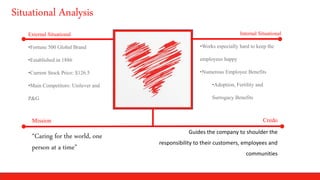
Internal Situational
•Works especially hard to keep the
employees happy
•Numerous Employee Benefits
•Adoption, Fertility and
Surrogacy Benefits
External Situational
•Fortune 500 Global Brand
•Established in 1886
•Current Stock Price: $126.5
•Main Competitors: Unilever and
P&G
Mission
“Caring for the world, one
person at a time”
Credo
Guides the company to shoulder the
responsibility to their customers, employees and
communities
SWOT Analysis
Strengths VS Weakness
Opportunities VS Threats
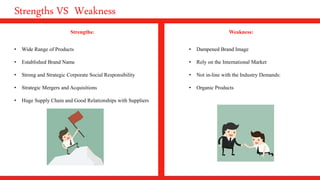
Strengths VS Weakness
Strengths:
• Wide Range of Products
• Established Brand Name
• Strong and Strategic Corporate Social Responsibility
• Strategic Mergers and Acquisitions
• Huge Supply Chain and Good Relationships with Suppliers
Weakness:
• Dampened Brand Image
• Rely on the International Market
• Not in-line with the Industry Demands:
• Organic Products
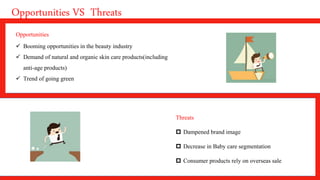
Opportunities VS Threats
Opportunities
 Booming opportunities in the beauty industry
 Demand of natural and organic skin care products(including
anti-age products)
 Trend of going green
Threats
 Dampened brand image
 Decrease in Baby care segmentation
 Consumer products rely on overseas sale
Advantage Analysis
Competitive Advantage
Comparative Advantage
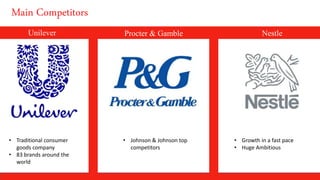
Main Competitors
Unilever NestleProcter & Gamble
• Traditional consumer
goods company
• 83 brands around the
world
• Growth in a fast pace
• Huge Ambitious
• Johnson & Johnson top
competitors
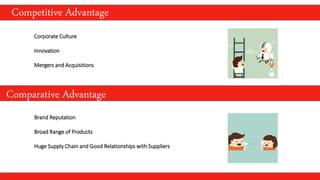
Competitive Advantage
Corporate Culture
Innovation
Mergers and Acquisitions
Comparative Advantage
Brand Reputation
Broad Range of Products
Huge Supply Chain and Good Relationships with Suppliers
Positioning Analysis
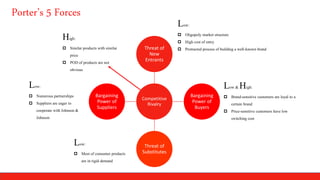
Porter’s 5 Forces Analysis
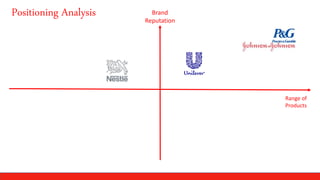
Positioning Analysis
Porter’s 5 Forces
Competitive
Rivalry
Threat of
New
Entrants
Bargaining
Power of
Buyers
Threat of
Substitutes
Bargaining
Power of
Suppliers
Low:
 Oligopoly market structure
 High cost of entry
 Protracted process of building a well-known brand
Low & High:
 Brand-sensitive customers are loyal to a
certain brand
 Price-sensitive customers have low
switching cost
Low:
 Numerous partnerships
 Suppliers are eager to
cooperate with Johnson &
Johnson
Low:
 Most of consumer products
are in rigid demand
High:
 Similar products with similar
price
 POD of products are not
obvious
Positioning Analysis Brand
Reputation
Range of
Products
Strategic Plan: Recommendations
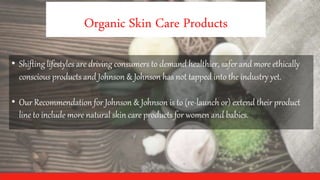
Organic Skin Care Products
• Shifting lifestyles are driving consumers to demand healthier, safer and more ethically
conscious products and Johnson & Johnson has not tapped into the industry yet.
• Our Recommendation for Johnson & Johnson is to (re-launch or) extend their product
line to include more natural skin care products for women and babies.
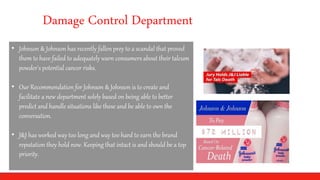
Damage Control Department
• Johnson & Johnson has recently fallen prey to a scandal that proved
them to have failed to adequately warn consumers about their talcum
powder's potential cancer risks.
• Our Recommendation for Johnson & Johnson is to create and
facilitate a new department solely based on being able to better
predict and handle situations like these and be able to own the
conversation.
• J&J has worked way too long and way too hard to earn the brand
reputation they hold now. Keeping that intact is and should be a top
priority.
• Local businesses have the advantage of being protected by the local laws. When moving into a new
geographical location, JnJ is always fallen subject to stricter laws.
• To tackle this issue better, our recommendation is to cooperate with local companies in terms of
mergers and acquisitions as well as maintaining good relationships with a market leader to benefit
from their market knowledge and insights.
Thank you! 
Any Questions?

Johnson & Johnson: Strategic Plan

  • 1.
    Johnson & JohnsonStrategic Plan Riya Gandhi Ziquan Huang Hanxuan Zheng
  • 2.
    Table of Contents Situational Analysis  SWOT Analysis  Advantage Analysis  Positioning Analysis  Strategic Plan
  • 3.
  • 4.
    Situational Analysis Internal Situational •Worksespecially hard to keep the employees happy •Numerous Employee Benefits •Adoption, Fertility and Surrogacy Benefits External Situational •Fortune 500 Global Brand •Established in 1886 •Current Stock Price: $126.5 •Main Competitors: Unilever and P&G Mission “Caring for the world, one person at a time” Credo Guides the company to shoulder the responsibility to their customers, employees and communities
  • 5.
    SWOT Analysis Strengths VSWeakness Opportunities VS Threats
  • 6.
    Strengths VS Weakness Strengths: •Wide Range of Products • Established Brand Name • Strong and Strategic Corporate Social Responsibility • Strategic Mergers and Acquisitions • Huge Supply Chain and Good Relationships with Suppliers Weakness: • Dampened Brand Image • Rely on the International Market • Not in-line with the Industry Demands: • Organic Products
  • 7.
    Opportunities VS Threats Opportunities Booming opportunities in the beauty industry  Demand of natural and organic skin care products(including anti-age products)  Trend of going green Threats  Dampened brand image  Decrease in Baby care segmentation  Consumer products rely on overseas sale
  • 8.
  • 9.
    Main Competitors Unilever NestleProcter& Gamble • Traditional consumer goods company • 83 brands around the world • Growth in a fast pace • Huge Ambitious • Johnson & Johnson top competitors
  • 10.
    Competitive Advantage Corporate Culture Innovation Mergersand Acquisitions Comparative Advantage Brand Reputation Broad Range of Products Huge Supply Chain and Good Relationships with Suppliers
  • 11.
    Positioning Analysis Porter’s 5Forces Analysis Positioning Analysis
  • 12.
    Porter’s 5 Forces Competitive Rivalry Threatof New Entrants Bargaining Power of Buyers Threat of Substitutes Bargaining Power of Suppliers Low:  Oligopoly market structure  High cost of entry  Protracted process of building a well-known brand Low & High:  Brand-sensitive customers are loyal to a certain brand  Price-sensitive customers have low switching cost Low:  Numerous partnerships  Suppliers are eager to cooperate with Johnson & Johnson Low:  Most of consumer products are in rigid demand High:  Similar products with similar price  POD of products are not obvious
  • 13.
  • 14.
  • 15.
    Organic Skin CareProducts • Shifting lifestyles are driving consumers to demand healthier, safer and more ethically conscious products and Johnson & Johnson has not tapped into the industry yet. • Our Recommendation for Johnson & Johnson is to (re-launch or) extend their product line to include more natural skin care products for women and babies.
  • 16.
    Damage Control Department •Johnson & Johnson has recently fallen prey to a scandal that proved them to have failed to adequately warn consumers about their talcum powder's potential cancer risks. • Our Recommendation for Johnson & Johnson is to create and facilitate a new department solely based on being able to better predict and handle situations like these and be able to own the conversation. • J&J has worked way too long and way too hard to earn the brand reputation they hold now. Keeping that intact is and should be a top priority.
  • 17.
    • Local businesseshave the advantage of being protected by the local laws. When moving into a new geographical location, JnJ is always fallen subject to stricter laws. • To tackle this issue better, our recommendation is to cooperate with local companies in terms of mergers and acquisitions as well as maintaining good relationships with a market leader to benefit from their market knowledge and insights.
  • 18.