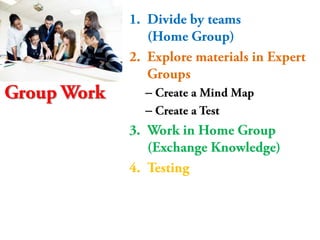
Jigsaw
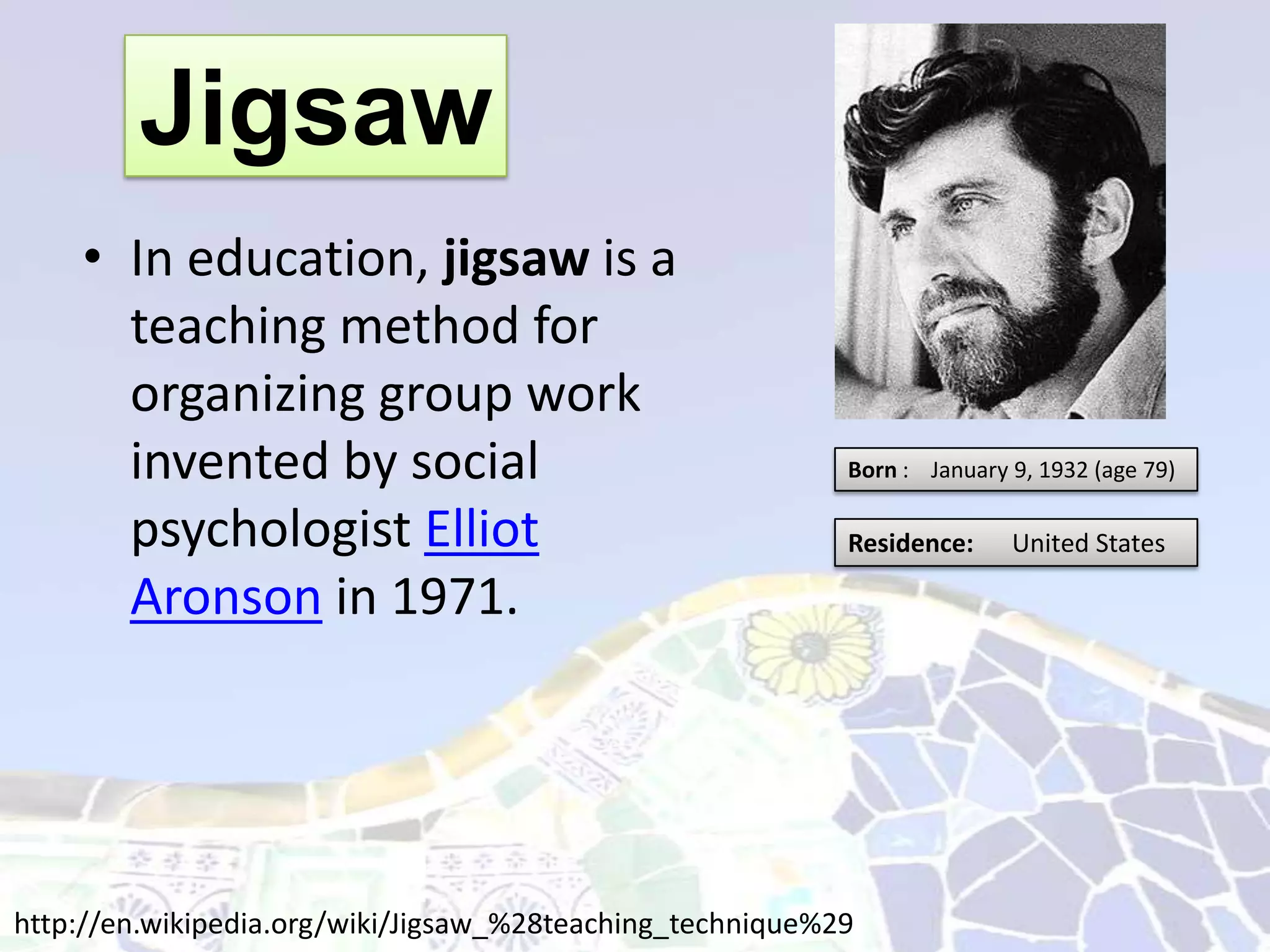
    • In education, jigsaw is a
      teaching method for
      organizing group work
      invented by social                                   Born : January 9, 1932 (age 79)

      psychologist Elliot                                  Residence:     United States

      Aronson in 1971.


http://en.wikipedia.org/wiki/Jigsaw_%28teaching_technique%29
How it works
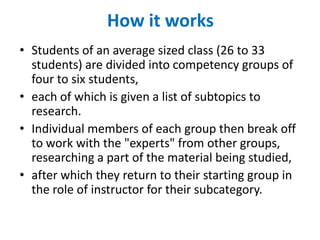
• Students of an average sized class (26 to 33
  students) are divided into competency groups of
  four to six students,
• each of which is given a list of subtopics to
  research.
• Individual members of each group then break off
  to work with the "experts" from other groups,
  researching a part of the material being studied,
• after which they return to their starting group in
  the role of instructor for their subcategory.
Benefits
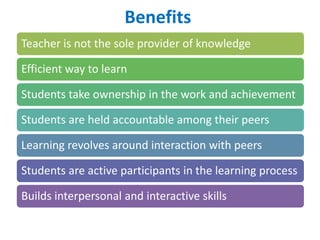
Teacher is not the sole provider of knowledge

Efficient way to learn

Students take ownership in the work and achievement

Students are held accountable among their peers

Learning revolves around interaction with peers

Students are active participants in the learning process

Builds interpersonal and interactive skills
–
–
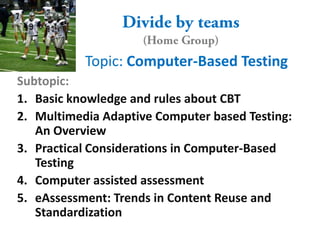
Topic: Computer-Based Testing
Subtopic:
1. Basic knowledge and rules about CBT
2. Multimedia Adaptive Computer based Testing:
   An Overview
3. Practical Considerations in Computer-Based
   Testing
4. Computer assisted assessment
5. eAssessment: Trends in Content Reuse and
   Standardization
•

•
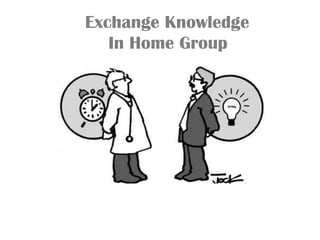
Exchange Knowledge
   In Home Group
Jigsow Method

Jigsow Method

  • 1.
    Jigsaw • In education, jigsaw is a teaching method for organizing group work invented by social Born : January 9, 1932 (age 79) psychologist Elliot Residence: United States Aronson in 1971. http://en.wikipedia.org/wiki/Jigsaw_%28teaching_technique%29
  • 2.
    How it works •Students of an average sized class (26 to 33 students) are divided into competency groups of four to six students, • each of which is given a list of subtopics to research. • Individual members of each group then break off to work with the "experts" from other groups, researching a part of the material being studied, • after which they return to their starting group in the role of instructor for their subcategory.
  • 3.
    Benefits Teacher is notthe sole provider of knowledge Efficient way to learn Students take ownership in the work and achievement Students are held accountable among their peers Learning revolves around interaction with peers Students are active participants in the learning process Builds interpersonal and interactive skills
  • 4.
  • 5.
    Topic: Computer-Based Testing Subtopic: 1.Basic knowledge and rules about CBT 2. Multimedia Adaptive Computer based Testing: An Overview 3. Practical Considerations in Computer-Based Testing 4. Computer assisted assessment 5. eAssessment: Trends in Content Reuse and Standardization
  • 6.
  • 7.
    Exchange Knowledge In Home Group