How to convince your boss that it is DevOps that she wants
• 11.00 – 11.45 The great transformation
7 surprising experiences -> 7 best practices
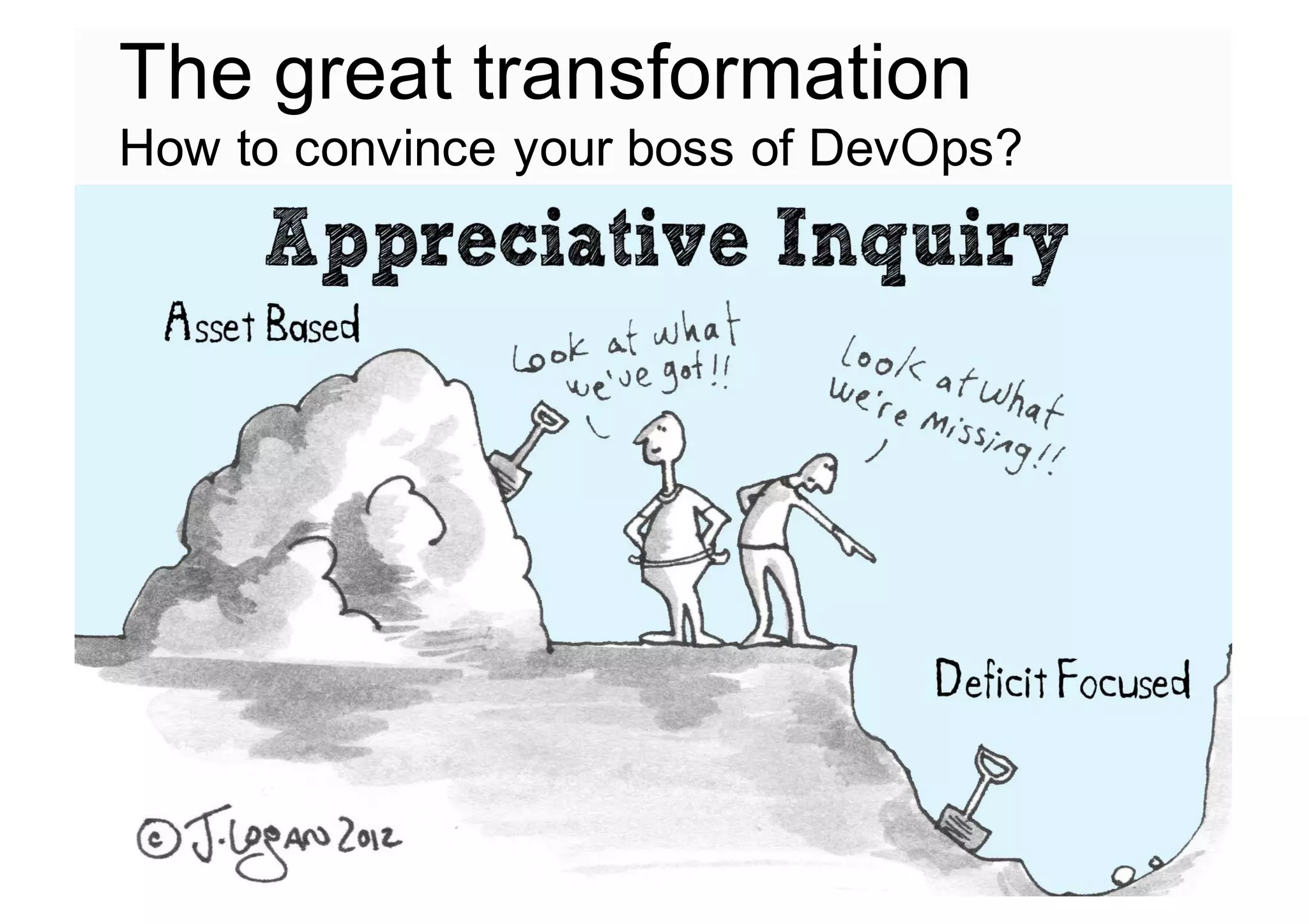
• 12.00 – 12.45 Appreciative Inquiry
Build – or even rebuild – organizations around
what works, rather than trying to fix what doesn’t.
2 parts
1
Happy to talk in front of an agile audience!
The great transformation
7 surprising experiences -> 7 best practices
Intro Jan de Vries
3
• Fan of Agile
• DevOps evangelist
• Business IT Consultant at insurance company a.s.r.
• Convenor Enterprise DevOps group (uniting members of
ASL BiSL Foundation, ITSMF and Agile Consortium)
• Member Scaling Agile group at Agile Consortium
• Trainer BiSL, ASL, ITIL, FSM, ISM
• Blue Ocean Defined Demand expert
• Chairman Clarity User Society
Huh? Part 1
c
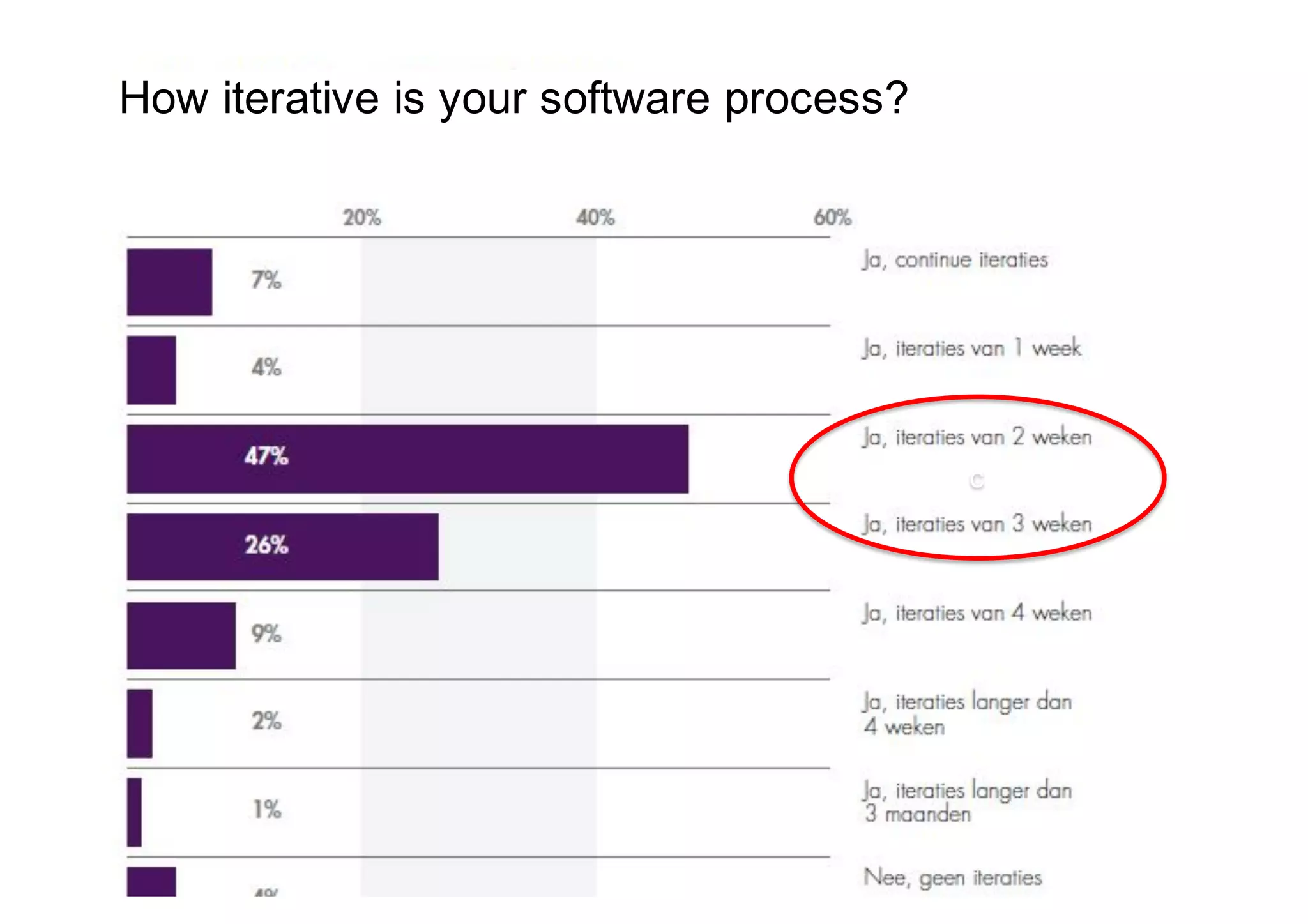
How iterative is your software process?
c
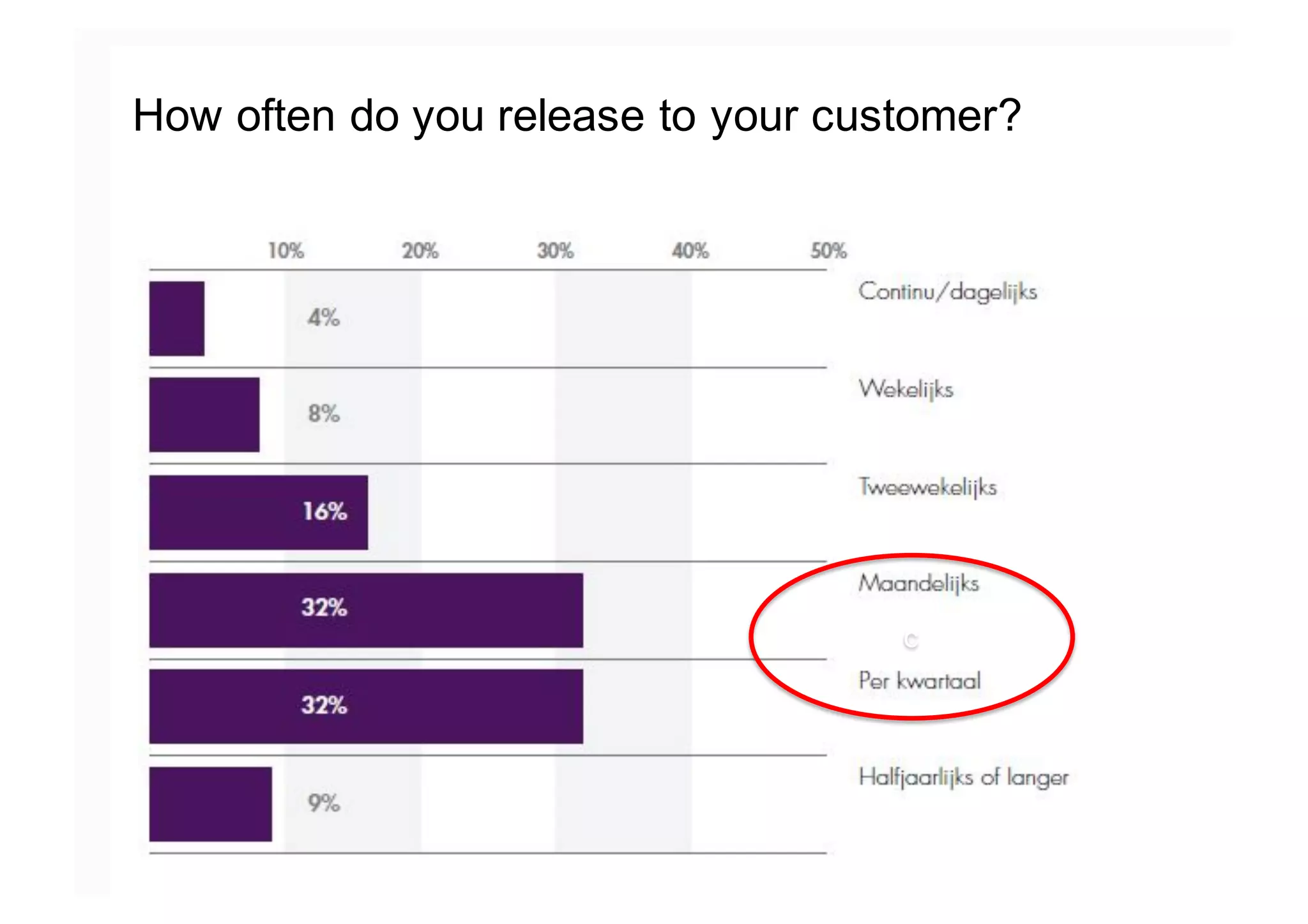
How often do you release to your customer?
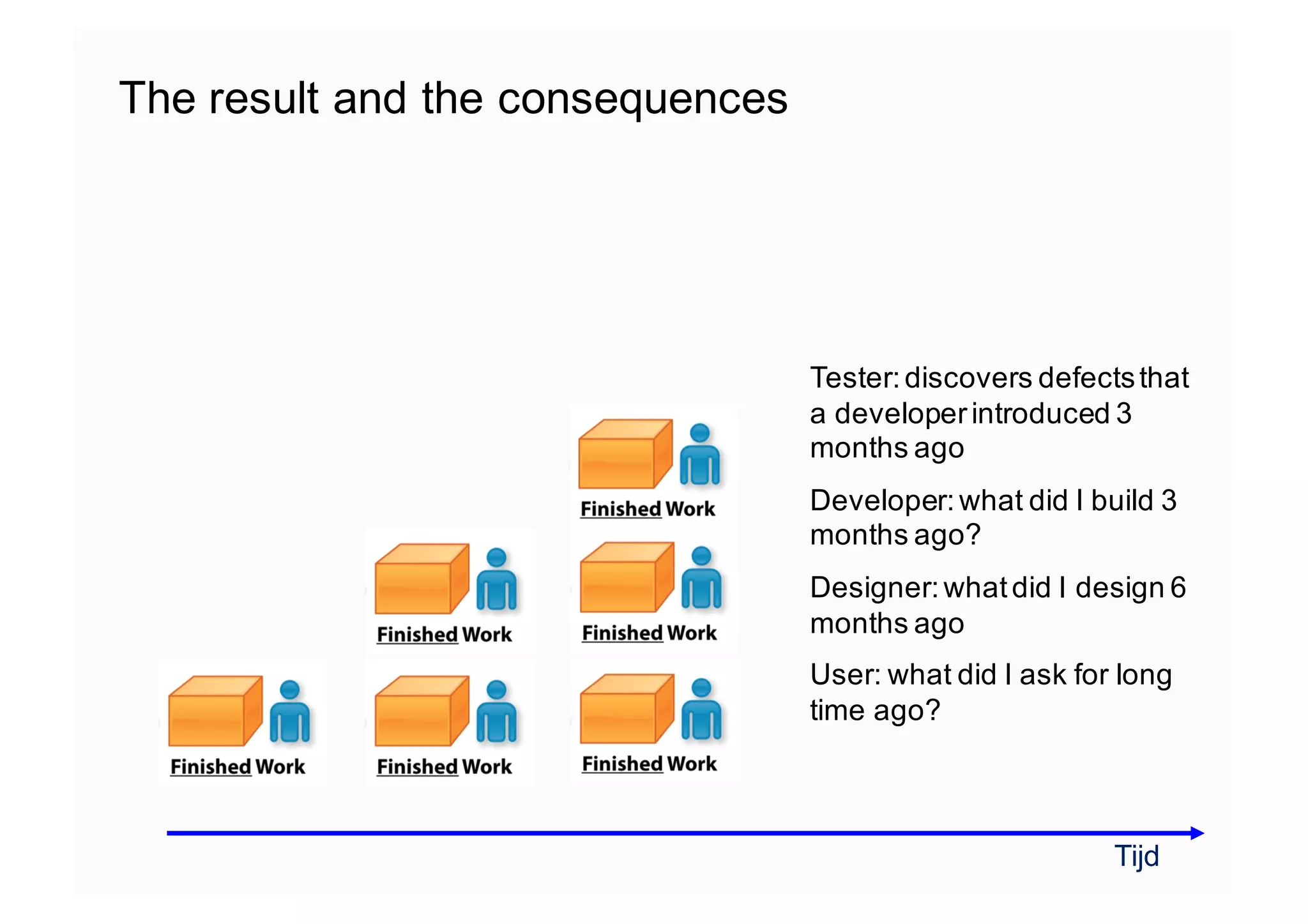
The result and the consequences
Tijd
Tester:discovers defectsthat
a developerintroduced 3
months ago
Developer:what did I build 3
months ago?
Designer:whatdid I design 6
months ago
User: what did I ask for long
time ago?
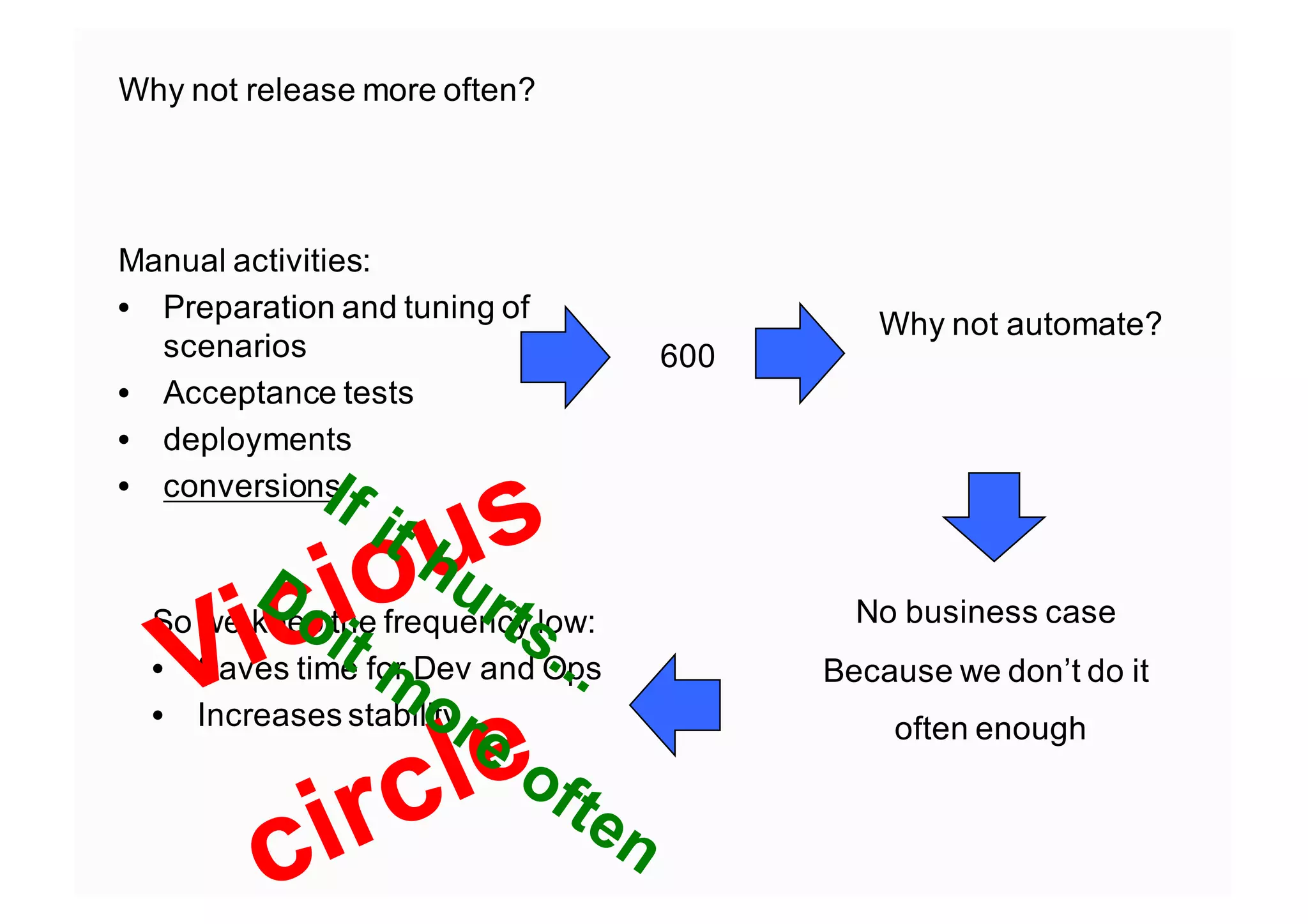
Manual activities:
• Preparation and tuning of
scenarios
• Acceptance tests
• deployments
• conversions
Why not release more often?
600
Why not automate?
No business case
Because we don’t do it
often enough
So we keep the frequency low:
• Saves time for Dev and Ops
• Increases stability
Huh? Part 2
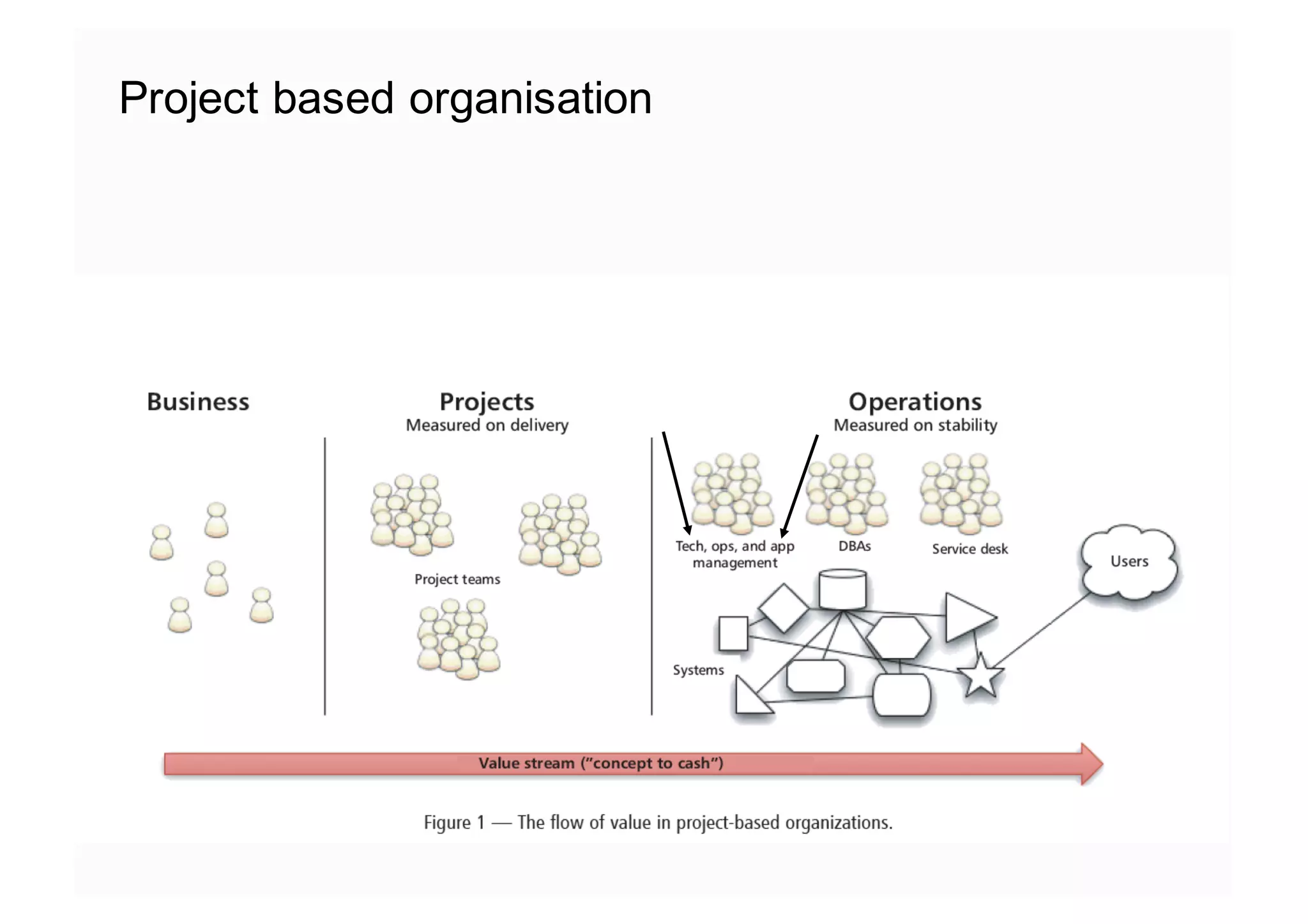
Project based organisation
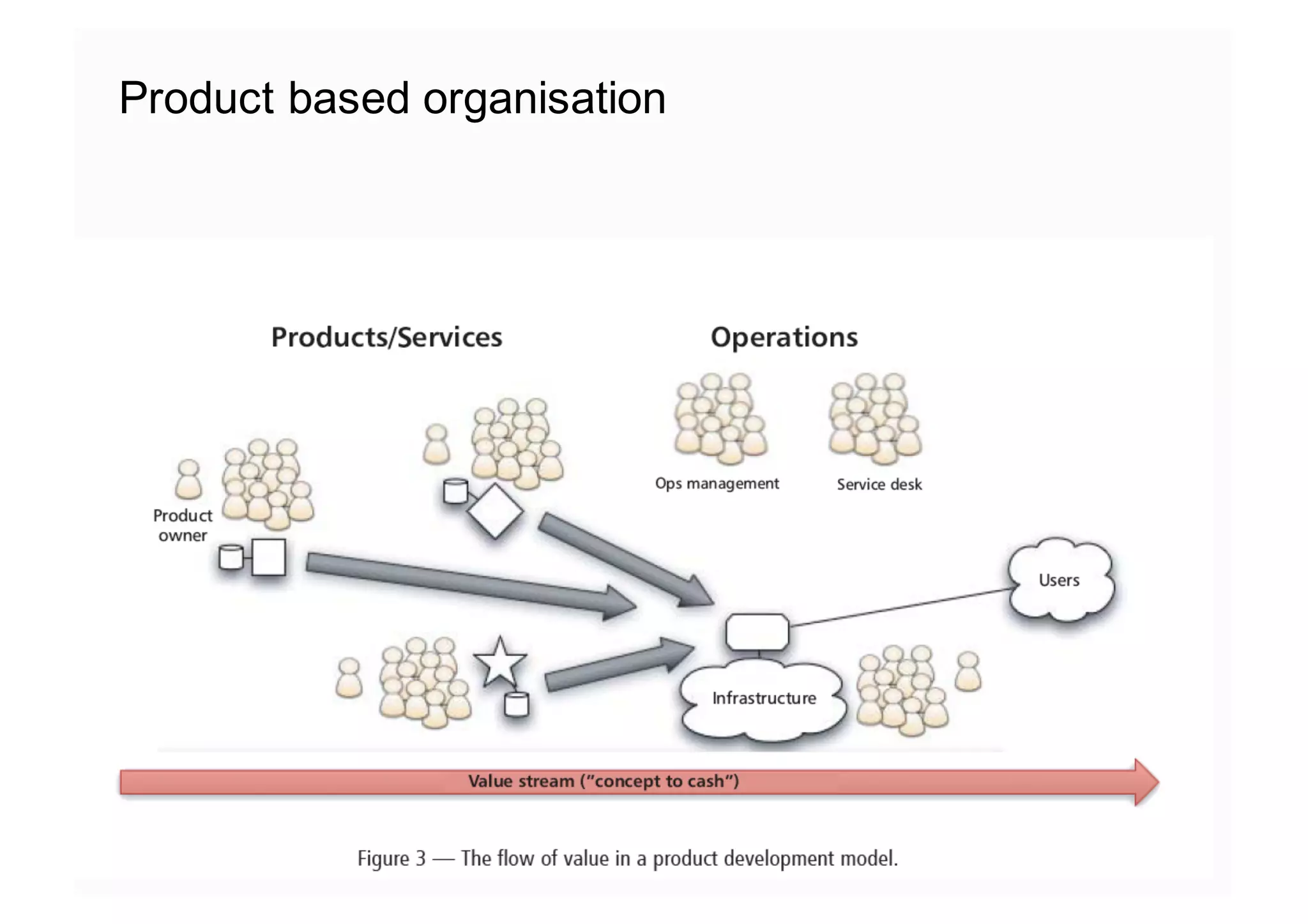
Product based organisation
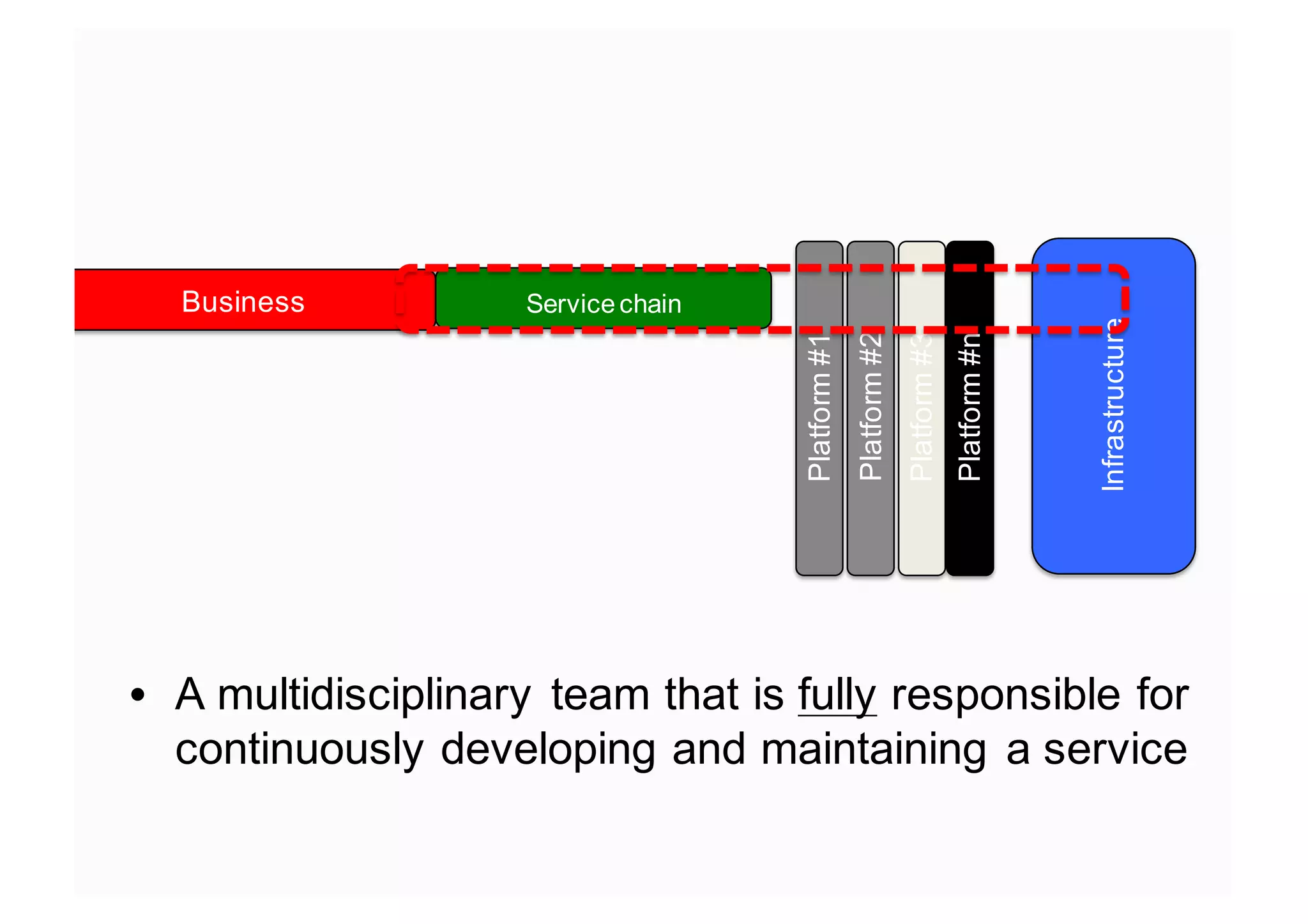
• A multidisciplinary team that is fully responsible for
continuously developing and maintaining a service
Business Servicechain
Platform#1
Platform#2
Platform#3
Platform#n
Infrastructure
DevOps, the team basics
• Development AND Operations in 1 team per businessline (or
part of it)
• Development, Business Information Management (BiSL),
Application Management (ASL) and IT Infrastructure
Management (ITIL) in 1 team per businessline (or part of it)
• You build it, you run it. Eat your own dogfood
• DevOps finishes what Agile started, because every PSI goes
to production.
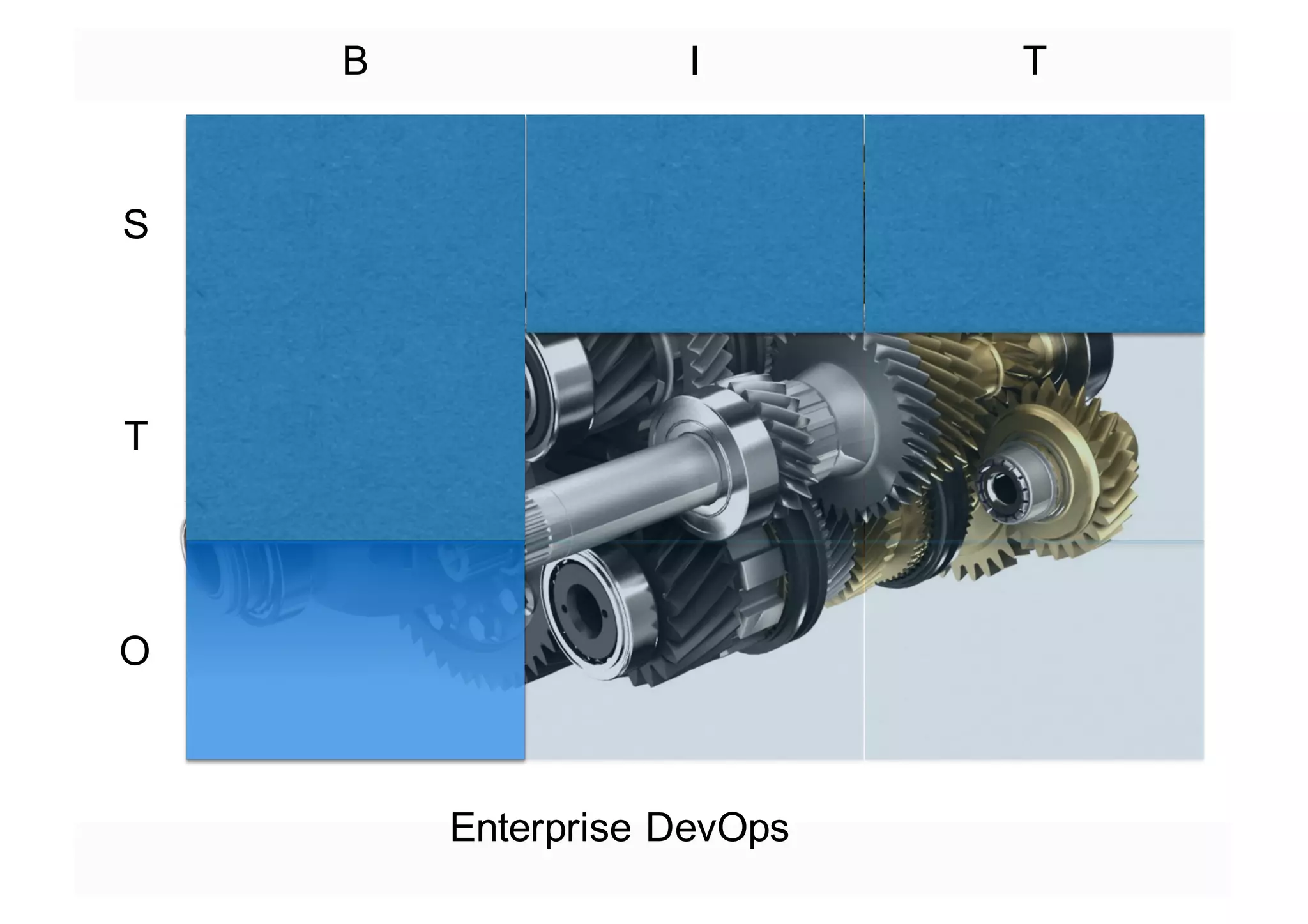
• Extra flavours: BusDevOps and Enterprise DevOps
14
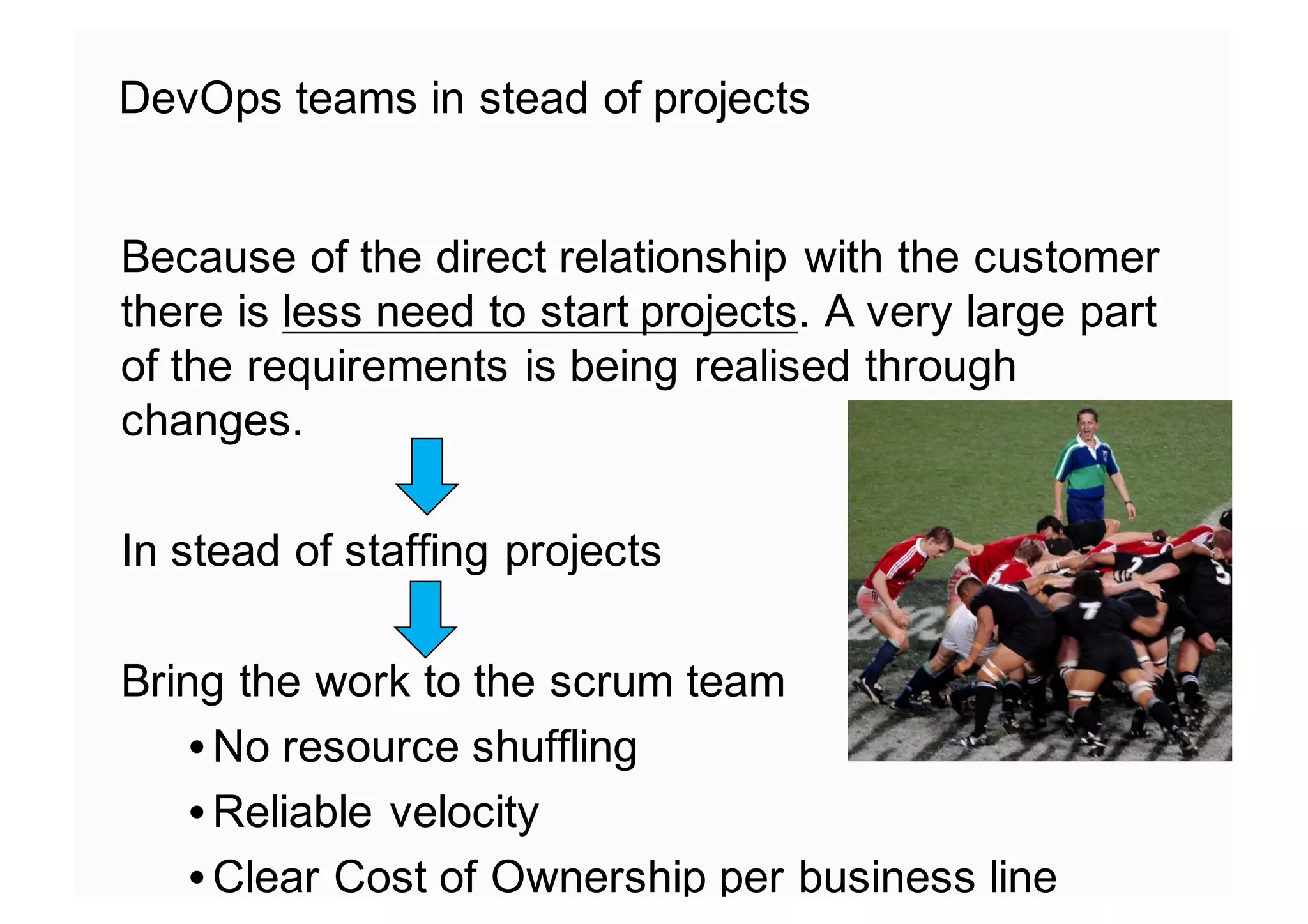
DevOps teams in stead of projects
Because of the direct relationship with the customer
there is less need to start projects. A very large part
of the requirements is being realised through
changes.
In stead of staffing projects
Bring the work to the scrum team
• No resource shuffling
• Reliable velocity
• Clear Cost of Ownership per business line
Headline from the future
2017
SCRUM finally breaks
through
Numberof newly launched
projects decreased with 80
% in the last 2 years.
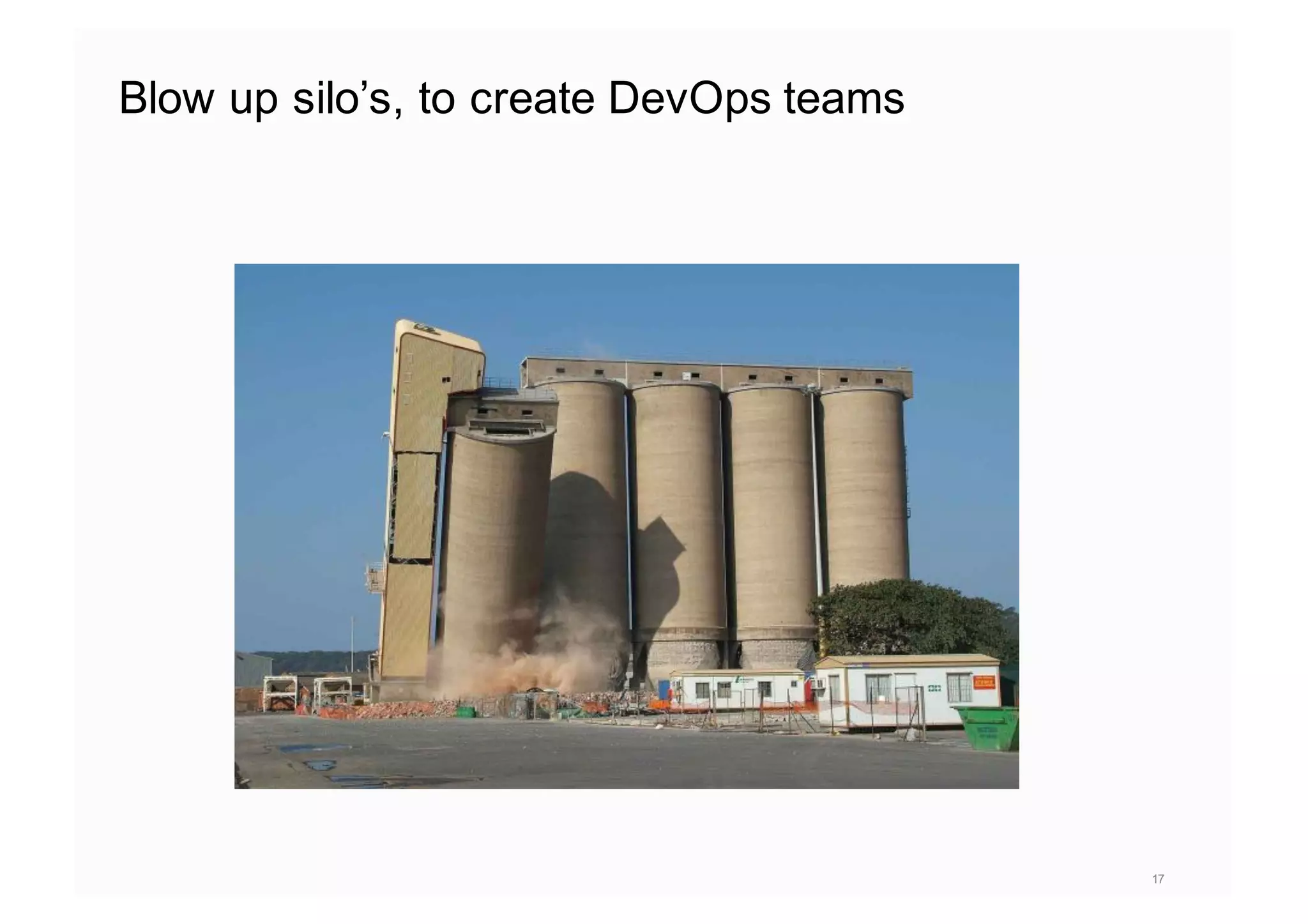
Blow up silo’s, to create DevOps teams
17
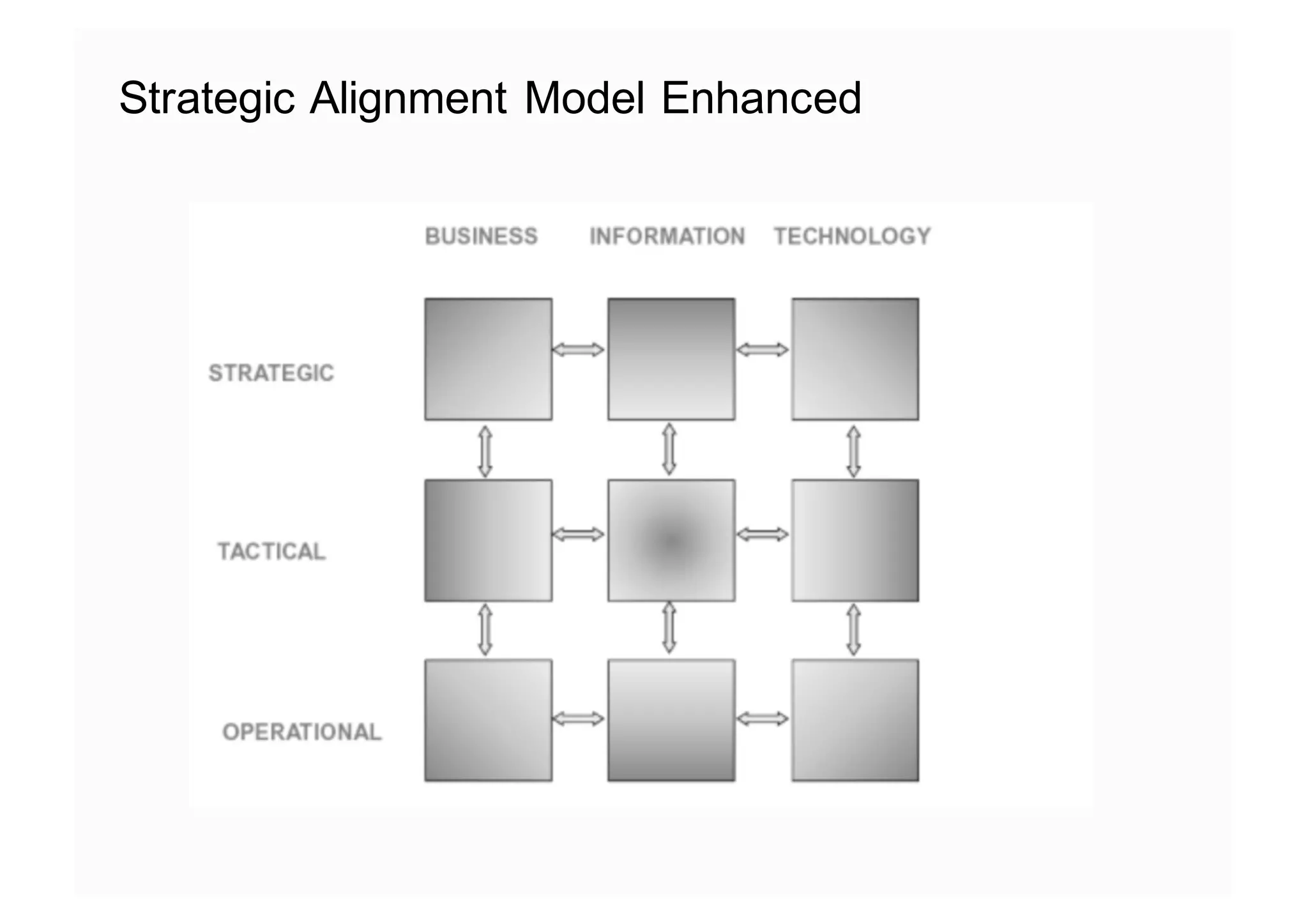
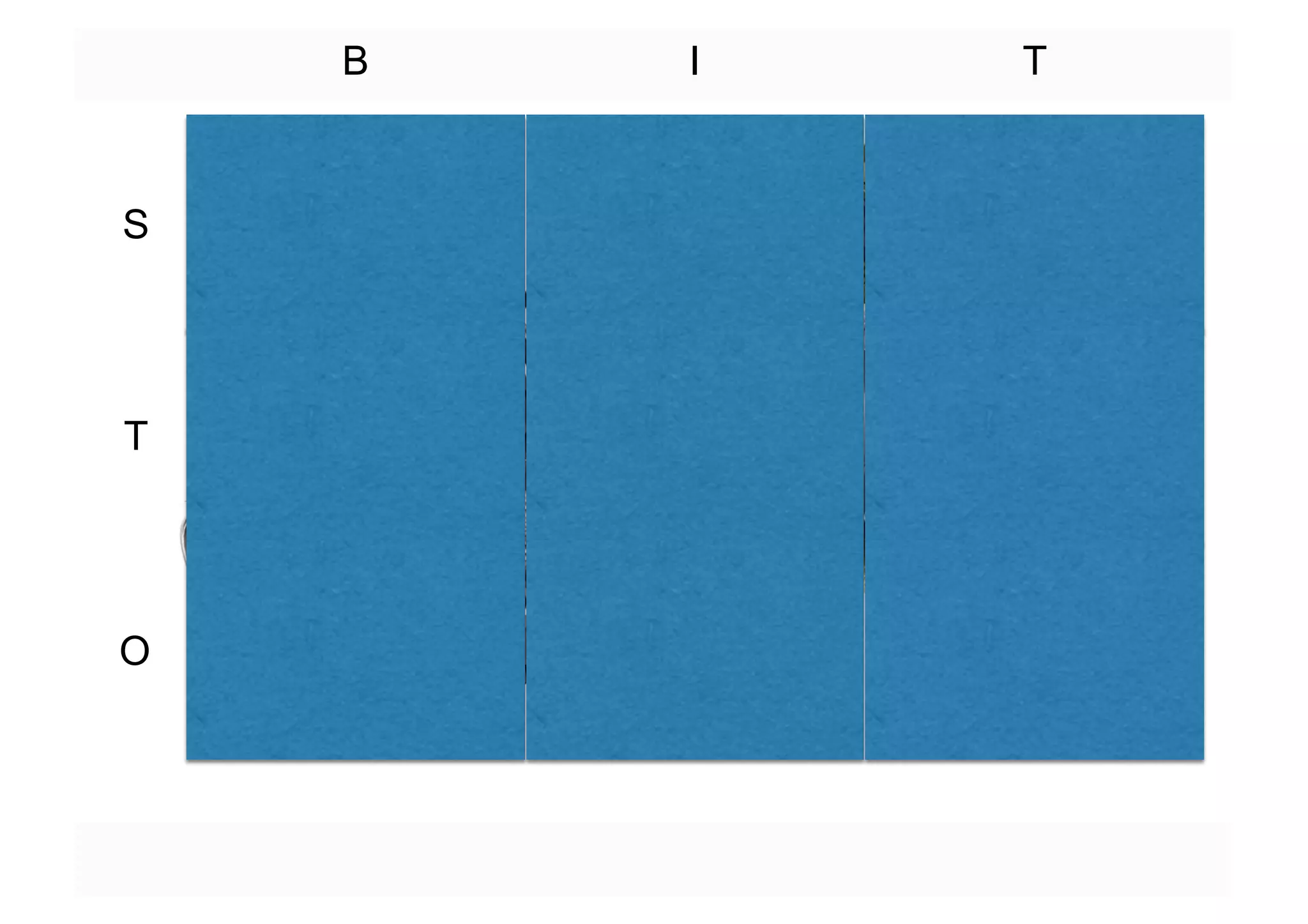
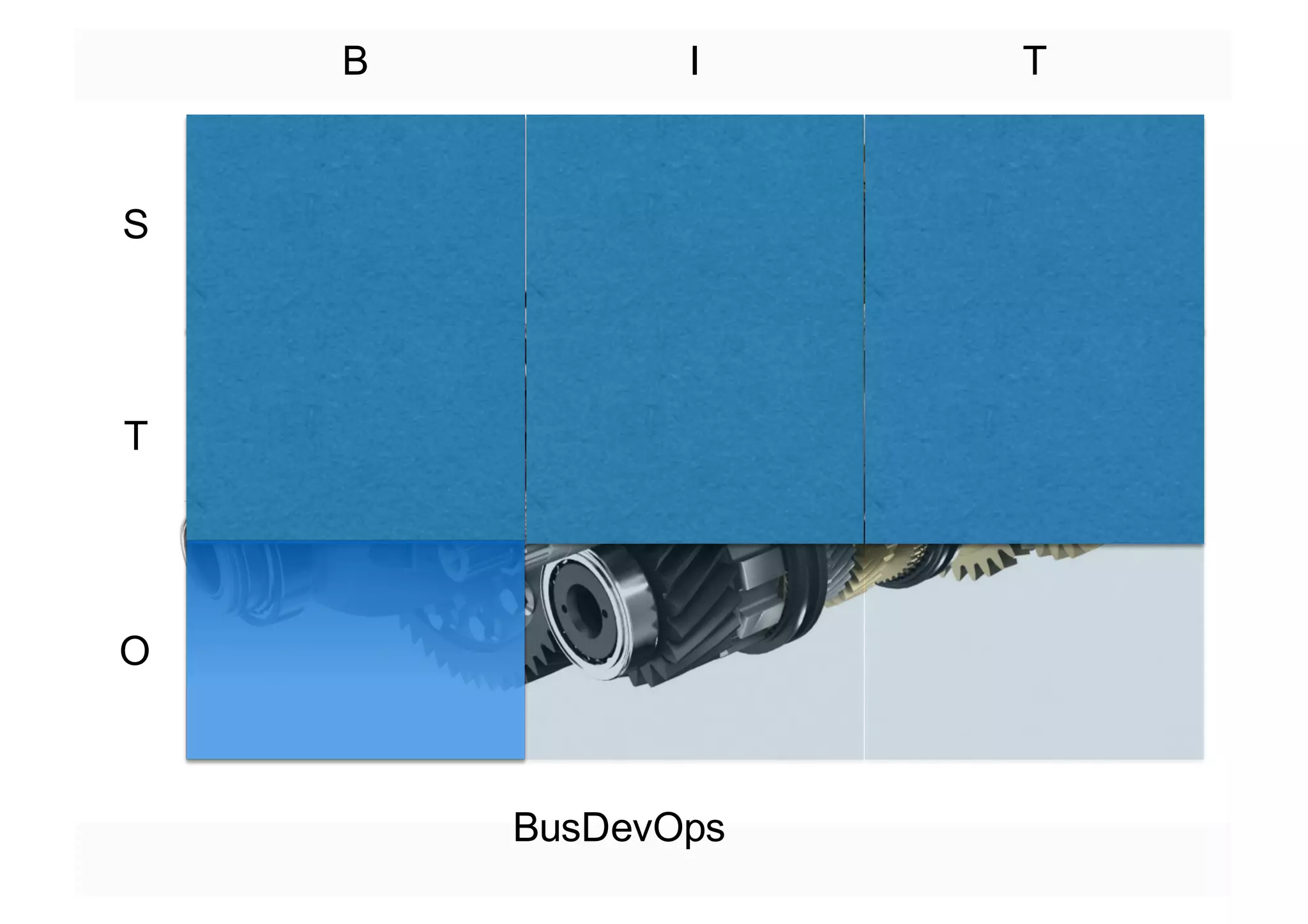
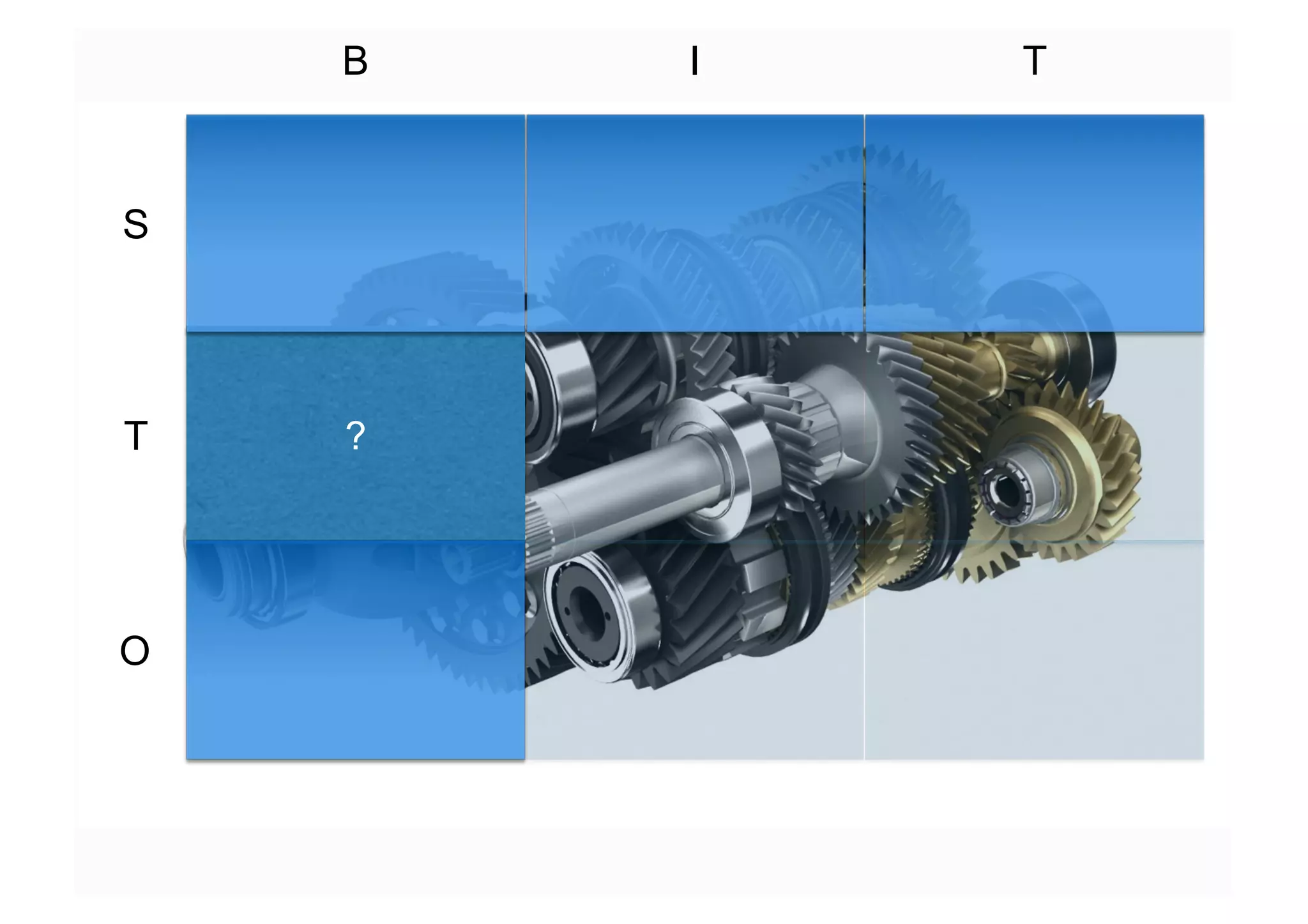
Strategic Alignment Model Enhanced
S
T
O
B I T
S
T
O
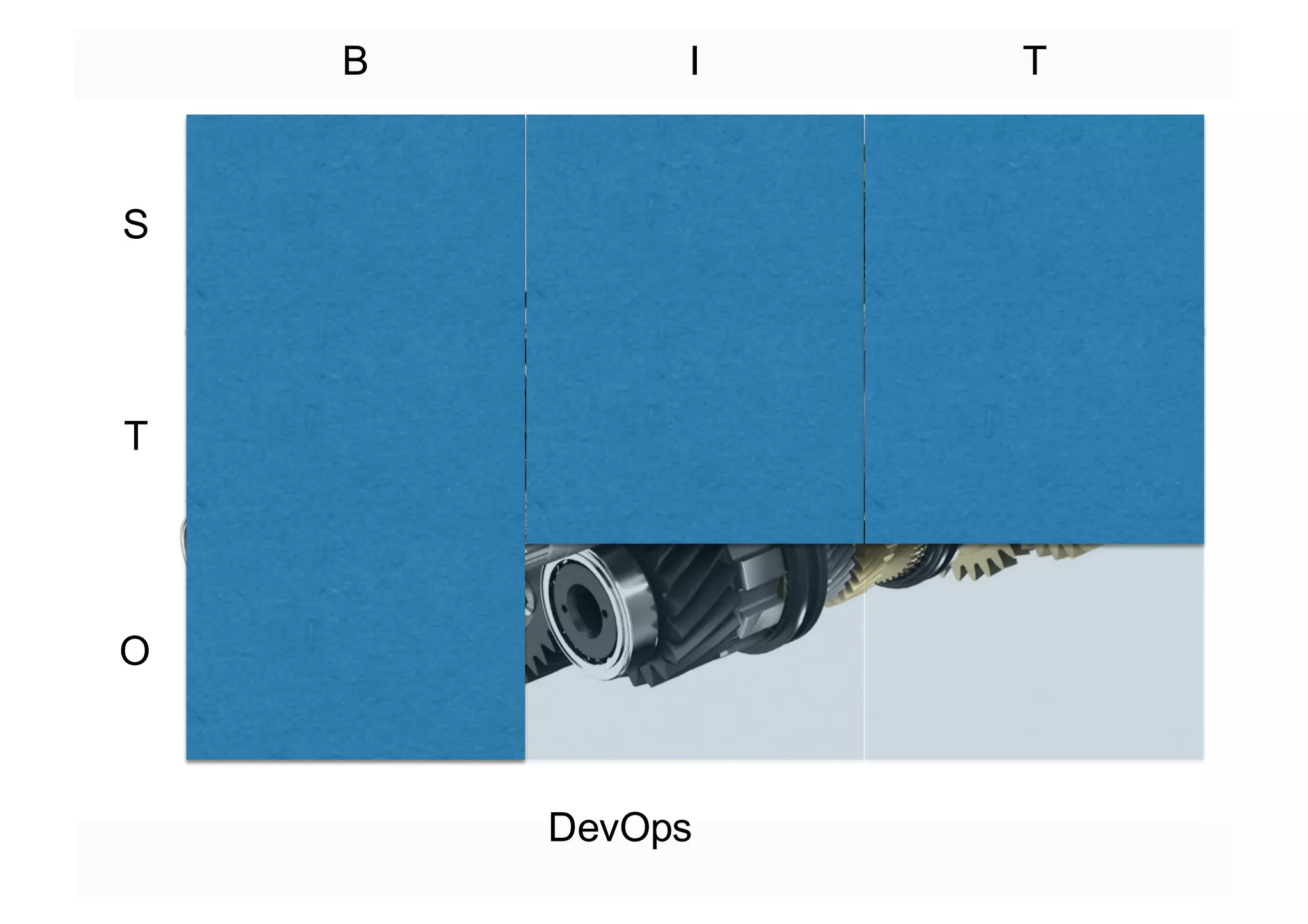
B I T
DevOps
S
T
O
B I T
BusDevOps
S
T
O
B I T
Enterprise DevOps
S
T
O
B I T
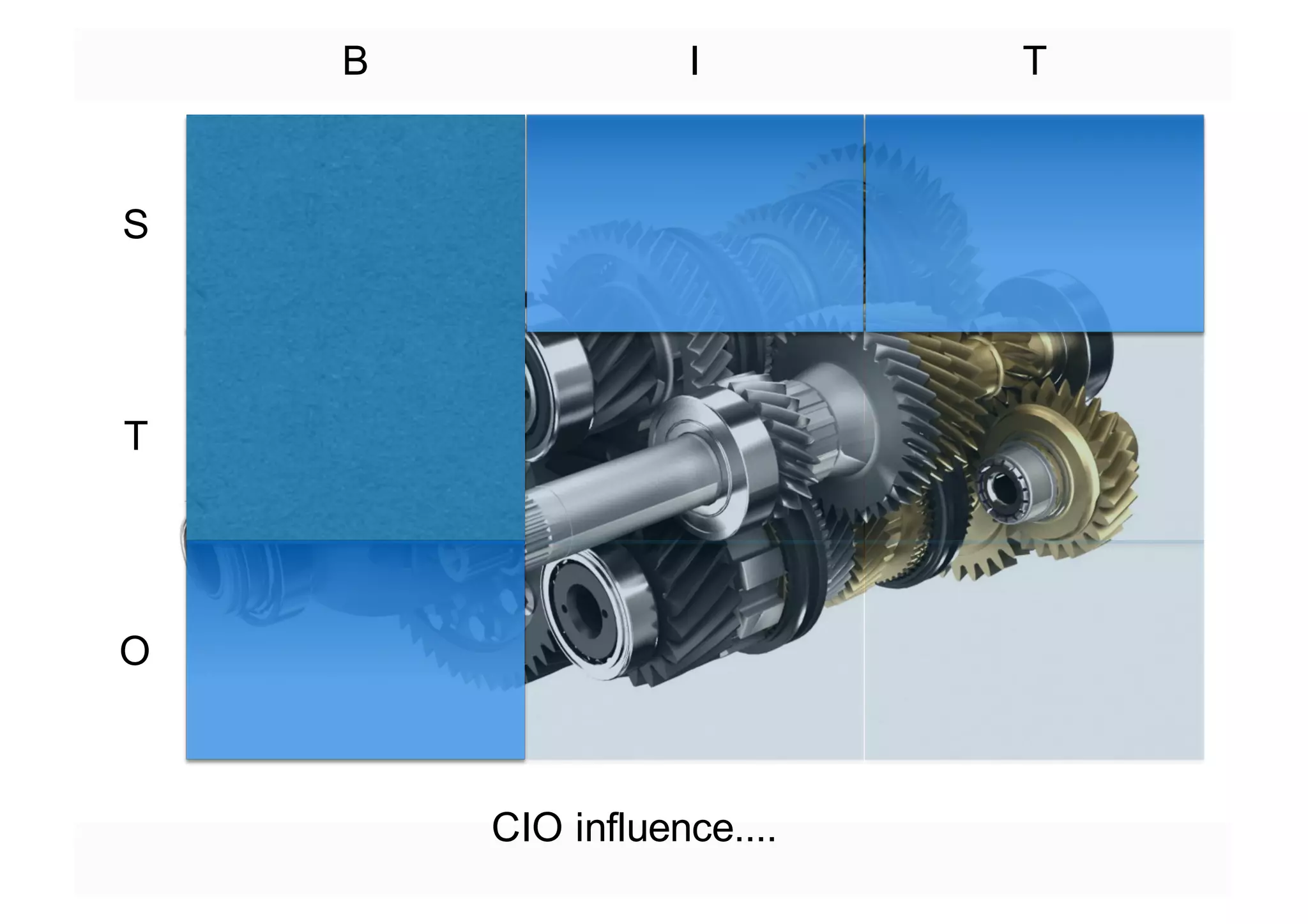
CIO influence....
S
T
O
B I T
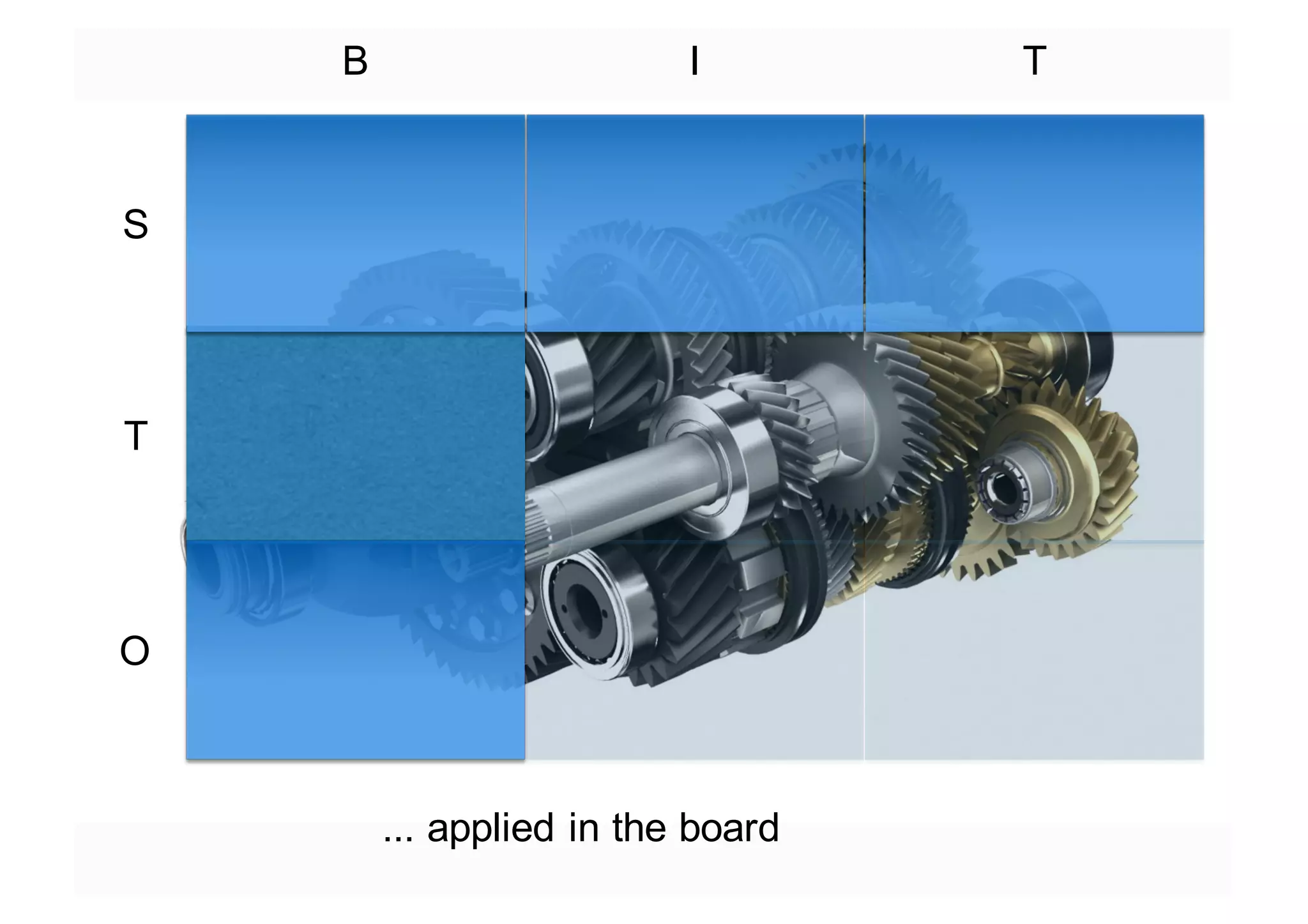
... applied in the board
?
S
T
O
B I T
Huh? Part 3
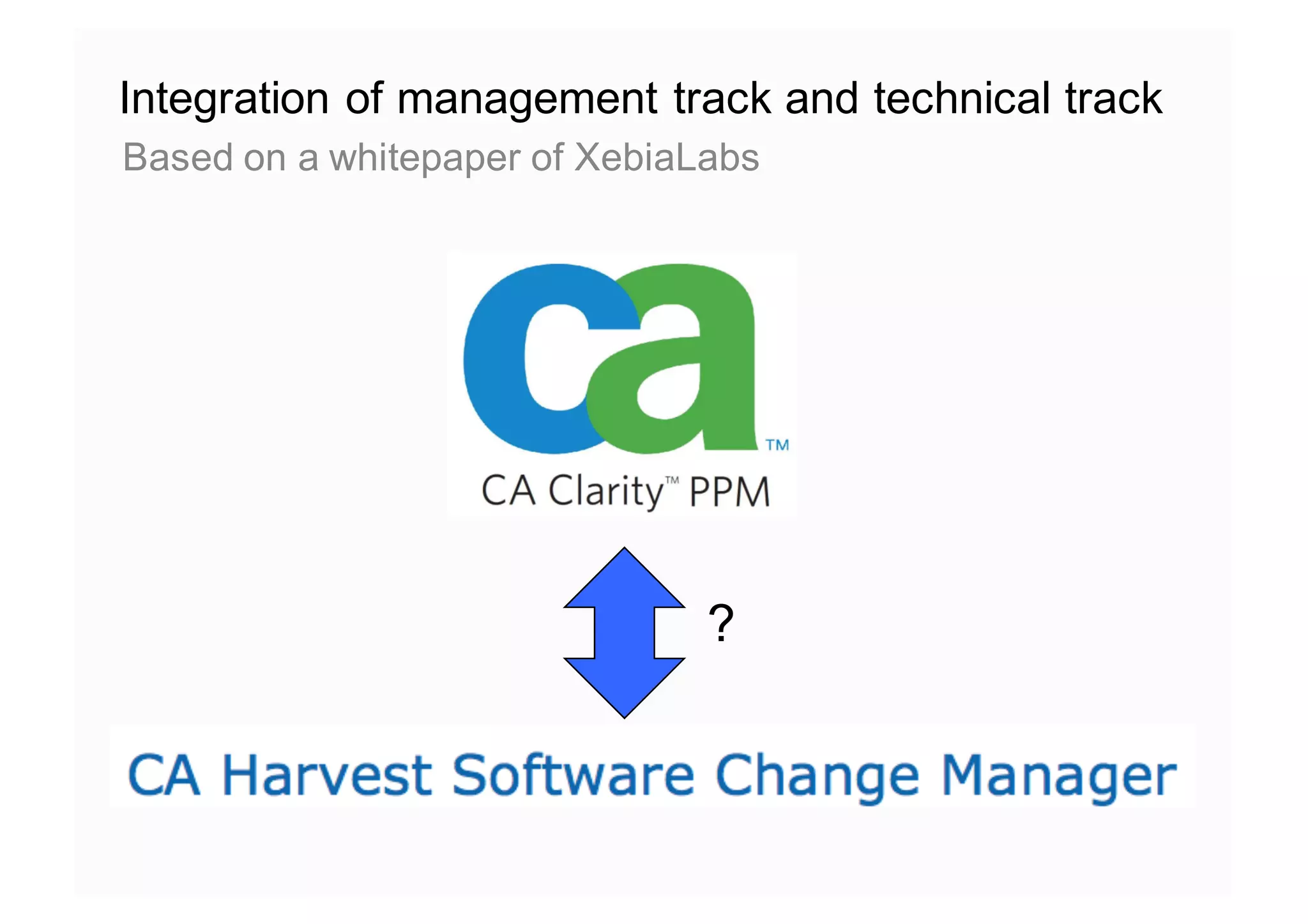
Integration of management track and technical track
Based on a whitepaper of XebiaLabs
?
Huh? Part 4
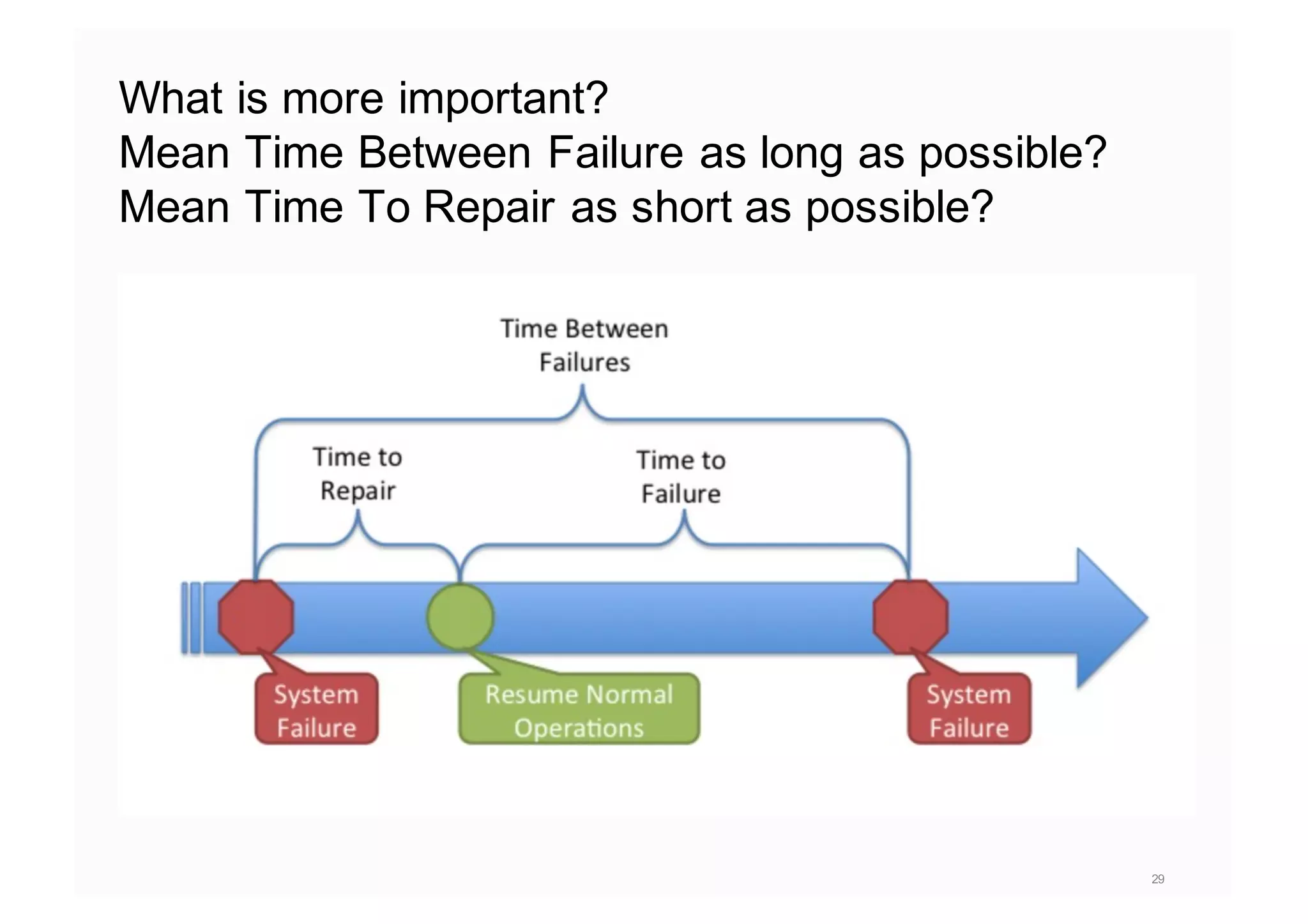
What is more important?
Mean Time Between Failure as long as possible?
Mean Time To Repair as short as possible?
29
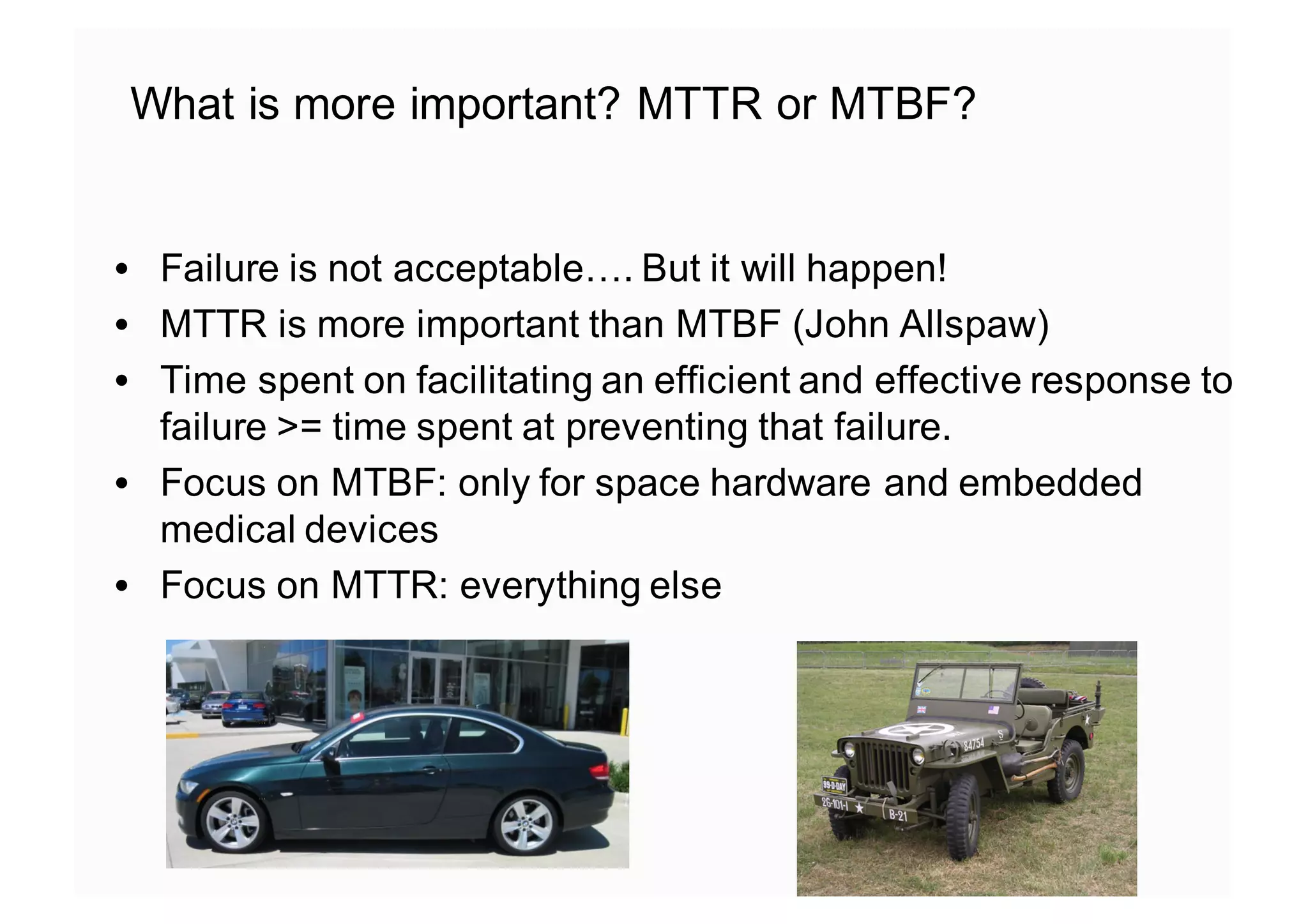
• Failure is not acceptable…. But it will happen!
• MTTR is more important than MTBF (John Allspaw)
• Time spent on facilitating an efficient and effective response to
failure >= time spent at preventing that failure.
• Focus on MTBF: only for space hardware and embedded
medical devices
• Focus on MTTR: everything else
What is more important? MTTR or MTBF?
Huh? Part 5
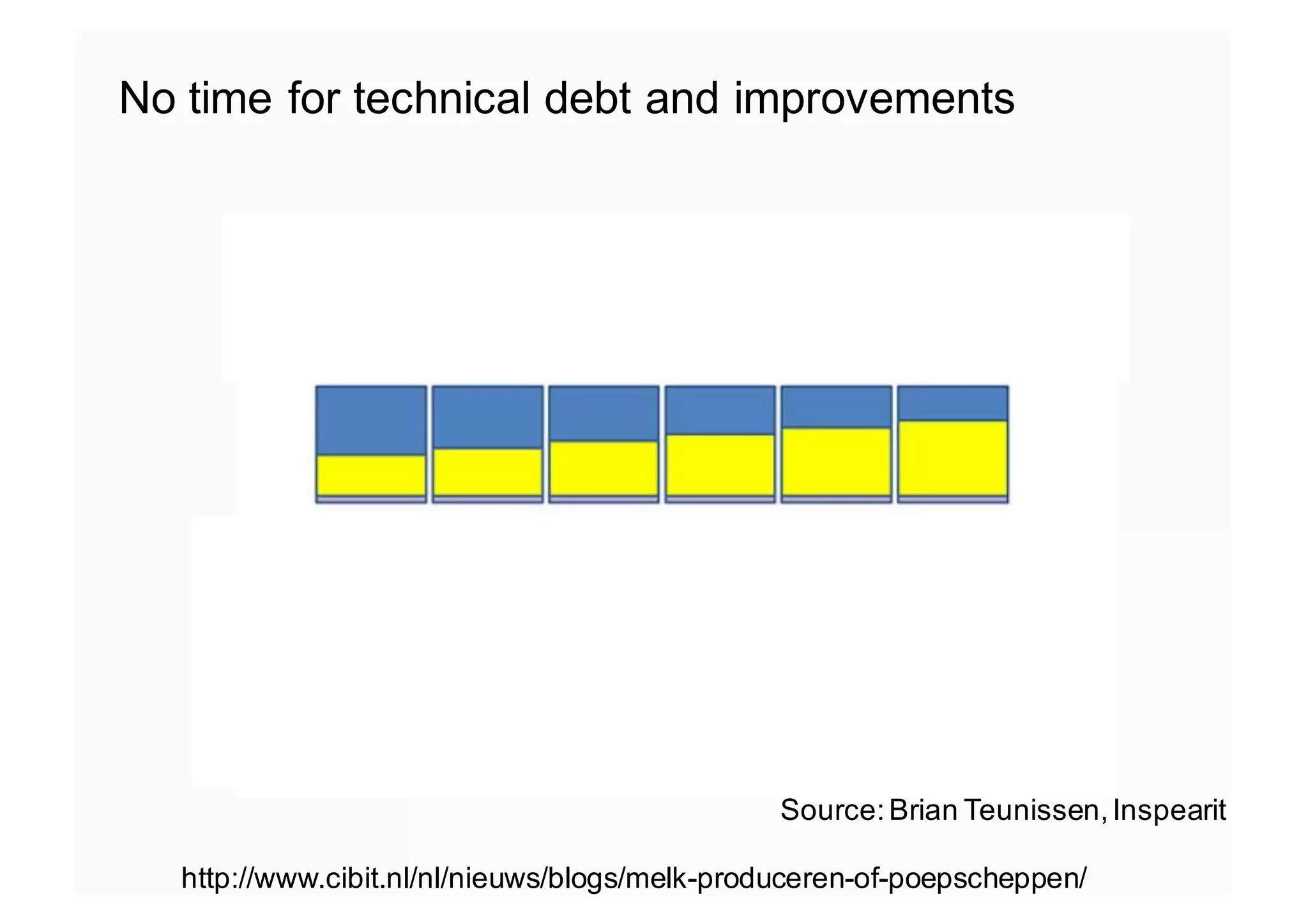
No time for technical debt and improvements
http://www.cibit.nl/nl/nieuws/blogs/melk-produceren-of-poepscheppen/
Source:Brian Teunissen,Inspearit
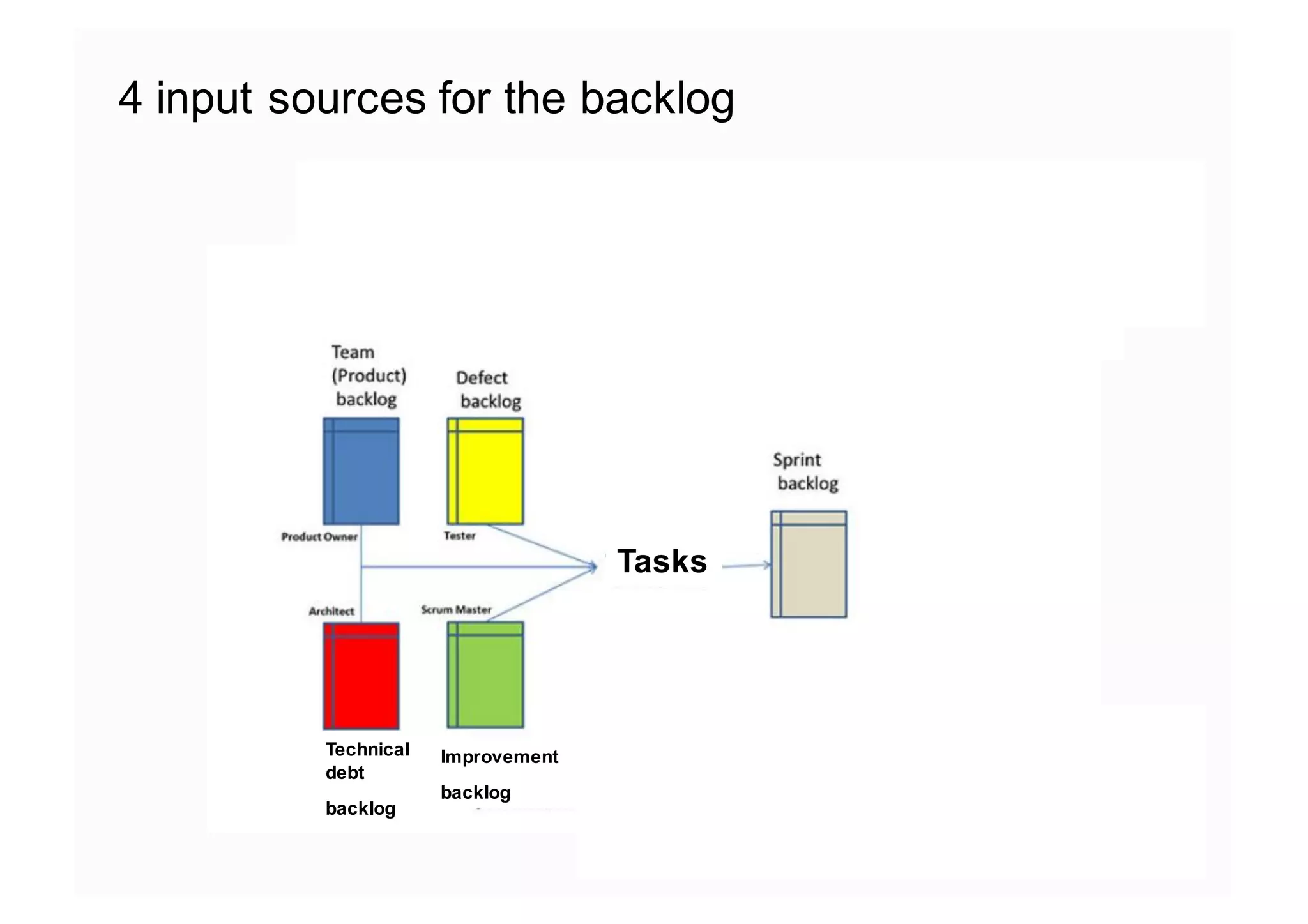
4 input sources for the backlog
Technical
debt
backlog
Improvement
backlog
Tasks
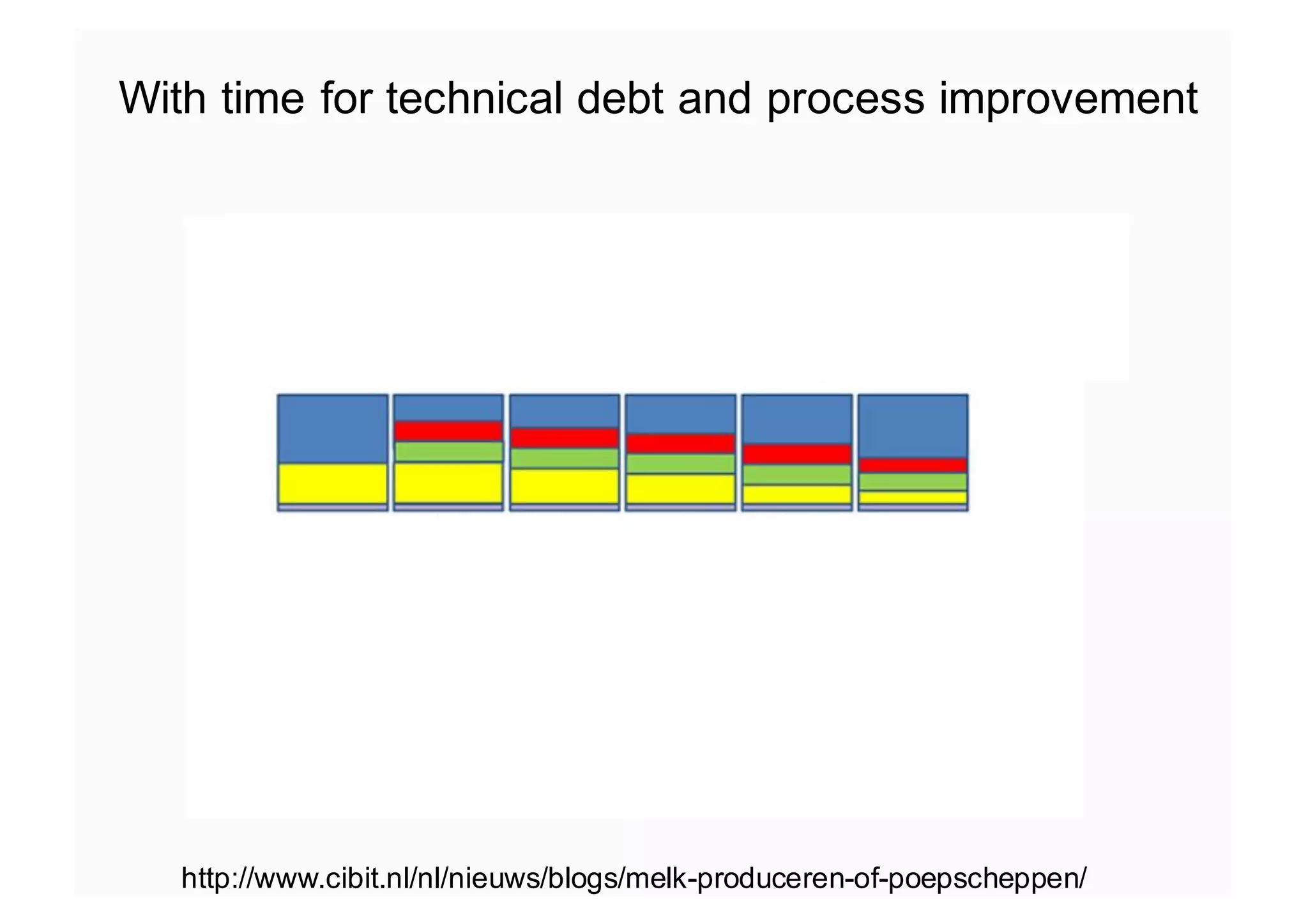
With time for technical debt and process improvement
http://www.cibit.nl/nl/nieuws/blogs/melk-produceren-of-poepscheppen/
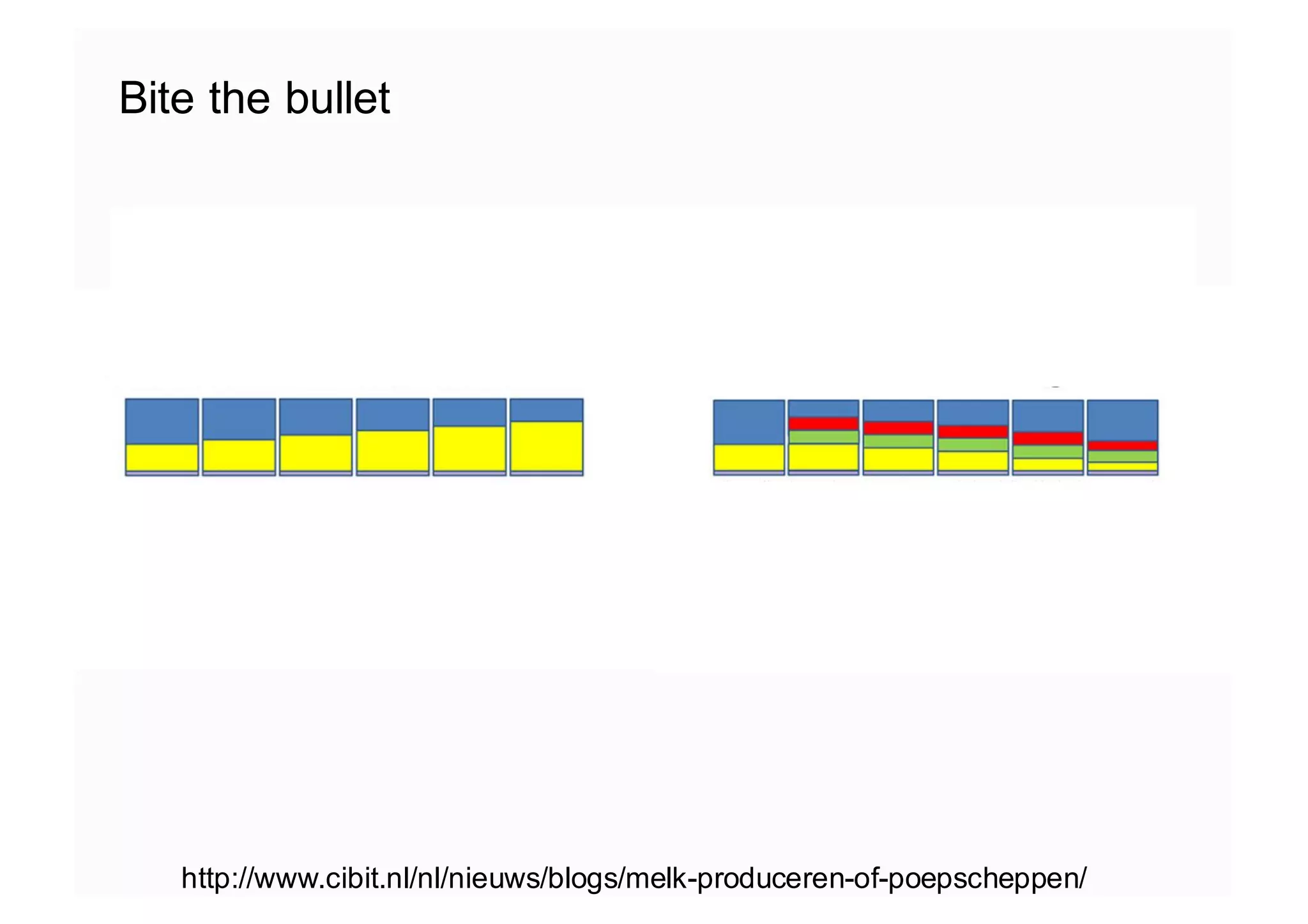
Bite the bullet
http://www.cibit.nl/nl/nieuws/blogs/melk-produceren-of-poepscheppen/
Huh? Part 6
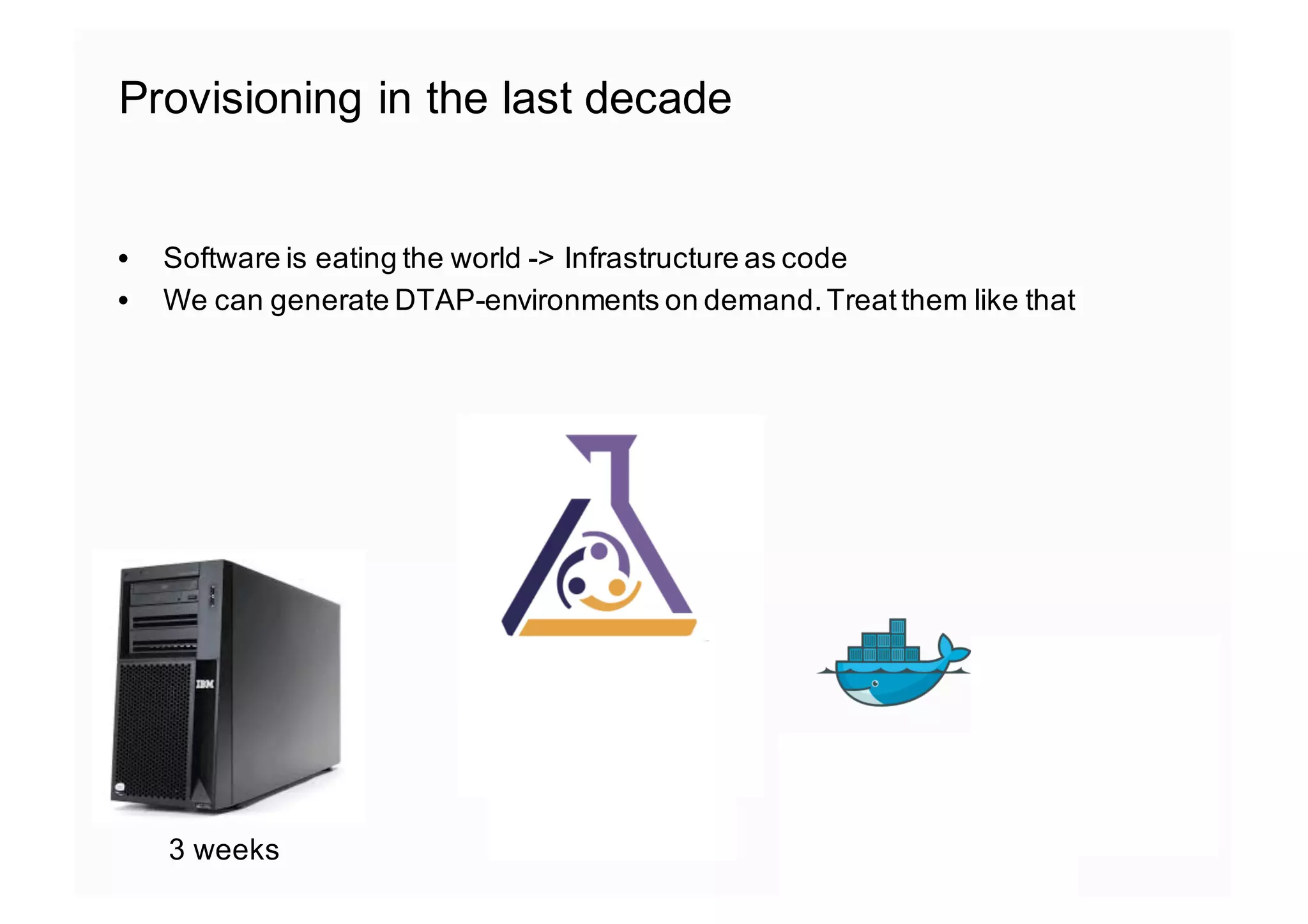
Provisioning in the last decade
• Software is eating the world -> Infrastructure as code
• We can generate DTAP-environments on demand.Treatthem like that
3 weeks 100 milliseconden3 minuten
Huh? Part 7
Fully automated to production
Who is againstthat?
39
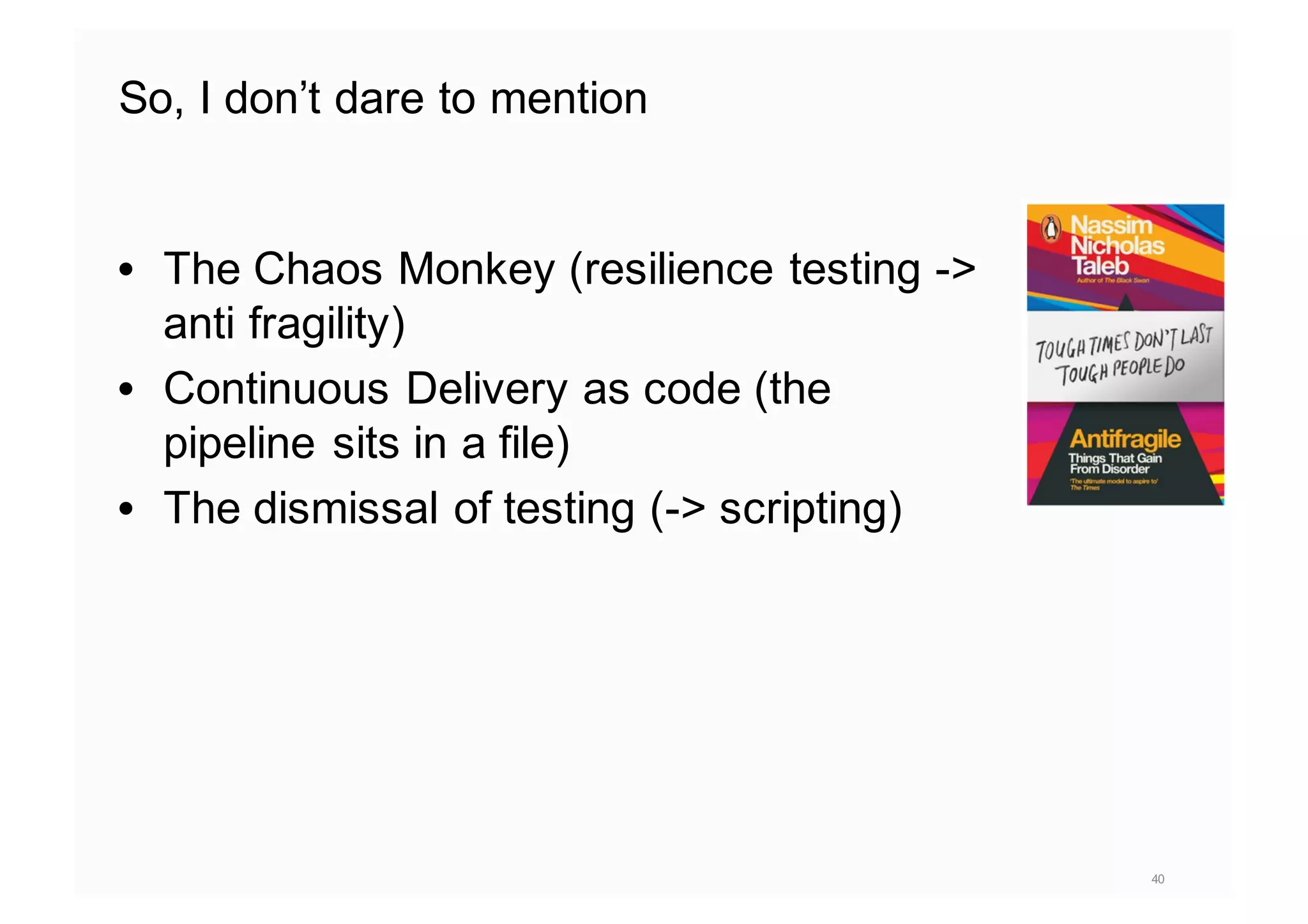
So, I don’t dare to mention
• The Chaos Monkey (resilience testing ->
anti fragility)
• Continuous Delivery as code (the
pipeline sits in a file)
• The dismissal of testing (-> scripting)
40
The great transformation
What got us started with DevOps
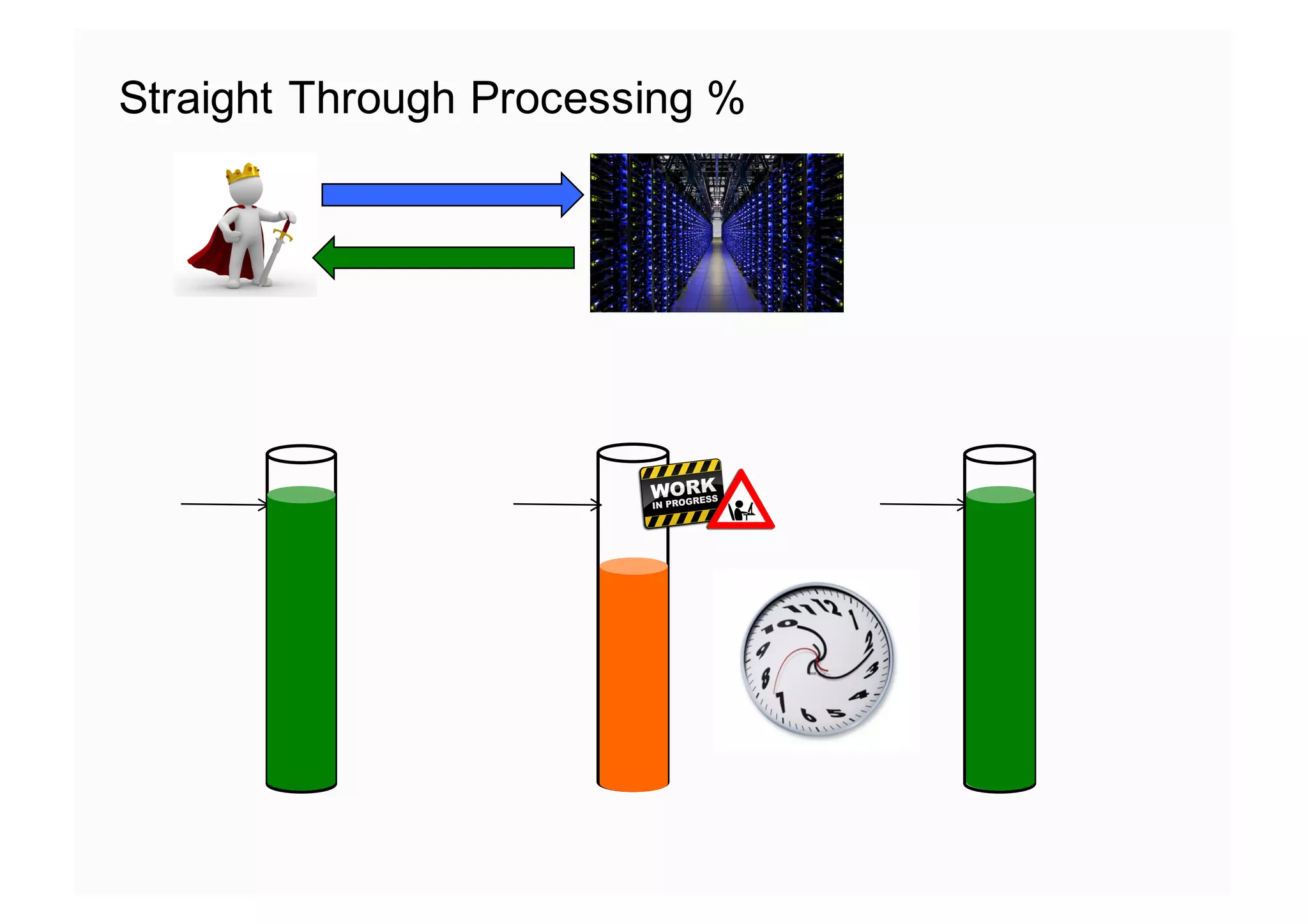
Straight Through Processing %
%
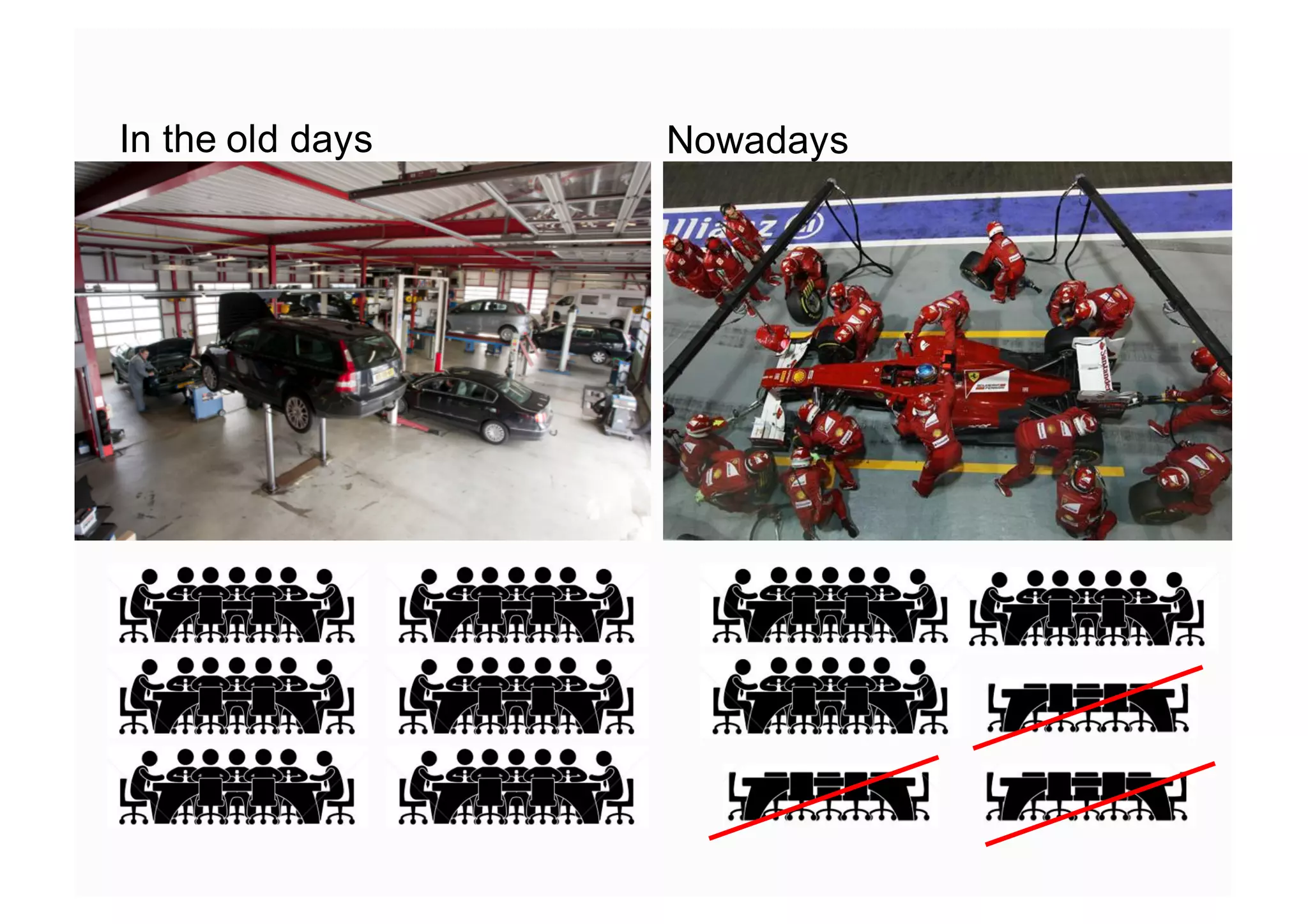
In the old days Nowadays
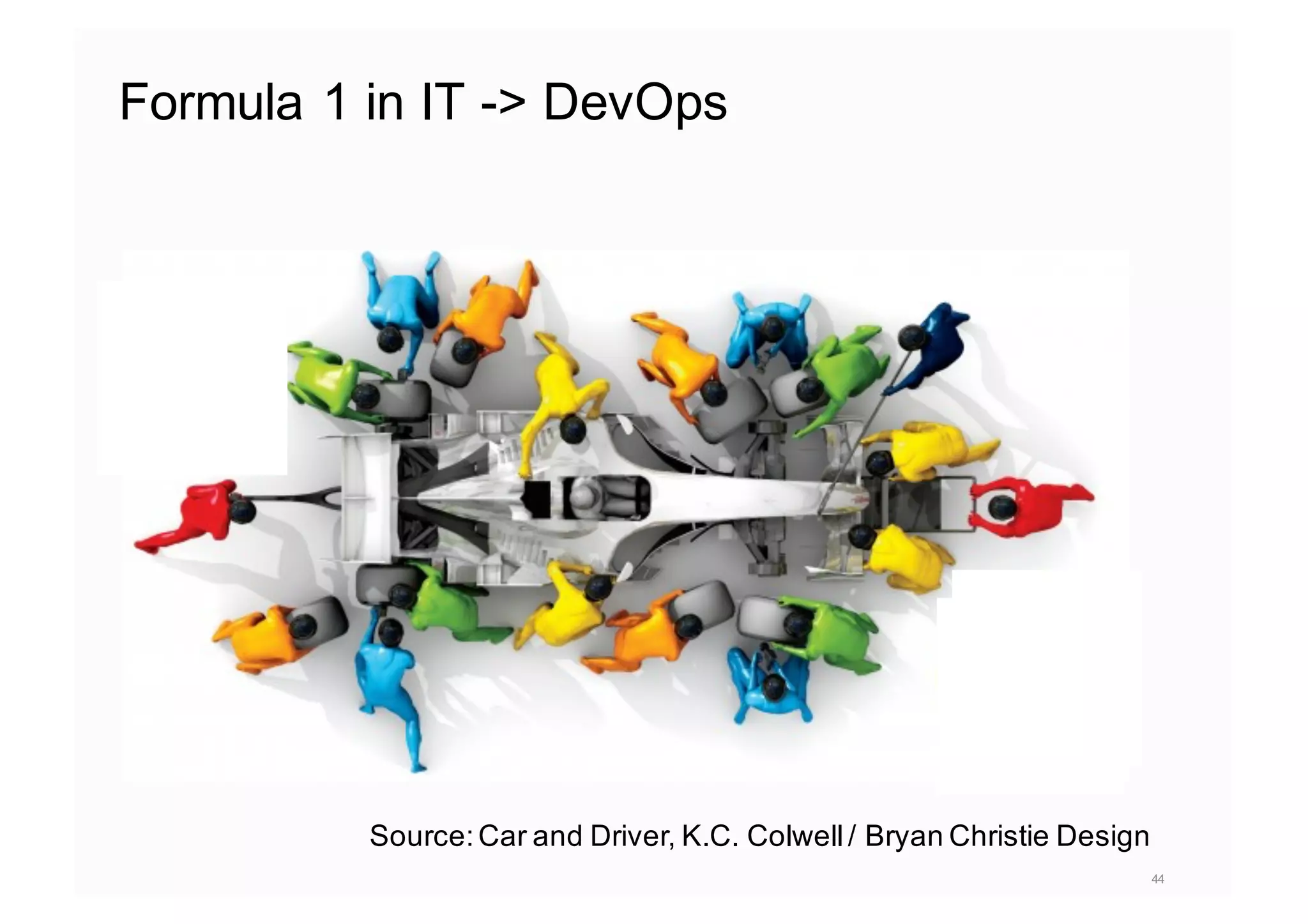
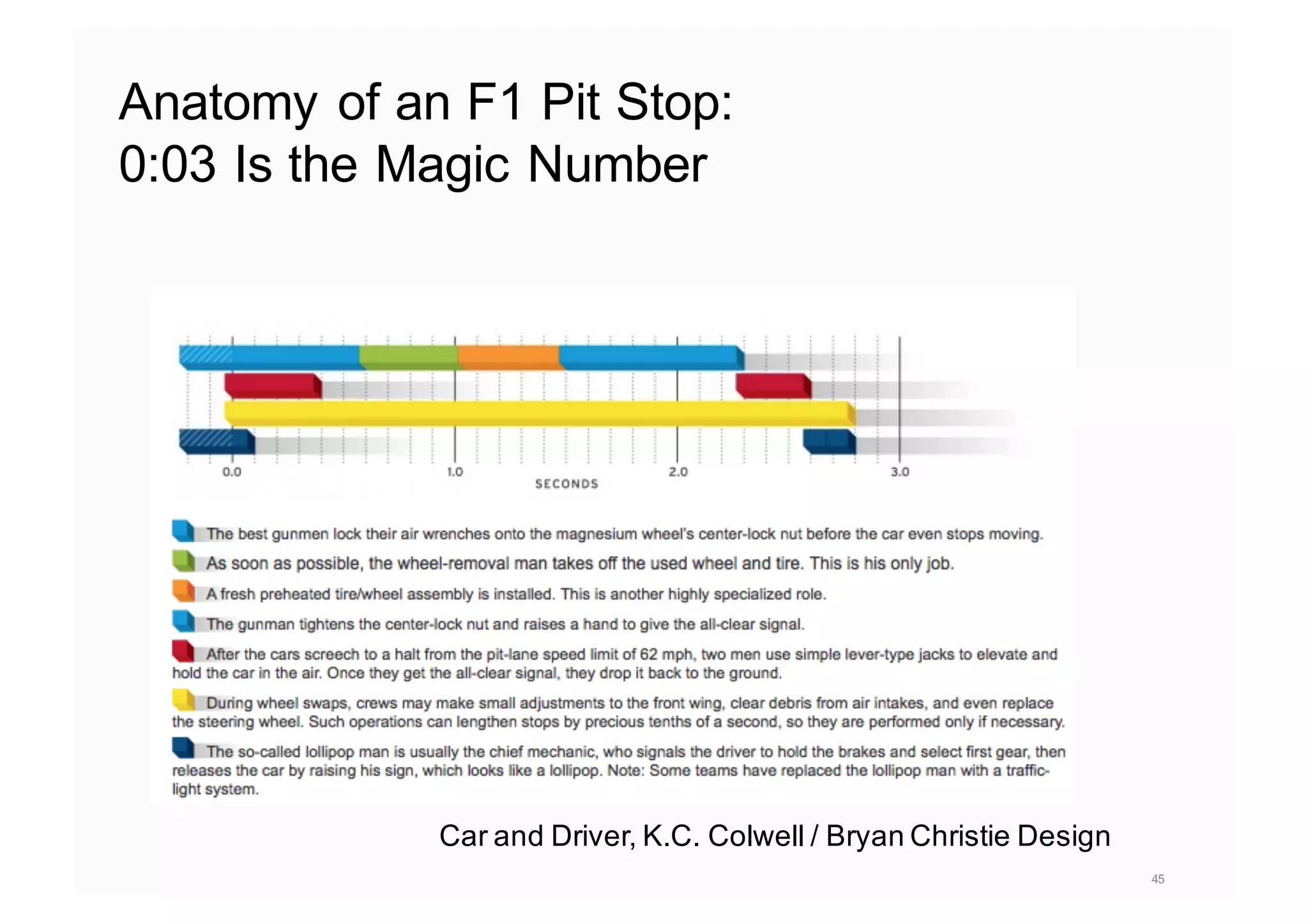
Formula 1 in IT -> DevOps
44
Source:Car and Driver, K.C. Colwell/ Bryan Christie Design
45
Car and Driver, K.C. Colwell / Bryan Christie Design
Anatomy of an F1 Pit Stop:
0:03 Is the Magic Number
Acceleration is not easy in the 21st century
• The most important contribution of management in
the 20th century was the fifty-fold increase in the
productivity of the manual worker in manufacturing
• The most important contribution management needs
to make in the 21st century is similarly to increase
the productivity of the knowledge work and
knownledge workers.
Peter Drucker, 2000
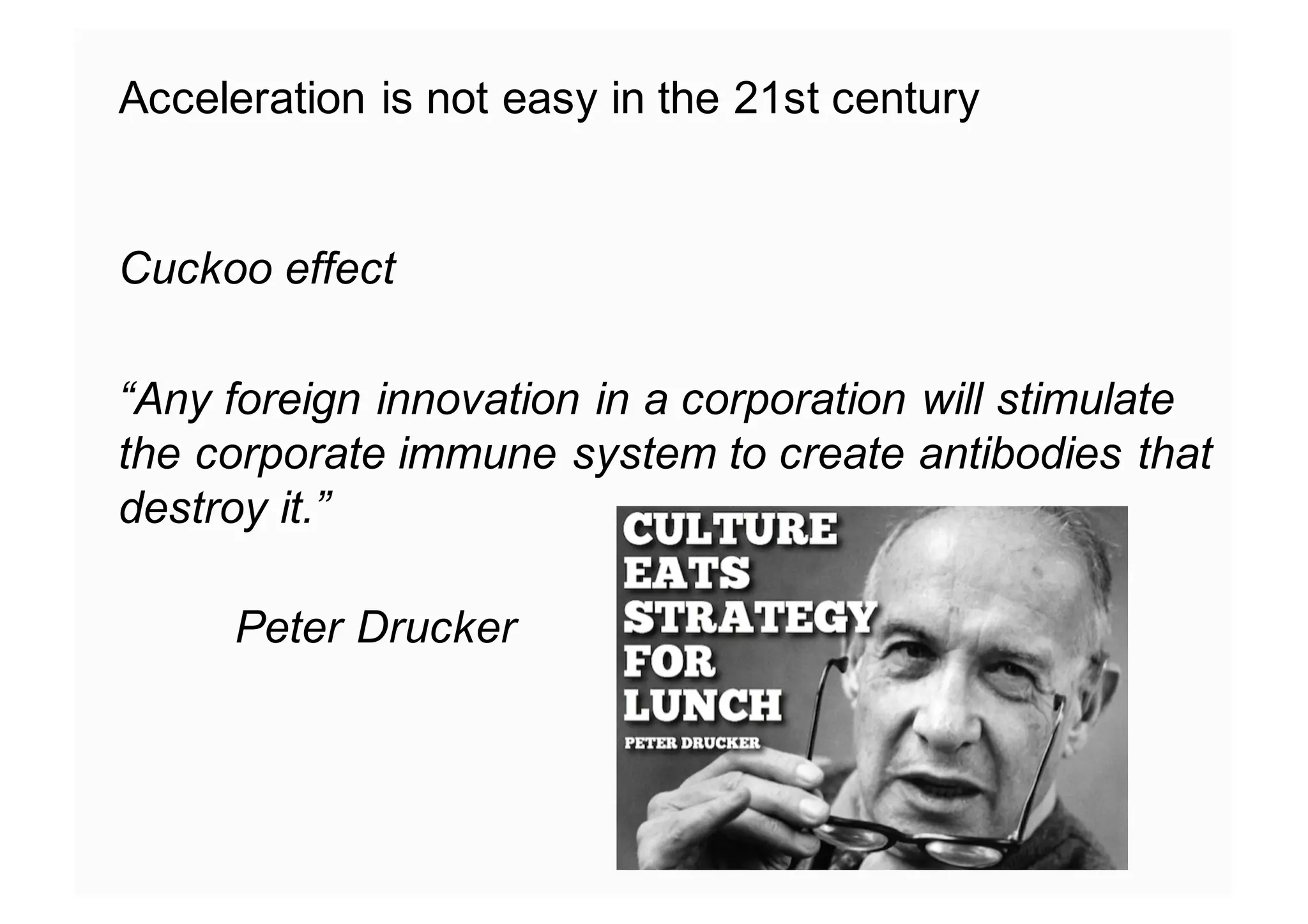
Acceleration is not easy in the 21st century
Cuckoo effect
“Any foreign innovation in a corporation will stimulate
the corporate immune system to create antibodies that
destroy it.”
Peter Drucker
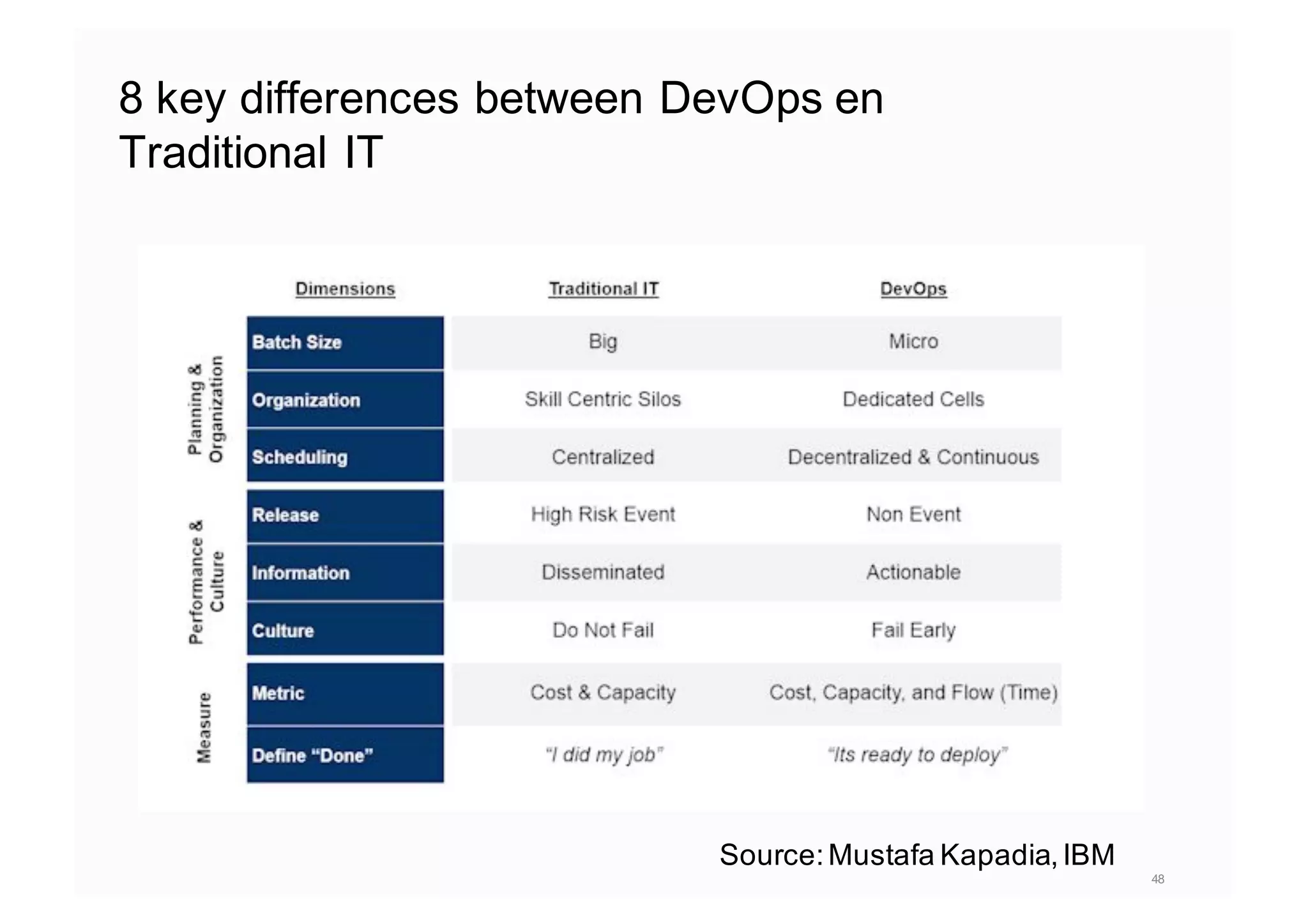
8 key differences between DevOps en
Traditional IT
48
Source:Mustafa Kapadia,IBM
DN
D
G
S
J
O
M
I
C
R
W
W
M
R
I
C O
D
D
G
S
N J R
D
O
S
D
G
C
N M
J
W
I
R J
C
D
G
I
M S
N O
W D
O C
S
N
I
WRJ
M
D
G
D
S W
J
R
M
I
N
C
D
G
O
D
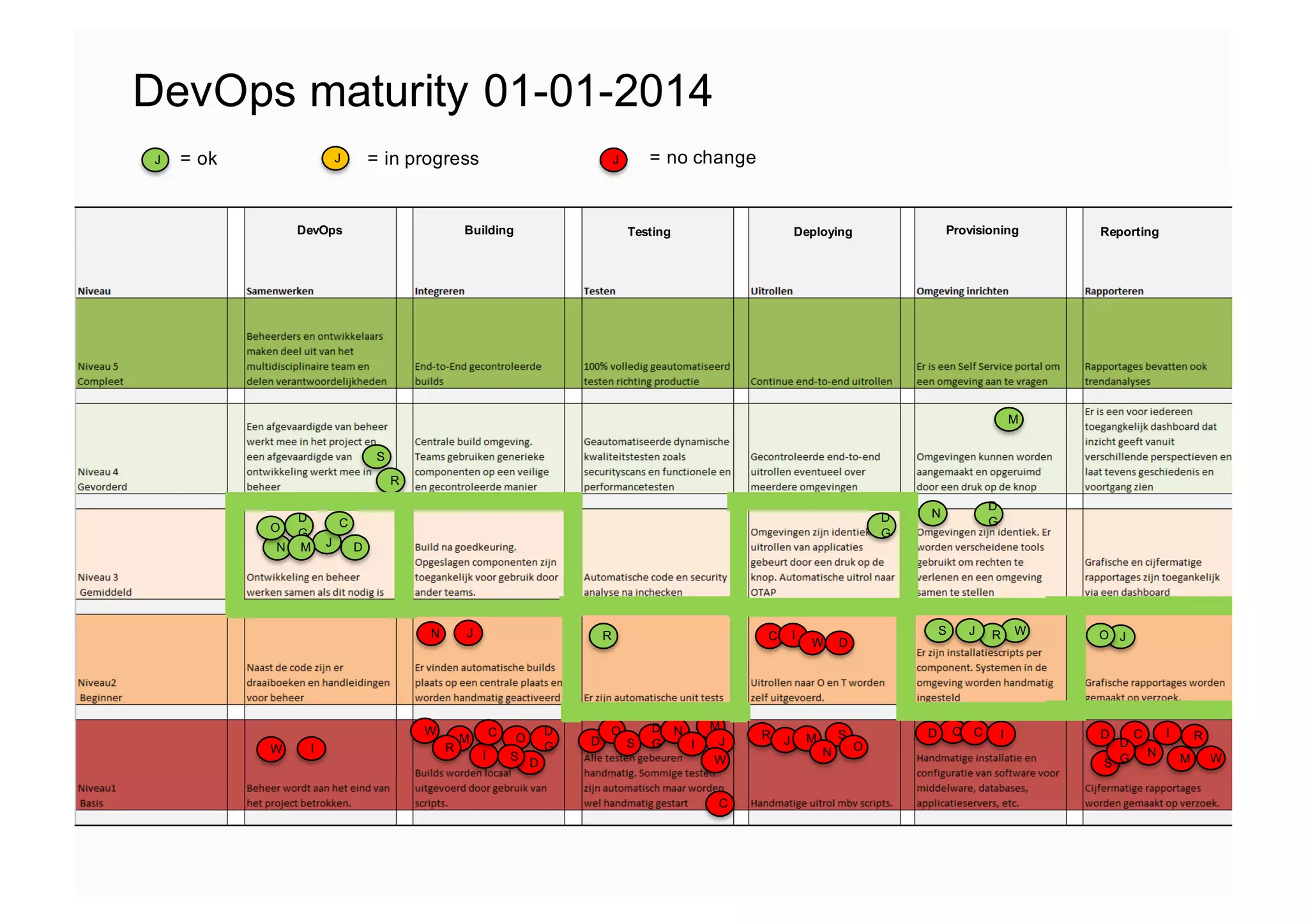
DevOps maturity 01-01-2014
DevOps Building Testing Deploying Provisioning Reporting
J = ok J = in progress J = no change
DN
D
G
S
J
O
M
I
C
R
W
W M
R I
C O
D
D
G
SN
J
R
D
O
S
D
G
C
N M
J
W
I
R
J
C
D
G
I
M S
N
O
W D
O C
S
N
I
WRJ
M
D
G
D
S W
J
R
M
I
N
C
D
G
O
D
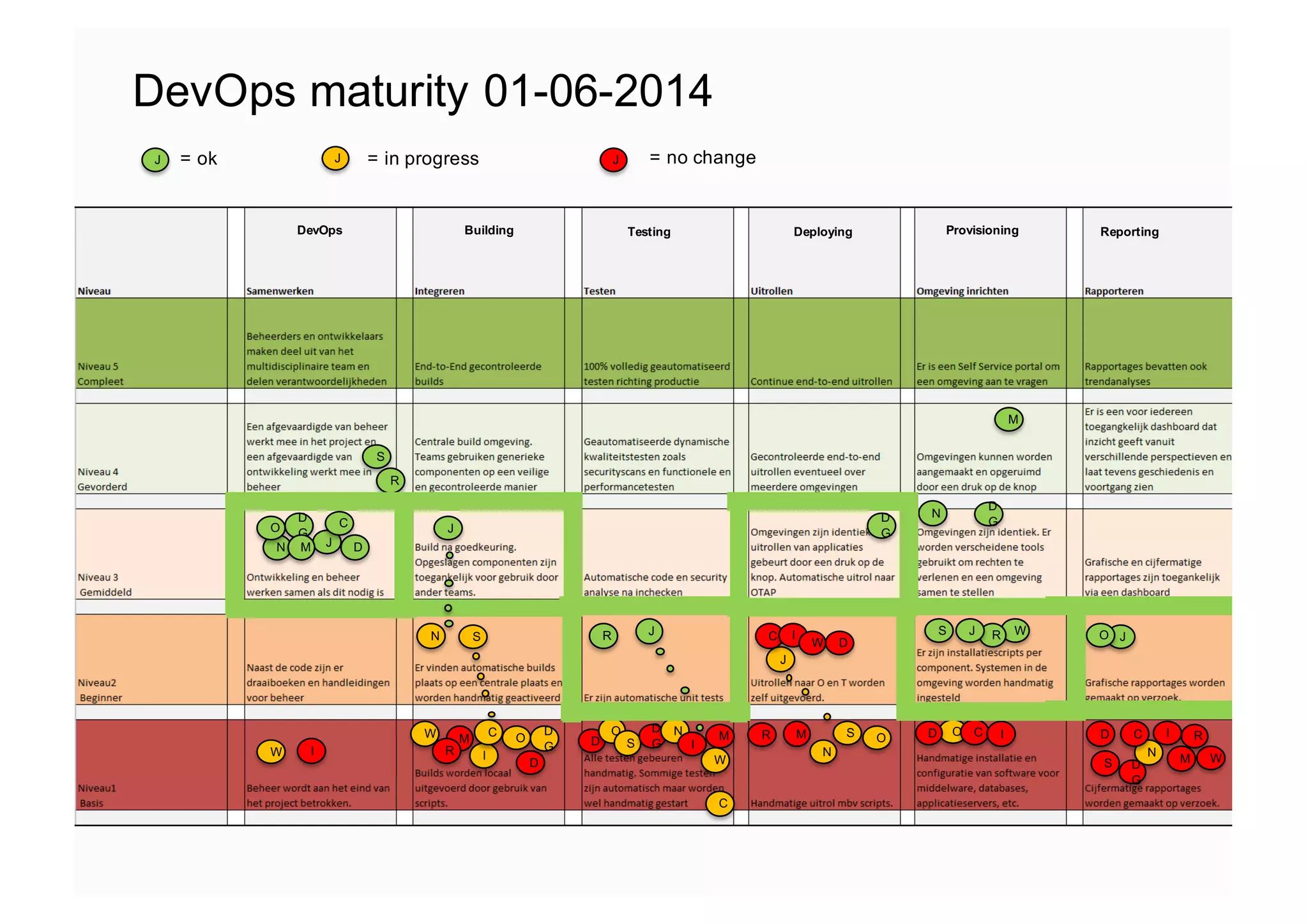
DevOps maturity 01-06-2014
DevOps Building Testing Deploying Provisioning Reporting
J = ok J = in progress J = no change
DN
D
G
S
J
O
M
I
C
R
W
W M
R I
C O
D
D
G
SN
J
R
D
O
S
D
G
C
N M
J
W
I
R
J
C
D
G
I
M S
N
O
W D
CS
N
I
WRJ
M
D
G
D
S W
J
R
M
I
N
C
D
G
O
D
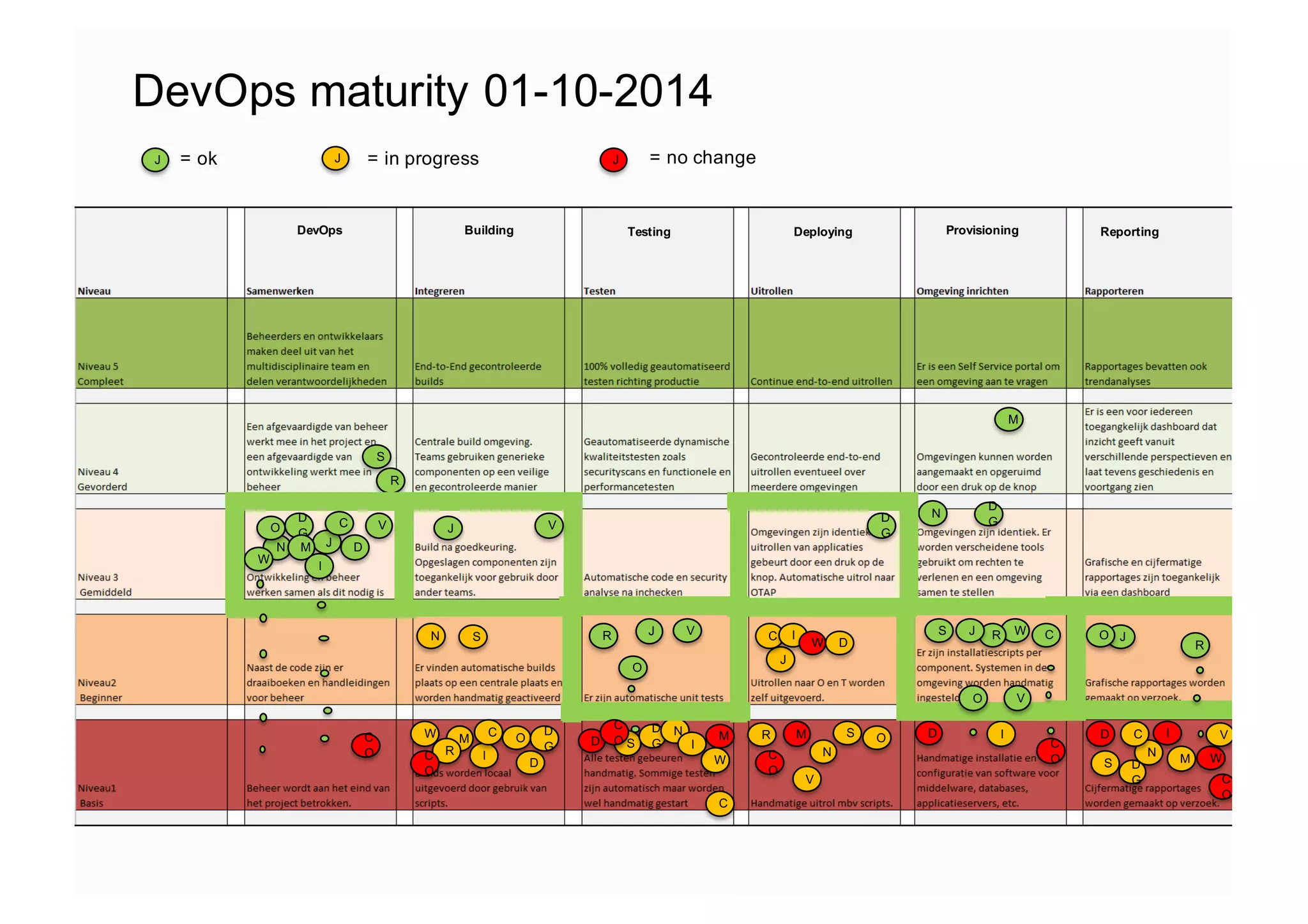
DevOps maturity 01-10-2014
DevOps Building Testing Deploying Provisioning Reporting
O
C
O
C
O
C
O
C
O
C
O
C
O
V
V
V
V
V
V
J = ok J = in progress J = no change
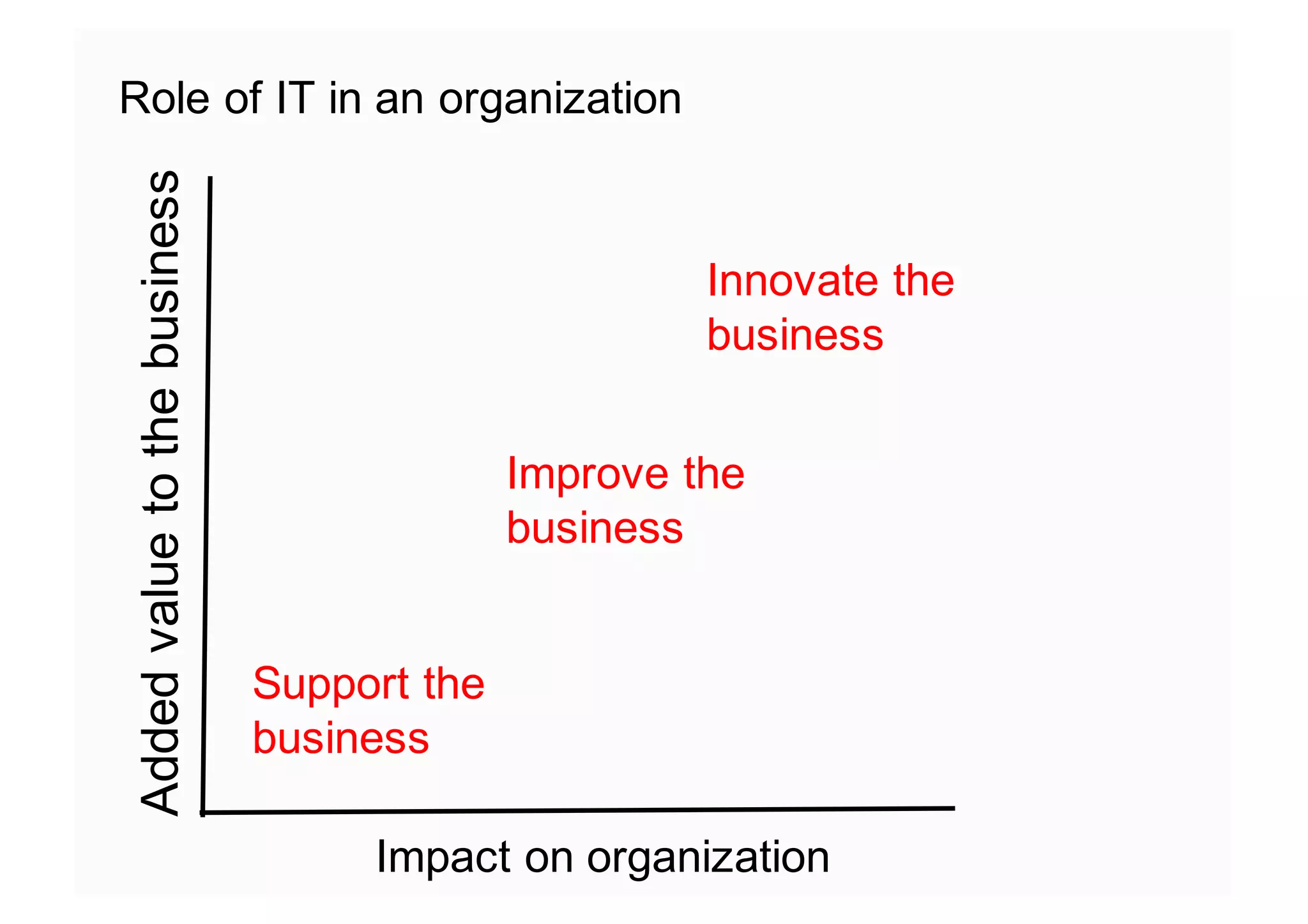
Role of IT in an organization
Support the
business
Addedvaluetothebusiness
Impact on organization
Improve the
business
Innovate the
business
53
55
The great transformation
How to convince your boss of DevOps?
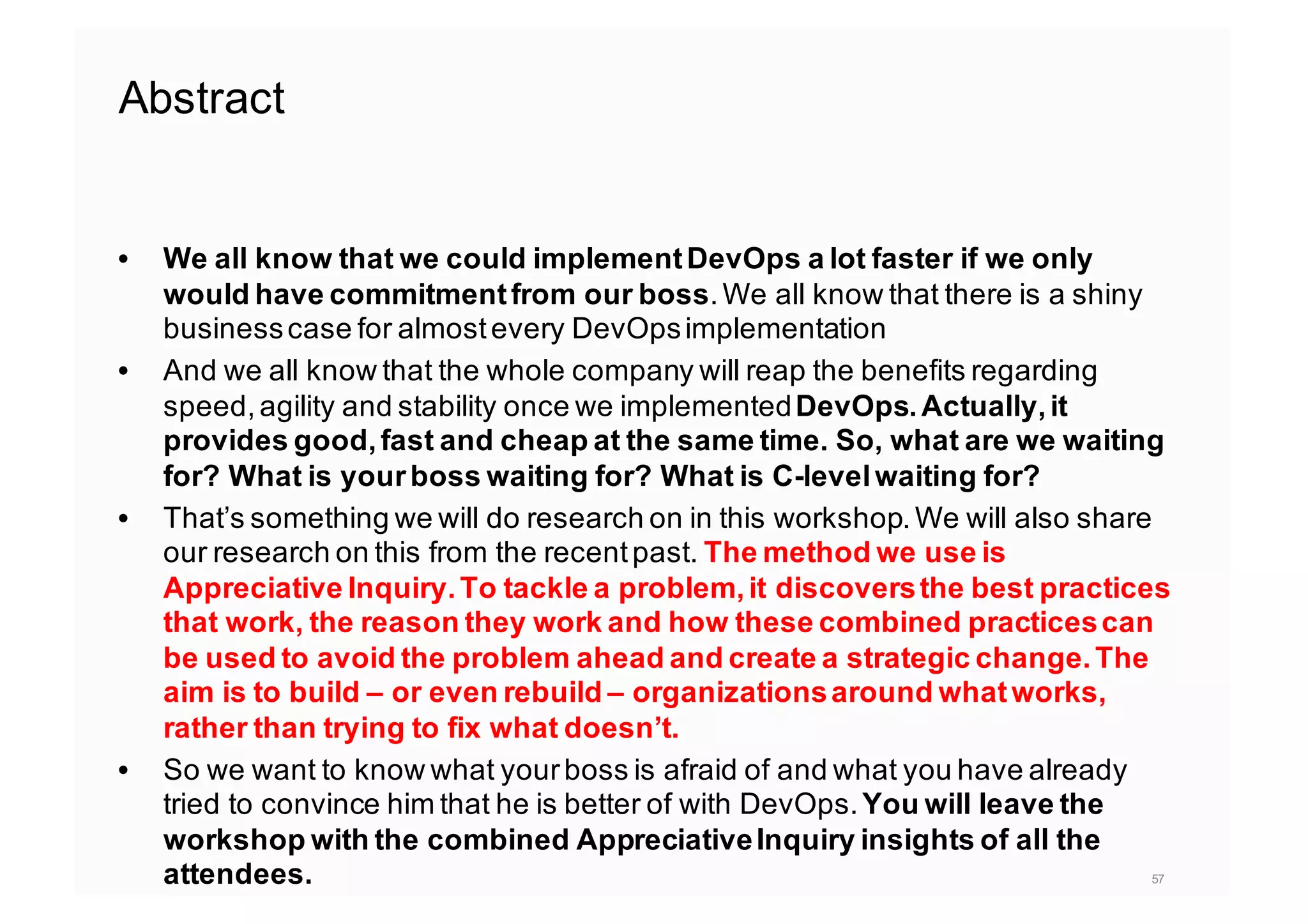
Abstract
• We all know that we could implementDevOps a lot faster if we only
would have commitmentfrom our boss.We all know that there is a shiny
businesscase for almostevery DevOpsimplementation
• And we all know that the whole company will reap the benefits regarding
speed,agility and stability once we implementedDevOps.Actually,it
provides good,fast and cheap at the same time. So, what are we waiting
for? What is yourboss waiting for? What is C-levelwaiting for?
• That’s something we will do research on in this workshop.We will also share
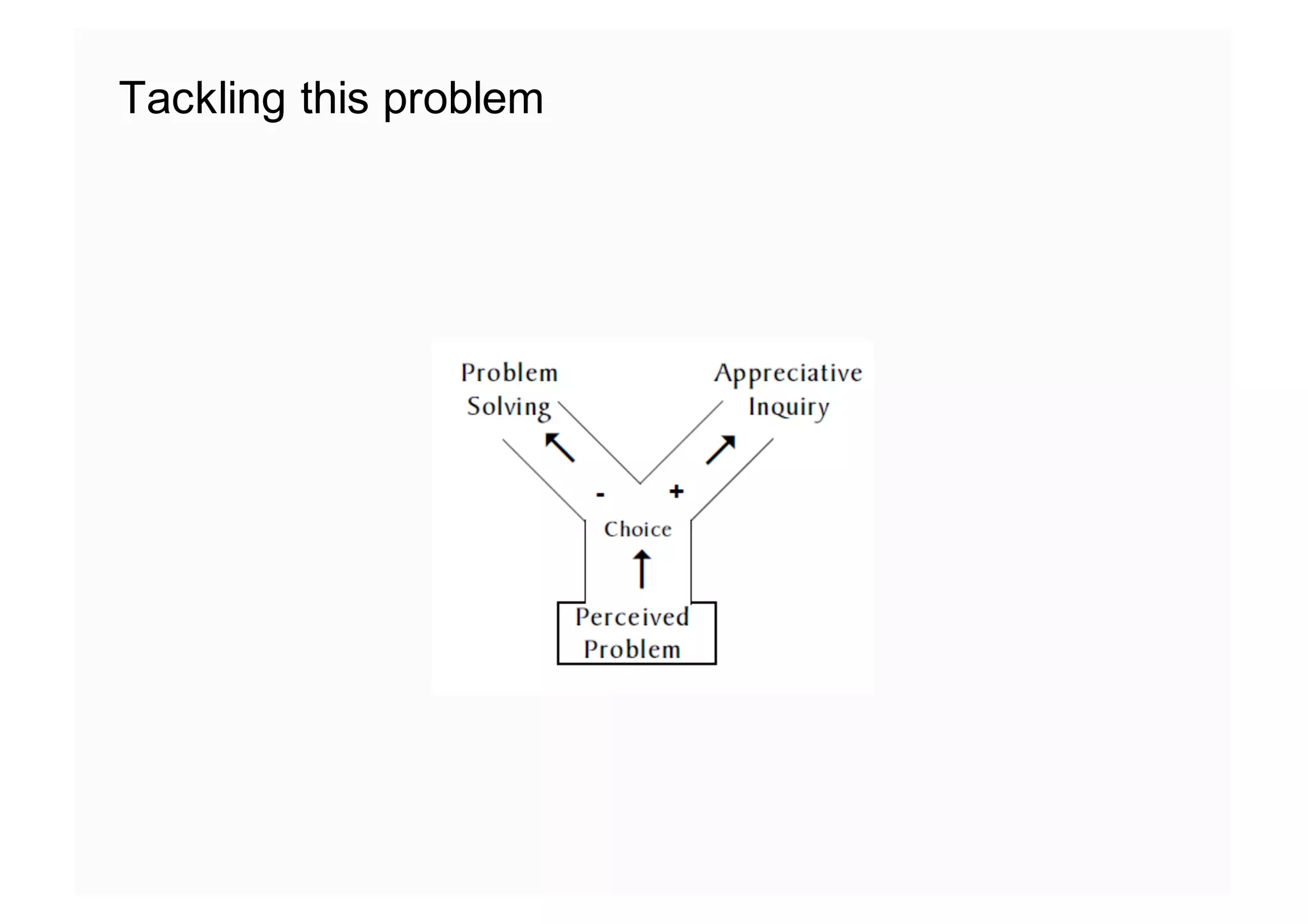
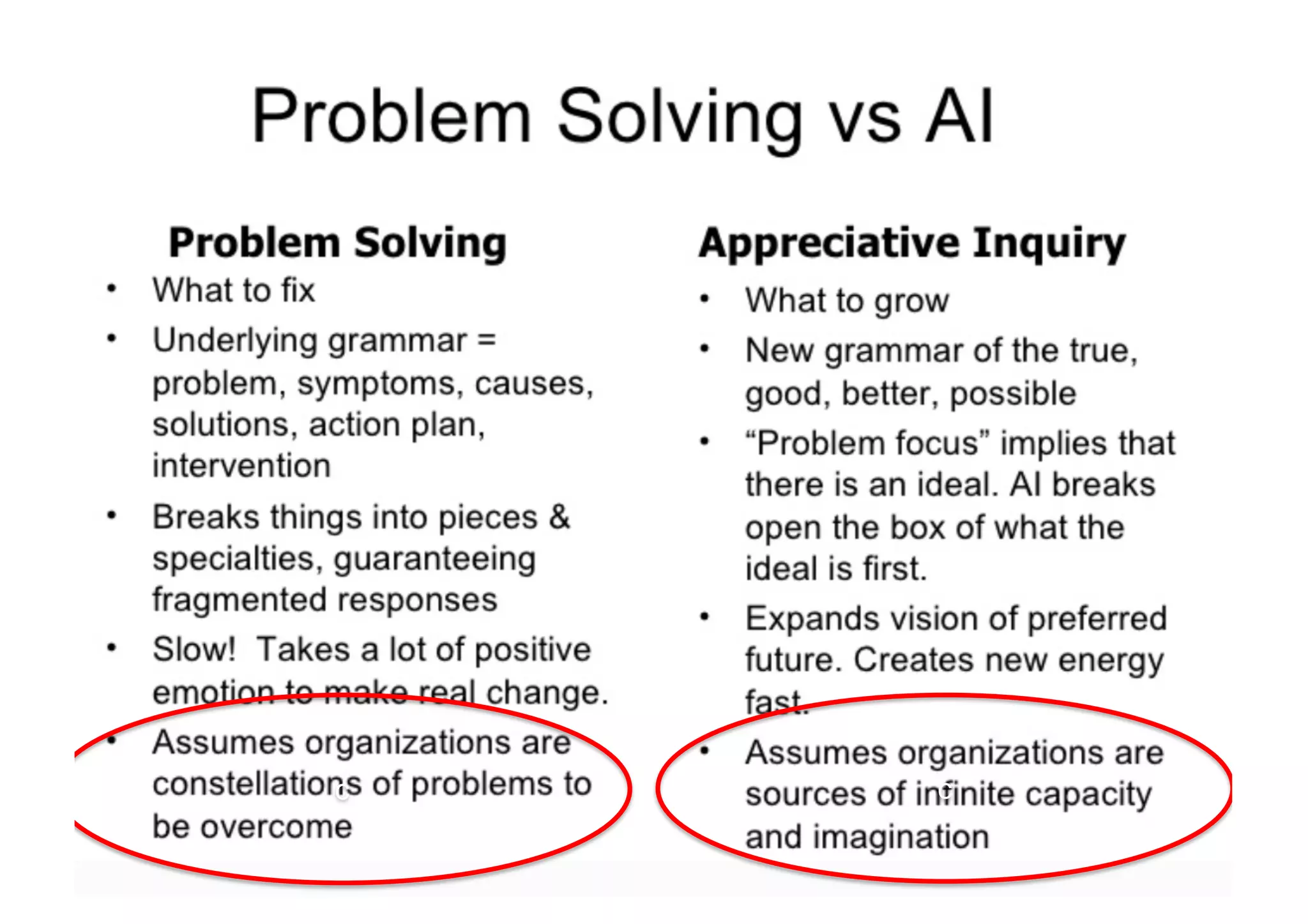
our research on this from the recentpast. The method we use is
Appreciative Inquiry.To tackle a problem,it discoversthe best practices
that work, the reason they work and how these combined practicescan
be used to avoid the problem ahead and create a strategic change.The
aim is to build – or even rebuild – organizationsaround whatworks,
rather than trying to fix what doesn’t.
• So we want to know what yourboss is afraid of and what you have already
tried to convince him that he is better of with DevOps.You will leave the
workshop with the combined AppreciativeInquiry insights of all the
attendees. 57
But first: what is the core problem?
Why is not every
organization, not everybody
in an organization working
agile / doing DevOps?
Tackling this problem
c c
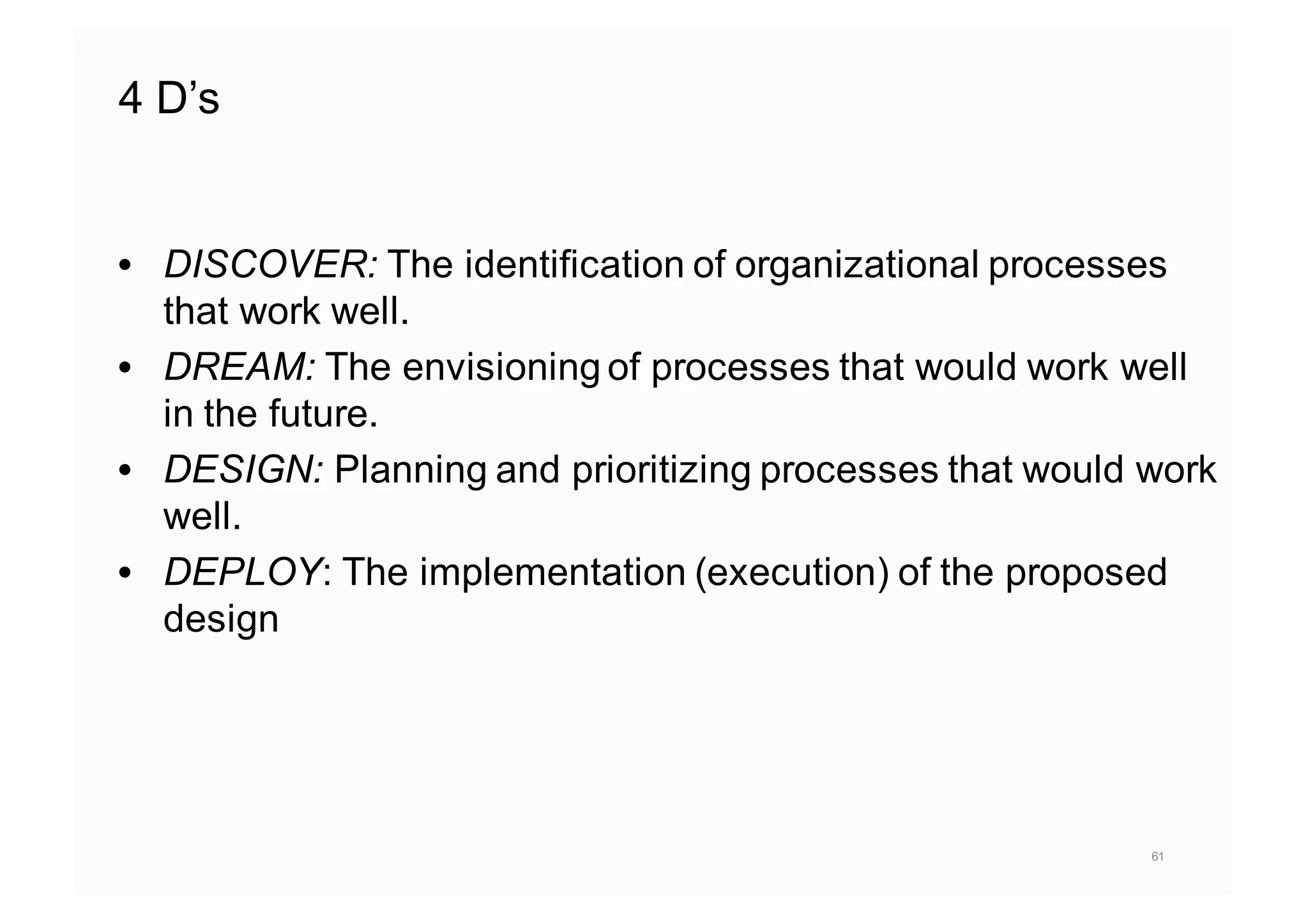
4 D’s
• DISCOVER: The identification of organizational processes
that work well.
• DREAM: The envisioning of processes that would work well
in the future.
• DESIGN: Planning and prioritizing processes that would work
well.
• DEPLOY: The implementation (execution) of the proposed
design
61
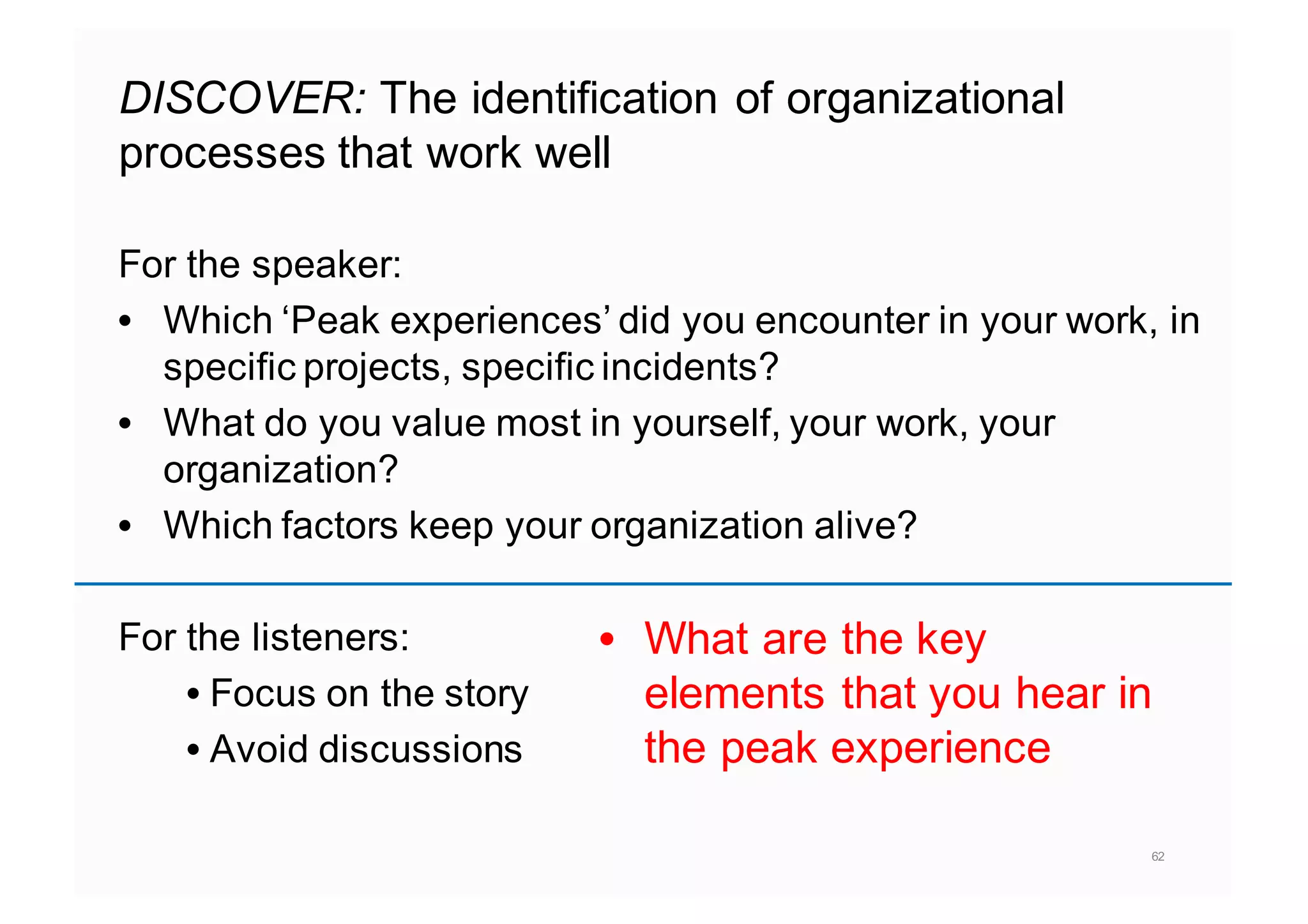
DISCOVER: The identification of organizational
processes that work well
For the speaker:
• Which ‘Peak experiences’ did you encounter in your work, in
specific projects, specific incidents?
• What do you value most in yourself, your work, your
organization?
• Which factors keep your organization alive?
For the listeners:
• Focus on the story
• Avoid discussions
62
• What are the key
elements that you hear in
the peak experience
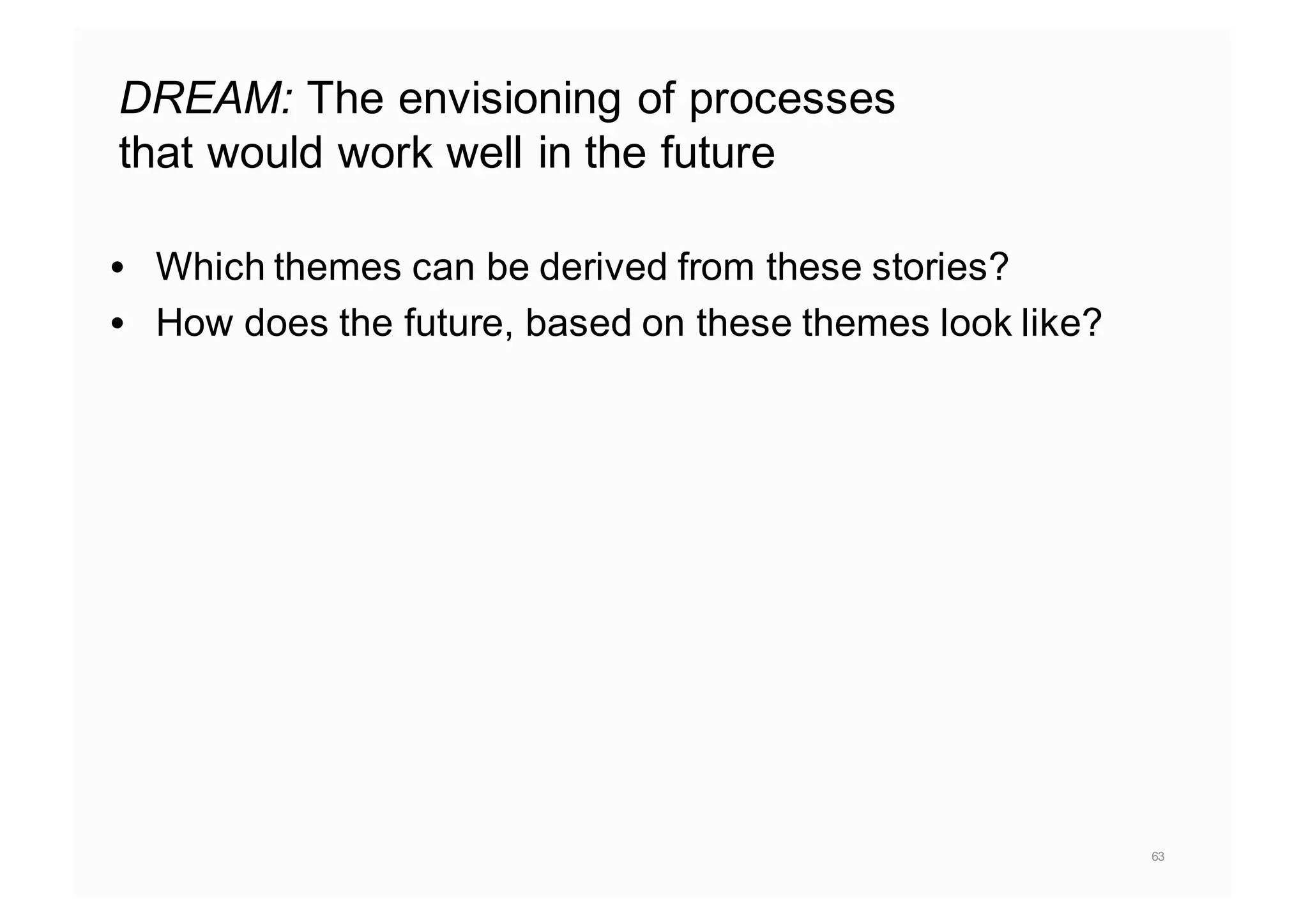
DREAM: The envisioning of processes
that would work well in the future
• Which themes can be derived from these stories?
• How does the future, based on these themes look like?
63
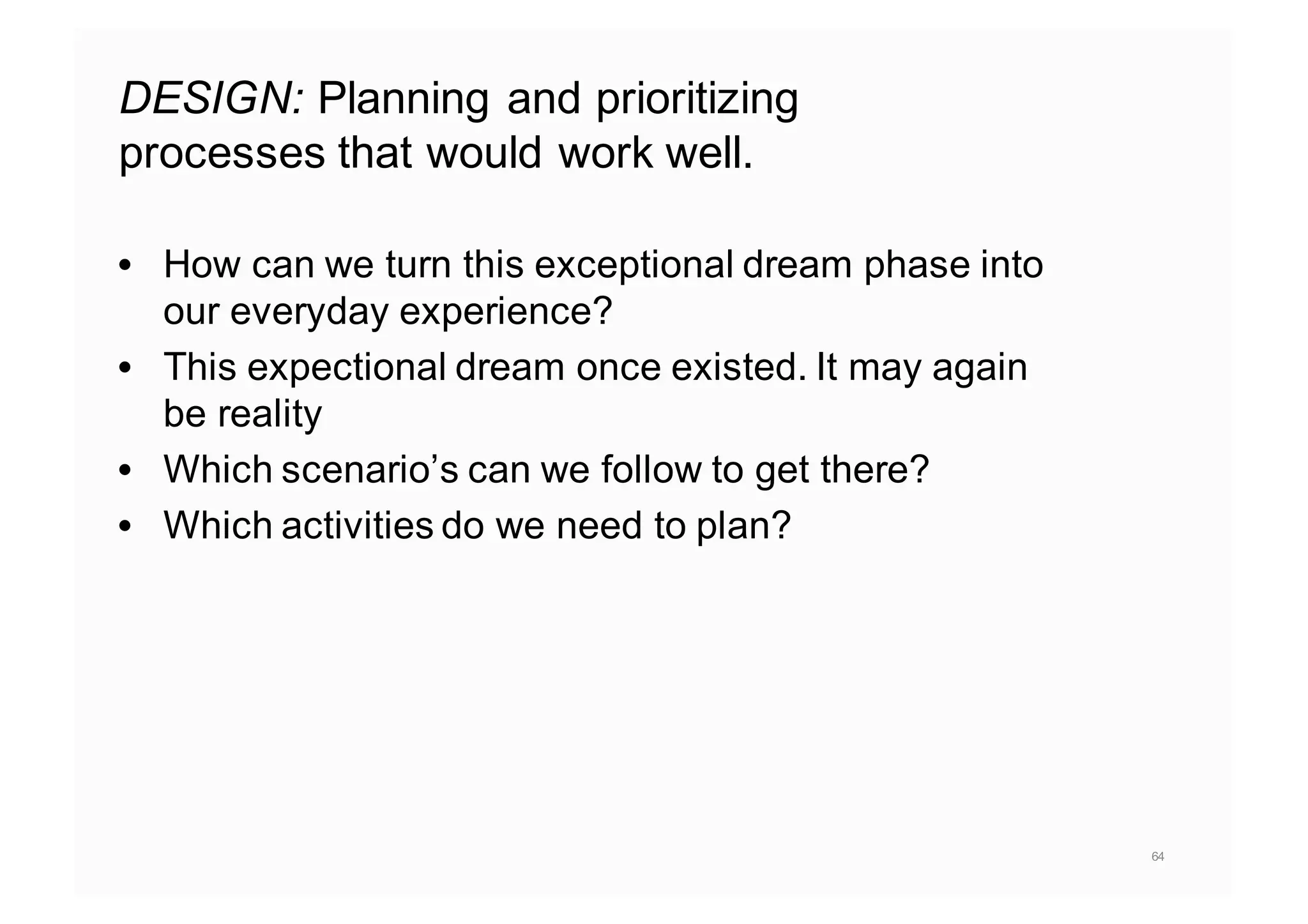
DESIGN: Planning and prioritizing
processes that would work well.
• How can we turn this exceptional dream phase into
our everyday experience?
• This expectional dream once existed. It may again
be reality
• Which scenario’s can we follow to get there?
• Which activities do we need to plan?
64
DEPLOY: The implementation (execution) of the
proposed design
• Activities to deploy the dream state in your
organization
65

Jan de Vries - How to convince your boss that it is DevOps that he wants

  • 1.
    How to convinceyour boss that it is DevOps that she wants • 11.00 – 11.45 The great transformation 7 surprising experiences -> 7 best practices • 12.00 – 12.45 Appreciative Inquiry Build – or even rebuild – organizations around what works, rather than trying to fix what doesn’t. 2 parts 1 Happy to talk in front of an agile audience!
  • 2.
    The great transformation 7surprising experiences -> 7 best practices
  • 3.
    Intro Jan deVries 3 • Fan of Agile • DevOps evangelist • Business IT Consultant at insurance company a.s.r. • Convenor Enterprise DevOps group (uniting members of ASL BiSL Foundation, ITSMF and Agile Consortium) • Member Scaling Agile group at Agile Consortium • Trainer BiSL, ASL, ITIL, FSM, ISM • Blue Ocean Defined Demand expert • Chairman Clarity User Society
  • 4.
  • 6.
    c How iterative isyour software process?
  • 7.
    c How often doyou release to your customer?
  • 8.
    The result andthe consequences Tijd Tester:discovers defectsthat a developerintroduced 3 months ago Developer:what did I build 3 months ago? Designer:whatdid I design 6 months ago User: what did I ask for long time ago?
  • 9.
    Manual activities: • Preparationand tuning of scenarios • Acceptance tests • deployments • conversions Why not release more often? 600 Why not automate? No business case Because we don’t do it often enough So we keep the frequency low: • Saves time for Dev and Ops • Increases stability
  • 10.
  • 11.
  • 12.
  • 13.
    • A multidisciplinaryteam that is fully responsible for continuously developing and maintaining a service Business Servicechain Platform#1 Platform#2 Platform#3 Platform#n Infrastructure
  • 14.
    DevOps, the teambasics • Development AND Operations in 1 team per businessline (or part of it) • Development, Business Information Management (BiSL), Application Management (ASL) and IT Infrastructure Management (ITIL) in 1 team per businessline (or part of it) • You build it, you run it. Eat your own dogfood • DevOps finishes what Agile started, because every PSI goes to production. • Extra flavours: BusDevOps and Enterprise DevOps 14
  • 15.
    DevOps teams instead of projects Because of the direct relationship with the customer there is less need to start projects. A very large part of the requirements is being realised through changes. In stead of staffing projects Bring the work to the scrum team • No resource shuffling • Reliable velocity • Clear Cost of Ownership per business line
  • 16.
    Headline from thefuture 2017 SCRUM finally breaks through Numberof newly launched projects decreased with 80 % in the last 2 years.
  • 17.
    Blow up silo’s,to create DevOps teams 17
  • 18.
  • 19.
  • 20.
  • 21.
  • 22.
  • 23.
    S T O B I T CIOinfluence....
  • 24.
    S T O B I T ...applied in the board
  • 25.
  • 26.
  • 27.
    Integration of managementtrack and technical track Based on a whitepaper of XebiaLabs ?
  • 28.
  • 29.
    What is moreimportant? Mean Time Between Failure as long as possible? Mean Time To Repair as short as possible? 29
  • 30.
    • Failure isnot acceptable…. But it will happen! • MTTR is more important than MTBF (John Allspaw) • Time spent on facilitating an efficient and effective response to failure >= time spent at preventing that failure. • Focus on MTBF: only for space hardware and embedded medical devices • Focus on MTTR: everything else What is more important? MTTR or MTBF?
  • 31.
  • 32.
    No time fortechnical debt and improvements http://www.cibit.nl/nl/nieuws/blogs/melk-produceren-of-poepscheppen/ Source:Brian Teunissen,Inspearit
  • 33.
    4 input sourcesfor the backlog Technical debt backlog Improvement backlog Tasks
  • 34.
    With time fortechnical debt and process improvement http://www.cibit.nl/nl/nieuws/blogs/melk-produceren-of-poepscheppen/
  • 35.
  • 36.
  • 37.
    Provisioning in thelast decade • Software is eating the world -> Infrastructure as code • We can generate DTAP-environments on demand.Treatthem like that 3 weeks 100 milliseconden3 minuten
  • 38.
  • 39.
    Fully automated toproduction Who is againstthat? 39
  • 40.
    So, I don’tdare to mention • The Chaos Monkey (resilience testing -> anti fragility) • Continuous Delivery as code (the pipeline sits in a file) • The dismissal of testing (-> scripting) 40
  • 41.
    The great transformation Whatgot us started with DevOps
  • 42.
  • 43.
    In the olddays Nowadays
  • 44.
    Formula 1 inIT -> DevOps 44 Source:Car and Driver, K.C. Colwell/ Bryan Christie Design
  • 45.
    45 Car and Driver,K.C. Colwell / Bryan Christie Design Anatomy of an F1 Pit Stop: 0:03 Is the Magic Number
  • 46.
    Acceleration is noteasy in the 21st century • The most important contribution of management in the 20th century was the fifty-fold increase in the productivity of the manual worker in manufacturing • The most important contribution management needs to make in the 21st century is similarly to increase the productivity of the knowledge work and knownledge workers. Peter Drucker, 2000
  • 47.
    Acceleration is noteasy in the 21st century Cuckoo effect “Any foreign innovation in a corporation will stimulate the corporate immune system to create antibodies that destroy it.” Peter Drucker
  • 48.
    8 key differencesbetween DevOps en Traditional IT 48 Source:Mustafa Kapadia,IBM
  • 49.
    DN D G S J O M I C R W W M R I C O D D G S N JR D O S D G C N M J W I R J C D G I M S N O W D O C S N I WRJ M D G D S W J R M I N C D G O D DevOps maturity 01-01-2014 DevOps Building Testing Deploying Provisioning Reporting J = ok J = in progress J = no change
  • 50.
    DN D G S J O M I C R W W M R I CO D D G SN J R D O S D G C N M J W I R J C D G I M S N O W D O C S N I WRJ M D G D S W J R M I N C D G O D DevOps maturity 01-06-2014 DevOps Building Testing Deploying Provisioning Reporting J = ok J = in progress J = no change
  • 51.
    DN D G S J O M I C R W W M R I CO D D G SN J R D O S D G C N M J W I R J C D G I M S N O W D CS N I WRJ M D G D S W J R M I N C D G O D DevOps maturity 01-10-2014 DevOps Building Testing Deploying Provisioning Reporting O C O C O C O C O C O C O V V V V V V J = ok J = in progress J = no change
  • 52.
    Role of ITin an organization Support the business Addedvaluetothebusiness Impact on organization Improve the business Innovate the business
  • 53.
  • 55.
  • 56.
    The great transformation Howto convince your boss of DevOps?
  • 57.
    Abstract • We allknow that we could implementDevOps a lot faster if we only would have commitmentfrom our boss.We all know that there is a shiny businesscase for almostevery DevOpsimplementation • And we all know that the whole company will reap the benefits regarding speed,agility and stability once we implementedDevOps.Actually,it provides good,fast and cheap at the same time. So, what are we waiting for? What is yourboss waiting for? What is C-levelwaiting for? • That’s something we will do research on in this workshop.We will also share our research on this from the recentpast. The method we use is Appreciative Inquiry.To tackle a problem,it discoversthe best practices that work, the reason they work and how these combined practicescan be used to avoid the problem ahead and create a strategic change.The aim is to build – or even rebuild – organizationsaround whatworks, rather than trying to fix what doesn’t. • So we want to know what yourboss is afraid of and what you have already tried to convince him that he is better of with DevOps.You will leave the workshop with the combined AppreciativeInquiry insights of all the attendees. 57
  • 58.
    But first: whatis the core problem? Why is not every organization, not everybody in an organization working agile / doing DevOps?
  • 59.
  • 60.
  • 61.
    4 D’s • DISCOVER:The identification of organizational processes that work well. • DREAM: The envisioning of processes that would work well in the future. • DESIGN: Planning and prioritizing processes that would work well. • DEPLOY: The implementation (execution) of the proposed design 61
  • 62.
    DISCOVER: The identificationof organizational processes that work well For the speaker: • Which ‘Peak experiences’ did you encounter in your work, in specific projects, specific incidents? • What do you value most in yourself, your work, your organization? • Which factors keep your organization alive? For the listeners: • Focus on the story • Avoid discussions 62 • What are the key elements that you hear in the peak experience
  • 63.
    DREAM: The envisioningof processes that would work well in the future • Which themes can be derived from these stories? • How does the future, based on these themes look like? 63
  • 64.
    DESIGN: Planning andprioritizing processes that would work well. • How can we turn this exceptional dream phase into our everyday experience? • This expectional dream once existed. It may again be reality • Which scenario’s can we follow to get there? • Which activities do we need to plan? 64
  • 65.
    DEPLOY: The implementation(execution) of the proposed design • Activities to deploy the dream state in your organization 65