JAMMU & KASHMIR
FLOODS -2014
• PRESENTED BY: NAJIBULLAH FANOS
• FINAL YEAR STUDENT OF MURP
• UNIVERSITY: GUATAM BUDDHA UNIVERSITY
• GUIDE TEACHER: DR. NIRMITA MILHOTRA (HOD OF ARCHITECTURE AND
PLANNING DEPARTMENT)
JAMMU AND KASHMIR FLOODS 2014
Jammu and Kashmir experienced heavy monsoon rains that began on September
2, 2014 and lead to unprecedented widespread flooding and landslides across
the state.
Banks of the river Jhelum, Chenab, Tawi and many other streams were
burst.
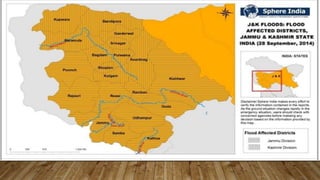
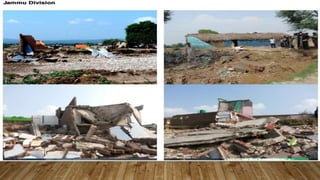
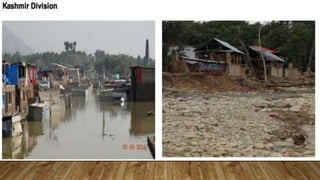
The worst affected districts are Srinagar, Anantnag, Baramulla, Pulwama,
Ganderbal, Kulgam, Budgam, Rajouri, Poonch and Reasi.
Links of Kashmir Valley were disrupted and the 300- km- long national highway
was closed for vehicular traffic from the 7th September as a result of landslides
and floods.
As many as 60 major and minor roads have been cut off and over 30 bridges
washed away,
BACKGROUND
Heavy rainfall has caused:
 Flash flooding with localized damage across the state,
Landslides, which impacted on communities and road connectivity and,
Widespread flooding in the Jammu & Kashmir Valley.
 Flood waters from Jhelum River breached embankments in many low-lying
areas in Kashmir, including the capital Srinagar and Tawi River in Jammu forcing
people to move to safer places.
 In this disaster as per report 190 people dead and 78 person enjurd.
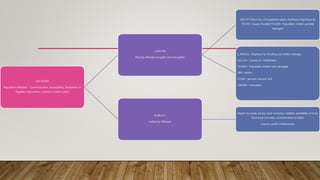
10,136,063
Population Affected: Communication, Accessibility, Availability of
Supplies, Agriculture, Livestock, Assets Losses
1,949,790
Directly Affected (tangible and intangible)
659,737 Direct loss of household assets, livelihood, Psychosocial
97,159+ houses flooded 574,209+ Population shelter partially
damaged
1,290,052+ Displaced by flooding and shelter damage.
121,124+ houses un- inhabitable.
715,841+ Population shelter fully damaged
280+ deaths.
53,082+ persons injured/ sick.
226,000+ Evacuated.
8,186,273
Indirectly Affected
Impact on roads, access, local economy, markets, availability of food,
food price increases, contamination of water
sources, public infrastructure
RELIEF MEASURES GO & NGO
 The Govt. has started over 87 camps in Jammu and over 147 in Kashmir division.
 Distributed 250 tents, 250 blankets and 700 Qtls of rice in Baramula,
 546 tents, 36 bundles (blankets) and 92 Qtls of rice in Budgam,
 1 tent, 517 blankets, 40 Qtls of rice, 1.60 Qtls of pulses in Shopian,
 1800 blankets in Ganderbal, 423 tents.
 9125 blankets in Anantnag, 03 ton of ration and 3000 tarpaulin in Rajouri,
 Over 20908 people were evacuated and 23900 were rehabilitated in the Jammu
region.
 India Army rescued persons at the earliest through airlifting and supported with Boats,
Pumps, JCB, Constructed 3-4 floating bridges, repaired roads and supplied water in
Jammu region.
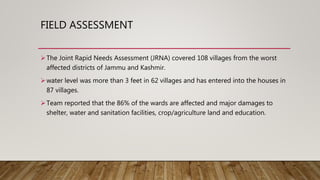
FIELD ASSESSMENT
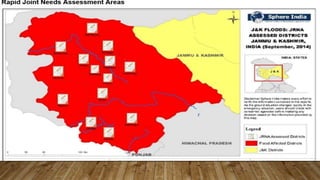
The Joint Rapid Needs Assessment (JRNA) covered 108 villages from the worst
affected districts of Jammu and Kashmir.
water level was more than 3 feet in 62 villages and has entered into the houses in
87 villages.
Team reported that the 86% of the wards are affected and major damages to
shelter, water and sanitation facilities, crop/agriculture land and education.
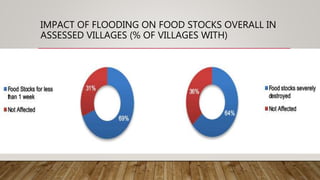
IMPACT OF FLOODING ON FOOD STOCKS OVERALL IN
ASSESSED VILLAGES (% OF VILLAGES WITH)
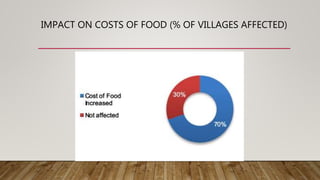
IMPACT ON COSTS OF FOOD (% OF VILLAGES AFFECTED)
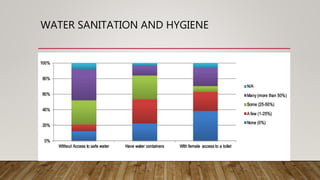
WATER SANITATION AND HYGIENE
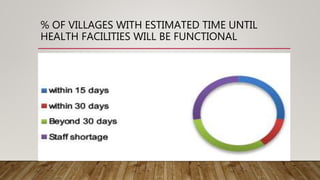
% OF VILLAGES WITH ESTIMATED TIME UNTIL
HEALTH FACILITIES WILL BE FUNCTIONAL
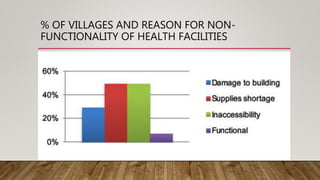
% OF VILLAGES AND REASON FOR NON-
FUNCTIONALITY OF HEALTH FACILITIES
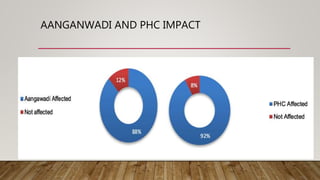
AANGANWADI AND PHC IMPACT
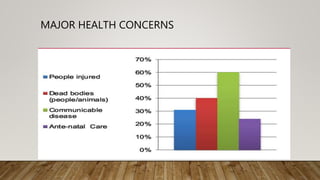
MAJOR HEALTH CONCERNS
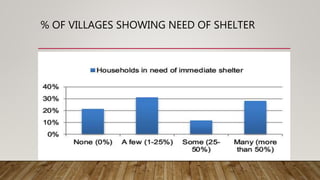
% OF VILLAGES SHOWING NEED OF SHELTER
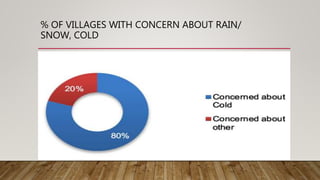
% OF VILLAGES WITH CONCERN ABOUT RAIN/
SNOW, COLD
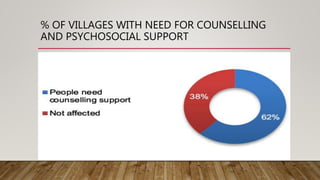
% OF VILLAGES WITH NEED FOR COUNSELLING
AND PSYCHOSOCIAL SUPPORT
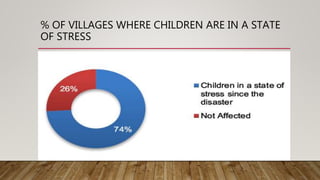
% OF VILLAGES WHERE CHILDREN ARE IN A STATE
OF STRESS
THANKS FROM
YOUR
ATTENTION

Jammu &kashmir 2014 flood case study

  • 1.
    JAMMU & KASHMIR FLOODS-2014 • PRESENTED BY: NAJIBULLAH FANOS • FINAL YEAR STUDENT OF MURP • UNIVERSITY: GUATAM BUDDHA UNIVERSITY • GUIDE TEACHER: DR. NIRMITA MILHOTRA (HOD OF ARCHITECTURE AND PLANNING DEPARTMENT)
  • 2.
    JAMMU AND KASHMIRFLOODS 2014 Jammu and Kashmir experienced heavy monsoon rains that began on September 2, 2014 and lead to unprecedented widespread flooding and landslides across the state. Banks of the river Jhelum, Chenab, Tawi and many other streams were burst. The worst affected districts are Srinagar, Anantnag, Baramulla, Pulwama, Ganderbal, Kulgam, Budgam, Rajouri, Poonch and Reasi. Links of Kashmir Valley were disrupted and the 300- km- long national highway was closed for vehicular traffic from the 7th September as a result of landslides and floods. As many as 60 major and minor roads have been cut off and over 30 bridges washed away,
  • 4.
    BACKGROUND Heavy rainfall hascaused:  Flash flooding with localized damage across the state, Landslides, which impacted on communities and road connectivity and, Widespread flooding in the Jammu & Kashmir Valley.  Flood waters from Jhelum River breached embankments in many low-lying areas in Kashmir, including the capital Srinagar and Tawi River in Jammu forcing people to move to safer places.  In this disaster as per report 190 people dead and 78 person enjurd.
  • 7.
    10,136,063 Population Affected: Communication,Accessibility, Availability of Supplies, Agriculture, Livestock, Assets Losses 1,949,790 Directly Affected (tangible and intangible) 659,737 Direct loss of household assets, livelihood, Psychosocial 97,159+ houses flooded 574,209+ Population shelter partially damaged 1,290,052+ Displaced by flooding and shelter damage. 121,124+ houses un- inhabitable. 715,841+ Population shelter fully damaged 280+ deaths. 53,082+ persons injured/ sick. 226,000+ Evacuated. 8,186,273 Indirectly Affected Impact on roads, access, local economy, markets, availability of food, food price increases, contamination of water sources, public infrastructure
  • 8.
    RELIEF MEASURES GO& NGO  The Govt. has started over 87 camps in Jammu and over 147 in Kashmir division.  Distributed 250 tents, 250 blankets and 700 Qtls of rice in Baramula,  546 tents, 36 bundles (blankets) and 92 Qtls of rice in Budgam,  1 tent, 517 blankets, 40 Qtls of rice, 1.60 Qtls of pulses in Shopian,  1800 blankets in Ganderbal, 423 tents.  9125 blankets in Anantnag, 03 ton of ration and 3000 tarpaulin in Rajouri,  Over 20908 people were evacuated and 23900 were rehabilitated in the Jammu region.  India Army rescued persons at the earliest through airlifting and supported with Boats, Pumps, JCB, Constructed 3-4 floating bridges, repaired roads and supplied water in Jammu region.
  • 9.
    FIELD ASSESSMENT The JointRapid Needs Assessment (JRNA) covered 108 villages from the worst affected districts of Jammu and Kashmir. water level was more than 3 feet in 62 villages and has entered into the houses in 87 villages. Team reported that the 86% of the wards are affected and major damages to shelter, water and sanitation facilities, crop/agriculture land and education.
  • 11.
    IMPACT OF FLOODINGON FOOD STOCKS OVERALL IN ASSESSED VILLAGES (% OF VILLAGES WITH)
  • 12.
    IMPACT ON COSTSOF FOOD (% OF VILLAGES AFFECTED)
  • 13.
  • 14.
    % OF VILLAGESWITH ESTIMATED TIME UNTIL HEALTH FACILITIES WILL BE FUNCTIONAL
  • 15.
    % OF VILLAGESAND REASON FOR NON- FUNCTIONALITY OF HEALTH FACILITIES
  • 16.
  • 17.
  • 18.
    % OF VILLAGESSHOWING NEED OF SHELTER
  • 19.
    % OF VILLAGESWITH CONCERN ABOUT RAIN/ SNOW, COLD
  • 20.
    % OF VILLAGESWITH NEED FOR COUNSELLING AND PSYCHOSOCIAL SUPPORT
  • 21.
    % OF VILLAGESWHERE CHILDREN ARE IN A STATE OF STRESS
  • 22.