Embed presentation
Download as PPSX, PPTX
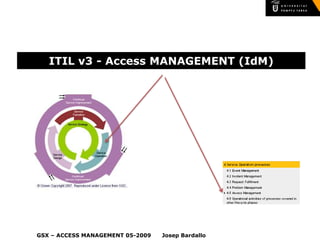
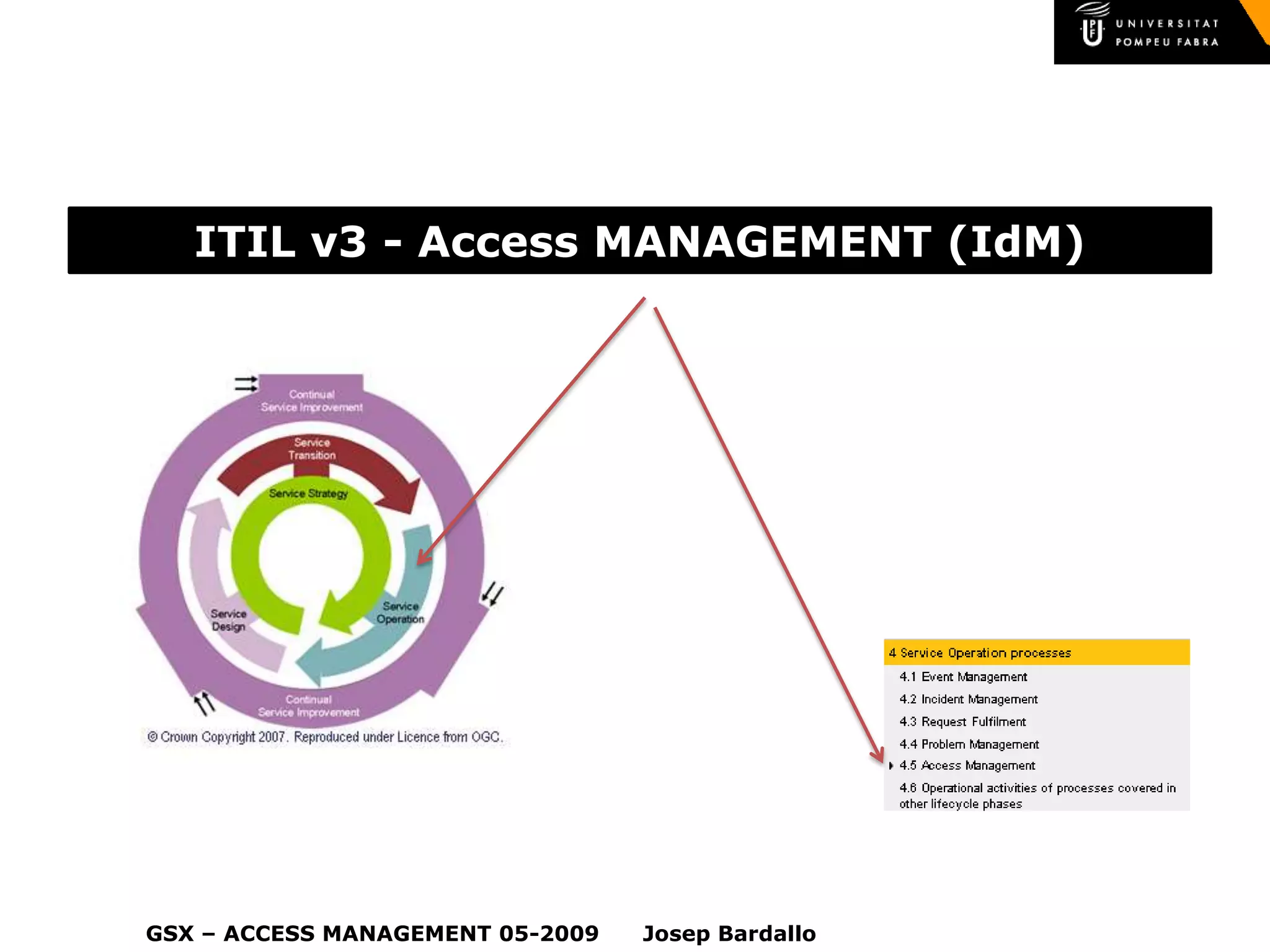
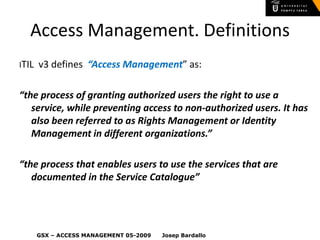
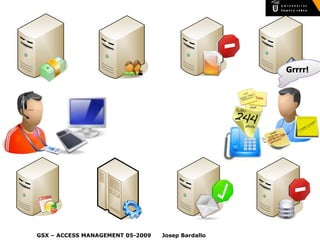
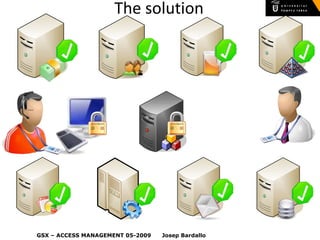
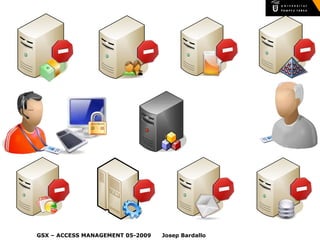
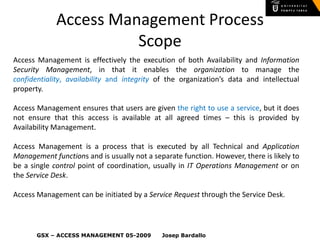
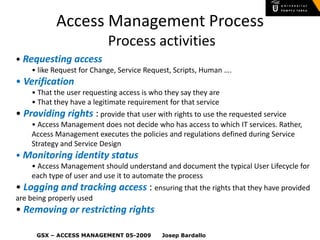


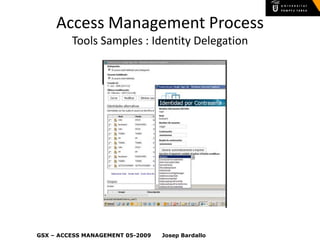
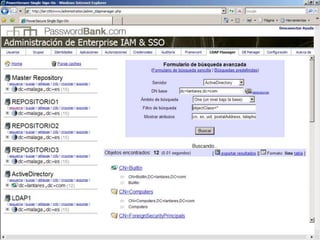
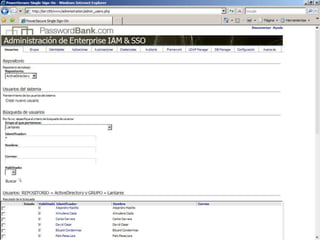
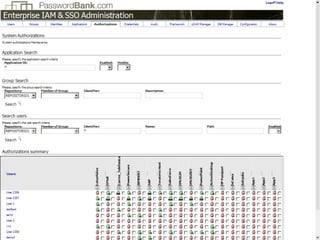


ITIL v3 defines access management as the process of granting authorized users the right to use a service, while preventing access to non-authorized users. Access management enables users to use services documented in the service catalog. It manages identity, access rights, services, and uses directory services to manage access and rights. The goal is to provide users the right level of access to services according to defined policies and security management.


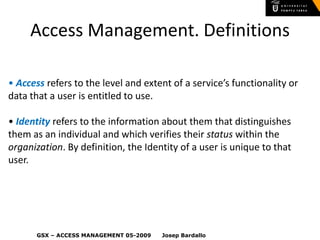
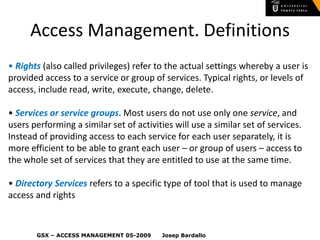
Definitions of Access Management, Identity, Rights and Directory Services. Importance of user identity and access rights.
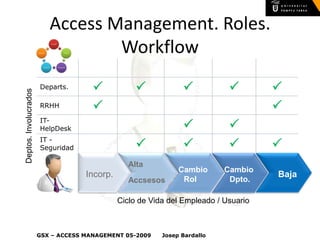
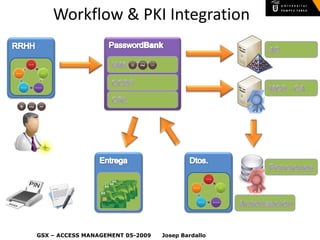
Workflow of Access Management with involvement from departments like HR and IT. Employee/ User lifecycle management.
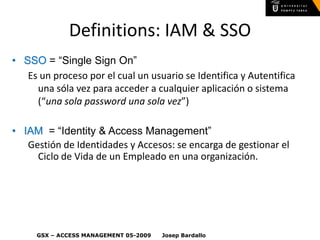
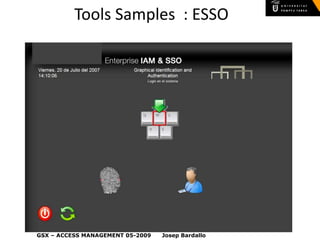
Definitions of Single Sign-On (SSO) and Identity & Access Management (IAM). Focus on user authentication.
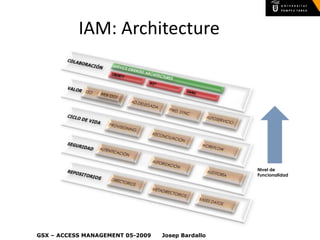
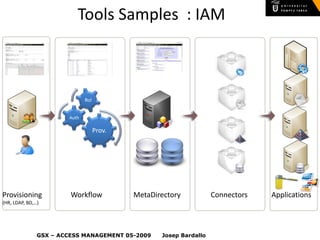
Introduction to the architecture involved in Identity & Access Management reflecting on functionality levels.
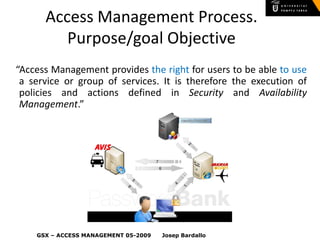
Purpose of Access Management in granting service rights and ensuring compliance with security policies.
Details on executing Availability and Information Security Management to protect organizational data.
Key activities in the Access Management process including request handling, verification, rights provision, monitoring, and logging.
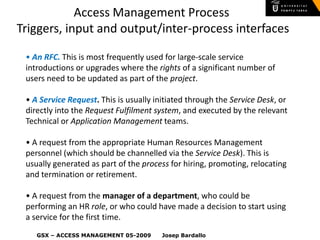
Different triggers for Access Management processes including RFC, Service Requests from HR, or department manager.
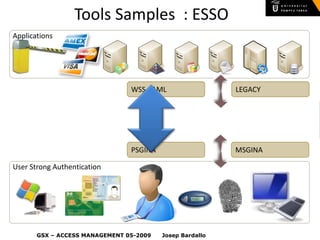
Overview of various tools and applications used in Access Management such as ESSO and IAM frameworks.
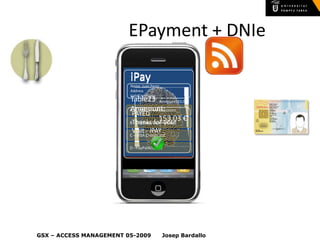
Example scenario showing access management in E-payment systems, reflecting user data and payment processing.
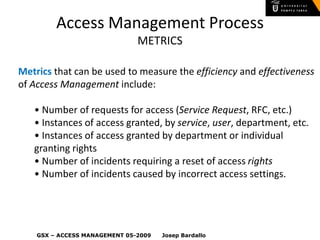
Metrics to gauge Access Management efficiency including requests, grants, incidents needing resets, and access errors.
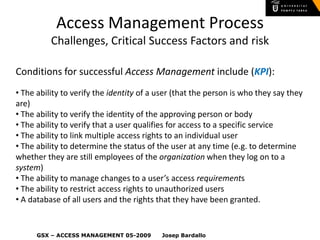
Conditions for successful Access Management including verification of users, rights management, and access control.
A section for audience questions followed by acknowledgments in multiple languages.