Unit – II
Understanding Secondary Stage Learners
(ITEP) – 3rd
Semester
Basics of Pedagogy at Secondary Stage
By: Shivani Chauhan
Research Scholar
MDU Rohtak
Conflicts and Challenges of
Secondary Learners, Characteristics
of Secondary Learners
Secondary learners (students in middle and high school) face
various conflicts and challenges as they navigate a pivotal stage of
personal and academic growth.
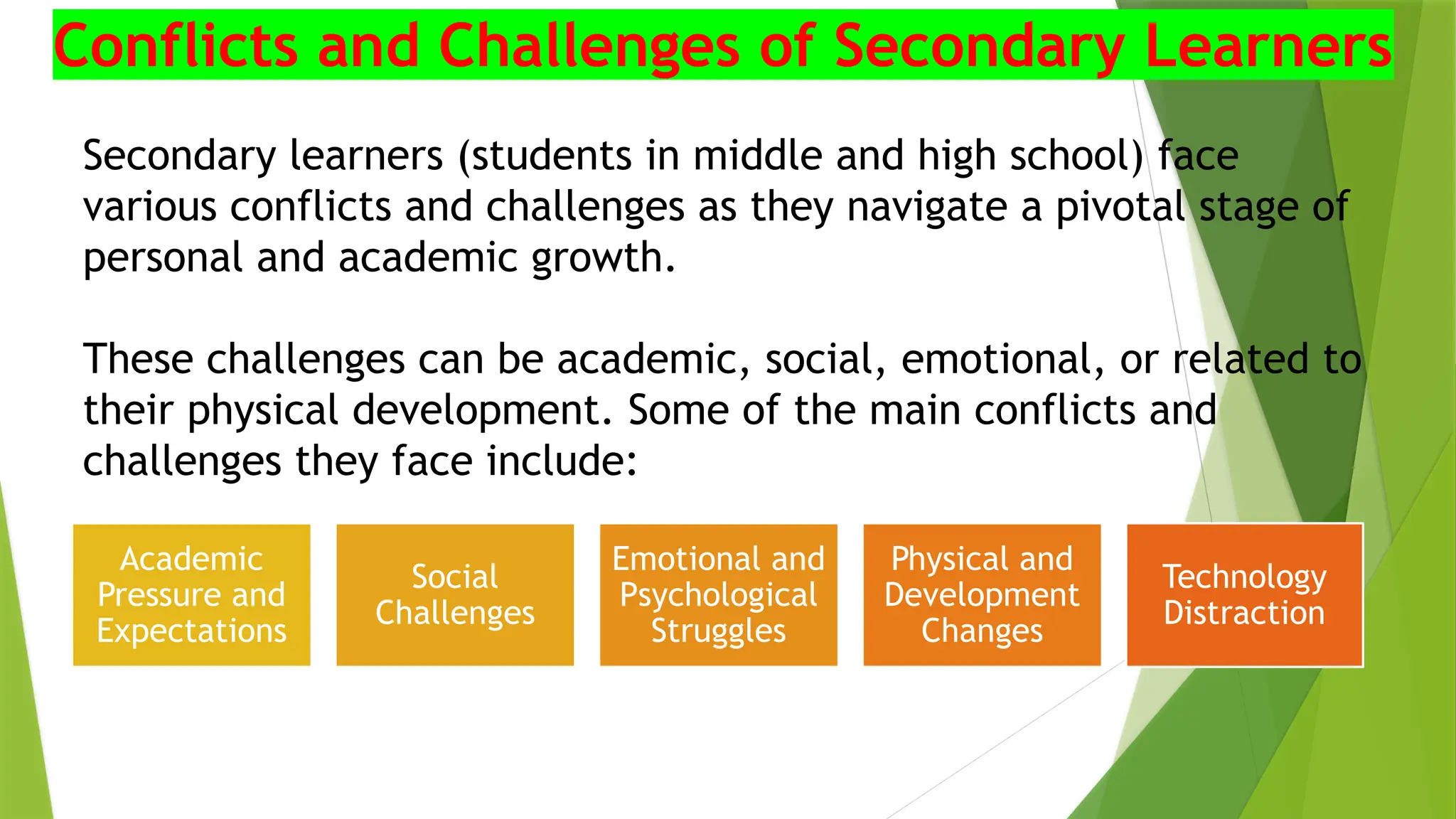
These challenges can be academic, social, emotional, or related to
their physical development. Some of the main conflicts and
challenges they face include:
Conflicts and Challenges of Secondary Learners
Academic
Pressure and
Expectations
Social
Challenges
Emotional and
Psychological
Struggles
Physical and
Development
Changes
Technology
Distraction
Academic Pressure and Expectations:
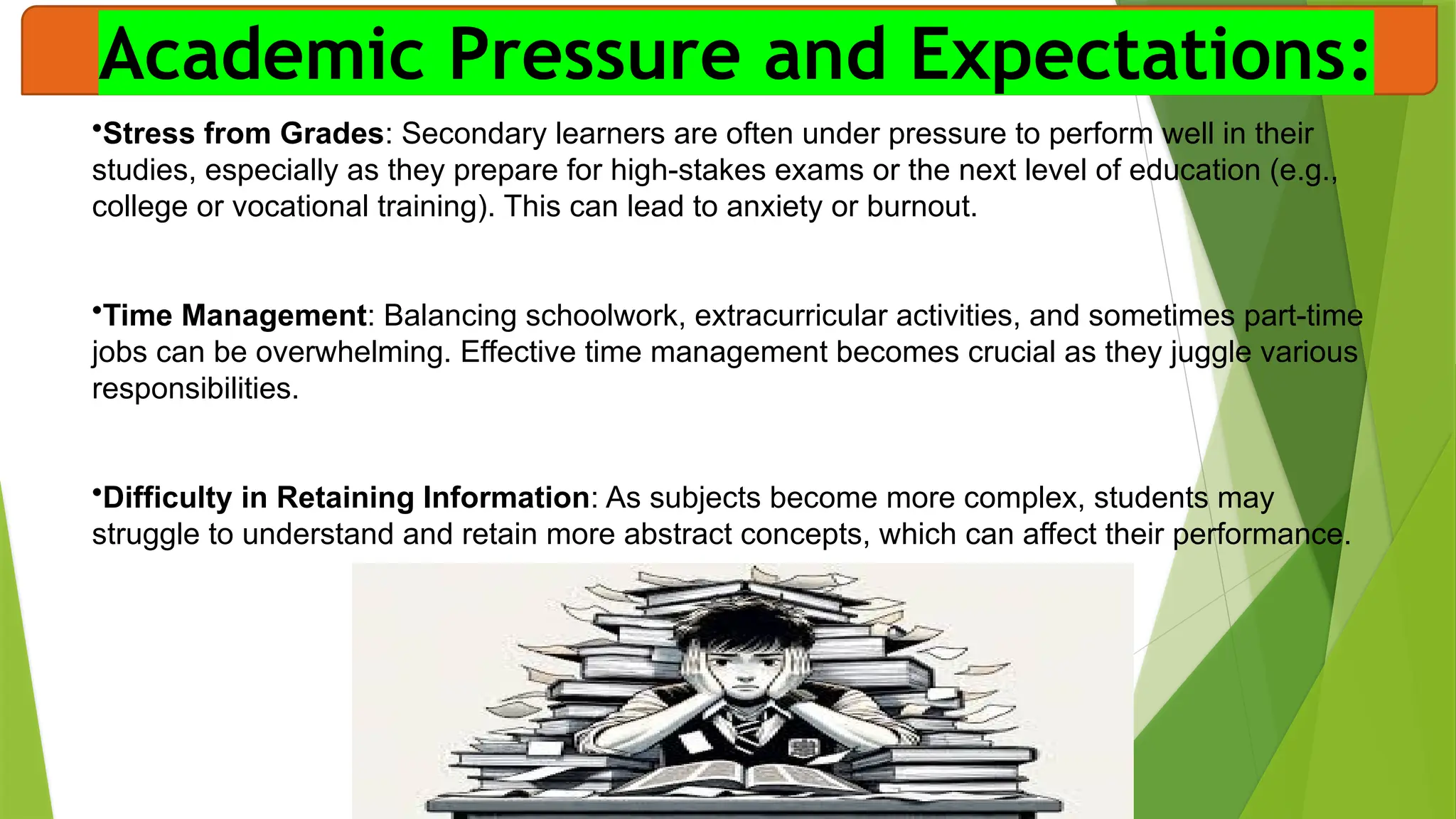
•Stress from Grades: Secondary learners are often under pressure to perform well in their
studies, especially as they prepare for high-stakes exams or the next level of education (e.g.,
college or vocational training). This can lead to anxiety or burnout.
•Time Management: Balancing schoolwork, extracurricular activities, and sometimes part-time
jobs can be overwhelming. Effective time management becomes crucial as they juggle various
responsibilities.
•Difficulty in Retaining Information: As subjects become more complex, students may
struggle to understand and retain more abstract concepts, which can affect their performance.
Social Challenges
•Peer Pressure: Secondary learners are more influenced by peer opinions
and are at an age where fitting in with friends and social groups becomes a
significant concern. This may lead to decisions influenced by peer pressure,
including risky behaviors or neglecting studies.
•Bullying and Social Exclusion: Bullying, both in-person and online, can be
a persistent issue during the secondary years. Social dynamics and the need
for acceptance can contribute to emotional distress for many students.
•Identity Formation: Adolescents are exploring who they are and where they
belong, which can lead to a crisis of identity. They may face difficulties in
reconciling their personal values with those of their peers or family.
Emotional and Psychological Struggles
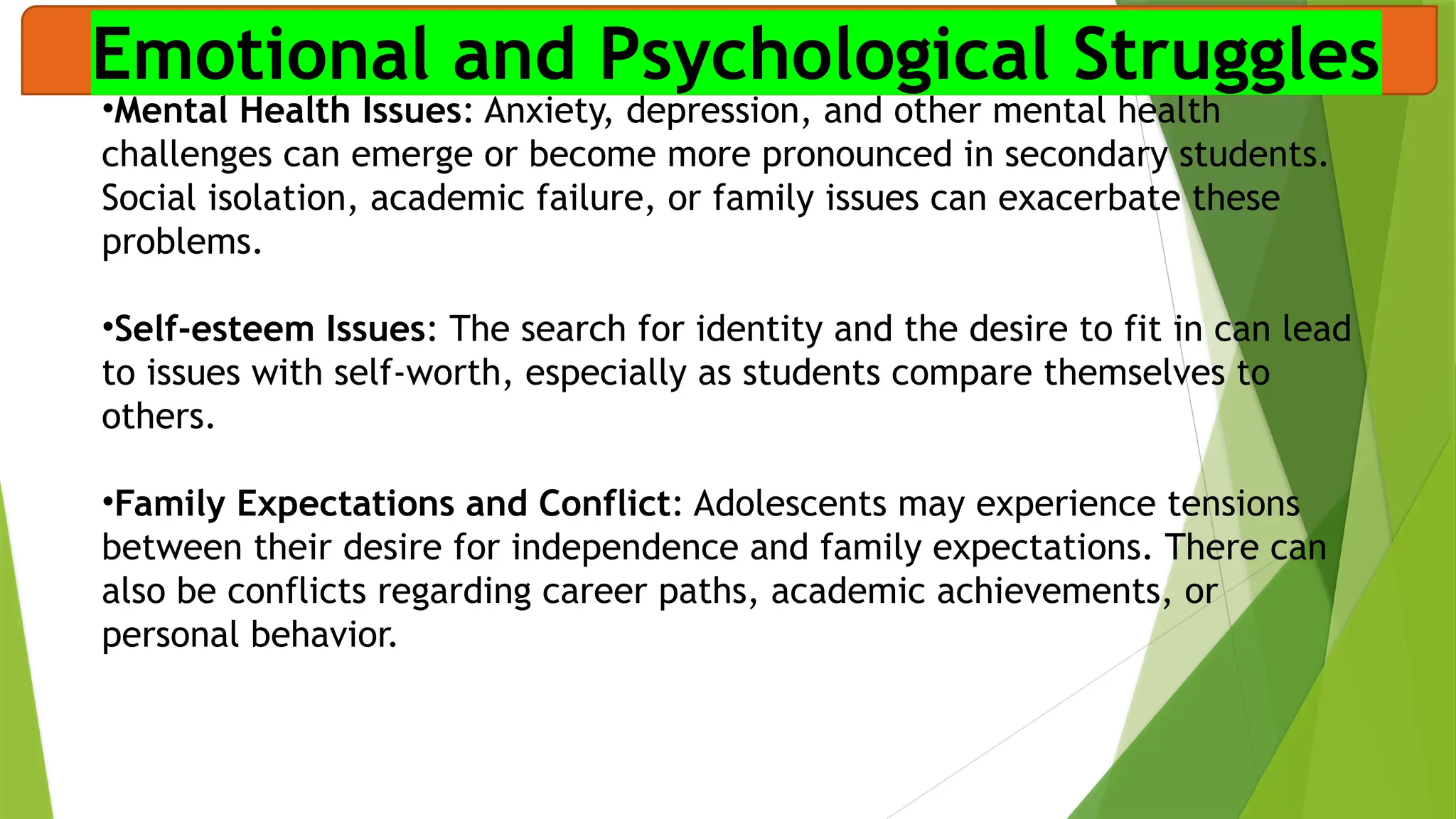
•Mental Health Issues: Anxiety, depression, and other mental health
challenges can emerge or become more pronounced in secondary students.
Social isolation, academic failure, or family issues can exacerbate these
problems.
•Self-esteem Issues: The search for identity and the desire to fit in can lead
to issues with self-worth, especially as students compare themselves to
others.
•Family Expectations and Conflict: Adolescents may experience tensions
between their desire for independence and family expectations. There can
also be conflicts regarding career paths, academic achievements, or
personal behavior.
Technological Distractions
•Excessive Screen Time: With the rise of social media and digital
entertainment, students may struggle to focus on their studies due to
distractions from phones, computers, and gaming.
•Cyberbullying: The digital world exposes students to new forms of
bullying, including harassment through social media platforms or messaging
apps, which can impact their mental health.
Technological Distractions
•Excessive Screen Time: With the rise of social media and digital
entertainment, students may struggle to focus on their studies due to
distractions from phones, computers, and gaming.
•Cyberbullying: The digital world exposes students to new forms of
bullying, including harassment through social media platforms or messaging
apps, which can impact their mental health.
Characteristics of Secondary Learners
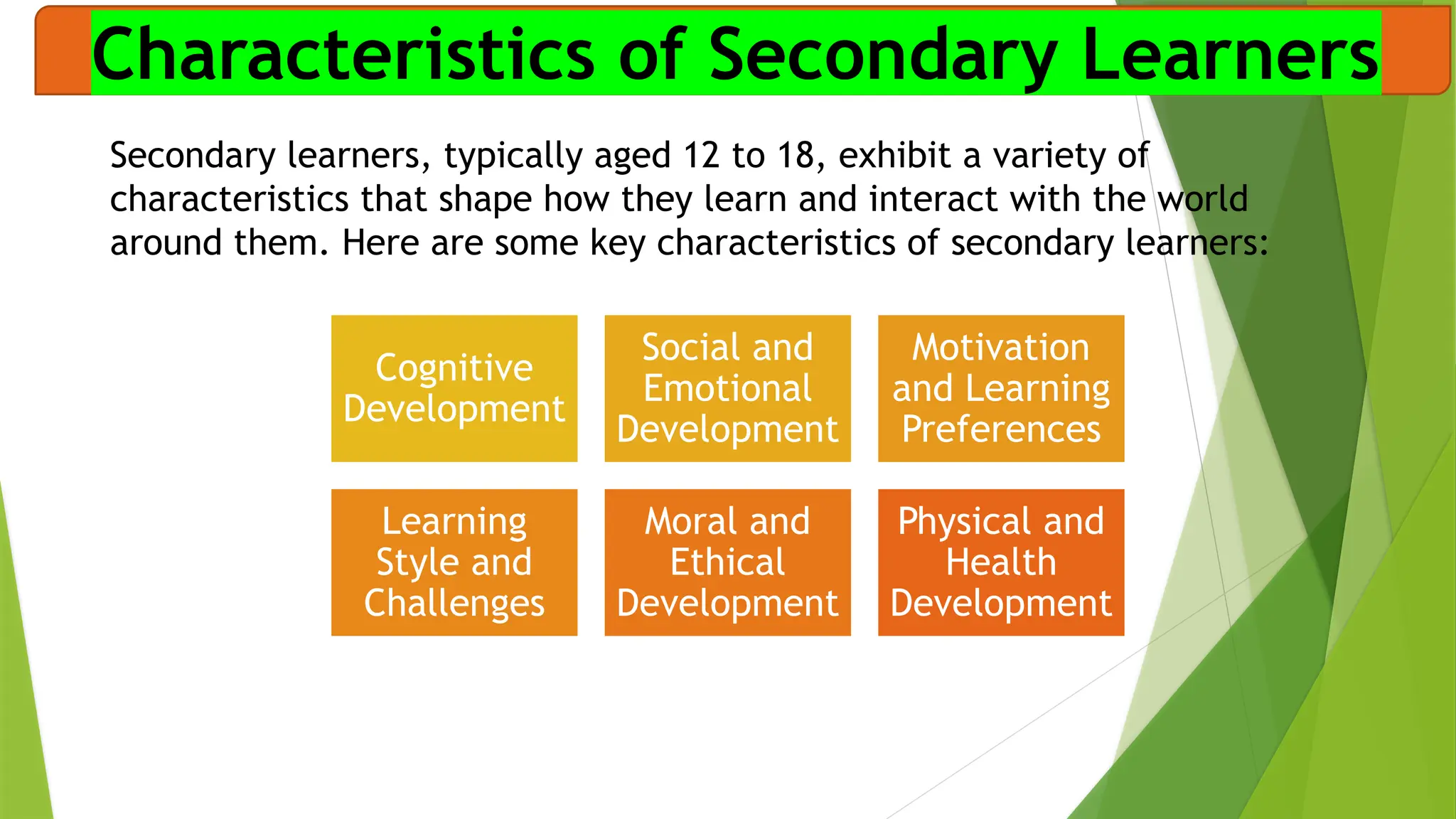
Secondary learners, typically aged 12 to 18, exhibit a variety of
characteristics that shape how they learn and interact with the world
around them. Here are some key characteristics of secondary learners:
Cognitive
Development
Social and
Emotional
Development
Motivation
and Learning
Preferences
Learning
Style and
Challenges
Moral and
Ethical
Development
Physical and
Health
Development
Cognitive Development
•Abstract Thinking: Secondary learners are developing the
ability to think abstractly. They begin to reason beyond concrete
facts, explore hypothetical situations, and understand complex
concepts.
•Critical Thinking: They become more adept at questioning,
analyzing, and evaluating information, making them more
independent thinkers.
•Problem-Solving: Secondary learners are increasingly capable
of identifying problems and devising strategies for solving them,
often with more structured approaches.
Social and Emotional Development
•Identity Formation: Adolescence is a time of exploring identity, including values, beliefs,
and future goals. Learners begin to define who they are, which influences their motivation
and behavior.
•Peer Influence: Secondary learners are heavily influenced by their peers. Social groups
and friendships play an important role in their emotional and social development.
•Emotional Regulation: While they may experience strong emotions, secondary learners
are developing better emotional control, though they can still experience mood swings and
stress.
•Independence: They seek greater independence from family, and often express a desire
to make their own decisions and manage their own responsibilities.
Motivation and Learning Preferences
•Autonomy: Secondary learners are more motivated when they have a sense
of control over their learning. They often prefer opportunities for self-directed
learning and more responsibility.
•Interest in Relevance: They are more engaged when learning is directly
relevant to their lives, future goals, and interests. They tend to focus more on
practical and career-related knowledge.
•Extrinsic and Intrinsic Motivation: While some learners are motivated by
external rewards (grades, approval), others are driven by intrinsic goals such as
personal achievement and mastery of new skills.
Learning Styles and Challenges
•Diverse Learning Styles: Secondary learners have diverse
learning preferences, such as visual, auditory, kinesthetic, and
reading/writing preferences. Understanding these can help tailor
educational approaches.
•Risk-Taking: Adolescents may be more likely to take risks in
learning, trying out new strategies, or exploring unknown subjects.
•Attention and Focus: Some secondary learners may struggle
with maintaining attention, especially with distractions from
technology or social life. Others may hyper-focus on specific
subjects or activities.
Moral and Ethical Development
•Moral Reasoning: Secondary learners begin to develop more
sophisticated moral reasoning, considering societal norms and
ethical dilemmas in addition to personal values.
•Justice and Fairness: They become more sensitive to issues of
fairness, equality, and justice, which may lead them to challenge
authority or push for social change.
Physical and Health Development
•Puberty: Secondary learners go through significant physical
changes that can affect their mood, energy levels, and self-
image.
•This can influence their learning habits and focus.
•Health Issues: Adolescents may also face health-related
challenges such as sleep deprivation, mental health concerns,
or stress related to academics and social pressures.
ITEP 3rd semester Understanding Secondary Stage learners-Conflicts & Challenges of Secondary Learners, Characteristics of Secondary Learners.pptx

ITEP 3rd semester Understanding Secondary Stage learners-Conflicts & Challenges of Secondary Learners, Characteristics of Secondary Learners.pptx

  • 1.
    Unit – II UnderstandingSecondary Stage Learners (ITEP) – 3rd Semester Basics of Pedagogy at Secondary Stage By: Shivani Chauhan Research Scholar MDU Rohtak Conflicts and Challenges of Secondary Learners, Characteristics of Secondary Learners
  • 2.
    Secondary learners (studentsin middle and high school) face various conflicts and challenges as they navigate a pivotal stage of personal and academic growth. These challenges can be academic, social, emotional, or related to their physical development. Some of the main conflicts and challenges they face include: Conflicts and Challenges of Secondary Learners Academic Pressure and Expectations Social Challenges Emotional and Psychological Struggles Physical and Development Changes Technology Distraction
  • 3.
    Academic Pressure andExpectations: •Stress from Grades: Secondary learners are often under pressure to perform well in their studies, especially as they prepare for high-stakes exams or the next level of education (e.g., college or vocational training). This can lead to anxiety or burnout. •Time Management: Balancing schoolwork, extracurricular activities, and sometimes part-time jobs can be overwhelming. Effective time management becomes crucial as they juggle various responsibilities. •Difficulty in Retaining Information: As subjects become more complex, students may struggle to understand and retain more abstract concepts, which can affect their performance.
  • 4.
    Social Challenges •Peer Pressure:Secondary learners are more influenced by peer opinions and are at an age where fitting in with friends and social groups becomes a significant concern. This may lead to decisions influenced by peer pressure, including risky behaviors or neglecting studies. •Bullying and Social Exclusion: Bullying, both in-person and online, can be a persistent issue during the secondary years. Social dynamics and the need for acceptance can contribute to emotional distress for many students. •Identity Formation: Adolescents are exploring who they are and where they belong, which can lead to a crisis of identity. They may face difficulties in reconciling their personal values with those of their peers or family.
  • 5.
    Emotional and PsychologicalStruggles •Mental Health Issues: Anxiety, depression, and other mental health challenges can emerge or become more pronounced in secondary students. Social isolation, academic failure, or family issues can exacerbate these problems. •Self-esteem Issues: The search for identity and the desire to fit in can lead to issues with self-worth, especially as students compare themselves to others. •Family Expectations and Conflict: Adolescents may experience tensions between their desire for independence and family expectations. There can also be conflicts regarding career paths, academic achievements, or personal behavior.
  • 6.
    Technological Distractions •Excessive ScreenTime: With the rise of social media and digital entertainment, students may struggle to focus on their studies due to distractions from phones, computers, and gaming. •Cyberbullying: The digital world exposes students to new forms of bullying, including harassment through social media platforms or messaging apps, which can impact their mental health.
  • 7.
    Technological Distractions •Excessive ScreenTime: With the rise of social media and digital entertainment, students may struggle to focus on their studies due to distractions from phones, computers, and gaming. •Cyberbullying: The digital world exposes students to new forms of bullying, including harassment through social media platforms or messaging apps, which can impact their mental health.
  • 8.
    Characteristics of SecondaryLearners Secondary learners, typically aged 12 to 18, exhibit a variety of characteristics that shape how they learn and interact with the world around them. Here are some key characteristics of secondary learners: Cognitive Development Social and Emotional Development Motivation and Learning Preferences Learning Style and Challenges Moral and Ethical Development Physical and Health Development
  • 9.
    Cognitive Development •Abstract Thinking:Secondary learners are developing the ability to think abstractly. They begin to reason beyond concrete facts, explore hypothetical situations, and understand complex concepts. •Critical Thinking: They become more adept at questioning, analyzing, and evaluating information, making them more independent thinkers. •Problem-Solving: Secondary learners are increasingly capable of identifying problems and devising strategies for solving them, often with more structured approaches.
  • 10.
    Social and EmotionalDevelopment •Identity Formation: Adolescence is a time of exploring identity, including values, beliefs, and future goals. Learners begin to define who they are, which influences their motivation and behavior. •Peer Influence: Secondary learners are heavily influenced by their peers. Social groups and friendships play an important role in their emotional and social development. •Emotional Regulation: While they may experience strong emotions, secondary learners are developing better emotional control, though they can still experience mood swings and stress. •Independence: They seek greater independence from family, and often express a desire to make their own decisions and manage their own responsibilities.
  • 11.
    Motivation and LearningPreferences •Autonomy: Secondary learners are more motivated when they have a sense of control over their learning. They often prefer opportunities for self-directed learning and more responsibility. •Interest in Relevance: They are more engaged when learning is directly relevant to their lives, future goals, and interests. They tend to focus more on practical and career-related knowledge. •Extrinsic and Intrinsic Motivation: While some learners are motivated by external rewards (grades, approval), others are driven by intrinsic goals such as personal achievement and mastery of new skills.
  • 12.
    Learning Styles andChallenges •Diverse Learning Styles: Secondary learners have diverse learning preferences, such as visual, auditory, kinesthetic, and reading/writing preferences. Understanding these can help tailor educational approaches. •Risk-Taking: Adolescents may be more likely to take risks in learning, trying out new strategies, or exploring unknown subjects. •Attention and Focus: Some secondary learners may struggle with maintaining attention, especially with distractions from technology or social life. Others may hyper-focus on specific subjects or activities.
  • 13.
    Moral and EthicalDevelopment •Moral Reasoning: Secondary learners begin to develop more sophisticated moral reasoning, considering societal norms and ethical dilemmas in addition to personal values. •Justice and Fairness: They become more sensitive to issues of fairness, equality, and justice, which may lead them to challenge authority or push for social change.
  • 14.
    Physical and HealthDevelopment •Puberty: Secondary learners go through significant physical changes that can affect their mood, energy levels, and self- image. •This can influence their learning habits and focus. •Health Issues: Adolescents may also face health-related challenges such as sleep deprivation, mental health concerns, or stress related to academics and social pressures.