Money Management  and Financial Planning 16-1 Personal Financial Statements 16-2 Budgeting Techniques 16-3 Your Financial Future 16
LESSON 16-1 Personal Financial Statements Goals Explain the basics of money management. Create a personal balance sheet. Develop a personal cash flow statement.
Key Terms money management personal assets net worth cash flow statement
MONEY MANAGEMENT BASICS Refers to the day-to-day financial activities associated with using limited income to satisfy your unlimited needs and wants Involves getting the most for your money through careful planning, saving, and spending Involves making and using a plan for spending
SUCCESSFUL MONEY MANAGERS Set goals Make wise decisions Buy wisely Live within their income
>>  C H E C K P O I N T What are some characteristics of a wise money manager?
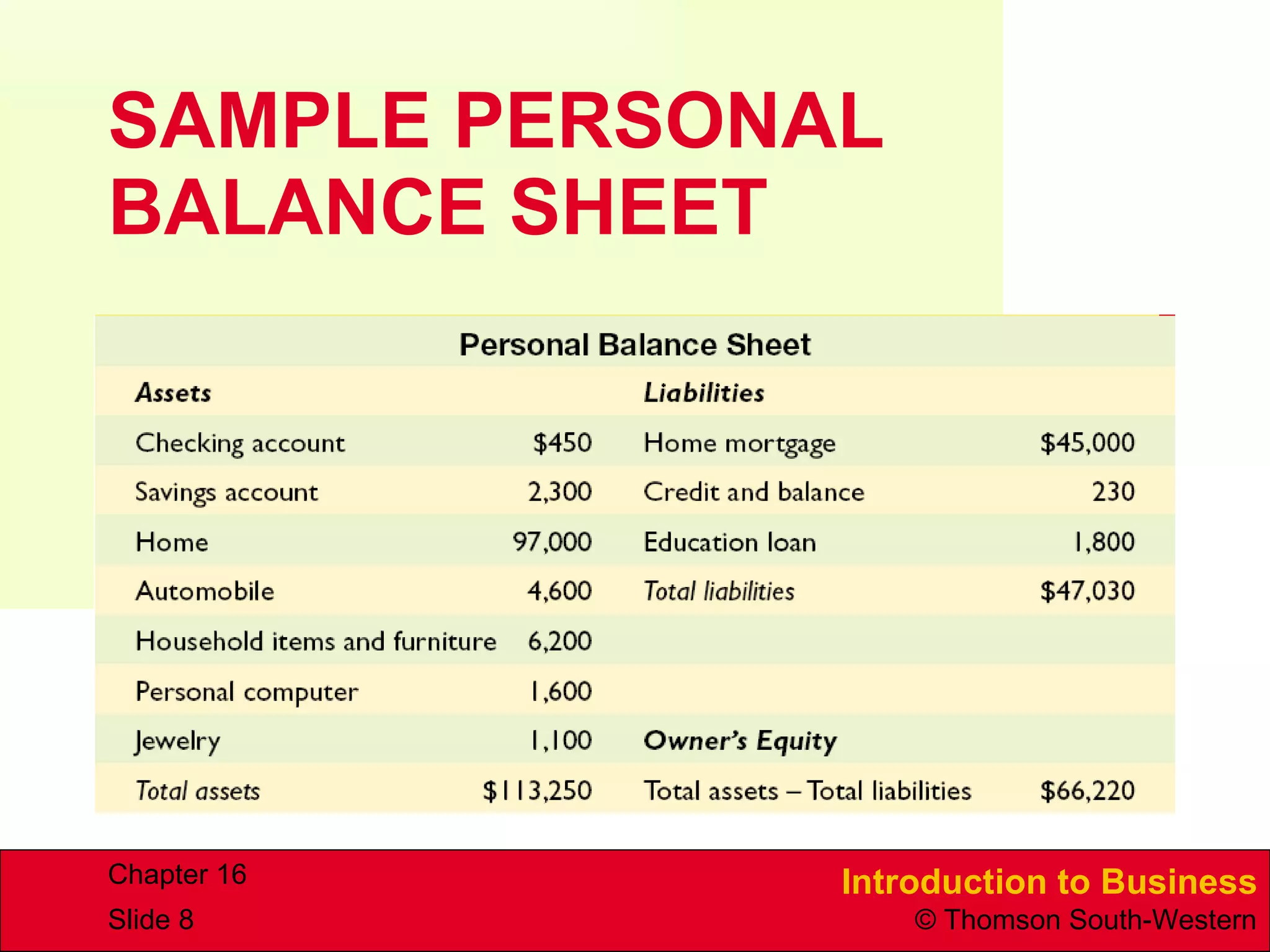
PERSONAL  BALANCE SHEET Assets Liabilities Net Worth
SAMPLE PERSONAL  BALANCE SHEET
>>  C H E C K P O I N T What are three main categories of a personal balance sheet?
PERSONAL CASH FLOW STATEMENT Cash inflows  Cash outflows Compare inflows and outflows
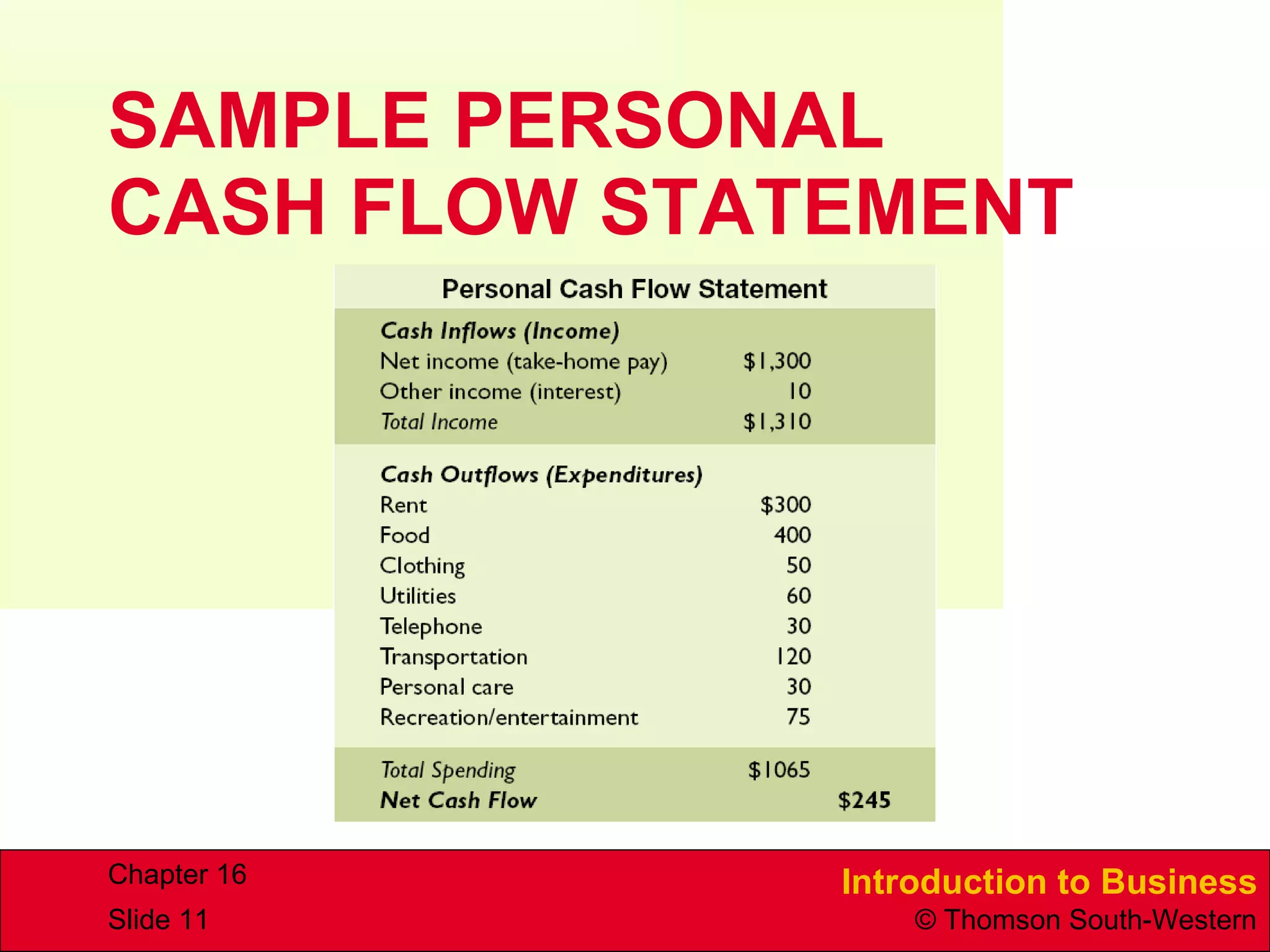
SAMPLE PERSONAL  CASH FLOW STATEMENT
>>  C H E C K P O I N T What do cash outflows represent?
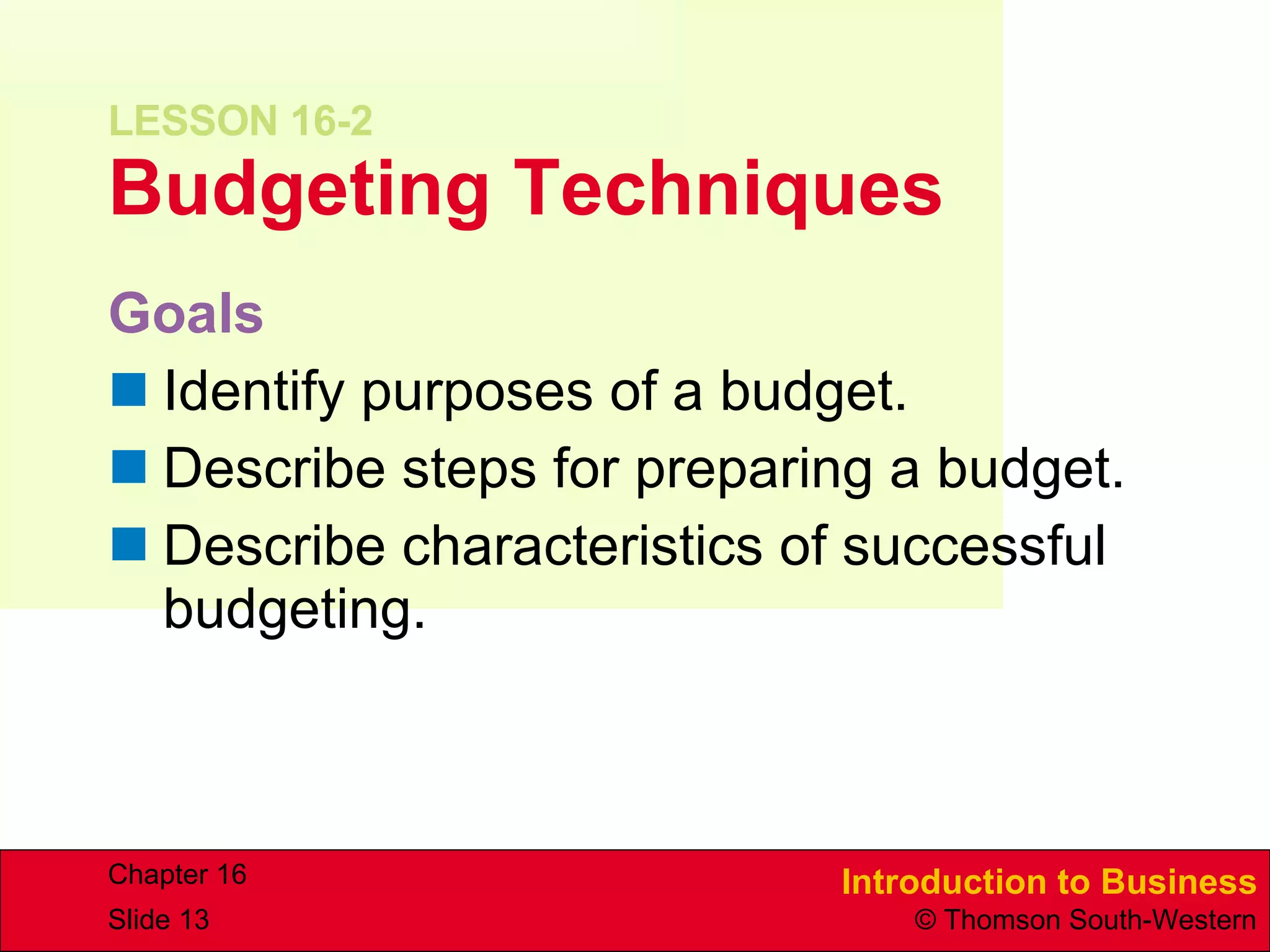
LESSON 16-2 Budgeting Techniques Goals Identify purposes of a budget. Describe steps for preparing a budget. Describe characteristics of successful budgeting.
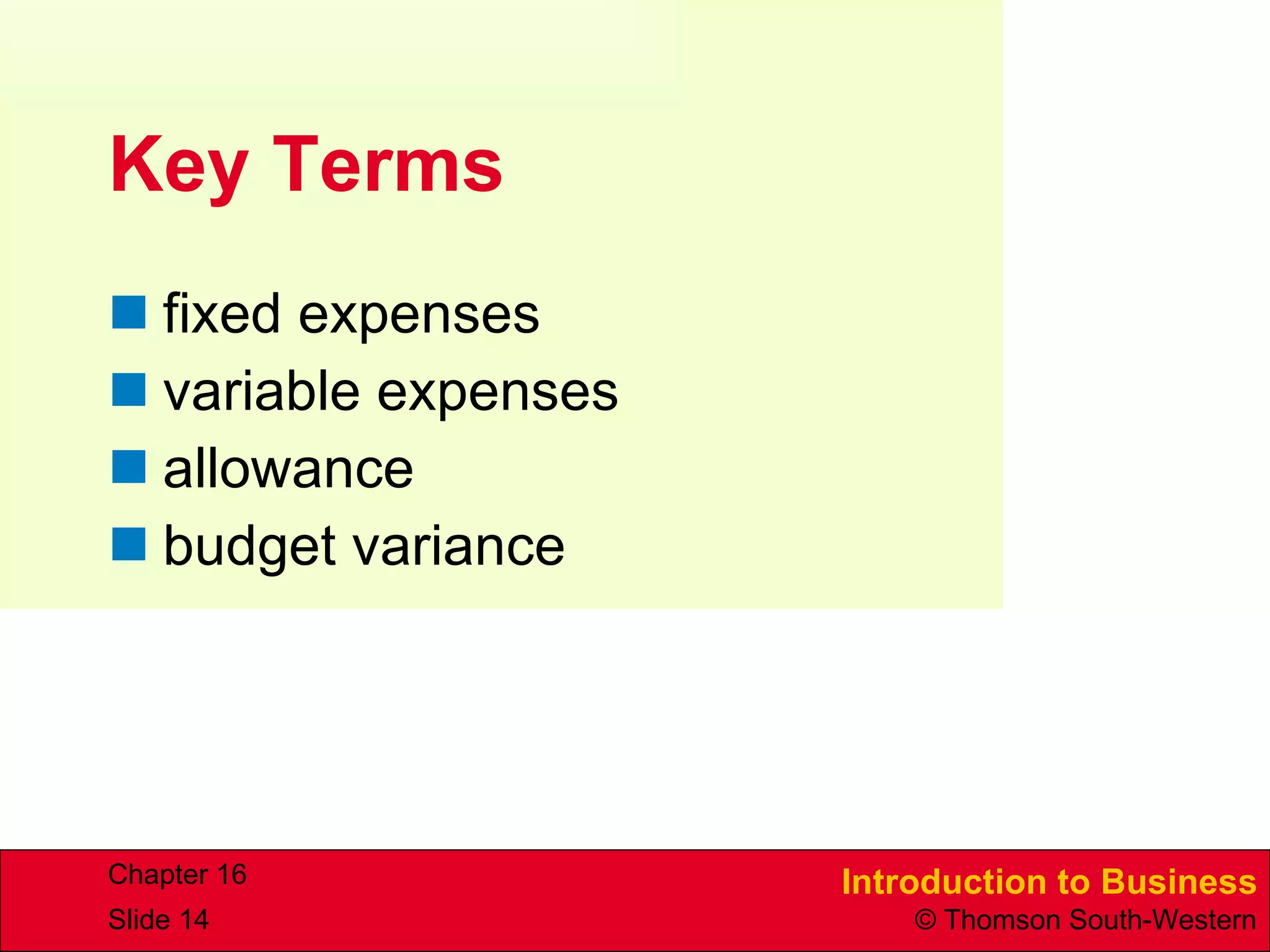
Key Terms fixed expenses variable expenses allowance budget variance
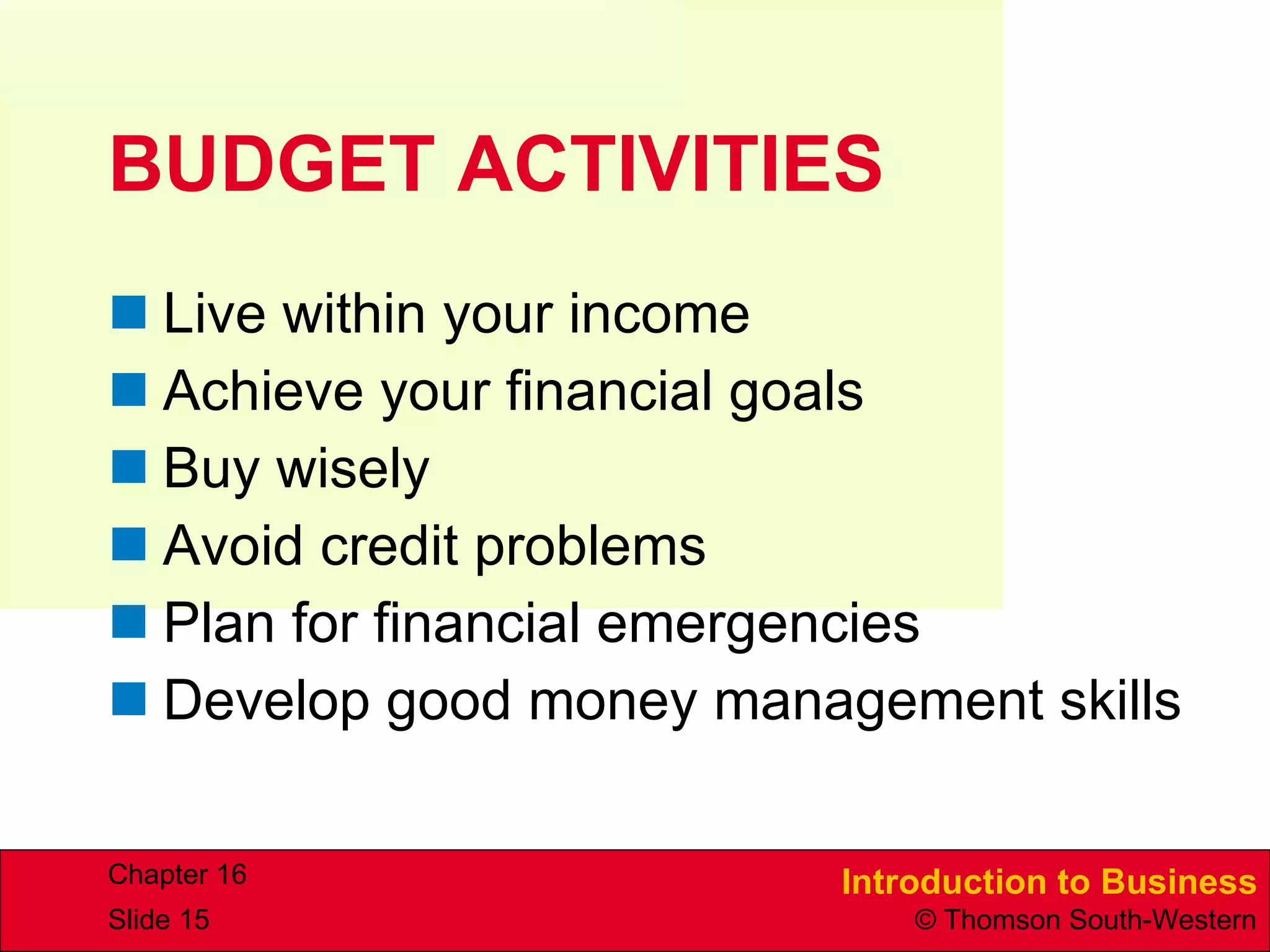
BUDGET ACTIVITIES Live within your income Achieve your financial goals Buy wisely Avoid credit problems Plan for financial emergencies Develop good money management skills
>>  C H E C K P O I N T What are the main purposes of a budget?
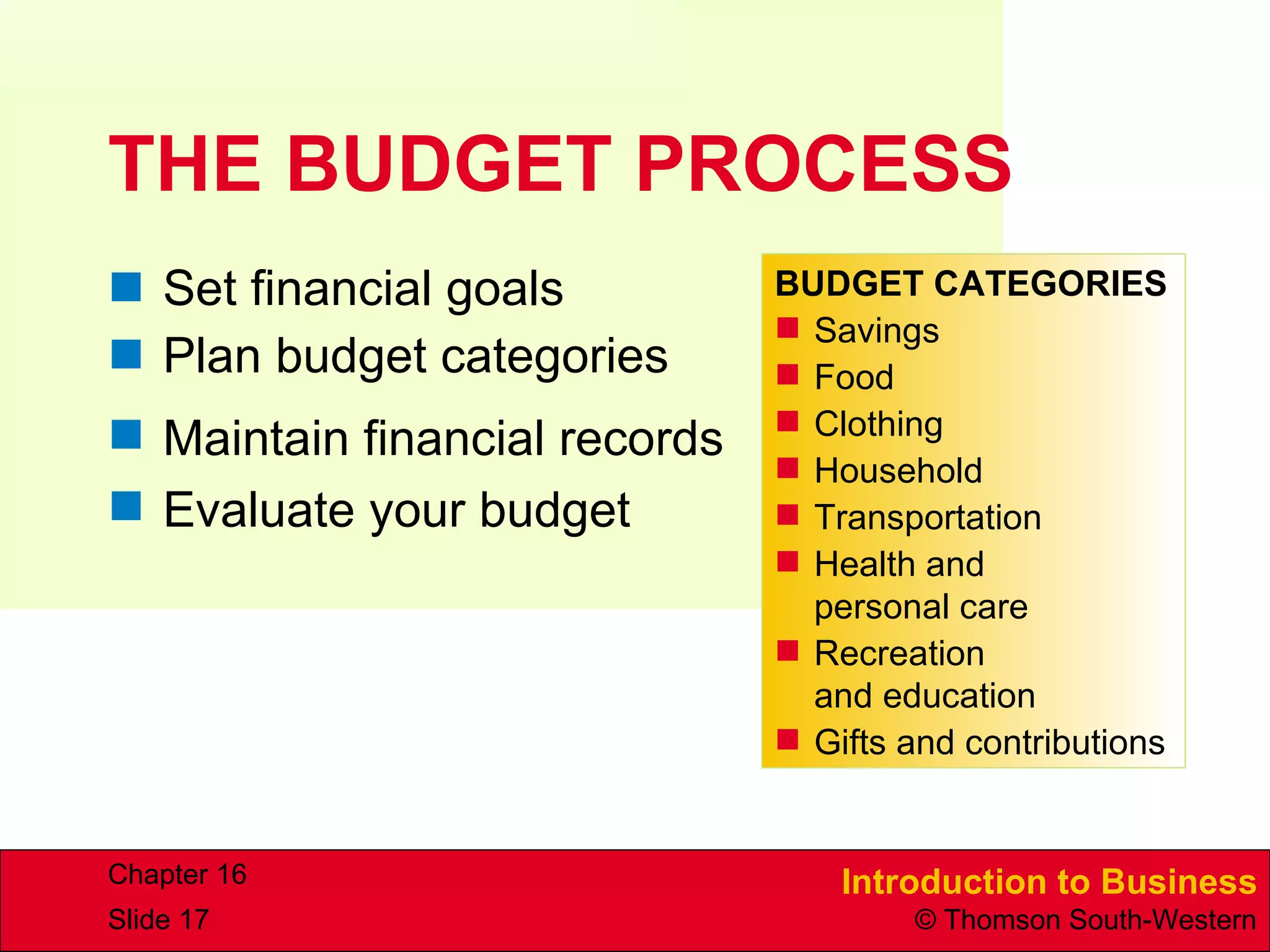
THE BUDGET PROCESS Set financial goals Plan budget categories BUDGET CATEGORIES Savings Food Clothing Household Transportation Health and  personal care Recreation  and education Gifts and contributions Maintain financial records Evaluate your budget
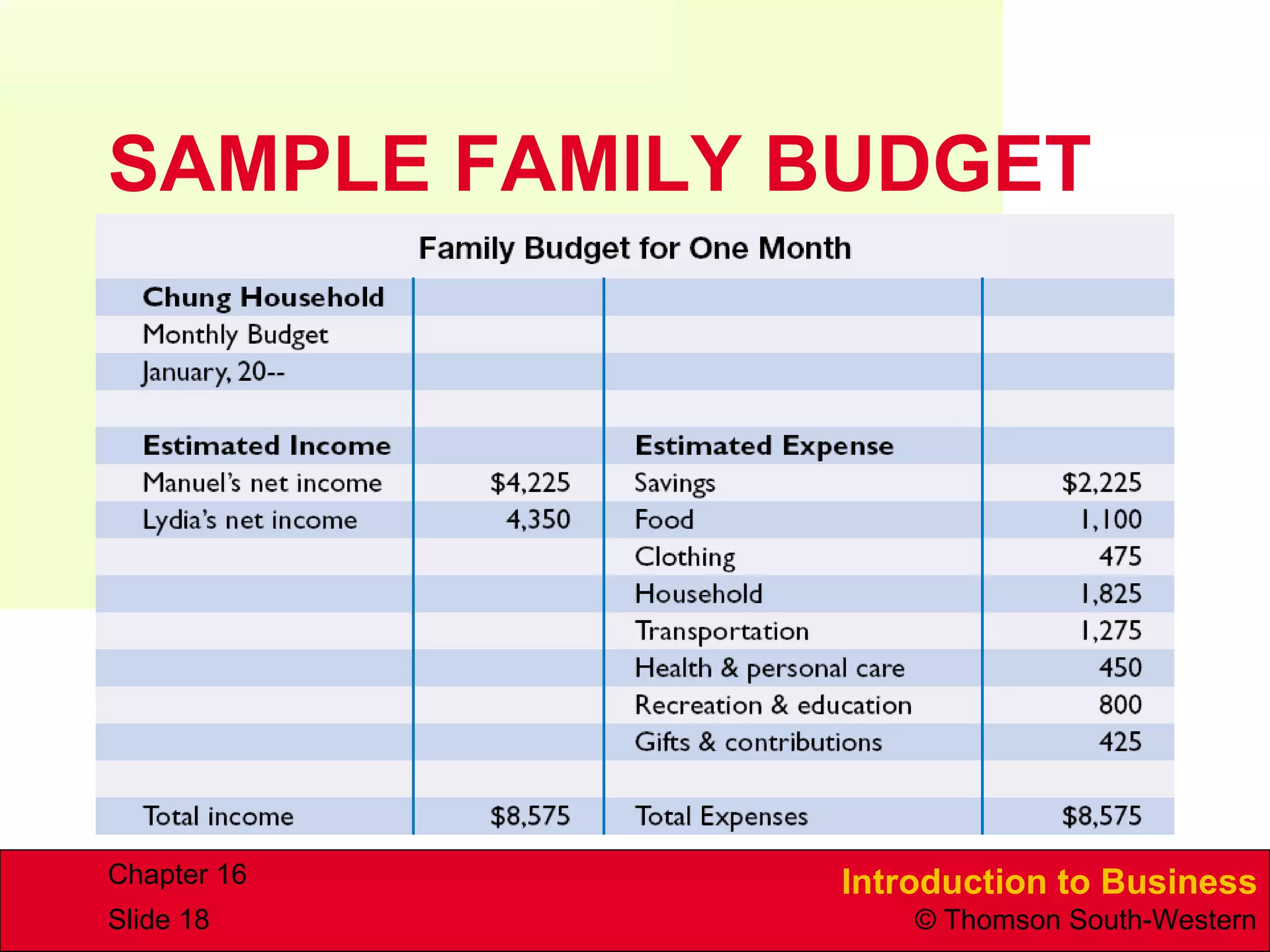
SAMPLE FAMILY BUDGET
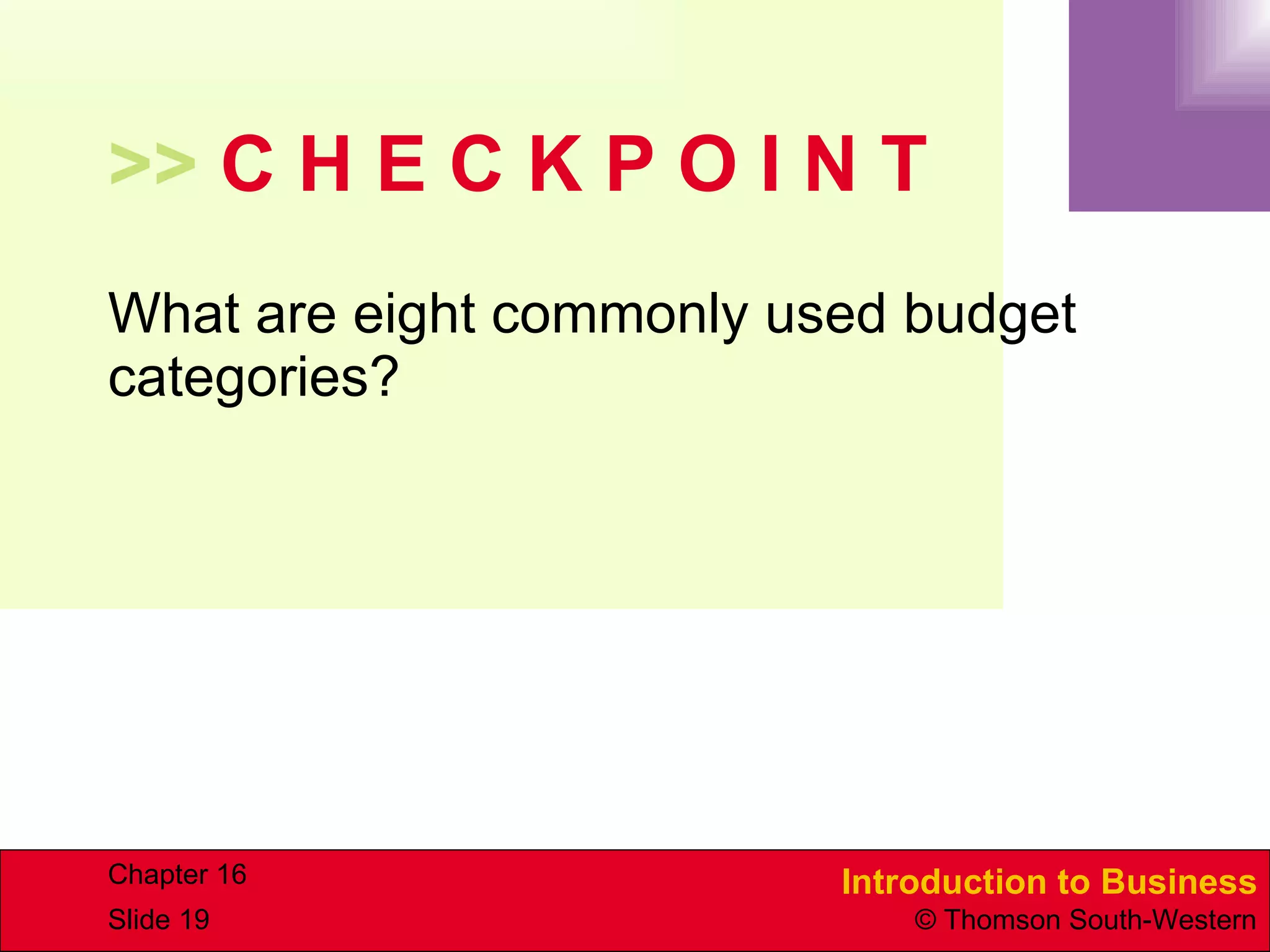
>>  C H E C K P O I N T What are eight commonly used budget categories?
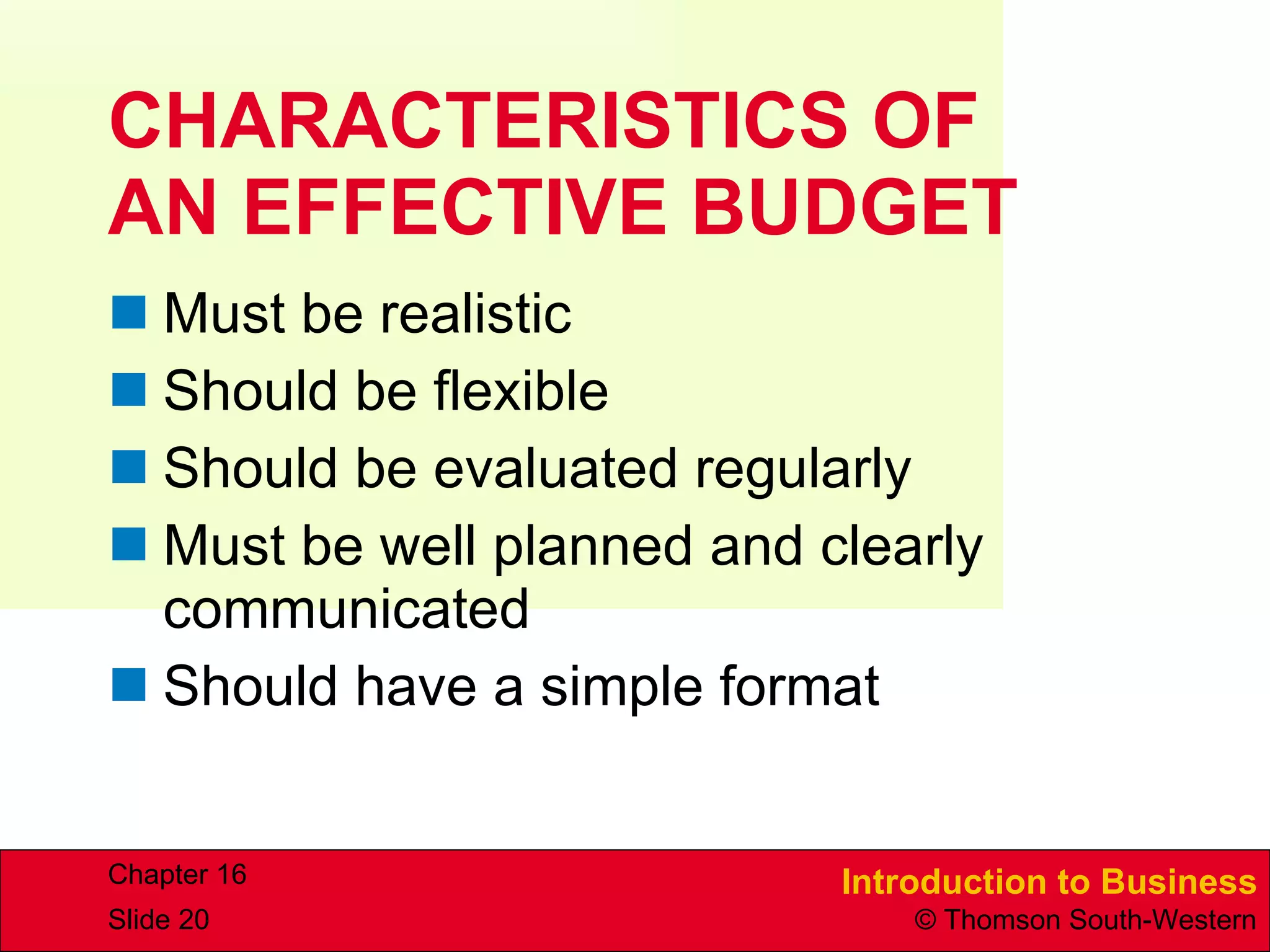
CHARACTERISTICS OF  AN EFFECTIVE BUDGET Must be realistic  Should be flexible Should be evaluated regularly Must be well planned and clearly communicated Should have a simple format
BUDGETING FORMATS Software program  Handwritten Checkbook Unwritten
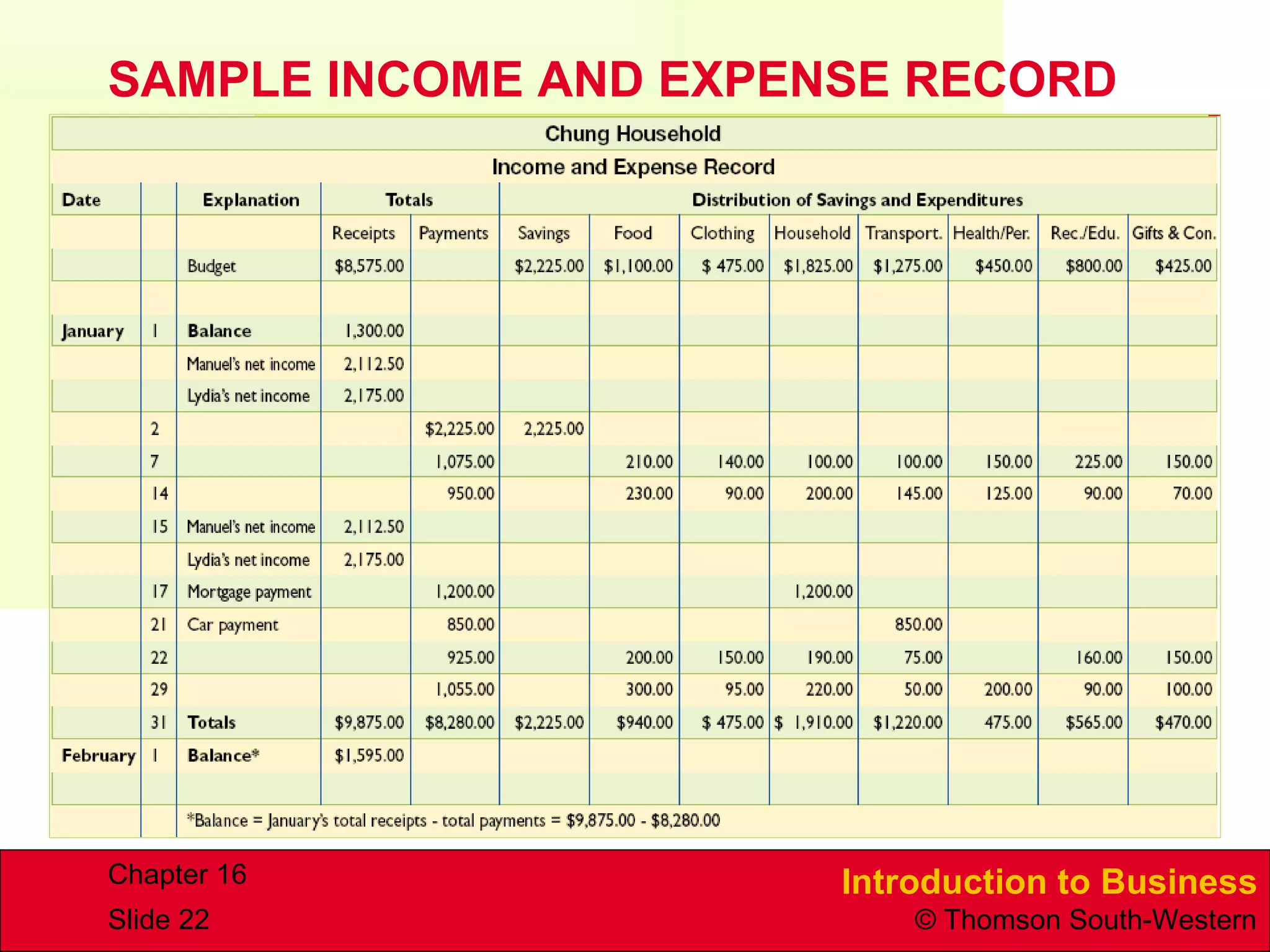
SAMPLE INCOME AND EXPENSE RECORD
>>  C H E C K P O I N T What are five characteristics of an effective budget?
LESSON 16-3 Your Financial Future Goals Describe the financial planning process. Explain actions for implementing a financial plan. Identify actions for reviewing a financial plan.
Key Terms financial plan individual retirement account (IRA) estate planning
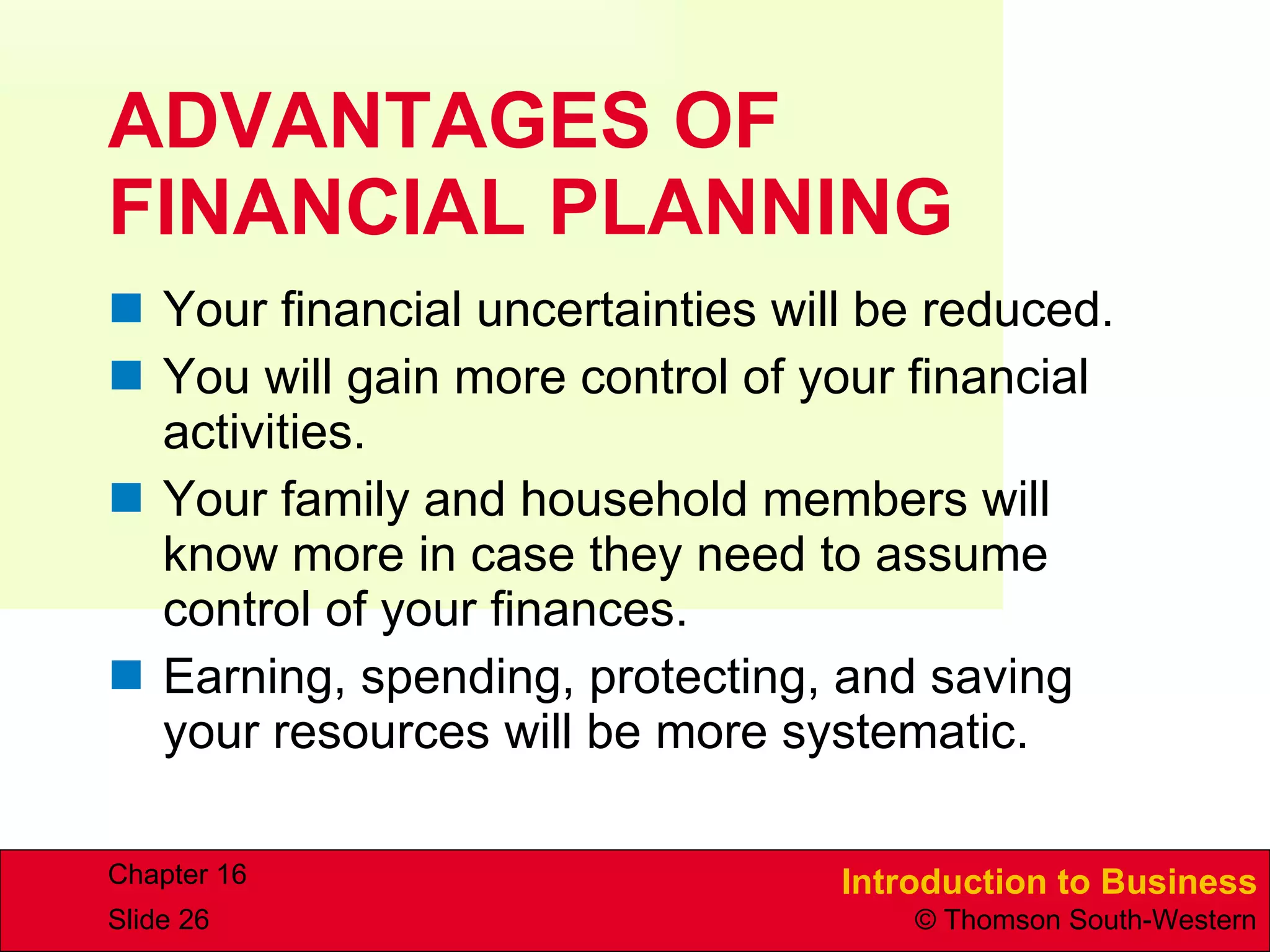
ADVANTAGES OF FINANCIAL PLANNING  Your financial uncertainties will be reduced. You will gain more control of your financial activities. Your family and household members will know more in case they need to assume control of your finances. Earning, spending, protecting, and saving your resources will be more systematic.
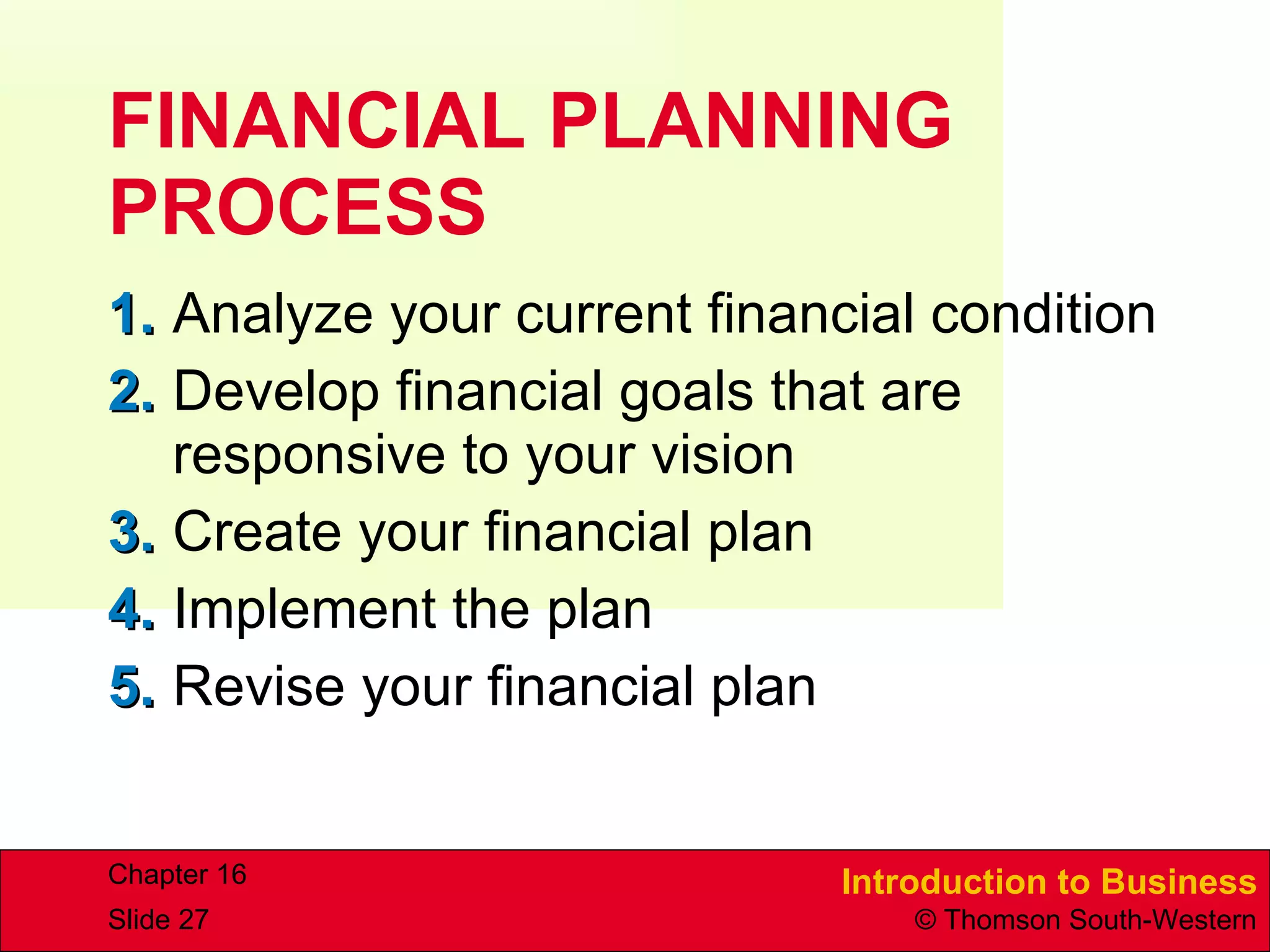
FINANCIAL PLANNING PROCESS 1. Analyze your current financial condition 2. Develop financial goals that are responsive to your vision 3. Create your financial plan 4. Implement the plan 5. Revise your financial plan
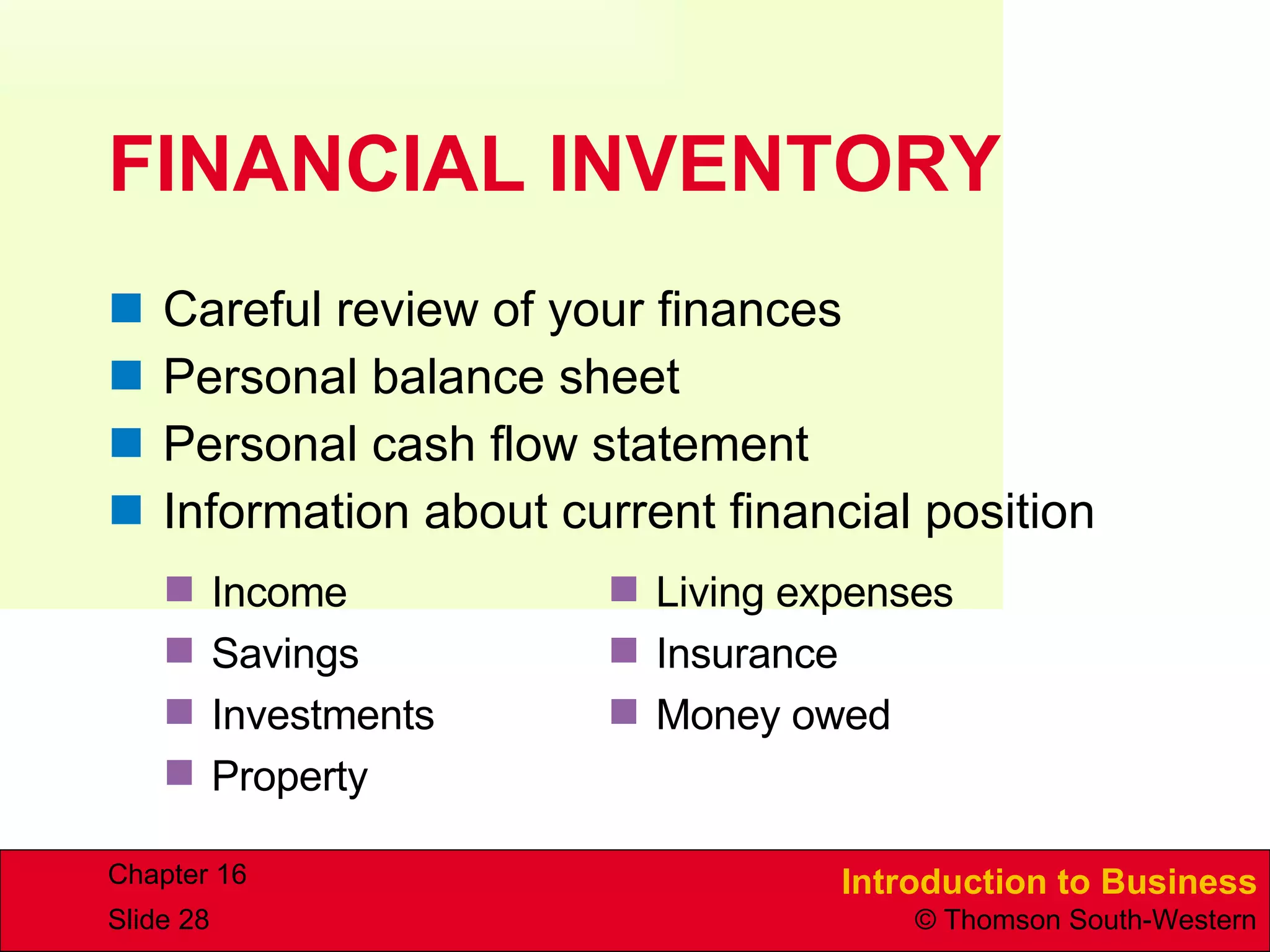
FINANCIAL INVENTORY Careful review of your finances Personal balance sheet Personal cash flow statement Information about current financial position Income Savings Investments Property Living expenses Insurance Money owed
PERSONAL FINANCIAL FILING SYSTEM Personal records Housing records Consumer purchase records Insurance records Money management records Tax records Financial services and credit records Investment, retirement, and estate records
FINANCIAL LIFE CYCLE Teen years Twenties Later Retirement
USING A  FINANCIAL PLANNER Questions you might ask when choosing a financial planner What experience and training do you have? Are you willing to supply references from past clients? How are your fees determined?
>>  C H E C K P O I N T List five recommended steps for financial planning.
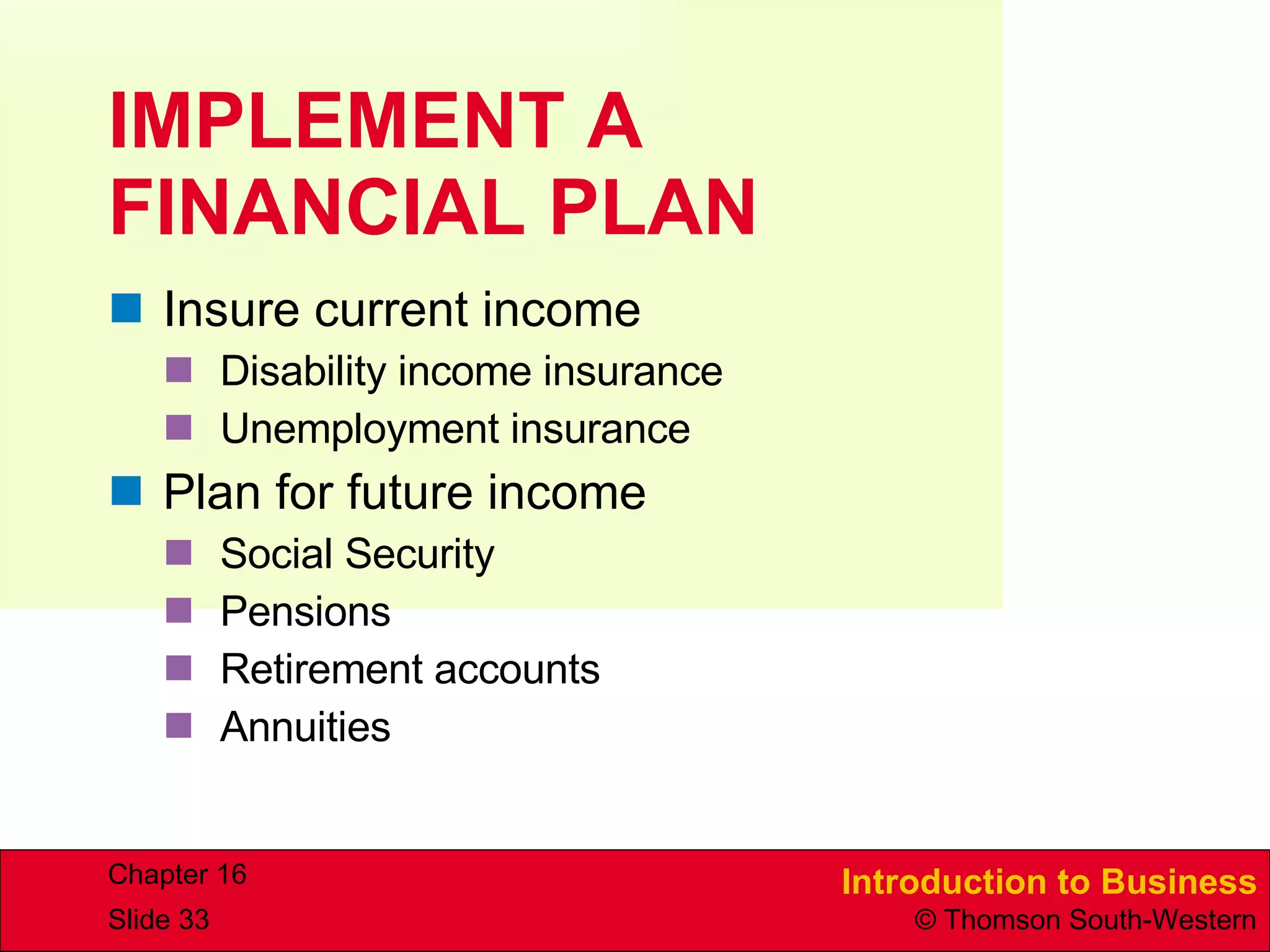
IMPLEMENT A  FINANCIAL PLAN Insure current income Disability income insurance Unemployment insurance Plan for future income Social Security Pensions Retirement accounts Annuities
>>  C H E C K P O I N T What are common sources of income during retirement?
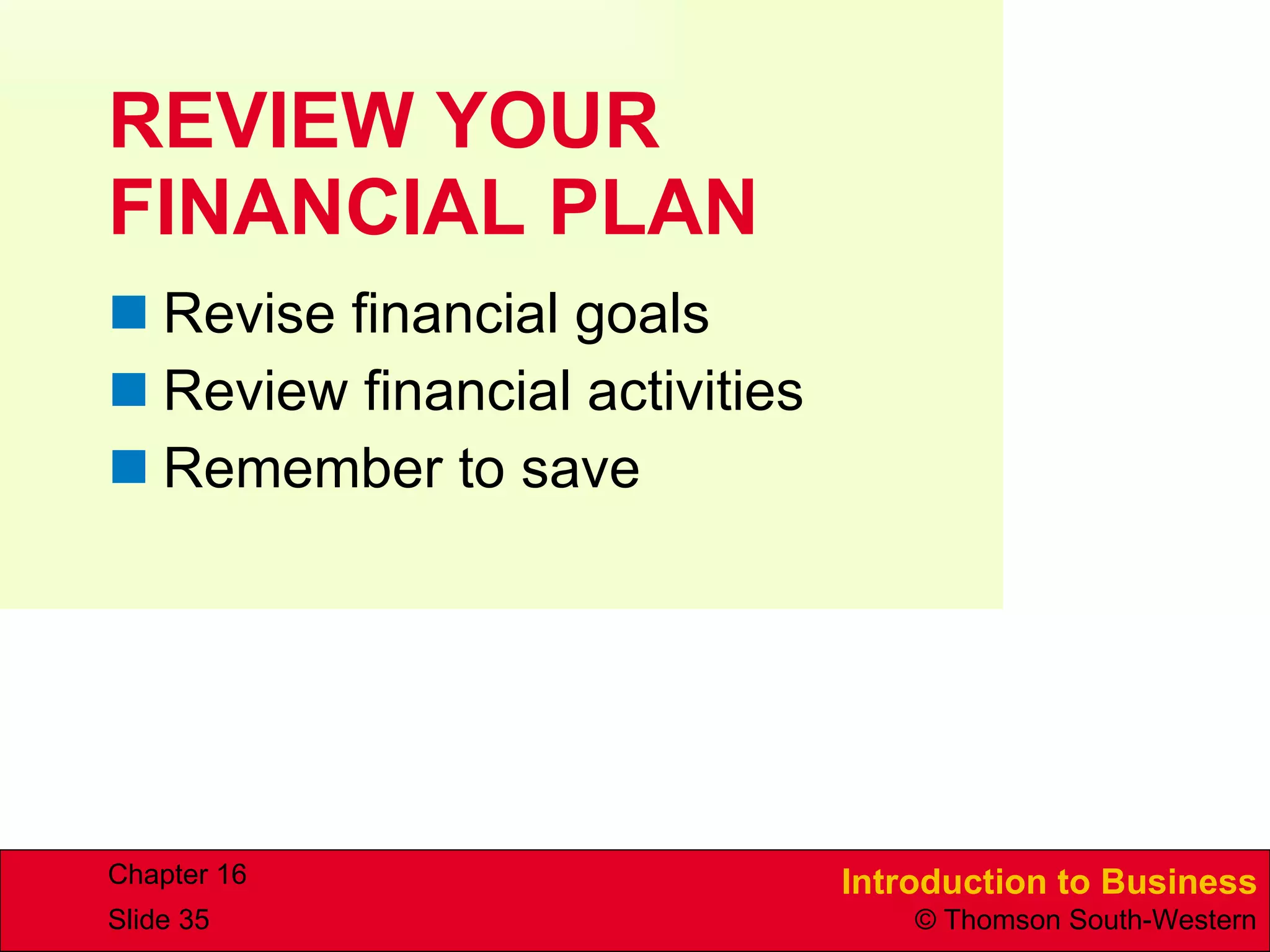
REVIEW YOUR  FINANCIAL PLAN Revise financial goals Review financial activities Remember to save
>>  C H E C K P O I N T What common activities are needed when reviewing a financial plan?

Itb Chap 16

  • 1.
    Money Management and Financial Planning 16-1 Personal Financial Statements 16-2 Budgeting Techniques 16-3 Your Financial Future 16
  • 2.
    LESSON 16-1 PersonalFinancial Statements Goals Explain the basics of money management. Create a personal balance sheet. Develop a personal cash flow statement.
  • 3.
    Key Terms moneymanagement personal assets net worth cash flow statement
  • 4.
    MONEY MANAGEMENT BASICSRefers to the day-to-day financial activities associated with using limited income to satisfy your unlimited needs and wants Involves getting the most for your money through careful planning, saving, and spending Involves making and using a plan for spending
  • 5.
    SUCCESSFUL MONEY MANAGERSSet goals Make wise decisions Buy wisely Live within their income
  • 6.
    >> CH E C K P O I N T What are some characteristics of a wise money manager?
  • 7.
    PERSONAL BALANCESHEET Assets Liabilities Net Worth
  • 8.
    SAMPLE PERSONAL BALANCE SHEET
  • 9.
    >> CH E C K P O I N T What are three main categories of a personal balance sheet?
  • 10.
    PERSONAL CASH FLOWSTATEMENT Cash inflows Cash outflows Compare inflows and outflows
  • 11.
    SAMPLE PERSONAL CASH FLOW STATEMENT
  • 12.
    >> CH E C K P O I N T What do cash outflows represent?
  • 13.
    LESSON 16-2 BudgetingTechniques Goals Identify purposes of a budget. Describe steps for preparing a budget. Describe characteristics of successful budgeting.
  • 14.
    Key Terms fixedexpenses variable expenses allowance budget variance
  • 15.
    BUDGET ACTIVITIES Livewithin your income Achieve your financial goals Buy wisely Avoid credit problems Plan for financial emergencies Develop good money management skills
  • 16.
    >> CH E C K P O I N T What are the main purposes of a budget?
  • 17.
    THE BUDGET PROCESSSet financial goals Plan budget categories BUDGET CATEGORIES Savings Food Clothing Household Transportation Health and personal care Recreation and education Gifts and contributions Maintain financial records Evaluate your budget
  • 18.
  • 19.
    >> CH E C K P O I N T What are eight commonly used budget categories?
  • 20.
    CHARACTERISTICS OF AN EFFECTIVE BUDGET Must be realistic Should be flexible Should be evaluated regularly Must be well planned and clearly communicated Should have a simple format
  • 21.
    BUDGETING FORMATS Softwareprogram Handwritten Checkbook Unwritten
  • 22.
    SAMPLE INCOME ANDEXPENSE RECORD
  • 23.
    >> CH E C K P O I N T What are five characteristics of an effective budget?
  • 24.
    LESSON 16-3 YourFinancial Future Goals Describe the financial planning process. Explain actions for implementing a financial plan. Identify actions for reviewing a financial plan.
  • 25.
    Key Terms financialplan individual retirement account (IRA) estate planning
  • 26.
    ADVANTAGES OF FINANCIALPLANNING Your financial uncertainties will be reduced. You will gain more control of your financial activities. Your family and household members will know more in case they need to assume control of your finances. Earning, spending, protecting, and saving your resources will be more systematic.
  • 27.
    FINANCIAL PLANNING PROCESS1. Analyze your current financial condition 2. Develop financial goals that are responsive to your vision 3. Create your financial plan 4. Implement the plan 5. Revise your financial plan
  • 28.
    FINANCIAL INVENTORY Carefulreview of your finances Personal balance sheet Personal cash flow statement Information about current financial position Income Savings Investments Property Living expenses Insurance Money owed
  • 29.
    PERSONAL FINANCIAL FILINGSYSTEM Personal records Housing records Consumer purchase records Insurance records Money management records Tax records Financial services and credit records Investment, retirement, and estate records
  • 30.
    FINANCIAL LIFE CYCLETeen years Twenties Later Retirement
  • 31.
    USING A FINANCIAL PLANNER Questions you might ask when choosing a financial planner What experience and training do you have? Are you willing to supply references from past clients? How are your fees determined?
  • 32.
    >> CH E C K P O I N T List five recommended steps for financial planning.
  • 33.
    IMPLEMENT A FINANCIAL PLAN Insure current income Disability income insurance Unemployment insurance Plan for future income Social Security Pensions Retirement accounts Annuities
  • 34.
    >> CH E C K P O I N T What are common sources of income during retirement?
  • 35.
    REVIEW YOUR FINANCIAL PLAN Revise financial goals Review financial activities Remember to save
  • 36.
    >> CH E C K P O I N T What common activities are needed when reviewing a financial plan?