Budget Planning
Beginner's Guide to Manage Your Money Better
Presenter Name
Agenda
01 Budget Basics
02 Financial Goals
03 Income & Expenses
04 Creating a Budget
05 Adjusting & Optimizing
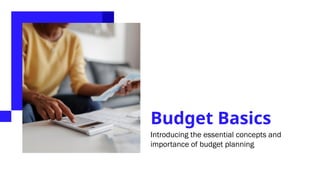
Budget Basics
Introducing the essential concepts and
importance of budget planning
What is a Budget?
A budget is a financial plan that outlines expected income and expenses over a
specific period, typically a month. It serves as a guide for managing financial
resources effectively and achieving personal financial goals. Budgets are
essential in personal finance as they help individuals monitor their spending,
ensure they live within their means, and prepare for both anticipated and
unforeseen expenses. Understanding the basics of budgeting is crucial for
establishing a strong financial foundation.
Components of a Budget
Income
Income includes all sources of money coming in, such as
salary, wages, dividends, and any other financial
benefits.
Expenses
Expenses are costs to generate revenue and maintain
operations. They include fixed costs like rent and
variable costs like utilities. Managing expenses is crucial
for financial health.
Savings
Savings is the portion of income set aside for future use,
emergencies, or specific financial goals.
Financial Goals
These are objectives that guide budgeting, such as
saving for a house or retirement.
Financial Goals
Setting realistic and achievable financial goals to guide
budgeting
Importance of
Financial Goals
Setting financial goals is a cornerstone of effective
budgeting and financial planning. Financial goals
provide a roadmap for managing money, prioritizing
spending, and saving for the future. They help
individuals focus on what truly matters and make
informed financial decisions that align with their life
aspirations.
SMART Goals
Specific
Goals should be clear and precise, detailing exactly what you
want to achieve. Specificity eliminates ambiguity and provides
direction, making it easier to focus efforts.
Measurable
A goal must be quantifiable so that progress can be tracked.
Measurable goals help to identify milestones and motivate
continued effort.
Achievable
Goals should be realistic and attainable given the available
resources and constraints. This ensures that goals are
challenging yet possible.
Relevant
A goal must align with broader life objectives and values,
ensuring that it is worthwhile and meaningful. Relevance
helps maintain focus on priorities.
Time-bound
Setting a deadline for achieving the goal instills urgency and
helps prioritize tasks, ensuring that efforts are consistently
directed towards the goal.
Examples Of Financial Goals
Saving for a Vacation
Setting aside a specific amount of money each month to
fund a planned vacation in the near future. This goal can
be achieved by budgeting and reducing discretionary
spending.
Building an Emergency Fund
Accumulating savings to cover 3-6 months of living
expenses for unforeseen circumstances. This involves
prioritizing savings in the budget to ensure financial
security.
Paying off Student Loans
Allocating extra funds towards repaying student loans
faster. This goal requires disciplined budgeting and may
involve cutting back on non-essential expenditures.
Retirement Planning
Contributing regularly to retirement accounts to build a
sufficient nest egg. It involves understanding retirement
needs and adjusting budget allocations accordingly.
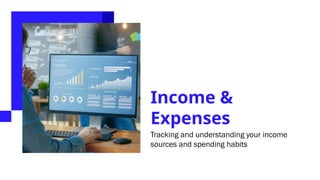
Income &
Expenses
Tracking and understanding your income
sources and spending habits
Income Tracking Tools
Identify Income Sources
It's essential to recognize all income streams, whether it's salary, freelance work, dividends, or
rental income.
Documentation Methods
Accurate documentation of income is crucial. Utilize pay stubs, invoices, and bank statements
to track and verify income regularly.
Income Track Tools
Leverage digital tools and software that automate income tracking, offering convenience and
accuracy. Tools such as financial management platforms can streamline this process.
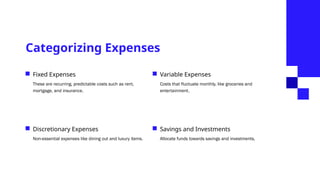
Categorizing Expenses
Fixed Expenses
These are recurring, predictable costs such as rent,
mortgage, and insurance.
Discretionary Expenses
Non-essential expenses like dining out and luxury items.
Variable Expenses
Costs that fluctuate monthly, like groceries and
entertainment.
Savings and Investments
Allocate funds towards savings and investments.
Tools for Tracking
In the modern age, numerous tools are available to help track income and
expenses, making financial management more accessible and efficient.
Some applications are popular for personal finance management, offering
features like budgeting, expense categorization, and income tracking. These
apps often come with user-friendly interfaces and are compatible with
various devices, allowing users to access their financial data anywhere,
anytime.
Creating a Budget
Step-by-step guide to creating a budget that fits your
lifestyle
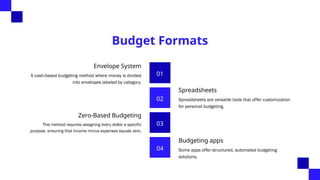
Budget Formats
01
Envelope System
A cash-based budgeting method where money is divided
into envelopes labeled by category.
02
Spreadsheets
Spreadsheets are versatile tools that offer customization
for personal budgeting.
03
Zero-Based Budgeting
This method requires assigning every dollar a specific
purpose, ensuring that income minus expenses equals zero.
04
Budgeting apps
Some apps offer structured, automated budgeting
solutions.
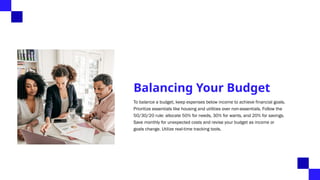
Balancing Your Budget
To balance a budget, keep expenses below income to achieve financial goals.
Prioritize essentials like housing and utilities over non-essentials. Follow the
50/30/20 rule: allocate 50% for needs, 30% for wants, and 20% for savings.
Save monthly for unexpected costs and revise your budget as income or
goals change. Utilize real-time tracking tools.
Personalizing Your Budget
01
Assessing financial goals
Start by identifying both short-term and long-term
financial goals. 02
Adapt income to changes
Flexibility is key in budgeting, especially when income
fluctuates.
03
Understanding spending habits
Analyze past spending patterns to understand habits
and identify areas for improvement.
04
Save for emergencies
Ensure a portion of income is directed towards an
emergency fund.
Adjusting &
Optimizing
Regularly reviewing and adjusting your budget
to ensure it meets financial objectives
Reviewing Your Budget
Budget reviews enhance financial stability and align goals. Planners
recommend monthly or quarterly assessments of income and expenses to
improve spending habits. This approach helps adapt to income changes,
prevents overspending, increases savings, and supports long-term
objectives. Budgeting apps provide real-time insights for trend analysis and
adjustments.
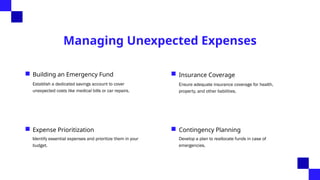
Managing Unexpected Expenses
Building an Emergency Fund
Establish a dedicated savings account to cover
unexpected costs like medical bills or car repairs.
Insurance Coverage
Ensure adequate insurance coverage for health,
property, and other liabilities.
Expense Prioritization
Identify essential expenses and prioritize them in your
budget.
Contingency Planning
Develop a plan to reallocate funds in case of
emergencies.
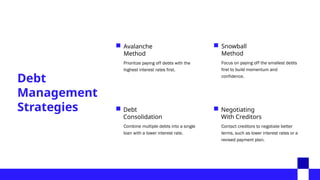
Debt
Management
Strategies
Avalanche
Method
Prioritize paying off debts with the
highest interest rates first.
Snowball
Method
Focus on paying off the smallest debts
first to build momentum and
confidence.
Debt
Consolidation
Combine multiple debts into a single
loan with a lower interest rate.
Negotiating
With Creditors
Contact creditors to negotiate better
terms, such as lower interest rates or a
revised payment plan.
Thank You

Simple budget planning presentation.pptx

  • 1.
    Budget Planning Beginner's Guideto Manage Your Money Better Presenter Name
  • 2.
    Agenda 01 Budget Basics 02Financial Goals 03 Income & Expenses 04 Creating a Budget 05 Adjusting & Optimizing
  • 3.
    Budget Basics Introducing theessential concepts and importance of budget planning
  • 4.
    What is aBudget? A budget is a financial plan that outlines expected income and expenses over a specific period, typically a month. It serves as a guide for managing financial resources effectively and achieving personal financial goals. Budgets are essential in personal finance as they help individuals monitor their spending, ensure they live within their means, and prepare for both anticipated and unforeseen expenses. Understanding the basics of budgeting is crucial for establishing a strong financial foundation.
  • 5.
    Components of aBudget Income Income includes all sources of money coming in, such as salary, wages, dividends, and any other financial benefits. Expenses Expenses are costs to generate revenue and maintain operations. They include fixed costs like rent and variable costs like utilities. Managing expenses is crucial for financial health. Savings Savings is the portion of income set aside for future use, emergencies, or specific financial goals. Financial Goals These are objectives that guide budgeting, such as saving for a house or retirement.
  • 6.
    Financial Goals Setting realisticand achievable financial goals to guide budgeting
  • 7.
    Importance of Financial Goals Settingfinancial goals is a cornerstone of effective budgeting and financial planning. Financial goals provide a roadmap for managing money, prioritizing spending, and saving for the future. They help individuals focus on what truly matters and make informed financial decisions that align with their life aspirations.
  • 8.
    SMART Goals Specific Goals shouldbe clear and precise, detailing exactly what you want to achieve. Specificity eliminates ambiguity and provides direction, making it easier to focus efforts. Measurable A goal must be quantifiable so that progress can be tracked. Measurable goals help to identify milestones and motivate continued effort. Achievable Goals should be realistic and attainable given the available resources and constraints. This ensures that goals are challenging yet possible. Relevant A goal must align with broader life objectives and values, ensuring that it is worthwhile and meaningful. Relevance helps maintain focus on priorities. Time-bound Setting a deadline for achieving the goal instills urgency and helps prioritize tasks, ensuring that efforts are consistently directed towards the goal.
  • 9.
    Examples Of FinancialGoals Saving for a Vacation Setting aside a specific amount of money each month to fund a planned vacation in the near future. This goal can be achieved by budgeting and reducing discretionary spending. Building an Emergency Fund Accumulating savings to cover 3-6 months of living expenses for unforeseen circumstances. This involves prioritizing savings in the budget to ensure financial security. Paying off Student Loans Allocating extra funds towards repaying student loans faster. This goal requires disciplined budgeting and may involve cutting back on non-essential expenditures. Retirement Planning Contributing regularly to retirement accounts to build a sufficient nest egg. It involves understanding retirement needs and adjusting budget allocations accordingly.
  • 10.
    Income & Expenses Tracking andunderstanding your income sources and spending habits
  • 11.
    Income Tracking Tools IdentifyIncome Sources It's essential to recognize all income streams, whether it's salary, freelance work, dividends, or rental income. Documentation Methods Accurate documentation of income is crucial. Utilize pay stubs, invoices, and bank statements to track and verify income regularly. Income Track Tools Leverage digital tools and software that automate income tracking, offering convenience and accuracy. Tools such as financial management platforms can streamline this process.
  • 12.
    Categorizing Expenses Fixed Expenses Theseare recurring, predictable costs such as rent, mortgage, and insurance. Discretionary Expenses Non-essential expenses like dining out and luxury items. Variable Expenses Costs that fluctuate monthly, like groceries and entertainment. Savings and Investments Allocate funds towards savings and investments.
  • 13.
    Tools for Tracking Inthe modern age, numerous tools are available to help track income and expenses, making financial management more accessible and efficient. Some applications are popular for personal finance management, offering features like budgeting, expense categorization, and income tracking. These apps often come with user-friendly interfaces and are compatible with various devices, allowing users to access their financial data anywhere, anytime.
  • 14.
    Creating a Budget Step-by-stepguide to creating a budget that fits your lifestyle
  • 15.
    Budget Formats 01 Envelope System Acash-based budgeting method where money is divided into envelopes labeled by category. 02 Spreadsheets Spreadsheets are versatile tools that offer customization for personal budgeting. 03 Zero-Based Budgeting This method requires assigning every dollar a specific purpose, ensuring that income minus expenses equals zero. 04 Budgeting apps Some apps offer structured, automated budgeting solutions.
  • 16.
    Balancing Your Budget Tobalance a budget, keep expenses below income to achieve financial goals. Prioritize essentials like housing and utilities over non-essentials. Follow the 50/30/20 rule: allocate 50% for needs, 30% for wants, and 20% for savings. Save monthly for unexpected costs and revise your budget as income or goals change. Utilize real-time tracking tools.
  • 17.
    Personalizing Your Budget 01 Assessingfinancial goals Start by identifying both short-term and long-term financial goals. 02 Adapt income to changes Flexibility is key in budgeting, especially when income fluctuates. 03 Understanding spending habits Analyze past spending patterns to understand habits and identify areas for improvement. 04 Save for emergencies Ensure a portion of income is directed towards an emergency fund.
  • 18.
    Adjusting & Optimizing Regularly reviewingand adjusting your budget to ensure it meets financial objectives
  • 19.
    Reviewing Your Budget Budgetreviews enhance financial stability and align goals. Planners recommend monthly or quarterly assessments of income and expenses to improve spending habits. This approach helps adapt to income changes, prevents overspending, increases savings, and supports long-term objectives. Budgeting apps provide real-time insights for trend analysis and adjustments.
  • 20.
    Managing Unexpected Expenses Buildingan Emergency Fund Establish a dedicated savings account to cover unexpected costs like medical bills or car repairs. Insurance Coverage Ensure adequate insurance coverage for health, property, and other liabilities. Expense Prioritization Identify essential expenses and prioritize them in your budget. Contingency Planning Develop a plan to reallocate funds in case of emergencies.
  • 21.
    Debt Management Strategies Avalanche Method Prioritize paying offdebts with the highest interest rates first. Snowball Method Focus on paying off the smallest debts first to build momentum and confidence. Debt Consolidation Combine multiple debts into a single loan with a lower interest rate. Negotiating With Creditors Contact creditors to negotiate better terms, such as lower interest rates or a revised payment plan.
  • 22.