TOTAL QUALITY MANAGEMENT
ISO
ISO
• ISO 9000 is a series of standards, developed and
published by the international organization for
standardization.
• Defines the required elements of an effective
quality management system for manufacturing
and service industries.
• Quality refers to all those features of a product
(or service) which are required by the customer.
• ISO Can be applied to any company.
History of ISO
• 1946 London - delegates from 25 countries
decided to create a new international
organization "the object of which would be to
facilitate the international coordination and
unification of industrial standards
• 1947 - ISO began to officially function
• 1951 - The first ISO standard was published
• National standardization activity started in India
in 1947
Cont…
• The establishment of the Indian Standards
Institution (ISI) as a society under the Societies
Registration Act 1860, to prepare and promote the
adoption of national standards.
• In 1952, the Institution was also given the
responsibility of operating a certification marking
scheme under an Act of Parliament
• In 1986 the national authorities made a review of
the structure and status of ISI and the Government
of India felt that a new thrust had to be given to
standardization and quality control activities
Cont…
• The Government of India therefore decided to
create a statutory organization as the national
standards body which was named as the Bureau
of Indian Standards (BIS).
• The Bureau of Indian Standards Act was passed
by the Parliament in 1986 and BIS came into
being on 1 April 1987.
Essence of ISO
• Plan & Document what you do.
• Do what you document & Record What you did.
• Check the results.
• Act on the difference.
• Do this periodically.
How to get ISO 9000?
• The two phases of ISO-9000 certification are
1. Documentation.
2. Certification.
DOCUMENTATION
• The documentation involves procedures,
standards and forms, which can be done in
house (or by the help of a consultant).
• An Organization needs to develop a documented
quality system, which satisfies the requirements
of the chosen ISO model.
• The organization needs to implement this
quality system.
CONT…
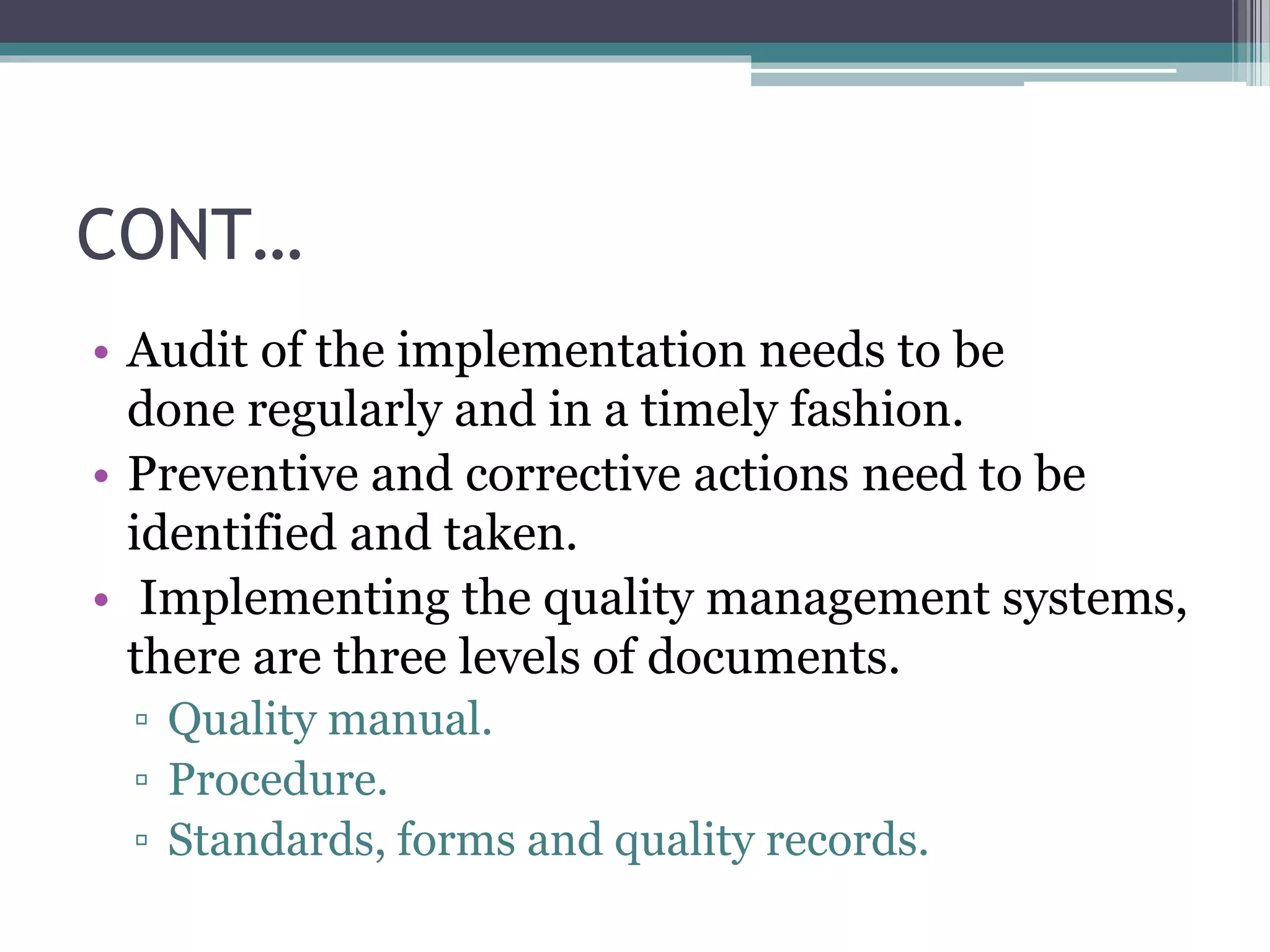
• Audit of the implementation needs to be
done regularly and in a timely fashion.
• Preventive and corrective actions need to be
identified and taken.
• Implementing the quality management systems,
there are three levels of documents.
▫ Quality manual.
▫ Procedure.
▫ Standards, forms and quality records.
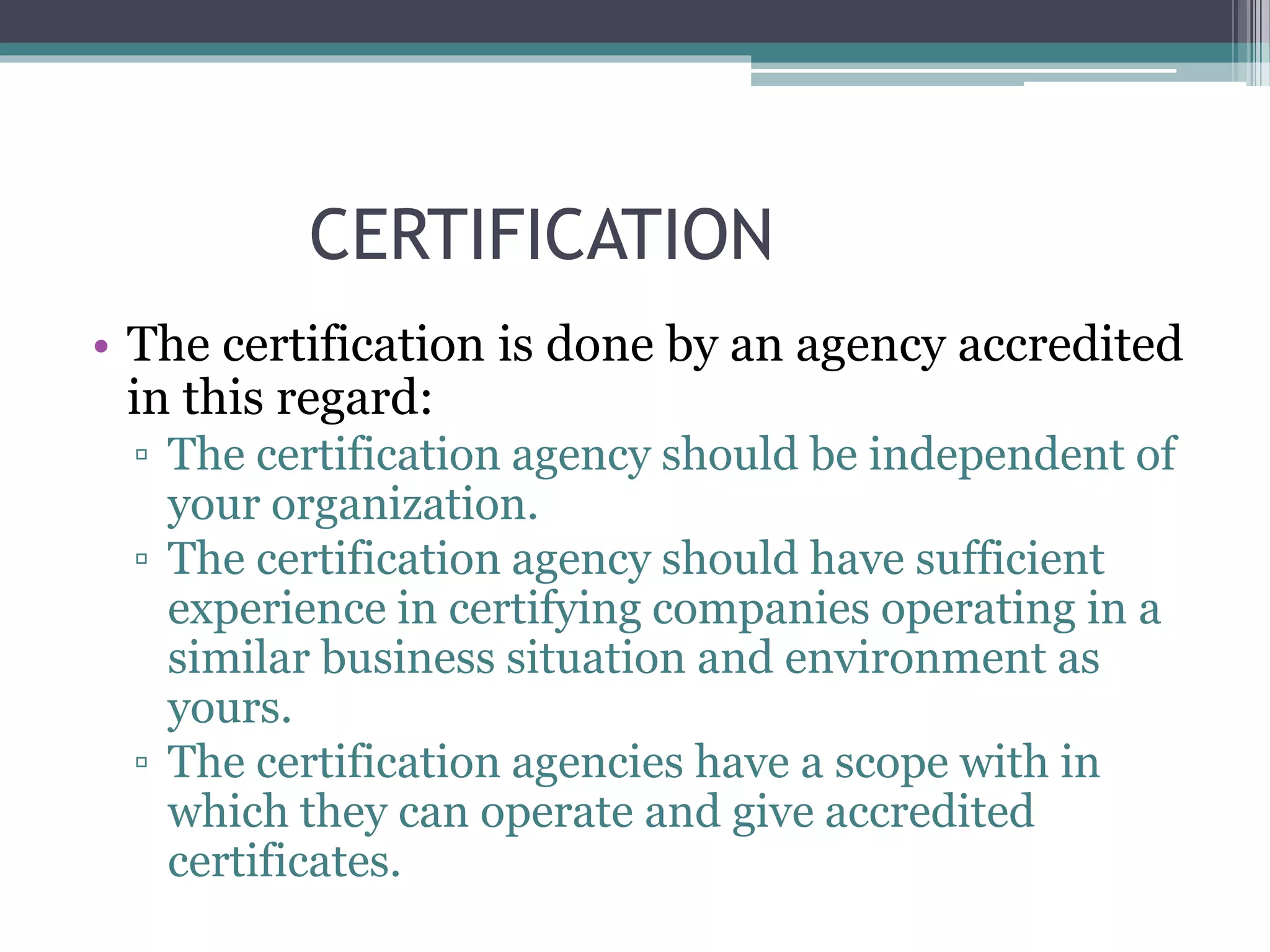
CERTIFICATION
• The certification is done by an agency accredited
in this regard:
▫ The certification agency should be independent of
your organization.
▫ The certification agency should have sufficient
experience in certifying companies operating in a
similar business situation and environment as
yours.
▫ The certification agencies have a scope with in
which they can operate and give accredited
certificates.
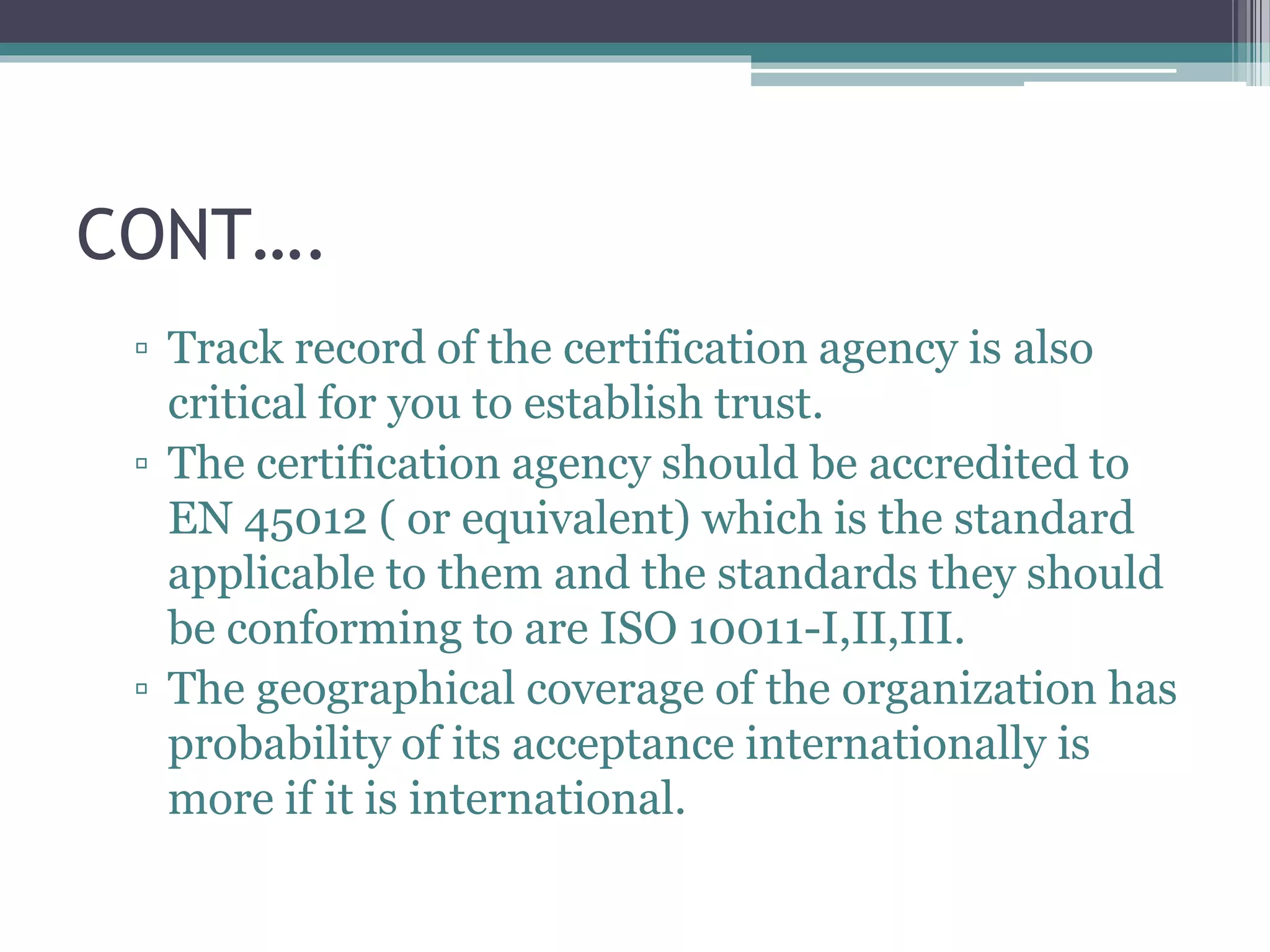
CONT….
▫ Track record of the certification agency is also
critical for you to establish trust.
▫ The certification agency should be accredited to
EN 45012 ( or equivalent) which is the standard
applicable to them and the standards they should
be conforming to are ISO 10011-I,II,III.
▫ The geographical coverage of the organization has
probability of its acceptance internationally is
more if it is international.
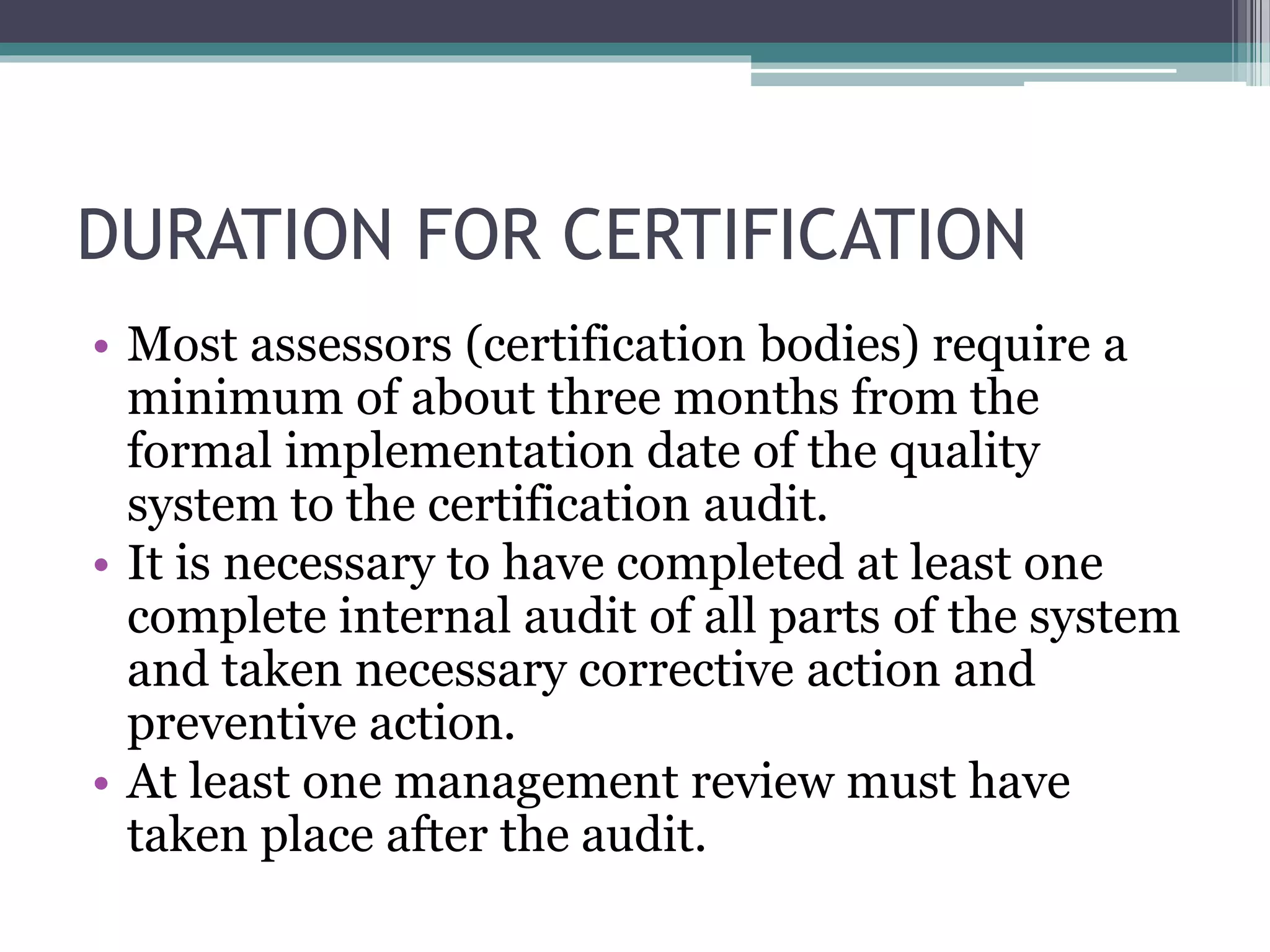
DURATION FOR CERTIFICATION
• Most assessors (certification bodies) require a
minimum of about three months from the
formal implementation date of the quality
system to the certification audit.
• It is necessary to have completed at least one
complete internal audit of all parts of the system
and taken necessary corrective action and
preventive action.
• At least one management review must have
taken place after the audit.

Iso slides for iipm

  • 1.
  • 2.
    ISO • ISO 9000is a series of standards, developed and published by the international organization for standardization. • Defines the required elements of an effective quality management system for manufacturing and service industries. • Quality refers to all those features of a product (or service) which are required by the customer. • ISO Can be applied to any company.
  • 3.
    History of ISO •1946 London - delegates from 25 countries decided to create a new international organization "the object of which would be to facilitate the international coordination and unification of industrial standards • 1947 - ISO began to officially function • 1951 - The first ISO standard was published • National standardization activity started in India in 1947
  • 4.
    Cont… • The establishmentof the Indian Standards Institution (ISI) as a society under the Societies Registration Act 1860, to prepare and promote the adoption of national standards. • In 1952, the Institution was also given the responsibility of operating a certification marking scheme under an Act of Parliament • In 1986 the national authorities made a review of the structure and status of ISI and the Government of India felt that a new thrust had to be given to standardization and quality control activities
  • 5.
    Cont… • The Governmentof India therefore decided to create a statutory organization as the national standards body which was named as the Bureau of Indian Standards (BIS). • The Bureau of Indian Standards Act was passed by the Parliament in 1986 and BIS came into being on 1 April 1987.
  • 6.
    Essence of ISO •Plan & Document what you do. • Do what you document & Record What you did. • Check the results. • Act on the difference. • Do this periodically.
  • 7.
    How to getISO 9000? • The two phases of ISO-9000 certification are 1. Documentation. 2. Certification.
  • 8.
    DOCUMENTATION • The documentationinvolves procedures, standards and forms, which can be done in house (or by the help of a consultant). • An Organization needs to develop a documented quality system, which satisfies the requirements of the chosen ISO model. • The organization needs to implement this quality system.
  • 9.
    CONT… • Audit ofthe implementation needs to be done regularly and in a timely fashion. • Preventive and corrective actions need to be identified and taken. • Implementing the quality management systems, there are three levels of documents. ▫ Quality manual. ▫ Procedure. ▫ Standards, forms and quality records.
  • 10.
    CERTIFICATION • The certificationis done by an agency accredited in this regard: ▫ The certification agency should be independent of your organization. ▫ The certification agency should have sufficient experience in certifying companies operating in a similar business situation and environment as yours. ▫ The certification agencies have a scope with in which they can operate and give accredited certificates.
  • 11.
    CONT…. ▫ Track recordof the certification agency is also critical for you to establish trust. ▫ The certification agency should be accredited to EN 45012 ( or equivalent) which is the standard applicable to them and the standards they should be conforming to are ISO 10011-I,II,III. ▫ The geographical coverage of the organization has probability of its acceptance internationally is more if it is international.
  • 12.
    DURATION FOR CERTIFICATION •Most assessors (certification bodies) require a minimum of about three months from the formal implementation date of the quality system to the certification audit. • It is necessary to have completed at least one complete internal audit of all parts of the system and taken necessary corrective action and preventive action. • At least one management review must have taken place after the audit.