Ottoman, Safavid, &
Mughal Empires
Do you remember?
• By the 1100s, the Islamic Empire had
split into several different caliphates . .
. centered in Spain, Egypt, and the
Middle East.
• The Seljuk Turks were the group in
control of the Middle East by the 1100s.
• The Mongols invaded and killed the
Seljuk caliph of Baghdad.
The Ottoman Empire
The Ottoman Turks started as soldiers
and slaves of the Seljuks. After the
Seljuks were defeated by the
Mongols, the Ottoman Turks gained
power after the Mongols left.
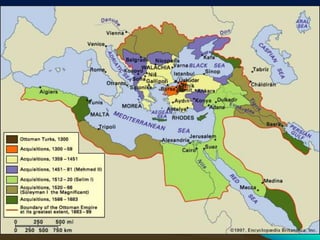
• The Ottomans were Sunni
Muslims who built one of the
wealthiest and most powerful
Empires of the world at its time.
• It was the dominating power of
the Mediterranean.
• They were all Military Empires &
“Gunpowder Empires”
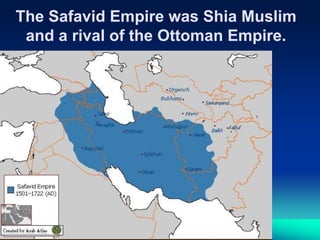
The Safavid Empire was Shia Muslim
and a rival of the Ottoman Empire.
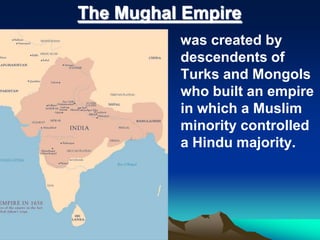
The Mughal Empire
was created by
descendents of
Turks and Mongols
who built an empire
in which a Muslim
minority controlled
a Hindu majority.
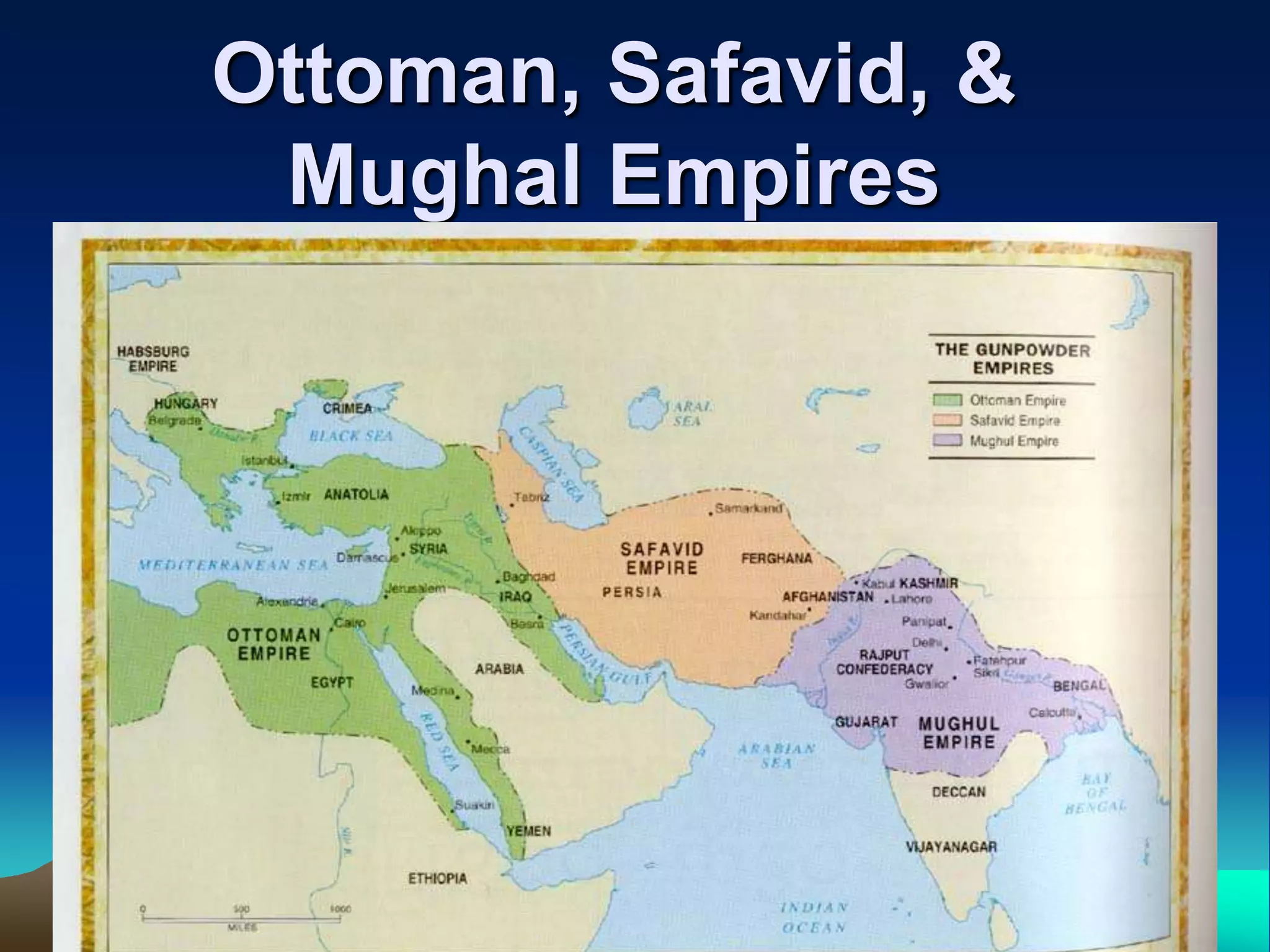
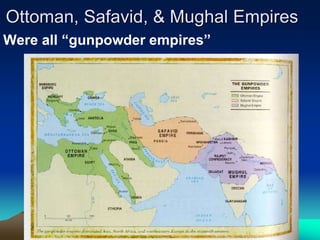
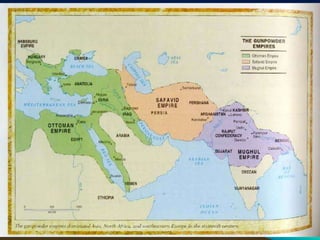
Ottoman, Safavid, & Mughal Empires
Were all “gunpowder empires”
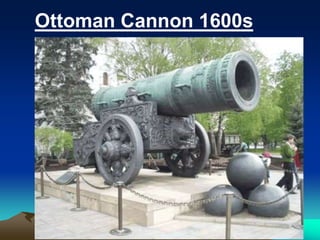
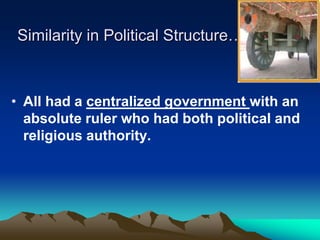
Ottoman Cannon 1600s
Similarity in Political Structure…

• All had a centralized government with an
absolute ruler who had both political and
religious authority.
Evidence . . .
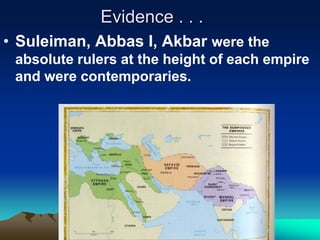
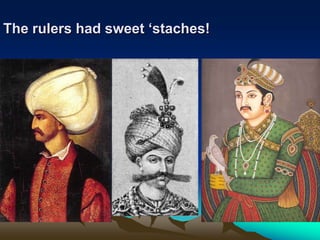
• Suleiman, Abbas I, Akbar were the
absolute rulers at the height of each empire
and were contemporaries.
The rulers had sweet „staches!
But these Islamic empires weren’t
necessarily friends…
Letter from the Ottoman Sultan to the
Safavid ruler (1514)
“You have deserted the path of salvation
and the sacred commandments. . . The
ulama (Islamic judges) have pronounced a
sentence of death against you, perjurer and
blasphemer.”
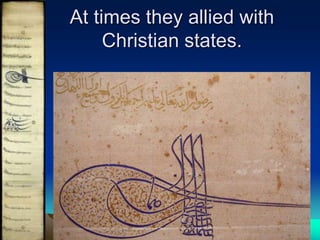
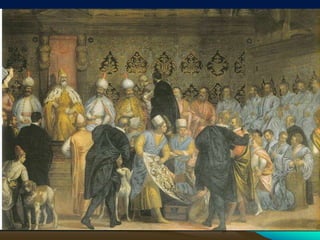
At times they allied with
Christian states.
A similarity in social class structure
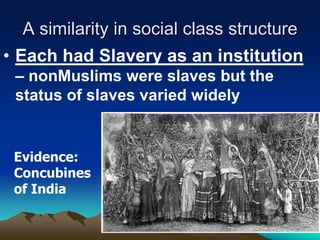
• Each had Slavery as an institution
– nonMuslims were slaves but the
status of slaves varied widely

Evidence:
Concubines
of India
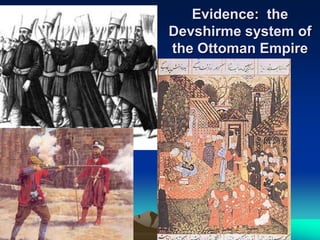
Evidence: the
Devshirme system of
the Ottoman Empire
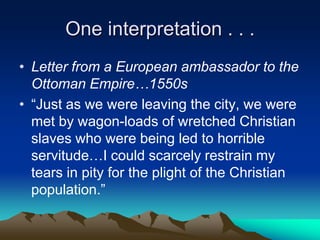
One interpretation . . .
• Letter from a European ambassador to the
Ottoman Empire…1550s
• “Just as we were leaving the city, we were
met by wagon-loads of wretched Christian
slaves who were being led to horrible
servitude…I could scarcely restrain my
tears in pity for the plight of the Christian
population.”
Islamic empires   intro 2012

Islamic empires intro 2012

  • 1.
  • 2.
    Do you remember? •By the 1100s, the Islamic Empire had split into several different caliphates . . . centered in Spain, Egypt, and the Middle East. • The Seljuk Turks were the group in control of the Middle East by the 1100s. • The Mongols invaded and killed the Seljuk caliph of Baghdad.
  • 3.
    The Ottoman Empire TheOttoman Turks started as soldiers and slaves of the Seljuks. After the Seljuks were defeated by the Mongols, the Ottoman Turks gained power after the Mongols left.
  • 4.
    • The Ottomanswere Sunni Muslims who built one of the wealthiest and most powerful Empires of the world at its time. • It was the dominating power of the Mediterranean.
  • 6.
    • They wereall Military Empires & “Gunpowder Empires”
  • 7.
    The Safavid Empirewas Shia Muslim and a rival of the Ottoman Empire.
  • 9.
    The Mughal Empire wascreated by descendents of Turks and Mongols who built an empire in which a Muslim minority controlled a Hindu majority.
  • 10.
    Ottoman, Safavid, &Mughal Empires Were all “gunpowder empires”
  • 11.
  • 12.
    Similarity in PoliticalStructure… • All had a centralized government with an absolute ruler who had both political and religious authority.
  • 13.
    Evidence . .. • Suleiman, Abbas I, Akbar were the absolute rulers at the height of each empire and were contemporaries.
  • 14.
    The rulers hadsweet „staches!
  • 15.
    But these Islamicempires weren’t necessarily friends… Letter from the Ottoman Sultan to the Safavid ruler (1514) “You have deserted the path of salvation and the sacred commandments. . . The ulama (Islamic judges) have pronounced a sentence of death against you, perjurer and blasphemer.”
  • 16.
    At times theyallied with Christian states.
  • 18.
    A similarity insocial class structure • Each had Slavery as an institution – nonMuslims were slaves but the status of slaves varied widely Evidence: Concubines of India
  • 19.
    Evidence: the Devshirme systemof the Ottoman Empire
  • 20.
    One interpretation .. . • Letter from a European ambassador to the Ottoman Empire…1550s • “Just as we were leaving the city, we were met by wagon-loads of wretched Christian slaves who were being led to horrible servitude…I could scarcely restrain my tears in pity for the plight of the Christian population.”

Editor's Notes

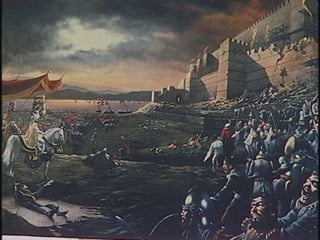
  • #7 One of the major military victories was the Ottoman capture of Constantinople – which became Istanbul.
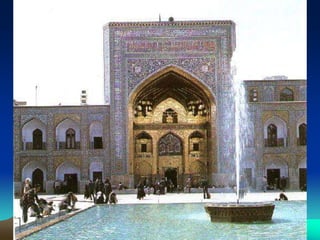
  • #9 Persian culture, including architecture, had a major influence on other Islamic regions.
  • #17 This is from a letter sent from Suleyman to Francis I – King of France. Francis had asked for help in his war with the Holy Roman Emperors alliance. Suleyman made an alliance with France.
  • #18 1599, Abbas sent his first diplomatic mission to Europe to gain allies against the Ottoman Empire. Gaining access to European weapons technology was a priority for Safavids—the Mughals had less to do with Europeans’ politically until later.
  • #20 “best and brightest” of European controlled territory went military or bureaucracy or concubines (SLAVES? What’s the interpretation?)
  • #21 Compare this with the empire of faith dvd’s version of devishirme.
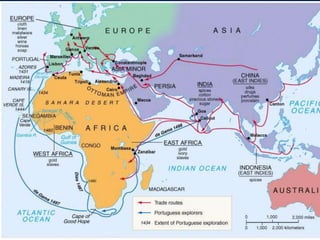
  • #23 REMINDER – these Islamic empires are not the only ones “out there” in the 1500s – they were part of a growing global trade and diplomatic network sandwiched between a growing European power states and a strong China resurging after defeating the Mongols (YUAN).