Research Examining the Impact of Open Textbook Adoption on Teaching and Learning: Early FindingsCCCOER  Meeting , June 22, 2010Clare Mortensen, Institute for the Study ofKnowledge Management in EducationISKME:
Introduction and Methodology
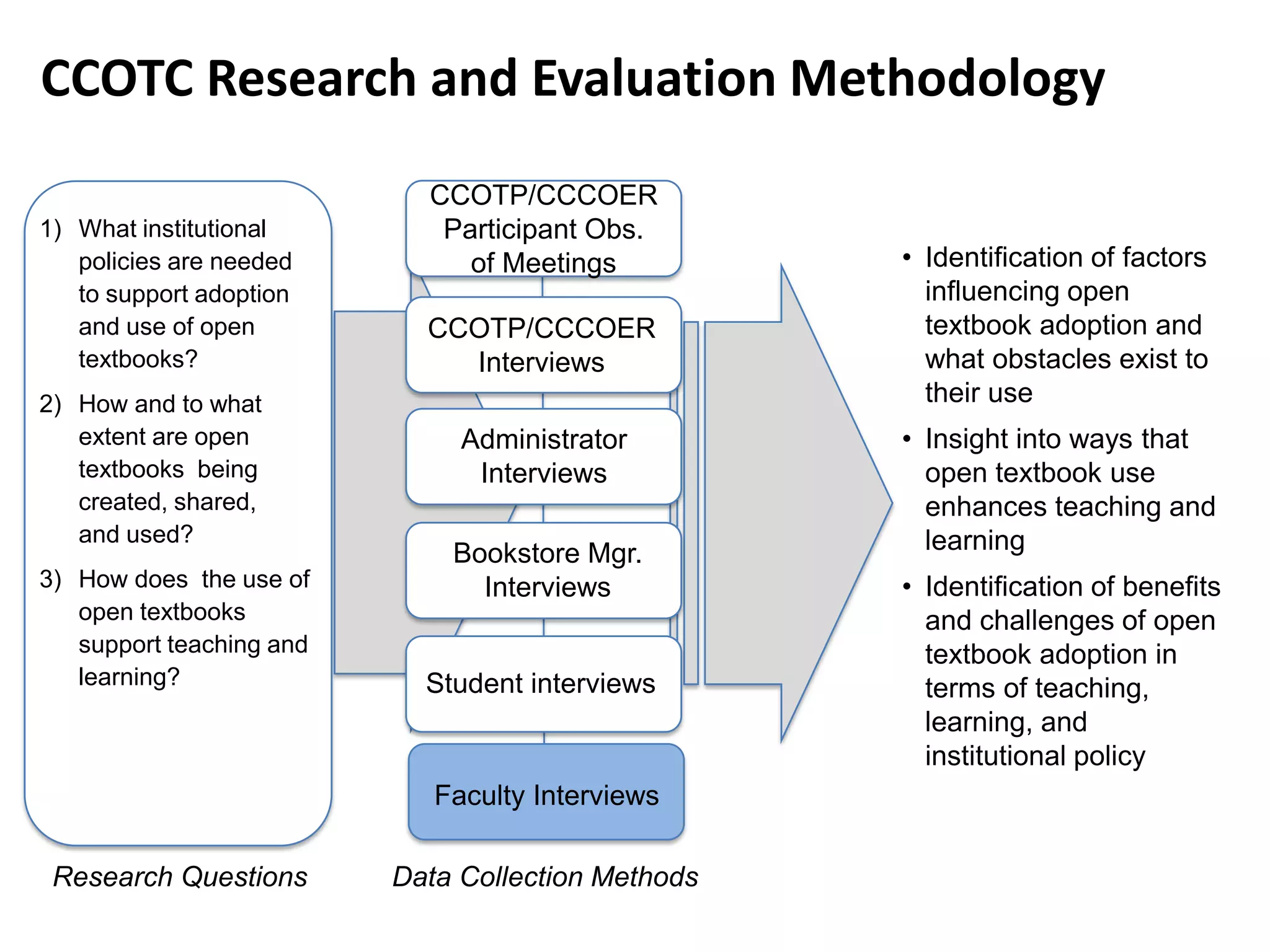
CCOTC Research and Evaluation MethodologyCCOTP/CCCOER Participant Obs. of MeetingsWhat institutional policies are needed to support adoption and use of open textbooks? How and to what extent are open textbooks  being created, shared,  and used? How does  the use of open textbooks support teaching and learning?Identification of factors influencing open textbook adoption and what obstacles exist to their use
Insight into ways that open textbook use enhances teaching and learning
Identification of benefits and challenges of open textbook adoption in terms of teaching, learning, and institutional policyCCOTP/CCCOER InterviewsAdministrator Interviews Bookstore Mgr. Interviews Student interviews Faculty Interviews Research QuestionsData Collection Methods
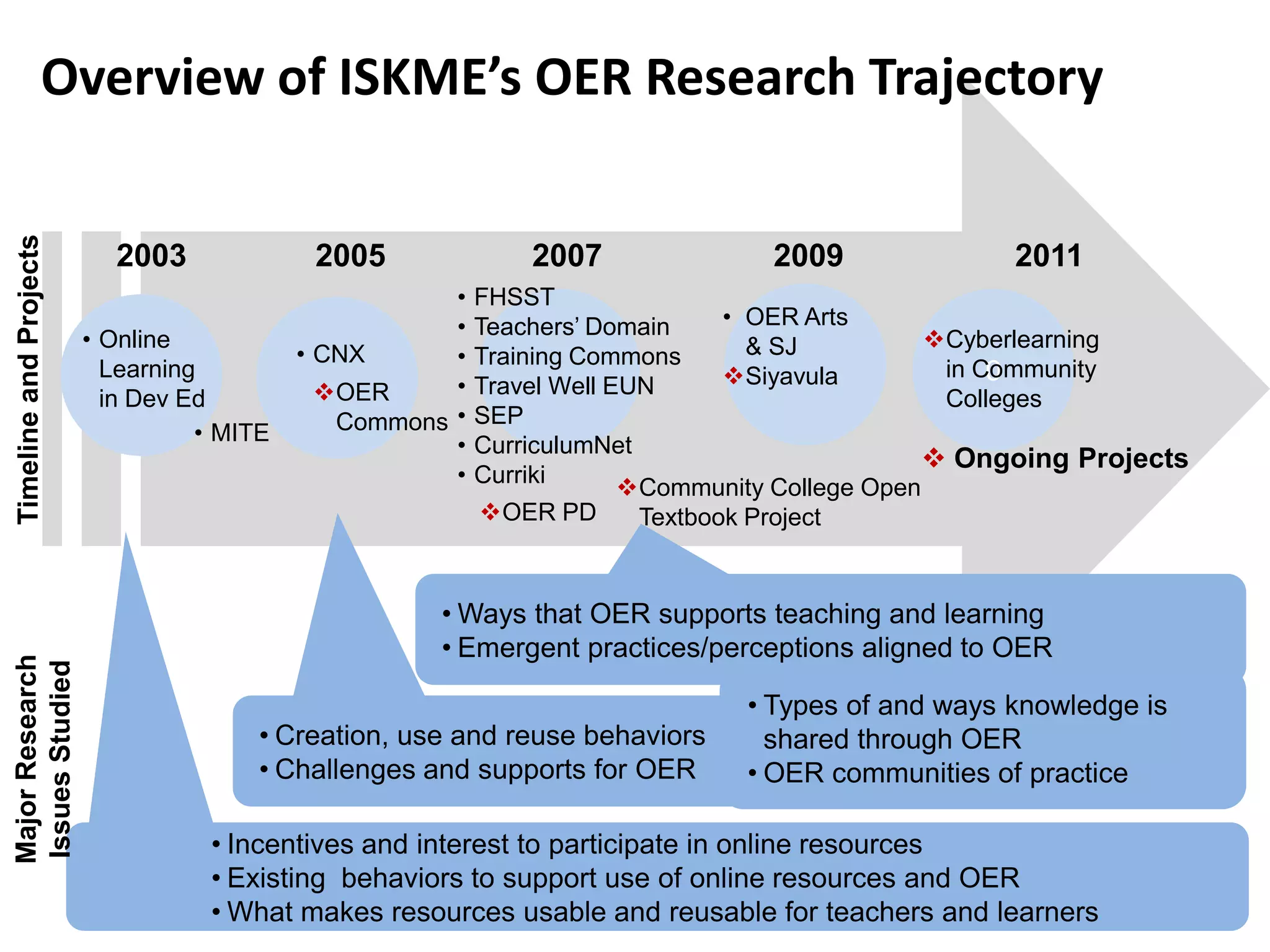
Overview of ISKME’s OER Research Trajectory20032005200720092011FHSST
Teachers’ Domain
Training Commons
Travel Well EUN
SEP
CurriculumNet
Curriki0OER Arts & SJ
Siyavula
Online Learningin Dev Ed
Cyberlearning in Community Colleges
CNXTimeline and ProjectsOER Commons
MITE
 Ongoing Projects
Community College Open Textbook Project

Research Examining the Impact of Open Textbook Adoption on Teaching and Learning: Early Findings

Editor's Notes

  • #5 Shows the trajectory of our research how we’ve built upon our learnings/finding over time…early research in ‘03 focused on online resources (not open resources) and instructgors interest in using online resources. Started looking at digital resources and whether instructors were intersted in using them.Then worked on six studies of OER – how users on an OER platform create and use materials, incentives and dicinsentives to that use and creationThen moved into questions that focus on how OER is aligned to teaching and learning and what new practices OER might support
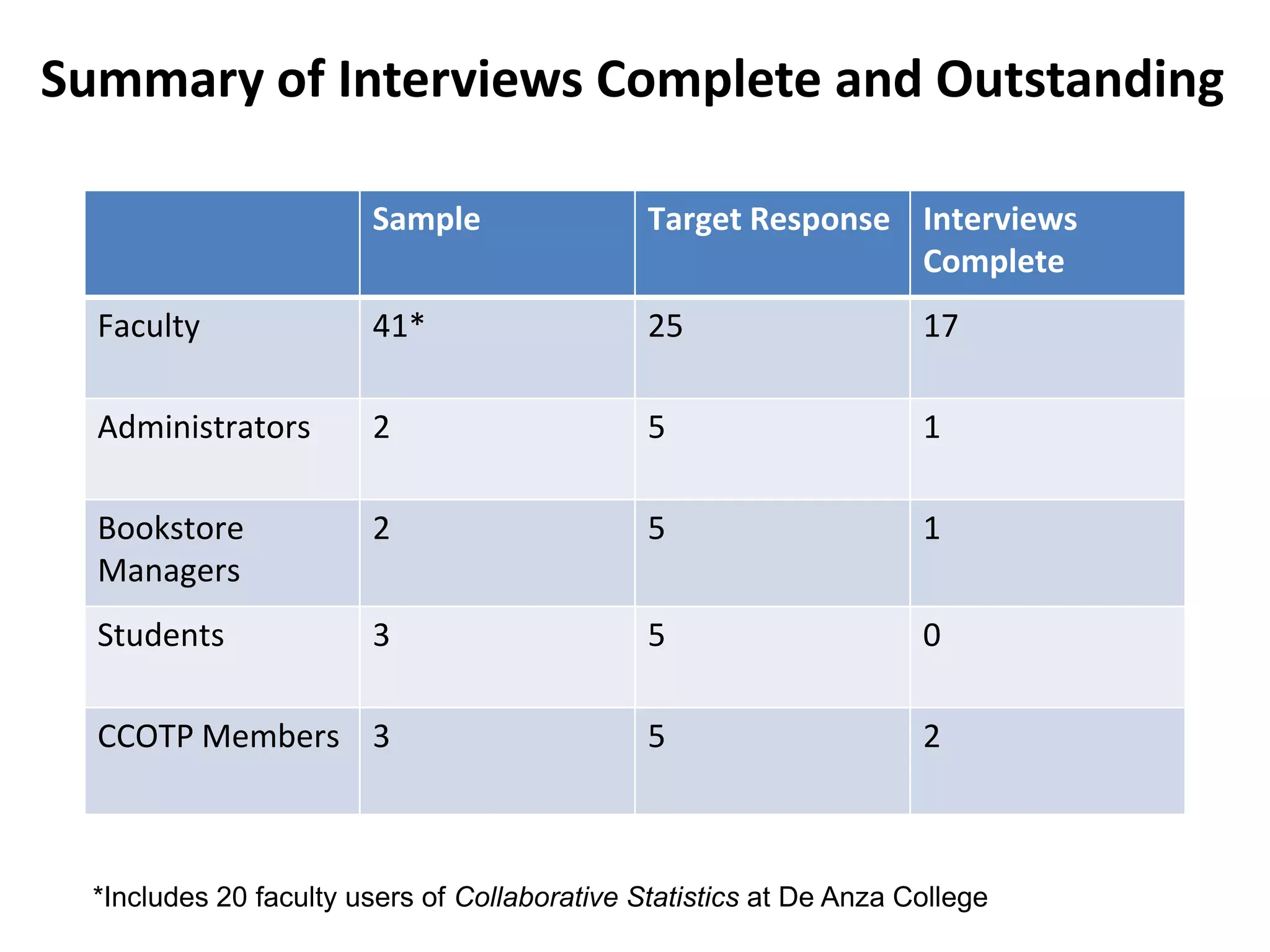
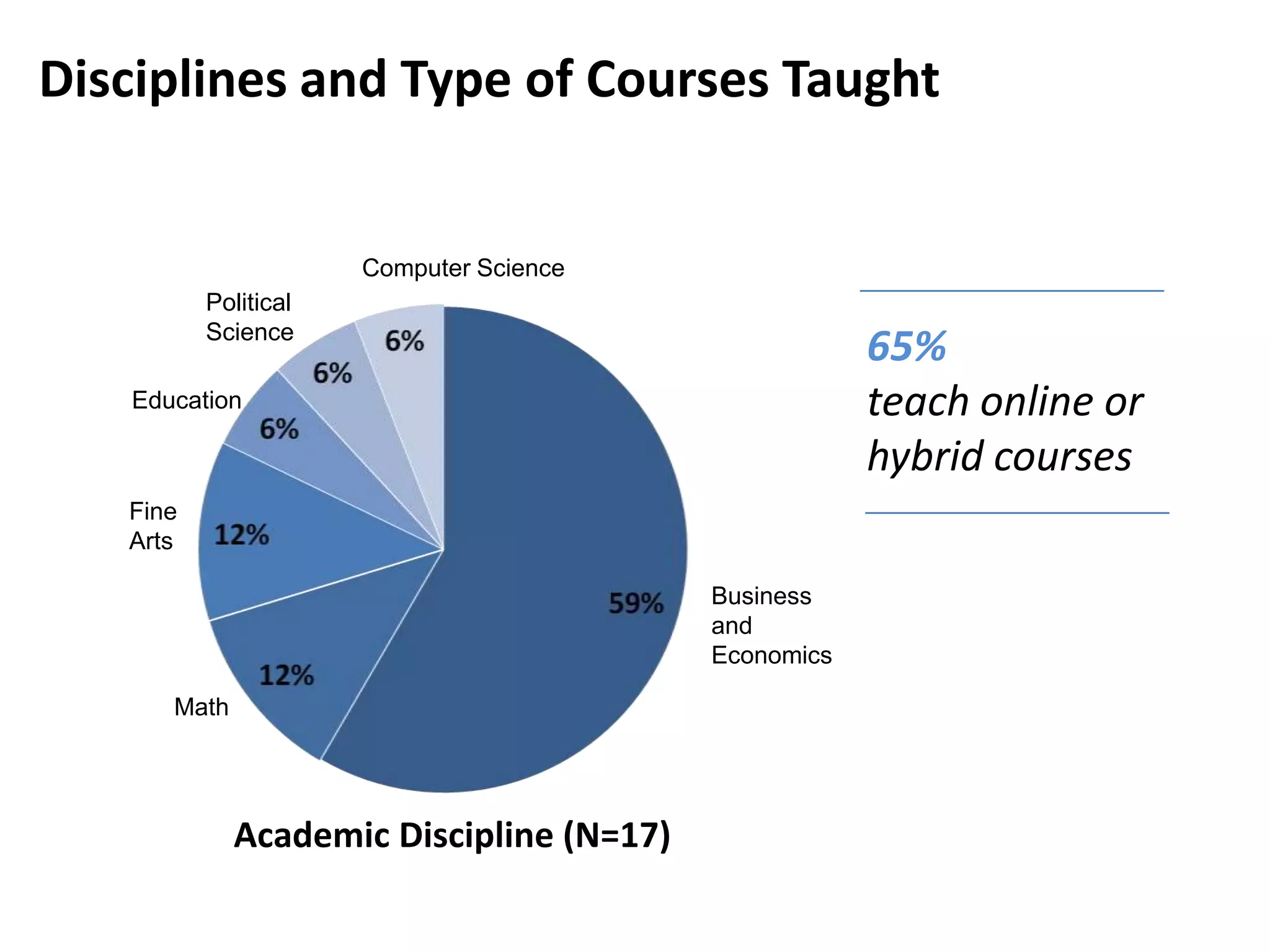
  • #8 Faculty interviewed represented six major academic disciplinesOf the faculty that have been interviewed so far, 29% are from public universities, 18% are from private universities, and 53% from community collegesOf those faculty we have yet to interview/contact for interviews, 90% are community college faculty (and 20 of the 24 to be contacted are De Anza College faculty using Collaborative Statistics)Ten States Represented (2) California (2) Florida (4) Washington (2) Pennsylvania (2) New York (5) Other (IL, MA, MT, NH, TX)
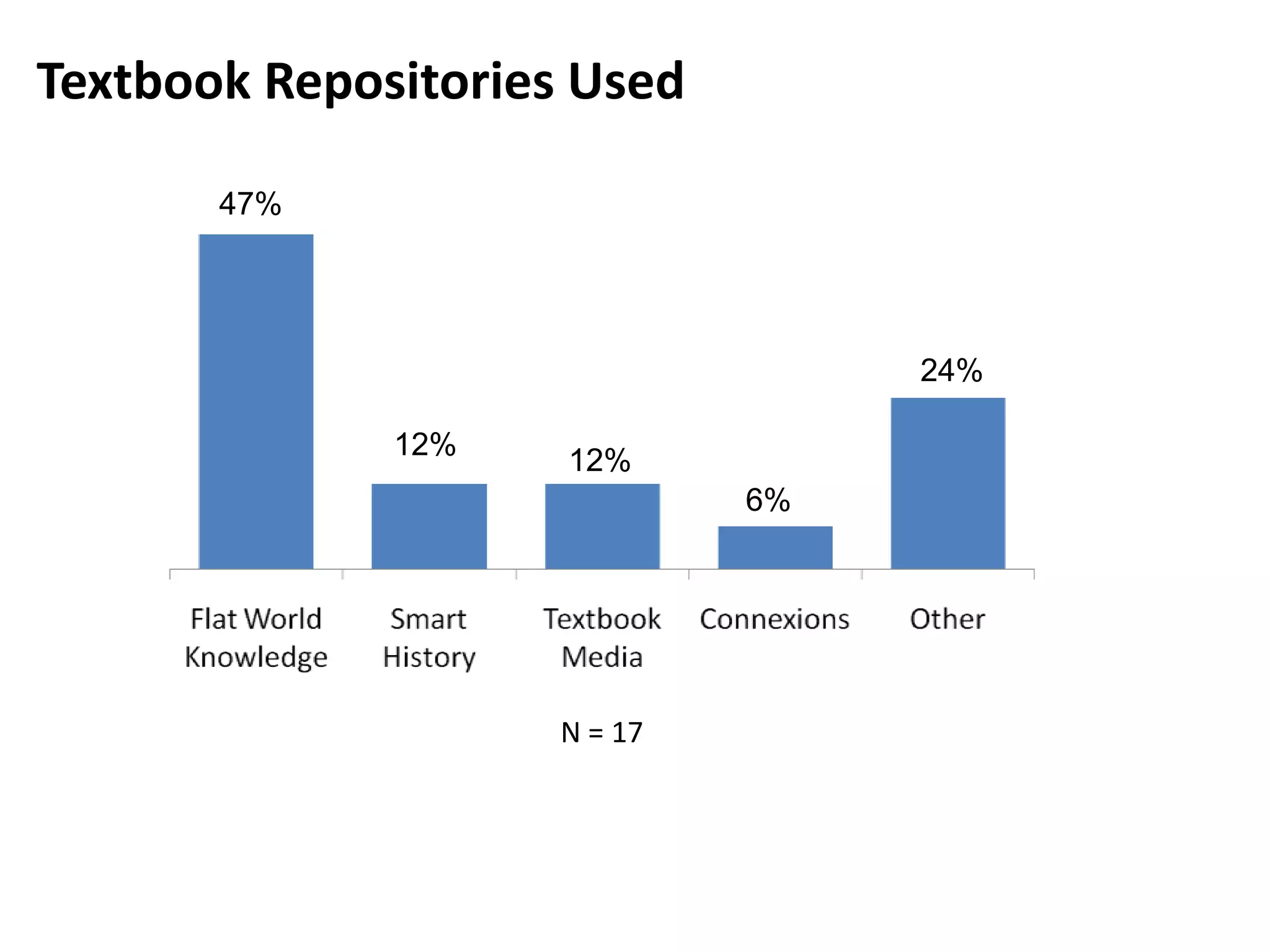
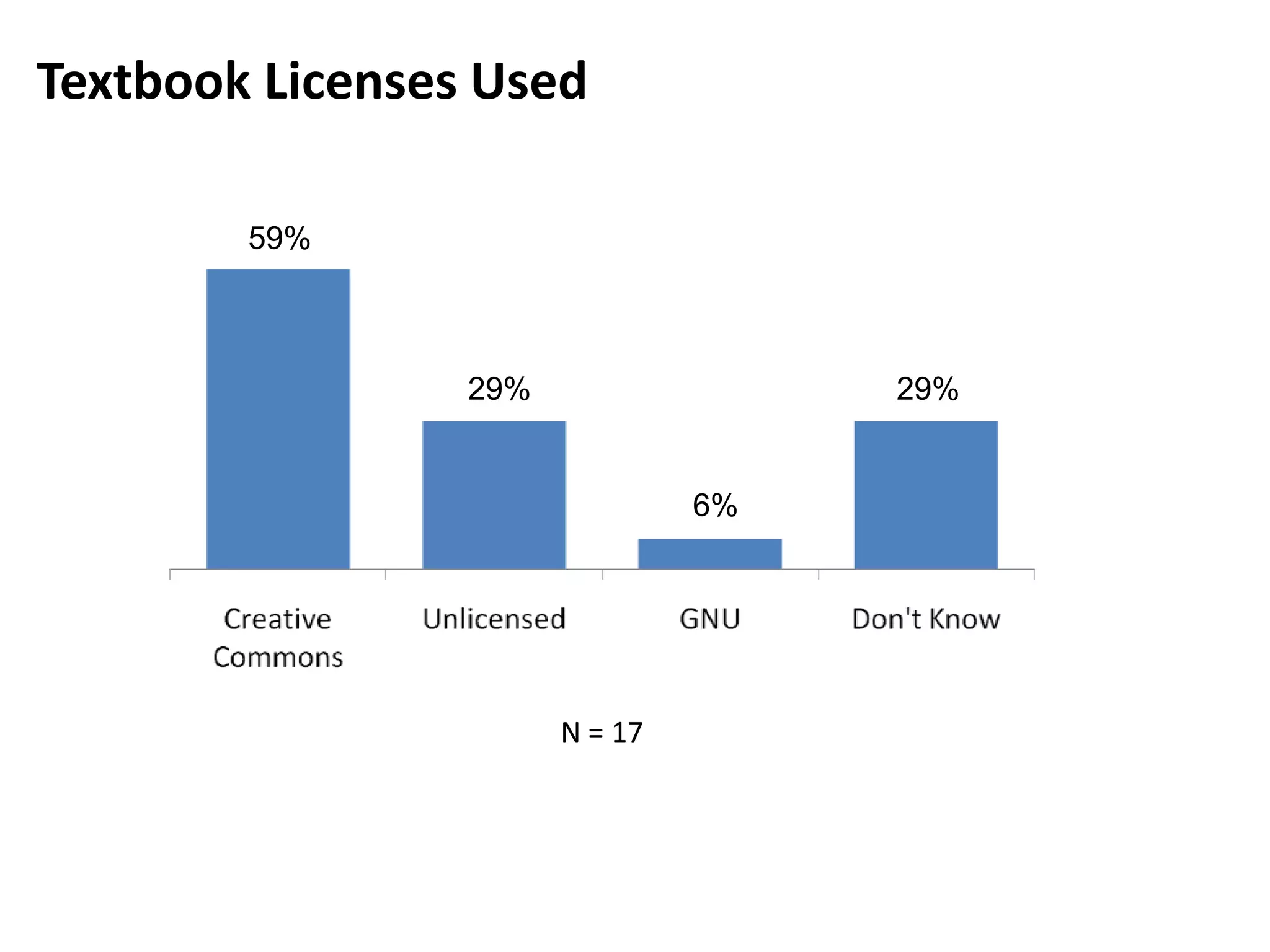
  • #10 Among the faculty interviewed, about half are using textbooks available via Flat World KnowledgeAbout a quarter of the faculty reported the textbook they are using is not available any of the more well known repositories but rather the textbook is posted as a document/pdf on a university website or a personal website. Lulu may be used in combination so that students can order hard copies. Textbook authors expressed interest/desire to post their book on other repositories as well – or stated they’d heard that it has been posted elsewhere by someone else (so there is some overlap btw these categories)
  • #11 Among the faculty interviewed, about half are using textbooks available via Flat World KnowledgeAbout a quarter of the faculty reported the textbook they are using is not available any of the more well known repositories but rather the textbook is posted as a document/pdf on a university website or a personal website. Lulu may be used in combination so that students can order hard copies. Textbook authors expressed interest/desire to post their book on other repositories as well – or stated they’d heard that it has been posted elsewhere by someone else (so there is some overlap btw these categories)
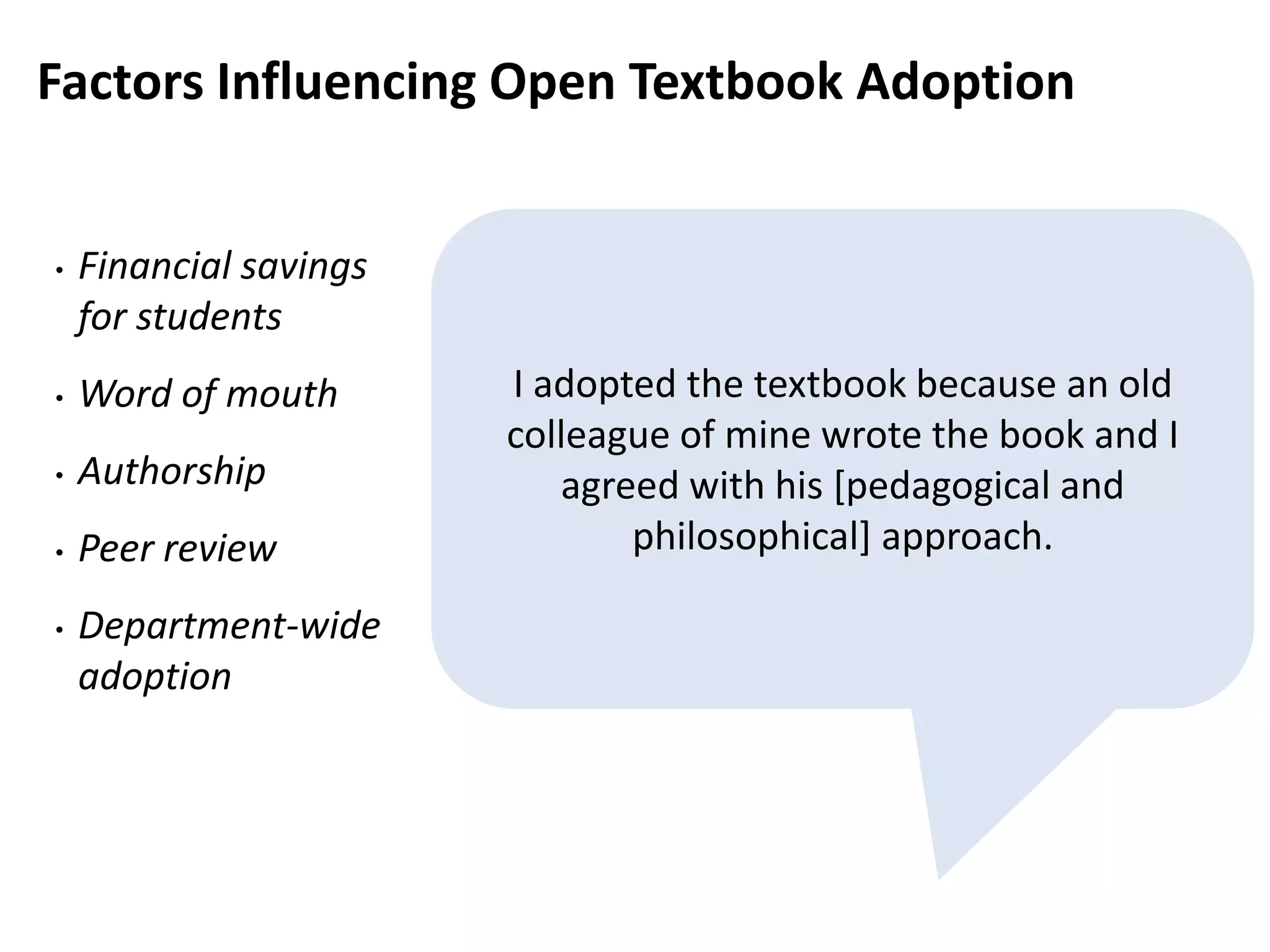
  • #12 Faculty are motivated by pricePeer review – several faculty discussed how open textbooks need to be brought into existing peer review processes at colleges and universities. We are addressing that with CCOTCA couple of faculty interviewed talked about the potential for open textbooks to be adopted department-wide. While faculty resist any infringement on autonomy, the fact that open textbooks can be modified/the sequence can be changed means there’s more potential for department wide adoption. Addresses issue of having common course material across many courses taught by different faculty.
  • #13 Faculty are motivated by pricePeer review – several faculty discussed how open textbooks need to be brought into existing peer review processes at colleges and universities. We are addressing that with CCOTCA couple of faculty interviewed talked about the potential for open textbooks to be adopted department-wide. While faculty resist any infringement on autonomy, the fact that open textbooks can be modified/the sequence can be changed means there’s more potential for department wide adoption. Addresses issue of having common course material across many courses taught by different faculty.
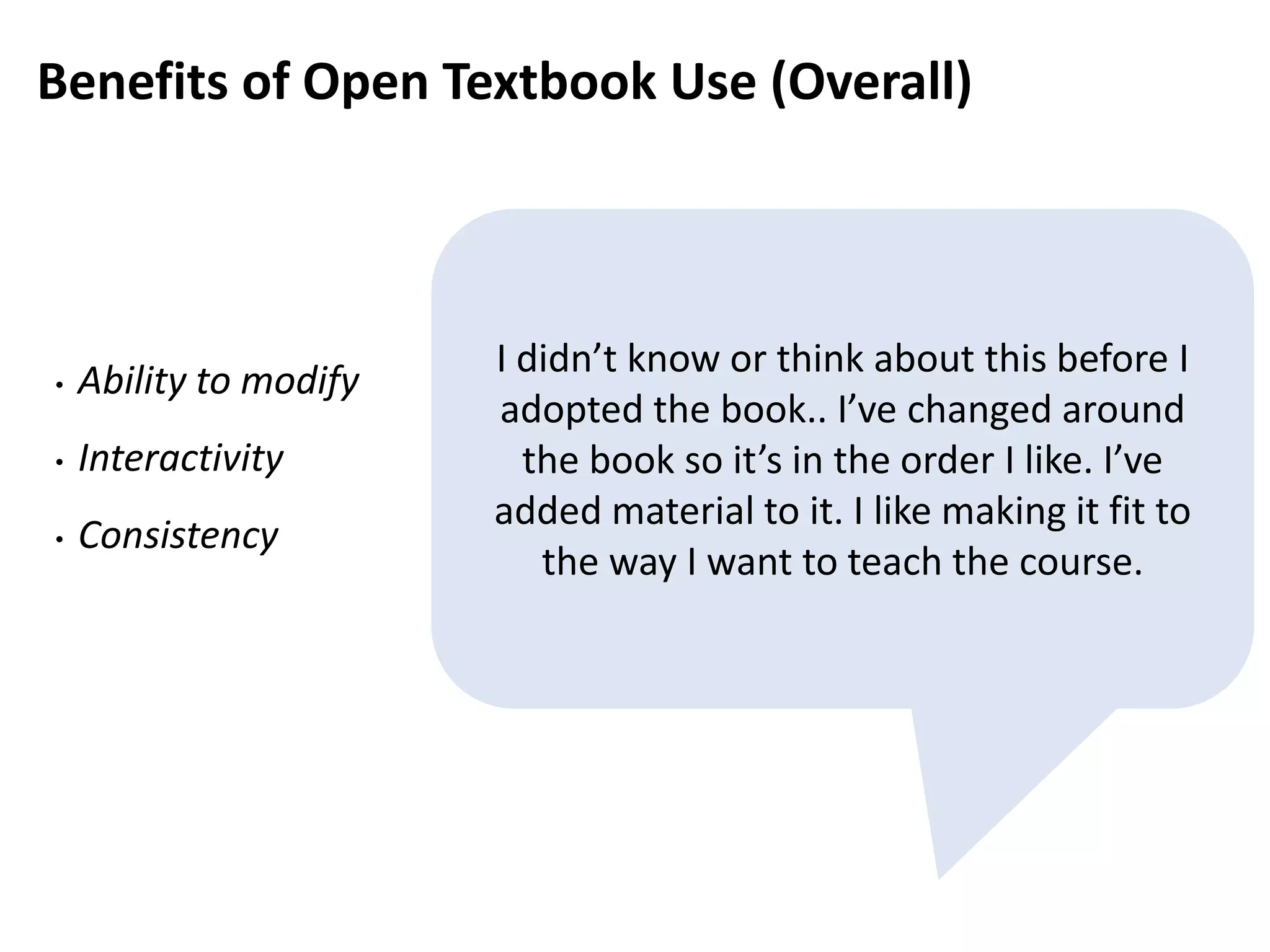
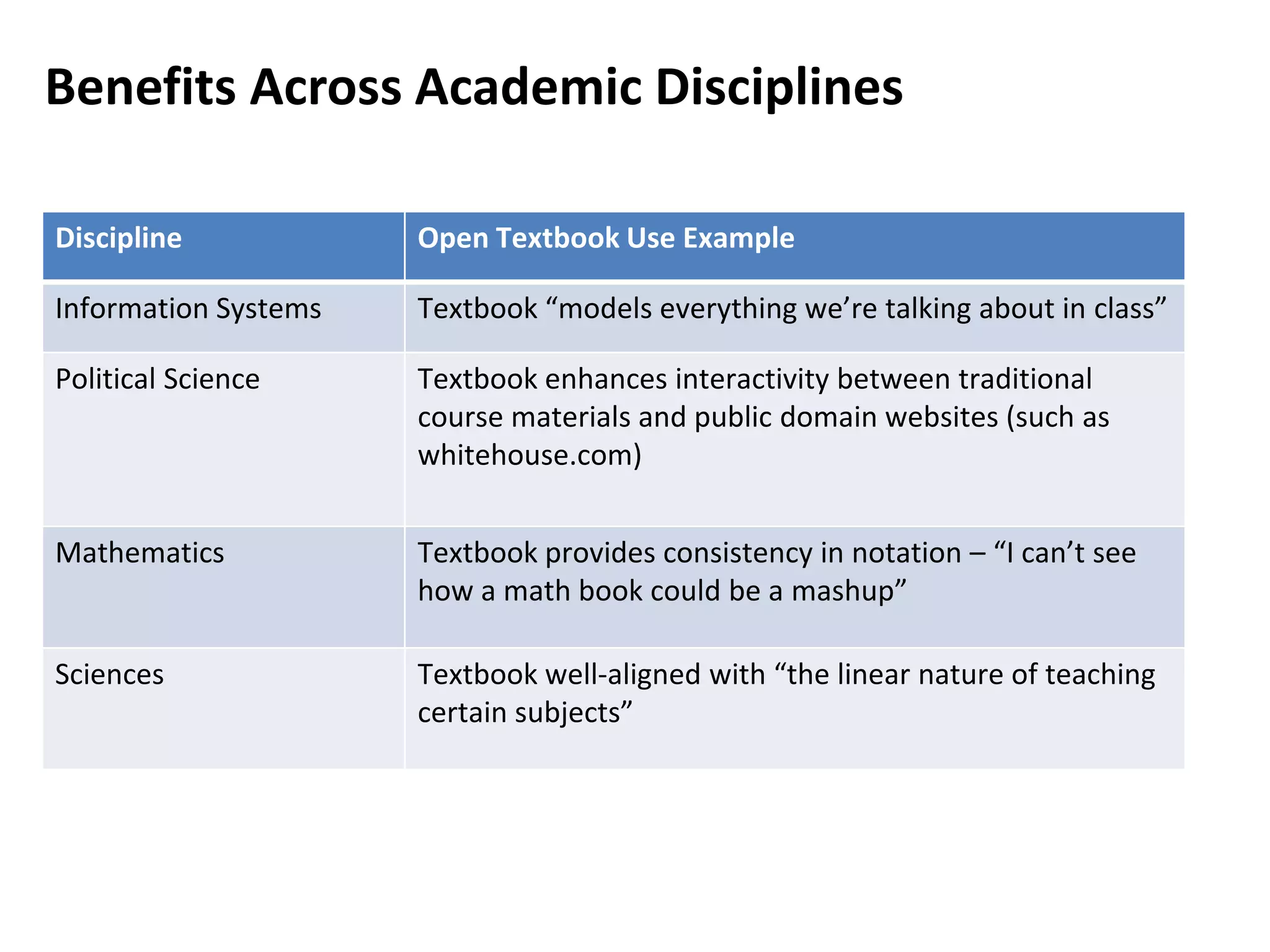
  • #14 Information Systems: online textbook “models everything we’re talking about in class”Political Science: online textbook enhances interactivity between traditional course material and public domain websites (such as whitehouse.com)Mathematics: difficult to utilize disjointed OER materials; an open textbook provides consistency in notation – “I can’t see how a math book could be a mashup”Sciences: open textbooks lend themselves well to “the linear nature of teaching certain subjects”
  • #16 Tell the audience: Students tell faculty it’s easier to locate information using open textbooks