Measuring the impact on student
engagement in the redesigned Blended
Course using Quality Matters standards

Bill Knapp, Dean of Learning Technologies
Joanna Paull, Associate Professor, English
Lakeland Community College
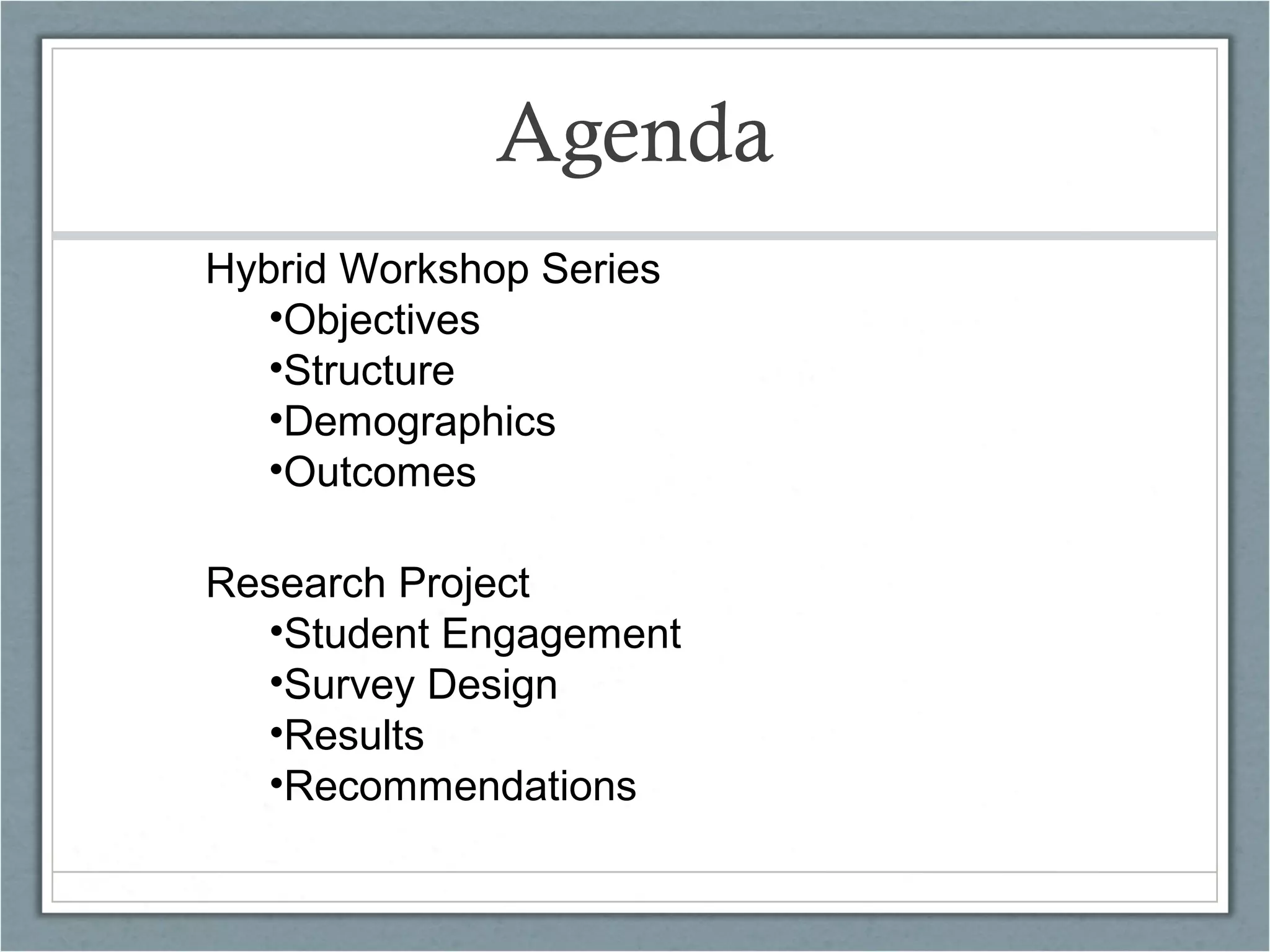
Agenda
Hybrid Workshop Series
•Objectives
•Structure
•Demographics
•Outcomes
Research Project
•Student Engagement
•Survey Design
•Results
•Recommendations
Presentation Questions/Discussion
We welcome your questions at any time during the
presentation. However, you may also post your
questions or comments to Poll everywhere or Tweet
tag: #qm4engage
Text 772896 and your message to 37607
- or visit Pollev.com
Post to Twitter #qm4engage
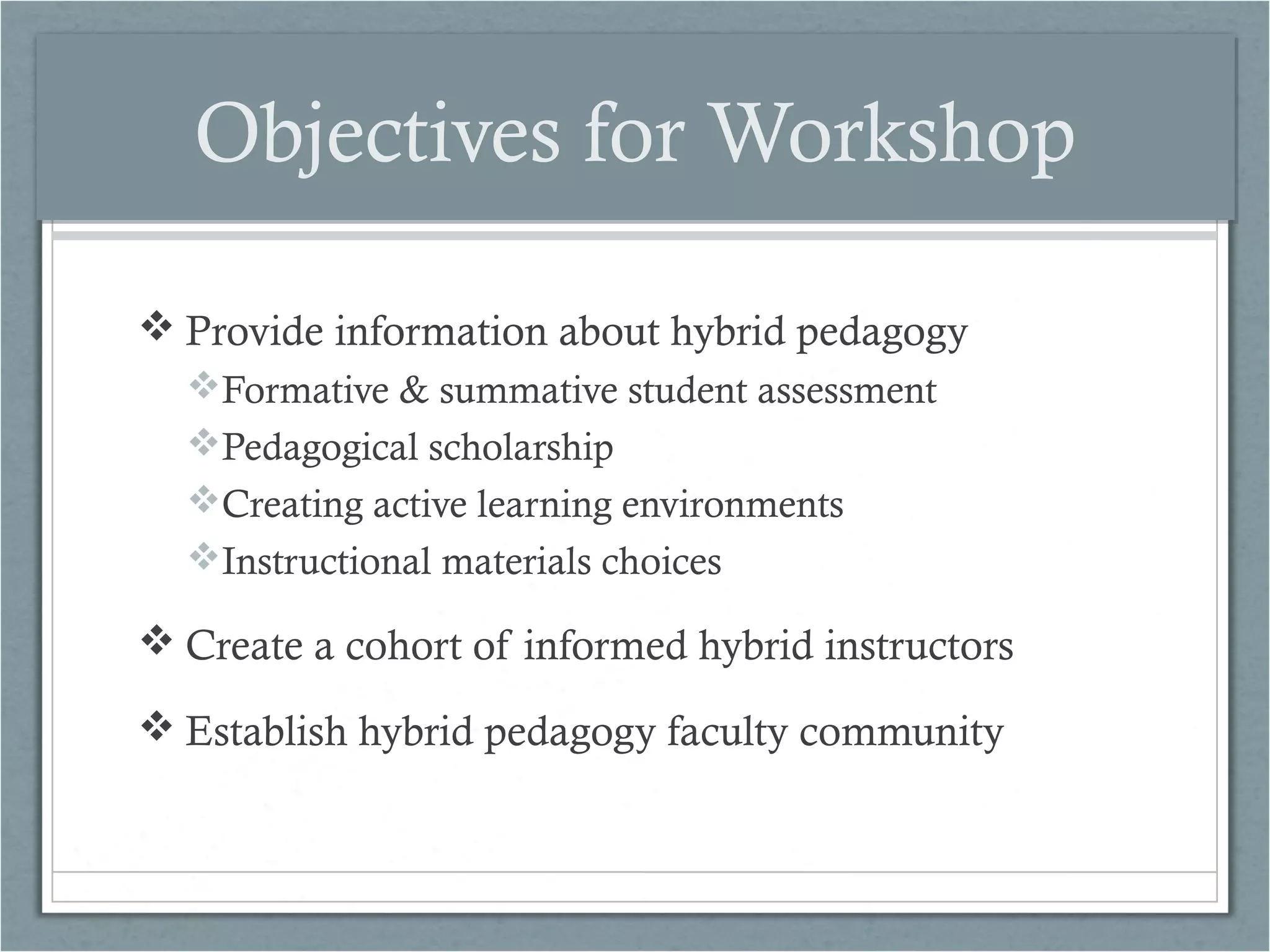
Objectives for Workshop
 Provide information about hybrid pedagogy
Formative & summative student assessment
Pedagogical scholarship
Creating active learning environments
Instructional materials choices

 Create a cohort of informed hybrid instructors
 Establish hybrid pedagogy faculty community
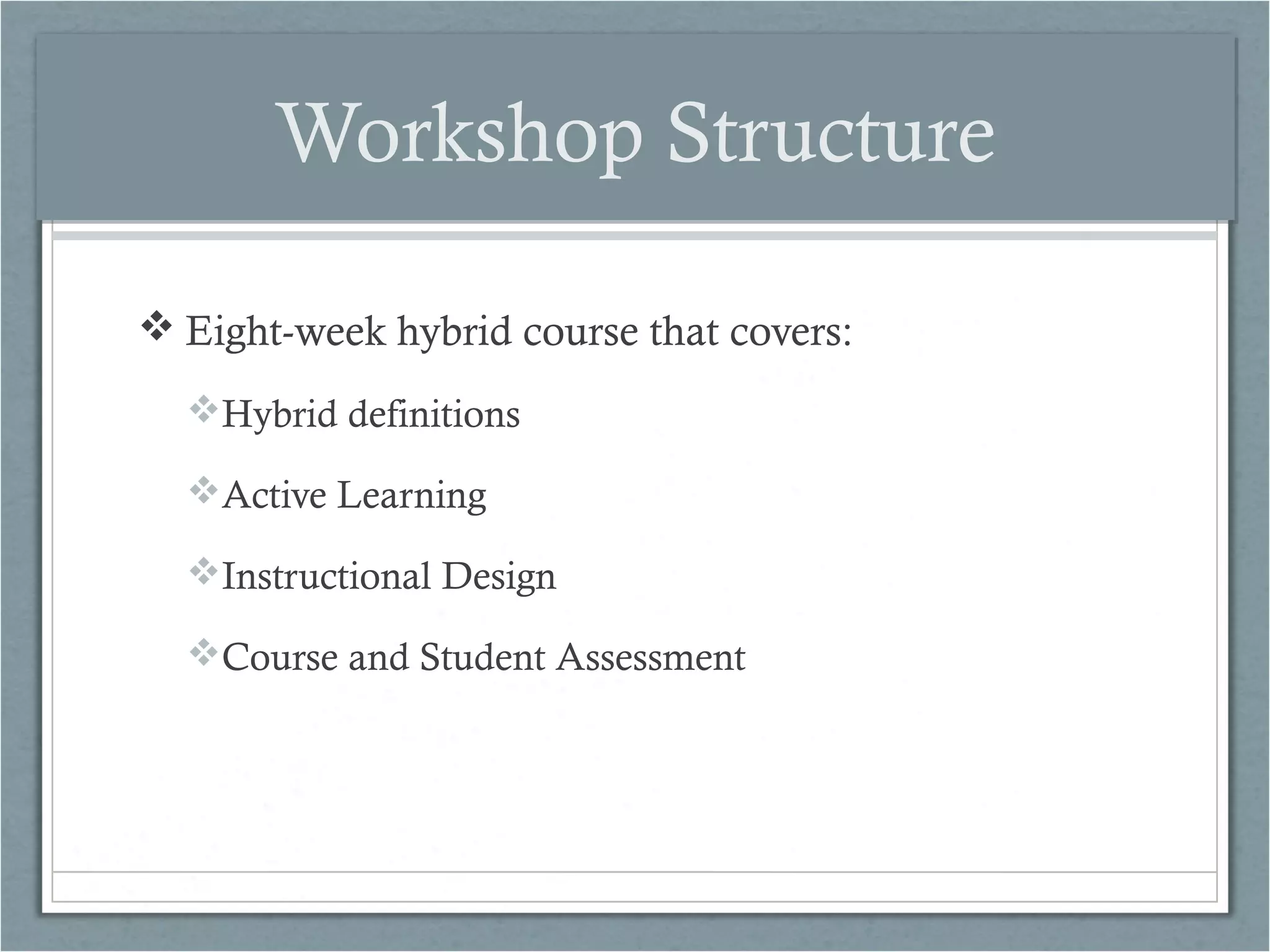
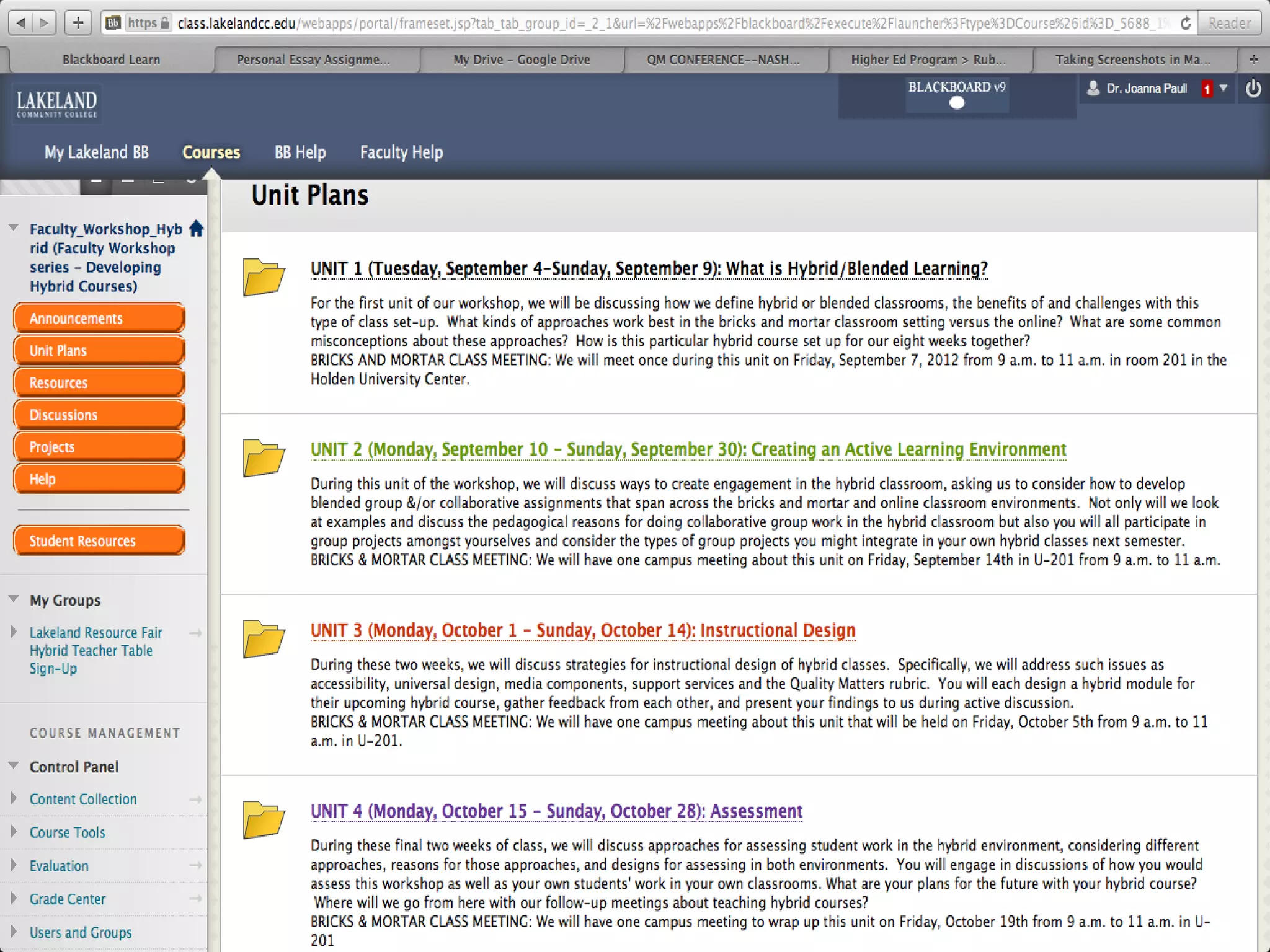
Workshop Structure
 Eight-week hybrid course that covers:
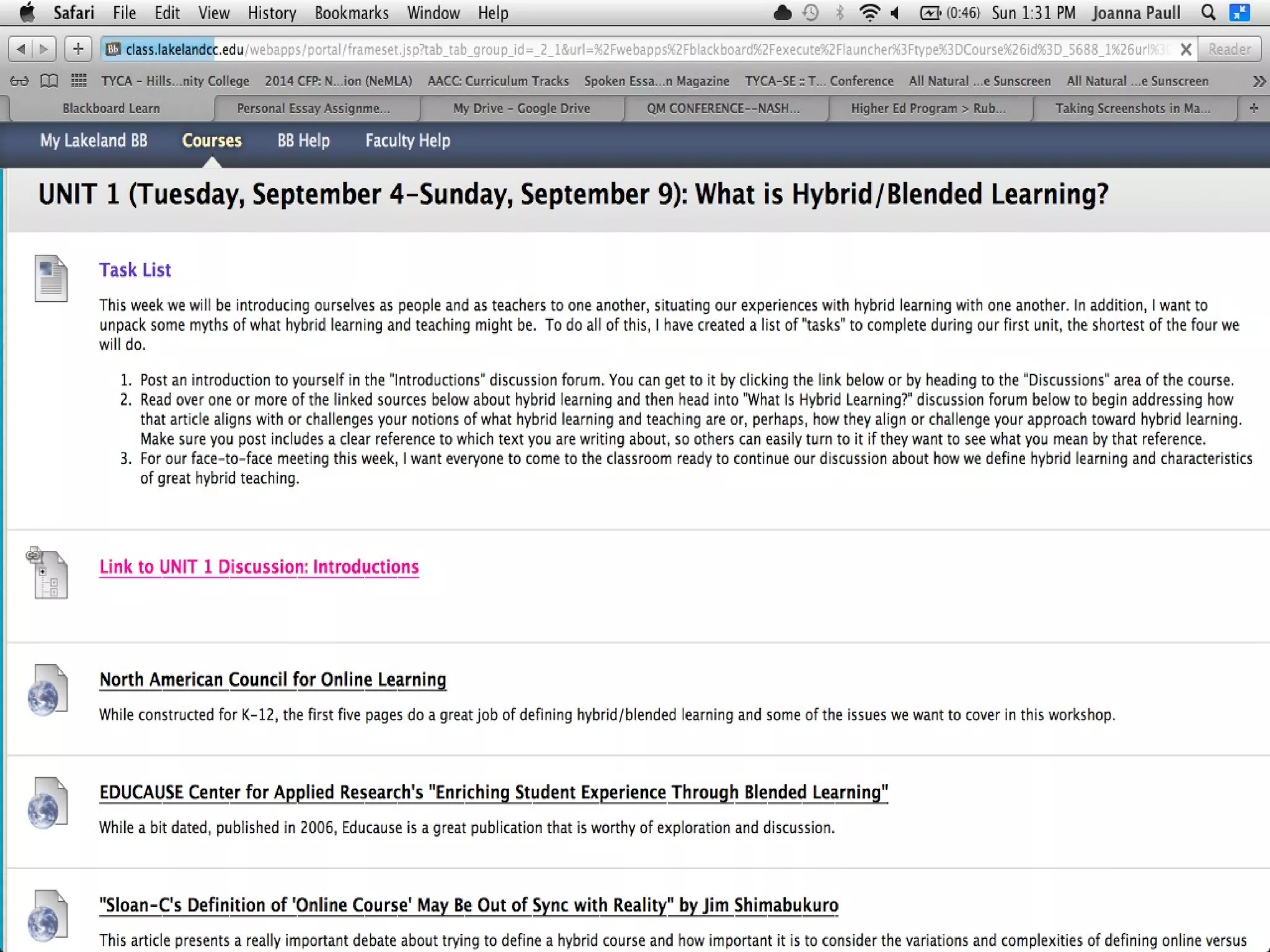
Hybrid definitions
Active Learning
Instructional Design
Course and Student Assessment
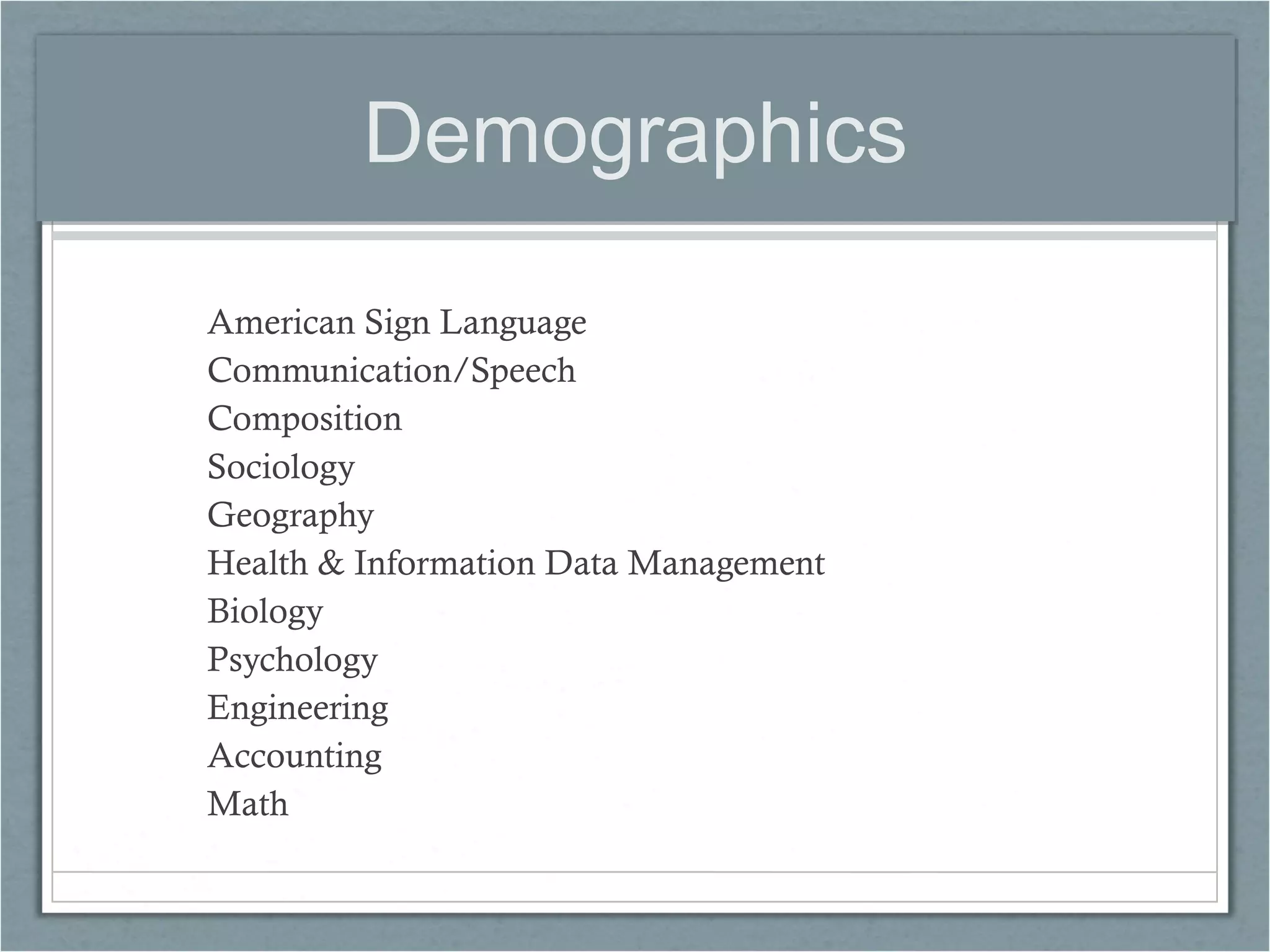
Demographics
●
●
●
●
●
●
●
●
●
●
●

American Sign Language
Communication/Speech
Composition
Sociology
Geography
Health & Information Data Management
Biology
Psychology
Engineering
Accounting
Math
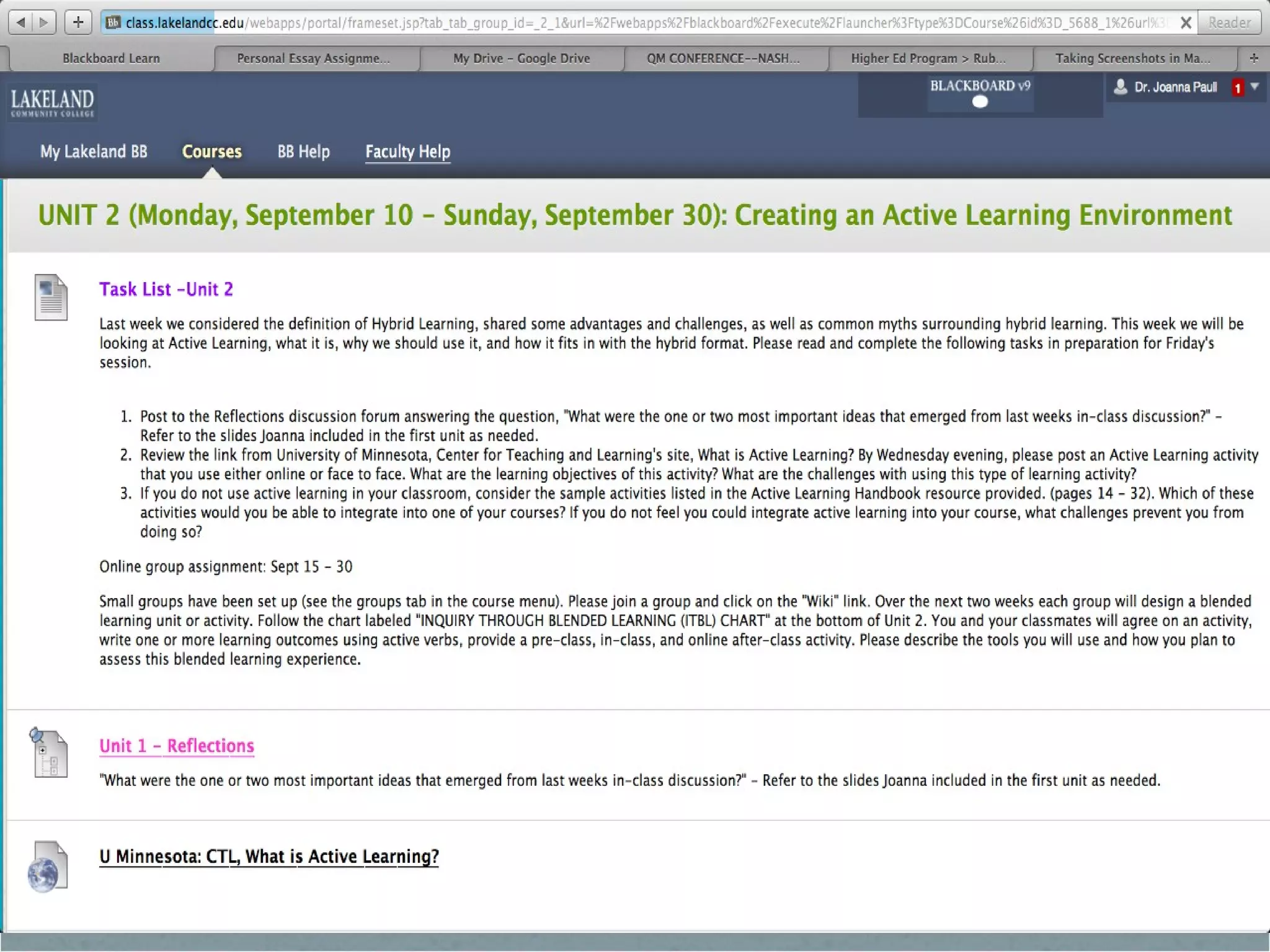
Ties to structure of course
screen shots to reflect navigation
QM Standard: Active
Learning
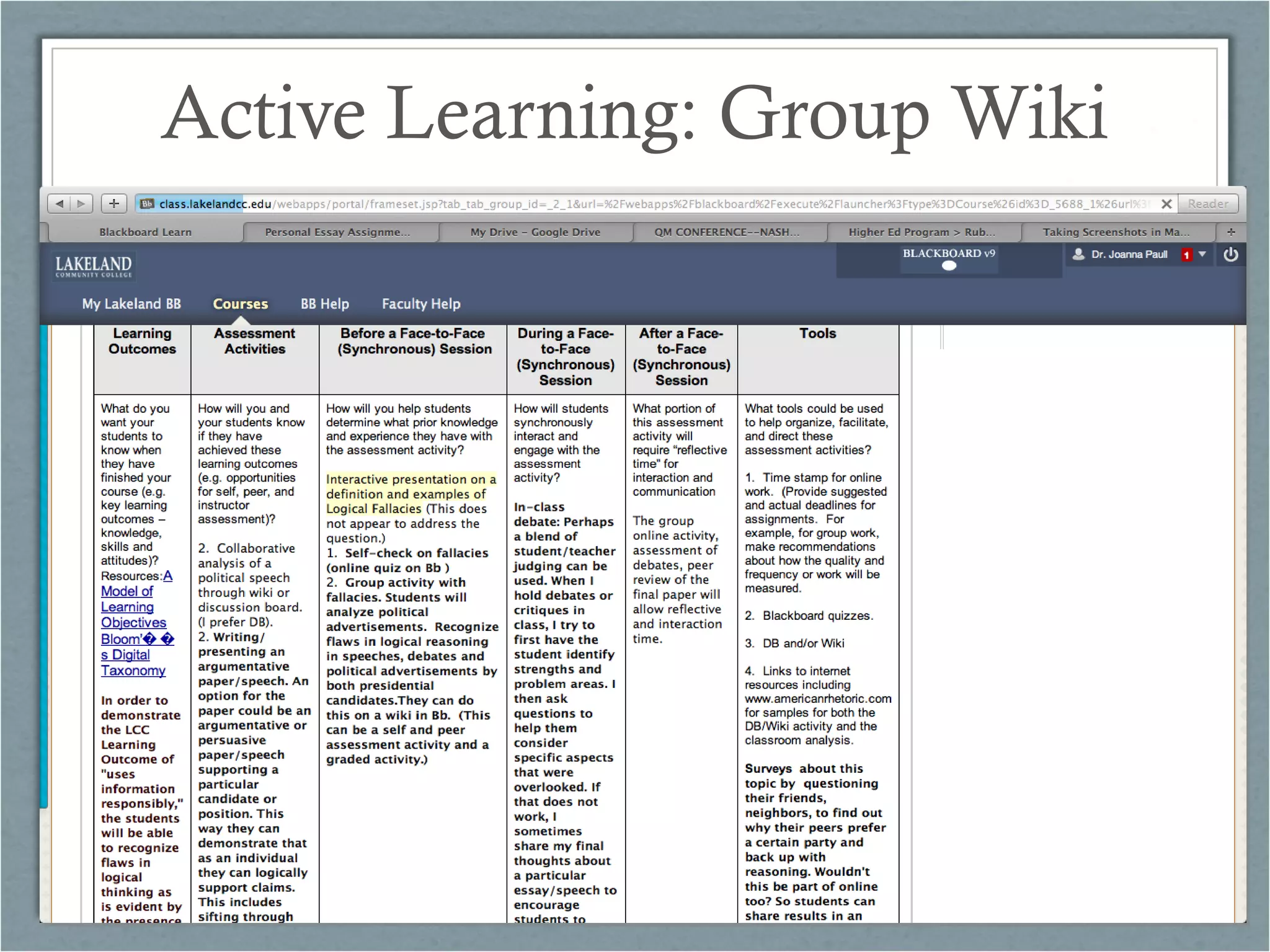
Active Learning: Group Wiki
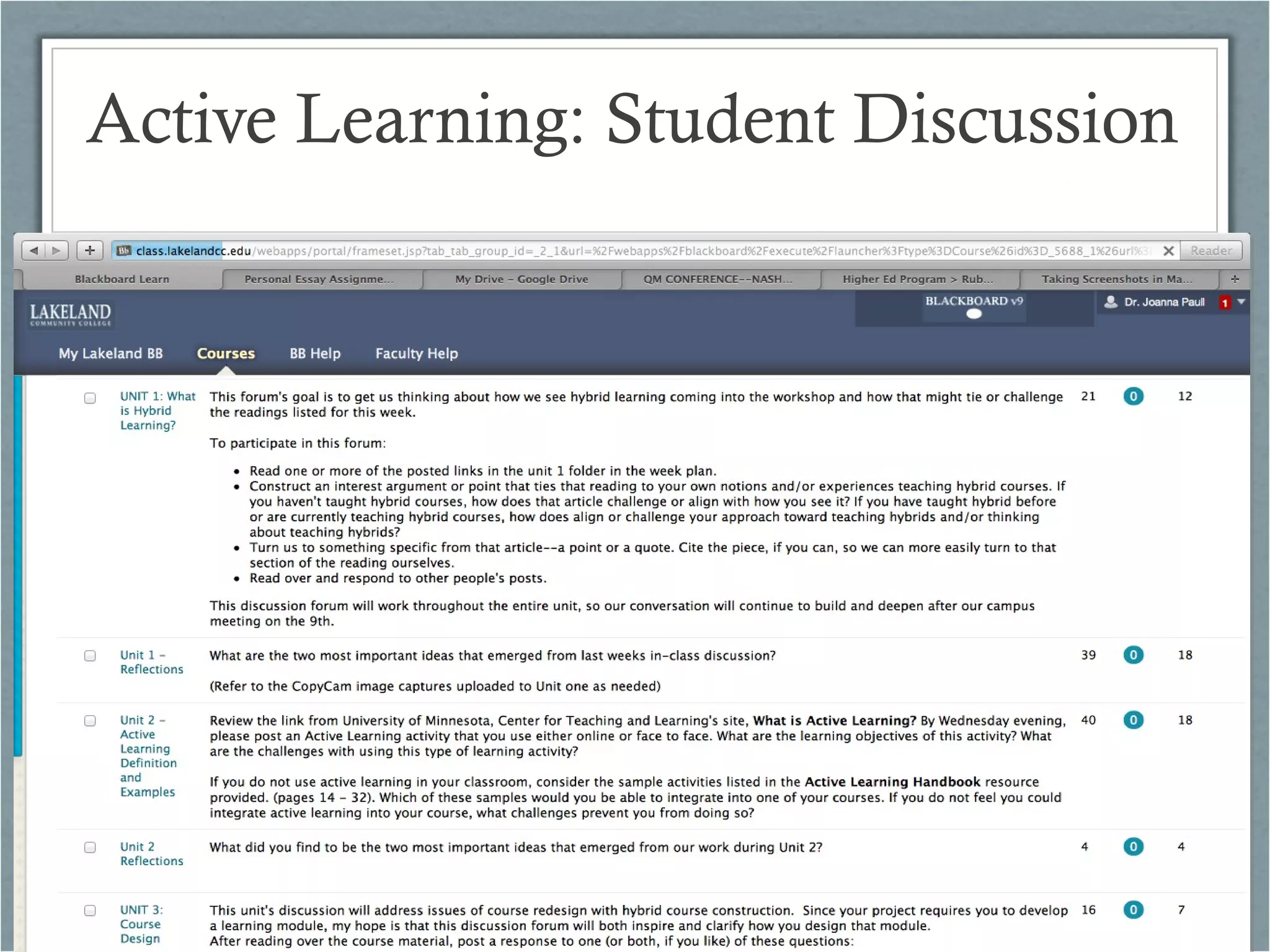
Active Learning: Student Discussion
Instructional Design
 What are QM Standards?
 How does our workshop course site reflect those
elements?
 What are some ways to make our courses more
broadly accessible by our students?
 What role does media and/or tools play in how we
share our courses with students?
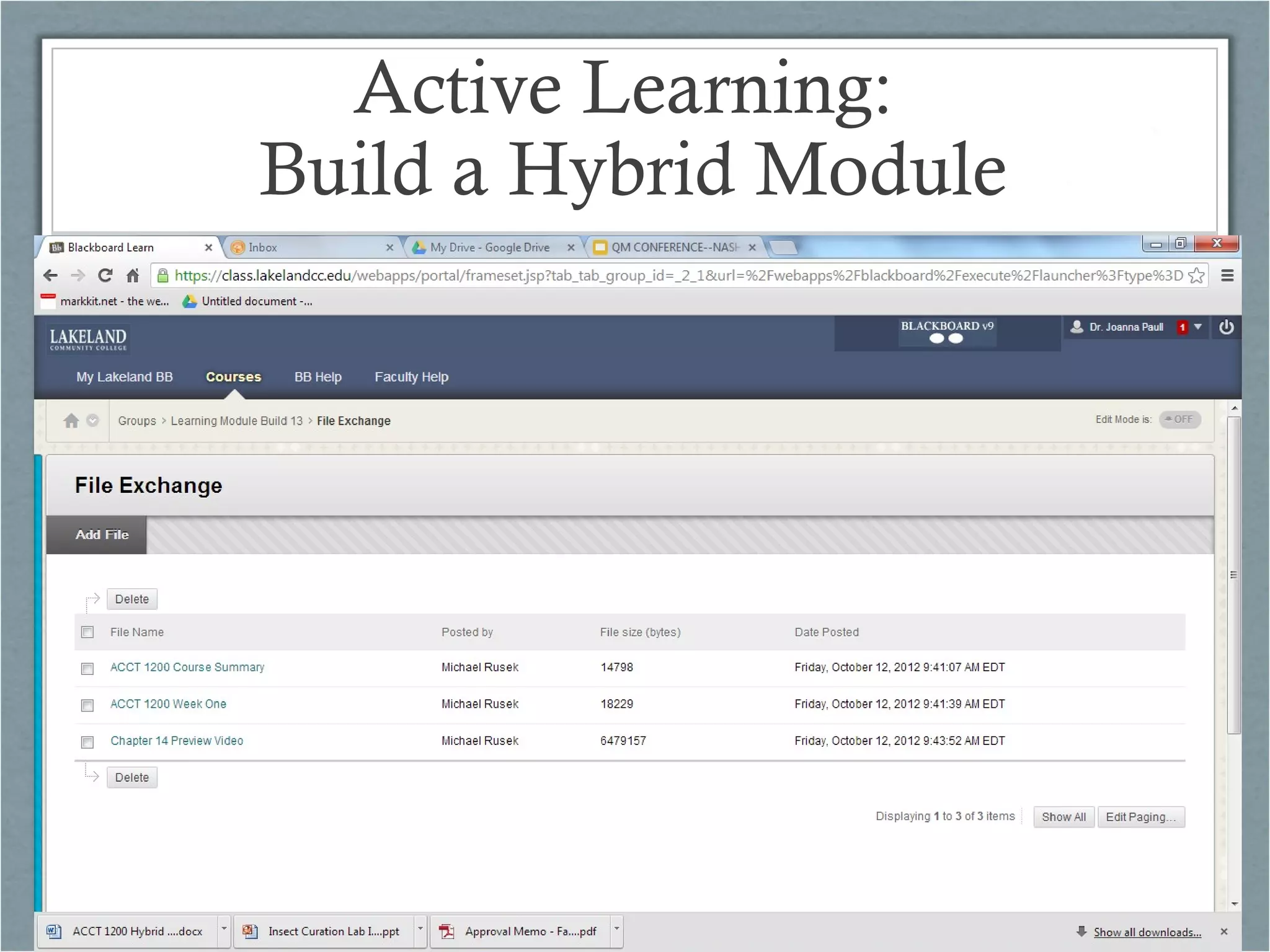
Active Learning:
Build a Hybrid Module
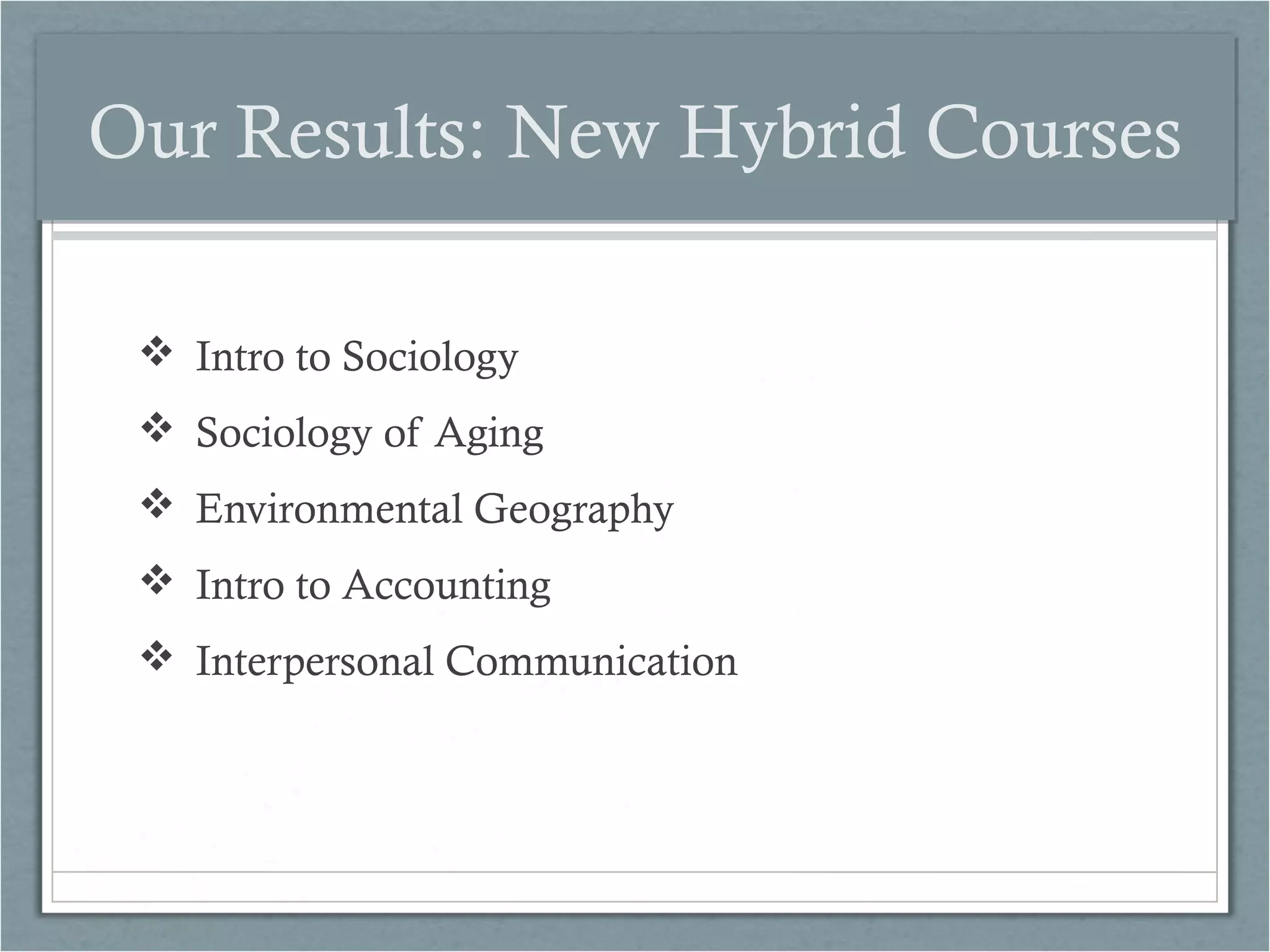
Our Results: New Hybrid Courses
 Intro to Sociology
 Sociology of Aging
 Environmental Geography
 Intro to Accounting
 Interpersonal Communication
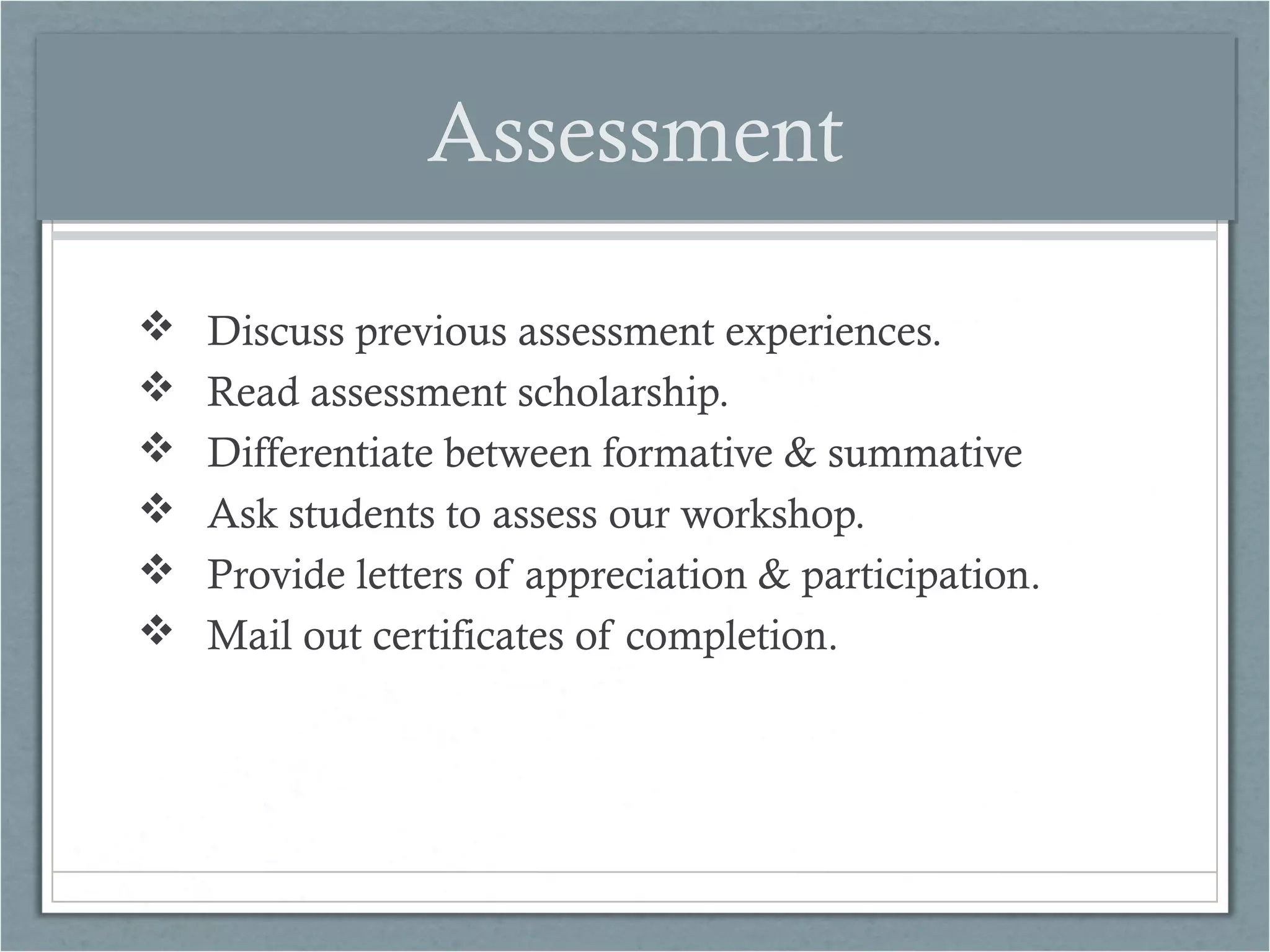
Assessment







Discuss previous assessment experiences.
Read assessment scholarship.
Differentiate between formative & summative
Ask students to assess our workshop.
Provide letters of appreciation & participation.
Mail out certificates of completion.
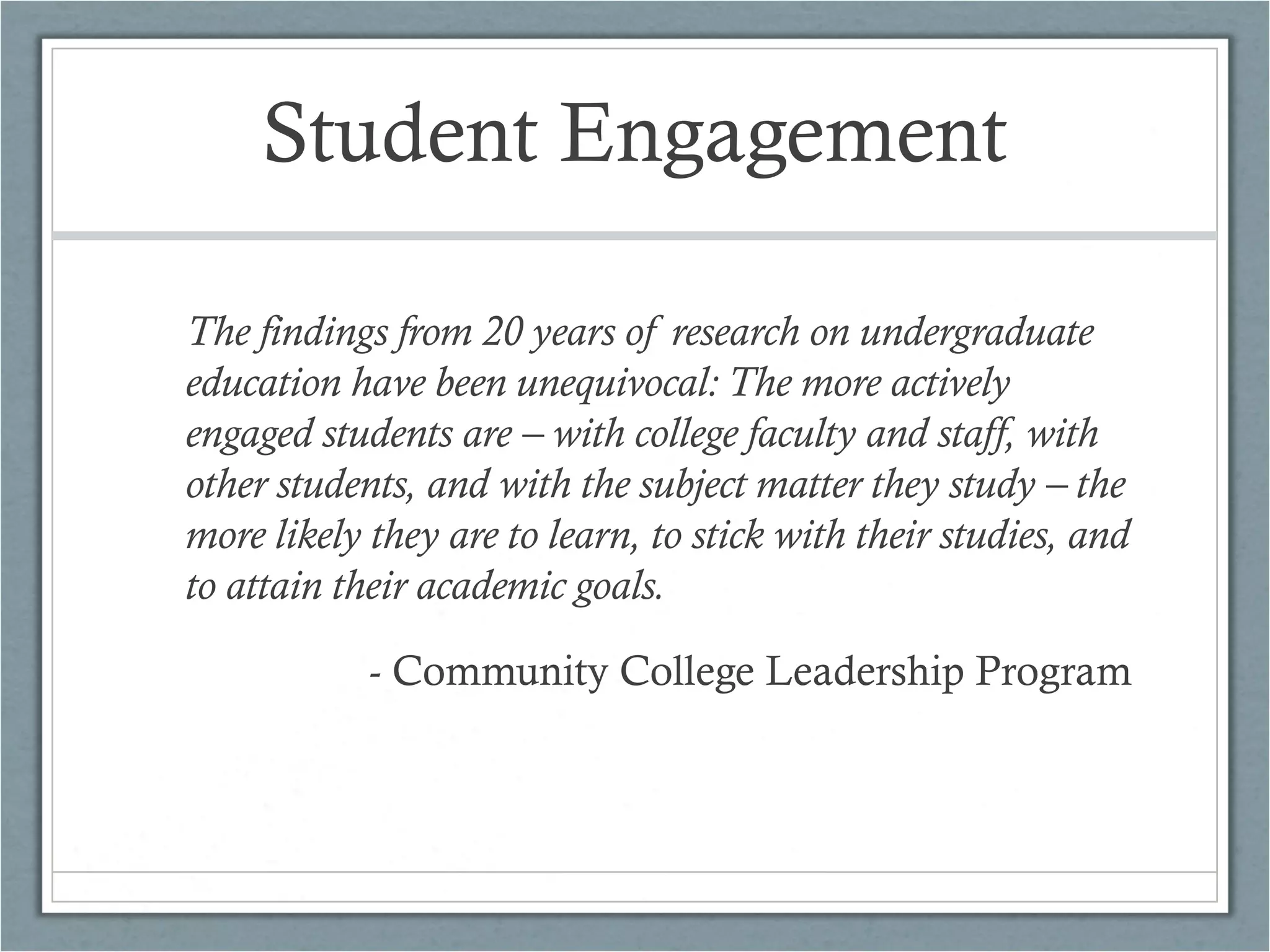
Student Engagement
The findings from 20 years of research on undergraduate
education have been unequivocal: The more actively
engaged students are – with college faculty and staff, with
other students, and with the subject matter they study – the
more likely they are to learn, to stick with their studies, and
to attain their academic goals.
- Community College Leadership Program
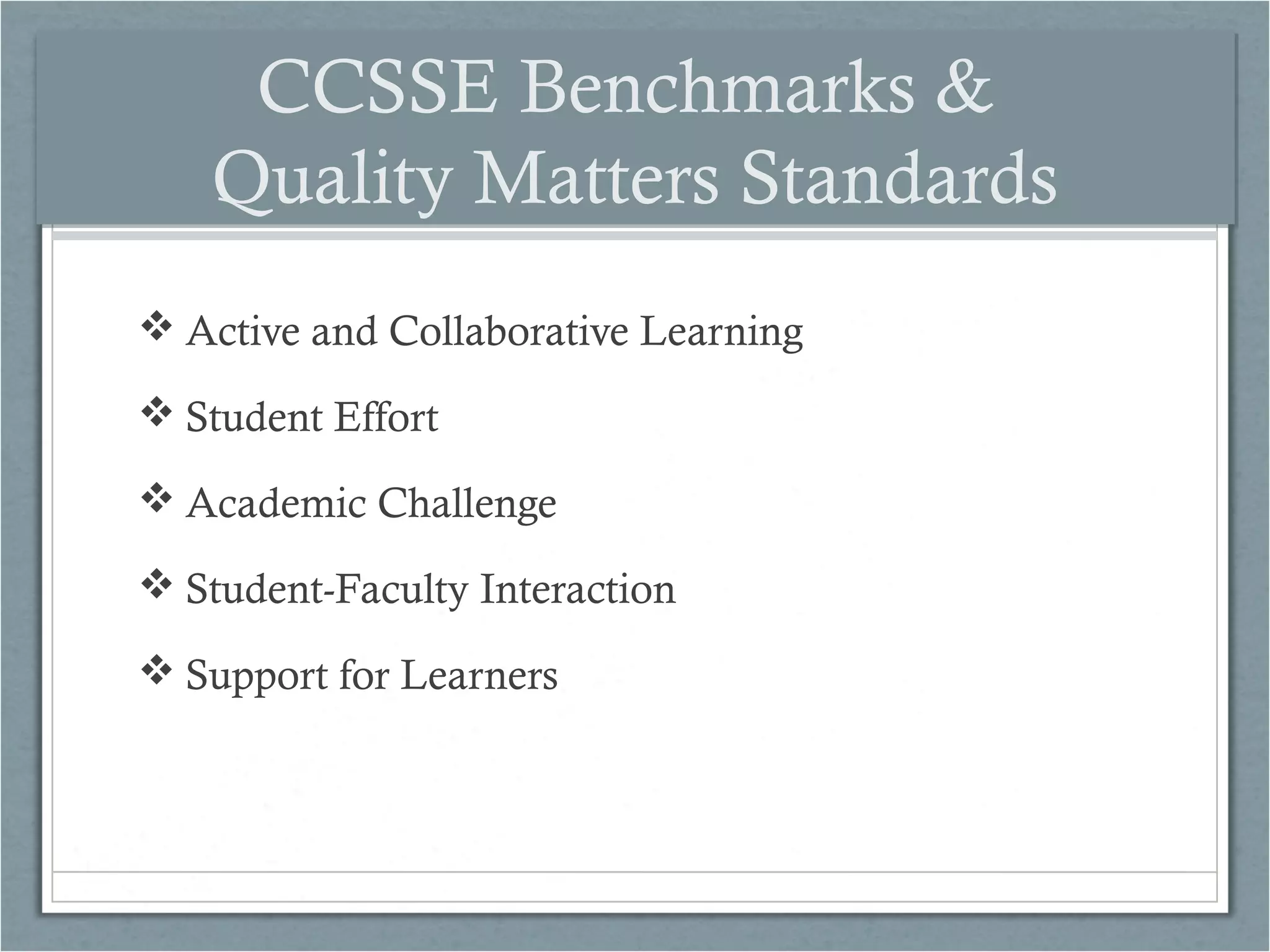
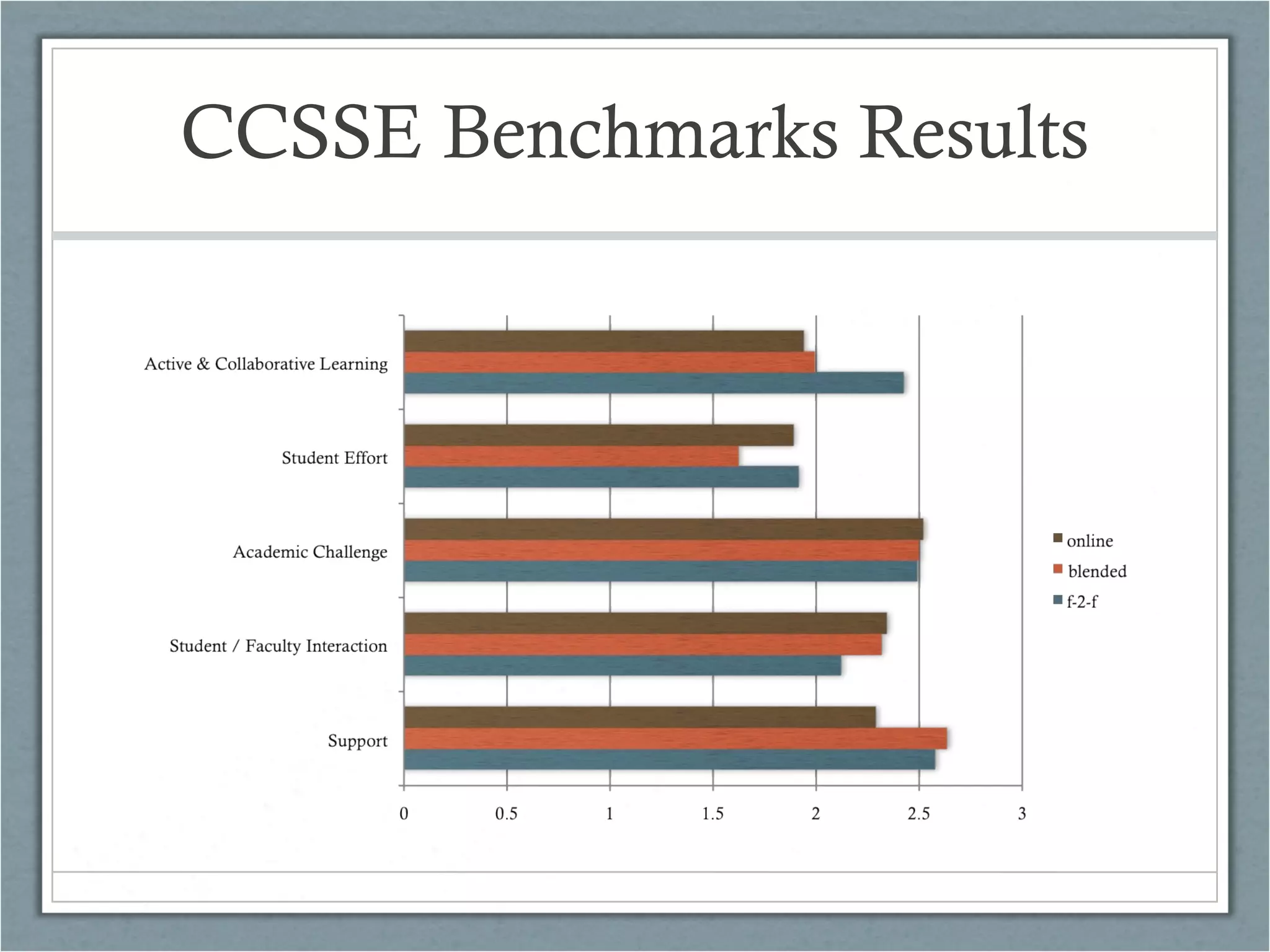
CCSSE Benchmarks &
Quality Matters Standards
 Active and Collaborative Learning
 Student Effort
 Academic Challenge
 Student-Faculty Interaction
 Support for Learners
Active and Collaborative Learning
 The Active and collaborative learning benchmark measures
the extent to which student participate in class, interact
with other students, and extend learning outside the
classroom…
 Active and collaborative learning is linked with higher
grades and course completion measures as well as long
term persistence…
Student Effort
 The Student Effort benchmark measures time on task,
preparation, and use of student services…
 …the Student Effort benchmark is predictably related to
retention measures and moderately predictive of academic
measures.
Academic Challenge
 The Academic Challenge benchmark measures the extent
to which students engage in challenging mental activities,
such as evaluation and synthesis, as well as the quantity
and rigor of their academic work…
 Academic Challenge was most consistently associated with
academic outcomes…
Student-Faculty Interaction
 The Student to Faculty Interaction benchmark measures
the extent to which students and faculty communicate
about academic performance, career plans, and course
content and assignments…
 …the Student-Faculty Interaction benchmark is related to
both academic and persistence outcomes.
Support for Learners
 The Support for Learners benchmark measures student’
perceptions of their colleges and assesses their use of
advising and counseling services…
 …the Support for Learners benchmark analysis suggest
that this benchmark has its greatest impact on
persistence…
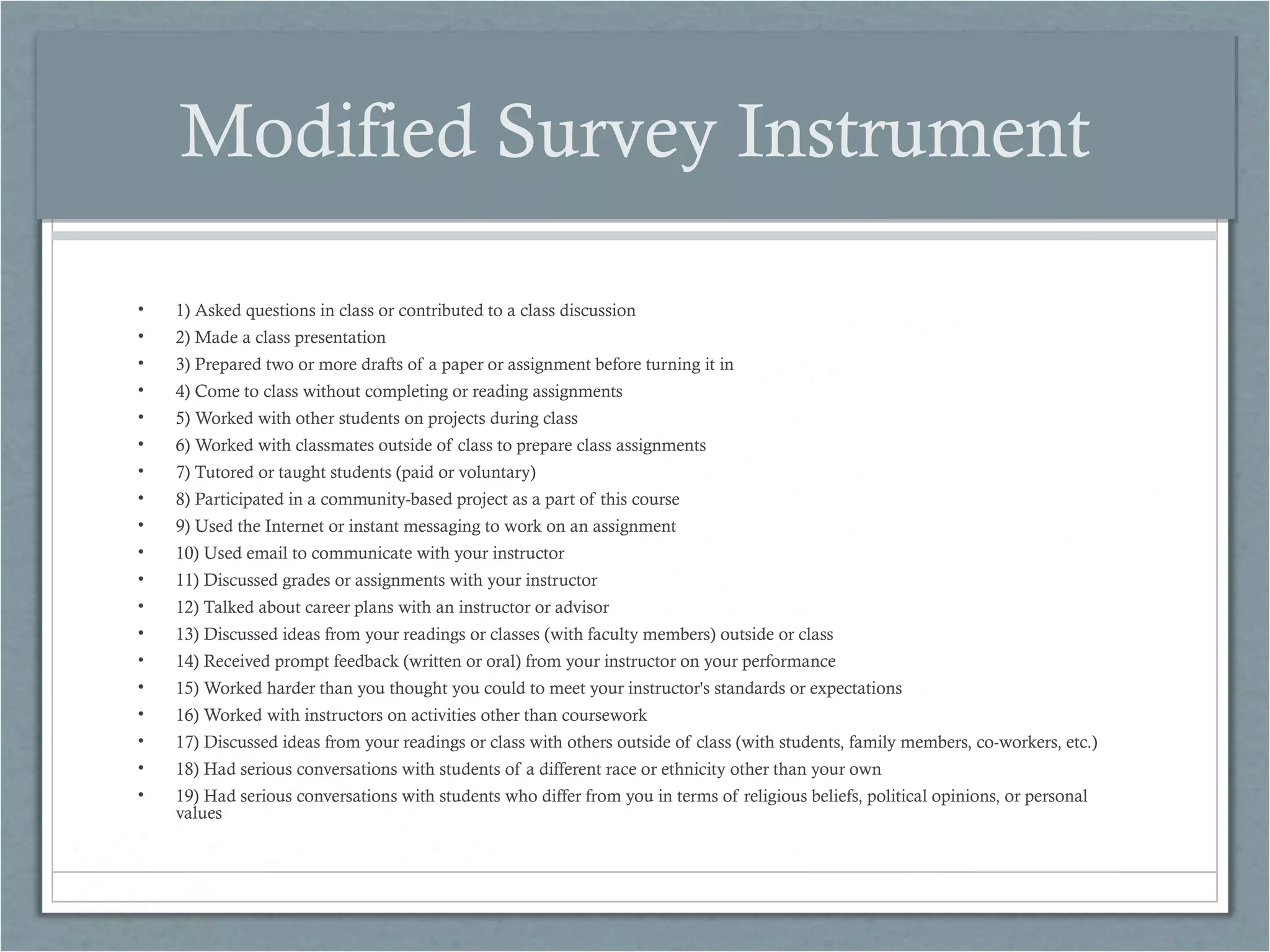
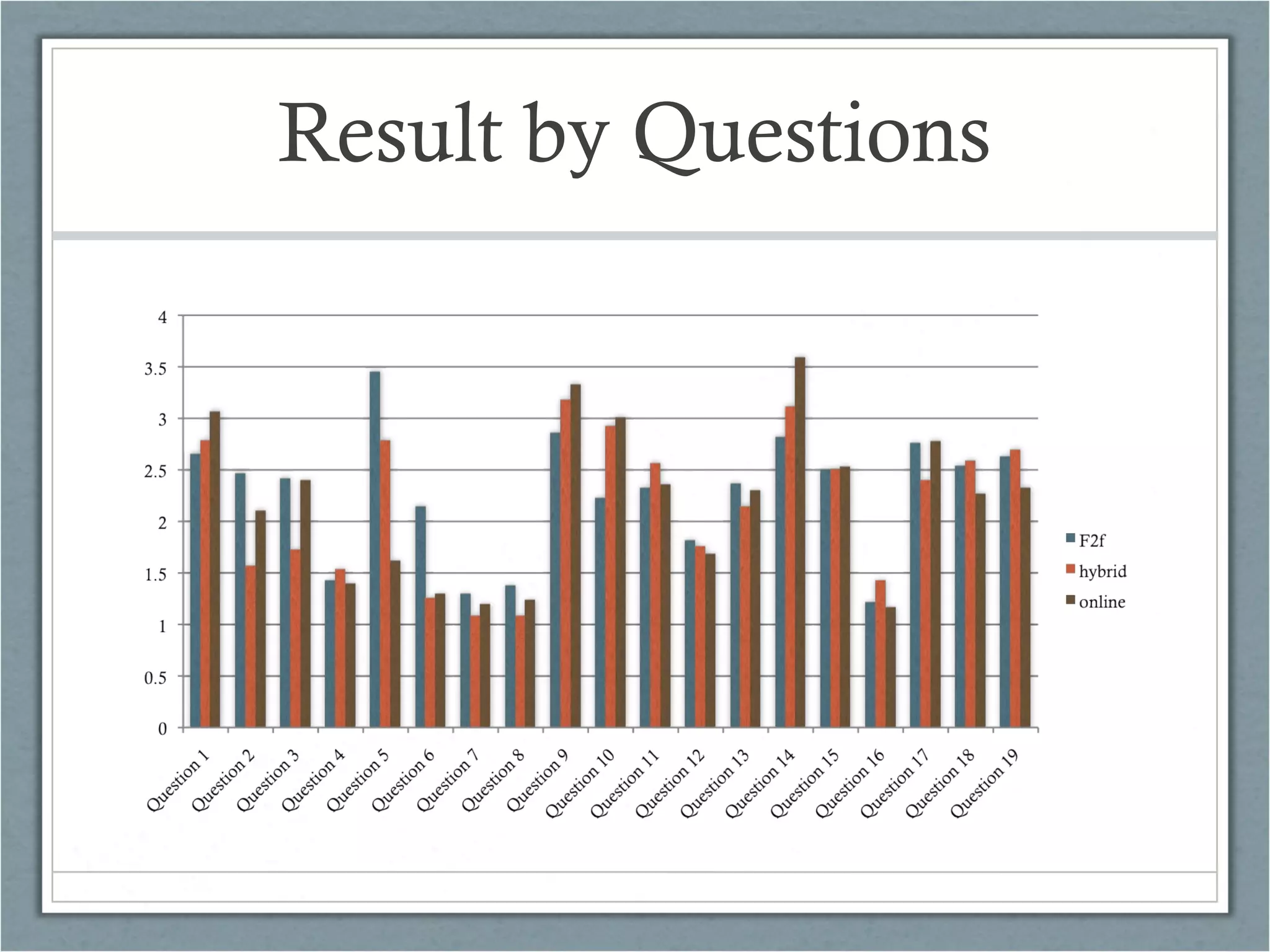
Modified Survey Instrument
•

1) Asked questions in class or contributed to a class discussion

•

2) Made a class presentation

•

3) Prepared two or more drafts of a paper or assignment before turning it in

•

4) Come to class without completing or reading assignments

•

5) Worked with other students on projects during class

•

6) Worked with classmates outside of class to prepare class assignments

•

7) Tutored or taught students (paid or voluntary)

•

8) Participated in a community-based project as a part of this course

•

9) Used the Internet or instant messaging to work on an assignment

•

10) Used email to communicate with your instructor

•

11) Discussed grades or assignments with your instructor

•

12) Talked about career plans with an instructor or advisor

•

13) Discussed ideas from your readings or classes (with faculty members) outside or class

•

14) Received prompt feedback (written or oral) from your instructor on your performance

•

15) Worked harder than you thought you could to meet your instructor's standards or expectations

•

16) Worked with instructors on activities other than coursework

•

17) Discussed ideas from your readings or class with others outside of class (with students, family members, co-workers, etc.)

•

18) Had serious conversations with students of a different race or ethnicity other than your own

•

19) Had serious conversations with students who differ from you in terms of religious beliefs, political opinions, or personal
values
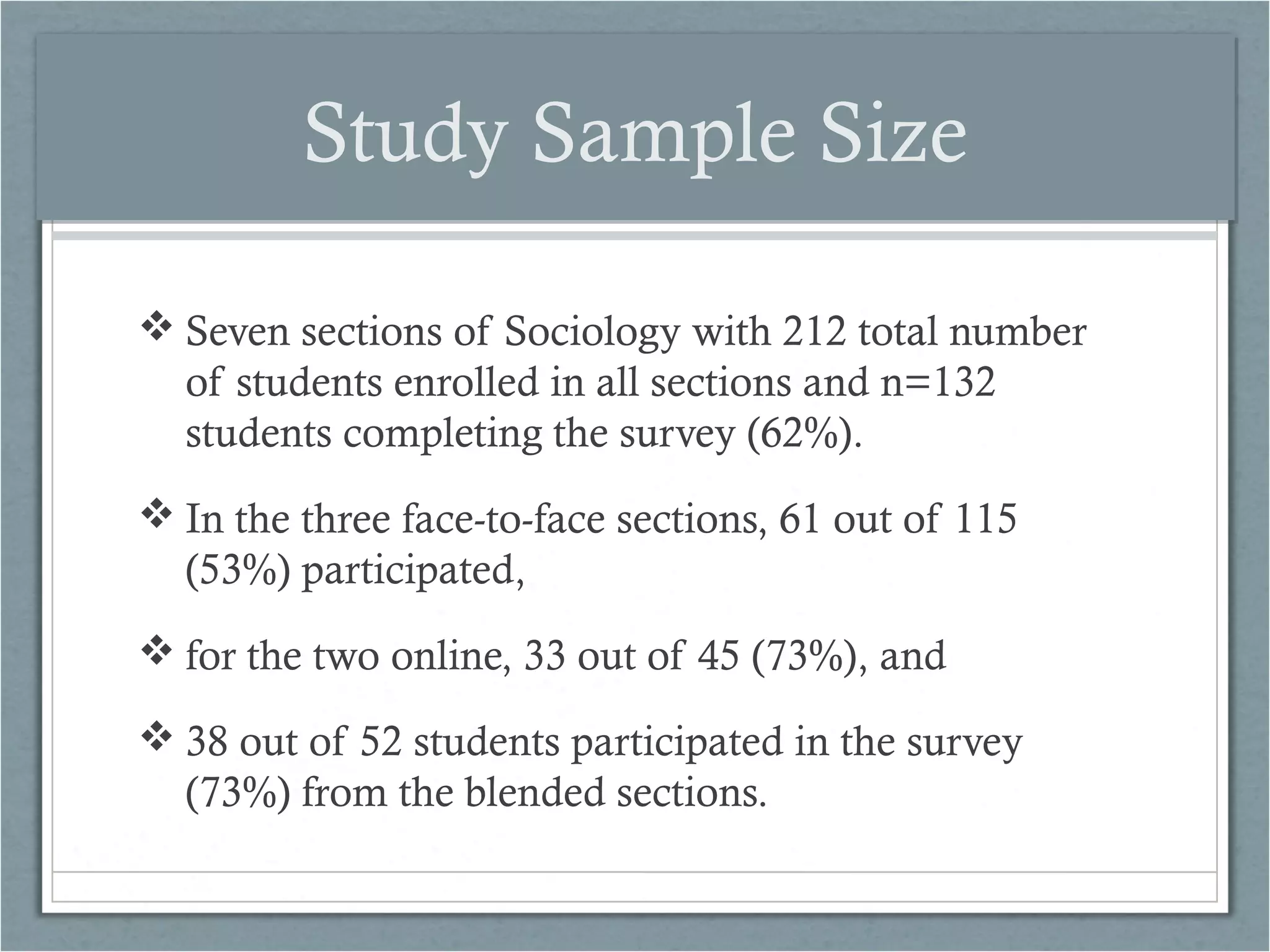
Study Sample Size
 Seven sections of Sociology with 212 total number
of students enrolled in all sections and n=132
students completing the survey (62%).
 In the three face-to-face sections, 61 out of 115
(53%) participated,
 for the two online, 33 out of 45 (73%), and
 38 out of 52 students participated in the survey
(73%) from the blended sections.
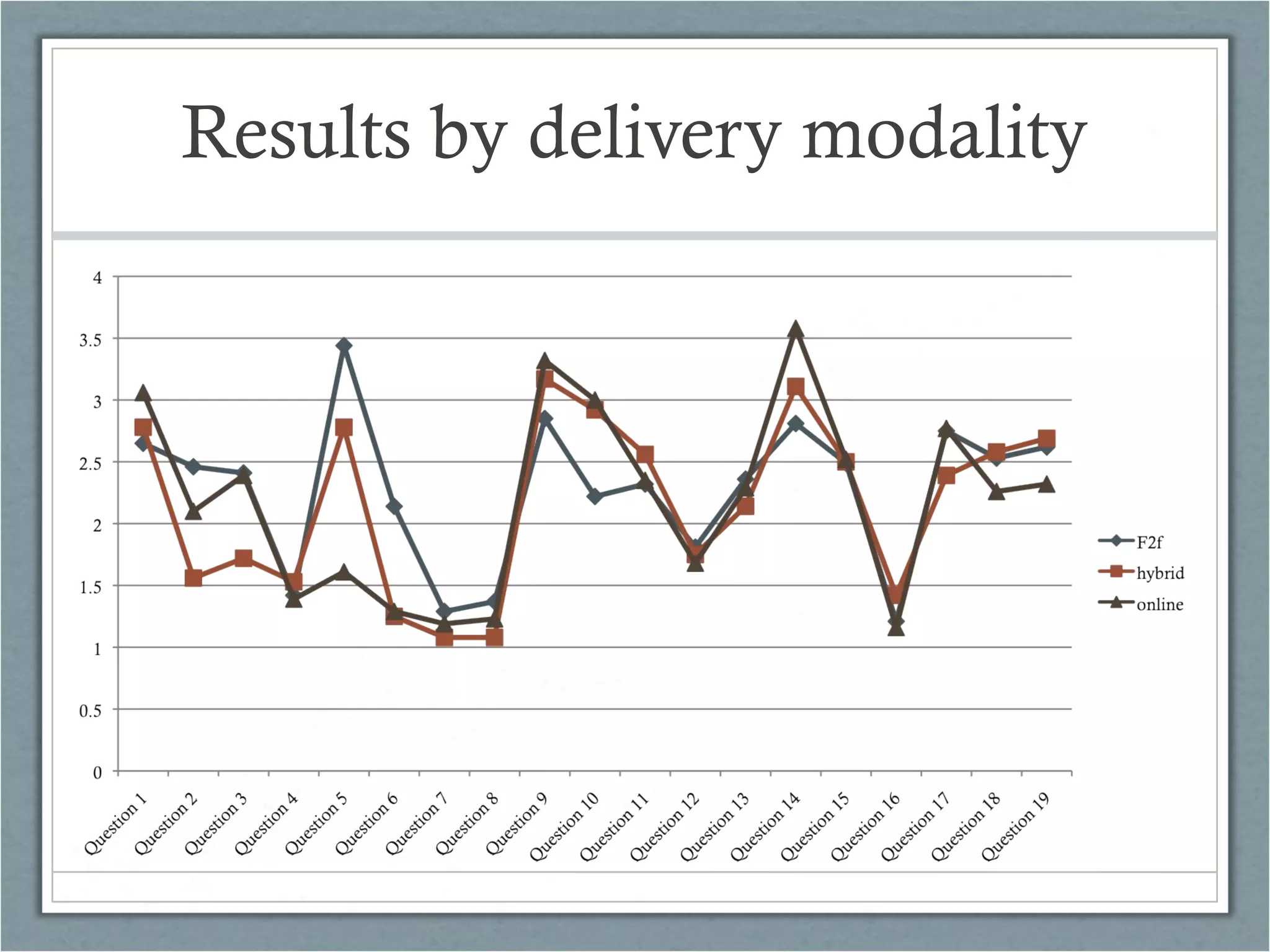
Results by delivery modality
Result by Questions
CCSSE Benchmarks Results
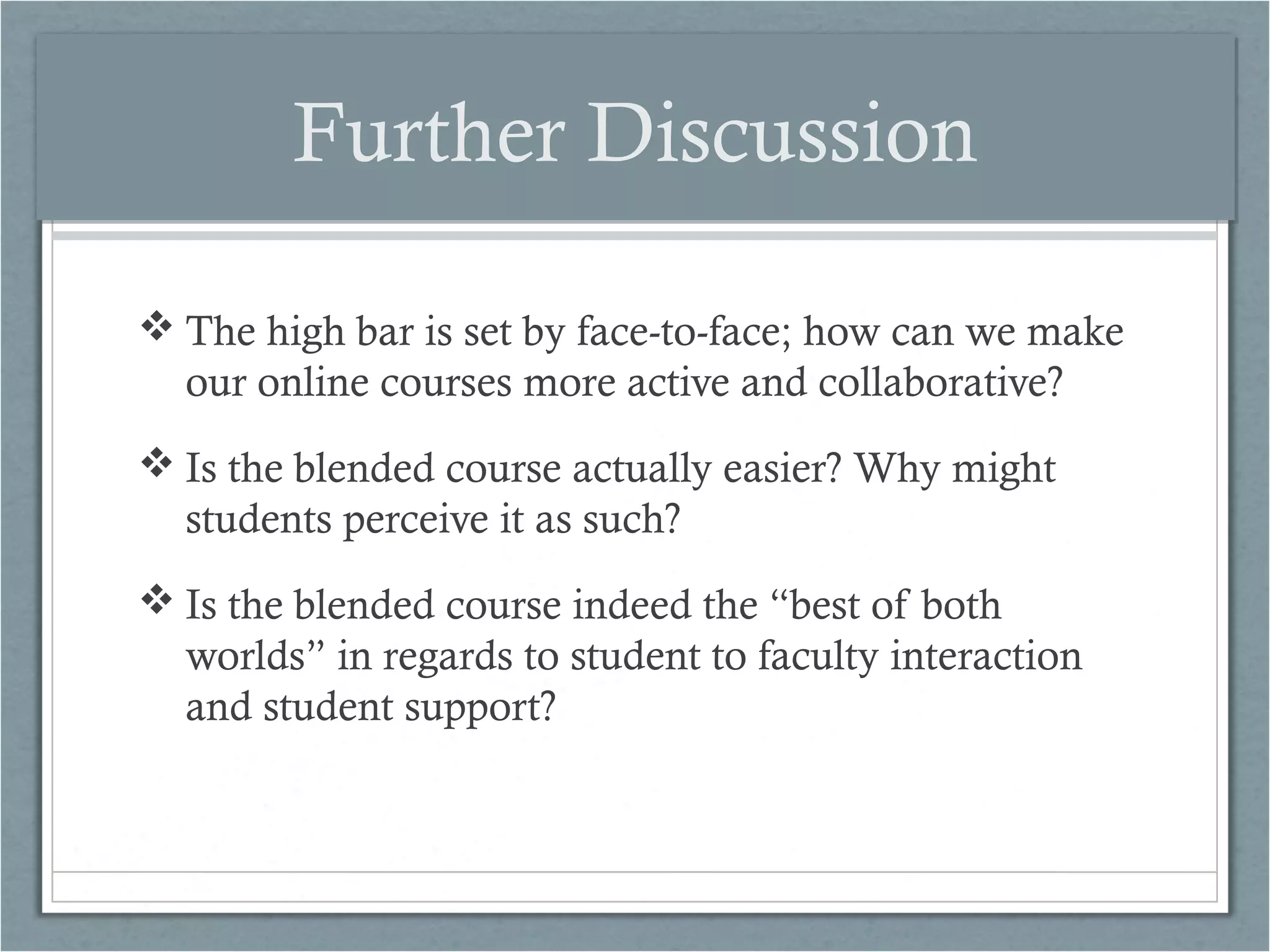
Further Discussion
 The high bar is set by face-to-face; how can we make
our online courses more active and collaborative?
 Is the blended course actually easier? Why might
students perceive it as such?
 Is the blended course indeed the “best of both
worlds” in regards to student to faculty interaction
and student support?
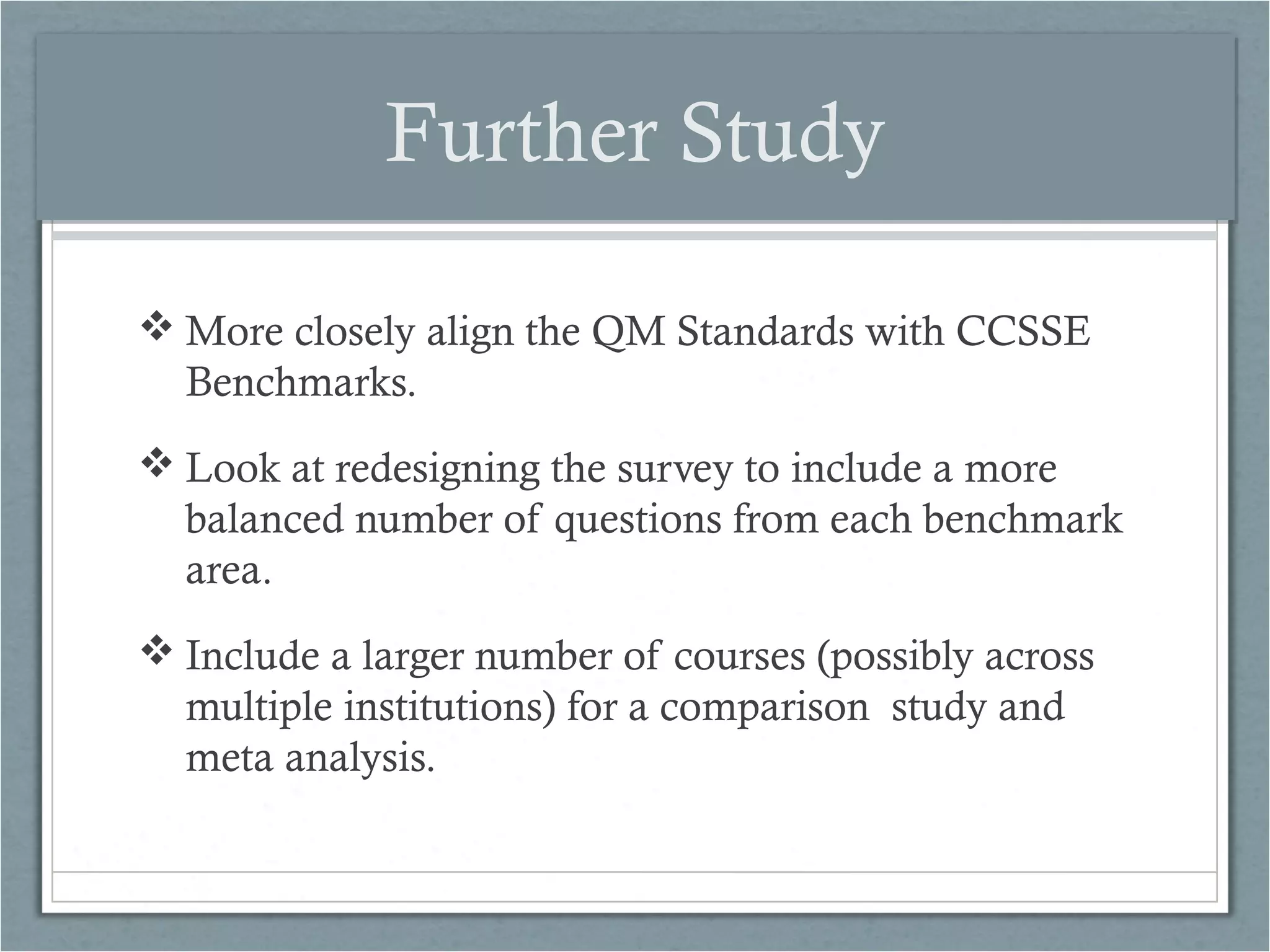
Further Study
 More closely align the QM Standards with CCSSE
Benchmarks.
 Look at redesigning the survey to include a more
balanced number of questions from each benchmark
area.
 Include a larger number of courses (possibly across
multiple institutions) for a comparison study and
meta analysis.
References:
Junco, R., Heibergert, G. & Loken, E. (2010) The effect of Twitter
on college student engagement and grades. Journal of
Computer Assisted Learning. Blackwell Publishing 2010.
Kuh, G.D., Cruce, T., Shoup, R., Kinzie, J., & Gonyea, R.M.
(2007). Unmasking the effects of student engagement on
college grades and persistence. Journal of Higher Education.
McClenney, K., Marti, C.N., & Adkins, C. (2006). Student
engagement and student outcomes: Key findings from CCSSE
validation research. Austin, TX: University of Texas at Austin,
Community College Leadership Program.

Learner Engagement, QM Standards and the Blended Course

  • 1.
    Measuring the impacton student engagement in the redesigned Blended Course using Quality Matters standards Bill Knapp, Dean of Learning Technologies Joanna Paull, Associate Professor, English Lakeland Community College
  • 2.
    Agenda Hybrid Workshop Series •Objectives •Structure •Demographics •Outcomes ResearchProject •Student Engagement •Survey Design •Results •Recommendations
  • 3.
    Presentation Questions/Discussion We welcomeyour questions at any time during the presentation. However, you may also post your questions or comments to Poll everywhere or Tweet tag: #qm4engage Text 772896 and your message to 37607 - or visit Pollev.com Post to Twitter #qm4engage
  • 4.
    Objectives for Workshop Provide information about hybrid pedagogy Formative & summative student assessment Pedagogical scholarship Creating active learning environments Instructional materials choices  Create a cohort of informed hybrid instructors  Establish hybrid pedagogy faculty community
  • 5.
    Workshop Structure  Eight-weekhybrid course that covers: Hybrid definitions Active Learning Instructional Design Course and Student Assessment
  • 6.
  • 8.
    Ties to structureof course screen shots to reflect navigation
  • 9.
  • 10.
  • 11.
  • 12.
    Instructional Design  Whatare QM Standards?  How does our workshop course site reflect those elements?  What are some ways to make our courses more broadly accessible by our students?  What role does media and/or tools play in how we share our courses with students?
  • 13.
  • 14.
    Our Results: NewHybrid Courses  Intro to Sociology  Sociology of Aging  Environmental Geography  Intro to Accounting  Interpersonal Communication
  • 15.
    Assessment       Discuss previous assessmentexperiences. Read assessment scholarship. Differentiate between formative & summative Ask students to assess our workshop. Provide letters of appreciation & participation. Mail out certificates of completion.
  • 16.
    Student Engagement The findingsfrom 20 years of research on undergraduate education have been unequivocal: The more actively engaged students are – with college faculty and staff, with other students, and with the subject matter they study – the more likely they are to learn, to stick with their studies, and to attain their academic goals. - Community College Leadership Program
  • 17.
    CCSSE Benchmarks & QualityMatters Standards  Active and Collaborative Learning  Student Effort  Academic Challenge  Student-Faculty Interaction  Support for Learners
  • 18.
    Active and CollaborativeLearning  The Active and collaborative learning benchmark measures the extent to which student participate in class, interact with other students, and extend learning outside the classroom…  Active and collaborative learning is linked with higher grades and course completion measures as well as long term persistence…
  • 19.
    Student Effort  TheStudent Effort benchmark measures time on task, preparation, and use of student services…  …the Student Effort benchmark is predictably related to retention measures and moderately predictive of academic measures.
  • 20.
    Academic Challenge  TheAcademic Challenge benchmark measures the extent to which students engage in challenging mental activities, such as evaluation and synthesis, as well as the quantity and rigor of their academic work…  Academic Challenge was most consistently associated with academic outcomes…
  • 21.
    Student-Faculty Interaction  TheStudent to Faculty Interaction benchmark measures the extent to which students and faculty communicate about academic performance, career plans, and course content and assignments…  …the Student-Faculty Interaction benchmark is related to both academic and persistence outcomes.
  • 22.
    Support for Learners The Support for Learners benchmark measures student’ perceptions of their colleges and assesses their use of advising and counseling services…  …the Support for Learners benchmark analysis suggest that this benchmark has its greatest impact on persistence…
  • 23.
    Modified Survey Instrument • 1)Asked questions in class or contributed to a class discussion • 2) Made a class presentation • 3) Prepared two or more drafts of a paper or assignment before turning it in • 4) Come to class without completing or reading assignments • 5) Worked with other students on projects during class • 6) Worked with classmates outside of class to prepare class assignments • 7) Tutored or taught students (paid or voluntary) • 8) Participated in a community-based project as a part of this course • 9) Used the Internet or instant messaging to work on an assignment • 10) Used email to communicate with your instructor • 11) Discussed grades or assignments with your instructor • 12) Talked about career plans with an instructor or advisor • 13) Discussed ideas from your readings or classes (with faculty members) outside or class • 14) Received prompt feedback (written or oral) from your instructor on your performance • 15) Worked harder than you thought you could to meet your instructor's standards or expectations • 16) Worked with instructors on activities other than coursework • 17) Discussed ideas from your readings or class with others outside of class (with students, family members, co-workers, etc.) • 18) Had serious conversations with students of a different race or ethnicity other than your own • 19) Had serious conversations with students who differ from you in terms of religious beliefs, political opinions, or personal values
  • 24.
    Study Sample Size Seven sections of Sociology with 212 total number of students enrolled in all sections and n=132 students completing the survey (62%).  In the three face-to-face sections, 61 out of 115 (53%) participated,  for the two online, 33 out of 45 (73%), and  38 out of 52 students participated in the survey (73%) from the blended sections.
  • 25.
  • 26.
  • 27.
  • 28.
    Further Discussion  Thehigh bar is set by face-to-face; how can we make our online courses more active and collaborative?  Is the blended course actually easier? Why might students perceive it as such?  Is the blended course indeed the “best of both worlds” in regards to student to faculty interaction and student support?
  • 29.
    Further Study  Moreclosely align the QM Standards with CCSSE Benchmarks.  Look at redesigning the survey to include a more balanced number of questions from each benchmark area.  Include a larger number of courses (possibly across multiple institutions) for a comparison study and meta analysis.
  • 30.
    References: Junco, R., Heibergert,G. & Loken, E. (2010) The effect of Twitter on college student engagement and grades. Journal of Computer Assisted Learning. Blackwell Publishing 2010. Kuh, G.D., Cruce, T., Shoup, R., Kinzie, J., & Gonyea, R.M. (2007). Unmasking the effects of student engagement on college grades and persistence. Journal of Higher Education. McClenney, K., Marti, C.N., & Adkins, C. (2006). Student engagement and student outcomes: Key findings from CCSSE validation research. Austin, TX: University of Texas at Austin, Community College Leadership Program.