Subsea Autonomous Systems: next
generation technologies
Applicant Briefing
23 January 2020
Welcome and Overview
Andrew Tyrer
Challenge Director, ISCF Robotics
Agenda for the Event
• Welcome and overview
• A collaborative approach to innovation
• Competition overview and scope
• Refreshments and Networking
• Application process brief
• Q&A
• Summary
ISCF Robotics and AI in Extreme Environments
Andrew Tyrer
Challenge Director
Subsea Autonomous Systems: next
generation technologies
23rd January 2020
Challenge
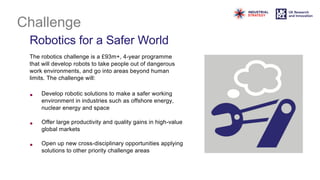
Robotics for a Safer World
The robotics challenge is a £93m+, 4-year programme
that will develop robots to take people out of dangerous
work environments, and go into areas beyond human
limits. The challenge will:
• Develop robotic solutions to make a safer working
environment in industries such as offshore energy,
nuclear energy and space
• Offer large productivity and quality gains in high-value
global markets
• Open up new cross-disciplinary opportunities applying
solutions to other priority challenge areas
Challenge
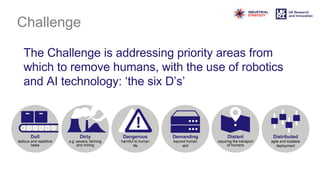
The Challenge is addressing priority areas from
which to remove humans, with the use of robotics
and AI technology: ‘the six D’s’
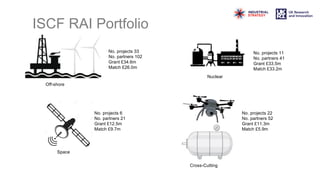
Off-shore
Nuclear
Space
Cross-Cutting
No. projects 33
No. partners 102
Grant £34.6m
Match £26.0m
No. projects 6
No. partners 21
Grant £12.5m
Match £9.7m
No. projects 22
No. partners 52
Grant £11.3m
Match £5.9m
No. projects 11
No. partners 41
Grant £33.5m
Match £33.2m
ISCF RAI Portfolio
Challenge
• We have a built a cluster of >240 organisations
• Collectively working together to solve identified problems
• Working with whole supply chains – in a new way
• Deliver technology at pace
• Recognition that there are still gaps
• Collaborating across different industries and sectors will close these gaps
• Aligned funding increases scale, opportunity and diversity of approach
• e.g. Advanced Last Mile – DfID, DSTL and UKRI
• Actively coordinating OGD’s, Academia and Industry will increase opportunities to:
• Innovate
• Collaborate to build new products and services
• Commercialise by building new supply chains
Challenge
Subsea autonomous systems: next generation technologies
• All the oil and gas ‘majors’ have set ambitious targets to deploy autonomous technologies in
the next 10 years, even though many of those technologies do not exist today
• Recent strategic Defence reviews have called for more cross-sector solutions to be
developed, increasing efficiency of deployment and opportunities for UK businesses
• Need to develop solutions to significantly improve mission duration, sensing and
communications
• Innovate UK, (as part of UK Research and Innovation), is collaborating with the Ministry of
Defence and The Royal Navy, the Oil & Gas Technology Centre, BP, and the Oil & Gas
Authority
• Invest up to £6 million, from a cross government and industry joint fund, in collaborative
business led projects.
A Collaborative Approach to Innovation
Defence Innovation Unit
Royal Navy
Oil & Gas Technology Centre
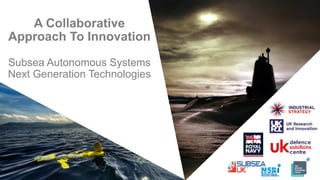
A Collaborative
Approach To Innovation
Subsea Autonomous Systems
Next Generation Technologies
DIU Geoff Howes
Ministry of Defence Representative
Defence Innovation
Unit
Cross Sector Innovation
23 Jan 2020
14
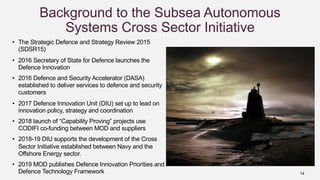
Background to the Subsea Autonomous
Systems Cross Sector Initiative
• The Strategic Defence and Strategy Review 2015
(SDSR15)
• 2016 Secretary of State for Defence launches the
Defence Innovation
• 2016 Defence and Security Accelerator (DASA)
established to deliver services to defence and security
customers
• 2017 Defence Innovation Unit (DIU) set up to lead on
innovation policy, strategy and coordination
• 2018 launch of “Capability Proving” projects use
CODIFI co-funding between MOD and suppliers
• 2018-19 DIU supports the development of the Cross
Sector Initiative established between Navy and the
Offshore Energy sector.
• 2019 MOD publishes Defence Innovation Priorities and
Defence Technology Framework
15
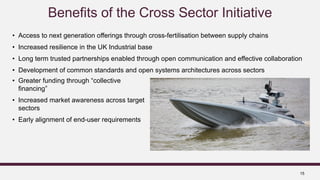
Benefits of the Cross Sector Initiative
• Access to next generation offerings through cross-fertilisation between supply chains
• Increased resilience in the UK Industrial base
• Long term trusted partnerships enabled through open communication and effective collaboration
• Development of common standards and open systems architectures across sectors
• Greater funding through “collective
financing”
• Increased market awareness across target
sectors
• Early alignment of end-user requirements
16
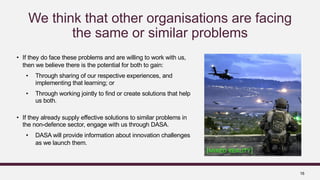
We think that other organisations are facing
the same or similar problems
• If they do face these problems and are willing to work with us,
then we believe there is the potential for both to gain:
• Through sharing of our respective experiences, and
implementing that learning; or
• Through working jointly to find or create solutions that help
us both.
• If they already supply effective solutions to similar problems in
the non-defence sector, engage with us through DASA.
• DASA will provide information about innovation challenges
as we launch them.
c
17
Defence Innovation Priorities
Integrate Information and Physical Activity Across Domains
• How can we integrate information and physical activity across domains (particularly
Space and Cyber), and synchronise with wider Government to increase
understanding and operational tempo?
Delivering Agile Command and Control
• How can we deliver agile Command and Control, to offer decisive advantage in
complex operations?
Operate and Deliver Effects in Contested Domains
• How can we operate and deliver military outcomes in denied and contested
domains?
Defence People – Skills, Knowledge and Experience
• How can we access people with the right skills, knowledge and experience?
Reflecting Future Battlespace Complexity
• How do we reflect future battlespace complexity and higher levels of integration in
training, wargaming and experimentation?
OGTC Russell Stevenson & NSRI
Graham Whitehead
Oil and Gas Industry Representative
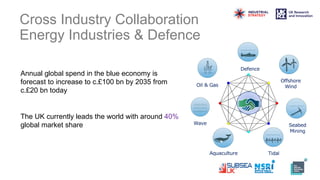
Cross Industry Collaboration
Energy Industries & Defence
Annual global spend in the blue economy is
forecast to increase to c.£100 bn by 2035 from
c.£20 bn today
The UK currently leads the world with around 40%
global market share
Oil & Gas
Offshore
Wind
Aquaculture
Wave
Tidal
Seabed
Mining
Defence
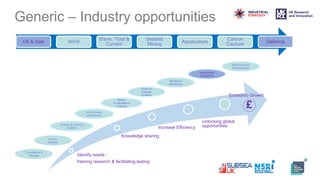
Generic – Industry opportunities
Oil & Gas Wind
Wave, Tidal &
Current
Seabed
Mining Aquaculture
Carbon
Capture Defence
Comms & Controls
Systems
Power &
Storage
Systems
Sensors &
Monitoring
Autonomous
Operations
Decommission
& Re-purpose
Metals,
Composites &
Coatings
AI & Process
performance
Survey
Systems
Identify needs -
framing research & facilitating testing
Economic Growth
£
Unlocking global
opportunitiesIncrease Efficiency
Knowledge sharing
Foundations &
Mooring
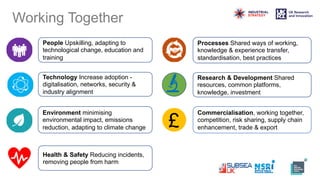
Working Together
People Upskilling, adapting to
technological change, education and
training
Technology Increase adoption -
digitalisation, networks, security &
industry alignment
Environment minimising
environmental impact, emissions
reduction, adapting to climate change
Processes Shared ways of working,
knowledge & experience transfer,
standardisation, best practices
Research & Development Shared
resources, common platforms,
knowledge, investment
Commercialisation, working together,
competition, risk sharing, supply chain
enhancement, trade & export
Health & Safety Reducing incidents,
removing people from harm
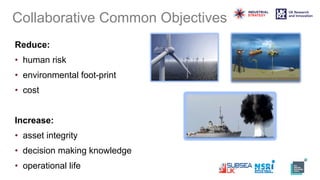
Collaborative Common Objectives
Reduce:
• human risk
• environmental foot-print
• cost
Increase:
• asset integrity
• decision making knowledge
• operational life
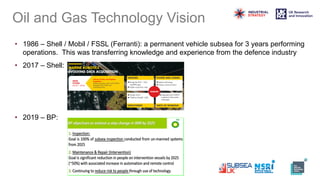
Oil and Gas Technology Vision
• 1986 – Shell / Mobil / FSSL (Ferranti): a permanent vehicle subsea for 3 years performing
operations. This was transferring knowledge and experience from the defence industry
• 2017 – Shell:
• 2019 – BP:
Working together
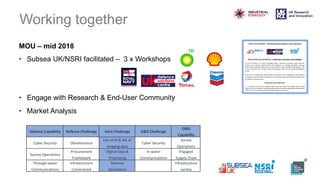
MOU – mid 2018
• Subsea UK/NSRI facilitated – 3 x Workshops
• Engage with Research & End-User Community
• Market Analysis
Defence Capability Defence Challenge Joint Challenge O&G Challenge
O&G
Capability
Cyber Security Obsolescence
Use of AI & ML or
imaging data
Cyber Security
Survey
Operations
Survey Operations
Procurement
Framework
Digital Data &
Processing
In-water
Communications
Engaged
Supply Chain
Through-water
Communications
Infrastructure
Constrained
Remote
Operations
Infrastructure
variety
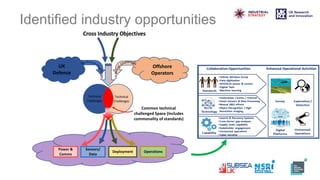
Identified industry opportunities
UK
Defence
Offshore
Operators
Technical
Challenges
Technical
Challenges
Common technical
challenged Space (Includes
commonality of standards)
Power &
Comms
Sensors/
Data
Deployment Operations
Common environmental challenges – water depth
Cross Industry Objectives
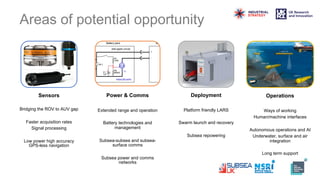
Areas of potential opportunity
Sensors
Bridging the ROV to AUV gap
Faster acquisition rates
Signal processing
Low power high accuracy
GPS-less navigation
Power & Comms
Extended range and operation
Battery technologies and
management
Subsea-subsea and subsea-
surface comms
Subsea power and comms
networks
Deployment
Platform friendly LARS
Swarm launch and recovery
Subsea repowering
Operations
Ways of working
Human/machine interfaces
Autonomous operations and AI
Underwater, surface and air
integration
Long term support
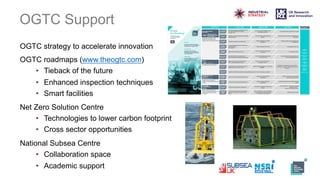
OGTC Support
OGTC strategy to accelerate innovation
OGTC roadmaps (www.theogtc.com)
• Tieback of the future
• Enhanced inspection techniques
• Smart facilities
Net Zero Solution Centre
• Technologies to lower carbon footprint
• Cross sector opportunities
National Subsea Centre
• Collaboration space
• Academic support
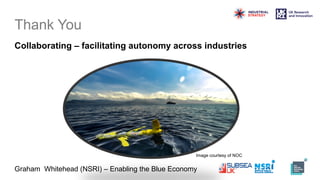
Thank You
Graham Whitehead (NSRI) – Enabling the Blue Economy
Collaborating – facilitating autonomy across industries
Image courtesy of NOC
Royal Navy Cdr Alex Bingham
Military Representative
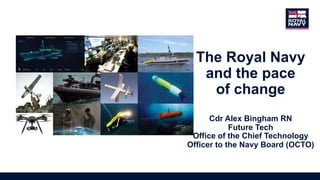
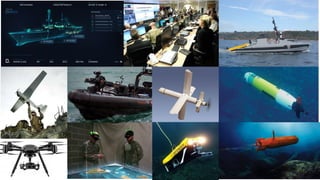
The Royal Navy
and the pace
of change
Cdr Alex Bingham RN
Future Tech
Office of the Chief Technology
Officer to the Navy Board (OCTO)
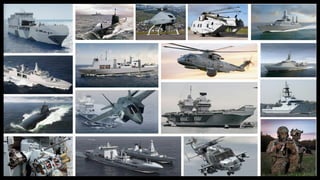
Image to use?
Compisote from RAGD?
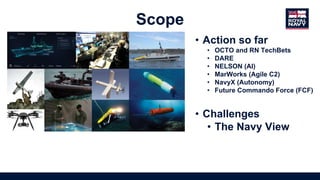
• Action so far
• OCTO and RN TechBets
• DARE
• NELSON (AI)
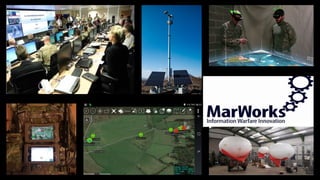
• MarWorks (Agile C2)
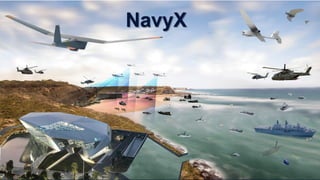
• NavyX (Autonomy)
• Future Commando Force (FCF)
• Challenges
• The Navy View
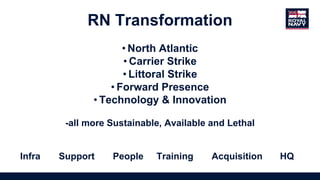
Scope
• North Atlantic
• Carrier Strike
• Littoral Strike
• Forward Presence
• Technology & Innovation
-all more Sustainable, Available and Lethal
Infra Support People Training Acquisition HQ
RN Transformation
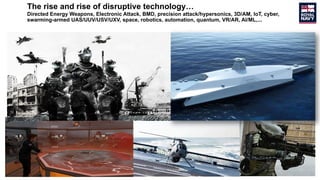
The rise and rise of disruptive technology…
Directed Energy Weapons, Electronic Attack, BMD, precision attack/hypersonics, 3D/AM, IoT, cyber,
swarming-armed UAS/UUV/USV/UXV, space, robotics, automation, quantum, VR/AR, AI/ML,...
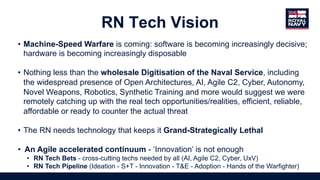
• Machine-Speed Warfare is coming: software is becoming increasingly decisive;
hardware is becoming increasingly disposable
• Nothing less than the wholesale Digitisation of the Naval Service, including
the widespread presence of Open Architectures, AI, Agile C2, Cyber, Autonomy,
Novel Weapons, Robotics, Synthetic Training and more would suggest we were
remotely catching up with the real tech opportunities/realities, efficient, reliable,
affordable or ready to counter the actual threat
• The RN needs technology that keeps it Grand-Strategically Lethal
• An Agile accelerated continuum - ‘Innovation’ is not enough
• RN Tech Bets - cross-cutting techs needed by all (AI, Agile C2, Cyber, UxV)
• RN Tech Pipeline (Ideation - S+T - Innovation - T&E - Adoption - Hands of the Warfighter)
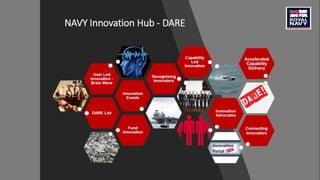
RN Tech Vision
OFFICIAL SENSITIVE
NavyXNavyX
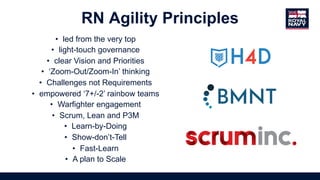
RN Agility Principles
• led from the very top
• light-touch governance
• clear Vision and Priorities
• ‘Zoom-Out/Zoom-In’ thinking
• Challenges not Requirements
• empowered ‘7+/-2’ rainbow teams
• Warfighter engagement
• Scrum, Lean and P3M
• Learn-by-Doing
• Show-don’t-Tell
• Fast-Learn
• A plan to Scale
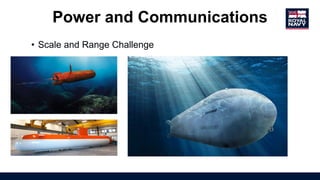
Power and Communications
• Scale and Range Challenge
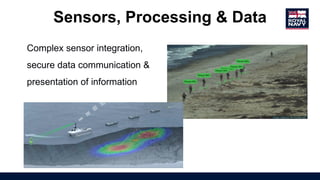
Sensors, Processing & Data
Complex sensor integration,
secure data communication &
presentation of information
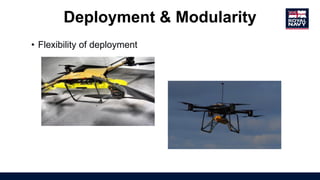
Deployment & Modularity
• Flexibility of deployment
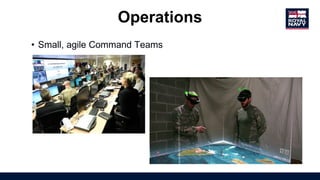
Operations
• Small, agile Command Teams
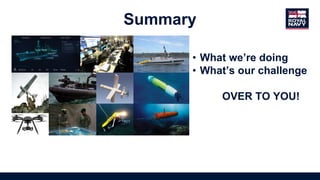
• What we’re doing
• What’s our challenge
OVER TO YOU!
Summary
Competition Overview and Scope
Andrew Tyrer
Challenge Director, ISCF Robotics
Competition Overview
The Competition is compromised of three stages:
1. An Expression of Interest to enter the Innovation Lab
• via https://apply-for-innovation-funding.service.gov.uk/competition/534/overview#summary
• Individuals apply to participate, on behalf of their organisation
• Applicants are chosen and invited to attend
2. The 5-day collaborative, residential Innovation Lab 20th - 24th April 2020
• Project proposals are developed at the Innovation Lab
• Proposals are assessed at the end of Innovation Lab to see if they can go
forward to final submission
3. Final proposals are submitted on behalf of collaborations formed by 22nd May 2020
• The proposals are subjected in independent assessment for potential funding
Competition Overview
• The Expression of Interest stage is used to decide who attends the
Innovation Lab
• Innovation Lab itself is a 5-day residential workshop, the attendees of
which are working together to develop collaborative proposals for research
and innovation projects.
• The process and activities may be unconventional, challenging and
unexpected
• The aim is to generate innovative and commercially viable new ideas.
Competition Overview
Taking part will be:
• Innovation Lab director
• 20 to 30 active participants, contributing fully and constructively
• a team of mentors to help the director assess participants and provide
objective advice, feedback and input
• Innovation Lab facilitators to design the activities and schedule sessions
• Independent stakeholders and speakers with real experience of the
challenge
Scope
• The challenge is to develop next generation subsea autonomous system
technologies, which are modular in design with common interfaces and
open architectures.
• Approaches should make trusted unmanned operations the standard
approach in areas such as off-shore energy, aquafarming, deep sea
mineral exploration and maritime defensive security operations.
• The aim of the Innovation Lab is to generate innovative and commercially
viable new ideas which improve: levels of autonomy; sensor
miniaturisation; mission planning; monitoring; communications; navigation;
data management and operations; with improved endurance in the water
column up to 3,000 metres deep.
Scope
Proposals developed at the Innovation Lab must:
• quantify how the solution can be commercialised
• include testing and demonstration in realistic scenarios or environments
during and upon completion of the project
• address regulatory or safety issues and constraints, providing a clear
indication how these can or will be addressed/demonstrated
Scope
Your project must help develop one or more of the following specific themes:
• Power and communications
• Sensing, detection, navigation and data processing
• Deployment and modularity
• Operations
Application Process Brief
Phill Haddow
Project Manger, ISCF Robotics
Agenda
• Eligibility Criteria
• Application process – the Innovation Funding Service
• Project details
• Application questions
• Assessment and selection
• Innovation Lab
• Funding available for successful projects
• Q&A
Eligibility Criteria
Eligibility
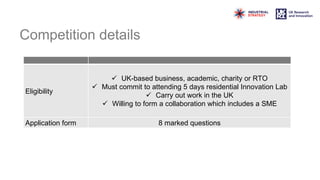
ü UK-based business, academic, charity or RTO
ü Must commit to attending 5 days residential Innovation Lab
ü Carry out work in the UK
ü Willing to form a collaboration which includes a SME
Application form 8 marked questions
Competition details
Types of Organisation
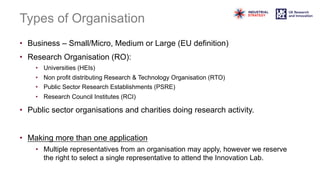
• Business – Small/Micro, Medium or Large (EU definition)
• Research Organisation (RO):
• Universities (HEIs)
• Non profit distributing Research & Technology Organisation (RTO)
• Public Sector Research Establishments (PSRE)
• Research Council Institutes (RCI)
• Public sector organisations and charities doing research activity.
• Making more than one application
• Multiple representatives from an organisation may apply, however we reserve
the right to select a single representative to attend the Innovation Lab.
Key Dates
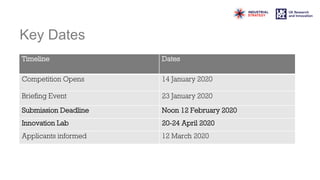
Timeline Dates

Competition Opens 14 January 2020
Briefing Event 23 January 2020
Submission Deadline Noon 12 February 2020
Innovation Lab 20-24 April 2020
Applicants informed 12 March 2020
Application process
How is the Innovation Funding Service
(IFS) different?
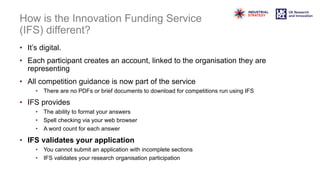
• It’s digital.
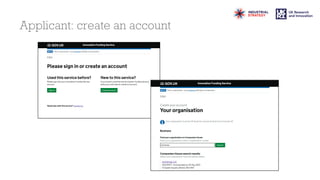
• Each participant creates an account, linked to the organisation they are
representing
• All competition guidance is now part of the service
• There are no PDFs or brief documents to download for competitions run using IFS
• IFS provides
• The ability to format your answers
• Spell checking via your web browser
• A word count for each answer
• IFS validates your application
• You cannot submit an application with incomplete sections
• IFS validates your research organisation participation
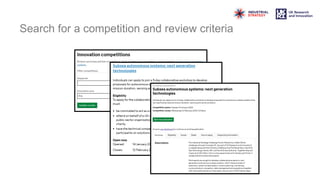
Search for a competition and review criteria
Applicant: create an account
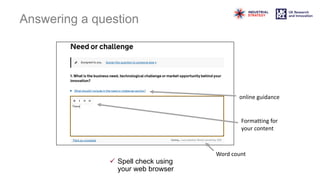
Answering a question
ü Spell check using
your web browser
online guidance
Formatting for
your content
Word count
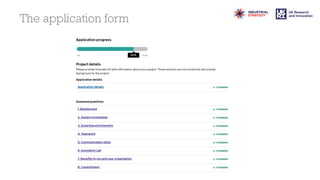
The application form
Application Process and Questions
• Application – project details
Application details
• This section contains 4 points to complete
• Application title (please put ‘Not applicable’)
• Estimated timescales
• The proposed start date and duration of your project (please put ‘12
months’)
• Research category
• Please select ‘Industrial research’
• Innovation areas
• Please put ‘Robotics and autonomous systems’
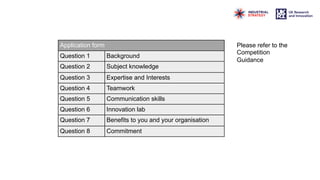
Application form
Question 1 Background
Question 2 Subject knowledge
Question 3 Expertise and Interests
Question 4 Teamwork
Question 5 Communication skills
Question 6 Innovation lab
Question 7 Benefits to you and your organisation
Question 8 Commitment
Please refer to the
Competition
Guidance
Question 1: Background
• Please outline your professional background and current job or
position. Highlight one or two high points of your career.
• Your answer can be up to 200 words long.
Question 2: Subject knowledge
• How do you see robotics evolving over the next 10 years?
• Where do you fit in the spectrum of opinions between robotics being
semi-autonomous with human interaction, to being fully
autonomous using solely artificial intelligence control?
• Your answer can be up to 100 words long.
Question 3: Expertise and interests
• How do you see your expertise and interests contributing to
achieving the transformative objectives of the event?
• Your answer can be up to 200 words long.
Question 4: Teamwork
• What is your approach to teamwork? What do you regard as your
strengths?
• Your answer can be up to 100 words long.
Question 5: Communication skills
• How would you explain your area of interest to individuals with
different expertise to your own?
• Your answer can be up to 100 words long.
Question 6: Innovation Lab
• The Innovation Lab is especially suited to individuals who can step
outside their own area of expertise or interest, are positively driven,
enjoy creative activity and can think innovatively. It is an intensive
setting requiring you to develop new approaches with individuals
you may not know. How do you consider yourself suited?
• Your answer can be up to 100 words long.
Question 7: Benefits to you and your organisation
• What do you and your organisation hope to gain from taking part in the
Innovation Lab?
• Please provide:
• details of why you want to take part and what benefit you expect for
your organisation
• details of how you will get the necessary authority to commit your
organisation to a project.
• a statement of the financial or other resource your organisation may be
willing to commit to a successful project (including provision of
appropriate specialised facilities if you have them).
• Your answer can be up to 200 words long.
Question 8: Commitment
• If selected you must attend all 5 days of the Innovation Lab without
interruption.
• Do you and your organisation commit to this? Please answer yes or
no.
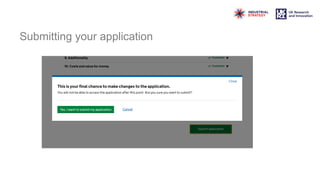
Submitting your application
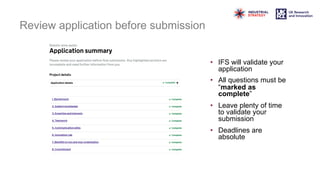
Review application before submission
• IFS will validate your
application
• All questions must be
“marked as
complete”
• Leave plenty of time
to validate your
submission
• Deadlines are
absolute
Submitting your application
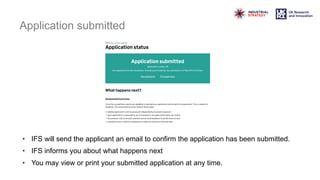
Application submitted
• IFS will send the applicant an email to confirm the application has been submitted.
• IFS informs you about what happens next
• You may view or print your submitted application at any time.
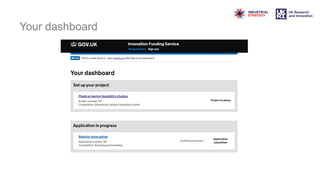
Your dashboard
Application & Assessment
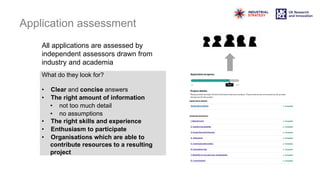
All applications are assessed by
independent assessors drawn from
industry and academia
Application assessment
What do they look for?
• Clear and concise answers
• The right amount of information
• not too much detail
• no assumptions
• The right skills and experience
• Enthusiasm to participate
• Organisations which are able to
contribute resources to a resulting
project
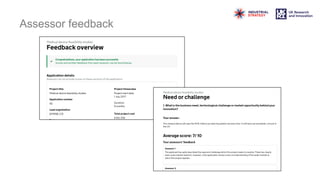
Assessor feedback
Funding available for successful applicants
in the final project
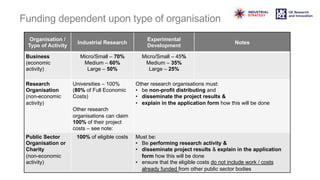
Funding dependent upon type of organisation
Organisation /
Type of Activity
Industrial Research
Experimental
Development
Notes
Business
(economic
activity)
Micro/Small – 70%
Medium – 60%
Large – 50%
Micro/Small – 45%
Medium – 35%
Large – 25%
Research
Organisation
(non-economic
activity)
Universities – 100%
(80% of Full Economic
Costs)
Other research
organisations can claim
100% of their project
costs – see note:
Other research organisations must:
• be non-profit distributing and
• disseminate the project results &
• explain in the application form how this will be done
Public Sector
Organisation or
Charity
(non-economic
activity)
100% of eligible costs Must be:
• Be performing research activity &
• disseminate project results & explain in the application
form how this will be done
• ensure that the eligible costs do not include work / costs
already funded from other public sector bodies
Q&A
Contact us:
• Customer Support Services: 0300 321 4357 (Mon-Fri, 9am-5:30pm)
• support@innovateuk.gov.uk
• Knowledge Transfer Network:
• https://ktn.innovateuk.org
• Innovate UK:
• https://www.gov.uk/government/organisations/innovate-uk
Thank You

ISCF Subsea Autonomous Systems: Next Generation Technologies - Competition Briefing

  • 1.
    Subsea Autonomous Systems:next generation technologies Applicant Briefing 23 January 2020
  • 2.
    Welcome and Overview AndrewTyrer Challenge Director, ISCF Robotics
  • 3.
    Agenda for theEvent • Welcome and overview • A collaborative approach to innovation • Competition overview and scope • Refreshments and Networking • Application process brief • Q&A • Summary
  • 4.
    ISCF Robotics andAI in Extreme Environments Andrew Tyrer Challenge Director Subsea Autonomous Systems: next generation technologies 23rd January 2020
  • 5.
    Challenge Robotics for aSafer World The robotics challenge is a £93m+, 4-year programme that will develop robots to take people out of dangerous work environments, and go into areas beyond human limits. The challenge will: • Develop robotic solutions to make a safer working environment in industries such as offshore energy, nuclear energy and space • Offer large productivity and quality gains in high-value global markets • Open up new cross-disciplinary opportunities applying solutions to other priority challenge areas
  • 6.
    Challenge The Challenge isaddressing priority areas from which to remove humans, with the use of robotics and AI technology: ‘the six D’s’
  • 7.
    Off-shore Nuclear Space Cross-Cutting No. projects 33 No.partners 102 Grant £34.6m Match £26.0m No. projects 6 No. partners 21 Grant £12.5m Match £9.7m No. projects 22 No. partners 52 Grant £11.3m Match £5.9m No. projects 11 No. partners 41 Grant £33.5m Match £33.2m ISCF RAI Portfolio
  • 8.
    Challenge • We havea built a cluster of >240 organisations • Collectively working together to solve identified problems • Working with whole supply chains – in a new way • Deliver technology at pace • Recognition that there are still gaps • Collaborating across different industries and sectors will close these gaps • Aligned funding increases scale, opportunity and diversity of approach • e.g. Advanced Last Mile – DfID, DSTL and UKRI • Actively coordinating OGD’s, Academia and Industry will increase opportunities to: • Innovate • Collaborate to build new products and services • Commercialise by building new supply chains
  • 9.
    Challenge Subsea autonomous systems:next generation technologies • All the oil and gas ‘majors’ have set ambitious targets to deploy autonomous technologies in the next 10 years, even though many of those technologies do not exist today • Recent strategic Defence reviews have called for more cross-sector solutions to be developed, increasing efficiency of deployment and opportunities for UK businesses • Need to develop solutions to significantly improve mission duration, sensing and communications • Innovate UK, (as part of UK Research and Innovation), is collaborating with the Ministry of Defence and The Royal Navy, the Oil & Gas Technology Centre, BP, and the Oil & Gas Authority • Invest up to £6 million, from a cross government and industry joint fund, in collaborative business led projects.
  • 10.
    A Collaborative Approachto Innovation Defence Innovation Unit Royal Navy Oil & Gas Technology Centre
  • 11.
    A Collaborative Approach ToInnovation Subsea Autonomous Systems Next Generation Technologies
  • 12.
    DIU Geoff Howes Ministryof Defence Representative
  • 13.
  • 14.
    14 Background to theSubsea Autonomous Systems Cross Sector Initiative • The Strategic Defence and Strategy Review 2015 (SDSR15) • 2016 Secretary of State for Defence launches the Defence Innovation • 2016 Defence and Security Accelerator (DASA) established to deliver services to defence and security customers • 2017 Defence Innovation Unit (DIU) set up to lead on innovation policy, strategy and coordination • 2018 launch of “Capability Proving” projects use CODIFI co-funding between MOD and suppliers • 2018-19 DIU supports the development of the Cross Sector Initiative established between Navy and the Offshore Energy sector. • 2019 MOD publishes Defence Innovation Priorities and Defence Technology Framework
  • 15.
    15 Benefits of theCross Sector Initiative • Access to next generation offerings through cross-fertilisation between supply chains • Increased resilience in the UK Industrial base • Long term trusted partnerships enabled through open communication and effective collaboration • Development of common standards and open systems architectures across sectors • Greater funding through “collective financing” • Increased market awareness across target sectors • Early alignment of end-user requirements
  • 16.
    16 We think thatother organisations are facing the same or similar problems • If they do face these problems and are willing to work with us, then we believe there is the potential for both to gain: • Through sharing of our respective experiences, and implementing that learning; or • Through working jointly to find or create solutions that help us both. • If they already supply effective solutions to similar problems in the non-defence sector, engage with us through DASA. • DASA will provide information about innovation challenges as we launch them. c
  • 17.
    17 Defence Innovation Priorities IntegrateInformation and Physical Activity Across Domains • How can we integrate information and physical activity across domains (particularly Space and Cyber), and synchronise with wider Government to increase understanding and operational tempo? Delivering Agile Command and Control • How can we deliver agile Command and Control, to offer decisive advantage in complex operations? Operate and Deliver Effects in Contested Domains • How can we operate and deliver military outcomes in denied and contested domains? Defence People – Skills, Knowledge and Experience • How can we access people with the right skills, knowledge and experience? Reflecting Future Battlespace Complexity • How do we reflect future battlespace complexity and higher levels of integration in training, wargaming and experimentation?
  • 18.
    OGTC Russell Stevenson& NSRI Graham Whitehead Oil and Gas Industry Representative
  • 19.
    Cross Industry Collaboration EnergyIndustries & Defence Annual global spend in the blue economy is forecast to increase to c.£100 bn by 2035 from c.£20 bn today The UK currently leads the world with around 40% global market share Oil & Gas Offshore Wind Aquaculture Wave Tidal Seabed Mining Defence
  • 20.
    Generic – Industryopportunities Oil & Gas Wind Wave, Tidal & Current Seabed Mining Aquaculture Carbon Capture Defence Comms & Controls Systems Power & Storage Systems Sensors & Monitoring Autonomous Operations Decommission & Re-purpose Metals, Composites & Coatings AI & Process performance Survey Systems Identify needs - framing research & facilitating testing Economic Growth £ Unlocking global opportunitiesIncrease Efficiency Knowledge sharing Foundations & Mooring
  • 21.
    Working Together People Upskilling,adapting to technological change, education and training Technology Increase adoption - digitalisation, networks, security & industry alignment Environment minimising environmental impact, emissions reduction, adapting to climate change Processes Shared ways of working, knowledge & experience transfer, standardisation, best practices Research & Development Shared resources, common platforms, knowledge, investment Commercialisation, working together, competition, risk sharing, supply chain enhancement, trade & export Health & Safety Reducing incidents, removing people from harm
  • 22.
    Collaborative Common Objectives Reduce: •human risk • environmental foot-print • cost Increase: • asset integrity • decision making knowledge • operational life
  • 23.
    Oil and GasTechnology Vision • 1986 – Shell / Mobil / FSSL (Ferranti): a permanent vehicle subsea for 3 years performing operations. This was transferring knowledge and experience from the defence industry • 2017 – Shell: • 2019 – BP:
  • 24.
    Working together MOU –mid 2018 • Subsea UK/NSRI facilitated – 3 x Workshops • Engage with Research & End-User Community • Market Analysis Defence Capability Defence Challenge Joint Challenge O&G Challenge O&G Capability Cyber Security Obsolescence Use of AI & ML or imaging data Cyber Security Survey Operations Survey Operations Procurement Framework Digital Data & Processing In-water Communications Engaged Supply Chain Through-water Communications Infrastructure Constrained Remote Operations Infrastructure variety
  • 25.
    Identified industry opportunities UK Defence Offshore Operators Technical Challenges Technical Challenges Commontechnical challenged Space (Includes commonality of standards) Power & Comms Sensors/ Data Deployment Operations Common environmental challenges – water depth Cross Industry Objectives
  • 26.
    Areas of potentialopportunity Sensors Bridging the ROV to AUV gap Faster acquisition rates Signal processing Low power high accuracy GPS-less navigation Power & Comms Extended range and operation Battery technologies and management Subsea-subsea and subsea- surface comms Subsea power and comms networks Deployment Platform friendly LARS Swarm launch and recovery Subsea repowering Operations Ways of working Human/machine interfaces Autonomous operations and AI Underwater, surface and air integration Long term support
  • 27.
    OGTC Support OGTC strategyto accelerate innovation OGTC roadmaps (www.theogtc.com) • Tieback of the future • Enhanced inspection techniques • Smart facilities Net Zero Solution Centre • Technologies to lower carbon footprint • Cross sector opportunities National Subsea Centre • Collaboration space • Academic support
  • 28.
    Thank You Graham Whitehead(NSRI) – Enabling the Blue Economy Collaborating – facilitating autonomy across industries Image courtesy of NOC
  • 29.
    Royal Navy CdrAlex Bingham Military Representative
  • 30.
    The Royal Navy andthe pace of change Cdr Alex Bingham RN Future Tech Office of the Chief Technology Officer to the Navy Board (OCTO) Image to use? Compisote from RAGD?
  • 31.
    • Action sofar • OCTO and RN TechBets • DARE • NELSON (AI) • MarWorks (Agile C2) • NavyX (Autonomy) • Future Commando Force (FCF) • Challenges • The Navy View Scope
  • 32.
    • North Atlantic •Carrier Strike • Littoral Strike • Forward Presence • Technology & Innovation -all more Sustainable, Available and Lethal Infra Support People Training Acquisition HQ RN Transformation
  • 33.
    The rise andrise of disruptive technology… Directed Energy Weapons, Electronic Attack, BMD, precision attack/hypersonics, 3D/AM, IoT, cyber, swarming-armed UAS/UUV/USV/UXV, space, robotics, automation, quantum, VR/AR, AI/ML,...
  • 34.
    • Machine-Speed Warfareis coming: software is becoming increasingly decisive; hardware is becoming increasingly disposable • Nothing less than the wholesale Digitisation of the Naval Service, including the widespread presence of Open Architectures, AI, Agile C2, Cyber, Autonomy, Novel Weapons, Robotics, Synthetic Training and more would suggest we were remotely catching up with the real tech opportunities/realities, efficient, reliable, affordable or ready to counter the actual threat • The RN needs technology that keeps it Grand-Strategically Lethal • An Agile accelerated continuum - ‘Innovation’ is not enough • RN Tech Bets - cross-cutting techs needed by all (AI, Agile C2, Cyber, UxV) • RN Tech Pipeline (Ideation - S+T - Innovation - T&E - Adoption - Hands of the Warfighter) RN Tech Vision
  • 39.
  • 45.
    RN Agility Principles •led from the very top • light-touch governance • clear Vision and Priorities • ‘Zoom-Out/Zoom-In’ thinking • Challenges not Requirements • empowered ‘7+/-2’ rainbow teams • Warfighter engagement • Scrum, Lean and P3M • Learn-by-Doing • Show-don’t-Tell • Fast-Learn • A plan to Scale
  • 46.
    Power and Communications •Scale and Range Challenge
  • 47.
    Sensors, Processing &Data Complex sensor integration, secure data communication & presentation of information
  • 48.
    Deployment & Modularity •Flexibility of deployment
  • 49.
  • 50.
    • What we’redoing • What’s our challenge OVER TO YOU! Summary
  • 52.
    Competition Overview andScope Andrew Tyrer Challenge Director, ISCF Robotics
  • 53.
    Competition Overview The Competitionis compromised of three stages: 1. An Expression of Interest to enter the Innovation Lab • via https://apply-for-innovation-funding.service.gov.uk/competition/534/overview#summary • Individuals apply to participate, on behalf of their organisation • Applicants are chosen and invited to attend 2. The 5-day collaborative, residential Innovation Lab 20th - 24th April 2020 • Project proposals are developed at the Innovation Lab • Proposals are assessed at the end of Innovation Lab to see if they can go forward to final submission 3. Final proposals are submitted on behalf of collaborations formed by 22nd May 2020 • The proposals are subjected in independent assessment for potential funding
  • 54.
    Competition Overview • TheExpression of Interest stage is used to decide who attends the Innovation Lab • Innovation Lab itself is a 5-day residential workshop, the attendees of which are working together to develop collaborative proposals for research and innovation projects. • The process and activities may be unconventional, challenging and unexpected • The aim is to generate innovative and commercially viable new ideas.
  • 55.
    Competition Overview Taking partwill be: • Innovation Lab director • 20 to 30 active participants, contributing fully and constructively • a team of mentors to help the director assess participants and provide objective advice, feedback and input • Innovation Lab facilitators to design the activities and schedule sessions • Independent stakeholders and speakers with real experience of the challenge
  • 56.
    Scope • The challengeis to develop next generation subsea autonomous system technologies, which are modular in design with common interfaces and open architectures. • Approaches should make trusted unmanned operations the standard approach in areas such as off-shore energy, aquafarming, deep sea mineral exploration and maritime defensive security operations. • The aim of the Innovation Lab is to generate innovative and commercially viable new ideas which improve: levels of autonomy; sensor miniaturisation; mission planning; monitoring; communications; navigation; data management and operations; with improved endurance in the water column up to 3,000 metres deep.
  • 57.
    Scope Proposals developed atthe Innovation Lab must: • quantify how the solution can be commercialised • include testing and demonstration in realistic scenarios or environments during and upon completion of the project • address regulatory or safety issues and constraints, providing a clear indication how these can or will be addressed/demonstrated
  • 58.
    Scope Your project musthelp develop one or more of the following specific themes: • Power and communications • Sensing, detection, navigation and data processing • Deployment and modularity • Operations
  • 59.
    Application Process Brief PhillHaddow Project Manger, ISCF Robotics
  • 60.
    Agenda • Eligibility Criteria •Application process – the Innovation Funding Service • Project details • Application questions • Assessment and selection • Innovation Lab • Funding available for successful projects • Q&A
  • 61.
  • 62.
    Eligibility ü UK-based business,academic, charity or RTO ü Must commit to attending 5 days residential Innovation Lab ü Carry out work in the UK ü Willing to form a collaboration which includes a SME Application form 8 marked questions Competition details
  • 63.
    Types of Organisation •Business – Small/Micro, Medium or Large (EU definition) • Research Organisation (RO): • Universities (HEIs) • Non profit distributing Research & Technology Organisation (RTO) • Public Sector Research Establishments (PSRE) • Research Council Institutes (RCI) • Public sector organisations and charities doing research activity. • Making more than one application • Multiple representatives from an organisation may apply, however we reserve the right to select a single representative to attend the Innovation Lab.
  • 64.
    Key Dates Timeline Dates CompetitionOpens 14 January 2020 Briefing Event 23 January 2020 Submission Deadline Noon 12 February 2020 Innovation Lab 20-24 April 2020 Applicants informed 12 March 2020
  • 65.
  • 66.
    How is theInnovation Funding Service (IFS) different? • It’s digital. • Each participant creates an account, linked to the organisation they are representing • All competition guidance is now part of the service • There are no PDFs or brief documents to download for competitions run using IFS • IFS provides • The ability to format your answers • Spell checking via your web browser • A word count for each answer • IFS validates your application • You cannot submit an application with incomplete sections • IFS validates your research organisation participation
  • 67.
    Search for acompetition and review criteria
  • 68.
  • 69.
    Answering a question üSpell check using your web browser online guidance Formatting for your content Word count
  • 70.
  • 71.
    Application Process andQuestions • Application – project details
  • 72.
    Application details • Thissection contains 4 points to complete • Application title (please put ‘Not applicable’) • Estimated timescales • The proposed start date and duration of your project (please put ‘12 months’) • Research category • Please select ‘Industrial research’ • Innovation areas • Please put ‘Robotics and autonomous systems’
  • 73.
    Application form Question 1Background Question 2 Subject knowledge Question 3 Expertise and Interests Question 4 Teamwork Question 5 Communication skills Question 6 Innovation lab Question 7 Benefits to you and your organisation Question 8 Commitment Please refer to the Competition Guidance
  • 74.
    Question 1: Background •Please outline your professional background and current job or position. Highlight one or two high points of your career. • Your answer can be up to 200 words long.
  • 75.
    Question 2: Subjectknowledge • How do you see robotics evolving over the next 10 years? • Where do you fit in the spectrum of opinions between robotics being semi-autonomous with human interaction, to being fully autonomous using solely artificial intelligence control? • Your answer can be up to 100 words long.
  • 76.
    Question 3: Expertiseand interests • How do you see your expertise and interests contributing to achieving the transformative objectives of the event? • Your answer can be up to 200 words long.
  • 77.
    Question 4: Teamwork •What is your approach to teamwork? What do you regard as your strengths? • Your answer can be up to 100 words long.
  • 78.
    Question 5: Communicationskills • How would you explain your area of interest to individuals with different expertise to your own? • Your answer can be up to 100 words long.
  • 79.
    Question 6: InnovationLab • The Innovation Lab is especially suited to individuals who can step outside their own area of expertise or interest, are positively driven, enjoy creative activity and can think innovatively. It is an intensive setting requiring you to develop new approaches with individuals you may not know. How do you consider yourself suited? • Your answer can be up to 100 words long.
  • 80.
    Question 7: Benefitsto you and your organisation • What do you and your organisation hope to gain from taking part in the Innovation Lab? • Please provide: • details of why you want to take part and what benefit you expect for your organisation • details of how you will get the necessary authority to commit your organisation to a project. • a statement of the financial or other resource your organisation may be willing to commit to a successful project (including provision of appropriate specialised facilities if you have them). • Your answer can be up to 200 words long.
  • 81.
    Question 8: Commitment •If selected you must attend all 5 days of the Innovation Lab without interruption. • Do you and your organisation commit to this? Please answer yes or no.
  • 82.
  • 83.
    Review application beforesubmission • IFS will validate your application • All questions must be “marked as complete” • Leave plenty of time to validate your submission • Deadlines are absolute
  • 84.
  • 85.
    Application submitted • IFSwill send the applicant an email to confirm the application has been submitted. • IFS informs you about what happens next • You may view or print your submitted application at any time.
  • 86.
  • 87.
  • 88.
    All applications areassessed by independent assessors drawn from industry and academia Application assessment What do they look for? • Clear and concise answers • The right amount of information • not too much detail • no assumptions • The right skills and experience • Enthusiasm to participate • Organisations which are able to contribute resources to a resulting project
  • 89.
  • 90.
    Funding available forsuccessful applicants in the final project
  • 91.
    Funding dependent upontype of organisation Organisation / Type of Activity Industrial Research Experimental Development Notes Business (economic activity) Micro/Small – 70% Medium – 60% Large – 50% Micro/Small – 45% Medium – 35% Large – 25% Research Organisation (non-economic activity) Universities – 100% (80% of Full Economic Costs) Other research organisations can claim 100% of their project costs – see note: Other research organisations must: • be non-profit distributing and • disseminate the project results & • explain in the application form how this will be done Public Sector Organisation or Charity (non-economic activity) 100% of eligible costs Must be: • Be performing research activity & • disseminate project results & explain in the application form how this will be done • ensure that the eligible costs do not include work / costs already funded from other public sector bodies
  • 92.
  • 93.
    Contact us: • CustomerSupport Services: 0300 321 4357 (Mon-Fri, 9am-5:30pm) • support@innovateuk.gov.uk • Knowledge Transfer Network: • https://ktn.innovateuk.org • Innovate UK: • https://www.gov.uk/government/organisations/innovate-uk
  • 94.