Is Yours a Learning Organization?
David A. Garvin David A. Buchanan
Amy C. Edmondson Andrzej A. Huczynski
Francesca Gino
7th edition, 2010
From the March 2008 Issue
A brief mix of collected information
By K. Muecher (2016)
Author of Thinking Tools for Students: Analysis & Evaluation Techniques for your Project. Kindle
Edition
Articulating a clear vision, incentives for employees, and lots of training isn’t
enough in the light of:
- intensifying competition,
- advancing technology, and
- shifts in customer needs and expectations.
Instead, companies should become learning organisations – a concept that
flourished in the 1990s (Peter Senge The Fifth Discipline)
Learning organisations have employees who are skilled at creating, acquiring
and transferring knowledge.
These employees could help their companies to cultivate tolerance, foster
open discussion, and think holistically and systematically.
Companies with such employees are more likely to adapt to the
unpredictable and possibly quicker than their competitors.
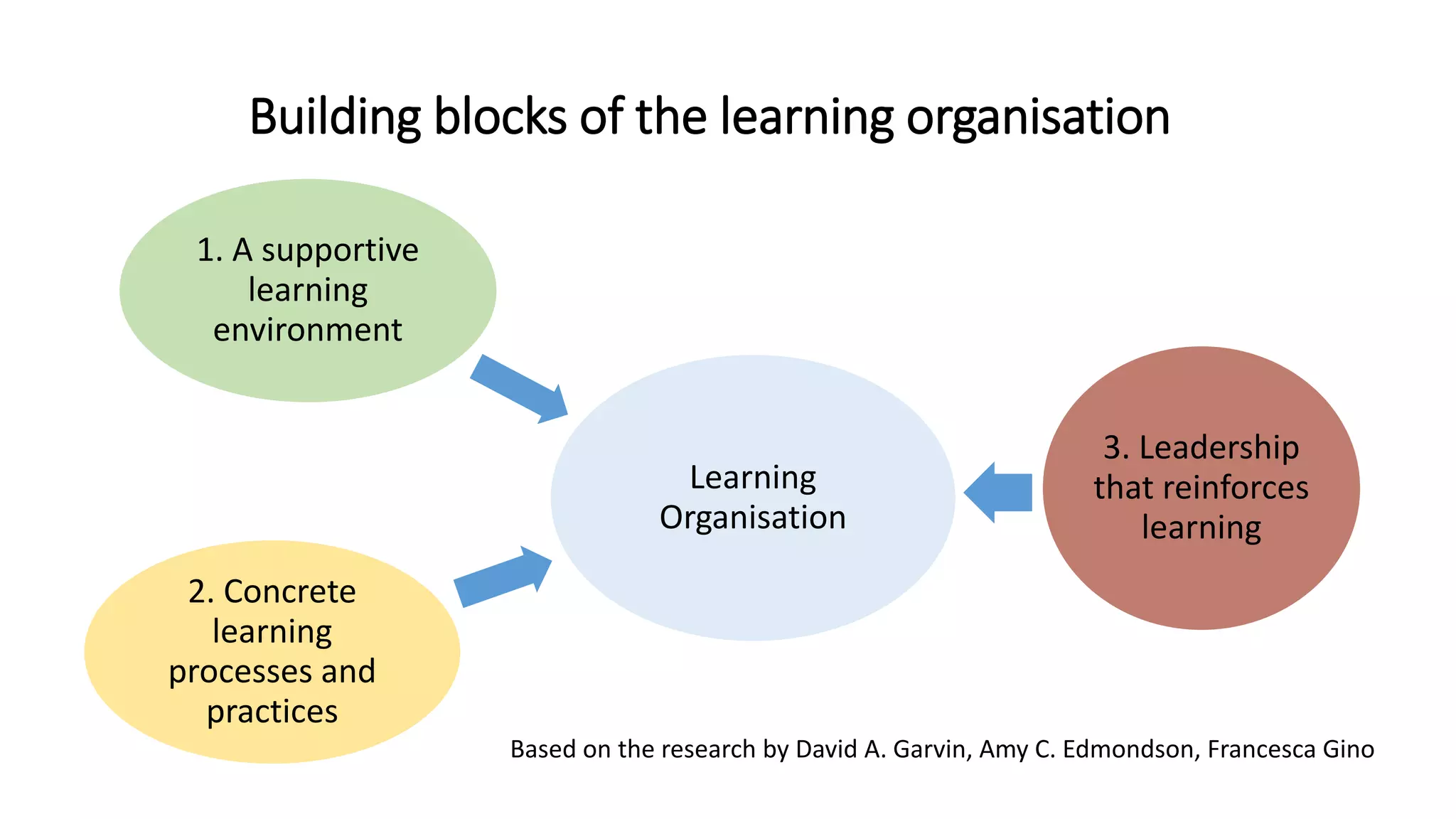
Building blocks of the learning organisation
Learning
Organisation
1. A supportive
learning
environment
3. Leadership
that reinforces
learning
2. Concrete
learning
processes and
practices
Based on the research by David A. Garvin, Amy C. Edmondson, Francesca Gino
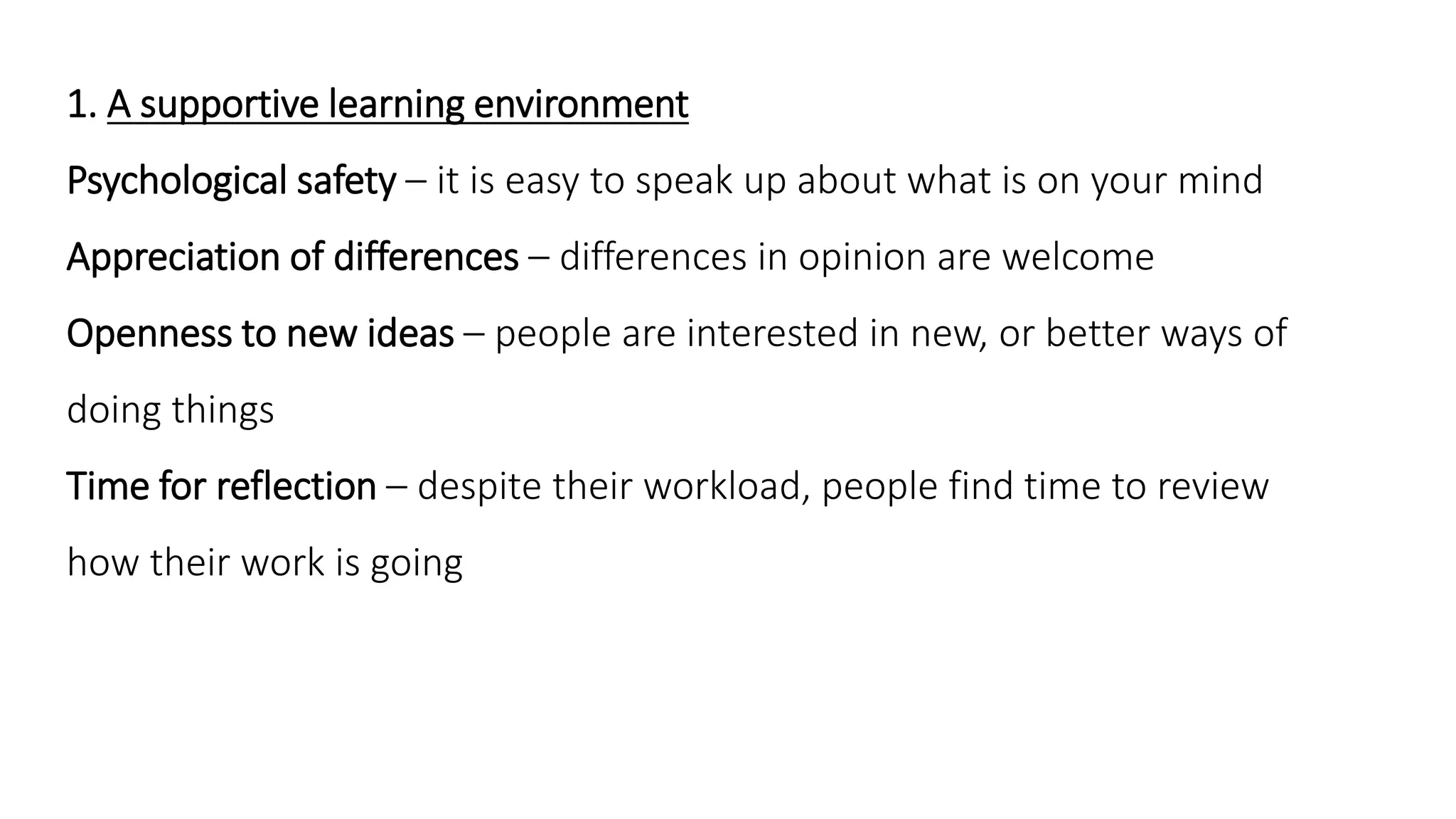
1. A supportive learning environment
Psychological safety – it is easy to speak up about what is on your mind
Appreciation of differences – differences in opinion are welcome
Openness to new ideas – people are interested in new, or better ways of
doing things
Time for reflection – despite their workload, people find time to review
how their work is going
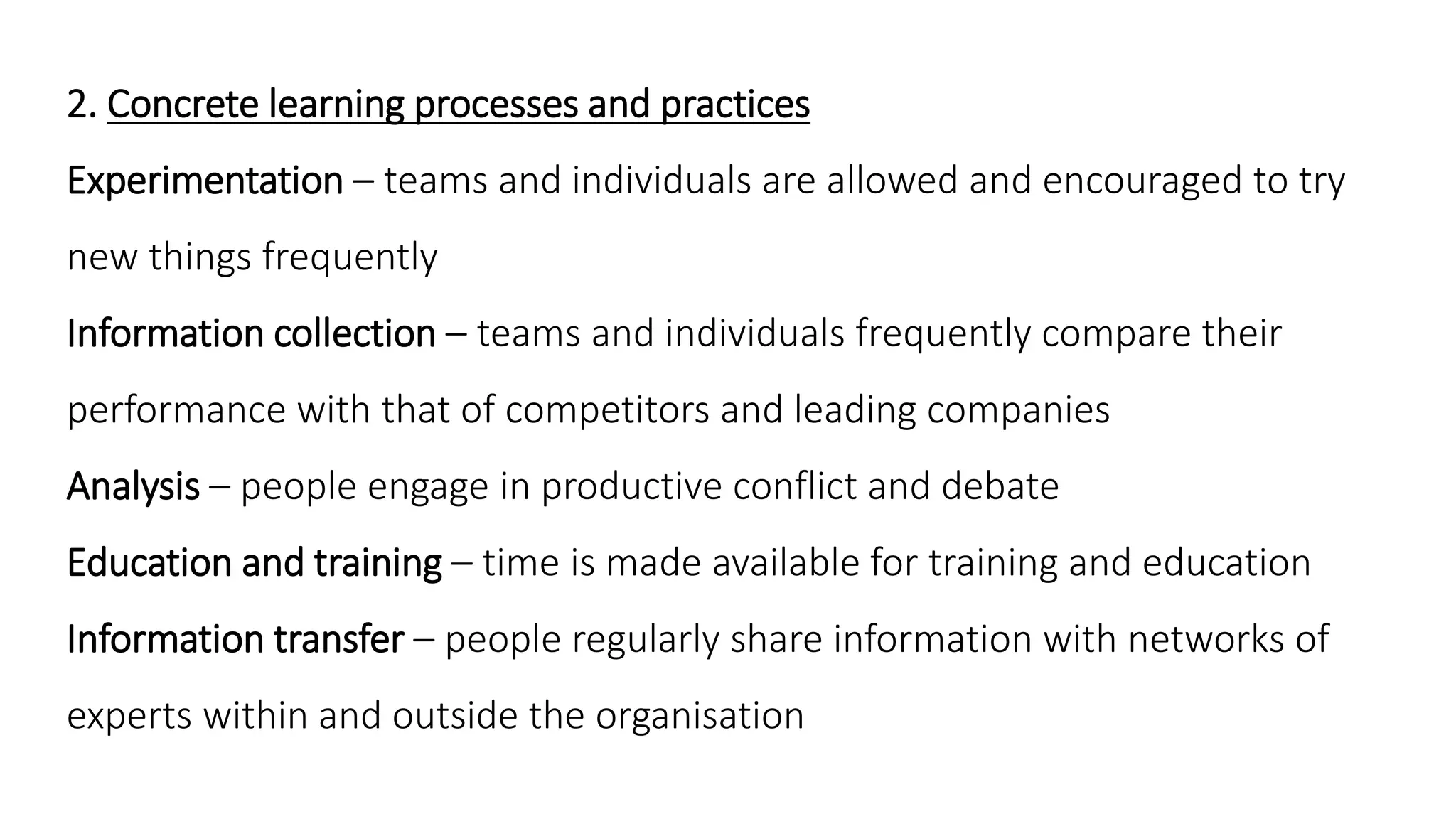
2. Concrete learning processes and practices
Experimentation – teams and individuals are allowed and encouraged to try
new things frequently
Information collection – teams and individuals frequently compare their
performance with that of competitors and leading companies
Analysis – people engage in productive conflict and debate
Education and training – time is made available for training and education
Information transfer – people regularly share information with networks of
experts within and outside the organisation
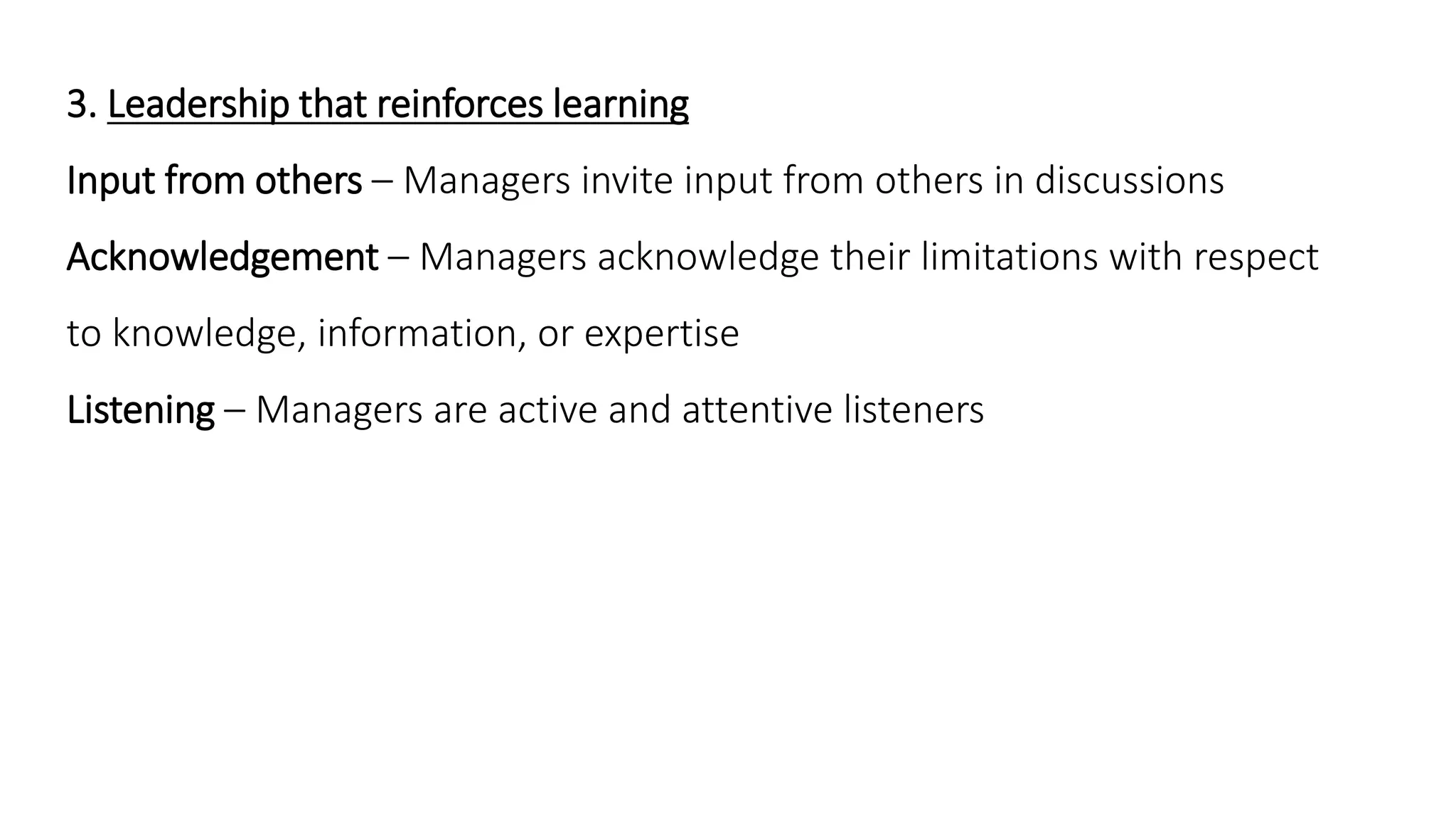
3. Leadership that reinforces learning
Input from others – Managers invite input from others in discussions
Acknowledgement – Managers acknowledge their limitations with respect
to knowledge, information, or expertise
Listening – Managers are active and attentive listeners
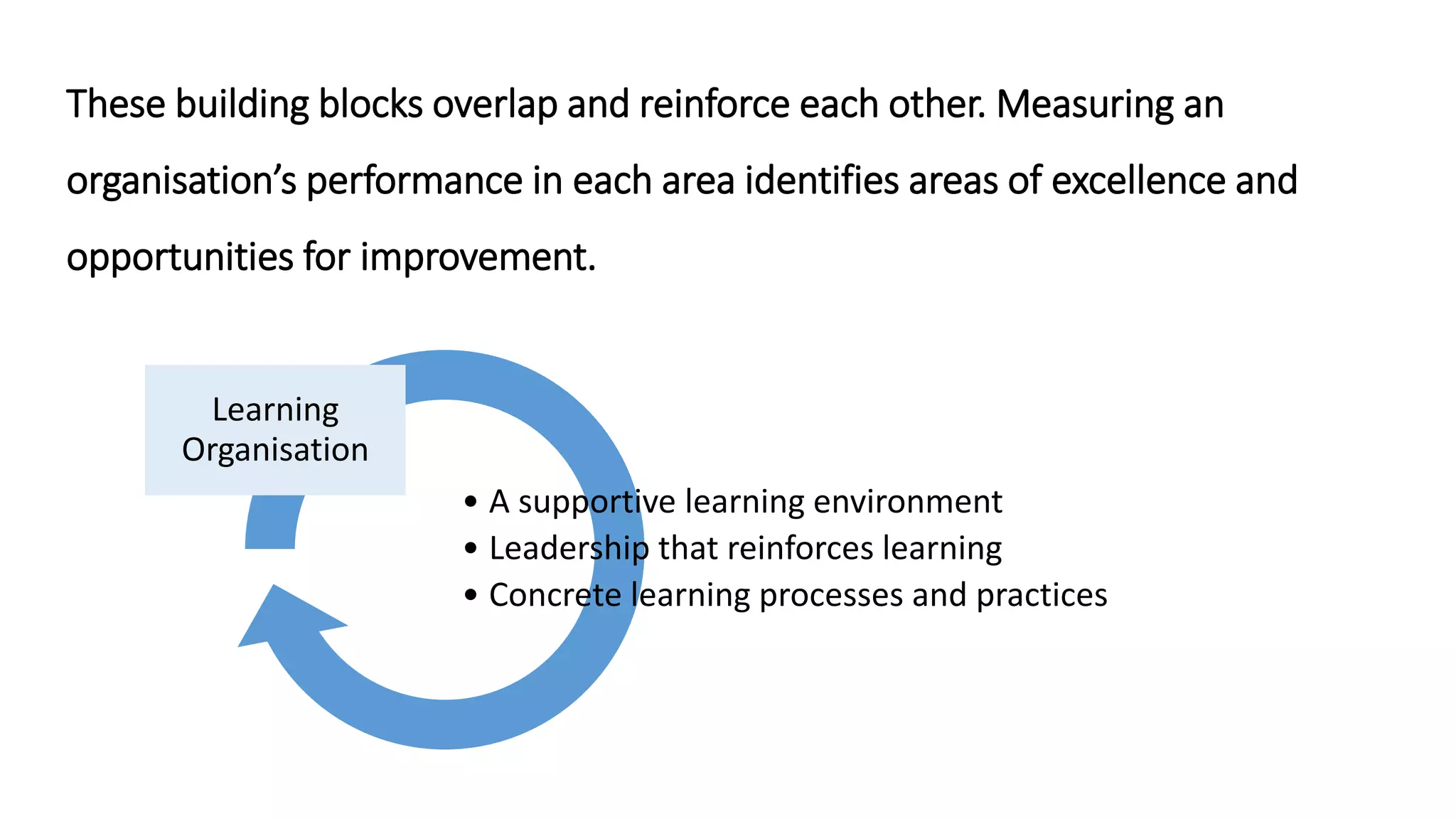
These building blocks overlap and reinforce each other. Measuring an
organisation’s performance in each area identifies areas of excellence and
opportunities for improvement.
• A supportive learning environment
• Leadership that reinforces learning
• Concrete learning processes and practices
Learning
Organisation
Sources:
- https://hbr.org/2008/03/is-yours-a-learning-organization#
- Huczynski, A. and Buchanan, D. (2007) Organizational Behaviour. 7th ed.,
Harlow, Prentice Hall.

Is Yours a Learning Organization

  • 1.
    Is Yours aLearning Organization? David A. Garvin David A. Buchanan Amy C. Edmondson Andrzej A. Huczynski Francesca Gino 7th edition, 2010 From the March 2008 Issue A brief mix of collected information By K. Muecher (2016) Author of Thinking Tools for Students: Analysis & Evaluation Techniques for your Project. Kindle Edition
  • 2.
    Articulating a clearvision, incentives for employees, and lots of training isn’t enough in the light of: - intensifying competition, - advancing technology, and - shifts in customer needs and expectations. Instead, companies should become learning organisations – a concept that flourished in the 1990s (Peter Senge The Fifth Discipline)
  • 3.
    Learning organisations haveemployees who are skilled at creating, acquiring and transferring knowledge. These employees could help their companies to cultivate tolerance, foster open discussion, and think holistically and systematically. Companies with such employees are more likely to adapt to the unpredictable and possibly quicker than their competitors.
  • 4.
    Building blocks ofthe learning organisation Learning Organisation 1. A supportive learning environment 3. Leadership that reinforces learning 2. Concrete learning processes and practices Based on the research by David A. Garvin, Amy C. Edmondson, Francesca Gino
  • 5.
    1. A supportivelearning environment Psychological safety – it is easy to speak up about what is on your mind Appreciation of differences – differences in opinion are welcome Openness to new ideas – people are interested in new, or better ways of doing things Time for reflection – despite their workload, people find time to review how their work is going
  • 6.
    2. Concrete learningprocesses and practices Experimentation – teams and individuals are allowed and encouraged to try new things frequently Information collection – teams and individuals frequently compare their performance with that of competitors and leading companies Analysis – people engage in productive conflict and debate Education and training – time is made available for training and education Information transfer – people regularly share information with networks of experts within and outside the organisation
  • 7.
    3. Leadership thatreinforces learning Input from others – Managers invite input from others in discussions Acknowledgement – Managers acknowledge their limitations with respect to knowledge, information, or expertise Listening – Managers are active and attentive listeners
  • 8.
    These building blocksoverlap and reinforce each other. Measuring an organisation’s performance in each area identifies areas of excellence and opportunities for improvement. • A supportive learning environment • Leadership that reinforces learning • Concrete learning processes and practices Learning Organisation
  • 9.
    Sources: - https://hbr.org/2008/03/is-yours-a-learning-organization# - Huczynski,A. and Buchanan, D. (2007) Organizational Behaviour. 7th ed., Harlow, Prentice Hall.