Dr.G.Rajkumar
Professor Paediatrics
OBJECTIVE
• Introduction
• Prevalence
• Iron balance
• Requirements
• Causes
• Clinical manifestations
• Diagnosis
• Treatment
• Prevention of iron deficiency
DR GRK DSMCH 2
Definition
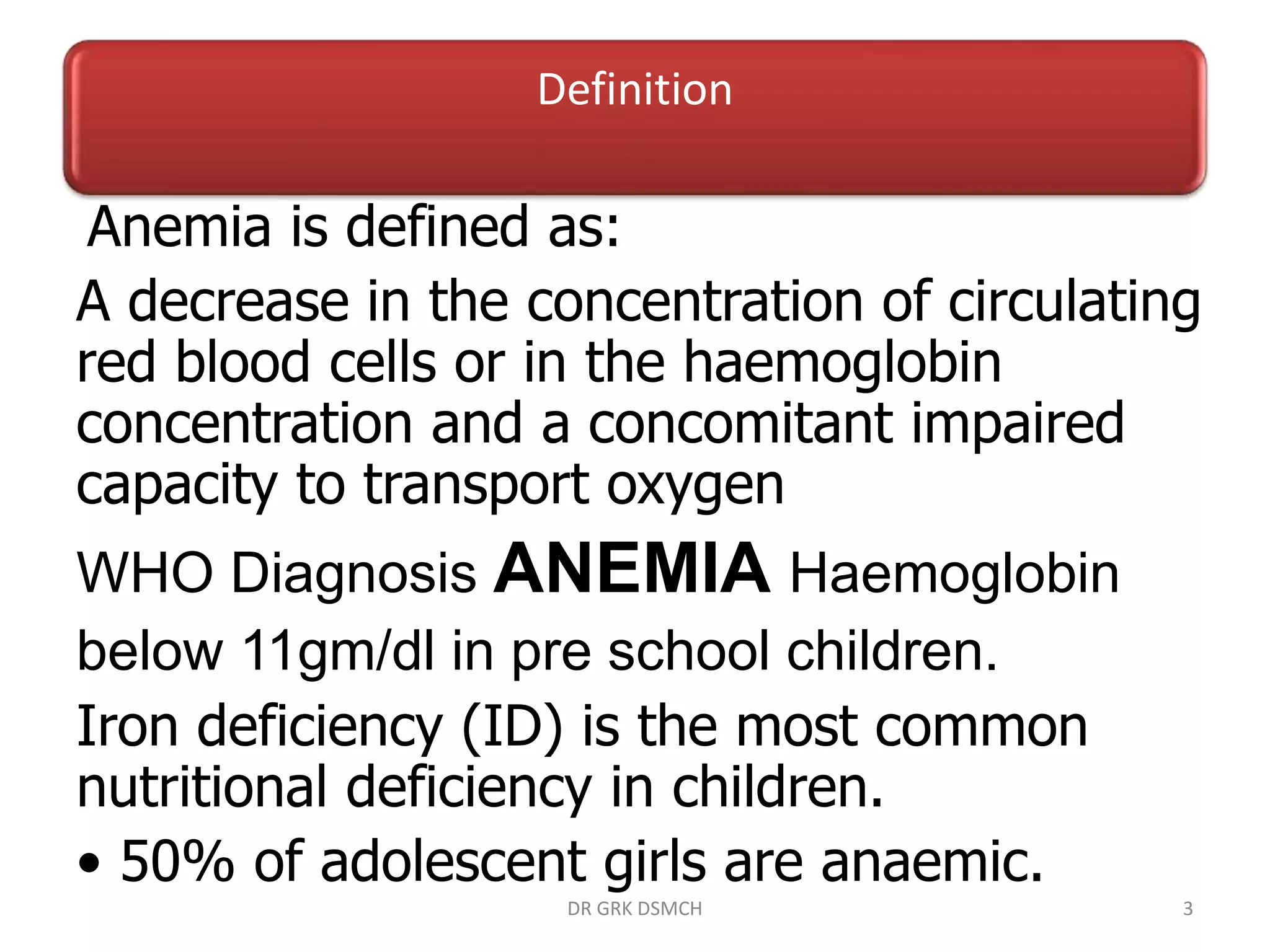
Anemia is defined as:
A decrease in the concentration of circulating
red blood cells or in the haemoglobin
concentration and a concomitant impaired
capacity to transport oxygen
WHO Diagnosis ANEMIA Haemoglobin
below 11gm/dl in pre school children.
Iron deficiency (ID) is the most common
nutritional deficiency in children.
• 50% of adolescent girls are anaemic.
DR GRK DSMCH 3
Functions of Iron
 Formulation of haemoglobin
 Binding O2 to RBC and transport
 Formulation of cytochrome myoglobin
 Electron transport
 DNA synthesis
 Catecholamine metabolism
 Immune system
 Brain Development & function
 Thyroid function
DR GRK DSMCH 4
IRON BALANCE
• 75% bound in heme proteins (haemoglobin and
myoglobin).
• In normal subjects - small amount of iron enters and
leaves the body on a daily basis.
• Iron balance is achieved primarily by mechanisms
affecting intestinal absorption and transport.
• In infants and children, 30% of daily iron needs must
come from diet.
DR GRK DSMCH 5
DR GRK DSMCH 6
Intestinal iron absorption is a function of three principal
factors:
– body iron stores (transferrin and ferritin)
– erythropoietin rate
– bioavailability of dietary iron.
• Iron absorption also is increased when there is
increased erythropoiesis and reticulocytosis or
ineffective erythropoiesis, as in beta thalassemia.
• Heme dietary sources have a higher bioavailability of
iron than do non-heme sources (30 versus 10 percent)
• Zinc, acidity, Ascorbic acid enhances the
absorption of non-animal sources of iron.
• Tannates (teas), bran foods rich in phosphates, and
phytates (plant fiber, especially in seeds and grains)
inhibit iron absorption.
DR GRK DSMCH 7
DR GRK DSMCH 8
REQUIREMENTS
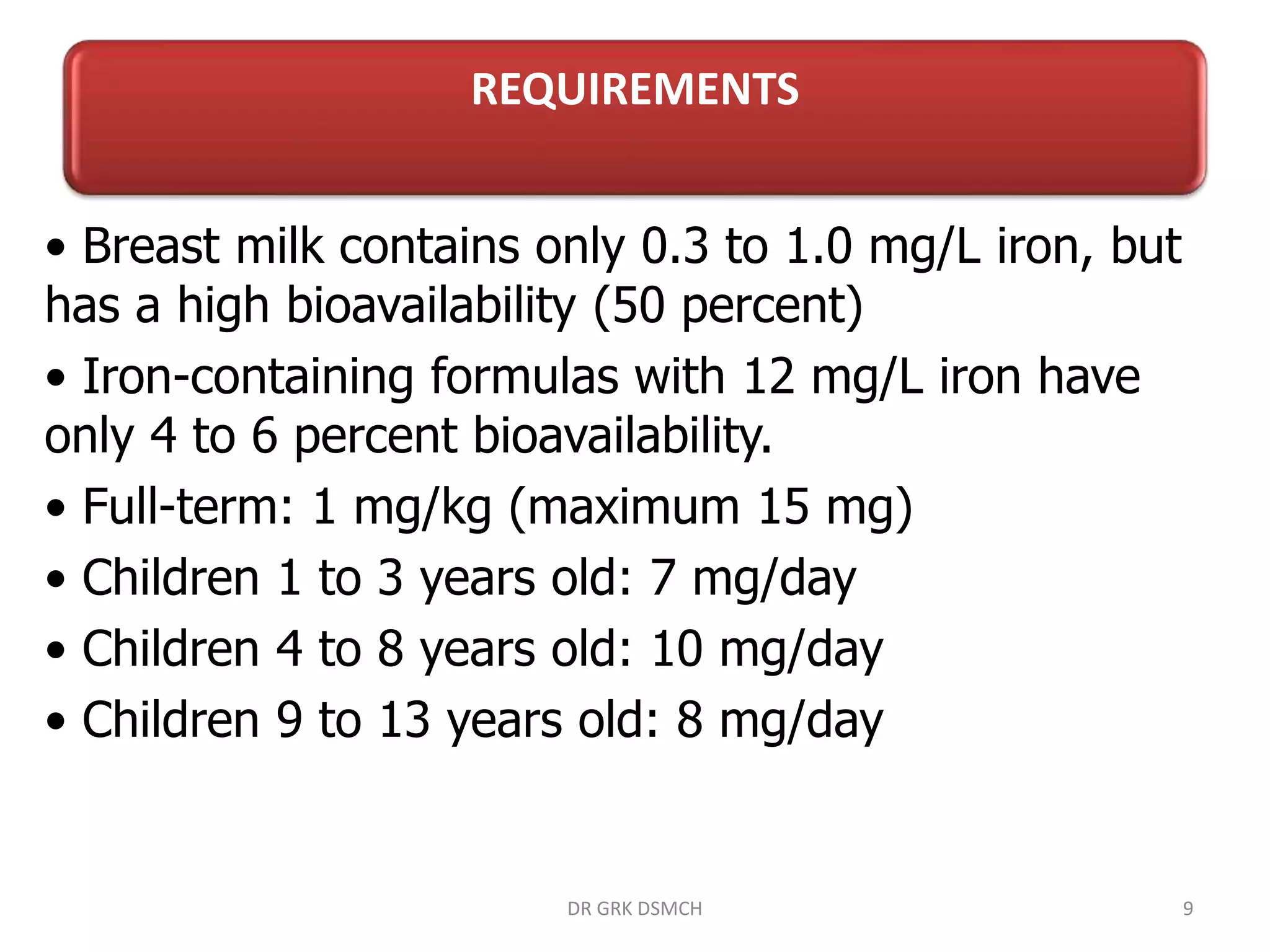
• Breast milk contains only 0.3 to 1.0 mg/L iron, but
has a high bioavailability (50 percent)
• Iron-containing formulas with 12 mg/L iron have
only 4 to 6 percent bioavailability.
• Full-term: 1 mg/kg (maximum 15 mg)
• Children 1 to 3 years old: 7 mg/day
• Children 4 to 8 years old: 10 mg/day
• Children 9 to 13 years old: 8 mg/day
DR GRK DSMCH 9
Perinatal risk factors
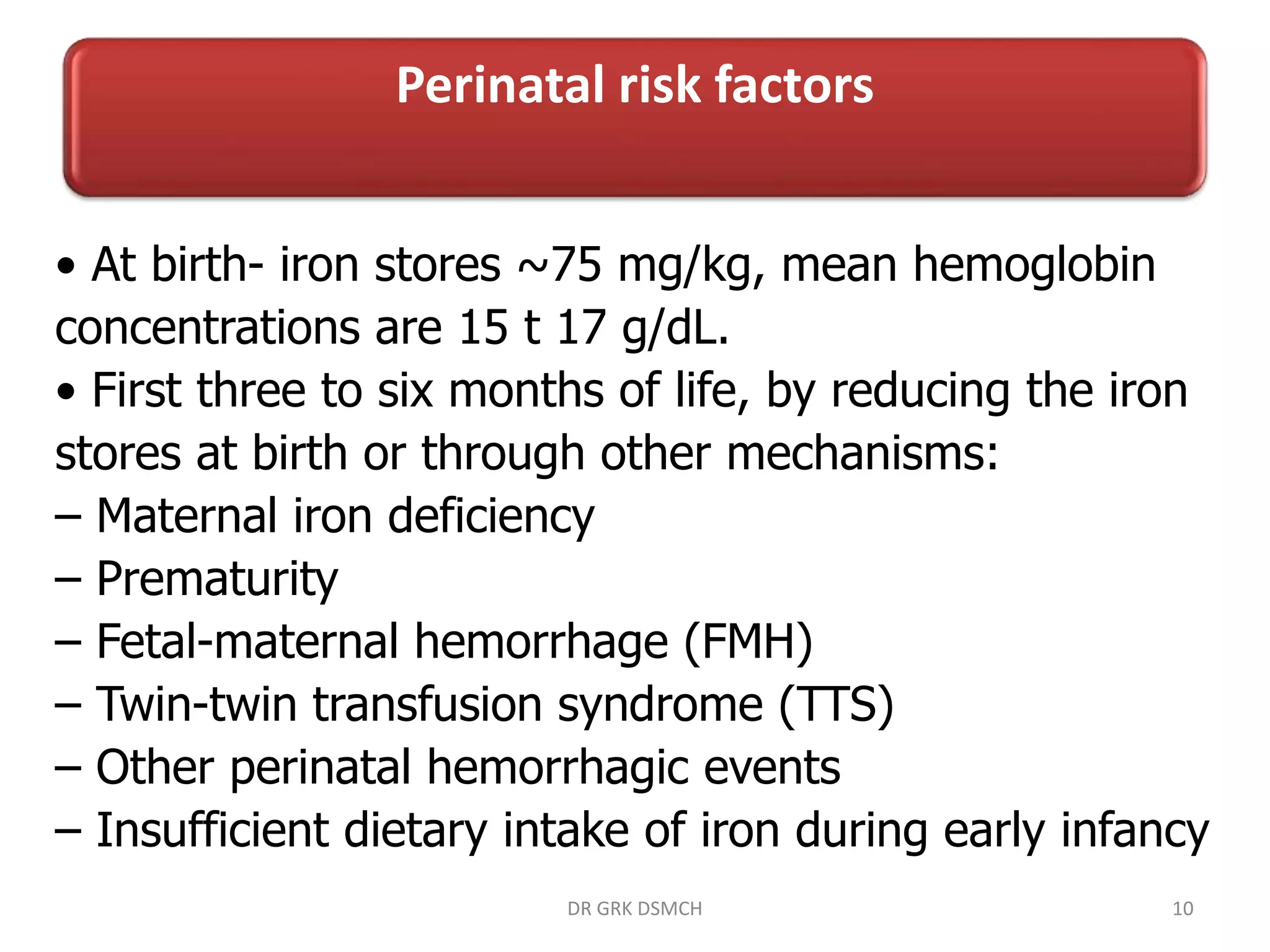
• At birth- iron stores ~75 mg/kg, mean hemoglobin
concentrations are 15 t 17 g/dL.
• First three to six months of life, by reducing the iron
stores at birth or through other mechanisms:
– Maternal iron deficiency
– Prematurity
– Fetal-maternal hemorrhage (FMH)
– Twin-twin transfusion syndrome (TTS)
– Other perinatal hemorrhagic events
– Insufficient dietary intake of iron during early infancy
DR GRK DSMCH 10
Dietary factors
• Insufficient iron intake
• Decreased absorption due to poor dietary
sources of iron
• Introduction of unmodified cow's milk
(non-formula cow’s milk) before 12 months of age
 Iron in cows milk low bioavailability
 Ca competes for iron absorption
 Occult blood loss secondary to cow's milk protein-
induced colitis
PICA- lead poisoning, helminthiasis
DR GRK DSMCH 11
Gastrointestinal disease
• Gastrointestinal malabsorption of iron:
– Active celiac disease
– Crohn’s disease
– Giardiasis, Malaria & Hook Worm
– Resection of the proximal small intestine.
• Conditions that cause gastrointestinal blood loss:
Cow’s milk protein-induced colitis
Inflammatory bowel disease
chronic use of aspirin or NSAIDs
DR GRK DSMCH 12
DR GRK DSMCH 13
DR GRK DSMCH 14
Dietary iron deficiency is the usual cause
• Iron def. is common in children 9mo-3yr
•Infants less than 6 months generally do not
develop iron def.
•Iron def. anemia in a child over 3yr should
prompt consideration of occult blood loss
DR GRK DSMCH 15
CLINICAL MANIFESTATIONS
• Much less frequent are infants with severe anemia,
who present with:
– Lethargy, anorexia
– Pallor
– Irritability, leg cramps
– Cardiomegaly, splenomegaly
– Poor feeding
– Tachypnea
Learning disability( dopaminergic receptors opioid
receptors)
DR GRK DSMCH 16
Iron deficiency may have effects on neurologic and
intellectual functions
Iron – deficiency anemia and even iron deficiency
with out anemia affect :
*Attention span
*Alertness
*Learning
DR GRK DSMCH 17
A number of abnormalities of epithelial tissues are
described in association with iron deficiency
anemia.
These include:
– Esophageal webbing
– Koilonychias
– Glossitis
– Angular stomatitis
– Gastric atrophy
DR GRK DSMCH 18
Causes
•Dietary deficiency
•Increased demand (growth)
•Impaired absorption
•Blood loss (e.g.)
- gut problems
- lung
- nose
- kidney
- menstrual problems
- trauma DR GRK DSMCH 19
DR GRK DSMCH 20
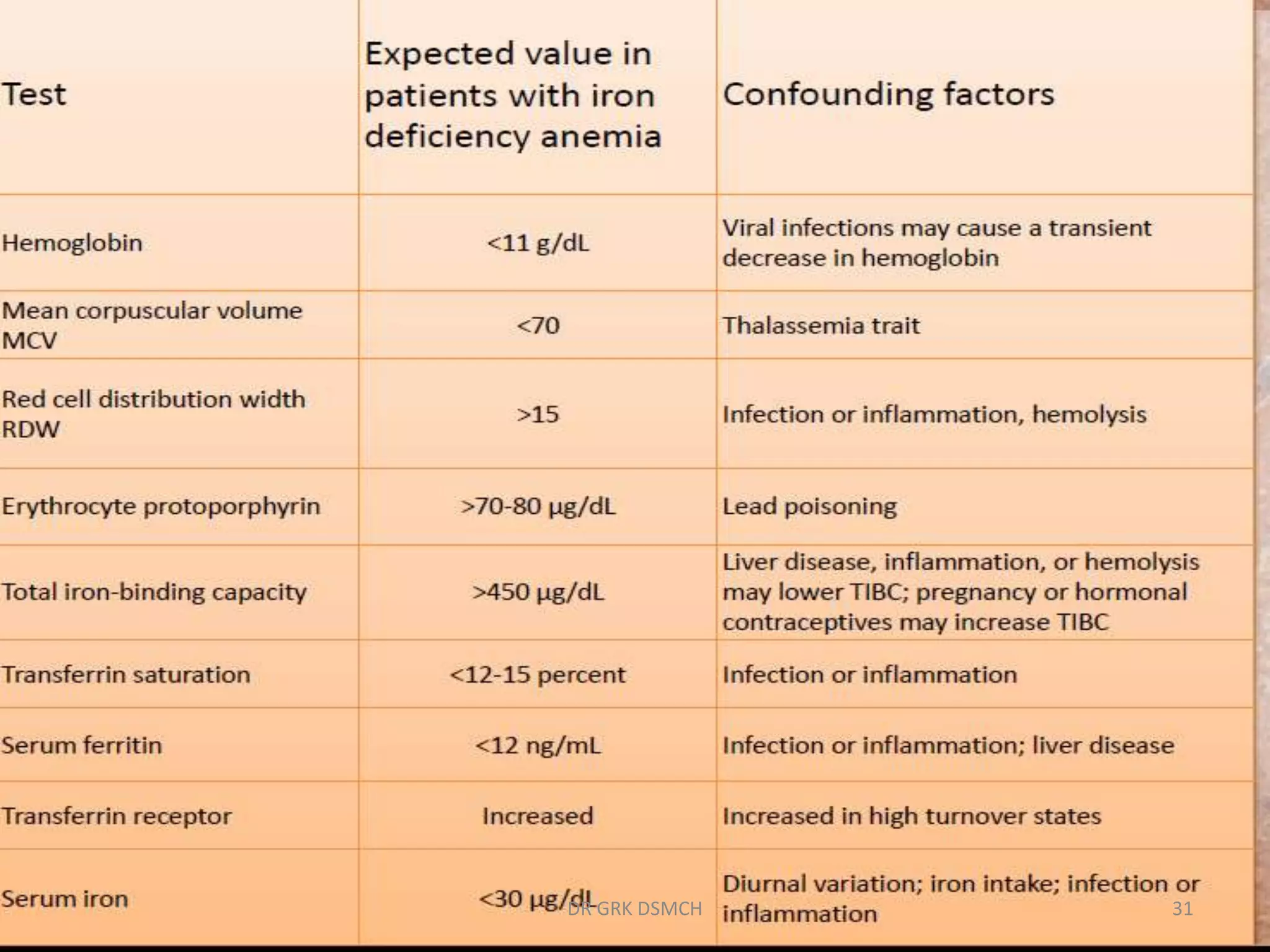
Is an abnormal value for at least two of three
laboratory indicators of iron status:
1. Serum ferritin
2. Transferrin saturation
3. Free erythrocyte protoporphyrin
DR GRK DSMCH 21
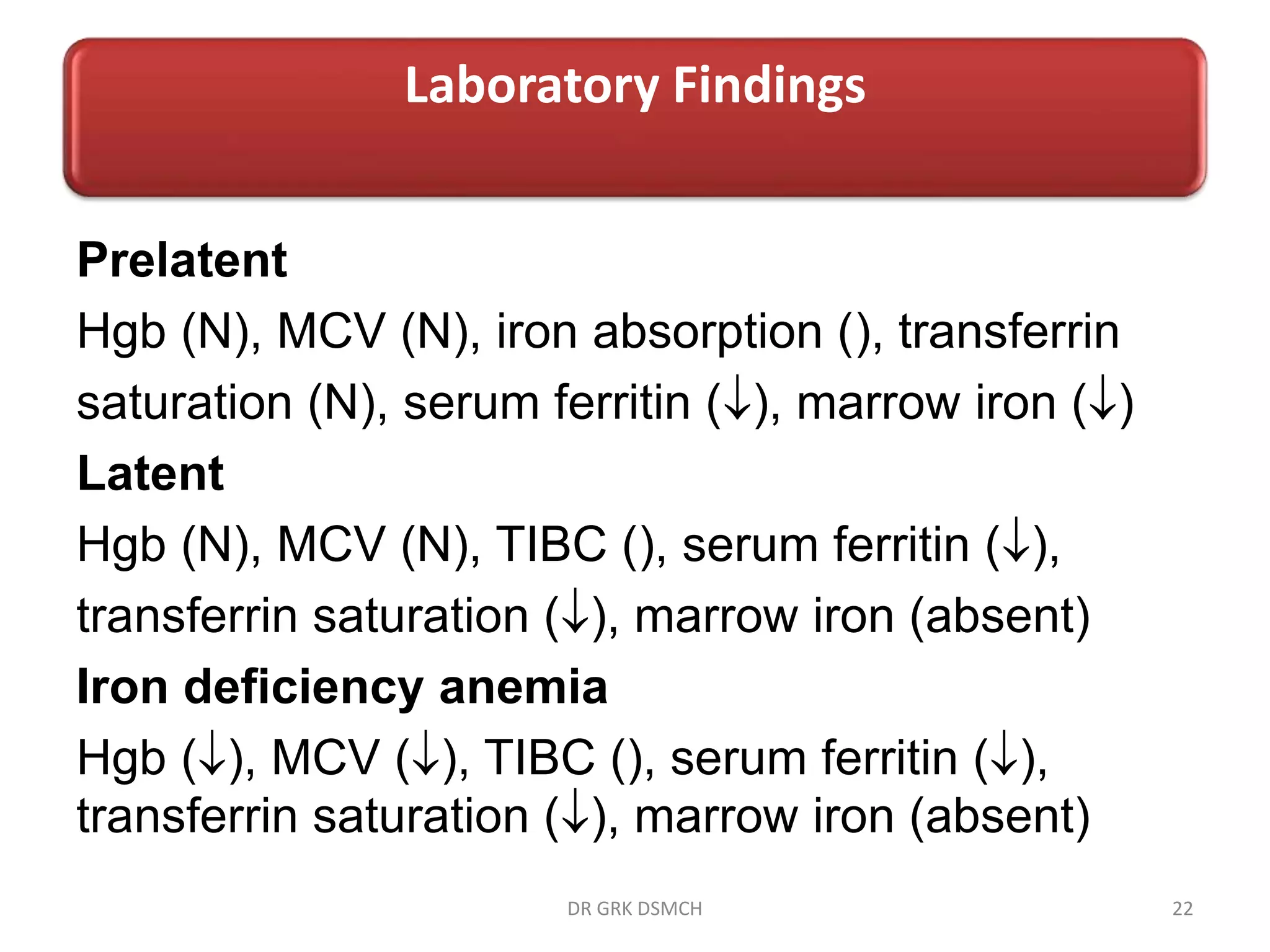
Laboratory Findings
Prelatent
Hgb (N), MCV (N), iron absorption (), transferrin
saturation (N), serum ferritin (), marrow iron ()
Latent
Hgb (N), MCV (N), TIBC (), serum ferritin (),
transferrin saturation (), marrow iron (absent)
Iron deficiency anemia
Hgb (), MCV (), TIBC (), serum ferritin (),
transferrin saturation (), marrow iron (absent)
DR GRK DSMCH 22
Laboratory Findings (Cont.)
•With increasing deficiency ,RBCs become deformed
and misshapen and present characteristic :
- Microcytosis
- Hypochromia
- Aniso-Poikilocytosis
- Increased RBC distribution width (RDW)
- MCV,MCHC REDUCED
• Reticulocyte percentage may be normal or
moderately elevated
• Nucleated RBCs occasionally seen
• Thrombocytosis (?)
• Normal white blood cells
DR GRK DSMCH 23
Laboratory Findings (Cont.)
•Additional diagnostic tests
- Free erythrocyte protoporphyrin (elevated)
precedes anemia
- Serum ferritin (decreased) occurs early in
proportion to iron stores, may falsely elevated in
acute infection
- Serum iron (decreased)
- Iron binding capacity (increased)
- Transferrin Iron saturation (decreased < 16%)
DR GRK DSMCH 24
Differential Diagnosis
Other hypochromic microcytic anemias
•1.ß-Thalassemia trait
* mild microcytic anemia
* elevated levels of hemoglobin A2
and/or fetal hemoglobin concentration
* Serum iron, total iron-binding capacity
(transferrin) and ferritin are normal
DR GRK DSMCH 25
• 2. a-Thalassemia trait
• * presence of familial hypochromic
• microcytic anemia
• * normal results of iron studies
• * normal levels of Hgb A2 and Hgb F
• *In new born ,3 -10% hemoglobin
• Barts (gamma 4)
DR GRK DSMCH 26
3. Hgb H disease
* a form of a-Thalassemia results
From deletion of three of the four a-globin
Genes * hypochromia and microcytosis
* a mild hemolytic component from
instability of the ß-chian tetramers
(Hgb H)
DR GRK DSMCH 27
4. The anemia of chronic disease (ACD)
* Elevated FPR
* Coarse basophilic stippling of the RBC is frequently
prominent
* Elevations of blood lead. FEP, and urinary
coproporphyrin levels
Serum transferrin receptor (TIR) level
is useful in distinction between iron- deficiency anemia
and anemia of chronic disease
DR GRK DSMCH 28
DR GRK DSMCH 29
DR GRK DSMCH 30
DR GRK DSMCH 31
DR GRK DSMCH 32
DR GRK DSMCH 33
DR GRK DSMCH 34
Treatment
• Oral iron therapy is started at a dose of 3-6 mg/kg of
elemental iron, given once or twice daily. It should be given 30
to 45 minutes before meals or two hours after meals, and only
with juice or water, rather than with food or milk.
• <12 months:
– iron-fortified formula
– A cow’s milk-based formula
– Unmodified cow’s milk (non-formula cow’s milk) should not be
given to infants.
• >12 months of age, intake of cow's milk should be limited to
less than 20 oz per day and bottle feeding should be
discontinued.
DR GRK DSMCH 35
• Sulphate(20%), gluconate(12%), fumarate(33%)
• GE side effects-nausea, epigastric discomfort,
vomiting, constipation & diarrhoea
• Reticulocyte count is expected to rise with in 3-4
days after therapy
• Iron continued for 4-6 months to replenish stores
after correction of anemia
DR GRK DSMCH 36
DR GRK DSMCH 37
 CBC is reevaluated in 4 weeks when the child is
healthy.
 If the hemoglobin (Hgb) has increased by 1
g/dL, therapy is continued and a CBC is retested
every 2 to 3 months until the Hgb reaches the
age-adjusted normal range.
 Oral iron is continued for an additional two
months after the Hgb reaches the normal range
for age.
DR GRK DSMCH 38
Iron non responders
• Poor compliance
• Enteric coated iron preparations
• H2 Blockers, PPI (achlorohydria)
• Food & drug interaction
• Hemolytic anemia
• Malabsorption –celiac D, giardiasis, H.pylori
infection
• Ongoing blood loss
• Sideroblastic anemia
DR GRK DSMCH 39
Parental iron
• Intolerance to oral iron
• Malabsorption
• Ongoing blood loss
• IV> IM
• Iron sucrose for IBD, ESRD, Haemodialysis
• Dose 1-3 mg/kg in 150 ml NS
DR GRK DSMCH 40
Blood transfusion
• PCV indicated in
• Acute severe hemorrhage
• Anemia with CCF
• Preoperative
DR GRK DSMCH 41
Prevention of iron deficiency
• Encourage breastfeeding exclusively for 4-6 MO.
• > 4MO an additional source of iron should be added, first as
an iron supplement, then transitioning to iron-fortified infant
cereals.
• <12 MO who are not breastfed or are partially breastfed, use
only iron-fortified formulas (12 mg of iron per liter).
• 6 MO encourage one feeding per day of foods rich in vitamin
C.
• > 6 MO pureed meats.
• Avoid feeding unmodified (nonformula) cow's milk until age
12 months.
• 1-5 y should also consume an adequate amount of iron
containing foods to meet daily requirements.
DR GRK DSMCH 42
DR GRK DSMCH 43

Iron Deficiency Anemia DR G.Rajkumar

  • 1.
  • 2.
    OBJECTIVE • Introduction • Prevalence •Iron balance • Requirements • Causes • Clinical manifestations • Diagnosis • Treatment • Prevention of iron deficiency DR GRK DSMCH 2
  • 3.
    Definition Anemia is definedas: A decrease in the concentration of circulating red blood cells or in the haemoglobin concentration and a concomitant impaired capacity to transport oxygen WHO Diagnosis ANEMIA Haemoglobin below 11gm/dl in pre school children. Iron deficiency (ID) is the most common nutritional deficiency in children. • 50% of adolescent girls are anaemic. DR GRK DSMCH 3
  • 4.
    Functions of Iron Formulation of haemoglobin  Binding O2 to RBC and transport  Formulation of cytochrome myoglobin  Electron transport  DNA synthesis  Catecholamine metabolism  Immune system  Brain Development & function  Thyroid function DR GRK DSMCH 4
  • 5.
    IRON BALANCE • 75%bound in heme proteins (haemoglobin and myoglobin). • In normal subjects - small amount of iron enters and leaves the body on a daily basis. • Iron balance is achieved primarily by mechanisms affecting intestinal absorption and transport. • In infants and children, 30% of daily iron needs must come from diet. DR GRK DSMCH 5
  • 6.
  • 7.
    Intestinal iron absorptionis a function of three principal factors: – body iron stores (transferrin and ferritin) – erythropoietin rate – bioavailability of dietary iron. • Iron absorption also is increased when there is increased erythropoiesis and reticulocytosis or ineffective erythropoiesis, as in beta thalassemia. • Heme dietary sources have a higher bioavailability of iron than do non-heme sources (30 versus 10 percent) • Zinc, acidity, Ascorbic acid enhances the absorption of non-animal sources of iron. • Tannates (teas), bran foods rich in phosphates, and phytates (plant fiber, especially in seeds and grains) inhibit iron absorption. DR GRK DSMCH 7
  • 8.
  • 9.
    REQUIREMENTS • Breast milkcontains only 0.3 to 1.0 mg/L iron, but has a high bioavailability (50 percent) • Iron-containing formulas with 12 mg/L iron have only 4 to 6 percent bioavailability. • Full-term: 1 mg/kg (maximum 15 mg) • Children 1 to 3 years old: 7 mg/day • Children 4 to 8 years old: 10 mg/day • Children 9 to 13 years old: 8 mg/day DR GRK DSMCH 9
  • 10.
    Perinatal risk factors •At birth- iron stores ~75 mg/kg, mean hemoglobin concentrations are 15 t 17 g/dL. • First three to six months of life, by reducing the iron stores at birth or through other mechanisms: – Maternal iron deficiency – Prematurity – Fetal-maternal hemorrhage (FMH) – Twin-twin transfusion syndrome (TTS) – Other perinatal hemorrhagic events – Insufficient dietary intake of iron during early infancy DR GRK DSMCH 10
  • 11.
    Dietary factors • Insufficientiron intake • Decreased absorption due to poor dietary sources of iron • Introduction of unmodified cow's milk (non-formula cow’s milk) before 12 months of age  Iron in cows milk low bioavailability  Ca competes for iron absorption  Occult blood loss secondary to cow's milk protein- induced colitis PICA- lead poisoning, helminthiasis DR GRK DSMCH 11
  • 12.
    Gastrointestinal disease • Gastrointestinalmalabsorption of iron: – Active celiac disease – Crohn’s disease – Giardiasis, Malaria & Hook Worm – Resection of the proximal small intestine. • Conditions that cause gastrointestinal blood loss: Cow’s milk protein-induced colitis Inflammatory bowel disease chronic use of aspirin or NSAIDs DR GRK DSMCH 12
  • 13.
  • 14.
  • 15.
    Dietary iron deficiencyis the usual cause • Iron def. is common in children 9mo-3yr •Infants less than 6 months generally do not develop iron def. •Iron def. anemia in a child over 3yr should prompt consideration of occult blood loss DR GRK DSMCH 15
  • 16.
    CLINICAL MANIFESTATIONS • Muchless frequent are infants with severe anemia, who present with: – Lethargy, anorexia – Pallor – Irritability, leg cramps – Cardiomegaly, splenomegaly – Poor feeding – Tachypnea Learning disability( dopaminergic receptors opioid receptors) DR GRK DSMCH 16
  • 17.
    Iron deficiency mayhave effects on neurologic and intellectual functions Iron – deficiency anemia and even iron deficiency with out anemia affect : *Attention span *Alertness *Learning DR GRK DSMCH 17
  • 18.
    A number ofabnormalities of epithelial tissues are described in association with iron deficiency anemia. These include: – Esophageal webbing – Koilonychias – Glossitis – Angular stomatitis – Gastric atrophy DR GRK DSMCH 18
  • 19.
    Causes •Dietary deficiency •Increased demand(growth) •Impaired absorption •Blood loss (e.g.) - gut problems - lung - nose - kidney - menstrual problems - trauma DR GRK DSMCH 19
  • 20.
  • 21.
    Is an abnormalvalue for at least two of three laboratory indicators of iron status: 1. Serum ferritin 2. Transferrin saturation 3. Free erythrocyte protoporphyrin DR GRK DSMCH 21
  • 22.
    Laboratory Findings Prelatent Hgb (N),MCV (N), iron absorption (), transferrin saturation (N), serum ferritin (), marrow iron () Latent Hgb (N), MCV (N), TIBC (), serum ferritin (), transferrin saturation (), marrow iron (absent) Iron deficiency anemia Hgb (), MCV (), TIBC (), serum ferritin (), transferrin saturation (), marrow iron (absent) DR GRK DSMCH 22
  • 23.
    Laboratory Findings (Cont.) •Withincreasing deficiency ,RBCs become deformed and misshapen and present characteristic : - Microcytosis - Hypochromia - Aniso-Poikilocytosis - Increased RBC distribution width (RDW) - MCV,MCHC REDUCED • Reticulocyte percentage may be normal or moderately elevated • Nucleated RBCs occasionally seen • Thrombocytosis (?) • Normal white blood cells DR GRK DSMCH 23
  • 24.
    Laboratory Findings (Cont.) •Additionaldiagnostic tests - Free erythrocyte protoporphyrin (elevated) precedes anemia - Serum ferritin (decreased) occurs early in proportion to iron stores, may falsely elevated in acute infection - Serum iron (decreased) - Iron binding capacity (increased) - Transferrin Iron saturation (decreased < 16%) DR GRK DSMCH 24
  • 25.
    Differential Diagnosis Other hypochromicmicrocytic anemias •1.ß-Thalassemia trait * mild microcytic anemia * elevated levels of hemoglobin A2 and/or fetal hemoglobin concentration * Serum iron, total iron-binding capacity (transferrin) and ferritin are normal DR GRK DSMCH 25
  • 26.
    • 2. a-Thalassemiatrait • * presence of familial hypochromic • microcytic anemia • * normal results of iron studies • * normal levels of Hgb A2 and Hgb F • *In new born ,3 -10% hemoglobin • Barts (gamma 4) DR GRK DSMCH 26
  • 27.
    3. Hgb Hdisease * a form of a-Thalassemia results From deletion of three of the four a-globin Genes * hypochromia and microcytosis * a mild hemolytic component from instability of the ß-chian tetramers (Hgb H) DR GRK DSMCH 27
  • 28.
    4. The anemiaof chronic disease (ACD) * Elevated FPR * Coarse basophilic stippling of the RBC is frequently prominent * Elevations of blood lead. FEP, and urinary coproporphyrin levels Serum transferrin receptor (TIR) level is useful in distinction between iron- deficiency anemia and anemia of chronic disease DR GRK DSMCH 28
  • 29.
  • 30.
  • 31.
  • 32.
  • 33.
  • 34.
  • 35.
    Treatment • Oral irontherapy is started at a dose of 3-6 mg/kg of elemental iron, given once or twice daily. It should be given 30 to 45 minutes before meals or two hours after meals, and only with juice or water, rather than with food or milk. • <12 months: – iron-fortified formula – A cow’s milk-based formula – Unmodified cow’s milk (non-formula cow’s milk) should not be given to infants. • >12 months of age, intake of cow's milk should be limited to less than 20 oz per day and bottle feeding should be discontinued. DR GRK DSMCH 35
  • 36.
    • Sulphate(20%), gluconate(12%),fumarate(33%) • GE side effects-nausea, epigastric discomfort, vomiting, constipation & diarrhoea • Reticulocyte count is expected to rise with in 3-4 days after therapy • Iron continued for 4-6 months to replenish stores after correction of anemia DR GRK DSMCH 36
  • 37.
  • 38.
     CBC isreevaluated in 4 weeks when the child is healthy.  If the hemoglobin (Hgb) has increased by 1 g/dL, therapy is continued and a CBC is retested every 2 to 3 months until the Hgb reaches the age-adjusted normal range.  Oral iron is continued for an additional two months after the Hgb reaches the normal range for age. DR GRK DSMCH 38
  • 39.
    Iron non responders •Poor compliance • Enteric coated iron preparations • H2 Blockers, PPI (achlorohydria) • Food & drug interaction • Hemolytic anemia • Malabsorption –celiac D, giardiasis, H.pylori infection • Ongoing blood loss • Sideroblastic anemia DR GRK DSMCH 39
  • 40.
    Parental iron • Intoleranceto oral iron • Malabsorption • Ongoing blood loss • IV> IM • Iron sucrose for IBD, ESRD, Haemodialysis • Dose 1-3 mg/kg in 150 ml NS DR GRK DSMCH 40
  • 41.
    Blood transfusion • PCVindicated in • Acute severe hemorrhage • Anemia with CCF • Preoperative DR GRK DSMCH 41
  • 42.
    Prevention of irondeficiency • Encourage breastfeeding exclusively for 4-6 MO. • > 4MO an additional source of iron should be added, first as an iron supplement, then transitioning to iron-fortified infant cereals. • <12 MO who are not breastfed or are partially breastfed, use only iron-fortified formulas (12 mg of iron per liter). • 6 MO encourage one feeding per day of foods rich in vitamin C. • > 6 MO pureed meats. • Avoid feeding unmodified (nonformula) cow's milk until age 12 months. • 1-5 y should also consume an adequate amount of iron containing foods to meet daily requirements. DR GRK DSMCH 42
  • 43.