Khorfakkan Scientific anemia Day 1 st  May 2010   Childhood Iron Deficiency Anemia Prof. Dr.Saad S Al-Ani Senior Pediatric Consultant Head of Pediatric  Khorfakkan Hospital
Typical Scenario * 18 month old child  brought in by mom for check up Healthy, URTI a few weeks ago (in daycare) Picky eater, but drinks lots of milk *   Growing well, pudgy Grand-mother thought he was a bit pale
Physical exam * Pale, chubby, wt at 95%, ht at 60% *HR 140, RR 20, BP 90/50, SPO2  97% *Conjunctiva and mucous membranes slightly pale *Chest clear *No organomegaly, no adenopathy
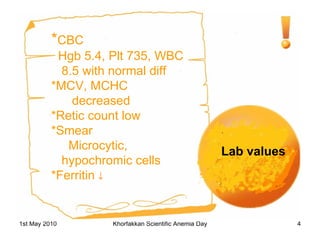
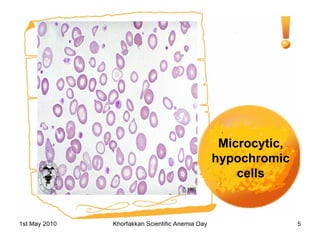
Lab values * CBC Hgb 5.4, Plt 735, WBC 8.5 with normal diff *MCV, MCHC  decreased *Retic count low *Smear Microcytic,  hypochromic cells *Ferritin  
Microcytic, hypochromic cells
Why is it important  to know how to  diagnose and treat IDA?
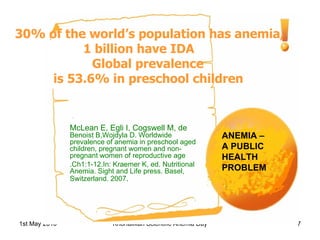
30% of the world’s population has anemia, 1 billion have IDA  Global prevalence is 53.6% in preschool children   ANEMIA –  A PUBLIC  HEALTH PROBLEM McLean E, Egli I, Cogswell M, de  Benoist B,Wojdyla D. Worldwide prevalence of anemia in preschool aged children, pregnant women and non-pregnant women of reproductive age .Ch1:1-12.In: Kraemer K, ed. Nutritional Anemia. Sight and Life press. Basel, Switzerland. 2007 .
Anemia is a severe public health problem in Africa, Asia, Latin America  and the Caribbean  ANEMIA –  A PUBLIC HEALTH PROBLEM World Health Organization (WHO). Nutrition. Geneva: WHO,  www.  who.int /nutrition/en : WHO 2007
Iron deficiency identified as one of ten most serious risk in countries  with high infant and adult mortalities  ANEMIA –  A PUBLIC HEALTH PROBLEM World Health Organization. The world health report 2002: reducing risks, promoting healthy life. Geneva, Switzerland: World Health Organization, 2002.
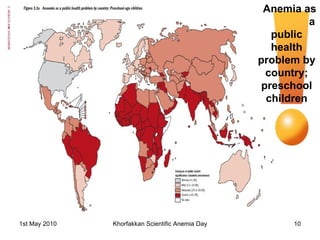
Anemia as  a public health problem by country; preschool children
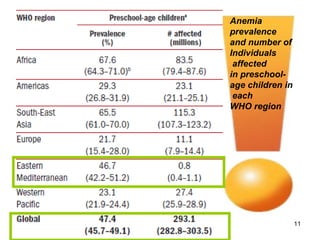
Anemia prevalence  and number of  Individuals affected  in preschool- age children in each  WHO region
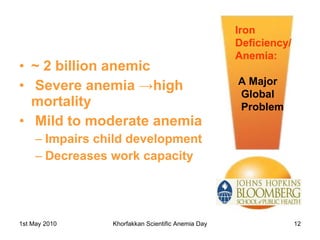
~ 2 billion anemic Severe anemia ->high mortality Mild to moderate anemia Impairs child development Decreases work capacity Iron Deficiency/ Anemia:     A Major Global Problem
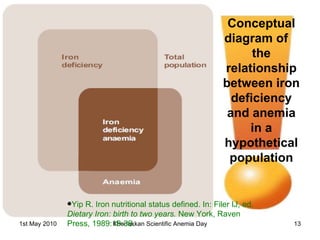
Conceptual diagram of  the relationship between iron deficiency and anemia in a hypothetical population Yip R. Iron nutritional status defined. In: Filer IJ, ed . Dietary Iron: birth to two years.  New York, Raven Press, 1989:19-36.
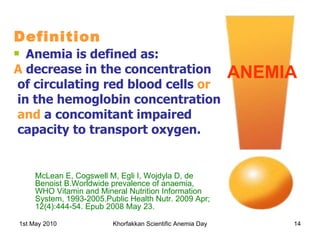
Definition Anemia is defined as: A  decrease in the concentration of circulating red blood cells  or in the hemoglobin concentration and  a concomitant impaired capacity to transport oxygen. ANEMIA McLean E, Cogswell M, Egli I, Wojdyla D, de Benoist B.Worldwide prevalence of anaemia, WHO Vitamin and Mineral Nutrition Information System, 1993-2005.Public Health Nutr. 2009 Apr; 12(4):444-54. Epub 2008 May 23.
WHO Diagnosis Hemoglobin  below  11gm/dl  in pre school children.   ANEMIA UNICEF/UNU/WHO. Iron deficiency anemia: assessment, prevention and control. A guide for programme managers.WHO/NHD,2001 [report no.01.3]
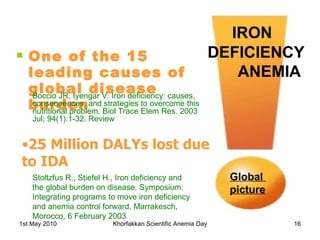
One of the 15 leading causes of global disease burden  IRON  DEFICIENCY  ANEMIA   Boccio JR, Iyengar V. Iron deficiency: causes, consequences, and strategies to overcome this nutritional problem. Biol Trace Elem Res. 2003 Jul; 94(1):1-32. Review   Global  picture 25 Million DALYs lost due to IDA Stoltzfus R., Stiefel H., Iron deficiency and the global burden on disease. Symposium: Integrating programs to move iron deficiency and anemia control forward. Marrakesch, Morocco, 6 February 2003
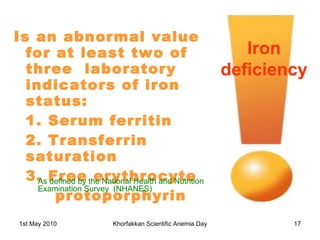
Is an abnormal value for at least two of three  laboratory indicators of iron status: 1. Serum ferritin 2. Transferrin saturation  3. Free erythrocyte protoporphyrin Iron deficiency  As defined by the National Health and Nutrition Examination Survey  (NHANES)
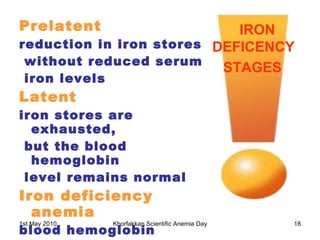
Prelatent  reduction in iron stores without reduced serum iron levels Latent iron stores are exhausted, but the blood hemoglobin level remains normal Iron deficiency anemia blood hemoglobin concentration falls below the lower limit of normal IRON DEFICENCY  STAGES
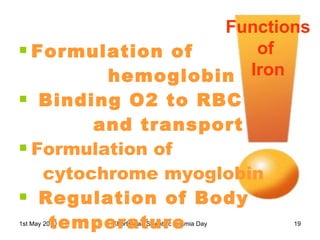
Formulation of hemoglobin Binding O2 to RBC  and transport Formulation of  cytochrome myoglobin Regulation of Body  temperature Functions of  Iron
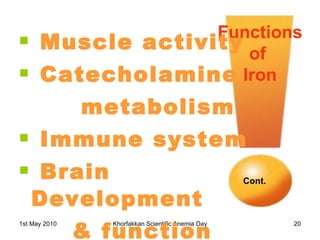
Muscle activity Catecholamine metabolism Immune system Brain Development & function Thyroid function Functions of  Iron Cont.
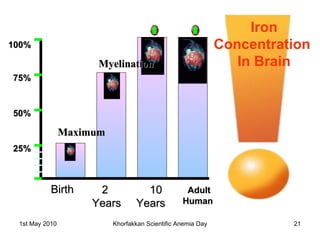
Iron Concentration  In Brain 25% 50% 75% 100% Birth 2 Years 10  Years Adult  Human Maximum Myelination
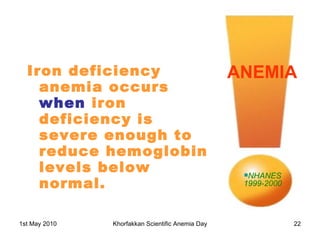
Iron deficiency anemia occurs  when  iron deficiency is severe enough to reduce hemoglobin levels below normal.  ANEMIA NHANES 1999-2000
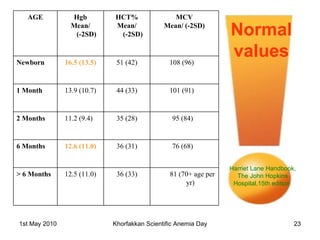
Normal values Harriet Lane Handbook, The John Hopkins Hospital,15th edition  81 (70+ age per yr) 36 (33) 12.5 (11.0) > 6 Months 76 (68)  36 (31) 12.6 (11.0) 6 Months 95 (84)  35 (28) 11.2 (9.4)  2 Months 101 (91)  44 (33) 13.9 (10.7) 1 Month 108 (96)  51 (42) 16.5 (13.5) Newborn MCV Mean/ (-2SD) HCT% Mean/ (-2SD) Hgb Mean/ (-2SD) AGE
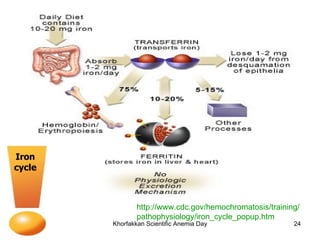
http://www.cdc.gov/hemochromatosis/training/ pathophysiology/iron_cycle_popup.htm Iron cycle
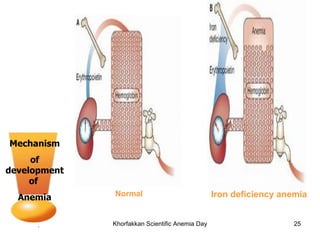
Mechanism of development of  Anemia Normal Iron deficiency anemia
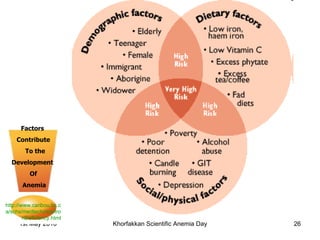
Factors  Contribute To the  Development  Of  Anemia http://www.caribou.bc.ca/schs/medtech/rice/IronDeficiency.html
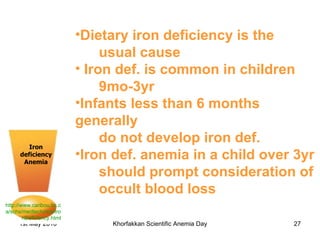
Iron deficiency Anemia http://www.caribou.bc.ca/schs/medtech/rice/IronDeficiency.html Dietary iron deficiency is the  usual cause Iron def. is common in children 9mo-3yr Infants less than 6 months generally do not develop iron def.  Iron def. anemia in a child over 3yr should prompt consideration of occult blood loss
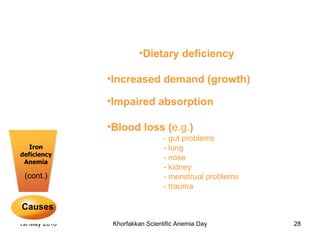
Iron deficiency Anemia (cont.) Dietary deficiency Increased demand (growth) Impaired absorption Blood loss ( e.g. ) - gut problems - lung - nose - kidney - menstrual problems - trauma Causes
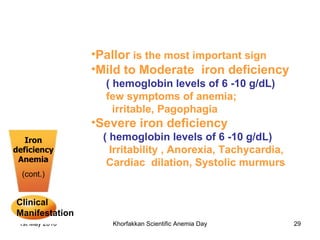
Iron deficiency Anemia (cont.) Pallor  is the most important sign  Mild to Moderate  iron deficiency ( hemoglobin levels of 6 -10 g/dL) few symptoms of anemia;  irritable, Pagophagia Severe iron deficiency ( hemoglobin levels of 6 -10 g/dL) Irritability , Anorexia, Tachycardia,  Cardiac  dilation, Systolic murmurs Clinical Manifestation
Iron deficiency Anemia (cont.) Clinical Manifestation (Cont.)   Iron deficiency may have effects on   neurologic and intellectual functions Iron – deficiency anemia and even iron deficiency with out anemia affect : *Attention span  *Alertness  *Learning
Iron deficiency Anemia (cont.) Clinical Manifestation (Cont.)   Decreased cognitive performance often accompanies iron deficiency and iron deficiency anemia Murray-Kolb LE, Beard JL.  Iron treatment normalizes cognitive functioning  in young women.  Am J Clin Nutr.  2007; 85:778-787.
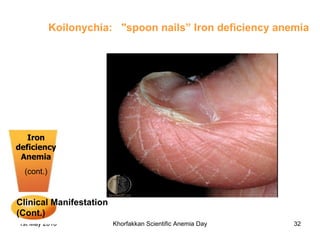
Iron deficiency Anemia (cont.) Clinical Manifestation (Cont.)   Koilonychia:  "spoon nails”  Iron deficiency anemia
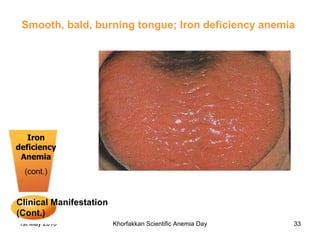
Iron deficiency Anemia (cont.) Clinical Manifestation (Cont.)   Smooth, bald, burning tongue; Iron deficiency anemia
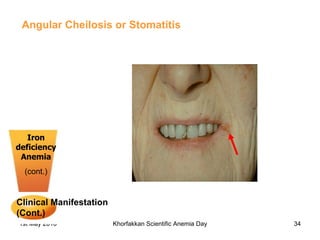
Iron deficiency Anemia (cont.) Clinical Manifestation (Cont.)   Angular Cheilosis or Stomatitis
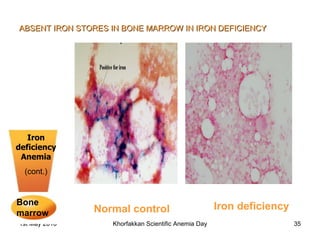
Iron deficiency Anemia (cont.) Bone marrow  ABSENT IRON STORES IN BONE MARROW IN IRON DEFICIENCY Normal control Iron deficiency
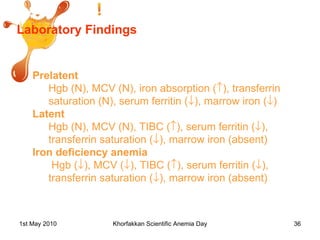
Laboratory Findings Prelatent  Hgb (N), MCV (N), iron absorption (  ), transferrin saturation (N), serum ferritin (  ), marrow iron (  ) Latent Hgb (N), MCV (N), TIBC (  ), serum ferritin (  ), transfe r rin saturation (  ), marrow iron (absent) Iron deficiency anemia Hgb (  ), MCV (  ), TIBC (  ), serum ferritin (  ), transfer r in saturation (  ), marrow iron (absent)
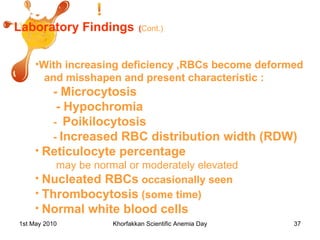
Laboratory Findings   ( Cont.) With increasing deficiency ,RBCs become deformed and misshapen and present characteristic :  - Microcytosis   - Hypochromia   -  Poikilocytosis  -  Increased RBC distribution width (RDW) Reticulocyte percentage   may be normal or moderately elevated   Nucleated RBCs  occasionally seen Thrombocytosis  (some time)  Normal white blood cells
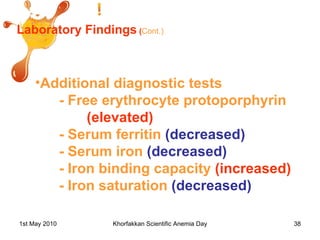
Laboratory Findings  ( Cont.) Additional diagnostic tests - Free erythrocyte protoporphyrin (elevated) - Serum ferritin  (decreased) - Serum iron  (decreased) - Iron binding capacity  (increased) - Iron saturation  (decreased)
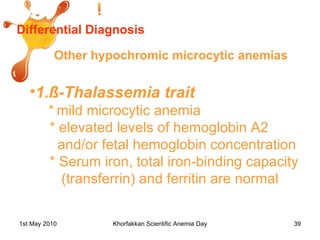
Differential Diagnosis Other hypochromic microcytic anemias 1.ß-Thalassemia trait *  mild microcytic anemia * elevated levels of hemoglobin A2 and/or fetal hemoglobin concentration  * Serum iron, total iron-binding capacity (transferrin) and ferritin are normal
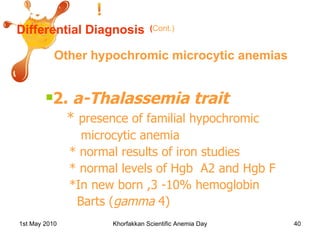
Differential Diagnosis Other hypochromic microcytic anemias 2.  a-Thalassemia trait *  presence of familial hypochromic  microcytic anemia * normal results of iron studies * normal levels of Hgb  A2 and Hgb F *In new born ,3 -10% hemoglobin Barts ( gamma  4)  ( Cont.)
Differential Diagnosis Other hypochromic microcytic anemias 3. Hgb H disease *  a form of a-Thalassemia results from deletion of three of the four a-globin genes * hypochromia and microcytosis * a mild hemolytic component from instability  of the ß-chian  tetramers (Hgb H) ( Cont.)
Differential Diagnosis Other hypochromic microcytic anemias 4. The anemia of chronic disease (ACD) *  Elevated FPR * Coarse basophilic stippling of the RBC is frequently  prominent  * Elevations of blood  lead. FEP, and urinary coproporphyrin levels Serum transferrin receptor (TIR)   level   is useful  in distinction between iron- deficiency anemia and  anemia of chronic disease ( Cont.)
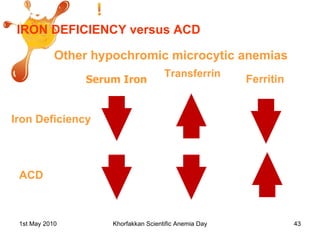
IRON DEFICIENCY versus ACD Other hypochromic microcytic anemias Serum Iron Transferrin  Ferritin Iron Deficiency ACD
PRINCIPLES OF TREATMENT 1.Use oral iron 2.Replace iron deficit in total 3.Establish  and treat  the cause
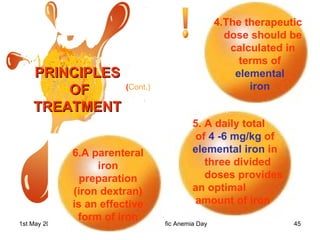
PRINCIPLES OF TREATMENT 4.The therapeutic dose should be calculated in terms of  elemental  iron  5. A daily total of  4 -6 mg/kg  of  elemental iron  in three divided doses provides  an optimal amount of iron 6.A parenteral iron preparation (iron dextran) is an effective form of iron ( Cont.)
PRINCIPLES OF TREATMENT ( Cont.) The regular  response of iron-deficiency anemia to adequate amounts of iron is an important diagnostic and therapeutic features.
PRINCIPLES OF TREATMENT ( Cont.) Oral  administration  of  simple ferrous salts  ( sulfate,  gluconate, fumartate) provides  inexpensive  and  satisfactory therapy
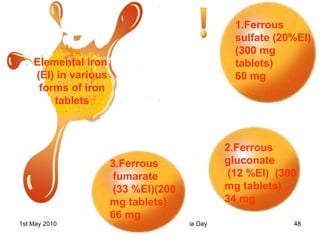
Elemental iron  (EI) in various forms of iron tablets 1.Ferrous sulfate (20%EI) (300 mg tablets)  60 mg 2.Ferrous gluconate (12 %EI)  (300 mg tablets)  34 mg 3.Ferrous fumarate (33 %EI)(200 mg tablets) 66 mg
Parenteral therapy indications poor compliance severe bowel disease intolerance of oral iron chronic hemorrhage acute diarrhea disorder
Parenteral therapy Iron dextran : (IM-IV)  50 mg iron/mL Low and high molecular  weight Ferric gluconate complex (IV)  less incidence of allergic reactions Iron sucrose :  (IV)  safe even  with sensitivity  to iron dextran
Parenteral therapy Ferumoxytol :  safe and effective as a rapid intravenous infusion up to 510 mg in patients with chronic kidney disease and on dialysis. Ferric carboxymaltose :  (IV)  given at single doses  of up to 1000 mg iron per week over of 15 minutes ( Cont.)
Blood transfusion  Is indicated only when  1.Anemia is very severe  2.Superimposed infection may interfere with  the response Packed  or sedimented RBCs   should be administered slowly In severely anemic children with hemoglobin   values   less than 4 g/dL   should be given only 2 -3 mL/kg of packed cells   at any one time
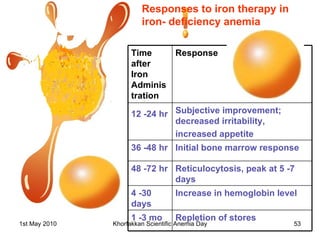
Responses to iron therapy in iron- deficiency anemia Repletion of stores 1 -3 mo Increase in hemoglobin level 4 -30 days Reticulocytosis, peak at 5 -7 days 48 -72 hr  Initial bone marrow response 36 -48 hr Subjective improvement; decreased irritability,  increased appetite 12 -24 hr   Response Time after Iron Administration
Failure of iron therapy occur when : A child  does not receive  the prescribed medication 2. Iron is given in  a form  that is poorly absorbed 3. There is continuing  unrecognized blood loss   such as : * intestinal or pulmonary loss * loss with menstrual periods 4. An  incorrect original diagnosis
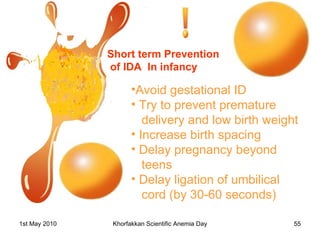
Short term Prevention of IDA  In infancy Avoid gestational ID  Try to prevent premature delivery and low birth weight Increase birth spacing Delay pregnancy beyond  teens Delay ligation of umbilical  cord (by 30-60 seconds)
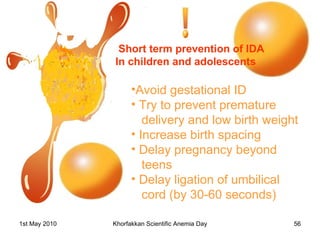
Short term prevention of IDA  In children and adolescents Avoid gestational ID  Try to prevent premature delivery and low birth weight Increase birth spacing Delay pregnancy beyond  teens Delay ligation of umbilical  cord (by 30-60 seconds)
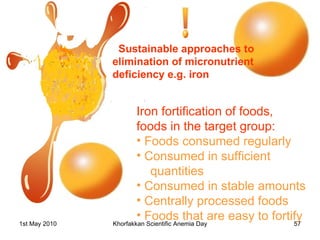
Sustainable approaches to elimination of micronutrient deficiency e.g. iron Iron fortification of foods, foods in the target group: Foods consumed regularly Consumed in sufficient  quantities Consumed in stable amounts Centrally processed foods Foods that are easy to fortify
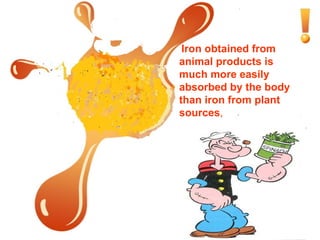
Iron obtained from animal products is much more easily absorbed by the body than iron from plant sources ,
Home Message Anemia is   a sign ,  not a disease.  Anemias are   a dynamic process .  Its   never normal   to be anemic. The diagnosis of iron deficiency anemia   mandates   further work-up
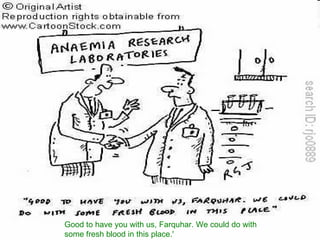
Good to have you with us, Farquhar. We could do with some fresh blood in this place.'
 

Childhood ida2010

  • 1.
    Khorfakkan Scientific anemiaDay 1 st May 2010 Childhood Iron Deficiency Anemia Prof. Dr.Saad S Al-Ani Senior Pediatric Consultant Head of Pediatric Khorfakkan Hospital
  • 2.
    Typical Scenario *18 month old child brought in by mom for check up Healthy, URTI a few weeks ago (in daycare) Picky eater, but drinks lots of milk * Growing well, pudgy Grand-mother thought he was a bit pale
  • 3.
    Physical exam *Pale, chubby, wt at 95%, ht at 60% *HR 140, RR 20, BP 90/50, SPO2 97% *Conjunctiva and mucous membranes slightly pale *Chest clear *No organomegaly, no adenopathy
  • 4.
    Lab values *CBC Hgb 5.4, Plt 735, WBC 8.5 with normal diff *MCV, MCHC decreased *Retic count low *Smear Microcytic, hypochromic cells *Ferritin 
  • 5.
  • 6.
    Why is itimportant to know how to diagnose and treat IDA?
  • 7.
    30% of theworld’s population has anemia, 1 billion have IDA Global prevalence is 53.6% in preschool children ANEMIA – A PUBLIC HEALTH PROBLEM McLean E, Egli I, Cogswell M, de Benoist B,Wojdyla D. Worldwide prevalence of anemia in preschool aged children, pregnant women and non-pregnant women of reproductive age .Ch1:1-12.In: Kraemer K, ed. Nutritional Anemia. Sight and Life press. Basel, Switzerland. 2007 .
  • 8.
    Anemia is asevere public health problem in Africa, Asia, Latin America and the Caribbean ANEMIA – A PUBLIC HEALTH PROBLEM World Health Organization (WHO). Nutrition. Geneva: WHO, www. who.int /nutrition/en : WHO 2007
  • 9.
    Iron deficiency identifiedas one of ten most serious risk in countries with high infant and adult mortalities ANEMIA – A PUBLIC HEALTH PROBLEM World Health Organization. The world health report 2002: reducing risks, promoting healthy life. Geneva, Switzerland: World Health Organization, 2002.
  • 10.
    Anemia as a public health problem by country; preschool children
  • 11.
    Anemia prevalence and number of Individuals affected in preschool- age children in each WHO region
  • 12.
    ~ 2 billionanemic Severe anemia ->high mortality Mild to moderate anemia Impairs child development Decreases work capacity Iron Deficiency/ Anemia: A Major Global Problem
  • 13.
    Conceptual diagram of the relationship between iron deficiency and anemia in a hypothetical population Yip R. Iron nutritional status defined. In: Filer IJ, ed . Dietary Iron: birth to two years. New York, Raven Press, 1989:19-36.
  • 14.
    Definition Anemia isdefined as: A decrease in the concentration of circulating red blood cells or in the hemoglobin concentration and a concomitant impaired capacity to transport oxygen. ANEMIA McLean E, Cogswell M, Egli I, Wojdyla D, de Benoist B.Worldwide prevalence of anaemia, WHO Vitamin and Mineral Nutrition Information System, 1993-2005.Public Health Nutr. 2009 Apr; 12(4):444-54. Epub 2008 May 23.
  • 15.
    WHO Diagnosis Hemoglobin below 11gm/dl in pre school children. ANEMIA UNICEF/UNU/WHO. Iron deficiency anemia: assessment, prevention and control. A guide for programme managers.WHO/NHD,2001 [report no.01.3]
  • 16.
    One of the15 leading causes of global disease burden IRON DEFICIENCY ANEMIA Boccio JR, Iyengar V. Iron deficiency: causes, consequences, and strategies to overcome this nutritional problem. Biol Trace Elem Res. 2003 Jul; 94(1):1-32. Review Global picture 25 Million DALYs lost due to IDA Stoltzfus R., Stiefel H., Iron deficiency and the global burden on disease. Symposium: Integrating programs to move iron deficiency and anemia control forward. Marrakesch, Morocco, 6 February 2003
  • 17.
    Is an abnormalvalue for at least two of three laboratory indicators of iron status: 1. Serum ferritin 2. Transferrin saturation 3. Free erythrocyte protoporphyrin Iron deficiency As defined by the National Health and Nutrition Examination Survey (NHANES)
  • 18.
    Prelatent reductionin iron stores without reduced serum iron levels Latent iron stores are exhausted, but the blood hemoglobin level remains normal Iron deficiency anemia blood hemoglobin concentration falls below the lower limit of normal IRON DEFICENCY STAGES
  • 19.
    Formulation of hemoglobinBinding O2 to RBC and transport Formulation of cytochrome myoglobin Regulation of Body temperature Functions of Iron
  • 20.
    Muscle activity Catecholaminemetabolism Immune system Brain Development & function Thyroid function Functions of Iron Cont.
  • 21.
    Iron Concentration In Brain 25% 50% 75% 100% Birth 2 Years 10 Years Adult Human Maximum Myelination
  • 22.
    Iron deficiency anemiaoccurs when iron deficiency is severe enough to reduce hemoglobin levels below normal. ANEMIA NHANES 1999-2000
  • 23.
    Normal values HarrietLane Handbook, The John Hopkins Hospital,15th edition 81 (70+ age per yr) 36 (33) 12.5 (11.0) > 6 Months 76 (68) 36 (31) 12.6 (11.0) 6 Months 95 (84) 35 (28) 11.2 (9.4) 2 Months 101 (91) 44 (33) 13.9 (10.7) 1 Month 108 (96) 51 (42) 16.5 (13.5) Newborn MCV Mean/ (-2SD) HCT% Mean/ (-2SD) Hgb Mean/ (-2SD) AGE
  • 24.
  • 25.
    Mechanism of developmentof Anemia Normal Iron deficiency anemia
  • 26.
    Factors ContributeTo the Development Of Anemia http://www.caribou.bc.ca/schs/medtech/rice/IronDeficiency.html
  • 27.
    Iron deficiency Anemiahttp://www.caribou.bc.ca/schs/medtech/rice/IronDeficiency.html Dietary iron deficiency is the usual cause Iron def. is common in children 9mo-3yr Infants less than 6 months generally do not develop iron def. Iron def. anemia in a child over 3yr should prompt consideration of occult blood loss
  • 28.
    Iron deficiency Anemia(cont.) Dietary deficiency Increased demand (growth) Impaired absorption Blood loss ( e.g. ) - gut problems - lung - nose - kidney - menstrual problems - trauma Causes
  • 29.
    Iron deficiency Anemia(cont.) Pallor is the most important sign Mild to Moderate iron deficiency ( hemoglobin levels of 6 -10 g/dL) few symptoms of anemia; irritable, Pagophagia Severe iron deficiency ( hemoglobin levels of 6 -10 g/dL) Irritability , Anorexia, Tachycardia, Cardiac dilation, Systolic murmurs Clinical Manifestation
  • 30.
    Iron deficiency Anemia(cont.) Clinical Manifestation (Cont.) Iron deficiency may have effects on neurologic and intellectual functions Iron – deficiency anemia and even iron deficiency with out anemia affect : *Attention span *Alertness *Learning
  • 31.
    Iron deficiency Anemia(cont.) Clinical Manifestation (Cont.) Decreased cognitive performance often accompanies iron deficiency and iron deficiency anemia Murray-Kolb LE, Beard JL. Iron treatment normalizes cognitive functioning in young women. Am J Clin Nutr. 2007; 85:778-787.
  • 32.
    Iron deficiency Anemia(cont.) Clinical Manifestation (Cont.) Koilonychia: "spoon nails” Iron deficiency anemia
  • 33.
    Iron deficiency Anemia(cont.) Clinical Manifestation (Cont.) Smooth, bald, burning tongue; Iron deficiency anemia
  • 34.
    Iron deficiency Anemia(cont.) Clinical Manifestation (Cont.) Angular Cheilosis or Stomatitis
  • 35.
    Iron deficiency Anemia(cont.) Bone marrow ABSENT IRON STORES IN BONE MARROW IN IRON DEFICIENCY Normal control Iron deficiency
  • 36.
    Laboratory Findings Prelatent Hgb (N), MCV (N), iron absorption (  ), transferrin saturation (N), serum ferritin (  ), marrow iron (  ) Latent Hgb (N), MCV (N), TIBC (  ), serum ferritin (  ), transfe r rin saturation (  ), marrow iron (absent) Iron deficiency anemia Hgb (  ), MCV (  ), TIBC (  ), serum ferritin (  ), transfer r in saturation (  ), marrow iron (absent)
  • 37.
    Laboratory Findings ( Cont.) With increasing deficiency ,RBCs become deformed and misshapen and present characteristic : - Microcytosis - Hypochromia - Poikilocytosis - Increased RBC distribution width (RDW) Reticulocyte percentage may be normal or moderately elevated Nucleated RBCs occasionally seen Thrombocytosis (some time) Normal white blood cells
  • 38.
    Laboratory Findings ( Cont.) Additional diagnostic tests - Free erythrocyte protoporphyrin (elevated) - Serum ferritin (decreased) - Serum iron (decreased) - Iron binding capacity (increased) - Iron saturation (decreased)
  • 39.
    Differential Diagnosis Otherhypochromic microcytic anemias 1.ß-Thalassemia trait * mild microcytic anemia * elevated levels of hemoglobin A2 and/or fetal hemoglobin concentration * Serum iron, total iron-binding capacity (transferrin) and ferritin are normal
  • 40.
    Differential Diagnosis Otherhypochromic microcytic anemias 2. a-Thalassemia trait * presence of familial hypochromic microcytic anemia * normal results of iron studies * normal levels of Hgb A2 and Hgb F *In new born ,3 -10% hemoglobin Barts ( gamma 4) ( Cont.)
  • 41.
    Differential Diagnosis Otherhypochromic microcytic anemias 3. Hgb H disease * a form of a-Thalassemia results from deletion of three of the four a-globin genes * hypochromia and microcytosis * a mild hemolytic component from instability of the ß-chian tetramers (Hgb H) ( Cont.)
  • 42.
    Differential Diagnosis Otherhypochromic microcytic anemias 4. The anemia of chronic disease (ACD) * Elevated FPR * Coarse basophilic stippling of the RBC is frequently prominent * Elevations of blood lead. FEP, and urinary coproporphyrin levels Serum transferrin receptor (TIR) level is useful in distinction between iron- deficiency anemia and anemia of chronic disease ( Cont.)
  • 43.
    IRON DEFICIENCY versusACD Other hypochromic microcytic anemias Serum Iron Transferrin Ferritin Iron Deficiency ACD
  • 44.
    PRINCIPLES OF TREATMENT1.Use oral iron 2.Replace iron deficit in total 3.Establish and treat the cause
  • 45.
    PRINCIPLES OF TREATMENT4.The therapeutic dose should be calculated in terms of elemental iron 5. A daily total of 4 -6 mg/kg of elemental iron in three divided doses provides an optimal amount of iron 6.A parenteral iron preparation (iron dextran) is an effective form of iron ( Cont.)
  • 46.
    PRINCIPLES OF TREATMENT( Cont.) The regular response of iron-deficiency anemia to adequate amounts of iron is an important diagnostic and therapeutic features.
  • 47.
    PRINCIPLES OF TREATMENT( Cont.) Oral administration of simple ferrous salts ( sulfate, gluconate, fumartate) provides inexpensive and satisfactory therapy
  • 48.
    Elemental iron (EI) in various forms of iron tablets 1.Ferrous sulfate (20%EI) (300 mg tablets) 60 mg 2.Ferrous gluconate (12 %EI) (300 mg tablets) 34 mg 3.Ferrous fumarate (33 %EI)(200 mg tablets) 66 mg
  • 49.
    Parenteral therapy indicationspoor compliance severe bowel disease intolerance of oral iron chronic hemorrhage acute diarrhea disorder
  • 50.
    Parenteral therapy Irondextran : (IM-IV) 50 mg iron/mL Low and high molecular weight Ferric gluconate complex (IV) less incidence of allergic reactions Iron sucrose : (IV) safe even with sensitivity to iron dextran
  • 51.
    Parenteral therapy Ferumoxytol: safe and effective as a rapid intravenous infusion up to 510 mg in patients with chronic kidney disease and on dialysis. Ferric carboxymaltose : (IV) given at single doses of up to 1000 mg iron per week over of 15 minutes ( Cont.)
  • 52.
    Blood transfusion Is indicated only when 1.Anemia is very severe 2.Superimposed infection may interfere with the response Packed or sedimented RBCs should be administered slowly In severely anemic children with hemoglobin values less than 4 g/dL should be given only 2 -3 mL/kg of packed cells at any one time
  • 53.
    Responses to irontherapy in iron- deficiency anemia Repletion of stores 1 -3 mo Increase in hemoglobin level 4 -30 days Reticulocytosis, peak at 5 -7 days 48 -72 hr Initial bone marrow response 36 -48 hr Subjective improvement; decreased irritability, increased appetite 12 -24 hr Response Time after Iron Administration
  • 54.
    Failure of irontherapy occur when : A child does not receive the prescribed medication 2. Iron is given in a form that is poorly absorbed 3. There is continuing unrecognized blood loss such as : * intestinal or pulmonary loss * loss with menstrual periods 4. An incorrect original diagnosis
  • 55.
    Short term Preventionof IDA In infancy Avoid gestational ID Try to prevent premature delivery and low birth weight Increase birth spacing Delay pregnancy beyond teens Delay ligation of umbilical cord (by 30-60 seconds)
  • 56.
    Short term preventionof IDA In children and adolescents Avoid gestational ID Try to prevent premature delivery and low birth weight Increase birth spacing Delay pregnancy beyond teens Delay ligation of umbilical cord (by 30-60 seconds)
  • 57.
    Sustainable approaches toelimination of micronutrient deficiency e.g. iron Iron fortification of foods, foods in the target group: Foods consumed regularly Consumed in sufficient quantities Consumed in stable amounts Centrally processed foods Foods that are easy to fortify
  • 58.
    Iron obtained fromanimal products is much more easily absorbed by the body than iron from plant sources ,
  • 59.
    Home Message Anemiais a sign , not a disease. Anemias are a dynamic process . Its never normal to be anemic. The diagnosis of iron deficiency anemia mandates further work-up
  • 60.
    Good to haveyou with us, Farquhar. We could do with some fresh blood in this place.'
  • 61.