Zinc deficiency
Prof. Imran Iqbal
Fellowship in Pediatric Neurology (Australia)
Prof of Paediatrics (2003-2018)
Prof of Pediatrics Emeritus, CHICH
Prof of Pediatrics, CIMS
Multan, Pakistan
Al-Quran sura Yaseen 36:33-35
Nutrition During the First 1000 Days of Life
1000 Days
Meeting macro- and micronutrient requirements during ‘the first
1,000 days (pregnancy and early childhood) is crucial for short- and
long-term health and cognitive function
First 1000 Days of Life
• Causes of poor growth and
stunting in children
• maternal under-nutrition
• intrauterine growth retardation
• inappropriate complementary
feeding
• repeated infections
• Micronutrient deficiencies are
associated with Malnutrition
Nestle Nutr Inst Workshop Ser, vol 70, pp 1–10,
Zinc deficiency
Role of Zinc in Human body
• Zinc is an essential mineral for optimum growth
and function in plants and animals
• Zinc is an essential part of more than 200 specific
enzymes in the body (e.g. alkaline phosphatase)
• Zinc deficiency results in disruption of hundreds of
metabolic pathways, causing numerous clinical
manifestations
• Human body is unable to store zinc and regular
intake is necessary
Functions of Zinc
• Zinc plays a critical role in cell metabolism
• Zinc promotes immunity and resistance to infection
• Zinc promotes growth. Severe zinc deficiency leads
to dwarfism
• Low plasma zinc levels have been associated with
2.3 times increased mortality in Covid 19 infection
Clinical Features of Zinc deficiency
• Decreased immunity
• Prolonged diarrhea
• Frequent respiratory infections
• Poor growth / Stunting
• Zinc deficiency increases diarrhea and respiratory
infections by 25 – 50 % in children < 5 years of age
Diagnosis of
Zinc deficiency
Diagnosis of Zinc deficiency
• Clinical Diagnosis (symptoms and signs)
• Malnutrition (zinc deficiency likely to be present)
• Diarrhea (increases zinc losses)
• Lab Diagnosis
• Serum Zinc level < 70 mcg/dl
• Serum Zinc level (normal 70-120 mcg/dl)
Epidemiology of
Zinc deficiency
Zinc deficiency in Children
• Zinc deficiency seen in 18.6 % of children in Pakistan (NNS
2018)
• Zinc deficiency seen in 22 % of mothers in Pakistan (NNS
2018)
• It is estimated that that 25% of the world's population is at
risk of zinc deficiency
• Zinc deficiency is thought to be a leading cause of infant
mortality (by reducing immune functions)
Causes of
Zinc deficiency
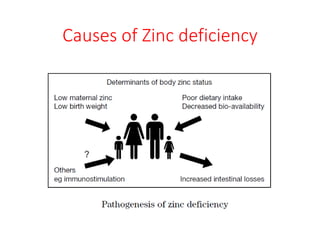
Causes of Zinc deficiency
• Low Zinc intake in diet
• Phytic Acid (present in cereals) reduces Zinc
absorption
• Diarrhea increases Zinc losses in feces
• Zinc levels are low in malnourished children
Normal Acute diarrhea
PEM PEM & PD
0
50
100
150
Plasma
zinc
(g/dL)
Plasma Zinc in diarrhea and malnutrition
Bhutta (2001)
Sources of Zinc
• Meat, fish,
• Legumes
• Nuts
• Cereals (zinc not available due to binding with
phytates)
• Recommended Dietary Allowance (RDA)
• Zinc 10 mg/day
Complications of
Zinc deficiency
Zinc deficiency results in
• Decreased immunity
• Prolonged diarrhea
• Frequent respiratory infections
• Poor growth / Stunting
• Severe Zinc Deficiency can result in:
• hair loss
• delayed healing of wounds
• eye and skin lesions
• delayed sexual maturation
• Behavioral changes
Complications of Zinc deficiency
Acrodermatitis enteropathica
Congenital Malabsorption of Zinc
leading to Severe Zinc Deficiency
Acrodermatitis enteropathica
• Acrodermatitis enteropathica is
autosomal recessive metabolic disorder
• Acrodermatitis enteropathica is a disease caused by a
severe defect in zinc absorption
• It is due to a congenital deficiency in the zinc carrier protein
ZIP4 in the intestinal mucosal enterocyte
• Similar clinical picture may be seen with severe Zinc
deficiency
Acrodermatitis enteropathica
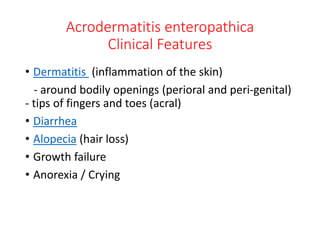
Clinical Features
• Dermatitis (inflammation of the skin)
- around bodily openings (perioral and peri-genital)
- tips of fingers and toes (acral)
• Diarrhea
• Alopecia (hair loss)
• Growth failure
• Anorexia / Crying
Acrodermatitis enteropathica
(perioral and peri-genital eczema)
How to treat a child with
Zinc deficiency ?
Childhood Diarrhea
• Diarrheal diseases one of the leading
causes of child death
• Children with zinc deficiency are more
susceptible to infections causing
diarrhea
• Loss of zinc during diarrhea exacerbates
dietary inadequacy of zinc, contributing
to a vicious cycle of infection and
nutritional deficiency.
• In diarrhea health workers should
provide children with 20 mg per day of
zinc supplementation for 10-14 days (10
mg per day for infants under the age of
six months).
In 2004, the WHO and
UNICEF formulated a new
recommendation to
administer zinc adjunct
treatment for diarrhea,
along with low- osmolarity
oral rehydration solutions
and continuation of
feeding
Zinc for Acute Diarrhea
• Zinc therapy shortens the duration of diarrhea and
prevents subsequent deficiency
• All children with Acute Diarrhea should be given Zinc
supplementation for 14 days:
• Children > 6 months age - 20 mg per day
• Infants under 6 months - 10 mg per day
(WHO and UNICEF recommendation)
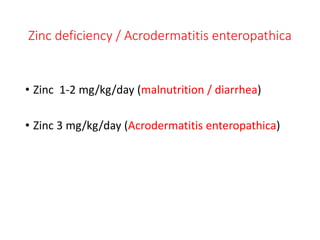
Zinc deficiency / Acrodermatitis enteropathica
• Zinc 1-2 mg/kg/day (malnutrition / diarrhea)
• Zinc 3 mg/kg/day (Acrodermatitis enteropathica)
Zinc toxicity
• Zinc toxicity can occur in both acute and chronic
forms.
• Acute adverse effects of high zinc intake include
nausea, vomiting, loss of appetite, abdominal
cramps, diarrhea, and headaches
• Chronic high intakes of 150–450 mg of zinc per day
have been associated interaction with other
micronutrients including low copper status and
altered iron function
How to prevent Zinc deficiency in
children ?
Micronutrients are
essential for
Growth and Health
Multiple Micronutrient sachet (MMS) for
prevention of Micronutrient Deficiency
MNP (micronutrient powders)
Zinc – Therapeutic and Preventive Role
• Therapeutic and preventive zinc supplementations are effective in reducing morbidity
and mortality in children <5 years of age
• Therapeutic zinc supplementation as an adjunct in the treatment of diarrhea has been
shown to reduce the duration of acute diarrhea by 0.5 days and that of persistent
diarrhea by 0.68 days
• Preventive zinc supplementation reduces incidence of diarrhea by 20% and
pneumonia by 15%
• Preventive zinc also improves the growth of children and reduces total deaths in 1- to
4-year-old children by 18%
• Zinc supplementation for both the growth – retarded and/or preterm babies is
suggested along with iron
Interventions to reduce Child Mortality
31% of all child deaths can be prevented through
nutrition related interventions
Intervention Deaths (x 103) % deaths
Oral Rehydration Therapy* 1477 15
Breastfeeding 1301 13
Zinc (prophylaxis & treatment*) 810 9
Insecticide-treated bednets 691 7
Complementary feeding 587 6
Antibiotics for sepsis* 583 6
Antibiotics for pneumonia* 577 6
Clean delivery 411 4
Vitamin A 233 3
Thank you

Zinc deficiency 2021

  • 1.
    Zinc deficiency Prof. ImranIqbal Fellowship in Pediatric Neurology (Australia) Prof of Paediatrics (2003-2018) Prof of Pediatrics Emeritus, CHICH Prof of Pediatrics, CIMS Multan, Pakistan
  • 3.
  • 4.
    Nutrition During theFirst 1000 Days of Life 1000 Days Meeting macro- and micronutrient requirements during ‘the first 1,000 days (pregnancy and early childhood) is crucial for short- and long-term health and cognitive function
  • 5.
    First 1000 Daysof Life • Causes of poor growth and stunting in children • maternal under-nutrition • intrauterine growth retardation • inappropriate complementary feeding • repeated infections • Micronutrient deficiencies are associated with Malnutrition Nestle Nutr Inst Workshop Ser, vol 70, pp 1–10,
  • 6.
  • 7.
    Role of Zincin Human body • Zinc is an essential mineral for optimum growth and function in plants and animals • Zinc is an essential part of more than 200 specific enzymes in the body (e.g. alkaline phosphatase) • Zinc deficiency results in disruption of hundreds of metabolic pathways, causing numerous clinical manifestations • Human body is unable to store zinc and regular intake is necessary
  • 8.
    Functions of Zinc •Zinc plays a critical role in cell metabolism • Zinc promotes immunity and resistance to infection • Zinc promotes growth. Severe zinc deficiency leads to dwarfism • Low plasma zinc levels have been associated with 2.3 times increased mortality in Covid 19 infection
  • 9.
    Clinical Features ofZinc deficiency • Decreased immunity • Prolonged diarrhea • Frequent respiratory infections • Poor growth / Stunting • Zinc deficiency increases diarrhea and respiratory infections by 25 – 50 % in children < 5 years of age
  • 10.
  • 11.
    Diagnosis of Zincdeficiency • Clinical Diagnosis (symptoms and signs) • Malnutrition (zinc deficiency likely to be present) • Diarrhea (increases zinc losses) • Lab Diagnosis • Serum Zinc level < 70 mcg/dl • Serum Zinc level (normal 70-120 mcg/dl)
  • 12.
  • 13.
    Zinc deficiency inChildren • Zinc deficiency seen in 18.6 % of children in Pakistan (NNS 2018) • Zinc deficiency seen in 22 % of mothers in Pakistan (NNS 2018) • It is estimated that that 25% of the world's population is at risk of zinc deficiency • Zinc deficiency is thought to be a leading cause of infant mortality (by reducing immune functions)
  • 14.
  • 15.
    Causes of Zincdeficiency
  • 16.
    Causes of Zincdeficiency • Low Zinc intake in diet • Phytic Acid (present in cereals) reduces Zinc absorption • Diarrhea increases Zinc losses in feces • Zinc levels are low in malnourished children
  • 17.
    Normal Acute diarrhea PEMPEM & PD 0 50 100 150 Plasma zinc (g/dL) Plasma Zinc in diarrhea and malnutrition Bhutta (2001)
  • 18.
    Sources of Zinc •Meat, fish, • Legumes • Nuts • Cereals (zinc not available due to binding with phytates) • Recommended Dietary Allowance (RDA) • Zinc 10 mg/day
  • 19.
  • 20.
    Zinc deficiency resultsin • Decreased immunity • Prolonged diarrhea • Frequent respiratory infections • Poor growth / Stunting • Severe Zinc Deficiency can result in: • hair loss • delayed healing of wounds • eye and skin lesions • delayed sexual maturation • Behavioral changes
  • 21.
  • 22.
    Acrodermatitis enteropathica Congenital Malabsorptionof Zinc leading to Severe Zinc Deficiency
  • 23.
    Acrodermatitis enteropathica • Acrodermatitisenteropathica is autosomal recessive metabolic disorder • Acrodermatitis enteropathica is a disease caused by a severe defect in zinc absorption • It is due to a congenital deficiency in the zinc carrier protein ZIP4 in the intestinal mucosal enterocyte • Similar clinical picture may be seen with severe Zinc deficiency
  • 24.
    Acrodermatitis enteropathica Clinical Features •Dermatitis (inflammation of the skin) - around bodily openings (perioral and peri-genital) - tips of fingers and toes (acral) • Diarrhea • Alopecia (hair loss) • Growth failure • Anorexia / Crying
  • 25.
  • 26.
    How to treata child with Zinc deficiency ?
  • 27.
    Childhood Diarrhea • Diarrhealdiseases one of the leading causes of child death • Children with zinc deficiency are more susceptible to infections causing diarrhea • Loss of zinc during diarrhea exacerbates dietary inadequacy of zinc, contributing to a vicious cycle of infection and nutritional deficiency. • In diarrhea health workers should provide children with 20 mg per day of zinc supplementation for 10-14 days (10 mg per day for infants under the age of six months). In 2004, the WHO and UNICEF formulated a new recommendation to administer zinc adjunct treatment for diarrhea, along with low- osmolarity oral rehydration solutions and continuation of feeding
  • 28.
    Zinc for AcuteDiarrhea • Zinc therapy shortens the duration of diarrhea and prevents subsequent deficiency • All children with Acute Diarrhea should be given Zinc supplementation for 14 days: • Children > 6 months age - 20 mg per day • Infants under 6 months - 10 mg per day (WHO and UNICEF recommendation)
  • 29.
    Zinc deficiency /Acrodermatitis enteropathica • Zinc 1-2 mg/kg/day (malnutrition / diarrhea) • Zinc 3 mg/kg/day (Acrodermatitis enteropathica)
  • 30.
    Zinc toxicity • Zinctoxicity can occur in both acute and chronic forms. • Acute adverse effects of high zinc intake include nausea, vomiting, loss of appetite, abdominal cramps, diarrhea, and headaches • Chronic high intakes of 150–450 mg of zinc per day have been associated interaction with other micronutrients including low copper status and altered iron function
  • 31.
    How to preventZinc deficiency in children ?
  • 32.
  • 33.
    Multiple Micronutrient sachet(MMS) for prevention of Micronutrient Deficiency
  • 34.
  • 35.
    Zinc – Therapeuticand Preventive Role • Therapeutic and preventive zinc supplementations are effective in reducing morbidity and mortality in children <5 years of age • Therapeutic zinc supplementation as an adjunct in the treatment of diarrhea has been shown to reduce the duration of acute diarrhea by 0.5 days and that of persistent diarrhea by 0.68 days • Preventive zinc supplementation reduces incidence of diarrhea by 20% and pneumonia by 15% • Preventive zinc also improves the growth of children and reduces total deaths in 1- to 4-year-old children by 18% • Zinc supplementation for both the growth – retarded and/or preterm babies is suggested along with iron
  • 36.
    Interventions to reduceChild Mortality 31% of all child deaths can be prevented through nutrition related interventions Intervention Deaths (x 103) % deaths Oral Rehydration Therapy* 1477 15 Breastfeeding 1301 13 Zinc (prophylaxis & treatment*) 810 9 Insecticide-treated bednets 691 7 Complementary feeding 587 6 Antibiotics for sepsis* 583 6 Antibiotics for pneumonia* 577 6 Clean delivery 411 4 Vitamin A 233 3
  • 37.