International Research Journal of Engineering and Technology (IRJET) e-ISSN: 2395-0056
Volume: 06 Issue: 05 | May 2019 www.irjet.net p-ISSN: 2395-0072
© 2019, IRJET | Impact Factor value: 7.211 | ISO 9001:2008 Certified Journal | Page 1270
Modified SIMPLE Protocol for Wireless Body Area Networks
Nidhi Dwivedi1, Hari Om Sharan2
1Research Scholar, Department of Computer Science and Engineering, Rama University, Mandhana, Kanpur, Uttar
Pradesh, INDIA
2 Head of Department, Department of Computer Science and Engineering, Rama University, Mandhana, Kanpur,
Uttar Pradesh, INDIA
----------------------------------------------------------------------***---------------------------------------------------------------------
Abstract – Wireless body area network is a hot upcoming
field in automatic patient monitoring. In WBAN sensors are
placed on patient body, and thesesensorscollectpatient’sdata
and after aggregation data is send to base station, and finally
to doctor sitting at distant place from patient. As sensornodes
sense data therefore their battery drains, and to save battery
power various routing protocols are proposed. In the similar
context recently SIMPLE protocol was proposed. In this paper
further modification is suggested to improve its performance.
Key Words: WBAN, SIMPLE, Throughput
1. INTRODUCTION
With the fast growth in the population of developed
countries, the health-care is now one of the major issues for
health-care authorities and government. In order to
overcome this problem and to provide patient monitoring
even from remote location, wireless technology is used
which also provides reliable, cost effective, and fast services
to patient. WBAN is the latest evolved technology which
provides very effective health care services. It gives simple
diagnostic monitoring [1]. In the WBAN technology, sensor
nodes work on energy source constraints. The sensors must
use power as low as could be for the transmission of data to
sink. With the minimum use of energy source can extendthe
life of the battery over a long period due to the fact that
recharging batteries in WBAN is not frequent. In WBAN, one
of the prime issues is of recharging the batteries. To
overcome this problem, an effective routing protocol is
needed. WSNs have a number of routing protocols [2], [3],
[4], [5] which makes use of energy efficiently. But WBANs
and WSNs are of different architectures, applications and
work in different situation. It is not possible to port WSN
routing protocol to WBAN. Therefore, for WBAN we require
an energy efficient routing protocol in order to monitor a
patient for long time.
In this paper, we propose a reliable, high throughput and
stable routing protocol for the purpose of patient
monitoring. We place sensor nodes at their pre-decided
place on the patient’s body. Sensors for glucose level and
ECG are put close to the sink. Sink is paced at waist. Both of
these sensors containimportantpatient’sdata andneedhigh
reliability, less attenuation and long life as they have to
transfer their data to sink continuously. The parent node is
followed by other sensors and sends data to sink by means
of multi hop. It conserves nodes’ energy and network work
for a long time.
In this paper a wireless body area network protocol will be
designed. In this work, all the sensors located on body will
transfer data to sink node (generally on wrist or waist) and
sink node will transmit data to base station or to the server.
The simulation results will be evaluated in terms of
1. No. of dropped packets
2. Remaining Energy
3. Throughput
4. Number of dead node
These results will be plotted with number of rounds.
2. RADIO MODEL
In past various radio model is proposed for WSN. In general
first order radio is found suitable for WBAN as detailed in
[6].
Figure 1: First order radio model
This radio model assume that d , is the separation between
transmitter and receiver and
2
d , the loss of energy due to
transmission channel. First order radio model equationscan
be summarized as
( , ) ( ) ( , )TX TX elec TX ampE k d E k E k d   (1)
2
( , )TX TX elec TX ampE k d E k E k d      (2)
( , ) ( ) ( ) ( )RX RX elec RX RX elecE k d E k E k E k k    (3)
International Research Journal of Engineering and Technology (IRJET) e-ISSN: 2395-0056
Volume: 06 Issue: 05 | May 2019 www.irjet.net p-ISSN: 2395-0072
© 2019, IRJET | Impact Factor value: 7.211 | ISO 9001:2008 Certified Journal | Page 1271
where TXE is the energy consumed at the time of
transmission, RXE is theenergyconsumedduringreception,
TX elecE  and RX elecE  are the energies needed for the
operation of the electronic circuit of transmitter and
receiver, respectively. Eamp is termed as the measure of
energy needed for the amplifier circuit, while k denotes the
size of the packet.
The medium that is used for the communication in WBAN is
human body which provides its contribution of attenuation
to radio signal. Hence, path loss coefficient parameter is
added by us in radio model. Equation 27 of transmitter can
be rewritten as
( , ) n
TX elec ampE k d E k E n k d      (4)
The parameters of energy provided in equation 6 relyonthe
hardware. In WBAN technology, two transceivers that are
generally used for the analysis are Nordic nRF 2401A is a
single chip, low power and Chipcon CC2420 transceivers.
Both have the same bandwidth i.e. 2.4GHz.
The reason behind the use of the energy parameter of The
Nordic nRF 2401A transceiver is its less consumption of
power as compared to Chipcon CC2420. The energy
parameters for this transceiver are given in Table 1.
Table 1: Network Parameters
Parameter Value
E0 0.5 Joule
Eelec 5 nJ/bit
Efs 10pJ/bit/m2
Eamp
Eda
Packet Size
0.0013 pJ/bit/m4
5 pJ/bit
4000 bits
3. SIMPLE PROTOCOL
The constant quantities of nodes in WBANs offer chance to
relax limitations in routing protocols. Withtheinspirationof
routing constrains, we enhance the period of stability and
throughput of the network [41]. Following subsections
throws a light on the features ofthesystem model alongwith
the detail of SIMPLE protocol.
A. System Model
Eight sensor nodes are placed on the body of the person in
this scheme. Each sensor node consists of same power and
computation capabilities. Sink node is deployed at waist.
Node 1 which is around heart area is ECG sensor while node
2 in waist is Glucose sensor node. Data is transmitted
directly to sink by these two nodes. The deployment of
nodes and sink on the human body is shown by the fig. 3.2.
The typical sensor node parametersaredetailedinTable 3.1.
Table 2: Radio Parameters
Parameters nRF
2401A
CC2420 Units
DC Current
(Tx)
10.5 17.4 mA
DC Current
(Rx)
18 19.7 mA
Supply Voltage
(min)
1.9 2.1 V
ETX-elec 16.7 96.9 nJ/bit
ERX-elec 36.1 172.8 nJ/bit
Eamp 1.97×10⁻⁹ 2.71×10⁻⁷ J/bit
Figure 2: WBAN Body Area Network with Eight Nodes
B. Initial Phase
In this phase, Sink broadcast a small information packet in
this phase which comprises the position of the sink on the
person’s body. Each sensor node, after getting this control
packet, stores the position of sink. An information packet is
broadcasted by each sensor node which has the following
information: position of node on body, node ID and its
energy status. Thus, each sensor node is updated with the
information about the location of neighbours and sink.
International Research Journal of Engineering and Technology (IRJET) e-ISSN: 2395-0056
Volume: 06 Issue: 05 | May 2019 www.irjet.net p-ISSN: 2395-0072
© 2019, IRJET | Impact Factor value: 7.211 | ISO 9001:2008 Certified Journal | Page 1272
C. Selection of next hop
In order to save energy and to enhance network throughput,
a multi hop scheme is proposed for WBAN. In this part, we
explain the criteria of selection for a node to turn out parent
node or forwarder. With the end goal of balancing
consumption of energy among sensor nodes and trimming
down energy consumption of network, new forwarder is
being selected by SIMPLE protocol in each round. Sink node
is aware of the information of the nodes such as distance, ID
and residual energy status. Sink processes the cost function
of each node and this cost function is transmitted to all
nodes by sink.
Each node makes the decision on the basis of this cost
function whether to be a forwarder node or not. If i is
number of nodes than cost function of i nodes is evaluated
as:
( )
. ( )
. ( )
d i
C F i
R E i
 (5)
Where the distance between the node i and sink is
represented by d(i), R.E(i) is the residual energy of node i
and is estimated by extracting out the present energy of
node from initial total energy in the initial. We prefer a node
with least cost function as a forwarder. Each one of the
neighbour node get affixed together with forwarder node
and transfer their data to forwarder. This data is collected
and forwarded to sink by the forwarder. This (forwarder)
node has highest residual energy and least distance to sink;
hence, minimum energy is consumed by it in the process of
forwarding data to sink. Nodes for Glucose and ECG
monitoring establish direct communicationwithsink and do
not get indulge in forwarding data.
D. Scheduling
As far as this phase is concerned, a Time Division Multiple
Access (TDMA) is assigned by forwarder node toitschildren
nodes on the basis of the time slots. Each one of these
children nodes transmit the data which is sensed by them to
forwarder node in its particular predefined time slot. In the
case when a node does not contain any data to be sent, it
switches to idle mode. Nodes wake up just at the time of its
transmission. The dissipation of energy of particular sensor
node could be minimized by scheduling of sensor nodes.
4. PROPOSED MODEL
In order to achieve the target of enhancing the throughput
and reliable communication between sensors and sink, we
propose a new scheme. Principle benefits of our proposed
protocol are as follows:
The less energy consumption of nodes, contribute to a high
throughput. The proposed model is very much similar tothe
simple protocol with following forwarding function:
 
 
  
  0
( )
( ) min
( )
d i
FF i
E E i
(6)
In this function we consider that the energy lost which is
defined as difference in the energy of initial energy and left
over energy after each round. Also the nodes with lesser
energy should not be considered as forwarding node.
5. PERFORMANCE METRICS
The protocol is discussed in terms of the following
parameters.
1) Throughput: Throughput is a fractional value and it is the
total number of generated packets that are correctly
received at sink. This is also equal to the difference of total
generated packets and loss packets.
2) Residual Energy: Residual energy represents the energy
left with the nodes with each subsequent round. This is
helpful in evaluatingtheenergyconsumptioninthenetwork.
6. SIMULATION RESULTS AND ANALYSIS
With keeping in mind the end goal of evaluation of the
proposed protocol, we have carried out an extensive set of
experiments using MATLAB R2010a. In this section, results
of proposed model are compared with SIMPLE protocol. In
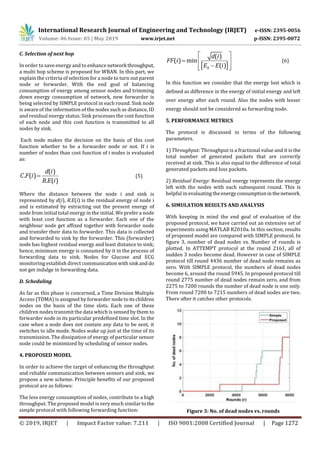
figure 3, number of dead nodes vs. Number of rounds is
plotted. In ATTEMPT protocol at the round 2161, all of
sudden 3 nodes become dead. However in case of SIMPLE
protocol till round 4436 number of dead node remains as
zero. With SIMPLE protocol, the numbers of dead nodes
become 6, around the round 5945. In proposed protocol till
round 2775 number of dead nodes remain zero, and from
2275 to 7200 rounds the number of dead node is one only.
From round 7200 to 7215 numbers of dead nodes are two.
There after it catches other protocols.
Figure 3: No. of dead nodes vs. rounds
International Research Journal of Engineering and Technology (IRJET) e-ISSN: 2395-0056
Volume: 06 Issue: 05 | May 2019 www.irjet.net p-ISSN: 2395-0072
© 2019, IRJET | Impact Factor value: 7.211 | ISO 9001:2008 Certified Journal | Page 1273
Figure 4: Residual Energy vs. Rounds
In figure 4, residual energy vs. Round is plotted. Here the
residual energy curve for SIMPLE and proposed protocol is
shown. However, the proposed protocol has better saving of
energy due to lesser number of dead nodes.
Figure 5: No. of dropped packets vs. Rounds
In figure 5, number of dropped packets vs. Round is plotted.
Here the curves for simple and proposed protocols are
shown. In case of simple protocol the numbers of dropped
packets are 1.203×10⁴, while in case of proposed protocol
the numbers of dropped packets are 1.353×10⁴.
In figure 6 packet received at the sink vs. Round is plotted, it
is clear from the figure that the performanceoftheproposed
protocols are better in comparison to the SIMPLE protocol.
After 6000 rounds a significant difference in the packet
received at the sink can be observed. In case of proposed
protocol the total packets received are 3.134×10⁴, while for
SIMPLE protocol; the numbers of received packets are
2.807×10⁴. Therefore, a rise in the packets received and in
terms of percentage it is 11.64%.
Figure 6: Packet Received at the Sink vs. Rounds
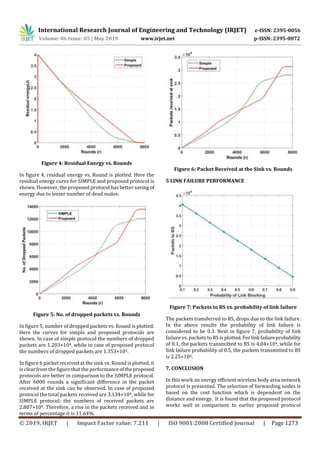
5 LINK FAILURE PERFORMANCE
Figure 7: Packets to BS vs. probability of link failure
The packets transferred to BS, drops due to the link failure.
In the above results the probability of link failure is
considered to be 0.3. Next in figure 7, probability of link
failure vs. packets to BS is plotted.Forlink failureprobability
of 0.1, the packets transmitted to BS is 4.04×10⁴, while for
link failure probability of 0.5, the packets transmitted to BS
is 2.25×10⁴.
7. CONCLUSION
In this work an energy efficient wireless body area network
protocol is presented. The selection of forwarding nodes is
based on the cost function which is dependent on the
distance and energy. It is found that the proposed protocol
works well in comparison to earlier proposed protocol
International Research Journal of Engineering and Technology (IRJET) e-ISSN: 2395-0056
Volume: 06 Issue: 05 | May 2019 www.irjet.net p-ISSN: 2395-0072
© 2019, IRJET | Impact Factor value: 7.211 | ISO 9001:2008 Certified Journal | Page 1274
SIMPLE. The throughput of the proposed protocol is nearly
11.64% more than the SIMPLE protocol.
REFERENCES
[1] C. Poon, Y. Zhang and S. Bao, `A novel biometricsmethod
to secure wireless body area sensor networks for
telemedicine and m-health’, IEEE Communications
Magazine (2006); Vol. 44, No. 4, pp. 73-81.
[2] K.K. Venkatasubramanian, A. Banerjee and S.K.S. Gupta,
`Plethysmogram-based Secure Inter-Sensor
Communication in Body Area Networks’,Proceedingsof
MILCOM (2008); San Deigo, CA. pp.1-7.
[3] Jin-Meng Ho., `A Versatile Suite of Strong Authenticated
Key Agreement Protocols for Body Area Networks’,
Proceedings of 8thInternational ConferenceonWireless
Communications and Mobile Computing Conference
(IWCMC) (2012) August 27-31; Limassol, pp. 683-688.
[4] Fan Rung, Ping Ling-Di, Fu Jian-Qing and Pan Xue-Zeng,
`The New Secure and Efficient Data Storage Approaches
for Wireless Body Area Networks’, Proceedings of
International Conference on Wireless Communications
and Signal Processing (WCSP) (2010) October 21-23;
Suzhou, pp. 1-5.
[5] Liu Jingwei , Zhang Zonghua, Sun Rong and Kyung Sup
kwak, `An Efficient Certificateless Remote Anonymous
Authentication Scheme for Wireless Body Area
Networks’, Proceedings of IEEE International
ConferenceonCommunications(ICC) (2012)June10-15;
Ottawa, ON, pp. 3404-3408.
[6] N. Javaid Z. Abbas, M. S. Farid, Z. A. Khan and N. Alrajeh,
“M-ATTEMPT: A New Energy-Efficient RoutingProtocol
for Wireless Body Area Sensor Networks”, The 4th
International Conference on Ambient Systems,
Networks and Technologies (ANT 2013), 2013, Halifax,
Nova Scotia, Canada, Procedia Computer Science,
Volume 19, 2013, Pages 224-231.
[7] Q. Nadeem, N. Javaid SIMPLE: Stable Increased-
throughput Multi-hop Protocol for Link Efficiency in
Broadband and Wireless Computing, Communication
and Applications (BWCCA), 2013 Eighth International
Conference on Page(s): 221 – 226.

IRJET- Modified SIMPLE Protocol for Wireless Body Area Networks

  • 1.
    International Research Journalof Engineering and Technology (IRJET) e-ISSN: 2395-0056 Volume: 06 Issue: 05 | May 2019 www.irjet.net p-ISSN: 2395-0072 © 2019, IRJET | Impact Factor value: 7.211 | ISO 9001:2008 Certified Journal | Page 1270 Modified SIMPLE Protocol for Wireless Body Area Networks Nidhi Dwivedi1, Hari Om Sharan2 1Research Scholar, Department of Computer Science and Engineering, Rama University, Mandhana, Kanpur, Uttar Pradesh, INDIA 2 Head of Department, Department of Computer Science and Engineering, Rama University, Mandhana, Kanpur, Uttar Pradesh, INDIA ----------------------------------------------------------------------***--------------------------------------------------------------------- Abstract – Wireless body area network is a hot upcoming field in automatic patient monitoring. In WBAN sensors are placed on patient body, and thesesensorscollectpatient’sdata and after aggregation data is send to base station, and finally to doctor sitting at distant place from patient. As sensornodes sense data therefore their battery drains, and to save battery power various routing protocols are proposed. In the similar context recently SIMPLE protocol was proposed. In this paper further modification is suggested to improve its performance. Key Words: WBAN, SIMPLE, Throughput 1. INTRODUCTION With the fast growth in the population of developed countries, the health-care is now one of the major issues for health-care authorities and government. In order to overcome this problem and to provide patient monitoring even from remote location, wireless technology is used which also provides reliable, cost effective, and fast services to patient. WBAN is the latest evolved technology which provides very effective health care services. It gives simple diagnostic monitoring [1]. In the WBAN technology, sensor nodes work on energy source constraints. The sensors must use power as low as could be for the transmission of data to sink. With the minimum use of energy source can extendthe life of the battery over a long period due to the fact that recharging batteries in WBAN is not frequent. In WBAN, one of the prime issues is of recharging the batteries. To overcome this problem, an effective routing protocol is needed. WSNs have a number of routing protocols [2], [3], [4], [5] which makes use of energy efficiently. But WBANs and WSNs are of different architectures, applications and work in different situation. It is not possible to port WSN routing protocol to WBAN. Therefore, for WBAN we require an energy efficient routing protocol in order to monitor a patient for long time. In this paper, we propose a reliable, high throughput and stable routing protocol for the purpose of patient monitoring. We place sensor nodes at their pre-decided place on the patient’s body. Sensors for glucose level and ECG are put close to the sink. Sink is paced at waist. Both of these sensors containimportantpatient’sdata andneedhigh reliability, less attenuation and long life as they have to transfer their data to sink continuously. The parent node is followed by other sensors and sends data to sink by means of multi hop. It conserves nodes’ energy and network work for a long time. In this paper a wireless body area network protocol will be designed. In this work, all the sensors located on body will transfer data to sink node (generally on wrist or waist) and sink node will transmit data to base station or to the server. The simulation results will be evaluated in terms of 1. No. of dropped packets 2. Remaining Energy 3. Throughput 4. Number of dead node These results will be plotted with number of rounds. 2. RADIO MODEL In past various radio model is proposed for WSN. In general first order radio is found suitable for WBAN as detailed in [6]. Figure 1: First order radio model This radio model assume that d , is the separation between transmitter and receiver and 2 d , the loss of energy due to transmission channel. First order radio model equationscan be summarized as ( , ) ( ) ( , )TX TX elec TX ampE k d E k E k d   (1) 2 ( , )TX TX elec TX ampE k d E k E k d      (2) ( , ) ( ) ( ) ( )RX RX elec RX RX elecE k d E k E k E k k    (3)
  • 2.
    International Research Journalof Engineering and Technology (IRJET) e-ISSN: 2395-0056 Volume: 06 Issue: 05 | May 2019 www.irjet.net p-ISSN: 2395-0072 © 2019, IRJET | Impact Factor value: 7.211 | ISO 9001:2008 Certified Journal | Page 1271 where TXE is the energy consumed at the time of transmission, RXE is theenergyconsumedduringreception, TX elecE  and RX elecE  are the energies needed for the operation of the electronic circuit of transmitter and receiver, respectively. Eamp is termed as the measure of energy needed for the amplifier circuit, while k denotes the size of the packet. The medium that is used for the communication in WBAN is human body which provides its contribution of attenuation to radio signal. Hence, path loss coefficient parameter is added by us in radio model. Equation 27 of transmitter can be rewritten as ( , ) n TX elec ampE k d E k E n k d      (4) The parameters of energy provided in equation 6 relyonthe hardware. In WBAN technology, two transceivers that are generally used for the analysis are Nordic nRF 2401A is a single chip, low power and Chipcon CC2420 transceivers. Both have the same bandwidth i.e. 2.4GHz. The reason behind the use of the energy parameter of The Nordic nRF 2401A transceiver is its less consumption of power as compared to Chipcon CC2420. The energy parameters for this transceiver are given in Table 1. Table 1: Network Parameters Parameter Value E0 0.5 Joule Eelec 5 nJ/bit Efs 10pJ/bit/m2 Eamp Eda Packet Size 0.0013 pJ/bit/m4 5 pJ/bit 4000 bits 3. SIMPLE PROTOCOL The constant quantities of nodes in WBANs offer chance to relax limitations in routing protocols. Withtheinspirationof routing constrains, we enhance the period of stability and throughput of the network [41]. Following subsections throws a light on the features ofthesystem model alongwith the detail of SIMPLE protocol. A. System Model Eight sensor nodes are placed on the body of the person in this scheme. Each sensor node consists of same power and computation capabilities. Sink node is deployed at waist. Node 1 which is around heart area is ECG sensor while node 2 in waist is Glucose sensor node. Data is transmitted directly to sink by these two nodes. The deployment of nodes and sink on the human body is shown by the fig. 3.2. The typical sensor node parametersaredetailedinTable 3.1. Table 2: Radio Parameters Parameters nRF 2401A CC2420 Units DC Current (Tx) 10.5 17.4 mA DC Current (Rx) 18 19.7 mA Supply Voltage (min) 1.9 2.1 V ETX-elec 16.7 96.9 nJ/bit ERX-elec 36.1 172.8 nJ/bit Eamp 1.97×10⁻⁹ 2.71×10⁻⁷ J/bit Figure 2: WBAN Body Area Network with Eight Nodes B. Initial Phase In this phase, Sink broadcast a small information packet in this phase which comprises the position of the sink on the person’s body. Each sensor node, after getting this control packet, stores the position of sink. An information packet is broadcasted by each sensor node which has the following information: position of node on body, node ID and its energy status. Thus, each sensor node is updated with the information about the location of neighbours and sink.
  • 3.
    International Research Journalof Engineering and Technology (IRJET) e-ISSN: 2395-0056 Volume: 06 Issue: 05 | May 2019 www.irjet.net p-ISSN: 2395-0072 © 2019, IRJET | Impact Factor value: 7.211 | ISO 9001:2008 Certified Journal | Page 1272 C. Selection of next hop In order to save energy and to enhance network throughput, a multi hop scheme is proposed for WBAN. In this part, we explain the criteria of selection for a node to turn out parent node or forwarder. With the end goal of balancing consumption of energy among sensor nodes and trimming down energy consumption of network, new forwarder is being selected by SIMPLE protocol in each round. Sink node is aware of the information of the nodes such as distance, ID and residual energy status. Sink processes the cost function of each node and this cost function is transmitted to all nodes by sink. Each node makes the decision on the basis of this cost function whether to be a forwarder node or not. If i is number of nodes than cost function of i nodes is evaluated as: ( ) . ( ) . ( ) d i C F i R E i  (5) Where the distance between the node i and sink is represented by d(i), R.E(i) is the residual energy of node i and is estimated by extracting out the present energy of node from initial total energy in the initial. We prefer a node with least cost function as a forwarder. Each one of the neighbour node get affixed together with forwarder node and transfer their data to forwarder. This data is collected and forwarded to sink by the forwarder. This (forwarder) node has highest residual energy and least distance to sink; hence, minimum energy is consumed by it in the process of forwarding data to sink. Nodes for Glucose and ECG monitoring establish direct communicationwithsink and do not get indulge in forwarding data. D. Scheduling As far as this phase is concerned, a Time Division Multiple Access (TDMA) is assigned by forwarder node toitschildren nodes on the basis of the time slots. Each one of these children nodes transmit the data which is sensed by them to forwarder node in its particular predefined time slot. In the case when a node does not contain any data to be sent, it switches to idle mode. Nodes wake up just at the time of its transmission. The dissipation of energy of particular sensor node could be minimized by scheduling of sensor nodes. 4. PROPOSED MODEL In order to achieve the target of enhancing the throughput and reliable communication between sensors and sink, we propose a new scheme. Principle benefits of our proposed protocol are as follows: The less energy consumption of nodes, contribute to a high throughput. The proposed model is very much similar tothe simple protocol with following forwarding function:          0 ( ) ( ) min ( ) d i FF i E E i (6) In this function we consider that the energy lost which is defined as difference in the energy of initial energy and left over energy after each round. Also the nodes with lesser energy should not be considered as forwarding node. 5. PERFORMANCE METRICS The protocol is discussed in terms of the following parameters. 1) Throughput: Throughput is a fractional value and it is the total number of generated packets that are correctly received at sink. This is also equal to the difference of total generated packets and loss packets. 2) Residual Energy: Residual energy represents the energy left with the nodes with each subsequent round. This is helpful in evaluatingtheenergyconsumptioninthenetwork. 6. SIMULATION RESULTS AND ANALYSIS With keeping in mind the end goal of evaluation of the proposed protocol, we have carried out an extensive set of experiments using MATLAB R2010a. In this section, results of proposed model are compared with SIMPLE protocol. In figure 3, number of dead nodes vs. Number of rounds is plotted. In ATTEMPT protocol at the round 2161, all of sudden 3 nodes become dead. However in case of SIMPLE protocol till round 4436 number of dead node remains as zero. With SIMPLE protocol, the numbers of dead nodes become 6, around the round 5945. In proposed protocol till round 2775 number of dead nodes remain zero, and from 2275 to 7200 rounds the number of dead node is one only. From round 7200 to 7215 numbers of dead nodes are two. There after it catches other protocols. Figure 3: No. of dead nodes vs. rounds
  • 4.
    International Research Journalof Engineering and Technology (IRJET) e-ISSN: 2395-0056 Volume: 06 Issue: 05 | May 2019 www.irjet.net p-ISSN: 2395-0072 © 2019, IRJET | Impact Factor value: 7.211 | ISO 9001:2008 Certified Journal | Page 1273 Figure 4: Residual Energy vs. Rounds In figure 4, residual energy vs. Round is plotted. Here the residual energy curve for SIMPLE and proposed protocol is shown. However, the proposed protocol has better saving of energy due to lesser number of dead nodes. Figure 5: No. of dropped packets vs. Rounds In figure 5, number of dropped packets vs. Round is plotted. Here the curves for simple and proposed protocols are shown. In case of simple protocol the numbers of dropped packets are 1.203×10⁴, while in case of proposed protocol the numbers of dropped packets are 1.353×10⁴. In figure 6 packet received at the sink vs. Round is plotted, it is clear from the figure that the performanceoftheproposed protocols are better in comparison to the SIMPLE protocol. After 6000 rounds a significant difference in the packet received at the sink can be observed. In case of proposed protocol the total packets received are 3.134×10⁴, while for SIMPLE protocol; the numbers of received packets are 2.807×10⁴. Therefore, a rise in the packets received and in terms of percentage it is 11.64%. Figure 6: Packet Received at the Sink vs. Rounds 5 LINK FAILURE PERFORMANCE Figure 7: Packets to BS vs. probability of link failure The packets transferred to BS, drops due to the link failure. In the above results the probability of link failure is considered to be 0.3. Next in figure 7, probability of link failure vs. packets to BS is plotted.Forlink failureprobability of 0.1, the packets transmitted to BS is 4.04×10⁴, while for link failure probability of 0.5, the packets transmitted to BS is 2.25×10⁴. 7. CONCLUSION In this work an energy efficient wireless body area network protocol is presented. The selection of forwarding nodes is based on the cost function which is dependent on the distance and energy. It is found that the proposed protocol works well in comparison to earlier proposed protocol
  • 5.
    International Research Journalof Engineering and Technology (IRJET) e-ISSN: 2395-0056 Volume: 06 Issue: 05 | May 2019 www.irjet.net p-ISSN: 2395-0072 © 2019, IRJET | Impact Factor value: 7.211 | ISO 9001:2008 Certified Journal | Page 1274 SIMPLE. The throughput of the proposed protocol is nearly 11.64% more than the SIMPLE protocol. REFERENCES [1] C. Poon, Y. Zhang and S. Bao, `A novel biometricsmethod to secure wireless body area sensor networks for telemedicine and m-health’, IEEE Communications Magazine (2006); Vol. 44, No. 4, pp. 73-81. [2] K.K. Venkatasubramanian, A. Banerjee and S.K.S. Gupta, `Plethysmogram-based Secure Inter-Sensor Communication in Body Area Networks’,Proceedingsof MILCOM (2008); San Deigo, CA. pp.1-7. [3] Jin-Meng Ho., `A Versatile Suite of Strong Authenticated Key Agreement Protocols for Body Area Networks’, Proceedings of 8thInternational ConferenceonWireless Communications and Mobile Computing Conference (IWCMC) (2012) August 27-31; Limassol, pp. 683-688. [4] Fan Rung, Ping Ling-Di, Fu Jian-Qing and Pan Xue-Zeng, `The New Secure and Efficient Data Storage Approaches for Wireless Body Area Networks’, Proceedings of International Conference on Wireless Communications and Signal Processing (WCSP) (2010) October 21-23; Suzhou, pp. 1-5. [5] Liu Jingwei , Zhang Zonghua, Sun Rong and Kyung Sup kwak, `An Efficient Certificateless Remote Anonymous Authentication Scheme for Wireless Body Area Networks’, Proceedings of IEEE International ConferenceonCommunications(ICC) (2012)June10-15; Ottawa, ON, pp. 3404-3408. [6] N. Javaid Z. Abbas, M. S. Farid, Z. A. Khan and N. Alrajeh, “M-ATTEMPT: A New Energy-Efficient RoutingProtocol for Wireless Body Area Sensor Networks”, The 4th International Conference on Ambient Systems, Networks and Technologies (ANT 2013), 2013, Halifax, Nova Scotia, Canada, Procedia Computer Science, Volume 19, 2013, Pages 224-231. [7] Q. Nadeem, N. Javaid SIMPLE: Stable Increased- throughput Multi-hop Protocol for Link Efficiency in Broadband and Wireless Computing, Communication and Applications (BWCCA), 2013 Eighth International Conference on Page(s): 221 – 226.