International Research Journal of Engineering and Technology (IRJET) e-ISSN: 2395-0056
Volume: 06 Issue: 05 | May 2019 www.irjet.net p-ISSN: 2395-0072
© 2019, IRJET | Impact Factor value: 7.211 | ISO 9001:2008 Certified Journal | Page 145
CFD Modeling and Optimization of Magneto-rheological Abrasive Flow
Finishing (MRAFF) Process
V. Bharat1, S. Moulali2
1Student, M.Tech, Mechanical Dept., SVTM, Madanapalle, A.P, India
2Assistant Professor, Mechanical Dept., SVTM, Madanapalle, A.P, India
---------------------------------------------------------------------------***---------------------------------------------------------------------------
Abstract:- A modern nano finishing technique called
magnetorheological abrasive flow finishing (MRAFF), which
is simply a combined hybrid form of abrasive flow machining
(AFM) process and magnetorheological finishing (MRF)
process, has been designed for micro finishing of parts even
with difficult geometry for a broad range of industrial
purposes. In the present work, a model for the prediction of
removal of material and surface roughness has been
estimated. An effort has been made to study the flow passing
through the stainless steel workpiece by CFD modeling in
ANSYS 15.0 FLUENT. By assuming the medium as Bingham
plastic various parameters affecting the surface roughness
has been calculated. Also a theoretical calculation is made for
the model if no magnetic field is applied and then
comparative study of the two models is proposed. An
optimization of the process has also been carried out. With
the help of SN Ratio plot and Means plot optimized value of
input parameters has been found out to achieve better
surface finish.
Key words : Geometry, Nano, Magnetorhelogical, Stainless
steel, magnetic field, Bingham plastic
Introduction : 1.1 Preamble
The available advanced and traditional concluding
processes alone are incompetent of producing anticipated
surface characteristics on complex geometries and in
exercising in-process control on ultimate action. Precision
finishing of complex geometries and internal surfaces is
always of anxiety being labor intensive and challenging to
control. In the contemporary technological world numerous
products need a surface roughness of the order of a
nanometer (10-9 m). It is preferable to use automate the
technique where the desired surface finish can be achieved
as a function of time. To obtain desired geometrical precision
and surface characteristics by removal of unwanted
superfluous material from the workpiece surface, small
multiple cutting edges of abrasives are usually used. All
traditional finishing routes viz. lapping, grinding, honing, etc.
work on this mechanism of finishing.
1.2 Overview of Magnetorhelogical and Allied Finishing
Processes
The available traditional processes are unable of producing
desired nano/micro level finishing also these require high
expensive equipment, more time consuming and
economically incompetent. Magnetorheological Abrasive
flow finishing is one of the processes with wide range of
application. Before going into the detail discussion of MRAFF
process let first discuss other processes i.e. MAF, MRF and
MFP were the control of performance is done by the use of
magnetic field. In these processes, the force acting on the
work piece surface through the abrasive particles is
controlled externally by changing the magnetic flux density.
1.2.1 Magnetic Abrasive Finishing (MAF)
In this technique, basically ferromagnetic particles are
sintered with fine abrasive grains (Al2O3, SiC, CBN, or
diamond), and those particles are known as ferromagnetic
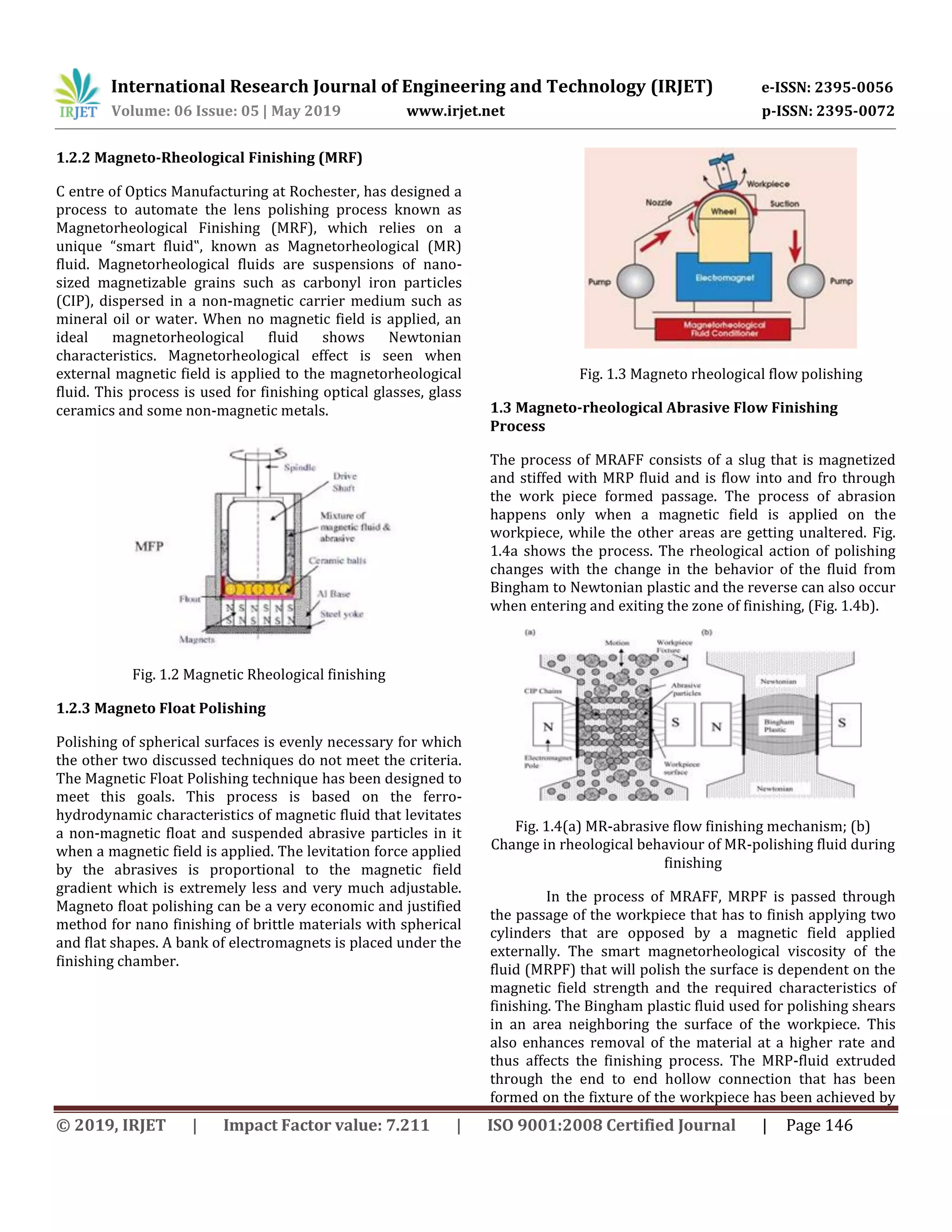
abrasive particles (or magnetic abrasive particles). Fig. 1.1
shows a schematic figure of a plane MAF technique which
has the power to control the finishing process is by
controlling the application of magnetic field across the
machining gap among the top surface of workpiece material
and bottom surface of the electromagnet pole which is
rotating.
Fig. 1.1 Magnetic abrasive flow machining
International Research Journal of Engineering and Technology (IRJET) e-ISSN: 2395-0056
Volume: 06 Issue: 05 | May 2019 www.irjet.net p-ISSN: 2395-0072
© 2019, IRJET | Impact Factor value: 7.211 | ISO 9001:2008 Certified Journal | Page 146
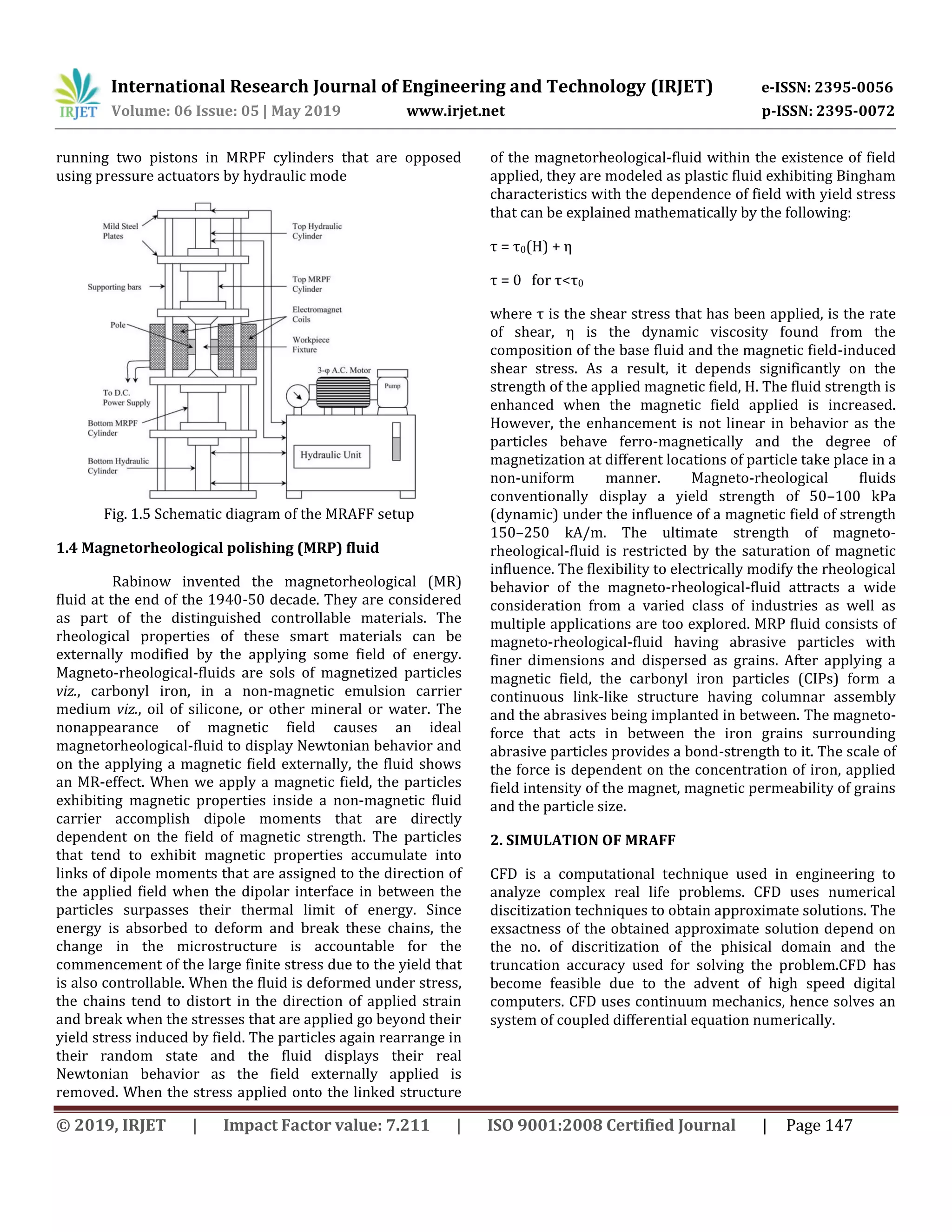
1.2.2 Magneto-Rheological Finishing (MRF)
C entre of Optics Manufacturing at Rochester, has designed a
process to automate the lens polishing process known as
Magnetorheological Finishing (MRF), which relies on a
unique “smart fluid‟, known as Magnetorheological (MR)
fluid. Magnetorheological fluids are suspensions of nano-
sized magnetizable grains such as carbonyl iron particles
(CIP), dispersed in a non-magnetic carrier medium such as
mineral oil or water. When no magnetic field is applied, an
ideal magnetorheological fluid shows Newtonian
characteristics. Magnetorheological effect is seen when
external magnetic field is applied to the magnetorheological
fluid. This process is used for finishing optical glasses, glass
ceramics and some non-magnetic metals.
Fig. 1.2 Magnetic Rheological finishing
1.2.3 Magneto Float Polishing
Polishing of spherical surfaces is evenly necessary for which
the other two discussed techniques do not meet the criteria.
The Magnetic Float Polishing technique has been designed to
meet this goals. This process is based on the ferro-
hydrodynamic characteristics of magnetic fluid that levitates
a non-magnetic float and suspended abrasive particles in it
when a magnetic field is applied. The levitation force applied
by the abrasives is proportional to the magnetic field
gradient which is extremely less and very much adjustable.
Magneto float polishing can be a very economic and justified
method for nano finishing of brittle materials with spherical
and flat shapes. A bank of electromagnets is placed under the
finishing chamber.
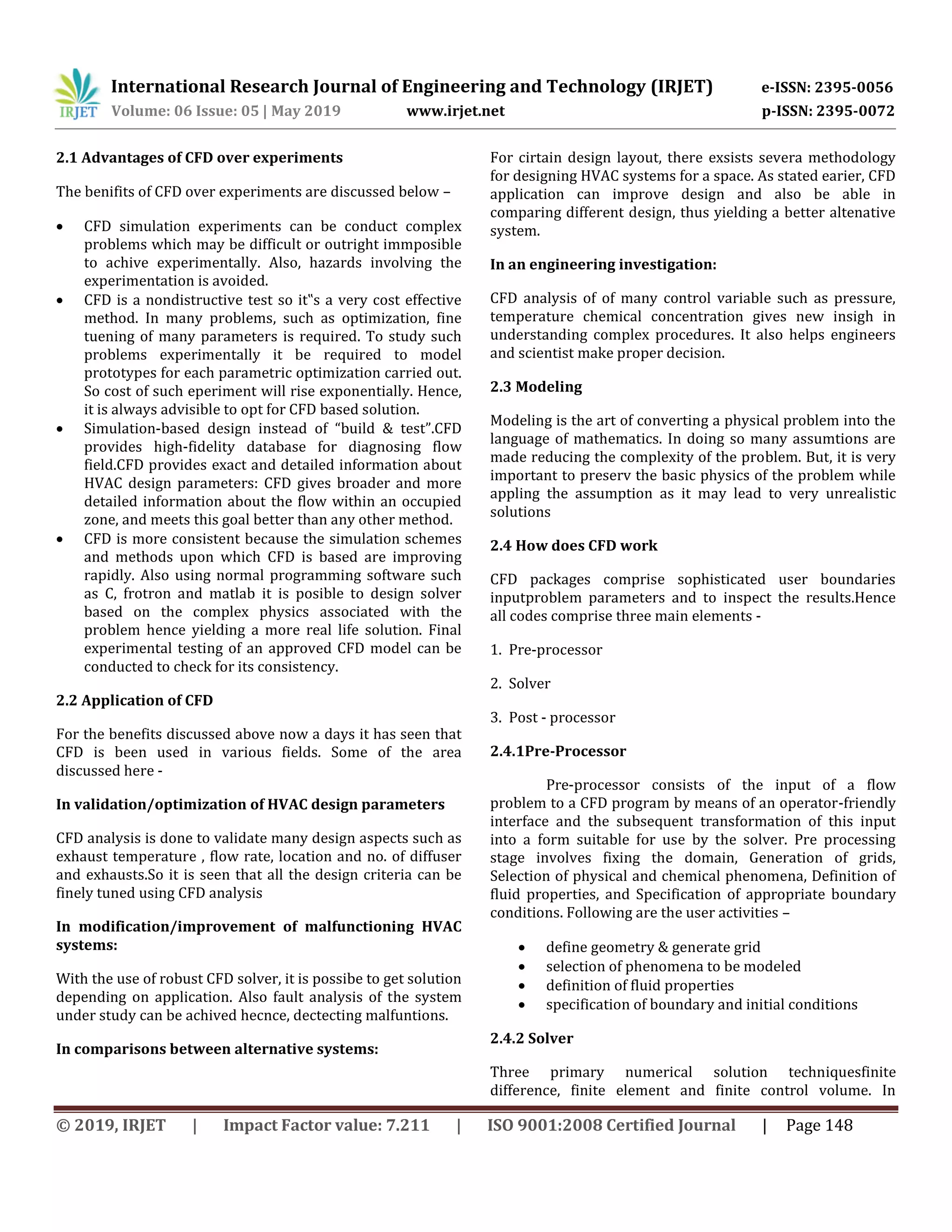
Fig. 1.3 Magneto rheological flow polishing
1.3 Magneto-rheological Abrasive Flow Finishing
Process
The process of MRAFF consists of a slug that is magnetized
and stiffed with MRP fluid and is flow into and fro through
the work piece formed passage. The process of abrasion
happens only when a magnetic field is applied on the
workpiece, while the other areas are getting unaltered. Fig.
1.4a shows the process. The rheological action of polishing
changes with the change in the behavior of the fluid from
Bingham to Newtonian plastic and the reverse can also occur
when entering and exiting the zone of finishing, (Fig. 1.4b).
Fig. 1.4(a) MR-abrasive flow finishing mechanism; (b)
Change in rheological behaviour of MR-polishing fluid during
finishing
In the process of MRAFF, MRPF is passed through
the passage of the workpiece that has to finish applying two
cylinders that are opposed by a magnetic field applied
externally. The smart magnetorheological viscosity of the
fluid (MRPF) that will polish the surface is dependent on the
magnetic field strength and the required characteristics of
finishing. The Bingham plastic fluid used for polishing shears
in an area neighboring the surface of the workpiece. This
also enhances removal of the material at a higher rate and
thus affects the finishing process. The MRP-fluid extruded
through the end to end hollow connection that has been
formed on the fixture of the workpiece has been achieved by
International Research Journal of Engineering and Technology (IRJET) e-ISSN: 2395-0056
Volume: 06 Issue: 05 | May 2019 www.irjet.net p-ISSN: 2395-0072
© 2019, IRJET | Impact Factor value: 7.211 | ISO 9001:2008 Certified Journal | Page 147
running two pistons in MRPF cylinders that are opposed
using pressure actuators by hydraulic mode
Fig. 1.5 Schematic diagram of the MRAFF setup
1.4 Magnetorheological polishing (MRP) fluid
Rabinow invented the magnetorheological (MR)
fluid at the end of the 1940-50 decade. They are considered
as part of the distinguished controllable materials. The
rheological properties of these smart materials can be
externally modified by the applying some field of energy.
Magneto-rheological-fluids are sols of magnetized particles
viz., carbonyl iron, in a non-magnetic emulsion carrier
medium viz., oil of silicone, or other mineral or water. The
nonappearance of magnetic field causes an ideal
magnetorheological-fluid to display Newtonian behavior and
on the applying a magnetic field externally, the fluid shows
an MR-effect. When we apply a magnetic field, the particles
exhibiting magnetic properties inside a non-magnetic fluid
carrier accomplish dipole moments that are directly
dependent on the field of magnetic strength. The particles
that tend to exhibit magnetic properties accumulate into
links of dipole moments that are assigned to the direction of
the applied field when the dipolar interface in between the
particles surpasses their thermal limit of energy. Since
energy is absorbed to deform and break these chains, the
change in the microstructure is accountable for the
commencement of the large finite stress due to the yield that
is also controllable. When the fluid is deformed under stress,
the chains tend to distort in the direction of applied strain
and break when the stresses that are applied go beyond their
yield stress induced by field. The particles again rearrange in
their random state and the fluid displays their real
Newtonian behavior as the field externally applied is
removed. When the stress applied onto the linked structure
of the magnetorheological-fluid within the existence of field
applied, they are modeled as plastic fluid exhibiting Bingham
characteristics with the dependence of field with yield stress
that can be explained mathematically by the following:
τ = τ0(H) + η
τ = 0 for τ<τ0
where τ is the shear stress that has been applied, is the rate
of shear, η is the dynamic viscosity found from the
composition of the base fluid and the magnetic field-induced
shear stress. As a result, it depends significantly on the
strength of the applied magnetic field, H. The fluid strength is
enhanced when the magnetic field applied is increased.
However, the enhancement is not linear in behavior as the
particles behave ferro-magnetically and the degree of
magnetization at different locations of particle take place in a
non-uniform manner. Magneto-rheological fluids
conventionally display a yield strength of 50–100 kPa
(dynamic) under the influence of a magnetic field of strength
150–250 kA/m. The ultimate strength of magneto-
rheological-fluid is restricted by the saturation of magnetic
influence. The flexibility to electrically modify the rheological
behavior of the magneto-rheological-fluid attracts a wide
consideration from a varied class of industries as well as
multiple applications are too explored. MRP fluid consists of
magneto-rheological-fluid having abrasive particles with
finer dimensions and dispersed as grains. After applying a
magnetic field, the carbonyl iron particles (CIPs) form a
continuous link-like structure having columnar assembly
and the abrasives being implanted in between. The magneto-
force that acts in between the iron grains surrounding
abrasive particles provides a bond-strength to it. The scale of
the force is dependent on the concentration of iron, applied
field intensity of the magnet, magnetic permeability of grains
and the particle size.
2. SIMULATION OF MRAFF
CFD is a computational technique used in engineering to
analyze complex real life problems. CFD uses numerical
discitization techniques to obtain approximate solutions. The
exsactness of the obtained approximate solution depend on
the no. of discritization of the phisical domain and the
truncation accuracy used for solving the problem.CFD has
become feasible due to the advent of high speed digital
computers. CFD uses continuum mechanics, hence solves an
system of coupled differential equation numerically.
International Research Journal of Engineering and Technology (IRJET) e-ISSN: 2395-0056
Volume: 06 Issue: 05 | May 2019 www.irjet.net p-ISSN: 2395-0072
© 2019, IRJET | Impact Factor value: 7.211 | ISO 9001:2008 Certified Journal | Page 148
2.1 Advantages of CFD over experiments
The benifits of CFD over experiments are discussed below –
 CFD simulation experiments can be conduct complex
problems which may be difficult or outright immposible
to achive experimentally. Also, hazards involving the
experimentation is avoided.
 CFD is a nondistructive test so it‟s a very cost effective
method. In many problems, such as optimization, fine
tuening of many parameters is required. To study such
problems experimentally it be required to model
prototypes for each parametric optimization carried out.
So cost of such eperiment will rise exponentially. Hence,
it is always advisible to opt for CFD based solution.
 Simulation-based design instead of “build & test”.CFD
provides high-fidelity database for diagnosing flow
field.CFD provides exact and detailed information about
HVAC design parameters: CFD gives broader and more
detailed information about the flow within an occupied
zone, and meets this goal better than any other method.
 CFD is more consistent because the simulation schemes
and methods upon which CFD is based are improving
rapidly. Also using normal programming software such
as C, frotron and matlab it is posible to design solver
based on the complex physics associated with the
problem hence yielding a more real life solution. Final
experimental testing of an approved CFD model can be
conducted to check for its consistency.
2.2 Application of CFD
For the benefits discussed above now a days it has seen that
CFD is been used in various fields. Some of the area
discussed here -
In validation/optimization of HVAC design parameters
CFD analysis is done to validate many design aspects such as
exhaust temperature , flow rate, location and no. of diffuser
and exhausts.So it is seen that all the design criteria can be
finely tuned using CFD analysis
In modification/improvement of malfunctioning HVAC
systems:
With the use of robust CFD solver, it is possibe to get solution
depending on application. Also fault analysis of the system
under study can be achived hecnce, dectecting malfuntions.
In comparisons between alternative systems:
For cirtain design layout, there exsists severa methodology
for designing HVAC systems for a space. As stated earier, CFD
application can improve design and also be able in
comparing different design, thus yielding a better altenative
system.
In an engineering investigation:
CFD analysis of of many control variable such as pressure,
temperature chemical concentration gives new insigh in
understanding complex procedures. It also helps engineers
and scientist make proper decision.
2.3 Modeling
Modeling is the art of converting a physical problem into the
language of mathematics. In doing so many assumtions are
made reducing the complexity of the problem. But, it is very
important to preserv the basic physics of the problem while
appling the assumption as it may lead to very unrealistic
solutions
2.4 How does CFD work
CFD packages comprise sophisticated user boundaries
inputproblem parameters and to inspect the results.Hence
all codes comprise three main elements -
1. Pre-processor
2. Solver
3. Post - processor
2.4.1Pre-Processor
Pre-processor consists of the input of a flow
problem to a CFD program by means of an operator-friendly
interface and the subsequent transformation of this input
into a form suitable for use by the solver. Pre processing
stage involves fixing the domain, Generation of grids,
Selection of physical and chemical phenomena, Definition of
fluid properties, and Specification of appropriate boundary
conditions. Following are the user activities –
 define geometry & generate grid
 selection of phenomena to be modeled
 definition of fluid properties
 specification of boundary and initial conditions
2.4.2 Solver
Three primary numerical solution techniquesfinite
difference, finite element and finite control volume. In
International Research Journal of Engineering and Technology (IRJET) e-ISSN: 2395-0056
Volume: 06 Issue: 05 | May 2019 www.irjet.net p-ISSN: 2395-0072
© 2019, IRJET | Impact Factor value: 7.211 | ISO 9001:2008 Certified Journal | Page 149
outline the numerical methods that form the basis of solver.
The numerical method done by the following:
 Approximates the unknown variables by simple
functions
 Discretization by substitution of the approx-imations
into the governing flow equations and subsequent
mathematical manipulations
 Solution of the algebraic equations
2.5 Present Study
In the current study a 2D computational fluid
dynamicss(CFD)simulation of the medium along the
workpiece fixture has been carriedsout in ANSYS 15 FLUENT
to calculate the axial stress, radial stress and depth of
indentation to find out the volumetric material removal rate.
Also a calculation has been made to find out the surface
roughness to examine the level of precision that can be
achived by this finishing process.
2.5.1 Govering Equations
The mathematical depiction of the flow of
magnetorheological polishing fluid in Magnetorheologial
abrasive flow finishing process involves general equations of
continuitysand momentum. At first the basic equation of
continuitysand then the z-component of
momentumsequation in cylindricalscoordinate system are
solved. For Binghamsplastic fluid, relation between viscosity
and shear rate (µ = f (x)) which is a nonlinear function. For
the present work, viscosity is not justdepends on shear rate
althougha function of the applied magnetic effect through τy.
Thus, it is a bit difficult to solve the analytical solution of
Navier– Stokessequation and therefor CFD simulation is
carried out.
Following are the assumptions used tomake simplier the
analysis work:
 The medium is taken as homogeneous, isotropics and
incompressibles in nature.
 The flow is sassumed as a steady and axi-
symmetricsflow
 A fully developed flow is assumed (i.e. vr = 0, dvz/dz = 0)
with no spin ( = 0)
 τrz = µ(dvz /dr)
After applying the above assumptions the final form of the
continuitysand z-component of the momentumsequation is
summarised as
- -
= 0
where vz and vr are z and r components of the velocity. δp/
δz is pressure gradient in the z direction and it is obvious to
change linearly from inletsto exitsof the computationalszone,
and it is determined as δp/ δz = -(Papplied - Pfriction)/L. Here,
Pfrictions is the loss of pressure because of the piston friction
and insthe currentstudy it is taken as equivalent to 15 bar.
Papplied here is the pressures applied by the pumps and L is
taken as the length of fixture.
3. RESULT AND DISCUSSION :
Simulation results of the fluid flow through the workpiece
fixture is analyzed. Then calculation is made to find the
numerous parameters like total normal force, shear force,
indentation depth and material removal from the analysis
data.
3.1 Velocity Distribution
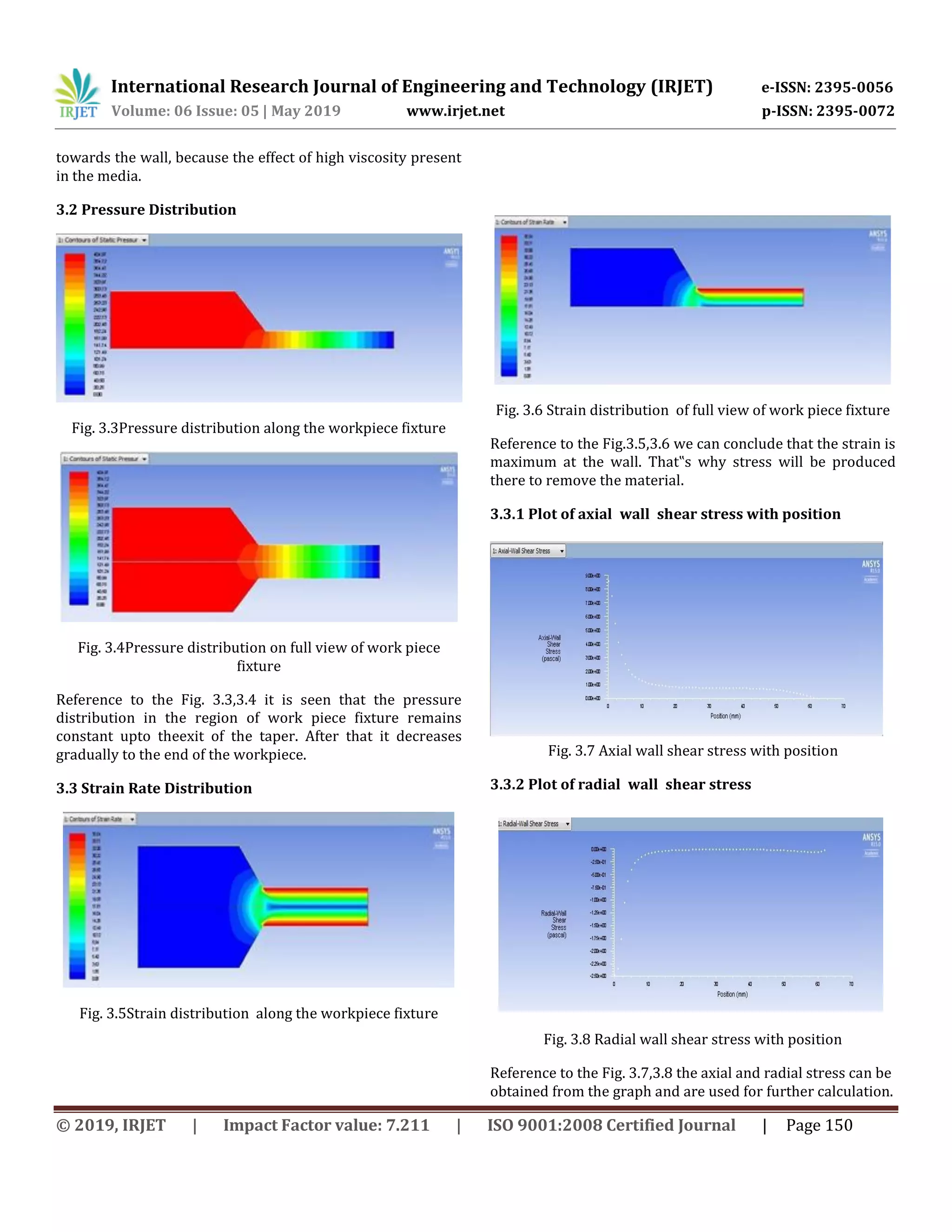
Fig. 3.1 Velocity distribution along the workpiece fixture
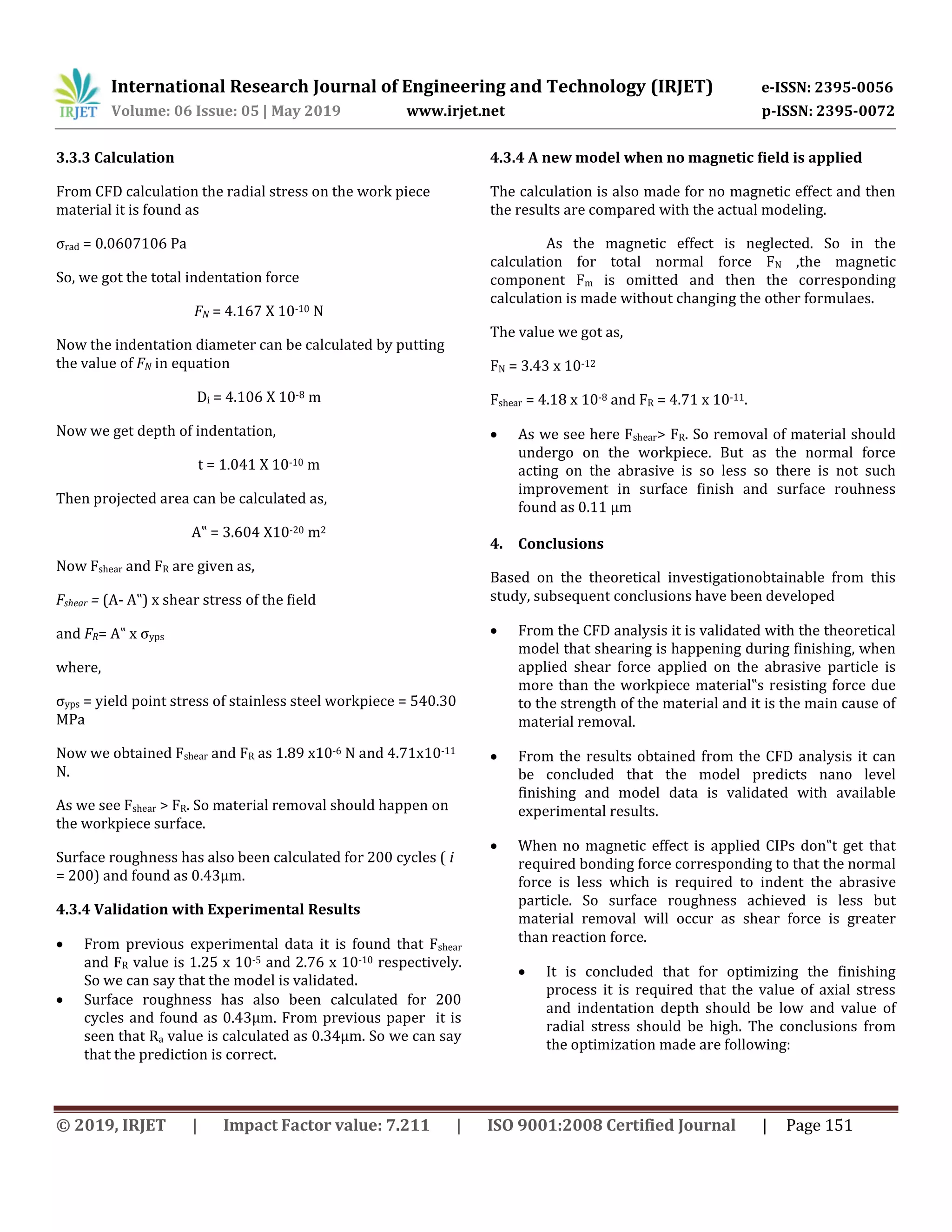
Fig. 3.2 Velocity distribution on full view of work piece
fixture
Reference to the Fig. 3.1,3.2 we can conclude that the
velocity changes when it reaches the taper exit, magnitude of
velocity is maximum at the centre and decreases gradually
International Research Journal of Engineering and Technology (IRJET) e-ISSN: 2395-0056
Volume: 06 Issue: 05 | May 2019 www.irjet.net p-ISSN: 2395-0072
© 2019, IRJET | Impact Factor value: 7.211 | ISO 9001:2008 Certified Journal | Page 150
towards the wall, because the effect of high viscosity present
in the media.
3.2 Pressure Distribution
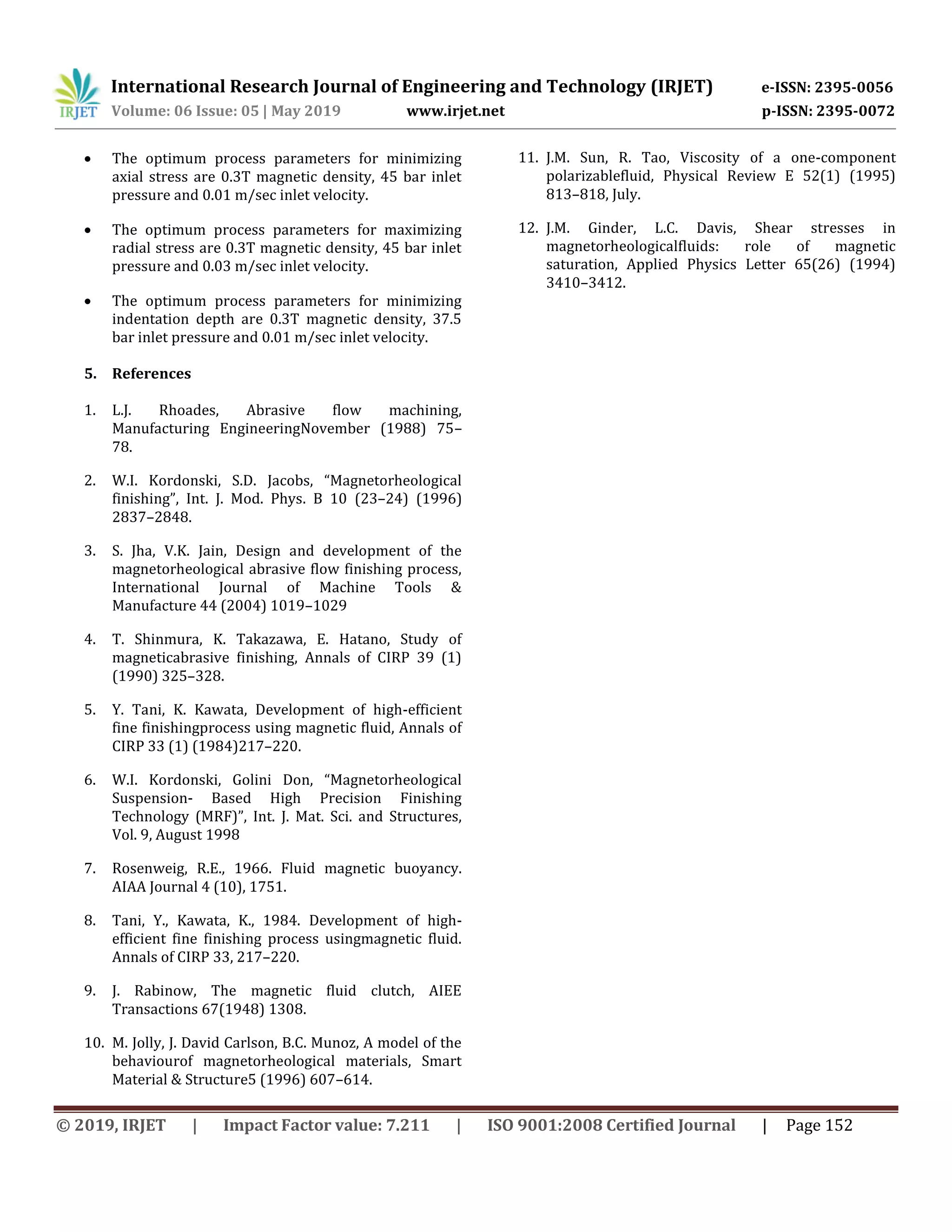
Fig. 3.3Pressure distribution along the workpiece fixture
Fig. 3.4Pressure distribution on full view of work piece
fixture
Reference to the Fig. 3.3,3.4 it is seen that the pressure
distribution in the region of work piece fixture remains
constant upto theexit of the taper. After that it decreases
gradually to the end of the workpiece.
3.3 Strain Rate Distribution
Fig. 3.5Strain distributionsalong the workpiece fixture
Fig. 3.6 Strain distributionsof full view of work piece fixture
Reference to the Fig.3.5,3.6 we can conclude that the strain is
maximum at the wall. That‟s why stress will be produced
there to remove the material.
3.3.1 Plot of axialswallsshear stress with position
Fig. 3.7 Axial wall shear stress with position
3.3.2 Plot of radialswallsshear stress
Fig. 3.8 Radial wall shear stress with position
Reference to the Fig. 3.7,3.8 the axial and radial stress can be
obtained from the graph and are used for further calculation.
International Research Journal of Engineering and Technology (IRJET) e-ISSN: 2395-0056
Volume: 06 Issue: 05 | May 2019 www.irjet.net p-ISSN: 2395-0072
© 2019, IRJET | Impact Factor value: 7.211 | ISO 9001:2008 Certified Journal | Page 151
3.3.3 Calculation
From CFD calculation the radial stress on the work piece
material it is found as
σrad = 0.0607106 Pa
So, we got the total indentation force
FN = 4.167 X 10⁻¹⁰ N
Now the indentation diameter can be calculated by putting
the value of FN in equation
Di = 4.106 X 10⁻⁸ m
Now we get depth of indentation,
t = 1.041 X 10⁻¹⁰ m
Then projected area can be calculated as,
A‟ = 3.604 X10⁻²⁰ m2
Now Fshear and FR are given as,
Fshear = (A- A‟) x shear stress of the field
and FR= A‟ x σyps
where,
σyps = yield point stress of stainless steel workpiece = 540.30
MPa
Now we obtained Fshear and FR as 1.89 x10⁻⁶ N and 4.71x10⁻¹¹
N.
As we see Fshear > FR. So material removal should happen on
the workpiece surface.
Surface roughness has also been calculated for 200 cycles ( i
= 200) and found as 0.43µm.
4.3.4 Validation with Experimental Results
 From previous experimental data it is found that Fshear
and FR value is 1.25 x 10⁻⁵ and 2.76 x 10⁻¹⁰ respectively.
So we can say that the model is validated.
 Surface roughness has also been calculated for 200
cycles and found as 0.43µm. From previous paper it is
seen that Ra value is calculated as 0.34µm. So we can say
that the prediction is correct.
4.3.4 A new model when no magnetic field is applied
The calculation is also made for no magnetic effect and then
the results are compared with the actual modeling.
As the magnetic effect is neglected. So in the
calculation for total normal force FN ,the magnetic
component Fm is omitted and then the corresponding
calculation is made without changing the other formulaes.
The value we got as,
FN = 3.43 x 10⁻¹²
Fshear = 4.18 x 10⁻⁸ and FR = 4.71 x 10⁻¹¹.
 As we see here Fshear> FR. So removal of material should
undergo on the workpiece. But as the normal force
acting on the abrasive is so less so there is not such
improvement in surface finish and surface rouhness
found as 0.11 µm
4. Conclusions
Based on the theoretical investigationobtainable from this
study, subsequent conclusions have been developed
 From the CFD analysis it is validated with the theoretical
model that shearing is happening during finishing, when
applied shear force applied on the abrasive particle is
more than the workpiece material‟s resisting force due
to the strength of the material and it is the main cause of
material removal.
 From the results obtained from the CFD analysis it can
be concluded that the model predicts nano level
finishing and model data is validated with available
experimental results.
 When no magnetic effect is applied CIPs don‟t get that
required bonding force corresponding to that the normal
force is less which is required to indent the abrasive
particle. So surface roughness achieved is less but
material removal will occur as shear force is greater
than reaction force.
 It is concluded that for optimizing the finishing
process it is required that the value of axial stress
and indentation depth should be low and value of
radial stress should be high. The conclusions from
the optimization made are following:
International Research Journal of Engineering and Technology (IRJET) e-ISSN: 2395-0056
Volume: 06 Issue: 05 | May 2019 www.irjet.net p-ISSN: 2395-0072
© 2019, IRJET | Impact Factor value: 7.211 | ISO 9001:2008 Certified Journal | Page 152
 The optimum process parameters for minimizing
axial stress are 0.3T magnetic density, 45 bar inlet
pressure and 0.01 m/sec inlet velocity.
 The optimum process parameters for maximizing
radial stress are 0.3T magnetic density, 45 bar inlet
pressure and 0.03 m/sec inlet velocity.
 The optimum process parameters for minimizing
indentation depth are 0.3T magnetic density, 37.5
bar inlet pressure and 0.01 m/sec inlet velocity.
5. References
1. L.J. Rhoades, Abrasive flow machining,
Manufacturing EngineeringNovember (1988) 75–
78.
2. W.I. Kordonski, S.D. Jacobs, “Magnetorheological
finishing”, Int. J. Mod. Phys. B 10 (23–24) (1996)
2837–2848.
3. S. Jha, V.K. Jain, Design and development of the
magnetorheological abrasive flow finishing process,
International Journal of Machine Tools &
Manufacture 44 (2004) 1019–1029
4. T. Shinmura, K. Takazawa, E. Hatano, Study of
magneticabrasive finishing, Annals of CIRP 39 (1)
(1990) 325–328.
5. Y. Tani, K. Kawata, Development of high-efficient
fine finishingprocess using magnetic fluid, Annals of
CIRP 33 (1) (1984)217–220.
6. W.I. Kordonski, Golini Don, “Magnetorheological
Suspension- Based High Precision Finishing
Technology (MRF)”, Int. J. Mat. Sci. and Structures,
Vol. 9, August 1998
7. Rosenweig, R.E., 1966. Fluid magnetic buoyancy.
AIAA Journal 4 (10), 1751.
8. Tani, Y., Kawata, K., 1984. Development of high-
efficient fine finishing process usingmagnetic fluid.
Annals of CIRP 33, 217–220.
9. J. Rabinow, The magnetic fluid clutch, AIEE
Transactions 67(1948) 1308.
10. M. Jolly, J. David Carlson, B.C. Munoz, A model of the
behaviourof magnetorheological materials, Smart
Material & Structure5 (1996) 607–614.
11. J.M. Sun, R. Tao, Viscosity of a one-component
polarizablefluid, Physical Review E 52(1) (1995)
813–818, July.
12. J.M. Ginder, L.C. Davis, Shear stresses in
magnetorheologicalfluids: role of magnetic
saturation, Applied Physics Letter 65(26) (1994)
3410–3412.

IRJET- CFD Modeling and Optimization of Magneto-Rheological Abrasive Flow Finishing (MRAFF) Process

  • 1.
    International Research Journalof Engineering and Technology (IRJET) e-ISSN: 2395-0056 Volume: 06 Issue: 05 | May 2019 www.irjet.net p-ISSN: 2395-0072 © 2019, IRJET | Impact Factor value: 7.211 | ISO 9001:2008 Certified Journal | Page 145 CFD Modeling and Optimization of Magneto-rheological Abrasive Flow Finishing (MRAFF) Process V. Bharat1, S. Moulali2 1Student, M.Tech, Mechanical Dept., SVTM, Madanapalle, A.P, India 2Assistant Professor, Mechanical Dept., SVTM, Madanapalle, A.P, India ---------------------------------------------------------------------------***--------------------------------------------------------------------------- Abstract:- A modern nano finishing technique called magnetorheological abrasive flow finishing (MRAFF), which is simply a combined hybrid form of abrasive flow machining (AFM) process and magnetorheological finishing (MRF) process, has been designed for micro finishing of parts even with difficult geometry for a broad range of industrial purposes. In the present work, a model for the prediction of removal of material and surface roughness has been estimated. An effort has been made to study the flow passing through the stainless steel workpiece by CFD modeling in ANSYS 15.0 FLUENT. By assuming the medium as Bingham plastic various parameters affecting the surface roughness has been calculated. Also a theoretical calculation is made for the model if no magnetic field is applied and then comparative study of the two models is proposed. An optimization of the process has also been carried out. With the help of SN Ratio plot and Means plot optimized value of input parameters has been found out to achieve better surface finish. Key words : Geometry, Nano, Magnetorhelogical, Stainless steel, magnetic field, Bingham plastic Introduction : 1.1 Preamble The available advanced and traditional concluding processes alone are incompetent of producing anticipated surface characteristics on complex geometries and in exercising in-process control on ultimate action. Precision finishing of complex geometries and internal surfaces is always of anxiety being labor intensive and challenging to control. In the contemporary technological world numerous products need a surface roughness of the order of a nanometer (10-9 m). It is preferable to use automate the technique where the desired surface finish can be achieved as a function of time. To obtain desired geometrical precision and surface characteristics by removal of unwanted superfluous material from the workpiece surface, small multiple cutting edges of abrasives are usually used. All traditional finishing routes viz. lapping, grinding, honing, etc. work on this mechanism of finishing. 1.2 Overview of Magnetorhelogical and Allied Finishing Processes The available traditional processes are unable of producing desired nano/micro level finishing also these require high expensive equipment, more time consuming and economically incompetent. Magnetorheological Abrasive flow finishing is one of the processes with wide range of application. Before going into the detail discussion of MRAFF process let first discuss other processes i.e. MAF, MRF and MFP were the control of performance is done by the use of magnetic field. In these processes, the force acting on the work piece surface through the abrasive particles is controlled externally by changing the magnetic flux density. 1.2.1 Magnetic Abrasive Finishing (MAF) In this technique, basically ferromagnetic particles are sintered with fine abrasive grains (Al2O3, SiC, CBN, or diamond), and those particles are known as ferromagnetic abrasive particles (or magnetic abrasive particles). Fig. 1.1 shows a schematic figure of a plane MAF technique which has the power to control the finishing process is by controlling the application of magnetic field across the machining gap among the top surface of workpiece material and bottom surface of the electromagnet pole which is rotating. Fig. 1.1 Magnetic abrasive flow machining
  • 2.
    International Research Journalof Engineering and Technology (IRJET) e-ISSN: 2395-0056 Volume: 06 Issue: 05 | May 2019 www.irjet.net p-ISSN: 2395-0072 © 2019, IRJET | Impact Factor value: 7.211 | ISO 9001:2008 Certified Journal | Page 146 1.2.2 Magneto-Rheological Finishing (MRF) C entre of Optics Manufacturing at Rochester, has designed a process to automate the lens polishing process known as Magnetorheological Finishing (MRF), which relies on a unique “smart fluid‟, known as Magnetorheological (MR) fluid. Magnetorheological fluids are suspensions of nano- sized magnetizable grains such as carbonyl iron particles (CIP), dispersed in a non-magnetic carrier medium such as mineral oil or water. When no magnetic field is applied, an ideal magnetorheological fluid shows Newtonian characteristics. Magnetorheological effect is seen when external magnetic field is applied to the magnetorheological fluid. This process is used for finishing optical glasses, glass ceramics and some non-magnetic metals. Fig. 1.2 Magnetic Rheological finishing 1.2.3 Magneto Float Polishing Polishing of spherical surfaces is evenly necessary for which the other two discussed techniques do not meet the criteria. The Magnetic Float Polishing technique has been designed to meet this goals. This process is based on the ferro- hydrodynamic characteristics of magnetic fluid that levitates a non-magnetic float and suspended abrasive particles in it when a magnetic field is applied. The levitation force applied by the abrasives is proportional to the magnetic field gradient which is extremely less and very much adjustable. Magneto float polishing can be a very economic and justified method for nano finishing of brittle materials with spherical and flat shapes. A bank of electromagnets is placed under the finishing chamber. Fig. 1.3 Magneto rheological flow polishing 1.3 Magneto-rheological Abrasive Flow Finishing Process The process of MRAFF consists of a slug that is magnetized and stiffed with MRP fluid and is flow into and fro through the work piece formed passage. The process of abrasion happens only when a magnetic field is applied on the workpiece, while the other areas are getting unaltered. Fig. 1.4a shows the process. The rheological action of polishing changes with the change in the behavior of the fluid from Bingham to Newtonian plastic and the reverse can also occur when entering and exiting the zone of finishing, (Fig. 1.4b). Fig. 1.4(a) MR-abrasive flow finishing mechanism; (b) Change in rheological behaviour of MR-polishing fluid during finishing In the process of MRAFF, MRPF is passed through the passage of the workpiece that has to finish applying two cylinders that are opposed by a magnetic field applied externally. The smart magnetorheological viscosity of the fluid (MRPF) that will polish the surface is dependent on the magnetic field strength and the required characteristics of finishing. The Bingham plastic fluid used for polishing shears in an area neighboring the surface of the workpiece. This also enhances removal of the material at a higher rate and thus affects the finishing process. The MRP-fluid extruded through the end to end hollow connection that has been formed on the fixture of the workpiece has been achieved by
  • 3.
    International Research Journalof Engineering and Technology (IRJET) e-ISSN: 2395-0056 Volume: 06 Issue: 05 | May 2019 www.irjet.net p-ISSN: 2395-0072 © 2019, IRJET | Impact Factor value: 7.211 | ISO 9001:2008 Certified Journal | Page 147 running two pistons in MRPF cylinders that are opposed using pressure actuators by hydraulic mode Fig. 1.5 Schematic diagram of the MRAFF setup 1.4 Magnetorheological polishing (MRP) fluid Rabinow invented the magnetorheological (MR) fluid at the end of the 1940-50 decade. They are considered as part of the distinguished controllable materials. The rheological properties of these smart materials can be externally modified by the applying some field of energy. Magneto-rheological-fluids are sols of magnetized particles viz., carbonyl iron, in a non-magnetic emulsion carrier medium viz., oil of silicone, or other mineral or water. The nonappearance of magnetic field causes an ideal magnetorheological-fluid to display Newtonian behavior and on the applying a magnetic field externally, the fluid shows an MR-effect. When we apply a magnetic field, the particles exhibiting magnetic properties inside a non-magnetic fluid carrier accomplish dipole moments that are directly dependent on the field of magnetic strength. The particles that tend to exhibit magnetic properties accumulate into links of dipole moments that are assigned to the direction of the applied field when the dipolar interface in between the particles surpasses their thermal limit of energy. Since energy is absorbed to deform and break these chains, the change in the microstructure is accountable for the commencement of the large finite stress due to the yield that is also controllable. When the fluid is deformed under stress, the chains tend to distort in the direction of applied strain and break when the stresses that are applied go beyond their yield stress induced by field. The particles again rearrange in their random state and the fluid displays their real Newtonian behavior as the field externally applied is removed. When the stress applied onto the linked structure of the magnetorheological-fluid within the existence of field applied, they are modeled as plastic fluid exhibiting Bingham characteristics with the dependence of field with yield stress that can be explained mathematically by the following: τ = τ0(H) + η τ = 0 for τ<τ0 where τ is the shear stress that has been applied, is the rate of shear, η is the dynamic viscosity found from the composition of the base fluid and the magnetic field-induced shear stress. As a result, it depends significantly on the strength of the applied magnetic field, H. The fluid strength is enhanced when the magnetic field applied is increased. However, the enhancement is not linear in behavior as the particles behave ferro-magnetically and the degree of magnetization at different locations of particle take place in a non-uniform manner. Magneto-rheological fluids conventionally display a yield strength of 50–100 kPa (dynamic) under the influence of a magnetic field of strength 150–250 kA/m. The ultimate strength of magneto- rheological-fluid is restricted by the saturation of magnetic influence. The flexibility to electrically modify the rheological behavior of the magneto-rheological-fluid attracts a wide consideration from a varied class of industries as well as multiple applications are too explored. MRP fluid consists of magneto-rheological-fluid having abrasive particles with finer dimensions and dispersed as grains. After applying a magnetic field, the carbonyl iron particles (CIPs) form a continuous link-like structure having columnar assembly and the abrasives being implanted in between. The magneto- force that acts in between the iron grains surrounding abrasive particles provides a bond-strength to it. The scale of the force is dependent on the concentration of iron, applied field intensity of the magnet, magnetic permeability of grains and the particle size. 2. SIMULATION OF MRAFF CFD is a computational technique used in engineering to analyze complex real life problems. CFD uses numerical discitization techniques to obtain approximate solutions. The exsactness of the obtained approximate solution depend on the no. of discritization of the phisical domain and the truncation accuracy used for solving the problem.CFD has become feasible due to the advent of high speed digital computers. CFD uses continuum mechanics, hence solves an system of coupled differential equation numerically.
  • 4.
    International Research Journalof Engineering and Technology (IRJET) e-ISSN: 2395-0056 Volume: 06 Issue: 05 | May 2019 www.irjet.net p-ISSN: 2395-0072 © 2019, IRJET | Impact Factor value: 7.211 | ISO 9001:2008 Certified Journal | Page 148 2.1 Advantages of CFD over experiments The benifits of CFD over experiments are discussed below –  CFD simulation experiments can be conduct complex problems which may be difficult or outright immposible to achive experimentally. Also, hazards involving the experimentation is avoided.  CFD is a nondistructive test so it‟s a very cost effective method. In many problems, such as optimization, fine tuening of many parameters is required. To study such problems experimentally it be required to model prototypes for each parametric optimization carried out. So cost of such eperiment will rise exponentially. Hence, it is always advisible to opt for CFD based solution.  Simulation-based design instead of “build & test”.CFD provides high-fidelity database for diagnosing flow field.CFD provides exact and detailed information about HVAC design parameters: CFD gives broader and more detailed information about the flow within an occupied zone, and meets this goal better than any other method.  CFD is more consistent because the simulation schemes and methods upon which CFD is based are improving rapidly. Also using normal programming software such as C, frotron and matlab it is posible to design solver based on the complex physics associated with the problem hence yielding a more real life solution. Final experimental testing of an approved CFD model can be conducted to check for its consistency. 2.2 Application of CFD For the benefits discussed above now a days it has seen that CFD is been used in various fields. Some of the area discussed here - In validation/optimization of HVAC design parameters CFD analysis is done to validate many design aspects such as exhaust temperature , flow rate, location and no. of diffuser and exhausts.So it is seen that all the design criteria can be finely tuned using CFD analysis In modification/improvement of malfunctioning HVAC systems: With the use of robust CFD solver, it is possibe to get solution depending on application. Also fault analysis of the system under study can be achived hecnce, dectecting malfuntions. In comparisons between alternative systems: For cirtain design layout, there exsists severa methodology for designing HVAC systems for a space. As stated earier, CFD application can improve design and also be able in comparing different design, thus yielding a better altenative system. In an engineering investigation: CFD analysis of of many control variable such as pressure, temperature chemical concentration gives new insigh in understanding complex procedures. It also helps engineers and scientist make proper decision. 2.3 Modeling Modeling is the art of converting a physical problem into the language of mathematics. In doing so many assumtions are made reducing the complexity of the problem. But, it is very important to preserv the basic physics of the problem while appling the assumption as it may lead to very unrealistic solutions 2.4 How does CFD work CFD packages comprise sophisticated user boundaries inputproblem parameters and to inspect the results.Hence all codes comprise three main elements - 1. Pre-processor 2. Solver 3. Post - processor 2.4.1Pre-Processor Pre-processor consists of the input of a flow problem to a CFD program by means of an operator-friendly interface and the subsequent transformation of this input into a form suitable for use by the solver. Pre processing stage involves fixing the domain, Generation of grids, Selection of physical and chemical phenomena, Definition of fluid properties, and Specification of appropriate boundary conditions. Following are the user activities –  define geometry & generate grid  selection of phenomena to be modeled  definition of fluid properties  specification of boundary and initial conditions 2.4.2 Solver Three primary numerical solution techniquesfinite difference, finite element and finite control volume. In
  • 5.
    International Research Journalof Engineering and Technology (IRJET) e-ISSN: 2395-0056 Volume: 06 Issue: 05 | May 2019 www.irjet.net p-ISSN: 2395-0072 © 2019, IRJET | Impact Factor value: 7.211 | ISO 9001:2008 Certified Journal | Page 149 outline the numerical methods that form the basis of solver. The numerical method done by the following:  Approximates the unknown variables by simple functions  Discretization by substitution of the approx-imations into the governing flow equations and subsequent mathematical manipulations  Solution of the algebraic equations 2.5 Present Study In the current study a 2D computational fluid dynamicss(CFD)simulation of the medium along the workpiece fixture has been carriedsout in ANSYS 15 FLUENT to calculate the axial stress, radial stress and depth of indentation to find out the volumetric material removal rate. Also a calculation has been made to find out the surface roughness to examine the level of precision that can be achived by this finishing process. 2.5.1 Govering Equations The mathematical depiction of the flow of magnetorheological polishing fluid in Magnetorheologial abrasive flow finishing process involves general equations of continuitysand momentum. At first the basic equation of continuitysand then the z-component of momentumsequation in cylindricalscoordinate system are solved. For Binghamsplastic fluid, relation between viscosity and shear rate (µ = f (x)) which is a nonlinear function. For the present work, viscosity is not justdepends on shear rate althougha function of the applied magnetic effect through τy. Thus, it is a bit difficult to solve the analytical solution of Navier– Stokessequation and therefor CFD simulation is carried out. Following are the assumptions used tomake simplier the analysis work:  The medium is taken as homogeneous, isotropics and incompressibles in nature.  The flow is sassumed as a steady and axi- symmetricsflow  A fully developed flow is assumed (i.e. vr = 0, dvz/dz = 0) with no spin ( = 0)  τrz = µ(dvz /dr) After applying the above assumptions the final form of the continuitysand z-component of the momentumsequation is summarised as - - = 0 where vz and vr are z and r components of the velocity. δp/ δz is pressure gradient in the z direction and it is obvious to change linearly from inletsto exitsof the computationalszone, and it is determined as δp/ δz = -(Papplied - Pfriction)/L. Here, Pfrictions is the loss of pressure because of the piston friction and insthe currentstudy it is taken as equivalent to 15 bar. Papplied here is the pressures applied by the pumps and L is taken as the length of fixture. 3. RESULT AND DISCUSSION : Simulation results of the fluid flow through the workpiece fixture is analyzed. Then calculation is made to find the numerous parameters like total normal force, shear force, indentation depth and material removal from the analysis data. 3.1 Velocity Distribution Fig. 3.1 Velocity distribution along the workpiece fixture Fig. 3.2 Velocity distribution on full view of work piece fixture Reference to the Fig. 3.1,3.2 we can conclude that the velocity changes when it reaches the taper exit, magnitude of velocity is maximum at the centre and decreases gradually
  • 6.
    International Research Journalof Engineering and Technology (IRJET) e-ISSN: 2395-0056 Volume: 06 Issue: 05 | May 2019 www.irjet.net p-ISSN: 2395-0072 © 2019, IRJET | Impact Factor value: 7.211 | ISO 9001:2008 Certified Journal | Page 150 towards the wall, because the effect of high viscosity present in the media. 3.2 Pressure Distribution Fig. 3.3Pressure distribution along the workpiece fixture Fig. 3.4Pressure distribution on full view of work piece fixture Reference to the Fig. 3.3,3.4 it is seen that the pressure distribution in the region of work piece fixture remains constant upto theexit of the taper. After that it decreases gradually to the end of the workpiece. 3.3 Strain Rate Distribution Fig. 3.5Strain distributionsalong the workpiece fixture Fig. 3.6 Strain distributionsof full view of work piece fixture Reference to the Fig.3.5,3.6 we can conclude that the strain is maximum at the wall. That‟s why stress will be produced there to remove the material. 3.3.1 Plot of axialswallsshear stress with position Fig. 3.7 Axial wall shear stress with position 3.3.2 Plot of radialswallsshear stress Fig. 3.8 Radial wall shear stress with position Reference to the Fig. 3.7,3.8 the axial and radial stress can be obtained from the graph and are used for further calculation.
  • 7.
    International Research Journalof Engineering and Technology (IRJET) e-ISSN: 2395-0056 Volume: 06 Issue: 05 | May 2019 www.irjet.net p-ISSN: 2395-0072 © 2019, IRJET | Impact Factor value: 7.211 | ISO 9001:2008 Certified Journal | Page 151 3.3.3 Calculation From CFD calculation the radial stress on the work piece material it is found as σrad = 0.0607106 Pa So, we got the total indentation force FN = 4.167 X 10⁻¹⁰ N Now the indentation diameter can be calculated by putting the value of FN in equation Di = 4.106 X 10⁻⁸ m Now we get depth of indentation, t = 1.041 X 10⁻¹⁰ m Then projected area can be calculated as, A‟ = 3.604 X10⁻²⁰ m2 Now Fshear and FR are given as, Fshear = (A- A‟) x shear stress of the field and FR= A‟ x σyps where, σyps = yield point stress of stainless steel workpiece = 540.30 MPa Now we obtained Fshear and FR as 1.89 x10⁻⁶ N and 4.71x10⁻¹¹ N. As we see Fshear > FR. So material removal should happen on the workpiece surface. Surface roughness has also been calculated for 200 cycles ( i = 200) and found as 0.43µm. 4.3.4 Validation with Experimental Results  From previous experimental data it is found that Fshear and FR value is 1.25 x 10⁻⁵ and 2.76 x 10⁻¹⁰ respectively. So we can say that the model is validated.  Surface roughness has also been calculated for 200 cycles and found as 0.43µm. From previous paper it is seen that Ra value is calculated as 0.34µm. So we can say that the prediction is correct. 4.3.4 A new model when no magnetic field is applied The calculation is also made for no magnetic effect and then the results are compared with the actual modeling. As the magnetic effect is neglected. So in the calculation for total normal force FN ,the magnetic component Fm is omitted and then the corresponding calculation is made without changing the other formulaes. The value we got as, FN = 3.43 x 10⁻¹² Fshear = 4.18 x 10⁻⁸ and FR = 4.71 x 10⁻¹¹.  As we see here Fshear> FR. So removal of material should undergo on the workpiece. But as the normal force acting on the abrasive is so less so there is not such improvement in surface finish and surface rouhness found as 0.11 µm 4. Conclusions Based on the theoretical investigationobtainable from this study, subsequent conclusions have been developed  From the CFD analysis it is validated with the theoretical model that shearing is happening during finishing, when applied shear force applied on the abrasive particle is more than the workpiece material‟s resisting force due to the strength of the material and it is the main cause of material removal.  From the results obtained from the CFD analysis it can be concluded that the model predicts nano level finishing and model data is validated with available experimental results.  When no magnetic effect is applied CIPs don‟t get that required bonding force corresponding to that the normal force is less which is required to indent the abrasive particle. So surface roughness achieved is less but material removal will occur as shear force is greater than reaction force.  It is concluded that for optimizing the finishing process it is required that the value of axial stress and indentation depth should be low and value of radial stress should be high. The conclusions from the optimization made are following:
  • 8.
    International Research Journalof Engineering and Technology (IRJET) e-ISSN: 2395-0056 Volume: 06 Issue: 05 | May 2019 www.irjet.net p-ISSN: 2395-0072 © 2019, IRJET | Impact Factor value: 7.211 | ISO 9001:2008 Certified Journal | Page 152  The optimum process parameters for minimizing axial stress are 0.3T magnetic density, 45 bar inlet pressure and 0.01 m/sec inlet velocity.  The optimum process parameters for maximizing radial stress are 0.3T magnetic density, 45 bar inlet pressure and 0.03 m/sec inlet velocity.  The optimum process parameters for minimizing indentation depth are 0.3T magnetic density, 37.5 bar inlet pressure and 0.01 m/sec inlet velocity. 5. References 1. L.J. Rhoades, Abrasive flow machining, Manufacturing EngineeringNovember (1988) 75– 78. 2. W.I. Kordonski, S.D. Jacobs, “Magnetorheological finishing”, Int. J. Mod. Phys. B 10 (23–24) (1996) 2837–2848. 3. S. Jha, V.K. Jain, Design and development of the magnetorheological abrasive flow finishing process, International Journal of Machine Tools & Manufacture 44 (2004) 1019–1029 4. T. Shinmura, K. Takazawa, E. Hatano, Study of magneticabrasive finishing, Annals of CIRP 39 (1) (1990) 325–328. 5. Y. Tani, K. Kawata, Development of high-efficient fine finishingprocess using magnetic fluid, Annals of CIRP 33 (1) (1984)217–220. 6. W.I. Kordonski, Golini Don, “Magnetorheological Suspension- Based High Precision Finishing Technology (MRF)”, Int. J. Mat. Sci. and Structures, Vol. 9, August 1998 7. Rosenweig, R.E., 1966. Fluid magnetic buoyancy. AIAA Journal 4 (10), 1751. 8. Tani, Y., Kawata, K., 1984. Development of high- efficient fine finishing process usingmagnetic fluid. Annals of CIRP 33, 217–220. 9. J. Rabinow, The magnetic fluid clutch, AIEE Transactions 67(1948) 1308. 10. M. Jolly, J. David Carlson, B.C. Munoz, A model of the behaviourof magnetorheological materials, Smart Material & Structure5 (1996) 607–614. 11. J.M. Sun, R. Tao, Viscosity of a one-component polarizablefluid, Physical Review E 52(1) (1995) 813–818, July. 12. J.M. Ginder, L.C. Davis, Shear stresses in magnetorheologicalfluids: role of magnetic saturation, Applied Physics Letter 65(26) (1994) 3410–3412.