IPMS Innovative Extension Ranjitha Puskur Presented at Tigray Technology Exhibition 13-14 March 2006
Role of extension Key actors in  agricultural innovation system  Major source of knowledge for farmers  Strong and wide grassroots presence Pursuing market-oriented agricultural development following an ISA, requires extension to take on a transformed role - not just technology transfer Extension – not just a service or a system, rather a  knowledge and information support function the new role has to evolve and be tested..
While technology transfer is important.. Interrelationship between actors, intensive  communication   include all those who contribute to innovation  Extension organisations should become the nodal point for  linking  farmers to both  technology and non-technology services  – creation of networks New extension approaches need to  emerge locally , based on  experimentation, learning and adaptation  to prevailing circumstances Building on  existing structures  and  strengths “ Flexibility ” should be the mantra..
To enable market-oriented development.. Envisaged functions of extension.. Move to commodity  value chain  approach Help farmers respond to market signals by providing information on Markets (prices, quantities, location, timing) Market requirements (grades & standards, quality) Technical market information (Post harvest handling/packaging, processing) Prospective markets (new and alternative markets) Acquire regular complete market intelligence Establish marketing and agro-processing linkages between farmer groups, markets and private processors Advise on product planning, benefits of direct marketing
Farmer capacity building Capacity building of farmers should be aimed at helping them respond to constantly evolving   markets, in addition to improving production and productivity.. Organize commodity based farmer  interest groups  and build their capabilities to bargain, negotiate and understand market functions, stakeholder strategies and, price formation Enhance  interactive and communication skills  of individual farmers to exchange views with customers and other market forces Support to  entrepreneurship
Potential role of FTCs and DAs Not just “ training ” centres – but “ knowledge ” centres Multi-purpose sites where farmers Can receive training and exposure to new production, processing and marketing technologies and management techniques Can be facilitated to directly access available technical knowledge and market information Get support to work collectively on marketing issues such as access to inputs and collective marketing of outputs Get technical and other support for small scale agro-processing and post-harvest operations by households, farmer groups and co-ops Are facilitated to forge linkages with markets and other services
Optimal use of FTCs  Depends on.. Quality and relevance  of services and training offered – ensured through community consultations Technical and financial  support to DAs Effective  linkages  of FTCs with woreda level marketing and co-operative experts Continuous  upgrading of skills  of DAs Provision of adequate and relevant training and demonstration  materials , both related to production and marketing and, their continuous updating  Effective inclusion of  gender and HIV  concerns in extension activities
FTCs.. Important to  pilot  innovative approaches in few FTCs and scale up based on experiences and lessons learnt Recognise value of  diversity of approaches  and arrangements – flexibility No blue prints  even for market-oriented extension support- recognising that market-orientation might not be possible in all woredas/PAs – e.g., food insecure woredas
Interconnecting farmers using appropriate media Use of  appropriate  technologies Modern ICTs need significant initial and operating cost Application should be considered along with more  traditional  extension methods  Address the problem of scale, complexity, and fiscal sustainability Print with graphics and radio – appropriate and cost-effective for developing countries  Suitability of medium depends on the message, target audience, and social environment
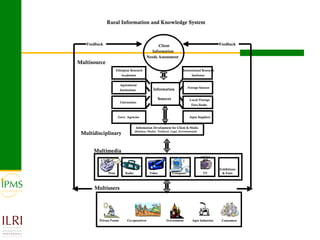
Rural Information and Knowledge System Multisource Multidisciplinary Information Development for Client & Media  (Business, Market, Technical, Legal, Environmental) Information Sources Govt. Agencies Universities Ethiopian Research  Academies Agricultural  Institutions Input Suppliers Foreign Sources International Research Institutes Local/Foreign  Data Banks Client  Information  Needs Assessment Print Radio Video Computer TV Exhibitions  & Fairs Multimedia Multiusers  Private Farms Co-operatives Government Agro Industries Consumers Feedback Feedback
Opportunities Commitment in principle  to decentralize,  to implementing participatory extension approaches,  to develop demand-driven extension and research services, to co-operative development and improvement Strong infrastructure of TVETs for capacity development of extension functionaries
The way forward.. Need for a  national/regional agriculture extension policy/framework  and a  strategy to institutionalize  the changes Changes in organisational cultures and professional attitudes – through action learning “ Change agents” within the system and political commitment at a high level Clear definitions of mandates and roles of functionaries at various levels Review of incentive structures
The way forward.. Making extension services/training  demand-driven   Participatory Extension  and market-oriented approaches need to be mainstreamed Needs capacity development - integrate into TVET curriculum Capacity development – staff and system Not only training - but  learning by doing , facilitated experimentation Not only personnel and infrastructure – but development of  linkages and networks
FTCs as  knowledge centres  – nodes for experiential learning Stimulate a diversity of extension innovations that respond adaptively to local and evolving circumstances Learn from experiences to distill principles for scaling up Integration of  HIV and gender  concerns  Incorporate into TVET and university curricula Incorporate short awareness sessions into all training programmes/courses The way forward..
Critical role of M&E Review the current M&E plan  Revise it to make it more learning oriented - move towards more  innovative targets Outcome  monitoring and responsibility Mainstream planning, implementation and M&E tools Accountability  to farmers or FAs - farmer control over R&E resources
Thank you..

IPMS innovative extension

  • 1.
    IPMS Innovative ExtensionRanjitha Puskur Presented at Tigray Technology Exhibition 13-14 March 2006
  • 2.
    Role of extensionKey actors in agricultural innovation system Major source of knowledge for farmers Strong and wide grassroots presence Pursuing market-oriented agricultural development following an ISA, requires extension to take on a transformed role - not just technology transfer Extension – not just a service or a system, rather a knowledge and information support function the new role has to evolve and be tested..
  • 3.
    While technology transferis important.. Interrelationship between actors, intensive communication include all those who contribute to innovation Extension organisations should become the nodal point for linking farmers to both technology and non-technology services – creation of networks New extension approaches need to emerge locally , based on experimentation, learning and adaptation to prevailing circumstances Building on existing structures and strengths “ Flexibility ” should be the mantra..
  • 4.
    To enable market-orienteddevelopment.. Envisaged functions of extension.. Move to commodity value chain approach Help farmers respond to market signals by providing information on Markets (prices, quantities, location, timing) Market requirements (grades & standards, quality) Technical market information (Post harvest handling/packaging, processing) Prospective markets (new and alternative markets) Acquire regular complete market intelligence Establish marketing and agro-processing linkages between farmer groups, markets and private processors Advise on product planning, benefits of direct marketing
  • 5.
    Farmer capacity buildingCapacity building of farmers should be aimed at helping them respond to constantly evolving markets, in addition to improving production and productivity.. Organize commodity based farmer interest groups and build their capabilities to bargain, negotiate and understand market functions, stakeholder strategies and, price formation Enhance interactive and communication skills of individual farmers to exchange views with customers and other market forces Support to entrepreneurship
  • 6.
    Potential role ofFTCs and DAs Not just “ training ” centres – but “ knowledge ” centres Multi-purpose sites where farmers Can receive training and exposure to new production, processing and marketing technologies and management techniques Can be facilitated to directly access available technical knowledge and market information Get support to work collectively on marketing issues such as access to inputs and collective marketing of outputs Get technical and other support for small scale agro-processing and post-harvest operations by households, farmer groups and co-ops Are facilitated to forge linkages with markets and other services
  • 7.
    Optimal use ofFTCs Depends on.. Quality and relevance of services and training offered – ensured through community consultations Technical and financial support to DAs Effective linkages of FTCs with woreda level marketing and co-operative experts Continuous upgrading of skills of DAs Provision of adequate and relevant training and demonstration materials , both related to production and marketing and, their continuous updating Effective inclusion of gender and HIV concerns in extension activities
  • 8.
    FTCs.. Important to pilot innovative approaches in few FTCs and scale up based on experiences and lessons learnt Recognise value of diversity of approaches and arrangements – flexibility No blue prints even for market-oriented extension support- recognising that market-orientation might not be possible in all woredas/PAs – e.g., food insecure woredas
  • 9.
    Interconnecting farmers usingappropriate media Use of appropriate technologies Modern ICTs need significant initial and operating cost Application should be considered along with more traditional extension methods Address the problem of scale, complexity, and fiscal sustainability Print with graphics and radio – appropriate and cost-effective for developing countries Suitability of medium depends on the message, target audience, and social environment
  • 10.
    Rural Information andKnowledge System Multisource Multidisciplinary Information Development for Client & Media (Business, Market, Technical, Legal, Environmental) Information Sources Govt. Agencies Universities Ethiopian Research Academies Agricultural Institutions Input Suppliers Foreign Sources International Research Institutes Local/Foreign Data Banks Client Information Needs Assessment Print Radio Video Computer TV Exhibitions & Fairs Multimedia Multiusers Private Farms Co-operatives Government Agro Industries Consumers Feedback Feedback
  • 11.
    Opportunities Commitment inprinciple to decentralize, to implementing participatory extension approaches, to develop demand-driven extension and research services, to co-operative development and improvement Strong infrastructure of TVETs for capacity development of extension functionaries
  • 12.
    The way forward..Need for a national/regional agriculture extension policy/framework and a strategy to institutionalize the changes Changes in organisational cultures and professional attitudes – through action learning “ Change agents” within the system and political commitment at a high level Clear definitions of mandates and roles of functionaries at various levels Review of incentive structures
  • 13.
    The way forward..Making extension services/training demand-driven Participatory Extension and market-oriented approaches need to be mainstreamed Needs capacity development - integrate into TVET curriculum Capacity development – staff and system Not only training - but learning by doing , facilitated experimentation Not only personnel and infrastructure – but development of linkages and networks
  • 14.
    FTCs as knowledge centres – nodes for experiential learning Stimulate a diversity of extension innovations that respond adaptively to local and evolving circumstances Learn from experiences to distill principles for scaling up Integration of HIV and gender concerns Incorporate into TVET and university curricula Incorporate short awareness sessions into all training programmes/courses The way forward..
  • 15.
    Critical role ofM&E Review the current M&E plan Revise it to make it more learning oriented - move towards more innovative targets Outcome monitoring and responsibility Mainstream planning, implementation and M&E tools Accountability to farmers or FAs - farmer control over R&E resources
  • 16.

Editor's Notes

  • #3 More holistic and facilitatory role