Leeds University Business School


Integrating iPads in our learning, teaching &
assessment strategies
Report from a pilot project at Leeds University Business School

iPad Project Meeting
31st July 2012


Nicolas Forsans
Centre for International Business
University of Leeds (CIBUL)
Key findings from the 2012 pilot


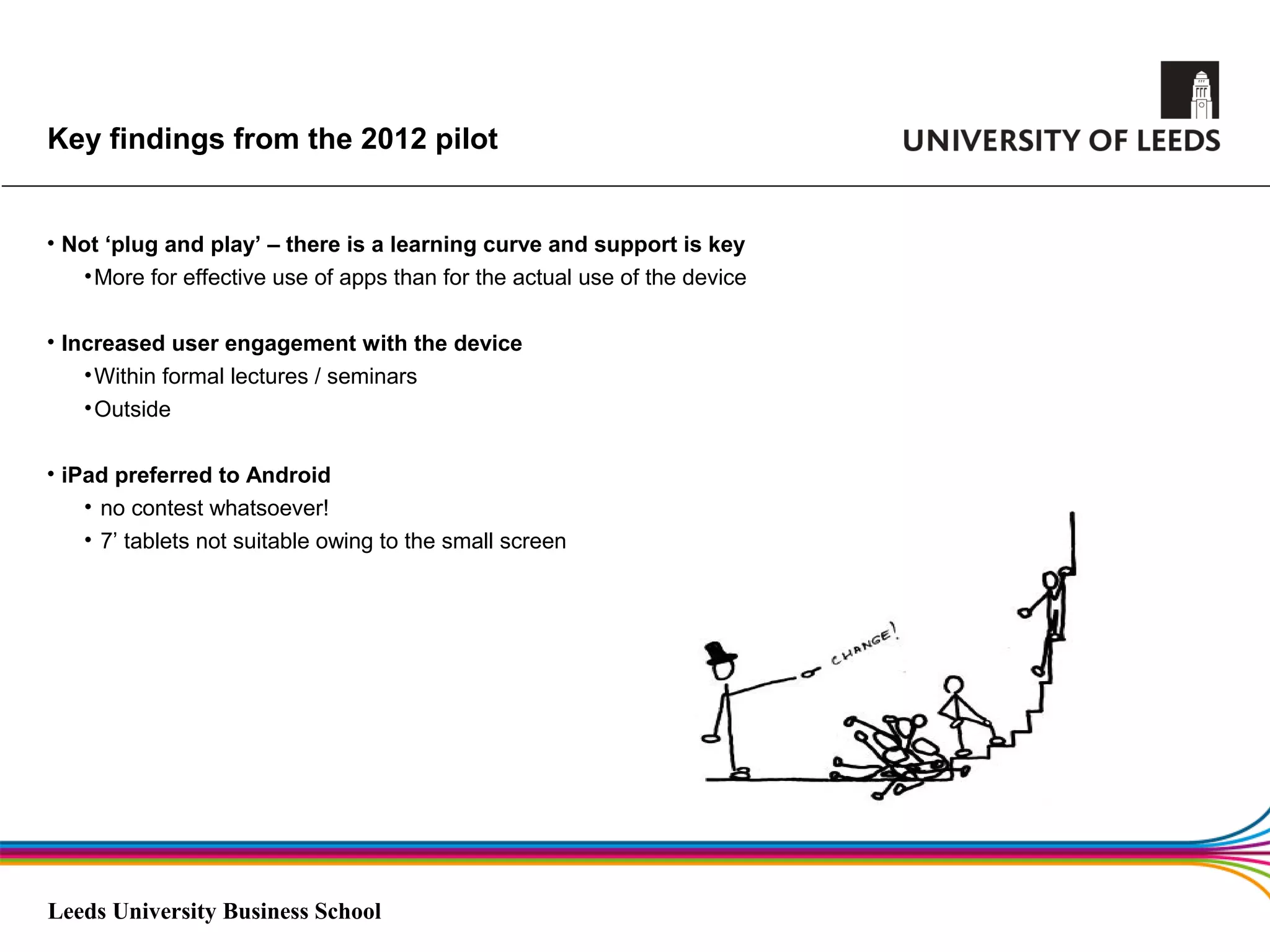
• Not ‘plug and play’ – there is a learning curve and support is key
   • More for effective use of apps than for the actual use of the device

• Increased user engagement with the device
    • Within formal lectures / seminars
    • Outside

• iPad preferred to Android
    • no contest whatsoever!
    • 7’ tablets not suitable owing to the small screen


Leeds University Business School
Use in lectures…


  •During lectures and seminars
      – Downloading and reading material
      – Note taking, including editing of pdf version of handouts
      – Fact-checking
      – Lookup facts, extend information and knowledge
      – Use apps (web, calculator etc)
      – VLE access

  •User engagement

  •Need for support in terms of
      • app-specific training
      • appropriate content
      • suitable infrastructure
… and outside of it


  •Prepare for seminars, extend classes
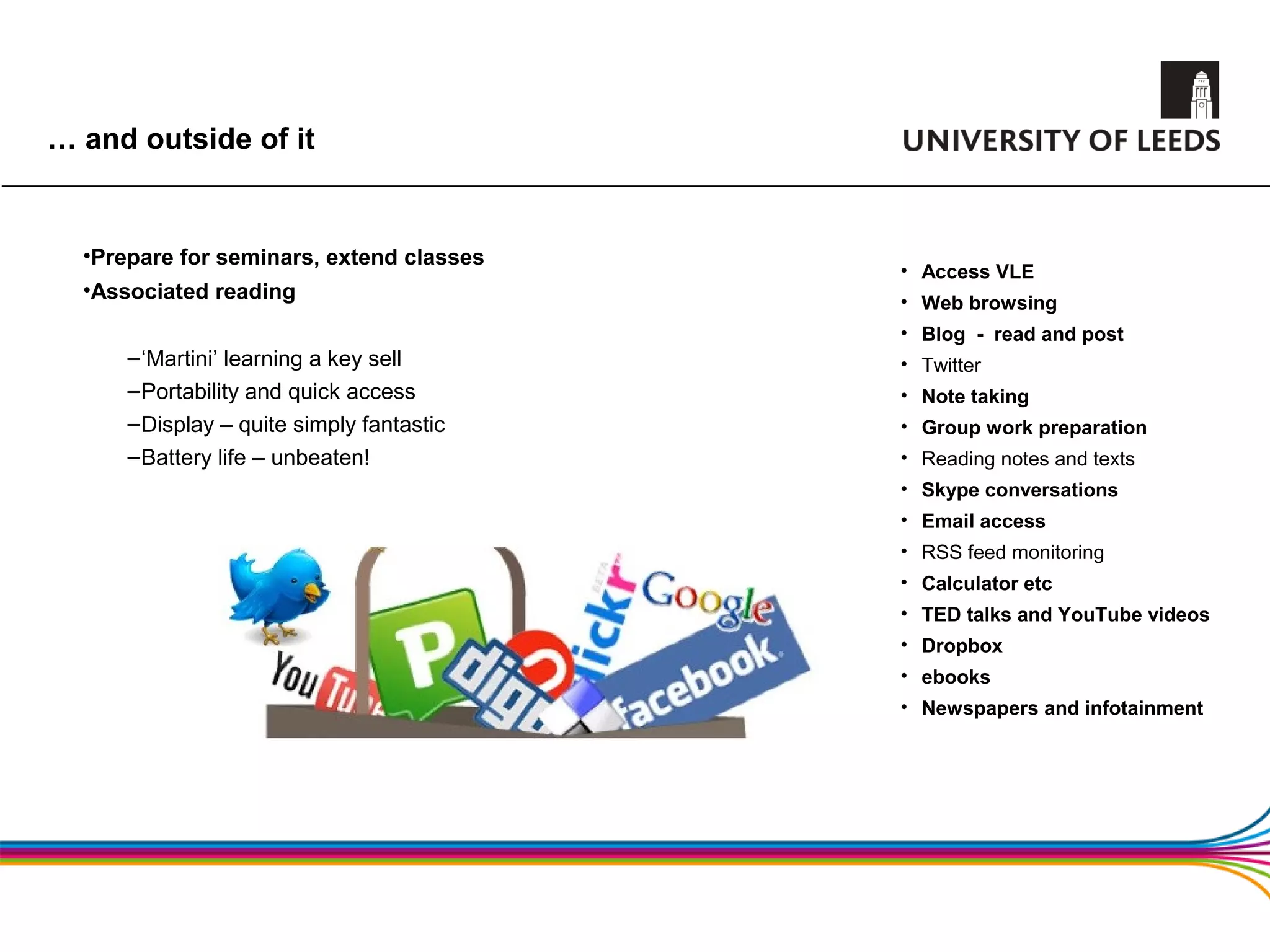
                                           • Access VLE
  •Associated reading                      • Web browsing
                                           • Blog - read and post
      – ‘Martini’ learning a key sell      • Twitter
      – Portability and quick access       • Note taking
      – Display – quite simply fantastic   • Group work preparation
      – Battery life – unbeaten!           • Reading notes and texts
                                           • Skype conversations
                                           • Email access
                                           • RSS feed monitoring
                                           • Calculator etc
                                           • TED talks and YouTube videos
                                           • Dropbox
                                           • ebooks
                                           • Newspapers and infotainment
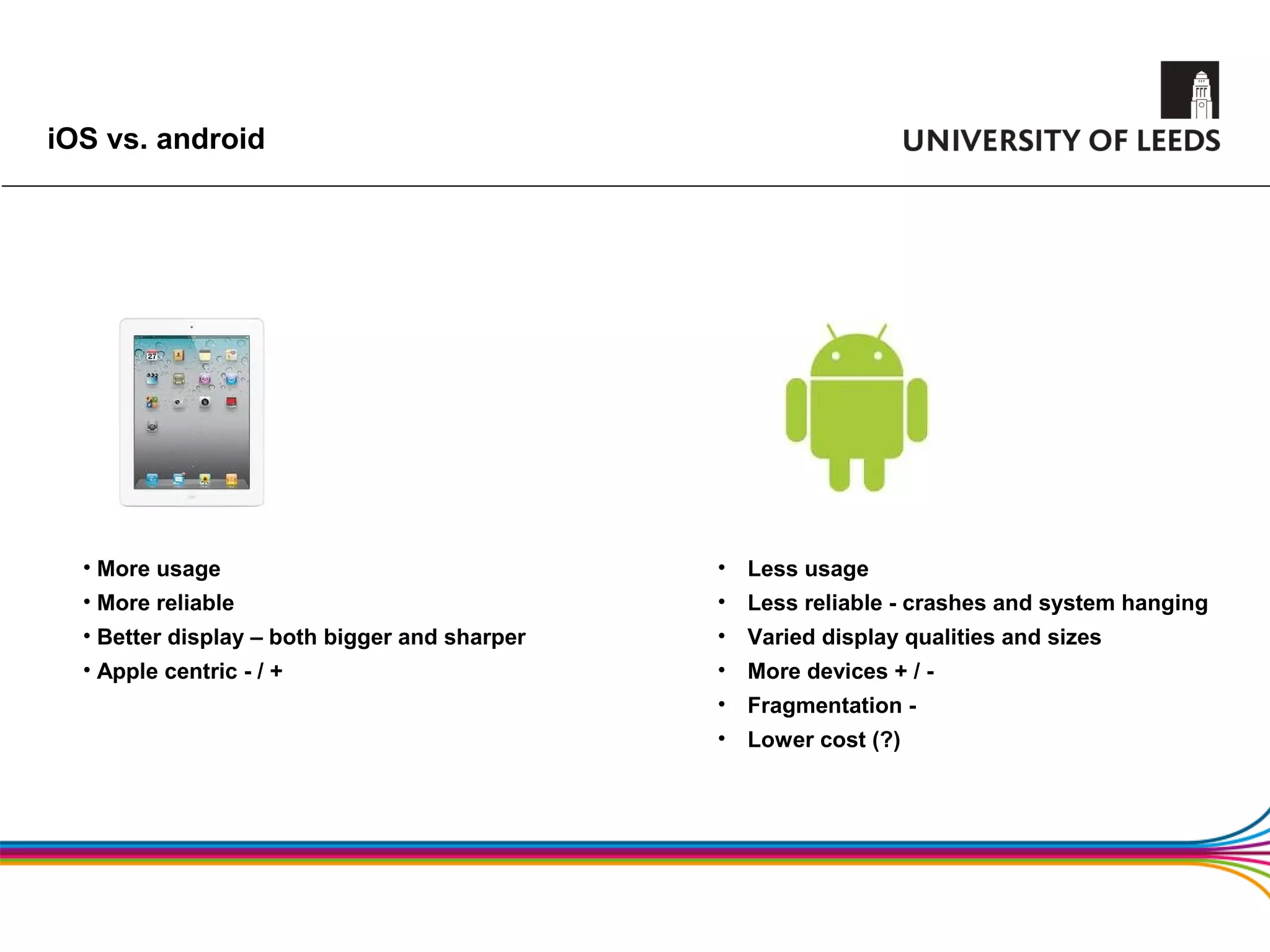
iOS vs. android


  • More usage                                 • Less usage
  • More reliable                              • Less reliable - crashes and system hanging
  • Better display – both bigger and sharper   • Varied display qualities and sizes
  • Apple centric - / +                        • More devices + / -
                                               • Fragmentation -
                                               • Lower cost (?)
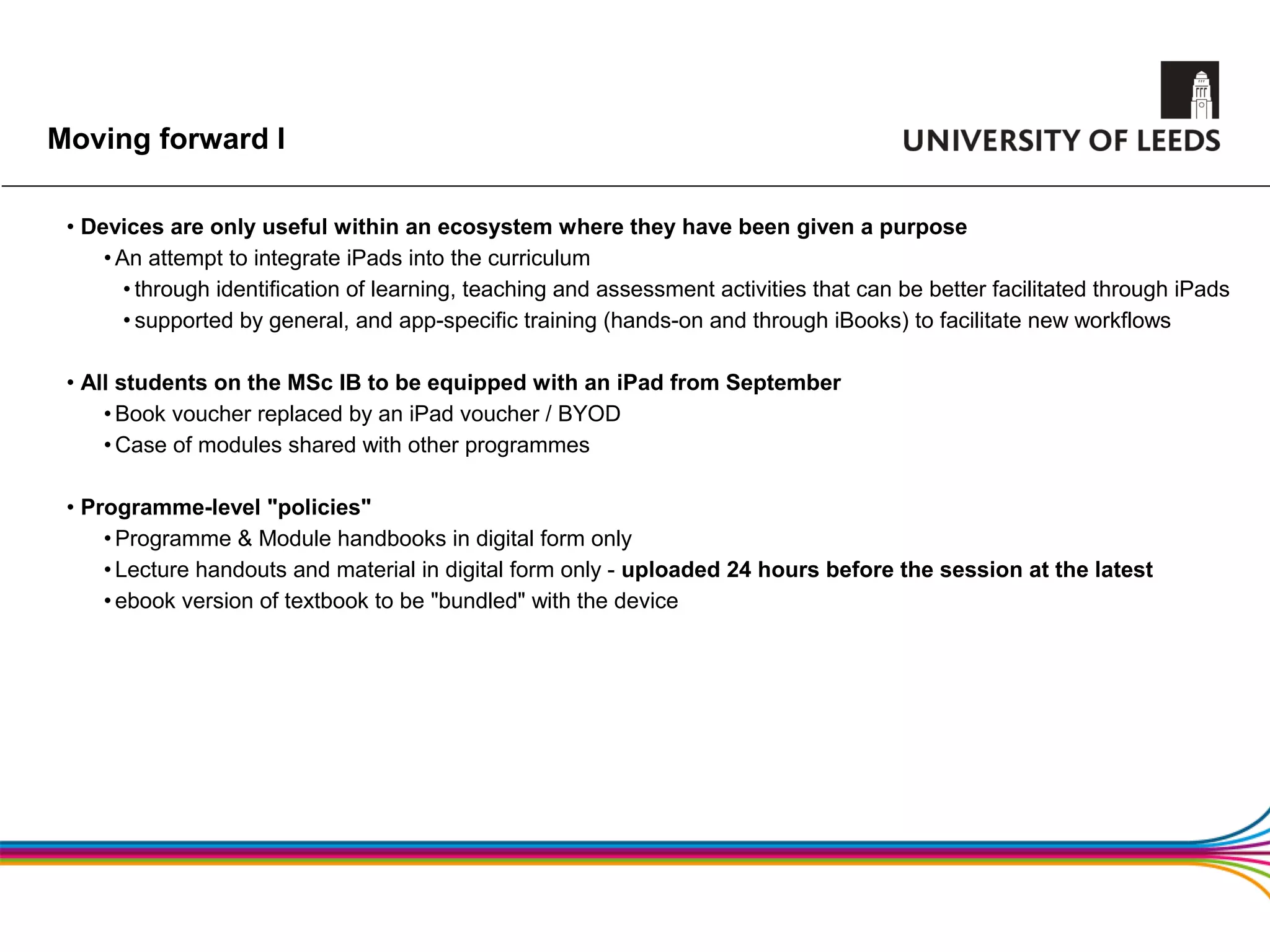
Lessons we’ve learnt


                       • Users were pretty independent
                       • Devices were intuitive
                       • Need an ecosystem of apps and ways of accessing
                         information
                       • Need to support the use of key apps, which will require
                         training to get fastest and most effective engagement and
                         use
                       • No theft, no breakage
                       • It works well, but need for setting
                            • a purpose
                            • new workflows
                       • Infrastructure
                       • Going paperless might be an unrealistic objective, less
                         paper might be more achievable
Moving forward I

 • Devices are only useful within an ecosystem where they have been given a purpose
     • An attempt to integrate iPads into the curriculum
        • through identification of learning, teaching and assessment activities that can be better facilitated through iPads
        • supported by general, and app-specific training (hands-on and through iBooks) to facilitate new workflows

 • All students on the MSc IB to be equipped with an iPad from September
     • Book voucher replaced by an iPad voucher / BYOD
     • Case of modules shared with other programmes

 • Programme-level "policies"
     • Programme & Module handbooks in digital form only
     • Lecture handouts and material in digital form only - uploaded 24 hours before the session at the latest
     • ebook version of textbook to be "bundled" with the device
Moving forward II


 • Individual module-specific use
     • For module leaders to decide

 • Staff support available throughout the year
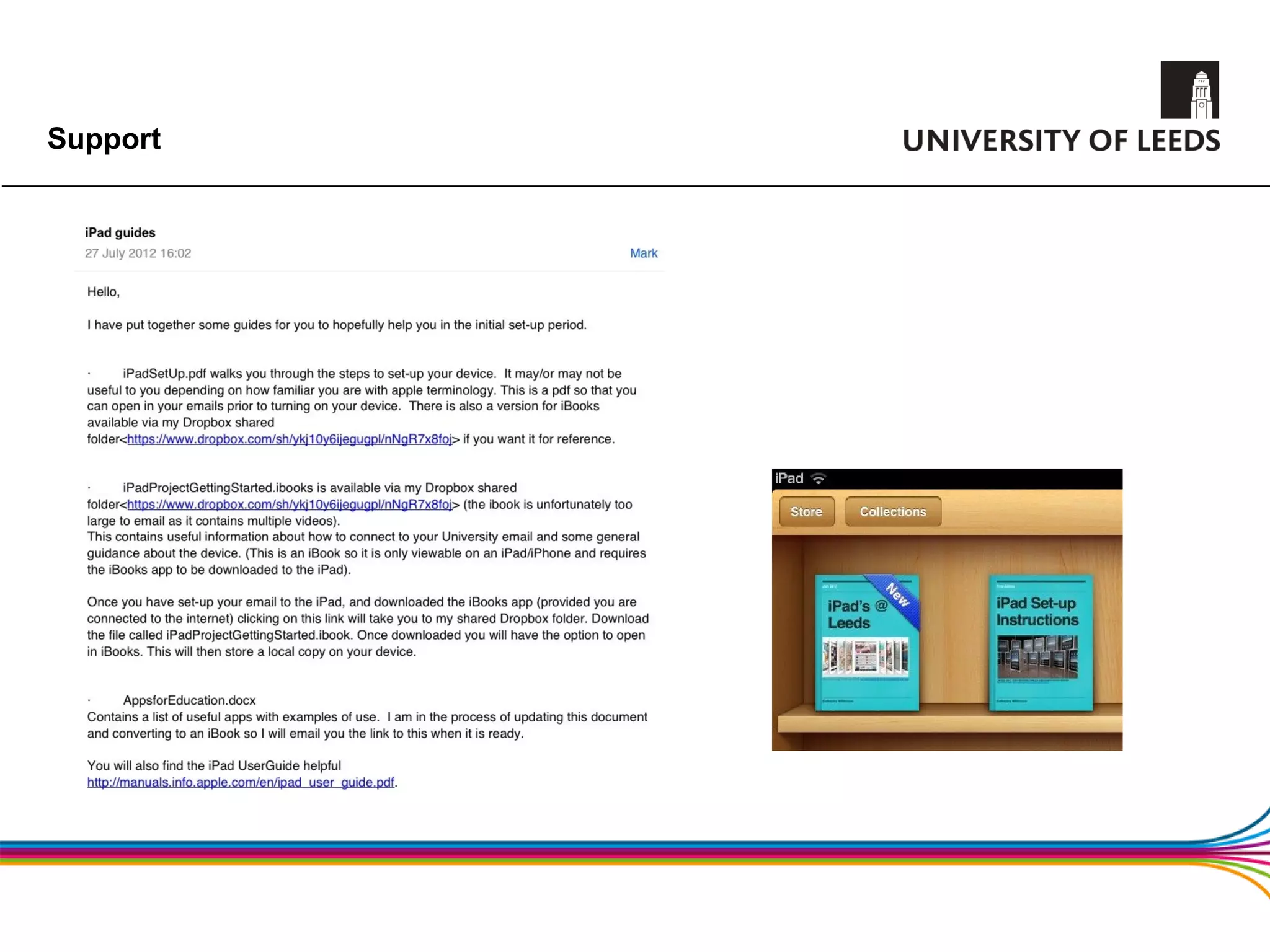
     • Guides and iBooks
      •  iPad set up - PDF and iBook
      •  Apps for education guide - .docx
      •  iPad Project Getting Started - iBook
     • Handout uploaded on the VLE in advance of the session

 • Student support
     • Dedicated sessions within 5213M Professional & Research Skills (NF) for productivity-enhancing apps
     • Ad-hoc sessions (NF)
     • PDF and iBooks covering specific apps
Support
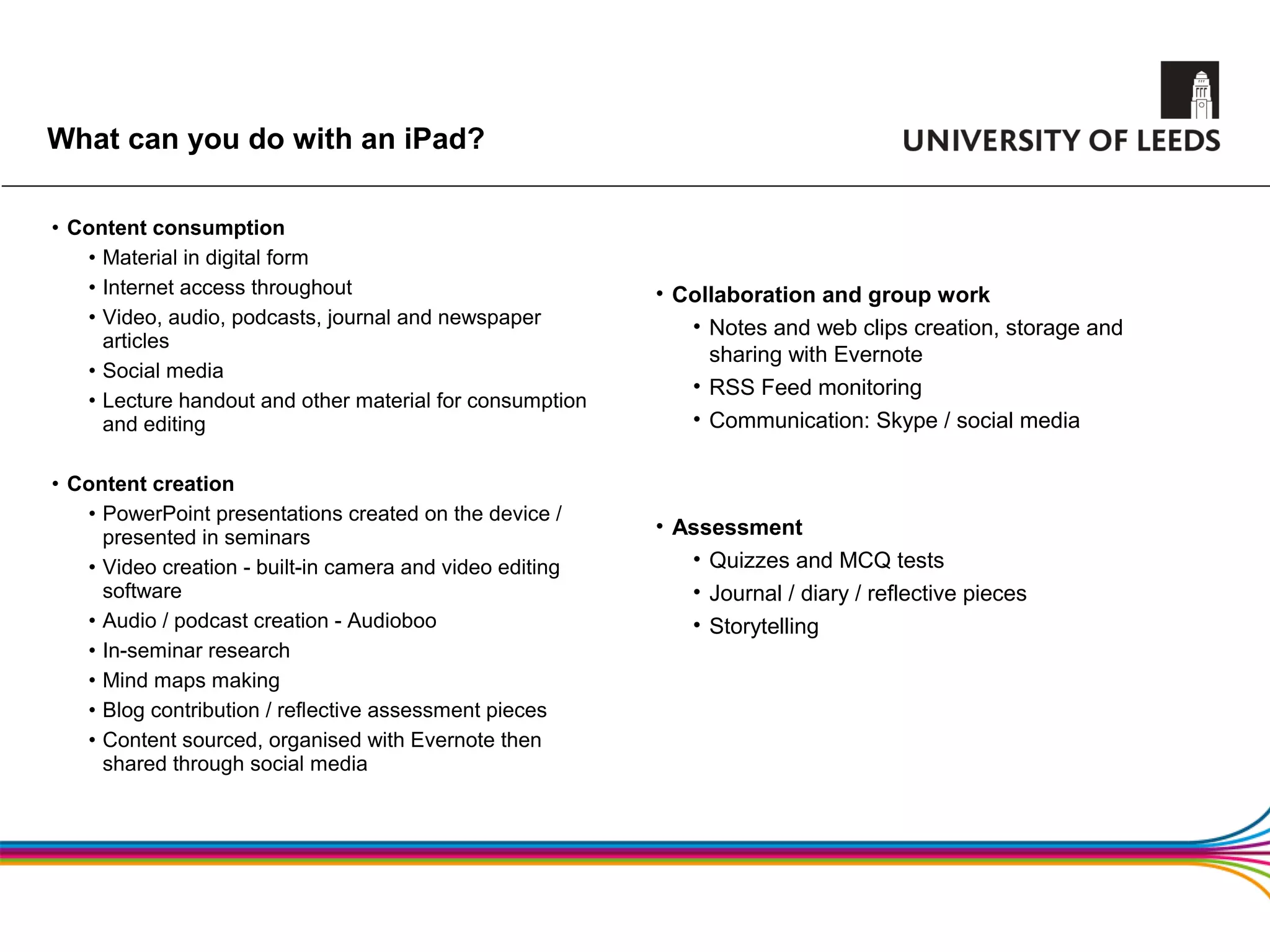
What can you do with an iPad?

• Content consumption
   • Material in digital form
   • Internet access throughout                           • Collaboration and group work
   • Video, audio, podcasts, journal and newspaper           • Notes and web clips creation, storage and
     articles
                                                               sharing with Evernote
   • Social media
                                                             • RSS Feed monitoring
   • Lecture handout and other material for consumption
     and editing                                             • Communication: Skype / social media

• Content creation
   • PowerPoint presentations created on the device /
     presented in seminars
                                                          • Assessment
   • Video creation - built-in camera and video editing      • Quizzes and MCQ tests
     software                                                • Journal / diary / reflective pieces
   • Audio / podcast creation - Audioboo                     • Storytelling
   • In-seminar research
   • Mind maps making
   • Blog contribution / reflective assessment pieces
   • Content sourced, organised with Evernote then
     shared through social media

iPad project - Moving forward

  • 1.
    Leeds University BusinessSchool Integrating iPads in our learning, teaching & assessment strategies Report from a pilot project at Leeds University Business School iPad Project Meeting 31st July 2012 Nicolas Forsans Centre for International Business University of Leeds (CIBUL)
  • 2.
    Key findings fromthe 2012 pilot • Not ‘plug and play’ – there is a learning curve and support is key • More for effective use of apps than for the actual use of the device • Increased user engagement with the device • Within formal lectures / seminars • Outside • iPad preferred to Android • no contest whatsoever! • 7’ tablets not suitable owing to the small screen Leeds University Business School
  • 3.
    Use in lectures… •During lectures and seminars – Downloading and reading material – Note taking, including editing of pdf version of handouts – Fact-checking – Lookup facts, extend information and knowledge – Use apps (web, calculator etc) – VLE access •User engagement •Need for support in terms of • app-specific training • appropriate content • suitable infrastructure
  • 4.
    … and outsideof it •Prepare for seminars, extend classes • Access VLE •Associated reading • Web browsing • Blog - read and post – ‘Martini’ learning a key sell • Twitter – Portability and quick access • Note taking – Display – quite simply fantastic • Group work preparation – Battery life – unbeaten! • Reading notes and texts • Skype conversations • Email access • RSS feed monitoring • Calculator etc • TED talks and YouTube videos • Dropbox • ebooks • Newspapers and infotainment
  • 5.
    iOS vs. android • More usage • Less usage • More reliable • Less reliable - crashes and system hanging • Better display – both bigger and sharper • Varied display qualities and sizes • Apple centric - / + • More devices + / - • Fragmentation - • Lower cost (?)
  • 6.
    Lessons we’ve learnt • Users were pretty independent • Devices were intuitive • Need an ecosystem of apps and ways of accessing information • Need to support the use of key apps, which will require training to get fastest and most effective engagement and use • No theft, no breakage • It works well, but need for setting • a purpose • new workflows • Infrastructure • Going paperless might be an unrealistic objective, less paper might be more achievable
  • 7.
    Moving forward I • Devices are only useful within an ecosystem where they have been given a purpose • An attempt to integrate iPads into the curriculum • through identification of learning, teaching and assessment activities that can be better facilitated through iPads • supported by general, and app-specific training (hands-on and through iBooks) to facilitate new workflows • All students on the MSc IB to be equipped with an iPad from September • Book voucher replaced by an iPad voucher / BYOD • Case of modules shared with other programmes • Programme-level "policies" • Programme & Module handbooks in digital form only • Lecture handouts and material in digital form only - uploaded 24 hours before the session at the latest • ebook version of textbook to be "bundled" with the device
  • 8.
    Moving forward II • Individual module-specific use • For module leaders to decide • Staff support available throughout the year • Guides and iBooks • iPad set up - PDF and iBook • Apps for education guide - .docx • iPad Project Getting Started - iBook • Handout uploaded on the VLE in advance of the session • Student support • Dedicated sessions within 5213M Professional & Research Skills (NF) for productivity-enhancing apps • Ad-hoc sessions (NF) • PDF and iBooks covering specific apps
  • 9.
  • 10.
    What can youdo with an iPad? • Content consumption • Material in digital form • Internet access throughout • Collaboration and group work • Video, audio, podcasts, journal and newspaper • Notes and web clips creation, storage and articles sharing with Evernote • Social media • RSS Feed monitoring • Lecture handout and other material for consumption and editing • Communication: Skype / social media • Content creation • PowerPoint presentations created on the device / presented in seminars • Assessment • Video creation - built-in camera and video editing • Quizzes and MCQ tests software • Journal / diary / reflective pieces • Audio / podcast creation - Audioboo • Storytelling • In-seminar research • Mind maps making • Blog contribution / reflective assessment pieces • Content sourced, organised with Evernote then shared through social media