

Encoding Enhancers IoT Offerings
Contents
• Where is IoT?
• Scope of IoT
• IoT Ecosystem
• Machine 2 Machine
• Wearables
• Opportunities
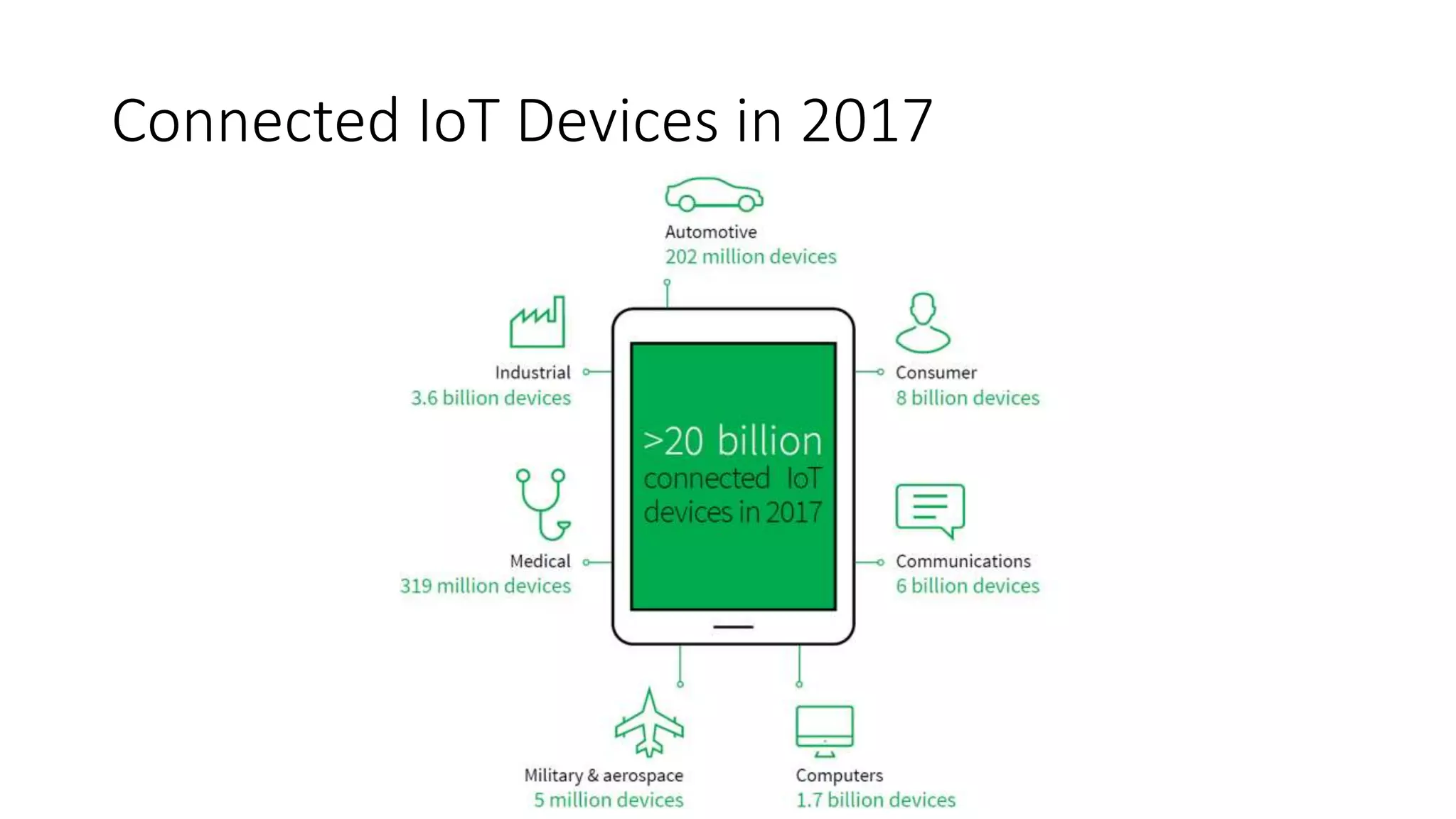
• Connected IoT Devices in 2017
• Our Integration Capabilities
• Key Protocols, Hardware Technologies, Software Frameworks
• Use Cases
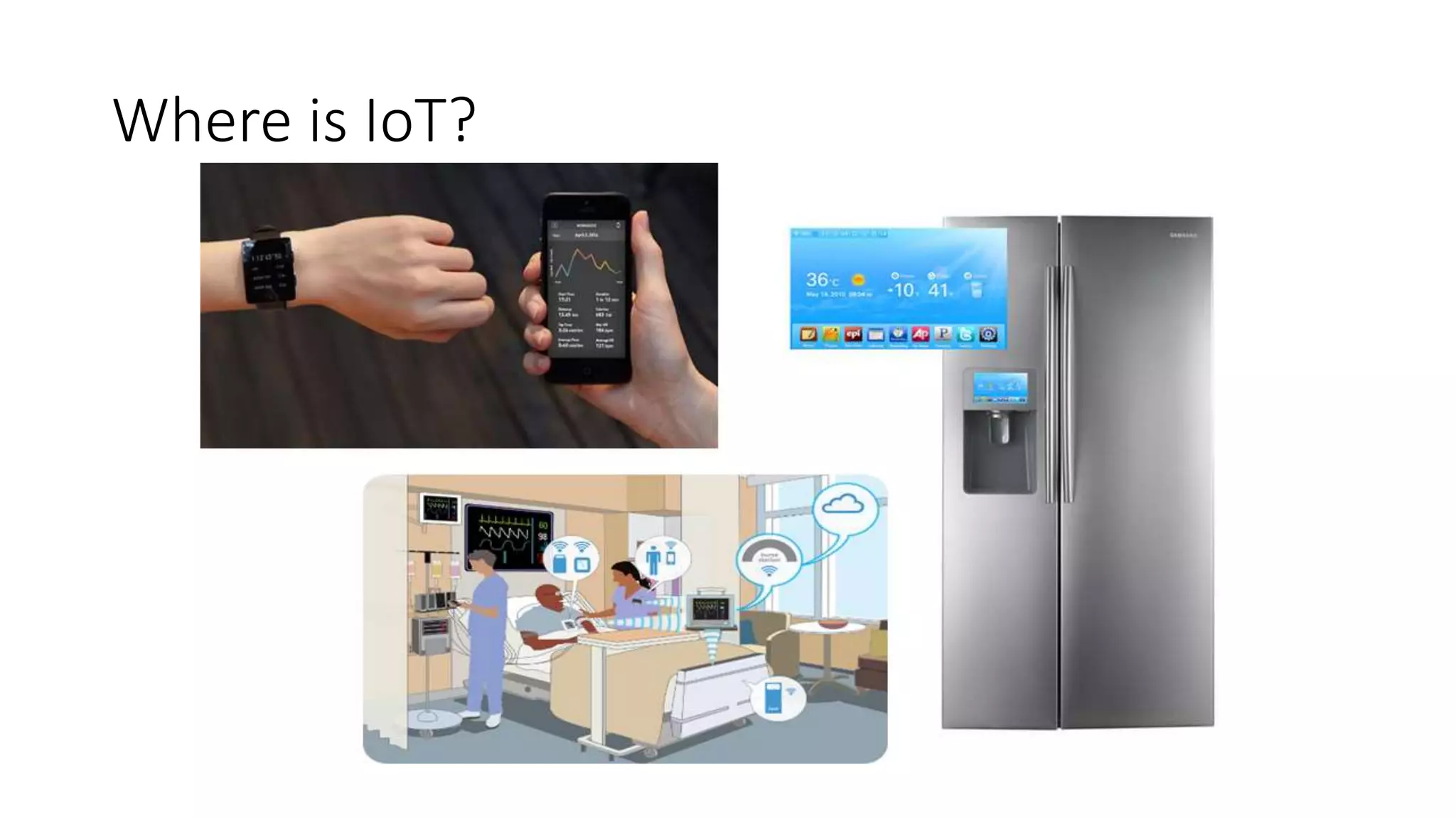
Where is IoT?
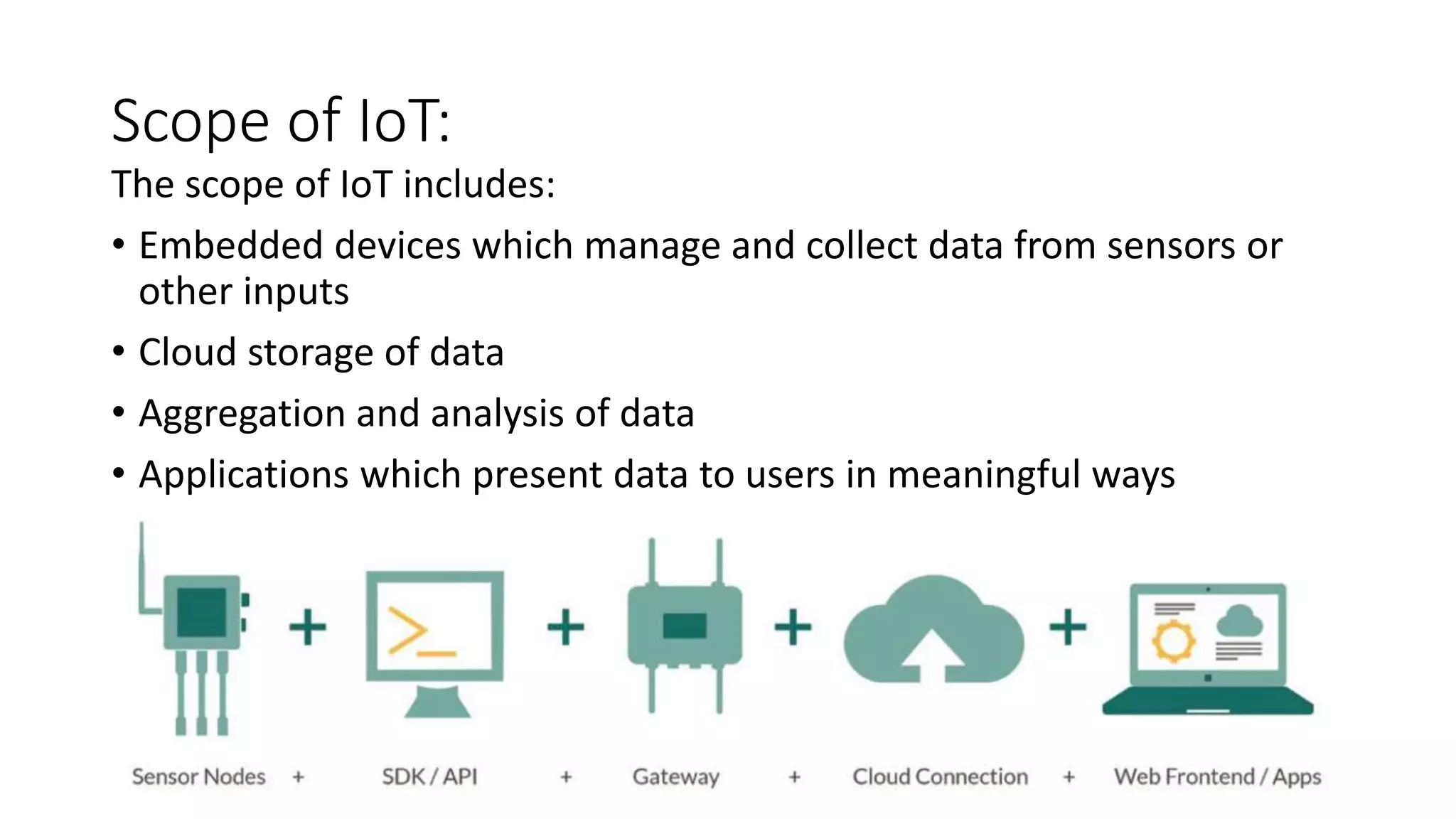
Scope of IoT:
The scope of IoT includes:
• Embedded devices which manage and collect data from sensors or
other inputs
• Cloud storage of data
• Aggregation and analysis of data
• Applications which present data to users in meaningful ways
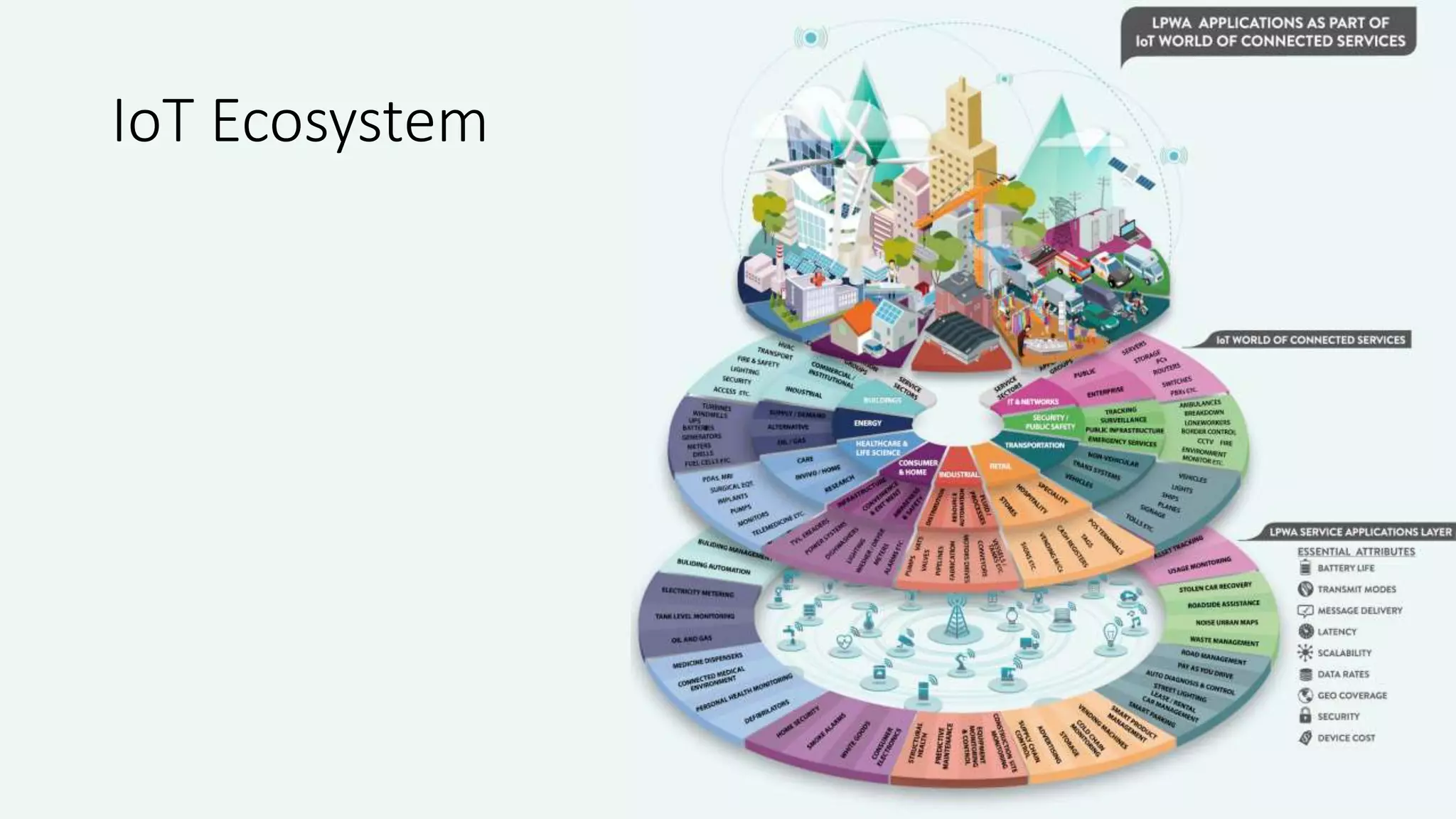
IoT Ecosystem
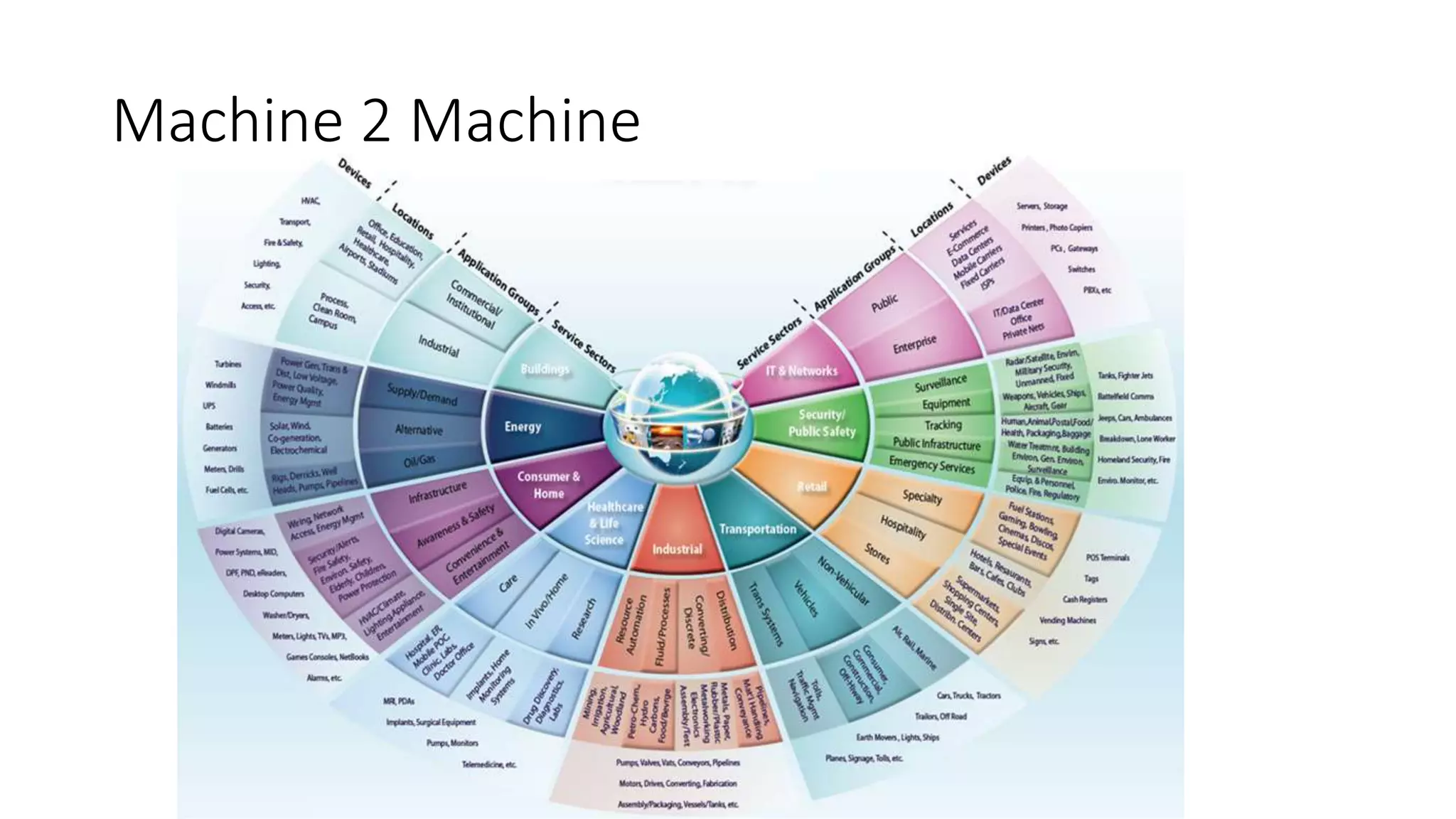
Machine 2 Machine
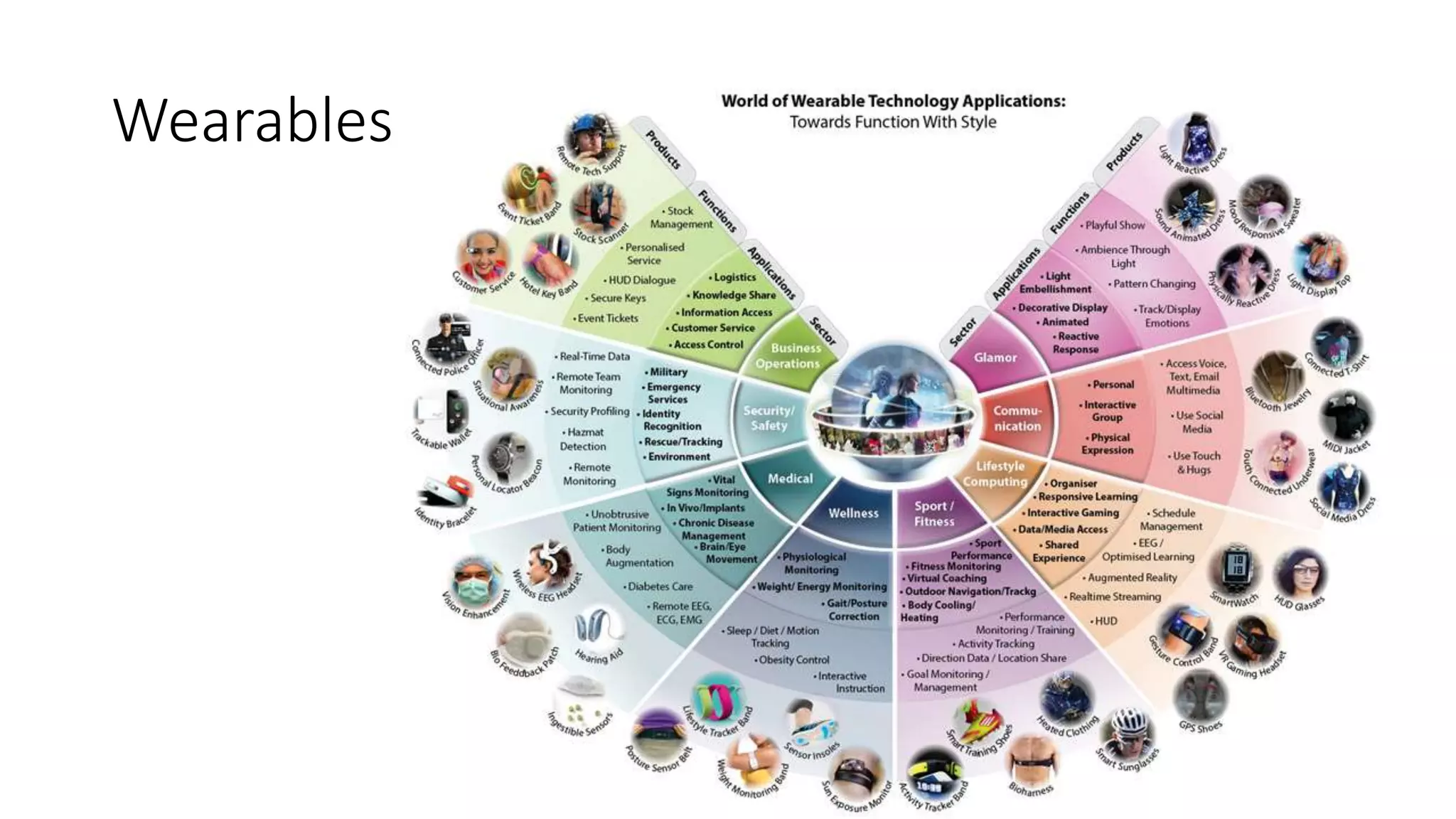
Wearables
Opportunities:
Telcos
• Need to embrace the IOT to enhance customer experience in legacy voice and data
business and drive new revenue opportunities
Industrial
• Fluctuating prices and external demand require greater efficiencies and flexibility in
production
Automotive
• Car manufactures must address the challenge for connected and intelligent cars
Connected IoT Devices in 2017
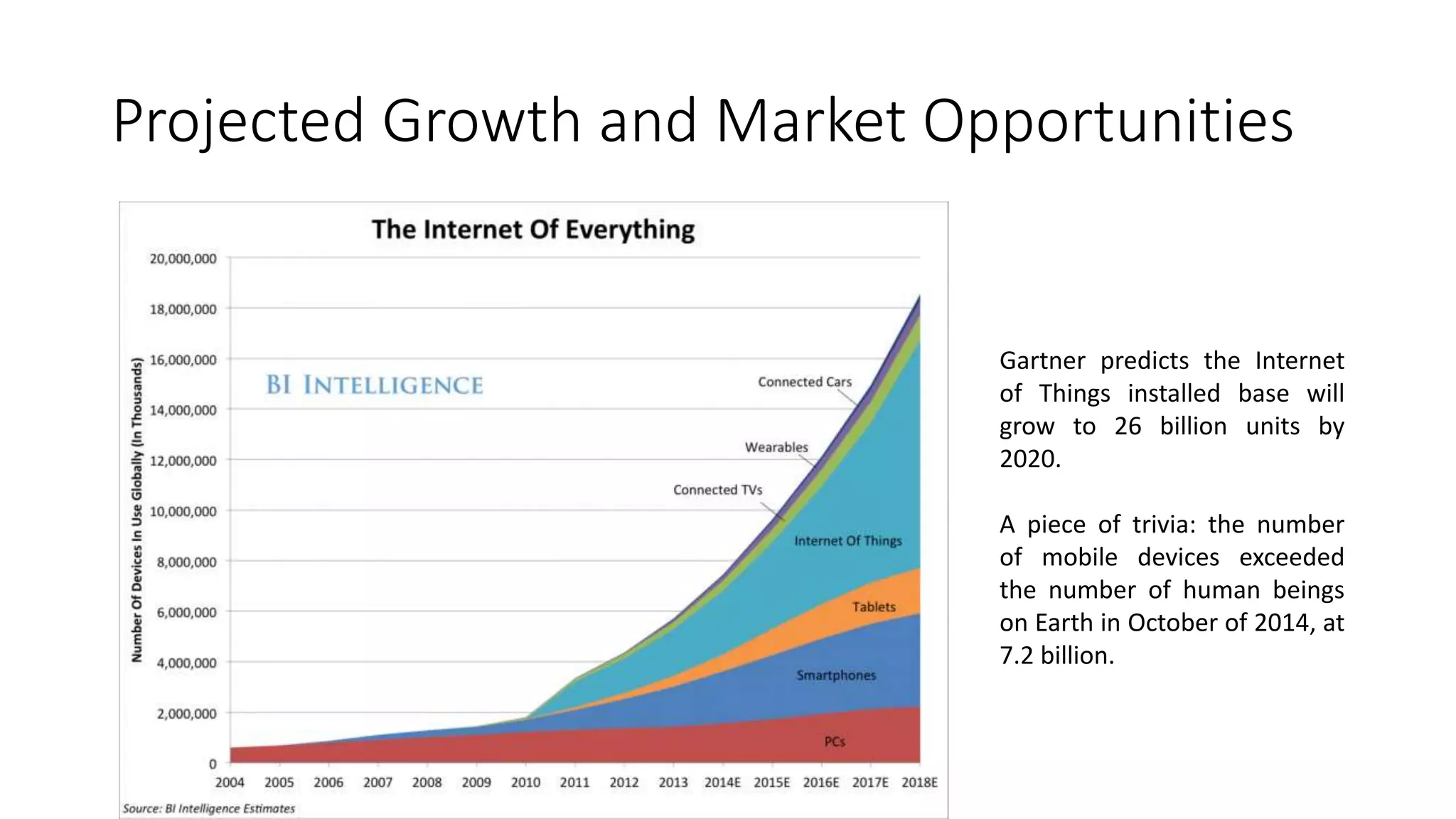
Projected Growth and Market Opportunities
Gartner predicts the Internet
of Things installed base will
grow to 26 billion units by
2020.
A piece of trivia: the number
of mobile devices exceeded
the number of human beings
on Earth in October of 2014, at
7.2 billion.
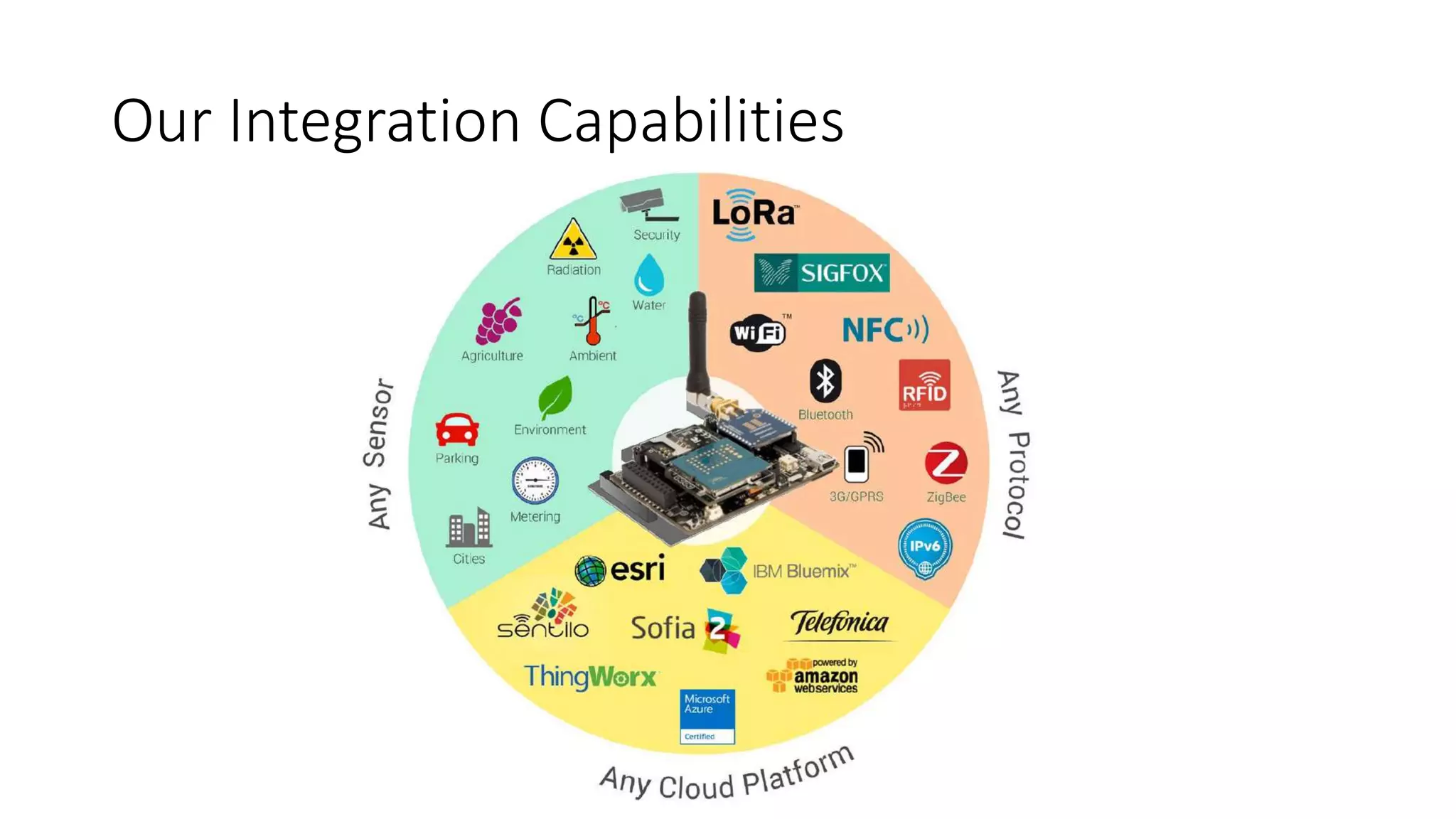
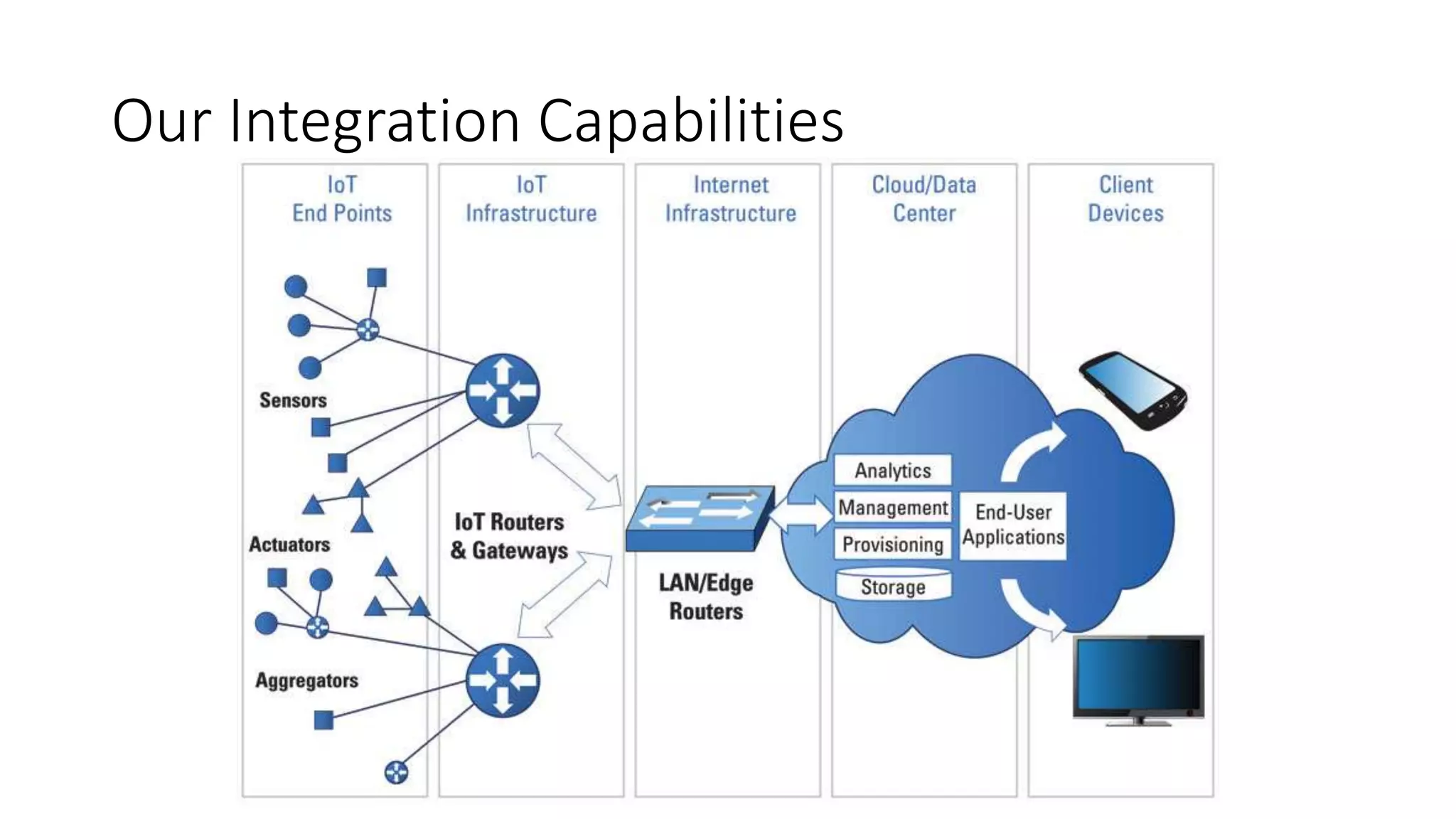
Our Integration Capabilities
Key Protocols, Hardware Technologies, Software Frameworks
• CoAP, or Constrained Application Protocol, standardized as RFC 7252 (with multicast, low
overhead, a REST model, and runs over UDP packets with DTLS encryption) is used for small low-
power sensors, switches and valves etc
• MRAA supported protocols include GPIO, I2C, SPI, PWM and serial UARTs. It is portable across
multiple platforms including Raspberry Pi, Intel Edison and BeagleBone Black
• BTLE is Bluetooth Low Energy is a wireless personal area network technology that is designed to
operate for months or years on battery power. Aimed at applications in healthcare, fitness,
beacons, security and entertainment, it is supported by most latforms like Android, iOS, Linux and
OS X
• OMA LWM2M is the Open Mobile Alliance Lightweight Machine to Machine protocol for IoT
device management and service enablement. It provides device management functionality over
sensor or cellular networks and can transfer service data from the network to devices
• Zephyr, an open source real-time OS for IoT devices announced by The Linux Foundation and is
based on Wind River's Rocket RTOS. It is suitable for memory constrained microcontroller
platforms that don't have the resources to run a full operating system like Linux.
Use Cases
Smart Control Systems
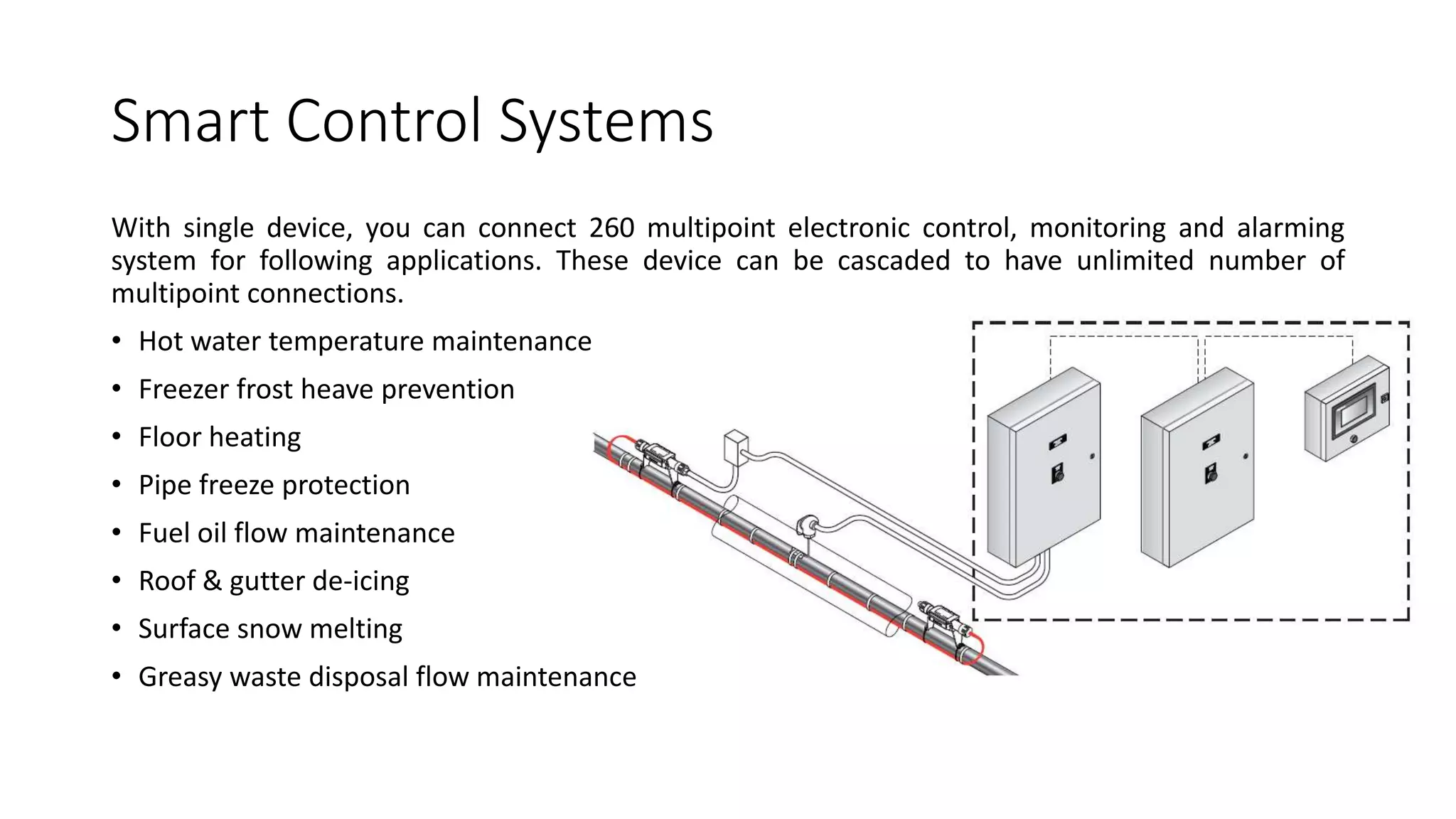
With single device, you can connect 260 multipoint electronic control, monitoring and alarming
system for following applications. These device can be cascaded to have unlimited number of
multipoint connections.
• Hot water temperature maintenance
• Freezer frost heave prevention
• Floor heating
• Pipe freeze protection
• Fuel oil flow maintenance
• Roof & gutter de-icing
• Surface snow melting
• Greasy waste disposal flow maintenance
Smart Control Systems
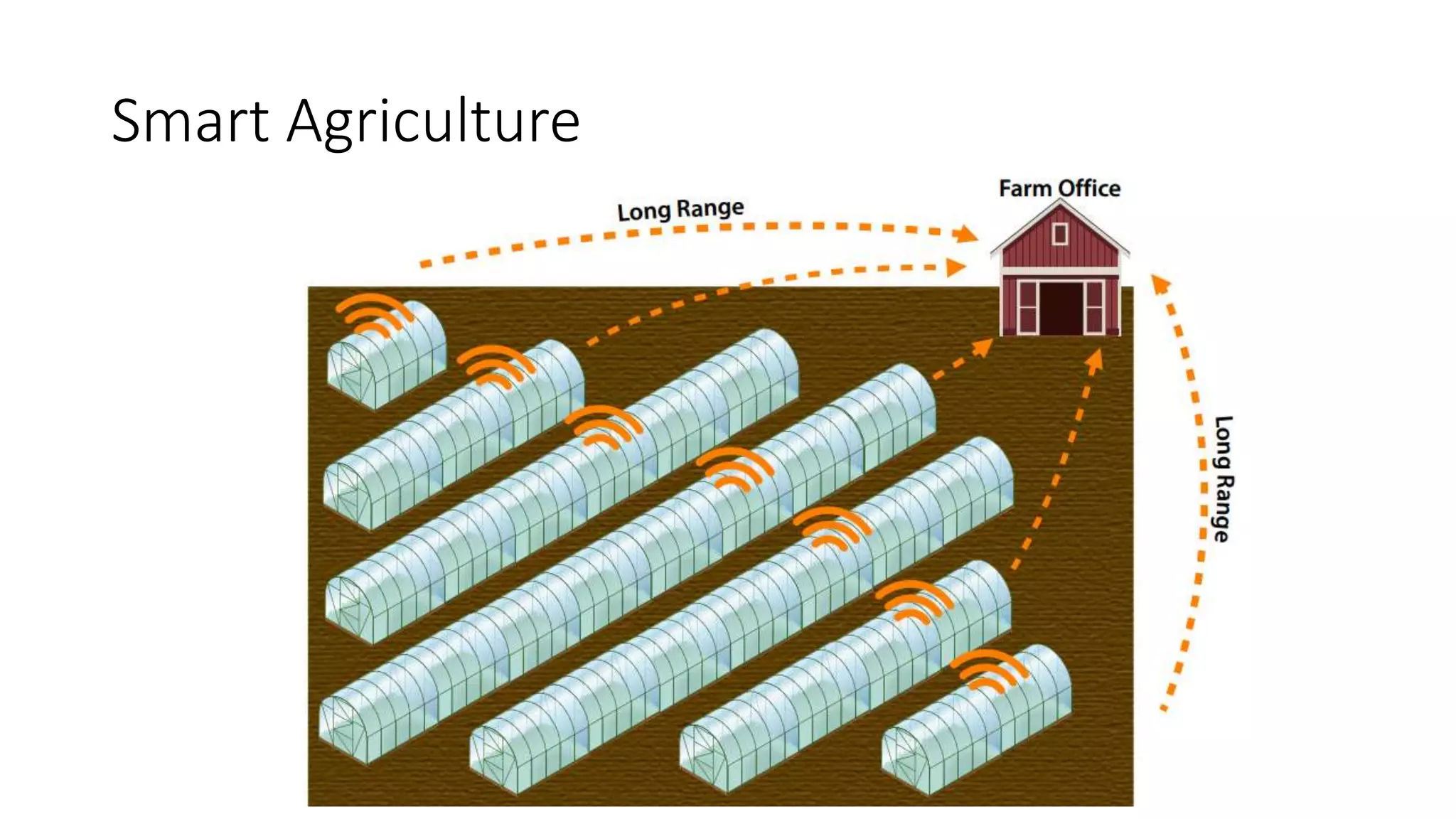
Smart Agriculture
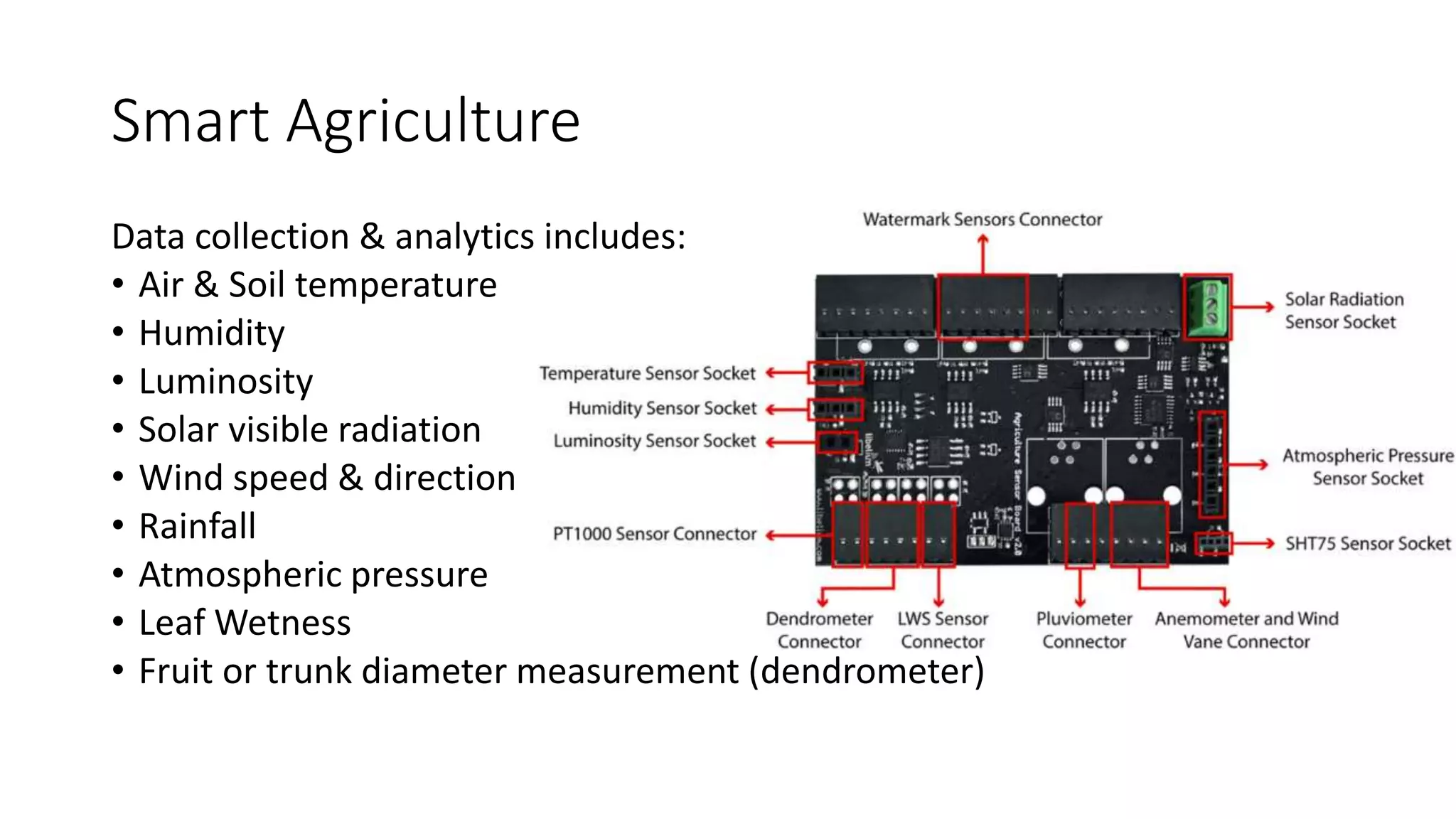
Smart Agriculture
Data collection & analytics includes:
• Air & Soil temperature
• Humidity
• Luminosity
• Solar visible radiation
• Wind speed & direction
• Rainfall
• Atmospheric pressure
• Leaf Wetness
• Fruit or trunk diameter measurement (dendrometer)
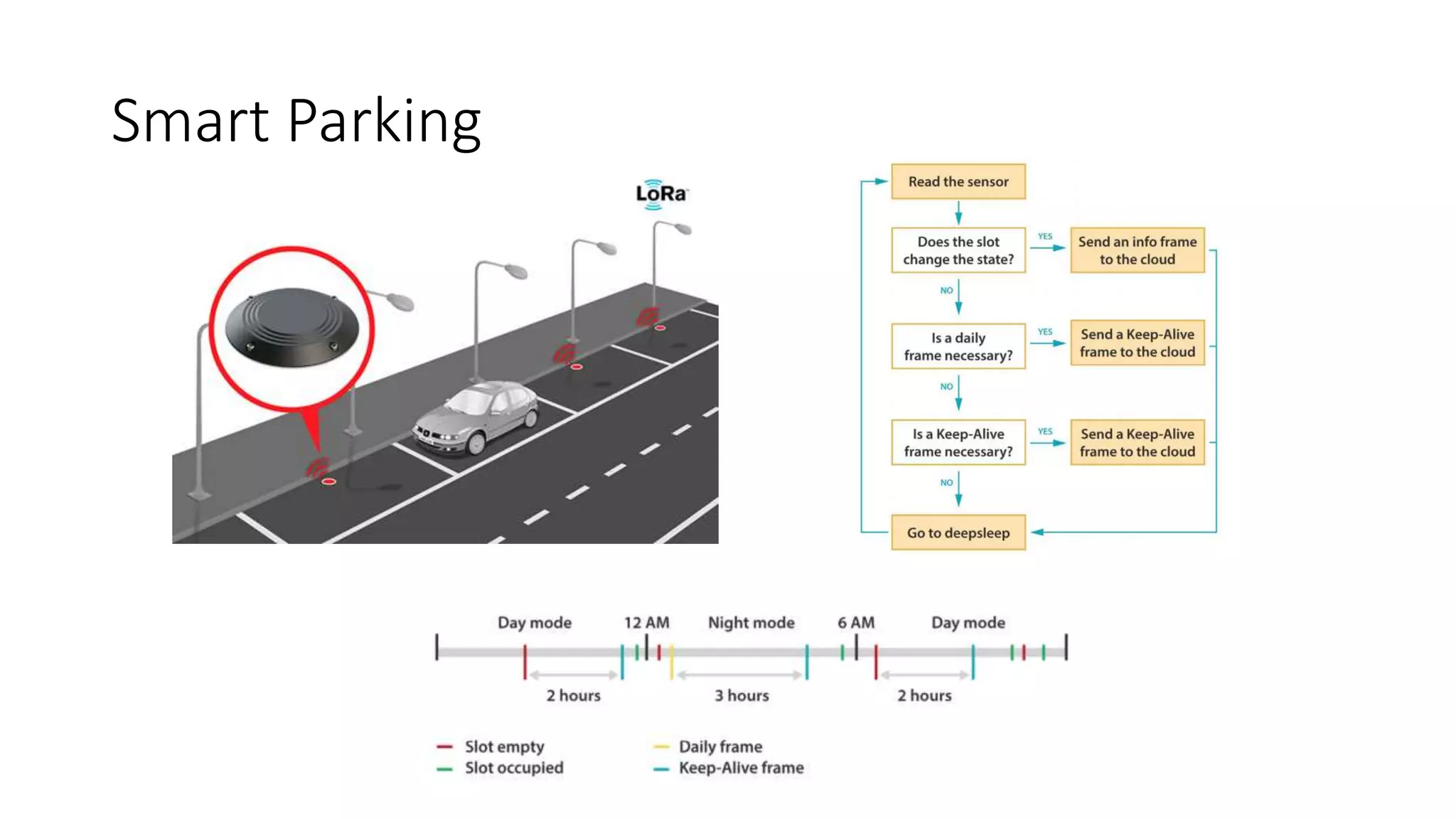
Smart Parking
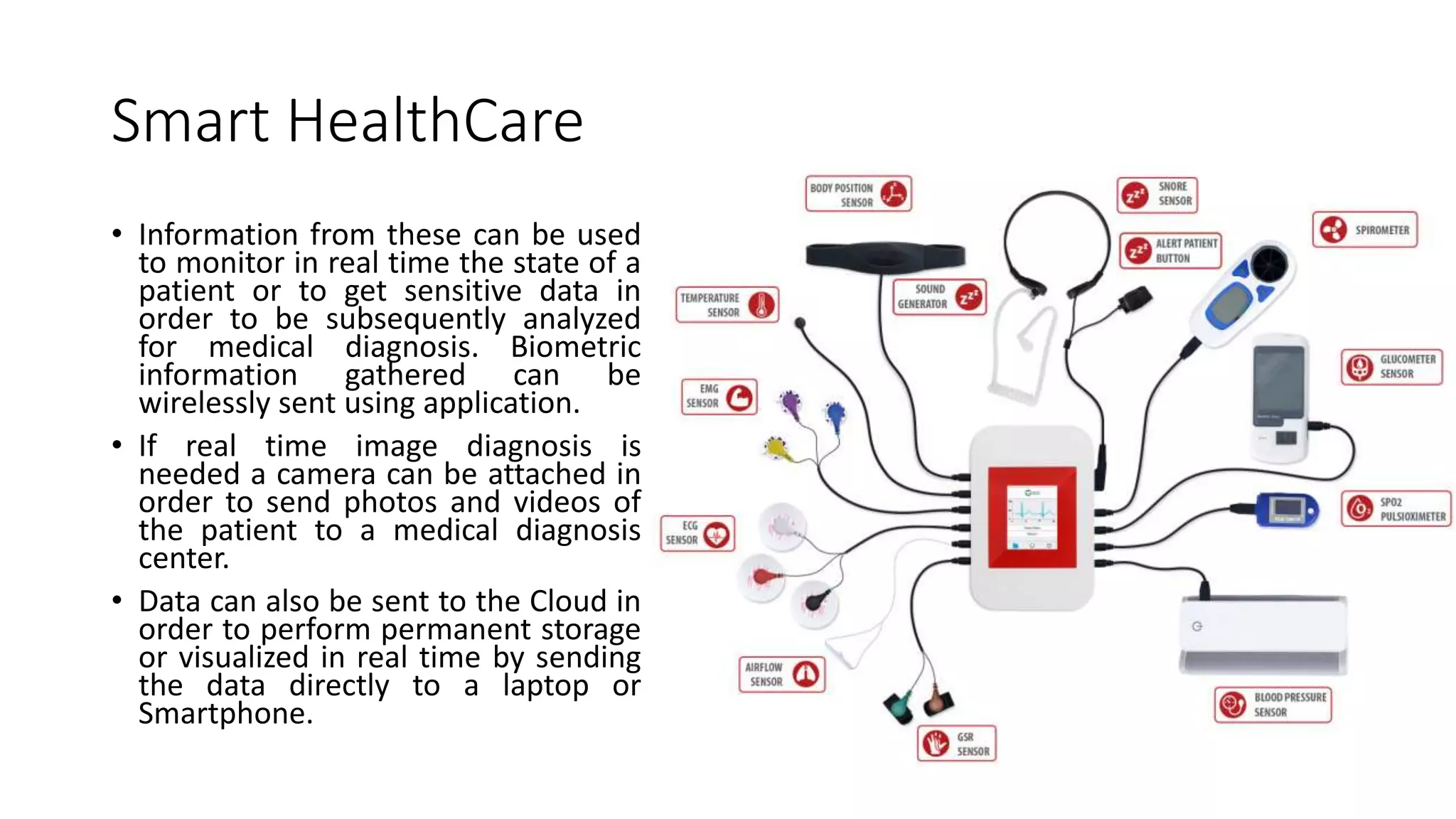
Smart HealthCare
• Information from these can be used
to monitor in real time the state of a
patient or to get sensitive data in
order to be subsequently analyzed
for medical diagnosis. Biometric
information gathered can be
wirelessly sent using application.
• If real time image diagnosis is
needed a camera can be attached in
order to send photos and videos of
the patient to a medical diagnosis
center.
• Data can also be sent to the Cloud in
order to perform permanent storage
or visualized in real time by sending
the data directly to a laptop or
Smartphone.
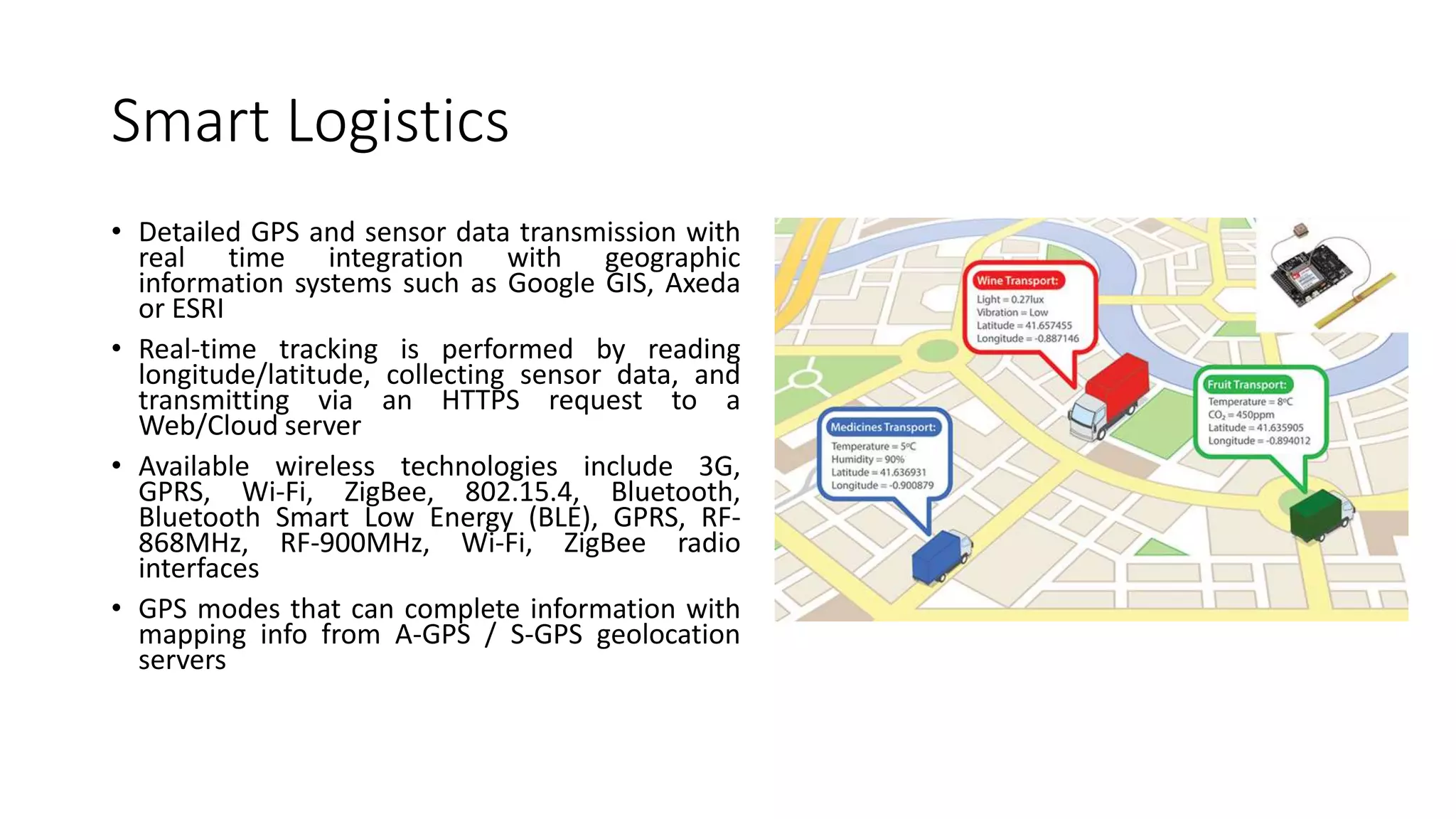
Smart Logistics
• Detailed GPS and sensor data transmission with
real time integration with geographic
information systems such as Google GIS, Axeda
or ESRI
• Real-time tracking is performed by reading
longitude/latitude, collecting sensor data, and
transmitting via an HTTPS request to a
Web/Cloud server
• Available wireless technologies include 3G,
GPRS, Wi-Fi, ZigBee, 802.15.4, Bluetooth,
Bluetooth Smart Low Energy (BLE), GPRS, RF-
868MHz, RF-900MHz, Wi-Fi, ZigBee radio
interfaces
• GPS modes that can complete information with
mapping info from A-GPS / S-GPS geolocation
servers
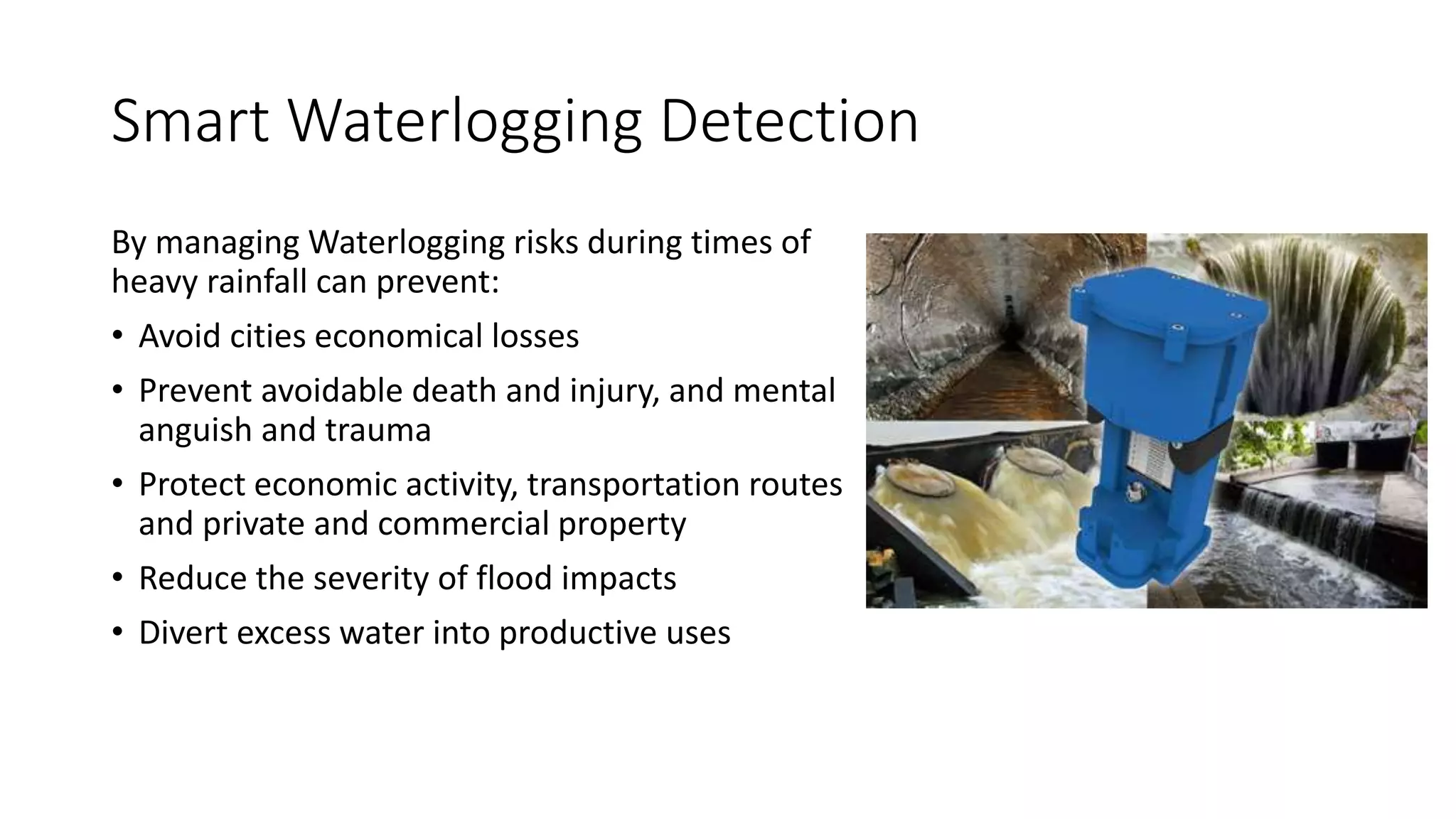
Smart Waterlogging Detection
By managing Waterlogging risks during times of
heavy rainfall can prevent:
• Avoid cities economical losses
• Prevent avoidable death and injury, and mental
anguish and trauma
• Protect economic activity, transportation routes
and private and commercial property
• Reduce the severity of flood impacts
• Divert excess water into productive uses
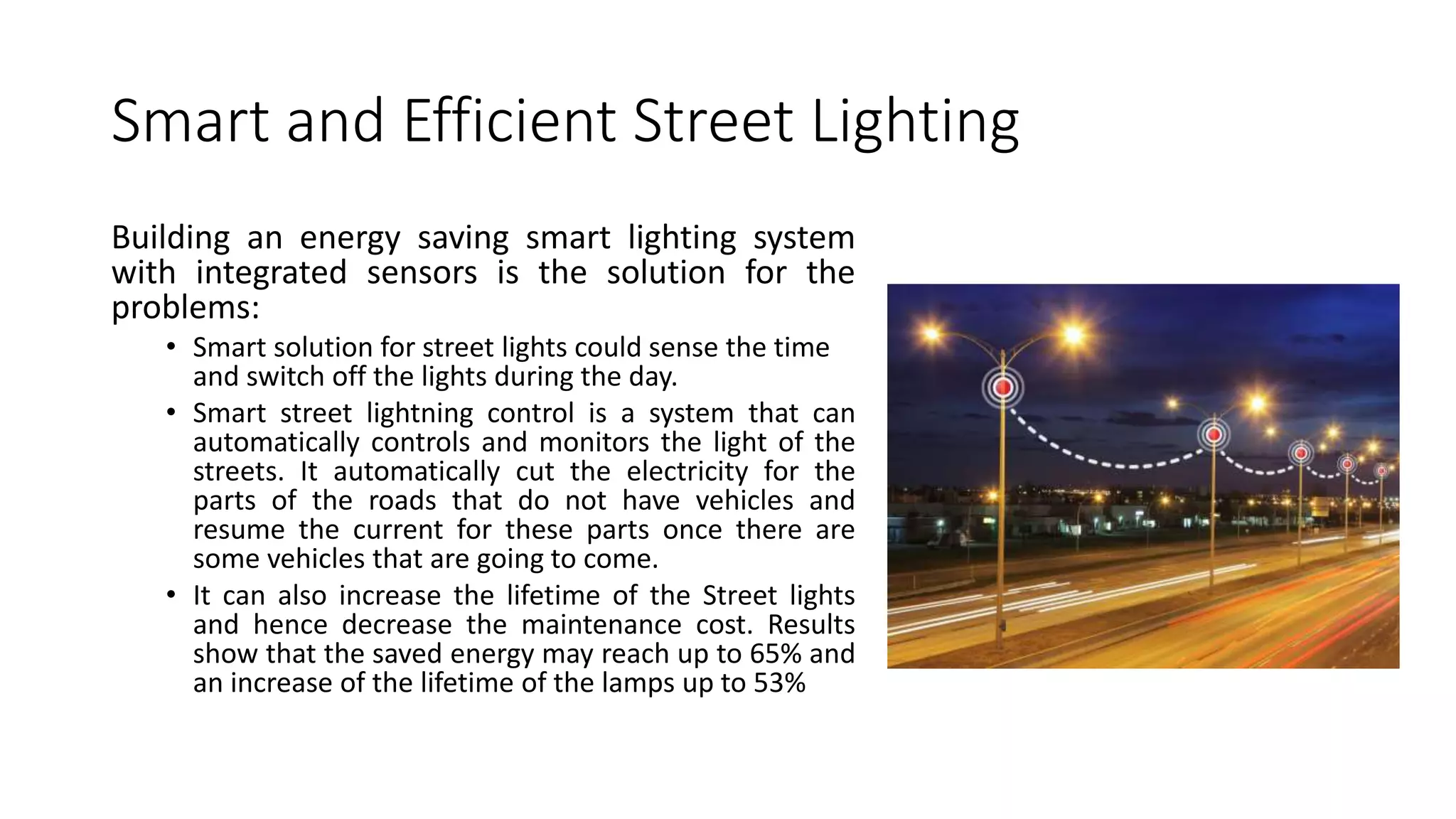
Smart and Efficient Street Lighting
Building an energy saving smart lighting system
with integrated sensors is the solution for the
problems:
• Smart solution for street lights could sense the time
and switch off the lights during the day.
• Smart street lightning control is a system that can
automatically controls and monitors the light of the
streets. It automatically cut the electricity for the
parts of the roads that do not have vehicles and
resume the current for these parts once there are
some vehicles that are going to come.
• It can also increase the lifetime of the Street lights
and hence decrease the maintenance cost. Results
show that the saved energy may reach up to 65% and
an increase of the lifetime of the lamps up to 53%
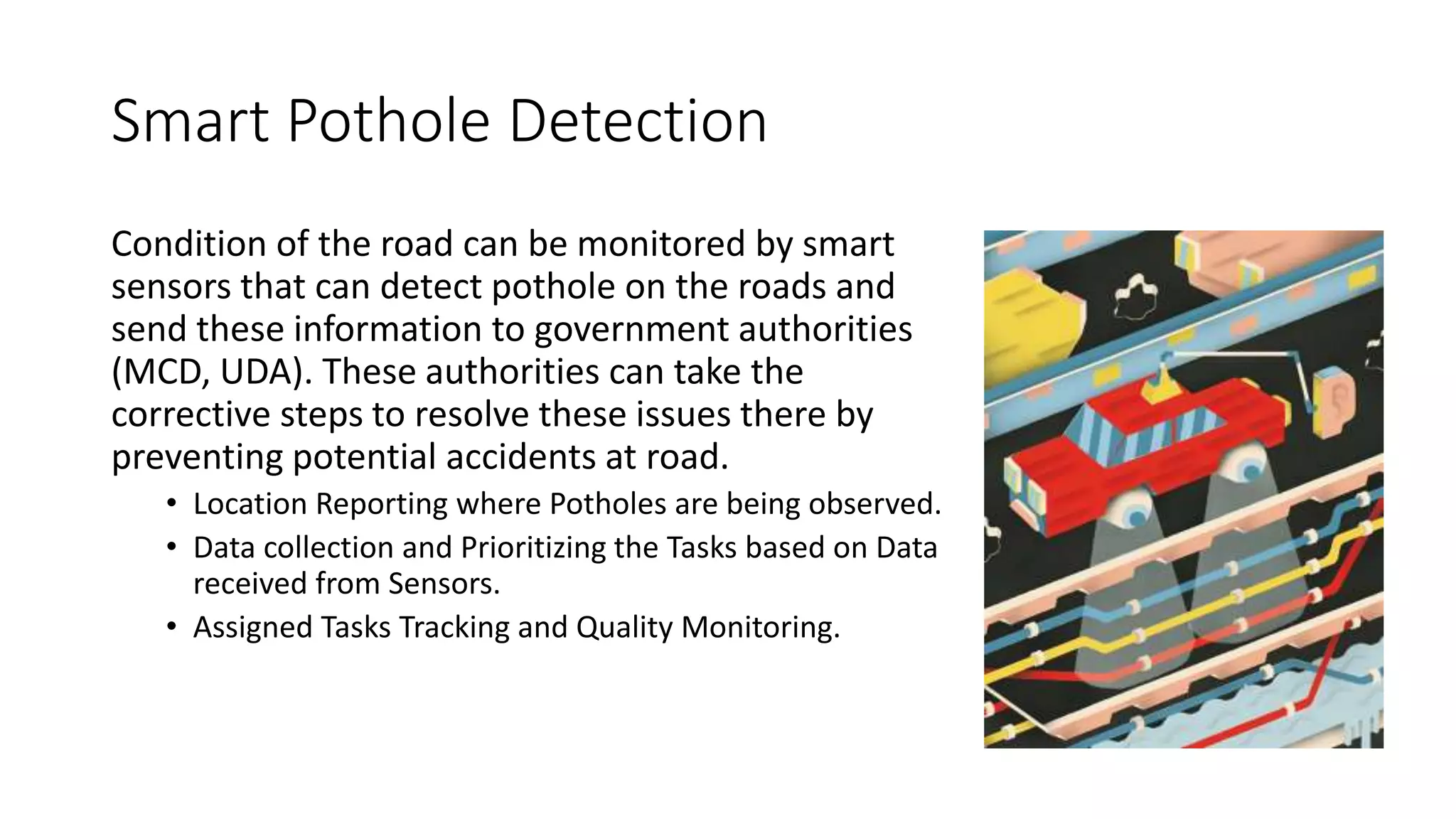
Smart Pothole Detection
Condition of the road can be monitored by smart
sensors that can detect pothole on the roads and
send these information to government authorities
(MCD, UDA). These authorities can take the
corrective steps to resolve these issues there by
preventing potential accidents at road.
• Location Reporting where Potholes are being observed.
• Data collection and Prioritizing the Tasks based on Data
received from Sensors.
• Assigned Tasks Tracking and Quality Monitoring.
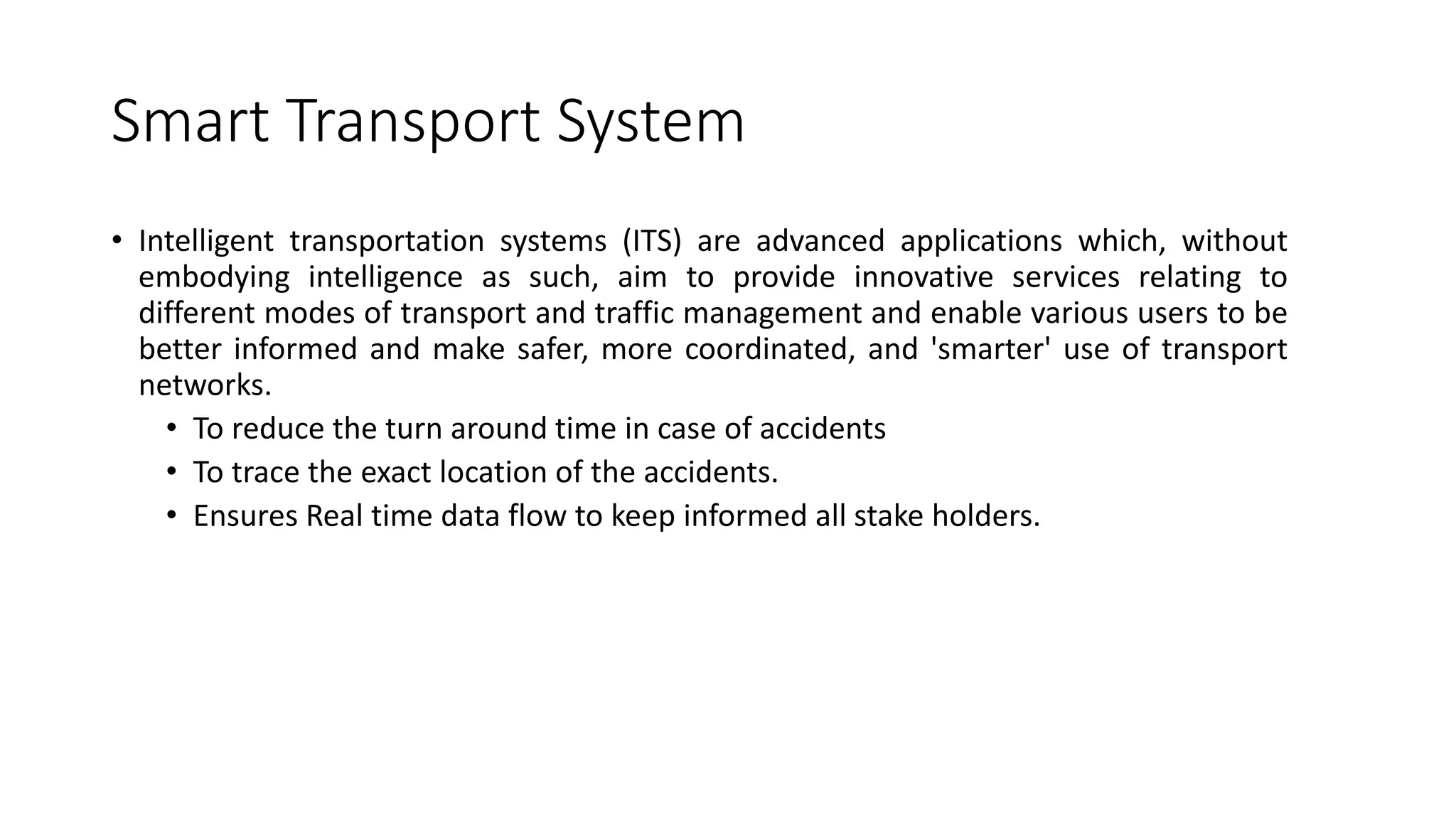
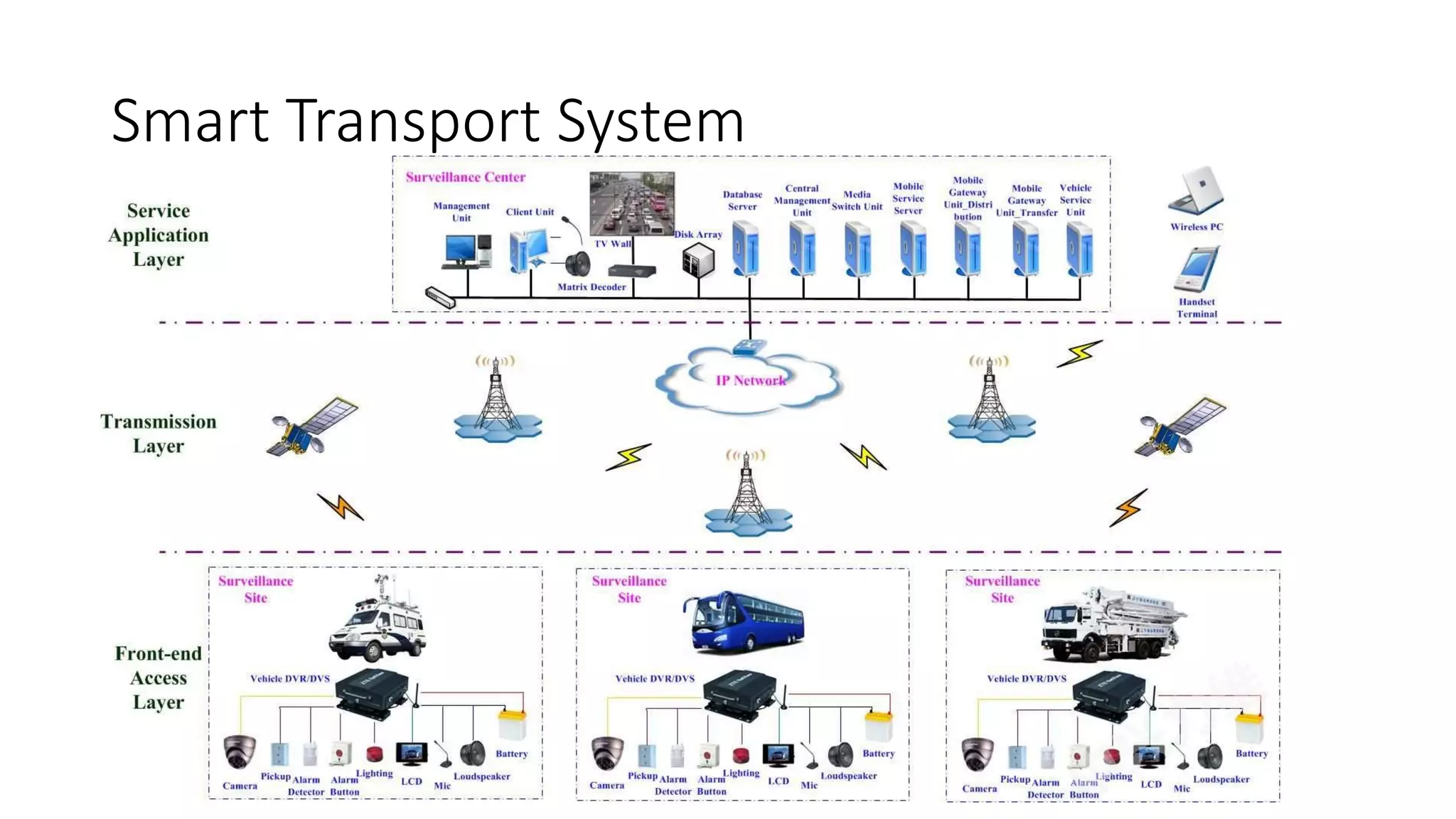
Smart Transport System
• Intelligent transportation systems (ITS) are advanced applications which, without
embodying intelligence as such, aim to provide innovative services relating to
different modes of transport and traffic management and enable various users to be
better informed and make safer, more coordinated, and 'smarter' use of transport
networks.
• To reduce the turn around time in case of accidents
• To trace the exact location of the accidents.
• Ensures Real time data flow to keep informed all stake holders.
Smart Transport System
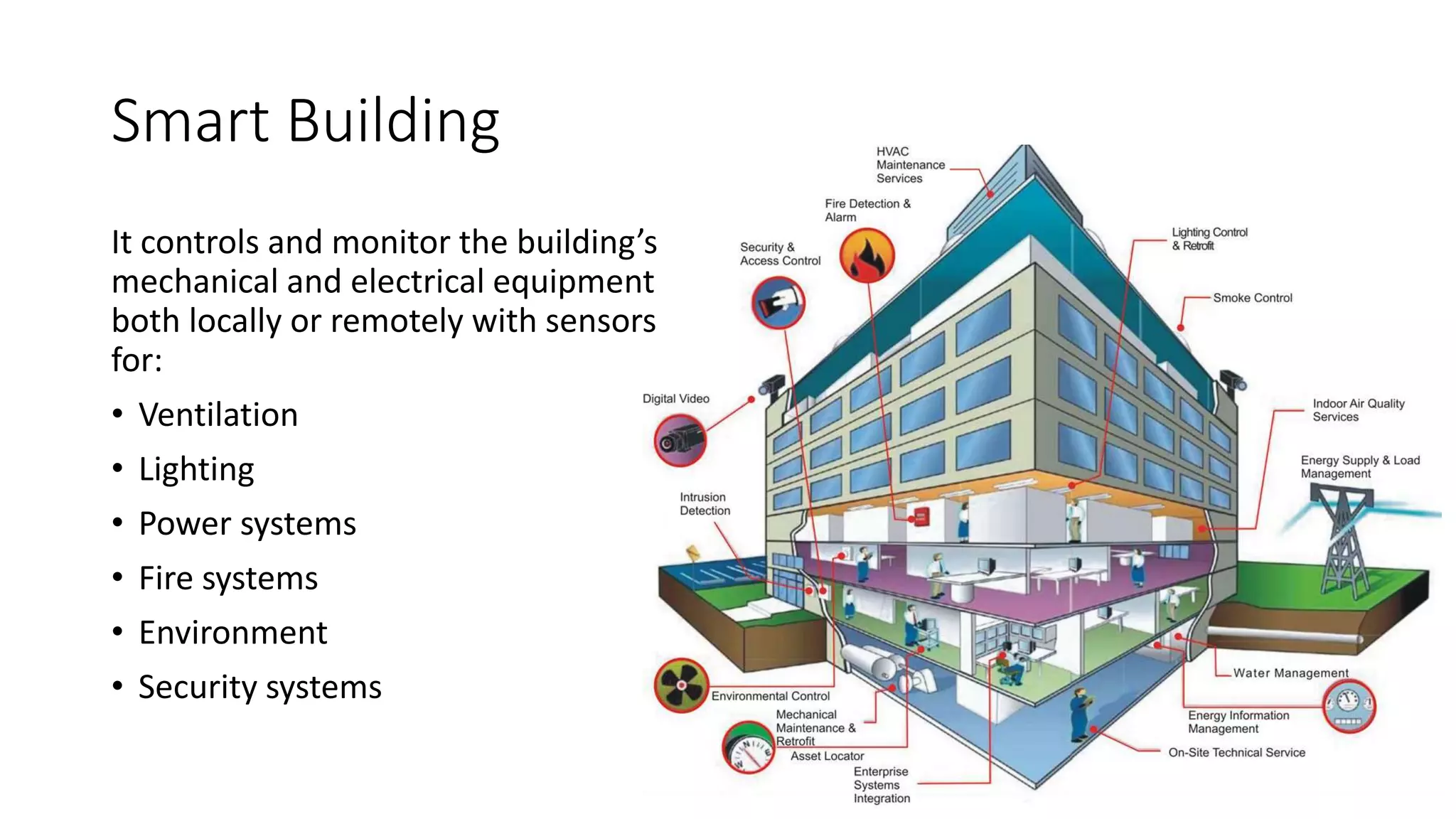
Smart Building
It controls and monitor the building’s
mechanical and electrical equipment
both locally or remotely with sensors
for:
• Ventilation
• Lighting
• Power systems
• Fire systems
• Environment
• Security systems
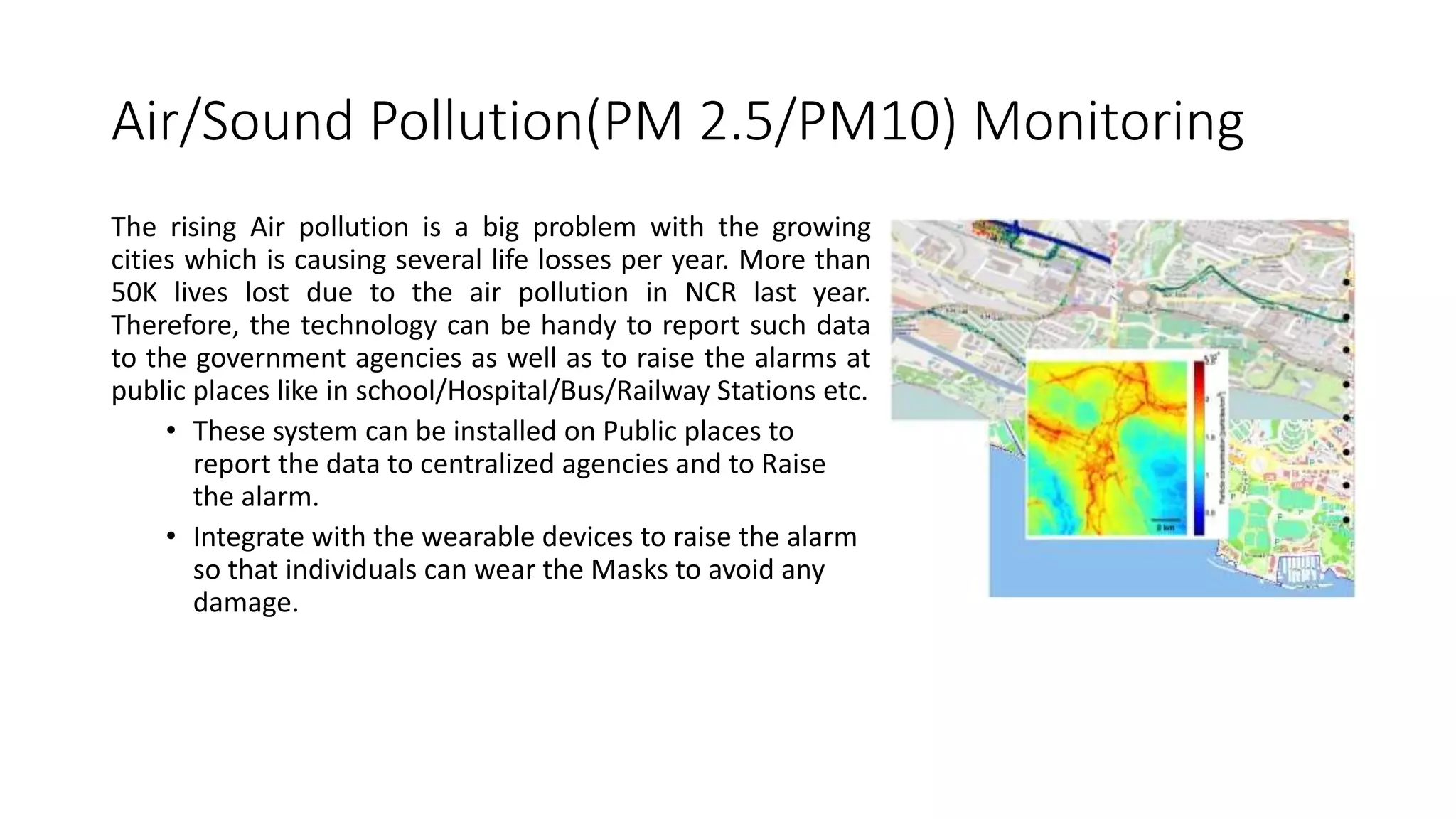
Air/Sound Pollution(PM 2.5/PM10) Monitoring
The rising Air pollution is a big problem with the growing
cities which is causing several life losses per year. More than
50K lives lost due to the air pollution in NCR last year.
Therefore, the technology can be handy to report such data
to the government agencies as well as to raise the alarms at
public places like in school/Hospital/Bus/Railway Stations etc.
• These system can be installed on Public places to
report the data to centralized agencies and to Raise
the alarm.
• Integrate with the wearable devices to raise the alarm
so that individuals can wear the Masks to avoid any
damage.
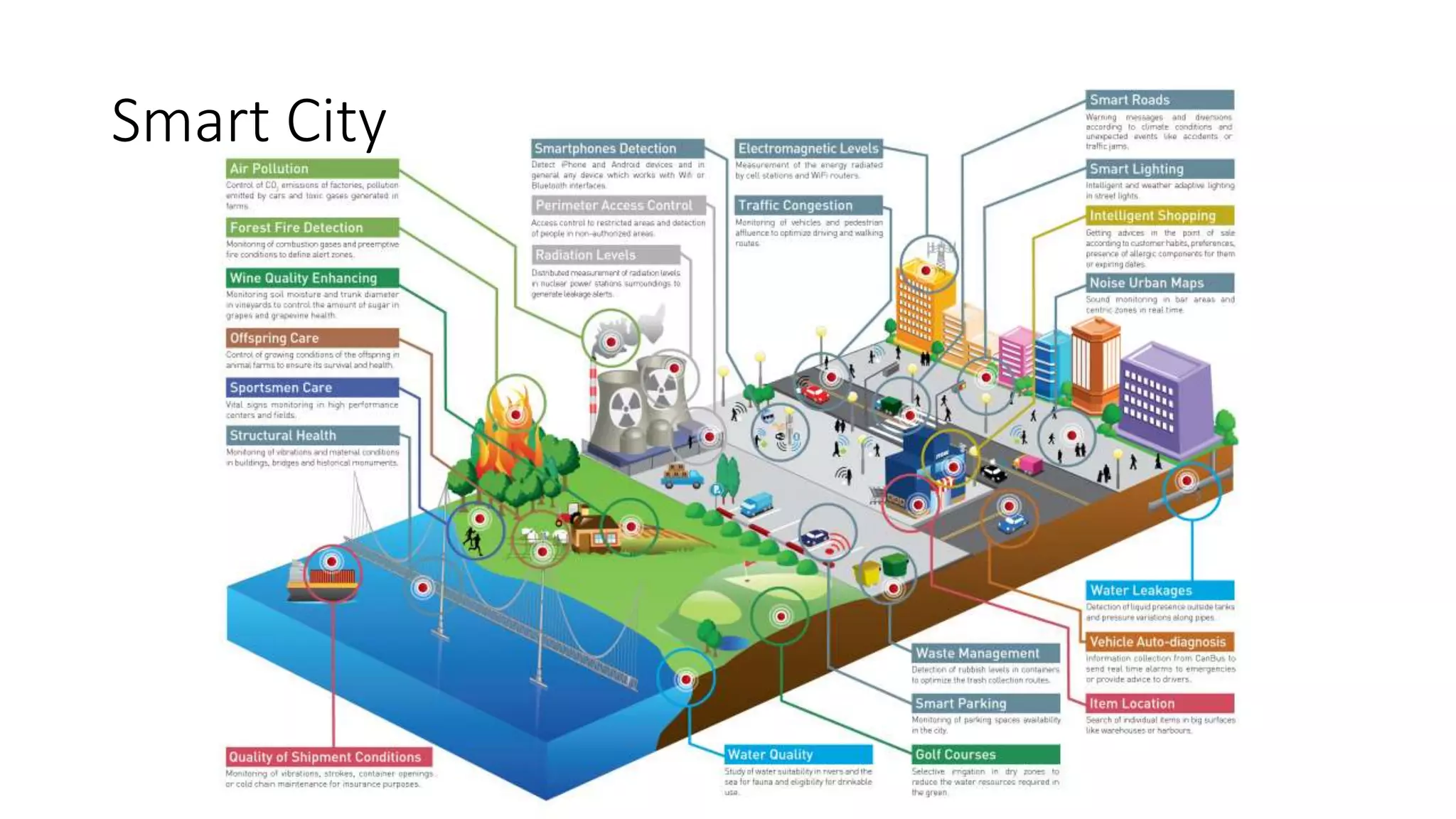
Smart City
Thank You
Contact: info@encodingenhancers.com

Iot services-encodingenhancers

  • 1.
  • 2.
    Contents • Where isIoT? • Scope of IoT • IoT Ecosystem • Machine 2 Machine • Wearables • Opportunities • Connected IoT Devices in 2017 • Our Integration Capabilities • Key Protocols, Hardware Technologies, Software Frameworks • Use Cases
  • 3.
  • 4.
    Scope of IoT: Thescope of IoT includes: • Embedded devices which manage and collect data from sensors or other inputs • Cloud storage of data • Aggregation and analysis of data • Applications which present data to users in meaningful ways
  • 5.
  • 6.
  • 7.
  • 8.
    Opportunities: Telcos • Need toembrace the IOT to enhance customer experience in legacy voice and data business and drive new revenue opportunities Industrial • Fluctuating prices and external demand require greater efficiencies and flexibility in production Automotive • Car manufactures must address the challenge for connected and intelligent cars
  • 9.
  • 10.
    Projected Growth andMarket Opportunities Gartner predicts the Internet of Things installed base will grow to 26 billion units by 2020. A piece of trivia: the number of mobile devices exceeded the number of human beings on Earth in October of 2014, at 7.2 billion.
  • 11.
  • 12.
  • 13.
    Key Protocols, HardwareTechnologies, Software Frameworks • CoAP, or Constrained Application Protocol, standardized as RFC 7252 (with multicast, low overhead, a REST model, and runs over UDP packets with DTLS encryption) is used for small low- power sensors, switches and valves etc • MRAA supported protocols include GPIO, I2C, SPI, PWM and serial UARTs. It is portable across multiple platforms including Raspberry Pi, Intel Edison and BeagleBone Black • BTLE is Bluetooth Low Energy is a wireless personal area network technology that is designed to operate for months or years on battery power. Aimed at applications in healthcare, fitness, beacons, security and entertainment, it is supported by most latforms like Android, iOS, Linux and OS X • OMA LWM2M is the Open Mobile Alliance Lightweight Machine to Machine protocol for IoT device management and service enablement. It provides device management functionality over sensor or cellular networks and can transfer service data from the network to devices • Zephyr, an open source real-time OS for IoT devices announced by The Linux Foundation and is based on Wind River's Rocket RTOS. It is suitable for memory constrained microcontroller platforms that don't have the resources to run a full operating system like Linux.
  • 14.
  • 15.
    Smart Control Systems Withsingle device, you can connect 260 multipoint electronic control, monitoring and alarming system for following applications. These device can be cascaded to have unlimited number of multipoint connections. • Hot water temperature maintenance • Freezer frost heave prevention • Floor heating • Pipe freeze protection • Fuel oil flow maintenance • Roof & gutter de-icing • Surface snow melting • Greasy waste disposal flow maintenance
  • 16.
  • 17.
  • 18.
    Smart Agriculture Data collection& analytics includes: • Air & Soil temperature • Humidity • Luminosity • Solar visible radiation • Wind speed & direction • Rainfall • Atmospheric pressure • Leaf Wetness • Fruit or trunk diameter measurement (dendrometer)
  • 19.
  • 20.
    Smart HealthCare • Informationfrom these can be used to monitor in real time the state of a patient or to get sensitive data in order to be subsequently analyzed for medical diagnosis. Biometric information gathered can be wirelessly sent using application. • If real time image diagnosis is needed a camera can be attached in order to send photos and videos of the patient to a medical diagnosis center. • Data can also be sent to the Cloud in order to perform permanent storage or visualized in real time by sending the data directly to a laptop or Smartphone.
  • 21.
    Smart Logistics • DetailedGPS and sensor data transmission with real time integration with geographic information systems such as Google GIS, Axeda or ESRI • Real-time tracking is performed by reading longitude/latitude, collecting sensor data, and transmitting via an HTTPS request to a Web/Cloud server • Available wireless technologies include 3G, GPRS, Wi-Fi, ZigBee, 802.15.4, Bluetooth, Bluetooth Smart Low Energy (BLE), GPRS, RF- 868MHz, RF-900MHz, Wi-Fi, ZigBee radio interfaces • GPS modes that can complete information with mapping info from A-GPS / S-GPS geolocation servers
  • 22.
    Smart Waterlogging Detection Bymanaging Waterlogging risks during times of heavy rainfall can prevent: • Avoid cities economical losses • Prevent avoidable death and injury, and mental anguish and trauma • Protect economic activity, transportation routes and private and commercial property • Reduce the severity of flood impacts • Divert excess water into productive uses
  • 23.
    Smart and EfficientStreet Lighting Building an energy saving smart lighting system with integrated sensors is the solution for the problems: • Smart solution for street lights could sense the time and switch off the lights during the day. • Smart street lightning control is a system that can automatically controls and monitors the light of the streets. It automatically cut the electricity for the parts of the roads that do not have vehicles and resume the current for these parts once there are some vehicles that are going to come. • It can also increase the lifetime of the Street lights and hence decrease the maintenance cost. Results show that the saved energy may reach up to 65% and an increase of the lifetime of the lamps up to 53%
  • 24.
    Smart Pothole Detection Conditionof the road can be monitored by smart sensors that can detect pothole on the roads and send these information to government authorities (MCD, UDA). These authorities can take the corrective steps to resolve these issues there by preventing potential accidents at road. • Location Reporting where Potholes are being observed. • Data collection and Prioritizing the Tasks based on Data received from Sensors. • Assigned Tasks Tracking and Quality Monitoring.
  • 25.
    Smart Transport System •Intelligent transportation systems (ITS) are advanced applications which, without embodying intelligence as such, aim to provide innovative services relating to different modes of transport and traffic management and enable various users to be better informed and make safer, more coordinated, and 'smarter' use of transport networks. • To reduce the turn around time in case of accidents • To trace the exact location of the accidents. • Ensures Real time data flow to keep informed all stake holders.
  • 26.
  • 27.
    Smart Building It controlsand monitor the building’s mechanical and electrical equipment both locally or remotely with sensors for: • Ventilation • Lighting • Power systems • Fire systems • Environment • Security systems
  • 28.
    Air/Sound Pollution(PM 2.5/PM10)Monitoring The rising Air pollution is a big problem with the growing cities which is causing several life losses per year. More than 50K lives lost due to the air pollution in NCR last year. Therefore, the technology can be handy to report such data to the government agencies as well as to raise the alarms at public places like in school/Hospital/Bus/Railway Stations etc. • These system can be installed on Public places to report the data to centralized agencies and to Raise the alarm. • Integrate with the wearable devices to raise the alarm so that individuals can wear the Masks to avoid any damage.
  • 29.
  • 30.

Editor's Notes

  • #7 M2M/IoT Sector Map :: Beecham Research http://www.beechamresearch.com/article.aspx?id=4 The following graphic from Beecham Research depicts how the Internet of Things may interact with various service sectors within the public/private sectors and ordinary consumers. Public sector entities (such as universities) may have some level of involvement and interaction within all service sectors depicted; ranging from the operation and industry elements of buildings, to levels of research, retail entities, transportation, and IT/Networks. **Place emphasis on service sectors, that it is likely that at least one example of devices may be found within university networks.