CONTENT
 WHAT IS IOT?
 HOW IOT WORKS?
 H/W AND S/W
 APPLICATIONS OF IOT
 CHALLENGES OF IOT
 ADVANTAGES OF IOT
DISADVANTAGES OF IOT
WHAT IS IOT?
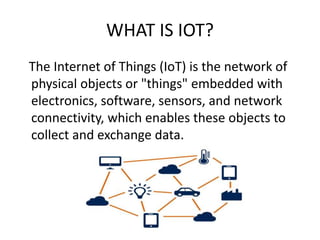
The Internet of Things (IoT) is the network of
physical objects or "things" embedded with
electronics, software, sensors, and network
connectivity, which enables these objects to
collect and exchange data.
HISTORY OF IOT
The concept of the Internet of Things first became popular in
1999, through the Auto-ID Center at MIT and related market-
analysis publications.
Radio-frequency identification (RFID) was seen as a prerequisite
for the IoT at that point. If all objects and people in daily life were
equipped with identifiers, computers could manage and inventory
them. Besides using RFID, the tagging of things may be achieved
through such technologies as near field communication, barcodes,
QR codes, bluetooth, and digital watermarking.
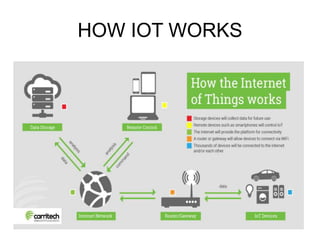
HOW IOT WORKS
HARDWARE OF IOT
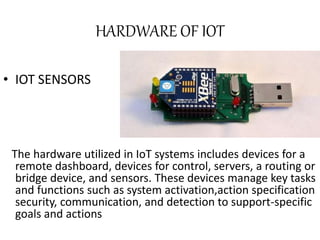
• IOT SENSORS
The hardware utilized in IoT systems includes devices for a
remote dashboard, devices for control, servers, a routing or
bridge device, and sensors. These devices manage key tasks
and functions such as system activation,action specification
security, communication, and detection to support-specific
goals and actions
HARDWARE OF IOT
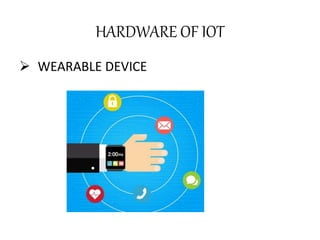
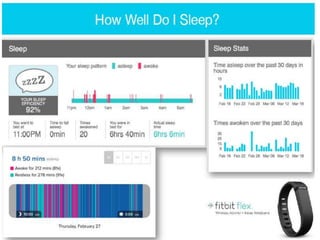
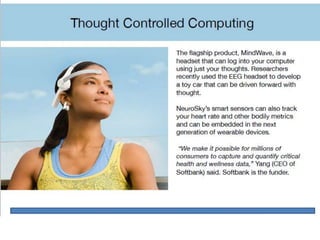
 WEARABLE DEVICE
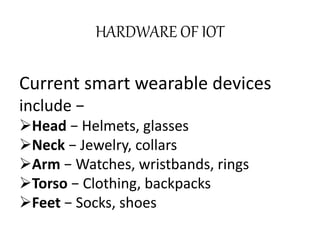
Current smart wearable devices
include −
Head − Helmets, glasses
Neck − Jewelry, collars
Arm − Watches, wristbands, rings
Torso − Clothing, backpacks
Feet − Socks, shoes
HARDWARE OF IOT
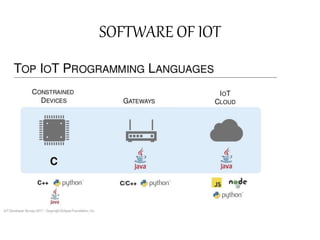
SOFTWARE OF IOT
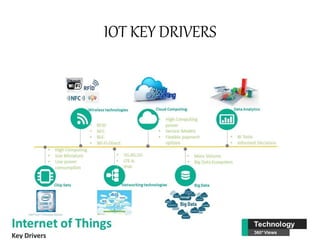
IOT KEY DRIVERS
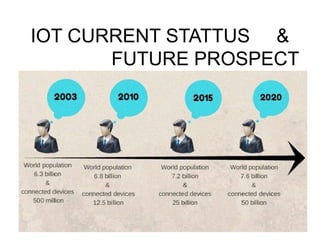
IOT CURRENT STATTUS &
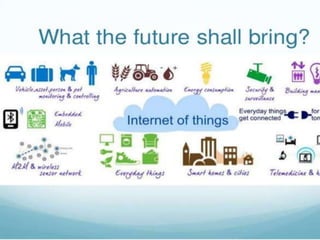
FUTURE PROSPECT
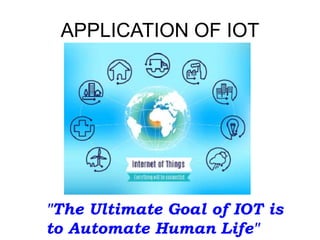
APPLICATION OF IOT
"The Ultimate Goal of IOT is
to Automate Human Life"
FEW APPLICATION OF IOT
Building and Home automation
Manufacturing
Medical and Healthcare systems
Media
Environmental monitoring
Infrastructure management
Energy management
Transportation
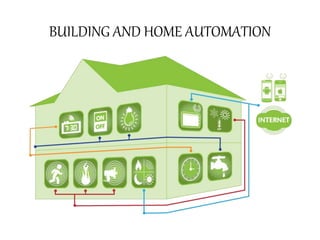
BUILDING AND HOME AUTOMATION
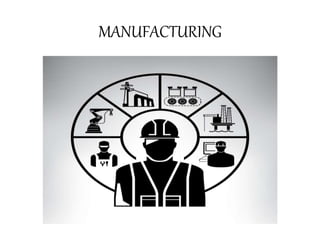
MANUFACTURING
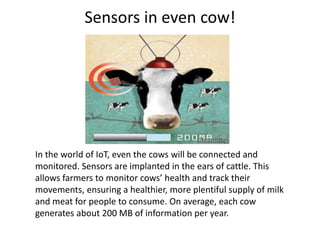
Sensors in even cow!
In the world of IoT, even the cows will be connected and
monitored. Sensors are implanted in the ears of cattle. This
allows farmers to monitor cows’ health and track their
movements, ensuring a healthier, more plentiful supply of milk
and meat for people to consume. On average, each cow
generates about 200 MB of information per year.
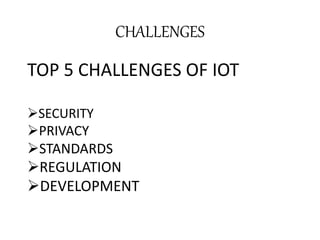
TOP 5 CHALLENGES OF IOT
SECURITY
PRIVACY
STANDARDS
REGULATION
DEVELOPMENT
CHALLENGES
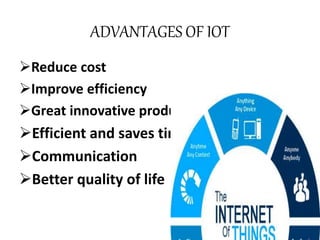
ADVANTAGES OF IOT
Reduce cost
Improve efficiency
Great innovative products
Efficient and saves time
Communication
Better quality of life
DISADVANTAGES OF IOT
compatibility
Lesser employment
Technology takes control of life
Security
Privacy
THANK YOU

Iot

  • 3.
    CONTENT  WHAT ISIOT?  HOW IOT WORKS?  H/W AND S/W  APPLICATIONS OF IOT  CHALLENGES OF IOT  ADVANTAGES OF IOT DISADVANTAGES OF IOT
  • 4.
    WHAT IS IOT? TheInternet of Things (IoT) is the network of physical objects or "things" embedded with electronics, software, sensors, and network connectivity, which enables these objects to collect and exchange data.
  • 5.
    HISTORY OF IOT Theconcept of the Internet of Things first became popular in 1999, through the Auto-ID Center at MIT and related market- analysis publications. Radio-frequency identification (RFID) was seen as a prerequisite for the IoT at that point. If all objects and people in daily life were equipped with identifiers, computers could manage and inventory them. Besides using RFID, the tagging of things may be achieved through such technologies as near field communication, barcodes, QR codes, bluetooth, and digital watermarking.
  • 6.
  • 7.
    HARDWARE OF IOT •IOT SENSORS The hardware utilized in IoT systems includes devices for a remote dashboard, devices for control, servers, a routing or bridge device, and sensors. These devices manage key tasks and functions such as system activation,action specification security, communication, and detection to support-specific goals and actions
  • 8.
    HARDWARE OF IOT WEARABLE DEVICE
  • 9.
    Current smart wearabledevices include − Head − Helmets, glasses Neck − Jewelry, collars Arm − Watches, wristbands, rings Torso − Clothing, backpacks Feet − Socks, shoes HARDWARE OF IOT
  • 10.
  • 11.
  • 12.
    IOT CURRENT STATTUS& FUTURE PROSPECT
  • 14.
    APPLICATION OF IOT "TheUltimate Goal of IOT is to Automate Human Life"
  • 15.
    FEW APPLICATION OFIOT Building and Home automation Manufacturing Medical and Healthcare systems Media Environmental monitoring Infrastructure management Energy management Transportation
  • 16.
  • 17.
  • 19.
    Sensors in evencow! In the world of IoT, even the cows will be connected and monitored. Sensors are implanted in the ears of cattle. This allows farmers to monitor cows’ health and track their movements, ensuring a healthier, more plentiful supply of milk and meat for people to consume. On average, each cow generates about 200 MB of information per year.
  • 23.
    TOP 5 CHALLENGESOF IOT SECURITY PRIVACY STANDARDS REGULATION DEVELOPMENT CHALLENGES
  • 24.
    ADVANTAGES OF IOT Reducecost Improve efficiency Great innovative products Efficient and saves time Communication Better quality of life
  • 25.
    DISADVANTAGES OF IOT compatibility Lesseremployment Technology takes control of life Security Privacy
  • 27.