Introduction to
Website Pentesting
www.digitdefence.com
Definition and Purpose of Penetration Testing
01 02 03
Penetration Testing Primary Purpose Regular Testing
Penetration testing, often referred
to as ethical hacking, is a
simulated cyber attack against a
computer system, network, or web
application to identify
vulnerabilities that could be
exploited by malicious actors. This
proactive approach helps
organizations understand their
security posture and the
effectiveness of their defenses.
The primary purpose of penetration
testing is to evaluate the security of
a system by safely exploiting
vulnerabilities, thereby providing
insights into potential risks and
weaknesses. This process not only
helps in identifying security gaps
but also assists in prioritizing
remediation efforts based on the
severity of the findings.
By conducting regular penetration
tests, organizations can ensure
compliance with industry
regulations and standards,
enhance their incident response
strategies, and ultimately protect
sensitive data from breaches. This
ongoing assessment fosters a
culture of security awareness and
continuous improvement within the
organization.
www.digitdefence.com
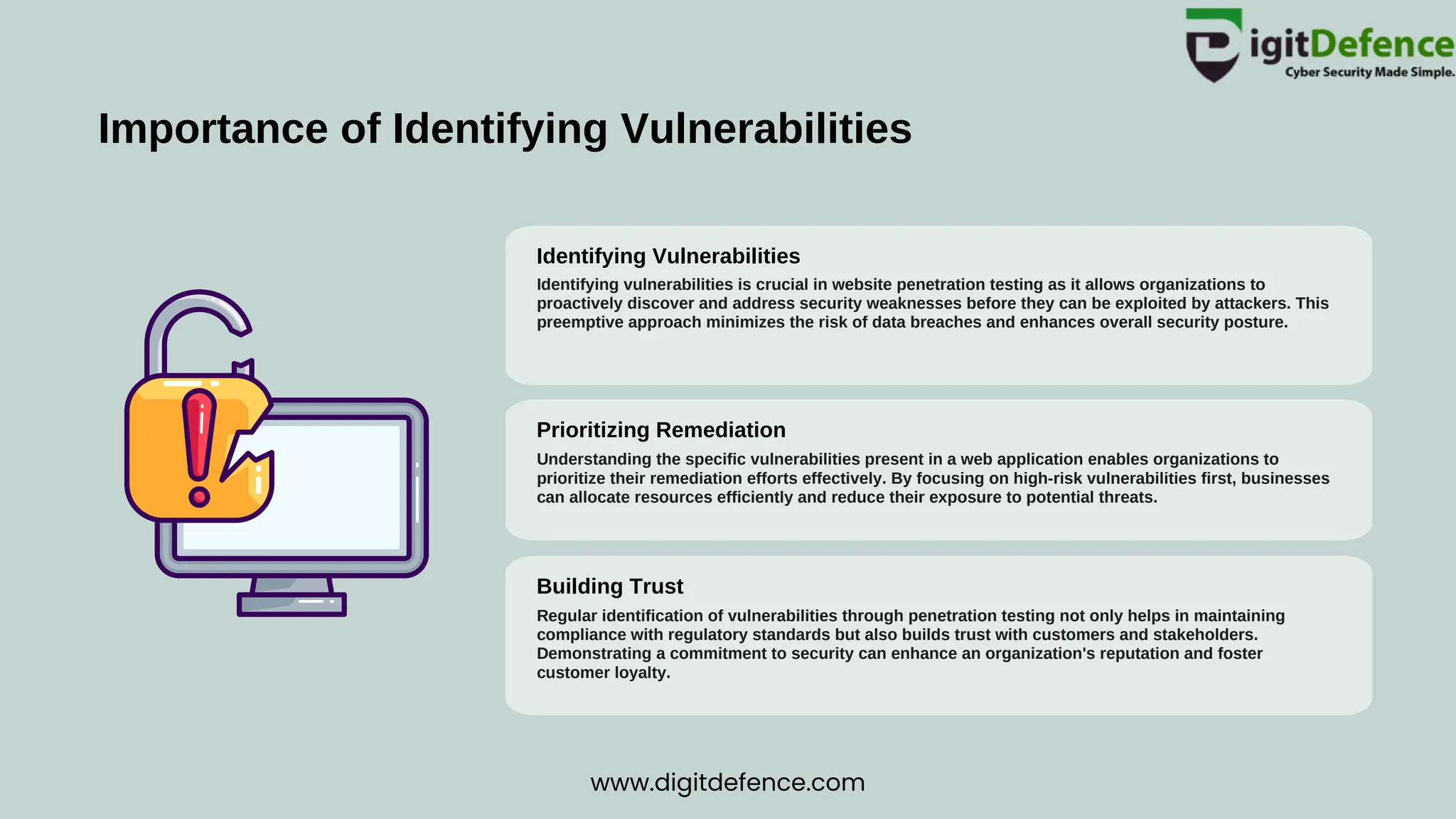
Identifying Vulnerabilities
Prioritizing Remediation
Building Trust
Identifying vulnerabilities is crucial in website penetration testing as it allows organizations to
proactively discover and address security weaknesses before they can be exploited by attackers. This
preemptive approach minimizes the risk of data breaches and enhances overall security posture.
Understanding the specific vulnerabilities present in a web application enables organizations to
prioritize their remediation efforts effectively. By focusing on high-risk vulnerabilities first, businesses
can allocate resources efficiently and reduce their exposure to potential threats.
Regular identification of vulnerabilities through penetration testing not only helps in maintaining
compliance with regulatory standards but also builds trust with customers and stakeholders.
Demonstrating a commitment to security can enhance an organization's reputation and foster
customer loyalty.
Importance of Identifying Vulnerabilities
www.digitdefence.com
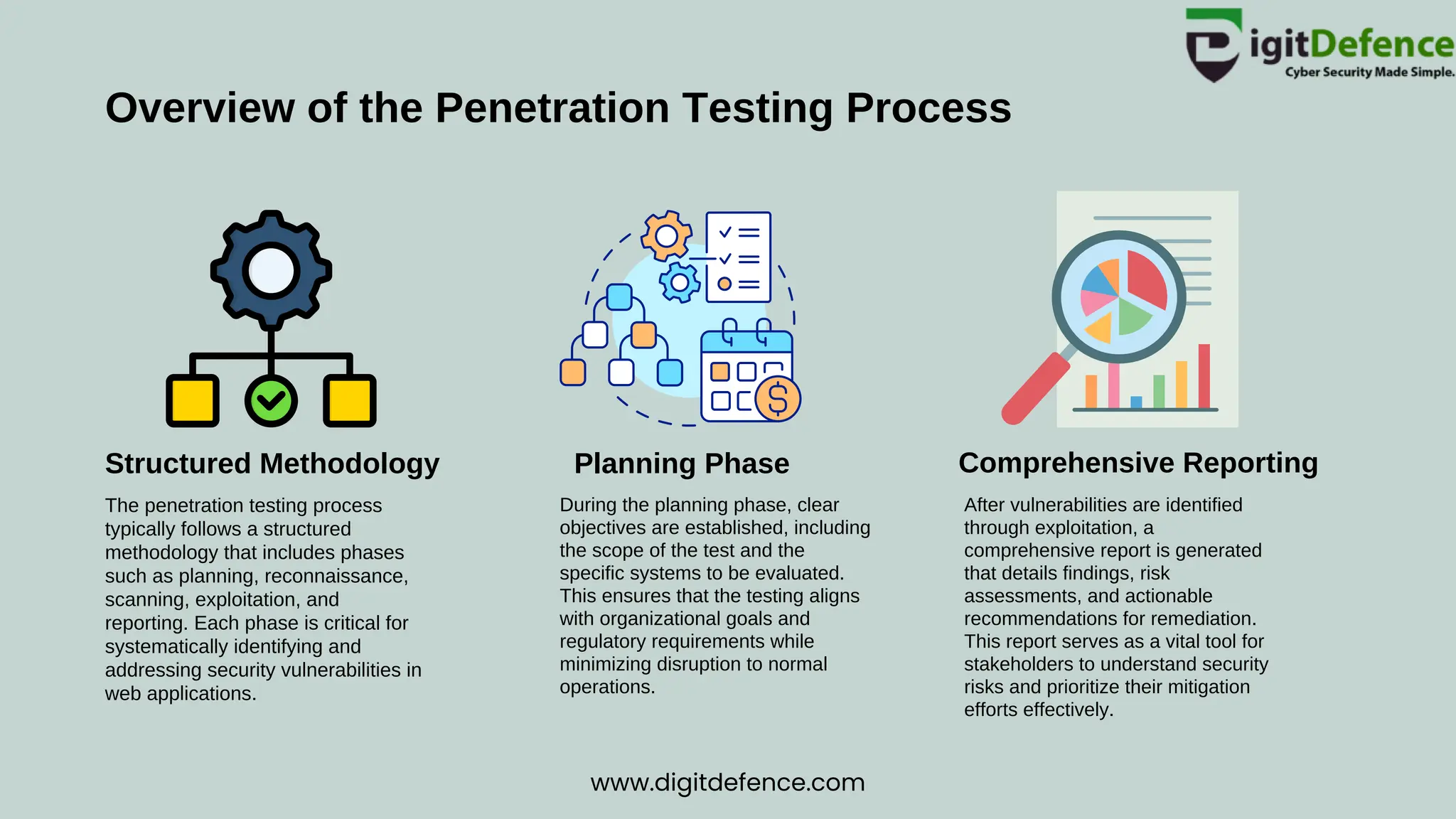
Overview of the Penetration Testing Process
Structured Methodology Planning Phase Comprehensive Reporting
The penetration testing process
typically follows a structured
methodology that includes phases
such as planning, reconnaissance,
scanning, exploitation, and
reporting. Each phase is critical for
systematically identifying and
addressing security vulnerabilities in
web applications.
During the planning phase, clear
objectives are established, including
the scope of the test and the
specific systems to be evaluated.
This ensures that the testing aligns
with organizational goals and
regulatory requirements while
minimizing disruption to normal
operations.
After vulnerabilities are identified
through exploitation, a
comprehensive report is generated
that details findings, risk
assessments, and actionable
recommendations for remediation.
This report serves as a vital tool for
stakeholders to understand security
risks and prioritize their mitigation
efforts effectively.
www.digitdefence.com
Information Gathering Techniques
01 02 03
Information Gathering Utilizing Tools Tailored Attack
Strategies
Information gathering is the
foundational step in website
penetration testing, involving the
collection of data about the target
web application, its infrastructure,
and potential vulnerabilities.
Techniques such as WHOIS
lookups, DNS enumeration, and
network scanning are essential for
mapping out the attack surface
and identifying entry points for
further testing.
Utilizing tools like Nmap and Burp
Suite during the information
gathering phase allows testers to
discover open ports, services
running on those ports, and
potential misconfigurations that
could be exploited. This phase
also includes gathering publicly
available information from social
media and other online platforms
to understand the organization’s
digital footprint.
Effective information gathering not
only aids in identifying
vulnerabilities but also helps in
crafting tailored attack strategies.
By understanding the technologies
used in the web application, such
as frameworks and libraries,
penetration testers can focus their
efforts on specific areas that are
more likely to contain security
flaws.
www.digitdefence.com
Researching Vulnerabilities
Exploitation Strategies
Researching vulnerabilities involves utilizing various tools and techniques
to analyze the target web application for known security flaws. This
includes leveraging databases such as the National Vulnerability Database
(NVD) and Common Vulnerabilities and Exposures (CVE) to identify
potential weaknesses that could be exploited during testing.
Exploitation strategies focus on safely executing attacks against identified
vulnerabilities to determine their impact and severity. Techniques such as
SQL injection, Cross-Site Scripting (XSS), and Remote Code Execution
(RCE) are commonly employed, allowing testers to simulate real-world
attack scenarios while ensuring that no permanent damage is inflicted on
the system.
Research and Exploitation Strategies
www.digitdefence.com
Reporting and Remediation
Reporting Phase Remediation Strategies Follow-Up Assessments
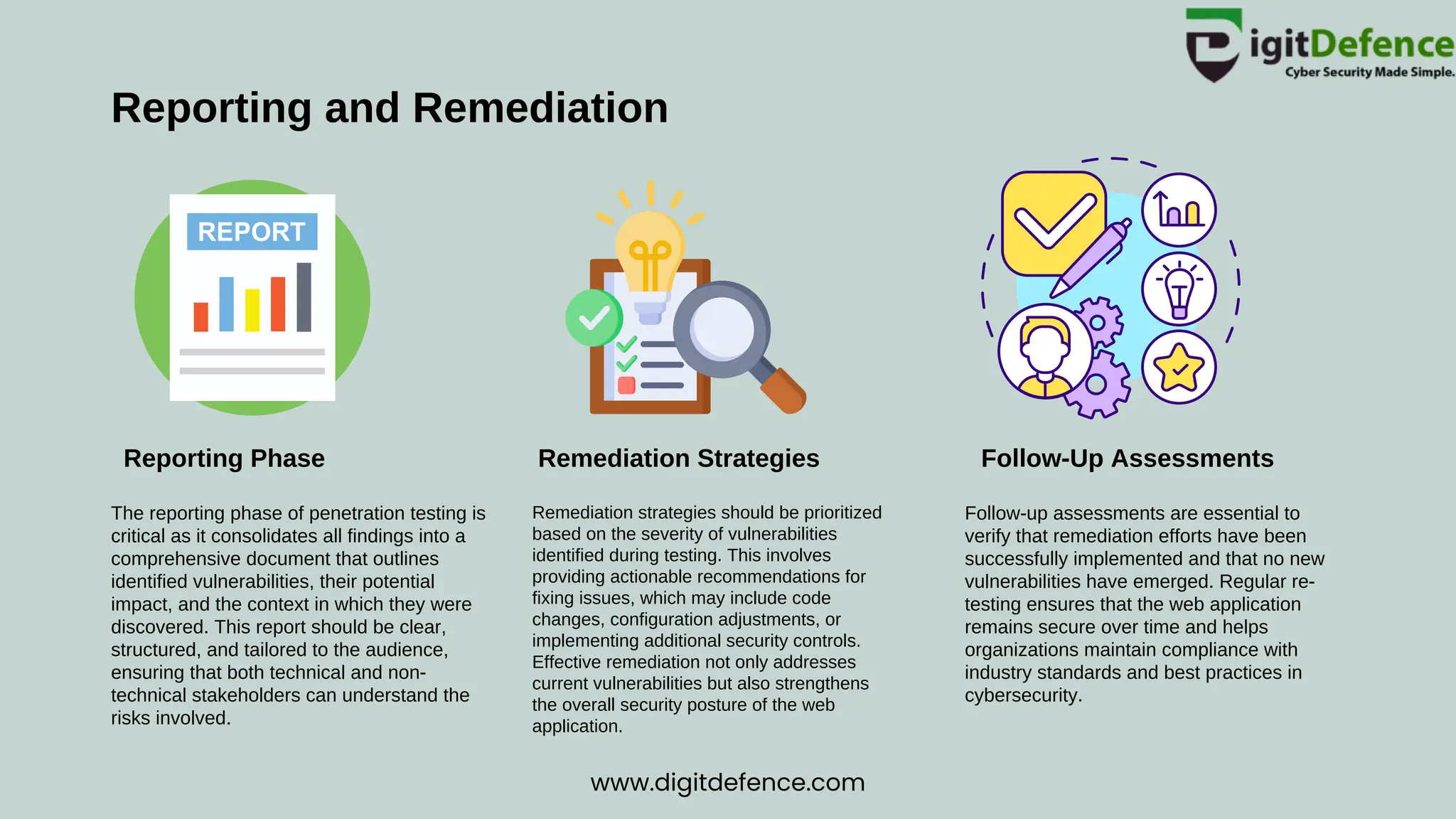
The reporting phase of penetration testing is
critical as it consolidates all findings into a
comprehensive document that outlines
identified vulnerabilities, their potential
impact, and the context in which they were
discovered. This report should be clear,
structured, and tailored to the audience,
ensuring that both technical and non-
technical stakeholders can understand the
risks involved.
Remediation strategies should be prioritized
based on the severity of vulnerabilities
identified during testing. This involves
providing actionable recommendations for
fixing issues, which may include code
changes, configuration adjustments, or
implementing additional security controls.
Effective remediation not only addresses
current vulnerabilities but also strengthens
the overall security posture of the web
application.
Follow-up assessments are essential to
verify that remediation efforts have been
successfully implemented and that no new
vulnerabilities have emerged. Regular re-
testing ensures that the web application
remains secure over time and helps
organizations maintain compliance with
industry standards and best practices in
cybersecurity.
www.digitdefence.com
SQL Injection
Cross-Site Scripting
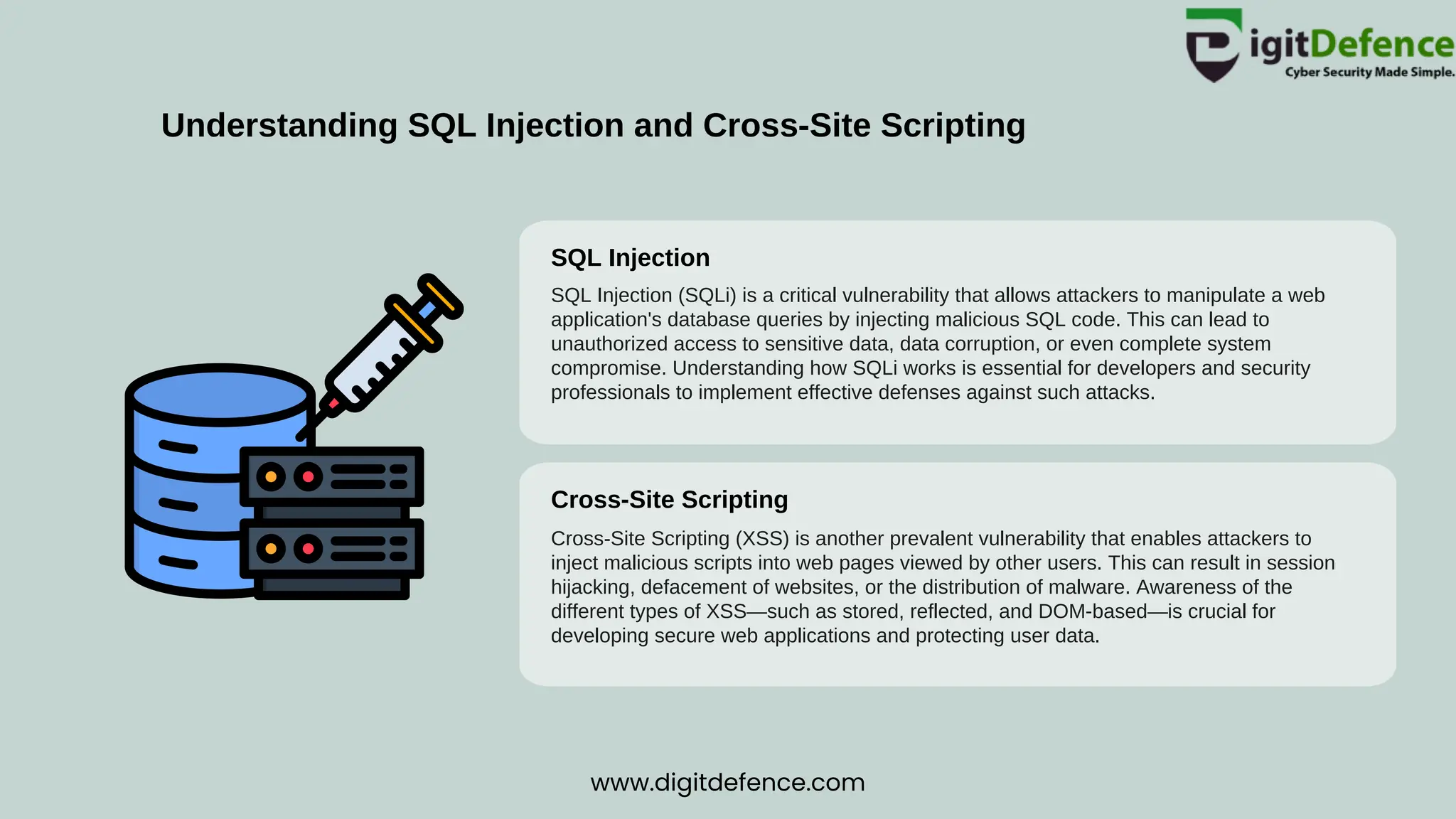
SQL Injection (SQLi) is a critical vulnerability that allows attackers to manipulate a web
application's database queries by injecting malicious SQL code. This can lead to
unauthorized access to sensitive data, data corruption, or even complete system
compromise. Understanding how SQLi works is essential for developers and security
professionals to implement effective defenses against such attacks.
Cross-Site Scripting (XSS) is another prevalent vulnerability that enables attackers to
inject malicious scripts into web pages viewed by other users. This can result in session
hijacking, defacement of websites, or the distribution of malware. Awareness of the
different types of XSS—such as stored, reflected, and DOM-based—is crucial for
developing secure web applications and protecting user data.
Understanding SQL Injection and Cross-Site Scripting
www.digitdefence.com
Overview of OWASP Top Ten Vulnerabilities
01 02 03
OWASP Top Ten Unique Challenges Regular Updates
The OWASP Top Ten is a widely
recognized list that highlights the
most critical security risks to web
applications, serving as a
foundational resource for
developers and security
professionals. Understanding
these vulnerabilities is essential
for effective website penetration
testing, as it allows testers to
focus on the most prevalent
threats that could compromise
application security.
Each vulnerability in the OWASP
Top Ten, such as Injection,
Broken Authentication, and Cross-
Site Scripting (XSS), presents
unique challenges and requires
specific testing techniques.
Familiarity with these
vulnerabilities enables penetration
testers to design targeted tests
that simulate real-world attack
scenarios, thereby identifying
weaknesses before they can be
exploited by malicious actors.
Regularly reviewing and updating
knowledge of the OWASP Top
Ten is crucial for maintaining an
effective security posture. As new
vulnerabilities emerge and existing
ones evolve, staying informed
about these risks helps
organizations prioritize their
security efforts and implement
appropriate measures to mitigate
potential threats in their web
applications.
www.digitdefence.com

Introduction to Website Pentesting.pptx.pdf

  • 1.
  • 2.
    Definition and Purposeof Penetration Testing 01 02 03 Penetration Testing Primary Purpose Regular Testing Penetration testing, often referred to as ethical hacking, is a simulated cyber attack against a computer system, network, or web application to identify vulnerabilities that could be exploited by malicious actors. This proactive approach helps organizations understand their security posture and the effectiveness of their defenses. The primary purpose of penetration testing is to evaluate the security of a system by safely exploiting vulnerabilities, thereby providing insights into potential risks and weaknesses. This process not only helps in identifying security gaps but also assists in prioritizing remediation efforts based on the severity of the findings. By conducting regular penetration tests, organizations can ensure compliance with industry regulations and standards, enhance their incident response strategies, and ultimately protect sensitive data from breaches. This ongoing assessment fosters a culture of security awareness and continuous improvement within the organization. www.digitdefence.com
  • 3.
    Identifying Vulnerabilities Prioritizing Remediation BuildingTrust Identifying vulnerabilities is crucial in website penetration testing as it allows organizations to proactively discover and address security weaknesses before they can be exploited by attackers. This preemptive approach minimizes the risk of data breaches and enhances overall security posture. Understanding the specific vulnerabilities present in a web application enables organizations to prioritize their remediation efforts effectively. By focusing on high-risk vulnerabilities first, businesses can allocate resources efficiently and reduce their exposure to potential threats. Regular identification of vulnerabilities through penetration testing not only helps in maintaining compliance with regulatory standards but also builds trust with customers and stakeholders. Demonstrating a commitment to security can enhance an organization's reputation and foster customer loyalty. Importance of Identifying Vulnerabilities www.digitdefence.com
  • 4.
    Overview of thePenetration Testing Process Structured Methodology Planning Phase Comprehensive Reporting The penetration testing process typically follows a structured methodology that includes phases such as planning, reconnaissance, scanning, exploitation, and reporting. Each phase is critical for systematically identifying and addressing security vulnerabilities in web applications. During the planning phase, clear objectives are established, including the scope of the test and the specific systems to be evaluated. This ensures that the testing aligns with organizational goals and regulatory requirements while minimizing disruption to normal operations. After vulnerabilities are identified through exploitation, a comprehensive report is generated that details findings, risk assessments, and actionable recommendations for remediation. This report serves as a vital tool for stakeholders to understand security risks and prioritize their mitigation efforts effectively. www.digitdefence.com
  • 5.
    Information Gathering Techniques 0102 03 Information Gathering Utilizing Tools Tailored Attack Strategies Information gathering is the foundational step in website penetration testing, involving the collection of data about the target web application, its infrastructure, and potential vulnerabilities. Techniques such as WHOIS lookups, DNS enumeration, and network scanning are essential for mapping out the attack surface and identifying entry points for further testing. Utilizing tools like Nmap and Burp Suite during the information gathering phase allows testers to discover open ports, services running on those ports, and potential misconfigurations that could be exploited. This phase also includes gathering publicly available information from social media and other online platforms to understand the organization’s digital footprint. Effective information gathering not only aids in identifying vulnerabilities but also helps in crafting tailored attack strategies. By understanding the technologies used in the web application, such as frameworks and libraries, penetration testers can focus their efforts on specific areas that are more likely to contain security flaws. www.digitdefence.com
  • 6.
    Researching Vulnerabilities Exploitation Strategies Researchingvulnerabilities involves utilizing various tools and techniques to analyze the target web application for known security flaws. This includes leveraging databases such as the National Vulnerability Database (NVD) and Common Vulnerabilities and Exposures (CVE) to identify potential weaknesses that could be exploited during testing. Exploitation strategies focus on safely executing attacks against identified vulnerabilities to determine their impact and severity. Techniques such as SQL injection, Cross-Site Scripting (XSS), and Remote Code Execution (RCE) are commonly employed, allowing testers to simulate real-world attack scenarios while ensuring that no permanent damage is inflicted on the system. Research and Exploitation Strategies www.digitdefence.com
  • 7.
    Reporting and Remediation ReportingPhase Remediation Strategies Follow-Up Assessments The reporting phase of penetration testing is critical as it consolidates all findings into a comprehensive document that outlines identified vulnerabilities, their potential impact, and the context in which they were discovered. This report should be clear, structured, and tailored to the audience, ensuring that both technical and non- technical stakeholders can understand the risks involved. Remediation strategies should be prioritized based on the severity of vulnerabilities identified during testing. This involves providing actionable recommendations for fixing issues, which may include code changes, configuration adjustments, or implementing additional security controls. Effective remediation not only addresses current vulnerabilities but also strengthens the overall security posture of the web application. Follow-up assessments are essential to verify that remediation efforts have been successfully implemented and that no new vulnerabilities have emerged. Regular re- testing ensures that the web application remains secure over time and helps organizations maintain compliance with industry standards and best practices in cybersecurity. www.digitdefence.com
  • 8.
    SQL Injection Cross-Site Scripting SQLInjection (SQLi) is a critical vulnerability that allows attackers to manipulate a web application's database queries by injecting malicious SQL code. This can lead to unauthorized access to sensitive data, data corruption, or even complete system compromise. Understanding how SQLi works is essential for developers and security professionals to implement effective defenses against such attacks. Cross-Site Scripting (XSS) is another prevalent vulnerability that enables attackers to inject malicious scripts into web pages viewed by other users. This can result in session hijacking, defacement of websites, or the distribution of malware. Awareness of the different types of XSS—such as stored, reflected, and DOM-based—is crucial for developing secure web applications and protecting user data. Understanding SQL Injection and Cross-Site Scripting www.digitdefence.com
  • 9.
    Overview of OWASPTop Ten Vulnerabilities 01 02 03 OWASP Top Ten Unique Challenges Regular Updates The OWASP Top Ten is a widely recognized list that highlights the most critical security risks to web applications, serving as a foundational resource for developers and security professionals. Understanding these vulnerabilities is essential for effective website penetration testing, as it allows testers to focus on the most prevalent threats that could compromise application security. Each vulnerability in the OWASP Top Ten, such as Injection, Broken Authentication, and Cross- Site Scripting (XSS), presents unique challenges and requires specific testing techniques. Familiarity with these vulnerabilities enables penetration testers to design targeted tests that simulate real-world attack scenarios, thereby identifying weaknesses before they can be exploited by malicious actors. Regularly reviewing and updating knowledge of the OWASP Top Ten is crucial for maintaining an effective security posture. As new vulnerabilities emerge and existing ones evolve, staying informed about these risks helps organizations prioritize their security efforts and implement appropriate measures to mitigate potential threats in their web applications. www.digitdefence.com