The
Components of
Cyber Security
www.digitdefence.com
Understanding
Cyber Security:
Definition and
Importance
Definition and Relevance
Cyber security encompasses the practices, technologies, and processes
designed to protect networks, devices, and data from unauthorized
access, attacks, or damage. Its importance lies in safeguarding sensitive
information, maintaining privacy, and ensuring the integrity of systems
against evolving cyber threats. As digital transformation accelerates,
understanding cyber security becomes crucial for organizations to
mitigate risks and protect their assets effectively.
www.digitdefence.com
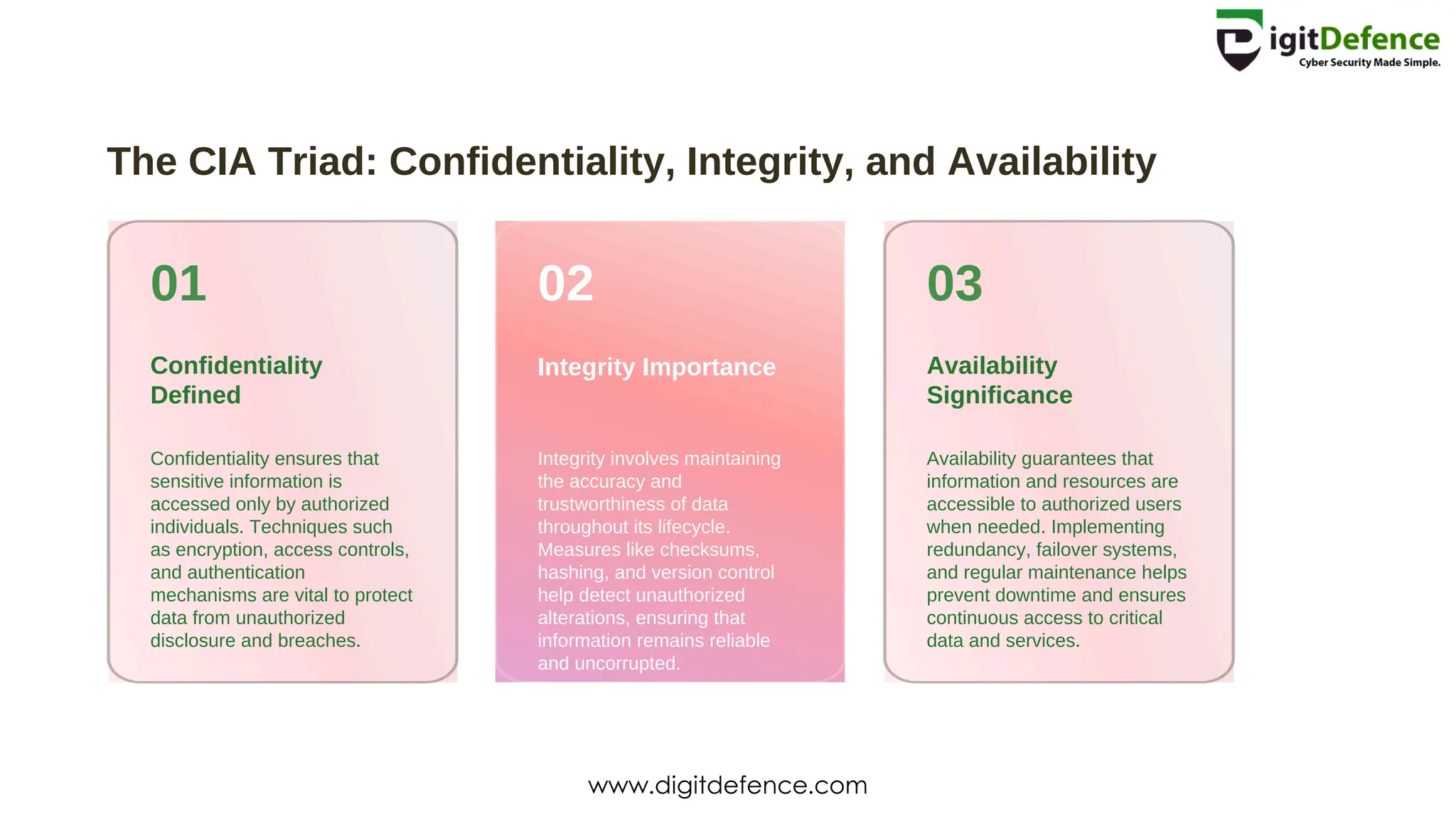
The CIA Triad: Confidentiality, Integrity, and Availability
01 02 03
Confidentiality
Defined
Integrity Importance Availability
Significance
Confidentiality ensures that
sensitive information is
accessed only by authorized
individuals. Techniques such
as encryption, access controls,
and authentication
mechanisms are vital to protect
data from unauthorized
disclosure and breaches.
Integrity involves maintaining
the accuracy and
trustworthiness of data
throughout its lifecycle.
Measures like checksums,
hashing, and version control
help detect unauthorized
alterations, ensuring that
information remains reliable
and uncorrupted.
Availability guarantees that
information and resources are
accessible to authorized users
when needed. Implementing
redundancy, failover systems,
and regular maintenance helps
prevent downtime and ensures
continuous access to critical
data and services.
www.digitdefence.com
Key Threats in Cyber Security: An Overview
Malware Attacks
Malware, including viruses, worms,
and ransomware, poses significant
threats by infiltrating systems to steal
data, disrupt operations, or demand
ransom. Organizations must
implement robust antivirus solutions
and regular updates to mitigate these
risks effectively.
Phishing Scams
Phishing attacks exploit human
psychology to deceive individuals into
revealing sensitive information.
Training employees to recognize
suspicious emails and implementing
email filtering can significantly reduce
the likelihood of successful phishing
attempts.
Insider Threats
Insider threats arise from employees
or contractors who misuse their
access to compromise security.
Establishing strict access controls,
monitoring user activity, and fostering
a culture of security awareness are
essential strategies to combat this
risk.
www.digitdefence.com
The Role of Governance in Cyber Security
Establishing
Frameworks
Risk Management
Integration
Governance in cyber security involves
creating policies and frameworks that guide
organizations in managing their security
posture. This includes defining roles,
responsibilities, and accountability, ensuring
that security measures align with business
objectives and regulatory requirements to
mitigate risks effectively.
Effective governance integrates risk
management into the organization's overall
strategy, enabling proactive identification
and assessment of cyber threats. By
prioritizing risks based on potential impact,
organizations can allocate resources
efficiently and implement appropriate
controls to safeguard critical assets.
www.digitdefence.com
Security Awareness and
Training: Empowering
Employees
Employee Engagement in Security
Implementing comprehensive security awareness
training programs empowers employees to recognize
and respond to cyber threats effectively, fostering a
culture of security mindfulness that significantly
reduces the risk of breaches caused by human error.
www.digitdefence.com
Continuous
Monitoring and
Improvement:
Adapting to Threats
Proactive Threat Detection
Continuous monitoring involves the real-time analysis
of network traffic, user behavior, and system activities
to identify anomalies and potential threats early,
enabling organizations to respond swiftly and
effectively to mitigate risks before they escalate into
significant security incidents.
www.digitdefence.com
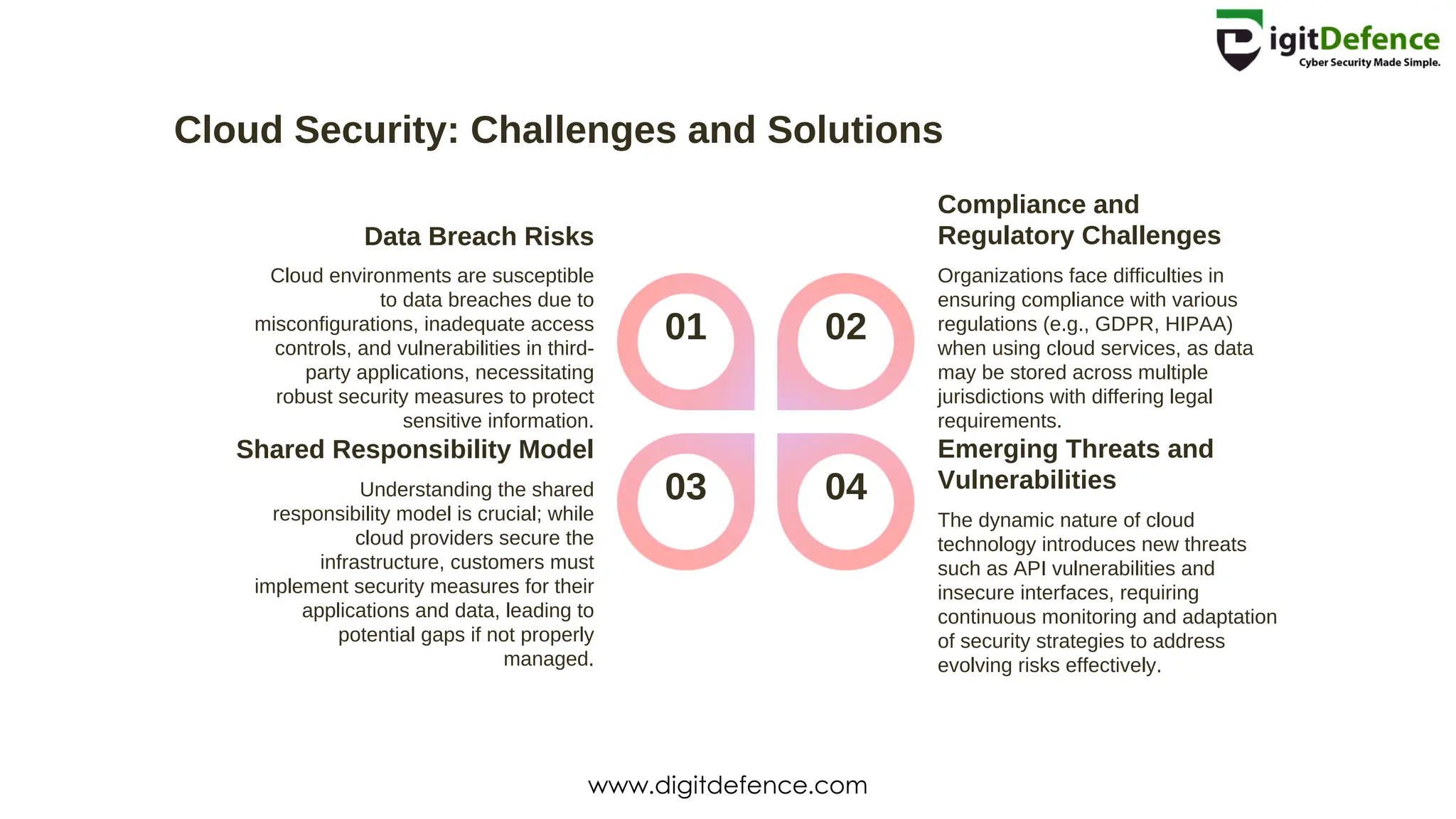
Cloud Security: Challenges and Solutions
01 02
03 04
Data Breach Risks
Compliance and
Regulatory Challenges
Shared Responsibility Model Emerging Threats and
Vulnerabilities
Cloud environments are susceptible
to data breaches due to
misconfigurations, inadequate access
controls, and vulnerabilities in third-
party applications, necessitating
robust security measures to protect
sensitive information.
Organizations face difficulties in
ensuring compliance with various
regulations (e.g., GDPR, HIPAA)
when using cloud services, as data
may be stored across multiple
jurisdictions with differing legal
requirements.
Understanding the shared
responsibility model is crucial; while
cloud providers secure the
infrastructure, customers must
implement security measures for their
applications and data, leading to
potential gaps if not properly
managed.
The dynamic nature of cloud
technology introduces new threats
such as API vulnerabilities and
insecure interfaces, requiring
continuous monitoring and adaptation
of security strategies to address
evolving risks effectively.
www.digitdefence.com
Increased Device
Connectivity
The proliferation of IoT devices
significantly expands the attack surface,
as each connected device can serve as a
potential entry point for cyber attackers,
necessitating robust security measures to
protect networks.
Data Privacy Concerns
The vast amount of data collected by IoT
devices raises significant privacy issues,
as unauthorized access can lead to
sensitive information being
compromised. Implementing strong
encryption and access controls is critical
for safeguarding user data.
Vulnerabilities in IoT
Protocols
Many IoT devices utilize outdated or
insecure communication protocols,
making them susceptible to exploitation.
Regular updates and adherence to
security standards are essential to
mitigate these risks effectively.
The Internet of Things (IoT): Expanding
the Attack Surface
www.digitdefence.com

The Components of Cyber Security.pptx.pdf

  • 1.
  • 2.
    Understanding Cyber Security: Definition and Importance Definitionand Relevance Cyber security encompasses the practices, technologies, and processes designed to protect networks, devices, and data from unauthorized access, attacks, or damage. Its importance lies in safeguarding sensitive information, maintaining privacy, and ensuring the integrity of systems against evolving cyber threats. As digital transformation accelerates, understanding cyber security becomes crucial for organizations to mitigate risks and protect their assets effectively. www.digitdefence.com
  • 3.
    The CIA Triad:Confidentiality, Integrity, and Availability 01 02 03 Confidentiality Defined Integrity Importance Availability Significance Confidentiality ensures that sensitive information is accessed only by authorized individuals. Techniques such as encryption, access controls, and authentication mechanisms are vital to protect data from unauthorized disclosure and breaches. Integrity involves maintaining the accuracy and trustworthiness of data throughout its lifecycle. Measures like checksums, hashing, and version control help detect unauthorized alterations, ensuring that information remains reliable and uncorrupted. Availability guarantees that information and resources are accessible to authorized users when needed. Implementing redundancy, failover systems, and regular maintenance helps prevent downtime and ensures continuous access to critical data and services. www.digitdefence.com
  • 4.
    Key Threats inCyber Security: An Overview Malware Attacks Malware, including viruses, worms, and ransomware, poses significant threats by infiltrating systems to steal data, disrupt operations, or demand ransom. Organizations must implement robust antivirus solutions and regular updates to mitigate these risks effectively. Phishing Scams Phishing attacks exploit human psychology to deceive individuals into revealing sensitive information. Training employees to recognize suspicious emails and implementing email filtering can significantly reduce the likelihood of successful phishing attempts. Insider Threats Insider threats arise from employees or contractors who misuse their access to compromise security. Establishing strict access controls, monitoring user activity, and fostering a culture of security awareness are essential strategies to combat this risk. www.digitdefence.com
  • 5.
    The Role ofGovernance in Cyber Security Establishing Frameworks Risk Management Integration Governance in cyber security involves creating policies and frameworks that guide organizations in managing their security posture. This includes defining roles, responsibilities, and accountability, ensuring that security measures align with business objectives and regulatory requirements to mitigate risks effectively. Effective governance integrates risk management into the organization's overall strategy, enabling proactive identification and assessment of cyber threats. By prioritizing risks based on potential impact, organizations can allocate resources efficiently and implement appropriate controls to safeguard critical assets. www.digitdefence.com
  • 6.
    Security Awareness and Training:Empowering Employees Employee Engagement in Security Implementing comprehensive security awareness training programs empowers employees to recognize and respond to cyber threats effectively, fostering a culture of security mindfulness that significantly reduces the risk of breaches caused by human error. www.digitdefence.com
  • 7.
    Continuous Monitoring and Improvement: Adapting toThreats Proactive Threat Detection Continuous monitoring involves the real-time analysis of network traffic, user behavior, and system activities to identify anomalies and potential threats early, enabling organizations to respond swiftly and effectively to mitigate risks before they escalate into significant security incidents. www.digitdefence.com
  • 8.
    Cloud Security: Challengesand Solutions 01 02 03 04 Data Breach Risks Compliance and Regulatory Challenges Shared Responsibility Model Emerging Threats and Vulnerabilities Cloud environments are susceptible to data breaches due to misconfigurations, inadequate access controls, and vulnerabilities in third- party applications, necessitating robust security measures to protect sensitive information. Organizations face difficulties in ensuring compliance with various regulations (e.g., GDPR, HIPAA) when using cloud services, as data may be stored across multiple jurisdictions with differing legal requirements. Understanding the shared responsibility model is crucial; while cloud providers secure the infrastructure, customers must implement security measures for their applications and data, leading to potential gaps if not properly managed. The dynamic nature of cloud technology introduces new threats such as API vulnerabilities and insecure interfaces, requiring continuous monitoring and adaptation of security strategies to address evolving risks effectively. www.digitdefence.com
  • 9.
    Increased Device Connectivity The proliferationof IoT devices significantly expands the attack surface, as each connected device can serve as a potential entry point for cyber attackers, necessitating robust security measures to protect networks. Data Privacy Concerns The vast amount of data collected by IoT devices raises significant privacy issues, as unauthorized access can lead to sensitive information being compromised. Implementing strong encryption and access controls is critical for safeguarding user data. Vulnerabilities in IoT Protocols Many IoT devices utilize outdated or insecure communication protocols, making them susceptible to exploitation. Regular updates and adherence to security standards are essential to mitigate these risks effectively. The Internet of Things (IoT): Expanding the Attack Surface www.digitdefence.com