How to Conduct
Penetration Testing for
Websites
www.digitdefence.com
Definition and Purpose of Penetration Testing
Understanding Penetration Testing
Purpose in Web Security
Risk Mitigation Strategy
Penetration testing is a simulated cyber attack against a computer system, network, or web
application to identify vulnerabilities that an attacker could exploit.
The primary purpose of penetration testing is to evaluate the security posture of a web
application by identifying weaknesses before they can be exploited by malicious actors.
By conducting penetration tests, organizations can proactively address security flaws,
enhance their defenses, and ensure compliance with industry regulations and
standards.
www.digitdefence.com
Types of Penetration Testing
Black Box Testing
White Box Testing
Gray Box Testing
In black box penetration testing, the tester has no prior knowledge of the system's internal workings, simulating an
external attacker's perspective. This approach helps identify vulnerabilities that could be exploited without insider
information.
White box testing provides the tester with full access to the system's architecture, source code, and configuration. This method
allows for a thorough examination of security flaws and is useful for identifying issues that may not be apparent from an
external viewpoint.
Gray box testing combines elements of both black and white box testing, where the tester has partial knowledge of the system.
This approach helps simulate an insider threat while still allowing for a comprehensive assessment of vulnerabilities from both
internal and external perspectives.
www.digitdefence.com
Importance of Penetration Testing in Web Security
Identifying Vulnerabilities
Early
Enhancing Security Posture Compliance and Assurance
Penetration testing allows
organizations to discover and address
security vulnerabilities before they can
be exploited by attackers, significantly
reducing the risk of data breaches and
cyber incidents.
Regular penetration tests contribute to
a stronger security posture by
providing insights into the
effectiveness of existing security
measures and helping to prioritize
areas for improvement.
Many regulatory frameworks require
regular security assessments,
including penetration testing, to ensure
compliance. This not only helps
organizations meet legal obligations
but also builds trust with customers
and stakeholders regarding their
commitment to security.
www.digitdefence.com
Defining the Scope of the Test
Determining Boundaries
Identifying Stakeholders
Specify which systems, applications, and networks are in-scope and
out-of-scope for the test to prevent unintended disruptions and ensure
compliance with organizational policies.
Engage relevant stakeholders, including IT teams, management,
and legal advisors, to align on expectations, responsibilities, and
communication protocols throughout the testing process.
www.digitdefence.com
Identifying Target Systems and Assets
Asset Inventory Creation
Prioritization of Targets
Understanding System Interdependencies
Compile a comprehensive inventory of all systems, applications, and databases that are part of the web
infrastructure to ensure no critical assets are overlooked during the penetration testing process.
Assess and prioritize the identified assets based on their criticality to business operations, potential impact
of a security breach, and known vulnerabilities to focus testing efforts effectively.
Analyze the relationships and dependencies between different systems and assets to identify potential
attack vectors and ensure a holistic approach to penetration testing.
www.digitdefence.com
Establishing Rules of Engagement
Defining Engagement
Parameters
Communication Protocols Legal and Compliance
Considerations
Clearly outline the scope, objectives,
and limitations of the penetration test
to ensure all parties understand what
is permissible during the testing
process and to prevent any unintended
disruptions.
Establish communication channels and
protocols for reporting findings,
escalating issues, and coordinating
with stakeholders throughout the
engagement to maintain transparency
and facilitate timely responses.
Ensure that all legal agreements, such as
Non-Disclosure Agreements (NDAs) and
contracts, are in place to protect
sensitive information and comply with
relevant regulations, thereby
safeguarding both the tester and the
organization.
www.digitdefence.com
Passive Information Gathering
Active Information Gathering
Utilizing Automated Tools
This technique involves collecting data without directly interacting with the target system, using methods
such as WHOIS lookups, DNS queries, and social media reconnaissance to gather insights about the
target's infrastructure and personnel.
Active techniques include direct interaction with the target, such as port scanning and service
enumeration, which help identify open ports, running services, and potential vulnerabilities that could be
exploited during the penetration test.
Employing automated tools like Nmap for network scanning or Burp Suite for web application analysis can
streamline the information gathering process, allowing testers to efficiently collect and analyze large amounts
of data to identify security weaknesses.
Information Gathering Techniques
www.digitdefence.com
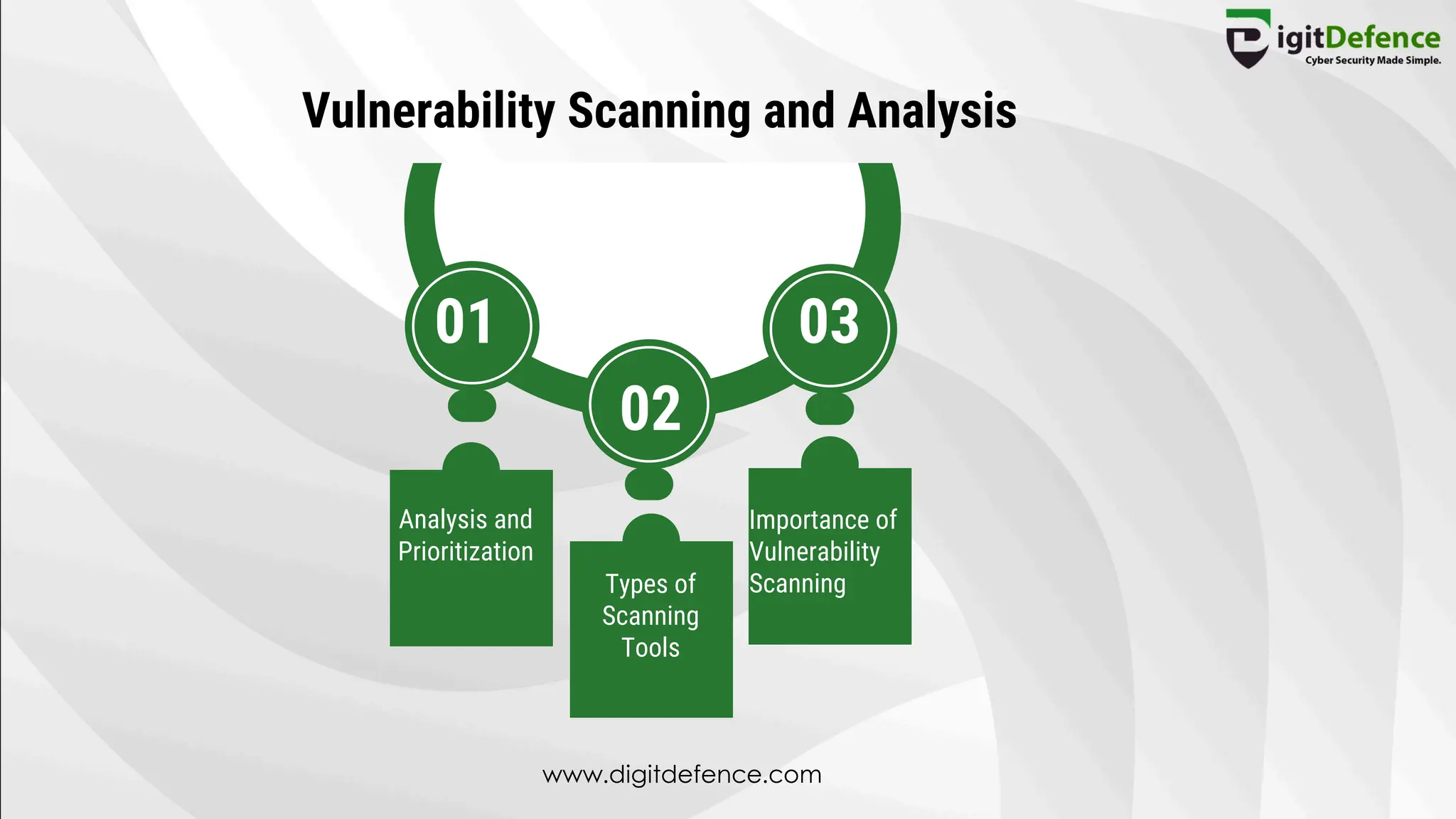
Vulnerability Scanning and Analysis
Importance of
Vulnerability
Scanning
Types of
Scanning
Tools
Analysis and
Prioritization
01
02
03
www.digitdefence.com
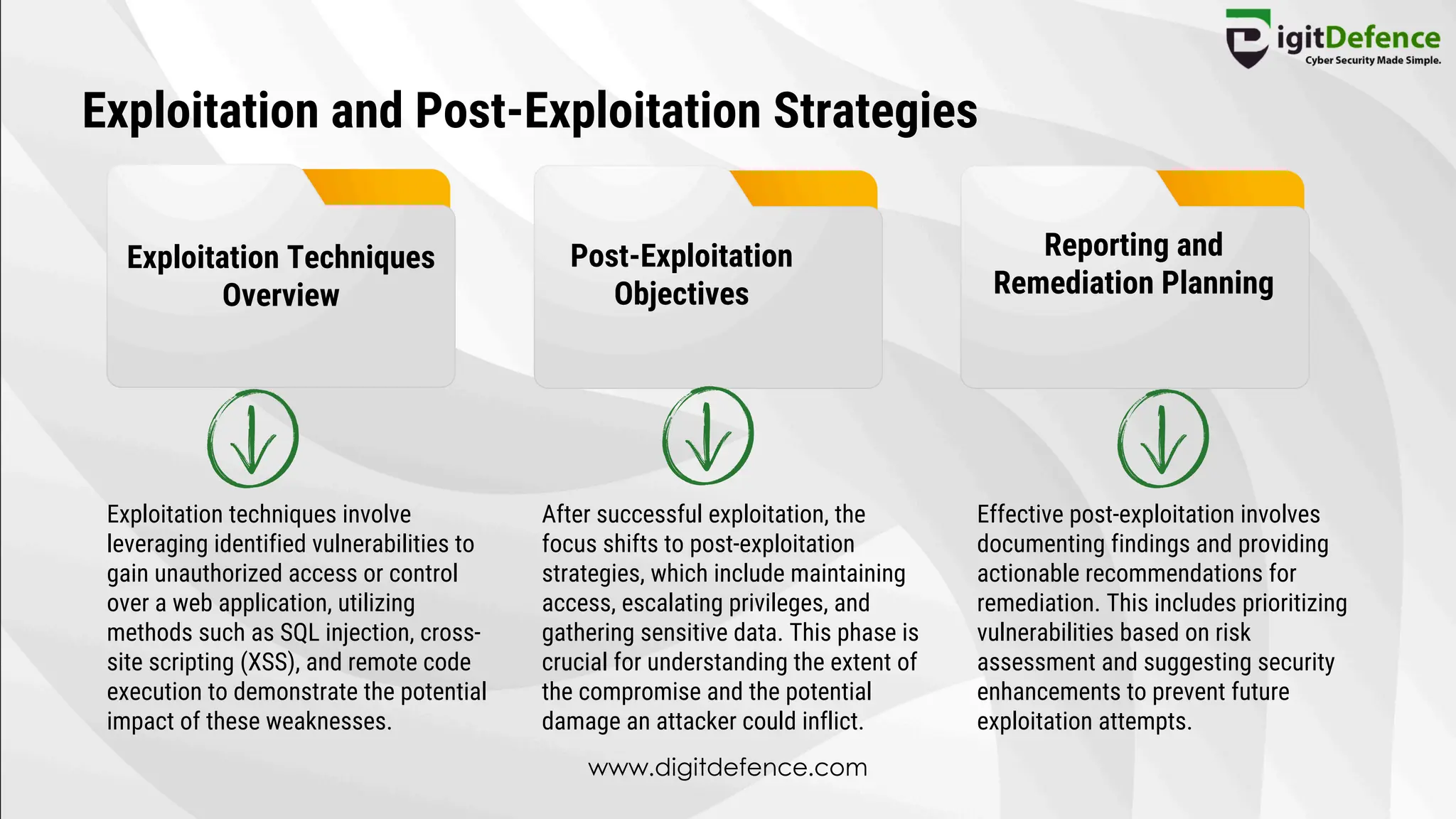
Exploitation and Post-Exploitation Strategies
Exploitation Techniques
Overview
Exploitation techniques involve
leveraging identified vulnerabilities to
gain unauthorized access or control
over a web application, utilizing
methods such as SQL injection, cross-
site scripting (XSS), and remote code
execution to demonstrate the potential
impact of these weaknesses.
After successful exploitation, the
focus shifts to post-exploitation
strategies, which include maintaining
access, escalating privileges, and
gathering sensitive data. This phase is
crucial for understanding the extent of
the compromise and the potential
damage an attacker could inflict.
Effective post-exploitation involves
documenting findings and providing
actionable recommendations for
remediation. This includes prioritizing
vulnerabilities based on risk
assessment and suggesting security
enhancements to prevent future
exploitation attempts.
Post-Exploitation
Objectives
Reporting and
Remediation Planning
www.digitdefence.com

How to Conduct Penetration Testing for Websites.pptx.pdf

  • 1.
    How to Conduct PenetrationTesting for Websites www.digitdefence.com
  • 2.
    Definition and Purposeof Penetration Testing Understanding Penetration Testing Purpose in Web Security Risk Mitigation Strategy Penetration testing is a simulated cyber attack against a computer system, network, or web application to identify vulnerabilities that an attacker could exploit. The primary purpose of penetration testing is to evaluate the security posture of a web application by identifying weaknesses before they can be exploited by malicious actors. By conducting penetration tests, organizations can proactively address security flaws, enhance their defenses, and ensure compliance with industry regulations and standards. www.digitdefence.com
  • 3.
    Types of PenetrationTesting Black Box Testing White Box Testing Gray Box Testing In black box penetration testing, the tester has no prior knowledge of the system's internal workings, simulating an external attacker's perspective. This approach helps identify vulnerabilities that could be exploited without insider information. White box testing provides the tester with full access to the system's architecture, source code, and configuration. This method allows for a thorough examination of security flaws and is useful for identifying issues that may not be apparent from an external viewpoint. Gray box testing combines elements of both black and white box testing, where the tester has partial knowledge of the system. This approach helps simulate an insider threat while still allowing for a comprehensive assessment of vulnerabilities from both internal and external perspectives. www.digitdefence.com
  • 4.
    Importance of PenetrationTesting in Web Security Identifying Vulnerabilities Early Enhancing Security Posture Compliance and Assurance Penetration testing allows organizations to discover and address security vulnerabilities before they can be exploited by attackers, significantly reducing the risk of data breaches and cyber incidents. Regular penetration tests contribute to a stronger security posture by providing insights into the effectiveness of existing security measures and helping to prioritize areas for improvement. Many regulatory frameworks require regular security assessments, including penetration testing, to ensure compliance. This not only helps organizations meet legal obligations but also builds trust with customers and stakeholders regarding their commitment to security. www.digitdefence.com
  • 5.
    Defining the Scopeof the Test Determining Boundaries Identifying Stakeholders Specify which systems, applications, and networks are in-scope and out-of-scope for the test to prevent unintended disruptions and ensure compliance with organizational policies. Engage relevant stakeholders, including IT teams, management, and legal advisors, to align on expectations, responsibilities, and communication protocols throughout the testing process. www.digitdefence.com
  • 6.
    Identifying Target Systemsand Assets Asset Inventory Creation Prioritization of Targets Understanding System Interdependencies Compile a comprehensive inventory of all systems, applications, and databases that are part of the web infrastructure to ensure no critical assets are overlooked during the penetration testing process. Assess and prioritize the identified assets based on their criticality to business operations, potential impact of a security breach, and known vulnerabilities to focus testing efforts effectively. Analyze the relationships and dependencies between different systems and assets to identify potential attack vectors and ensure a holistic approach to penetration testing. www.digitdefence.com
  • 7.
    Establishing Rules ofEngagement Defining Engagement Parameters Communication Protocols Legal and Compliance Considerations Clearly outline the scope, objectives, and limitations of the penetration test to ensure all parties understand what is permissible during the testing process and to prevent any unintended disruptions. Establish communication channels and protocols for reporting findings, escalating issues, and coordinating with stakeholders throughout the engagement to maintain transparency and facilitate timely responses. Ensure that all legal agreements, such as Non-Disclosure Agreements (NDAs) and contracts, are in place to protect sensitive information and comply with relevant regulations, thereby safeguarding both the tester and the organization. www.digitdefence.com
  • 8.
    Passive Information Gathering ActiveInformation Gathering Utilizing Automated Tools This technique involves collecting data without directly interacting with the target system, using methods such as WHOIS lookups, DNS queries, and social media reconnaissance to gather insights about the target's infrastructure and personnel. Active techniques include direct interaction with the target, such as port scanning and service enumeration, which help identify open ports, running services, and potential vulnerabilities that could be exploited during the penetration test. Employing automated tools like Nmap for network scanning or Burp Suite for web application analysis can streamline the information gathering process, allowing testers to efficiently collect and analyze large amounts of data to identify security weaknesses. Information Gathering Techniques www.digitdefence.com
  • 9.
    Vulnerability Scanning andAnalysis Importance of Vulnerability Scanning Types of Scanning Tools Analysis and Prioritization 01 02 03 www.digitdefence.com
  • 10.
    Exploitation and Post-ExploitationStrategies Exploitation Techniques Overview Exploitation techniques involve leveraging identified vulnerabilities to gain unauthorized access or control over a web application, utilizing methods such as SQL injection, cross- site scripting (XSS), and remote code execution to demonstrate the potential impact of these weaknesses. After successful exploitation, the focus shifts to post-exploitation strategies, which include maintaining access, escalating privileges, and gathering sensitive data. This phase is crucial for understanding the extent of the compromise and the potential damage an attacker could inflict. Effective post-exploitation involves documenting findings and providing actionable recommendations for remediation. This includes prioritizing vulnerabilities based on risk assessment and suggesting security enhancements to prevent future exploitation attempts. Post-Exploitation Objectives Reporting and Remediation Planning www.digitdefence.com