WHAT IS WEBSITE
PENTESTING?
www.digitdefence.com
01 02 03
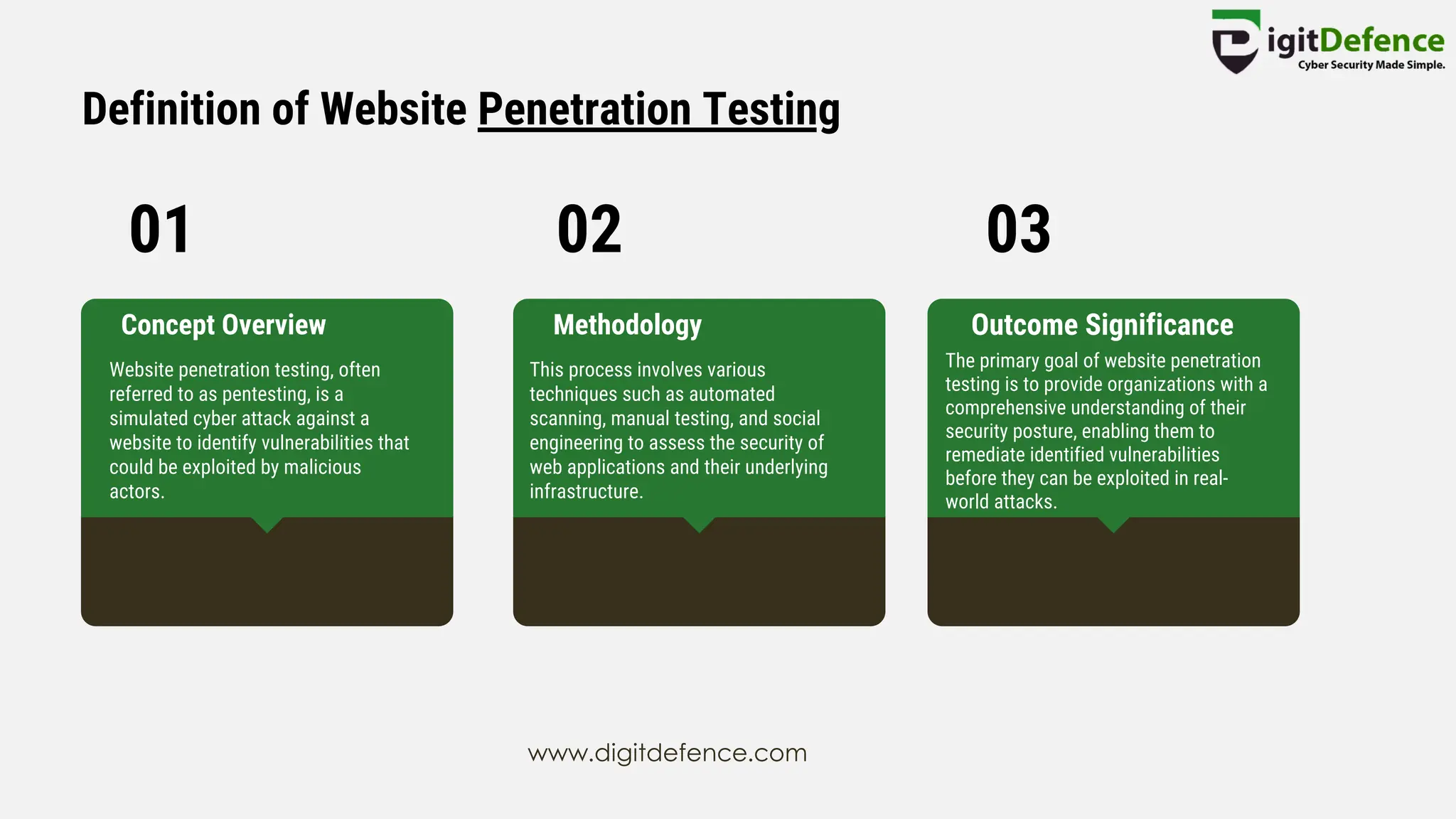
Definition of Website Penetration Testing
Concept Overview
Website penetration testing, often
referred to as pentesting, is a
simulated cyber attack against a
website to identify vulnerabilities that
could be exploited by malicious
actors.
Methodology
This process involves various
techniques such as automated
scanning, manual testing, and social
engineering to assess the security of
web applications and their underlying
infrastructure.
Outcome Significance
The primary goal of website penetration
testing is to provide organizations with a
comprehensive understanding of their
security posture, enabling them to
remediate identified vulnerabilities
before they can be exploited in real-
world attacks.
www.digitdefence.com
Importance of Website Security
Protection Against Attacks
Trust and Credibility
Regulatory Compliance
Website security is crucial as it safeguards sensitive data from cyber threats, including data breaches and unauthorized
access, which can lead to significant financial and reputational damage.
A secure website fosters trust among users, enhancing customer confidence and loyalty, which are essential for
maintaining a competitive edge in the digital marketplace.
Ensuring robust website security helps organizations comply with various legal and regulatory requirements, thereby
avoiding potential fines and legal repercussions associated with data protection violations.
www.digitdefence.com
Common Threats to Websites
Malware Injections Cross-Site Scripting (XSS) SQL Injection Attacks
Websites are often targeted by
attackers who inject malicious code,
such as viruses or ransomware, into
web applications, compromising user
data and potentially leading to
widespread infections across
connected systems.
This vulnerability allows attackers to
inject malicious scripts into web pages
viewed by users, enabling them to
steal sensitive information like cookies
or session tokens, which can be
exploited for unauthorized access.
Attackers exploit vulnerabilities in a
website's database layer by injecting
malicious SQL queries, allowing them
to manipulate or retrieve sensitive data
from the database, which can result in
data breaches and loss of integrity.
www.digitdefence.com
Overview of the
Pentesting Process
Phases of Pentesting
Tools and Techniques
Reporting and Remediation
www.digitdefence.com
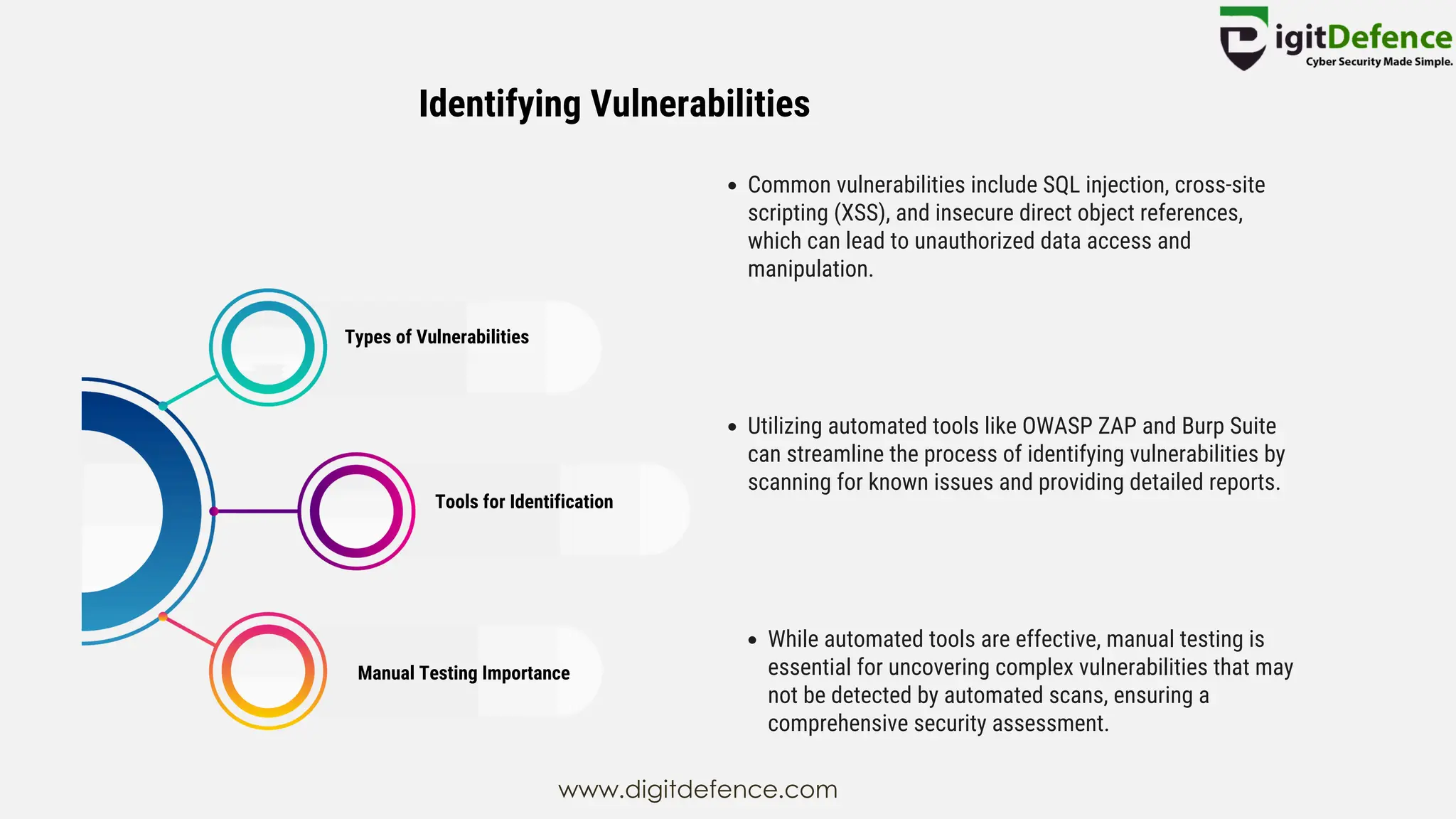
Identifying Vulnerabilities
Types of Vulnerabilities
Tools for Identification
Manual Testing Importance
Common vulnerabilities include SQL injection, cross-site
scripting (XSS), and insecure direct object references,
which can lead to unauthorized data access and
manipulation.
Utilizing automated tools like OWASP ZAP and Burp Suite
can streamline the process of identifying vulnerabilities by
scanning for known issues and providing detailed reports.
While automated tools are effective, manual testing is
essential for uncovering complex vulnerabilities that may
not be detected by automated scans, ensuring a
comprehensive security assessment.
www.digitdefence.com
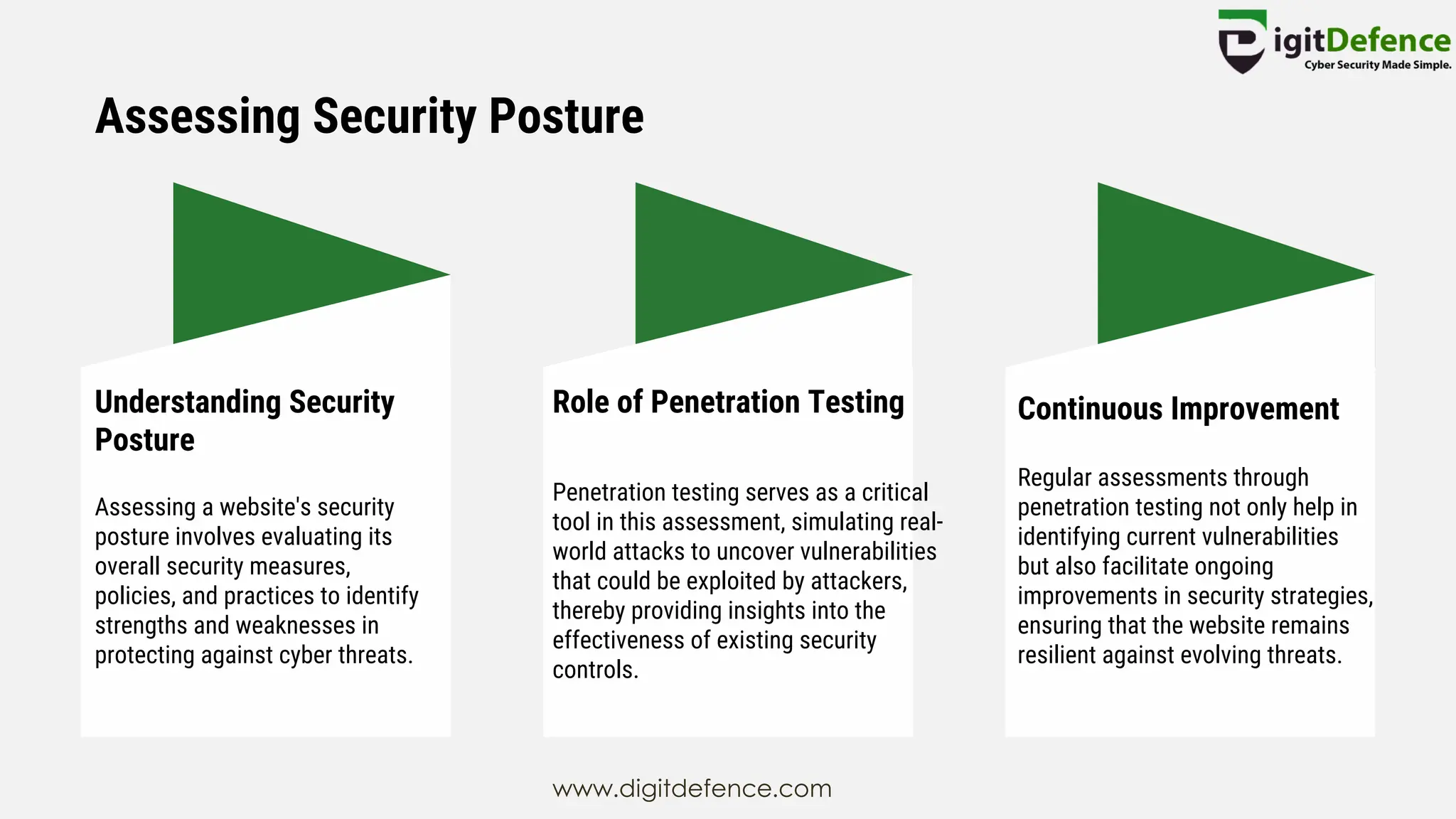
Assessing Security Posture
Understanding Security
Posture
Role of Penetration Testing Continuous Improvement
Assessing a website's security
posture involves evaluating its
overall security measures,
policies, and practices to identify
strengths and weaknesses in
protecting against cyber threats.
Penetration testing serves as a critical
tool in this assessment, simulating real-
world attacks to uncover vulnerabilities
that could be exploited by attackers,
thereby providing insights into the
effectiveness of existing security
controls.
Regular assessments through
penetration testing not only help in
identifying current vulnerabilities
but also facilitate ongoing
improvements in security strategies,
ensuring that the website remains
resilient against evolving threats.
www.digitdefence.com
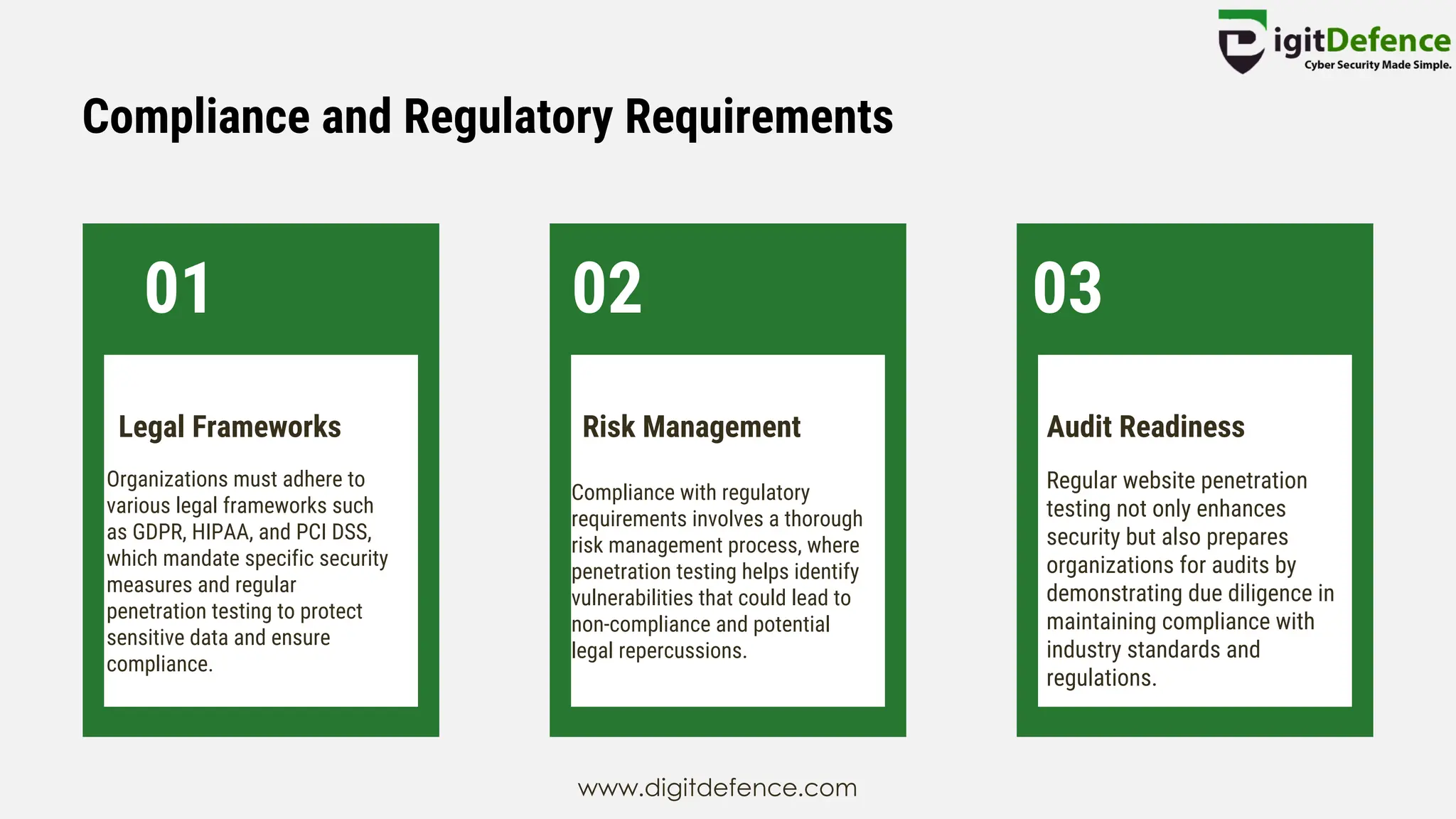
Compliance and Regulatory Requirements
02 03
Legal Frameworks Risk Management Audit Readiness
Organizations must adhere to
various legal frameworks such
as GDPR, HIPAA, and PCI DSS,
which mandate specific security
measures and regular
penetration testing to protect
sensitive data and ensure
compliance.
Compliance with regulatory
requirements involves a thorough
risk management process, where
penetration testing helps identify
vulnerabilities that could lead to
non-compliance and potential
legal repercussions.
Regular website penetration
testing not only enhances
security but also prepares
organizations for audits by
demonstrating due diligence in
maintaining compliance with
industry standards and
regulations.
01
www.digitdefence.com
Enhancing Incident Response
Proactive Threat Detection
Improved Response Strategies
Integration with Security Frameworks
Implementing website penetration testing enhances incident response by identifying vulnerabilities before they
can be exploited, allowing organizations to address potential threats proactively.
Regular pentesting helps refine incident response strategies by simulating real-world attack scenarios,
enabling teams to practice and improve their response to actual security incidents.
Incorporating findings from penetration tests into existing security frameworks ensures that incident
response plans are aligned with the latest threat intelligence and vulnerability assessments.
www.digitdefence.com
OWASP Testing Guide
Purpose of OWASP:-
Testing Framework
Overview:-
Continuous Improvement:-
The OWASP Testing Guide serves as a comprehensive resource for organizations to
understand and implement effective web application security testing methodologies, ensuring
that security assessments are thorough and standardized.
It outlines a structured approach to penetration testing, detailing various testing techniques, tools,
and best practices that can be employed to identify vulnerabilities in web applications
systematically.
By following the OWASP Testing Guide, organizations can enhance their security posture
over time, as it encourages regular updates and adaptations to testing strategies in
response to emerging threats and vulnerabilities.
www.digitdefence.com

What is Website Pentesting presentation - Digitdefence

  • 1.
  • 2.
    01 02 03 Definitionof Website Penetration Testing Concept Overview Website penetration testing, often referred to as pentesting, is a simulated cyber attack against a website to identify vulnerabilities that could be exploited by malicious actors. Methodology This process involves various techniques such as automated scanning, manual testing, and social engineering to assess the security of web applications and their underlying infrastructure. Outcome Significance The primary goal of website penetration testing is to provide organizations with a comprehensive understanding of their security posture, enabling them to remediate identified vulnerabilities before they can be exploited in real- world attacks. www.digitdefence.com
  • 3.
    Importance of WebsiteSecurity Protection Against Attacks Trust and Credibility Regulatory Compliance Website security is crucial as it safeguards sensitive data from cyber threats, including data breaches and unauthorized access, which can lead to significant financial and reputational damage. A secure website fosters trust among users, enhancing customer confidence and loyalty, which are essential for maintaining a competitive edge in the digital marketplace. Ensuring robust website security helps organizations comply with various legal and regulatory requirements, thereby avoiding potential fines and legal repercussions associated with data protection violations. www.digitdefence.com
  • 4.
    Common Threats toWebsites Malware Injections Cross-Site Scripting (XSS) SQL Injection Attacks Websites are often targeted by attackers who inject malicious code, such as viruses or ransomware, into web applications, compromising user data and potentially leading to widespread infections across connected systems. This vulnerability allows attackers to inject malicious scripts into web pages viewed by users, enabling them to steal sensitive information like cookies or session tokens, which can be exploited for unauthorized access. Attackers exploit vulnerabilities in a website's database layer by injecting malicious SQL queries, allowing them to manipulate or retrieve sensitive data from the database, which can result in data breaches and loss of integrity. www.digitdefence.com
  • 5.
    Overview of the PentestingProcess Phases of Pentesting Tools and Techniques Reporting and Remediation www.digitdefence.com
  • 6.
    Identifying Vulnerabilities Types ofVulnerabilities Tools for Identification Manual Testing Importance Common vulnerabilities include SQL injection, cross-site scripting (XSS), and insecure direct object references, which can lead to unauthorized data access and manipulation. Utilizing automated tools like OWASP ZAP and Burp Suite can streamline the process of identifying vulnerabilities by scanning for known issues and providing detailed reports. While automated tools are effective, manual testing is essential for uncovering complex vulnerabilities that may not be detected by automated scans, ensuring a comprehensive security assessment. www.digitdefence.com
  • 7.
    Assessing Security Posture UnderstandingSecurity Posture Role of Penetration Testing Continuous Improvement Assessing a website's security posture involves evaluating its overall security measures, policies, and practices to identify strengths and weaknesses in protecting against cyber threats. Penetration testing serves as a critical tool in this assessment, simulating real- world attacks to uncover vulnerabilities that could be exploited by attackers, thereby providing insights into the effectiveness of existing security controls. Regular assessments through penetration testing not only help in identifying current vulnerabilities but also facilitate ongoing improvements in security strategies, ensuring that the website remains resilient against evolving threats. www.digitdefence.com
  • 8.
    Compliance and RegulatoryRequirements 02 03 Legal Frameworks Risk Management Audit Readiness Organizations must adhere to various legal frameworks such as GDPR, HIPAA, and PCI DSS, which mandate specific security measures and regular penetration testing to protect sensitive data and ensure compliance. Compliance with regulatory requirements involves a thorough risk management process, where penetration testing helps identify vulnerabilities that could lead to non-compliance and potential legal repercussions. Regular website penetration testing not only enhances security but also prepares organizations for audits by demonstrating due diligence in maintaining compliance with industry standards and regulations. 01 www.digitdefence.com
  • 9.
    Enhancing Incident Response ProactiveThreat Detection Improved Response Strategies Integration with Security Frameworks Implementing website penetration testing enhances incident response by identifying vulnerabilities before they can be exploited, allowing organizations to address potential threats proactively. Regular pentesting helps refine incident response strategies by simulating real-world attack scenarios, enabling teams to practice and improve their response to actual security incidents. Incorporating findings from penetration tests into existing security frameworks ensures that incident response plans are aligned with the latest threat intelligence and vulnerability assessments. www.digitdefence.com
  • 10.
    OWASP Testing Guide Purposeof OWASP:- Testing Framework Overview:- Continuous Improvement:- The OWASP Testing Guide serves as a comprehensive resource for organizations to understand and implement effective web application security testing methodologies, ensuring that security assessments are thorough and standardized. It outlines a structured approach to penetration testing, detailing various testing techniques, tools, and best practices that can be employed to identify vulnerabilities in web applications systematically. By following the OWASP Testing Guide, organizations can enhance their security posture over time, as it encourages regular updates and adaptations to testing strategies in response to emerging threats and vulnerabilities. www.digitdefence.com