 It is often defined as a condition which many people
consider undesirable and wish to correct.
HORTON & LESLIE
 Social problems are defined by a combination of
objective and subjective criteria that vary across
societies, among individuals and groups within a
society, and across historical time periods.
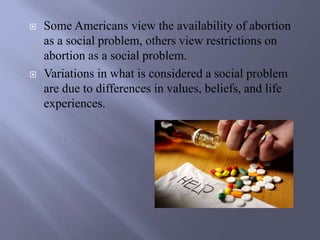
 Some Americans view the availability of abortion
as a social problem, others view restrictions on
abortion as a social problem.
 Variations in what is considered a social problem
are due to differences in values, beliefs, and life
experiences.
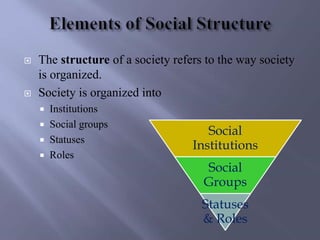
 The structure of a society refers to the way society
is organized.
 Society is organized into
 Institutions
 Social groups
 Statuses
 Roles
Social
Institutions
Social
Groups
Statuses
& Roles
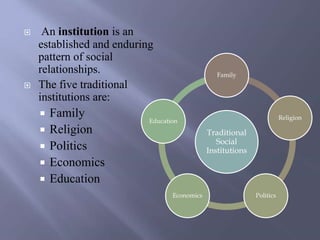
 An institution is an
established and enduring
pattern of social
relationships.
 The five traditional
institutions are:
 Family
 Religion
 Politics
 Economics
 Education
Traditional
Social
Institutions
Family
Religion
Politics
Economics
Education
 A social group is defined as two or more people
who have a common identity, interact, and form a
social relationship.
 Primary groups are characterized by intimate and
informal interaction.
 Secondary groups are task oriented and characterized by
impersonal and formal interaction.
 Statuses: A status is a position that a person
occupies within a social group.
 The statuses in a family may consist of mother,
father, stepmother, stepfather, wife, husband and
child
 Statuses can be either ascribed or achieved.
 Roles: The set of rights, obligations, and
expectations associated with a status.
 Roles guide our behavior and allow us to predict the
behavior of others.
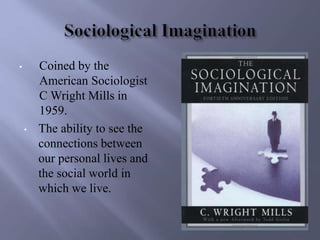
• Coined by the
American Sociologist
C Wright Mills in
1959.
• The ability to see the
connections between
our personal lives and
the social world in
which we live.
 When we use our sociological imagination, we are
able to distinguish between “private troubles” and
“public issues” and to see connections between the
events and conditions of our lives and the social and
historical context in which we live.
• Ability to observe how interactions and actions are
influential upon other individuals and situations.
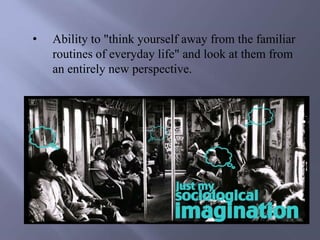
• Ability to "think yourself away from the familiar
routines of everyday life" and look at them from
an entirely new perspective.
 In one case, it can be seen as a sign of good health.
 It could be considered a tradition or ritual as many
people chose to drink tea ritualistically each day at
certain times.
 It could be considered a type drug being that it
contains caffeine and the drinker of the tea could
have a caffeine addiction.
 focuses less on the drinking of the beverage and
more on the action of meeting with another
person.
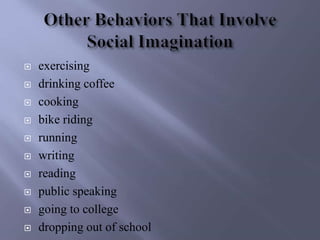
 exercising
 drinking coffee
 cooking
 bike riding
 running
 writing
 reading
 public speaking
 going to college
 dropping out of school
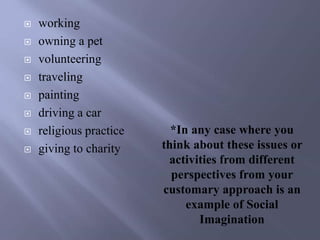
 working
 owning a pet
 volunteering
 traveling
 painting
 driving a car
 religious practice
 giving to charity
*In any case where you
think about these issues or
activities from different
perspectives from your
customary approach is an
example of Social
Imagination

INTRODUCTION TO SOCIAL PROBLEMS.ppt

  • 2.
     It isoften defined as a condition which many people consider undesirable and wish to correct. HORTON & LESLIE  Social problems are defined by a combination of objective and subjective criteria that vary across societies, among individuals and groups within a society, and across historical time periods.
  • 5.
     Some Americansview the availability of abortion as a social problem, others view restrictions on abortion as a social problem.  Variations in what is considered a social problem are due to differences in values, beliefs, and life experiences.
  • 6.
     The structureof a society refers to the way society is organized.  Society is organized into  Institutions  Social groups  Statuses  Roles Social Institutions Social Groups Statuses & Roles
  • 7.
     An institutionis an established and enduring pattern of social relationships.  The five traditional institutions are:  Family  Religion  Politics  Economics  Education Traditional Social Institutions Family Religion Politics Economics Education
  • 8.
     A socialgroup is defined as two or more people who have a common identity, interact, and form a social relationship.  Primary groups are characterized by intimate and informal interaction.  Secondary groups are task oriented and characterized by impersonal and formal interaction.
  • 9.
     Statuses: Astatus is a position that a person occupies within a social group.  The statuses in a family may consist of mother, father, stepmother, stepfather, wife, husband and child  Statuses can be either ascribed or achieved.  Roles: The set of rights, obligations, and expectations associated with a status.  Roles guide our behavior and allow us to predict the behavior of others.
  • 10.
    • Coined bythe American Sociologist C Wright Mills in 1959. • The ability to see the connections between our personal lives and the social world in which we live.
  • 11.
     When weuse our sociological imagination, we are able to distinguish between “private troubles” and “public issues” and to see connections between the events and conditions of our lives and the social and historical context in which we live. • Ability to observe how interactions and actions are influential upon other individuals and situations.
  • 12.
    • Ability to"think yourself away from the familiar routines of everyday life" and look at them from an entirely new perspective.
  • 13.
     In onecase, it can be seen as a sign of good health.  It could be considered a tradition or ritual as many people chose to drink tea ritualistically each day at certain times.  It could be considered a type drug being that it contains caffeine and the drinker of the tea could have a caffeine addiction.  focuses less on the drinking of the beverage and more on the action of meeting with another person.
  • 14.
     exercising  drinkingcoffee  cooking  bike riding  running  writing  reading  public speaking  going to college  dropping out of school
  • 15.
     working  owninga pet  volunteering  traveling  painting  driving a car  religious practice  giving to charity *In any case where you think about these issues or activities from different perspectives from your customary approach is an example of Social Imagination